


Sarah stared at her phone screen, her heart sinking. It was another missed call from her mom. A work meeting had run late, and now the familiar ache returned. That heavy feeling in her chest. The whisper in her mind asking, “Are you doing enough?”
If this story feels familiar, you are not alone. That painful emotion is one of the most common challenges when you support a loved one from miles away. The miles between you can make the weight of responsibility feel even heavier.
This guide has a simple purpose: to help you understand why these feelings happen. We want to validate your experience. Juggling a career, your own family, and the well-being of an aging parent is incredibly tough. It often feels like you’re being pulled in every direction at once.
Please remember this: caregiving looks different for everyone. Providing support from a distance is just as valid and loving as being there in person. Your love transcends the miles.
We will walk with you through practical strategies. You can find peace and create meaningful connections, even when you can’t be physically present. Let’s begin.
Key Takeaways
- Long-distance caregiving comes with unique emotional challenges.
- Feeling guilt is a common and understandable experience.
- Your form of support is valid and meaningful, regardless of distance.
- This guide offers actionable steps to help ease your burden.
- You can maintain a strong, loving connection from afar.
- Finding a sustainable balance is key to your well-being and theirs.
Introduction: Acknowledging the Roller Coaster of Long-Distance Caregiving
During your morning commute, a sudden thought hits: Did Mom take her blood pressure medication today? That nagging worry is just one part of the emotional landscape when you’re providing support from miles away.

This journey often feels like riding an unpredictable roller coaster. Some days, you feel capable and connected. Other moments, overwhelming emotions crash over you without warning. Love mixes with exhaustion. Concern blends with frustration. All these feelings are completely valid responses to a challenging situation.
Whether you stepped into this role gradually or suddenly, the distance adds unique layers of stress. The responsibility of long-distance caregiving demands constant emotional energy, especially when time feels scarce. Many people find comfort in hearing others share similar experiences through resources like our long-distance caregiving podcast.
Remember this truth: experiencing caregiver guilt isn’t a sign of failure. It’s evidence of how deeply you care. Simply acknowledging these complex emotions is your first courageous step toward finding balance.
This guide meets you right where you are—in the messy middle of it all. We’ll walk through practical ways to navigate this terrain with compassion for yourself and your loved one.
Recognizing and Understanding Caregiver Guilt
The quiet moments between tasks often bring the heaviest thoughts. That persistent voice questioning whether you’re truly doing enough can feel overwhelming. Understanding what you’re experiencing is the first step toward finding relief.
Try JoyCalls Free
No app or new device needed. Start with a free 7-day trial.
What Is Caregiver Guilt?
This specific type of guilt is that nagging feeling that whispers you’re not doing enough. Even when you’re giving everything you have. It stems from a beautiful place—your deep sense of responsibility and love.
Yet it gets tangled with impossible expectations. Many people feel guilty when they’re already stretched thin. Or when they need time for themselves.
Common Emotional and Physical Signs
Emotionally, you might notice constant self-criticism. Thoughts like “I should be more patient” become frequent. Some people struggle with accepting help. They compare themselves to others who seem to be doing more.

Physically, this feeling can manifest as poor sleep or exhaustion. Stress eating or loss of appetite may occur. Some experience anxiety that feels constant. In more severe cases, signs of depression can appear.
Remember: feeling frustrated or needing breaks doesn’t make you a bad person. It makes you human. Recognizing these symptoms helps prevent them from growing into larger health issues.
Emotional Challenges in Long-Distance Caregiving
That moment when you’re laughing with friends, then remember you need to check on Mom. This emotional whiplash is common when supporting someone from afar. The distance creates unique emotional challenges that can feel overwhelming.
Balancing Love and Responsibility
Many people experience ambivalence in their caregiving role. You deeply want to help your loved one while also feeling stretched thin. This push-pull of emotions is completely normal.
Not seeing your parent daily amplifies worry. You can’t witness their good days with your own eyes. This distance often creates feelings of helplessness.

Managing Overwhelm and Anxiety
Anxiety becomes a constant companion for many long-distance supporters. It might show up as racing thoughts at night. Or that persistent knot in your stomach during the workday.
Try JoyCalls Free
No app or new device needed. Start with a free 7-day trial.
Feeling out of control is normal when managing care from miles away. This is especially true if your parent has a progressive illness. Unpredictable needs can heighten stress.
These feelings can cycle rapidly. One phone call might shift your entire mood. The frustration builds when coordinating everything remotely.
Remember: anxiety symptoms are your body’s early warning system. They signal when something needs attention. Acknowledging these challenges helps prevent burnout.
Factors Contributing to Caregiver Guilt
Lying awake at 2 AM, the what-ifs start circling in your mind. Could I have prevented Mom’s fall? Should I visit more often? These thoughts stem from deep responsibility but often spiral into unnecessary self-blame.
Many caregivers face similar struggles. The distance makes every decision feel heavier. Understanding where these feelings come from helps lighten the load.
| Guilt Source | Common Feeling | Reality Check |
|---|---|---|
| Not preventing illness | “I should have done more” | Health changes are often beyond anyone’s control |
| Needing personal time | “I’m being selfish” | Self-care ensures you can provide better support |
| Difficult decisions | “I’m abandoning them” | Safety choices show love, not neglect |
| Mixed frustration | “I’m a bad person“ | Complex emotions are normal in tough situations |

Distance amplifies these feelings. You can’t physically check on your loved one daily. This creates extra worry about their safety in their home.
Societal expectations add pressure too. The idea of a “perfect” supporter sets impossible standards. Remember that your place in their life matters most.
Recognizing these factors helps you see that guilt often comes from caring too much, not from failing. Your love shows in every choice you make, even from miles away.
Navigating Caregiver Guilt: Practical Strategies for Self-Compassion
The grocery store checkout line feels endless when your phone buzzes with a care question. In these moments, practical tools can help you find solid ground.
Start by challenging the myth of perfection. No one can handle every need perfectly from a distance. Your best effort is enough.

Setting Realistic Expectations
Shift your mind from what’s undone to what you accomplish daily. Even small tasks matter. Keep a simple journal listing one loving action each day.
This builds evidence against negative thoughts. It shows your consistent care in tangible way.
Embracing Self-Compassion Techniques
Talk to yourself as you would a dear friend. Would you criticize others in your situation? Offer yourself the same understanding.
Try reframing “I feel guilty” to “I regret this difficult situation.” This acknowledges hardship without self-blame. Use phrases like “I’m doing my best with complex decisions.”
If this feels challenging, a therapist can help develop these skills. Being kind to yourself sustains your ability to care for others. These practices gently reshape how you experience caregiver guilt.
The Role of Self-Care in Reducing Guilt
Your lunch break becomes a checklist of calls to doctors, pharmacies, and your loved one. In these packed moments, taking time for yourself might feel impossible. But self-care isn’t selfish—it’s essential fuel for your ability to provide meaningful care.

Think of it like the oxygen mask on an airplane. You must secure your own first before helping others. When you neglect your health, exhaustion sets in. This can spiral into illness and even depression, making effective support impossible.
That creeping guilt when you take a break is understandable. But giving yourself permission to prioritize well-being is crucial. Small, consistent ways to honor your body and mind make a real difference.
A 10-minute walk refreshes your perspective. A phone call with a friend lifts your spirits. Reading before bed or simply sitting with tea can reset your day. These moments aren’t luxuries—they’re necessities.
Protecting sleep is non-negotiable for your health. Poor rest affects mood, patience, and decision-making. Nourishing meals and hydration sustain your body through demanding days.
Remember: your well-being matters just as much as your loved one’s. As explored in this guide on coping with difficult emotions, caring for yourself ultimately makes you more present and patient. It’s the foundation that supports everything else.
Building a Support Network: From Family to Support Groups
Sitting down to dinner with your family, your mind drifts to wondering if your parent ate alone tonight. This journey was never meant to be traveled solo. Building a strong network of support is essential for managing your well-being while caring from afar.

Start by accepting help from others. When friends or family members offer assistance, say yes. Create a simple list of specific tasks they can handle—like grocery shopping or prescription pickups. This practical approach makes delegation easier.
Utilizing Professional Help and Therapy
Consider joining a support group, either online or in person. Connecting with group members who understand your experience provides validation and practical tips. You’ll find comfort in shared stories.
If feelings become overwhelming, speaking with a therapist can be transformative. Approaches like Cognitive Behavioral Therapy help reframe challenging thoughts. As highlighted in this guide on building a support network, professional help strengthens your ability to provide consistent care.
Remember, leaning on a trusted friend or formal support structures isn’t weakness—it’s wisdom. These connections create the resilience needed for this important role.
Integrating Practical Tips: Daily Routines and Time Management
The morning alarm sounds, and your mind immediately starts calculating how to fit everything into the hours ahead. Juggling your own family, career, and supporting a loved one from afar requires smart planning. Creating structure can transform overwhelming chaos into manageable order.
Start by building generous buffers into your schedule. Leave extra time for unexpected calls or emergencies. Block specific hours each week dedicated solely to care-related tasks. This prevents them from bleeding into every moment of your day.
Technology can be your ally. Use shared calendars to track appointments and medications. Try batching similar tasks together—like making all necessary phone calls during one sitting. These ways of organizing your time create efficiency.
Boundaries protect your well-being. Designate clear work time, personal time, and caregiving time. Some days will still feel chaotic, and that’s okay. Progress, not perfection, is the goal.
Experiment to find what works for your unique situation. Consider integrating a daily mindfulness routine to start each day with clarity. Effective time management isn’t about doing more—it’s about creating space for what matters most.
Remember to forgive yourself when frustration arises. Long-distance caregivers face complex challenges. These practical ways of managing your time support both your loved one’s care and your own peace of mind.
Leveraging Communities and Resources for Better Care

Scrolling through your email inbox, you spot a message about local senior services you’d bookmarked weeks ago. So many valuable resources exist that many people supporting loved ones don’t even know about. You don’t have to navigate this journey alone.
National organizations like the Family Caregiver Alliance offer comprehensive support. They provide phone help at (800) 445-8106, website resources at caregiver.org, and email assistance. Their state-by-state directory helps you find local services specific to your loved one’s location.
Exploring Local and Online Support Options
Local Area Agencies on Aging and the federal Eldercare Locator are excellent starting points. They connect you with community-based support like meal delivery and transportation. These resources work especially well for long-distance situations.
When tasks feel overwhelming, seek training programs. Learning proper techniques reduces anxiety. Asking for professional help isn’t giving up—it’s smart planning.
Online communities connect you with others who understand your experience. You can ask questions and learn from others further along in their journey. These resources exist specifically to support people like you.
Using available services shows strength, not weakness. It ensures your loved one receives the best possible care while protecting your own well-being.
Building a Long-Distance Care Plan That Reduces Guilt Before It Starts
Long-distance caregiver guilt often grows in the empty spaces. The moments when you do not know whether Dad ate lunch. The moments when your mother does not answer the phone. The moments when a neighbor says, “She seemed a little tired today,” and your mind immediately jumps to the worst possible outcome.
When you live far away, uncertainty can feel heavier than the actual caregiving tasks. You may not be able to remove the distance, but you can reduce the uncertainty. That is where a clear long-distance care plan becomes so powerful.
A care plan is not about controlling every detail of your loved one’s life. It is about creating a simple, practical structure so everyone knows what to do, who to call, what matters most, and when to act. It turns vague worry into clear next steps. It also helps you stop measuring your love by how often you panic.
For seniors and older adults, a care plan can offer something equally important: dignity. Instead of feeling watched, managed, or treated like a problem to solve, your loved one becomes part of the planning process. Their routines, preferences, fears, and wishes are respected. They are not just receiving care. They are helping shape it.
Start With a “What Matters Most” Conversation
Before discussing medication lists, emergency contacts, or home safety, begin with a more personal question: “What matters most to you right now?”
This conversation can feel emotional, but it is one of the most helpful things you can do. Many families jump straight into tasks because tasks feel easier than feelings. But care decisions become much clearer when you understand your loved one’s priorities.
For example, one older adult may value staying at home above everything else. Another may care most about not being a burden. Someone else may be most afraid of losing independence, being lonely, falling, or being moved into a care setting too quickly.
Ask gentle, open questions such as:
“What would make your days feel easier?”
“What do you want to keep doing on your own?”
“What kind of help feels welcome, and what kind feels uncomfortable?”
“What worries you most when I am not nearby?”
“When would you want me to step in more?”
These questions help prevent future conflict. They also reduce guilt because you are no longer guessing what your loved one needs. You are listening directly.
If your loved one is able, write down their answers. Keep the language simple and respectful. This is not a legal document. It is a shared understanding. Later, when difficult decisions come up, you can return to these notes and ask, “Does this choice support what they told us matters most?”
Create Three Levels of Concern
One reason long-distance caregiving feels so exhausting is that every issue can feel urgent. A missed call, a forgotten bill, a skipped meal, or a confusing conversation can all trigger the same emotional alarm.
To protect your peace and respond more effectively, create three levels of concern: normal, watch closely, and urgent.
The “normal” level includes everyday situations that do not require immediate action. Maybe your mother feels tired after poor sleep. Maybe your father forgets where he placed his glasses. Maybe your loved one does not feel like talking one afternoon. These moments may still deserve attention, but they do not automatically mean something is wrong.
The “watch closely” level includes changes that should be tracked. This might include repeated missed meals, increased confusion, new sadness, changes in hygiene, unpaid bills, medication mistakes, or a noticeable drop in energy. These signs do not always mean there is a crisis, but they do mean you should gather more information.
The “urgent” level includes situations that require immediate help. Examples include a fall, chest pain, severe shortness of breath, sudden confusion, signs of a stroke, threats of self-harm, wandering, unsafe driving, a gas leak, or no response after repeated check-ins when silence is unusual.
Write these categories down. Share them with siblings, neighbors, paid caregivers, or anyone else involved. When everyone understands what counts as normal, concerning, or urgent, you reduce overreaction and underreaction at the same time.
This also helps with guilt. Instead of asking, “Am I a terrible person if I do not drop everything right now?” you can ask, “Which level is this, and what is the next responsible step?”
Build a Local Circle, Even If It Is Small
Long-distance caregiving becomes much safer when at least one or two trusted people are physically near your loved one. This does not mean you need a large family network. A local circle can include a neighbor, friend, building manager, faith community member, pharmacist, house cleaner, home health aide, or nearby relative.
The goal is not to hand over your responsibility. The goal is to create eyes, ears, and practical support where you cannot physically be.
Start by identifying people your loved one already knows and trusts. Then ask for specific, limited help. Avoid vague requests like, “Can you keep an eye on Mom?” That can feel too open-ended. Instead, ask, “Would you be comfortable texting me if you notice newspapers piling up?” or “Could I list you as someone to call if she cannot be reached?”
Specific tasks are easier for people to accept.
Helpful local-circle roles may include:
Someone who can check the home after a storm.
Someone who can confirm your loved one got home safely from an appointment.
Someone who can notice changes in mood, mobility, or appearance.
Someone who can help with small urgent needs until you arrange formal support.
Someone who can call emergency services if needed.
Make sure your loved one agrees to this. Older adults deserve privacy and autonomy. Explain that this is not about spying. It is about making sure support is nearby if something unexpected happens.
Prepare an Emergency Information Sheet
An emergency information sheet is one of the simplest and most useful tools in long-distance caregiving. It should be easy to find, easy to read, and updated regularly.
Include:
Full name, date of birth, and address.
Primary doctor and specialist contacts.
Medication list with doses.
Allergies.
Medical conditions.
Preferred hospital.
Insurance information.
Emergency contacts.
Nearby trusted contacts.
Mobility needs.
Communication needs, such as hearing difficulty or memory concerns.
Pet care instructions, if relevant.
Keep one copy in your loved one’s home, ideally in a clearly marked folder. Keep a digital copy for yourself. Share it only with trusted people who may need it in an emergency.
This sheet can save precious time. It can also reduce your guilt because you know you have prepared for moments when you cannot be there in person.
Review it every three months or after any major health change. Outdated information can create confusion, so place a reminder on your calendar to check it.
Turn Visits Into Planning Opportunities, Not Guilt Marathons
When you live far away, visits can become emotionally loaded. You may arrive with a long list of things to fix. Your loved one may want your attention, not your inspection. You may leave feeling like you did not do enough.
To make visits more helpful, divide them into three parts: connection, observation, and action.
Connection comes first. Spend time being a son, daughter, niece, nephew, friend, or loved one before becoming the problem-solver. Share a meal. Look at photos. Sit together. Ask about their week. This protects the relationship from becoming only about care.
Observation comes next. Quietly notice how they are managing. Is the fridge stocked? Are bills piling up? Are medications organized? Are there tripping hazards? Are they wearing clean clothes? Do they seem more withdrawn? Are they moving differently?
Action comes last. Choose only a few practical tasks. Trying to fix everything in one visit can overwhelm both of you. Pick the highest-impact items first: safety risks, medical follow-ups, food access, medication systems, transportation, and social connection.
Before you leave, agree on what will happen next. For example: “I’ll call the pharmacy on Monday, you’ll try the pill organizer this week, and Mrs. Lopez will take you to your appointment on Thursday.”
This turns a painful goodbye into a plan.
Use a Shared Care Notebook
A shared care notebook can be physical, digital, or both. It does not need to be complicated. Its purpose is to keep important information from living only in scattered texts, phone calls, and memory.
Sections may include:
Appointments.
Medication changes.
Doctor recommendations.
Symptoms to monitor.
Questions for the next visit.
Bills or paperwork.
Home repairs.
Food and meal notes.
Mood and social updates.
Important decisions.
If multiple family members are involved, this notebook reduces confusion. It also prevents one person from carrying the entire mental load.
For older adults, a physical notebook in the home can feel more familiar and less intrusive than an app. You can ask them to write simple notes too, such as “slept poorly,” “knee hurt,” or “called Mary.” These small details can reveal patterns over time.
The notebook also helps during medical appointments. Instead of trying to remember everything, you can review the notes and ask better questions.
Decide What You Will Not Do Alone
Many caregivers feel guilty because they silently accept responsibility for everything. Over time, this becomes impossible. A healthier approach is to decide early which responsibilities require support.
You might be able to handle scheduling appointments, paying bills, ordering groceries, and calling regularly. But you may not be able to provide daily hygiene help, transportation, wound care, medication supervision, or overnight monitoring from far away.
That does not mean you are failing. It means the need has outgrown what distance-based family support can safely provide.
Make a list with three columns:
Things I can do from afar.
Things someone local needs to do.
Things that require professional help.
This exercise can be surprisingly relieving. It shows that your limits are not moral failures. They are practical realities.
For example, you can call every evening, but you cannot physically prevent a fall. You can arrange transportation, but you may not be able to drive them yourself. You can remind them about medication, but if doses are repeatedly missed, they may need a local system or professional support.
Clear limits help you respond with wisdom instead of guilt.
Create a Communication Agreement
Communication can become a major source of stress. You may want frequent updates. Your loved one may feel checked on too much. Siblings may expect instant replies. Everyone may have different ideas of what “staying informed” means.
A communication agreement can prevent resentment.
Decide how often you will check in, what method works best, and what should happen if your loved one does not answer.
For example:
A daily phone call at 7 p.m.
A short morning text.
A weekly video call with grandchildren.
A Sunday family update.
A rule that if there is no answer after two calls and one text, you contact a neighbor.
Make the plan realistic. Do not promise three calls a day if you cannot sustain it. Inconsistent overpromising often creates more guilt than an honest, manageable routine.
Also ask your loved one what they prefer. Some older adults enjoy frequent calls. Others feel interrupted or monitored. The best plan balances safety with respect.
Watch for Quiet Signs of Decline
Not every problem announces itself as a crisis. Some changes happen slowly. When you live far away, these quiet signs can be easy to miss.
Pay attention to patterns such as:
Repeatedly forgetting familiar details.
Losing interest in hobbies or friendships.
Spoiled food in the fridge.
Unopened mail.
Unpaid bills.
Poor grooming.
Weight loss.
More frequent falls or near-falls.
Increased irritability.
Avoiding phone or video calls.
Confusion about time, money, or medication.
A messy home when they were usually tidy.
These signs do not automatically mean your loved one can no longer live independently. But they do mean the care plan may need to change.
Approach these conversations gently. Instead of saying, “You’re not managing,” try, “I noticed a few things seemed harder lately. Can we talk about what would make daily life easier?”
This keeps the conversation collaborative, not accusatory.
Protect Your Relationship From Becoming Only About Care
When guilt takes over, every interaction can become a checklist. Did you eat? Did you take your medicine? Did the nurse come? Did you pay the bill? Did you use your walker?
These questions may be necessary, but they can make your loved one feel like a project instead of a person.
Make room for normal connection. Ask about memories, opinions, recipes, music, favorite shows, family stories, or spiritual life. Share small details from your day. Send photos. Ask for advice. Let them still feel needed.
This matters deeply for seniors and older adults. Aging can already bring losses of independence, identity, and social role. When every conversation focuses on needs, it can increase sadness or resistance. Warm, ordinary conversation reminds them that they are more than their care requirements.
You can even separate “care calls” from “connection calls.” For example, use one weekly call to discuss appointments and practical matters. Use other calls simply to enjoy each other.
That one shift can reduce stress for both of you.
Review the Plan Regularly
A care plan is not something you create once and forget. Your loved one’s needs will change. Your availability may change. Local support may change. Health conditions may progress or improve.
Set a monthly or quarterly review. Ask:
What is working?
What feels stressful?
What has changed?
What are we missing?
Is my loved one still safe with the current level of support?
Do we need more local help?
Am I becoming burned out?
Include your loved one whenever possible. The goal is not to make decisions behind their back. The goal is to keep adjusting with honesty and care.
Regular reviews help prevent crisis-based caregiving. Instead of waiting until something goes wrong, you stay one step ahead.
Replace “I Should Be There” With “I Need a System”
The thought “I should be there” may still appear. That is natural. You love this person. Of course you wish you could do more.
But when that thought becomes constant, try replacing it with a more useful question: “What system would help here?”
If you feel guilty because your loved one is lonely, the system might be regular calls, local visitors, senior center activities, or companionship support.
If you feel guilty because medication might be missed, the system might be pharmacy packaging, reminders, a pill dispenser, or a caregiver visit.
If you feel guilty because you cannot attend every appointment, the system might be telehealth access, a local advocate, written doctor questions, or permission to join by phone.
If you feel guilty because emergencies scare you, the system might be an emergency sheet, fall detection, neighbor contacts, and a clear response plan.
Guilt asks, “Why can’t you do everything?”
A care system asks, “What support would make this safer, kinder, and more sustainable?”
That is the shift that helps long-distance caregivers breathe again. You may not be able to close the miles between you, but you can build a bridge made of planning, communication, local support, and love.
How to Support an Aging Parent From Afar Without Taking Away Their Independence
One of the hardest parts of long-distance caregiving is finding the balance between helping and hovering. You want your loved one to be safe. You want to prevent problems before they happen. You want to make life easier for them. But at the same time, you may worry that your concern will make them feel controlled, watched, or treated like they are no longer capable.
This is especially important for seniors and older adults who value independence deeply. For many aging parents, independence is not just about living alone or managing daily tasks. It is tied to identity, dignity, confidence, privacy, and self-worth.
So the goal is not to “take over.” The goal is to support them in a way that helps them stay as independent as possible, for as long as it is safe and realistic.
Ask Permission Before You Step In
Even when your intentions are loving, jumping in too quickly can create resistance. Your loved one may feel embarrassed, defensive, or afraid that one small mistake will lead to losing control over their life.
Instead of saying, “You need help with this,” try saying:
“Would it be okay if I helped make this easier?”
“I noticed this has been stressful lately. Can we talk about a way to simplify it?”
“I don’t want to take over. I just want to support you in the parts that feel harder.”
This small shift matters. Asking permission shows respect. It keeps your loved one involved in the decision rather than making them feel managed from a distance.
Separate Safety From Preference
Not every disagreement is a safety issue. Some things may bother you because you would do them differently, but they may not actually put your loved one at risk.
For example, your father may eat simpler meals than you prefer. Your mother may keep the house less organized than she used to. Your loved one may choose to wear the same sweater often because it is comfortable. These things may be worth noticing, but they may not require intervention.
Safety concerns are different. These include missed medications, frequent falls, spoiled food, confusion with money, unsafe driving, poor hygiene caused by physical decline, or inability to manage essential tasks.
Before stepping in, ask yourself: “Is this unsafe, or is it just different from what I would choose?”
This question can reduce unnecessary conflict. It also helps you save your energy for the issues that truly matter.
Offer Choices, Not Orders
Older adults are more likely to accept help when they still feel some control. Instead of presenting one solution, offer two or three acceptable options.
For example:
“Would you prefer grocery delivery on Mondays or would you rather have someone take you shopping once a week?”
“Would a pill organizer feel helpful, or would pharmacy-packed medication be easier?”
“Would you rather I call in the morning or after dinner?”
“Would you feel more comfortable with a neighbor checking in or a professional caregiver visiting once a week?”
Choices preserve dignity. They also make your loved one an active participant in their own care.
Use the “Make Life Easier” Approach
Many seniors resist help because they associate it with decline. The word “care” can feel heavy. The phrase “you need help” can feel threatening.
Try framing support around ease instead of inability.
For example, instead of saying, “You can’t handle the house anymore,” say, “I want you to have less to worry about during the week.”
Instead of saying, “You keep forgetting things,” say, “Let’s make this easier to track.”
Instead of saying, “You need someone checking on you,” say, “It would help me worry less if there were one more person nearby in case anything came up.”
This approach protects your loved one’s pride while still addressing real needs.
Watch for the Difference Between Independence and Isolation
Sometimes, older adults say they want independence when what they are actually experiencing is isolation. They may not want to admit they are lonely, afraid, or struggling. They may say, “I’m fine,” because they do not want to worry you.
Independence means having choice, dignity, and the ability to participate in daily life. Isolation means being alone without enough connection, stimulation, or support.
A person can live alone and still be well-supported. A person can also live alone and be quietly suffering.
Look for signs such as fewer conversations, loss of interest in hobbies, reluctance to leave the house, repeated comments about being a burden, or unusually short phone calls. These may suggest that emotional support is just as important as practical support.
Create Support That Feels Normal
The best support often feels like a natural part of life, not a formal intervention.
For example, instead of making every call about health, create simple rituals:
A Sunday tea call.
A weekly family photo exchange.
A shared TV show you both watch and discuss.
A regular “story call” where they tell you about their childhood or family history.
A daily good morning message.
These routines offer connection without making your loved one feel like they are being monitored. They also help you notice subtle changes in mood, memory, and energy over time.
Let Them Do What They Can Still Do
It can be tempting to make everything easier by doing it yourself. But doing too much too soon can unintentionally reduce your loved one’s confidence.
If they can still make appointments, let them. If they can still cook simple meals, encourage it. If they can still manage certain bills, support that ability. If they enjoy choosing their groceries, do not remove that choice unless it has become unsafe or overwhelming.
A helpful rule is: support the weak spots, but preserve the strengths.
This keeps your loved one engaged in their own life. It also reduces the emotional pain that can come when aging adults feel decisions are being made around them rather than with them.
Build Trust Before Bigger Changes Are Needed
Major care decisions are easier when trust has already been built through smaller conversations. If the first serious talk happens during a crisis, everyone is more likely to feel scared and defensive.
Start early with low-pressure conversations:
“What kind of help would feel acceptable if things became harder later?”
“Would you ever consider someone coming in once a week?”
“What would make you feel safe at home?”
“What would you not want us to decide without you?”
These conversations do not need to be solved in one sitting. The goal is to make care planning a normal topic, not an emergency topic.
Give Yourself Permission to Respect Their Choices
This may be the hardest part. Your loved one may make choices you would not make. They may refuse certain help. They may move more slowly than you want. They may need time to accept changes.
As long as they have decision-making capacity and are not in immediate danger, respecting their choices is part of loving them well.
You can guide. You can suggest. You can prepare. You can set boundaries around what you are able to do. But you cannot control every outcome.
That truth can feel painful, but it can also bring relief. Your responsibility is not to create a perfect life for your loved one. Your responsibility is to offer thoughtful, consistent, respectful support within real human limits.
Long-distance caregiving becomes healthier when it is built on partnership, not pressure. When your loved one feels respected, they are often more open to help. When you feel less responsible for forcing every solution, guilt becomes easier to manage.
The best care does not erase independence. It protects it wherever possible.
Managing Your Own Emotional Burnout as a Long-Distance Caregiver
Long-distance caregiving does not just affect your schedule. It quietly reshapes your emotional life.
You may feel like you are living in two places at once—physically present where you are, but mentally always checking in somewhere else. You may feel pulled between your responsibilities, your loved one’s needs, and your own limits. And over time, this emotional tension can turn into something deeper: burnout.
Burnout in caregiving is not always dramatic. It rarely announces itself clearly. Instead, it builds slowly—through constant worry, interrupted routines, decision fatigue, and the quiet pressure of “I should be doing more.”
If not addressed, burnout can lead to exhaustion, irritability, guilt, emotional numbness, or even withdrawal from the caregiving role altogether. That is why managing your emotional health is not selfish. It is essential.
Recognize the Signs Before They Become Overwhelming
Burnout often begins with subtle changes. Many caregivers ignore these early signs because they feel like “this is just part of it.” But noticing them early gives you a chance to reset before reaching a breaking point.
Watch for patterns such as:
Feeling constantly tired, even after rest.
Becoming easily irritated during calls with your loved one.
Avoiding check-ins because they feel emotionally heavy.
Overthinking every small detail or worst-case scenario.
Feeling guilty no matter what you do.
Struggling to focus on your own work or family.
Losing interest in things you usually enjoy.
Feeling emotionally numb or disconnected.
These are not signs that you are failing. They are signals that your current way of coping is no longer sustainable.
Stop Measuring Care Through Constant Availability
Many long-distance caregivers fall into a hidden trap: believing that being available all the time equals being a good caregiver.
You may feel like you need to respond instantly to every call, every message, every update. You may feel guilty when you miss a call or take time for yourself. You may even structure your day around “what if something happens.”
But constant availability is not sustainable—and it is not the same as effective care.
Instead, focus on reliable availability, not constant availability.
This means:
Having predictable check-in times.
Creating clear escalation plans for emergencies.
Communicating when you will and will not be reachable.
Trusting the systems and people you have put in place.
When you shift from “always on” to “reliably present,” you protect your energy while still providing strong support.
Create Emotional Boundaries Without Losing Compassion
Emotional boundaries are often misunderstood. They do not mean you care less. They mean you care in a way that does not harm you.
Without boundaries, every problem becomes your emotional responsibility. Every bad day your loved one has becomes your burden. Every uncertainty becomes your stress.
Healthy emotional boundaries sound like:
“I care deeply, but I cannot solve everything.”
“I will support, but I will not absorb all the anxiety.”
“I will listen, but I will not let this consume my entire day.”
For example, if your loved one tends to repeat worries, you can respond with empathy while gently redirecting:
“I understand this is worrying you. Let’s talk about what we can do about it, and then we’ll check in again tomorrow.”
This keeps the conversation supportive but contained.
Build a Personal Reset Routine
Caregiving stress accumulates. If you do not intentionally release it, it stays in your system.
A reset routine is not about big changes. It is about small, consistent practices that help your mind and body come back to balance.
Your reset routine might include:
A 10-minute walk after difficult calls.
Deep breathing or quiet sitting before bed.
Journaling your thoughts instead of holding them in.
Listening to calming music.
Talking to a trusted friend.
Limiting how often you re-check messages or updates.
The key is consistency. You do not need an hour. Even 10–15 minutes of intentional reset can prevent stress from building up.
Avoid the “All or Nothing” Mindset
Burnout often grows from unrealistic expectations. You may feel like you need to either do everything perfectly or you are not doing enough.
This mindset creates constant pressure.
Instead, aim for consistent, good-enough care.
You may not catch every small issue immediately. You may not be able to solve every problem right away. You may not always say the perfect thing.
That is okay.
What matters is that:
Your loved one is generally safe.
There is a system for handling problems.
You are showing up consistently.
You are making thoughtful decisions.
Perfection is not the goal. Sustainability is.
Share the Emotional Load, Not Just the Tasks
Even when tasks are shared, many caregivers still carry the emotional burden alone. You may be the one who worries the most, tracks everything mentally, or feels responsible for outcomes.
If possible, involve others not just in tasks, but in awareness.
For example:
Update siblings or relatives regularly.
Share both concerns and positive updates.
Ask for input on decisions.
Let someone else handle certain communication tasks.
Even if others cannot do much physically, shared awareness can reduce your mental load.
If family support is limited, consider:
Caregiver support groups.
Online communities.
Professional counseling.
Trusted friends who understand your situation.
You do not need to carry everything silently.
Learn to Sit With Uncertainty
One of the hardest parts of long-distance caregiving is not knowing. Not knowing how your loved one truly feels when you are not there. Not knowing what small changes might mean. Not knowing when things might shift.
Trying to eliminate all uncertainty is exhausting—and impossible.
Instead, build tolerance for it.
Remind yourself:
“I have a plan in place.”
“I am paying attention to changes.”
“I will respond when something truly needs action.”
“I do not need to solve problems that have not happened.”
This mindset reduces constant mental strain. It allows you to stay alert without being overwhelmed.
Reframe Guilt as a Signal, Not a Verdict
Guilt is not always a sign that you are doing something wrong. Often, it is a signal that something matters deeply to you.
Instead of letting guilt become self-criticism, use it as information.
Ask yourself:
“Is there something specific I need to address?”
“Is this guilt coming from unrealistic expectations?”
“Is there a system I can improve?”
“Or is this just the emotional cost of caring deeply?”
Sometimes guilt points to a real gap. Other times, it is simply the emotional weight of love and distance.
Learning the difference helps you respond more wisely.
Protect Your Own Life Without Apology
You have a life beyond caregiving. Your work, your relationships, your health, your goals—they all matter.
Ignoring your own life does not make you a better caregiver. It makes you a more exhausted one.
Give yourself permission to:
Focus on your work without constant distraction.
Spend time with your own family or friends.
Rest without checking your phone repeatedly.
Pursue things that bring you joy or growth.
When you protect your own life, you show up with more patience, clarity, and emotional strength.
Accept That Some Discomfort Will Always Exist
Even with the best systems, the best planning, and the best intentions, long-distance caregiving will still have moments of discomfort.
There will be days when you wish you were closer. There will be moments when you feel helpless. There will be decisions that feel heavy.
The goal is not to eliminate all discomfort. The goal is to make it manageable.
You are doing something deeply human—caring for someone you love across distance, time, and uncertainty. That will never feel completely easy.
But with the right structure, boundaries, and mindset, it can feel sustainable, grounded, and meaningful rather than overwhelming.
Using the JoyCalls Signup Page for Additional Assistance
Finding a moment of peace between work deadlines, you wonder if technology could offer the support you’ve been searching for. JoyCalls provides innovative care specifically designed for long-distance situations.
This AI-powered phone companion makes daily check-in calls to older adults living independently at home. No apps or new devices are required—just a regular phone line.
| Traditional Check-ins | JoyCalls Solution | Your Peace of Mind |
|---|---|---|
| Multiple daily calls | Automated daily conversations | Consistent connection |
| Medication reminders | AI remembers everything | Reduced worry |
| Limited conversation time | Meaningful chats anytime | Enhanced companionship |
After each call, JoyCalls sends you summaries and alerts. This gives you peace of mind about your loved one’s well-being. You’ll know they’re safe, medicated, and nourished.
The service also provides meaningful conversation for seniors. It combats isolation with engaging chats. This enhances their daily life with consistent companionship.
Using JoyCalls extends your caregiving reach across miles. It frees up time for quality interactions rather than constant worry. This practical help reduces stress in long-distance care.
Signing up is simple at https://app.joycalls.ai/signup. These services complement your efforts, providing an extra layer of care for your loved one.
Incorporating technology into your caregiving plan shows smart planning. It ensures your parent receives daily help while protecting your well-being. This approach makes the most of your limited time.
Perspectives from Experienced Caregivers
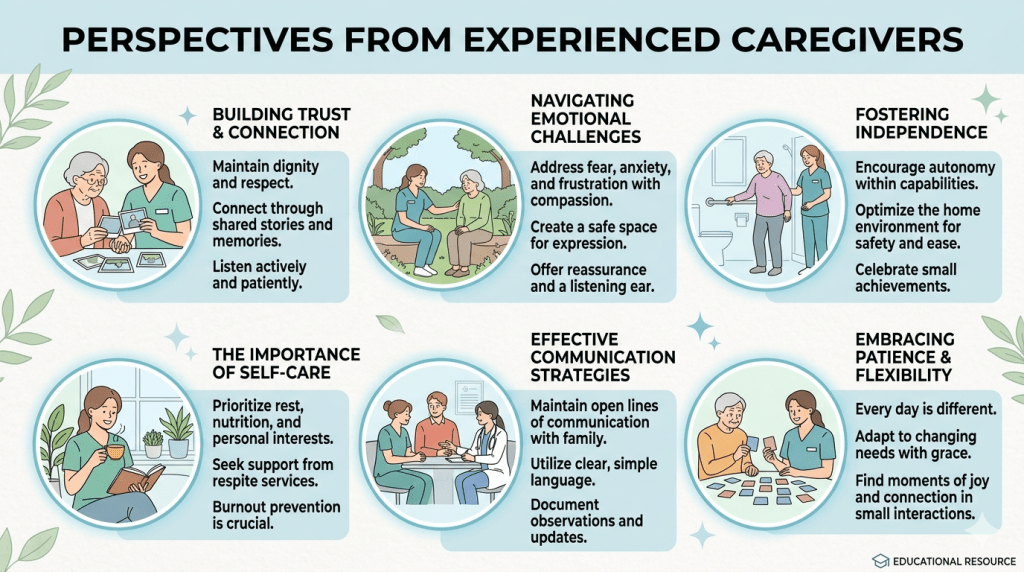
Listening to seasoned caregivers share their journeys taught me that difficult emotions don’t mean I love any less. Their stories create a powerful connection that makes you feel less alone.
Real-Life Stories and Lessons Learned
Many people start thinking, “This won’t happen to me—I love them too much.” But loving someone deeply doesn’t prevent overwhelming feelings. One person shared how they finally accepted that multiple emotions can coexist.
Common lessons emerge from these experiences. Asking for help earlier makes a huge difference. Perfect support doesn’t exist. Many wish they’d been kinder to themselves sooner.
Long-distance supporters find creative ways to connect despite limited hours. Video calls, shared photo albums, and regular check-ins maintain meaningful bonds. These approaches show love transcends physical distance.
Hearing honest stories from others normalizes your own experience. Every life situation is unique, but the emotional terrain feels remarkably familiar. There’s wisdom in learning from those who’ve walked this path before.
Steps Towards Emotional Growth and Acceptance

After hanging up from another rushed phone call, you wonder if you’re truly connecting or just checking boxes. This emotional evolution marks a turning point in your journey.
Growth doesn’t mean difficult emotions disappear completely. Instead, you develop a healthier relationship with them. They no longer control your life.
Practice acknowledging guilt when it arises. Then consciously choose to release it. Don’t let it take up permanent residence in your mind.
The shift begins with changing your inner dialogue. Move from “I should be doing more” to “I’m doing what I can.” Recognize reality with compassion rather than judgment.
Acceptance isn’t resignation—it’s wisdom. Many find renewed purpose once they release the stress clouding their experience. Your way forward becomes clearer.
Working with a therapist can accelerate this process. They provide tools for reframing negative thought patterns. This support helps you navigate complex feelings.
Remember this is gradual. Some days you’ll feel at peace. Other days the guilt may resurface. That’s okay—it’s part of being human.
The ultimate goal isn’t eliminating all negative emotions. It’s developing resilience so they don’t define your experience. Letting go is an act of love for your one loved one and yourself.
This emotional growth allows you to show up as a healthier, more present caregiver. Your journey transforms from burden to meaningful connection.
Conclusion
The distance between you and your loved one can sometimes feel like an impossible gap to bridge. That heavy feeling is something many people experience when providing support from afar.
Remember this truth: experiencing caregiver guilt doesn’t make you a bad person. It shows how deeply you care. Your love transcends the miles between you.
By prioritizing your well-being, accepting help, and releasing self-judgment, you can provide better care while preserving your own health and happiness. This journey in caregiving requires finding sustainable ways to balance your responsibilities.
Take one small step today. Reach out for support. Give yourself permission to rest. Your well-being matters just as much as your loved one’s.
Healing from guilt is possible. You deserve to experience this journey with more peace and connection. Your role as a caregiver, even from a distance, is meaningful and valid.