


Surprising fact: nearly one in three older people has at least one chronic condition tied to poor eating habits.
“Mom says she’s ‘fine’… but meals are smaller, and you’re wondering if she’s getting what her body needs.” That worry is normal.
Good nutrition means getting carbs, fats, protein, vitamins, minerals, and water so the body can work and stay strong. As people age, they often need fewer calories but still need the same key nutrients to keep energy steady and protect health.
This short guide will cover the daily basics: building a balanced day, filling common nutrient gaps, and making meals easier to manage. Expect simple, low-stress steps — quick swaps, easy shopping ideas, and routines that help healthy eating stick.
If your parent could use a friendly voice and daily check-ins, sign up for JoyCalls: https://app.joycalls.ai/signup — or call Joy now at 1-415-569-2439. JoyCalls is an AI phone companion that helps families stay connected while caregivers juggle life.
Key Takeaways
- Small choices each day can protect health and keep energy steadier.
- Eating needs change with aging: fewer calories, same nutrients.
- Focus on protein, vitamins, minerals, water, and lots of vegetables.
- Practical steps: quick swaps, simple shopping, repeatable routines.
- JoyCalls offers daily check-ins and summaries to ease caregiver stress.
Why Nutrition Needs Change With Age
As we get older, the same plate that worked in your 40s may not match what the body needs. Small shifts in appetite, strength, and activity change calorie needs and meal planning.
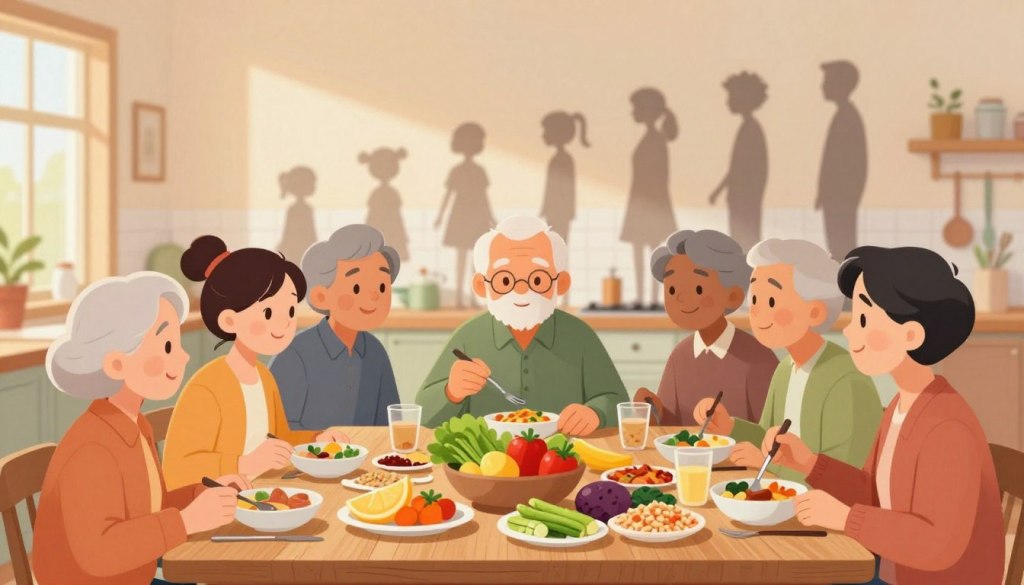
Needing fewer calories but more nutrient-dense foods
Calorie needs fall with age: many women 60+ often need about 1,600–2,200 calories, and men 60+ about 2,000–2,600. That means each bite should pack protein, vitamins, and minerals so every calorie counts.
Muscle, bone, and mobility changes
Muscle mass and strength drop faster in the 60s, so the body burns fewer calories. That can make weight feel puzzling—gaining in some places or losing when appetite falls.
Bones thin and mobility can slow. Shopping, cooking, and even sitting at a table may need simple adjustments.
Common roadblocks
Living alone, tight budgets, or low motivation can make meals smaller or less varied. Medicines may alter taste, cause dry mouth, or blunt appetite.
Chewing and swallowing issues are real health barriers, not picky behavior. Dental and medical teams can help.
Try JoyCalls Free
No app or new device needed. Start with a free 7-day trial.
Takeaway: These changes are common. With small swaps, community support, and steady routines, eating can feel doable again—one simple step at a time.
How to Build a Balanced Day of nutrition for older adults
A balanced day can feel like a checklist. Use MyPlate as your visual guide to pack fruits, vegetables, whole grains, protein foods, and dairy on each plate.
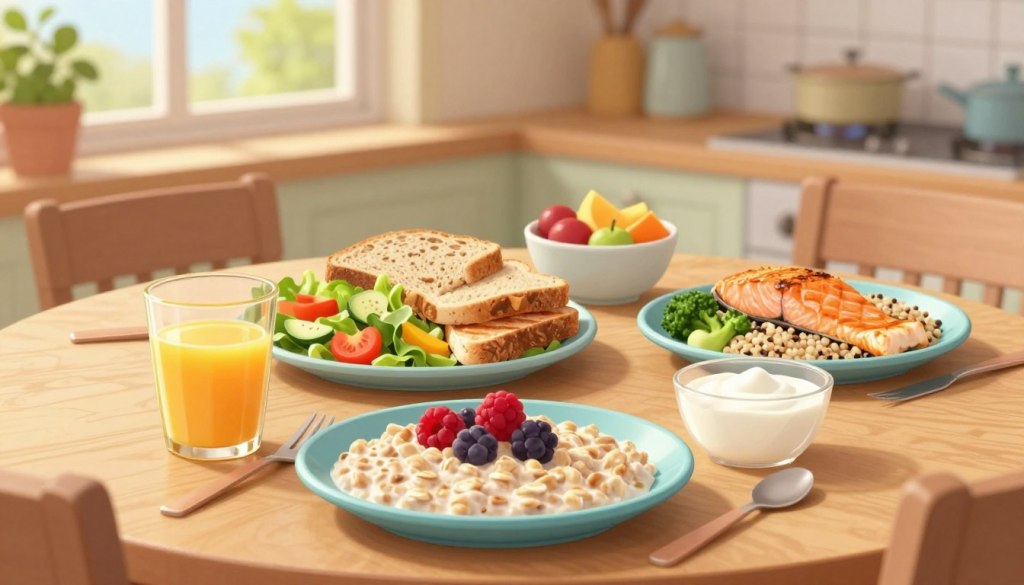
Practical MyPlate steps
Breakfast: oatmeal with berries and a spoon of nuts. Add low-fat milk or fortified soy if desired.
Lunch: a grain bowl with brown rice, beans (or legumes), roasted peppers, and a little chicken or tuna.
Dinner: half plate of colorful vegetables, a lean protein, and a whole-grain roll.
Easy extras and swaps
- Keep 2–3 grab-and-eat items in the fridge: yogurt, hard-boiled eggs, cut fruit.
- Choose whole grains like whole-wheat bread and brown rice for steady energy.
- Pick low-fat dairy or fortified milk to support calcium and vitamin D.
“Aim for small, colorful servings that add up through the day.”
Limit empty calories—chips, soda, sweets—and swap in fruit or nuts. See healthy meal planning tips for more ideas.
Key Nutrients Older Adults Often Miss and How to Get Enough
Some nutrient shortfalls sneak up slowly—mood dips, slower steps, and constipation can be the first clues.
Protein to keep strength
Protein helps preserve muscle as the body changes with age. Aim for about 5–6.5 oz total a day. That looks like one egg at breakfast, a Greek yogurt snack, a cup of beans at lunch, and a 3-oz fish or chicken portion at dinner. These choices help you get enough protein each meal.
Vitamin D and safe sun
Vitamin supports bone and mood. At 71 the target rises to about 20 mcg/day. Fatty fish like salmon (3 oz ≈ 14.2 mcg) and fortified milk (1 cup ≈ 2.9 mcg) help. Safe sunlight or fortified foods are easy ways to get more vitamin.
Calcium and bone health
Women 51+ and men 71+ need more calcium. Low-fat dairy, fortified alternatives (soy), leafy greens, and edamame are food-first options.
Try JoyCalls Free
No app or new device needed. Start with a free 7-day trial.
Vitamin B12, hydration, and fiber
Vitamin B12 absorption can fall with age and some meds. Animal foods and fortified cereals boost stores. Plain water, soups, and set “drink times” help when thirst fades. Fiber from whole grains, beans, fruits, and vegetables supports heart health and lowers diabetes risk—add it slowly and drink more.
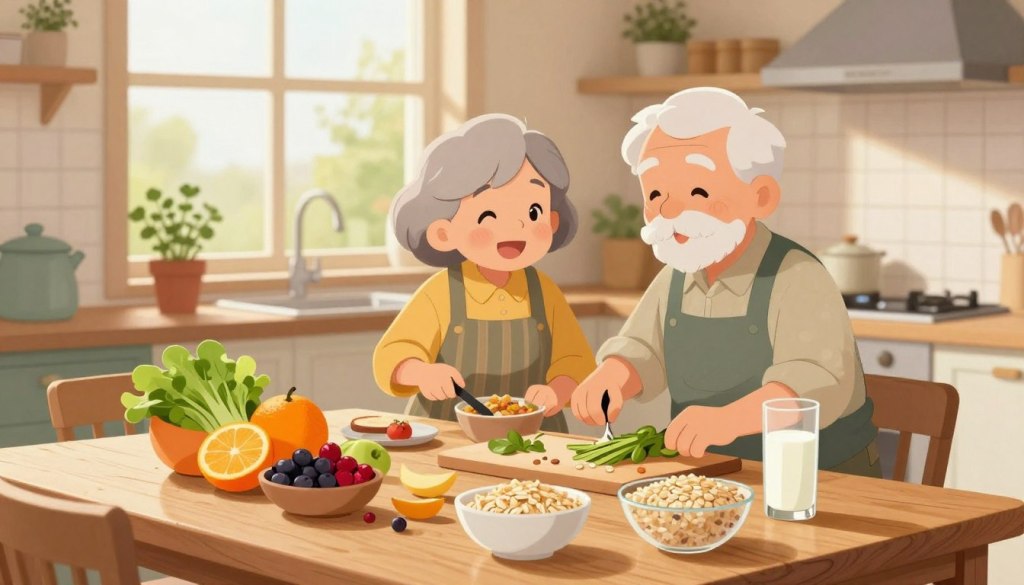
| Nutrient | Daily goal | Top food sources |
|---|---|---|
| Protein | 5–6.5 oz/day | Eggs, Greek yogurt, beans, chicken, fish |
| Vitamin D | ~20 mcg/day (71+) | Salmon, trout, fortified milk, sunlight |
| Calcium | 1,200 mg/day (women 51+, men 71+) | Low-fat dairy, fortified soy, leafy greens |
| Vitamin B12 | Varies; monitor absorption | Meat, fish, dairy, fortified cereals |
Want a caregiver guide to practical steps? See helping older adults eat well for more tips.
Easy Meal Planning Strategies That Make Healthy Eating Stick
Simple rhythms—same wake-up, same snacks—can rescue a shaky appetite and smooth the day.
Set a gentle meal routine
Pick three set times for a main meal and add 1–2 planned snacks. A steady schedule can help appetite and keep energy more even through the day.
Smaller, frequent meals that add up
Offer 5–6 mini-meals when appetite is low. A few bites, more often, still counts. This choice eases digestion and makes protein and vegetables easier to include.
Make food easier to eat
Soft textures and added moisture reduce frustration. Try scrambled eggs, mashed veggies, yogurts, stews, or smoothies.
Finger foods—cheese cubes, soft fruit, mini sandwiches—help when coordination is a challenge.
Boost flavor without lots of salt
Use a simple flavor toolkit: garlic powder, basil, cumin, lemon or vinegar. These give taste without extra salt and make healthy eating feel satisfying.
Where supplements fit and social meals
Oral nutrition supplements, fortified drinks, and smoothies can fill gaps on low-intake days. Use them as snacks while still aiming for real foods when possible.
Eating with others—community meals, potlucks, or a weekly dinner date—can lift mood and appetite fast.
“Routines cut the daily decision load. When energy is low, small, planned steps win.”
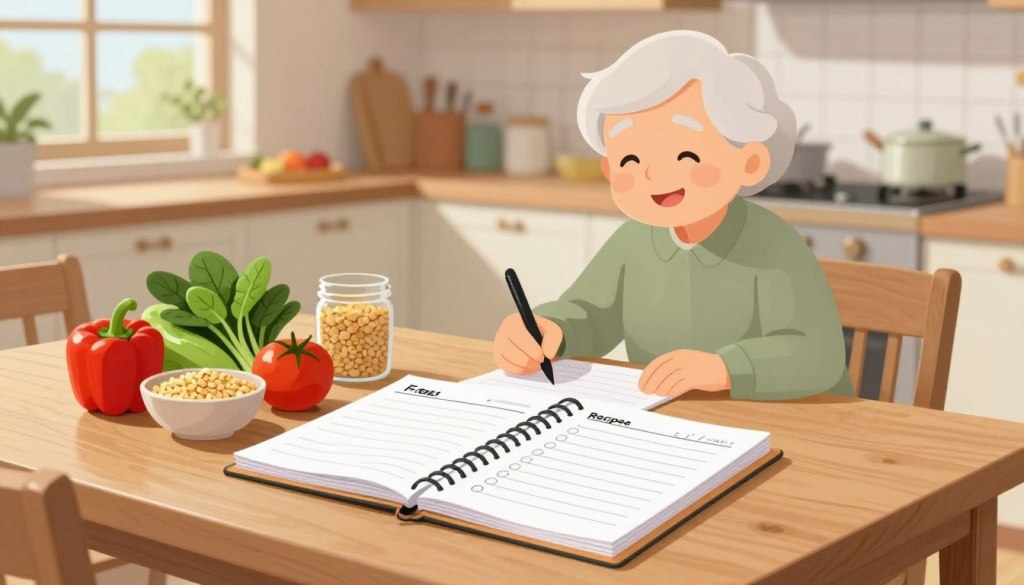
| Strategy | Quick example | Why it helps |
|---|---|---|
| Routine | Same breakfast, lunch, dinner, + snack | Steadies appetite and energy |
| Easy textures | Oatmeal, stews, yogurt | Less chewing, more calories |
| Flavor toolkit | Lemon, herbs, vinegar | Tastes great with less salt |
| Smart convenience | Rotisserie chicken, canned beans, milk | Quick, nutrient-rich choices |
When Health Conditions or Low Appetite Get in the Way
Illness, meds, or low appetite can turn mealtime into a puzzle—let’s simplify the pieces. Sometimes “eat better” isn’t realistic. We build plans around what someone can do each day.

Smart choices for heart disease, high blood pressure, and diabetes
DASH-style eating works well for heart health and blood pressure. Eat more vegetables, fruits, whole grains, and legumes. Cut processed foods and watch sodium and saturated fats.
For diabetes, pick steady meals with protein and fiber—beans, whole grains, and veggies help steady blood sugar without fuss.
When oral supplements, smoothies, or fortified drinks can help
Low appetite or recent illness? Small, calorie- and protein-rich bites help with weight and strength.
- High-impact bites: Greek yogurt, eggs, nut butter, bean soups.
- Use one supplements shake or a smoothie as a mini-meal after talking with a clinician.
- Choose fortified soy or dairy options to support calcium and vitamin b12.
When to talk to a dentist, dietitian, or speech-language pathologist
If chewing hurts—see a dentist. If swallowing causes coughing or fear, ask a doctor about a speech-language pathologist. Complex chronic disease? A registered dietitian can tailor safe, practical choices.
Getting help early is not overreacting. It protects health and keeps small problems from growing.
Conclusion
You don’t need a perfect plan—just steady, simple steps. One good grocery run, a repeatable meal, and small swaps can protect health as people face changes with aging.
Daily basics: balanced food groups, colorful vegetables and whole grains, enough protein, fluids, and attention to vitamins and minerals like vitamin b12.
Quick checklist: MyPlate-style portions; protein at each meal; fluids; a social meal each week. Let older adults take part in choices so eating feels respectful, not forced.
Worried? That worry is love. Small steps—one routine, one social lunch—add up.
Sign up for JoyCalls: https://app.joycalls.ai/signup. Talk to Joy now: 1-415-569-2439. Learn more about healthy patterns at patterns for healthy aging.