


What if your daily calls could transform from obligatory checkboxes into moments that truly strengthen your bond?
You love your mom and dad deeply. As they navigate their golden years, that love comes with natural worry. Are they taking their medication? Are they feeling lonely? The desire to ensure their safety is powerful, but so is the need to respect their independence.
The challenge lies in finding that perfect balance. You want to be present without hovering. You need peace of mind without making your loved one feel surveilled. This isn’t about monitoring like a security camera—it’s about creating genuine connection.
When done right, daily contact becomes something you both look forward to. It becomes less about “checking up” and more about checking in. These moments can be filled with laughter, shared stories, and real conversation that nourishes everyone involved.
Whether your family lives across town or across the country, building a coordinated support system that prioritizes connection first makes all the difference. Tools like JoyCalls can help bridge the gap, offering gentle daily companionship while keeping you informed.
By focusing on relationship-building rather than surveillance, you create a routine that honors autonomy while providing the care and connection every family deserves.
Key Takeaways
- Daily contact should focus on building genuine relationships, not just monitoring safety
- Respecting independence is crucial for maintaining dignity and trust
- Connection-focused routines reduce anxiety for both you and your loved one
- Simple conversations can provide emotional support and meaningful engagement
- Tools like JoyCalls can complement family check-ins with consistent companionship
- Balancing care with autonomy creates sustainable support systems
- Quality time matters more than frequency of contact
Understanding the Value of Meaningful Check-Ins with Elderly Parents
Imagine discovering a treasure chest of stories every time you talk with your mom or dad. These moments become more than just routine contacts. They transform into opportunities for genuine connection.
Exploring the Benefits of Active Listening and Open-Ended Questions
True connection begins with active listening. This means giving your full attention without distractions. Put away your phone and focus completely on the conversation.
Ask open-ended questions that invite detailed responses. Instead of “Did you have a good day?” try “What was the most interesting part of your day?” These questions encourage storytelling rather than simple answers.

When you practice real listening, your parents feel truly heard. This validation strengthens your bond and builds trust. It shows that their experiences matter to you.
Recognizing the Role of Family History and Shared Memories
Your parents hold decades of family history in their memories. Asking about their childhood or early adulthood unlocks precious stories. These narratives help preserve your family legacy.
Try JoyCalls Free
No app or new device needed. Start with a free 7-day trial.
Exploring photo albums or cherished items can spark wonderful conversation. You might learn about relatives you never met or traditions that shaped your life. Each shared memory deepens your understanding of where you came from.
For more conversation starters that avoid awkward small talk, explore our helpful guide. These techniques turn simple check-ins into rich exchanges that nourish both of you.
Creating a Structured Daily Routine for Connection
Creating a daily structure turns worry into warm, predictable moments. Consistency builds trust and makes care feel natural. Your loved one knows what to expect each day.
This rhythm provides comfort for seniors living independently. It creates a sense of security at home. The routine becomes something you both appreciate.
Establishing Morning and Evening Check-In Rituals
Start the day with a simple morning connection. A quick text or call sets a positive tone. Ask about sleep quality or daily plans.

Evening conversations help wind down together. Share highlights from the day in a relaxed way. This creates peaceful closure before bedtime.
Weekly visits add another layer of connection. Schedule regular outings or coffee dates. These moments strengthen bonds beyond phone calls.
Integrating Flexibility to Accommodate Changing Needs
Life requires adaptability in any care routine. Sometimes work demands or health issues arise. Clear communication maintains trust during changes.
A simple “I’ll call tomorrow instead” keeps connections strong. This approach shows respect for everyone’s time. It prevents routines from feeling rigid.
Notice when your loved one’s needs evolve. They might require more support after an illness. Or less contact during periods of independence.
Try JoyCalls Free
No app or new device needed. Start with a free 7-day trial.
This balanced approach makes daily phone check-ins sustainable long-term. Structure provides comfort while flexibility maintains natural flow.
Engaging in Authentic Conversations and Storytelling

Have you ever noticed how a simple question can unlock decades of cherished memories? These exchanges become more than just talk—they’re bridges to understanding someone’s entire life journey.
Using Open-Ended Questions to Unlock Memories
The right questions open doors to precious stories. Instead of yes-or-no queries, try ones that invite reflection and detail.
| Question Type | Example Questions | Potential Outcomes |
|---|---|---|
| Childhood Memories | “What was your neighborhood like growing up?” | Shared family history, nostalgic stories |
| Life Lessons | “What wisdom would you share with your younger self?” | Personal insights, generational wisdom |
| Personal Achievements | “What accomplishment makes you most proud?” | Self-esteem boost, legacy recognition |
These conversation starters create space for rich storytelling. They show genuine interest in someone’s unique life experience.
Employing Active Listening to Foster Deeper Bonds

True listening means giving your full attention. Put away distractions and focus completely on the person speaking.
Notice body language and emotional cues. Respond with thoughtful comments that show you’re engaged. This quality attention makes people feel valued and heard.
When conversations flow naturally, they combat isolation and build emotional connection. For those times when you can’t be there, consistent companionship can provide similar social benefits through daily engagement.
Utilizing Technology Tools for Simplified Communication
Technology offers a lifeline for busy families wanting to maintain close connections across distances. The right tools transform daily care from a logistical challenge into a seamless act of love.
They help you stay connected without adding pressure to anyone’s schedule. This approach respects independence while providing gentle support.
Incorporating JoyCalls for Virtual Check-Ins
Video calls let you see your loved ones and notice small details. A quick FaceTime session feels more personal than a regular phone call.

But JoyCalls takes this a step further. It’s an AI-powered phone companion that makes daily calls to seniors. No app or special device is needed on their end.
The service provides conversation summaries and alerts to family members. This gives you peace of mind while offering consistent contact. You can sign up for JoyCalls here to start this simple way of ensuring daily engagement.
Leveraging Additional Platforms for Reminders and Updates
Messaging apps work well for quick “thinking of you” notes. A simple text can brighten someone’s day without being intrusive.
Smart home devices like Alexa can set medication reminders. They also provide entertainment and hands-free calling options.
Finding the right mix of technology helps everyone feel supported. As one family caregiving resource notes, tools should simplify communication rather than complicate it.
These solutions are particularly valuable for long-distance caregiving situations. They help keep an eye on well-being while nurturing relationships from afar.
Technology will never replace human touch. But it certainly makes staying connected easier during busy times.
Balancing Independence and Support in Daily Care
Finding the right balance between helping and hovering can feel like walking a tightrope. Your loved one has built a full life of independence—this deserves honor, not takeover.
The sweet spot? Being a partner rather than a manager. Offer support but let them make final decisions. Small ways to help include medication reminders they control or grocery shopping where they choose the menu.

Encouraging Self-Sufficiency while Offering Gentle Assistance
Celebrate what your loved ones can do rather than focusing on limitations. Highlighting strengths boosts confidence. Simple safety tools like grab bars or medical alerts help them maintain independence at home.
Keep communication open. Sometimes the best support is asking, “Is there anything you’d like help with this week?” This approach respects their autonomy while showing you care.
Sharing the Responsibility with Family Members and Care Providers
Caregiving shouldn’t be a solo mission. Sharing responsibility prevents burnout and provides well-rounded support. Coordinate with family members using shared calendars or group chats.
When family members aren’t available, consider a professional care provider or trusted neighbors. Part-time home care services can reduce daily burdens while keeping your loved ones safe.
This balanced approach allows seniors to continue living with dignity. As explored in this resource on personal freedom for seniors, the goal is being present without hovering—creating sustainable support that honors independence.
How to Build a Check-In Routine That Feels Supportive Every Single Day
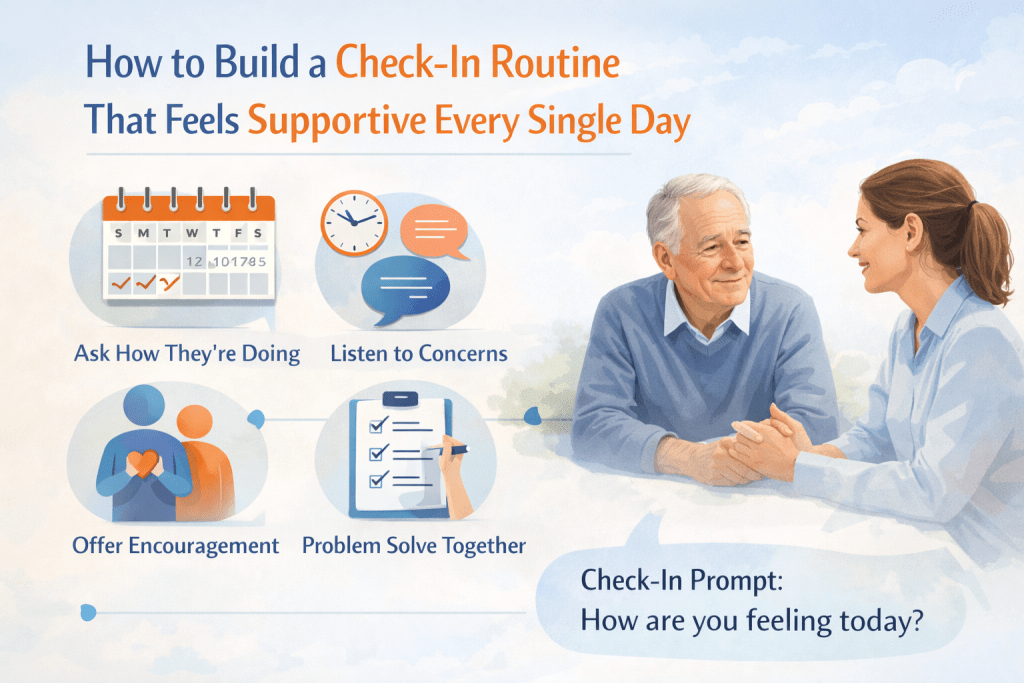
A daily check-in works best when it does not feel like a test, a duty, or a hidden inspection. It should feel like a natural part of the relationship. That sounds simple, but in real life, many families struggle here. Calls become too rushed. Questions become too repetitive. Seniors begin answering with “I’m fine” before the conversation even starts. Adult children feel guilty, frustrated, or unsure whether they are helping enough. Over time, the routine may still exist, but the connection inside it starts to fade.
That is why a truly effective daily check-in needs more than good intentions. It needs design.
Not a cold, clinical design. A human one.
When you build a routine strategically, you reduce friction for everyone involved. You make it easier for an older adult to participate without feeling managed. You make it easier for family members to stay consistent without burning out. Most importantly, you create a structure that protects the emotional value of the interaction instead of draining it.
A supportive check-in routine has three jobs at once. First, it should help the older adult feel emotionally connected, respected, and remembered. Second, it should quietly help the family notice changes in mood, energy, appetite, routine, and confidence without turning the conversation into surveillance. Third, it should be sustainable enough to continue through busy weeks, stressful seasons, health changes, and the unpredictability of everyday life.
That last point matters more than many people realize. A routine that looks perfect on paper but is too complicated to maintain will not serve anyone for long. A better routine is one that real people can keep doing. It should be warm, simple, and flexible. It should match the senior’s personality, preferences, energy level, and communication style. It should also reflect the family’s actual capacity rather than an idealized version of what they wish they could do.
Many seniors do not resist connection. They resist feeling handled. They resist being asked the same narrow questions every day. They resist sensing worry in someone else’s voice before they have even said hello. When a check-in begins with tension, suspicion, or pressure, the conversation naturally becomes shorter and less honest. When it begins with dignity and familiarity, the person is more likely to open up.
This is why the most effective routines are not built around the question, “How do I make sure nothing is wrong?” They are built around a better question: “How do I make this interaction feel good enough that both of us want to keep showing up for it?”
That shift changes everything.
Start With a Preference-Based Routine, Not a Generic One
One of the biggest mistakes families make is assuming that all seniors want the same kind of contact. They do not. Some older adults love a predictable morning phone call. Others are slower to wake up and feel much more conversational in the afternoon. Some enjoy short but frequent touchpoints. Others prefer one meaningful conversation a day and dislike being interrupted multiple times.
A strong routine begins with preference, not assumption.
Think through a few practical questions:
What time of day feels best for them?
Do they seem more alert after breakfast? More reflective in the evening? More social after a walk or favorite TV program? Try to match the check-in to the time of day when they are most emotionally and mentally available.
What communication format feels easiest?
Some older adults prefer phone calls because they feel personal and familiar. Others may like voice notes, simple texts, or a mix of both. If hearing is a challenge, video may help. If technology is stressful, simpler is better. The right method is the one they can use comfortably and consistently.
How long should the check-in actually be?
Longer is not always better. For some seniors, a ten-minute call with full attention is far more meaningful than a thirty-minute distracted conversation. The goal is not duration. The goal is quality and rhythm.
What tone makes them feel respected?
Some people respond best to warmth and humor. Others appreciate a calm, direct style. Some love storytelling. Others prefer practical conversation with a few personal moments woven in. A caring routine should sound like a relationship, not a template.
A helpful way to build this is to simply ask. Not in a formal or overly serious way, but naturally. You can say, “I want our check-ins to feel helpful and easy for you too. What kind of call feels nicest? Short in the morning? Longer later in the day? Every day at the same time or more flexible?”
That question alone communicates something powerful: your comfort matters too.
And that message can reduce resistance immediately.
Create a Gentle Structure So the Conversation Does Not Feel Repetitive
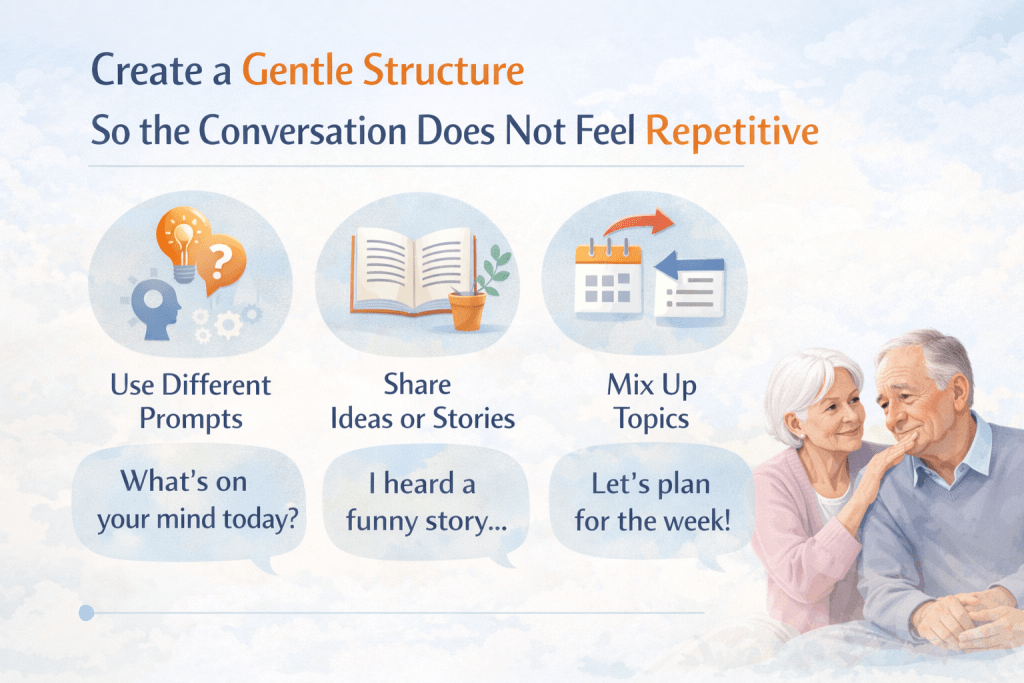
Once a routine is in place, the next challenge is avoiding the same conversation every day. This is where many check-ins start losing emotional energy.
If every call follows the same script, it can quickly become stale:
Did you eat?
Did you take your medicine?
How are you feeling?
Do you need anything?
Those questions may be practical, but on their own, they can make the older adult feel like a task list. Even worse, they often invite one-word answers. A better approach is to create a loose conversational structure that includes both emotional connection and practical awareness.
A useful pattern is this:
1. Open with warmth, not assessment
Start with something relational before anything functional.
Examples:
- “I was thinking about you when I saw that rain this morning.”
- “You crossed my mind when I passed that bakery you like.”
- “I wanted to hear your voice before I got busy.”
This immediately changes the emotional tone. It says, “I’m calling because you matter,” not just “I’m calling to check status.”
2. Move into one anchor question
Choose one question that opens the day in a natural way.
Examples:
- “What has your day been like so far?”
- “What are you in the mood to do today?”
- “What felt good today?”
- “What has been on your mind?”
These questions allow a person to reveal much more than they would through a yes-or-no response. You may hear about mood, energy, appetite, plans, frustrations, boredom, loneliness, or pride without forcing any of it.
3. Add one practical touchpoint naturally
Instead of listing health and safety questions, weave one practical check gently into the conversation.
Examples:
- “Did breakfast happen before or after the paper today?”
- “How did your walk go?”
- “What time did you end up taking your pills?”
- “Did you get a chance to rest after lunch?”
The difference is subtle but important. You are inviting conversation around daily rhythm instead of interrogating compliance.
4. End with something steady and reassuring
The closing matters. It gives the conversation emotional shape.
Examples:
- “I’m glad we talked.”
- “I loved hearing that story.”
- “I’ll call tomorrow and you can tell me how that recipe turned out.”
- “Take your time this evening and be gentle with yourself.”
A good ending creates continuity. It makes the next check-in feel like part of an ongoing relationship, not a disconnected series of welfare checks.
Use Weekly Themes to Keep Daily Calls Fresh and Meaningful

One of the easiest ways to improve a daily check-in routine is to stop expecting every conversation to do everything. Daily calls do not all need the same purpose.
Instead, you can give different days different emotional flavors. This makes the routine feel lighter and more engaging while still keeping it useful.
Here is one simple way to do that:
Monday: Set the tone for the week
Focus on plans, appointments, intentions, and energy.
- “What would make this week feel like a good one?”
- “Is there anything you want to get done this week?”
Tuesday: Memory and meaning
Invite stories, reflections, or family history.
- “What was something you loved doing at my age?”
- “Who taught you the most about resilience?”
Wednesday: Practical comfort check
Gently touch on meals, medication, sleep, mobility, or home needs.
- “How has your energy been this week?”
- “Is anything at home feeling more difficult than usual?”
Thursday: Joy and interest
Talk about music, books, TV, hobbies, weather, neighbors, or favorite routines.
- “What gave you even a small bit of pleasure today?”
- “What are you enjoying lately?”
Friday: Social connection
Ask about other people in their world.
- “Who have you spoken to this week?”
- “Has anyone made you laugh recently?”
Saturday: Family bridge-building
Share photos, memories, updates, or involve grandchildren if appropriate.
- “I wanted to tell you something funny that happened today.”
- “Can you settle a family debate for us?”
Sunday: Reflection and reassurance
End the week with calm, gratitude, and emotional grounding.
- “What felt hardest this week?”
- “What felt steady or comforting?”
This kind of structure prevents monotony without making the routine complicated. It also helps family members cover emotional, practical, and social dimensions over time rather than trying to fit all of them into every single interaction.
Know the Difference Between a Short Reply and a Real Red Flag

Families often become anxious when an older loved one gives brief responses. But not every short conversation is a warning sign. Some days people are simply tired, distracted, or not in the mood to talk. The goal is not to overreact to every low-energy call. The goal is to notice patterns.
A single “I’m okay, just tired” may mean very little. But a cluster of changes over several days deserves attention.
Pay closer attention when you notice patterns like:
- unusual withdrawal from conversations they normally enjoy
- confusion around routine details they usually remember
- repeated references to poor sleep, skipped meals, or low appetite
- noticeable irritability, hopelessness, or flatness in tone
- loss of interest in familiar people, hobbies, or rituals
- vague answers that feel unlike their usual communication style
- repeated signs that managing daily tasks is becoming harder
You do not need to panic. You do need to stay observant.
A helpful rule is this: do not respond to one moment; respond to a pattern.
If something feels off, stay calm and curious. Ask softer follow-up questions instead of jumping into alarm.
For example:
- “You sound a little more tired than usual. Has it been that kind of day, or has the whole week felt heavier?”
- “You seem less chatty today. Want to tell me what’s been going on?”
- “I may be wrong, but you sound a bit discouraged. Is anything weighing on you?”
These questions are respectful. They make room for honesty without cornering the person.
Build a Family System That Protects the Senior From Feeling Overmanaged
A common problem in families is that everyone cares, but nobody coordinates. The result is overwhelming for the senior and exhausting for the family. One person calls at breakfast, another texts during lunch, another asks the same medication question at 4 p.m., and by evening the older adult feels watched rather than supported.
This is why a healthy check-in system should be coordinated behind the scenes even if it feels effortless on the surface.
Here are a few practical ways to do that:
Decide who is best for which kind of contact
Not every family member has the same relational role. One may be best at emotional support. Another may be great with practical details. A grandchild may bring joy and energy. A sibling may handle appointments well.
Use people according to their strengths instead of expecting everyone to do the same thing.
Avoid duplicate questioning
If one person has already confirmed a doctor’s visit, meal issue, or medication concern, the next person does not need to repeat it unless there is a reason. Repetition can make the older adult feel like they are being tracked.
Share observations, not just tasks
A strong family support system does not only pass along logistics. It also shares tone.
For example:
- “She sounded cheerful today.”
- “He was more forgetful than usual.”
- “She seemed lonely after dinner.”
- “He was proud that he cooked for himself.”
These emotional observations help the family understand the person’s lived experience, not just their checklist status.
Respect the senior’s identity in the process
Never build a family system that turns the older adult into a case file. Keep the language human. Keep them included where appropriate. The purpose is better support, not private management.
Have a “Low-Energy Day” Version of the Routine
Not every day will support a full conversation. Illness, grief, fatigue, appointments, poor sleep, emotional strain, or simple mood fluctuations can all change what is realistic.
This is where many routines fail. Families assume the check-in only “counts” if it looks a certain way. But a sustainable routine has layers.
A full-strength check-in may be a warm 15-minute conversation. A low-energy version may be 3 minutes and still matter deeply.
On difficult days, the goal becomes simple:
- make contact
- communicate care
- gather only what is essential
- reduce pressure
A low-energy script might sound like this:
“I won’t keep you long. I just wanted to hear your voice and make sure you’re settled. Have you eaten something? Is there anything that feels difficult right now? I’m with you, and we can talk more tomorrow.”
This kind of check-in protects connection during harder seasons. It says, “Even when conversation is limited, care is still present.”
That consistency builds trust.
Give Seniors More Control So They Stay Emotionally Engaged
One of the most powerful ways to improve a daily check-in is to give the older adult more authorship in it.
Instead of always deciding the topic, pace, and purpose yourself, let them shape parts of the routine. Ask what they would enjoy discussing more often. Invite them to choose a weekly topic. Let them decide whether today’s call is for storytelling, venting, practical matters, or simply companionship.
You can say:
- “What do you wish people asked you more often?”
- “What kinds of conversations do you actually enjoy?”
- “Would you rather talk about your day, something practical, or just chat today?”
- “Is there anything about these check-ins you’d want to change?”
These questions do two important things. First, they improve the quality of the routine. Second, they preserve dignity. The older adult remains an active participant, not a passive recipient of concern.
That distinction matters greatly, especially for seniors who are sensitive to dependence, loss of control, or feeling like a burden.
Turn the Routine Into a Source of Emotional Safety, Not Obligation
At its best, a daily check-in becomes a small emotional anchor in the day. Something reliable. Something warm. Something that tells an older adult, “You are still part of the rhythm of other people’s lives.”
That kind of connection is deeply stabilizing.
But it only happens when the check-in feels safe enough for real emotion. Not just polished updates. Not just “Everything’s fine.” Not just performance.
Emotional safety grows when the senior feels:
- they will not be judged for having a bad day
- they do not need to sound cheerful to be loved
- they can express frustration without creating panic
- they can ask for help without losing respect
- they can say “not today” sometimes without guilt
When families create that environment, conversations become more honest. And honesty is what makes support effective.
A relationship-first check-in is not about extracting information. It is about creating the kind of repeated contact in which truth naturally appears.
And that is exactly what makes it both compassionate and practical.
A Simple Standard to Measure Whether Your Routine Is Working
If you want to know whether your check-in routine is healthy, ask these questions:
- Does the older adult usually seem calmer, warmer, or more connected after the interaction?
- Does the routine feel sustainable for the family?
- Are you learning useful things naturally, without constant interrogation?
- Is the person’s dignity staying intact?
- Are signs of struggle becoming easier to notice over time?
- Does the contact feel like a relationship, not a report?
If the answer is yes to most of these, the routine is probably doing what it should.
If not, the solution is usually not more contact. It is better contact.
That may mean changing the time, reducing the number of questions, improving coordination among family members, varying conversation topics, or giving the senior more control. Small shifts can make a huge difference.
A daily check-in does not have to be perfect to be meaningful. It just needs to feel steady, respectful, and real. When it does, it becomes more than a habit. It becomes part of how love is expressed in everyday life.
How to Respond When a Loved One Pulls Away, Gets Defensive, or Says “I’m Fine”
One of the hardest parts of maintaining a daily check-in routine is not remembering to call. It is knowing what to do when the person on the other end does not seem to want the call at all.
Many adult children begin with loving intentions. They want to stay close. They want to make sure nothing is wrong. They want to catch problems early and offer comfort before things get harder. But despite all that care, the senior may sound distant, irritated, dismissive, or uninterested. Some answer every question with “I’m fine.” Some change the subject quickly. Some insist they do not need help. Some act offended by concern. Others simply stop engaging in the way they once did.
This can be painful and confusing. It can make family members wonder whether they are being rejected, whether they are asking the wrong things, or whether something serious is being hidden. In many homes, this is the moment where a check-in routine starts to break down. The caller becomes more anxious and more persistent. The older adult becomes more guarded and more resistant. Both people care, but the conversation starts feeling strained.
That dynamic is more common than many families realize.
Resistance does not always mean your loved one does not value the relationship. Often, it means something else is going on underneath the surface. They may be protecting their independence. They may be tired of being treated as fragile. They may feel embarrassed about memory changes, mobility issues, or how hard daily life has become. They may not want to worry you. They may be grieving the loss of control that often comes with aging. They may simply feel exhausted by repetitive questions that make them feel observed instead of known.
A check-in routine becomes truly effective when you learn to recognize this resistance not as a dead end, but as information.
It is a signal about emotional needs.
Sometimes the need is dignity. Sometimes it is privacy. Sometimes it is choice. Sometimes it is simply a different kind of conversation.
The mistake many families make is trying to push past resistance with more pressure. They ask more direct questions, call more often, repeat the same concerns more firmly, or try to reason the person into openness. That usually backfires. Defensiveness rarely softens under pressure. It softens under safety.
If you want better conversations, the goal is not to win the interaction. The goal is to lower threat inside the interaction.
When the older adult feels less judged, less cornered, and less managed, they are more likely to become honest. And honesty is what you need if you truly want to support them well.
Understand What “I’m Fine” Can Really Mean
“I’m fine” is one of the most common phrases in caregiving conversations, and it can mean many different things.
Sometimes it means exactly what it says. Nothing is wrong, and the person simply does not feel like talking much. But often, it is shorthand for something more layered.
It can mean:
- “I do not want to worry you.”
- “I am tired and do not want to explain.”
- “I do not want this call to become about my limitations.”
- “I am frustrated, but I do not know how to talk about it.”
- “I want to stay independent.”
- “I do not want to be treated like a patient.”
- “I am not ready to say what is actually happening.”
This is why reacting to “I’m fine” too literally can be a mistake. It is not always the end of the conversation. But it is also not an invitation to interrogate. It is usually a moment that calls for better emotional reading.
Pay attention to the tone underneath the words. Is “I’m fine” brisk and irritated? Flat and low-energy? Polite but closed off? Tired? Hurt? Defensive? Distracted? Tone will often tell you more than the phrase itself.
Instead of immediately challenging the statement with “You don’t sound fine” or “What’s wrong?” try a gentler response that keeps the door open.
You might say:
- “Okay, I hear you. I just wanted to check in and say hello.”
- “Glad to hear that. How has the day felt?”
- “That’s good. What’s been the main event of the day?”
- “Alright. I won’t push — I just like hearing your voice.”
These responses reduce tension. They communicate care without confrontation. They also leave room for the person to expand if they want to.
Very often, when pressure drops, truth rises.
Why Seniors Sometimes Resist Care Even When They Need It
To respond well, it helps to understand why resistance happens in the first place. A senior who rejects help is not always rejecting love. They may be reacting to what the help seems to represent.
For many older adults, accepting support can feel emotionally complicated. It can carry meanings they never asked for. It may feel like proof that they are slowing down. It may stir fear about losing privacy, authority, or choice. It may remind them that roles in the family are changing in ways that feel uncomfortable or sad.
An adult child may think, “I’m just asking whether you ate lunch.” But the older parent may hear, “You can’t manage your own day.”
That gap in perception matters.
Here are some common emotional drivers of resistance:
Fear of losing independence
Many seniors have spent decades taking care of themselves and others. Being asked detailed daily questions can feel like their competence is being quietly reevaluated.
Desire to protect identity
Aging can bring losses, but most seniors still want to be seen as the same full person they have always been. If conversations focus too heavily on medication, symptoms, memory, or safety, they may begin to feel reduced to needs instead of recognized as a whole person.
Shame or embarrassment
Struggling with hearing, memory, housekeeping, pain, bathing, or mobility can be deeply personal. Some older adults hide difficulties because they do not want pity or unwanted intervention.
Fear of becoming a burden
Many parents worry that being honest about hard days will cause their children stress, guilt, or disruption. So they minimize.
Fatigue from repetitive concern
Even loving concern can feel exhausting if every interaction circles the same worries. The person may pull away simply because they want one conversation that feels normal.
When you understand these emotional layers, you stop treating resistance as stubbornness alone. You start treating it as communication.
And once you do that, your tone changes. Your patience changes. Your strategy changes.
Do Not Start With Correction. Start With Emotional Alignment
When a senior becomes defensive, the instinct is often to correct, explain, or persuade.
Examples:
- “I’m only trying to help.”
- “You know I have to ask.”
- “You’re being difficult.”
- “If you’d just answer me, this would be easier.”
- “I wouldn’t have to worry if you told me the truth.”
Even when these statements come from stress and love, they usually escalate the situation. They make the older adult feel blamed or managed.
A better first move is emotional alignment.
This means showing that you understand what the moment may feel like for them before trying to steer the conversation. Emotional alignment does not mean agreeing with everything. It means lowering defensiveness by showing respect for their internal experience.
For example:
- “I know you don’t want every call to feel like a health report.”
- “I get that too many questions can feel annoying.”
- “I know your independence matters a lot to you.”
- “I’m not trying to take over. I care, and I want us to find a way that feels better for both of us.”
These statements can completely change the texture of the conversation. They tell the person: I see your side too.
That is often the first step toward cooperation.
Replace High-Pressure Questions With Low-Pressure Invitations
If your loved one tends to shut down under direct questioning, one of the best changes you can make is to shift from interrogation-style questions to invitation-style questions.
High-pressure questions often sound like:
- “Did you take your medication?”
- “Why didn’t you answer earlier?”
- “What exactly did you eat?”
- “Have you been doing your exercises?”
- “Are you forgetting things again?”
Even when these questions are practical, they can trigger defensiveness because they sound evaluative.
Low-pressure invitations sound like:
- “How has your routine been feeling today?”
- “What part of the day felt easiest?”
- “Did anything throw off your usual flow?”
- “How are you feeling about things at home lately?”
- “What has felt a little harder than usual, if anything?”
These questions create more room. They let the older adult describe their experience in their own words. And because they are less accusatory, they often lead to more honest answers.
This approach is especially useful when you suspect something is off but do not want to trigger withdrawal.
Learn to Listen for What Is Missing
Families often focus on what a loved one says, but in daily check-ins, what is missing can be just as important.
Maybe your mother usually tells long stories but now ends the call quickly. Maybe your father usually mentions the neighbor, the garden, or the newspaper, but now offers very little detail about the day. Maybe someone who usually asks about your children no longer does. Maybe humor disappears. Maybe pride disappears. Maybe annoyance replaces warmth.
These absences matter.
Changes in conversational style can reflect low mood, fatigue, confusion, pain, discouragement, or social withdrawal. They do not always signal a crisis, but they are worth noticing.
A helpful habit is to mentally track three things over time:
- tone
- detail
- initiative
Ask yourself:
- Do they sound like themselves?
- Are they sharing normal levels of detail?
- Are they initiating parts of the conversation, or only responding minimally?
You do not need to announce these observations. Just let them guide how you respond. The goal is not to become suspicious of every quiet day. The goal is to become more emotionally accurate over time.
What to Say When a Loved One Gets Irritated by Check-Ins
Some older adults respond with irritation not because they do not care, but because they feel the call has become too loaded. If this happens often, it helps to de-escalate without retreating emotionally.
Here are a few helpful responses:
If they say, “You don’t have to keep checking on me.”
You can say:
“I hear you. I’m not trying to crowd you. Staying in touch matters to me because you matter to me.”
This keeps the relationship front and center.
If they say, “I’m not helpless.”
You can say:
“I know that. I respect how much you handle on your own. I just want our conversations to feel supportive, not intrusive.”
This validates independence instead of arguing with it.
If they say, “Stop asking me so many questions.”
You can say:
“Fair enough. Let’s skip the checklist feeling. Tell me something about your day that you actually feel like talking about.”
This is a strong reset line. It shows flexibility and emotional intelligence.
If they say, “Nothing is wrong.”
You can say:
“Okay. I’m glad. We don’t have to make the call heavy. I just wanted a little connection.”
That helps protect the emotional purpose of the routine.
These responses do something important: they remove the power struggle. Once you stop trying to win the conversation, the conversation often becomes more open.
Stop Making Every Call About Problems
A senior who expects every call to focus on health, memory, food, symptoms, safety, or logistics may eventually begin avoiding the call emotionally, even if they still answer it.
Why? Because no one wants all of their relationships to revolve around what is going wrong.
If you want a loved one to stay engaged, some conversations must feel delightfully ordinary.
Talk about:
- weather they actually enjoyed
- neighborhood updates
- something funny that happened
- a family memory
- favorite meals
- music, movies, or sports
- a grandchild’s comment
- what used to make Sundays feel special
- a recipe, garden, festival, or old friend
This is not fluff. It is relational oxygen.
Ordinary conversation protects dignity because it reminds the older adult that they are still a person with preferences, history, humor, opinions, and identity — not just someone being managed.
A useful rule is this: if your last several calls have all been practical, intentionally make the next one lighter and more human.
That balance is what keeps the routine alive.
Use “Side-Door” Conversations for Sensitive Topics
Some topics are hard to address directly, especially when pride or fear is involved. In these moments, a side-door approach often works better than a head-on one.
A side-door conversation gently approaches the topic through context, story, or shared reflection rather than blunt confrontation.
For example, instead of saying:
“You seem more forgetful lately.”
Try:
“I’ve noticed life can feel more tiring when routines get disrupted. Have things felt harder to keep track of lately?”
Instead of:
“Are you lonely?”
Try:
“Some parts of the day can feel quieter than others. When do you most wish someone was around?”
Instead of:
“You need more help at home.”
Try:
“What part of running the house feels most annoying these days?”
These questions are less threatening because they focus on lived experience rather than personal deficiency. They invite honesty without forcing admission.
That is often the difference between defensiveness and reflection.
When to Pause, Reset, and Rebuild the Routine
Sometimes a check-in pattern becomes so strained that it needs a reset. This does not mean the relationship is failing. It means the current format is no longer working.
Signs a reset may help:
- nearly every call begins with tension
- the older adult sounds guarded before the conversation really starts
- you feel anxious before calling
- both of you keep replaying the same arguments
- the routine feels like obligation rather than connection
- the loved one is answering, but not meaningfully engaging
When that happens, do not simply keep repeating the same structure harder. Step back and reframe.
You can say something like:
“I’ve been thinking about our calls, and I want them to feel better for both of us. I never want you to feel watched or pressured. I care about you, and I’d love to find a way of staying in touch that feels more natural. What would make these check-ins feel easier?”
This is a powerful question because it turns the routine into a collaboration rather than a system being imposed.
You may learn that they want:
- shorter calls
- fewer health questions
- a different time of day
- more storytelling and less status checking
- more flexibility
- more space on some days
- a better balance between practical support and normal conversation
That kind of adjustment is not failure. It is good relational design.
How to Stay Calm When You Sense More Than They Are Saying
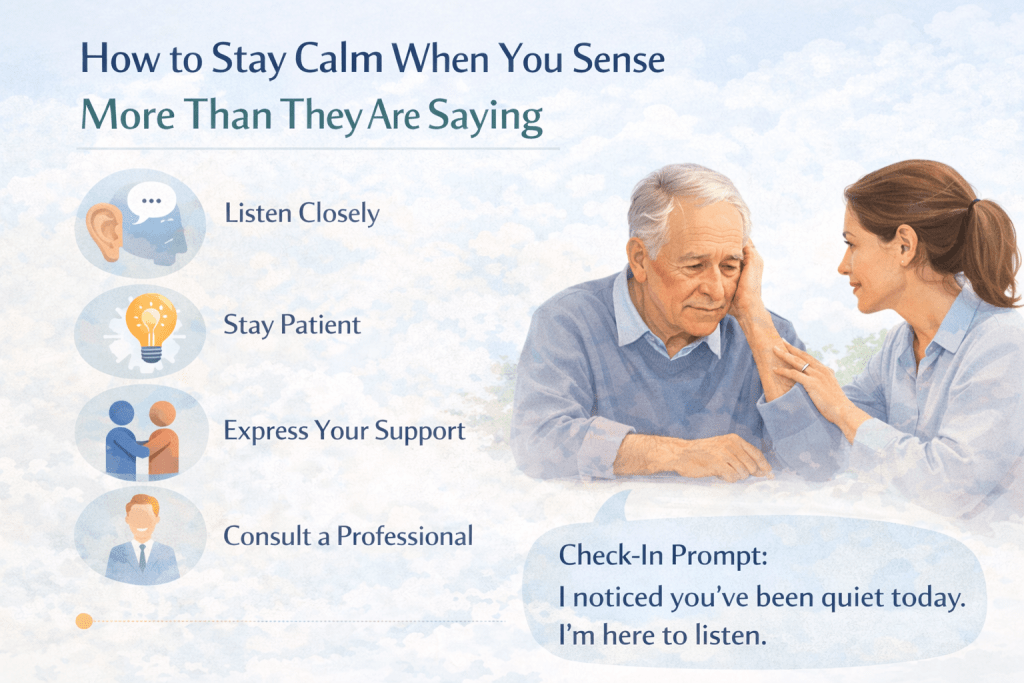
One of the hardest emotional skills in caregiving is staying calm when you suspect your loved one is not telling you everything.
You may hear fatigue, sadness, confusion, or discouragement in their voice while they insist nothing is wrong. In that moment, you may feel pulled between two fears: pushing too hard and backing off too much.
The answer is usually not to force full disclosure immediately. It is to stay steady enough that honesty remains possible later.
You can do that by:
- keeping your tone grounded
- asking one or two thoughtful follow-ups instead of ten
- observing patterns across days, not reacting only to one call
- noting changes calmly
- following up later if needed
- looping in family support quietly when appropriate
You might say:
“You may be completely okay, and I may be reading too much into it. But if something is feeling heavier lately, you do not have to carry it alone.”
That sentence works because it is gentle, non-accusatory, and emotionally available. It does not trap the person. It reassures them.
And reassurance is often what makes later honesty possible.
Create Safety Around Asking for Help
Some seniors do not resist because they dislike connection. They resist because they think admitting difficulty will immediately trigger unwanted changes: more calls, more family intervention, less privacy, more decisions made for them.
If that fear exists, they may hide problems until they become bigger.
To prevent that, families need to create safety around asking for help.
That means showing through your behavior that honesty does not automatically lead to overreaction.
For example:
- if they mention a small struggle, do not immediately catastrophize
- if they admit fatigue, do not instantly lecture
- if they forget something once, do not talk to them as if all independence is gone
- if they express frustration, do not make the whole conversation about risk
Instead, respond proportionally.
Say things like:
- “Thanks for telling me.”
- “That sounds frustrating.”
- “Let’s think about one small way to make that easier.”
- “We don’t have to solve everything today.”
- “I’m glad you said that.”
These responses build trust. They teach the older adult that sharing difficulty can lead to support without loss of dignity.
And that trust is essential for any sustainable care routine.
A Better Goal Than “Getting Them to Open Up”
Many caregivers approach conversations with the goal of getting the loved one to finally admit what is going on. But that goal can make the interaction too outcome-driven.
A better goal is simpler and more relational:
create the kind of repeated experience in which openness becomes easier over time.
That means prioritizing:
- consistency over intensity
- warmth over control
- curiosity over accusation
- dignity over efficiency
- trust over immediate disclosure
Not every call will produce useful insight. Not every defensive response will soften right away. But if the routine is respectful, emotionally safe, and steady, honesty tends to grow.
That is what makes daily check-ins so valuable. Their power is not just in what happens on one call. Their power is in what becomes possible because the contact is ongoing.
A loved one who says very little today may tell you something important next week because your consistency proved you were safe to talk to.
That is not small. That is the work.
A Practical Way to Evaluate Whether Resistance Is Improving
If you want to know whether your new approach is helping, look for small signs such as:
- slightly longer answers
- less irritation at the start of calls
- more spontaneous detail
- more humor or personality returning
- greater willingness to mention frustrations
- more comfort saying “today was hard”
- more openness to practical support without shutting down
These are meaningful shifts. Do not underestimate them.
The goal is not perfect openness. The goal is a relationship in which the senior does not feel they must hide behind politeness, pride, or defensiveness every day.
When that happens, the check-in becomes what it was always meant to be: not a performance of wellbeing, but a reliable place of human connection.
Navigating Challenges of Aging and Cognitive Changes
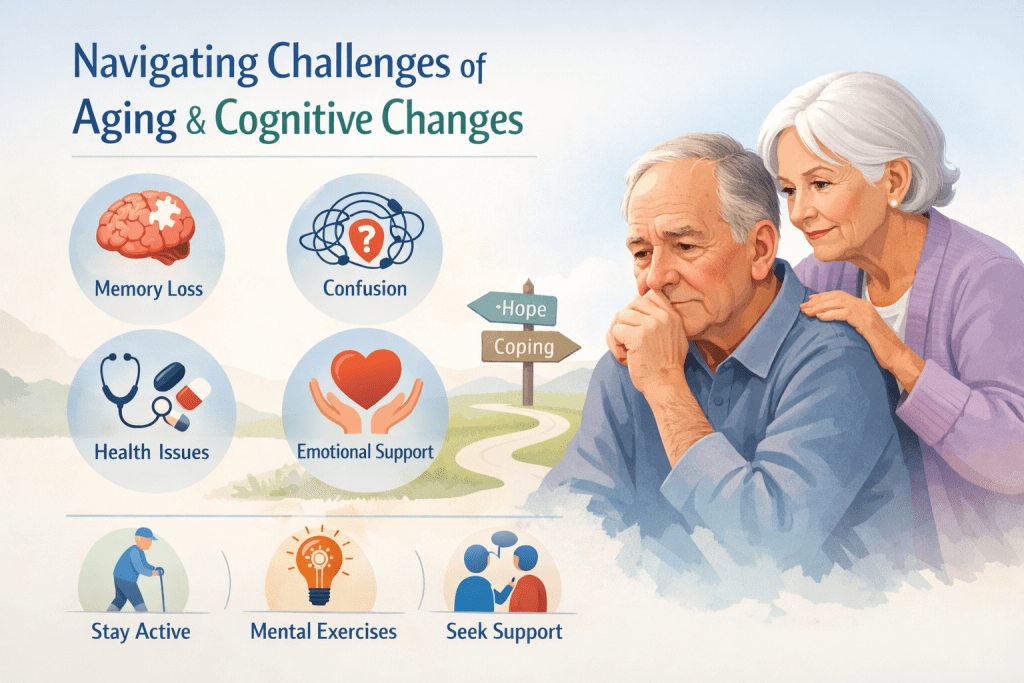
Sometimes the most important signals come in whispers, not shouts. Your aging loved one might not verbalize when they’re struggling. Instead, pay attention to the small things that speak volumes.
Recognizing Subtle Behavioral and Routine Shifts
Keep an eye on patterns over several days. Notice if sleep habits change dramatically. Watch for lost interest in favorite activities.
Memory lapses or repeating stories might indicate cognitive decline. These challenges require gentle observation rather than confrontation. Documenting changes helps spot patterns.
When you notice shifts, approach conversations with compassion. Effective communication strategies can make these talks more productive.
When and How to Seek Professional or Community Support
Some challenges require more than family can provide. When cognitive decline affects daily health and safety, professional help becomes essential.
Subtle changes can be easy to miss from a. Regular contact helps you stay attuned to your aging loved one’s needs.
Remember to care for yourself too. Supporting seniors through these days requires emotional strength. Seeking support groups or counseling can help you navigate this journey.
Conclusion
Daily connection with your aging family member becomes a gift you give yourself as much as them. These moments build a foundation of trust and companionship that benefits everyone involved.
The strategies we’ve shared—consistent routines, genuine conversations, and smart support tools—create sustainable care that honors independence. Regular contact helps you notice changes in health or home safety early.
Remember you’re not alone in this journey. Support systems exist to help share the responsibility. Family members, friends, and technology can work together.
What matters most is showing up with your full attention and heart. These connections preserve precious memory and strengthen your family bond. That’s something worth nurturing every day.