

Pharmacists see something most families never do: the same medication problem showing up month after month, in house after house. Very few of those problems are really about forgetting. Below…
Pharmacists see something most families never do: the same medication problem showing up month after month, in house after house. Very few of those problems are really about forgetting. Below…

Your mother seems sleepy and unsteady after lunch. Your father says he already took his pills, but the organizer says otherwise. Before you can fix anything, you need to know…
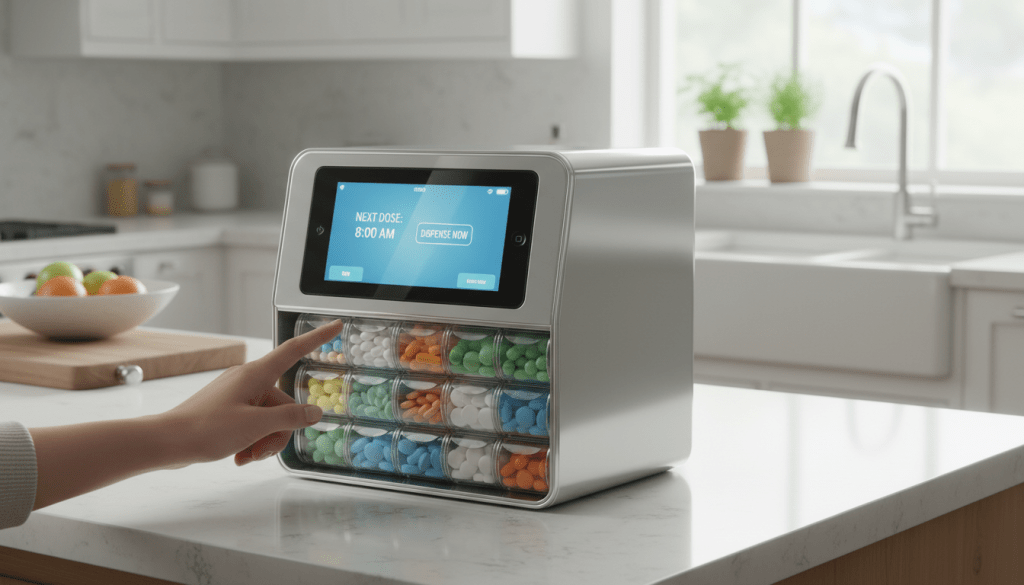
Sometimes. An automatic pill dispenser can genuinely reduce missed and doubled doses, but it is not magic, and the research on these devices is more mixed than the marketing suggests….

When a parent pushes the pill organizer away, the instinct is to explain harder. It rarely works. What does work is figuring out which kind of refusal you are actually…

If your parent’s kitchen counter holds a dozen pill bottles from four different doctors, the number itself is not really the problem. The problem is what happens when that list…

When a parent with dementia says “I already took that” or pushes the cup away, the problem is rarely stubbornness. Refusal is usually information: something in the room, the body,…

The first week after a hospital stay is when medication mistakes are most likely to happen. Doses change, old prescriptions get restarted by habit, and nobody is checking the pill…

Plenty of older adults do not use a smartphone, and they do not need one to take their medicine on time. The methods that actually work without apps are low-tech:…

The right pill organizer is not the most advanced one or the most expensive one. It is the one that matches your parent’s real routine, hands, eyesight and home —…

Most medication schedules do not fail on the day they are made. They fail three weeks later, when a dose changes after an appointment, a refill arrives with a new…
Joy Calls is a product of ONSCREEN Inc., where our mission is to keep your older loved ones connected and healthy using simple technologies. We are proud to be an AARP AgeTech Collaborative Portfolio Company, as well as a Volunteer’s of America Community Health Incubator company.

© 2026. All Rights Reserved by OnScreen Inc.