

What if the very tool meant to bring peace of mind actually creates a new layer of worry? You see your mom’s confusion when it’s time for her medicine. Your heart aches, wondering if there’s a better, simpler way to ensure she stays healthy.
These clever devices promise to solve a problem that touches millions of families. They aim to take the guesswork out of a daily routine. But does this technology truly lead to better adherence and the calm you desperately seek?
This isn’t just about a machine. It’s about your loved one’s independence and well-being. We’ll explore how these systems work in real homes. You’ll hear from families who’ve walked this path, helping you decide what’s best for your unique situation.
We’ll also look at the bigger picture of care. Sometimes, support comes in different forms, like a friendly voice. For example, an AI companion can offer gentle reminders and meaningful conversation, addressing both health and emotional needs.
Key Takeaways
- Managing multiple medications is a common and stressful challenge for many families.
- Technology promises to simplify routines and improve consistent medication use.
- Real-world effectiveness depends on the individual’s needs and lifestyle.
- It’s crucial to weigh the benefits against the cost and complexity for your family.
- Comprehensive care often combines tools with human connection for the best results.
- Exploring all options helps you make a confident, informed choice for your loved one.
Introduction to Automatic Pill Dispensers
Imagine watching your father, once so sharp and independent, now fumbling with a handful of pills. His confidence is shaken by a simple daily task. This scene is heartbreakingly common.
Managing multiple prescriptions is a genuine challenge for older adults. It’s not a matter of neglect. It’s about the complexity of modern medication regimens.
Overview of Medication Management Challenges

The numbers paint a clear picture of the struggle. According to the CDC, nearly 90% of adults 65 and older take prescription medications. More than half take four or more different drugs.
Juggling this many pills requires precise timing. A wrong dose or missed time can have serious consequences. In fact, medication errors are a leading cause of preventable injury.
| Age Group | Taking Prescription Medications | Taking 4+ Medications |
|---|---|---|
| Adults 65+ | Almost 90% | 54% |
| General Population | Lower percentage | Significantly lower |
The Importance for Seniors and Caregivers
For caregivers, the worry is constant. “Did Mom take her heart medication?” This question can dominate your thoughts. It’s exhausting to be the primary reminder system.
Effective medication management is about more than just adherence. It’s about preserving independence and reducing stress for everyone involved. It protects your loved one’s health and your peace of mind.
This is why finding a reliable solution is so critical. A tool like a reliable pill dispenser can be a bridge to safety. Sometimes, combining tools with human connection, like a daily check-in system, offers the best support for people living independently.
Try JoyCalls Free
No app or new device needed. Start with a free 7-day trial.
Understanding Automatic Pill Dispenser Technology
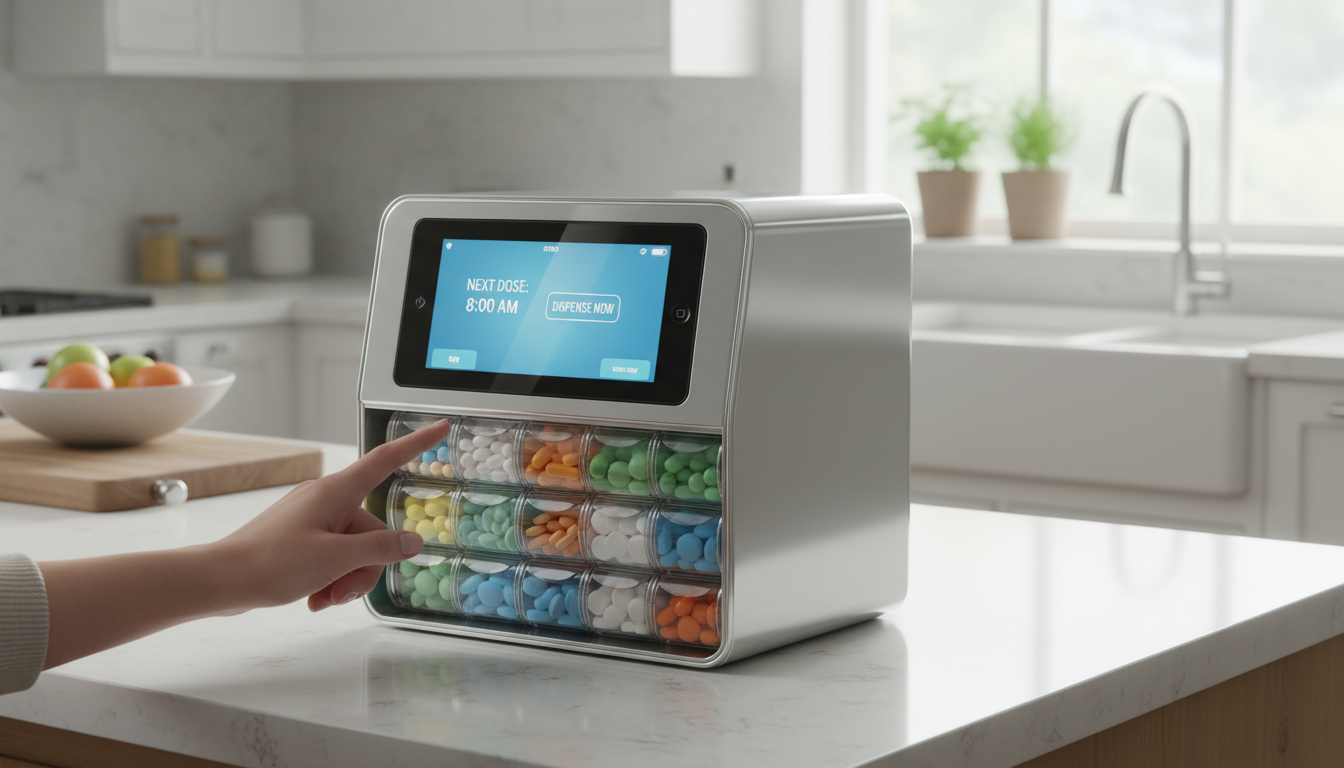
Picture a quiet helper on the kitchen counter that knows exactly when your loved one needs their medicine. This technology brings peace through smart design.

Innovative Features and Mobile Integration
Modern systems connect to your home WiFi. They sync with a smartphone app for complete oversight. You get real-time updates about dosing schedules.
The device sends gentle alerts when it’s time for medication. It uses pleasant chimes and soft lights. You can also receive text messages or phone calls.
Advanced features prevent double dosing. They lock out extra medication automatically. This safety measure protects your family member.
How the Devices Work in Real Life
Your parent simply presses a button when alerted. The correct pills drop into a cup. Both of you receive confirmation that the dose was taken.
Some systems store up to 90 days of different medications. This means fewer pharmacy trips. It also saves time spent sorting pills weekly.
The technology works quietly in the background. It provides dignity and reassurance for everyone involved in care.
Core Benefits and Limitations of Automated Devices
That sigh of relief when you know your loved one’s medication is handled safely—it’s a feeling every caregiver deserves. These tools offer significant advantages, but it’s wise to understand their boundaries.
Enhancing Dosing Accuracy and Timeliness
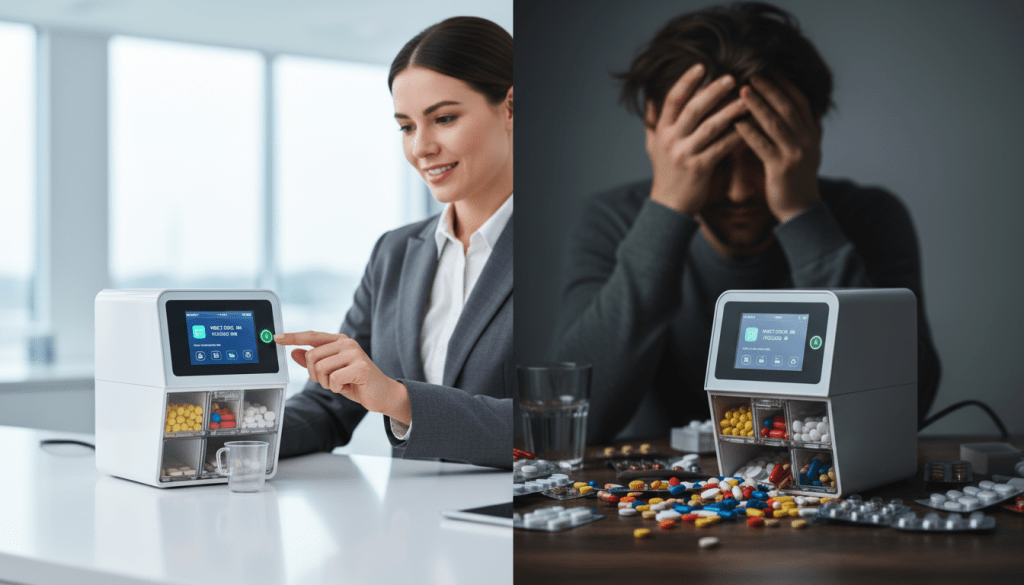
The most powerful benefit is precision. The right dose is delivered at the correct time, every time. This eliminates human error from a complex routine.
Try JoyCalls Free
No app or new device needed. Start with a free 7-day trial.
Your family member can stop watching the clock. A gentle alarm lets them focus on life. This reliable prompting is key to better medication adherence outcomes.
You get peace of mind. The device becomes the reminder, so you don’t have to be.
Potential Drawbacks and User Considerations
It’s not a perfect solution for everyone. Some systems limit daily alarms. This can be a challenge for medications taken at varying times.
You must still track prescription refills. The machine can’t do that for you. Also, check if it works with all pill shapes and sizes.
There can be a learning curve. Setup might need your help initially. And cost is a factor, with some models having monthly fees.
| Key Benefits | Important Considerations |
|---|---|
| Improves dosing accuracy | May have alarm limitations |
| Provides reliable timeliness | Requires manual refill tracking |
| Reduces caregiver stress | Check medication compatibility |
| Fosters better adherence | Consider upfront and ongoing costs |
Detailed Device Comparisons
When your loved one’s well-being depends on consistent medication timing, selecting the right support system becomes a deeply personal financial and practical decision. The market offers different approaches to meet various family needs and budgets.
Subscription Models vs. One-Time Purchases
Choosing between monthly fees and upfront costs is like deciding between renting and buying a home. Each approach serves different long-term care strategies.
The Hero dispenser operates on a subscription basis at $29.99 monthly with annual prepayment. This includes lifetime warranty and 24/7 customer service. You’re essentially investing in ongoing support rather than just a device.
In contrast, MedaCube requires a $1,999 one-time purchase with no recurring fees. This makes financial sense for families planning several years of use. Both options are often HSA- and FSA-eligible.
Evaluating Key Features: Hero, MedaCube, and More
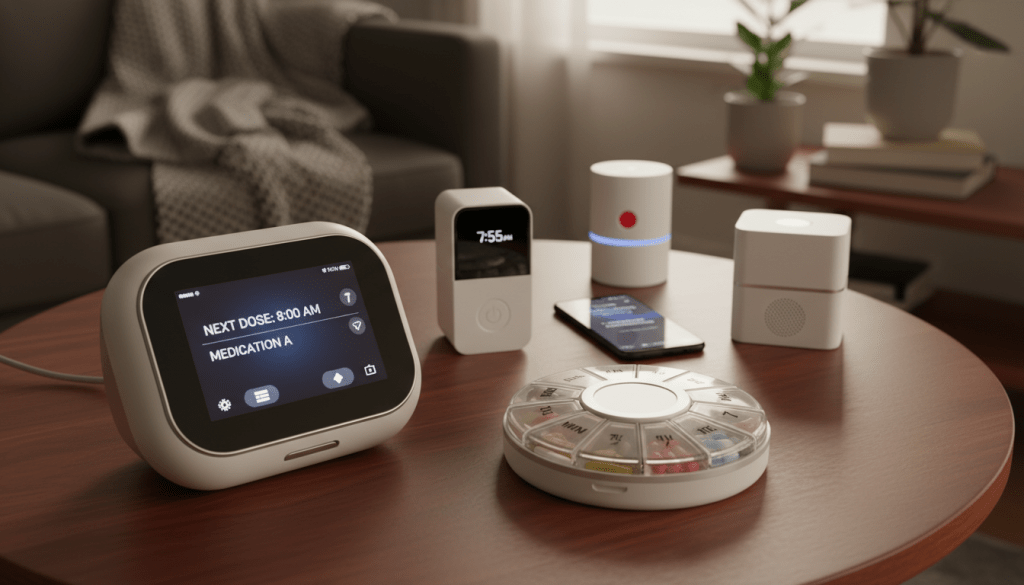
Capacity and connectivity vary significantly between models. The Hero can store 10 different medications for up to 90 days. This works well for moderate prescription needs.
MedaCube holds 16 different medications for the same period. It also includes a 24-hour battery backup for power outages. This provides extra security for essential medications.
Budget-friendly options like the LiveFine system cost under $90 with no subscription. The Mobi smart pill dispenser offers 28 compartments at around $150. Consider your loved one’s specific medication count and tech comfort when choosing.
Automatic Pill Dispenser: Key Benefits for Adherence
There’s a special kind of peace that comes from knowing your loved one’s health routine is being handled with precision and care. These systems transform daily medication management from a source of stress into a reliable partnership.
Improved Reminder and Notification Systems
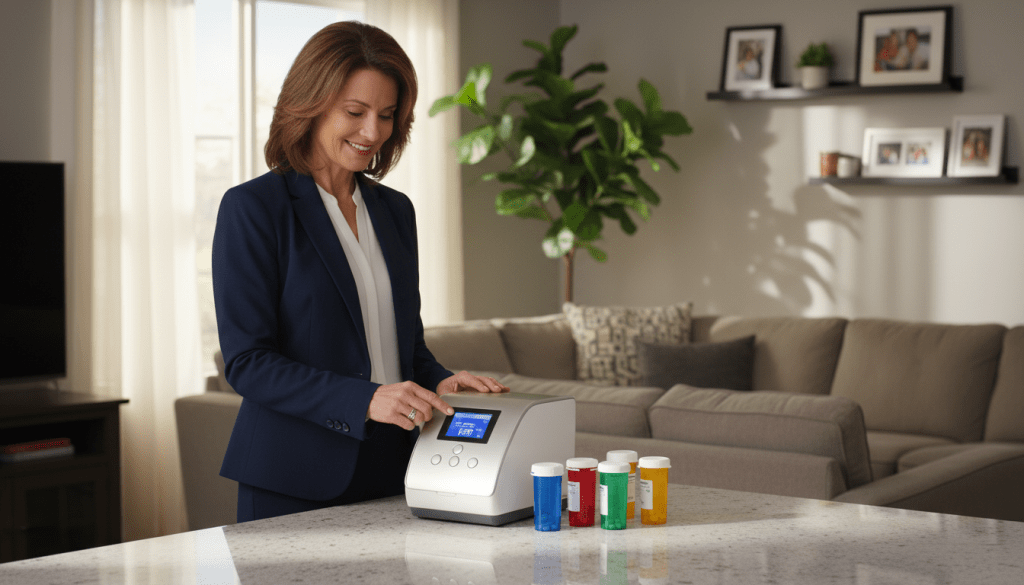
Modern systems offer gentle, multi-layered alerts that respect your parent’s comfort. Instead of a startling beep, they use pleasant chimes and soft lights. If the initial reminder goes unnoticed, follow-up text messages or phone calls ensure the message gets through.
This layered approach means your mom never has to rely solely on memory. The technology meets her where she is throughout her day. When it’s time to take medications, the system provides consistent, gentle reminders.
Many devices create a closed-loop communication system where caregivers receive real-time updates. You know exactly when doses are taken or if there’s a delay.
Reducing the Risk of Missed Doses
Preventing missed doses is about more than just avoiding forgotten pills. It’s about protecting your loved one from health complications that can arise from inconsistent medication adherence.
When a dose is late or skipped, you receive immediate notifications. This allows you to follow up with a caring check-in call through services like daily phone check-ins for seniors. You address the situation promptly rather than discovering issues days later.
The consistent routine these devices provide dramatically improves adherence outcomes. Your parent gains a reliable partner in maintaining their health, giving you both confidence in their daily medication routine.
Impact on Caregivers and Medication Safety
Technology now offers a powerful partnership, shifting the role of the caregiver from constant reminder to confident supporter. This support comes through dedicated app features and robust security measures designed for real-life families.
Caregiver App Features and Alert Systems
The companion app puts critical information at your fingertips. You can track exactly when your loved ones take their medication and view a history of adherence.
Real-time notifications alert you instantly if a dose is missed. This allows for a quick, caring phone call instead of discovering a problem later. It’s a vital layer of protection.
“The app lets me be a daughter again, not just a nurse. I know the system has it covered.”
Ensuring Medication Security and Preventing Tampering
Safety is paramount. These systems use physical locks and customizable passcodes to control access. This protects pills from accidental misuse or tampering.
For families managing multiple health details, this security complements other remote monitoring, like learning how to track meals and hydration from another place. It creates a comprehensive safety net.
| Security Feature | Benefit for Caregivers | Benefit for Loved Ones |
|---|---|---|
| Four-Digit Passcode | Prevents unauthorized access | Maintains personal independence |
| Physical Lock Mechanism | Secures medication from theft | Provides visible safety assurance |
| Dispensing Schedule Lock | Eliminates risk of double-dosing | Ensures correct medication timing |
This multi-layered approach gives everyone peace of mind. Your parent stays safe and independent, while you gain confident oversight.
Responsive Customer Service and Technical Support
When technology becomes your partner in care, knowing help is just a phone call away brings immense comfort. Responsive customer service transforms a technical device into a reliable health partner you can truly trust.
User Experiences and Troubleshooting Tips
Real families share that occasional hiccups do happen. Wi-Fi may drop or a pill might get stuck. One user’s Hero machine made grinding noises and stopped working.
A quick call to their support team identified the issue. A medication was caught in the gears. The company shipped a replacement device immediately with a prepaid return label.
Most issues can be resolved over the phone. When a device loses power or connection, the app notifies you right away. You can often guide your loved one through simple fixes.
This reliable support complements other care strategies like daily check-in calls for seniors. Both provide peace of mind during challenging moments.
| Support Feature | Benefit for Families | Resolution Time |
|---|---|---|
| 24/7 Phone Support | Help available any time of day | Immediate assistance |
| Quick Replacement Policy | Minimal disruption to medication routine | Within 2-3 business days |
| Remote Troubleshooting | Solve issues without technician visits | Often resolved in one call |
| Clear Error Messages | Easy to understand what needs fixing | Instant guidance |
Practical tips include using surge protectors and maintaining stable Wi-Fi. Keep a few backup doses in original containers just in case. Quality customer support turns potential frustrations into minor bumps.
Integration with Modern Digital Health Solutions
Imagine a world where your mom’s medication routine connects with her daily conversations, giving you a complete picture of her wellbeing. Today’s most effective care strategies involve interconnected tools that work together seamlessly.
These systems create a comprehensive safety net. They share information to provide holistic support for your loved one’s health at home.
Connecting Devices with JoyCalls Signup Solutions
Modern medication management goes beyond simple reminders. Tools like Hero create a closed-loop system that keeps everyone informed.
The app allows you to track medication adherence and receive refill alerts. This simplifies the entire process for busy caregivers.
This integration works beautifully with services like JoyCalls. While the device handles medications, JoyCalls provides daily social connection through regular phone calls.
You can easily set up this complementary support by visiting the JoyCalls signup page. It takes just minutes to customize calling schedules for your loved ones.
Future Trends in Medication Management Apps
The future points toward even deeper connections between health tools. Systems will share data to provide complete wellness insights.
Advanced apps will track patterns and alert you to potential issues early. This proactive approach can improve medication adherence outcomes significantly.
Research shows that integrated systems lead to better health outcomes for seniors. The goal remains simple: helping your parent live safely and independently.
| Integration Feature | Benefit for Seniors | Benefit for Caregivers |
|---|---|---|
| Closed-loop communication | Coordinated care from multiple sources | Complete oversight without constant checking |
| Automatic refill tracking | Continuous medication supply | Reduced administrative burden |
| Multi-platform data sharing | Holistic health monitoring | Comprehensive wellbeing insights |
| AI companion integration | Social connection and medication support | Peace of mind about overall quality of life |
These interconnected solutions address the full picture of senior care. They support both physical health and emotional wellbeing for a better quality of life.
How to Make an Automatic Pill Dispenser Actually Work in Real Life
An automatic pill dispenser can be a very helpful tool, but it is not magic. That is the part many families discover only after buying one. The machine may remind, sort, alert, and even notify caregivers, but better adherence does not happen simply because a device is sitting on the kitchen counter. It happens when the dispenser is matched to the senior’s habits, medications, home setup, comfort level, and support system.
This is where many families get stuck. They ask, “Does this product work?” when the better question is, “Will this work for our situation?” A dispenser may be excellent for one older adult and frustrating for another. For one person it restores independence. For another, it adds confusion. The difference is usually not the product alone. The difference is the system around it.
For seniors, the goal should never be to add more complexity in the name of safety. The goal is to reduce mental load. A good medication system should make daily life feel calmer, not more clinical. It should remove guesswork, lower the chance of missed doses, reduce caregiver stress, and support confidence. If a dispenser does all of that, it is serving its purpose. If it creates anxiety, resistance, or constant troubleshooting, then even a smart device can become one more problem to manage.
The best way to think about an automatic pill dispenser is as one part of a larger adherence routine. It works best when the senior knows what to expect, the caregiver has a simple follow-up plan, the medications fit the device properly, and there is a backup system for refills, power issues, travel, and schedule changes. That is what turns a gadget into a dependable everyday support.
Start With the Real Adherence Problem, Not the Product
Before choosing or using any dispenser, identify what is actually causing missed doses. Families often assume the problem is memory. Sometimes it is. But many adherence problems come from something else entirely.
A senior may miss medication because the schedule is too complicated. They may feel unsure about whether a dose was already taken. They may avoid medication because of side effects. They may have trouble opening bottles because of arthritis. They may not hear alarms clearly. They may dislike being monitored. Or they may simply resist anything that makes them feel less independent.
If you skip this step, you may buy a device that solves the wrong problem.
For example, a dispenser can help if someone forgets doses or accidentally double-doses. But if the real issue is confusion after a hospital discharge, medication changes every few days, or reluctance to take a drug because it causes nausea, then the dispenser alone will not solve the core problem.
A very practical first step is to ask these five questions:
1. What exactly is going wrong right now?
Be specific. Is the issue missed morning doses, late evening doses, double dosing, confusion with multiple bottles, or caregiver uncertainty?
2. When do mistakes happen most often?
Patterns matter. Some seniors do well all day and struggle at night. Others do fine on weekdays but lose track on weekends.
3. Is the problem memory, vision, hearing, dexterity, routine, or motivation?
The answer changes the kind of support needed.
4. How comfortable is the senior with technology?
This is not about intelligence. It is about familiarity, confidence, patience, and willingness.
5. Who will maintain the system?
Someone still has to load medications, review changes, handle refills, and troubleshoot issues.
Once those answers are clear, your decision becomes much easier. You are no longer choosing a device based on marketing claims. You are choosing a system based on actual daily challenges.
Know When a Dispenser Is a Strong Fit and When It Is Not
Automatic pill dispensers tend to work best for seniors who take multiple ongoing medications on a fairly consistent schedule and are still able to respond to reminders. They are often especially helpful for older adults who live alone, want to preserve independence, and benefit from structure without needing a person physically present at every dose.
A strong fit usually looks like this:
- The senior takes several maintenance medications.
- The dosing times are mostly predictable.
- There is a history of missed or duplicated doses.
- A caregiver wants visibility without constant calling.
- The senior can understand the prompt and respond to it.
- The home environment is stable enough for device use.
A weaker fit usually looks different:
- Medications change daily or very often.
- The person has severe cognitive impairment and cannot follow prompts reliably.
- The person is likely to remove pills and save them for later in unsafe ways.
- The medication forms are not compatible with the dispenser.
- The senior strongly dislikes alarms, apps, or device-based routines.
- Nobody is available to manage setup and refills.
This distinction is important because families often feel guilty if a dispenser does not work out. In reality, the problem may not be effort. It may simply be mismatch. The right tool should lower friction. If it raises friction every day, it may not be the right approach for that stage of care.
A Better Way to Choose: Match the Device to the Senior’s Daily Life
When families compare dispensers, they often focus on product features first. Capacity. App. Battery backup. Price. Alerts. Locking mechanism. Those details matter, but they should come after one more important question: What is a normal day like for the person who will use it?
A senior who wakes up early, eats meals on schedule, and stays home most of the day may do very well with timed dispensing. Another senior who naps unpredictably, attends appointments often, or dislikes being interrupted may need a more flexible system.
Think through these lifestyle details carefully:
Meal habits
If medication needs to be taken with food, the reminder should line up with realistic mealtimes, not ideal ones.
Sleep patterns
If the person wakes late or has insomnia, rigid schedules may lead to frustration.
Hearing and vision
A soft chime may be comforting for one person and ineffective for another. Screen readability matters more than families think.
Hand strength and dexterity
Buttons, trays, cups, lids, and refill mechanisms should be easy to use with arthritis or tremors.
Home layout
The dispenser should live where the medication routine naturally happens. Not where it looks neat.
Emotional response
Some seniors view a dispenser as support. Others see it as evidence that people no longer trust them. That emotional response affects adherence more than most families expect.
This is why the “best” dispenser is not universal. The best one is the one the senior will actually use consistently and without resentment.
The First 14 Days Matter More Than Families Realize
The biggest mistake is assuming that once a dispenser is plugged in and loaded, the job is done. The first two weeks are where success or failure usually gets decided.
This period should be treated as an adjustment phase, not a pass-or-fail test. Seniors are learning a new rhythm. Caregivers are learning what kind of reminders, follow-ups, and timing actually work. Minor confusion during this period is normal. What matters is how quickly the system gets simplified.
Here is a practical 14-day setup plan:
Days 1 to 3: Keep the process highly supported
Stay close to the routine. If possible, be present in person or available by phone at each scheduled dose. Confirm that the alert is noticeable, the cup or tray is easy to access, and the senior understands what the prompt means.
Days 4 to 7: Watch for hesitation, not just missed doses
A senior may technically take the dose but still feel uncertain. Watch for comments like “Was that for now?” or “I don’t want to do it wrong.” Those comments tell you the system still feels mentally heavy.
Days 8 to 10: Adjust timing and location if needed
If reminders consistently come at inconvenient times, shift them. If the dispenser is in a low-traffic area, move it. Good adherence often depends on these very ordinary details.
Days 11 to 14: Reduce caregiver prompting only if the routine is stable
Do not step back too early. Independence should be built gradually. If the senior is succeeding, reduce reminders slowly rather than all at once.
This short adjustment period can prevent a lot of long-term frustration. It also helps caregivers distinguish between “the senior dislikes the device” and “the routine just needs refinement.”
How to Set Up the Dispenser So It Supports Independence, Not Dependence
Many families unintentionally create a system that feels controlling. They over-monitor, over-correct, and over-explain. That often leads to pushback, especially from seniors who are proud and capable in many other parts of life.
The better approach is to frame the dispenser as a way to protect independence.
Instead of saying:
“You need this because you keep forgetting.”
Say:
“This makes your routine easier and gives you one less thing to think about.”
Instead of:
“I need to check whether you took your meds.”
Say:
“This helps both of us feel more confident that your routine is staying on track.”
Language matters. Seniors are far more likely to accept help when it is presented as a tool that preserves dignity rather than a device that proves decline.
You can support that feeling in a few practical ways:
Let the senior participate in setup
Even if a caregiver handles the technical side, involve the senior in choices about timing, location, sounds, and reminders.
Keep explanations simple
Do not turn setup into a lecture. One clear instruction at a time is better than a full walkthrough all at once.
Use one routine phrase
Something like, “When it chimes, that is your medicine time.” Repeating the same plain language reduces confusion.
Avoid hovering
A quick supportive check is better than standing over the person every time a dose is due.
Celebrate smooth days
Positive reinforcement matters. A simple “Looks like that system is working well for you” can increase confidence.
Build a Backup Plan Before You Need One
One of the most practical things a family can do is prepare for the small disruptions that happen in normal life. The device may work beautifully most of the time, but adherence can still break down if there is no plan for exceptions.
Every home using an automatic pill dispenser should have a written backup plan that answers these questions:
What happens if the power goes out?
Know whether the device has battery backup and how long it lasts.
What happens if Wi-Fi disconnects?
Understand whether the device can still dispense on schedule offline.
What happens if a pill jams or the machine malfunctions?
Keep the support number easy to find. Do not rely on someone searching for it during stress.
What happens if the senior is away from home at dose time?
Have a travel process. A good system at home still fails if appointments or family visits interrupt the routine.
What happens if medication changes suddenly?
The dispenser must be updated promptly. This is especially important after hospital visits, specialist appointments, or medication titration.
What happens if the caregiver who usually manages refills is unavailable?
There should be one backup person or written instructions.
A backup plan reduces panic. It also prevents the family from abandoning the system the first time something goes slightly wrong.
Refill Management Is Where Many “Good” Systems Break Down
Families often focus heavily on dispensing accuracy and forget that refills are one of the biggest real-world failure points. A dispenser cannot improve adherence if the correct medication is not loaded, if supply runs low unnoticed, or if outdated instructions remain in use after a prescription change.
This is why refill management deserves its own routine.
Here is a highly practical refill workflow:
Keep one current master medication list
This should include medication name, strength, dose, timing, purpose, prescribing doctor, and any recent changes.
Choose one refill day each week
Even if medications are not all due that day, a weekly review prevents surprise shortages.
Check remaining supply before it feels urgent
Do not wait until the last two doses. Build margin into the system.
Review changes after every appointment
Any change in dose, timing, or discontinuation should trigger a same-day review of the dispenser plan.
Use original packaging for backup reference
Even when pills are loaded into the machine, keep original labeled containers stored safely.
Document special instructions clearly
Some medications must be taken with food, separated from others, or handled differently. Those instructions should not live only in someone’s memory.
If a family gets refill management right, the dispenser becomes dramatically more reliable. If they do not, even the smartest device becomes dependent on an inconsistent supply chain at home.
Watch for Signs the System Needs Adjustment

A dispenser should make life smoother. If it starts creating repeated friction, that is information, not failure. The right response is to adjust early.
Watch for these warning signs:
The senior starts ignoring alerts
This may mean the timing is wrong, the sound is too subtle, or reminder fatigue has set in.
The senior seems anxious around medication time
The system may feel too complicated or too monitored.
Caregivers are receiving constant missed-dose alerts
This may indicate a scheduling issue, not noncompliance.
The senior removes doses but does not take them immediately
This weakens the safety of the system and may require a different setup.
Refills feel chaotic
The maintenance burden may be too high for the household.
Frequent workarounds are becoming normal
If everyone is constantly bypassing the intended routine, the routine itself likely needs redesign.
In many cases, small changes solve the problem. Move the device. Adjust the alert style. Simplify the schedule. Reduce unnecessary notifications. Re-explain the routine in plainer language. What matters is staying practical and honest rather than forcing a bad setup to continue.
Combine the Dispenser With Human Check-Ins for Better Results
A dispenser can improve adherence, but it does not replace reassurance, encouragement, or human connection. Some seniors respond best when technology handles the reminder and a person provides the emotional reinforcement.
This can be very light-touch. It does not have to mean constant monitoring.
For example:
- A morning check-in call can confirm that the day started well.
- A short evening conversation can reveal whether side effects, confusion, or routine changes are making adherence harder.
- A weekly medication review can catch issues before they become patterns.
This combined approach is often especially helpful for seniors who live alone. The dispenser supports consistency. The human check-in supports confidence, motivation, and problem-solving.
That combination is powerful because adherence is not only about remembering. It is also about feeling supported enough to keep going with a routine that can sometimes be tiring, repetitive, or emotionally frustrating.
The Best Question to Ask After 30 Days
After a month, do not ask only, “Did it reduce missed doses?” Also ask:
- Does the senior feel more confident?
- Does the routine feel easier?
- Is the caregiver less stressed?
- Are medication changes being handled safely?
- Is the system sustainable without daily rescue?
- Would the family choose this setup again?
Those questions capture whether the dispenser is truly improving life, not just whether it is technically functioning.
That is the real standard. For seniors and caregivers, success is not simply a machine that dispenses pills on time. Success is a medication routine that feels safer, calmer, and more manageable in ordinary life.
Final Practical Takeaway
Automatic pill dispensers can absolutely improve adherence, but the real improvement comes from fit, setup, follow-through, and support. The families who benefit most are not necessarily the ones with the fanciest device. They are the ones who build a simple system around it.
If you want the dispenser to work well, focus on five things:
- Identify the real adherence problem first.
- Match the device to the senior’s actual daily routine.
- Treat the first 14 days as an adjustment period.
- Build a refill and backup plan from the start.
- Combine technology with human support when needed.
That is what makes the difference between owning a pill dispenser and actually improving medication adherence.
What to Do If Medication Adherence Still Does Not Improve
Automatic pill dispensers can be extremely useful, but they are not a complete answer to every medication problem. That truth is important, especially for seniors, older adults, and family caregivers who may put a great deal of hope into one device. When the dispenser is finally installed, loaded, and running, everyone wants the medication routine to become easier immediately. Sometimes it does. But sometimes missed doses, delayed doses, confusion, resistance, or anxiety continue. When that happens, it does not automatically mean the device was a bad purchase. It also does not mean the senior is being careless or difficult. More often, it means the medication challenge is larger than timing alone.
This is where many families make a mistake. They keep trying to force better adherence by repeating the same reminder system more loudly, more frequently, or more rigidly. They increase alarms, add more notifications, make more phone calls, or start monitoring the senior more closely. In some homes, this creates frustration on both sides. The older adult feels watched. The caregiver feels ignored. And the core issue remains unresolved.
A more helpful approach is to step back and understand that medication adherence has several layers. Remembering to take a dose is only one part of it. The senior also has to understand what the medication is for, feel physically comfortable enough to take it, trust that it is helping, manage the side effects, accept the routine emotionally, and respond to a system that fits the rhythm of daily life. If even one of those layers is shaky, adherence can remain inconsistent, even with a smart dispenser in the home.
So if the pill dispenser has been in place for a few weeks and adherence is still not where it needs to be, the next step is not blame. The next step is diagnosis. You need to understand what is truly getting in the way now.
Start by Redefining the Problem Carefully
When families say, “The dispenser isn’t working,” that can mean many different things. It may mean the person is still missing doses. It may mean doses are being taken too late. It may mean the senior takes the medication but complains or hesitates every time. It may mean caregiver alerts are going off constantly. It may mean the person removes medication from the dispenser but does not swallow it right away. It may mean the system works during the week and falls apart on weekends. Each of these is a different problem and needs a different solution.
Instead of using the broad label of “non-adherence,” break the issue into a concrete pattern.
Ask:
- Are doses being missed completely?
- Are they being delayed?
- Are they being taken incorrectly?
- Is the person confused about what the alarm means?
- Is the medication being avoided on purpose?
- Does the routine collapse when there is a schedule change?
- Is the caregiver burden still too high even though doses are technically happening?
This step matters because medication systems fail quietly when the wrong problem is being solved. If the senior is hearing the alert but delaying the dose because it causes dizziness, more reminders will not help. If the senior dislikes taking medication before breakfast because of nausea, then morning scheduling may be the real issue. If they feel embarrassed using the device in front of visitors or family, emotional resistance may be stronger than forgetfulness.
A pill dispenser can address mechanical problems. It can reduce sorting errors, timing confusion, and double dosing. But it cannot independently solve discomfort, mistrust, side effects, shame, denial, grief, or confusion caused by frequent medication changes. Those need a broader response.
The Most Common Reasons Adherence Still Fails After Buying a Dispenser
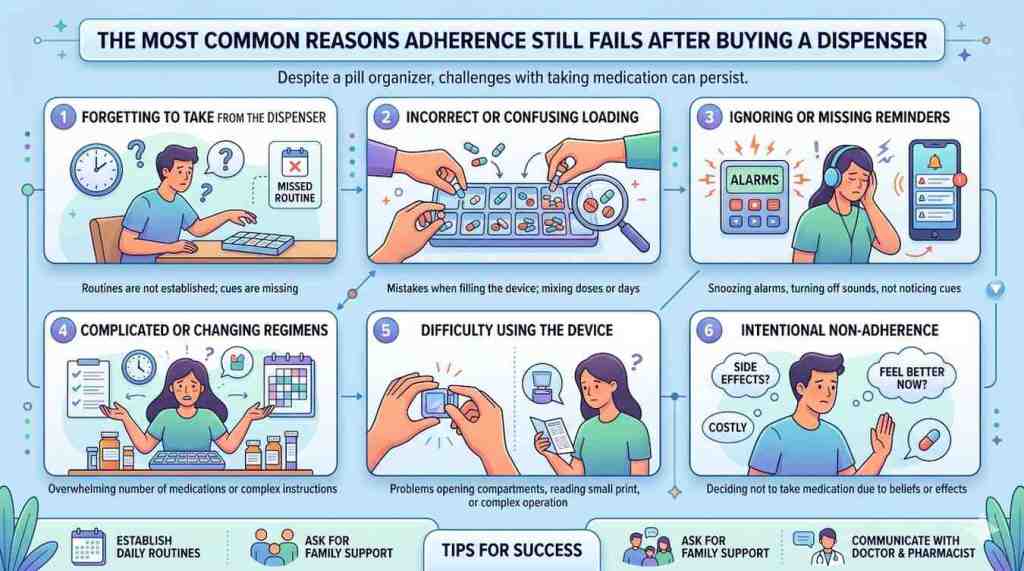
Families often assume continued adherence problems mean the senior is just not trying hard enough. That is rarely the most accurate explanation. In reality, there are several common causes.
The medication routine is too complicated overall
A dispenser may simplify timing, but it cannot always simplify a medication regimen that is already difficult to manage. If a senior is taking many medications at different times, with different instructions, from multiple doctors, the schedule itself may be the source of strain. Some medications may need food. Some may need separation from supplements. Some may be “as needed.” Some may have recently changed. In these situations, the device may improve one part of the process but still leave the person overwhelmed.
Side effects are creating quiet resistance
Older adults do not always clearly say, “I don’t want to take this because it makes me feel bad.” Instead, they may become vague, late, avoidant, or anxious around medication time. A missed dose is sometimes not a memory problem at all. It is a comfort problem. If a medication causes nausea, dizziness, fatigue, dry mouth, stomach upset, or frequent bathroom trips, a senior may resist it without openly saying so.
The senior does not fully understand the purpose of the medication
Some people take medication more reliably when they know why it matters. Others do not ask questions and quietly disengage if they are unsure whether a medicine is helping. A person is less likely to follow a routine consistently if it feels abstract, unnecessary, or imposed.
There is cognitive decline beyond what the family first recognized
A dispenser may work very well for mild forgetfulness, but if cognition is declining more significantly, the senior may have trouble interpreting the alert, remembering what action to take, or understanding whether the task is complete. In these cases, the family may need more direct oversight rather than better reminders.
Emotional pushback is undermining the system
Some seniors dislike what a dispenser represents. It may make them feel old, dependent, controlled, or “managed.” Even if they do not say that directly, the emotional discomfort can show up as avoidance, irritation, or refusal.
The household routine is unstable
Travel, visitors, naps, changing meal times, clinic visits, and inconsistent caregiver availability can all weaken a medication routine. A dispenser works best inside a stable daily structure. If the rest of life keeps changing around it, adherence may continue to vary.
How to Tell Whether the Problem Is Memory, Motivation, or Medication Burden
This is one of the most useful distinctions a family can make.
If the problem is memory, the senior may genuinely intend to take the medication, respond well to prompts, and feel relieved by structured reminders. Missed doses may happen because the day gets away from them, they lose track of time, or they cannot remember whether something was already taken.
If the problem is motivation or belief, the senior may hear the reminder and still delay or avoid the dose. They may question whether they need it, resent the routine, or feel emotionally tired of taking medication every day. They may say things like, “I’m taking too many pills,” or “I feel fine anyway.”
If the problem is medication burden, the issue is often the schedule, the volume of medications, the instructions, or the side effects. The person may not be resisting support itself. They may simply be struggling with a regimen that is hard to live with.
The distinction matters because the solution changes:
- Memory issues respond well to simplification, prompts, visibility, and consistency.
- Motivation issues respond better to conversation, trust-building, and medical review.
- Medication burden often requires help from a clinician or pharmacist to improve the regimen itself.
Trying to solve motivation or medication burden with more alarms usually backfires.
A Better Response: Conduct a Simple Adherence Review at Home
When adherence remains poor, families should not guess. They should review the medication process like a system.
A practical home adherence review can be done in one sitting and does not need to feel overly clinical. The goal is to identify the exact points where things are breaking down.
Step 1: Review what the senior is expected to take
Write down:
- Medication name
- Dose
- Time of day
- Special instructions
- What the medication is for
- Whether it is taken daily, weekly, or as needed
This step often reveals hidden complexity. Families are sometimes surprised by how many instructions are living only in memory.
Step 2: Observe one normal medication moment
Do not make it a test. Simply watch what happens at the next scheduled dose. Does the senior hear the alert? Do they recognize what it means? Can they reach the machine comfortably? Do they seem calm or hesitant? Do they ask the same question every time? Do they take the pills right away or set them aside?
This real-life observation is far more useful than asking, “Are you managing okay?”
Step 3: Ask open, respectful questions
Instead of:
“Why aren’t you taking your medicine properly?”
Ask:
- “Is any part of this routine annoying or hard?”
- “Do any of these medicines make you feel uncomfortable?”
- “Does this timing work for you?”
- “Do you ever feel unsure about what the alert wants you to do?”
- “Would something about this routine make more sense if we changed it?”
These questions uncover barriers without making the older adult defensive.
Step 4: Look for friction points
Common friction points include:
- Alerts that are too easy to miss
- Medication times that conflict with naps or meals
- Dispenser placement in an inconvenient room
- Pills that are hard to swallow
- Refill routines that are inconsistent
- Too many caregiver notifications creating tension
- Confusing changes after doctor visits
Step 5: Make one or two changes at a time
Do not redesign everything in one day. Change one variable, watch for improvement, then adjust again if needed. Small corrections are easier to sustain.
Highly Actionable Fixes That Often Improve Adherence Quickly
There are several practical changes that can make a noticeable difference without replacing the device or rebuilding the entire routine.
Move the dispenser to where the habit naturally belongs
A dispenser should not sit where it looks tidy. It should sit where the medication action is most likely to happen. For some seniors that is the breakfast table. For others it is near the favorite chair, the kitchen counter, or a bedside area used every morning. Convenience matters more than aesthetics.
Match medication times to real behavior, not ideal behavior
Families often schedule doses for the “right” time but not the realistic time. If breakfast is usually at 9:30, a medication alarm at 7:00 may fail repeatedly. If the senior often naps in the afternoon, that time may not be ideal for a dose unless there is a reliable backup cue.
Reduce unnecessary noise in the system
If the senior and caregiver are both getting too many alerts, the routine can start to feel stressful. Streamline what actually needs attention. Some reminders reassure. Too many reminders create fatigue.
Create a simple one-page medication guide
Keep a plain-language sheet near the dispenser listing:
- What each medicine is for
- When it is taken
- What to do if a dose is late
- Whom to call for medication questions
This is especially helpful after medical appointments or recent prescription changes.
Review swallowing difficulties
If pills are physically difficult to swallow, adherence will often suffer even when reminders are perfect. That is not a technology problem. It is a medication administration problem and should be discussed with a healthcare professional.
Build a travel protocol
One of the most common reasons adherence falls apart is that home routines work, but anything outside the home disrupts them. Have a written process for appointments, weekends away, family visits, or day trips.
When the Issue Is Not Forgetfulness but Avoidance
This is one of the most important areas for families to understand. Sometimes the person remembers the dose perfectly well and still does not want to take it.
Avoidance may come from:
- Side effects
- Fear of dependency
- Feeling “overmedicated”
- Depression or low motivation
- Confusion about benefit
- Frustration with the number of pills
- A desire to feel more in control
In these situations, confrontation usually makes things worse. The goal is not to win an argument. It is to understand what the medication routine feels like from the senior’s perspective.
A useful approach is to say:
“I want to understand what makes this difficult, not just whether it’s getting done.”
That one sentence can change the tone of the conversation completely.
If the person says the medication causes discomfort, the family should take that seriously. If they say they are tired of taking so many pills, that is also useful information. It may point to the need for a medical review rather than a stronger reminder system.
When to Involve the Doctor or Pharmacist
A family should not carry the entire medication burden alone. If adherence remains poor despite a good setup, clinical input may be necessary.
Reach out to the doctor, pharmacist, or care team when:
- The senior is consistently missing doses despite reminders
- Side effects appear to be causing resistance
- The medication schedule feels too complicated
- There have been recent hospitalizations or medication changes
- The senior seems more confused than before
- Blood pressure, blood sugar, pain, sleep, mood, or other symptoms suggest medications are not being taken consistently
- There is concern about duplication, interactions, or timing conflicts
A pharmacist can sometimes identify simpler timing options, administration tips, or practical compatibility concerns that families overlook. A doctor may be able to review whether all medications are still necessary, whether the schedule can be simplified, or whether a medication is causing more harm than benefit in daily life.
The most effective adherence plan is often not “better reminding.” It is “better prescribing plus better daily support.”
How Caregivers Can Help Without Turning Into Medication Police
This is a delicate balance. Caregivers understandably want peace of mind. But when every dose becomes a check, a warning, or a correction, the relationship can become strained. Seniors may respond by pulling back, becoming defensive, or hiding mistakes.
A more sustainable role for caregivers is supportive oversight rather than constant enforcement.
That may look like:
- A calm daily check-in instead of repeated reminders
- Weekly review of the medication list and refill status
- Watching for patterns rather than reacting emotionally to every single alert
- Asking problem-solving questions instead of accusatory ones
- Keeping the routine steady and predictable
For example, instead of saying:
“You missed it again.”
Say:
“I noticed this time of day seems harder. Let’s see what would make it easier.”
That keeps the focus on fixing the system rather than blaming the person.
Recognize the Signs That the Current Approach Is No Longer Enough
Sometimes the honest answer is that the senior now needs more help than an automatic dispenser can provide. That is not a failure. It is a change in care needs.
Signs that more direct support may be needed include:
- Frequent confusion even with repeated instruction
- Inability to understand or respond to prompts
- Repeated removal of pills without taking them
- Unsafe medication handling
- Major cognitive decline
- Wandering, agitation, or behavior changes affecting routine
- Caregiver distress becoming unmanageable
At that point, the family may need to consider a different medication management model, such as more direct caregiver administration, home health support, nursing assistance, or a broader safety review.
The goal should always be the least burdensome system that is still safe and effective. Sometimes a dispenser supports that goal beautifully. Sometimes the person’s needs change, and the system must change too.
Measure Success in a More Human Way
Medication adherence should not be measured only by whether every alarm leads to a dose at the exact minute expected. Real-life success is often more human than that.
Ask:
- Is the senior less confused than before?
- Is medication time calmer?
- Are missed doses happening less often?
- Is the caregiver less anxious?
- Is the routine more sustainable?
- Does the older adult feel respected and supported?
These outcomes matter because medication routines live inside ordinary life. A successful system should improve that life, not dominate it.
A Simple 30-Day Reset Plan for Families
If the dispenser has not delivered the improvement you hoped for, use this 30-day reset approach.
Week 1: Observe and document
Track exactly what happens at each dose without making major changes yet. Look for times, patterns, side effects, mood, confusion, and caregiver burden.
Week 2: Simplify the routine
Adjust timing, location, instructions, or alert style. Remove unnecessary complexity. Create a one-page medication guide and a refill checklist.
Week 3: Review with the senior
Have a calm conversation about what feels hard, what feels easy, and what they want changed. Treat their experience as central, not secondary.
Week 4: Escalate appropriately if needed
If problems continue, involve a doctor, pharmacist, or care team. Bring your observations. Specific patterns are far more helpful than saying, “The dispenser isn’t helping.”
This reset plan gives families a structured way to improve the situation without overreacting or giving up too quickly.
Final Takeaway
If medication adherence does not improve right away, do not assume the device has failed or the senior is unwilling. More often, the situation is asking for a deeper look. The real issue may be side effects, complexity, confusion, emotional resistance, cognitive change, or a daily routine that does not support consistent medication use.
An automatic pill dispenser is most helpful when it is part of a broader care strategy. It can improve timing and reduce errors, but real adherence depends on clarity, comfort, trust, routine, and support. Families who respond thoughtfully to continued struggles usually get better outcomes than families who simply add more alarms.
The most practical mindset is this: if adherence is still weak, the answer is not always more technology. Sometimes the answer is a simpler schedule, a better conversation, a medical review, more human support, or a different level of care.
That is what truly helps seniors stay safe, respected, and well-supported over time.
Conclusion
When medication management stops being a source of stress, it opens up space for what really matters—meaningful connection and quality time together. The evidence is clear: these smart devices significantly improve adherence when matched to your loved one’s specific needs.
Real stories show how the right support system preserves independence and dignity. It transforms daily routines from worrisome tasks into reliable partnerships. The financial reality is often more manageable than many families expect.
Whether you choose a subscription model or one-time purchase, the investment pays dividends in improved health outcomes and reduced stress. Research confirms that integrated approaches lead to better medication adherence outcomes for seniors living at home.
Ultimately, the goal is supporting your parent’s whole life and happiness. The right technology works quietly in the background, giving everyone the freedom to enjoy their days together with confidence and peace.