
Sarah’s phone buzzed at 2 a.m. It was her mom. Her heart dropped. “I’m okay, honey,” her mom said, voice shaky. “I just tripped over the rug in the hallway. It scared me.”
That late-night call is a fear many adult children know. You want your parents to be independent, but worry creeps in. Is the house a place of comfort or hidden risks?
Falls are the top cause of serious injury for people over 65. But creating a secure living space doesn’t mean a full remodel. It’s about smart, thoughtful changes.
This guide walks you through each room. We break down the process into simple steps. You’ll gain a clear plan to support your loved one’s well-being, offering you real peace of mind.
Key Takeaways
- Late-night worries about a parent’s well-being are common and valid for long-distance caregivers.
- Falls are a leading cause of injury for older adults, making home assessments crucial.
- Creating a safer environment is achievable through practical, room-by-room adjustments.
- This guide provides a structured approach to identify and mitigate potential hazards.
- Simple modifications can significantly reduce risks while preserving independence.
- The goal is to empower both you and your loved one with confidence and security.
Understanding Room-by-Room Home Safety for Seniors
The kitchen where holiday meals were prepared for years now requires a different kind of attention. Each space in your loved one’s residence presents unique safety challenges that demand specific solutions.
Why Room-Specific Checks Matter
A general safety sweep misses critical details. The bathroom’s slippery surfaces differ completely from kitchen burn risks. Your parent might navigate the living room perfectly by day but struggle at night.
Breaking assessments into individual rooms prevents overwhelm. You can start with the highest-risk area and work systematically. This approach makes the process manageable for everyone involved.
Assessing Unique Room Challenges
Each area demands tailored strategies. Bathrooms need slip prevention. Kitchens require burn protection. Bedrooms call for clear pathways and proper lighting.
Consider how your loved one actually uses each space. Their habits and routines determine what solutions will work best. Effective safety measures must fit real life, not just theory.
This room-by-room method helps prioritize improvements. Focus on spaces used daily first. It also simplifies coordination when you’re assisting from a distance.
Identifying and Eliminating Home Hazards
The same household items that bring comfort can sometimes create unexpected dangers for aging loved ones. Learning to spot these potential hazards transforms how you view their living space.
Spotting Tripping Risks in Each Area
Walk slowly through each room with your parent. Notice what they might bump into in dim light. Electrical cords stretched across pathways and decorative rugs without non-slip backing are common tripping risks.
Pay attention to transitions between flooring types. Thresholds and uneven surfaces contribute to many falls. Even beloved items like a treasured Persian rug can become hazards without proper securing.
Recognizing Fall Hazards and Potential Obstacles
Look at both floor level and overhead spaces. Low tables, ottomans, and pet bowls in walkways pose risk. Open cabinet doors at head height can cause injuries.
Create a simple notebook during your assessment. Jot down each potential hazard by room. This becomes your action plan for creating a safer environment for seniors.
For a comprehensive approach, consider using this detailed home safety assessment guide during your walkthrough.
Rearranging Furniture to Create Safe Pathways
Creating safe movement paths starts with thoughtful furniture arrangement that respects both safety needs and personal history. The goal is to maintain comfort while dramatically improving mobility throughout the living space.

Before making any changes, have an open conversation. As one caregiver shared, “It’s not about taking away their space, but about making it work better for them.” This approach preserves dignity while addressing practical needs.
Establishing Clear Walkways for Mobility
Focus on the most traveled routes first. The path from bedroom to bathroom deserves priority attention. Ensure at least 36 inches of clear walking space.
Strategic placement of sturdy chairs with arms creates natural support stations. These pieces offer stability when standing or moving between rooms.
“The best safety modifications are the ones your loved one doesn’t notice because they feel so natural to use.”
Consider this approach to common furniture challenges:
| Furniture Type | Safety Concern | Recommended Solution |
|---|---|---|
| Glass-top tables | Breakage risk during falls | Replace with solid surfaces |
| Wobbly occasional tables | Unstable when used for support | Remove or secure firmly |
| Sharp-cornered furnishings | Injury risk from impact | Add corner protectors |
| Low-profile items | Tripping hazards in pathways | Relocate to less traveled areas |
For comprehensive guidance, the National Institute on Aging offers room-by-room fall prevention that complement these furniture adjustments. The right arrangement supports natural movements rather than obstructing them.
Enhancing Lighting for Better Visibility
When the sun sets, familiar rooms can become challenging to navigate for aging loved ones. Strategic illumination transforms these spaces into confidently navigated areas.
Try JoyCalls Free
No app or new device needed. Start with a free 7-day trial.
Good lighting does more than brighten a room—it provides security and independence. The right approach eliminates shadows and creates clear pathways.

Smart and Cordless Lighting Options
Modern lighting solutions offer incredible flexibility. Cordless options eliminate tripping hazards while providing placement freedom.
Smart lights controlled by phone or voice are game-changers. You can check if lights are on from anywhere. Set schedules that match daily routines.
Motion-activated lighting automatically illuminates pathways. Your parent simply walks down the hallway and light follows them. No fumbling for switches in the dark.
Nighttime Illumination Tips
Nighttime deserves special attention since most falls occur after dark. Warm-toned nightlights along bedroom-to-bathroom paths provide gentle guidance.
Affordable stick-on tap lights offer targeted illumination where needed most. Under cabinets, inside drawers, or in dark closets.
Just as proper lighting helps your parent navigate physically, tools like JoyCalls help you stay connected to their wellbeing. Regular check-ins provide peace of mind from any distance.
Installing Grab Bars and Safety Supports in Bathrooms
What should be a simple daily routine—using the bathroom—can become a high-risk activity without proper support. Wet surfaces and limited mobility create a perfect storm for accidents.
These essential safety tools provide stability when it matters most. They transform precarious moments into secure transitions.
Proper Grab Bar Placement for Stability
Strategic placement makes all the difference. Install grab bars where your parent needs leverage most.
Vertical placement beside the toilet helps with sitting and standing. Horizontal bars along the shower wall offer steady support.
| Location | Bar Orientation | Purpose |
|---|---|---|
| Toilet area | Vertical | Leverage for sitting/standing |
| Shower wall | Horizontal | Continuous support while bathing |
| Bathtub edge | Angled | Transition assistance |
Professional installation ensures these bars anchor securely into wall studs. This prevents accidents from improper mounting.
Making Bathtubs and Showers Safer
Beyond grab bars, consider shower seats for seated bathing. This reduces fatigue and fall risk significantly.
Non-slip mats inside and outside the tub provide essential traction. They address slippery surfaces where most accidents occur.
These modifications help prevent falls before they happen. They preserve independence while ensuring well-being for seniors.
Optimizing Storage and Accessibility
The simple act of reaching for a favorite coffee mug shouldn’t require climbing or stretching that puts your parent at risk. Everyday items stored just out of reach can turn routine moments into potential challenges.

Smart organization creates spaces where everything has its place within easy reach. This approach prevents dangerous bending and unnecessary climbing.
Reorganizing Cabinets for Easier Reach
Think of cabinet space as prime real estate. The area between waist and shoulder height is gold. This is where daily-use items should live.
Take inventory of what your loved one actually uses. Everyday dishes move to lower shelves. Holiday china can stay up high since it’s used rarely.
Pull-out shelves and lazy Susans transform deep cabinets. They eliminate dangerous stretching into dark corners. Your parent can see and reach everything safely.
Consider these practical storage solutions:
| Storage Challenge | Common Risk | Smart Solution |
|---|---|---|
| High cabinet access | Falls from step stools | Relocate daily items lower |
| Deep cabinet organization | Straining and bending | Install pull-out shelves |
| Under-sink storage | Back strain from low bending | Use rolling storage carts |
| Medication accessibility | Missed doses from hard access | Keep at eye-level locations |
Sometimes the best approach involves aging in place home modifications that create permanent accessibility solutions. The goal is making daily life smoother and safer.
Apply the two-minute rule. If your loved one can’t access something they need within two minutes without risk, that item needs relocation. This simple guideline keeps their living space both functional and secure.
Implementing Safety Devices and Emergency Alert Systems

The peace of mind that comes from knowing help is just a button press away transforms long-distance caregiving from constant worry to confident support. These technologies create a vital connection when you can’t be there in person.
Modern emergency response devices have evolved significantly. Today’s options include wearable buttons, automatic fall detection, and GPS tracking for when your loved one is away from home.
Choosing a Reliable Medical Alert System
When selecting a medical alert system, consider your parent’s daily habits. Do they need mobile coverage or will a home-based system suffice? The right choice provides immediate assistance during emergency situations.
While traditional devices react to crises, proactive monitoring offers additional protection. Services like JoyCalls provide daily AI check-ins that can detect changes in routine or mood before they become emergency situations.
This combination creates a comprehensive safety net for seniors. The medical alert system handles urgent needs, while daily check-ins provide ongoing wellbeing monitoring.
Together, these devices and services ensure your loved one receives timely assistance and consistent connection. They work in harmony to maintain independence while providing essential safety coverage.
Crafting an Effective Elderly Home Safety Checklist

Turning vague worries into clear action steps starts with a simple tool many caregivers overlook. A well-organized assessment tool transforms anxiety into manageable tasks.
Customizing Checklists for Your Home Environment
Your loved one’s living space is unique. Their specific needs determine what safety measures work best. Start with a comprehensive template, then personalize it.
Consider mobility levels, daily routines, and any health changes. What works for one person may not suit another. The goal is creating a plan that feels natural to use.
Regular Updates and Safety Inspections
Needs evolve over time. Schedule quarterly reviews of your assessment document. This catches new risks before they become problems.
Keep notes about “near-miss” incidents. These reveal where to focus next. Digital versions work well for long-distance coordination.
For additional guidance, explore these practical home safety tips. The best plan is one you’ll actually use consistently.
Building a Remote Home Safety Maintenance System That Actually Lasts
A home safety setup is not a one-time project. For long-distance caregivers, the real challenge begins after the rugs are secured, grab bars are installed, lights are improved, and emergency contacts are written down. A senior’s home can be perfectly safe in January and quietly become risky again by March. A hallway bulb burns out. A favorite chair gets moved into a walking path. A new medication causes dizziness. A winter storm damages an outdoor step. A small leak creates a slippery kitchen floor. None of these changes may seem urgent at first, but together they can weaken the safety plan you worked so hard to create.
That is why every long-distance caregiver needs a remote home safety maintenance system. This is a simple, repeatable way to make sure the home remains safe, comfortable, and easy to manage over time. It helps you move from reacting to problems to noticing them early. It also protects your loved one’s dignity because you are not constantly “checking up” on them in a stressful way. Instead, you are building routines that make safety feel normal.
The National Institute on Aging notes that many older adults want to remain in their homes as they age, but doing so safely requires planning around daily activities, mobility, and support needs. FEMA’s older adult preparedness guidance also emphasizes assessing needs, creating a plan, and engaging a support network, which is especially important when family members live far away.
Create a “Safety Owner” System for Every Area of the Home
One common mistake families make is assuming that everyone is watching the home, when in reality no one has clear responsibility. Your parent may think you are handling repairs. You may think a neighbor is keeping an eye out. A sibling may assume your parent will mention problems. This creates gaps.
Instead, assign a “safety owner” for each category. This does not need to be complicated. One person can own several areas, but every important task should have a name attached to it.
For example, you might organize responsibilities like this:
You: monthly video walkthrough, medication refill checks, emergency contact updates, service provider scheduling.
Local sibling or neighbor: quick visual checks after storms, entryway clutter, outdoor lighting, mailbox area.
Cleaner or home aide: loose rugs, wet floors, expired food, bathroom supplies, laundry hazards.
Handyman: grab bar stability, smoke detector batteries, loose railings, appliance concerns.
Your loved one: reporting anything that feels harder, heavier, darker, slippery, confusing, or “not quite right.”
This approach makes safety collaborative instead of controlling. It also gives your loved one a clear voice. They should not feel like the home is being managed around them. They should feel like the system supports the way they want to live.
A helpful phrase is: “We are not trying to change your home. We are trying to make sure your home keeps working well for you.”
Schedule a Monthly Video Walkthrough
A monthly video walkthrough is one of the most practical tools for long-distance caregiving. It does not need to feel formal. It can be a 15-minute call where your loved one, a neighbor, an aide, or a family friend slowly walks through key areas of the home with a phone camera.
Focus on changes, not perfection.
Start with the routes your loved one uses most: bedroom to bathroom, living room to kitchen, kitchen to dining area, entryway to mailbox, and laundry area if they use it. Ask gentle, specific questions:
“Can you show me the path from your bed to the bathroom?”
“Has anything been moved here recently?”
“Are you using this lamp every night?”
“Is this rug still lying flat?”
“Can you reach your daily dishes without stretching?”
“Is there anything you avoid doing because it feels difficult?”
This type of walkthrough catches problems that may not come up in normal conversation. Seniors often adapt quietly. They may stop using a cabinet because it is too high, avoid a shower because it feels unsafe, or leave items on the floor because bending is uncomfortable. They may not describe these as “safety issues,” but they are.
The CDC’s STEADI fall-prevention resources include home safety checklists for older adults and caregivers, with practical attention to tripping hazards, lighting, and fall risks. A video walkthrough can help you apply those ideas when you cannot be physically present.
Build a Seasonal Safety Calendar
Some risks change with the season. A safe summer home may not be safe in winter. A safe dry-weather entryway may become dangerous during rain. Long-distance caregivers should create a seasonal safety calendar that repeats every year.
In spring, check outdoor steps, railings, garden paths, pest issues, and any damage caused by winter weather. Make sure hoses, tools, and planters are not blocking walkways. If your loved one enjoys gardening, create a seated gardening station so they do not need to bend, kneel, or carry heavy watering cans.
In summer, focus on heat safety, hydration access, working fans or air conditioning, refrigerator function, and safe food storage. Place water within easy reach in the rooms they use most. If they take medications affected by heat, ask the pharmacist how they should be stored.
In autumn, prepare for shorter days. Replace weak bulbs, add motion lighting near entrances, check flashlights, and make sure outdoor leaves are cleared from steps and paths. This is also a good time to test smoke alarms and carbon monoxide detectors.
In winter, prioritize heating, power outage planning, non-slip mats near entryways, safe footwear, and snow or ice removal if relevant. Arrange snow clearing before the first storm, not after. Confirm that your loved one does not need to carry heavy logs, space heaters, or laundry baskets across slippery surfaces.
This calendar should be shared with everyone involved in care. It prevents last-minute scrambling and helps your parent feel prepared rather than managed.
Create a Trusted Local Helper List Before You Need It
Long-distance caregiving becomes stressful when every small problem turns into an urgent search for help. A leaking faucet, broken lock, flickering light, or loose stair rail can become a major worry when you do not know who to call.
Create a local helper list with at least one reliable contact in each category:
Plumber
Electrician
Handyman
Locksmith
Cleaner
Pharmacy
Primary care office
Urgent care clinic
Neighbor or building manager
Transportation service
Meal delivery option
Local family friend
Backup caregiver or aide agency
Include phone numbers, hours, pricing notes if known, and whether they have permission to enter the home. Keep this list printed in the home and saved digitally for family members.
The most important part is pre-approval. Do not wait until there is a problem to ask, “Who is allowed to come over?” Talk with your loved one in advance. Ask which neighbor they trust. Ask whether they are comfortable with a cleaner having a key. Ask whether a handyman should call you before starting work.
This protects both safety and autonomy.
Set Up a Repair Threshold Rule
Many older adults delay repairs because they do not want to be a burden, spend money unnecessarily, or admit something is becoming difficult. Long-distance caregivers can help by creating a simple “repair threshold rule.”
The rule is this: If a problem affects walking, bathing, cooking, lighting, medication, temperature, locks, or communication, it gets handled quickly.
This removes debate. A loose stair rail is not a cosmetic issue. A dim hallway is not just annoying. A broken phone charger is not minor if it affects daily check-ins. A sticky door lock is not just inconvenient if it slows emergency access.
You can divide repairs into three categories:
Same day: no heat or cooling in extreme weather, broken lock, electrical smell, gas smell, major leak, fall incident, blocked exit, no working phone.
Within one week: loose railing, poor lighting, appliance malfunction, running toilet, slow leak, unstable furniture, worn non-slip mats.
Within one month: storage changes, furniture adjustments, seasonal maintenance, easier handles, better shelving, comfort upgrades.
This system helps everyone respond consistently. It also reassures your loved one that not every issue will become a crisis.
Keep a Home Safety Binder in Plain Sight
A home safety binder may sound old-fashioned, but it is extremely useful. In an emergency, people should not have to search through drawers, phones, or email threads to find important information.
Place the binder somewhere obvious, such as near the kitchen phone, entry table, or medication area. Use large print and clear dividers.
Include:
Emergency contacts
Medication list
Allergies
Doctor and pharmacy details
Insurance information
Preferred hospital
Copies of advance directives, if applicable
Home service provider list
Utility company contacts
Wi-Fi password
Medical alert instructions
Daily routine notes
Pet care instructions
Spare key location or lockbox instructions
Evacuation plan
Recent home safety checklist
For privacy, do not include sensitive financial details unless absolutely necessary. The binder should help trusted people respond quickly, not expose your loved one to risk.
Review it every three months. Outdated information can be worse than missing information because it gives helpers false confidence.
Use “Low-Effort Reporting” for Your Loved One
Seniors should not have to write long updates or remember every detail. Make reporting safety issues as easy as possible.
Create a simple phrase your loved one can use during calls: “This needs a look.” That phrase can apply to anything: a loose handle, a strange sound, a slippery spot, a confusing bill, or a light that keeps flickering.
You can also create five simple check-in questions:
Did anything feel harder than usual this week?
Did you almost trip, slip, or lose balance?
Did anything stop working properly?
Did you avoid any room, step, or task?
Do you need help moving, fixing, replacing, or reaching anything?
These questions are better than “Is everything okay?” Most people answer “yes” automatically, especially if they do not want to worry their children. Specific questions create safer conversations.
This is where daily or weekly phone-based check-ins can be very helpful. The existing article already explains how JoyCalls can support communication without requiring apps or new devices. Adding these safety-focused questions into a regular call routine can help spot small changes before they become emergencies.
Plan for Power, Phone, and Internet Outages
A safe home depends on communication. If your loved one cannot call out, receive reminders, use a medical alert system, or turn on lights during an outage, the home becomes riskier very quickly.
Create a simple outage plan.
First, make sure there is at least one easy-to-use backup light in every key area: bedroom, bathroom, kitchen, hallway, and entryway. Avoid candles because they increase fire risk. Use battery-powered lanterns or rechargeable emergency lights.
Second, keep phones charged. If your loved one uses a mobile phone, place chargers in the rooms where they spend the most time. Consider a power bank with large buttons or simple indicators. If they use a landline, confirm whether it works during power outages; some modern phone systems do not.
Third, write down what to do if power is out for more than two hours, six hours, or overnight. Include who to call, where to go if the home becomes too hot or cold, and which neighbor can check in.
FEMA recommends that older adults and caregivers build preparedness around personal needs, planning, and a support network. For long-distance families, this network is not optional. It is the bridge between concern and action.
Make Safety Part of Normal Home Comfort
The best safety changes do not make a home feel clinical. They make life easier.
A sturdy chair near the entrance is not just a fall-prevention tool; it is a comfortable place to put on shoes. A brighter kitchen light is not just a safety upgrade; it makes cooking more enjoyable. A labeled drawer is not just memory support; it reduces daily frustration. A shower chair is not a sign of decline; it allows bathing without exhaustion.
This framing matters. Many older adults resist safety changes because they fear losing independence. When you present changes as comfort, convenience, and confidence, they are more likely to accept them.
Instead of saying, “You need this because you might fall,” try:
“This will make the hallway easier at night.”
“This will save you from reaching so high.”
“This makes the shower more relaxing.”
“This gives you one less thing to worry about.”
“This helps me support you without bothering you all the time.”
Safety should feel like support, not surveillance.
Review the System After Any Health Change
Any change in health should trigger a home safety review. This includes a fall, hospital visit, new diagnosis, medication change, vision change, dizziness, increased fatigue, surgery, infection, or noticeable memory change.
Do not wait for a major incident. Even small changes can affect how safely your loved one moves through the home. A new blood pressure medication may increase lightheadedness. New glasses may affect depth perception. Arthritis pain may make gripping railings harder. A urinary tract infection may cause confusion. Recovery from surgery may make stairs temporarily unsafe.
The National Institute on Aging encourages older adults and caregivers to think carefully about the support needed for daily activities when aging at home. A home that matched last year’s abilities may need adjustments after a health shift.
After any change, repeat the most important parts of the safety review: bathroom access, nighttime walking path, medication setup, kitchen tasks, stairs, emergency contacts, and communication tools.
The Goal Is a Home That Keeps Adapting
Long-distance caregiving is not about controlling every detail from afar. It is about creating a system that helps the home adapt as your loved one’s needs change. The safest homes are not necessarily the most expensive or heavily modified. They are the ones where small risks are noticed early, responsibilities are clear, repairs happen quickly, and the older adult feels respected throughout the process.
A room-by-room safety setup gives you the foundation. A remote maintenance system keeps that foundation strong.
Start small. Schedule one monthly walkthrough. Create one local helper list. Set one repair rule. Update one binder. Ask five better questions during check-ins.
Over time, these small habits create something powerful: a home that continues to support independence, dignity, and peace of mind, even when you cannot be there in person.
Preparing for Emergencies and Preventing Falls

Emergency planning isn’t about expecting the worst—it’s about ensuring your parent feels secure in any situation. A thoughtful approach transforms worry into practical confidence.
Emergency Preparedness Measures
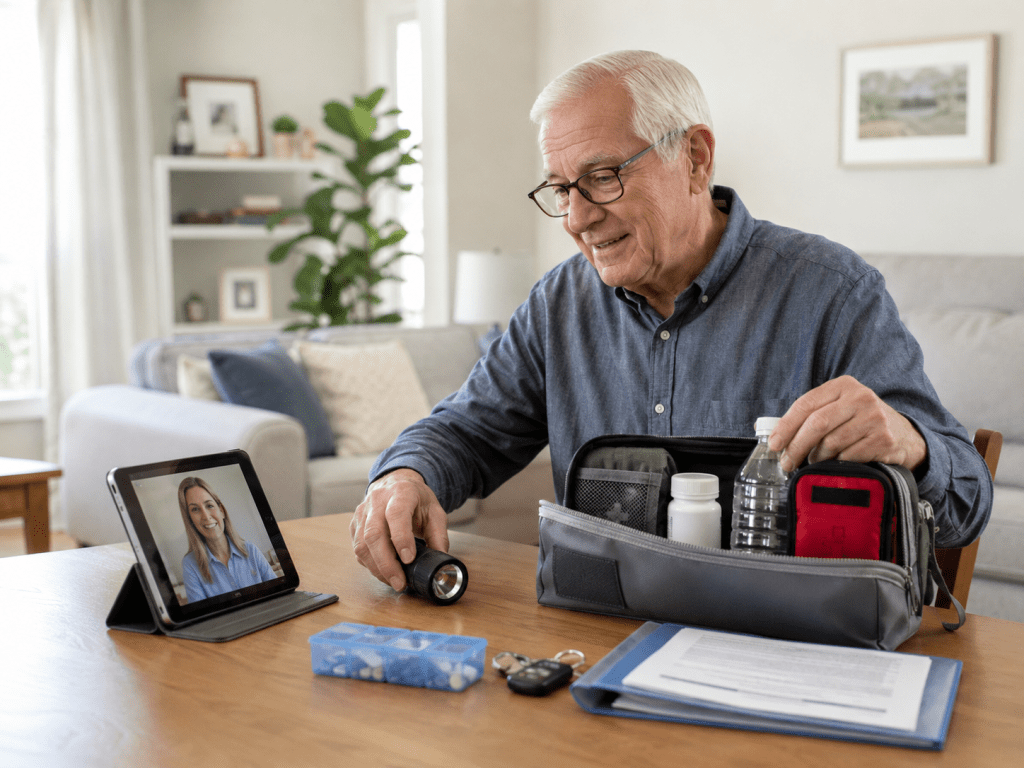
Start with an accessible emergency kit containing three days of supplies. Include water, non-perishable food, medications, and important documents.
Create specific response plans for different scenarios. Discuss evacuation routes and neighbor contacts. This preparation reduces panic when quick action matters.
Install interconnected smoke and carbon monoxide detectors throughout the residence. When one alarm sounds, they all activate. Smart detectors can alert you directly during emergency situations.

Fall Prevention Strategies Using Safety Aids
Prevent falls through multiple layers of protection. Address medication side effects and encourage balance exercises. Proper footwear makes a significant difference.
Safety aids only work when used consistently. Encourage using walkers or canes every time, not just when feeling unsteady. Slow, deliberate movements reduce risk of accidents.
For comprehensive guidance, the safe living guide offers valuable insights. These steps protect both physical health and independence for seniors.
Adapting Home Care for Long-Distance Caregiving
The miles between you and your parent can feel like an ocean when you’re trying to provide meaningful care from afar. Remote monitoring technology bridges this gap beautifully.

Remote Monitoring and Communication Solutions
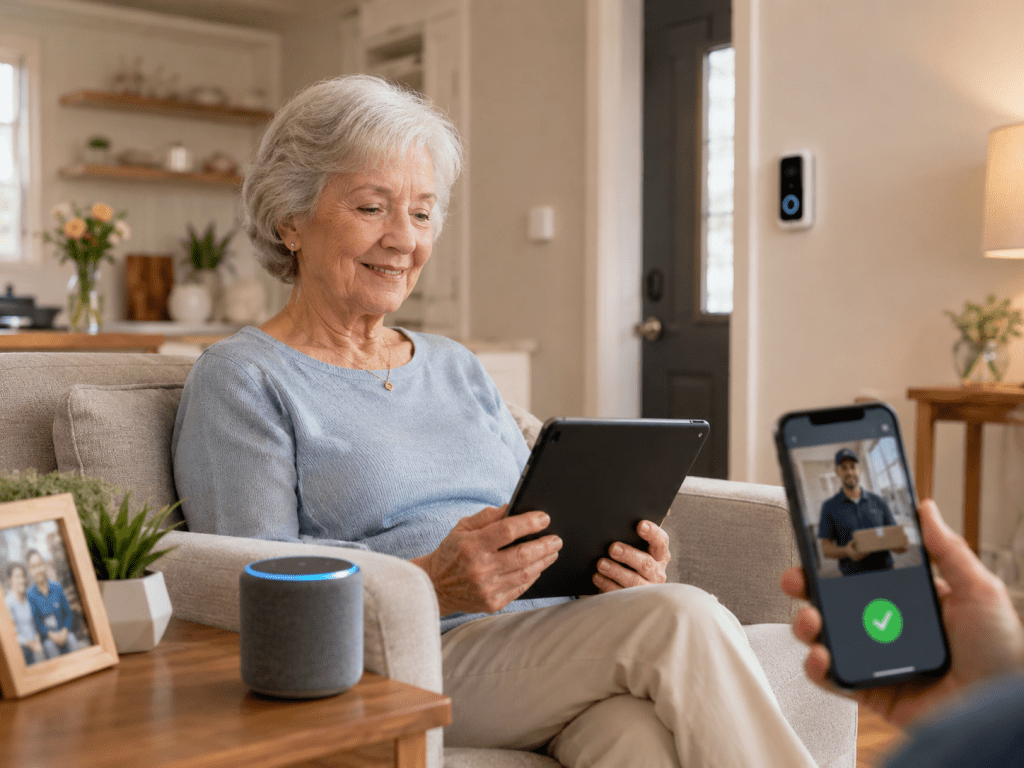
Smart devices create a safety ecosystem that respects your loved one’s independence. Motion sensors track activity patterns. Smart locks provide security verification. Video doorbells offer visual safety.
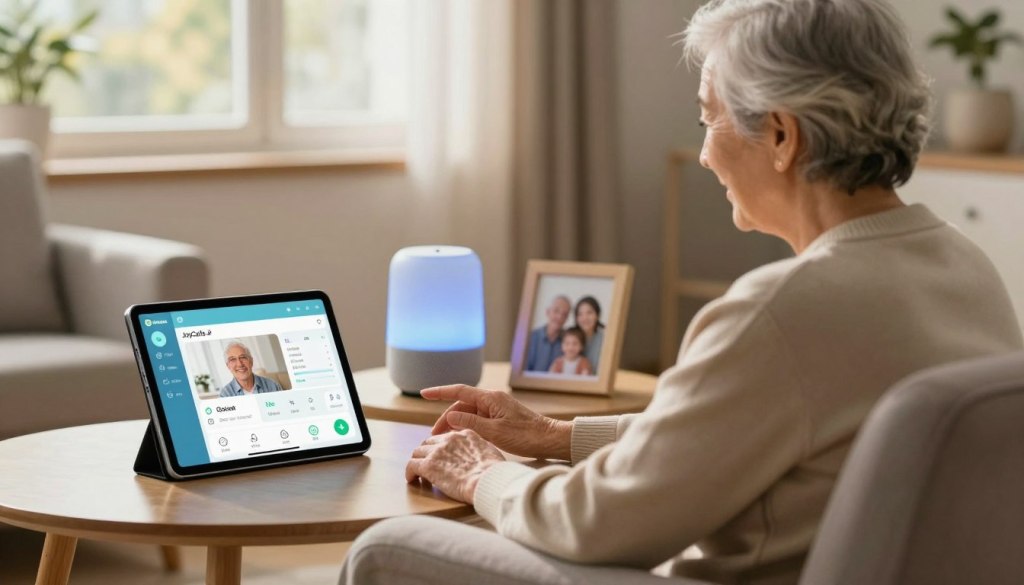
Many seniors resist complicated technology. That’s why solutions like JoyCalls work so well. They use existing telephones—no apps or new devices required.
Daily AI-powered calls provide companionship and routine. They ask about wellbeing and offer medication reminders. You receive detailed summaries and immediate alerts if concerns arise.
This approach delivers true peace of mind while preserving dignity. For comprehensive guidance, explore this long-distance caregiving handbook.
The right technology enhances living situations without feeling intrusive. It’s about checking in, not checking up.
Creating a Practical Long-Distance Caregiving Workflow for Home Safety

A safe home is not only about grab bars, better lighting, medical alerts, and clear walkways. Those changes are important, but they are only one part of the bigger picture. For long-distance caregivers, the real challenge is consistency. You may not be there to notice that the hallway is getting cluttered again, the shower mat has started curling at the edge, or your parent has stopped using the bedroom lamp because the switch is hard to reach.
That is why a clear caregiving workflow matters. Think of it as a simple operating system for keeping your loved one safe at home. It tells you what to check daily, what to review weekly, what to update monthly, and when to involve extra help.
The goal is not to overwhelm your parent. It is not to turn their home into a monitored facility. It is to create a gentle, predictable rhythm that supports independence while reducing preventable risk.
Start With the “Daily Safety Signals”
Long-distance caregivers cannot inspect the home every day, but they can watch for signals. These are small clues that something may be changing.
A daily safety signal could be a missed call, unusual tiredness, confusion during conversation, a change in routine, repeated complaints about pain, or your parent mentioning that they “almost slipped” or “felt a little dizzy.” These details may sound minor, but they often reveal early safety concerns.
Create a short list of daily questions that can be asked naturally during a phone call:
“How are you feeling when you walk around today?”
“Did anything feel harder than usual?”
“Did you eat and drink enough today?”
“Did you feel dizzy, weak, or unsteady?”
“Is anything in the house bothering you?”
Avoid making the call feel like an interrogation. A warm tone matters. You might say, “I just want to make sure the house is still working well for you.”
Services like JoyCalls can be especially useful here because the article already explains that daily phone-based check-ins can help caregivers stay connected without requiring seniors to use apps or new devices. You can use those check-ins to notice changes in mood, routine, confidence, or comfort before they become urgent.
Build a Weekly “Home Function” Review
Once a week, review how the home is functioning. This is different from asking whether the home is clean. Clean does not always mean safe. A home can look tidy and still have poor lighting, hard-to-reach items, slippery surfaces, or unsafe walking paths.
During the weekly review, focus on the tasks your loved one performs most often:
Getting out of bed
Walking to the bathroom
Bathing
Preparing food
Taking medication
Answering the door
Doing laundry
Taking out trash
Using stairs
Getting the mail
For each task, ask one practical question: “Is this still easy and safe?”
If your parent says the laundry basket feels heavy, do not dismiss it as a small complaint. That may mean laundry should be moved to a rolling cart, split into smaller loads, or handled by a helper. If they say they are eating more packaged food because cooking feels tiring, that may point to kitchen access, fatigue, or medication side effects. If they say they are avoiding the shower, that may mean the bathroom setup needs immediate attention.
The best home safety systems are built around real behavior, not assumptions.
Keep a Shared Safety Log
A shared safety log prevents important details from getting lost between siblings, neighbors, aides, and healthcare providers.
This can be a notebook, spreadsheet, shared document, or caregiving app. Keep it simple. The log should include:
Date
Concern noticed
Room or area
Who noticed it
Action needed
Who is responsible
Deadline
Status
For example:
“March 4 — Bathroom — Mom said shower floor feels slippery — order new non-slip mat — Priya — by March 8 — pending.”
This kind of record is extremely helpful because long-distance caregiving often involves many small tasks. Without a log, everyone may remember the concern but no one may complete the fix.
It also helps you identify patterns. One near-slip may be random. Three near-slips near the bathroom at night are a clear warning. One missed medication may happen. Several missed doses may mean the system is too complicated.
Use a “Two-Person Rule” for Bigger Safety Decisions
Some safety decisions are emotionally sensitive. Removing a rug, adding a shower chair, installing a camera, hiring help, or changing a bedroom layout can feel personal to an older adult. These changes may be necessary, but they should not feel forced.
For bigger decisions, use a two-person rule: one person raises the concern, and another trusted person supports the conversation. This could be a sibling, doctor, occupational therapist, close friend, or family member your parent trusts.
The conversation becomes less confrontational when it is not just “you versus your parent.” It becomes a shared concern.
Instead of saying, “You need a shower chair,” try:
“I know you value doing things on your own. The shower chair is not about taking independence away. It is there so you can keep bathing safely without feeling rushed or tired.”
This framing matters. Seniors are more likely to accept changes when the change protects independence rather than signals decline.
Create a Clear Escalation Plan
Long-distance caregivers often struggle with one question: “When should I step in?”
A clear escalation plan answers that question before emotions take over.
Divide concerns into three levels.
Level 1: Watch and Support
These are mild concerns that need attention but not panic. Examples include mild clutter, a dim bulb, a loose cabinet handle, or your parent saying a task feels slightly harder than before.
Action: add it to the safety log, discuss it during the weekly review, and schedule a fix.
Level 2: Fix Quickly
These are risks that could lead to injury if ignored. Examples include a loose stair rail, repeated dizziness, a slippery bathroom floor, trouble getting in and out of bed, missed medication, or unsafe cooking habits.
Action: involve a local helper, schedule a repair, speak with a healthcare provider if health may be involved, and follow up within a few days.
Level 3: Act Immediately
These are urgent concerns. Examples include a fall, confusion, chest pain, signs of stroke, gas smell, no heat during cold weather, no air conditioning during extreme heat, a blocked exit, or no working phone.
Action: call emergency services, contact a neighbor or local support person, and stay connected until help arrives.
Having this plan reduces hesitation. It also helps siblings and relatives respond consistently.
Make the Entryway a Caregiving Control Point
The entryway is one of the most overlooked parts of senior home safety. It is where falls, missed deliveries, unsafe visitors, poor lighting, and weather-related hazards often show up first.
For long-distance caregiving, the entryway should be treated as a control point.
Make sure there is:
Bright lighting outside and inside the door
A stable chair or bench for putting on shoes
A non-slip mat that lies flat
A place for keys, glasses, and phone
A clear path with no packages or shoes blocking movement
A safe way to see who is at the door
A backup entry plan for trusted helpers
If your loved one receives groceries, medication deliveries, or packages, decide where those items should be placed. Packages left directly in front of the door can become tripping hazards. Ask delivery services to place items to the side, on a bench, or in a designated basket.
Also consider whether your parent should open the door to unexpected visitors. A video doorbell, peephole, or simple “call before opening” rule can reduce risk without making them feel afraid in their own home.
Prepare for “Bad Days,” Not Just Normal Days
Many home safety plans are designed around a senior’s best day. But safety needs to work on tired days, painful days, dizzy days, lonely days, and days after poor sleep.
Ask yourself:
Can they get to the bathroom safely when they are tired?
Can they prepare food when their hands hurt?
Can they reach medication if their balance is poor?
Can they call for help if they are confused?
Can they sit down quickly if they feel weak?
Can they navigate the home during a power outage?
This is where small changes make a major difference. Keep water near the bed. Place a sturdy chair along long walking paths. Store easy meals at waist height. Keep a phone within reach in the rooms they use most. Place emergency numbers in large print near the phone.
Designing for bad days does not mean expecting decline. It means respecting reality. Everyone has harder days, and a safe home should be forgiving when they happen.
Review the Home After Every New Medication or Health Event
A home safety plan should change when health changes. New medication, recent illness, surgery, vision changes, memory changes, dizziness, or a fall should always trigger a review.
The review does not need to be dramatic. Focus on practical questions:
Is walking different now?
Is balance affected?
Is the bathroom still safe?
Is cooking still safe?
Are stairs still manageable?
Is medication storage still clear?
Does the person need temporary help?
For example, if a new medication causes drowsiness, nighttime bathroom safety becomes more important. If arthritis worsens, knobs, jars, cabinet handles, and faucets may become harder to use. If vision changes, contrast, lighting, and labels may need improvement.
The article already recommends regular checklist updates because needs evolve over time. This health-triggered review adds another layer: do not wait for the next scheduled inspection if your loved one’s condition changes.
Use Outside Eyes Without Making It Feel Intrusive
Sometimes family members miss risks because they are emotionally close to the home. Your parent may also downplay problems because they do not want to worry you.
An outside person can notice things more objectively. This could be a visiting nurse, occupational therapist, physical therapist, cleaner, aide, handyman, or trusted neighbor.
Ask them to look for practical safety concerns:
Loose rugs
Poor lighting
Cluttered pathways
Hard-to-reach items
Unstable chairs
Expired food
Bathroom hazards
Laundry hazards
Outdoor step issues
Medication confusion
Be clear that they are not there to judge. They are there to help the home remain comfortable and usable.
A good phrase is: “Could you let me know if you notice anything that might make daily life harder or less safe?”
That wording is softer than asking them to “inspect” the home.
Protect Emotional Safety Too
Home safety is not only physical. Seniors also need to feel respected, heard, and in control. A technically safer home can still feel upsetting if changes are made without permission.
Before changing furniture, removing belongings, or installing devices, explain the reason and ask for input. Give choices whenever possible.
Instead of: “We’re removing this rug.”
Say: “This rug seems to be catching at the edge. Would you rather secure it with backing, move it to the bedroom, or replace it with a flatter one?”
Instead of: “You need someone to clean.”
Say: “Would it help to have someone handle the heavier cleaning so you can save your energy for the things you enjoy?”
Instead of: “We’re setting up monitoring.”
Say: “I want a way to know you’re okay without bothering you constantly. What would feel comfortable for you?”
This approach protects dignity. It also improves cooperation. People are more likely to use safety changes they helped choose.
Turn the Workflow Into a Simple Monthly Routine
The final step is to make the system repeatable. A complicated plan will not last. A simple monthly routine will.
Here is a practical structure:
Week 1: Review daily safety signals and update the safety log.
Week 2: Do a short video walkthrough of key areas.
Week 3: Check medications, supplies, lighting, and repairs.
Week 4: Review upcoming appointments, seasonal risks, and helper needs.
Every month, ask:
What changed?
What became harder?
What needs repair?
What needs to be moved?
What needs outside help?
What can we simplify?
This creates momentum without overwhelming anyone.
A Good Workflow Keeps Independence at the Center
The purpose of a long-distance caregiving workflow is not to manage every detail of your parent’s life. It is to make sure small risks do not go unnoticed simply because you live far away.
A strong workflow helps you catch problems early, coordinate help faster, and have calmer conversations. It gives your loved one more confidence at home. It also gives you a clearer way to help without constantly worrying or repeatedly asking, “Are you sure everything is okay?”
The safest home is not just the one with the best equipment. It is the one with the best follow-through.
Leveraging Professional Senior Care and Support Services

Sometimes the most loving decision involves recognizing when professional support becomes essential. Despite your best efforts with modifications and monitoring, your parent might need more specialized care.
This realization often comes with guilt. But seeking additional services actually extends their independence rather than limiting it.
Utilizing In-Home Care and Cleaning Services
Professional care providers bring expertise that complements your efforts. In-home aides offer companionship, meal preparation, and personal care.
Regular cleaning services do more than maintain tidiness. They reduce infection risks and provide extra eyes on your loved one’s wellbeing.
These services create a safety net that respects your parent’s routine. The right support helps them age comfortably in their own space.
Exploring Assisted Living and Memory Care Options
When a private residence no longer meets health needs, specialized communities offer solutions. Assisted living provides 24/7 support while maintaining dignity.
Memory care environments are designed for seniors with cognitive challenges. They offer secured spaces and trained staff who understand unique needs.
Choosing facility care isn’t failure—it’s prioritizing wellbeing. These communities combat isolation and provide professional monitoring that families simply cannot replicate.
The transition to supported living arrangements represents profound love. It ensures your parent receives the comprehensive care they deserve while giving you true peace of mind.
Conclusion
Remember that feeling of being overwhelmed is completely normal when you want to do everything perfectly for your parent. You’ve taken a huge step by reading this comprehensive guide.
Start with the highest-risk area first. Maybe the bathroom needs immediate attention. Then work through other spaces as time allows. Progress matters far more than perfection.
Every single improvement you make builds toward greater peace of mind. Each secured rug or cleared pathway reduces potential risks. Your loved one’s health and wellbeing are worth this effort.
Consider JoyCalls as your daily connection tool. It provides friendly check-ins through their regular phone—no apps needed. Care becomes continuous, even from afar.
Take that next step today. Visit https://app.joycalls.ai/signup to create a safer, more connected living environment for your parent.
FAQ
How can I make my parent’s bathroom safer to prevent accidents?
What is the most important area to focus on for fall prevention?
Are medical alert systems complicated to set up for an older adult?
How often should I review our home safety checklist?
What lighting improvements help the most for nighttime safety?
Can professional services help with maintaining a safe home environment?
Ana Avila, PhD, is a healthcare and technology writer with deep expertise in artificial intelligence, senior care innovation, and the practical use of AI in healthcare operations. Her work focuses on how emerging technologies can improve the daily experience of older adults, support overburdened care teams, and help senior living communities deliver safer, faster, and more personalized support.
Dr. Avila’s academic background is rooted in health informatics, aging care systems, and applied artificial intelligence. Her doctoral work focused on how digital health tools, predictive analytics, and AI-assisted communication systems can be used to improve care coordination, reduce operational delays, and identify early signs of risk among older adults. Her training gives her a rare ability to understand both the technical side of AI and the human realities of healthcare delivery.
Over the years, Ana has developed a specialized body of work around AI in senior living. She writes about how senior care providers can use intelligent systems to manage resident requests, answer routine questions, support family communication, improve after-hours coverage, and detect patterns that may indicate loneliness, confusion, distress, or unmet needs. Her articles often examine the gap between what senior living teams are expected to deliver and what traditional staffing models can realistically support.
Ana’s healthcare expertise is especially focused on the operational side of care. She has written extensively about call handling, resident engagement, front desk workflows, triage systems, caregiver communication, care escalation, and the hidden administrative burden placed on senior living staff. Her work explains how AI can help reduce repetitive tasks, organize incoming requests, prioritize urgent issues, and give human caregivers more time for meaningful resident interaction.
At the same time, Ana is careful not to present AI as a replacement for human care. A consistent theme in her writing is that technology should support relationships, not weaken them. She argues that the best AI systems in healthcare are not the ones that simply automate the most tasks, but the ones that make care teams more responsive, families more informed, and residents more supported. Her perspective is grounded in the belief that senior living technology must be designed around dignity, trust, privacy, and compassion.
Ana has also written widely on the ethical use of AI in healthcare. Her work discusses the importance of human oversight, transparent escalation rules, resident consent, data minimization, and responsible use of sensitive health and behavioral information. She often emphasizes that AI systems used around older adults must be easy to understand, carefully monitored, and designed with the limitations and needs of real residents in mind, including those with memory loss, hearing challenges, mobility issues, or social isolation.
Her writing has been used as a reference point in discussions about aging, elder care technology, digital health, and AI-supported senior living. Some of her articles have also been cited by Wikipedia editors as supporting references on topics related to healthcare, aging, and technology. This has helped position her work as a useful educational resource for readers looking to understand how AI can be applied in real care environments.
In addition to her long-form writing, Ana has contributed research-based commentary, professional explainers, and practical guidance for healthcare operators, senior living decision-makers, and technology teams building products for older adults. Her work combines research literacy with operational practicality. She is able to take complex subjects such as natural language processing, predictive analytics, conversational AI, and care automation, and explain them in a way that is accessible to executives, caregivers, families, and non-technical readers.
Ana’s strongest area of expertise is the intersection of artificial intelligence and senior living operations. She understands that senior care communities face a difficult combination of rising resident expectations, staffing pressure, family communication demands, and increasing care complexity. Her writing explores how AI can be used to ease those pressures through smarter communication systems, faster response workflows, proactive check-ins, and better visibility into resident needs.
Her approach is both evidence-informed and deeply human. She studies AI through the lens of real-world care delivery: whether a resident gets help faster, whether a family member receives a clearer update, whether a caregiver avoids unnecessary administrative work, and whether a senior living team can identify a concern before it becomes a crisis. This practical focus makes her work especially relevant for organizations that want to adopt AI responsibly rather than simply follow technology trends.
Ana Avila is regarded as a thoughtful voice on the future of AI in healthcare and senior living. Her expertise combines academic training, research-driven analysis, operational understanding, and a strong commitment to humane technology. Through her writing, she helps healthcare leaders and senior living communities understand not only what AI can do, but how it should be used to improve care, preserve dignity, and strengthen the human relationships at the center of aging support.