
Is there a perfect formula for showing you care without making your loved ones feel watched? This question weighs heavily on many adult children. It’s a delicate dance between ensuring their well-being and honoring their cherished independence.

Every family’s situation is unique. The right rhythm for support depends on health, living arrangements, and personal dynamics. Finding that sweet spot is less about strict rules and more about thoughtful connection.

This guide offers a compassionate path forward. We’ll explore practical strategies to maintain a strong bond. You’ll learn about creating meaningful routines and using tools that provide peace of mind. For deeper insights, consider this resource on establishing a visitation schedule.

Our goal is to help you foster a loving connection that supports your parent’s quality of life at home. It’s about achieving a harmonious balance that works for everyone. Discover how technology, like the solutions discussed in this article on managing communication concerns, can be a gentle aid.

Key Takeaways

  • There is no universal answer; the ideal frequency is personalized to your family’s unique circumstances.
  • The primary goal is to balance safety and support with respect for your parent’s autonomy.
  • Health conditions, mobility, and social connections are critical factors in determining check-in needs.
  • Technology can provide consistent support and alerts, complementing personal visits and calls.
  • Establishing a predictable routine can reduce anxiety for both you and your loved one.
  • Focus on the quality of interactions rather than just the quantity of contacts.
  • Thoughtful planning helps maintain a strong, supportive relationship without causing overwhelm.

Understanding the Importance of Regular Check-Ins

What makes those regular moments of connection so vital for your mom or dad? It’s about far more than just a quick hello. Consistent contact is a cornerstone of their well-being.

Emotional and Physical Benefits

Meaningful visits provide profound emotional support. They help seniors feel valued and connected to their family. This sense of belonging directly boosts their quality of life.

Research confirms this connection. Regular social interaction can lower the risk of depression. It also supports cognitive function and builds emotional resilience.

A heartwarming scene depicting emotional support for seniors. In the foreground, an elderly couple sits on a cozy couch, smiling as they hold hands, showcasing their connection. They are dressed in modest, casual clothing, embodying comfort and warmth. In the middle ground, a caring adult child stands nearby, holding a cup of tea, symbolizing the act of checking in and providing support. The background features a softly lit living room with warm, inviting colors, displaying family photos and plants, enhancing the homely atmosphere. Natural light filters through a window, creating a serene and nurturing mood. The composition should evoke feelings of love, care, and the importance of regular check-ins with elderly loved ones.

The benefits are physical, too. Seniors with strong family bonds often experience better overall health. Their morale improves, creating a positive cycle of well-being.

Preventing Isolation and Loneliness

Without regular contact, feelings of loneliness can set in. This isolation is a serious risk to both mental and physical health.

The consequences can be heartbreaking. Some individuals may even neglect basic self-care when they feel forgotten. Your attention tells your loved ones they matter.

Preventing this is about creating joy and purpose. Itโ€™s actively fighting isolation with connection. For more guidance, explore these senior check-in services best practices.

Your presence, in any form, is a powerful message of care. It affirms their importance in your life every single day.

Assessing Your Elderly Parent’s Needs

The foundation of effective caregiving lies in accurately evaluating your loved one’s current situation. This honest assessment helps create a support plan that truly meets their requirements.

A caring adult child, in professional business attire, attentively sitting beside an elderly parent in a cozy, well-lit living room. The elderly parent is seated in an armchair, looking slightly concerned yet comfortable, with a warm blanket draped over their legs. The child is holding a clipboard, taking notes, showing a genuine expression of empathy and understanding. In the background, there are family photographs on the walls and a soft lamp casting a warm glow, enhancing the atmosphere of care and connection. The scene is captured using a natural light lens, creating a cozy yet professional mood, with a focus on the interaction between the two, conveying the importance of assessing the elderly parent's needs.

Health and Mobility Considerations

Start by observing daily routines during your visits. Notice if they’re managing medications properly. Check if the home environment remains safe for movement.

Chronic conditions like diabetes or heart disease may require more frequent attention. Mobility issues or recent hospitalizations also signal greater care needs. Safety concerns around falls or transportation deserve special consideration.

Personal Preferences and Independence

Respect their autonomy while ensuring well-being. Some individuals welcome daily contact, while others prefer space. Have open conversations about what support feels helpful versus intrusive.

Needs evolve over time, so regular reassessment is crucial. What works today might need adjustment later. This ongoing attention maintains quality of life while honoring independence. For those living alone, AI companionship can provide gentle, consistent support.

Incorporating Technology for Connection

Imagine having a gentle window into your mom or dad’s daily life without intruding. Modern tools create bridges that span any distance, offering peace of mind while respecting independence.

Video Calls and Messaging Apps

Video calls through FaceTime or Zoom let you see facial expressions and home surroundings. This visual connection reveals subtle cues about well-being that phone conversations might miss.

Messaging apps provide quick, low-pressure communication. A simple “Thinking of you!” text can brighten their day. These brief calls maintain bonds without demanding long conversations.

A warm, inviting scene depicting an elderly couple in a cozy living room, engaged with modern technology to stay connected. In the foreground, the couple, dressed in modest casual clothing, smiles as they video chat with family on a tablet. The middle layer features a coffee table with various devices like a smartphone, a laptop, and photo frames showcasing family moments. In the background, soft natural light streams through a window, illuminating bookshelves filled with old photographs and potted plants, creating a serene atmosphere. The overall mood is one of joy and connectivity, emphasizing the importance of technology in nurturing relationships.

Smart Home Devices for Safety

Voice assistants like Amazon Alexa offer medication reminders and hands-free calling. They provide entertainment and answer questions, enhancing daily care at home.

For consistent support, consider JoyCalls. This AI companion makes daily phone calls to seniors, providing companionship and sending alerts to family. It’s perfect for maintaining regular daily phone check-ins.

Schedule video chats at the same time each week. This consistency creates comforting routines. Technology doesn’t replace human touch, but it beautifully supports it.

Planning Engaging and Meaningful Visits

Transforming ordinary visits into cherished moments starts with a simple shift in perspective. These precious opportunities for connection should feel like celebrations, not obligations.

When planning your time together, focus on creating experiences that bring genuine joy. The goal is building memories that strengthen your family bond.

Creating Shared Experiences

Simple gestures make visits special. Bringing favorite treats or coffee shows you care. These small touches create anticipation for your time together.

Choose activities that spark natural conversation. Working on puzzles or looking through photo albums honors memories while creating new ones. Classic movies often bring back happy moments.

Getting out of the house provides fresh scenery. Short walks or park visits offer gentle activity. These outings make your time together more dynamic.

Pay attention to energy levels when scheduling visits. Mornings might work best for some, while evenings suit others better. The right timing ensures quality interactions.

Always ask what your loved ones would enjoy doing. This respects their autonomy and ensures your activities align with their interests. Shared experiences build the foundation for meaningful connections.

Balancing Independence and Family Involvement

Finding the sweet spot between helping and hovering is perhaps the most delicate dance in family care. Your loved one has built a full life of self-reliance. The goal is to be a supportive partner, not a manager.

An elderly person sitting comfortably in their cozy living room, reading a book with a warm smile, showcasing independence. In the foreground, a middle-aged adult, dressed in smart casual attire, stands nearby, observing with a supportive expression, symbolizing family involvement. The middle ground features a coffee table with a few family photos, reinforcing the connection between generations. In the background, large windows allow soft, natural daylight to flood the room, creating a warm and inviting atmosphere. The scene is framed from a slightly elevated angle, emphasizing the balance between the elder's autonomy and the family's care. The overall mood is warm, nurturing, and harmonious, reflecting the importance of both independence and support in family dynamics.

Respecting Their Autonomy

Offer tools for success, but let them lead. Provide a medication organizer, but allow them to manage it. Suggest grab bars for safety, but let them decide the placement.

This approach builds trust and preserves dignity. Focus on what they can do. Celebrate their capabilities. This boosts confidence and self-worth immensely.

Open communication is key. Ask, “Is there anything you’d like help with this week?” This simple question empowers them to request support without pressure. For more on this approach, see our guide on setting healthy caregiving boundaries.

Establishing a Consistent Routine

Predictability brings comfort to everyone. A regular schedule for calls or visits reduces anxiety. Your parents know when to expect connection.

This structure also helps you notice subtle changes. A skipped call or change in mood during a regular chat can be an early signal. It makes providing the right support at the right time easier.

The ideal balance honors their independence while ensuring they never feel alone. Itโ€™s about supporting their life at home with love and respect.

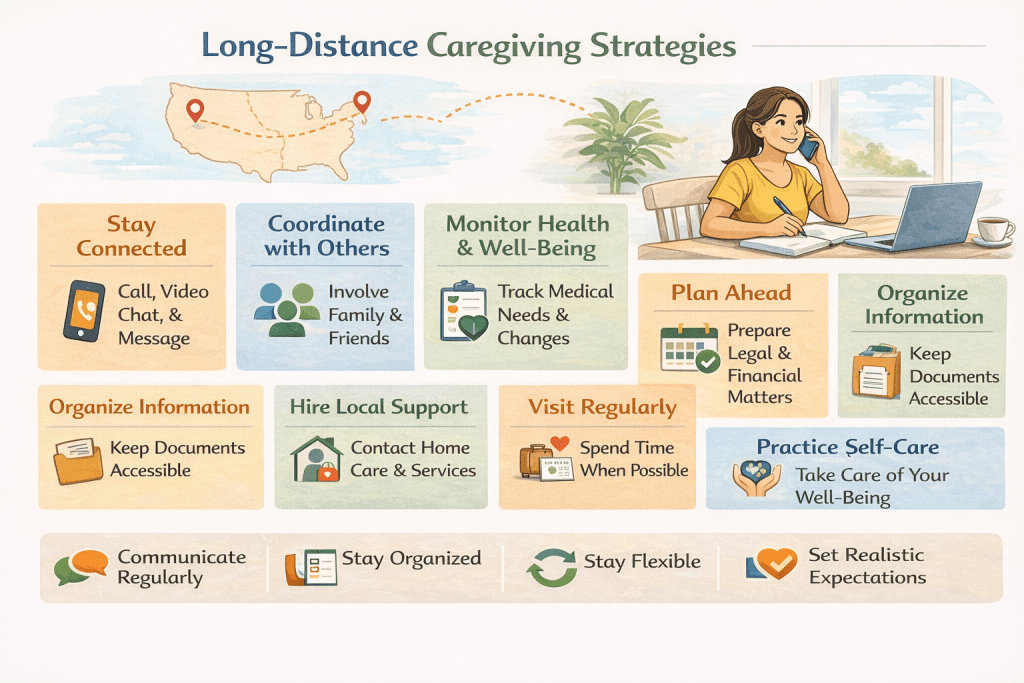
Long-Distance Caregiving Strategies>

Geographical separation doesn’t have to mean emotional distance when you employ smart caregiving techniques. Living far from your loved one requires creative approaches to maintain strong bonds.

Virtual Communication Tips

Regular communication is your lifeline. Schedule consistent phone calls for meaningful conversations. Video calls let you see facial expressions and home surroundings.

These visual cues provide valuable insights into well-being. Quick texts throughout the week help you stay connected between longer conversations.

A cozy living room setting, depicting long-distance caregiving communication. In the foreground, a middle-aged woman in modest casual clothing sits at a wooden table, using a laptop to video call her elderly parent. She has a warm, attentive expression, conveying concern and love. In the middle ground, a close-up view of the laptop screen shows an elderly man in professional business attire, smiling warmly as he engages in the conversation. In the background, soft lighting bathes the room in a gentle glow, with family photos on the walls reflecting a sense of connection. A window reveals a tranquil garden, adding to the peaceful atmosphere. The image captures a heartfelt moment of communication and care, focusing on the emotional bond despite the distance.

Coordinating with Other Family Members

Rally your family network for shared support. Create a schedule where siblings take turns making calls. This approach prevents caregiver burnout.

Tools like JoyCalls provide daily companionship for your parents while sending you updates. This daily check-in system offers peace of mind from any distance.

Building a local support team is equally important. Neighbors and friends can serve as your eyes on the ground. Understanding long-distance caregiving challenges helps you create effective strategies.

Consistent communication ensures your loved one feels cherished and supported. Distance becomes manageable with the right approach.

Monitoring Health and Safety During Visits

Each visit provides a unique opportunity to ensure their comfort and security in familiar surroundings. Your presence allows you to observe daily routines and spot potential concerns before they become serious issues.

Observing Daily Changes

Pay close attention to both obvious and subtle signs. Notice if basic tasks like dressing or meal preparation become challenging. Watch for changes in mood, sleep patterns, or personal hygiene.

These observations help you understand their evolving needs. Small changes over time can reveal important patterns about their health and well-being.

Area to MonitorPositive SignsPotential ConcernsAction Steps
Mobility & Daily TasksManaging routines independentlyDifficulty with dressing or cookingOffer gentle assistance
Home EnvironmentClean, organized spaceClutter or safety hazardsHelp with light organizing
Mental & Emotional StateEngaged in hobbiesLoss of interest or mood swingsSchedule enjoyable activities
Personal CareGood hygiene maintainedDecline in appearanceDiscuss comfortable routines

Documenting Concerns and Adjustments

Keep simple notes about what you observe during your visits. Record dates and specific details to track patterns. This documentation becomes valuable information for health care providers.

When you notice signs that raise concerns, have gentle conversations. Ask open-ended questions like, “I noticed you seem tired latelyโ€”how are you feeling?” This approach shows care while respecting their autonomy.

Sharing your observations with professionals ensures your loved one receives appropriate attention. Early intervention can make a significant difference in their overall health and safety at home.

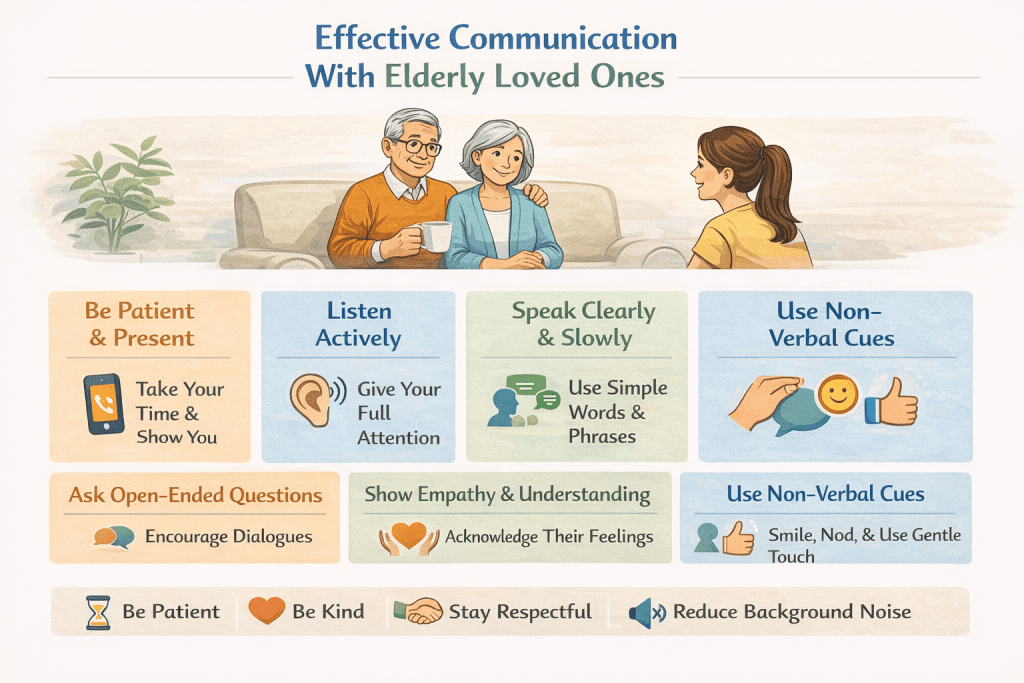
Effective Communication With Elderly Loved Ones

The art of listening goes far beyond just hearing wordsโ€”it’s about creating a space where your loved one feels truly understood. This quality communication builds the foundation for meaningful relationships.

Active Listening Techniques

Give your full attention during conversations. Put away distractions like phones. Make eye contact to show this time is dedicated to them.

Ask open-ended questions that invite storytelling. Instead of yes/no questions, try “What was your favorite memory from your childhood?” This approach honors their experiences.

Practice patience with pauses. Resist filling every silence. Older adults may need more time to gather thoughts. This respect builds trust.

Listening ApproachWhat It Looks LikePositive Impact
Full AttentionEye contact, no distractionsShows respect and value
Open-Ended Questions“Tell me about…” instead of “Did you…”Encourages sharing and connection
Reflective Responses“It sounds like that was important to you”Validates feelings and experiences
Patient PausesAllowing comfortable silenceCreates safe space for expression

Acknowledge their feelings with empathy. Say “I understand why that would make you happy” or “That sounds challenging.” This validation strengthens your bond.

Quality communication matters more than quantity. One heartfelt conversation can mean more than many rushed check-ins. For guidance on talking with older patients, consider professional resources.

Adapt to changing needs. If hearing is difficult, speak clearly while facing them. For engaging conversation ideas for seniors, explore creative approaches that spark joy.

Your loved one will share more openly when they feel heard. This connection makes it easier for them to ask for support when needed.

How often to check in on elderly parents

Determining the ideal contact schedule involves balancing multiple factors that evolve over time. Every family situation requires a personalized approach that respects individual preferences while ensuring safety.

Recognizing Warning Signs

Stay alert for subtle changes that might indicate increased needs. Notice shifts in mood, personal hygiene, or home maintenance. These signs often suggest it’s time for more frequent contact.

Unexplained weight loss or medication confusion are important indicators. Increased isolation or memory concerns also warrant closer attention. Your observation skills provide valuable insights into their well-being.

Adjusting the Frequency Based on Needs

The right frequency of visits depends on current circumstances. After illness or surgery, more regular contact provides essential support. When they’re thriving, you might maintain a comfortable routine.

Consider their living situation and health status when planning your schedule. For those at higher fall risk, consistent contact becomes especially important. Regular visits help monitor safety while strengthening your relationship.

Remember that quality matters as much as quantity. One meaningful connection can provide more comfort than several rushed contacts. Your care adapts beautifully to your loved one’s evolving needs.

Creating a Check-In Plan That Actually Works in Real Life

Knowing that there is no one-size-fits-all answer is helpful, but most families eventually run into a more practical question: what should our check-in plan actually look like from Monday to Sunday? This is where many loving adult children get stuck. They care deeply, but they are also balancing work, children, distance, and their parentโ€™s wish to remain independent. The result is often inconsistency. One week there are constant calls, and the next week everyone gets busy. That kind of stop-start support can leave older adults feeling uncertain and caregivers feeling guilty.

A better approach is to stop thinking only about frequency and start thinking about structure. A strong check-in plan is not based on panic, guesswork, or guilt. It is built around three things: your parentโ€™s current level of risk, their communication preferences, and a clear response plan for when something changes. This matters because regular social connection supports health and well-being in older adults, while isolation and loneliness are linked to higher health risks. Falls are also a major concern for adults 65 and older, which means a check-in plan should do more than create connection. It should also help families notice early warning signs before they become emergencies.

The goal is not to create a rigid system that makes your parent feel monitored. The goal is to create a rhythm that feels caring, predictable, and respectful. When a parent knows who will call, when someone will stop by, and what happens if they do not answer, life feels calmer for everyone. You are no longer improvising every day. You are building something sustainable.

Step 1: Sort the situation into low, moderate, or high support needs

The easiest mistake families make is treating every aging parent the same. Some older adults are active, socially engaged, driving safely, managing meals, and taking medications without difficulty. Others may still be living independently but are beginning to show signs that they need more oversight. And some are clearly in a season where daily contact is no longer optional.

Start by placing your parent into one of three broad categories.

Low support needs

A parent in this category is generally stable. They are managing daily tasks well, keeping up with personal hygiene, eating regularly, and staying socially connected. They may have chronic health conditions, but those conditions are controlled and familiar. They usually remember appointments, answer calls, and follow routines without much difficulty.

For this parent, the purpose of check-ins is mainly connection and gentle visibility, not active monitoring. A realistic plan might include a short call most days, one or two longer conversations each week, and an in-person visit when practical. If you live far away, video calls and a predictable weekly rhythm may be enough.

Moderate support needs

This parent is still living with a good degree of independence, but you are noticing small cracks. Maybe medications are occasionally forgotten. Maybe the house is not as tidy as it used to be. Maybe they seem more anxious, more withdrawn, less steady on their feet, or more forgetful than before. Sometimes the trigger is a recent fall, a hospitalization, a new diagnosis, or the loss of a spouse.

This is the group that benefits most from a formalized routine. Not because they are incapable, but because consistency helps prevent avoidable problems. In this stage, families should usually move from casual check-ins to scheduled ones. That may mean daily calls, several in-person touchpoints each week, shared responsibility among siblings, and a written plan for missed calls or changes in mood or functioning.

High support needs

This parent may be recovering from illness, living with dementia, facing serious mobility issues, struggling with medication management, or showing signs of self-neglect. They may miss calls, forget meals, become confused about time, or appear increasingly unsafe at home. At this level, a family should not rely on vague intentions like โ€œweโ€™ll check in often.โ€ They need a daily, dependable, clearly assigned support system.

That system may include multiple touchpoints each day, local backup support, a home care aide, medical follow-up, and a no-response protocol. This does not automatically mean the parent must give up independence. It means the family is responding realistically to the current level of need.

Step 2: Decide what each check-in is for

Not every check-in needs to do the same job. One reason caregivers burn out is that they treat every call as if it must cover emotions, logistics, medication, appointments, safety, and companionship all at once. That is exhausting for both sides.

Instead, give different check-ins different purposes.

The reassurance check-in

This is the quick โ€œjust making sure the day is on trackโ€ touchpoint. It might last two to five minutes. It works well in the morning or early evening. The goal is to confirm that your parent is up, feeling okay, and moving through the day normally.

Simple questions work best:

  • How is your morning going?
  • Have you had breakfast yet?
  • Whatโ€™s your plan for today?
  • Is there anything you need from me?

This kind of call should feel light, not interrogative.

The connection check-in

This is the emotional check-in. It is not about tasks. It is about making sure your parent feels seen, heard, and socially connected. Since loneliness and social isolation can negatively affect older adultsโ€™ health, these conversations are not optional extras. They are part of the care plan.

Use this time to talk about real life, not just symptoms and schedules. Ask about a memory, a neighbor, a hobby, a TV show, an old family recipe, or something they are looking forward to. A parent who only hears from family when there is a problem can begin to feel managed rather than loved.

The practical check-in

This is the one where you review needs. Meals. Refills. Transportation. Upcoming appointments. Bills. Housekeeping. Groceries. This is especially useful once or twice a week, rather than every day, unless the parent is in a high-support phase.

This check-in helps adult children catch small issues early. A missed refill, spoiled food in the refrigerator, or confusion about an appointment may seem minor now, but they often become the exact problems that create crises later.

The observation check-in

This one usually happens during an in-person visit or video call. It is less about what your parent says and more about what you notice. Are they wearing the same clothes repeatedly? Is the kitchen cluttered with unopened mail? Are they moving more slowly? Are they short of breath? Do they seem unusually flat or irritable?

The current article already touches on observing daily changes and warning signs. Your new section can build on that by showing readers how to turn observation into a routine practice rather than a vague instinct.

Step 3: Match the check-in method to the parent, not to your convenience

Families often default to whatever is easiest for them. Texting, for example, may be fast for an adult child, but it may not be the best format for an older parent with vision issues, hearing problems, arthritis, memory changes, or low comfort with technology.

A strategic plan asks: what form of contact helps this parent succeed?

For some parents, a simple phone call is best because it is familiar and low pressure. For others, video is better because it allows you to notice facial expression, mobility, and surroundings. For some, in-person contact is the only reliable option for certain parts of the week. For long-distance families, a mix often works best: quick daily phone contact, one longer weekly video call, and a local person who can physically stop by if needed.

Do not assume that more technology automatically means better support. The best system is the one your parent will actually use consistently and comfortably. If a parent resists apps, keep it simple. If they enjoy routine and conversation, scheduled calls may be perfect. If they tire easily, shorter but more frequent contact may work better than long conversations.

Step 4: Build a weekly rhythm instead of making daily decisions

One of the most helpful changes a family can make is moving from spontaneous support to a visible weekly routine. This reduces mental load for everyone. Your parent does not have to wonder when they will hear from someone. You do not have to wake up every day and decide whether today is a call day. Siblings stop assuming someone else handled it.

A weekly rhythm might look like this:

Monday: short morning phone call
Tuesday: longer conversation focused on connection
Wednesday: check on groceries, medications, and appointments
Thursday: video call or local visit
Friday: short check-in before the weekend
Saturday: family visit or shared activity
Sunday: lighter social call from another relative or grandchild

That is only an example. The real value is not the exact schedule. The value is that the support becomes predictable.

For families with more than one adult child, assign responsibilities clearly. Do not say, โ€œWe should all check in more.โ€ Say, โ€œIโ€™ll take Mondays and Thursdays. You handle Tuesdays and Saturdays. Letโ€™s both flag anything unusual in our family group chat.โ€ Ambiguity is one of the biggest reasons well-meaning plans fail.

Step 5: Create triggers that automatically increase support

A good check-in plan is not static. It should change when circumstances change. The article already notes that needs evolve over time, and that is exactly why families need trigger points built into the plan.

Decide in advance what events should lead to more frequent or more structured check-ins. Common triggers include:

  • a fall, even if there is no major injury
  • a hospital or emergency room visit
  • a new medication
  • noticeable weight loss
  • increased confusion
  • missed appointments
  • grief after a death or major life change
  • repeated missed calls
  • signs of depression or withdrawal
  • trouble walking, cooking, bathing, or managing the home

This matters because older adultsโ€™ needs can change quickly, especially after illness, injury, or increased fall risk. Falls are a leading cause of serious injury among older adults, so any recent fall should be treated as a signal to reassess the care rhythm, not as an isolated event to forget after a few days.

When a trigger happens, do not wait for everyone in the family to โ€œsee how things go.โ€ Move immediately to a temporary higher-support plan for one to two weeks, then reassess. That might mean daily calls become twice-daily calls, or a weekly visit becomes three visits that week. A flexible system is far safer than a proud commitment to โ€œnot overreacting.โ€

Step 6: Have a missed-check-in protocol before you need one

This is one of the most actionable things you can add to the article because it helps readers move from anxiety to preparedness.

Most families do not talk about missed calls until there is one. Then panic takes over. One sibling says wait. Another says call the neighbor. Another jumps in the car. None of that is efficient.

Create a simple, written no-response protocol. It can be as basic as this:

  1. Call once.
  2. Wait 10 to 15 minutes and call again.
  3. Send a text or voicemail.
  4. Contact the other assigned family member.
  5. Call a nearby neighbor, friend, building manager, or local contact.
  6. If there is reason to believe there is immediate danger, contact emergency services.

Customize the plan to your parentโ€™s habits. If they always nap at 2 p.m., a missed 2 p.m. call may not mean much. But if they always answer by 9 a.m. and suddenly do not, that may deserve faster action.

What matters most is that everyone knows the next step. Anxiety decreases dramatically when there is a plan.

Step 7: Use a simple note system to track patterns

You do not need to become a case manager. But you do need a way to remember what is changing.

Keep a shared note or simple document that records:

  • date of contact
  • who checked in
  • any changes in mood, appetite, mobility, memory, or safety
  • practical needs that came up
  • follow-up tasks

This is especially valuable in moderate- and high-support situations. It prevents the common problem where each family member notices something small, but no one sees the full picture. Over a few weeks, patterns become visible. Maybe your parent is missing breakfast more often. Maybe they sound more confused at night. Maybe they keep mentioning dizziness. Those details can help families decide when to speak with a doctor or change the support plan.

Step 8: Protect dignity while still being direct

Many adult children struggle with tone. They do not want to sound controlling, but they also do not want to ignore risks. The answer is not to become vague. It is to become respectful and direct at the same time.

Instead of:

  • Did you take your pills?
  • Why didnโ€™t you answer?
  • You canโ€™t keep living like this.

Try:

  • Whatโ€™s your routine been like with your medication this week?
  • I got a little worried when I couldnโ€™t reach you. How can we make that easier next time?
  • I want to support you in a way that still feels good to you. What kind of check-in feels helpful, not annoying?

This kind of language protects dignity because it invites partnership. It tells your parent that the plan is being built with them, not imposed on them.

Step 9: Reassess monthly, not just during emergencies

The strongest caregiving systems are reviewed regularly. A monthly family check-in, even if it lasts only 15 minutes, can prevent a lot of confusion later.

Ask:

  • Is the current routine working?
  • Are calls being answered reliably?
  • Have there been any changes in health or mood?
  • Is our parent feeling supported or overwhelmed?
  • Do we need to increase, decrease, or change the format of contact?
  • Is one family member carrying too much of the load?

Caregiving guidance from the National Institute on Aging emphasizes that caregiving needs vary and often change over time, which is exactly why reassessment should be built into the routine rather than saved for crisis moments.

A monthly review also protects the caregiver. Sometimes the plan needs to become more supportive. Other times it needs better boundaries. If one child is doing every call, every refill, every appointment, and every emotional check-in, the system is not sustainable.

A practical rule to remember

If you want one strategic takeaway to anchor this entire section, make it this:

The right check-in plan is the one that your parent will accept, your family can sustain, and the situation actually requires.

That means not too little. Not too much. Not based on fear. Not based on guilt. Based on reality.

For a healthy, independent parent, that reality may be a few dependable touchpoints each week and one longer conversation that feels warm and personal. For a parent facing mobility issues, recent falls, increasing loneliness, or memory changes, the right plan will be more frequent and more structured. For a parent recovering from illness or showing clear safety concerns, daily or multiple daily touchpoints may be necessary. Since social isolation can harm health and falls remain a major source of injury for older adults, erring on the side of a thoughtful, proactive plan is often wiser than waiting for something more serious to happen.

The most loving families are not always the ones who check in the most. Often, they are the ones who check in consistently, intentionally, and in a way that helps an older parent feel both safe and respected. That is what readers of this article are truly trying to build.

How to Balance Independence and Safety Without Damaging the Relationship

One of the most delicate parts of checking in on elderly parents is not logisticsโ€”itโ€™s emotional balance. Many adult children quietly struggle with a tension that rarely gets talked about openly:

  • โ€œI want to make sure theyโ€™re safe.โ€
  • โ€œBut I donโ€™t want them to feel controlled.โ€

If handled poorly, even well-intentioned check-ins can start to feel intrusive. A parent who once appreciated calls may begin to avoid them. Conversations may become shorter, defensive, or even strained. Over time, this can damage trustโ€”the very thing that makes caregiving effective.

A strong check-in system, therefore, must do more than monitor safety. It must preserve dignity, autonomy, and emotional comfort.

Why independence matters more than we think

For many older adults, independence is not just practicalโ€”it is deeply tied to identity. Being able to decide when to wake up, what to eat, when to go out, and how to spend the day represents control over life itself.

When check-ins are too frequent, too rigid, or too interrogative, they can unintentionally send a message:

โ€œYouโ€™re no longer capable of managing your life.โ€

Even if that is not the intention, that is often how it is received.

This is why some parents resist help even when they clearly need it. They are not rejecting supportโ€”they are protecting their sense of self.

A better approach is to design check-ins that support independence rather than replace it.

Shift from โ€œmonitoringโ€ to โ€œsupportingโ€

Language and intention make a big difference. Instead of approaching check-ins as a way to โ€œkeep track,โ€ reframe them as a way to stay connected and be available.

For example:

Instead of:

  • โ€œDid you take your medicine?โ€
  • โ€œDid you eat properly today?โ€
  • โ€œWhy didnโ€™t you pick up my call?โ€

Try:

  • โ€œHowโ€™s your routine been feeling lately?โ€
  • โ€œWhat did you enjoy eating today?โ€
  • โ€œI missed you earlierโ€”what were you up to?โ€

This subtle shift changes the emotional tone completely. It turns the interaction from supervision into conversation.

Over time, this builds trust. And trust is what makes parents more open to sharing concerns, which ultimately improves safety more than strict questioning ever could.

Offer choices, not instructions

Another powerful way to maintain dignity is to offer options instead of directives.

Instead of:

  • โ€œIโ€™m going to call you every day at 9.โ€

Try:

  • โ€œWould mornings or evenings feel better for a quick daily check-in?โ€

Instead of:

  • โ€œYou need someone to visit you twice a week.โ€

Try:

  • โ€œWould you prefer someone stopping by mid-week, or over the weekend?โ€

When older adults feel involved in decisions, they are far more likely to engage consistently. Even small choices can make a big difference in how supportedโ€”or controlledโ€”they feel.

Watch for subtle signs of resistance

Not all resistance is direct. In fact, most of it is subtle.

Pay attention to patterns like:

  • shorter and more rushed conversations
  • frequent โ€œIโ€™m busy right nowโ€ responses
  • missed calls that never get returned
  • irritation when certain topics come up
  • joking deflection when asked about health or routine

These are often signals that the current check-in approach needs adjustment.

Instead of pushing harder, step back and recalibrate:

  • Are calls too frequent?
  • Are they too task-focused?
  • Is the tone too serious or clinical?

Sometimes, simply reducing intensity or shifting to more relaxed conversations can restore cooperation.

Keep at least one check-in purely social

One of the easiest mistakes families make is turning every interaction into a checklist:

  • Did you eat?
  • Did you take meds?
  • Any pain?
  • Any appointments?

While these are important, they should not define every conversation.

Make sure there is at least one check-in each week that has no agenda at all.

Talk about:

  • old memories
  • family stories
  • favorite recipes
  • neighborhood updates
  • something funny that happened recently

This reminds your parent that they are valued for who they areโ€”not just monitored for how they are doing.

Respect โ€œgood daysโ€ and โ€œbad daysโ€

Older adults, especially those dealing with health issues, often have fluctuating energy levels. Some days they may feel talkative and engaged. Other days they may feel tired, irritable, or withdrawn.

A rigid check-in style does not account for this.

Instead:

  • keep shorter calls on low-energy days
  • avoid pushing serious conversations when they seem fatigued
  • revisit important topics later rather than forcing them

Flexibility shows respect. It also leads to more meaningful conversations when your parent is actually in the right state of mind to engage.

Avoid creating dependence unnecessarily

While increasing support is sometimes necessary, overdoing it can create a different problemโ€”learned dependence.

If a parent is still capable of doing something safely, allow them to continue:

  • managing small tasks
  • making simple decisions
  • maintaining routines

Instead of taking over, offer backup support:

  • โ€œDo you want me to remind you, or would you prefer to handle it and let me know once itโ€™s done?โ€
  • โ€œI can help with that if it ever starts feeling difficult.โ€

This keeps confidence intact while still providing a safety net.

Use check-ins to empower, not replace routines

The strongest long-term strategy is to use check-ins to reinforce independence, not substitute it.

For example:

  • Instead of reminding them daily to take medication, help establish a routine or system that works for them.
  • Instead of checking every meal, help them plan simple weekly meals they enjoy.
  • Instead of constant reminders, build habits that reduce the need for reminders.

Your role becomes supporting the system, not running it.

Have honest conversations before problems escalate

Many families avoid difficult conversations until there is a crisis. By then, emotions are high and decisions feel urgent.

It is far better to have calm, proactive discussions early.

Topics to discuss gently:

  • what kind of support they are comfortable with
  • how often they would like contact
  • what they would want if their health changes
  • who should be contacted in an emergency

These conversations are not about control. They are about alignment.

When expectations are clear early on, future decisions become easier and less emotionally charged.

Involve them in reviewing the plan

Just like caregivers should reassess monthly, involve your parent in that process whenever possible.

Ask:

  • โ€œIs our current routine working for you?โ€
  • โ€œDo you feel like weโ€™re checking in too much or too little?โ€
  • โ€œIs there anything youโ€™d like to change?โ€

This reinforces partnership and keeps the system adaptive.

Even if their needs are increasing, including them in the conversation helps preserve dignity.

When safety must take priority

There will be situations where independence has to take a back seat to safety:

  • repeated falls
  • worsening confusion
  • medication mismanagement
  • unsafe living conditions

In these cases, the tone still matters.

Be clear, but compassionate:

  • โ€œI know this is frustrating, but Iโ€™m concerned about your safety, and we need to make a small change to support you better.โ€

Avoid framing it as a loss of control. Frame it as increasing support during a changing phase.

A simple principle to guide every interaction

If you are ever unsure how to approach a check-in, use this rule:

โ€œDoes this make my parent feel supportedโ€”or managed?โ€

If it feels like management, adjust the tone, frequency, or structure.

If it feels like support, you are on the right track.

What to Do When Something Feels โ€œOffโ€: A Practical Response Framework for Families

Even with a well-structured check-in plan, there will be moments when something doesnโ€™t feel right.

It may not be a clear emergency. There may be no obvious crisis. But something in your parentโ€™s voice, behavior, or routine feels different.

These moments are critical.

Most serious issues in elderly care do not begin with dramatic events. They start subtly:

  • a slight change in tone
  • a missed meal
  • confusion about a familiar task
  • a delayed response to messages
  • a small fall that gets brushed off

The challenge is not just noticing these signsโ€”itโ€™s knowing how to respond without overreacting or underreacting.

This section gives you a clear, step-by-step framework to handle those in-between moments confidently.


Step 1: Identify the type of change youโ€™re seeing

Not all concerns carry the same level of urgency. The first step is to quickly categorize what youโ€™re noticing.

1. Behavioral changes

These include:

  • withdrawal from conversations
  • reduced interest in hobbies
  • irritability or mood swings
  • unusual quietness

These often point to emotional or cognitive shifts, including loneliness, depression, or early cognitive decline.

2. Physical changes

These include:

  • slower movement
  • difficulty standing or walking
  • complaints of dizziness or fatigue
  • visible weight loss

These may indicate underlying health issues or increased fall risk.

3. Routine disruptions

These include:

  • missed medications
  • skipped meals
  • forgotten appointments
  • changes in sleep patterns

These are often early warning signs that independence is becoming harder to maintain.

4. Communication changes

These include:

  • not answering calls
  • delayed responses
  • confusion during conversations
  • repeating the same questions

This can signal cognitive strain, hearing issues, or even something acute like illness.


Step 2: Use the โ€œ24โ€“48 Hour Ruleโ€

One of the biggest mistakes families make is reacting too quickly to a single small changeโ€”or ignoring it entirely.

A better approach is the 24โ€“48 hour rule:

  • If the issue is mild and not urgent, observe closely over the next 1โ€“2 days.
  • Increase check-in frequency temporarily.
  • Look for patterns rather than isolated incidents.

For example:

  • One missed call may mean nothing.
  • Three missed calls in two days is a pattern.
  • One skipped meal may be harmless.
  • Repeated lack of appetite is a concern.

This approach helps you stay calm while still being proactive.


Step 3: Ask better questions (without triggering defensiveness)

When something feels off, how you ask matters just as much as what you ask.

Avoid:

  • โ€œWhy didnโ€™t you eat?โ€
  • โ€œYou sound confused.โ€
  • โ€œWhatโ€™s wrong with you today?โ€

These can feel accusatory or alarming.

Instead, use open, non-threatening questions:

  • โ€œHow have the last couple of days been for you?โ€
  • โ€œAnything feeling different or unusual lately?โ€
  • โ€œHowโ€™s your energy been today compared to yesterday?โ€

This invites honest responses without putting your parent on the defensive.


Step 4: Increase support temporarilyโ€”not permanently

A common overreaction is jumping straight to long-term changes after a small issue.

Instead, think in temporary adjustments.

For example:

  • Increase calls from once a day to twice a day for a few days
  • Add an extra visit that week
  • Ask a neighbor or nearby contact to check in once

Then reassess.

If the issue resolves, you can return to the original plan.
If it continues, you have a clear signal to escalate support.


Step 5: Know when to escalate immediately

While many situations can be observed, some require immediate action.

Do not wait if you notice:

  • a fall (even without injury)
  • slurred speech or confusion
  • sudden weakness or imbalance
  • chest pain or breathing difficulty
  • complete lack of response to calls

In these cases:

  • contact a nearby person immediately
  • arrange an in-person check
  • call emergency services if necessary

Trust your instinct. If something feels seriously wrong, it usually is.


Step 6: Document the change (even briefly)

It may feel unnecessary in the moment, but writing things down creates clarity over time.

Keep a simple note:

  • what you observed
  • when it happened
  • how your parent responded
  • what action you took

This becomes extremely useful if:

  • patterns start forming
  • you need to speak with a doctor
  • multiple family members are involved

Small details today often explain bigger issues tomorrow.


Step 7: Loop in the right people early

You donโ€™t need to handle everything alone.

Depending on the situation, consider involving:

  • siblings or family members
  • a trusted neighbor
  • a local friend
  • a caregiver or home aide
  • a healthcare provider

The key is to share information early, not after things escalate.

Even a simple message like:

โ€œSomething felt slightly off todayโ€”just keeping you in the loop.โ€

This creates shared awareness and reduces pressure on one person.


Step 8: Adjust the check-in plan if needed

If the issue persists beyond a few days, itโ€™s no longer a temporary situation.

At this point:

  • revisit your parentโ€™s support level (low โ†’ moderate, or moderate โ†’ high)
  • increase structure and frequency
  • introduce additional support if necessary

This is exactly why having a flexible system matters.

A static plan breaks under changing conditions.
A dynamic plan adapts.


Step 9: Donโ€™t ignore your intuition

Data matters. Patterns matter. But so does instinct.

Many adult children say the same thing after a serious incident:

โ€œI had a feeling something wasnโ€™t right.โ€

If you feel that way:

  • donโ€™t dismiss it
  • donโ€™t delay action
  • donโ€™t wait for perfect evidence

A gentle extra check, a longer call, or an additional visit is never wasted effort.


Real-life example: how this framework works

Letโ€™s say your parent:

  • skips your usual call
  • sounds slightly tired the next day
  • mentions they โ€œhavenโ€™t felt like eating muchโ€

Using the framework:

  1. You categorize it as a routine + physical change
  2. You apply the 24โ€“48 hour rule
  3. You ask open-ended questions
  4. You increase check-ins temporarily
  5. You document the pattern
  6. You loop in a sibling
  7. By day 3, appetite is still low โ†’ you escalate and suggest a doctor visit

What could have become a serious issue is caught earlyโ€”without panic or delay.


The key takeaway from this section

You donโ€™t need to react to everything.
But you do need a clear way to respond to anything.

Thatโ€™s the difference between:

  • reactive caregiving (stressful, inconsistent, exhausting)
  • and proactive caregiving (calm, structured, effective)

Conclusion

The path to providing compassionate care involves adapting to changing needs while honoring independence. This journey requires patience and flexibility as circumstances evolve.

Creating meaningful routines and using supportive technology builds a comprehensive approach. These strategies work together to maintain your loved one’s well-being and dignity.

Remember that family support makes a profound difference in quality of life. Research shows that caregiving trajectories vary significantly over time, emphasizing the need for personalized approaches.

For consistent daily connection, consider JoyCalls. This AI companion provides gentle check-ins while giving you peace of mind. Start supporting your parents today at https://app.joycalls.ai/signup.

Your dedication to maintaining this connection ensures your loved ones feel valued and secure in their home environment.

FAQ

What is a good starting point for how frequently I should visit my aging parent?

There’s no one-size-fits-all answer. A great starting point is to consider their current health, mobility, and social life. For a relatively independent senior, a few visits a week might be perfect. The key is consistent, quality time that feels supportive, not overwhelming.

How can I tell if my parent might need more frequent check-ins?

Watch for subtle changes. Are they losing interest in hobbies? Is the home less tidy? Do they seem withdrawn or forgetful? These can be signs of loneliness or health shifts. Trust your instinctsโ€”if something feels off, it might be time to increase your visits or calls.

My parent values independence. How do I check in without being intrusive?

Balance is everything. Frame your visits as spending quality time together, not “checking up.” Use technology like daily phone calls from a service like JoyCalls for gentle, non-intrusive connection. This maintains their autonomy while giving you peace of mind about their well-being and safety.

What are some meaningful activities we can do during a visit beyond just chatting?

A> Create shared experiences! Look through old photo albums, cook a favorite meal together, or work on a simple puzzle. These activities strengthen family bonds and create joyful moments. The goal is emotional support and connection, making every visit count.

I live far away. How can I ensure my loved one is okay between my visits?

Leverage technology and local support. Schedule regular video calls to see their environment. Consider an AI companion service that makes daily check-in calls and alerts you to any concerns. Also, coordinate with nearby family, friends, or a home care aide for in-person support.

What should I be looking for during a visit to monitor their health and safety at home?

A> Pay attention to daily life. Notice changes in appetite, mobility, or mood. Check that the home is safeโ€”are pathways clear? Is food in the fridge fresh? Open, gentle communication about their needs helps you spot small issues before they become big concerns.


Other Articles related to this article:

Medication Adherence Tips From Pharmacists (Simple, Proven)
Medication Reminders for Diabetes, BP, and Heart Meds (Systems That Stick)
Remote Medication Monitoring for Elderly Parents (Whatโ€™s Realistic)
Medication Errors at Home: The Most Common Mistakes (And Fixes)
Side Effects vs Nonadherence: What Caregivers Should Watch For
The Best Time to Take Meds: Building a Habit Around Meals
Automatic Pill Dispensers: Do They Really Improve Adherence?
Medication Refills: Simple System to Never Run Out
How to Talk to a Stubborn Parent About Taking Meds
Polypharmacy in Seniors: Managing Too Many Meds Safely
Medication Reminders for Vision or Hearing Problems (Easy Fixes)
Medication Adherence for Dementia: Routines That Reduce Stress
Blister Packs and Bubble Packs: Are They Worth It for Seniors?
Pharmacy Sync: How to Align Refills on the Same Day
How to Keep an Updated Medication List (Template + Tips)
Text Message Medication Reminders for Seniors (Pros and Cons)
AI Medication Reminders: What They Can and Canโ€™t Do
Medication Adherence for Seniors: Why Doses Get Missed
Post-Hospital Medication Plan: Avoiding Confusion After Discharge
Best Medication Reminder Methods (No Smartphone Needed)
Phone Call Medication Reminders: Do They Work Better Than Apps?
Pill Organizer 101: How to Choose the Right One for Seniors
Medication Management for Seniors Living Alone (Safety Plan)
Weekly Pill Planner Setup (Step-by-Step, 10 Minutes)
Daily Check-In Routine for Seniors Who Hate Being Checked On
How to Create a Medication Schedule That Actually Works
Medication Adherence Checklist for Caregivers (Fully Explained + Printable)
What to Do When Your Parent Says โ€œI Already Took The Medicineโ€
How to Prevent Double Dosing in Seniors
Medication Reminder Apps for Seniors: Whatโ€™s Actually Easy
How to Help Elderly Parents Remember Their Meds (Simple System)
Daily Check-In Routine for Seniors With Hearing Issues (Make It Easier)
Weekly Review: How to Spot Patterns From Daily Check-Ins
How to Start a Daily Check-In Routine in One Day (Fast Setup)
Daily Phone Check-In Services for Seniors: What to Look For
AI Check-In Calls for Seniors: How They Work (And What They Donโ€™t Do)
The Best Daily Check-In Apps and Tools (And Simple No-App Options)
Daily Check-In Routine That Builds Real Connection (Not Just Monitoring)
How to Share Daily Caregiving Updates With Siblings (Without Miscommunication or Drama)
How to Set Boundaries With Daily Check-Ins (So It Doesnโ€™t Take Over Your Life)
Daily Mood Check-Ins for Seniors: What to Watch For
Daily Check-In Routine After Hospital Discharge (First 14 Days)
How Often Should You Check In on Elderly Parents?
Daily Check-In Routine for Meals and Hydration (Quick Method)
Daily Check-In Routine for Seniors Living Alone (Safety + Connection)
How to Track Daily Check-Ins Without Feeling Like a Spreadsheet
Daily Check-In Routine for Medication Adherence (Without Nagging)
How to Build a Check-In Routine That Seniors Wonโ€™t Resist
Caregiver Check-In Schedule Template (Daily + Weekly)
Daily Check-In Routine for Elderly Parents (Simple Plan)
The 2-Minute Daily Check-In Script (No Awkward Talk)
The โ€œNo Answerโ€ Escalation Plan for Daily Check-Ins
Daily Check-In Routine for Chronic Conditions (BP, Diabetes, COPD)
Daily Check-In Routine for Fall Risk (What to Ask Daily)
Daily Wellness Check Calls: What to Ask (7 Questions)
Daily Check-In Routine for Long-Distance Caregivers
What to Do If Your Parent Misses a Check-In (Step-by-Step)
Daily Check-In Routine for Dementia: Simple, Calm, Consistent
Daily Check-In Text vs Phone Call: Which Is Better for Seniors?
Morning vs Evening Check-Ins: What Works Best for Seniors
Caregiver Guilt: When You Canโ€™t Be There to Keep Them Company
Senior Loneliness and Anxiety: Why They Feed Each Other
Does an AI Companion Help Senior Loneliness? What to Expect
How to Build a โ€œCircle of Careโ€ to Reduce Isolation (Neighbors, Friends, Family)
Volunteering for Seniors: The Best Way to Feel Connected Again
Loneliness in Men vs Women After 65: What Changes?
Senior Centers vs Community Groups: What Works Better for Loneliness?
โ€œNo One Needs Meโ€: How Purpose Reduces Loneliness in Aging
How to Make Phone Calls Feel Less โ€œCheck-Inโ€ and More Like Real Connection
Loneliness in Assisted Living: Why It Still Happens and What Helps
Loneliness or Depression? How to Spot the Difference in Older Adults
The Health Risks of Loneliness in Seniors (Heart, Brain, Immunity)
Loneliness in Older Adults: Signs, Causes, and What Helps
Loneliness in Seniors Without Smartphones: Low-Tech Ways to Stay Connected
Best Hobbies for Lonely Seniors (Easy to Start, Low Energy)
Social Isolation vs Loneliness: Whatโ€™s the Difference in Seniors?
Retirement Loneliness: Why It Happens and How to Fix It
How to Help Seniors Make Friends After 60 (Practical Steps)
How to Create a Weekly Social Routine for an Elderly Parent
After a Spouse Dies: Loneliness in Widowhood (What Actually Helps)
How to Tell If Your Aging Parent Is Lonely (Even If They Say Theyโ€™re Fine)
The โ€œQuiet Withdrawalโ€ Problem: When Seniors Stop Calling Back
How Often Should You Talk to Your Elderly Parents to Prevent Loneliness?
How to Help a Parent Who Refuses Social Activities
How to Help a Lonely Elderly Parent When You Live Far Away
Social Isolation in Seniors Living Alone: A Safety + Loneliness Plan
Senior Loneliness at Night: Why Evenings Feel Worse
Daily Check-In Calls for Seniors: Do They Reduce Loneliness?
Conversation Ideas for Seniors Who Feel Lonely (No Awkward Small Talk)
Loneliness and Dementia: Does Being Alone Speed Up Memory Loss?
Best Low-Tech Safety Devices for Seniors Living Alone
Home Safety Setup for Long-Distance Caregiving (Room-by-Room)
How to Track Meals and Hydration From Another City
Caregiver Guilt When You Live Far Away (How to Cope)
Smartwatch vs Phone Check-Ins: What Works Better for Seniors?
Scams Targeting Seniors: How to Protect Parents Remotely
When Itโ€™s Time for Assisted Living (Long-Distance Decision Guide)
How to Choose a Paid Caregiver When You Live Far Away
Weekly Care Plan Template for Aging Parents
Fall Risk: How to Reduce It When Youโ€™re Not There