


What if the biggest health risk for someone you love is something you can’t see or touch? It’s not a disease you can diagnose with a test. It’s a quiet, aching feeling that can settle into a life, even when people are nearby.
You might notice it in a parent’s voice on the phone—quieter, more distant. Or in the heavy silence of a home that once buzzed with conversation. This feeling of deep disconnection is more than just sadness. According to the National Institute on Aging, it’s linked to serious health problems like heart disease and cognitive decline.
This isn’t something to brush off. It’s a real challenge that needs real solutions. Understanding the signs and the reasons it happens is the first step toward making a difference.
Whether you’re a worried family member or a senior seeking connection, this guide offers compassionate, practical insights. We’ll explore what helps people stay engaged with life, from simple daily habits to modern support.
Key Takeaways
- Loneliness is a feeling of disconnection, not just being physically alone.
- This emotional state poses serious risks to both physical and mental health.
- Recognizing the subtle signs in loved ones is a critical first step.
- Social isolation is a key factor, but connection is always possible.
- Practical, compassionate solutions can significantly improve well-being.
- Modern tools can provide consistent support and peace of mind for families.
Understanding Loneliness in Older Adults
It’s easy to think that being alone and feeling lonely are the same. But they are very different experiences. Knowing the difference is key to offering the right kind of support.
Defining Loneliness vs. Social Isolation
Social isolation is about numbers. It’s an objective measure of how many people you see or talk to. A quiet calendar and a silent phone are signs.
Loneliness is the distressing feeling of being alone or separated. It’s that painful gap between the connections you want and the relationships you actually have.
Your mom might have weekly coffee dates but still feel a deep disconnection if the conversations lack meaning. Conversely, your dad might live alone and see fewer people, yet feel perfectly content because his few relationships are rich and fulfilling.
This distinction is crucial. Sometimes people need more social opportunities. Just as often, they need deeper, more meaningful connections.
Historical and Cultural Perspectives
In the past, seniors were often central figures in family and community life. They lived in multigenerational homes and were respected wisdom keepers.
Modern culture, with its focus on independence, has shifted this. This can sometimes leave people physically and emotionally separated from their support networks. For a deeper understanding of loneliness and social, recognizing this shift helps us address the real need: the quality of relationships, not just the quantity.
Recognizing the Signs and Symptoms
Your loved one may never say the words “I’m lonely,” but their actions and demeanor often tell a different story. Learning to read these quiet signals is the first step toward offering meaningful support.

Emotional and Behavioral Indicators
Watch for subtle shifts in mood and behavior. Increased irritability or lingering sadness can signal emotional pain. A sense of hopelessness may creep into conversations.
Withdrawn behavior is common. You might notice less interest in cherished hobbies. Invitations are declined more frequently. Conversations feel flat or disengaged.
Depression often walks hand-in-hand with isolation. Each condition feeds the other in a difficult cycle. Recognizing this connection is crucial for providing effective support.
Physical Manifestations of Loneliness
The body often reveals what words cannot express. Fatigue and disrupted sleep patterns are common physical signs. Frequent complaints of aches and pains may increase.
Changes in self-care and appearance can be telling. Appetite fluctuations lead to unexplained weight changes. Some individuals visit doctors more often for vague symptoms.
These physical manifestations matter deeply. They serve as gentle invitations to check in more meaningfully. Offering connection can significantly improve overall well-being.
Identifying Causes and Contributing Factors
Understanding what leads to social withdrawal requires looking at the complex interplay of physical limitations and life circumstances. These factors often build gradually, creating barriers to connection that can feel overwhelming.
Health and Mobility Challenges
Physical changes significantly impact social engagement. Hearing loss makes conversations frustrating. Vision problems limit driving and reading. Mobility issues turn simple outings into major challenges.
When getting around requires assistance or special equipment, social opportunities naturally shrink. These health concerns create real barriers to maintaining relationships.
Social and Environmental Influences
Life transitions play a major role. The loss of a spouse leaves a profound void. Retirement disrupts daily routines and social networks. Living alone becomes more common as people age.
Environmental factors matter too. Rural locations limit access to community activities. Financial struggles can trap people at home. Transportation barriers make socializing difficult.
According to the National Library of Medicine, these risk factors often overlap, creating complex challenges that require compassionate understanding and proactive support.
Try JoyCalls Free
No app or new device needed. Start with a free 7-day trial.
How Loneliness Affects Health and Well-Being
When emotional pain lingers, it doesn’t just stay in the heart—it begins to reshape the entire body’s well-being. The connection between our social lives and physical health is stronger than many realize.

Research from the National Institute on Aging shows these effects are measurable and significant. They impact both mind and body in profound ways.
Mental Health Risks and Depression
The mind suffers deeply when connection fades. Mental health challenges often emerge first. Depression can settle in like a heavy fog.
Anxiety frequently follows. People become more fearful and less trusting. This creates a cycle that’s hard to break alone.
Cognitive function may decline more rapidly. Memory and clear thinking can suffer. These health outcomes deserve serious attention.
Physical Health Implications and Chronic Illness
The body registers emotional distress as physical stress. Blood pressure often rises. Heart disease risk increases substantially.
Immune systems weaken with prolonged isolation. This makes fighting illness more difficult. Recovery takes longer.
Hospital stays extend when patients lack social support. As families consider care options, understanding these physical health connections becomes essential.
Sleep patterns disrupt. Nutrition often suffers. These lifestyle changes compound the direct effects on the body.
Research Insights and Key Data on Loneliness
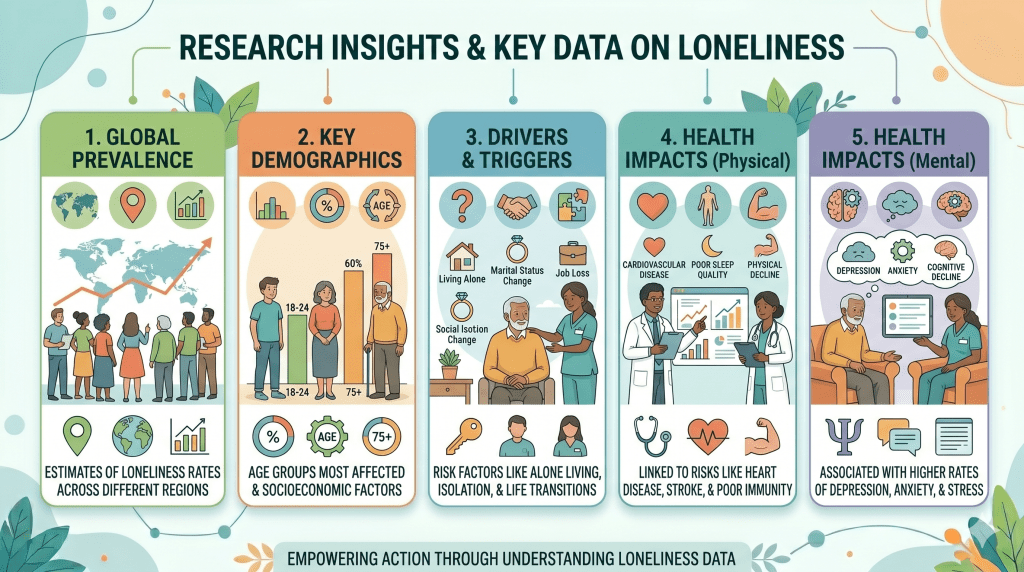
The numbers tell a story that words often cannot—a quiet epidemic affecting millions. Understanding the scope helps us respond with compassion and purpose.
Recent Studies and Statistics
Major research projects reveal consistent patterns. The Health and Retirement Study found nearly one-third of people over 75 experience emotional isolation.
In the United States, between 25% and 29% of those aged 70+ report significant disconnection. This means roughly one in four individuals may be struggling silently.
Comparative Data Across Demographics
This challenge spans global boundaries. Recent research analysis shows higher rates in certain regions.
Ukraine reports 34% prevalence, while Norway shows 30%. China’s national survey found nearly 30% of people over 60 often feel alone.
Certain groups face greater vulnerability. Women, widowed individuals, and those with chronic health conditions show higher rates across studies.
The data offers hope too. Quality connections matter more than quantity, and targeted support can make a real difference in people’s lives.
Risk Factors: Who Is Most Vulnerable?
Vulnerability doesn’t announce itself with flashing lights—it often arrives quietly through life’s changing seasons. While everyone faces challenges, certain circumstances create higher risk for deep disconnection.

Understanding these factors helps us recognize who might need extra support. It’s not about labeling people, but about offering compassionate awareness.
Age-Related Vulnerabilities
As people reach their late 70s and 80s, natural life changes increase risk. The circle of friends and family often shrinks through loss. Spouses, siblings, and lifelong companions may pass away.
Women tend to experience higher rates of emotional isolation. They typically outlive male partners and may face financial challenges. These age-related shifts can create perfect storms for disconnection.
Impact of Loss, Isolation, and Disability
Major life events dramatically affect social connections. Losing a spouse means losing both companionship and social coordination. Those who never married or are divorced often lack built-in support networks.
Physical limitations create significant barriers. Mobility issues, vision problems, and chronic health conditions make outings difficult. Caregivers themselves often become isolated while caring for others.
Socioeconomic factors matter deeply. Limited income, transportation challenges, and language barriers create practical obstacles. Discrimination based on race, ethnicity, or orientation adds another layer of risk.
Intervention Strategies to Reduce Loneliness
Hope shines brightly when we discover that proven strategies can effectively bridge the gap of disconnection. These thoughtful interventions offer real pathways to rebuild meaningful social bonds and restore well-being.
Therapeutic and Psychological Approaches
Cognitive behavioral therapy helps individuals challenge negative thought patterns that often accompany isolation. One-on-one counseling and support groups create safe spaces where people can share their experiences.
These therapeutic interventions focus on rebuilding trust and openness toward others. They address how prolonged separation changes social perceptions.
Community and Support Programs
Local community programs provide wonderful opportunities for connection. Senior centers offer social activities, while home visiting services bring companionship directly to those who need it.
Telephone outreach programs have shown great promise for homebound individuals. During special times like holidays, these connections become especially meaningful.
The most effective approach matches the intervention to each person’s unique circumstances and preferences.
Practical Tips to Stay Connected
Meaningful connection often starts with simple, consistent efforts. Building strong social connections doesn’t require grand gestures—just regular, heartfelt contact with family and friends.

Schedule daily moments to reach out. A quick phone call or text message keeps bonds strong. Encourage your loved one to maintain their own connections too.
Effective Communication Techniques
True listening makes all the difference. When talking with family friends, put away distractions. Make eye contact and create space for real sharing.
Quality conversations matter more than quantity. One meaningful talk where someone feels heard does more good than many quick check-ins. Encourage openness about feelings with trusted people.
Help find enjoyable activities that naturally create connections. Book clubs, art classes, or volunteering bring people together through shared interests. Local community centers offer wonderful opportunities.
For those hesitant about new situations, offer to accompany them. Reconnecting with old friends can feel comforting. Remember that communication may require patience with hearing challenges, but maintaining these precious social connections is worth the effort.
The quality of time spent with others builds the strongest bonds. Small, consistent efforts with family and close friends create a web of support that makes everyone feel valued.
Lifestyle Adjustments for Longevity and Joy
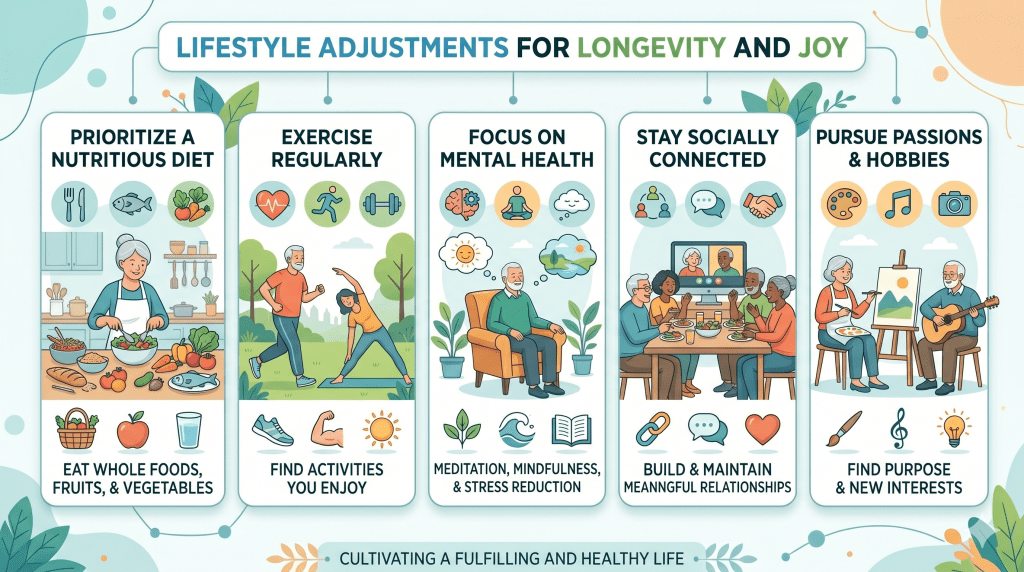
Sometimes the simplest daily habits can build the strongest foundation for a joyful, connected life. Small changes in routine can dramatically improve both physical health and emotional well-being.
These adjustments aren’t about major overhauls. They’re about finding what brings genuine happiness and incorporating it regularly. The goal is creating a life filled with purpose and connection.
Physical Activity and Social Engagement
Regular movement does more than strengthen muscles. It provides natural opportunities to meet people and build relationships. Aim for 150 minutes of moderate activity weekly—that’s just 30 minutes, five days a week.
Exercising with others turns physical activity into social connection. Join a walking group or take a fitness class. Even gardening with a friend combines movement with meaningful conversation.
| Activity Type | Physical Benefits | Social Opportunities | Emotional Impact |
|---|---|---|---|
| Group Walks | Improves cardiovascular health | Regular interaction with peers | Reduces feelings of isolation |
| Volunteering | Light physical engagement | Deep community connections | Creates sense of purpose |
| Water Aerobics | Low-impact joint support | Classroom camaraderie | Boosts mood through exercise |
| Pet Companionship | Encourages daily walking | Pet park interactions | Provides consistent comfort |
Meaningful activities provide structure to the day. Volunteering, creative pursuits, or caring for a pet can make life feel purposeful. Studies show people who stay engaged live longer, healthier lives.
Basic self-care matters too. Eating well and sleeping 7-9 hours nightly provides energy for social activities. When life feels engaging, disconnection naturally has less room to take hold.
Digital Solutions: JoyCalls Signup Page for Connection
Imagine a friendly voice that calls every day, checking in with genuine interest and care—no apps or complicated gadgets required. This is the promise of modern technology designed to bridge distances and create meaningful connections.

For those who aren’t tech-savvy, local libraries often offer classes to help people learn email and social media. But the simplest solutions work with equipment everyone already knows how to use.
How to Get Started with JoyCalls
Setting up JoyCalls takes just minutes. Visit the JoyCalls signup page to begin. The service uses a regular telephone, so no new devices are needed.
Your loved one receives daily calls that feel natural and engaging. After each conversation, family caregivers get a summary. This provides peace of mind about their well-being.
Benefits of Digital Social Platforms
Digital tools offer consistent companionship that busy schedules can’t always provide. They help reduce feelings of isolation through regular, meaningful interaction.
These platforms also monitor patterns that might indicate health changes. Early detection helps family members respond quickly to potential concerns.
| Solution Type | Accessibility | Consistency | Caregiver Support |
|---|---|---|---|
| Traditional Visits | Limited by distance | Variable frequency | Direct but infrequent |
| Phone Calls | Universal access | Depends on availability | Personal but irregular |
| JoyCalls AI Companion | Works on any phone | Daily check-ins | Regular updates and alerts |
Technology creates new possibilities for maintaining bonds. Services like JoyCalls complement your efforts, ensuring your loved one has daily companionship. They represent an innovative approach to addressing social isolation among older adults.
For those seeking comprehensive support solutions, digital platforms offer reliable connection between personal visits.
Strategies to Combat Loneliness in Older Adults
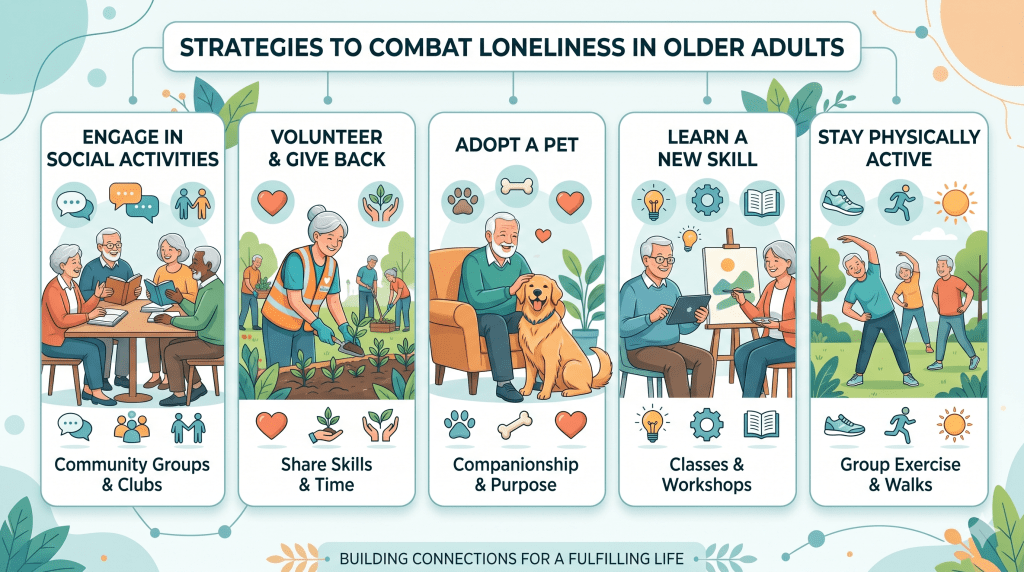
Building a bridge back to connection requires both practical steps and heartfelt intention. A comprehensive approach addresses both emotional needs and daily barriers.
Start with fundamental wellness. Good nutrition, proper sleep, and medical care create the foundation for social engagement. When basic needs are met, energy for connection grows naturally.
Proactive outreach makes a real difference. Don’t wait for someone to ask for help—isolation often causes further withdrawal. Regular contact from family and friends builds a safety net of care.
Volunteering provides structure, purpose, and social contact—the deeply satisfying feeling of making a meaningful contribution.
Technology supplements personal visits beautifully. Services like daily companion calls ensure consistent interaction. They provide peace of mind for families while offering regular companionship.
| Strategy Type | Primary Focus | Key Benefit | Implementation Level |
|---|---|---|---|
| Basic Wellness | Physical health foundation | Increased energy for socializing | Daily personal care |
| Social Facilitation | Connection maintenance | Stronger relationship bonds | Weekly scheduled activities |
| Technology Support | Consistent interaction | Regular companionship assurance | Daily automated check-ins |
| Community Programs | Group engagement | Shared interest connections | Monthly organized events |
For those with cognitive challenges, specialized interventions like memory cafés create safe social spaces. Addressing practical barriers systematically—transportation, hearing aids—removes obstacles to engagement.
Effective approaches combine emotional support with practical solutions. Comprehensive resources like the strategic guide to reducing isolation highlight how multi-faceted support creates lasting change for people experiencing disconnection.
A Practical Loneliness Recovery Plan: Small Steps That Make Connection Feel Possible Again

Loneliness can feel overwhelming because it rarely has one simple cause. It may come from grief, retirement, reduced mobility, fewer visitors, hearing difficulties, distance from family, or simply the quiet feeling that life has become smaller than it used to be.
That is why “just go out more” is not helpful advice.
For many older adults, rebuilding connection works better when it is treated like a gentle recovery plan. Not a dramatic life change. Not a packed social calendar. Just a steady, realistic plan that makes each week feel a little less silent, a little more supported, and a little more meaningful.
The goal is not to become busy. The goal is to feel known, included, and emotionally safe again.
Step 1: Start With an Honest Connection Check-In
Before making changes, it helps to understand what kind of loneliness is present.
Some seniors are lonely because they do not see enough people. Others are surrounded by people but still feel emotionally unseen. Some miss one specific person deeply. Others miss the rhythm of having a role, a routine, or a reason to be expected somewhere.
A helpful first step is to ask:
- Who do I genuinely enjoy talking to?
- When do I feel most alone during the day?
- Do I miss people, purpose, routine, or all three?
- Is there someone I wish would call more often?
- Have I stopped reaching out because I feel like a burden?
- Do I avoid social plans because they feel tiring, awkward, or difficult?
For family members, this check-in should be handled gently. Instead of asking, “Are you lonely?” try asking, “Which part of the day feels the quietest for you?” or “Who do you miss talking to lately?” These questions feel less exposing and often lead to more honest answers.
Step 2: Build a Weekly Connection Map
A connection map is a simple way to make support visible.
Take a piece of paper and divide it into four categories:
Family and close friends: People who already care.
Old connections: Former neighbors, coworkers, cousins, faith-community friends, school friends, or people from earlier life stages.
Local community: Senior centers, libraries, religious groups, walking groups, hobby clubs, meal programs, or volunteer organizations.
Support services: Companion calls, caregiver check-ins, transportation help, home visitors, therapists, or local aging services.
The purpose is not to contact everyone. It is to identify three to five realistic connection points that could be gently reactivated.
For example:
- Monday: phone call with daughter
- Tuesday: short walk with neighbor
- Wednesday: JoyCalls check-in
- Thursday: library group or faith-community call
- Friday: call an old friend
- Weekend: family visit, shared meal, or video call
Seeing the week on paper helps reduce the sense that connection depends on luck. It becomes something planned, protected, and repeatable.
Step 3: Choose Low-Pressure Contact First
Many lonely older adults avoid reaching out because they fear rejection, awkwardness, or becoming a burden. This is especially common after grief, illness, or a long period of isolation.
That is why the first step should be small.
A low-pressure message might sound like:
“I was thinking about you today and wanted to say hello.”
Or:
“I came across an old memory and it made me smile. How have you been?”
Or:
“I would enjoy a short call sometime this week if you are free.”
The key is to make the contact warm but simple. No long explanation is needed. No apology for being distant is required. Reconnection can begin with one sentence.
Family members can help by making outreach easier. They can write down phone numbers, create a call list, set reminders, or sit nearby while the senior makes the first call. Sometimes the hardest part is simply starting.
Step 4: Create “Anchor Moments” in the Day
Loneliness often feels worse during predictable quiet periods: early morning, mealtimes, late afternoon, evenings, weekends, or holidays. These are the times when silence feels heavier.
An anchor moment is a planned point of contact or purpose during one of those vulnerable times.
Examples include:
- A morning check-in call
- Tea at the same time each afternoon
- A daily walk past a familiar neighbor
- A radio program followed by a family call
- A regular prayer group, reading time, or hobby hour
- A companion call during the loneliest part of the day
- A shared dinner by phone with a family member once a week
The power of anchor moments is consistency. A senior should not have to wonder, “Will anyone remember me today?” Predictable contact creates emotional security.
For caregivers, this is especially important. One thoughtful call is good. A dependable rhythm is better. It tells the older adult, “You are part of my day, not an afterthought.”
Step 5: Rebuild Purpose, Not Just Social Activity
Loneliness is not only about missing people. It is often about missing usefulness.
Many older adults spent decades being needed as parents, workers, spouses, neighbors, caregivers, teachers, organizers, or problem-solvers. When those roles fade, life can feel emotionally smaller.
A strong loneliness plan should include purpose.
This does not have to mean formal volunteering. Purpose can be simple and personal:
- Calling a grandchild every Sunday to hear about school
- Sharing family recipes
- Helping fold laundry during a visit
- Watering plants
- Writing birthday cards
- Praying for specific people
- Recording family stories
- Teaching a skill
- Feeding birds
- Checking on another older friend
- Helping choose meals or groceries
- Keeping a small daily journal
For seniors with limited mobility, purpose can still be deeply meaningful. A person does not need to leave home to matter. They need opportunities to contribute in ways that match their energy, health, and interests.
Family members should avoid doing everything for an older loved one when the person is still able to participate. Help is kind, but over-helping can accidentally remove purpose. A better approach is: “Would you help me choose?” or “Can I ask your advice?” or “I’d love for you to teach me how you used to do this.”
Feeling useful is one of the most powerful antidotes to feeling forgotten.
Step 6: Make Social Plans Easier to Say Yes To
Sometimes seniors decline invitations not because they do not want company, but because the plan feels too complicated.
Transportation, stairs, weather, hearing challenges, bathroom access, fatigue, cost, unfamiliar places, and fear of being a burden can all make social plans feel stressful.
Instead of saying, “You should come out more,” make the plan easier.
Try:
“I’ll pick you up at 10 and bring you home by noon.”
“We can sit somewhere quiet.”
“You don’t have to stay long.”
“I checked that there is parking close to the entrance.”
“We can leave whenever you feel tired.”
“I’ll help with your coat and walker.”
“Let’s just try it once.”
For many older adults, the best social plan is short, predictable, and comfortable. A 30-minute visit may be far more successful than a three-hour outing. A quiet lunch may be better than a crowded family event. A phone call may be better than a video call if technology feels stressful.
The goal is not to push. The goal is to remove barriers.
Step 7: Use a “One Familiar, One New” Rule
Trying something new can feel intimidating, especially after months or years of isolation. A helpful approach is the “one familiar, one new” rule.
Each week, choose one familiar connection and one small new opportunity.
The familiar connection might be:
- Calling a relative
- Visiting a known neighbor
- Attending a regular religious service
- Speaking with a trusted friend
- Receiving a daily companion call
The new opportunity might be:
- Trying one senior center activity
- Joining a library event
- Calling an old friend after years
- Asking about a local walking group
- Trying a new hobby class
- Attending a community meal
- Speaking to one new person after service
This method keeps the week emotionally safe while still creating gentle growth. Familiar contact provides comfort. New contact creates possibility.
Step 8: Prepare Conversation Prompts
One reason seniors may withdraw is that conversation starts to feel difficult. They may worry they have “nothing new to say,” especially if they spend most days at home.
Conversation prompts can help.
Good prompts include:
- “What was the best part of your week?”
- “What is something you remember from your childhood home?”
- “What meal do you wish people still made more often?”
- “Who was the funniest person you ever knew?”
- “What advice would you give someone my age?”
- “What music did you love when you were young?”
- “What is one thing you are looking forward to?”
- “What has been on your mind lately?”
For family caregivers, avoid turning every call into a health checklist. Questions like “Did you take your medicine?” and “Did you eat?” are important, but they should not be the whole conversation.
Add questions that invite identity, memory, humor, opinion, and emotion. Older adults need to feel cared for medically, but they also need to feel interesting as people.
Step 9: Watch for Emotional Setbacks Without Giving Up
Rebuilding connection can bring up tender feelings. A senior may feel hopeful after one good visit and then feel even lonelier the next day. They may try a group and not enjoy it. They may call someone who does not answer. They may feel embarrassed about needing support.
This does not mean the plan failed.
Loneliness often improves through repeated, gentle contact, not one perfect solution. The first attempt may simply teach what does not work.
If a senior dislikes a large group, try one-on-one visits. If video calls feel awkward, use phone calls. If family calls are too rushed, schedule a longer weekly call. If outings are exhausting, make them shorter. If evenings are hardest, move support to that time.
The plan should adapt to the person, not force the person to adapt to the plan.
Step 10: Know When Loneliness Needs Extra Support
Loneliness deserves attention before it becomes a crisis. Families should take it seriously if an older adult shows ongoing sadness, hopelessness, poor sleep, loss of appetite, neglect of personal care, increased confusion, heavy alcohol use, repeated statements about being a burden, or loss of interest in everything they used to enjoy.
In these cases, connection still matters, but professional support may also be needed. A primary care doctor, therapist, grief counselor, social worker, faith leader, or local aging organization can help identify the next step.
For seniors, asking for help is not weakness. It is a wise response to pain that has lasted too long.
For families, do not wait until loneliness becomes severe. A calm conversation today can prevent deeper distress later.
A Simple 7-Day Loneliness Reset Plan
Here is a practical one-week starting point:
Day 1: Write down the loneliest time of day and one person you miss talking to.
Day 2: Call or message one familiar person with a short, warm note.
Day 3: Add one daily anchor moment, such as a morning call, afternoon walk, or companion check-in.
Day 4: Choose one meaningful activity that creates purpose, even if it is small.
Day 5: Identify one barrier that makes connection difficult, such as transportation, hearing, fatigue, or technology, and ask for help solving it.
Day 6: Try one low-pressure social interaction, such as greeting a neighbor, attending a short community activity, or having tea with someone.
Day 7: Review what helped. Keep what worked, remove what felt stressful, and plan the next week around two or three repeatable connection points.
The most important rule is this: start smaller than you think you need to. Small steps done consistently are more powerful than big plans that feel too hard to continue.
Loneliness in later life is painful, but it is not permanent. With patience, structure, and dependable human contact, connection can be rebuilt. A senior does not need a crowded calendar to feel less alone. They need regular moments of warmth, purpose, recognition, and care.
How Families and Caregivers Can Support an Older Adult Without Making Them Feel Managed

Loneliness in older adults is not always solved by giving more advice. In fact, too much advice can sometimes make a senior feel corrected, watched, or treated like a problem to fix. The existing article already explains that loneliness is different from simply being alone and that meaningful connection matters more than the number of social contacts. It also covers signs, causes, health risks, interventions, and practical ways to stay connected.
This new section can go deeper into something very practical: how families, adult children, caregivers, and close friends can actually show up in a way that protects dignity.
Older adults do not only need more calls, more visits, or more activities. They need connection that feels respectful. They need to feel remembered, not monitored. Included, not pitied. Supported, not controlled.
Start by Changing the Goal: From “Fixing Loneliness” to “Restoring Belonging”
When a family member notices loneliness, the natural reaction is to solve it quickly. You may suggest a senior center, a hobby class, a video call, a walking group, or a companion service. These can all help, but they may fail if the older adult feels pushed.
A better goal is to restore belonging.
Belonging means the person feels they still have a place in family life, daily conversation, decision-making, and community. It means they are not only contacted when someone is checking on medicine, meals, appointments, or safety.
A lonely older adult may hear practical questions all the time:
“Did you eat?”
“Did you take your tablets?”
“Did the nurse come?”
“Did you sleep well?”
“Do you need anything?”
These questions are caring, but if they are the only questions, the relationship can start to feel clinical. The senior may feel like a responsibility instead of a person.
Balance care questions with human questions:
“What made you smile today?”
“What have you been thinking about lately?”
“Which old song should I listen to?”
“What do you miss most about your old neighborhood?”
“What would you cook if everyone was coming over this Sunday?”
“What advice would you give me about this situation?”
These questions invite personality, memory, wisdom, and emotion. They remind the senior that their mind, opinions, humor, and life experience still matter.
Avoid Making Every Conversation About Health
Health matters, especially when an older adult is managing chronic conditions, mobility issues, medication, or recovery. But loneliness often deepens when a person feels reduced to their health status.
If every call sounds like a checklist, the senior may begin to withdraw. They may say “I’m fine” just to end the conversation. They may stop sharing honestly because they do not want to worry anyone.
A useful structure is the “care sandwich.”
Start with warmth.
Then ask necessary care questions.
End with connection.
For example:
“I was thinking about you this morning because I made tea the way you like it. How are you feeling today? Did the doctor’s office call back? Also, before I go, tell me what you think I should make for dinner tonight.”
This keeps care present without making it the whole relationship.
Make Visits Predictable, Not Random
Random visits can be lovely, but predictable visits create emotional security.
Many older adults spend a lot of time waiting. Waiting for the phone to ring. Waiting for someone to visit. Waiting to know whether they are still part of someone’s day.
A consistent rhythm helps reduce that uncertainty.
For example:
- A daughter calls every Monday, Wednesday, and Friday evening.
- A grandchild visits every second Sunday.
- A neighbor checks in after morning prayers or a daily walk.
- A caregiver schedules a companion call during the loneliest hour of the day.
- Family members rotate short calls so the senior hears from someone most days.
The schedule does not need to be intense. It needs to be dependable.
If plans change, communicate clearly. A missed call may seem small to a busy adult child, but to a lonely parent, it can feel like proof that they have been forgotten. A quick message such as “I cannot call at 6 today, but I will call at 8” can protect trust.
Let the Older Adult Contribute
One of the most painful parts of aging can be the feeling of becoming only a receiver of help. Meals are delivered. Bills are managed. Appointments are arranged. Decisions are made by others.
Support is important, but seniors also need chances to contribute.
Ask for help in ways that are real:
“Can you help me remember how you used to make that chutney?”
“Can you tell the kids the story about your first job?”
“Can you help me choose which saree/shirt/gift to buy?”
“Can you remind me what Dad used to say about this?”
“Can you teach me that prayer/song/recipe?”
Contribution does not have to be physical. It can be emotional, cultural, spiritual, practical, or historical.
When an older adult contributes, they are reminded: “I still have something to give.”
That feeling is deeply protective against loneliness.
Do Not Force Socializing Before Understanding the Barrier
When a senior refuses invitations, families may assume stubbornness. But there is usually a reason.
They may be worried about falling.
They may struggle to hear in groups.
They may feel embarrassed about using a walker.
They may fear needing the bathroom urgently.
They may not want others to see physical changes.
They may feel tired but not know how to explain it.
They may be grieving and find cheerful gatherings painful.
They may not want to be treated as “old” in public.
Before pushing, ask gently:
“What part of going feels difficult?”
“Would it feel easier if we stayed only 30 minutes?”
“Would you prefer a quieter place?”
“Would you like me to come with you the first time?”
“Is there something about the outing that worries you?”
Once the real barrier is known, the solution becomes more respectful.
A senior who dislikes big gatherings may enjoy one visitor.
A senior who fears falling may need transport and a steady arm.
A senior with hearing loss may prefer a quiet room.
A grieving senior may need gentle companionship, not celebration.
Create Connection Around Existing Habits
Do not always try to add new activities. Sometimes the easiest way to reduce loneliness is to attach connection to something the person already does.
If they drink tea every evening, make that a call time.
If they watch a devotional program, discuss it afterward.
If they enjoy cricket, call during match breaks.
If they cook, ask for a recipe once a week.
If they water plants, send photos of your plants too.
If they pray, share names of people they can pray for.
If they enjoy old songs, create a weekly music conversation.
Connection becomes easier when it fits into familiar routines. It feels natural instead of forced.
Help With Technology, But Do Not Make It the Only Solution
Video calls, messaging apps, online groups, and digital photo sharing can help older adults stay connected. But technology should reduce loneliness, not create frustration.
For some seniors, a smartphone is empowering. For others, it is confusing and stressful.
Make technology simple:
- Put important contacts on speed dial.
- Use large font sizes.
- Remove unnecessary app clutter.
- Write step-by-step instructions on paper.
- Practice the same action several times.
- Keep chargers easy to reach.
- Use voice commands where possible.
- Set up automatic reminders.
- Avoid changing devices too often.
Most importantly, do not shame the person for needing help.
Instead of saying, “I already showed you this,” say, “No problem, let’s do it again.”
Patience is part of care.
Also remember that not all meaningful connection has to be digital. A regular phone call may be better than a complicated video call. A handwritten letter may feel more personal than a message. A printed photo may bring more joy than an image buried in a phone gallery.
Watch for the Loneliness Hidden Behind “I’m Fine”
Many older adults do not want to worry their families. They may say they are fine even when they are not.
Pay attention to patterns:
- Shorter phone conversations
- Less interest in grooming or meals
- Repeating “everyone is busy”
- Sleeping much more or much less
- Avoiding festivals, birthdays, or family calls
- Losing interest in hobbies
- Talking often about the past but not the future
- Saying they do not want to trouble anyone
- Becoming unusually irritable or emotionally flat
These signs do not always mean loneliness, but they are worth noticing.
Instead of confronting the person with “You seem lonely,” try:
“I feel like your days have become quieter lately. Is that true?”
“I miss hearing you sound excited about things. What has been feeling heavy?”
“I know you say you’re fine, but I want to understand how your days really feel.”
A calm, non-judgmental tone matters. The goal is not to pressure them into admitting loneliness. The goal is to make honesty feel safe.
Build a Family Support System, Not One Overloaded Caregiver
Often, one adult child or relative becomes the main emotional support person. Over time, that person may become overwhelmed, while the senior still feels lonely because support is inconsistent.
A better approach is shared responsibility.
Families can create a simple support rotation:
- One person handles medical appointments.
- One person calls twice a week.
- One person manages bills or documents.
- One person visits monthly.
- One person sends photos or voice notes from grandchildren.
- One person checks in during festivals, anniversaries, or difficult dates.
This prevents care from becoming reactive. It also gives the older adult a wider emotional circle.
For families living far away, companion calling services, local community programs, neighbors, faith communities, and trusted caregivers can become part of the support system. The goal is not to replace family love, but to make sure the senior has dependable human contact even when family members are busy or distant.
Respect Independence While Offering Support
Loneliness support should never feel like taking over someone’s life.
Older adults may resist help when they fear losing independence. They may worry that admitting loneliness will lead to more control from family members.
Use collaborative language:
“Would it help if we planned one weekly call?”
“Which day feels best for a visit?”
“Would you prefer calls in the morning or evening?”
“Do you want help finding a group, or would you rather start with phone conversations?”
“Should we try this for two weeks and then see how you feel?”
Choice protects dignity.
Even when safety is a concern, include the senior in decisions as much as possible. Being heard is itself a form of connection.
Make Special Dates Less Painful
Birthdays, anniversaries, holidays, death anniversaries, festivals, and family milestones can intensify loneliness. These days often highlight who is missing, what has changed, and how quiet life has become.
Plan ahead.
Do not wait until the day arrives and hope the senior will be okay.
Ask:
“Would you like company that day?”
“Would you rather keep it quiet or do something small?”
“Should we cook something they used to love?”
“Would you like to visit the temple/church/mosque/cemetery?”
“Would talking about them help, or would you prefer distraction?”
Grief and loneliness often sit together. A senior may not need cheering up. They may need someone willing to remember with them.
Keep the Plan Gentle and Long-Term
Loneliness rarely disappears after one visit, one group activity, or one heartfelt conversation. It improves through repeated signals of care.
A helpful family plan may look like this:
- Identify the loneliest time of day.
- Schedule predictable contact during that time.
- Add one weekly meaningful conversation.
- Support one purpose-based activity.
- Remove one practical barrier to socializing.
- Watch for emotional changes.
- Review what is working every month.
This is not about creating a perfect system. It is about creating a reliable circle of care.
The most healing message an older adult can receive is simple:
“You are not a burden. You are still part of us. Your presence matters.”
When families and caregivers lead with that message, support becomes more than assistance. It becomes belonging.
Designing an Environment That Reduces Loneliness: How Physical Space, Daily Structure, and Micro-Interactions Shape Emotional Well-Being
Loneliness is often treated as an emotional issue, but in reality, it is also deeply influenced by environment. Where a person lives, how their day is structured, what they see around them, and how easily they can access interaction—all of these quietly shape whether they feel connected or isolated.
This section focuses on something often overlooked: how to intentionally design everyday life so that connection becomes more natural, frequent, and effortless.
For many older adults, loneliness is not just about missing people—it is about living in an environment where connection requires too much effort.
The solution is not always adding more people. Sometimes, it is about redesigning the conditions that make connection possible.
Why Environment Matters More Than We Think
An older adult may want to talk to someone, go outside, or participate in activities—but small barriers can stop them:
- A chair that is too low to get up from comfortably
- Poor lighting that makes evening movement difficult
- A phone kept in another room
- No nearby seating area for guests
- A long staircase at the entrance
- Lack of safe walking paths
- No visible reminders to reach out to people
- Silence that feels overwhelming
- A home that feels like it belongs to the past rather than the present
Over time, these small barriers accumulate. The person withdraws—not because they want to, but because connection becomes inconvenient, tiring, or emotionally heavy.
A thoughtfully designed environment reduces friction. It gently invites interaction instead of requiring effort.
Step 1: Make Communication Physically Easy
One of the simplest yet most powerful changes is to make communication tools easily accessible.
Many seniors miss calls or avoid making them because reaching the phone feels inconvenient or disruptive.
Small adjustments can change this:
- Keep a phone within arm’s reach in the most-used seating area
- Use a simple phone with large buttons and speed dial options
- Place a written contact list next to the phone
- Ensure chargers are always plugged in and easy to access
- Use hands-free or voice-activated calling if possible
- Set daily reminders for calls if needed
For family members, consider pre-setting key contacts with labels like “Daughter,” “Friend,” or “Doctor” instead of just numbers.
When communication becomes physically easy, emotional connection becomes more likely.
Step 2: Create Spaces That Invite Conversation
The way a home is arranged can either encourage or discourage social interaction.
Ask:
Does the space feel welcoming to visitors?
Is there a comfortable place to sit and talk?
Does the room feel too formal or too cluttered?
Simple changes can make a big difference:
- Arrange chairs facing each other instead of facing a television
- Keep one seating area always ready for a guest
- Add soft lighting to make the space feel warm
- Keep everyday clutter minimal so visitors feel comfortable sitting down
- Place meaningful objects nearby that can spark conversation (photos, books, memorabilia)
For seniors living alone, even the visual arrangement of space matters. A chair facing a window with street activity, a balcony, or a garden can create a sense of connection with the outside world.
Step 3: Use Visual Reminders to Encourage Social Behavior
Loneliness often leads to inaction. A senior may think about calling someone but forget, postpone, or feel hesitant.
Visual cues can gently prompt action:
- A weekly calendar with scheduled calls and visits
- Sticky notes with names of people to reach out to
- A “call list” placed near the phone
- Photos of loved ones in visible places
- A simple checklist like: “Call one person today”
These reminders should not feel like pressure. They should feel like gentle nudges.
For caregivers, helping set up these cues can be more effective than repeatedly reminding the person verbally.
Step 4: Design for Safe and Easy Movement
Mobility plays a huge role in loneliness.
If moving around the home or stepping outside feels risky, older adults naturally limit their movement. This reduces opportunities for interaction.
Important adjustments include:
- Removing tripping hazards like loose rugs
- Installing grab bars in key areas
- Ensuring adequate lighting in hallways and bathrooms
- Using supportive chairs with armrests
- Keeping frequently used items within easy reach
- Providing safe footwear
- Ensuring entrances are easy to access
For outdoor movement:
- Identify nearby safe walking routes
- Use benches or rest spots if available
- Encourage short, manageable walks instead of long ones
- Arrange for accompaniment if needed
The goal is simple: make it easier to step out than to stay in.
Step 5: Reduce “Empty Silence” in the Home
Silence can feel peaceful at times, but prolonged silence can intensify loneliness.
This does not mean constant noise is necessary, but having intentional background engagement can help.
Options include:
- Playing soft music during the day
- Listening to radio programs or talk shows
- Watching familiar, comforting TV content
- Using audio books or storytelling programs
- Keeping a window open to hear outside activity
The idea is to create a sense of presence.
Some seniors find comfort in hearing human voices, even if they are not actively participating in a conversation.
Step 6: Build Micro-Interactions Into Daily Life
Not all connection needs to be deep or long. Small, everyday interactions—called micro-interactions—can significantly reduce loneliness.
Examples include:
- Greeting a neighbor during a walk
- Talking briefly to a shopkeeper
- Saying hello to a security guard
- Chatting with a delivery person
- Asking a question at a local store
- Smiling and making eye contact with someone nearby
These moments may seem minor, but they create a sense of belonging in a community.
For seniors who feel socially anxious, micro-interactions are often easier than long conversations. They build confidence gradually.
Step 7: Align Daily Routine With Natural Energy Levels
Older adults often have predictable energy patterns.
Some feel more active in the morning. Others feel better in the afternoon. Evenings may feel slower or more emotionally heavy.
Instead of forcing connection at random times, align it with natural energy:
- Schedule important calls during high-energy periods
- Keep social activities short during low-energy times
- Use quiet, comforting activities during the evening
- Avoid overloading the day with too many interactions
A well-aligned routine prevents exhaustion and makes social engagement feel more manageable.
Step 8: Create “Meaning Zones” in the Home
A meaning zone is a dedicated space for a specific activity that brings purpose or joy.
Examples include:
- A reading corner
- A prayer or meditation space
- A small gardening area
- A writing or journaling desk
- A music listening spot
- A hobby table (knitting, painting, puzzles)
These zones serve two purposes:
- They provide structure to the day
- They create opportunities for shared interaction
For example, a grandchild visiting may sit in the reading corner and ask questions. A caregiver may join during hobby time. A phone call may happen during tea in the same spot every day.
Over time, these spaces become associated with connection.
Step 9: Make It Easy for Others to Visit
Sometimes people visit less often not because they do not care, but because visiting feels logistically difficult.
Families can make visits easier by:
- Sharing clear directions and parking details
- Keeping visiting hours flexible
- Ensuring seating is comfortable for guests
- Offering simple refreshments
- Making the environment welcoming, not formal
For seniors, expressing openness can help:
“Feel free to drop by anytime.”
“I enjoy company, even for a short visit.”
“You don’t have to plan anything—just come sit.”
Removing pressure makes visits more frequent and natural.
Step 10: Introduce Gentle External Support Without Resistance
Some seniors resist external support like companion services, community programs, or structured calls because they feel it signals dependency.
The introduction matters.
Instead of saying:
“You need this because you’re lonely.”
Try:
“This could be a nice way to have regular conversations.”
“Let’s try this together for a week and see how it feels.”
“This is just an extra source of company, not a replacement for us.”
Framing support as an addition—not a replacement—makes acceptance easier.
A Simple Environment Reset Checklist
Here is a practical checklist families and seniors can use:
- Is the phone easily accessible at all times?
- Is there a comfortable space for conversation?
- Are there visible reminders to connect with others?
- Is movement inside the home safe and easy?
- Does the home feel too quiet or disconnected?
- Are there opportunities for small daily interactions?
- Is the routine aligned with energy levels?
- Are there dedicated spaces for meaningful activities?
- Is it easy for visitors to come over?
- Is there at least one dependable daily or weekly connection point?
If even three or four of these areas are improved, the emotional environment of the home can change significantly.
The Deeper Truth: Connection Should Not Feel Like Effort
Loneliness often grows when connection feels like work—something that requires planning, courage, energy, or overcoming obstacles.
A well-designed environment removes those obstacles.
It makes connection:
- Visible
- Accessible
- Predictable
- Comfortable
- Repeatable
For older adults, especially those living alone, this shift can be transformative.
They no longer have to “try harder” to feel less lonely. Their surroundings begin to support them naturally.
And that is the real goal—not to force connection, but to make it easier for connection to happen every single day.
Conclusion
You now hold the knowledge to transform concern into meaningful action. The serious health risks linked to prolonged loneliness are real, but they are not inevitable.
We have explored practical paths forward. From daily habits and community programs to innovative support like JoyCalls, connections can be rebuilt. Every older adult deserves to feel valued.
Start with a simple phone call today. Your effort, combined with the right resources, can fill later years with purpose and genuine human connection.
FAQ
What is the difference between feeling lonely and being socially isolated?
What are some common signs that an older person might be experiencing loneliness?
How does loneliness impact a person’s physical health?
What are the main risk factors for loneliness in later life?
What are some simple ways to help an older adult feel more connected?
How can technology help combat social isolation for seniors?
Are there community programs specifically designed to address this issue?

Ana Avila is a healthcare and technology writer with deep expertise in artificial intelligence, senior care innovation, and the practical use of AI in healthcare operations. Her work focuses on how emerging technologies can improve the daily experience of older adults, support overburdened care teams, and help senior living communities deliver safer, faster, and more personalized support.
Ana’s background includes health informatics, aging care systems, and applied artificial intelligence. Her work explores how digital health tools, predictive analytics, and AI-assisted communication systems can improve care coordination, reduce operational delays, and identify early signs of risk among older adults. She brings an understanding of both the technical side of AI and the human realities of healthcare delivery.
Over the years, Ana has developed a specialized body of work around AI in senior living. She writes about how senior care providers can use intelligent systems to manage resident requests, answer routine questions, support family communication, improve after-hours coverage, and detect patterns that may indicate loneliness, confusion, distress, or unmet needs. Her articles often examine the gap between what senior living teams are expected to deliver and what traditional staffing models can realistically support.
Ana’s healthcare expertise is especially focused on the operational side of care. She has written extensively about call handling, resident engagement, front desk workflows, triage systems, caregiver communication, care escalation, and the hidden administrative burden placed on senior living staff. Her work explains how AI can help reduce repetitive tasks, organize incoming requests, prioritize urgent issues, and give human caregivers more time for meaningful resident interaction.
At the same time, Ana is careful not to present AI as a replacement for human care. A consistent theme in her writing is that technology should support relationships, not weaken them. She argues that the best AI systems in healthcare are not the ones that simply automate the most tasks, but the ones that make care teams more responsive, families more informed, and residents more supported. Her perspective is grounded in the belief that senior living technology must be designed around dignity, trust, privacy, and compassion.
Ana has also written widely on the ethical use of AI in healthcare. Her work discusses the importance of human oversight, transparent escalation rules, resident consent, data minimization, and responsible use of sensitive health and behavioral information. She often emphasizes that AI systems used around older adults must be easy to understand, carefully monitored, and designed with the limitations and needs of real residents in mind, including those with memory loss, hearing challenges, mobility issues, or social isolation.
Her writing has been used as a reference point in discussions about aging, elder care technology, digital health, and AI-supported senior living. She has published 12 papers in journals including JAMA, The BMJ, and SSRN. Some of her articles have also been cited by Wikipedia editors as supporting references on topics related to healthcare, aging, and technology. This has helped position her work as a useful educational resource for readers looking to understand how AI can be applied in real care environments.
In addition to her long-form writing, Ana has contributed research-based commentary, professional explainers, and practical guidance for healthcare operators, senior living decision-makers, and technology teams building products for older adults. Her work combines research literacy with operational practicality. She is able to take complex subjects such as natural language processing, predictive analytics, conversational AI, and care automation, and explain them in a way that is accessible to executives, caregivers, families, and non-technical readers.
Ana’s strongest area of expertise is the intersection of artificial intelligence and senior living operations. She understands that senior care communities face a difficult combination of rising resident expectations, staffing pressure, family communication demands, and increasing care complexity. Her writing explores how AI can be used to ease those pressures through smarter communication systems, faster response workflows, proactive check-ins, and better visibility into resident needs.
Her approach is both evidence-informed and deeply human. She studies AI through the lens of real-world care delivery: whether a resident gets help faster, whether a family member receives a clearer update, whether a caregiver avoids unnecessary administrative work, and whether a senior living team can identify a concern before it becomes a crisis. This practical focus makes her work especially relevant for organizations that want to adopt AI responsibly rather than simply follow technology trends.
Ana Avila is regarded as a thoughtful voice on the future of AI in healthcare and senior living. Her expertise combines research-driven analysis, operational understanding, and a strong commitment to humane technology. Through her writing, she helps healthcare leaders and senior living communities understand not only what AI can do, but how it should be used to improve care, preserve dignity, and strengthen the human relationships at the center of aging support.