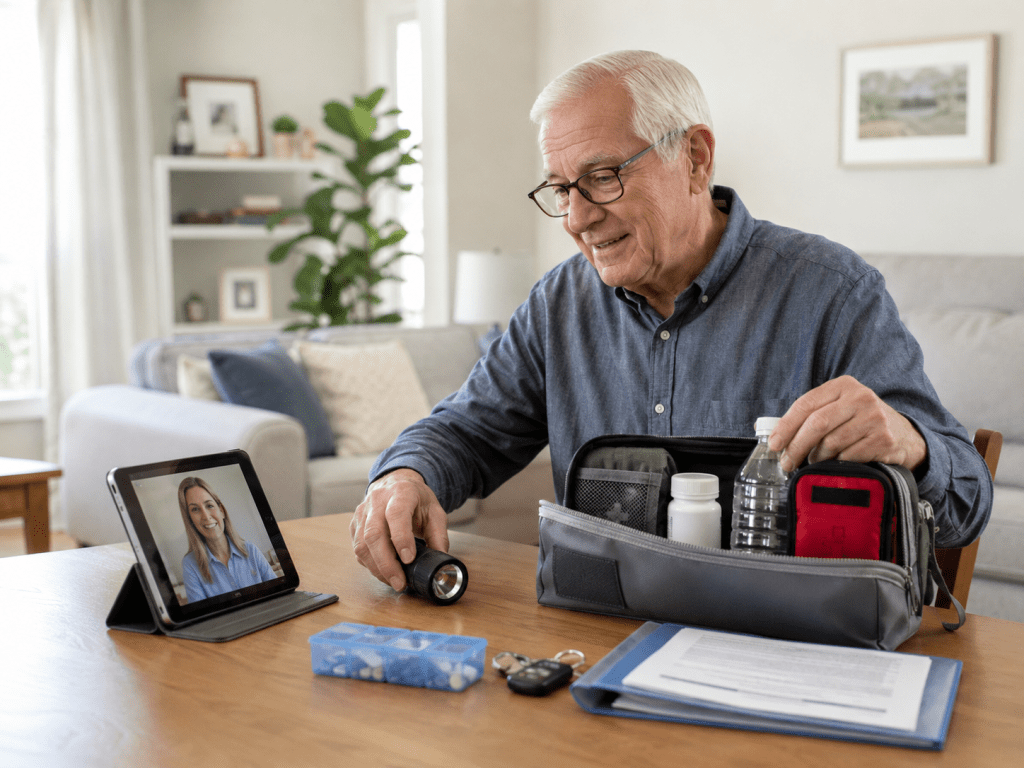

What if you could truly know your loved one is safe and connected every single day, even from hundreds of miles away? That middle-of-the-night worry about medication or a quiet house can feel overwhelming. You are not alone in this.
Statistics show that of the 34 million Americans providing care for older family members, roughly 15 percent live at least an hour away. This reality of caregiving from a distance creates a unique heartache. You want to be there, but geography makes it a challenge.
Establishing a consistent routine is the key. Itโs not just about safety; itโs about maintaining a precious bond. Hearing their voice provides comfort to you both. It turns anxiety into assurance.
This guide will help you build that routine. We’ll cover simple strategies that fit into your life. You can provide excellent support and meaningful connection, no matter the miles. Having a solid daily plan is also the first step in any good emergency plan for long-distance caregiving.
Key Takeaways
- A consistent daily routine provides peace of mind for you and your loved one.
- Connection is just as important as monitoring safety from afar.
- Simple, reliable strategies can fit into even the busiest schedules.
- Feeling guilty is common, but effective care is possible regardless of distance.
- Establishing a routine is a foundational step for overall care management.
Understanding the Challenges of Long-Distance Caregiving
When your loved one’s home is far from yours, the simple question ‘Are they okay today?’ takes on new weight. You can’t see the little things that might signal your aging parent needs more support in their daily living.
Overview of Remote Caregiving Needs
Every person has unique needs, and understanding them means looking beyond surface conversations. Your parent might sound fine on the phone but struggle with meal preparation or medication management.
Signs that help is needed include prescription medications scattered about, empty refrigerators, or unpaid bills. These small things often reveal bigger care needs.

Identifying Unique Family and Home Care Dynamics
Every family situation differs. Some older adults resist help while others don’t want to burden family members. Recognizing your specific dynamics is essential for effective care.
Building a local support network becomes crucial when you can’t observe day-to-day changes. This emotional toll is realโconstantly worrying about home safety and proper medication use.
Many discover their parent hides struggles to avoid worry. That’s why consistent communication helps uncover care needs before emergencies. Understanding these challenges is the first step in navigating these challenges effectively.
A solid foundation begins with recognizing what to watch for. This awareness forms the basis of any good comprehensive checklist for supporting your loved one’s well-being.
Effective Long-Distance Caregiving Check-Ins
The gentle rhythm of daily connection can transform worry into reassurance when miles separate you from someone you cherish. Regular contact becomes your window into their world.

Establishing this pattern creates stability for everyone involved. It’s about more than just safetyโit’s about maintaining heart connections.
Maintaining Consistent Communication
Consistent communication serves as the lifeline to your loved one‘s daily experience. Predictable phone calls give your aging parent something to anticipate.
This regularity helps you notice subtle changes in mood or voice. You become attuned to what’s normal for your loved one.
The Alzheimer’s Association emphasizes setting aside regular time to discuss needs with both family members and professional services. This multi-channel approach provides a complete picture.
Using Technology to Bridge the Distance
Modern tools have revolutionized remote support. Video calls let you see your loved one‘s environment and well-being.
Automated reminder services help with medication and appointments. But initiating every phone call can be exhausting for the caregiver.
Solutions like JoyCalls provide daily contact without adding to your load. The AI companion makes calls and sends you summaries. This approach aligns with recommended long-distance caregiving strategies.
Technology creates multiple touchpoints for comprehensive care. It connects you with your one special person consistently.
Setting Up a Daily Check-In Routine
A well-planned daily routine transforms scattered worries into organized peace of mind. Structure brings comfort to both you and your aging parent. It creates predictability in an unpredictable situation.

Try JoyCalls Free
No app or new device needed. Start with a free 7-day trial.
Start by choosing consistent times that feel natural. Morning coffee or evening chats work well. This consistency builds trust and becomes something to look forward to each day.
Structuring a Reliable Schedule
Your conversations should cover key areas without feeling like an interrogation. Ask about meals, medications, and mood. Keep a simple log to track patterns over time.
This approach aligns with recommended daily care planning strategies. A good system includes daily wellness chats and weekly reviews of appointments.
Coordinating with In-Home and Community Care
Build your routine around your support team’s schedule. Follow up on home care visits and meal deliveries. Coordination ensures everyone works together effectively.
Create a master contact list with doctors, pharmacies, and neighbors. This planning prevents last-minute scrambling during emergencies.
Integrating Appointment and Bill Reminders
Add specific days for reviewing upcoming appointments and bills. This prevents missed doctor visits or late payments. Your daily check-in system becomes comprehensive.
Simple reminders integrated into your weekly routine reduce stress. They ensure important tasks don’t get overlooked in busy schedules.
Turning Daily Check-Ins Into a Practical Care Response System
A daily check-in is most helpful when it does more than confirm that your loved one answered the phone. For long-distance caregivers, the real value comes from knowing what to listen for, how to respond, and when a small concern should become a bigger care conversation.
This is where many families get stuck. They call every day, ask โHow are you?โ and hear โIโm fine.โ But โIโm fineโ can mean many things. It may mean your parent truly feels well. It may also mean they are tired, embarrassed, confused, lonely, or trying not to worry you.
A strong check-in routine should help you notice the difference without making your loved one feel watched. The goal is not to turn every call into an inspection. The goal is to create a calm, repeatable system that helps you understand what is normal, what is changing, and what needs follow-up.
Start by Defining What โNormalโ Looks Like
Before you can spot a concern, you need a baseline. Every older adult has their own normal rhythm. Some people are naturally quiet in the morning. Some always complain a little about sleep. Some eat lightly but consistently. Some forget small details but manage daily life well.
During the first week of daily check-ins, focus less on fixing things and more on learning patterns.
Pay attention to:
- What time they usually sound most alert
- How they describe their sleep
- Whether they remember plans from the day before
- How much energy they usually have
- Whether they mention meals naturally
- How often they talk about pain, dizziness, sadness, or boredom
- Whether their home sounds calm or chaotic in the background
This baseline matters because long-distance caregiving depends on comparison. One tired day may not mean much. Three tired mornings in a row may deserve attention. A missed meal once may be normal. Repeated skipped meals could signal depression, medication side effects, mobility issues, or trouble grocery shopping.
Use a Gentle โGreen, Yellow, Redโ System
A simple color system can help you respond clearly instead of emotionally.
Green: Everything Seems Stable
A green check-in means your loved one sounds like themselves. They answer as expected, speak clearly, mention normal activities, and do not raise any new concerns.
Your response can be simple: enjoy the conversation. Ask about their day. Share something from your life. Let the call feel human, not clinical.
For green days, you may only need to note one sentence: โGood mood, ate lunch, planning to watch TV tonight.โ
Yellow: Something Feels Slightly Off
A yellow check-in means something has changed, but it is not an emergency. Maybe they sound unusually tired. Maybe they skipped breakfast. Maybe they seem more withdrawn. Maybe they mention feeling dizzy yesterday but say they are fine now.
This is the time to ask one or two calm follow-up questions.
For example:
โHas this happened before?โ
โDid you eat or drink anything this morning?โ
โWould it help if I called the pharmacy?โ
โShould we check whether your appointment needs to be moved sooner?โ
The key is to avoid panic. A yellow flag is a prompt to observe, document, and follow up.
Red: Immediate Action Is Needed
A red check-in means there may be a safety or medical concern. Examples include confusion that is unusual, trouble speaking, a fall, chest pain, severe shortness of breath, sudden weakness, repeated vomiting, signs of medication mistakes, or no answer when missed-call patterns are unusual.
For red situations, do not rely on repeated calling alone. Use the escalation plan. Contact a nearby family member, neighbor, caregiver, building manager, or emergency service depending on the situation.
The point of a red category is to remove hesitation. When you already know what counts as urgent, you are less likely to freeze when something feels wrong.
Ask Better Questions Without Making the Call Feel Like an Interview
Many seniors dislike being questioned because it can make them feel dependent or monitored. The wording matters.
Instead of asking, โDid you take your medicine?โ try:
โWhere are you in your morning routine today?โ
โDid breakfast and pills happen yet, or is that still coming up?โ
Instead of asking, โAre you eating properly?โ try:
โWhat sounded good to eat today?โ
โDid you have something warm, or was it more of a snack day?โ
Instead of asking, โAre you lonely?โ try:
โWho did you get to talk to today?โ
โWas today a quiet day or a social day?โ
Instead of asking, โDid you fall?โ try:
โHow has walking around the house felt today?โ
โAny moments where you felt unsteady?โ
These questions feel softer, but they still give you useful information.
Track Patterns, Not Every Detail
A daily log should not become a burden. You do not need a long report after every call. A simple pattern tracker is enough.
Use five quick categories:
- Mood
- Meals
- Medication
- Mobility
- Memory or confusion
You can write one short note under each category only when something stands out.
For example:
Mood: quieter than usual
Meals: skipped lunch
Medication: unsure about evening pill
Mobility: complained of knee pain
Memory: repeated same question twice
This kind of tracking helps you see trends over time. It also makes conversations with doctors, siblings, and care providers more useful because you are not relying on memory alone.
Build a Weekly Review Into the Routine
Daily check-ins give you details. Weekly reviews give you direction.
Once a week, take 10 to 15 minutes to look back at the notes. Ask yourself:
- Were there repeated complaints about pain?
- Were meals skipped more than once?
- Did mood seem lower than usual?
- Were there more memory lapses than before?
- Did medication confusion appear?
- Were there any missed calls or delayed responses?
- Is the current level of support still enough?
This review can help you decide whether to adjust the care plan. Maybe your loved one needs grocery delivery, a medication organizer, a home safety check, a companion call, or a doctorโs appointment. The decision becomes easier when it is based on patterns instead of worry.
Respect Independence While Still Offering Support
One of the most delicate parts of long-distance caregiving is balancing safety with dignity. Older adults often want help, but they do not want to feel managed.
A useful rule is to offer support in a way that preserves choice.
Instead of saying, โYou need someone checking on you,โ say:
โIโd feel better if we had a simple backup plan for days when youโre tired. Would mornings or evenings feel easier?โ
Instead of saying, โYou canโt manage your pills,โ say:
โMedication schedules get complicated for everyone. Would it be helpful if we made the routine simpler?โ
Instead of saying, โIโm worried youโre not eating enough,โ say:
โLetโs make meals easier on low-energy days. What are three foods you actually enjoy and can prepare quickly?โ
This approach keeps your loved one involved in decisions. That matters. A routine is more likely to work when it feels supportive rather than controlling.
Create Small Action Plans for Common Problems
Long-distance caregivers should not have to invent a solution every time something comes up. Prepare simple action plans for common situations.
If They Skip Meals
First, find out why. Is it low appetite, trouble cooking, difficulty shopping, dental pain, loneliness, or forgetting?
Possible actions:
- Arrange grocery delivery
- Keep easy meals available
- Ask a neighbor to drop off prepared food once a week
- Set a regular mealtime call
- Speak with a doctor if appetite changes suddenly
If They Sound Lonely
Do not only say, โYou should go out more.โ That can feel dismissive.
Try building one small connection into the week:
- A recurring phone call with a friend
- A senior center activity
- A faith or community group
- A volunteer visitor program
- A daily companionship call
The aim is not to fill every hour. The aim is to reduce long stretches of silence.
If They Miss Medication
Avoid blame. Medication mistakes are common, especially when there are multiple prescriptions.
Possible actions:
- Ask the pharmacy about blister packs
- Use a pill organizer
- Set phone call reminders
- Create a printed medication schedule
- Review the medication list with a doctor or pharmacist
If They Do Not Answer
Do not jump straight to panic, but do not ignore it either. Have a clear no-answer plan.
For example:
First missed call: try again in 15 minutes.
Second missed call: send a text or leave a voicemail.
Still no answer: contact a nearby person.
Concern remains: request a wellness check or emergency response.
The exact plan depends on your loved oneโs health, living situation, and history.
Know When the Routine Needs More Support
A daily check-in routine is powerful, but it cannot replace every type of care. Sometimes the check-ins reveal that your loved one needs more help than phone support can provide.
Consider adding more support if you notice:
- Frequent missed medications
- Repeated falls or near-falls
- Spoiled food or poor nutrition
- Increasing confusion
- Missed appointments
- Unpaid bills
- Poor hygiene
- Withdrawal from friends or activities
- Fearfulness at night
- Repeated emergency calls
These signs do not automatically mean your loved one needs assisted living. They do mean the current system may need strengthening.
That might involve in-home care, transportation help, meal delivery, medication management, home modifications, or a professional care assessment.
Make the Routine Sustainable for You, Too
Caregivers often design routines around the older adultโs needs and forget their own limits. But if the routine exhausts you, it will not last.
Choose a check-in structure you can realistically maintain. If daily personal calls are too much, combine your own deeper calls with automated check-ins, family rotations, or scheduled support from others.
You can still be a loving, responsible caregiver without personally doing every task. Your role is to make sure the system works, not to carry the entire system alone.
A sustainable routine might look like this:
- Daily automated or brief wellness check
- Two longer personal calls each week
- One weekly review of notes
- One sibling or family update
- One monthly care plan adjustment
This gives your loved one consistency without placing impossible pressure on you.
The Best Routine Is Calm, Predictable, and Flexible
A strong daily check-in routine should not feel like surveillance. It should feel like steady care.
The best systems are simple enough to repeat, warm enough to protect the relationship, and structured enough to catch problems early. When you know what to ask, what to track, and when to act, distance becomes less frightening.
Your loved one gets the comfort of regular connection. You get clearer information and fewer moments of helpless guessing. And together, you create a rhythm that supports safety, independence, and emotional well-being every day.
Strengthening Emotional Connection Through Daily Check-Ins (Without Making It Feel Routine)

While structure, tracking, and response systems are essential, there is another layer of caregiving that often gets overlookedโemotional continuity. A daily check-in should not feel like a task being completed. For your loved one, it should feel like a moment they look forward to.
Long-distance caregiving can sometimes unintentionally become transactional: โDid you eat?โ โDid you take your medicine?โ โAre you okay?โ While these questions are necessary, they are not enough to sustain emotional well-being over time.
Older adults, especially those living alone, are not just managing healthโthey are navigating loss of routine, reduced social circles, identity shifts, and quiet homes. A daily check-in, when done right, can become a powerful emotional anchor.
This section focuses on how to transform check-ins from routine monitoring into meaningful connection, without adding time pressure or complexity.
Move Beyond โStatus Updatesโ Into Real Conversations
If every call revolves around health and safety, your loved one may start to feel like a โcaseโ rather than a person. Over time, this can lead to shorter answers, resistance, or emotional withdrawal.
To avoid this, build a simple balance into each check-in:
- 30% practical questions (health, meals, medication)
- 70% human conversation (stories, memories, opinions, humor)
You do not need to force long conversations. Even 5โ10 minutes of genuine engagement can change how the entire routine feels.
Instead of ending the call after confirming everything is โfine,โ add one of these:
- โWhat was the most interesting part of your day?โ
- โDid anything make you smile today?โ
- โWhat are you looking forward to tomorrow?โ
These questions gently shift the focus from survival to living.
Create โConversation Anchorsโ for Each Day of the Week
One of the easiest ways to avoid repetitive calls is to assign a light theme to each day. This gives both you and your loved one something predictable and engaging to talk about.
For example:
Monday โ Memory Day
Ask about past experiences.
โTell me about your first job.โ
โWhat did festivals feel like when you were younger?โ
Tuesday โ Practical Day
Focus on routines and small improvements.
โAnything we can make easier this week?โ
โDo you need help organizing anything?โ
Wednesday โ Social Day
Encourage connection.
โWho did you speak to recently?โ
โIs there someone youโd enjoy calling this week?โ
Thursday โ Health Check Day
Slightly deeper focus on well-being.
โHow has your energy been this week?โ
โAny discomfort we should keep an eye on?โ
Friday โ Light & Fun Day
Keep it relaxed.
โSeen anything funny on TV?โ
โShould we plan a movie to watch together this weekend?โ
Saturday โ Planning Day
Look ahead.
โWhat would make next week better?โ
โAny errands or tasks we should plan together?โ
Sunday โ Family & Reflection Day
Emotional grounding.
โWhat felt good this week?โ
โWhat should we repeat next week?โ
This structure removes pressure from both sides. You are no longer wondering what to ask, and your loved one begins to expect and enjoy different kinds of conversations.
Use โShared Experiencesโ to Reduce Distance
Distance feels smaller when you are doing something together, even if you are apart.
Instead of only talking, occasionally share an experience in real time or asynchronously.
Here are simple, low-effort ways to do this:
Watch Something Together
Pick a TV show, news segment, or short video.
- Watch it separately
- Talk about it during the call
This creates a shared reference point.
Eat โTogetherโ
Once or twice a week, align your meal times.
- You eat your dinner
- They eat theirs
- You stay on the call casually
It recreates a familiar, comforting routine.
Read or Listen Together
- Share a short article
- Listen to a devotional, podcast, or song
Then discuss one takeaway.
Photo Sharing
Ask them to send a photo of something from their day:
- Their meal
- A plant
- A corner of the house they cleaned
- Something they found interesting
You can share yours too. This keeps interaction visual and engaging.
These small shared experiences reduce emotional isolation without requiring major changes.
Learn to Listen for Emotional Signals (Not Just Words)
Older adults often do not directly express loneliness, fear, or sadness. Instead, these feelings appear indirectly.
Pay attention to subtle shifts like:
- Shorter answers than usual
- Less interest in conversation
- Repeated mentions of the past
- Increased complaints about small issues
- Lack of enthusiasm about anything upcoming
- Saying โnothing muchโ repeatedly
These are not always problemsโbut when they become patterns, they matter.
When you notice this, do not confront directly. Instead, open space gently.
Try:
โIโve noticed things have felt quieter lately. Has it been that kind of week?โ
โYou sound a little low today. Want to talk about it, or should we just chat normally?โ
This gives them permission to share without pressure.
Normalize Asking for Help Without Making It Feel Like Dependence
Many seniors avoid asking for help because they do not want to feel like a burden. This can lead to silent struggles.
You can change this dynamic by making help feel normal and collaborative.
Instead of saying:
โTell me if you need anything.โ
Say:
โIโm planning a few things for the weekโwhat would make your days easier?โ
Or:
โLetโs pick one small thing we can improve this week.โ
This shifts help from reactive to proactiveโand from dependence to teamwork.
Build Emotional Safety Into the Routine
Your loved one should feel that your calls are a safe spaceโnot a place where they will be judged, corrected, or rushed.
To create this:
- Avoid interrupting frequently
- Do not dismiss small concerns
- Do not correct memory lapses harshly
- Allow silence occasionally
- Let them repeat stories without frustration
What feels repetitive to you may feel meaningful to them.
If they share something incorrect, you can gently redirect instead of correcting:
โThatโs interesting. I remember it slightly differentlyโmaybe we both experienced it in our own way.โ
This preserves dignity while keeping conversation natural.
Handle Resistance Without Forcing the Routine
Sometimes, your loved one may resist daily check-ins. They may say:
- โYou donโt need to call every day.โ
- โIโm fine, donโt worry.โ
- โYouโre busy, focus on your life.โ
This often comes from love, not rejection.
Instead of stopping entirely or forcing calls, adjust the approach.
You can say:
โI understand. Letโs keep it lightโjust a quick hello most days, and longer chats when you feel like it.โ
Or:
โWe can keep it flexible. If you ever donโt feel like talking, just let me know.โ
Flexibility increases cooperation. Rigid routines often create resistance.
Strengthen Family Involvement Without Creating Confusion
If multiple family members are involved, coordination becomes important.
Without structure, this can lead to:
- Duplicate calls
- Missed check-ins
- Conflicting advice
- Overwhelming the senior
To avoid this, create a simple shared system:
- Assign primary check-in days
- Share key updates once a week
- Agree on escalation rules
- Keep messaging consistent
For example:
- One person handles medical coordination
- Another manages finances or errands
- Another focuses on emotional check-ins
This reduces stress for everyoneโespecially your loved one.
Protect Your Own Emotional Energy
Long-distance caregiving is not just logisticalโit is emotional.
You may feel:
- Guilt for not being physically present
- Anxiety after uncertain calls
- Frustration when things repeat
- Pressure to always be available
These feelings are normal. Ignoring them can lead to burnout.
Protect yourself by:
- Setting realistic call durations
- Taking one โlight dayโ per week
- Sharing responsibility with others
- Keeping your own support system active
- Accepting that you cannot control everything
You are building a support systemโnot eliminating all risk.
Know That Consistency Matters More Than Perfection
You do not need perfect calls. You need consistent presence.
Some days the conversation will feel meaningful. Some days it will feel routine. Some days it may feel difficult.
What matters is that your loved one knows:
- You will call
- You are paying attention
- You care about both their safety and their life
Over time, this consistency builds trust, reduces anxiety, and creates a sense of stability that is deeply valuableโespecially for someone living alone.
Preparing for Future Transitions: When Daily Check-Ins Need to Evolve

A well-designed daily check-in routine can support your loved one for months or even years. But caregiving is not static. Needs changeโsometimes gradually, sometimes suddenly. What works today may not be enough six months from now.
One of the most important responsibilities of a long-distance caregiver is knowing when the routine needs to evolveโand how to make those changes thoughtfully, without causing fear or resistance.
Recognize the Difference Between โStableโ and โSustainableโ
A routine can feel stable in the moment but still not be sustainable long-term.
For example:
- Your loved one is managing mealsโbut only eating very simple or repetitive food
- They are taking medicationโbut occasionally forgetting doses
- They are independentโbut avoiding certain tasks like bathing, walking outside, or shopping
- They sound fineโbut increasingly rely on you emotionally
These are not emergencies. But they are signals.
Ask yourself:
- Is the current system working without strain?
- Is my loved one copingโor truly comfortable?
- Am I compensating silently for gaps that may grow over time?
Sustainability means the system works without constant correction or hidden effort.
Identify Early Indicators That Change Is Needed
Most transitions in caregiving do not start with a crisis. They start with small, repeated signs.
Pay attention to patterns like:
Increasing Dependence on Calls
If your loved one begins to rely on your calls to:
- Remember tasks
- Make decisions
- Stay emotionally steady
This may mean they need more structured daytime support.
Reduced Engagement With Daily Life
If they stop:
- Cooking regularly
- Watching their favorite shows
- Calling friends
- Going outside
It may signal declining energy, mood, or confidence.
Subtle Cognitive Changes
Look for:
- Repeating questions more often
- Losing track of conversations
- Confusion about time or dates
- Difficulty following simple instructions
These changes are easy to dismiss individuallyโbut important when repeated.
Physical Hesitation
If they mention:
- Avoiding stairs
- Feeling unsteady
- Taking longer to complete basic tasks
- Sitting or lying down more often
This may indicate mobility concerns.
Emotional Withdrawal
If conversations become:
- Shorter
- Less expressive
- More focused on the past
- Less interested in future plans
This may reflect loneliness or emotional fatigue.
Start Conversations About Change Before It Becomes Urgent
The biggest mistake caregivers make is waiting too long to discuss additional support. When change is introduced during a crisis, it feels forced and overwhelming.
Instead, begin conversations earlyโwhen your loved one still feels relatively in control.
Avoid framing it as a loss of independence.
Instead, say:
โWeโve built a great routine so far. Letโs make sure it continues to feel easy for you.โ
Or:
โIโd love to make things even more comfortable for youโwhat feels like the hardest part of your day right now?โ
This keeps the tone collaborative rather than corrective.
Introduce Support Gradually, Not All at Once

Sudden changes can feel threatening. Gradual changes feel manageable.
Instead of introducing full-time help immediately, consider small steps:
Step 1: Task-Based Support
- Grocery delivery
- House cleaning once a week
- Medication organization
- Transportation assistance
Step 2: Time-Based Support
- A helper visiting once or twice a week
- A few hours of companionship
- Check-ins from a neighbor or community volunteer
Step 3: Structured Care
- Regular in-home caregiver visits
- Day programs or activity centers
- More formal care coordination
Each step builds familiarity and trust, making the next step easier.
Build a Local Support Network Before You Need It
Distance becomes less stressful when you know there are people nearby who can step in if needed.
Your local support network may include:
- Neighbors
- Friends
- Extended family
- Building staff
- Community or religious groups
- Local healthcare providers
- Professional caregivers
Do not wait for an emergency to identify these people.
During a calm period, you can say:
โIโd feel better knowing whoโs nearby if you ever need quick help. Letโs make a short list together.โ
Having this network in place reduces response time and anxiety when something unexpected happens.
Prepare a โCare Information Kitโ in Advance
In urgent situations, having information ready can save valuable time.
Create a simple, accessible document (digital and printed if possible) that includes:
- Full name and date of birth
- Address and directions
- Emergency contacts
- Doctor details
- Medication list
- Allergies
- Insurance information
- Preferred hospital
- Key medical history
Share this with:
- Trusted family members
- Local contacts
- Care providers (if involved)
This preparation is not pessimisticโit is practical.
Decide in Advance How You Will Handle Emergencies
Uncertainty during emergencies can slow down decisions.
Create a clear plan for:
- Who to call first
- When to involve emergency services
- Which hospital to prefer
- Who will travel if needed
- Who will communicate with doctors
Discuss this calmly with your loved one.
You can say:
โWe donโt expect anything to happenโbut having a plan means we donโt have to think under pressure.โ
This conversation builds confidence for both of you.
Reevaluate Living Arrangements Thoughtfully
At some point, you may need to consider whether your loved oneโs current living situation is still the best fit.
This is often the most emotional part of caregiving.
Instead of approaching it as:
โYou canโt live alone anymore,โ
Shift the conversation to:
โWhat would make your days easier and safer?โ
Or:
โLetโs explore options that give you more support without taking away your independence.โ
Options may include:
- Staying at home with added support
- Moving closer to family
- Assisted living
- Community-based housing
There is no one correct answer. The right choice depends on health, personality, finances, and preferences.
Maintain Routine Even During Transitions
When changes happenโwhether itโs adding a caregiver, moving homes, or adjusting schedulesโkeep the emotional routine consistent.
Continue your daily or regular check-ins.
This provides stability during a time of change.
Even if other aspects of life are shifting, your voice, your timing, and your presence remain familiar.
Support Your Loved Oneโs Sense of Control
Transitions can feel like loss. Your role is to protect their sense of agency.
Involve them in decisions whenever possible:
- Let them choose timing
- Let them meet potential caregivers
- Let them express preferences
- Let them say no to certain options
Even small choices matter.
For example:
โWould you prefer help in the morning or afternoon?โ
โDo you feel more comfortable with someone visiting twice a week or three times?โ
This maintains dignity and reduces resistance.
Prepare Yourself Emotionally for Change
As a caregiver, transitions can be difficult for you too.
You may feel:
- Guilt about making changes
- Doubt about decisions
- Fear of overstepping
- Pressure to โget it rightโ
It is important to remember:
- You are responding to evolving needs, not causing them
- There is rarely a perfect moment for change
- Thoughtful action is better than delayed reaction
Give yourself permission to adjust, learn, and improve over time.
Use the Routine as Your Decision-Making Foundation
Your daily check-ins are not just conversationsโthey are data, insight, and connection.
When decisions feel difficult, return to what you have observed:
- What patterns have you seen?
- What concerns have repeated?
- What has improvedโor declined?
- What has your loved one expressed, directly or indirectly?
This grounded approach reduces emotional guesswork.
Final Thought: Evolving Care Is a Sign of Attention, Not Failure
Needing to change a routine does not mean the original system failed. It means you are paying attention.
Good caregiving adapts.
By preparing early, communicating openly, and making gradual changes, you can ensure that your loved one continues to feel:
- Safe
- Supported
- Respected
- Connected
No matter how their needs evolve.
And that is the true goal of a daily check-in routineโnot just to maintain the present, but to gently guide the future with care and clarity.
Leveraging Technology Thoughtfully: Making Daily Check-Ins Easier, Not Overwhelming

Technology can be a powerful ally in long-distance caregivingโbut only when used thoughtfully. The goal is not to introduce as many tools as possible. The goal is to reduce friction, increase consistency, and provide reassurance for both you and your loved one.
Many caregivers either underuse technology (relying only on calls) or overcomplicate it (introducing too many apps, devices, and systems at once). The most effective approach lies in the middle: simple, reliable, and purpose-driven tools that support your routine without adding stress.
Start With the Problem, Not the Tool
Before adding any device or app, ask:
- What problem am I trying to solve?
- Is this a consistency issue, a safety concern, or an emotional gap?
- Will this tool simplify thingsโor add confusion?
For example:
- If calls are being missed โ you need a reliable check-in system
- If medication is inconsistent โ you need reminders or organization
- If loneliness is increasing โ you need connection tools
- If emergencies are a concern โ you need alert systems
Choosing tools based on real needs prevents unnecessary complexity.
Use Automated Check-Ins as a Safety Net (Not a Replacement)
Automated check-in services (like scheduled calls, voice assistants, or wellness apps) can act as a backup layer.
They are especially useful when:
- You cannot call at the same time every day
- You want reassurance between personal calls
- You need a consistent daily โtouchpointโ
However, they should not replace human interaction.
Think of automation as:
- A consistency tool, not a relationship tool
- A support system, not the primary connection
The emotional value of hearing a familiar voice cannot be replaced.
Choose Devices That Match Comfort Levels
Not every senior is comfortable with smartphones, apps, or complex devices.
When introducing technology, match it to your loved oneโs comfort level:
For Low-Tech Comfort
- Basic mobile phones with large buttons
- One-touch calling devices
- Voice-based systems (like simple assistants)
- Scheduled automated calls
For Moderate Comfort
- Smartphones with simplified interfaces
- Reminder apps
- Video calling platforms
- Medication reminder alarms
For Higher Comfort
- Smart home devices
- Health tracking apps
- Wearable alert systems
- Digital calendars and shared lists
Avoid upgrading too quickly. Familiarity matters more than features.
Introduce One Tool at a Time
One of the most common mistakes is introducing multiple tools at once.
This can lead to:
- Confusion
- Resistance
- Abandonment of all tools
Instead:
- Introduce one tool
- Let them get comfortable
- Reinforce usage gently
- Then add another if needed
For example:
Week 1: Daily phone call routine
Week 3: Add medication reminder system
Week 6: Introduce video calls
Week 10: Add automated check-in backup
This gradual approach builds confidence.
Make Technology Feel Familiar, Not Foreign
Technology adoption improves when it feels connected to existing habits.
For example:
- If they already watch TV regularly โ introduce video calls during that time
- If they follow a daily prayer or routine โ attach reminders to that schedule
- If they use a phone frequently โ keep everything phone-based
Avoid forcing new behaviors. Instead, layer technology onto what already exists.
Use Visual Simplicity to Reduce Stress
Complex screens, small text, and multiple options can overwhelm older adults.
Simplify wherever possible:
- Use large fonts
- Reduce the number of apps on the home screen
- Label important buttons clearly
- Keep only essential contacts visible
- Use consistent layouts
If needed, set up the device yourself and walk them through it slowly.
Reinforce Usage Without Pressure
Learning new tools takes time. Mistakes will happen.
Avoid reactions like:
- โI already showed you thisโ
- โItโs very simpleโ
- โWhy arenโt you using it?โ
Instead, encourage gently:
โLetโs try it together once more.โ
โYouโre getting the hang of it.โ
โWeโll go step by step.โ
Confidence builds through patienceโnot correction.
Keep Backup Options in Place
Technology can fail. Devices can run out of battery. Networks can drop.
Always maintain backup options:
- A secondary phone number
- A nearby contact
- A manual check-in plan
- Emergency numbers written down physically
Redundancy is not excessiveโit is essential.
Use Technology to Enhance Emotional Connection
Beyond safety and reminders, technology can also improve emotional well-being.
Simple ideas include:
- Video calls for face-to-face interaction
- Voice notes instead of text messages
- Sharing photos instantly
- Listening to music together
- Watching short clips and discussing them
These uses make technology feel warm and personal, not functional.
Monitor Without Invading Privacy
Some tools allow tracking of:
- Location
- Activity levels
- Health data
While useful, these can feel intrusive if not handled carefully.
Always:
- Discuss openly before using
- Explain the purpose clearly
- Respect boundaries
- Avoid constant monitoring
You can say:
โThis isnโt about watching youโitโs about making sure we can act quickly if needed.โ
Transparency builds trust.
Evaluate Regularly: Is the Tool Still Helping?
Just like routines, technology should be reviewed periodically.
Ask:
- Is this tool being used consistently?
- Is it reducing stressโor adding it?
- Does it still match current needs?
- Can it be simplified further?
Remove or replace tools that are not serving their purpose.
More tools do not mean better care. Better systems do.
Avoid Over-Reliance on Technology
It is easy to feel reassured by apps and devicesโbut they are not substitutes for awareness.
Technology cannot always detect:
- Emotional changes
- Subtle confusion
- Loneliness
- Behavioral shifts
Your judgment, built through regular conversations, remains the most important tool.
Combine Human Care With Smart Support
The most effective caregiving systems combine:
- Human connection
- Simple routines
- Thoughtful technology
- Clear response plans
Each element supports the other.
For example:
- Automated check-in confirms daily activity
- Your call adds emotional connection
- A medication reminder ensures consistency
- A local contact provides physical backup
Together, they create a reliable system.
Prepare for Future Technology Needs
As needs evolve, technology may need to expand.
Future additions might include:
- Fall detection systems
- Remote health monitoring
- Smart home safety features
- Emergency alert devices
Introducing smaller tools early makes it easier to adopt more advanced ones later.
Final Thought: Technology Should Feel Like Support, Not Control
When used correctly, technology reduces anxietyโfor both you and your loved one.
It should:
- Make routines easier
- Increase confidence
- Provide reassurance
- Support independence
Not:
- Create pressure
- Replace connection
- Feel intrusive
A thoughtful balance of human care and simple technology ensures that your daily check-in routine remains consistent, scalable, and compassionateโno matter the distance.
Utilizing Essential Resources and Tools

You’re not meant to carry this responsibility aloneโthere’s an entire network waiting to help. The right resources can transform your experience from overwhelming to manageable.
National organizations offer incredible support. The Alzheimer’s Association (800.272.3900) provides tools like their Community Resource Finder. The Eldercare Locator (800-677-1116) connects you with local services.
Exploring Online Communities and Support Networks
Online community platforms like ALZConnected offer free emotional support. Connecting with other caregivers who understand your journey provides comfort.
Local Area Agencies on Aging are valuable resources. They coordinate meal delivery, transportation, and household help. These services help older adults maintain independence.

Professional providers like geriatric care managers offer comprehensive assessments. They coordinate care through the Aging Life Care Association (520.881.8008).
“Finding your tribe of people who get it makes all the difference.”
Registering with JoyCalls for Easy Check-Ins
JoyCalls provides a unique solution for consistent connection. The AI companion makes daily calls to your loved one. No app or special device is required.
Registration at https://app.joycalls.ai/signup takes just minutes. Your parent receives friendly daily calls that check on their wellbeing.
The service sends you summary reports and alerts. This approach aligns with effective support strategies for family members.
| Resource Type | Contact Information | Primary Services | Best For |
|---|---|---|---|
| National Helplines | 800-677-1116 (Eldercare) | Service referrals, information | Initial guidance |
| Local Agencies | Area Agency on Aging | Meals, transportation, chores | Daily practical needs |
| Professional Managers | 520.881.8008 (Aging Life Care) | Comprehensive care coordination | Complex situations |
| Technology Solutions | JoyCalls signup page | Daily companionship calls | Consistent connection |
These resources work together to create a comprehensive support system. Each one addresses different aspects of care.
Remember that reaching out for help is a sign of strength. As noted by Caregiver Action Network, connecting with other family members and community resources is essential for sustainable care.
Balancing Home Care and Family Communication
When multiple family members are involved in supporting an aging relative, clear communication becomes as important as monitoring their physical environment. This dual focus ensures your loved one receives consistent support while maintaining their dignity.
Regular coordination prevents misunderstandings and keeps everyone aligned on your parent’s evolving needs. It transforms individual efforts into a cohesive family approach.
Strategies for Regular Family Updates
Schedule monthly conference calls where all involved family members can share observations. This creates a shared understanding of your aging parent’s situation.
Create a simple shared document to track visits, medication changes, and important appointments. This transparency helps everyone stay informed without overwhelming calls.

These approaches align with effective methods for navigating family care dynamics while respecting your parent’s independence.
Assessing Home Safety and Health Concerns
During home visits, systematically evaluate both safety and health indicators. Look for tripping hazards and check that lighting is adequate throughout the house.
Observe your loved one‘s personal grooming and check the refrigerator for fresh food. These subtle signs often reveal important health information.
Building relationships with neighbors creates an additional safety net. They can alert you to concerns between family visits.
This comprehensive approach to home assessment, combined with technological solutions like AI companionship services, provides peace of mind for the entire family.
Conclusion
Creating a sustainable support system for your aging loved one transforms distance from a barrier into a manageable challenge. You have the power to provide excellent care even when you can’t be there in person every day.
Your consistent attention makes your loved one feel valued and secure. This connection is the most important care you can offer. Remember that navigating these challenges successfully requires both practical systems and emotional support.
Technology like JoyCalls can handle daily connections, freeing your time for deeper conversations. If your parent doesn’t answer, having a plan brings peace of mind.
Start with one small step today. Your loved one benefits from your commitment, and you deserve support too. You’re not alone in this journey.
FAQ
How can I make sure my parent is safe if I can’t be there every day?
What should I include in a daily check-in call?
How do I coordinate care with other family members who live far away?
What if my loved one is resistant to daily check-ins?
Are there tools to help manage medical appointments and important documents from a distance?
How can I assess home safety during a visit?
Ana Avila, PhD, is a healthcare and technology writer with deep expertise in artificial intelligence, senior care innovation, and the practical use of AI in healthcare operations. Her work focuses on how emerging technologies can improve the daily experience of older adults, support overburdened care teams, and help senior living communities deliver safer, faster, and more personalized support.
Dr. Avilaโs academic background is rooted in health informatics, aging care systems, and applied artificial intelligence. Her doctoral work focused on how digital health tools, predictive analytics, and AI-assisted communication systems can be used to improve care coordination, reduce operational delays, and identify early signs of risk among older adults. Her training gives her a rare ability to understand both the technical side of AI and the human realities of healthcare delivery.
Over the years, Ana has developed a specialized body of work around AI in senior living. She writes about how senior care providers can use intelligent systems to manage resident requests, answer routine questions, support family communication, improve after-hours coverage, and detect patterns that may indicate loneliness, confusion, distress, or unmet needs. Her articles often examine the gap between what senior living teams are expected to deliver and what traditional staffing models can realistically support.
Anaโs healthcare expertise is especially focused on the operational side of care. She has written extensively about call handling, resident engagement, front desk workflows, triage systems, caregiver communication, care escalation, and the hidden administrative burden placed on senior living staff. Her work explains how AI can help reduce repetitive tasks, organize incoming requests, prioritize urgent issues, and give human caregivers more time for meaningful resident interaction.
At the same time, Ana is careful not to present AI as a replacement for human care. A consistent theme in her writing is that technology should support relationships, not weaken them. She argues that the best AI systems in healthcare are not the ones that simply automate the most tasks, but the ones that make care teams more responsive, families more informed, and residents more supported. Her perspective is grounded in the belief that senior living technology must be designed around dignity, trust, privacy, and compassion.
Ana has also written widely on the ethical use of AI in healthcare. Her work discusses the importance of human oversight, transparent escalation rules, resident consent, data minimization, and responsible use of sensitive health and behavioral information. She often emphasizes that AI systems used around older adults must be easy to understand, carefully monitored, and designed with the limitations and needs of real residents in mind, including those with memory loss, hearing challenges, mobility issues, or social isolation.
Her writing has been used as a reference point in discussions about aging, elder care technology, digital health, and AI-supported senior living. Some of her articles have also been cited by Wikipedia editors as supporting references on topics related to healthcare, aging, and technology. This has helped position her work as a useful educational resource for readers looking to understand how AI can be applied in real care environments.
In addition to her long-form writing, Ana has contributed research-based commentary, professional explainers, and practical guidance for healthcare operators, senior living decision-makers, and technology teams building products for older adults. Her work combines research literacy with operational practicality. She is able to take complex subjects such as natural language processing, predictive analytics, conversational AI, and care automation, and explain them in a way that is accessible to executives, caregivers, families, and non-technical readers.
Anaโs strongest area of expertise is the intersection of artificial intelligence and senior living operations. She understands that senior care communities face a difficult combination of rising resident expectations, staffing pressure, family communication demands, and increasing care complexity. Her writing explores how AI can be used to ease those pressures through smarter communication systems, faster response workflows, proactive check-ins, and better visibility into resident needs.
Her approach is both evidence-informed and deeply human. She studies AI through the lens of real-world care delivery: whether a resident gets help faster, whether a family member receives a clearer update, whether a caregiver avoids unnecessary administrative work, and whether a senior living team can identify a concern before it becomes a crisis. This practical focus makes her work especially relevant for organizations that want to adopt AI responsibly rather than simply follow technology trends.
Ana Avila is regarded as a thoughtful voice on the future of AI in healthcare and senior living. Her expertise combines academic training, research-driven analysis, operational understanding, and a strong commitment to humane technology. Through her writing, she helps healthcare leaders and senior living communities understand not only what AI can do, but how it should be used to improve care, preserve dignity, and strengthen the human relationships at the center of aging support.