


Ever feel that knot in your stomach when you wonder if your mom took her medicine today? You’re not alone. Managing multiple medications at home can feel overwhelming for seniors and their families alike.
But what if you could create a simple, reliable system in just ten minutes? A system that brings peace of mind and protects your loved one’s health. This guide shows you exactly how to do that.
We understand the fear of missed doses. That’s why we focus on creating a foolproof routine. Whether you’re helping an aging parent or taking control of your own health, a well-organized system becomes a trusted daily companion.
You’ll learn the caring touches that make medication management safer and less stressful. This approach helps maintain independence and removes the daily guesswork. For additional support, consider a daily phone check-in service to complement your routine.
By the end, you’ll have the confidence to establish a health-protecting system at home. It prevents dangerous mistakes and gives your family the reassurance you deserve. A great first step is using this time-saving medication checklist to streamline the process.
Key Takeaways
- A simple, organized system can be established in about ten minutes.
- Proper medication management reduces stress for seniors and their families.
- A reliable routine helps maintain independence and prevents missed doses.
- Daily check-ins can provide additional support and peace of mind.
- Using a prepared checklist can make the setup process faster and easier.
- This system is designed to be foolproof and easy for anyone to follow.
Introduction to the Weekly Pill Planner Setup
Watching a loved one navigate a confusing array of medicine bottles each day creates constant worry for families separated by distance. That heart-sinking feeling when you’re unsure if they took their important pills is all too familiar.
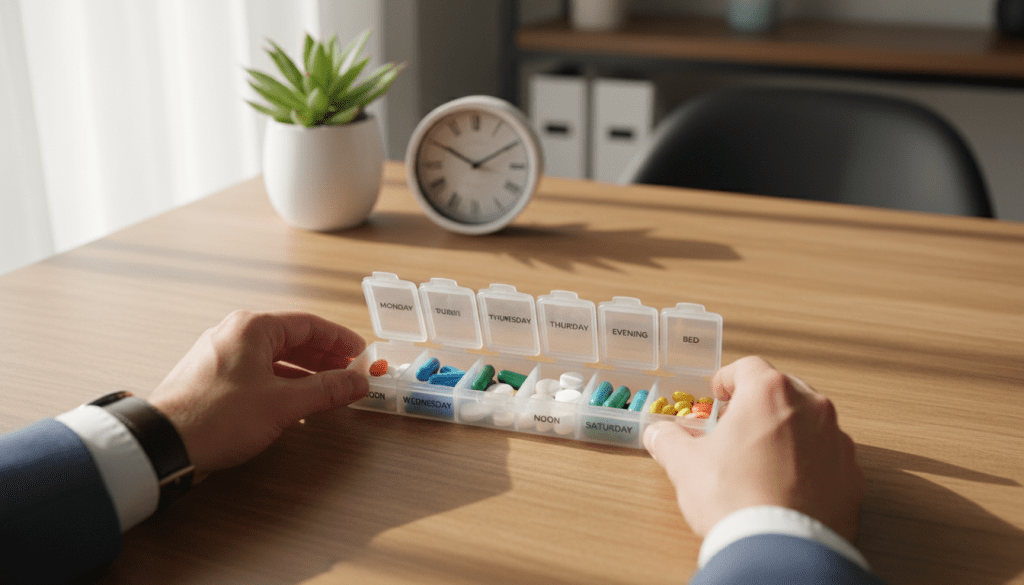
Overview of the Guide and Benefits
This compassionate approach transforms daily medicine routines from stressful chores into simple, reliable systems. You’ll discover how proper organization protects your family’s well-being.
The right system prevents dangerous mistakes while respecting independence. Consider these key benefits:
| Common Challenges | System Benefits | Impact on Health |
|---|---|---|
| Missed doses | Visual confirmation | Stable condition |
| Double-dosing risks | Clear compartments | Safety assurance |
| Confusion with multiple medicines | Organized scheduling | Better outcomes |
| Travel difficulties | Portable solutions | Consistent care |
“The peace of mind knowing my mother’s medications are organized properly lets me focus on enjoying our conversations instead of worrying about her health.”
For those managing complex regimens, exploring different organizer options can make a significant difference in daily healthcare routines.
Accessing the JoyCalls Signup Page for More Resources
Beyond physical organization, emotional support completes the care picture. The JoyCalls service provides daily check-in calls that work alongside your medicine system.
This AI companion reminds loved ones about their schedule while offering friendly conversation. Caregivers receive updates, creating a comprehensive support system that spans both physical and emotional needs.
Together, these approaches create a safety net that respects independence while ensuring consistent care.
how to set up pill organizer
Finding the perfect solution for daily medicine routines requires understanding the different options available. The right choice can transform a confusing process into a smooth, reliable system.
Understanding Different Types of Pill Organizers
Not all medication containers work the same way. Daily versions have compartments for morning, afternoon, evening, and bedtime doses. They’re ideal for consistent schedules throughout the day.
Weekly systems organize by day and remain popular for their simplicity. For complex regimens with multiple medications, monthly or 14-day options might be necessary.
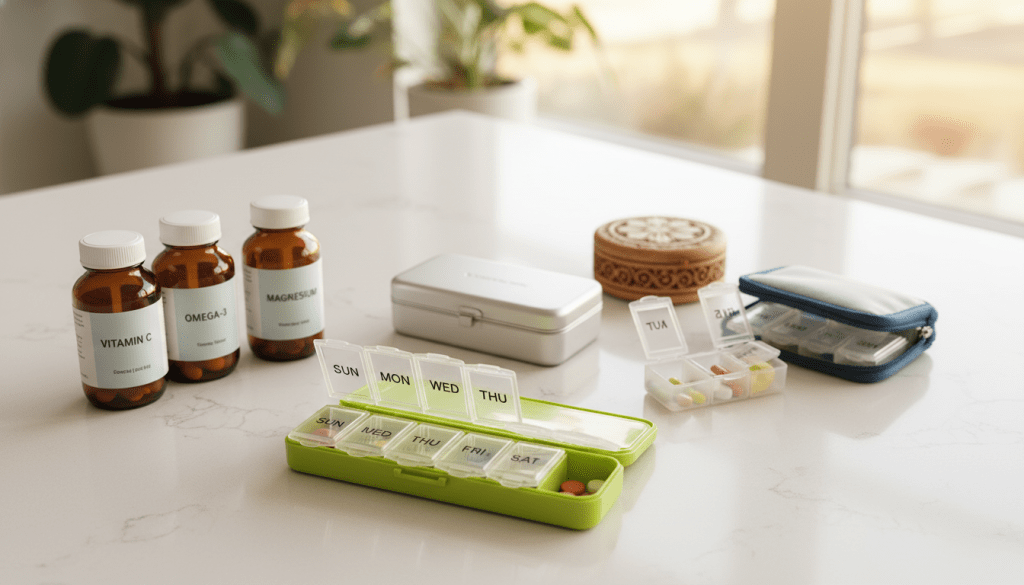
Consider physical features that support independence. Larger compartments help arthritic hands, while easy-open lids assist with limited dexterity. Clear labeling and color-coding make identification nearly foolproof.
Reliable choices include durable Port and Polish containers and moisture-proof Auvon iMedassist organizers. The Mimi Medcessories option adds dignity and style to daily routines.
Why Proper Organization Matters for Medication Management
Correct dosing prevents treatment setbacks and hospital visits. It protects the independence and quality of life that seniors deserve.
A well-planned system turns bottle confusion into clear management. It reduces anxiety and helps loved ones feel capable. Working with your healthcare provider ensures the regimen fits specific needs.
Thoughtful preparation creates a daily care ritual. It communicates that health and independence truly matter. For comprehensive guidance, explore this ultimate guide to medication containers.
If multiple people use these systems at home, choose different colors to avoid mix-ups. Most boxes aren’t child-safe, so store them out of children’s reach. This careful approach complements a complete caregiving strategy for peace of mind.
Preparing for Your Weekly Pill Planner Setup
Creating a safe space for organizing medicines begins with thoughtful preparation and the right environment. This ten-minute weekly ritual transforms potential stress into peaceful confidence.
Try JoyCalls Free
No app or new device needed. Start with a free 7-day trial.

Gathering Supplies and Setting Up a Clean Work Area
Choose a clean, flat surface with good lighting. The kitchen table often works perfectly. Spread out all your medicine bottles, your pill box, and the current medication list.
Wash your hands thoroughly before handling any medications. This small step prevents contamination and keeps everything safe.
Gather all necessary supplies in one place. You’ll need your weekly organizer, every prescription and over-the-counter medicine, and your healthcare provider’s current list. A disposable towel and cleaning supplies complete your setup.
Remember this crucial tip: Only include “standing medications” taken on regular schedules in your pill box. Keep “as-needed” medicines separate to avoid dangerous confusion about doses.
Reviewing Your Home Medication List and Dosage Instructions
Your Home Medication List is your trusted guide. Review it carefully before starting. You may need to clarify some details for consistency.
If the list doesn’t specify which day for weekly medicines, choose a consistent day like every Monday. Write this directly on your list to prevent confusion.
The same applies to timing. If instructions say “take daily” without specifying morning or evening, choose what fits your loved one’s routine best. Stick with this schedule every week.
Always follow your Home Medication List rather than bottle labels. Dosages and schedules change, and your list reflects the most current guidance from your healthcare provider.
Don’t hesitate to ask for help if needed. If arthritis makes opening bottles difficult, request easy-open caps from your pharmacy. If you’re unsure about anything, call your healthcare provider or invite family assistance. For comprehensive guidance, explore this ultimate guide to medication containers. This careful approach complements strategies for reducing fall risks when you can’t be there in person.
Step-by-Step Guide to Filling Your Pill Organizer
This careful process transforms scattered bottles into a week of guaranteed health security through systematic placement. You’re building a visual roadmap that eliminates daily guesswork.

Arranging Your Medications in the Correct Sequence
Line up your medicine bottles exactly as they appear on your Home Medication List. Place multiple containers of the same medication side by side. This simple organization prevents skipping or duplicating any medicine.
Work with one medication at a time. Fill all seven days’ worth before moving to the next one. This method prevents the errors that often happen when filling an entire day at once.
Check each bottle for pill strength. Calculate how many pills create the correct dose. Sometimes you’ll need two pills to equal the prescribed amount.
Dividing Doses Across AM and PM Compartments
Pay close attention to timing instructions. For once-daily morning medicines, place one dose in the morning compartment each day. For every-12-hour regimens, use both morning and evening spaces.
Mark specific days clearly for every-other-day medications. Your compartments become a visual schedule from Sunday through Saturday.
As you work, glance at how much medicine remains. Call for refills at least five days before running out. This prevents skipped doses while waiting for pharmacy preparation.
| Medication Type | Compartment Placement | Weekly Checkpoint |
|---|---|---|
| Once daily (morning) | AM compartment each day | Verify all 7 days filled |
| Twice daily | AM & PM compartments | Check 14 doses total |
| Every other day | Marked specific days | Confirm 3-4 doses weekly |
| As-needed meds | Keep separate from box | Not included in organizer |
Take a final moment to visually scan each day’s compartments against your list. This last check catches any missed doses. For detailed guidance, reference this comprehensive filling method from medical experts.
Remember, you’re creating a week of security and peace of mind. This system works beautifully with modern check-in solutions for complete care coverage.
Tips and Best Practices for Medication Management
What separates effective medication management from problematic systems often lies in the thoughtful practices we establish. These small habits transform daily medicine routines into reliable health protection.
Consistent routines create peace of mind for families. They turn potential stress into confident daily rituals.
Ensuring Accuracy When Filling Your Organizer
Accuracy protects health every time doses are taken. Work slowly when you fill pill containers for the week ahead.
Choose a quiet space without distractions. Double-check each medication against your list. This careful approach prevents dangerous mistakes.
Watch for common errors like overfilling compartments. Always check expiration dates before transferring medicine. Keep medications separate that shouldn’t be combined.
Update your system immediately if your healthcare provider changes prescriptions. These simple checks create a reliable safety net.
Maintaining a Consistent Routine with Reminders and Records
Consistency makes medication management automatic. Take medications at the same times every day.
Set multiple reminders—phone alarms, sticky notes, visual cues. Track each dose in a simple journal next to your pill box.
This record helps you remember if today’s medicine was taken. It provides valuable information for medical appointments.
Refill your system on the same day each week. For travel, consider duplicate containers or sturdy options. These practices work beautifully with comprehensive medication guidance for complete care.
Beyond Setup: How to Keep a Weekly Pill Planner Safe, Flexible, and Stress-Free in Real Life

Setting up a weekly pill planner is a smart first step. But the real challenge usually begins after the planner is filled.
Real life is not perfectly predictable. A doctor changes a dosage. A prescription refill runs late. A senior sleeps in, feels nauseous, leaves for the weekend, or cannot remember whether Tuesday morning’s pills were taken. Families often assume that once a pill box is organized, the medication routine is “handled.” In reality, a pill planner works best when it is part of a larger, calm, practical system.
That is especially true for seniors who value independence but also want less confusion, fewer last-minute decisions, and more confidence throughout the week. A weekly organizer should not become another source of pressure. It should make daily life simpler.
The goal is not perfection. The goal is to create a routine that is dependable even on off days.
This section will help readers build that second layer of protection: a real-life medication system that still works when plans change, memory slips happen, or a routine gets interrupted. These strategies are simple, highly actionable, and designed to reduce stress for both older adults and family caregivers.
Think of the Pill Planner as a Weekly Command Center, Not Just a Box
Many people treat a pill organizer as a storage item. It is better to think of it as a command center.
The planner is where the week’s medication routine becomes visible. It can show what has been taken, what is coming up, what needs a refill soon, and what might require a question for the doctor or pharmacist. When readers shift to this mindset, the organizer becomes much more useful.
A good command center should answer five questions quickly:
1. What medications are scheduled today?
A senior should be able to glance at the planner and know what belongs in the morning, afternoon, or evening. If the organizer includes multiple times per day, those sections should be easy to understand without extra mental effort.
2. What changed this week?
Any recent medication change should be obvious. If a doctor has stopped a drug, lowered a dose, or added something new, the weekly setup should reflect that clearly. The planner should never quietly drift away from the current treatment plan.
3. Is anything running low?
The weekly setup is one of the best times to spot refill problems early. If there are only a few tablets left in the bottle, that is not a note for “later.” It is a task for today.
4. Is there anything unusual happening this week?
Travel, appointments, fasting instructions, procedures, sleep schedule changes, or caregiver absences can all affect medication routines. A weekly pill setup should take these into account before the week begins.
5. Who should be contacted if something seems off?
Every medication system should have a short list nearby: primary doctor, pharmacy, emergency contact, and at least one family member or caregiver. When confusion happens, no one should have to search through a phone for the right number.
This shift in thinking matters because older adults do better with systems that reduce decisions. A well-run planner does exactly that. It turns medication management into a repeatable routine instead of a daily puzzle.
Build a Weekly Medication Reset Routine

One of the most effective things a senior or caregiver can do is create a dedicated weekly “medication reset.”
This is different from simply filling the pill planner. A reset is a short appointment with the week ahead. It helps catch mistakes before they become problems.
A strong reset can be done in 10 to 20 minutes and should happen on the same day each week. Many families choose Sunday evening or Monday morning, but the specific day matters less than consistency.
What to do during the weekly reset
Start with the planner and all current medication bottles. Then walk through this order:
Review the upcoming week
Look at any known disruptions:
- Doctor visits
- Lab tests
- Family outings
- Religious fasting
- Overnight stays away from home
- Early departures or late nights
- Times when help may be unavailable
The purpose is simple: do not fill the planner as if every day will look the same when you already know it will not.
Check the medication list against the bottles
Make sure the current list matches the actual medications in the home. This is important because changes often happen after appointments, hospital visits, or specialist recommendations. Many medication errors begin when old bottles remain in the cabinet and new directions are remembered only loosely.
Fill the planner slowly
There is no reward for speed here. Use a calm, repeatable method. If needed, take a break midway rather than rushing.
Count remaining doses
This step is often skipped, but it is one of the most valuable. While filling each section, estimate whether enough medication is available for the next 7 to 14 days. If not, put in the refill request right away.
Write down one or two “watch items”
These are anything that needs follow-up, such as:
- “Only 4 blood pressure pills left”
- “New nighttime medication seems to cause dizziness”
- “Need to ask pharmacist whether this can be taken with food”
- “Upcoming eye appointment on Thursday”
This small note keeps health management proactive without becoming overwhelming.
Create a “What If Something Changes?” Plan Before It Happens
A weekly pill planner becomes far more reliable when readers prepare for problems before they happen.
Seniors are often told to “be careful” with medications, but that advice is too vague to be useful. Practical systems work better than good intentions. The right question is not, “What if I make a mistake?” The right question is, “If something changes, what will I do next?”
That answer should already be clear.
How to handle medication changes safely
Medication changes are one of the biggest reasons pill planners become inaccurate.
A doctor may change the strength, stop one medication, or move a dose from morning to bedtime. When that happens, the planner should not simply be adjusted casually and then forgotten. It should be updated in a deliberate way.
Best practice for any medication change
When a new instruction is given:
Pause before filling more doses
Do not continue using assumptions from the previous week.
Update the written medication list immediately
Do not rely on memory. Even a very sharp adult can mix up details after a busy appointment or phone call.
Remove discontinued medications from the regular setup area
Old bottles sitting beside current ones are an invitation for confusion. Move them to a separate bag or shelf until they can be safely disposed of, according to pharmacy guidance.
Mark the start date of the change
This helps everyone remember when the new plan began. It also makes it easier to notice patterns if a side effect appears.
Ask one clarifying question if anything feels unclear
Examples:
- Should this still be taken with the other morning pills?
- Is this replacing the old medication or being added to it?
- What should happen if one dose is missed?
- Should this be taken with food?
- Is it okay to place this in a pill organizer?
That last question matters more than many people realize. Some medications should stay in original packaging because of moisture sensitivity, light protection, or special handling instructions. If there is any doubt, the pharmacist should confirm before the medication goes into the organizer.
What seniors should do if they miss a dose or are not sure whether they took one
This is one of the most common stress points in any medication routine.
A senior opens the pill planner and cannot remember whether the morning compartment was already taken. Or a family member gets a call saying, “I think I forgot my pill, but I’m not sure.”
That moment can create panic. The answer should never be guesswork.
The first rule: never “double up” just to be safe
When someone is unsure whether a dose was taken, taking an extra dose without checking can be dangerous. That is especially true for heart medications, diabetes medications, blood thinners, sleep aids, and pain medicines.
A calm response plan works better than memory
Instead of relying on memory in the moment, readers should create a simple response system:
Step 1: Stop and check the planner
Look carefully at the correct day and time section.
Step 2: Check a dose log, if one is being used
A tiny notebook, calendar checkmark, or simple printed chart can make a big difference. Some seniors prefer crossing off each completed dose. Others like placing a small check beside morning and evening.
Step 3: Check the time
If the realization happens close to the scheduled time, the response may differ from discovering it many hours later.
Step 4: Follow the medication-specific instruction
Some missed doses can be taken later. Others should be skipped. The correct response depends on the medication.
Step 5: Call the pharmacist or doctor when in doubt
This is not overreacting. It is smart medication management.
For seniors who experience this kind of uncertainty often, the deeper issue is not memory alone. It usually means the system needs one more layer of support. That might be a written dose log, a reminder call, a timer, or a routine where medication is always taken in the same chair, at the same table, with the same meal.
Consistency reduces uncertainty.
Prepare a small backup kit for days away from home
A weekly pill planner works best when it reflects real movement, not just life inside the house.
Many older adults leave home for lunch with family, worship services, community programs, doctor visits, or overnight stays. If medication timing depends on being home at exactly the right moment, the system is fragile.
A much better approach is to prepare a small backup plan.
What a medication backup kit can include
A simple pouch or small case can hold:
- One day’s essential doses, if appropriate
- A current medication list
- Pharmacy phone number
- Doctor’s name
- Allergy information
- Emergency contact number
This does not replace the weekly planner. It supports it.
For seniors who travel even occasionally, it is wise to prepare for:
- Delays returning home
- Traffic after appointments
- Extended family visits
- Forgotten doses during outings
The backup kit should be reviewed weekly during the medication reset. Anything expired, outdated, or no longer prescribed should be removed.
Reduce decision fatigue by linking medication to existing routines
A pill planner is only as strong as the habit attached to it.
One reason medication routines fail is that they are treated as separate tasks floating in the day. Separate tasks are easier to postpone, forget, or second-guess. Seniors usually do better when medication is linked to an existing rhythm.
This principle is simple: attach the medication moment to something that already happens.
Good anchors for medication routines
Depending on the prescription instructions, these may include:
- After brushing teeth
- With breakfast
- After the morning news
- With afternoon tea
- After dinner cleanup
- Before evening prayer
- Right before setting the bedside lamp off
The best anchor is one that already happens consistently and feels natural. It should not require extra effort to remember.
Why this works
As people age, routines become especially powerful. A predictable sequence can carry the memory load. Instead of asking, “Did I take my pill today?” the mind learns, “When breakfast happens, I take the morning compartment.”
That is a much easier pattern to maintain.
Keep the system senior-friendly, not caregiver-impressive
Sometimes medication systems become so detailed that they look organized but feel exhausting.
A setup may include multiple labels, notes, charts, alarms, and color systems, but if the older adult finds it confusing or burdensome, it will not hold up over time. The best routine is the one the senior can actually live with.
Signs the system is too complicated
Watch for these red flags:
- The senior hesitates every time they open the planner
- There are too many reminder tools competing at once
- The routine only works when someone else is present
- The organizer is technically correct but emotionally stressful
- The person avoids asking questions because they feel embarrassed
A caring system preserves dignity. It does not make the person feel managed.
Better approach: simplify until the next step is obvious
Each part of the routine should answer one question clearly:
- Where are today’s doses?
- What time do I take them?
- How do I know I already took them?
- Who do I call if something seems wrong?
If those answers are easy to find, the system is doing its job.
Turn the weekly setup into a safety review, not just an organizing task
One of the most overlooked advantages of a pill planner is that it creates a regular chance to notice changes in health.
Because the medication routine happens weekly, it can also become the moment when seniors or caregivers ask a few short safety questions:
Weekly safety questions to ask
- Has anything been causing dizziness?
- Is there new swelling, nausea, constipation, or unusual sleepiness?
- Is one medication suddenly harder to swallow?
- Has appetite changed?
- Has the person become less steady after taking evening medication?
- Is there confusion about one specific pill?
These are not minor details. Small issues often show up at home before they are mentioned at an appointment.
Writing down patterns can help the doctor make better decisions later. Seniors do not need to keep a long journal. A short note is enough:
- “Felt lightheaded after lunch meds on Tues/Wed”
- “New pill seems to upset stomach”
- “Night pills make me groggy in the morning”
Those observations are practical, useful, and easy to share during a medical visit.
A simple system is more protective than a perfect one nobody follows
Many families worry they are “not doing enough” unless the medication system is highly advanced. But safety often comes from consistency, not complexity.
A senior does not need an elaborate setup to stay organized. They need a routine that is clear, repeatable, and forgiving when real life interrupts.
That means:
- One consistent weekly reset
- One current medication list
- One refill habit
- One plan for changes
- One method to confirm whether doses were taken
- One backup option for days away from home
- One contact list that is easy to find
That kind of structure creates confidence.
And confidence matters. When medication routines feel calm and manageable, seniors are more likely to stay engaged in their own care. Families worry less. Daily life feels less medical and more livable.
That is the real success of a weekly pill planner. Not just that it holds pills, but that it supports independence without leaving safety to chance.
How Seniors and Caregivers Can Build a Mistake-Proof Medication Routine Together
A weekly pill planner can be a powerful tool for independence. But for many older adults, the real question is not just how to fill it. The real question is: how do you make sure the system keeps working week after week, especially when memory slips, routines change, stress rises, or more than one person is involved?
This is where many medication routines begin to break down.
A daughter fills the planner on Sunday, but her father forgets whether he took Tuesday morning’s dose. A spouse reminds their partner every evening, but eventually both of them assume the other is “handling it.” A senior wants to stay independent, but quiet confusion builds over time because they do not want to seem forgetful. In many homes, the issue is not a lack of caring. It is a lack of structure.
Medication routines become safer when responsibilities are clear, communication is simple, and the process is easy enough to follow even on tired or stressful days.
That is especially important for seniors who are balancing multiple medications, different dosing times, changing prescriptions, or mild memory challenges. It is also essential for caregivers who want to help without becoming overbearing, controlling, or exhausted.
The most effective medication routine is not one that depends on constant vigilance. It is one that makes the next right step obvious.
This section focuses on exactly that: how seniors and caregivers can work together to build a shared system that protects safety, reduces confusion, and supports dignity.
Start With One Simple Rule: Shared Medication Support Needs Clear Roles
Many families make the mistake of assuming that “everyone knows what to do.” That assumption creates gaps very quickly.
When no one has clearly defined responsibilities, small details start to slip:
- The refill request is not placed because each person thought someone else would do it.
- A medication change is not written down.
- The weekly planner is filled using an outdated bottle.
- The senior gets too many reminders from different people and starts tuning them out.
- A missed dose is discovered later, but no one knows when it happened.
A safer system starts by deciding who is responsible for which part of the process.
This does not need to feel formal or clinical. It simply needs to be clear.
The four medication roles every household should define
Even if one person does almost everything, these categories help prevent confusion.
1. Who fills the weekly pill planner?
This should be one primary person. If multiple people take turns, that can work, but only if they follow the same written medication list and method. Too many “fillers” often leads to inconsistency.
2. Who confirms medication changes after appointments?
Whenever a doctor changes a medication, someone should be responsible for updating the list, checking the prescription label, and making sure the next weekly fill reflects the change.
3. Who watches for side effects, confusion, or routine problems?
Sometimes the senior notices first. Sometimes a spouse or adult child notices a pattern like drowsiness, dizziness, or missed evening doses. The important part is that someone is paying attention.
4. Who handles refills and pharmacy communication?
This may be the same person who fills the planner, but it should not be left vague. Running out of medication is one of the most preventable causes of routine breakdown.
When these roles are named clearly, the entire system feels lighter. Seniors do not have to silently carry all the responsibility. Caregivers do not have to hover. Everyone knows what part they own.
Protect Independence While Still Adding Support
This balance matters deeply.
Older adults often want help with medication routines, but they do not want to feel managed like a child. Families, on the other hand, may become anxious and overcorrect by checking too often, repeating reminders, or taking over entirely.
Neither extreme works well.
A medication routine should support the senior’s independence whenever possible, while quietly adding enough structure to make the routine safer.
The best support often feels invisible
Good medication support does not always look like constant supervision. Often it looks like:
- placing the planner in the same visible location every week
- using the same fill day and review routine
- keeping a printed medication list nearby
- sending one calm reminder at the same time daily
- checking in only when something changes or seems off
This approach respects the person’s ability while still reducing the chance of mistakes.
Ask: “What level of help is actually needed right now?”
Not every senior needs the same level of support.
Some older adults only need:
- a weekly refill setup
- help tracking changes
- an occasional reminder for refill requests
Others may need:
- daily prompts
- dose confirmation
- caregiver follow-up after appointments
- monitoring for missed doses or confusion
The right level of support is the one that matches the person’s current reality, not the one the family wishes were true or fears might happen someday.
A caring routine is built on honesty, not assumptions.
Use One Written Medication List as the Single Source of Truth
If there is one tool every medication routine should have besides the pill planner itself, it is a current written medication list.
This list is what keeps the system grounded when memory, instructions, or verbal updates become fuzzy.
Without a written list, families often rely on:
- memory
- bottle labels from different dates
- text messages from appointments
- verbal instructions remembered slightly differently by two people
That is how medication errors grow.
What the written list should include
The list does not need to be complicated. It just needs to be current and easy to read.
Include:
- medication name
- dose or strength
- when it is taken
- how it is taken
- purpose, if helpful
- special instructions
- prescribing doctor, if relevant
Examples of special instructions:
- take with food
- take at bedtime
- do not crush
- take only as needed
- keep in original bottle
- separate from other medication by two hours
This list should be updated any time a medication changes.
Where to keep the list
A good medication list should live in more than one place:
- near the weekly pill planner
- in the senior’s wallet or bag
- with the primary caregiver
- in a phone photo or note
- available for doctor visits or emergencies
When everyone refers to the same list, confusion drops sharply.
Stop Relying on Verbal Handoffs Alone
Verbal communication is helpful, but it should not be the only system.
Families often say things like:
- “The doctor changed one of her pills.”
- “Dad said he doesn’t take that one anymore.”
- “I think the pharmacy gave him a new dose.”
- “We moved that one to nighttime.”
The problem is not that people are careless. The problem is that spoken information fades, changes, or gets remembered differently later.
Better than verbal updates: use a written handoff habit
Any time something changes, write it down immediately.
A simple note is enough:
- “Started 5 mg on April 14 instead of 10 mg”
- “Stopped blue capsule per cardiology visit”
- “Now take after dinner, not before breakfast”
- “Pharmacist said this stays in bottle, not in planner”
This small habit creates continuity. It protects the senior when multiple people are helping, and it protects caregivers from having to remember every detail perfectly.
Build a Routine That Helps With Memory Without Creating Shame
Medication problems are often treated as memory problems alone. But many seniors who miss doses are not dealing with severe memory loss. They are dealing with normal interruptions, inconsistent routines, fatigue, stress, hearing issues, poor sleep, vision challenges, or simple uncertainty.
That is why the system matters so much.
A better routine does not say, “Just remember better.” It says, “Let’s make it easier to know what happened.”
Helpful supports that reduce memory load
These are especially useful for seniors who are mostly independent but benefit from a little extra structure:
Keep the planner in the same place every day
Moving it around increases mental effort and creates uncertainty.
Match doses to regular daily events
Breakfast, brushing teeth, evening tea, and bedtime routines are powerful anchors.
Use a visible completion method
Examples:
- checkmark on a printed daily sheet
- turning over a reminder card after the dose
- marking a calendar
- one daily text confirmation to a caregiver
The goal is not surveillance. It is clarity.
Avoid multiple people giving random reminders
Too many reminders from different directions can create irritation and confusion. A single reliable reminder system works better.
Use language that protects dignity
This matters more than many families realize.
Instead of:
- “Did you forget again?”
- “You never remember your pills.”
- “You can’t manage this by yourself.”
Try:
- “Let’s make this easier.”
- “Would a simple check-off help?”
- “Let’s set this up so you don’t have to keep it all in your head.”
- “We can make the routine more reliable without making it complicated.”
Seniors respond better when support feels collaborative rather than corrective.
Create a Daily Confirmation System That Is Easy to Maintain
One of the biggest sources of stress is uncertainty: “Did I already take it?”
A pill planner helps, but some seniors still feel unsure, especially if they open the compartment and get distracted, or if someone else helped earlier in the day.
That is where a daily confirmation system becomes useful.
What makes a good confirmation system?
It should be:
- quick
- obvious
- repeatable
- low effort
- easy enough to continue long term
Practical options for confirmation
A printed weekly medication check sheet
This works well for seniors who like paper and routine. Morning, afternoon, and evening boxes can be checked off after each dose.
A daily phone call or message
A caregiver can send one simple message such as: “Good morning — did you take your breakfast meds?” This works best when it is calm and consistent, not nagging.
A dose card placed near the planner
The card might simply say:
- Morning taken
- Evening taken
The senior flips or marks it after the dose.
A notebook next to the planner
A short log with the date and time can be enough. It does not need to be detailed to be effective.
The best method is the one the senior is willing to use consistently.
Plan Ahead for “Off Days,” Not Just Ideal Days
Medication systems often fail because they are designed around a perfect routine.
But seniors have off days, just like everyone else.
There may be:
- poor sleep
- low appetite
- a stressful appointment
- a change in caregiver availability
- grief, fatigue, or illness
- a day when concentration is simply lower than usual
A good medication system should still work on those days.
Ask these questions in advance
- What happens if breakfast is late?
- What happens if a doctor appointment runs long?
- What happens if the senior stays with family overnight?
- What happens if the person feels too tired to sort out the schedule?
- What happens if the regular caregiver is unavailable for two days?
The answers should not depend on improvisation.
Create an “off day plan”
This can be very simple:
- keep the medication list visible
- know which contact to call with questions
- have a backup reminder person
- pack an overnight medication pouch when needed
- write down any confusion right away rather than guessing
Planning for these moments does not make the routine feel fragile. It makes it resilient.
Use Appointments as Medication Review Opportunities
Doctor visits are one of the best times to strengthen the weekly pill planner routine, but many families do not use them strategically.
Instead of only reacting to problems, seniors and caregivers can use visits to review the medication system itself.
Smart questions to ask at appointments
These questions are especially helpful:
- Is this medication still necessary?
- Can any of these be simplified?
- What should we do if a dose is missed?
- Is this safe to place in a weekly pill organizer?
- What side effects should we watch for at home?
- Is there a better time of day to take this?
- Are any of these likely to cause dizziness or sleepiness?
These are practical questions, not “extra” questions. They help the medication routine become safer and easier to follow.
Bring the actual medication list
Do not rely on memory during appointments. Bring the current list, and if possible, compare it against any printed visit summary before leaving. Small discrepancies are easier to fix immediately than days later.
Watch for Signs the Current Routine Needs an Upgrade
A pill planner system should not stay frozen forever. Needs change.
A senior may start out doing very well with a basic weekly setup, but later show signs that a stronger system is needed.
Signs the routine may need more support
Look for patterns such as:
- repeated uncertainty about whether doses were taken
- frequent refill delays
- medication compartments left full unexpectedly
- growing confusion after prescription changes
- side effects being noticed late
- increasing dependence on memory alone
- a caregiver feeling overwhelmed or constantly “on alert”
These signs do not mean failure. They mean the system needs adjustment.
That adjustment might include:
- a more structured daily check-off method
- a shared refill calendar
- one primary medication coordinator
- reminder technology
- pharmacist review
- more direct caregiver involvement
A good system evolves as needs change.
Prevent Caregiver Burnout by Simplifying the Process

Caregivers often focus so strongly on protecting the senior that they forget to protect the routine from becoming too demanding.
When the medication system depends on one exhausted person remembering everything, the risk of mistakes actually rises.
Caregiver support is a safety issue too
A burned-out caregiver may:
- forget refill timing
- rush the weekly fill
- lose track of changes
- communicate unclearly with other family members
- feel resentment or anxiety around medication time
That is why medication routines should be designed to reduce mental load, not increase it.
Ways to reduce caregiver strain
Use one refill day per week
Instead of constantly checking bottles at random times, review supply during the weekly pill setup.
Keep all medication information in one place
Do not scatter details across texts, sticky notes, and memory.
Use one primary communication method
A shared notebook, printed list, or family group message can work well.
Avoid over-monitoring
If the senior is still capable of handling part of the routine, let them keep that role. Caregiving works best when support is targeted, not total by default.
Make the Home Setup Safer and Easier to Use
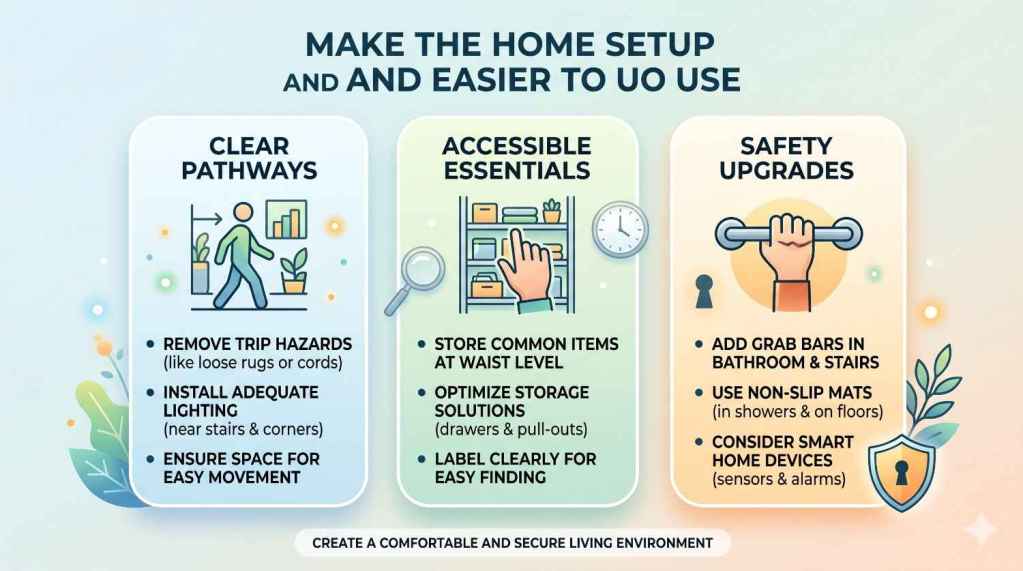
Medication routines are affected by the physical environment more than people realize.
A beautifully organized system still fails if the person cannot read the labels well, open compartments comfortably, or reach the planner safely.
Home setup matters
Ask:
- Is the lighting good where the planner is used?
- Can the senior read the labels easily?
- Are the compartments easy to open with arthritis or hand weakness?
- Is the setup area quiet and free from distractions?
- Is the planner stored away from moisture, heat, or accidental mix-ups?
The right environment reduces errors before they happen.
Small physical changes can make a big difference
Consider:
- a brighter lamp near the medication area
- a stable chair for weekly setup
- a magnifier if labels are hard to read
- a tray or mat to keep supplies from sliding
- clear separation between current medications and old ones
These changes may seem minor, but they support consistency and confidence.
The Best Medication Routine Feels Calm, Not Constantly Urgent
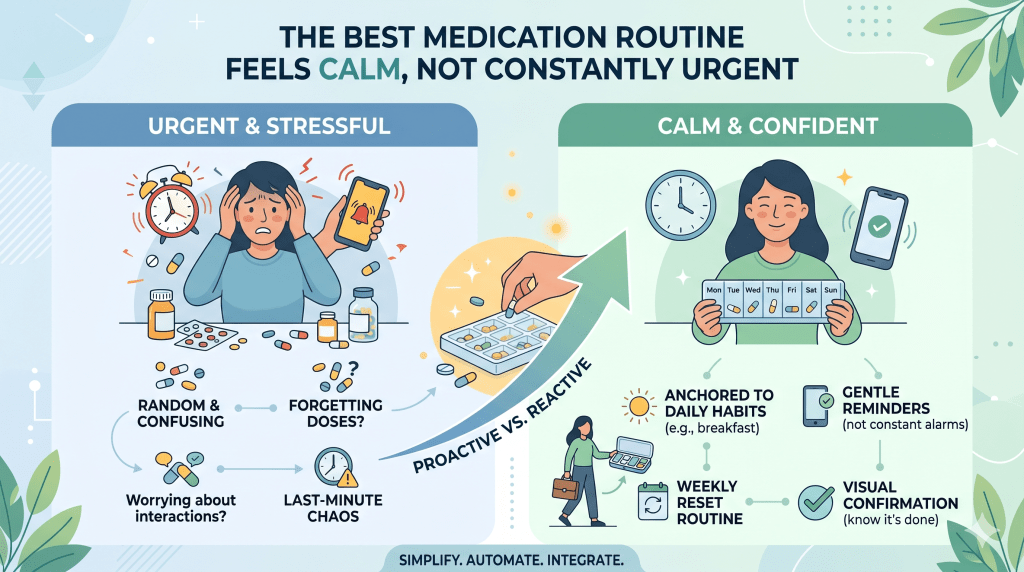
This is the standard families should aim for.
A healthy medication routine should not feel like a daily emergency, a repeated argument, or an exhausting guessing game. It should feel steady. Predictable. Understandable.
That does not mean problems never happen. It means the system is strong enough to catch them early and respond calmly.
For seniors, that kind of routine protects more than health. It protects dignity, independence, and peace of mind.
For caregivers, it reduces the emotional strain of always wondering whether something was missed.
A weekly pill planner is most effective when it becomes part of a shared routine built on clarity, respect, and practical follow-through. The weekly fill matters, but what matters just as much is what surrounds it: written information, clear roles, gentle reminders, refill habits, and a system that still works on ordinary imperfect days.
That is what makes medication management safer in the real world.
Leveraging Technology: From Traditional Pill Boxes to Automated Systems
When the simple pill box no longer feels like enough protection for your loved one’s complex medication needs, technology offers a comforting hand. Traditional containers work beautifully for straightforward routines. But complex schedules demand smarter solutions.

Comparing Manual Filling to Using the Hero Dispenser and App
Manual organization requires weekly attention and constant vigilance. The Hero system transforms this process completely. It stores up to 90 days of ten different medications.
This automated approach dispenses the correct dose at precisely the right time. No more guessing about morning or evening compartments. The technology handles intricate schedules that challenge traditional methods.
For those interested in building custom smart dispensers, the Hero provides a ready-made solution. It eliminates the stress of manual management while maintaining personal independence.
Benefits of Integrated Adherence Tracking and Refill Reminders
The real magic lies in the comprehensive tracking features. The system monitors every dose taken or missed. Caregivers receive immediate notifications if medicine isn’t taken.
This creates valuable health records for medical appointments. Doctors receive accurate data instead of relying on memory. The system even manages refill reminders before prescriptions run out.
These technological advances work alongside human care. They complement services like an AI companion for senior loneliness, creating complete support networks. Families gain peace of mind knowing medications are managed reliably.
Conclusion
That reassuring click of the pill box closing each week represents more than just organized medicine—it’s peace of mind made tangible. You’ve transformed a source of daily worry into a reliable system that protects your loved one’s health and independence.
This simple approach to medication management prevents dangerous mistakes while respecting autonomy. The ten minutes spent each week become an investment in safety that pays off every single day. You can now take control with confidence.
Remember, support is always available. For comprehensive care that complements your organization system, explore the emergency planning strategies that work alongside daily routines. Consider visiting the JoyCalls signup page to add friendly check-ins that provide companionship and medication reminders.
FAQ
What is the best way to start organizing my medications for the week?
How do I handle taking pills at different times of the day?
Can a weekly pill planner help if I travel often?
What should I do if my medication regimen changes?
Are there tools that can help beyond a standard pill box?

Ana Avila, PhD, is a healthcare and technology writer with deep expertise in artificial intelligence, senior care innovation, and the practical use of AI in healthcare operations. Her work focuses on how emerging technologies can improve the daily experience of older adults, support overburdened care teams, and help senior living communities deliver safer, faster, and more personalized support.
Dr. Avila’s academic background is rooted in health informatics, aging care systems, and applied artificial intelligence. Her doctoral work focused on how digital health tools, predictive analytics, and AI-assisted communication systems can be used to improve care coordination, reduce operational delays, and identify early signs of risk among older adults. Her training gives her a rare ability to understand both the technical side of AI and the human realities of healthcare delivery.
Over the years, Ana has developed a specialized body of work around AI in senior living. She writes about how senior care providers can use intelligent systems to manage resident requests, answer routine questions, support family communication, improve after-hours coverage, and detect patterns that may indicate loneliness, confusion, distress, or unmet needs. Her articles often examine the gap between what senior living teams are expected to deliver and what traditional staffing models can realistically support.
Ana’s healthcare expertise is especially focused on the operational side of care. She has written extensively about call handling, resident engagement, front desk workflows, triage systems, caregiver communication, care escalation, and the hidden administrative burden placed on senior living staff. Her work explains how AI can help reduce repetitive tasks, organize incoming requests, prioritize urgent issues, and give human caregivers more time for meaningful resident interaction.
At the same time, Ana is careful not to present AI as a replacement for human care. A consistent theme in her writing is that technology should support relationships, not weaken them. She argues that the best AI systems in healthcare are not the ones that simply automate the most tasks, but the ones that make care teams more responsive, families more informed, and residents more supported. Her perspective is grounded in the belief that senior living technology must be designed around dignity, trust, privacy, and compassion.
Ana has also written widely on the ethical use of AI in healthcare. Her work discusses the importance of human oversight, transparent escalation rules, resident consent, data minimization, and responsible use of sensitive health and behavioral information. She often emphasizes that AI systems used around older adults must be easy to understand, carefully monitored, and designed with the limitations and needs of real residents in mind, including those with memory loss, hearing challenges, mobility issues, or social isolation.
Her writing has been used as a reference point in discussions about aging, elder care technology, digital health, and AI-supported senior living. She has published 12 papers on journals like JAMA (Journal of the American Medical Association), The BMJ (British Medical Journal), SSRN and more. Some of her articles have also been cited by Wikipedia editors as supporting references on topics related to healthcare, aging, and technology. This has helped position her work as a useful educational resource for readers looking to understand how AI can be applied in real care environments.
In addition to her long-form writing, Ana has contributed research-based commentary, professional explainers, and practical guidance for healthcare operators, senior living decision-makers, and technology teams building products for older adults. Her work combines research literacy with operational practicality. She is able to take complex subjects such as natural language processing, predictive analytics, conversational AI, and care automation, and explain them in a way that is accessible to executives, caregivers, families, and non-technical readers.
Ana’s strongest area of expertise is the intersection of artificial intelligence and senior living operations. She understands that senior care communities face a difficult combination of rising resident expectations, staffing pressure, family communication demands, and increasing care complexity. Her writing explores how AI can be used to ease those pressures through smarter communication systems, faster response workflows, proactive check-ins, and better visibility into resident needs.
Her approach is both evidence-informed and deeply human. She studies AI through the lens of real-world care delivery: whether a resident gets help faster, whether a family member receives a clearer update, whether a caregiver avoids unnecessary administrative work, and whether a senior living team can identify a concern before it becomes a crisis. This practical focus makes her work especially relevant for organizations that want to adopt AI responsibly rather than simply follow technology trends.
Ana Avila is regarded as a thoughtful voice on the future of AI in healthcare and senior living. Her expertise combines academic training, research-driven analysis, operational understanding, and a strong commitment to humane technology. Through her writing, she helps healthcare leaders and senior living communities understand not only what AI can do, but how it should be used to improve care, preserve dignity, and strengthen the human relationships at the center of aging support.