

What if the single biggest worry for your aging parent could be replaced with a feeling of genuine connection?

That nagging thought in the back of your mind is all too familiar. You’re focused on work, but your heart is miles away. Is everything okay at home? Did they remember their medication? It’s a quiet concern shared by countless families.

For many older adults maintaining their independence, days can stretch long without conversation. This isn’t just about safety—it’s about the human need for contact. A reliable system provides more than alerts; it offers a reminder that someone cares.

Modern solutions now bridge this gap beautifully. JoyCalls acts as a friendly, AI-powered phone companion. It makes daily calls that feel like a chat with a friend, requiring no new apps or devices for your loved one. Meanwhile, you receive gentle summaries, giving you true peace of mind.

Building this supportive framework is easier than you think. Exploring essential check-in services is a great first step. This guide will show you how to create a compassionate and effective daily check-in system that honors independence while ensuring well-being.

Key Takeaways

  • A consistent check-in system blends safety monitoring with meaningful social connection.
  • Technology can provide warm, daily contact without complicating your loved one’s life.
  • Regular communication significantly reduces feelings of isolation for older adults.
  • Automated summaries and alerts offer reassurance to busy family members.
  • A well-planned routine supports independence while ensuring help is always available.
  • Simple solutions can integrate seamlessly into existing daily habits.

Understanding the Importance of Daily Senior Check-Ins

For many families, the decision for an older adult to maintain their home is a source of both pride and quiet anxiety. Statistics show that nearly a quarter of older individuals manage their households independently. This reality makes consistent contact more than a nicety—it’s a cornerstone of well-being.

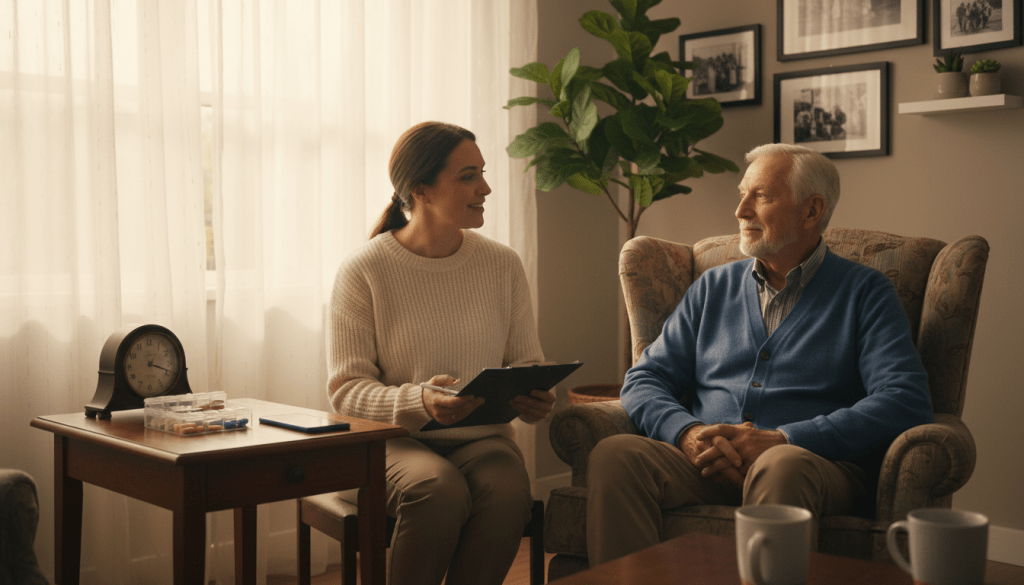
A warm, inviting living room scene featuring a caring caregiver, a senior individual, and various safety-check elements. In the foreground, the caregiver, dressed in professional casual attire, is holding a clipboard and smiling kindly at the senior, who is seated comfortably in an armchair, looking engaged and reassured. On a nearby table, safety check items like a medication organizer, a mobile phone, and a clock are visible. In the middle ground, soft natural light filters through a window adorned with sheer curtains, creating a peaceful atmosphere. The background shows tasteful décor, such as family photos and indoor plants, enhancing a sense of home and connection. The overall mood is one of care, trust, and community support, emphasizing the importance of daily check-ins for seniors living alone.

Enhancing Safety and Prompt Emergency Response

A daily connection acts as a powerful prevention tool. It’s not just about responding to an emergency; it’s about noticing small changes in a person’s voice or routine that signal a larger health risk. A missed medication or a slight stumble can be caught early, turning a potential crisis into a manageable situation.

This proactive approach to safety provides a crucial window for healthcare assessments. Regular checks allow caregivers to monitor well-being and ensure proper care, much like the routine health monitoring found in supportive communities.

Fostering Emotional Wellness and Connection

The value of these touchpoints goes far beyond physical safety. The emotional support offered by a daily chat is immense. That familiar voice asking, “How are you feeling?” fights the quiet that can sometimes feel overwhelming.

This consistent connection is vital to wellness, helping to combat social isolation and its effects on both mental and physical health. It reinforces a person’s independence, knowing they are cared for but never controlled. This balance gives families profound peace of mind.

The Role of Technology and AI in Senior Monitoring

Imagine a friendly voice reaching out each day, offering companionship while quietly ensuring everything is okay. Modern technology has transformed how we provide care for older adults, moving beyond complex gadgets to simple, effective solutions.

How AI-Powered Check-Ins Work

JoyCalls uses advanced AI to create warm, natural conversations through regular phones. No smartphones or apps required—just the landline or basic cell phone your loved one already uses. The system calls at scheduled times for genuine chats that feel like talking with a caring friend.

This innovative approach to monitoring respects independence while providing essential safety alert capabilities. Unlike traditional alert systems that rely on wearable devices, this solution integrates seamlessly into daily life.

The Benefits of Using JoyCalls for Daily Checks

Families receive gentle summaries after each call, highlighting mood changes or health concerns. If something seems off or a call goes unanswered, you get an immediate notification. This proactive system gives caregivers real peace of mind.

The technology behind these daily phone check-ins represents the future of senior care. It complements other smart home safety systems by adding the human touch of regular conversation.

Getting started is simple. Visit https://app.joycalls.ai/signup to create a personalized schedule that works for your family’s routine.

Designing a Seniors Living Alone Check-In Routine

Building a supportive framework starts with listening to what makes your parent feel comfortable and respected. The best approach considers their unique personality and daily patterns.

A warm and inviting living room scene where a senior citizen comfortably engages in a daily check-in routine. In the foreground, a mature individual dressed in modest casual clothing is seated at a cozy armchair, holding a notebook and pen, with a gentle smile on their face. The middle ground features a coffee table adorned with a smartphone, a cup of tea, and a calendar. In the background, soft natural light filters through a window dressed with light curtains, illuminating framed family photos on the walls, creating a sense of connection and warmth. The mood is serene and hopeful, emphasizing safety and a sense of community for seniors living alone. Use a soft focus lens to enhance the inviting atmosphere.

Every person has different preferences for connection. Some enjoy morning conversations, while others prefer evening chats. The key is finding what feels natural.

Setting Up Your Daily Call Schedule

Begin by assessing your loved one’s current health status and independence level. Consider their comfort with technology and daily rhythms. This initial evaluation helps create a personalized plan.

Think about medication times, favorite TV shows, or quiet moments in their day. These natural pauses make perfect opportunities for connection. The goal is integration, not interruption.

Regular assessments ensure the system continues meeting evolving needs. What works today might need adjustment next month. This flexible approach supports long-term wellness.

For comprehensive guidance on creating effective support plans, explore these senior check-in services best practices. They provide valuable insights for tailoring your approach.

Remember that successful care involves both practical checks and emotional connection. A good routine balances safety monitoring with genuine conversation. This dual focus addresses all aspects of wellness.

As you develop your strategy, this long-distance caregiving checklist offers helpful reminders for comprehensive support. It covers everything from emergency contacts to daily check-in details.

Implementing Best Practices for Check-In Services

A truly successful daily connection feels less like a service and more like a natural part of life. The right approach respects your loved one’s independence while providing the support everyone needs for peace of mind.

Personalization and Privacy Considerations

Privacy matters deeply to people who value their independence. Always choose services that are transparent about data collection. Involve your loved one in decisions about timing and information sharing.

Personalization transforms basic monitoring into genuine care. The system should adapt to their personality and daily rhythms. This customization addresses individual needs effectively.

A serene and inviting scene depicting a professional check-in service for seniors. In the foreground, a friendly and approachable caregiver in modest casual clothing holds a tablet, engaged in conversation with an elderly individual, who appears content and safe. In the middle, a well-appointed home environment features comfortable seating and soft lighting, suggesting warmth and security. The background shows a window with soft daylight streaming in, enhancing the feeling of a safe and connected space. Incorporate elements like potted plants and family photos to convey a sense of belonging. The overall atmosphere should be one of care, support, and community, with a focus on fostering connection and safety for seniors living alone.

Ensuring Ease of Use and Seamless Integration

The simplest solutions work best. Technology should feel familiar, not intimidating. JoyCalls uses regular phones, eliminating complex setups.

Integration with existing care plans is crucial. Good services share relevant updates with caregivers without creating extra work. This coordination improves everyone’s experience.

FeatureBasic ServiceEnhanced ServicePremium Service
Ease of UseSimple phone callsCustomizable timingFull personalization
Privacy LevelBasic data collectionConsent-based sharingAdvanced privacy controls
IntegrationFamily notificationsCaregiver updatesHealthcare provider links
Support LevelEmail helpPhone assistanceDedicated account manager

Ongoing support ensures the system grows with changing needs. Regular check-ins help caregivers adjust plans as required. The goal is sustainable care that feels supportive, not intrusive.

When implementation respects the person, the connection becomes something people actually enjoy. Explore how an AI companion can enhance this experience naturally.

What to Actually Talk About During a Daily Check-In: A Practical Routine That Supports Safety Without Feeling Clinical

A daily check-in works best when it feels natural, not scripted, but that does not mean it should be vague. One of the biggest mistakes families make is treating a check-in like a quick attendance test: “Did you answer the phone? Good, everything must be fine.” In reality, a meaningful check-in should do three things at the same time. It should confirm immediate safety, reveal small changes before they become serious problems, and leave the older adult feeling genuinely seen rather than monitored.

That balance matters. Seniors living alone often want support, but they do not want to feel interrogated. Adult children want reassurance, but they may not know what questions actually help. A strong daily conversation solves both problems by following a simple rhythm: start with comfort, move into practical signals, and end with something that reinforces dignity, routine, and connection.

The goal is not to turn every phone call into a medical evaluation. The goal is to create a repeatable, respectful pattern that helps you notice changes in energy, mood, memory, appetite, mobility, hydration, sleep, and daily functioning without making the older adult feel like they are under inspection. When done well, these check-ins become something seniors look forward to because they offer both structure and companionship.

Why an Unstructured Check-In Often Misses Important Warning Signs

A lot of families rely on spontaneous conversation alone. They call, ask how things are going, chat for a few minutes, and hang up feeling reassured. That sounds comforting, but unstructured check-ins can miss subtle issues.

An older adult may say “I’m fine” out of habit, politeness, pride, or not wanting to worry anyone. They may minimize dizziness, skip mentioning a missed meal, or forget to mention they have not gone outside in three days. Some seniors simply do not want to seem needy. Others do not realize that what they are experiencing is worth mentioning.

That is why a good check-in routine should gently cover a few essential areas every day. Not in a rigid or repetitive way, but consistently enough that changes become easier to notice. If someone usually sounds energetic and suddenly seems flat, confused, breathless, or unusually quiet, that is useful information. If they normally mention breakfast and today they cannot remember whether they ate, that matters too. If they stop talking about usual routines altogether, that can be a signal in itself.

A better check-in does not mean a longer one. It means a more intentional one.

The Five-Part Daily Check-In Framework

A simple way to make check-ins more effective is to use the same five-part framework every day:

  1. Warm opening
  2. Safety and physical well-being
  3. Daily routine and function
  4. Emotional state and connection
  5. Clear close and next-step reassurance

This structure keeps the conversation human while also making it useful.

1. Warm Opening: Start With Comfort Before Questions

The first minute sets the emotional tone for the entire call. If the check-in begins with “Did you take your medication?” it can feel transactional. If it begins with warmth, the older adult is much more likely to relax and speak honestly.

A good opening sounds like this:

“Good morning, I was thinking about you.”
“How is your day starting?”
“It’s nice to hear your voice.”
“What’s been the best part of your morning so far?”

These kinds of openers do more than sound pleasant. They give you early clues. Is the person alert? Do they answer promptly? Do they sound groggy, upbeat, irritated, confused, tired, or short of breath? Are they oriented and conversational, or do they sound different from usual?

The beginning of the call is often where changes in voice, pacing, and mood show up most clearly.

2. Safety and Physical Well-Being: Check the Basics Without Sounding Alarming

Once the tone is comfortable, the next step is to gently confirm immediate well-being. Keep the questions simple and conversational.

Useful examples include:

“How are you feeling physically today?”
“Are you moving around okay this morning?”
“Did you sleep alright last night?”
“Have you had any dizziness, pain, or trouble getting around today?”
“Did you get something to eat and drink yet?”

These questions help identify some of the most common daily risks for seniors living alone: poor sleep, dehydration, pain, mobility issues, weakness, and disorientation. They also help normalize talking about physical well-being without making every call feel heavy.

You do not need to ask every question every day in the same exact order. In fact, it is better if the check-in feels natural. But you do want to consistently cover the basics across the week.

A practical approach is to rotate emphasis:

  • Monday: sleep and energy
  • Tuesday: mobility and pain
  • Wednesday: meals and hydration
  • Thursday: medications and appointments
  • Friday: mood and weekend planning
  • Weekend: social connection and home readiness

This prevents the routine from sounding repetitive while still giving you a full picture over time.

3. Daily Routine and Function: Look for Changes in the Normal Pattern

One of the best ways to spot early concerns is to ask about normal daily life. Functional changes often show up before someone names a health problem directly.

Ask about ordinary actions:
“What’s on your plan for today?”
“Have you had breakfast yet?”
“Are you dressed and settled for the day?”
“Do you need anything from the store this week?”
“Have you checked your mail or opened the curtains yet?”
“Are you up for your usual walk or stretching today?”

These kinds of questions help you understand whether the person is staying engaged with their normal habits. A check-in routine should not only confirm that the senior is safe right now; it should also show whether they are still functioning at their usual level.

For example:

  • If someone usually mentions cooking but now says they are “not hungry” for several days in a row, that may signal low appetite, illness, loneliness, depression, or fatigue.
  • If someone who is usually organized sounds unsure about the day or confused about a simple appointment, that could be worth watching.
  • If they stop mentioning favorite routines altogether, it may suggest low motivation or a change in mental or physical energy.

This is where consistency becomes powerful. A single answer may mean nothing. A pattern tells a story.

A Simple “Daily Signals” Checklist Families Can Use

To keep daily check-ins useful, it helps to know what to listen for. You do not need a medical background. You just need to pay attention to a few categories.

Listen for Voice Changes

Voice can reveal a lot. Notice if they sound:

  • unusually tired
  • breathless
  • confused
  • flat or withdrawn
  • rushed or anxious
  • weaker than normal
  • slurred or hard to follow

A single off day is not always a problem. But a noticeable change from their usual baseline should not be ignored.

Notice Routine Changes

Pay attention if they mention:

  • skipping meals
  • sleeping much more or much less
  • avoiding bathing or dressing
  • not leaving the bedroom or main chair
  • forgetting common details
  • losing track of time
  • ignoring hobbies or regular habits

Small routine disruptions often show up before a bigger issue becomes visible.

Watch for Emotional Shifts

Emotional changes deserve as much attention as physical ones. Listen for signs of:

  • unusual sadness
  • irritability
  • hopelessness
  • fearfulness
  • withdrawal
  • lack of interest
  • repeated comments like “I don’t want to bother anyone”

Older adults living alone may not say “I’m lonely” directly. Instead, they may sound less engaged, less expressive, or less interested in talking than usual.

How to Ask Better Questions Without Making the Senior Feel Managed

The quality of the check-in depends heavily on the wording. Closed questions often end the conversation too quickly.

For example:
“Did you eat?” may lead to “Yes.”
“How are you?” may lead to “Fine.”

Those are not wrong questions, but they do not always reveal much. Open-ended questions create better insight.

Compare these:

  • Instead of “Did you eat?”, ask “What did you have for breakfast today?”
  • Instead of “Are you okay?”, ask “How are you feeling in yourself today?”
  • Instead of “Did you take your medication?”, ask “How is your morning routine going today?”
  • Instead of “Are you lonely?”, ask “Who have you spoken to this week?” or “What has felt most enjoyable lately?”

The best questions are gentle, specific, and easy to answer. They invite real information without sounding suspicious.

A Weekly Deepening Strategy: Not Every Call Needs to Cover Everything

One reason routines fail is that families try to cover too much in one conversation. That can make the check-in feel tiring or repetitive. A better approach is to keep the daily call light but intentional, then add one deeper theme each day of the week.

Here is a practical model:

Monday: Physical Reset

Focus on sleep, pain, mobility, and general energy.
Ask:
“How did your body feel over the weekend?”
“Are you getting around comfortably today?”

Tuesday: Medication and Health Logistics

Focus on medications, refills, appointments, and symptoms.
Ask:
“Do you need any refills coming up?”
“Any appointments or health tasks this week?”

Wednesday: Meals and Hydration

Focus on appetite, groceries, cooking, and fluids.
Ask:
“What have you been enjoying eating lately?”
“Do you have enough groceries for the next few days?”

Thursday: Home and Environment

Focus on household safety and comfort.
Ask:
“Is everything at home working the way it should?”
“Do you need help with laundry, trash, or anything around the house?”

Friday: Mood and Weekend Readiness

Focus on emotional well-being and weekend planning.
Ask:
“What are you looking forward to this weekend?”
“Is there anything that would make the next couple of days easier?”

Saturday or Sunday: Social and Meaningful Connection

Focus on relationships, memories, faith, hobbies, and joy.
Ask:
“Who would you enjoy hearing from this week?”
“What’s something that made you smile recently?”

This rhythm keeps the check-in fresh and helps prevent important topics from slipping through the cracks.

What to Do When Answers Sound “Technically Fine” but Something Feels Off

Families often sense when something is wrong before they can explain why. The person answers the phone. They say they are okay. Nothing dramatic is happening. But their tone is off, or the conversation feels unlike them.

That instinct matters.

If something feels different, do not jump immediately into alarm. Instead, gently widen the conversation.

You might say:
“You sound a little more tired than usual today. How are you really feeling?”
“You seem quieter than normal. Is today just a low-energy day, or is something bothering you?”
“Would it help to talk through how the day is going so far?”

Often, a second question reveals what the first one did not. The senior may then mention poor sleep, worry, stomach upset, pain, loneliness, or simply having a hard day.

If the answer still feels unclear, it is helpful to add one concrete follow-up:
“Have you had water today?”
“Have you been up and walking around?”
“Would you like me to help make a plan for the afternoon?”

The point is not to interrogate. It is to gently uncover what the first answer may have hidden.

Building a Dignity-First Check-In Routine

A great daily check-in protects dignity. That means the older adult should feel supported, not supervised.

There are a few simple ways to make that happen.

Let Them Have a Voice in the Routine

Ask what time of day feels best. Ask how long they like talking. Ask what topics they enjoy. When the person helps shape the routine, they are more likely to welcome it.

Keep Support Collaborative

Instead of saying:
“You need to do this.”
Try:
“Would it help if we made this easier together?”

Instead of:
“You forgot again.”
Try:
“Would a reminder at a different time work better for you?”

The tone matters. Independence is often deeply tied to identity.

End With Reassurance, Not Evaluation

The close of the call should leave the senior feeling connected and steady.

Good closing lines include:
“It was lovely talking with you.”
“I’m glad we checked in.”
“I’ll be thinking of you later.”
“Let’s talk again tomorrow at the usual time.”

That kind of ending reinforces consistency and care.

Practical Red Flags That Should Trigger a Faster Follow-Up

While most check-ins are simply about staying connected, there are moments that call for quicker action. Families should know in advance what kinds of responses deserve a second call, outreach to a neighbor, or more immediate help.

Take faster follow-up seriously if the older adult:

  • sounds disoriented or unusually confused
  • says they fell, nearly fell, or cannot get up comfortably
  • reports chest pain, severe dizziness, trouble breathing, or sudden weakness
  • has not eaten or had fluids for an extended period
  • cannot remember whether medication was taken
  • sounds unusually frightened, tearful, or hopeless
  • repeatedly does not answer at an unusual time
  • cannot explain where they are in their daily routine when they normally can

Having these triggers defined in advance reduces hesitation. In stressful moments, families often lose time deciding whether something is serious “enough.” A simple action plan solves that.

Turn Daily Check-Ins Into a Source of Stability, Not Just Surveillance

The most effective check-ins are not just about catching emergencies. They create rhythm. They reduce loneliness. They help older adults feel remembered. They give family members a clearer picture of day-to-day well-being. And they make it easier to notice change early, while there is still time to respond calmly.

That is what makes a daily routine truly valuable. It is not one big dramatic intervention. It is a quiet system of small, caring touchpoints that protect both safety and connection.

For seniors living alone, that kind of structure can make home feel more secure without making life feel smaller. For families, it turns vague worry into something more grounded and actionable. And for everyone involved, it shifts the purpose of a check-in from “proving everything is okay” to “making sure support is present every day.”

When a daily check-in is designed well, it does more than confirm safety. It helps a person stay oriented, supported, and emotionally connected to the life they want to keep living.

Leveraging Automated Monitoring and Emergency Alerts

When that critical moment happens, technology can be the silent guardian that makes all the difference. While daily conversations provide warmth and connection, automated monitoring adds crucial protection for emergencies.

A serene indoor scene depicting a modern living room equipped with automated monitoring and emergency alert systems. In the foreground, a sleek, smart home device resembling a tablet displays real-time data. To the left, a cozy armchair with a knit blanket invites comfort, while a well-placed window lets in natural light, accentuating a calm, safe atmosphere. In the middle ground, a digital display shows notifications and alerts, subtly glowing to indicate functionality. The background features soft, neutral tones, including a bookshelf filled with books and plants, evoking a sense of warmth and connection. The overall mood is reassuring and supportive, highlighting technology enhancing the safety and well-being of seniors living alone. Shot from a slightly elevated angle, the lighting is soft, creating an inviting environment.

Modern alert systems include wearable devices that detect falls automatically. If your parent takes a tumble and can’t reach the phone, these systems contact emergency services immediately. This technology literally saves lives.

Utilizing Wearable Devices and Smart Alerts

Medication management presents one of the biggest challenges for independent older adults. Missing doses or taking incorrect amounts can lead to serious health complications. JoyCalls includes gentle medication reminders during daily conversations.

Smart alert features notify you immediately if something’s wrong. A missed call, concerning response, or dramatic change in mood triggers instant notifications. This creates an early warning system that prevents emergencies.

For those with memory concerns, daily cognitive engagement helps maintain mental sharpness. Monitoring vital health signs through conversation creates valuable baseline assessments. These healthcare insights help providers understand day-to-day well-being.

The goal isn’t constant surveillance but intelligent safety nets that respect independence. Emergency alert systems catch dramatic moments while daily calls notice subtle changes. Together, they create comprehensive protection that gives families true peace of mind.

Connecting Families with Reliable Senior Support

The guilt of not being able to check in as often as you’d like is a quiet burden many adult children carry. Between career demands and family responsibilities, consistent connection can feel impossible to maintain.

Providing Peace of Mind for Loved Ones

JoyCalls bridges this gap by becoming an extension of your care. The service provides warm daily conversations that feel natural to your parent.

A warm and inviting scene depicting a middle-aged woman seated at a well-lit dining table, engaged in a video call with her elderly mother. The woman, dressed in cozy yet professional attire, looks attentive and caring, while her mother, in a softly lit living room, wears comfortable clothing and smiles back. In the foreground, a smartphone rests on the table displaying supportive resources for seniors. In the background, family photos and a welcoming environment hint at closeness and connection. Soft, natural lighting enhances a comforting atmosphere, with a shallow depth of field that focuses on the interaction while subtly blurring the background elements, creating a sense of intimacy and reliability in senior support.

You receive gentle summaries highlighting mood changes or health concerns. This consistent support creates genuine peace of mind for busy family members.

The system works alongside other community resources like services for older adults. Local wellness programs and friendly visitor visits can complement daily AI check-ins.

This combination of technology and human oversight builds a reliable safety net. It catches both emergencies and quieter struggles that families might miss.

Ready to provide better care for your loved ones? Visit https://app.joycalls.ai/signup to create personalized daily connections that fit everyone’s schedule.

What Happens If a Check-In Is Missed? A Calm, Step-by-Step Response Plan for Seniors and Families

A daily check-in routine only works well when everyone knows what to do not just on the good days, but on the unusual ones too. Most families spend time deciding when to call, how to call, and what to say. Far fewer spend time planning for the moment when the check-in does not happen at all.

That gap matters.

A missed check-in can mean many different things. Sometimes it is harmless. The senior may be in the shower, taking a nap, charging the phone, talking to a neighbor, or simply away from the device. But in other situations, a missed call may be the first sign that something is wrong. A fall, sudden illness, confusion, phone issue, medication side effect, or emotional shutdown can all show up first as silence.

That is why families need more than a check-in habit. They need a response plan.

A response plan reduces panic, removes guesswork, and helps everyone act faster and more calmly. It protects the senior without creating unnecessary alarm, and it helps family members avoid two common mistakes: underreacting when something is serious, or overreacting every time there is a small disruption.

The most effective families treat a missed check-in the same way well-run households treat a fire alarm or weather warning: not as something to fear every day, but as something worth preparing for in advance. When the steps are clear, stress goes down and safety goes up.

Why Families Often Handle Missed Check-Ins Poorly

Most people assume they will “figure it out” if a call is missed. In real life, that often leads to confusion.

One family member waits ten minutes. Another says not to worry. A third starts calling repeatedly. Someone sends a text. Someone else wants to contact a neighbor. Then everybody begins reacting emotionally rather than following a clear system. The result is often delayed action, duplicated effort, and rising anxiety for everyone involved.

The problem is not lack of care. The problem is lack of structure.

A missed check-in feels emotionally loaded because it interrupts the pattern that normally provides reassurance. That is exactly why the response should be decided ahead of time, not in the moment. The more routine the response becomes, the less chaotic it feels when the unexpected happens.

The Core Principle: Treat Silence as Information, Not Instant Proof of Crisis

The healthiest mindset is this: a missed check-in is a signal, not an automatic emergency.

That distinction matters because it allows families to respond proportionately. Silence should never be ignored, but it also should not trigger immediate panic unless there are additional warning signs.

Think of a missed check-in as a change in status that deserves escalation in stages. Each stage should be simple, time-based, and easy to follow. That way, families avoid freezing, arguing, or guessing what to do next.

Build a Three-Level Missed Check-In Protocol

A practical system uses three levels:

  • Level 1: Routine delay
  • Level 2: Concerning non-response
  • Level 3: Urgent welfare concern

This keeps the response balanced and helps families know when to shift from patience to action.

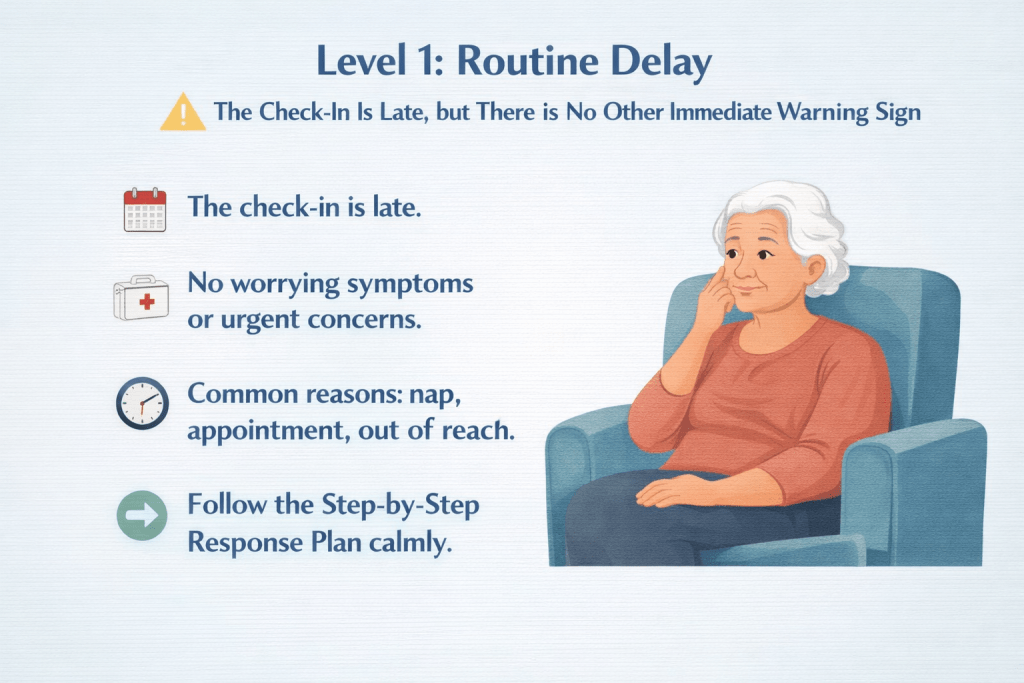
Level 1: Routine Delay — The Check-In Is Late, but There Is No Other Immediate Warning Sign

A routine delay is when the senior misses the usual check-in window, but there is no clear reason yet to think they are in danger. Maybe it has only been 10 to 20 minutes. Maybe they occasionally miss the first ring. Maybe the phone service is unreliable. Maybe they sleep in on weekends.

This stage should be calm and procedural.

What to Do First

Start with the least intrusive actions:

Try the Same Contact Method Again

If the routine is a call, place a second call after a short buffer. If the routine is automated, allow the system’s retry pattern to run first if that feature exists.

Send a Simple, Reassuring Message

Do not send something alarming like:
“Why aren’t you answering?”
“Call me immediately.”
“Is something wrong?”

Instead say:
“Just checking in. Call when you can.”
“Hope everything’s okay. I’m trying you again in a bit.”
“Wanted to make sure you’re alright. I’ll follow up shortly.”

The tone matters. A calm message gives the senior a chance to respond without feeling accused or frightened.

Check for Ordinary Explanations

Before escalating, ask:

  • Is this a time when they may be showering, dressing, praying, walking, or napping?
  • Is the phone often on silent or in another room?
  • Do they have an appointment today?
  • Has there been a weather issue, power cut, or connectivity problem?
  • Did they mention expecting a visitor?

This is not about making excuses. It is about giving context a chance to explain the silence before the situation is treated as a crisis.

How Long to Wait at Level 1

There is no perfect number for every household, but the wait window should be predefined. For many families, 15 to 30 minutes after the normal check-in time is a reasonable Level 1 period if the senior is usually reliable and no major health risks are active.

For a higher-risk older adult, the window may need to be shorter. For someone very independent with occasional schedule drift, it may be slightly longer. The important thing is consistency. Everyone involved should know what the rule is.

Level 2: Concerning Non-Response — The Delay Is Longer Than Usual or Something Feels Off

A situation becomes more concerning when:

  • the person has not responded after multiple attempts
  • the missed check-in is unusual for them
  • they were unwell recently
  • they sounded off during the last contact
  • they live with known fall, memory, or medication risks
  • the silence is out of character

At this stage, the goal is not to panic. It is to verify status through another safe channel.

Use a Contact Ladder Instead of Repeating the Same Action

One of the least effective responses is calling the same number ten times in a row. A better approach is to move through a ladder of contact methods.

A strong ladder may look like this:

  1. primary call
  2. second call after short buffer
  3. text message
  4. alternate phone number if available
  5. landline if they still use one
  6. smart device or emergency response system if connected
  7. backup family contact assigned for that day
  8. nearby friend, neighbor, or building staff
  9. in-person welfare check by trusted local contact
  10. emergency services if risk is high and contact cannot be established

This sequence prevents wasted time and makes escalation cleaner.

Assign Roles Before They Are Needed

Families often assume “someone” will handle follow-up. That is a weak plan. For any daily check-in system, assign these roles clearly:

Primary Checker

The person responsible for the first check-in.

Secondary Checker

The person who takes over if the primary checker cannot reach the senior within the defined time.

Local Backup

A nearby person who can physically knock on the door if needed. This could be a trusted neighbor, relative, building manager, or family friend.

Emergency Decision-Maker

The person authorized to contact emergency services if all other steps fail.

One person may hold more than one role in small families, but the roles should still be named. Ambiguity causes delay.

When a Neighbor or Nearby Contact Should Be Involved

Many families wait too long to involve someone local because they worry about “bothering” people. In reality, a trusted local contact can be the fastest and safest way to resolve uncertainty.

A nearby person is especially useful when:

  • the senior usually answers but suddenly does not
  • there was a recent fall or illness
  • weather conditions make travel harder
  • the family lives far away
  • the senior has hearing issues and may not notice the phone
  • the person sometimes leaves the phone in another room

The request should be respectful and simple:
“Hi, we haven’t been able to reach her at the usual time and just want to make sure she’s okay. Would you be able to knock on the door when convenient?”

That kind of message is practical, not dramatic.

Level 3: Urgent Welfare Concern — There Is Real Reason to Think Immediate Help May Be Needed

A missed check-in becomes urgent when non-response combines with one or more serious indicators.

For example:

  • the senior reported dizziness, weakness, chest discomfort, confusion, or a near-fall recently
  • they have a history of falls
  • they are medically fragile
  • they sounded disoriented in the previous conversation
  • their phone location or smart-home pattern suggests something unusual
  • a local contact cannot get a response at the door
  • the home appears inaccessible, lights are on unexpectedly, or there are other signs something is wrong

In these cases, hesitation can be costly.

When It Is Time to Call Emergency Services

Families often worry about overreacting. But if the protocol has been followed and the situation has escalated to a genuine welfare concern, calling emergency services is not an overreaction. It is the correct next step.

Emergency help should be considered promptly when:

  • repeated contact attempts fail
  • there is known medical risk
  • the person cannot be physically reached
  • there are signs of possible collapse, injury, or disorientation
  • a neighbor or local contact confirms cause for concern

The best time to decide these thresholds is before they are needed.

Create a “Missed Check-In Action Sheet” for the Household

Every family with a senior living alone should have a one-page action sheet. It does not need to be complicated. In fact, the simpler it is, the more likely it will be used properly.

Your action sheet should include:

Essential Personal Details

  • full name
  • home address
  • apartment or unit number
  • date of birth
  • major medical conditions if appropriate
  • allergies if relevant
  • preferred hospital if known

Key Contact Information

  • primary family contact
  • secondary family contact
  • nearby friend or neighbor
  • building manager or front desk if applicable
  • primary doctor or clinic
  • emergency services number for the area

Routine Details

  • normal check-in time
  • preferred contact method
  • usual sleep/wake schedule
  • regular appointments or classes
  • known habits that may explain delays

Access Information

  • gate code if applicable
  • spare key holder
  • lockbox information if the family uses one
  • pet information if responders may need to know

Escalation Timing

  • after 15 minutes: second call/text
  • after 30 minutes: secondary checker notified
  • after 45 to 60 minutes: local contact asked to knock
  • after defined threshold with risk factors: emergency services considered

This sheet should be easy to find and shared only with the right people.

Plan for the Most Common Reasons a Check-In Fails

Not every disruption is medical. Strong routines account for common logistical problems too.

Phone Battery Problems

Older adults may forget to charge devices or may use a charger inconsistently.

Actionable fix:

  • keep charger in a permanent, visible location
  • use a longer charging cable near the favorite chair or bedside
  • add a daily charging cue to the evening routine
  • consider a charging dock that is easier to use than loose cables

Hearing the Phone

Some seniors miss calls because the ringer is too soft, the device is in another room, or hearing loss makes detection harder.

Actionable fix:

  • increase ring volume
  • test ringtone audibility from common seating areas
  • use smart speakers, flashing alerts, or amplified ringers if needed
  • establish a backup message method

Confusion About Time

If the senior forgets the day or loses track of the usual routine, a missed check-in may happen simply because time orientation slipped.

Actionable fix:

  • use a large digital clock with day/date display
  • place the check-in around a consistent anchor, like after breakfast
  • use visual reminder cards near the phone
  • add automated prompts if helpful

Reluctance to “Cause Trouble”

Some seniors see missed calls and avoid returning them because they feel embarrassed, guilty, or resistant to being monitored.

Actionable fix:

  • reassure them often that check-ins are about comfort and connection, not control
  • avoid scolding if a check-in is missed
  • keep the tone calm when reconnecting
  • invite them to help shape the routine so it feels respectful

What Families Should Say After a Missed Check-In Is Resolved

The moment after contact is restored is important. Many families respond with visible frustration:
“Why didn’t you answer?”
“You scared us.”
“You can’t do that.”

That reaction is understandable, but it can make the senior more resistant to the routine in the future. They may feel ashamed, defensive, or infantilized.

A better response is:
“I’m glad you’re okay.”
“We were checking because we care.”
“Let’s make this easier next time.”
“Is there anything that got in the way today?”

This keeps the relationship intact while still improving the process.

Use Every Missed Check-In as a Learning Opportunity

Do not just move on. Ask what happened and refine the system.

Maybe the phone was in the kitchen.
Maybe the senior was asleep because of a new medication.
Maybe the check-in time is too early.
Maybe the ringtone is too quiet.
Maybe weekends need a different schedule.
Maybe a second contact method should be added.

A strong routine gets better by adapting to real-life patterns.

How Seniors Can Participate in the Backup Plan Without Feeling Like They’ve Lost Independence

A missed check-in protocol should not be built around the senior without involving them. It should be built with them.

That means talking openly about:

  • what they want to happen if they miss a call
  • who they are comfortable with being contacted
  • whether a neighbor may knock on the door
  • whether a spare key arrangement is acceptable
  • what type of escalation feels respectful
  • what makes them feel secure rather than watched

This conversation protects autonomy. It also increases cooperation because the plan feels agreed upon, not imposed.

You might frame it like this:

“We know most missed calls will be nothing serious. We just want a calm plan so nobody has to guess if it ever happens. What would feel comfortable to you?”

That wording keeps dignity at the center.

Special Considerations for Seniors With Memory Issues, Fall Risk, or Health Instability

Some older adults need a tighter missed-check-in protocol because their risk profile is different.

If Memory Concerns Are Present

Shorter escalation windows may be appropriate because confusion can interfere with return calls. Visual reminders, automated systems, and local support become more important.

If Fall Risk Is High

A non-response should be taken more seriously, especially if the person has a history of falls in the bathroom, bedroom, or during morning routines.

If There Are Cardiac, Respiratory, or Mobility Issues

A missed check-in after a recent health complaint deserves faster follow-up than it would in a lower-risk setting.

This is why one-size-fits-all routines often fail. The right response plan depends on the person’s actual daily risk, not just the family’s anxiety level.

Turn the Backup Plan Into a Confidence Plan

The most useful way to think about missed check-ins is not as a scary possibility but as part of a reliable support system. Families feel calmer when they know exactly what to do. Seniors feel safer when they know silence will not lead to chaos, blame, or confusion.

A good backup plan says:

  • we will notice if something changes
  • we will respond in a calm order
  • we will not ignore silence
  • we will not panic too early
  • we will act quickly when real risk appears

That kind of clarity is deeply reassuring.

The Real Goal: Consistent Support, Even When the Routine Is Interrupted

A daily check-in routine is never just about the call itself. It is about creating dependable connection. Some days that means a warm conversation. On other days, it means a clear recovery process when the pattern breaks.

That is what makes the routine truly protective.

The safest systems are not the ones that assume everything will always go smoothly. They are the ones that prepare for the moment when the normal pattern fails. A missed check-in should never leave families wondering, “What now?” There should already be an answer.

When seniors and families know what happens next, daily check-ins become more than a habit. They become a dependable safety net built on care, structure, and respect.

How to Build a Weekly Safety and Connection Plan That Seniors Can Actually Stick To

A daily check-in is helpful. A weekly support rhythm is even better.

That may sound surprising at first, especially in an article focused on daily routines. But in real life, a daily check-in works best when it is part of a larger weekly system. Without that wider structure, families often end up reacting one day at a time. The call happens, everyone feels reassured for the moment, and then the next day starts from zero again.

That approach may work for a while, but it is hard to sustain. It also misses an important truth: seniors living alone do not just need one safe moment every day. They need a steady pattern of support across the entire week. Safety, connection, confidence, nutrition, mobility, appointments, household management, and emotional well-being all work better when they are spread out in a manageable way.

A good weekly plan turns a daily check-in from a single task into part of a larger safety net. It reduces stress for older adults because they know what to expect. It reduces stress for families because they are no longer trying to remember everything in one conversation. And it improves outcomes because practical needs are handled before they become urgent.

The key is not to create a complicated care schedule. The key is to create a simple, predictable rhythm that supports independence while quietly lowering risk.

Why a Weekly Plan Works Better Than Relying on One Daily Call Alone

A daily check-in is excellent for confirming immediate well-being. It can tell you whether a person is awake, responsive, stable, and generally okay in the moment. But some of the most important risks facing seniors living alone do not show up clearly in one short conversation.

For example:

  • groceries run low gradually
  • laundry piles up slowly
  • medication refills get forgotten until the last minute
  • loneliness deepens over time, not always in one obvious moment
  • mobility declines across weeks
  • home hazards build quietly
  • clutter increases
  • bills and appointments get missed
  • sleep problems and appetite changes become patterns rather than single events

These are not always emergency issues, but they are exactly the kinds of issues that can erode quality of life and lead to bigger problems later. That is why a strategic weekly plan matters. It catches what daily check-ins alone may not fully solve.

A weekly system also creates emotional steadiness. Seniors often feel more secure when they know not just that someone will call, but that certain parts of life are regularly covered. When Monday has one focus, Wednesday has another, and Friday has another, the week feels more grounded. Support becomes reliable rather than random.

The Best Weekly Plan Is Predictable, Light, and Reassuring

A mistake many families make is overbuilding the system. They create a plan that looks great on paper but feels too rigid in real life. The result is that nobody follows it consistently.

A useful weekly support plan should be:

  • simple enough to remember
  • flexible enough for normal life
  • specific enough to prevent important things being forgotten
  • respectful of the older adult’s independence
  • realistic for family members to maintain

The goal is not to “manage” every part of the senior’s day. The goal is to build a supportive rhythm that covers the most important areas without making life feel clinical or controlled.

The easiest way to do that is to assign a light theme to each day of the week. The daily check-in still happens, but different days give special attention to different parts of living safely and well at home.

The Seven-Part Weekly Support Framework

A strong weekly rhythm can be built around seven practical themes:

  1. physical well-being
  2. medication and health logistics
  3. nutrition and hydration
  4. home environment and safety
  5. social connection and emotional well-being
  6. movement, purpose, and engagement
  7. planning and preparation for the next week

This does not mean every day becomes a long planning meeting. It simply means that each day has a gentle purpose.


Monday: Reset the Week With a Physical Well-Being Check

Mondays are ideal for re-establishing rhythm. Many people drift a little over the weekend, especially if routines are less structured. That makes Monday the best day to focus on how the older adult is feeling physically.

What Monday Should Cover

The Monday check-in should explore:

  • sleep quality
  • energy level
  • pain or stiffness
  • any falls or near-falls
  • breathing, dizziness, or weakness
  • ability to move around the home comfortably
  • general readiness for the week ahead

Helpful questions include:
“How did your body feel over the weekend?”
“Are you moving around comfortably today?”
“Did you sleep alright the last few nights?”
“Is anything feeling harder than usual this week?”

This is also a good day to notice whether the person sounds physically slower, more fatigued, or less steady than usual. Monday can act like a weekly baseline. If a new issue starts to emerge, this is often where it first becomes visible.

Actionable Monday Habit

Encourage one simple physical reset habit on Mondays:

  • refill the water bottle
  • lay out walking shoes
  • review the walking aid or cane placement
  • check if pain medication or comfort items are nearby
  • do a light stretching session after breakfast

The point is not to push a big health goal. It is to begin the week with body awareness and readiness.


Tuesday: Stay Ahead of Medication, Refills, and Appointments

Medication mistakes, missed refills, and forgotten appointments are among the most common reasons that seniors living alone run into preventable health issues. Tuesday is a good day to focus on health logistics because it comes early enough in the week to solve problems before they become urgent.

What Tuesday Should Cover

The Tuesday routine can include:

  • confirming medications are being taken correctly
  • checking how many doses are left
  • reviewing upcoming doctor visits, lab work, or therapy
  • confirming transport if needed
  • discussing any side effects or new symptoms
  • checking whether health paperwork or prescriptions need attention

Useful questions:
“How is your medication routine going this week?”
“Do you have enough refills for the next several days?”
“Any appointments coming up that you want help remembering?”
“Have any tablets or medicines been bothering you lately?”

This is also a good day to make sure the older adult is not quietly altering dosages on their own because of side effects, confusion, or forgetfulness.

Actionable Tuesday Habit

Make Tuesday the day for one medication-related action:

  • refill the pill organizer
  • request prescription refills
  • write appointments on a visible calendar
  • set reminders for appointment times
  • place health insurance cards or paperwork in one easy-to-reach folder

Small repeated actions prevent last-minute health stress.


Wednesday: Focus on Food, Hydration, and Energy

By the middle of the week, it becomes easier to notice whether nutrition is slipping. Seniors living alone may skip meals for many reasons: low appetite, fatigue, difficulty cooking, reduced motivation, dental issues, forgetfulness, or simply the emotional flatness that comes from eating alone.

That is why Wednesday is a powerful day to focus on eating and drinking well.

What Wednesday Should Cover

The check-in should gently ask about:

  • what meals have been eaten recently
  • whether groceries are running low
  • hydration habits
  • ease of preparing food
  • appetite changes
  • any signs of nausea, constipation, or low energy
  • whether eating alone is affecting motivation

Good questions include:
“What have you been eating the last couple of days?”
“Do you have enough groceries for the rest of the week?”
“What’s sounding good to you lately?”
“Are you drinking enough water during the day?”

Try not to frame this like a lecture. Seniors know they “should” eat well. The more effective approach is to make food feel practical, pleasant, and easy.

Actionable Wednesday Habit

Pick one supportive food habit:

  • create a simple grocery list
  • schedule a grocery delivery or family drop-off
  • portion fruit, yogurt, soup, or snacks into easy servings
  • place a full water bottle in the main living area
  • prepare two or three very easy meals in advance

A useful principle for seniors living alone is this: easy food is safer than ideal food that never gets made. Consistency matters more than perfection.


Thursday: Check the Home for Comfort, Safety, and Daily Function

A home can look fine at a glance and still be becoming harder to manage. Small hazards often build slowly. A rug corner lifts. A hallway gets cluttered. Light bulbs go out. Laundry backs up. A bathroom mat becomes slippery. Mail piles start forming. None of these are dramatic on their own, but they increase risk.

That is why Thursday is an excellent day for a home-safety and household-function check.

What Thursday Should Cover

Use Thursday to ask about:

  • lighting
  • tripping hazards
  • laundry
  • trash disposal
  • bathroom safety
  • kitchen function
  • clutter
  • household supplies
  • whether anything is broken or harder to use than usual

Helpful questions:
“Is everything at home working the way it should?”
“Do you need help with anything around the house this week?”
“Are the lights, bathroom, and kitchen all feeling manageable?”
“Is there anything small at home that has started to annoy you or feel harder?”

The phrase “small” is important. Many older adults do not mention household difficulties because they assume they are not serious enough to bring up. But small annoyances often become big barriers later.

Actionable Thursday Habit

Choose one practical home task each Thursday:

  • clear walkways
  • check night-lights
  • restock bathroom supplies
  • take out trash
  • wash or replace slippery bath mats
  • tidy one problem area
  • check that the phone charger is in a reliable place

These tasks seem minor, but they are exactly what support safe independent living.


Friday: Prioritize Mood, Social Contact, and Weekend Readiness

Weekends can feel longer and lonelier for seniors living alone, especially if services slow down, family routines change, or neighbors are less visible. Friday is the right day to prepare emotionally and practically for the next two days.

What Friday Should Cover

The Friday check-in should explore:

  • mood
  • social plans
  • whether the weekend feels too quiet
  • access to meals, medication, and essentials
  • emotional state going into the weekend
  • anything the person is looking forward to
  • anything that may feel difficult

Good questions:
“What does the weekend look like for you?”
“Is there anything you’d like help setting up before the weekend starts?”
“Who might you enjoy speaking with over the next couple of days?”
“What would make the weekend feel easier or nicer?”

These questions matter because loneliness often peaks in unstructured time. The goal is not to fill every hour. The goal is to make sure the weekend does not feel empty, unsupported, or logistically difficult.

Actionable Friday Habit

Make one “weekend readiness” check standard:

  • confirm food and medications are in place
  • identify one person who may call or visit
  • choose one enjoyable activity
  • make sure devices are charged
  • write down any weekend reminders
  • set out comfortable clothing, hearing aids, glasses, or walking shoes

A supported weekend starts before the weekend begins.


Saturday: Support Joy, Purpose, and Gentle Activity

A lot of care plans focus only on risk. That is understandable, but incomplete. Safety matters. Joy matters too. Seniors living alone do not only need to avoid harm. They need reasons to stay engaged with daily life.

Saturday is a good day to center enjoyment, meaning, and light activity.

What Saturday Should Cover

The Saturday conversation can focus on:

  • hobbies
  • favorite routines
  • music, reading, gardening, crafts, prayer, or hobbies
  • light movement
  • community connection
  • family stories, memories, or shared interests
  • activities that create a sense of progress or pleasure

Helpful questions:
“What would feel enjoyable today?”
“Is there something small you’d like to do just for yourself?”
“What hobby or routine have you been missing lately?”
“Would a short walk, some music, or a favorite show make today feel better?”

The goal here is not productivity. It is engagement. Purpose protects well-being. A person who still has things to look forward to is often more motivated to eat, move, connect, and care for themselves.

Actionable Saturday Habit

Build one simple joy habit into Saturday:

  • call a friend or relative
  • step outside for fresh air
  • water plants
  • listen to a favorite playlist
  • sort photos
  • work on knitting, reading, prayer, puzzles, or journaling
  • watch a favorite program with someone by phone or video

A small meaningful activity can lift the tone of an entire day.


Sunday: Review, Reassure, and Prepare for the Next Week

Sunday works best as a gentle planning day. It should not feel heavy or administrative. Instead, it should help the senior feel settled and the family feel oriented before the new week begins.

What Sunday Should Cover

Use Sunday to review:

  • how the week felt overall
  • what went well
  • what felt difficult
  • upcoming appointments
  • household needs
  • groceries or medication refills
  • emotional readiness for the next week
  • whether the check-in routine still feels right

Useful questions:
“How has the week felt for you?”
“Was anything harder than usual this past week?”
“What would help next week go more smoothly?”
“Is there anything you want us to remember or plan for?”

This is also a good moment for positive reflection. Families often focus only on problems. But noticing what worked is just as important.

Try asking:
“What felt good this week?”
“What are you proud of managing this week?”
“What would you like more of next week?”

That changes the tone from surveillance to partnership.

Actionable Sunday Habit

Create one easy Sunday planning ritual:

  • write the week’s appointments on a calendar
  • place medications for Monday morning in clear view
  • note grocery needs
  • confirm transport for appointments
  • check batteries, chargers, glasses, and hearing aids
  • decide what time tomorrow’s check-in will happen

Predictability lowers stress. Sunday preparation creates Monday calm.


How Families Can Share the Weekly Plan Without Overburdening One Person

One reason support routines collapse is that one family member ends up doing everything. Even a short daily check-in can become emotionally tiring if the same person is carrying all of the responsibility week after week.

A weekly plan becomes more sustainable when different people take different roles.

For example:

  • one person handles weekday calls
  • one person manages appointments and health logistics
  • one person handles groceries or delivery coordination
  • one local contact checks in physically when needed
  • one relative takes the “social connection” role and does the longer weekend conversation

This kind of distribution is not only practical. It is healthier for the senior too. Different relationships provide different kinds of support.

The family does not need a complicated rota. It simply needs clarity. Who is doing what? Which day belongs to whom? What should happen if someone is unavailable?

When responsibilities are shared intentionally, the system lasts longer.

Keep the Weekly Plan Visible and Easy to Follow

A plan only helps if people can see it and remember it.

For the senior, visibility may include:

  • a printed weekly sheet near the phone
  • a wall calendar
  • a notebook on the kitchen table
  • a large-font checklist
  • reminder cards linked to meals or times of day

For family members, visibility may include:

  • a shared digital note
  • a family group chat schedule
  • a simple spreadsheet
  • recurring calendar reminders
  • a one-page weekly summary everyone can access

The format matters less than the clarity. If the plan lives only in one person’s head, it is fragile. If it is visible, it becomes dependable.

Adjust the Plan to Match the Senior’s Real Energy and Personality

Not every older adult wants the same type of support. Some like short daily calls. Others prefer one longer conversation and one quick daily confirmation. Some are deeply social. Others value quiet and privacy. Some respond well to routines. Others resist anything that feels too formal.

That is why the weekly plan should fit the person, not just the family’s anxiety.

Questions worth discussing include:

  • What time of day feels best?
  • Do they like brief or longer conversations?
  • Which topics feel useful, and which feel intrusive?
  • Are weekends harder or easier emotionally?
  • What kind of support feels caring rather than controlling?
  • Which practical tasks do they want help with, and which do they want to handle themselves?

A support plan works best when it respects identity. Seniors are more likely to stay engaged with a system that feels like theirs.

Signs the Weekly Plan Is Working

Families sometimes expect a support routine to feel dramatic or transformative. Usually, the best sign it is working is much quieter than that.

You know the weekly plan is helping when:

  • missed details happen less often
  • the senior sounds more settled
  • family worry becomes more manageable
  • groceries, medications, and appointments are handled earlier
  • small problems get solved before they become bigger
  • the older adult sounds more connected and less isolated
  • check-ins feel steady rather than rushed or reactive

In other words, success often looks like fewer surprises.

That is exactly what good planning is supposed to do.

When the Weekly Plan Needs to Be Updated

No support plan should remain frozen forever. Seniors’ needs change. Family schedules change. Health changes. Energy changes. The system should be reviewed regularly.

It may be time to update the weekly plan if:

  • the senior begins missing more calls
  • memory issues increase
  • mobility declines
  • cooking becomes harder
  • loneliness becomes more visible
  • one family member is getting overwhelmed
  • the routine has become too complicated to maintain
  • the senior starts resisting the process

When that happens, simplify first. Do not add more and more layers unless they are truly needed. In many cases, the best fix is not a more complex routine. It is a clearer and gentler one.

The Most Important Principle: Consistency Beats Intensity

Families often believe that better care means doing more. More calls, more reminders, more questions, more checking. But for seniors living alone, what usually matters most is not intensity. It is consistency.

A calm daily call plus a thoughtful weekly rhythm can do far more than occasional bursts of support followed by long gaps. It creates trust. It builds predictability. It makes it easier to notice change. And it helps the senior feel that support is woven into ordinary life, not dropped in only when something goes wrong.

That is a very important emotional difference.

When support is steady, it feels dignified.
When support is chaotic, it often feels stressful.

A Weekly Plan Turns Daily Check-Ins Into Something Stronger

At its best, a daily check-in is not just a call. It is one part of a larger structure that helps an older adult live alone more safely, confidently, and comfortably.

That larger structure does not need to be complex. It just needs to be intentional.

A weekly rhythm gives every day a purpose:

  • one day for physical well-being
  • one for medication and appointments
  • one for food and hydration
  • one for household safety
  • one for emotional support and weekend readiness
  • one for joy and engagement
  • one for planning ahead

That approach makes the routine feel both caring and practical. It supports the real shape of life at home. And it gives families something many of them urgently need: a way to stay involved without becoming overwhelmed.

For seniors living alone, the strongest routines are the ones that protect safety while also preserving dignity, comfort, and normalcy. A good weekly plan does exactly that. It does not take over life. It quietly strengthens it.

Conclusion

The freedom your parent values so deeply can coexist beautifully with the security you need for peace of mind. Implementing a reliable system isn’t about restricting independence—it’s about protecting the autonomy they’ve earned.

Daily connection combined with intelligent monitoring creates comprehensive care that honors their lifestyle. This approach addresses both physical safety and emotional wellness, as highlighted in recent healthcare research on daily routines.

JoyCalls makes this accessible for every family. No apps to learn or devices to manage—just warm conversations through their regular phone. The system provides consistent support while respecting your loved one’s comfort with technology.

This simple solution bridges the gap between what you wish you could do and what’s actually possible. As research shows, regular social contact significantly improves quality of life for older adults.

Your parent’s dignity and your peace of mind are worth taking that first step today. Visit https://app.joycalls.ai/signup to create a connection that brings security, companionship, and joy to everyone involved.

FAQ

What is a daily check-in routine for older adults?

It’s a simple, reliable plan to connect with an older adult living independently each day. This plan helps ensure their well-being, manage medication schedules, and provide emotional support. It gives family members peace of mind knowing their loved one is safe.

How can technology help with daily wellness checks?

Modern services like JoyCalls use AI to make friendly phone calls. They don’t require any apps or new devices. The system chats with the person and then sends a quick summary to their family. It’s an easy way to add an extra layer of safety and companionship.

What should a good check-in plan include?

A strong plan focuses on health, safety, and connection. It should have a consistent schedule, a way to spot any changes in behavior, and a clear emergency response plan. The best plans are personalized to the individual’s needs and are easy for them to use.

Are automated monitoring systems secure?

A> Yes, privacy is a top priority. Reputable services are designed to protect personal information. They only share necessary details with designated caregivers. The goal is to support independence while ensuring security and dignity for the older adult.

How does this support give families peace of mind?

Knowing that a friendly, AI-powered companion is checking in daily reduces worry. It provides consistent updates, so family members feel connected and alerted quickly if there’s a concern. This support helps older adults maintain their independence safely.


Other Articles related to this article:

Medication Adherence Tips From Pharmacists (Simple, Proven)
Medication Reminders for Diabetes, BP, and Heart Meds (Systems That Stick)
Remote Medication Monitoring for Elderly Parents (What’s Realistic)
Medication Errors at Home: The Most Common Mistakes (And Fixes)
Side Effects vs Nonadherence: What Caregivers Should Watch For
The Best Time to Take Meds: Building a Habit Around Meals
Automatic Pill Dispensers: Do They Really Improve Adherence?
Medication Refills: Simple System to Never Run Out
How to Talk to a Stubborn Parent About Taking Meds
Polypharmacy in Seniors: Managing Too Many Meds Safely
Medication Reminders for Vision or Hearing Problems (Easy Fixes)
Medication Adherence for Dementia: Routines That Reduce Stress
Blister Packs and Bubble Packs: Are They Worth It for Seniors?
Pharmacy Sync: How to Align Refills on the Same Day
How to Keep an Updated Medication List (Template + Tips)
Text Message Medication Reminders for Seniors (Pros and Cons)
AI Medication Reminders: What They Can and Can’t Do
Medication Adherence for Seniors: Why Doses Get Missed
Post-Hospital Medication Plan: Avoiding Confusion After Discharge
Best Medication Reminder Methods (No Smartphone Needed)
Phone Call Medication Reminders: Do They Work Better Than Apps?
Pill Organizer 101: How to Choose the Right One for Seniors
Medication Management for Seniors Living Alone (Safety Plan)
Weekly Pill Planner Setup (Step-by-Step, 10 Minutes)
Daily Check-In Routine for Seniors Who Hate Being Checked On
How to Create a Medication Schedule That Actually Works
Medication Adherence Checklist for Caregivers (Fully Explained + Printable)
What to Do When Your Parent Says “I Already Took The Medicine”
How to Prevent Double Dosing in Seniors
Medication Reminder Apps for Seniors: What’s Actually Easy
How to Help Elderly Parents Remember Their Meds (Simple System)
Daily Check-In Routine for Seniors With Hearing Issues (Make It Easier)
Weekly Review: How to Spot Patterns From Daily Check-Ins
How to Start a Daily Check-In Routine in One Day (Fast Setup)
Daily Phone Check-In Services for Seniors: What to Look For
AI Check-In Calls for Seniors: How They Work (And What They Don’t Do)
The Best Daily Check-In Apps and Tools (And Simple No-App Options)
Daily Check-In Routine That Builds Real Connection (Not Just Monitoring)
How to Share Daily Caregiving Updates With Siblings (Without Miscommunication or Drama)
How to Set Boundaries With Daily Check-Ins (So It Doesn’t Take Over Your Life)
Daily Mood Check-Ins for Seniors: What to Watch For
Daily Check-In Routine After Hospital Discharge (First 14 Days)
How Often Should You Check In on Elderly Parents?
Daily Check-In Routine for Meals and Hydration (Quick Method)
Daily Check-In Routine for Seniors Living Alone (Safety + Connection)
How to Track Daily Check-Ins Without Feeling Like a Spreadsheet
Daily Check-In Routine for Medication Adherence (Without Nagging)
How to Build a Check-In Routine That Seniors Won’t Resist
Caregiver Check-In Schedule Template (Daily + Weekly)
Daily Check-In Routine for Elderly Parents (Simple Plan)
The 2-Minute Daily Check-In Script (No Awkward Talk)
The “No Answer” Escalation Plan for Daily Check-Ins
Daily Check-In Routine for Chronic Conditions (BP, Diabetes, COPD)
Daily Check-In Routine for Fall Risk (What to Ask Daily)
Daily Wellness Check Calls: What to Ask (7 Questions)
Daily Check-In Routine for Long-Distance Caregivers
What to Do If Your Parent Misses a Check-In (Step-by-Step)
Daily Check-In Routine for Dementia: Simple, Calm, Consistent
Daily Check-In Text vs Phone Call: Which Is Better for Seniors?
Morning vs Evening Check-Ins: What Works Best for Seniors
Caregiver Guilt: When You Can’t Be There to Keep Them Company
Senior Loneliness and Anxiety: Why They Feed Each Other
Does an AI Companion Help Senior Loneliness? What to Expect
How to Build a “Circle of Care” to Reduce Isolation (Neighbors, Friends, Family)
Volunteering for Seniors: The Best Way to Feel Connected Again
Loneliness in Men vs Women After 65: What Changes?
Senior Centers vs Community Groups: What Works Better for Loneliness?
“No One Needs Me”: How Purpose Reduces Loneliness in Aging
How to Make Phone Calls Feel Less “Check-In” and More Like Real Connection
Loneliness in Assisted Living: Why It Still Happens and What Helps
Loneliness or Depression? How to Spot the Difference in Older Adults
The Health Risks of Loneliness in Seniors (Heart, Brain, Immunity)
Loneliness in Older Adults: Signs, Causes, and What Helps
Loneliness in Seniors Without Smartphones: Low-Tech Ways to Stay Connected
Best Hobbies for Lonely Seniors (Easy to Start, Low Energy)
Social Isolation vs Loneliness: What’s the Difference in Seniors?
Retirement Loneliness: Why It Happens and How to Fix It
How to Help Seniors Make Friends After 60 (Practical Steps)
How to Create a Weekly Social Routine for an Elderly Parent
After a Spouse Dies: Loneliness in Widowhood (What Actually Helps)
How to Tell If Your Aging Parent Is Lonely (Even If They Say They’re Fine)
The “Quiet Withdrawal” Problem: When Seniors Stop Calling Back
How Often Should You Talk to Your Elderly Parents to Prevent Loneliness?
How to Help a Parent Who Refuses Social Activities
How to Help a Lonely Elderly Parent When You Live Far Away
Social Isolation in Seniors Living Alone: A Safety + Loneliness Plan
Senior Loneliness at Night: Why Evenings Feel Worse
Daily Check-In Calls for Seniors: Do They Reduce Loneliness?
Conversation Ideas for Seniors Who Feel Lonely (No Awkward Small Talk)
Loneliness and Dementia: Does Being Alone Speed Up Memory Loss?
Best Low-Tech Safety Devices for Seniors Living Alone
Home Safety Setup for Long-Distance Caregiving (Room-by-Room)
How to Track Meals and Hydration From Another City
Caregiver Guilt When You Live Far Away (How to Cope)
Smartwatch vs Phone Check-Ins: What Works Better for Seniors?
Scams Targeting Seniors: How to Protect Parents Remotely
When It’s Time for Assisted Living (Long-Distance Decision Guide)
How to Choose a Paid Caregiver When You Live Far Away
Weekly Care Plan Template for Aging Parents
Fall Risk: How to Reduce It When You’re Not There