


That phone call on a Tuesday evening. Your mom sounds distant. She forgets you spoke just yesterday. She asks the same questions twice. Your heart sinks a little. Is this just a bad day, or something more?
If you worry about an aging parent living alone, you’re not alone. Many adult children share this deep concern. They notice small changes in memory or confusion. It’s a quiet fear that grows in the back of your mind.
This worry touches on a major public health challenge. Surgeon General Vivek Murthy warned that isolation affects over half of Americans. It’s a threat comparable to smoking or obesity. Studies show it can decrease life expectancy by a staggering amount.
But this isn’t just about feeling sad. It’s about real changes in brain health. Evidence shows that prolonged isolation can hasten cognitive decline. A significant body of research links social factors to an increased risk for neurodegenerative conditions.
This article explores that critical connection. We’ll look at how being alone impacts memory. We offer compassionate understanding and real, practical support for families.
Key Takeaways
- Social isolation is recognized as a serious public health threat with tangible consequences.
- Noticing small memory changes in a loved one can be a sign to pay closer attention.
- Feeling disconnected is more than an emotion; it can physically affect cognitive well-being.
- Scientific evidence strongly suggests a link between a lack of social connection and brain health decline.
- There are proactive steps and supportive solutions available to help protect your loved one’s quality of life.
Loneliness and Dementia: Unveiling the Evidence
Research now gives a name to that nagging fear, linking prolonged solitude to tangible changes in the brain. The connection is more than a feeling—it’s backed by compelling data that families should understand.

Clinical Insights on Cognitive Decline and Memory Loss
Doctors see a clear pattern. A major review of global research found that feeling profoundly alone is associated with a 26% higher chance of developing a serious memory condition. For a precursor state known as mild cognitive impairment, the risk skyrockets to 105%.
Dr. Neil H. Pliskin explains that without regular social stimulation, even minor forgetfulness can worsen. The mind needs engagement to stay sharp.
This is often seen in how memories fade. Recent events vanish quickly, while distant past recollections remain clearer. It’s why a parent might forget lunch but vividly recall a childhood home.
Feeling cut off is closely tied to depression, which is itself a known risk factor for Alzheimer’s. It creates a difficult cycle. Scientists have even found that healthy individuals who report isolation show higher levels of specific proteins in the brain—the same proteins that accumulate in Alzheimer’s disease.
The Impact of Social Isolation During the Pandemic
The COVID-19 lockdowns created a real-world test of this effect. While everyone felt disconnected, seniors with existing memory challenges were hit hardest.
Try JoyCalls Free
No app or new device needed. Start with a free 7-day trial.
When daily routines and face-to-face contact vanished, many families saw a rapid downturn in their loved one’s cognitive abilities. Dr. Pliskin observed that the lack of in-person socialization seemed to heighten symptoms.
This underscores a vital point. Up to half of older adults may experience this isolation, making it a widespread concern. While the link is clear from recent observational studies, experts note the relationship is complex and deserves more attention.
Understanding Social Connectivity and Cognitive Health
What seems like a simple chat over coffee is actually a vital defense for cognitive function. These moments of connection do more than lift spirits. They provide essential stimulation for the mind.

Strong social ties build a buffer against memory issues. A growing body of research confirms this protective effect.
The Role of Daily Routines and Social Engagement
Mom’s Tuesday coffee with a neighbor, a Thursday call from her daughter. These aren’t just nice moments. They are mental anchors that keep her focused on the present.
When these routines break, everything can unravel. A person may miss meals or forget crucial medications. This leads to poor nutrition, which worsens confusion.
Dr. Pliskin notes, “Their markers of everyday life get disrupted.” This disorientation creates a dangerous downward spiral for overall health.
| Supportive Routine | Disruptive Isolation | Impact on Brain Health |
|---|---|---|
| Regular phone calls & visits | Lack of social contact | Provides mental stimulation |
| Scheduled meals & medication times | Missed meals & pills | Maintains physical well-being |
| Structured daily activities | Passive TV watching | Fights cognitive decline |
How Caregiver Support Influences Brain Health
Caregiving should not fall on one person’s shoulders. Exhaustion, or burnout, reduces the quality of support. This lack of energy affects the senior’s engagement.
Spreading responsibilities across family and friends is key. As Dr. Pliskin says, “It takes a village.” A wider network offers more consistent interaction.
This shared approach is a powerful way to reduce risk factors linked to cognitive health decline. It ensures your loved one gets the sustained attention they need.
Try JoyCalls Free
No app or new device needed. Start with a free 7-day trial.
Addressing Risk Factors and Interventions
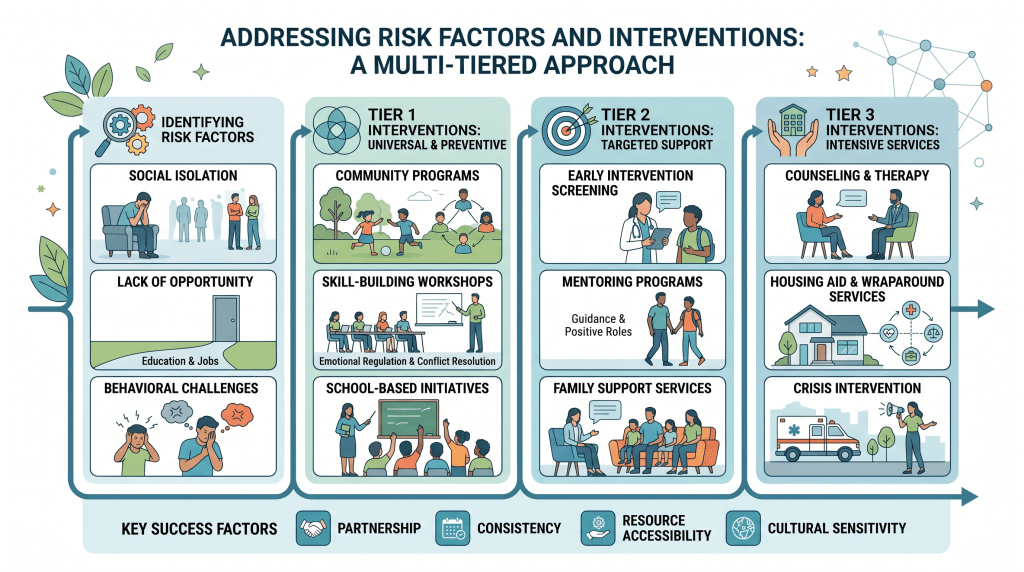
The good news is that research shows many factors influencing cognitive health are within our control. Dr. Anna Tseng offers hope, noting that up to 40-50% of risk factors are modifiable. This means families have real power to make a difference.
Physical Exercise, Diet, and Cognitive Stimulation
Dr. Tseng recommends focusing on three key areas: physical health, social engagement, and mental stimulation. Regular cardiovascular exercise improves brain circulation, helping push back against cognitive decline.
However, safety concerns often prevent isolated seniors from exercising alone. Nutritional intake also suffers when motivation wanes. Cognitive activities should feel enjoyable, not like homework.

Overcoming Technological Barriers in the Elderly
Many seniors struggle with complex apps and devices. JoyCalls provides a simple solution using familiar telephone technology. This AI-powered companion makes daily check-in calls without requiring any app mastery.
Caregivers receive email summaries about their loved one’s wellbeing. This addresses both isolation and caregiver burnout simultaneously. Families can sign up easily to get started.
Community-Based Programs and Support Networks

Research shows the most effective programs are developed within communities by older adults themselves. Group activities like gardening clubs or exercise classes provide dual benefits.
Individual options include pet companionship or regular video calls with family. As Dr. Pliskin notes, “Virtual contact is better than no contact.” In-person interaction remains ideal when possible.
| Intervention Type | Key Benefits | Accessibility Level |
|---|---|---|
| Physical Exercise Groups | Improves circulation, social connection | Medium (requires transportation) |
| Technology Solutions | Daily engagement, caregiver updates | High (works with home phone) |
| Community Programs | Local support, tailored activities | Varies by location |
These approaches work together to create protective layers. A comprehensive analysis confirms that addressing multiple factors yields the best results for long-term brain health.
Creating a Brain-Protective Connection Plan for Seniors Living Alone
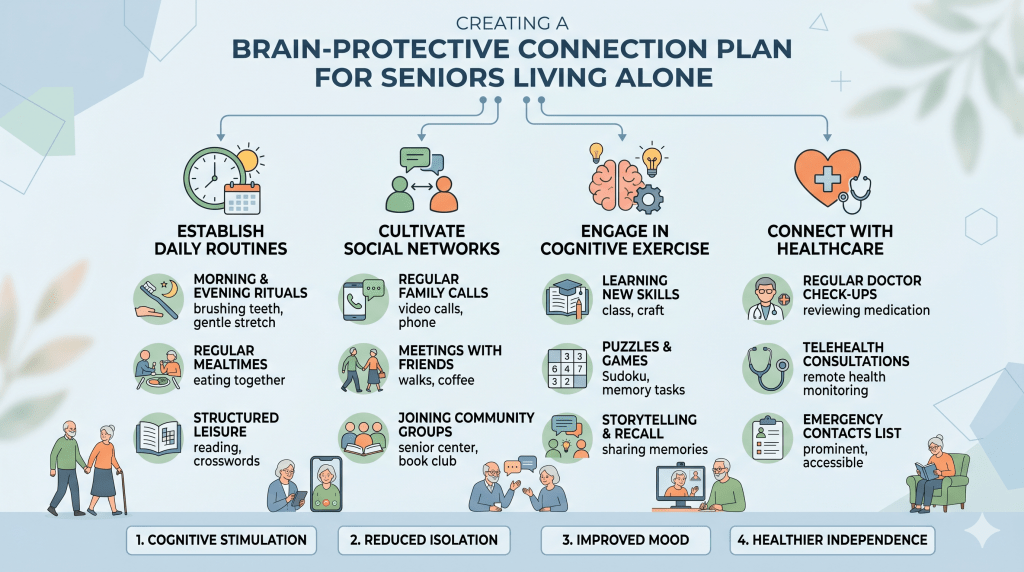
Understanding the link between loneliness and memory loss is important, but families often need something more practical: a clear plan. Many older adults do not need dramatic life changes to feel more connected. They need steady, predictable, low-pressure contact that fits their personality, health, energy level, and routine.
The goal is not to fill every hour with activity. In fact, too much pressure can make a senior withdraw even more. The goal is to create a simple “connection rhythm” that protects emotional wellbeing, supports memory, and helps families notice small changes before they become larger problems.
Loneliness and social isolation are linked with higher risks of depression, cognitive decline, heart disease, and other health problems, according to the National Institute on Aging and CDC. The encouraging part is that connection can be planned. It does not have to depend on chance, guilt, or last-minute phone calls.
Start With a Weekly Connection Map
Before adding new activities, families should first look at what already exists. A connection map is a simple weekly overview of when the senior currently has meaningful contact with another person.
Write down:
- Who they speak to each week
- Which days feel quiet or empty
- Whether contact is in person, by phone, or by video
- Which conversations seem to lift their mood
- Which interactions feel stressful, rushed, or forced
- When memory slips seem more noticeable
This helps families move away from vague worry and toward useful patterns. For example, a daughter may realize her father gets several calls on Sundays but almost no contact from Monday to Thursday. Or a son may notice that his mother sounds most confused in the evening, when the house is quiet and she has no planned interaction.
This matters because routines act as memory anchors. A predictable call after breakfast, a neighbor visit on Wednesday, or a weekly church group can help orient the day. For seniors living alone, these small anchors can reduce the feeling that every day is empty and unstructured.
A good connection map should include both social and practical touchpoints. A medication reminder call, a meal check-in, a walk with a neighbor, and a grandchild’s Sunday phone call all count. What matters is not whether the interaction looks “big.” What matters is whether it creates recognition, warmth, stimulation, and consistency.
Build a “Minimum Daily Contact” Rule
Families often ask, “How often should we call?” The better question is: “What is the minimum level of contact that keeps this person emotionally steady and safely connected?”
For many seniors living alone, one meaningful contact per day is a strong starting point. It does not always need to be a long conversation. A five-minute phone call can be valuable when it is calm, personal, and consistent.
A daily contact rule could look like this:
- Morning call from an adult child
- Afternoon visit from a neighbor twice a week
- Daily check-in call from a companion service
- Evening call from a sibling or friend
- Weekly community activity plus short calls on quieter days
The key is to avoid relying on one caregiver. When one person becomes responsible for every call, the routine often breaks down. Work, children, illness, travel, and caregiver fatigue can interrupt even the best intentions. A shared plan is more reliable.
It may help to divide roles. One person handles Monday and Thursday calls. Another handles weekend meals. A neighbor checks in after trash pickup. A companion call service fills the daily gaps. This creates a circle of contact instead of a single fragile line of support.
The Alzheimer’s Association also emphasizes that everyday habits, including social engagement, physical activity, sleep, and managing health conditions, can support brain health. A daily contact rhythm works best when it gently supports those habits too.
Make Conversations More Memory-Supportive
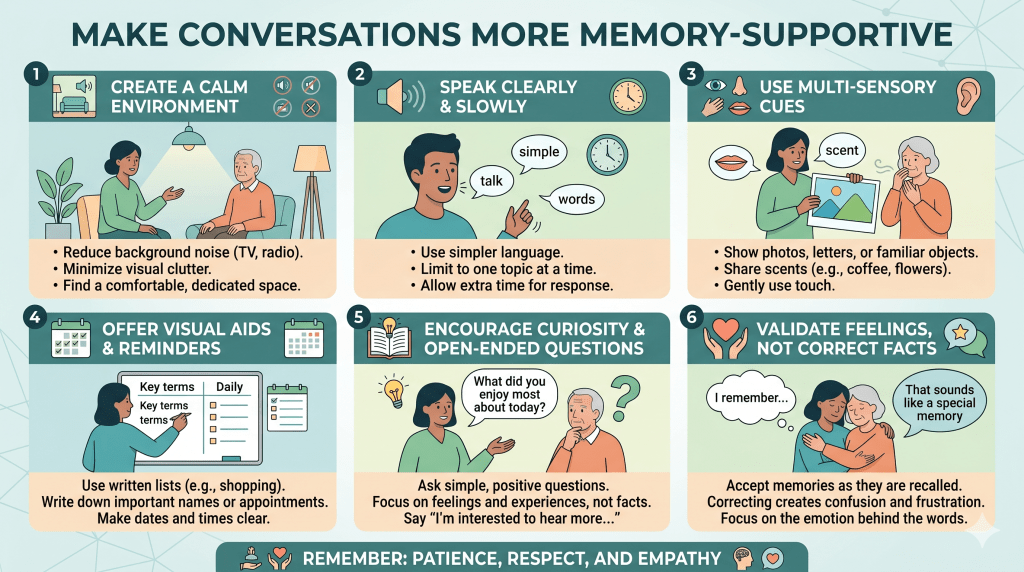
Not every call helps in the same way. Some calls accidentally create stress. For example, repeatedly asking “Did you take your medicine?” or “Do you remember what I told you yesterday?” can make a senior feel tested, embarrassed, or defensive.
A better approach is to make conversations feel natural while still noticing important clues.
Instead of asking: “Do you remember what you ate?”
Try: “I was thinking of making soup today. What sounds good to you for lunch?”
Instead of asking: “Did you forget your appointment again?”
Try: “Let’s look at today together. I have Tuesday in my head. What’s on your calendar?”
Instead of asking: “Why didn’t you call me back?”
Try: “I’m glad I caught you. How has your afternoon been?”
Memory-supportive conversations should include gentle orientation. Mention the day, time, season, and upcoming routine in a natural way. For example: “It’s Thursday morning, so I know you usually water the plants today.” This gives the brain helpful cues without making the person feel corrected.
Good conversation topics include:
- A familiar recipe
- A childhood memory
- A favorite song
- A family photo
- A simple plan for the day
- A recent visitor
- A pet, plant, or hobby
- Weather connected to an activity, such as walking or gardening
The goal is not to quiz the senior. The goal is to activate memory, language, emotion, and decision-making in a relaxed way.
Watch for Quiet Warning Signs
Loneliness does not always sound like “I’m lonely.” Many older adults will not say those words. Some do not want to worry their children. Others feel embarrassed. Some have lived independently for so long that admitting loneliness feels like admitting weakness.
Families should watch for quieter signs:
- Shorter phone calls
- Less interest in food
- Wearing the same clothes repeatedly
- Skipping clubs, church, or regular outings
- Saying “nothing matters”
- Sleeping much more during the day
- Increased confusion in the evening
- Forgetting recent conversations more often
- Letting mail, laundry, or dishes pile up
- Becoming suspicious, irritable, or unusually withdrawn
These signs do not automatically mean dementia. They may point to depression, hearing loss, medication side effects, poor sleep, dehydration, grief, infection, or another health issue. But they should not be ignored.
If changes appear suddenly, families should contact a healthcare professional. Sudden confusion can sometimes be caused by treatable medical problems. If changes are gradual, it still helps to document them. Write down what changed, when it started, and how often it happens. This gives doctors better information than general statements like “Mom seems worse.”
Reduce Friction Before Adding Activities
One common mistake is suggesting activities without removing the barriers that make those activities hard.
A senior may not attend a community lunch because they cannot drive. They may avoid phone calls because they cannot hear clearly. They may stop going to church because getting dressed feels exhausting. They may avoid video calls because the device feels confusing. They may refuse a senior center because they worry they will not know anyone.
Before assuming they are “not trying,” ask what makes connection difficult.
Common barriers include:
- Transportation
- Hearing problems
- Vision problems
- Pain or fatigue
- Fear of falling
- Bathroom urgency
- Grief
- Social anxiety
- Embarrassment about memory lapses
- Difficulty using technology
- Lack of confidence after illness or hospitalization
Once the barrier is clear, the solution becomes more practical. Arrange rides. Use regular phone calls instead of apps. Choose small gatherings instead of large events. Schedule visits earlier in the day when energy is better. Pick familiar places. Invite one trusted person instead of a group.
This is where families can be strategic. The best social plan is not the busiest one. It is the one the senior will actually accept and repeat.
Use Purpose, Not Just Entertainment
Loneliness often deepens when older adults feel they are no longer needed. Entertainment can help, but purpose is stronger. A senior may enjoy watching television, but that does not always create meaning. Purpose gives a person a reason to participate in the day.
Purpose can be small and still powerful.
Examples include:
- Calling a grandchild every Friday to hear about school
- Watering balcony plants
- Folding towels for the household
- Sharing one family recipe each week
- Feeding a pet
- Writing birthday cards
- Helping choose meals
- Praying for specific family members
- Recording family stories
- Checking in on another older friend
The message should never be, “We need to keep you busy.” A better message is, “You still matter, and your presence is important.”
This is especially helpful for seniors who resist “senior activities.” Some older adults dislike being treated as patients or projects. Purpose-based connection feels more respectful. It allows them to contribute rather than simply receive care.
Create a Simple Escalation Plan
A connection plan should also include what happens when something seems off. This is especially important for long-distance caregivers.
Decide in advance:
- What happens if the senior does not answer the phone?
- Who calls next?
- Who lives nearby and can check in?
- When should someone contact a doctor?
- When should emergency services be called?
- Where are spare keys kept?
- Who has the medication list?
- Who knows the doctor’s name and pharmacy?
This prevents panic. It also prevents family conflict. Without a plan, one missed call can turn into confusion, guilt, and repeated phone calls to different relatives.
A simple version may look like this:
If there is no answer after the first call, try again in 15 minutes. If there is still no answer, call the neighbor. If the neighbor cannot reach them, call the backup family member. If there are signs of immediate danger, call emergency services.
This plan should be written down and shared with everyone involved.
Keep the Senior Involved in the Plan
A connection plan works best when the older adult has a voice in it. If the family builds the entire plan around them without asking, it can feel controlling.
Use respectful language:
- “What time of day do you enjoy talking most?”
- “Would you rather have shorter daily calls or longer calls a few times a week?”
- “Who do you feel happiest speaking with?”
- “Are there any activities you do not want us to push?”
- “What would make it easier to get out once a week?”
This protects dignity. It also improves cooperation. Seniors are more likely to accept support when it feels like partnership, not surveillance.
For someone already showing memory problems, choices should be simple. Offer two options, not ten. For example: “Would you prefer a morning call or an evening call?” This keeps decision-making manageable.
Review the Plan Every Month
Needs change. A plan that works in January may not work after a fall, medication change, illness, or the loss of a friend. Families should review the connection plan once a month.
Ask:
- Is the senior more engaged or more withdrawn?
- Are calls being answered?
- Are meals and medications more consistent?
- Are there fewer lonely evenings?
- Is one caregiver doing too much?
- Does the senior seem calmer?
- Are memory concerns increasing?
- Does the plan need more in-person support?
This review does not need to be formal. It can be a 15-minute family conversation. The important thing is to treat loneliness as something manageable, not invisible.
The Real Goal: Steady Human Presence
The most protective support is not always dramatic. It is steady human presence. A familiar voice. A predictable call. A neighbor who notices the curtains are still closed. A daughter who knows when her mother sounds different. A routine that gives the week shape.
Being alone does not automatically mean a senior will experience memory loss. But prolonged loneliness, low stimulation, and disconnected routines can create real risks. The answer is not guilt. The answer is structure, compassion, and consistency.
Families do not have to solve everything at once. Start with one daily touchpoint. Add one weekly activity. Remove one barrier. Create one backup plan. Over time, these small steps can become a dependable support system that helps protect memory, mood, safety, and dignity.
Strengthening Emotional Resilience and Cognitive Health Through Everyday Habits
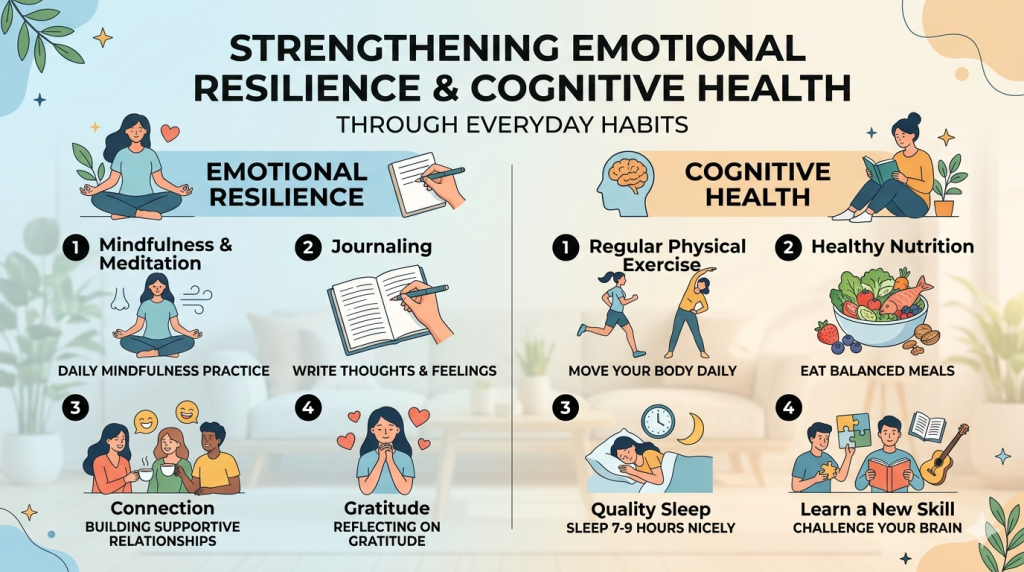
While structured social connection is essential, it is only one part of protecting cognitive health in older adults. The brain does not function in isolation. It responds continuously to sleep quality, physical movement, nutrition, emotional state, and daily routines. When loneliness enters the picture, these areas often begin to weaken quietly and simultaneously.
A senior who feels alone may sleep irregularly, eat less, move less, and think less about the future. Over time, this combination can create the perfect conditions for faster cognitive decline. The encouraging reality is that small, consistent daily habits can interrupt this cycle. These habits do not need to be complex or physically demanding. They need to be repeatable, meaningful, and adapted to the individual’s capacity.
This section focuses on building emotional resilience and cognitive strength through practical, everyday actions that seniors and families can realistically maintain.
Create a Stable Daily Structure to Support the Brain
One of the most overlooked protective factors against cognitive decline is routine. The brain thrives on predictability. When days become unstructured, especially for someone living alone, the sense of time can blur. This can increase confusion, anxiety, and memory lapses.
A stable routine acts like a mental framework. It gives each day a recognizable shape.
A simple daily structure may include:
- Morning anchor: Wake up at the same time, open curtains, hydrate, and have breakfast
- Mid-morning activity: Light exercise, a walk, or a simple household task
- Afternoon engagement: A call, hobby, or quiet activity like reading or gardening
- Evening wind-down: Dinner at a consistent time, followed by calming activities
- Night routine: Prepare for sleep at the same time each night
Consistency matters more than complexity. Even repeating three to four anchor activities daily can significantly improve orientation and reduce anxiety.
Families can support this by gently reinforcing routines during calls. For example:
“Did you have your morning tea yet?” or “It must be around your walk time now.”
This helps the brain associate time with action, strengthening internal cues.
Use Movement as a Daily Cognitive Tool

Physical movement is not just about strength or mobility. It plays a direct role in brain health. Regular movement improves blood flow to the brain, supports memory, and reduces stress hormones.
The key is to remove the idea that exercise must be intense or structured.
For seniors living alone, the goal is daily movement, not perfect workouts.
Practical options include:
- Walking inside the house or building corridor
- Gentle stretching while seated
- Light yoga or chair exercises
- Watering plants or light gardening
- Folding laundry or tidying small areas
- Dancing to a favorite song
Even 10–15 minutes of movement, done consistently, can make a difference.
To make this sustainable:
- Tie movement to an existing habit (after breakfast, before lunch)
- Keep it simple and familiar
- Avoid pushing too hard, especially if there is pain or fatigue
Families can encourage movement without pressure. Instead of saying “You need to exercise,” try:
“Let’s both take a short walk now and talk on the phone.”
This turns movement into a shared activity, which increases the likelihood of consistency.
Improve Sleep Without Overcomplicating It
Sleep disruption is common among older adults, especially those experiencing loneliness. Poor sleep can worsen memory, mood, and decision-making. It can also increase confusion, particularly in the evening.
Rather than introducing complex sleep strategies, focus on small adjustments:
- Maintain a consistent sleep and wake time
- Reduce daytime naps (especially long or late naps)
- Keep the bedroom quiet, dim, and comfortable
- Avoid heavy meals or caffeine close to bedtime
- Create a calming pre-sleep routine (light music, prayer, reading)
Loneliness often leads to irregular sleep because there is no strong reason to maintain a schedule. This is why daytime structure becomes important. A well-paced day naturally supports better sleep.
If a senior frequently says, “I couldn’t sleep at all,” it is worth gently exploring patterns instead of dismissing it. Poor sleep over time can amplify cognitive symptoms.
Support Brain Health Through Simple Nutrition Habits
Nutrition is another area that quietly declines when someone lives alone. Cooking may feel like too much effort for one person. This often leads to skipped meals or reliance on low-nutrient foods.
Instead of aiming for perfect diets, focus on consistency and simplicity.
Helpful approaches include:
- Eating at the same times each day
- Including at least one fresh item daily (fruit, vegetables)
- Keeping easy-to-prepare foods available
- Staying hydrated throughout the day
- Avoiding long gaps between meals
Families can make a big difference here by:
- Sending pre-prepared meals or simple ingredients
- Creating a weekly meal plan together
- Checking in during mealtimes occasionally
- Encouraging shared “virtual meals” over phone or video
Even something as simple as saying, “Let’s both have lunch together on the phone today,” can improve both nutrition and emotional connection.
Use Mental Stimulation That Feels Natural, Not Forced
Cognitive stimulation is often recommended, but many seniors resist activities that feel like “exercises” or “tests.” The key is to make mental engagement feel natural and enjoyable.
Instead of introducing unfamiliar brain games, focus on familiar, meaningful activities:
- Reading newspapers or short articles
- Listening to music from their younger years
- Watching and discussing a favorite show
- Solving simple puzzles or crosswords
- Recalling family stories or past events
- Sorting old photos or albums
- Writing short notes or lists
Memory is closely tied to emotion. Activities connected to personal history often stimulate the brain more effectively than generic exercises.
Families can gently guide this by asking open-ended questions:
- “What was your favorite festival growing up?”
- “Do you remember that trip we took years ago?”
- “Which song do you feel like listening to today?”
These conversations activate memory pathways without pressure.
Address Emotional Health Directly, Not Indirectly
Loneliness is an emotional experience, not just a social one. Even with regular calls, a senior may still feel a deep sense of emptiness, loss, or disconnection.
It is important to create space for these feelings instead of avoiding them.
Signs that emotional support is needed include:
- Frequent expressions of sadness or hopelessness
- Loss of interest in previously enjoyed activities
- Increased irritability or withdrawal
- Statements like “There’s nothing left to do”
When these signs appear, the response should not be immediate problem-solving. It should start with listening.
Helpful responses include:
- “That sounds really difficult.”
- “I’m glad you told me this.”
- “You’re not alone in feeling this way.”
Avoid dismissing feelings with phrases like “Don’t think like that” or “You have so much to be grateful for.” While well-intentioned, these responses can make the person feel unheard.
If emotional distress continues, it may be helpful to explore:
- Speaking with a counselor or therapist
- Joining a support group
- Increasing meaningful social interaction
Emotional health and cognitive health are deeply connected. Addressing one supports the other.
Strengthen Identity and Independence
One of the hidden drivers of loneliness is the feeling of losing one’s identity. Retirement, physical limitations, or the loss of a spouse can create a sense that life has become smaller.
To counter this, it is important to reinforce identity and independence wherever possible.
This can include:
- Letting the senior make daily decisions (meals, activities, clothing)
- Asking for their opinions and advice
- Encouraging them to teach or share knowledge
- Recognizing their past roles and achievements
For example, instead of saying, “Let me handle everything,” try:
“What do you think would be the best way to do this?”
Even small decisions help maintain a sense of control and relevance.
Balance Support Without Creating Dependence
Families often struggle with how much help to provide. Too little support can lead to isolation and risk. Too much support can reduce independence and confidence.
The goal is to find a balance where the senior feels supported but not controlled.
A helpful approach is to:
- Assist with tasks that are genuinely difficult or unsafe
- Encourage independence in areas that are still manageable
- Avoid taking over tasks unnecessarily
- Reassess regularly as needs change
For example:
- Help manage medications, but allow the senior to organize daily routines
- Arrange transportation, but let them choose the destination
- Support meal planning, but involve them in decisions
This balance helps maintain dignity while ensuring safety.
Build a Long-Term Safety Net
Even with strong daily habits, it is important to think ahead. Loneliness and cognitive decline can evolve over time. Planning early reduces stress later.
A basic safety net may include:
- A list of emergency contacts
- Regular health check-ups
- Clear medication management
- Access to nearby support (neighbors, services)
- Financial and legal clarity
This does not mean expecting the worst. It means being prepared in a calm, organized way.
The Bigger Picture: Small Habits, Lasting Impact
Protecting brain health in older adults is not about one big solution. It is about many small, consistent actions that work together.
A regular call. A short walk. A shared meal. A familiar routine. A meaningful conversation.
These may seem simple, but they create stability, stimulation, and emotional connection. Over time, they form a protective environment where the brain is more likely to stay active and resilient.
Loneliness does not have to define the experience of aging. With thoughtful habits and supportive relationships, it is possible to create a life that feels connected, purposeful, and mentally strong—even when living alone.
Leveraging Technology and Modern Solutions to Reduce Loneliness and Support Cognitive Health
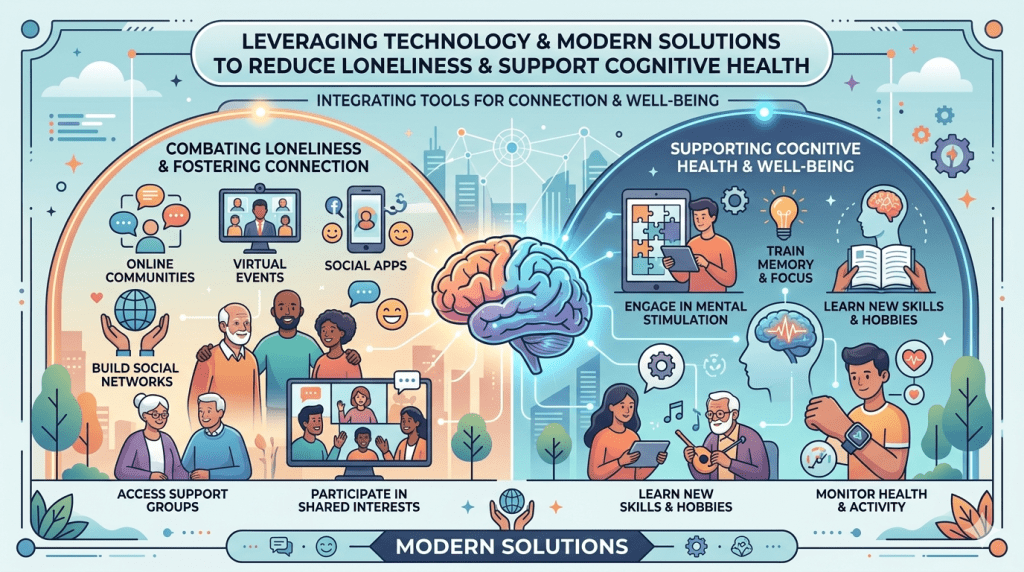
As families become more geographically dispersed and daily schedules grow busier, technology is playing an increasingly important role in supporting older adults who live alone. However, simply introducing technology is not enough. When used poorly, it can feel confusing, impersonal, or even frustrating for seniors. When used thoughtfully, it can become a powerful bridge—bringing consistency, companionship, and cognitive stimulation into everyday life.
This section focuses on how to use technology in a human-first, low-friction, and highly practical way to reduce loneliness and support memory health in seniors.
Rethink Technology as “Companionship Support,” Not Just a Tool
Many families introduce technology with a functional mindset—video calls, reminders, or emergency alerts. While these are valuable, they often miss the emotional component.
For seniors, technology should not feel like surveillance or obligation. It should feel like presence.
Instead of asking, “How can we monitor them better?”
Ask, “How can we help them feel less alone throughout the day?”
This shift changes how tools are selected and used.
For example:
- A reminder app may ensure medication is taken, but a friendly voice check-in creates emotional reassurance
- A video call app allows visual contact, but a predictable daily call routine creates stability
- A smart device can answer questions, but a conversation-based interaction stimulates memory and language
The most effective solutions combine function + emotional connection.
Start With Familiar Technology Before Introducing New Tools
One of the biggest mistakes families make is introducing complex devices too quickly. This often leads to resistance, frustration, and eventual abandonment.
Instead, begin with what the senior already understands:
- A regular phone call
- A simple keypad phone
- A familiar television routine
- A radio or music player
Once comfort is established, gradually layer in additional features.
For example:
- Start with daily phone calls
- Introduce speakerphone for easier conversations
- Transition to simple video calls with guidance
- Add reminders or companion services later
The goal is confidence first, complexity later.
Use Voice-Based Solutions for Ease and Accessibility
For many seniors, especially those with vision or dexterity challenges, voice-based technology is far more accessible than touchscreens or apps.
Voice-based systems can help with:
- Setting reminders (“Take medicine at 9 AM”)
- Playing music or devotional content
- Answering simple questions
- Providing weather updates or daily orientation
- Initiating calls
More importantly, voice interaction can feel more natural than typing or navigating menus. It mimics conversation, which is especially valuable for someone experiencing loneliness.
However, these tools should not replace human interaction. They should fill the gaps between human touchpoints, not act as substitutes.
Introduce Companion Call Services for Consistency
One of the most effective ways to reduce loneliness is through consistent, predictable conversation. This is where structured companion call services can play a meaningful role.
Unlike irregular family calls, these services provide:
- Scheduled daily or weekly conversations
- Friendly, familiar voices
- Gentle cognitive stimulation through conversation
- Emotional reassurance
- Early detection of mood or behavior changes
For seniors living alone, this consistency can be more impactful than occasional long calls.
From a family perspective, this also reduces pressure. Instead of feeling guilty for missing a day, families know there is a reliable baseline of connection already in place.
When choosing such a service, look for:
- Human-centered conversations, not scripted interactions
- Flexibility in timing
- Cultural and language compatibility
- A focus on emotional wellbeing, not just reminders
Make Video Calls Simple and Predictable
Video calls can significantly enhance connection, especially for seniors who miss visual interaction. However, they must be simple and structured.
Common challenges include:
- Difficulty navigating apps
- Poor internet connectivity
- Confusion about call timing
- Feeling “unprepared” for video
To make video calls successful:
- Schedule them at the same time each week
- Use one consistent platform
- Set up the device in advance (camera, sound, lighting)
- Keep calls short and focused
- Avoid last-minute or surprise calls
For example, a weekly Sunday video call with family can become a meaningful ritual. Over time, the senior begins to anticipate it, which adds emotional value.
Use Technology to Reinforce Daily Routines
Technology can be particularly effective when it supports—not replaces—daily habits.
Examples include:
- Medication reminders at fixed times
- Meal reminders to prevent skipped meals
- Activity prompts (“Time for your walk”)
- Hydration alerts
- Sleep cues (“Start winding down”)
These small prompts act as cognitive supports. They reduce reliance on memory while maintaining independence.
The key is to keep reminders:
- Clear and simple
- Consistent in timing
- Limited in number (avoid overload)
Too many alerts can become overwhelming and lead to disengagement.
Enable Passive Safety Without Creating Anxiety
Safety is a major concern for families, especially when seniors live alone. Technology can help, but it should not create a sense of constant monitoring.
Passive safety tools include:
- Fall detection devices
- Emergency alert buttons
- Location-sharing (used sensitively)
- Smart door or motion sensors
These tools work best when they are quietly integrated into daily life.
It is important to communicate clearly:
“This is here to support you, not to watch you.”
When seniors feel respected and informed, they are more likely to accept these solutions.
Encourage Digital Social Interaction—But Keep It Meaningful
Beyond family calls, technology can open doors to broader social interaction:
- Online hobby groups
- Religious or spiritual sessions
- Virtual classes (yoga, music, art)
- Community WhatsApp groups
- Alumni or interest-based forums
However, not all digital interaction is equally beneficial. Passive scrolling or watching does not provide the same cognitive and emotional benefits as active participation.
Encourage activities where the senior:
- Speaks, listens, or responds
- Recognizes familiar faces or voices
- Feels included in a group
Even one meaningful group interaction per week can reduce feelings of isolation.
Train, Repeat, and Be Patient
Adopting technology is not a one-time process. It requires repetition and patience.
Best practices include:
- Teaching one feature at a time
- Using simple, step-by-step instructions
- Writing down key steps in large, clear text
- Repeating demonstrations without frustration
- Celebrating small successes
Avoid saying, “I already showed you this.” Memory challenges may make repetition necessary.
Instead, say:
“Let’s do it together again.”
This builds confidence and reduces anxiety.
Combine Technology With Human Awareness
Technology can support connection, but it cannot fully replace human intuition.
Families should still pay attention to:
- Changes in tone during calls
- Reduced engagement
- Missed interactions
- Signs of confusion or distress
If a senior who usually answers calls suddenly stops, or if conversations become noticeably different, it should be followed up.
Technology provides signals, but humans provide understanding.
Avoid Over-Reliance on Automation
While automation can simplify life, too much of it can reduce meaningful engagement.
For example:
- Automated reminders are helpful, but human follow-up adds warmth
- Smart devices can provide information, but conversations create connection
- Pre-recorded messages may feel impersonal if overused
The goal is balance.
Use automation for support, not substitution.
The Future of Connection: Blending Care With Convenience
Modern solutions are evolving rapidly, offering new ways to support seniors living alone. However, the most effective approach is not about adopting every new tool. It is about choosing the right combination of simple, reliable, and human-centered solutions.
A thoughtful system might include:
- Daily human check-in calls
- Weekly video interactions with family
- Simple voice-based assistance
- Routine reminders
- Occasional group engagement
Together, these create a layered support system that addresses both emotional and cognitive needs.
How Families Can Talk About Loneliness Without Making Seniors Feel Helpless
One of the hardest parts of addressing loneliness is starting the conversation. Many older adults do not want to admit they feel lonely. Some fear becoming a burden. Others worry their family will overreact, take away independence, or treat them differently.
That is why the way families speak matters just as much as the support they offer.
A senior who feels judged may shut down. A senior who feels respected is more likely to open up.
Avoid Making Loneliness Sound Like a Problem With Them
Instead of saying:
“Are you lonely all the time?”
Try:
“I was thinking that some days may feel quieter than others. Which part of the day feels longest for you?”
This feels gentler. It does not force the person to label themselves as lonely. It invites them to describe their experience.
Many seniors respond better to practical questions than emotional ones. For example:
- “Do evenings feel too quiet?”
- “Would it help to have someone call after lunch?”
- “Are weekends harder than weekdays?”
- “Do you miss having people around during meals?”
These questions make loneliness easier to discuss.
Listen Before Offering Solutions
Families often jump into fixing mode. This is natural, but it can make seniors feel rushed or unheard.
If an older adult says, “I feel useless,” avoid immediately saying, “Don’t say that.” Instead, pause and respond with care:
“I’m sorry you’ve been feeling that way. I want to understand more.”
This gives them permission to speak honestly.
After listening, you can gently ask:
“What would make tomorrow feel a little better?”
Small improvements are easier to accept than big life changes.
Use Collaborative Language
Support should feel like teamwork, not control.
Instead of:
“We’re arranging calls for you every day.”
Say:
“Let’s create a routine that helps the day feel less empty.”
Instead of:
“You need to go out more.”
Say:
“Would you enjoy one small outing this week?”
Instead of:
“You keep forgetting things.”
Say:
“Let’s make the day easier to keep track of.”
This language protects dignity. It also lowers resistance.
Respect Their Personality
Not every senior wants constant social activity. Some people have always been private, quiet, or introverted. The goal is not to turn them into someone else.
A good connection plan should match their nature.
For a social senior, this may mean group activities, clubs, and regular visitors.
For a quieter senior, it may mean one trusted caller, a weekly neighbor visit, and familiar routines.
The question is not, “Are they busy enough?”
The better question is, “Do they feel emotionally supported in a way that suits them?”
Make Family Calls More Meaningful
A call does not need to be long to be valuable. But it should feel personal.
Instead of only asking about health, medicines, and appointments, include warmth and normal conversation.
Good call topics include:
- “What did you have for breakfast today?”
- “I saw something that reminded me of you.”
- “Can you tell me how you used to make that dish?”
- “Which song should I play for you today?”
- “What was the best part of your morning?”
These questions help the senior feel seen as a person, not just monitored as a patient.
Do Not Let Every Conversation Become About Memory
When memory loss is a concern, families may begin watching every word. This can make conversations tense.
The senior may feel tested. The family may feel anxious. Over time, calls can become stressful for everyone.
Try to separate emotional connection from cognitive checking.
Some calls should simply be for comfort. Laugh. Share news. Talk about familiar things. Let the senior enjoy the conversation without feeling examined.
If you notice memory changes, document them privately and discuss them with a healthcare professional when needed. Do not turn every interaction into a memory assessment.
Include Them in Family Life
Loneliness often grows when seniors feel left out of ordinary family moments. They may hear about major news but miss the small daily details that create belonging.
Include them in simple updates:
- A child’s school project
- A family recipe being cooked
- A photo from a walk
- A festival preparation
- A small household decision
- A funny story from the day
These moments tell the senior: “You are still part of our life.”
For many older adults, this matters deeply.
Create Rituals, Not Random Contact
Random calls are helpful, but rituals are more powerful.
A ritual gives the senior something to expect and remember.
Examples include:
- Monday morning tea call
- Wednesday prayer call
- Friday family photo sharing
- Sunday video lunch
- Monthly memory-story call with grandchildren
The ritual should be simple enough to maintain. Consistency is what makes it meaningful.
Even if the call lasts only ten minutes, the predictability can reduce emotional emptiness.
Respond Calmly to Repetition
Seniors with memory changes may repeat stories or questions. Families may become impatient, especially when tired.
But repeated questions often come from anxiety, not stubbornness.
Instead of saying:
“You already told me that.”
Try:
“I like hearing that story.”
Or:
“Yes, we talked about it. Let’s go over it together.”
This reduces shame. Shame can make seniors withdraw further, which worsens loneliness.
Patience is not just kindness. It is part of creating a safer emotional environment.
Know When Professional Help Is Needed
Family support is powerful, but it cannot replace professional care when loneliness is accompanied by serious emotional or cognitive symptoms.
Consider speaking with a doctor, therapist, or elder care specialist if the senior:
- Frequently talks about hopelessness
- Stops eating properly
- Neglects hygiene
- Withdraws from all contact
- Shows sudden confusion
- Becomes unusually fearful or suspicious
- Has major sleep changes
- Cannot manage daily tasks safely
These signs deserve attention. They are not simply “old age.”
Getting help early can protect both emotional wellbeing and cognitive health.
Build Trust Slowly
If a senior has been lonely for months or years, one conversation will not fix everything. Trust may need to be rebuilt.
Start small:
- Call at the promised time
- Keep visits consistent
- Avoid criticism
- Ask for their opinion
- Follow through on small commitments
Reliability is one of the strongest forms of care.
Over time, the senior may begin to share more openly. They may accept more support. They may feel safer depending on others again.
A More Caring Way Forward
Talking about loneliness should never make a senior feel weak, needy, or broken. It should remind them that connection is a normal human need at every age.
The best conversations are gentle, respectful, and practical. They do not pressure. They do not shame. They create room for honesty.
For families, the goal is not to say the perfect thing. The goal is to keep showing up with patience and consistency.
A senior may forget the exact words spoken during a call. But they often remember the feeling:
“I matter. Someone noticed. I am not alone.”
That feeling is powerful. And for older adults facing loneliness and memory concerns, it can be one of the most protective forms of care.
Conclusion
Balancing your own family’s needs with concern for an aging parent is a challenge many face. It’s okay to feel stretched thin. The connection between social isolation and cognitive health is real, but so is your ability to make a difference.
Small, consistent actions create powerful protection. A daily phone call, joining a local group, or using supportive technology like automated check-in services can significantly impact brain health. Research confirms this approach works, with studies showing modifiable risk factors through social engagement.
You don’t have to do it alone. Building a support network protects everyone’s wellbeing. Reach out today—that first conversation starts the connection that preserves cognitive vitality and brings more joy to daily life.