

What if keeping your siblings informed about your parent’s daily needs didn’t have to feel like managing a second full-time job?

Between your career, personal life, and care responsibilities, finding time to update everyone can be overwhelming. You’re not alone in this struggle. Many adult children feel the pressure of coordinating with brothers and sisters while providing essential support.

When updates get missed or misunderstood, small issues can grow into bigger problems. This creates unnecessary stress during an already challenging time. But there are better ways to stay connected.

This guide offers practical strategies for sharing daily updates that keep everyone on the same page. We’ll explore how technology like JoyCalls can simplify the process with automated check-ins and summary alerts. You’ll discover approaches that respect everyone’s concerns while protecting your peace of mind.

Key Takeaways

  • Daily updates don’t need to consume your limited time and energy
  • Clear information sharing prevents misunderstandings among siblings
  • Technology solutions can automate routine check-ins efficiently
  • Establishing a consistent update system reduces family stress
  • Effective coordination turns siblings into supportive team members
  • Practical strategies exist for both local and long-distance situations

Introduction: The Challenges and Benefits of Daily Caregiving Updates

After a medical event like heart disease or stroke, relatives may struggle to adapt to new responsibilities. Everyone processes these changes differently. Some adjust quickly while others need more time.

A warm, inviting home office scene during late afternoon, featuring a diverse group of three siblings engaged in a video call on a laptop, discussing daily caregiving updates. In the foreground, a friendly woman in professional attire is taking notes, while a man with glasses shares insights from another part of the screen. In the middle ground, a cozy bookshelf filled with caregiving books and family photos adds a personal touch. The background shows soft natural light streaming through a window, creating a comfortable atmosphere. The entire image should convey a sense of collaboration, communication, and support, highlighting both the challenges and benefits of sharing caregiving updates effectively.

Regular updates serve an important purpose. They help siblings feel connected to parents despite distance. This transparency prevents painful questions about missed information.

Common ChallengesKey BenefitsImpact Level
Different work schedulesEveryone stays informedHigh
Time zone differencesReduced second-guessingMedium
Varying involvement levelsBetter decision-makingHigh
Energy drain from repetitionDocumented health recordsMedium

When relatives receive consistent information, they can offer meaningful support. They share the emotional weight of watching a parent’s health evolve. This creates a collaborative approach to providing care.

Daily updates also build valuable health records over time. These become essential when consulting medical professionals. Finding the right balance of information is crucial for sustainable caregiving coordination.

Understanding these dynamics helps create effective support systems. The goal is keeping everyone connected without exhausting the primary helper. This approach reduces tension and strengthens relationships.

Setting the Foundation for Effective Caregiving Conversations

Before discussing schedules and logistics, it’s essential to build emotional safety among siblings. This groundwork transforms tense exchanges into productive dialogues.

A cozy living room setting depicting two siblings engaged in a heartfelt conversation about caregiving. In the foreground, one sibling, a middle-aged woman in professional casual attire, is gesturing with an open notepad, emphasizing trust and collaboration. The other sibling, an older man dressed in a smart, relaxed outfit, listens attentively, leaning forward, showing engagement and care. In the middle area, a warm coffee table holds a family photo and steaming mugs, symbolizing shared history and support. The background features a sunlit window with soft drapes, casting gentle light that creates an inviting atmosphere. The mood is calm, focused, and supportive, capturing the essence of trust-based caregiving relationships, emphasizing connection and open communication.

Establishing Honesty, Patience, and Empathy

Start by acknowledging this journey’s emotional complexity for everyone. Be transparent about your daily experiences—the exhaustion, worries, and small victories. This honesty helps siblings understand your reality.

Patience becomes vital when you recognize each person processes a parent’s changing health differently. One relative might ask constant questions while another withdraws quietly.

Building a Trust-Based Communication Environment

Trust grows when you follow through on commitments. Whether sending weekly updates or sharing urgent news promptly, consistency matters. Empathy works both ways—distance doesn’t diminish love.

Create a judgment-free space where difficult feelings can surface safely. When trust and empathy form your foundation, even challenging topics become opportunities to strengthen bonds rather than create conflict.

This approach respects everyone’s emotional journey while establishing healthy support systems that sustain your family through whatever changes life brings.

Family Caregiving Communication: Best Practices for Sharing Sibling Updates

The way you express your experiences and listen to others’ perspectives can make all the difference in maintaining harmony. Simple adjustments to how you share information prevent defensive reactions and build mutual understanding.

Utilizing “I” Statements and Active Listening Techniques

Start conversations with “I feel” rather than “You always” statements. This approach shares your reality without placing blame. For example, saying “I’m overwhelmed handling medication schedules alone” invites support more effectively than accusations.

Active listening means truly hearing what your relatives express. Repeat back their concerns to confirm you understand before responding. This shows respect for their viewpoint and prevents misunderstandings.

A warm and inviting scene illustrating effective communication skills among caregivers. In the foreground, a diverse group of three caregivers—two women and one man—gather around a table with a laptop open, sharing notes and discussing daily caregiving updates. They are dressed in professional business attire, showcasing collaboration and understanding. The middle ground features a bright and cozy living room, with family photographs and plants enhancing the atmosphere of warmth and connection. In the background, soft natural light filters through large windows, creating a calm and supportive environment. The image conveys a sense of teamwork, care, and open communication, emphasizing best practices in family caregiving.

Clarifying Needs and Establishing Clear Boundaries

Be specific about what you need from siblings instead of hoping they’ll guess. Clear requests like “I need one person to coordinate doctor appointments” get better results than vague complaints. These communication skills transform tense moments into productive problem-solving.

Setting boundaries protects your wellbeing. It’s okay to specify “I can only send one daily update” or request text messages during medical appointments. This clarity helps everyone understand limits while sharing caregiving responsibilities effectively.

These practical tips help caregivers navigate complex dynamics with patience. They create space for everyone’s voice while focusing on what matters most: the patient’s wellbeing.

Build a Simple Sibling Update System That Reduces Confusion Before It Starts

Good family communication is not just about being kind, honest, or responsive. It is also about having a repeatable structure. Many sibling misunderstandings do not happen because someone meant to hide information or create tension. They happen because one person gives too much detail, another gives too little, someone sends updates only during emergencies, and everyone assumes they understand the situation the same way when they actually do not.

This is why families caring for an older parent often do better when they stop relying on spontaneous updates and instead create a simple sibling communication system. A system removes guesswork. It helps each person know what kind of information will be shared, how often updates will be sent, what requires immediate attention, and what does not. It also helps the primary caregiver avoid feeling like a full-time reporter who has to answer the same questions over and over again.

For seniors and older adults, this kind of organized communication can also lead to better care. When siblings are aligned, there is less confusion about medications, appointments, daily routines, emotional changes, safety concerns, and next steps. That means fewer avoidable mistakes, fewer emotionally charged calls, and more confidence that the older adult’s needs are being taken seriously.

The goal is not to create a complicated process. The goal is to create a clear, sustainable rhythm that keeps people informed without exhausting the person closest to the caregiving work.

Stop Sharing Everything Equally: Use Three Types of Updates

One of the biggest communication mistakes families make is treating every piece of information as if it deserves the same attention. It does not. A routine meal update should not sound like a medical alert. A major change in condition should not be buried inside a long casual text. When everything is communicated with the same urgency and tone, siblings can either become overwhelmed or numb. Over time, they may stop responding in thoughtful ways because they no longer know what truly matters.

A better approach is to separate updates into three clear categories:

1. Routine updates

These are the normal day-to-day notes that help siblings stay informed without creating alarm. For example:

  • Mom ate well today
  • Dad seemed in a better mood this afternoon
  • Physical therapy went as scheduled
  • No major changes today
  • Slept poorly last night but is resting now

Routine updates should be short, factual, and calm. Their purpose is not to open a debate. Their purpose is to maintain visibility and continuity. These are especially useful for siblings who live far away and want to feel connected to what daily life actually looks like.

2. Important but non-urgent updates

These are developments that matter and may require awareness or planning, but not immediate action. For example:

  • The doctor wants to adjust medication next week
  • Mom has been more forgetful for the last three days
  • Dad missed lunch twice this week
  • We may need to revisit the driving discussion soon
  • The home aide’s schedule is changing starting Monday

These updates should include a brief explanation of why the issue matters and whether a response is needed. This prevents passive confusion. If you need input, say that clearly. If you are simply informing everyone, say that too.

3. Urgent updates

These are time-sensitive events that require immediate attention, rapid awareness, or a fast family response. For example:

  • Fall or injury
  • Emergency room visit
  • Sudden behavioral change
  • Severe medication reaction
  • Immediate care decision needed
  • Unsafe wandering, refusal to eat, or new confusion after a medical event

Urgent updates should never be vague. They should be direct, brief, and action-oriented. Include what happened, what is being done now, and when you will follow up next.

This three-part model helps families communicate with better emotional balance. It prevents overreaction to normal daily changes and ensures serious issues are not minimized. It also protects the primary caregiver from having to emotionally manage everyone else’s reactions every single time something happens.

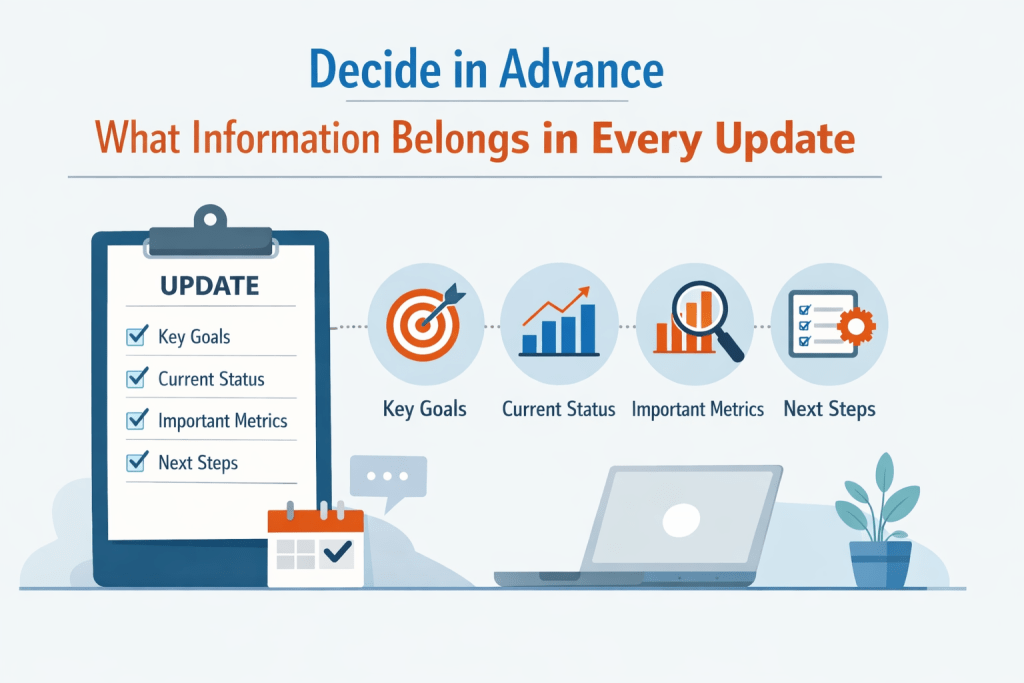
Decide in Advance What Information Belongs in Every Update

Another reason sibling communication breaks down is inconsistency. One day the update is about food. The next day it is about medication. The next day it is a complaint about how tired the caregiver feels. Then an important appointment detail gets missed because the message had no structure. This is not a character problem. It is a formatting problem.

A very practical solution is to create a standard update format. That way, siblings begin to recognize the pattern and can quickly understand what is happening.

A strong daily or regular caregiving update usually includes some version of the following:

Health status

What changed physically or medically today?

Examples:

  • Blood pressure was normal
  • Complained of dizziness in the morning
  • No pain reported today
  • New swelling in the ankle
  • Cough seems better than yesterday

Eating and hydration

Did the older adult eat enough? Drink enough? Refuse food?

Examples:

  • Ate breakfast and lunch, skipped dinner
  • Drank very little water until evening
  • Appetite was stronger today
  • Needed reminders to finish meals

Mood and cognition

How did they seem emotionally and mentally?

Examples:

  • Calm and social today
  • More anxious than usual
  • Confused about the day of the week
  • Repeated the same concern several times
  • Seemed lonely after dinner

Mobility and safety

How did movement and safety go?

Examples:

  • Walked to the bathroom with help
  • Very unsteady this morning
  • Needed extra help getting out of bed
  • Forgot to use walker twice
  • No falls today

Appointments, medications, or logistics

What practical items should siblings know?

Examples:

  • Follow-up appointment on Thursday
  • Refill requested for blood pressure medication
  • Care aide arriving later than usual this week
  • Dentist rescheduled to next Monday

Next step

Is there anything siblings need to do or simply know?

Examples:

  • No action needed, just keeping everyone updated
  • Please confirm who can join Friday’s call
  • I need one person to pick up medication tomorrow
  • Let’s discuss this after the doctor appointment

This format makes updates more useful and less emotional without becoming cold. It gives siblings a consistent lens into care while helping the caregiver avoid rewriting the entire day from scratch.

Keep Updates Factual First, Interpretations Second

In caregiving families, one sentence can trigger five very different reactions. “Mom seemed off today” may sound minor to one sibling and frightening to another. “Dad is doing worse” may be accurate emotionally, but it can be too broad to guide decision-making. General statements create room for projection, and projection often creates conflict.

That is why it helps to communicate in this order:

First: facts.
Second: patterns.
Third: concerns or interpretations.

For example, instead of writing:

“Mom is declining fast and I’m really worried.”

Try:

“Mom slept most of the afternoon, ate only a few bites at lunch, and seemed confused about where she was. This is the third day this week that her appetite has been low. I’m concerned this may be more than simple fatigue, so I plan to mention it to the doctor tomorrow.”

This style is calmer, clearer, and more credible. It gives siblings enough information to understand what happened before they jump to conclusions. It also reduces the chance that someone accuses the primary caregiver of exaggerating, underreacting, or being too emotional.

That does not mean caregivers should hide their feelings. It simply means the update itself works better when it begins with observable reality. Emotions can absolutely be included, especially when support is needed. But placing facts first keeps the conversation grounded.

Create Rules for Who Responds, When, and How

A major hidden source of family stress is not just what gets shared, but what happens after the update is sent. One sibling immediately calls. Another sends five follow-up questions. Another disappears for three days and then criticizes the plan. Another uses the moment to reopen an unrelated family argument. Soon the update becomes more exhausting than the caregiving itself.

This is why families benefit from response expectations. These do not need to be rigid or controlling. They simply need to be clear enough to protect everyone’s energy.

Here are a few helpful rules families can agree on:

Routine updates do not require a full discussion

A simple acknowledgment is enough. Something like:

  • Thanks for the update
  • Glad today was steady
  • Understood
  • Appreciate you letting us know

This prevents the caregiver from feeling responsible for managing a long thread every time they send basic information.

Important updates should have a response deadline when input is needed

For example:

  • Please reply by tonight if you have concerns
  • I need a decision by tomorrow morning
  • Let me know by 6 p.m. if you can help with transport

Deadlines reduce open-ended anxiety and keep decisions moving.

Urgent updates should trigger one communication channel only

In a crisis, families should already know the preferred path:

  • one group text
  • one call chain
  • one designated sibling to relay details
  • one point person for doctors or hospital staff

This cuts down on duplicate calls and mixed messaging.

Major disagreements should move out of text

Texting is efficient for updates, but poor for emotionally layered conflict. If siblings disagree about care, finances, safety, or parent wishes, move the issue to a scheduled phone or video conversation. Written messages are too easy to misread, especially when people are scared or guilty.

Having these rules in place protects both the emotional tone and the practical function of family communication.

Use “Decision Notes” So the Same Arguments Do Not Repeat

One underused but extremely effective strategy is keeping a short record of major decisions. In many families, the same conversation happens over and over because nobody remembers exactly what was decided, why it was decided, or what the follow-up was supposed to be.

A simple “decision note” can solve that.

After any meaningful family decision, write down:

  • What was decided
  • Why it was decided
  • Who was present or informed
  • What happens next
  • When the decision will be reviewed again

For example:

Decision note:
We agreed on March 10 to stop Dad from driving for now because of two recent confusion episodes and the doctor’s concern about reaction time. Sarah will handle grocery trips this week. We will revisit transportation options after the neurology appointment on March 24.

This kind of note reduces future conflict because it creates a shared reference point. It also helps siblings who were not present feel informed instead of excluded. In fast-moving caregiving situations, memory is not enough. Documentation protects clarity.

Do Not Confuse Access With Help

Many primary caregivers feel pressure to keep everyone constantly informed because they hope information will lead to more support. Sometimes it does. But often, families fall into a frustrating pattern where one person shares everything and still carries nearly all of the work.

This is why it is important to separate being informed from being responsible.

A sibling who receives updates is not automatically helping. A sibling who reacts emotionally is not automatically participating. A sibling who asks frequent questions may still not be reducing the caregiver’s load.

To prevent resentment, pair updates with specific roles where possible.

Examples:

  • One sibling handles appointment scheduling
  • One manages insurance calls
  • One orders supplies or groceries
  • One checks medication refills
  • One joins telehealth visits
  • One does a weekly emotional support call with the parent
  • One manages paperwork or bill tracking

When roles are assigned clearly, updates become more meaningful because each person knows what part of the information matters for their responsibility. This also reduces the common tension where one caregiver feels like the family secretary while everyone else remains vaguely “concerned.”

Protect the Older Adult’s Dignity While Still Being Honest

When siblings are stressed, it can become easy to talk about a parent as a bundle of problems to be managed. But even in difficult health situations, the older adult is still a person with dignity, privacy, preferences, and emotional presence.

That means updates should be honest without becoming demeaning.

For example, it is appropriate to say:

  • Dad needed help bathing today
  • Mom was confused about where she put her medication
  • She became upset when discussing the appointment
  • He refused lunch and seemed withdrawn

It is less helpful to use language that sounds mocking, dismissive, or harsh, even in frustration. Respectful communication matters not only for the siblings, but for the tone of care itself. Families often do better when they remember that updates are not just reports about decline. They are also records of a person’s daily experience.

It also helps to include moments of humanity, not just problems:

  • She smiled when we played her favorite song
  • He enjoyed talking about his old work stories
  • She was more comfortable after her bath
  • He laughed during the phone call with the grandchildren

These details matter. They help siblings stay emotionally connected to the parent as a whole person, not just a care situation.

A Practical Weekly Reset Keeps Small Problems From Becoming Family Tension

Even with a strong daily update system, families benefit from a brief weekly reset. This does not need to be a long meeting. In fact, shorter is usually better. Fifteen or twenty minutes is often enough.

A weekly reset can cover:

  • What changed this week
  • What stayed stable
  • What is coming up next
  • What decisions may need attention soon
  • Whether the current communication system is still working

This is the best place to catch issues early. For example:

  • Too many updates are being sent at random times
  • One sibling feels out of the loop
  • Another sibling feels overwhelmed by too much detail
  • Medical information is being mixed with emotional venting
  • Tasks are not being distributed fairly

A weekly reset turns these from personal complaints into system improvements. That shift is powerful. It allows the family to say, “This process is not working well,” instead of, “You are doing this wrong.”

The Best Update System Is the One People Can Actually Sustain

Families sometimes try to create the perfect caregiving communication system and end up building something too complicated to maintain. They make a detailed spreadsheet nobody updates, start a group thread nobody reads carefully, or promise daily reports that the primary caregiver cannot realistically provide.

A better standard is sustainability.

Ask:

  • Can this be maintained during a stressful week?
  • Can this still work if health worsens?
  • Can distant siblings understand the updates easily?
  • Can the main caregiver do this without resentment?
  • Does this system support care, not just communication?

If the answer is yes, the system is probably strong enough.

The truth is, the best caregiving communication systems are rarely fancy. They are clear, respectful, repeatable, and realistic. They lower emotional temperature. They reduce confusion. They help siblings respond with support instead of noise. Most importantly, they protect the energy of the person doing the daily work while improving care for the older adult at the center of it all.

Set Boundaries Around Caregiving Communication So Updates Do Not Become Another Full-Time Job

Sharing updates with siblings is supposed to make caregiving feel more supported. But for many family caregivers, it creates a second burden: managing reactions, answering repeated questions, calming guilt, correcting misunderstandings, and responding to messages at all hours. Over time, this can become emotionally draining enough that the caregiver begins to avoid communication entirely. Then siblings feel shut out, resentment grows, and the entire family dynamic becomes harder to manage.

This is why healthy caregiving communication needs more than honesty and frequency. It also needs boundaries.

Boundaries are not walls. They are not punishments. They are not signs that someone is unwilling to include the family. In caregiving, boundaries are a practical way to protect the time, emotional energy, and decision-making ability of the person closest to the day-to-day care. They also help siblings understand how to contribute more helpfully instead of unintentionally adding to the strain.

For older adults and seniors, better family boundaries can improve the quality of care in very real ways. When the caregiver is less overwhelmed, there is more focus available for medications, hygiene, meals, appointments, comfort, safety, and emotional presence. When siblings know when and how to communicate, family interactions become steadier and more respectful. That calmer environment benefits everyone, especially the aging parent at the center of the care arrangement.

The purpose of this section is simple: to help families create a communication approach that is supportive, fair, and sustainable. Because no matter how loving a family may be, communication without boundaries usually becomes messy. Communication with boundaries becomes useful.

Why Caregiving Communication Feels So Heavy for One Person

In many families, one sibling becomes the “default updater.” This person is often the one who lives closest, notices the most, attends appointments, handles daily routines, and gets called first when something goes wrong. Even if the rest of the family cares deeply, the information naturally flows through one person.

At first, this may seem manageable. A few updates here and there can feel reasonable. But over time, the role quietly expands. The primary caregiver may end up doing all of the following:

  • observing daily changes
  • remembering important details
  • updating siblings regularly
  • answering follow-up questions
  • repeating information for people who missed the first message
  • handling emotional responses from siblings
  • defending care decisions
  • translating medical language
  • reminding everyone what the doctor actually said
  • smoothing over disagreements

That is not just communication. That is administration, interpretation, and emotional labor layered on top of caregiving itself.

This is why many caregivers feel exhausted not only by the care work, but by the constant expectation to keep everyone fully informed in real time. If that exhaustion is not addressed, the caregiver may become brief, defensive, or avoidant. Then siblings may misunderstand that behavior as secrecy, irritation, or control, when in reality it is often burnout.

The solution is not to stop communicating. The solution is to communicate in a way that does not consume the caregiver’s entire day.

Set Expectations Early So Siblings Do Not Fill the Gaps With Assumptions

When families do not define communication expectations, people create their own. One sibling may assume they should be told every detail immediately. Another may assume only emergencies matter. One may expect phone calls. Another may prefer texts. One may think silence means “everything is fine,” while another interprets silence as “something must be wrong.”

Assumptions are where much of the family tension begins.

That is why it helps to set some expectations clearly and early. These can be simple statements, but they make a big difference. For example:

  • I will send one daily summary in the evening rather than multiple messages throughout the day.
  • I will message immediately if there is an emergency.
  • If you have questions, please keep them in the group thread unless something is private.
  • I may not respond right away during appointments or hands-on care.
  • If input is needed, I will say so directly.

These kinds of expectations reduce ambiguity. They help siblings know what to expect instead of continuously guessing. They also reduce the pressure on the caregiver to be endlessly available.

This is especially important in families where guilt, distance, or old sibling dynamics already exist. In those cases, even well-meant communication can quickly become emotionally loaded. Clear expectations create a healthier frame before that happens.

Separate “Need to Know” From “Nice to Know”

Not every sibling update needs the same level of detail. One of the easiest ways to reduce communication fatigue is to distinguish between information that family members truly need and information that is simply helpful for connection.

For example, a sibling may need to know:

  • a medication changed
  • the parent fell
  • the doctor recommended a new treatment
  • a legal or financial decision is pending
  • there is a safety concern at home
  • additional care support is needed

But siblings may not need a play-by-play of every ordinary moment unless that level of detail is mutually helpful and sustainable.

This distinction matters because many caregivers overexplain from a place of wanting to be transparent. Then they become trapped in long update cycles that create more questions than support. On the other hand, some caregivers under-share because they are tired, which can make siblings feel excluded from meaningful developments.

A practical way to balance this is to ask:

Will this information change anyone’s understanding, decision, or role?

If yes, it probably belongs in the update. If not, it may be optional unless it contributes emotionally in a positive way.

This keeps communication purposeful without making it cold. Siblings can still receive warm, human details. The difference is that the caregiver is no longer treating every small update as mandatory.

Use Boundaries to Protect Time, Not Just Feelings

Most people think of boundaries as emotional limits, but in caregiving, time boundaries are just as important.

Without them, siblings may text throughout the day expecting instant answers:

  • “Did she eat?”
  • “How did the appointment go?”
  • “Can you send me the lab results?”
  • “What exactly did the doctor mean?”
  • “Did he take his meds?”
  • “Can you call me when you get a minute?”

Each question may seem small. Together, they can break up the caregiver’s attention all day long.

A healthier approach is to create time-based communication boundaries. For example:

Set update windows

You might decide that routine updates go out once in the evening, or after appointments, rather than all day long.

Limit response times for non-urgent messages

You can let siblings know that messages sent during caregiving hours may be answered later unless urgent.

Protect critical care blocks

For example, mornings may be reserved for bathing, medication, breakfast, or mobility support. During those hours, communication should be minimal unless there is an emergency.

Pause discussions that are not actionable

If a sibling starts debating a topic with no immediate solution, it is reasonable to respond later when you have capacity or move the issue to a scheduled check-in.

These time boundaries are not harsh. They are practical. They help the caregiver preserve focus for actual care while still keeping the family informed.

Do Not Let Every Sibling Have the Same Access by Default

Equal love does not always mean equal access. In some families, all siblings can participate in communication in healthy ways. In others, one person escalates, one criticizes, one disappears until they disagree, or one uses updates to control the conversation without helping. In those situations, giving everyone the same level of immediate access may not improve caregiving. It may increase chaos.

That can be hard to admit, especially in families that value fairness. But fairness in caregiving is not the same as giving identical communication privileges regardless of behavior. Fairness means creating a structure that best supports the older adult and the caregiver’s ability to function.

This might mean:

  • one designated point person talks to doctors
  • one sibling summarizes key updates for extended relatives
  • one sibling is not included in minute-by-minute updates but receives scheduled summaries
  • difficult topics are discussed only in structured calls, not spontaneous texts
  • financial matters are separated from daily care threads

These decisions should be made thoughtfully, not emotionally. The goal is not exclusion for its own sake. The goal is to reduce confusion and prevent patterns that repeatedly derail useful communication.

Assign Communication Roles So the Primary Caregiver Is Not Carrying the Entire Family

One of the smartest ways to reduce communication burden is to treat family updates as a shared responsibility rather than assuming the primary caregiver must handle all of it alone.

That can look like assigning very specific communication roles, such as:

The primary observer

This is the person most involved in day-to-day care. They notice changes and flag what matters.

The family updater

This person may not be the main caregiver. Their role is to organize the information into one clear summary for siblings or relatives.

The appointment note-taker

This sibling attends virtual or in-person appointments when possible and records next steps so details are not lost.

The task coordinator

This person tracks who is handling what so practical responsibilities do not disappear into vague promises.

The extended-family liaison

If cousins, aunts, uncles, or adult grandchildren also need updates, one person handles that communication instead of the caregiver repeating the same message many times.

These roles are especially valuable in larger families. They turn communication into a distributed function instead of a hidden burden carried by one exhausted person.

Learn to Say “I’m Updating, Not Debating”

Some sibling conversations become draining because every update turns into a discussion. A practical message about meals, symptoms, mobility, or scheduling suddenly becomes an invitation for opinions, second-guessing, or criticism.

In those moments, caregivers often need language that is firm but respectful. One useful mindset is this:

Not every update is an open forum.

Sometimes the purpose of communication is simply to inform. That is entirely appropriate.

Helpful phrases include:

  • I’m sharing this so everyone stays informed.
  • No response needed unless you see a specific issue I may have missed.
  • This is an update, not a decision request.
  • I’m not able to go back and forth on this right now.
  • We can discuss bigger concerns during the family check-in.
  • The doctor has already advised us on the next step, so I’m passing that along.

These statements can feel uncomfortable at first, especially for caregivers who are used to over-explaining or trying to keep the peace. But they are often necessary. They stop useful communication from becoming constant negotiation.

Put Limits on Emotionally Reactive Messaging

Caregiving brings up fear, grief, guilt, sadness, frustration, and old family wounds. All of that is human. But raw emotional messaging in the family thread can easily create confusion and tension, especially during difficult updates.

For example, if one sibling responds to a routine update with panic, another with criticism, and another with silence, the primary caregiver ends up managing everyone’s emotions while also caring for the parent.

This is why it helps to create some emotional boundaries around group communication.

A healthy standard could be:

  • urgent facts go in the group
  • emotional processing happens one-on-one or in a scheduled conversation
  • blame, sarcasm, or family history does not belong in update threads
  • conflict about fairness or past resentment gets its own separate conversation

This keeps the update channel useful and stable.

That does not mean feelings should be suppressed. Caregiving is emotional, and families need room to process that. But not every space has to serve every purpose. The daily update thread should primarily support clarity, coordination, and care.

Give Siblings Specific Ways to Help After Updates

Many siblings say, “Let me know how I can help,” but caregivers often do not have the energy to figure that out in the moment. The result is a frustrating pattern: updates go out, sympathy comes back, but practical support never materializes.

A better approach is to connect updates to specific asks.

For example:

  • Mom has a cardiology appointment Thursday. Can someone call afterward and take notes while I drive?
  • Dad has been eating less. Could one of you research high-calorie meal options for seniors and send me three good ideas?
  • We need to decide on extra home care hours. Please review the agency options before Sunday.
  • I’m running low on energy this week. Can someone take over prescription refill calls?
  • The bathroom safety setup needs improvement. Can one of you compare grab-bar installers?

These requests are clear, actionable, and measurable. They turn concern into participation. They also help siblings feel genuinely involved instead of helpless or disconnected.

The important thing is specificity. General updates often create general sympathy. Specific updates paired with a task create useful support.

Recognize the Difference Between Transparency and Overexposure

Family caregivers sometimes feel that complete transparency is the only way to prevent criticism. So they share every detail, every frustration, every symptom, every conversation, and every emotional low point. But this can backfire. Too much information can create overwhelm, misinterpretation, and even unintended loss of dignity for the older adult.

Transparency should support trust. It should not erase privacy or flood the family with so much information that nobody knows what matters most.

A healthier standard is thoughtful transparency:

  • share what affects care, safety, decisions, or support
  • avoid unnecessary over-detail when it does not improve understanding
  • speak respectfully about intimate care needs
  • remember that the older adult may not want every hard moment described widely

This is particularly important when adult children are communicating about parents who still value independence and self-respect. Even when help is needed, dignity still matters.

Have a Plan for When the Caregiver Needs a Communication Break

There may be days when the caregiver simply cannot be the update center. Maybe there has been no sleep. Maybe the parent is having a difficult day. Maybe there was a hospital visit. Maybe the caregiver is emotionally spent.

Families should expect this and plan for it in advance.

That plan might include:

  • one backup sibling sending updates for 24 to 48 hours
  • one simplified message template for hard days
  • one rule that no non-urgent questions are asked during crises
  • one designated person who gathers questions and sends only the essential ones later

Even a short message like this can be enough:

“Today has been a heavy care day. Mom is stable, and there is no emergency, but I do not have the bandwidth for detailed updates until tonight. I’ll send a fuller summary when I can.”

This kind of message protects the caregiver without alarming the family unnecessarily. It also models a healthy truth: caregivers are human beings, not communication machines.

A Strong Boundary System Makes Family Support More Trustworthy

The real value of boundaries is not that they reduce contact. It is that they improve the quality of contact. When families communicate within a respectful structure, updates become clearer, responses become more useful, and fewer interactions turn into tension.

Over time, this builds trust.

Siblings begin to trust that:

  • they will be informed when something important happens
  • silence does not automatically mean neglect
  • the caregiver is not hiding information
  • urgent issues will be communicated quickly
  • practical help can be requested directly
  • difficult conversations have a proper place

Most importantly, the caregiver begins to trust that communication does not always have to cost them their peace.

That matters deeply. Because caregiving is already demanding enough. Family communication should reduce isolation and confusion, not become another source of exhaustion. When siblings put boundaries around updates, roles, timing, and emotional reactions, they create something much more valuable than a busy family chat. They create a system that supports better care, better relationships, and more steadiness for everyone involved.

How to Handle Sibling Disagreements About Care Without Letting Every Update Turn Into Conflict

Sharing caregiving updates with siblings sounds simple in theory. One person notices what is happening, shares it with the family, and everyone stays aligned. But real family caregiving rarely works that neatly. Even when siblings care deeply about the same parent, they often respond to the same update in very different ways. One sees a warning sign. Another thinks it is temporary. One wants immediate medical intervention. Another wants to “wait and see.” One focuses on safety. Another focuses on independence. One thinks the caregiver is doing too much. Another thinks they are overreacting.

This is where many families begin to struggle. The issue is no longer just the update itself. The issue becomes what the update means, who gets to interpret it, and how decisions should be made from there.

If families are not careful, daily caregiving updates can slowly become the place where every unresolved disagreement shows up. A short message about appetite turns into a fight about doctors. A note about confusion turns into a debate about whether the parent can still live alone. A practical question about home help opens old resentment about who has been helping and who has not. Once that pattern starts, siblings may stop reading updates openly. They begin reading defensively. They look for what was left out, what sounds dramatic, or what decision might be coming next. At that point, communication has stopped being a support system and has become a pressure point.

The good news is that disagreement itself is not the problem. In caregiving, some disagreement is normal. Adult children often have different relationships with their parent, different levels of proximity, different financial realities, different emotional coping styles, and different tolerance for risk. These differences do not automatically mean the family is failing. What matters is whether the family knows how to handle disagreement without letting it poison communication.

The goal is not to make siblings think exactly the same way. The goal is to keep updates useful, keep decision-making grounded, and stop every difference of opinion from becoming personal drama.

Understand Why Siblings Interpret Care Situations So Differently

Families often assume that conflict begins because someone is being difficult. Sometimes that is true. But more often, conflict begins because siblings are operating from different realities.

A sibling who lives nearby may be responding to what they saw this morning. A sibling who lives far away may still be picturing the parent from six months ago. A sibling who handles finances may worry most about long-term affordability. A sibling with medical anxiety may interpret every change as a major danger. A sibling who already feels guilty for not helping more may react strongly to any update that suggests the situation is getting worse.

In other words, people are often responding not just to the update, but to their own role, fear, history, and emotional burden.

This matters because it changes how the primary caregiver should frame conflict. Instead of immediately thinking, “Why are they making this harder?” it can help to ask, “What information, fear, or blind spot is shaping their response?”

That does not mean every reaction is reasonable. It does mean that understanding the source of disagreement can make it easier to respond strategically instead of emotionally.

For example:

  • the distant sibling may need more context, not a sharper tone
  • the panicked sibling may need facts and next steps, not reassurance alone
  • the critical sibling may need clearer expectations around when opinions are welcome
  • the disengaged sibling may need a specific role before they contribute meaningfully

When families understand the roots of disagreement, they are more likely to solve the real communication issue instead of arguing only about tone.

Do Not Try to Resolve Major Disagreements Inside Routine Update Threads

One of the most practical rules a family can adopt is this:

Routine updates are for sharing information. Major disagreements need their own space.

This one boundary can prevent a great deal of unnecessary conflict.

Group texts and update threads are useful for:

  • sharing changes in health or mood
  • confirming appointments
  • noting medication updates
  • asking for straightforward help
  • keeping siblings informed

They are not a good place for:

  • debating whether the parent should move
  • revisiting old arguments about fairness
  • negotiating power of attorney issues
  • accusing someone of doing too little
  • questioning every medical decision in real time
  • relitigating what happened three months ago

Why? Because these conversations need context, patience, and often a calmer setting than messaging allows. Text-based arguments usually create three problems at once. They flatten tone, they encourage fast emotional replies, and they leave everyone reacting publicly before they have processed privately.

A much stronger approach is to separate the two.

You might say:

  • “I’m sharing this as today’s update. The bigger question about home care deserves a separate conversation.”
  • “This thread is just for immediate updates. Let’s schedule a call to discuss next steps.”
  • “I hear that there are different opinions here. Rather than debate it in messages, let’s talk tomorrow when everyone can think clearly.”

This preserves the usefulness of the update channel while still making room for disagreement where it can actually be addressed well.

Focus on the Decision in Front of You, Not Every Possible Future Fight

Another reason sibling caregiving discussions escalate is that one update triggers ten future fears at once.

A message like “Mom forgot to turn off the stove today” can quickly spiral into:

  • she cannot live alone anymore
  • someone needs to move in
  • we need full-time care
  • we should sell the house
  • who will pay for this
  • what happens if she refuses
  • why did nobody act sooner

These may all be understandable concerns. But trying to solve all of them at once usually creates panic and conflict rather than clarity.

A more strategic way to manage disagreement is to define the immediate decision.

Ask:

  • What decision actually needs to be made now?
  • What can wait until more information is available?
  • What are we deciding this week, not this year?

In the stove example, the immediate decision might simply be:

  • install automatic shut-off devices
  • increase supervision during meal prep
  • schedule a medical review of memory changes
  • discuss cooking safety at the next family meeting

That is far more manageable than jumping instantly into permanent housing debates.

This approach helps families stay grounded. It keeps the conversation attached to evidence and timing rather than fear. It also reduces the chance that one sibling feels railroaded into a major life decision before the family has enough information.

Use Shared Criteria Before You Debate Solutions

Families often argue about solutions too early. One sibling says, “We need a home aide.” Another says, “That is too expensive.” One says, “Dad cannot be left alone.” Another says, “He deserves his independence.” These arguments go in circles because the family has not agreed on the criteria for evaluating options.

Before debating solutions, it helps to ask what standards the family is using. For example:

  • safety
  • dignity
  • affordability
  • medical need
  • parent preference
  • caregiver capacity
  • consistency of care
  • sustainability over the next three to six months

Once siblings agree on the criteria, the conversation becomes more productive. Instead of arguing “my plan versus your plan,” they can ask, “Which option best meets the standards we all say matter?”

For example:

  • If safety is the top concern, what arrangement best reduces immediate risk?
  • If caregiver burnout is becoming severe, what option actually relieves the load?
  • If the parent strongly values staying home, what supports could make that safer for now?
  • If costs are a concern, what is realistic without creating unsafe gaps in care?

This shift matters because it moves the conversation away from personality and toward shared reasoning. It makes disagreements less emotional and more practical.

Name the Difference Between Information Gaps and Value Conflicts

Not all sibling disagreements are the same. Some happen because people are missing information. Others happen because people have genuinely different values.

This distinction is important.

Information gaps

These can often be solved with clearer facts.

Examples:

  • one sibling did not understand what the doctor said
  • someone did not realize how often falls have been happening
  • the distant sibling has not seen the parent’s recent decline
  • medication side effects were not fully explained
  • one person is relying on outdated assumptions

These disagreements may improve with better updates, appointment notes, care logs, or a shared summary.

Value conflicts

These are harder, because the disagreement is not about facts alone.

Examples:

  • one sibling prioritizes independence even if risk rises
  • another prioritizes safety even if autonomy is reduced
  • one wants aggressive treatment
  • another wants comfort and simplicity
  • one believes family should do all care personally
  • another believes paid help is necessary and appropriate

These conflicts do not disappear just because more facts are added. They need a more deliberate conversation. The family may need to talk openly about priorities, parent wishes, and what trade-offs they are actually willing to accept.

Knowing whether you are dealing with an information gap or a value conflict can save a great deal of frustration. If it is an information issue, share better context. If it is a values issue, stop pretending one more text message will fix it.

Bring the Older Adult’s Wishes Back Into the Conversation

When sibling conflict grows, the focus can quietly shift away from the parent and toward the siblings themselves. People begin defending their role, their opinion, their guilt, their effort, or their authority. That is understandable, but it can become counterproductive.

A helpful reset is to ask:

  • What would our parent want if they could express this clearly?
  • Have they already told us what matters most to them?
  • Are we centering their needs, or our own disagreement?
  • Are we arguing about control when we should be discussing care?

This is especially important when the parent has previously expressed preferences about:

  • staying at home
  • receiving professional help
  • hospital care
  • privacy
  • finances
  • mobility
  • routines
  • end-of-life wishes

Bringing those preferences back into the discussion can reduce unnecessary conflict because it shifts the conversation from “who wins” to “what best honors the older adult.”

That said, families should also be realistic. A parent’s wishes matter greatly, but they exist alongside safety, caregiver capacity, and changing medical realities. Respecting a parent does not always mean following every preference exactly. It means considering their values seriously and transparently when making decisions.

Use Evidence, Not Memory, When Conflict Keeps Repeating

In many caregiving families, the same disagreements happen again and again because people rely on emotional memory rather than shared evidence.

One sibling says:

  • “She is not that forgetful.”
    Another says:
  • “You do not see what I see every day.”

One says:

  • “He is still doing fine.”
    Another says:
  • “No, he is getting worse quickly.”

When conversations stay at this level, nobody feels heard. This is where simple evidence can help.

That evidence might include:

  • a short daily log of meals, mobility, mood, or confusion
  • appointment summaries
  • medication changes
  • incident notes after falls or wandering
  • written doctor recommendations
  • a list of tasks the caregiver is handling each week

The purpose of this information is not to build a legal case against a sibling. It is to give the conversation something more stable than impressions alone.

For example, it is much easier to discuss care needs when the family can say:

  • “There were three missed medications this week.”
  • “He nearly fell twice in the bathroom.”
  • “Appetite has been low for five straight days.”
  • “The doctor specifically recommended more supervision.”
  • “The caregiver is averaging four hours of hands-on help each morning.”

Evidence lowers the temperature because it gives everyone something concrete to respond to. It does not guarantee agreement, but it makes denial and confusion harder to sustain.

When a Sibling Criticizes, Pull the Conversation Back to Contribution

Criticism is one of the fastest ways for caregiving updates to turn into resentment. A sibling who is less involved may question why a certain doctor was chosen, why a meal was handled a certain way, why a medication was not changed sooner, or why more updates were not sent. Even if some questions are valid, criticism without contribution tends to land badly.

The best response is not always to defend every detail. Often, the more effective move is to redirect the conversation toward practical participation.

Helpful responses include:

  • “I hear the concern. What part of this would you like to take ownership of?”
  • “If you think a different option should be explored, can you research it and report back by Friday?”
  • “I’m open to ideas, but I need help implementing them.”
  • “That may be worth discussing. Who can take the lead on that next step?”
  • “I’m sharing what is happening on the ground. If you want to help improve it, let’s define your role.”

This kind of response does two useful things. First, it protects the caregiver from getting dragged into endless justification. Second, it reveals whether the sibling is offering real help or only commentary.

Families function better when opinions come with responsibility.

Decide Ahead of Time How Final Calls Will Be Made

Some caregiving conflicts drag on because the family has never defined how decisions are made when there is no full agreement. Everyone keeps talking, nobody knows who has authority, and urgent issues get delayed because people are waiting for total consensus that may never come.

This is dangerous in caregiving. Some decisions cannot wait for perfect alignment.

A healthy family should discuss in advance:

  • who makes urgent medical decisions if the parent cannot
  • who communicates with doctors
  • who has legal authority if documents exist
  • when the primary caregiver can make practical day-to-day calls without full family approval
  • what kinds of decisions require a group discussion

This is not about power for its own sake. It is about clarity.

For example:

  • daily routine changes may be left to the primary caregiver
  • medication questions may go through the doctor and appointed health proxy
  • major financial decisions may require wider sibling discussion
  • urgent safety decisions may be made immediately, with explanation afterward

When families know the decision pathway, updates stop triggering unnecessary power struggles. People may still disagree, but the process is less chaotic.

Use Short Conflict-Defusing Language in the Moment

When emotions rise, long explanations usually do not help. What helps most is language that is calm, respectful, and directional.

Examples:

  • “Let’s separate the update from the larger decision.”
  • “We do not need to solve the whole future tonight.”
  • “I want to keep this focused on what changed today.”
  • “There may be different views here, but the immediate issue is safety.”
  • “I’m hearing concern, but we need concrete next steps.”
  • “This deserves a real conversation, not reactive texting.”
  • “Let’s come back to what the doctor actually recommended.”
  • “I’m open to discussion, but not blame.”

These phrases work because they lower emotional escalation without dismissing the concern. They help the caregiver maintain steadiness even when other people are reacting from fear or frustration.

Some Disagreements Need Outside Support

Not every family can resolve caregiving conflict internally. Sometimes the history is too loaded. Sometimes trust is too low. Sometimes the decisions are too high-stakes. In those cases, outside guidance can be one of the smartest ways to protect both the caregiving relationship and the older adult’s care.

Depending on the situation, helpful outside support might include:

  • a doctor clarifying treatment options
  • a social worker helping the family understand care levels
  • a geriatric care manager offering an objective view
  • an elder law professional clarifying decision authority
  • a family therapist helping siblings communicate more constructively
  • a mediator for high-conflict family decision-making

Seeking outside help is not a sign that the family has failed. It is often a sign that the family cares enough to stop letting emotional patterns drive important care decisions.

The Goal Is Not Perfect Agreement. It Is Steady, Respectful Coordination

Many caregivers exhaust themselves trying to get every sibling fully aligned before moving forward. But caregiving does not always allow for perfect agreement, and families do not need total sameness in order to function well.

What they do need is:

  • clear updates
  • a separate space for major disagreements
  • shared facts where possible
  • agreed criteria for evaluating choices
  • a respectful process for decision-making
  • roles tied to real responsibility
  • a habit of returning to the parent’s needs and wishes

That is enough to create steadier coordination, even when opinions differ.

The most important thing to remember is this: disagreement does not have to destroy communication. Families can disagree and still stay useful to one another. They can hold different emotional reactions and still coordinate practical care. They can have tension and still choose a structure that protects the older adult from becoming caught in sibling conflict.

When families learn to handle disagreement well, daily caregiving updates stop feeling like potential arguments. They become what they were meant to be in the first place: a way to keep everyone informed, grounded, and moving in the same direction as much as possible.

Practical Tools for Daily Caregiver Updates

Modern tools now exist that transform update sharing from exhausting to effortless. The right technology saves precious time while ensuring everyone receives consistent information.

A well-organized workspace featuring various daily caregiver update tools, such as a digital tablet displaying a calendar app, a notepad with handwritten notes, a pen, and a smartphone with a messaging app open. In the foreground, focus on the tablet, reflecting soft, natural light. The middle ground includes the notepad and pen, arranged neatly, indicating readiness for updates. The background displays a warm-toned room with shelves of caregiving books and plants, creating a calming atmosphere. The overall mood is professional and supportive, emphasizing the importance of clear communication. Use a slightly overhead angle to capture all elements harmoniously, ensuring clarity and focus.

Leveraging Technology: Try JoyCalls

JoyCalls offers an innovative solution for busy caregivers. This AI-powered service makes daily check-in calls to your loved one, then sends summary updates directly to you and other caregivers.

Your siblings receive consistent updates without you making multiple calls. Sign up for JoyCalls to experience automated daily phone check-ins that improve information quality.

Scheduling, Documenting, and Streamlining Conversations

Designate one family member as the main contact for the health care team. This approach prevents confusion and saves time for doctors.

Keep detailed records of sleeping patterns, eating habits, and medication schedules. This documentation helps medical professionals provide better care for patients.

Tool TypePrimary BenefitBest For
Automated Check-insSaves daily update timeConsistent wellness monitoring
Shared CalendarsCoordinates schedulesAppointment tracking
Central DocumentsOrganizes critical informationQuick access to health details
Group MessagingStreamlines conversationsOne-time updates for everyone

These practical tips help caregivers manage their responsibilities more effectively. The goal is reducing mental load while maintaining excellent care.

Overcoming Common Communication Roadblocks in Caregiving

When tensions rise during care coordination, it’s often emotional roadblocks rather than practical issues causing the friction. Everyone brings their own fears and history to these discussions.

Identifying and Addressing Emotional Barriers

Guilt, denial, and fear can make relatives react in unexpected ways. A sibling’s criticism might stem from their own difficult emotions about the situation.

As one experienced caregiver noted, “I know it’s hard for you to hear that Mom’s condition is worsening—it’s hard for me to watch it every day.” This honest approach names the emotional elephant in the room.

Managing Time and Adjusting to Changing Health Conditions

Time constraints affect everyone differently. You might be exhausted from daily responsibilities while another person is managing work pressures.

When a loved one’s health evolves, your approach must adapt too. What worked during independence won’t suit intensive care needs. Clear dialogue with medical professionals becomes essential.

Common RoadblocksPractical SolutionsImpact Level
Emotional reactionsName feelings openlyHigh
Time limitationsSet realistic expectationsMedium
Health changesAdjust communication styleHigh
Hearing challengesUse visual cuesMedium

Remember that these challenges are normal. You’re navigating complex emotions while coordinating with people doing their best. Sometimes the most supportive conversation starters come from acknowledging this shared reality.

Navigating Family Decision-Making and Conflict Resolution

The most difficult moments often come when relatives must collectively determine the best path forward for someone they all cherish. These discussions about major life choices require careful preparation and emotional awareness.

Techniques for Approaching Difficult Conversations

Start by gathering comprehensive information from health care professionals. This prepares you for the discussion with solid facts.

Choose a calm setting away from crisis moments. Begin by affirming your shared goal: everyone wants what’s best for your loved one. This approach lays foundation for productive conversations.

ApproachKey BenefitBest Use Case
Information-firstReduces emotional reactionsMedical treatment choices
Small stepsManages overwhelmComplex living arrangements
Trial periodsTests options practicallyContested care plans
Third-party inputProvides objectivityStuck negotiations
A diverse family of four, two adults and two teenagers, sit around a well-organized dining table filled with a notebook, cups of tea, and a laptop. The adults, wearing professional business attire, appear engaged and focused as they discuss strategies for collective decision-making. One teenager takes notes, while the other looks thoughtfully at a chart on the laptop screen, symbolizing conflict resolution techniques. Soft natural light filters through a nearby window, casting a warm glow, creating an inviting atmosphere of collaboration and understanding. In the background, a cozy home environment is visible, featuring family photos and plants that add a personal touch. The setting conveys a sense of support and unity, highlighting the importance of effective communication in family interactions.

Strategies for Mediating Conflicts and Finding Consensus

When disagreements arise, focus on your parent’s expressed wishes. Acknowledge each person’s concerns without judgment.

Look for areas of agreement first. Then address differences with compromise solutions. Sometimes a trial period helps everyone see what actually works.

Remember that unanimous agreement isn’t always necessary. The designated decision-maker may need to make the final call after considering all input. This approach respects everyone’s perspectives while moving forward.

Conclusion

You deserve a system that respects your time while keeping everyone meaningfully involved. Sharing updates shouldn’t be a burden. The strategies we’ve discussed offer a practical way forward.

Remember, progress matters more than perfection. Small improvements in how you share information can dramatically reduce stress. This is especially true when supported by tools like JoyCalls for automated check-ins.

Open, honest dialogues strengthen relationships and build trust. This leads to more effective and compassionate care. Research shows that skilled communication is critical for helping caregivers feel involved.

Your needs are important. Establishing patterns that work for you is essential for sustainable support. Take one step today—perhaps by trying JoyCalls. Transform this journey into something you carry together, with more connection and less weight.

FAQ

How can I keep my siblings informed without feeling overwhelmed?

Focus on simple, consistent updates. Use tools like JoyCalls to automate daily check-ins. This sends a brief summary to everyone, saving you time and reducing stress. It helps everyone stay connected without constant calls or texts.

What if my brother or sister disagrees with my approach to our parent’s needs?

Start by listening to their concerns. Use “I” statements to share your perspective without blame. Schedule a calm discussion to explore all options together. Finding common ground is key when health issues arise.

How do we handle difficult emotions during these conversations?

Acknowledge that feelings like worry or frustration are normal. Practice patience and empathy. Take breaks if talks become heated. Remember, you’re all on the same team, wanting the best for your loved one.

What’s the best way to share important information from doctors?

After an appointment, jot down key points. Share this info in a group chat or email while it’s fresh. Be clear about next steps and decisions needed. This keeps all members of the support team aligned.

How can we make joint decisions when we live in different cities?

Use technology to bridge the distance. Schedule regular video calls to discuss care topics. JoyCalls can provide daily updates on your parent’s condition, giving distant siblings peace of mind and a voice in choices.

What if one person is doing most of the work?

Openly discuss the situation. Clearly express your needs and ask for specific help. Even small tasks from others can lighten your load. Setting boundaries ensures the primary helper doesn’t burn out.


Other Articles related to this article:

Medication Adherence Tips From Pharmacists (Simple, Proven)
Medication Reminders for Diabetes, BP, and Heart Meds (Systems That Stick)
Remote Medication Monitoring for Elderly Parents (What’s Realistic)
Medication Errors at Home: The Most Common Mistakes (And Fixes)
Side Effects vs Nonadherence: What Caregivers Should Watch For
The Best Time to Take Meds: Building a Habit Around Meals
Automatic Pill Dispensers: Do They Really Improve Adherence?
Medication Refills: Simple System to Never Run Out
How to Talk to a Stubborn Parent About Taking Meds
Polypharmacy in Seniors: Managing Too Many Meds Safely
Medication Reminders for Vision or Hearing Problems (Easy Fixes)
Medication Adherence for Dementia: Routines That Reduce Stress
Blister Packs and Bubble Packs: Are They Worth It for Seniors?
Pharmacy Sync: How to Align Refills on the Same Day
How to Keep an Updated Medication List (Template + Tips)
Text Message Medication Reminders for Seniors (Pros and Cons)
AI Medication Reminders: What They Can and Can’t Do
Medication Adherence for Seniors: Why Doses Get Missed
Post-Hospital Medication Plan: Avoiding Confusion After Discharge
Best Medication Reminder Methods (No Smartphone Needed)
Phone Call Medication Reminders: Do They Work Better Than Apps?
Pill Organizer 101: How to Choose the Right One for Seniors
Medication Management for Seniors Living Alone (Safety Plan)
Weekly Pill Planner Setup (Step-by-Step, 10 Minutes)
Daily Check-In Routine for Seniors Who Hate Being Checked On
How to Create a Medication Schedule That Actually Works
Medication Adherence Checklist for Caregivers (Fully Explained + Printable)
What to Do When Your Parent Says “I Already Took The Medicine”
How to Prevent Double Dosing in Seniors
Medication Reminder Apps for Seniors: What’s Actually Easy
How to Help Elderly Parents Remember Their Meds (Simple System)
Daily Check-In Routine for Seniors With Hearing Issues (Make It Easier)
Weekly Review: How to Spot Patterns From Daily Check-Ins
How to Start a Daily Check-In Routine in One Day (Fast Setup)
Daily Phone Check-In Services for Seniors: What to Look For
AI Check-In Calls for Seniors: How They Work (And What They Don’t Do)
The Best Daily Check-In Apps and Tools (And Simple No-App Options)
Daily Check-In Routine That Builds Real Connection (Not Just Monitoring)
How to Share Daily Caregiving Updates With Siblings (Without Miscommunication or Drama)
How to Set Boundaries With Daily Check-Ins (So It Doesn’t Take Over Your Life)
Daily Mood Check-Ins for Seniors: What to Watch For
Daily Check-In Routine After Hospital Discharge (First 14 Days)
How Often Should You Check In on Elderly Parents?
Daily Check-In Routine for Meals and Hydration (Quick Method)
Daily Check-In Routine for Seniors Living Alone (Safety + Connection)
How to Track Daily Check-Ins Without Feeling Like a Spreadsheet
Daily Check-In Routine for Medication Adherence (Without Nagging)
How to Build a Check-In Routine That Seniors Won’t Resist
Caregiver Check-In Schedule Template (Daily + Weekly)
Daily Check-In Routine for Elderly Parents (Simple Plan)
The 2-Minute Daily Check-In Script (No Awkward Talk)
The “No Answer” Escalation Plan for Daily Check-Ins
Daily Check-In Routine for Chronic Conditions (BP, Diabetes, COPD)
Daily Check-In Routine for Fall Risk (What to Ask Daily)
Daily Wellness Check Calls: What to Ask (7 Questions)
Daily Check-In Routine for Long-Distance Caregivers
What to Do If Your Parent Misses a Check-In (Step-by-Step)
Daily Check-In Routine for Dementia: Simple, Calm, Consistent
Daily Check-In Text vs Phone Call: Which Is Better for Seniors?
Morning vs Evening Check-Ins: What Works Best for Seniors
Caregiver Guilt: When You Can’t Be There to Keep Them Company
Senior Loneliness and Anxiety: Why They Feed Each Other
Does an AI Companion Help Senior Loneliness? What to Expect
How to Build a “Circle of Care” to Reduce Isolation (Neighbors, Friends, Family)
Volunteering for Seniors: The Best Way to Feel Connected Again
Loneliness in Men vs Women After 65: What Changes?
Senior Centers vs Community Groups: What Works Better for Loneliness?
“No One Needs Me”: How Purpose Reduces Loneliness in Aging
How to Make Phone Calls Feel Less “Check-In” and More Like Real Connection
Loneliness in Assisted Living: Why It Still Happens and What Helps
Loneliness or Depression? How to Spot the Difference in Older Adults
The Health Risks of Loneliness in Seniors (Heart, Brain, Immunity)
Loneliness in Older Adults: Signs, Causes, and What Helps
Loneliness in Seniors Without Smartphones: Low-Tech Ways to Stay Connected
Best Hobbies for Lonely Seniors (Easy to Start, Low Energy)
Social Isolation vs Loneliness: What’s the Difference in Seniors?
Retirement Loneliness: Why It Happens and How to Fix It
How to Help Seniors Make Friends After 60 (Practical Steps)
How to Create a Weekly Social Routine for an Elderly Parent
After a Spouse Dies: Loneliness in Widowhood (What Actually Helps)
How to Tell If Your Aging Parent Is Lonely (Even If They Say They’re Fine)
The “Quiet Withdrawal” Problem: When Seniors Stop Calling Back
How Often Should You Talk to Your Elderly Parents to Prevent Loneliness?
How to Help a Parent Who Refuses Social Activities
How to Help a Lonely Elderly Parent When You Live Far Away
Social Isolation in Seniors Living Alone: A Safety + Loneliness Plan
Senior Loneliness at Night: Why Evenings Feel Worse
Daily Check-In Calls for Seniors: Do They Reduce Loneliness?
Conversation Ideas for Seniors Who Feel Lonely (No Awkward Small Talk)
Loneliness and Dementia: Does Being Alone Speed Up Memory Loss?
Best Low-Tech Safety Devices for Seniors Living Alone
Home Safety Setup for Long-Distance Caregiving (Room-by-Room)
How to Track Meals and Hydration From Another City
Caregiver Guilt When You Live Far Away (How to Cope)
Smartwatch vs Phone Check-Ins: What Works Better for Seniors?
Scams Targeting Seniors: How to Protect Parents Remotely
When It’s Time for Assisted Living (Long-Distance Decision Guide)
How to Choose a Paid Caregiver When You Live Far Away
Weekly Care Plan Template for Aging Parents
Fall Risk: How to Reduce It When You’re Not There