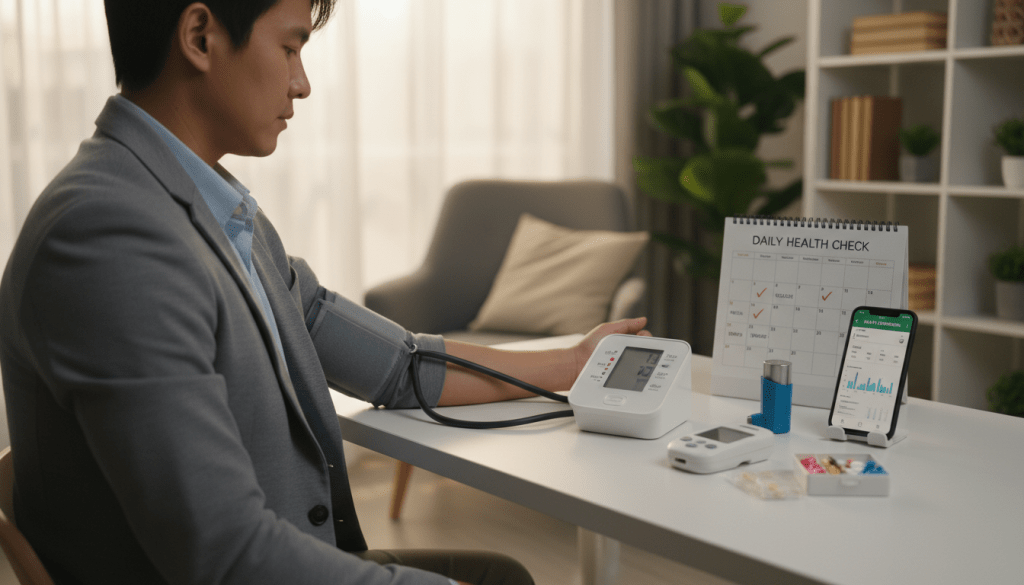

What if managing your long-term health could feel less like a burden and more like a gentle, reassuring part of your day?
Living with a health challenge like high blood pressure, diabetes, or COPD can feel overwhelming. You’re balancing daily needs with everything else life brings. But managing a persistent health issue isn’t just about doctor visits. It’s about creating a daily rhythm that helps you feel more in control and confident.
You are not alone. The CDC states that six in ten U.S. adults live with at least one chronic disease. Millions are on this journey with you. With the right habits and support, thriving is absolutely possible.
This guide offers compassionate strategies for a health routine that fits real life. Itโs not about adding stress. Itโs about finding simple, meaningful ways to check in with your well-being.
We understand the unique concerns for seniors wanting independence and for families caring from a distance. Modern support, like a compassionate AI companion, can provide gentle daily check-ins without complicated apps. A consistent approach brings peace of mind and better health for everyone.
Key Takeaways
- Effective health management extends beyond medical appointments to daily habits.
- Millions of Americans successfully navigate long-term health conditions.
- Simple, integrated routines reduce stress and increase a sense of control.
- Technology can offer supportive, effortless daily check-ins.
- A consistent approach benefits both individuals and their supportive families.
- Practical strategies focus on real-life application, not perfection.
Understanding Daily Check-In Routines for Chronic Conditions
What if your daily health awareness could become as natural as brushing your teeth? This gentle practice transforms worry into wisdom. Small, consistent observations create powerful insights about your well-being.
The Importance of Consistent Monitoring
When managing persistent health challenges, tiny changes can signal important shifts. Catching these early makes all the difference in your care journey. You move from guessing to knowing what’s truly happening.
Regular monitoring provides real data, not just anxiety. This information helps you and your healthcare team make smarter decisions. It turns helpless feelings into empowered action.
Knowing someone is checking in regularly brings tremendous peace. Whether it’s you, a family member, or supportive technology, this consistency transforms anxiety. You feel supported and connected.

Impact on Blood Pressure, Diabetes, and COPD Management
For blood pressure, daily tracking reveals patterns related to diet, stress, and activity. You can take control before numbers become concerning. This proactive approach supports better health outcomes.
With diabetes, regular observations help track glucose levels throughout the day. You learn which foods or activities cause spikes or drops. This knowledge helps maintain stable blood sugar.
Try JoyCalls Free
No app or new device needed. Start with a free 7-day trial.
For respiratory conditions, daily awareness monitors breathing patterns and medication effectiveness. Early signs can be addressed before they become emergencies. This is key to managing chronic conditions successfully.
These practices aren’t about perfection. They’re about building awareness when issues are easier to manage. For caregivers, knowing their loved one has this support provides relief and connection.
Implementing a Chronic Illness Check-In Routine
What if your morning could begin with a peaceful check-in that sets a positive tone? This gentle practice helps you stay connected to your well-being without feeling overwhelming. It’s about creating moments of awareness throughout your day.
Step-by-Step Guide to Establishing Your Routine
Start with just a few minutes each morning. Choose a consistent time that works for your schedule. This simple approach builds consistency naturally.
Focus on two or three key areas each day. Track your symptoms and energy levels. Notice patterns in how you feel. This information helps your healthcare team adjust your treatment effectively.

Consider using technology for gentle reminders. Automated systems can provide support without adding stress. This is especially helpful for long-distance caregiving situations.
| Monitoring Area | Daily Focus | Weekly Review |
|---|---|---|
| Medication Tracking | Confirm daily doses | Refill needs assessment |
| Nutrition Awareness | Meal choices & hydration | Pattern identification |
| Activity Level | Gentle movement notes | Energy trend analysis |
“Small, consistent actions create powerful health transformations over time.”
Integrating Medication, Diet, and Exercise Monitoring
Your daily management should feel seamless. Use pill organizers or phone alerts for medications. Track your diet by noting how foods affect you. Monitor exercise through simple activities like walking.
This integrated lifestyle approach makes managing chronic conditions more manageable. Remember that building a supportive daily self-care routine is a journey of self-care.
Self-Care Strategies to Enhance Your Daily Routine
What if caring for your well-being felt like giving yourself a daily gift rather than another task? True health management extends beyond numbers and medications. It’s about nurturing your whole self through compassionate strategies that honor both body and spirit.
Balancing Nutrition, Hydration, and Sleep
Focus on adding nourishing foods rather than restricting yourself. Colorful vegetables, whole grains, and lean proteins support your body’s needs. This positive approach to your diet makes healthy eating feel sustainable.
Try JoyCalls Free
No app or new device needed. Start with a free 7-day trial.
Drinking enough water throughout the day helps every system work better. Proper hydration reduces fatigue and can support healthy weight management. It’s one of the simplest forms of self-care.
Quality sleep gives your body time to heal and regulates your mood. When you’re well-rested, managing your health feels more manageable. Good sleep supports your immune function and mental clarity.

Incorporating Gentle Physical Activity and Mental Health Practices
Exercise doesn’t mean grueling workouts. A short daily walk or gentle stretching improves strength and mood. This kind of movement supports your overall health without overwhelming you.
Your emotional wellbeing deserves equal attention. Practices like deep breathing or connecting with supportive friends make a profound difference in your quality life. Addressing mental health is essential, not optional.
These self-care approaches work together beautifully. Better sleep fuels energy for movement. Good nutrition supports rest. And consistent support helps maintain all these healthy habits for lasting wellbeing.
Leveraging Digital Tools and Professional Support
What if technology could provide the gentle companionship your loved one needs while giving you peace of mind? You don’t have to manage health challenges alone. Today’s tools combine with professional support to create a safety net that works around the clock.
How JoyCalls Supports Your Health Monitoring Needs
For busy families, daily worry about aging parents can feel overwhelming. JoyCalls offers a compassionate solution through simple phone calls. The AI companion chats naturally about health, mood, and medications.
This daily support system requires no apps or new devices. Your loved one just answers the phone to a friendly voice that remembers their specific needs. After each call, you receive a summary with any concerns highlighted.

Using Technology and Appointments for Better Outcomes
Regular appointments with your healthcare provider remain essential. These visits allow for medication adjustments and early detection of issues. Bring your daily monitoring data to make the most of your time together.
Combining professional care with consistent monitoring creates the best approach for managing chronic conditions. Research shows this integrated method leads to better health outcomes. Don’t wait to schedule appointment today if you have concerns.
Whether through personal effort or supportive technology, consistent monitoring makes a real difference. Families can schedule appointment today with their provider while setting up JoyCalls for daily support.
Personalizing Your Chronic Disease Management Plan

What if your health plan could adapt to your life’s natural rhythms instead of forcing you into a rigid schedule? Your approach should feel like a comfortable custom fit, not a one-size-fits-all solution.
Your specific condition, energy levels, and personal goals deserve a tailored strategy. This personalized method makes daily monitoring sustainable and effective.
Customizing Check-In Frequency Based on Your Condition
Different health conditions require different monitoring rhythms. Someone with diabetes might track blood sugar multiple times daily. Another person with stable blood pressure might check weekly.
Work with your provider to determine what needs tracking for your diagnosis. This might include blood readings, weight, or symptom severity. Maintaining accurate records gives your healthcare team objective data for better treatment decisions.

Notice when your routine needs adjusting. New symptoms or concerning trends signal it’s time to increase monitoring frequency. Research shows personalized chronic disease management leads to better outcomes.
| Health Condition | Key Monitoring Areas | Suggested Frequency |
|---|---|---|
| Diabetes | Blood glucose levels | Multiple times daily |
| High Blood Pressure | Blood pressure readings | Weekly or as directed |
| Respiratory Conditions | Oxygen levels, breathing | Daily symptom check |
Your needs will evolve with lifestyle changes, stress levels, or treatment adjustments. The most effective daily monitoring approaches grow with you. They provide support without pressure.
Set realistic goals based on your current health status. As you understand your body’s patterns, you’ll develop intuition about when to check carefully. This makes the process feel less burdensome over time.
Daily Decision-Making: What to Do When Your Check-In Shows a Change
A daily check-in is most helpful when it does more than collect numbers. For seniors living with high blood pressure, diabetes, COPD, or more than one long-term condition, the real value comes from knowing what the information means and what to do next.
Many older adults already know they โshouldโ check their blood pressure, blood sugar, breathing, weight, medications, energy, and symptoms. But the harder question is this: What should happen after the check-in?
That is where a simple daily decision-making system can make life feel safer and less stressful. Instead of reacting with fear every time a reading looks unusual, you can use a calm, step-by-step approach. This helps you decide whether to rest, recheck, adjust your day, call a family member, message your doctor, or seek urgent help.
This section is not a replacement for medical advice. Your doctorโs instructions should always come first. But it can help you build a practical โif this happens, then I do thisโ routine that supports independence, reduces confusion, and gives family caregivers clearer peace of mind.
Start With Your Personal โNormalโ

The first mistake many people make is comparing every reading to a general chart without knowing their own baseline. For example, one person may feel well with a blood pressure reading that would be concerning for someone else. Another person with COPD may normally feel slightly breathless in the morning but notice trouble if that breathlessness becomes stronger, lasts longer, or appears with new symptoms.
Your daily check-in should help you learn your personal pattern.
For one to two weeks, write down your usual readings and symptoms at the same time each day. Note your blood pressure, blood sugar if you check it, breathing comfort, oxygen level if your doctor has asked you to monitor it, sleep quality, appetite, medication timing, mood, and energy. Also write down anything that may affect the result, such as poor sleep, salty food, missed medication, stress, weather changes, travel, infection symptoms, or extra physical activity.
After a short period, patterns often become clearer. You may notice that your blood pressure is usually higher before breakfast, your blood sugar changes after certain meals, or your breathing is worse on humid days. This does not mean you should ignore abnormal symptoms. It means you are building context so that you and your healthcare team can make better decisions.
Use a Green, Yellow, and Red System
A simple color system can make daily health decisions easier.
The green zone means things look normal for you. Your readings are within the range your doctor gave you, your symptoms feel stable, and you can continue your usual routine.
The yellow zone means something has changed. A reading may be higher or lower than usual, your breathing may feel slightly worse, you may feel unusually tired, or you may have missed medication. The yellow zone is a signal to slow down, recheck, and watch closely.
The red zone means there may be a serious problem. This includes severe symptoms, rapidly worsening breathing, chest pain, confusion, fainting, sudden weakness, trouble speaking, severe low blood sugar symptoms, or blood pressure readings that remain extremely high with warning signs. The American Heart Association advises emergency help for blood pressure higher than 180/120 mm Hg when symptoms such as chest pain, shortness of breath, weakness, vision changes, or difficulty speaking are present.
For COPD, the American Lung Association also uses green, yellow, and red zones in COPD action plans, with the plan completed together with a healthcare provider.
Common Mistakes Seniors Make During Daily Check-Ins (And How to Avoid Them)
Even with the best intentions, daily check-in routines can go off track. Not because seniors are carelessโbut because small misunderstandings, habits, or fears quietly interfere with consistency and accuracy.
This section focuses on the most common mistakes seen in managing chronic conditions like BP, diabetes, and COPDโand more importantly, how to fix them in a simple, practical way.
The goal is not to criticize. It is to remove hidden obstacles so your routine becomes easier, safer, and more reliable.
Mistake 1: Checking Too Often Out of Anxiety
Many seniors believe that checking more frequently means better control. But in reality, over-checking can create stress, confusion, and unnecessary worry.
For example:
- Taking blood pressure 4โ5 times in a row
- Rechecking sugar repeatedly within minutes
- Monitoring oxygen levels constantly without symptoms
This can lead to:
- Slight variations being misinterpreted as serious changes
- Increased anxiety
- Loss of trust in readings
What to do instead:
- Follow your doctorโs recommended frequency
- If a reading seems unusual, wait a few minutes and recheck once calmly
- Record the reading and observe patterns, not single numbers
More data is not always better. Better understanding is better.
Mistake 2: Ignoring Symptoms and Focusing Only on Numbers
Numbers are helpfulโbut they are not everything.
Some seniors rely completely on readings and ignore how they feel.
For example:
- Normal BP but feeling dizzy
- Acceptable sugar reading but feeling shaky
- Oxygen level looks okay but breathing feels harder
This can be risky.
Your body often gives signals before numbers change significantly.
What to do instead:
Always combine:
- Numbers + Symptoms
Ask yourself:
- โDo I feel different from usual?โ
- โIs something uncomfortable or unusual?โ
If symptoms feel concerningโeven with normal readingsโtake them seriously.
Mistake 3: Skipping Check-Ins on โGood Daysโ
It is common to skip routines when you feel fine.
โI feel okay today, so I donโt need to check.โ
But consistency is what makes patterns visible.
Skipping check-ins can:
- Hide early warning signs
- Break habit continuity
- Make it harder to identify changes later
What to do instead:
- Keep your routine even on good days
- Use a quick version if needed
- Treat check-ins like brushing teethโnon-negotiable
Good days are important data too.
Mistake 4: Not Recording Anything
Some seniors rely completely on memory.
โIโll remember this later.โ
But over days and weeks, details fade.
This leads to:
- Incomplete information during doctor visits
- Missed patterns
- Confusion about whether something is improving or worsening
What to do instead:
- Use a simple log (not detailed writing)
- Use symbols or short notes
- Record immediately after checking
Even basic tracking is better than none.
Mistake 5: Incorrect Measurement Technique
This is one of the most overlooked issues.
Incorrect technique can give misleading readings.
Common errors include:
- Taking BP immediately after walking or talking
- Sitting without back support
- Crossing legs
- Using the wrong cuff size
- Checking sugar without clean hands
- Using inhalers incorrectly
These mistakes can lead to:
- False high or low readings
- Unnecessary concern
- Wrong decisions
What to do instead:
- Learn correct technique once from your doctor or nurse
- Follow the same method every time
- Sit calmly before measuring
- Keep your process consistent
Consistency improves accuracy.
Mistake 6: Ignoring Missed Medications
Missing medication happensโbut ignoring it is the problem.
Some seniors:
- Skip a dose and say nothing
- Take a double dose without guidance
- Feel embarrassed to mention it
This can affect:
- Blood pressure stability
- Blood sugar control
- Breathing symptoms
What to do instead:
- Note missed doses honestly
- Do not double dose unless instructed
- Inform your caregiver or doctor if it happens often
Your care plan works only when it reflects reality.
Mistake 7: Not Adjusting the Routine Over Time
A routine that worked six months ago may not work today.
But many seniors continue the same pattern without review.
This can lead to:
- Unnecessary steps
- Missing new warning signs
- Following outdated instructions
What to do instead:
- Review your routine every 1โ2 months
- Update based on:
- Doctor advice
- New medications
- Changes in symptoms
A routine should evolve with your health.
Mistake 8: Letting Fear Control the Routine
Fear is naturalโbut when it controls your routine, it creates problems.
Examples:
- Avoiding checks because you fear bad results
- Over-checking because you expect something wrong
- Feeling anxious before every reading
This turns the routine into stress.
What to do instead:
- Treat readings as information, not judgment
- Follow your action plan calmly
- Share concerns with family or doctor
Confidence grows when you act calmly, not react emotionally.
Mistake 9: Not Asking Questions When Confused
Many seniors hesitate to ask questions.
They may think:
- โI should already know thisโ
- โI donโt want to bother the doctorโ
This leads to:
- Incorrect routines
- Misuse of medication or devices
- Uncertainty during symptoms
What to do instead:
- Write down questions as they come
- Ask during appointments
- Clarify:
- When to check
- What numbers mean
- What actions to take
There are no โsmallโ questions in health management.
Mistake 10: Treating the Routine as a Burden
If your routine feels heavy, you are less likely to follow it.
This often happens when:
- It is too long
- It feels forced
- It reminds you only of illness
What to do instead:
- Simplify steps
- Attach routine to daily habits
- Create a calm environment
Think of it as:
โA small daily step to stay independent,โ
not
โA daily reminder of illness.โ
Final Thought: Small Corrections Make a Big Difference
You do not need a perfect routine.
You need a correct, consistent, and comfortable one.
Avoiding these common mistakes can:
- Improve accuracy
- Reduce stress
- Strengthen confidence
- Help doctors make better decisions
- Prevent complications
For seniors managing BP, diabetes, COPD, or multiple conditions, the difference between struggle and stability often lies in small daily habits done the right way.
Nutrition, Hydration, and Daily Energy: The Missing Link in Your Check-In Routine
Most daily check-in routines focus on numbersโblood pressure, blood sugar, oxygen levels, symptoms. But one of the most overlooked factors in managing chronic conditions is what you eat, how much you drink, and how your body feels throughout the day.
For seniors, small changes in nutrition and hydration can directly affect:
- Blood pressure stability
- Blood sugar control
- Breathing comfort
- Energy levels
- Medication effectiveness
Ignoring this connection often leads to confusion. You may wonder why your readings fluctuate, why you feel weak, or why symptoms worsenโwhen the answer may simply lie in what happened on your plate or in your glass.
This section helps you integrate practical, easy-to-follow nutrition and hydration awareness into your daily check-in routineโwithout making it complicated.
Why Food and Fluids Matter More With Age
As we grow older, the body changes in ways that make nutrition more important:
- Appetite may reduce
- Thirst signals become weaker
- Digestion slows down
- Muscle mass decreases
- Medication interactions increase
This means that even small dietary imbalances can have noticeable effects.
For example:
- Too much salt โ higher blood pressure
- Skipping meals โ low blood sugar
- Dehydration โ dizziness, fatigue, confusion
- Heavy meals โ discomfort and breathlessness (especially in COPD)
Your daily check-in should help you notice these patterns.
Step 1: Add a Simple Food Awareness Check
You do not need detailed calorie tracking.
Instead, ask yourself two simple questions during your check-in:
1. Did I eat regularly yesterday?
- Meals on time?
- Skipped anything?
- Ate very little?
2. Did anything feel different after eating?
- Sleepiness
- Weakness
- Sugar drop or spike
- Breathlessness
- Bloating or discomfort
These observations are often more useful than strict tracking.
Step 2: Keep Meals Predictable and Balanced
For seniors with chronic conditions, consistency matters more than variety.
Try to:
- Eat meals at similar times daily
- Avoid very large or very small meals
- Include simple balanced components:
- Some protein (dal, eggs, paneer, etc.)
- Some carbohydrates (rice, roti, etc.)
- Some vegetables
For diabetes:
- Avoid long gaps between meals
- Be cautious with sugary snacks
For high blood pressure:
- Reduce packaged and salty foods
For COPD:
- Smaller, lighter meals may feel more comfortable than heavy ones
Your goal is not perfectionโit is predictability.
Step 3: Make Hydration a Visible Habit
Many seniors do not feel thirsty even when they need fluids.
Dehydration can cause:
- Dizziness
- Confusion
- Low blood pressure or sudden fluctuations
- Fatigue
- Constipation
Instead of waiting to feel thirsty:
- Keep a water bottle nearby
- Take small sips regularly
- Drink after medication (if allowed)
- Include fluids like soups or buttermilk if suitable
During your check-in, ask:
โDid I drink enough fluids yesterday?โ
If the answer is โnot really,โ make it a focus for the day.
Step 4: Watch for FoodโSymptom Connections
Your check-in routine can help identify subtle patterns.
For example:
- Higher BP after salty meals
- Sugar spikes after certain foods
- Breathlessness after heavy or oily meals
- Weakness after skipping breakfast
You do not need to analyze everything. Just notice repeated patterns.
If something happens more than once, it is worth adjusting.
Step 5: Plan Simple Backup Meals
Some days, cooking may feel difficult.
Instead of skipping meals or eating unsuitable food, prepare simple backup options:
- Fruits
- Boiled eggs
- Khichdi
- Curd and rice
- Soup
- Light snacks
The goal is to avoid:
- Long fasting gaps
- Unhealthy quick options
Having backup choices reduces stress and improves consistency.
Step 6: Align Medication With Meals Correctly
Many medications depend on timing with food.
Common issues include:
- Taking medication on an empty stomach when it should be after food
- Forgetting doses because meal timing changed
- Taking medicine too close together
During your check-in, confirm:
โDid I take my medication correctly with meals?โ
If unsure, clarify with your doctor.
Correct timing improves both safety and effectiveness.
Step 7: Monitor Energy Levels as a Health Signal
Energy is often ignoredโbut it is a powerful indicator.
During your daily check-in, ask:
โHow is my energy compared to usual?โ
- Normal
- Slightly low
- Very low
Low energy may signal:
- Poor nutrition
- Dehydration
- Blood sugar changes
- Medication side effects
- Sleep issues
Tracking energy helps you catch problems earlyโeven before numbers change.
Step 8: Avoid Sudden Diet Changes Without Guidance
Many seniors try to improve health by making sudden changes:
- Cutting out major food groups
- Skipping meals
- Trying new diets
This can disrupt:
- Blood sugar levels
- Blood pressure balance
- Medication response
Instead:
- Make gradual changes
- Discuss major changes with your doctor
Stability is safer than sudden shifts.
Step 9: Involve Family in Food Planning
If family members help with meals, involve them in your routine.
Explain:
- What foods affect your condition
- When you need to eat
- What to avoid
This ensures:
- Better meal support
- Fewer misunderstandings
- Improved consistency
It also reduces your daily decision burden.
Step 10: Keep It Simple and Sustainable
Nutrition routines fail when they are too strict.
Avoid:
- Complex diet plans
- Strict restrictions that feel unrealistic
- Overthinking every meal
Instead, focus on:
- Regular meals
- Moderate portions
- Balanced choices
- Enough fluids
Simple habits are easier to maintain long-term.
Final Thought: Your Plate Is Part of Your Check-In
Your daily check-in is not complete without considering what you eat and drink.
For seniors managing BP, diabetes, COPD, or multiple conditions, nutrition is not separate from healthโit is central to it.
When you start noticing how food and hydration affect your:
- Numbers
- Symptoms
- Energy
your routine becomes more powerful and more meaningful.
Small awareness leads to better choices.
Better choices lead to more stable days.
Creating a Sustainable Daily Routine That You Can Follow for Life

A daily check-in routine only works if it lasts.
Many seniors start with strong intentionโchecking everything, writing detailed notes, following strict schedules. But over time, the routine may begin to feel tiring, repetitive, or overwhelming. Slowly, steps are skipped, notes become irregular, and eventually the system breaks down.
This is not a failure of discipline. It is usually a failure of design.
A good routine should fit your energy, your lifestyle, and your comfort level. It should feel manageable on your best days and still possible on your hardest days.
This section focuses on how to make your daily check-in routine sustainable, flexible, and easy to continue for yearsโnot just weeks.
Why Most Routines Fail Over Time
Understanding this helps you avoid common mistakes.
Routines often fail because they are:
- Too long or complicated
- Too dependent on memory
- Too strict in timing
- Too focused on perfection
- Too disconnected from daily life
- Too emotionally draining
For example, writing detailed logs three times a day, checking multiple numbers unnecessarily, or trying to follow rigid schedules can quickly become exhausting.
The solution is not to try harder. The solution is to simplify smarter.
Step 1: Focus Only on What Truly Matters
Not every condition requires multiple daily checks.
Your doctor may recommend monitoring specific things based on your condition. Stick to those priorities.
For example:
- If you have high blood pressure, you may not need to check it multiple times a day unless instructed.
- If you have diabetes, focus on blood sugar checks around meals as advised.
- If you have COPD, focus more on symptoms like breathlessness, coughing, and inhaler use rather than numbers alone.
Ask your doctor:
โWhat are the top 2โ3 things I must check regularly?โ
Then build your routine around thoseโnot everything you could check.
This reduces overload and improves consistency.
Step 2: Fix Your Routine to Existing Habits
The easiest routines are attached to things you already do.
Instead of creating new time slots, connect your check-in to daily habits.
For example:
- After brushing teeth โ check BP
- Before breakfast โ take medication
- After tea โ note symptoms
- Before bedtime โ review how the day felt
This reduces the need to remember separate tasks. The routine becomes automatic.
Step 3: Use Visual Cues Instead of Memory
Memory can be unreliable, especially with age or fatigue.
Instead of depending on memory:
- Keep your BP machine in a visible place
- Place medication near your breakfast area (if safe)
- Use a checklist on the wall
- Keep your logbook near your chair or bedside
When you see the tool, you remember the action.
Simple visibility can improve consistency more than reminders.
Step 4: Keep Logging Simple and Quick
Many seniors stop tracking because writing feels like work.
You do not need long sentences.
Use simple formats:
- โ for completed tasks
- โ for high reading
- โ for low reading
- ๐ / ๐ / โน๏ธ for how you feel
Example:
BP: 135/85 โ
Breathing: ๐
Energy: ๐
This takes less than a minute.
The goal is not detailed journaling. The goal is clear, quick tracking.
Step 5: Plan for โOff Daysโ in Advance
Some days will not go as planned.
You may feel:
- Tired
- Unwell
- Low in mood
- Forgetful
- Physically uncomfortable
Instead of abandoning the routine, use a backup version.
Your โlight routineโ may include:
- Take essential medication
- Do one key check (BP or sugar or symptoms)
- Drink fluids
- Inform someone if needed
This keeps continuity alive.
Consistency is not about doing everything. It is about not stopping completely.
Step 6: Reduce Emotional Pressure Around Readings
Numbers can create anxiety.
Many seniors feel worried when readings are not โperfect.โ
But readings are information, not judgment.
A higher reading does not mean something is wrong immediately. It means something needs attention or observation.
Avoid:
- Rechecking repeatedly out of fear
- Comparing every number to โidealโ charts
- Panicking over one reading
Instead:
- Look for patterns
- Follow your action plan
- Share concerns calmly
A calm approach improves both mental and physical health.
Step 7: Build a Routine That Travels With You
Your routine should not break when your environment changes.
Whether you:
- Visit family
- Travel for a few days
- Stay somewhere new
You should still be able to follow a simplified version.
Carry:
- Essential medications
- Small tracking notebook or phone notes
- Portable devices if needed
Keep your โToday Cardโ with you.
Even a basic version of your routine during travel helps prevent sudden health changes.
Step 8: Reward Consistency, Not Perfection
Motivation improves when effort is acknowledged.
At the end of each week, ask:
โDid I follow my routine most days?โ
If yes, appreciate that.
You do not need external rewards. Even a simple acknowledgment like:
โI stayed consistent this week.โ
can build positive habit strength.
Avoid self-criticism for missed days. Focus on returning to the routine quickly.
Step 9: Adjust With Age and Health Changes
Your routine today may not suit you next year.
As health conditions change, your routine should also evolve.
For example:
- You may need fewer checks if your condition stabilizes
- You may need more support after a hospitalization
- You may simplify tasks if energy decreases
Review your routine every few months.
Ask:
โIs this still easy for me?โ
โAm I skipping steps often?โ
โWhat feels difficult?โ
Then adjust accordingly.
Step 10: Make It Feel Like Self-Care, Not a Task
The way you think about your routine matters.
If it feels like:
โI have to do this because Iโm sick,โ
it becomes a burden.
Instead, think:
โThis helps me stay independent.โ
โThis helps me avoid emergencies.โ
โThis gives me control over my health.โ
Even small mindset shifts can change how you approach daily care.
You can also create a calm environment:
- Sit comfortably while checking
- Take a few slow breaths before readings
- Keep a quiet, relaxed space
This turns your check-in into a moment of awareness, not stress.
Final Thought: The Best Routine Is the One You Can Live With
A perfect routine that lasts one week is less useful than a simple routine that lasts for years.
For seniors managing chronic conditions, sustainability is everything.
Your routine should be:
- Simple
- Flexible
- Easy to remember
- Supported by your environment
- Adaptable to change
When your routine fits your lifeโnot the other way aroundโit becomes a natural part of your day.
And that is when it truly starts protecting your health, your independence, and your peace of mind.
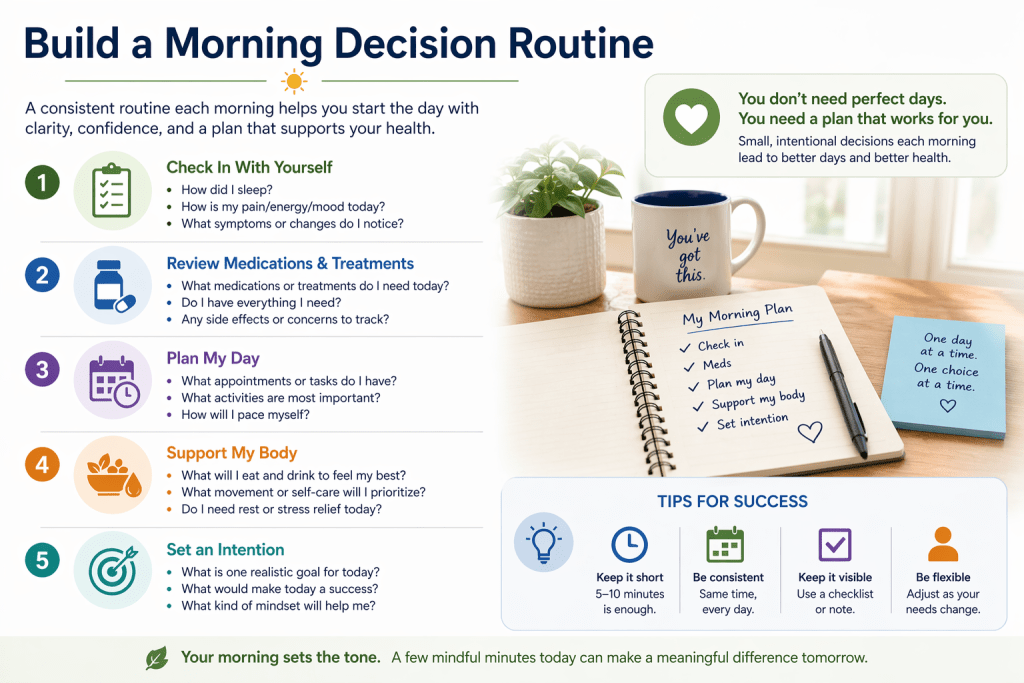
Build a Morning Decision Routine

A good morning check-in should answer four questions:
How do I feel today?
Before looking at numbers, pause and notice your body. Are you more tired than usual? Is your breathing different? Are you dizzy? Are your feet swollen? Do you feel shaky, sweaty, confused, or unusually weak? Symptoms matter as much as readings.
What do my numbers show?
Check only what your doctor has asked you to check. For blood pressure, use the right cuff size, sit quietly, keep your feet flat, support your back, and avoid talking during the reading. The American Heart Association recommends sitting quietly before measurement, keeping the arm supported at heart level, taking at least two readings one minute apart, and recording the results.
Did anything happen yesterday that could explain a change?
Think about salty meals, missed doses, dehydration, poor sleep, emotional stress, extra walking, illness symptoms, or a new medication. This helps you avoid panic while still taking changes seriously.
What is my safest plan for today?
If you are in the green zone, continue your usual routine. If you are in the yellow zone, choose a lighter day, drink fluids if allowed, avoid overexertion, recheck as instructed, and tell a caregiver if needed. If you are in the red zone, follow your emergency plan.
Create Condition-Specific Action Notes
Seniors often live with more than one condition. That can make daily choices confusing. A person may wonder, โIs this tiredness from blood sugar, breathing, blood pressure, sleep, or medication?โ You do not need to diagnose yourself. You simply need a safe response plan.
For high blood pressure, your notes may include: sit quietly and recheck if the first reading is high, avoid taking repeated readings every few minutes out of anxiety, write down symptoms, and call your healthcare provider if readings stay above the limit they gave you. Keep emergency symptoms clearly listed.
For diabetes, your notes should include what to do for low blood sugar. The American Diabetes Association explains that low blood glucose is usually below 70 mg/dL and recommends the 15/15 rule: take 15 grams of fast-acting carbohydrate, wait 15 minutes, and recheck. Severe low blood sugar is an emergency.
For COPD, your notes may include: use prescribed inhalers exactly as directed, notice changes in cough or mucus, watch for increased breathlessness, avoid triggers such as smoke or strong odors, and follow the COPD action plan your provider created with you. The American Lung Association notes that COPD action plans should include medicine names, doses, timing, and zone-based actions.
Keep a โToday Cardโ Near the Phone
A โToday Cardโ is a simple one-page note placed near the phone, medication area, or breakfast table. It should be large-print and easy to read.
Include:
My usual check-in time:
Morning: _______
Evening, if needed: _______
My key numbers to track:
Blood pressure: _______
Blood sugar: _______
Oxygen level, if prescribed: _______
Weight, if prescribed: _______
Call my doctor if:
Write the exact signs your provider wants reported.
Call family if:
Examples: missed medication, no appetite, dizziness, unusual confusion, worsening shortness of breath, repeated abnormal readings.
Call emergency services if:
List severe symptoms clearly.
This card is especially helpful for older adults who feel anxious, forget instructions under stress, or live alone. It also helps family members and daily check-in services ask better questions.
Review Your Log Once a Week
Daily tracking is useful, but weekly review is where patterns become powerful.
Choose one day each week to look back at your notes. Ask:
Did I miss any medication doses?
Were there repeated high or low readings?
Did certain meals affect blood sugar or blood pressure?
Was breathing worse after certain activities or weather changes?
Did poor sleep make symptoms harder to manage?
Did I have more yellow-zone days than usual?
Then choose one small improvement for the next week. Do not try to fix everything. For example, you might decide to prepare medication earlier, reduce salty packaged foods, keep glucose tablets nearby, move your inhaler to a more visible place, or schedule a doctor call about repeated symptoms.
Make the Routine Easier on Low-Energy Days
Some days will be harder. Seniors with chronic conditions may have fatigue, pain, low mood, breathlessness, or poor sleep. On those days, the routine should become simpler, not disappear.
Use a โminimum check-inโ plan:
Take essential medication.
Check the one number your doctor says matters most.
Drink water unless restricted.
Eat something safe and simple.
Notice breathing, dizziness, confusion, pain, or weakness.
Tell someone if you feel worse than usual.
This keeps the routine realistic. A check-in should support your life, not make you feel like you failed.
Involve Family Without Losing Independence
Many seniors worry that sharing health information will make family members overreact or take control. Families, on the other hand, often worry because they do not know what is happening day to day.
A decision-based check-in can help both sides.
Instead of sending every small detail, agree on what should be shared. For example, green-zone days may need no update. Yellow-zone days may trigger a simple message: โMy breathing is a little worse today, but I used my inhaler and Iโm resting.โ Red-zone symptoms should trigger immediate contact.
This approach protects independence while still creating a safety net.
Why Support Systems Matter More Than Ever With Age

As we age, certain natural changes occur:
- Slower reaction time to symptoms
- Memory lapses (especially around medications or readings)
- Reduced physical strength or balance
- Higher likelihood of managing multiple conditions at once
- Increased risk of sudden complications
This means that even a well-planned daily routine can sometimes break downโnot because of negligence, but because of natural limitations.
A support system ensures that:
- Someone notices if a check-in is missed
- Someone can interpret confusing symptoms
- Someone can act quickly if the situation worsens
It transforms the routine from a solo responsibility into a shared safety net.
Step 1: Define Roles Clearly (Without Overcomplicating)
One of the biggest problems in caregiving is confusion. Everyone assumes someone else is responsible.
Instead, define simple roles:
Primary Self-Manager (Senior):
- Performs daily check-ins
- Notes symptoms and readings
- Follows routine independently as much as possible
Primary Contact (Family Member or Caregiver):
- Receives updates only when needed (yellow/red zone)
- Helps interpret patterns if required
- Assists with doctor communication
Backup Contact:
- Steps in if the primary contact is unavailable
- Has access to basic health information
Healthcare Provider:
- Sets thresholds and action plans
- Reviews trends periodically
Clarity reduces both anxiety and unnecessary interference.
Step 2: Decide What Needs to Be Shared (and What Doesnโt)
Not every reading needs to be reported.
Oversharing can create:
- Panic for family members
- Loss of independence for seniors
- Unnecessary doctor visits
Instead, agree on clear communication triggers.
Share immediately if:
- You enter the red zone
- Symptoms are new, severe, or worsening
- You feel confused, faint, or unsafe
- There is a fall or injury
Share within the day if:
- Repeated yellow-zone readings occur
- You miss medication
- Appetite or fluid intake drops significantly
- Breathing or energy is noticeably worse
No need to share if:
- You are in the green zone and stable
This structure keeps communication meaningful and focused.
Step 3: Create a โMissed Check-In Alert Systemโ
One of the simplest but most powerful strategies is this:
What happens if a check-in is not done?
For seniors living alone, this is critical.
You can create a simple system:
- Fix a daily check-in time (e.g., 9 AM)
- If no confirmation is received by a set time (e.g., 10 AM),
โ A family member calls - If there is no response,
โ A neighbor or nearby contact checks in physically
This system is especially useful for:
- Seniors with diabetes (risk of hypoglycemia)
- Individuals with COPD (risk of sudden breathing issues)
- Those with high blood pressure and cardiac risks
It ensures that silence itself becomes a signal.
Step 4: Use Technology Wisely (But Keep It Simple)
Technology can support daily routinesโbut only if it is easy to use.
Avoid complex apps that:
- Require multiple steps
- Have small text
- Need frequent updates
- Cause confusion
Instead, focus on practical tools:
Simple options:
- Alarm reminders for medication and check-ins
- Digital BP monitors with memory storage
- Glucometers with clear displays
- Pulse oximeters (if recommended by doctor)
Moderate support:
- WhatsApp check-in messages (โDoneโ, โAll okayโ, etc.)
- Voice notes instead of typing
- Automated call check-ins (like JoyCalls-style systems)
Advanced (only if comfortable):
- Health tracking apps
- Smartwatches with alerts
The goal is not to be โtech-savvy.โ
The goal is to be consistent and confident.
Step 5: Prepare for Emergencies in Advance
Emergencies are stressfulโbut preparation reduces panic.
Every senior should have a clearly visible emergency plan.
Include:
1. Emergency Contacts List
- Family members
- Nearby neighbors
- Doctor
- Local emergency number
2. Medical Information Sheet
- Conditions (BP, diabetes, COPD, etc.)
- Medications with doses
- Allergies
- Doctorโs name and contact
3. Emergency Symptoms List
Write clearly in large letters:
- Chest pain
- Severe breathlessness
- Confusion
- Fainting
- Sudden weakness or slurred speech
- Severe low blood sugar symptoms
4. Action Instruction
Example:
โIf I have these symptoms โ Call emergency services immediately.โ
Place this sheet:
- Near the phone
- On the refrigerator
- Near the bed
This ensures anyone present can act quickly.
Step 6: Strengthen Communication With Healthcare Providers
Doctors often see only snapshots of a patientโs condition during visits. Your daily check-in routine can provide valuable long-term insights.
But for this to work, communication must be structured.
Before appointments:
- Review your weekly logs
- Highlight repeated issues
- Note questions clearly
During appointments:
- Share patterns, not just isolated readings
- Ask specific questions
- โMy BP is higher in the morningsโwhat should I adjust?โ
- โMy breathing worsens in humid weatherโwhat can I do?โ
After appointments:
- Update your โToday Cardโ
- Adjust thresholds and action plans
This turns doctor visits into strategic discussions, not rushed conversations.
Step 7: Address Emotional and Mental Health Alongside Physical Health
Chronic conditions do not just affect the bodyโthey affect the mind.
Common emotional challenges include:
- Fear of worsening health
- Anxiety over readings
- Frustration with routine
- Loneliness
- Loss of independence
Ignoring these can make daily check-ins feel like a burden.
Instead, integrate emotional awareness into your routine.
Ask yourself daily:
- โDo I feel more anxious than usual?โ
- โAm I avoiding my check-in because Iโm worried about the result?โ
If yes:
- Share with a family member
- Speak to your doctor
- Consider counseling or support groups
A calm mind improves:
- Decision-making
- Routine consistency
- Overall health outcomes
Step 8: Adapt the Routine as Life Changes
No routine should remain rigid forever.
Changes may occur due to:
- New medications
- Progression or improvement of conditions
- Lifestyle changes
- Travel or relocation
- Caregiver availability
Review your routine every 1โ2 months.
Ask:
- Is this still easy to follow?
- Am I skipping steps often?
- Are my needs different now?
Then adjust:
- Timing
- Tools
- Communication methods
Flexibility ensures long-term sustainability.
Step 9: Encourage Independence, Not Dependence
Support systems should empower, not replace.
Avoid:
- Taking over tasks the senior can still do
- Constantly questioning or monitoring unnecessarily
- Creating fear around small variations
Instead:
- Offer help only when needed
- Appreciate consistency
- Focus on patterns, not single readings
The goal is to help seniors feel:
- Capable
- In control
- Supportedโnot watched
Step 10: Make the Routine Part of Daily Life (Not a Medical Task)
The most successful routines are the ones that blend naturally into daily life.
Instead of thinking:
โI have to do my health check,โ
Shift to:
โThis is just part of my morning.โ
For example:
- Check BP after brushing teeth
- Take medication with breakfast
- Note symptoms while having tea
- Send update before reading the newspaper
This reduces resistance and builds habit strength.
Conclusion
Imagine ending each day with the quiet confidence that comes from truly understanding your body’s needs. Your health journey is deeply personal, and the strategies we’ve shared can help you take control of your well-being.
Remember that consistent monitoring, balanced nutrition, and regular exercise work together for better health outcomes. Research shows that self-management approaches significantly improve quality of life and reduce symptoms.
There will be challenging days when your energy is low or symptoms flare. This is normal. You don’t have to navigate this alone. Support from your provider, family, or compassionate technology like JoyCalls makes a real difference.
If you’re ready for gentle, consistent daily support, discover how JoyCalls can help. Your diagnosis doesn’t define you. With the right approach, you can live a full, meaningful life while managing your condition successfully.