


Have you ever watched a parent seem a little quieter than usual and wondered, “Is this just a passing mood, or is it something deeper?” That question can feel heavy. It’s a moment many of us face.
Seeing a loved one withdraw is tough. You want to help but aren’t sure how. It’s easy to confuse temporary sadness with a more serious condition. This article is here to help you understand the signs.
We’ll walk through the key differences together. You’ll learn what to look for and when a simple check-in can make all the difference. Our goal is to give you the confidence to support your family member’s emotional well-being.
Key Takeaways
- Learn the distinct signs that separate common feelings of isolation from clinical conditions.
- Discover simple, everyday questions that can help you gauge your loved one’s true state of mind.
- Understand when a friendly conversation might be enough versus when professional support is needed.
- Find out how regular, meaningful connection can significantly improve a person’s daily life.
- Gain practical steps to take action and provide the right kind of care and comfort.
Introduction
That moment when you call your parent and hear something different in their voice—a flatness where there used to be warmth—can stop you in your tracks. You’re left wondering if it’s just a passing mood or something more serious.
Research shows this concern is more common than you might think. A significant study involving 1,593 participants revealed how deeply recent events have affected mental health. The data showed that people impacted by quarantine measures experienced higher rates of emotional challenges.
For many older adults, the pandemic changed daily life in profound ways. Social connections faded, routines disappeared, and the isolation took a real toll. As one researcher noted, “Understanding lifestyle factors and social support is essential for prevention and treatment.”
What makes this particularly challenging is that many aging adults grew up in a time when discussing emotional struggles wasn’t common. They might dismiss their feelings as “just getting older” rather than recognizing potential symptoms that deserve attention.
This is where knowing the difference between temporary sadness and clinical depression becomes so important. It’s not just about labels—it’s about providing the right kind of support at the right time.
Understanding Loneliness vs Depression Elderly
When your mom stops mentioning her weekly card game or your dad no longer talks about his gardening, it’s natural to wonder what’s really going on. Understanding the difference between temporary emotional states and clinical conditions is your first step toward providing meaningful support.
Loneliness is that painful feeling when social connections don’t meet emotional needs. It’s about feeling disconnected even when others are present. Clinical depression, however, involves persistent sadness and loss of interest that interferes with daily life.

Think of loneliness as a signal—like hunger—telling us we need more connection. Depression acts more like a fog that settles over everything, making joy hard to find regardless of circumstances.
Research shows these conditions are closely linked. Feeling isolated significantly increases depression risk in later years. Studies found loneliness predicts nearly one in five cases of clinical depression.
Your parent might feel lonely but not depressed—missing friends but still enjoying visits. Or they could experience depression despite regular contact, needing professional support beyond social connection.
Recognizing this distinction helps you provide appropriate care. You’ll know when encouraging activities might help versus when mental health intervention becomes necessary for true wellbeing.
Defining Loneliness in Older Adults
The subtle shift in your loved one’s engagement with life often speaks volumes about their inner emotional landscape. Understanding what true isolation feels like helps you provide the right support.
Key Indicators of Loneliness
Listen for phrases like “I lack companionship” or “I feel isolated from others.” These words reveal emotional needs that aren’t being met.
Your parent might be physically surrounded by people yet still feel disconnected. Superficial interactions don’t satisfy the deep need for meaningful connection.
This emotional state differs from simply being alone. Someone can have limited social contacts without feeling lonely. Or they might feel isolated despite having support available.
Measurement Scales and Research Insights
Researchers use tools like the Three Items Loneliness Scale to measure these feelings. This loneliness scale asks specific questions about companionship and inclusion.
The resulting scores help quantify this subjective experience. Research data shows these feelings can change with proper intervention.
This gives hope. Unlike fixed risk factors, emotional isolation responds to lifestyle adjustments and meaningful connections.
Early recognition prevents more serious conditions from developing. Your compassionate attention makes a real difference.
Identifying Depressive Symptoms in Later Life
Seeing the garden your mom tended with such care now overgrown with weeds tells a story words cannot. These subtle changes in daily patterns often reveal important clues about emotional well-being.
Try JoyCalls Free
No app or new device needed. Start with a free 7-day trial.

Recognizing the signs early makes a significant difference in getting the right support. Understanding what to look for helps you provide meaningful care.
Physical and Emotional Signs
Depression in later years often appears differently than expected. Instead of obvious sadness, your parent might complain about persistent aches or fatigue.
Watch for unexplained physical symptoms that don’t have clear medical causes. Back pain, headaches, and digestive issues can all be depression symptoms.
Emotional changes include feelings of hopelessness or worthlessness. Your loved one might say things like “I’m just a burden” or “What’s the point?”
Sleep disturbances and appetite changes are common red flags. These physical symptoms significantly impact overall health and quality of life.
Behavioral Changes and Impact on Daily Life
Notice when cherished activities are abandoned. If your dad stops woodworking or your mom quits her book club, these behavioral shifts matter.
Neglecting personal care represents a serious change. Skipping showers, forgetting medications, or not eating regularly indicates depression is affecting daily functioning.
Cognitive changes like memory problems or slowed speech may occur. Family members often mistake these for normal aging rather than depressive symptoms.
Understanding these varied signs helps you recognize when professional support might be needed. Early intervention reduces the risk of the condition worsening over time.
Comparing Causes: Loneliness versus Depression
When your parent seems down, knowing whether it’s situational or clinical makes all the difference in how you respond. The roots of emotional distress often have distinct origins.
Understanding these underlying factors helps you address the right issues. Sometimes your loved one needs more connection, other times they need professional support.
Underlying Factors and Risk Influences
Emotional isolation typically stems from unmet social needs. Life changes like retirement or losing friends can create this void. Physical limitations that reduce mobility also contribute significantly.
Clinical conditions have more complex triggers. Chronic health issues, neurological changes, and medication effects play important roles. Genetic predisposition and hormonal imbalances are also key factors.
The relationship between these conditions is significant. Prolonged emotional isolation can actually lead to clinical conditions developing. This connection shows why early intervention matters so much.
Several risk factors increase vulnerability for both challenges. Advancing age, chronic medical conditions, and living alone are common contributors. Recent loss of loved ones and reduced purpose after retirement also heighten risk.
The hopeful news is that many contributing factors can be modified. Social isolation, lack of purpose, and negative thinking patterns respond well to support. Your caring attention makes a real difference in addressing these underlying issues.
The Impact of Social Isolation on Mental Health
When you notice your parent’s social calendar has become empty, it’s more than just a quiet phase—it could be affecting their physical health. Research shows this isolation creates serious risks that extend far beyond emotional discomfort.
Effects on Physical Health
The physical impact of being alone is startling. Studies reveal that social isolation increases mortality risk similar to smoking 15 cigarettes daily. This isn’t just about feeling lonely—it’s a genuine health threat.
Researchers found that isolated older adults face up to 50% higher mortality risk. Those with strong social connections show dramatically improved survival rates, even when dealing with serious conditions.
As research confirms, the lack of social contact weakens immune systems and increases inflammation. Heart disease, stroke, and cognitive decline become more likely over the years.
Effects on Cognitive and Emotional Well-Being
On the mental side, isolation accelerates memory problems and increases dementia risk. It creates a cycle where reduced social engagement leads to further decline.
The quality of relationships matters most. One close friend provides more protection than many superficial contacts. Your parent needs meaningful interaction, not just company.
Understanding these serious health impacts should motivate families to prioritize social connection as seriously as medical care. The right support makes all the difference for people facing isolation.
Exploring the Role of Self-Efficacy
That quiet pride in your mother’s voice when she solves a problem on her own tells you something important about her inner strength. This belief in one’s abilities—called self-efficacy—plays a crucial role in emotional health during later years.
According to Bandura’s theory, self-efficacy isn’t a fixed trait but develops through experience. It combines cognitive, motivational, and social abilities that help people navigate life’s challenges.
Research shows a clear protective effect. One study found that strong self-efficacy expectancy reduces emotional distress. Another research project confirmed this negative association between self-belief and mental health challenges.
Building Resilience in Older Adults
Your parent’s confidence in handling challenges creates armor against emotional vulnerability. When they believe they can adapt to changes, this mindset itself becomes protective.
Practical approaches make a real difference. Start with achievable goals like learning video calls. Provide genuine praise for small victories. Help them recall past successes overcoming difficulties.
| Low Self-Efficacy Characteristics | High Self-Efficacy Characteristics | Impact on Daily Life |
|---|---|---|
| Feels helpless with new challenges | Approaches problems with confidence | Better adaptation to life changes |
| Avoids social situations | Seeks meaningful connections | Stronger social relationships |
| Focuses on limitations | Recognizes capabilities | Improved emotional wellbeing |
This relationship between belief and wellbeing is powerful. Studies demonstrate that self-efficacy mediates the connection between isolation and more serious conditions. Your support in building confidence makes a meaningful difference in their quality of life.
Enhancing Social Support for Better Mental Health
The simple act of sharing a meal with someone who truly listens can transform an ordinary Tuesday into something meaningful. Research consistently shows that strong social relationships serve as powerful protection against emotional challenges.

Studies by Kong and colleagues found that proper support can significantly reduce symptoms in those facing health challenges. Chen’s research demonstrated how increased connection improves coping abilities.
Family, Friends, and Community Engagement
Family relationships provide the foundation of emotional security. Regular, meaningful contact creates a vital sense of belonging.
Friendships offer unique benefits through shared experiences and mutual understanding. Community connections through local centers or groups expand this support network.
Formal Support Networks
Professional support complements personal connections. Healthcare providers and community services offer expertise families might not have.
Quality matters more than quantity. Feeling genuinely cared for by a few close relationships provides stronger protection than many superficial contacts.
As the World Health Organization emphasizes, comprehensive support systems are essential for maintaining good mental health status throughout life.
Post-COVID Considerations in Older Adults
If your parent seems more withdrawn now than before the pandemic, there’s important research that explains why this pattern emerged. The COVID-19 outbreak created unique challenges for seniors that continue to affect their emotional wellbeing.
COVID-19 and Mental Health Trends
Multiple studies reveal significant mental health changes during this time. Research data shows elevated rates of emotional challenges among older adults.
One study involving 1,593 participants found that people affected by quarantine measures experienced higher rates of emotional distress. The impact was particularly strong for those aged 50+ years.
Hospitalized patients showed especially concerning results. Research indicates nearly one-quarter of COVID-19 survivors experienced lasting emotional symptoms.
| Mental Health Indicator | Pre-Pandemic Levels | Post-Pandemic Findings |
|---|---|---|
| Depression Rates | 11.9% (unaffected) | 14.6% (quarantine group) |
| Anxiety Symptoms | 6.7% baseline | 8.3% increased prevalence |
| Hospitalized Patients | Standard risk levels | 23% experienced depression |
Understanding these patterns helps explain current emotional status. As recent research confirms, the combination of physical illness and social isolation created lasting vulnerability.
Your support in addressing these pandemic-era roots makes a meaningful difference in their recovery journey.
Lifestyle Factors Influencing Loneliness and Depression
Sometimes the simplest daily routines—like a morning walk or a phone call—can make the biggest difference in emotional wellbeing. The choices your parent makes each day create powerful ripple effects on their mental landscape.

Regular movement stands out as particularly valuable. Gentle exercise can be as effective as medication for improving mood. It also creates natural opportunities for connection when done in community spaces.
Healthy Habits and Daily Routines
Nutrition plays a surprising role in emotional health. Eating regular meals with quality protein helps stabilize energy and mood. Skipping meals or choosing sugary foods can worsen emotional symptoms.
Sleep quality directly impacts mental health. Adults need 7-9 hours nightly for optimal functioning. Consistent bedtimes and comfortable environments prevent sleep problems that intensify emotional challenges.
Daily structure provides purpose and predictability. Your loved one who maintains regular routines typically experiences better mood stability. This becomes especially important when making care decisions from a distance.
Engaging Social and Recreational Activities
Meaningful activities serve double duty. They combat low moods while reducing feelings of isolation. Shared interests and learning opportunities create natural connection points.
Sunlight exposure boosts serotonin levels naturally. Just 15 minutes daily can improve outlook significantly. Outdoor meals or light therapy during dark months help prevent seasonal emotional challenges.
Avoiding alcohol as a coping mechanism matters greatly. While it may temporarily ease sadness, it worsens emotional conditions over time. It also disrupts sleep and interferes with medications.
Addressing Stigma and Misconceptions
What if the biggest obstacle to your parent’s wellbeing isn’t their symptoms, but the shame they feel about having them? Many older people grew up when mental health struggles were seen as character flaws rather than medical conditions.
This generational gap creates real barriers to care. Your parent might say, “Of course I’m down—I’m old and my friends are gone.” They see emotional struggles as inevitable rather than treatable.
Common misconceptions lead families to miss warning signs. When seniors don’t appear sad but show physical complaints or withdrawal, loved ones often attribute this to personality or age. This article about early warning signs helps identify what’s really happening.
Family members play a crucial role in reducing stigma. Talking openly about mental health without judgment creates safe spaces for honest conversations. Normalizing treatment as self-care—not weakness—can transform your loved one’s quality of life.
Remember: emotional health conditions are real medical issues, not personal failures. Your compassionate approach makes all the difference in helping your parent seek the support they deserve.
Effective Interventions for Reducing Loneliness
Imagine discovering that a simple referral to a local art class could do more for your mom’s emotional wellbeing than any medication alone. Effective approaches go beyond just arranging social contacts.

Social Prescribing and Community Initiatives
Social prescribing connects people with community resources tailored to their interests. Link workers help identify activities that bring meaning and connection.
Community-based programs create natural opportunities for relationship-building. Neighborhood connectors facilitate introductions and ongoing engagement.
| Intervention Type | Key Focus | Expected Outcome |
|---|---|---|
| Social Prescribing | Personalized community engagement | Meaningful social connections |
| Community Gardens | Shared activities and purpose | Regular social interaction |
| Walking Groups | Physical activity with social component | Improved mood and connection |
Psychological and Behavioral Therapies
Cognitive-behavioral approaches target negative thought patterns. They help reframe expectations about social interactions.
Social skills training rebuilds confidence in making connections. Psychoeducation teaches about the link between isolation and mood.
Research shows these combined approaches have strong positive effects. They address both external circumstances and internal perspectives.
Strategies to Manage Depression in Older Adults
When depression settles in during later years, it often requires a thoughtful combination of approaches tailored to your loved one’s unique circumstances. Treatment for depression in older adults can be just as effective as for younger people, but it needs to address the specific life challenges that often trigger these emotional struggles.
According to the National Institute on Aging, a comprehensive approach works best. This means looking beyond just medication to include therapy, lifestyle changes, and social support.
Behavioral Approaches and Lifestyle Changes
Behavioral activation is a powerful tool. It involves gently encouraging your parent to reengage in activities they once enjoyed. Even when they resist at first, this gradual approach can help counter the withdrawal that characterizes depression.
Simple lifestyle adjustments make a significant difference. Regular exercise, proper nutrition, and consistent sleep patterns can be as effective as antidepressants for many adults. These changes come without the concerning side effects that medications can cause.
Therapy addresses root causes rather than just depressive symptoms. It helps people process losses, change negative thinking, and develop better coping skills. This approach is particularly valuable for depression older adults facing major life transitions.
Support groups provide connection with others facing similar challenges. They reduce isolation while offering practical strategies and hope. This addresses the important association between social connection and emotional wellbeing.
When medications are necessary, careful monitoring is essential. Older adults are more sensitive to side effects and drug interactions. A holistic approach ensures both immediate relief and long-term emotional health.
Digital Support Tools and JoyCalls Signup
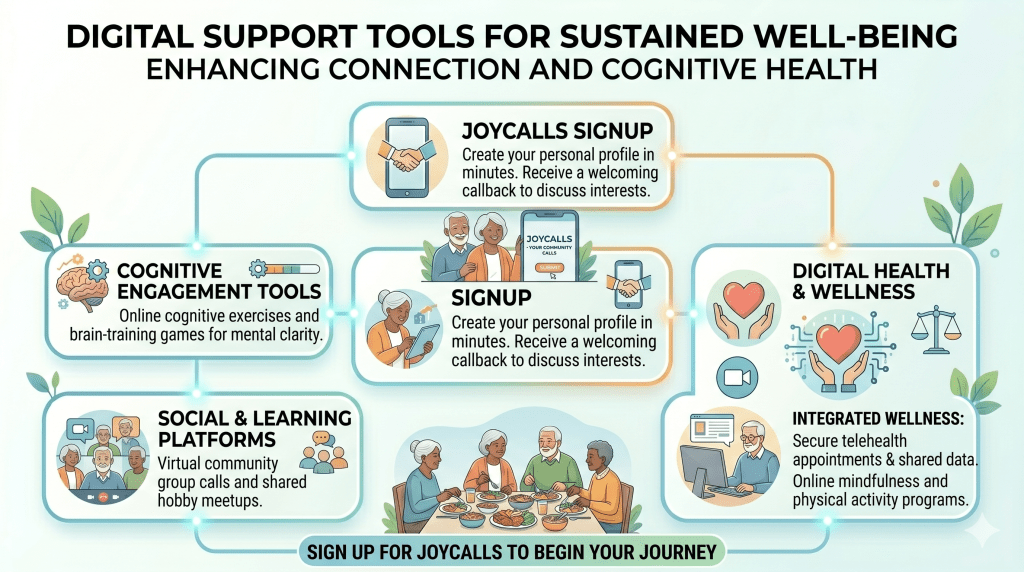
What if a friendly voice could check in on your parent every day, even when your own busy schedule makes it impossible? Modern technology offers compassionate solutions that bridge the gap between family visits.
Overview of Online Resources
Today’s digital support options are surprisingly accessible. Many services work through simple phone calls, eliminating technical barriers. Your parent doesn’t need new devices or apps.
Online resources provide valuable information for adult children. Educational content helps families understand emotional challenges. Virtual support groups create communities of understanding.
These tools complement human connection beautifully. They provide companionship during quiet hours. This regular contact can significantly improve emotional wellbeing over time.
How to Get Started with JoyCalls – Signup Here
Getting started takes just minutes. Visit https://app.joycalls.ai/ to begin. Provide basic information about your parent’s interests and needs.
The AI companion then makes friendly daily calls. It engages in natural conversation and checks on wellbeing. Family members receive updates about these meaningful interactions.
This service offers peace of mind for busy people. You’ll know someone is connecting with your loved one regularly. It’s one less worry during your demanding days.
Digital support works best as part of comprehensive care. Combine these tools with family contact and social activities. This approach addresses emotional needs from multiple angles.
Future Perspectives in Elderly Mental Health

What if preventing emotional struggles in later life could be as straightforward as fostering meaningful connections? Recent scientific findings suggest this might be possible.
Groundbreaking research reveals that reducing social isolation could prevent up to 20% of emotional challenges in aging populations. This study followed older people for over a decade, showing the powerful link between connection and wellbeing.
Research and Policy Implications
The association between social needs and mental health is transforming healthcare approaches. Forward-thinking practices now screen for emotional isolation during routine checkups.
Government strategies recognize this critical relationship. Comprehensive action plans address social connection as fundamental healthcare. This shift acknowledges that emotional support deserves equal attention to physical treatments.
Future research will explore these patterns across diverse communities. Understanding how different backgrounds experience emotional challenges will lead to more personalized support.
This evolving perspective offers hope. By addressing social needs proactively, we can significantly improve quality of life for our aging loved ones in the coming years.
A Practical “Next Step” Plan: What to Do When You Are Not Sure Whether It Is Loneliness or Depression
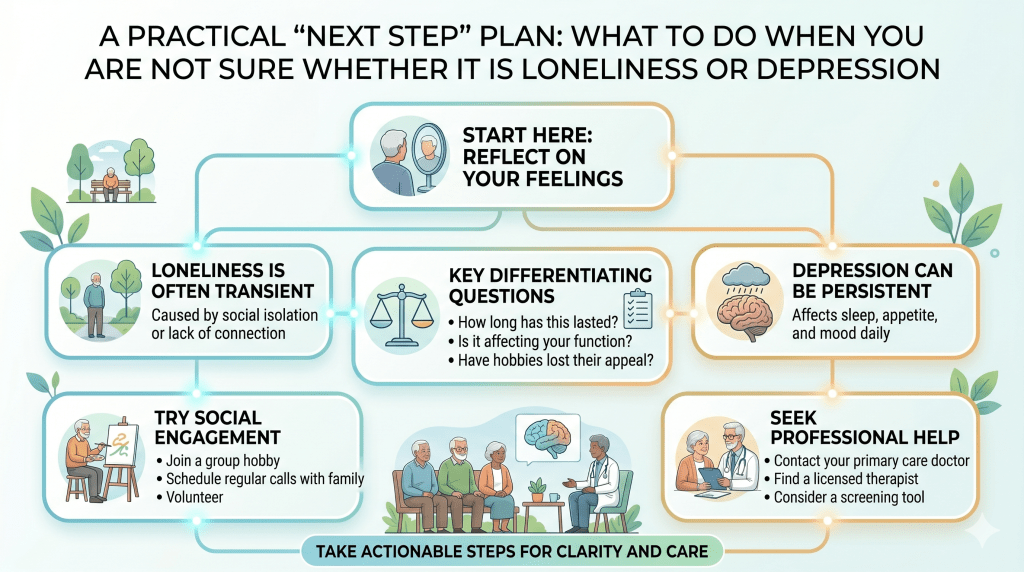
Sometimes the hardest part is not noticing that something feels wrong. The hardest part is knowing what to do next.
An older adult may say, “I am just lonely,” when there is actually depression underneath. Another may fear they are depressed, when what they truly need is more consistent companionship, meaningful routine, and emotional connection. In real life, the two can overlap. Loneliness can slowly increase the risk of depression, and depression can make a person withdraw from the very relationships that could support them.
That is why families, caregivers, and seniors themselves need a practical middle step. Not panic. Not denial. Not waiting for things to “pass on their own.” Instead, use a calm, structured approach to observe patterns, reduce isolation, and know when professional help is needed.
Start With a Simple Two-Week Mood and Connection Check
A useful first step is to track what is happening for two weeks. This does not need to be complicated. A notebook, calendar, or phone note is enough.
Each day, write down four things:
- How was my mood today?
- Did I speak to someone meaningfully today?
- Did I enjoy anything today?
- Did I eat, sleep, move, and take medicines as usual?
This helps separate temporary sadness from a more persistent emotional pattern. Depression in older adults is not simply “having a bad day.” It often lasts for weeks and may affect sleep, appetite, energy, concentration, self-worth, and interest in daily life. Depression is also treatable and should not be dismissed as a normal part of aging, according to the CDC and National Institute on Aging.
Loneliness, on the other hand, often improves when connection improves. If a senior feels noticeably better after a warm phone call, a visit, a community activity, or a meaningful conversation, loneliness may be playing a larger role. But if connection happens and the person still feels empty, hopeless, exhausted, or uninterested, depression may need to be considered more seriously.
Use the “Response to Connection” Test
One helpful question is: What happens after meaningful contact?
For example, imagine an older adult receives a caring phone call from a family member. If they feel lighter afterward, talk more, eat better, or show interest in tomorrow, loneliness may be a major contributor. The solution may involve more regular contact, predictable check-ins, social activities, transportation support, or companionship.
But if the person says, “It was nice, but nothing matters,” or still remains withdrawn, tearful, irritable, or hopeless after repeated support, this could suggest depression. Depression can make even loving contact feel distant or ineffective.
This is not a diagnosis. It is a clue.
Build a Weekly Connection Routine, Not Random Check-Ins
For seniors, consistency matters. A random call once in a while may help briefly, but it may not reduce the deeper feeling of being forgotten.
A better approach is to create a predictable weekly rhythm:
- Monday: Short family call.
- Wednesday: Walk, religious gathering, hobby group, or community visit.
- Friday: Longer conversation with a friend, caregiver, or companion.
- Sunday: Family meal, video call, or planned activity.
The key is predictability. When an older adult knows someone will call every evening or visit every Saturday, the week begins to feel less empty. Regular connection can also help families notice changes early.
The National Institute on Aging notes that loneliness and social isolation can affect physical, mental, cognitive, and emotional health, and it encourages older adults to stay connected through regular contact, shared-interest activities, community involvement, and revisiting hobbies.
Watch for Loss of Interest, Not Just Sadness
Many people expect depression to look like crying. In older adults, it may look different.
A senior may not say, “I feel depressed.” They may say:
“I do not feel like going.”
“I am too tired.”
“What is the point?”
“Do not bother coming.”
“I am fine,” while slowly stopping everything they used to enjoy.
This is why loss of interest is important. If an older adult no longer enjoys gardening, prayer meetings, music, cooking, reading, grandchildren, walks, or conversations, do not assume they are simply aging. A shrinking world can be a warning sign.
Loneliness often sounds like, “I wish someone would come.”
Depression may sound like, “Even if someone comes, I do not care.”
That difference matters.
Check Physical Health Before Making Assumptions
Older adults often experience emotional changes because of physical health issues. Pain, poor sleep, hearing loss, vision problems, medication side effects, thyroid problems, vitamin deficiencies, grief, recent surgery, and mobility limitations can all affect mood.
Before assuming it is “just loneliness” or “just depression,” it is wise to schedule a basic medical check-up. A doctor can review medications, sleep, appetite, pain, fatigue, and other symptoms.
This is especially important if the change is sudden. A senior who becomes confused, unusually withdrawn, very sleepy, agitated, or physically weak may need medical attention quickly.
Create a Low-Pressure Social Plan
One mistake families make is pushing too hard.
Telling an older adult, “You need to go out more,” may sound helpful, but it can feel overwhelming. A better approach is to make the first step small.
Instead of saying, “Join a club,” try:
“Would you like to sit outside for ten minutes?”
“Can I call you after dinner every day this week?”
“Would you like to listen to music together?”
“Let us invite one person, not a whole group.”
“Would you prefer a phone call or a visit?”
The goal is not to fill the calendar. The goal is to rebuild emotional safety.
For many seniors, especially those who have lost a spouse, retired, moved homes, or developed health problems, social confidence may be low. They may worry about being a burden. They may feel embarrassed about needing help. Gentle, repeated invitations work better than pressure.
Know When to Involve a Professional
Families should not wait for a crisis before seeking help.
It may be time to speak with a doctor, therapist, counselor, or mental health professional if the older adult:
- Feels sad, empty, hopeless, or worthless most days.
- Stops enjoying things they once cared about.
- Sleeps much more or much less than usual.
- Eats much more or much less than usual.
- Talks about being a burden.
- Withdraws from almost everyone.
- Neglects hygiene, medication, meals, or household needs.
- Shows unusual irritability, anger, anxiety, or fear.
- Has unexplained aches, fatigue, or digestive issues.
- Talks about death, disappearing, or not wanting to live.
Any mention of self-harm, suicide, or “not wanting to be here” should be taken seriously and treated as urgent.
For Seniors: What You Can Do Today
If you are an older adult reading this and wondering whether you are lonely or depressed, start small. You do not need to solve everything today.
Choose one action:
Call one person and say, “I would like to talk for a few minutes.”
Step outside for fresh air.
Eat one proper meal.
Write down how you have been feeling.
Schedule a doctor’s appointment.
Ask someone to visit.
Revisit one old interest for ten minutes.
Say honestly, “I have not been feeling like myself.”
You do not have to use the perfect words. You only need to let someone know that something has changed.
For Families: How to Talk Without Making Them Defensive
Many seniors will shut down if they feel judged. Avoid saying:
“You are depressed.”
“You never try.”
“You need to be more positive.”
“You are just lonely.”
Instead, use calm observations:
“I noticed you have not been going out lately.”
“You do not seem as interested in your usual routines.”
“I am not here to force anything. I just want to understand.”
“Would it help if we made one small plan for this week?”
“I care about you, and I do not want you handling this alone.”
This kind of language feels less threatening. It opens the door instead of closing it.
The Goal Is Not Just More Contact. It Is Meaningful Contact.
A senior can be surrounded by people and still feel lonely. They can live with family and still feel unseen. That is why the quality of connection matters.
Meaningful contact includes listening, remembering details, asking for opinions, sharing stories, involving the person in decisions, and giving them a role. Older adults do not only need care. They need purpose, dignity, and emotional presence.
Ask questions like:
“What has been on your mind lately?”
“What do you miss most?”
“What would make your day feel better?”
“What would you like to look forward to this week?”
“What is one thing you still enjoy talking about?”
These questions create real connection, not just conversation.
A Balanced Way to Think About It
Loneliness asks for connection.
Depression asks for care, treatment, and support.
Many older adults need both.
The safest approach is to increase meaningful connection while also watching for signs that professional help is needed. Do not minimize loneliness, because it can deeply affect health and quality of life. Do not minimize depression, because it is a real medical condition and can improve with the right support.
The most caring thing you can do is not to label the person too quickly. Observe gently. Ask better questions. Create consistent connection. Involve healthcare professionals when symptoms persist. And above all, remind the older adult that they are not a burden, not forgotten, and not expected to figure this out alone.
How to Gently Rebuild Emotional Well-Being Over Time (Without Overwhelming the Senior)
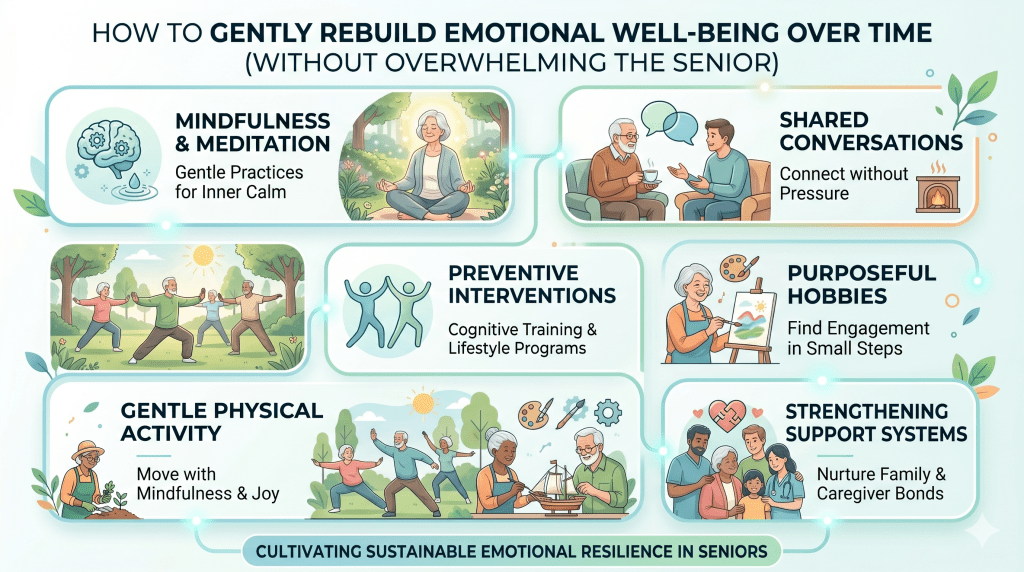
Once you have identified that something feels “off,” the next challenge is rebuilding emotional well-being in a way that is sustainable. This is where many families unintentionally struggle. They either do too little—hoping things improve on their own—or they do too much too quickly, which can overwhelm the older adult and lead to further withdrawal.
The goal is not rapid change. The goal is steady emotional recovery through small, repeatable actions.
Focus on “Energy Before Activity”
A common mistake is encouraging seniors to “do more” without considering their emotional energy.
If someone is feeling low—whether due to loneliness or depression—they may not have the mental or physical energy to suddenly attend events, meet multiple people, or take on new routines. Pushing activity without restoring energy can backfire.
Instead, think in this order:
- Restore emotional energy
- Then increase activity
- Then build routine
Emotional energy can be rebuilt through:
- Short, positive interactions (5–10 minutes)
- Calm, pressure-free environments
- Familiar activities instead of new ones
- Gentle encouragement instead of expectation
For example, instead of saying, “Let’s go out for two hours,” try, “Let’s sit together for ten minutes and talk.”
Energy builds slowly, and once it does, activity becomes easier and more natural.
Reintroduce Purpose, Not Just Socialization
Loneliness is not only about lack of people—it is often about lack of purpose.
Older adults who feel they are no longer needed, useful, or contributing may experience deeper emotional decline. Even with regular visits, they may feel disconnected if they do not have a role.
This is where intentional purpose-building becomes powerful.
Consider small but meaningful roles:
- Asking for their advice on family decisions
- Involving them in storytelling for grandchildren
- Giving them responsibility for a small daily task
- Encouraging them to teach a skill (cooking, craft, language, prayer)
- Asking them to help plan meals, routines, or events
The key is authenticity. The role should not feel artificial or patronizing. It should feel like a genuine contribution.
When a senior feels useful, their identity strengthens. This directly reduces both loneliness and depressive thinking.
Design “Low-Effort Wins” Into the Day
When motivation is low, success must be easy.
Create a daily structure where completing even one or two small actions feels like progress. This builds confidence and slowly improves mood.
Examples of low-effort wins:
- Getting dressed instead of staying in nightwear
- Sitting near sunlight for 10–15 minutes
- Making one phone call
- Eating one balanced meal
- Taking a short walk inside the home
- Listening to a favorite song
These may seem simple, but they matter. Depression often reduces the ability to initiate action. Each small completion helps rebuild that ability.
Families should acknowledge these wins without exaggeration:
“I’m glad you sat outside today. That’s a good step.”
Not overly enthusiastic, not dismissive—just steady encouragement.
Address the “Fear of Being a Burden”
Many older adults, especially those who live alone or depend on others, silently struggle with one powerful thought:
“I don’t want to trouble anyone.”
This belief can stop them from reaching out, even when they need help.
It can also lead them to refuse visits, decline calls, or hide their true feelings.
To address this, families must actively reassure them—not once, but repeatedly.
Instead of saying:
“Call me if you need anything.”
Say:
“I will call you every evening. You don’t have to ask.”
Instead of:
“Let me know if you want company.”
Say:
“I’m coming on Saturday. We’ll spend some time together.”
Predictable care removes the need for the senior to initiate contact, which can be difficult during loneliness or depression.
Create Emotional Safety Before Emotional Depth
Many families try to “have a deep conversation” too quickly.
They ask:
“Are you feeling depressed?”
“Why are you like this?”
“What’s wrong?”
These questions, although well-intentioned, can feel intense or confronting.
Instead, emotional safety must come first.
This means:
- Sitting together without forcing conversation
- Talking about neutral or familiar topics
- Sharing stories instead of asking direct questions
- Allowing silence without discomfort
Once the person feels safe, they are more likely to open up naturally.
Emotional depth cannot be forced. It must be invited.
Recognize the Role of Grief and Life Transitions
Many older adults are not only dealing with loneliness or depression—they are also processing loss.
This could include:
- Loss of a spouse
- Loss of friends
- Retirement and loss of identity
- Reduced independence
- Health changes
- Moving away from a familiar home
These transitions can quietly reshape a person’s emotional world.
A senior may not say, “I am grieving.” Instead, they may become quieter, less engaged, or emotionally distant.
In such cases, the goal is not to “fix” their feelings but to acknowledge them.
You can say:
“I know things have changed a lot.”
“I can’t fully understand how that feels, but I am here with you.”
“You don’t have to go through this alone.”
Validation reduces emotional isolation, which is often at the core of both loneliness and depression.
Encourage Professional Support Without Stigma
In many cultures, especially among older generations, there is hesitation around mental health support.
They may think:
“I am not that bad.”
“I should handle this myself.”
“What will people say?”
This is where language matters.
Instead of saying:
“You need therapy.”
Try:
“It might help to talk to someone who understands these feelings.”
Or:
“A doctor can help us understand why you are feeling this way.”
Frame it as support, not treatment. As guidance, not weakness.
If possible, involve a trusted doctor first. Many seniors feel more comfortable discussing emotional concerns in a medical setting than with a mental health specialist initially.
Use Technology Thoughtfully, Not Forcefully
Technology can reduce isolation—but only if it feels accessible.
For some seniors, video calls, messaging apps, or social platforms can help them stay connected. For others, these tools feel confusing or stressful.
Introduce technology gradually:
- Start with simple phone calls
- Then introduce video calls with guidance
- Keep instructions clear and repeatable
- Avoid overwhelming them with multiple apps
The goal is connection, not complexity.
A single reliable method of communication is better than multiple unused ones.
Monitor Without Micromanaging
Families often struggle to find the balance between care and control.
Checking in is important. But excessive monitoring can feel intrusive.
Instead of asking repeatedly:
“Did you eat?”
“Did you go out?”
“Did you call someone?”
Focus on open-ended, respectful questions:
“How was your day?”
“What did you feel like doing today?”
“Anything you enjoyed?”
This approach keeps communication natural while still allowing you to observe changes.
Build a Long-Term Support System, Not a Short-Term Fix
Loneliness and depression are rarely solved in a few days.
They require a long-term approach.
This includes:
- Consistent family involvement
- Community engagement (if possible)
- Medical and emotional support when needed
- Routine-building
- Purpose and identity reinforcement
Think of it as creating an ecosystem of support, rather than a single solution.
The older adult should not depend on just one person or one activity. A balanced support system ensures continuity even if one element changes.
A Final Thought for Caregivers and Families
It is easy to feel pressure to “solve” everything.
But the most powerful thing you can offer is not a perfect plan. It is consistent presence.
Show up regularly.
Listen without rushing.
Encourage without pushing.
Observe without judging.
And most importantly, remind the older adult—through actions, not just words—that they matter.
Because whether it is loneliness or depression, the core emotional need is often the same:
To feel seen, valued, and connected.
Preventing Loneliness and Depression Before They Deepen: A Long-Term Emotional Health Strategy for Older Adults
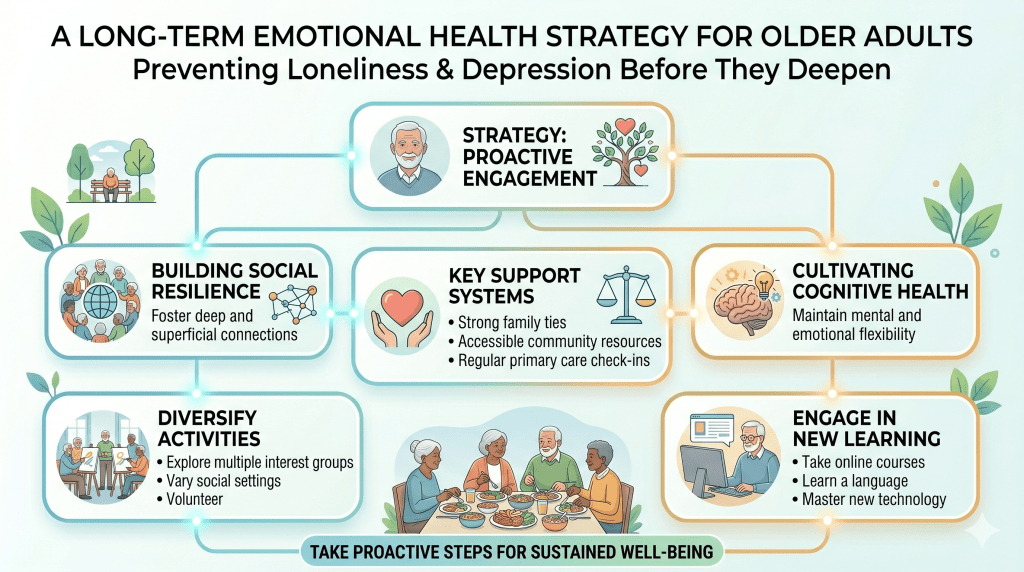
By the time loneliness or depression becomes visible, it has often been developing quietly for weeks, months, or even years. That is why the most effective approach is not just responding to symptoms—but preventing emotional decline before it takes hold.
For seniors, emotional well-being is not built through one-time efforts. It is built through systems, habits, and environments that consistently support connection, purpose, and stability.
This section focuses on how older adults and their families can create a long-term structure that reduces the risk of both loneliness and depression—without making life feel rigid or clinical.
Shift From “Crisis Response” to “Emotional Maintenance”
Most families act only when something feels wrong.
But emotional health works the same way as physical health. You do not wait for a serious illness to start caring—you maintain it regularly.
Instead of asking:
“Is something wrong?”
Start asking:
“What are we doing regularly to keep emotional well-being strong?”
This mindset shift changes everything.
It turns support into a routine, not a reaction.
Build a Weekly Emotional Health Framework
Older adults benefit from structure—not strict schedules, but predictable patterns.
A simple weekly emotional framework can include:
- Connection (calls, visits, conversations)
- Movement (walking, stretching, light activity)
- Engagement (hobbies, reading, spiritual practice, music)
- Purpose (helping, advising, contributing)
- Rest and reflection (quiet time, journaling, prayer)
This does not need to be formal or written down, but it should exist.
For example:
- 3–4 meaningful conversations per week
- Daily light movement
- 1–2 activities that bring enjoyment
- 1 responsibility or role in the household or family
- Time for rest without guilt
When these elements are present, emotional health becomes more stable.
Identify Early Warning Signs Before They Escalate
Prevention depends on awareness.
Families and caregivers should learn to recognize subtle early changes, not just severe symptoms.
Watch for:
- Gradual reduction in communication
- Less interest in familiar topics
- Increased irritability or silence
- Skipping small routines (meals, grooming, calls)
- Avoiding previously comfortable people
- Saying “I’m fine” but sounding disengaged
- Spending more time alone than usual
These are often the earliest signals—not dramatic, but meaningful.
Addressing concerns at this stage is much easier than waiting until withdrawal becomes severe.
Maintain Identity Beyond Age and Limitations
One of the biggest emotional risks in older adulthood is identity loss.
A person who was once active, independent, or professionally engaged may begin to feel defined only by:
- Age
- Health conditions
- Dependence on others
This can quietly lead to both loneliness and depression.
To counter this, families must actively reinforce identity.
This includes:
- Referring to their past roles with respect
- Asking for their opinions in meaningful discussions
- Encouraging storytelling and memory-sharing
- Preserving their preferences and decision-making power
- Avoiding treating them only as “someone to be taken care of”
An older adult should feel like a person first, not a responsibility.
Encourage “Emotional Expression Without Pressure”
Many seniors were not raised in environments where emotional expression was encouraged.
They may struggle to talk about feelings directly.
Instead of forcing emotional conversations, create natural opportunities for expression:
- Talking about past experiences
- Discussing books, TV shows, or news
- Sharing memories
- Reflecting on life lessons
- Asking indirect questions like:
- “What has been on your mind lately?”
- “What do you miss from earlier times?”
These conversations often open emotional doors gently, without discomfort.
Design the Environment to Reduce Isolation
The physical environment plays a major role in emotional health.
A senior living in a quiet, disconnected space is more likely to feel isolated—even if people care about them.
Simple environmental changes can help:
- Keeping frequently used areas well-lit and comfortable
- Placing chairs near windows or common spaces
- Encouraging time in shared areas instead of isolated rooms
- Playing soft background music or familiar sounds
- Displaying photos that evoke connection and memory
These small adjustments reduce the feeling of emptiness.
Strengthen Intergenerational Connections
Older adults often benefit deeply from interacting with younger generations.
It brings:
- Energy
- Fresh perspective
- A sense of continuity
- Emotional warmth
Encourage interactions with:
- Grandchildren
- Younger relatives
- Community youth groups
- Students or volunteers
These interactions do not need to be structured. Even casual conversations can create emotional uplift.
Importantly, these exchanges should be two-way, not one-sided. Seniors should feel heard, not just visited.
Normalize Emotional Support as Part of Aging
One of the most important long-term strategies is removing stigma.
Older adults should not feel that needing emotional support is unusual.
Families can normalize this by:
- Speaking openly about emotional health
- Treating mental well-being like physical health
- Sharing examples of others seeking support
- Avoiding dismissive language like “this is just old age”
When emotional care becomes normal, seniors are more likely to accept help early.
Create a “Support Circle,” Not a Single Point of Care
Relying on one person—whether a child, spouse, or caregiver—can be risky.
If that person becomes unavailable, the senior may feel suddenly isolated.
Instead, build a support circle that may include:
- Family members
- Friends
- Neighbors
- Community members
- Caregivers
- Healthcare providers
Even if each person plays a small role, together they create stability.
Plan for Transitions Before They Happen
Major life transitions often trigger emotional decline.
These include:
- Moving homes
- Losing a spouse
- Retirement
- Health changes
- Reduced mobility
Instead of reacting after the transition, prepare before it happens.
This may involve:
- Discussing expectations
- Maintaining familiar routines
- Increasing connection during the transition period
- Offering extra emotional support
Preparation reduces emotional shock.
Encourage Gentle Independence, Not Total Dependence
While support is important, over-dependence can reduce confidence and self-worth.
Whenever possible, allow seniors to:
- Make choices
- Perform manageable tasks
- Maintain personal routines
- Contribute in small ways
Independence does not mean doing everything alone. It means retaining agency.
This balance protects both dignity and emotional strength.
When Prevention Is Not Enough
Even with strong systems, some seniors may still experience depression.
This is not a failure of care.
Depression can be influenced by biological, psychological, and social factors.
The goal of prevention is not perfection—it is early detection and faster support.
If symptoms persist despite strong connection and routine, professional help should be seen as the next step—not the last resort.
Conclusion
Armed with knowledge and compassion, you now stand ready to make a meaningful difference in your parent’s quality of life.
Understanding emotional challenges in older adults helps you provide the right support at the right time. Both temporary sadness and more persistent conditions respond well to proper care.
Your attention to meaningful relationships and daily routines creates powerful protection. Small, consistent actions build emotional resilience over time.
Remember that early intervention makes all the difference. The years ahead can be filled with connection and purpose when you address emotional needs proactively.
This article has given you tools to support your loved one’s wellbeing. Now you can move forward with confidence, knowing how to spot warning signs and provide compassionate care.
FAQ
How can I tell if my aging parent is just lonely or actually experiencing depressive symptoms?
What are some simple ways to help reduce feelings of isolation for an older adult living alone?
Are loneliness and depressive symptoms linked to physical health issues in later life?
What role does self-efficacy play in combating these feelings?
How has the COVID-19 pandemic affected mental health in the elderly population?
Can a service like JoyCalls really help if my parent is resistant to technology?

Ana Avila, PhD, is a healthcare and technology writer with deep expertise in artificial intelligence, senior care innovation, and the practical use of AI in healthcare operations. Her work focuses on how emerging technologies can improve the daily experience of older adults, support overburdened care teams, and help senior living communities deliver safer, faster, and more personalized support.
Dr. Avila’s academic background is rooted in health informatics, aging care systems, and applied artificial intelligence. Her doctoral work focused on how digital health tools, predictive analytics, and AI-assisted communication systems can be used to improve care coordination, reduce operational delays, and identify early signs of risk among older adults. Her training gives her a rare ability to understand both the technical side of AI and the human realities of healthcare delivery.
Over the years, Ana has developed a specialized body of work around AI in senior living. She writes about how senior care providers can use intelligent systems to manage resident requests, answer routine questions, support family communication, improve after-hours coverage, and detect patterns that may indicate loneliness, confusion, distress, or unmet needs. Her articles often examine the gap between what senior living teams are expected to deliver and what traditional staffing models can realistically support.
Ana’s healthcare expertise is especially focused on the operational side of care. She has written extensively about call handling, resident engagement, front desk workflows, triage systems, caregiver communication, care escalation, and the hidden administrative burden placed on senior living staff. Her work explains how AI can help reduce repetitive tasks, organize incoming requests, prioritize urgent issues, and give human caregivers more time for meaningful resident interaction.
At the same time, Ana is careful not to present AI as a replacement for human care. A consistent theme in her writing is that technology should support relationships, not weaken them. She argues that the best AI systems in healthcare are not the ones that simply automate the most tasks, but the ones that make care teams more responsive, families more informed, and residents more supported. Her perspective is grounded in the belief that senior living technology must be designed around dignity, trust, privacy, and compassion.
Ana has also written widely on the ethical use of AI in healthcare. Her work discusses the importance of human oversight, transparent escalation rules, resident consent, data minimization, and responsible use of sensitive health and behavioral information. She often emphasizes that AI systems used around older adults must be easy to understand, carefully monitored, and designed with the limitations and needs of real residents in mind, including those with memory loss, hearing challenges, mobility issues, or social isolation.
Her writing has been used as a reference point in discussions about aging, elder care technology, digital health, and AI-supported senior living. She has published 12 papers on journals like JAMA (Journal of the American Medical Association), The BMJ (British Medical Journal), SSRN and more. Some of her articles have also been cited by Wikipedia editors as supporting references on topics related to healthcare, aging, and technology. This has helped position her work as a useful educational resource for readers looking to understand how AI can be applied in real care environments.
In addition to her long-form writing, Ana has contributed research-based commentary, professional explainers, and practical guidance for healthcare operators, senior living decision-makers, and technology teams building products for older adults. Her work combines research literacy with operational practicality. She is able to take complex subjects such as natural language processing, predictive analytics, conversational AI, and care automation, and explain them in a way that is accessible to executives, caregivers, families, and non-technical readers.
Ana’s strongest area of expertise is the intersection of artificial intelligence and senior living operations. She understands that senior care communities face a difficult combination of rising resident expectations, staffing pressure, family communication demands, and increasing care complexity. Her writing explores how AI can be used to ease those pressures through smarter communication systems, faster response workflows, proactive check-ins, and better visibility into resident needs.
Her approach is both evidence-informed and deeply human. She studies AI through the lens of real-world care delivery: whether a resident gets help faster, whether a family member receives a clearer update, whether a caregiver avoids unnecessary administrative work, and whether a senior living team can identify a concern before it becomes a crisis. This practical focus makes her work especially relevant for organizations that want to adopt AI responsibly rather than simply follow technology trends.
Ana Avila is regarded as a thoughtful voice on the future of AI in healthcare and senior living. Her expertise combines academic training, research-driven analysis, operational understanding, and a strong commitment to humane technology. Through her writing, she helps healthcare leaders and senior living communities understand not only what AI can do, but how it should be used to improve care, preserve dignity, and strengthen the human relationships at the center of aging support.