


You call your dad on a Sunday afternoon. The house is quiet. He says he’s fine, but his voice tells a different story. Retirement or the loss of a spouse has left a void. This quiet struggle is a scene playing out in millions of American homes right now.
Recent AARP research reveals a startling shift. While 40% of U.S. adults aged 45 and older report feeling lonely, men now report higher rates than women (42% vs. 37%). This is a complete reversal from just a few years ago.
The numbers behind this feeling are just as concerning. The percentage of males aged 65-74 living alone has nearly doubled since 1970. Nearly one in four guys aged 75 and older now reside by themselves. This isn’t just about sadness. This quiet crisis directly impacts physical and mental health in measurable ways.
Guys often face unique challenges later in life. They may have smaller social circles and can be reluctant to express vulnerability. Understanding this pattern, as explored in this research on gender differences, is the first step toward meaningful connection.
But there is hope. Recognizing the problem opens the door to solutions. This guide will help you understand the changes that happen with age and offer practical support for the people you love, building on insights about why retirement loneliness happens.
Key Takeaways
- A significant gender shift has occurred, with men over 45 now reporting higher rates of loneliness than women.
- The number of older males living alone has dramatically increased over the past decades.
- This experience is a serious health concern, not just an emotional one.
- Men often have smaller social networks and may be less likely to ask for help.
- Understanding these patterns is the crucial first step to finding effective solutions.
- There are practical and compassionate ways to address this growing issue.
Understanding the Loneliness Landscape in Later Life
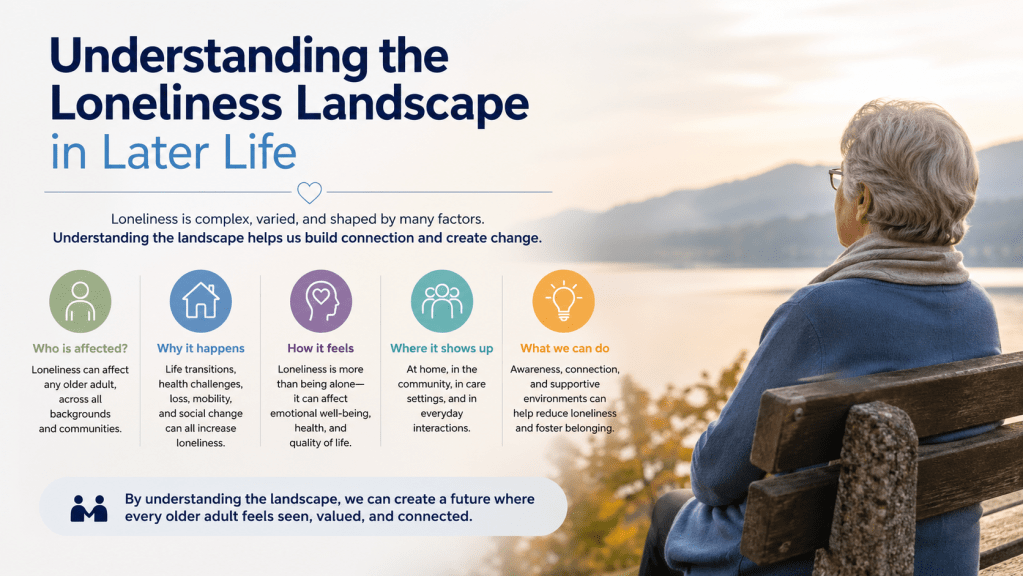
After decades of building careers, numerous males face unexpected quietness at home. The social landscape changes dramatically after 65.
Exploring Gender Differences: Men vs Women After 65
Research reveals distinct patterns between genders. The Harvard study of adult development followed hundreds of individuals over eighty years.
Males typically maintain smaller social circles. They rely heavily on spouses for emotional support. When partners are gone through death or divorce, many struggle profoundly.

Nearly 40% of males living alone are divorced. Another 31% are widowed. This data shows how partner loss contributes to isolation.
Key Factors Contributing to Isolation and Loneliness
Traditional masculinity norms create significant barriers. Many gentlemen were socialized for years to suppress emotions. Asking for help is often viewed as weakness.
Retirement brings identity challenges. Those who defined themselves through work suddenly lose daily interactions. Purpose and routine disappear simultaneously.
| Contributing Factor | Impact on Males | Impact on Females | Prevention Strategy |
|---|---|---|---|
| Partner Loss | Higher health decline rate | More resilient social networks | Early friendship building |
| Retirement Transition | Loss of identity and purpose | Maintains community connections | Hobby development before retirement |
| Traditional Socialization | Reluctance to seek help | More open to emotional support | Mental health awareness programs |
| Gathering Space Decline | Loss of community points | Adapts to new social venues | Technology-assisted connections |
The decline of traditional gathering spaces compounds the issue. Service clubs and athletic activities provided natural connection points. Their absence creates vacuum in social lives.
Understanding these patterns is crucial for families. Recognizing warning signs early prevents entrenched isolation. This knowledge helps address emotional health challenges before they escalate.
The cascade effect is real. One loss leads to another. Retirement leads to fewer interactions, then deeper social isolation, increasing health risks. Research from the National Institutes of Health confirms this progression.
Effective Ways to Combat Loneliness in Older Men

When you visit, the silence in the house speaks louder than any words could. Getting your father to admit he needs more social interaction can feel challenging. The good news is there are practical approaches that respect his independence while building meaningful connections.
Building Social Connections and Community Engagement
Think of social health as “social fitness” – something to work on daily, just like physical health. Dr. Robert Waldinger from the Harvard Study advises: “Make an effort every day to be in touch with people. Put yourself in situations where you’ll see the same people repeatedly. That’s how conversations start and friendships develop.”
Programs like Men’s Sheds offer perfect environments for this. Guys work side-by-side on projects in community workshops. This “shoulder to shoulder” approach feels more natural than face-to-face support groups.

- Woodworking or gardening clubs
- Veterans organizations or golf leagues
- Volunteering at local nature centers
Leveraging Technology and Support Networks
When distance or mobility makes in-person visits challenging, technology bridges the gap. While video calls help maintain family bonds, they may not create new connections for those struggling.
That’s where solutions like JoyCalls provide consistent support. The AI companion calls at the same time each day for friendly conversation. It asks about well-being and sends summaries to family members.
This technology requires no apps or devices from your loved one. It complements family interactions rather than replacing them. For additional low-tech connection ideas, explore creative approaches that work within his comfort zone.
Remember to help maintain existing friendships too. Regular contact with former colleagues and old friends provides familiar comfort. Combined with proven connection strategies, these approaches create a supportive network that grows stronger over time.
Addressing Health Risks and Emotional Impacts
Many families don’t realize that social disconnection carries the same health risks as smoking or obesity. The quiet struggle goes far beyond emotional discomfort.
Try JoyCalls Free
No app or new device needed. Start with a free 7-day trial.
According to the National Institute on Aging, isolation significantly increases the risk of serious conditions. These include cardiovascular disease and cognitive decline.

Managing Depression, Substance Use, and Cognitive Decline
Depression often creates a dangerous cycle with isolation. Each condition fuels the other, leading some individuals toward unhealthy coping mechanisms.
Increased alcohol use can become an escape from boredom. Families should watch for changes in mood, sleep patterns, and interest in activities.
Evidence-Based Interventions and the Role of Healthcare Providers
Effective interventions combine multiple approaches. Exercise, therapy, and community engagement work best together.
Healthcare providers now use “social prescriptions.” They connect patients with local activities as part of medical care. This collaborative approach involves the entire family.
Utilizing Community Programs and Men’s Groups
Structured groups provide natural connection points. Programs like Men’s Sheds create comfortable environments for shared activities.
These evidence-based strategies address both physical and emotional health. They help prevent the serious consequences outlined in recent research on isolation’s impact.
A Practical Connection Plan for Older Men and Women After 65
Understanding loneliness is important, but the next step is knowing what to do about it. After 65, loneliness rarely improves through vague advice like “get out more” or “call someone.” Most older adults already know connection matters. The harder part is rebuilding connection in a way that feels realistic, dignified, and emotionally safe.
This is especially true because loneliness can look different in men and women. Older men may be less likely to say they feel lonely, even when their routine has become quiet and limited. Older women may have more social contacts, but still feel emotionally unseen, especially after caregiving, widowhood, health changes, or family distance. In both cases, the solution is not simply “more people.” It is better rhythm, better support, and more meaningful contact.
The National Institute on Aging notes that older adults are at higher risk of loneliness and social isolation due to health changes, mobility issues, sensory loss, disability, and the loss of family or friends. It also recommends regular contact, shared-interest activities, community involvement, and asking for help when needed. The CDC also distinguishes social isolation from loneliness: isolation is about lack of contact or support, while loneliness is the feeling of being disconnected. Both can affect physical and mental health.
The most effective approach is to build a small, repeatable connection system.
Start With a “Social Health Check-In”
Before making changes, seniors and family members should look honestly at the current routine. This does not need to feel clinical. It can be a gentle weekly reflection.
Ask:
1. Who did I speak to this week?
Not texted. Not waved at. Actually spoke to.
This may include a neighbor, friend, adult child, church member, volunteer coordinator, doctor, grandchild, or daily check-in call. The goal is not to judge the number. The goal is to notice patterns.
For many older men, the answer may reveal that most conversations are practical: bills, appointments, repairs, medication, groceries. These conversations matter, but they may not provide emotional connection.
For many older women, the answer may be different. They may speak with several people, but still feel lonely because the conversations are one-sided. They may be listening, helping, remembering birthdays, checking on others, but not receiving the same care back.
2. Which conversations left me feeling better?
This is a powerful question because not every interaction reduces loneliness. Some calls feel rushed. Some family conversations focus only on health problems. Some social gatherings feel polite but shallow.
Older adults should begin noticing which interactions bring warmth, laughter, relief, comfort, or purpose. Those are the relationships worth strengthening.
3. Where are the empty parts of my day?
Loneliness often becomes strongest at predictable times. For one person, it may be early morning after waking up alone. For another, it may be evening after dinner. For someone else, it may be Sunday afternoon, holidays, or the hours after a medical appointment.
Once the difficult time is identified, connection can be planned around it. A daily call, a walking group, a scheduled TV watch-along, a neighbor visit, or a regular volunteer shift can be placed exactly where the loneliness usually appears.
Build a Weekly Connection Routine, Not a Random Social Life
Random connection is unreliable. A senior may have a good week when family calls often, then a quiet week when everyone is busy. That inconsistency can make loneliness worse.
A better approach is to create a simple weekly rhythm.
The 3-2-1 Connection Rule
Older adults and families can use this easy structure:
3 light contacts per week
These are simple, low-pressure interactions. A short call, a chat with a neighbor, a conversation with the pharmacist, a greeting at a community center, or a daily companion call.
2 meaningful contacts per week
These are longer or more personal. A visit with a friend, lunch with a sibling, a video call with grandchildren, a faith group meeting, a support group, or a shared hobby.
1 purpose-based activity per week
This gives the week meaning beyond receiving care. It could be volunteering, mentoring, helping at a library, joining a walking group, attending a class, gardening with others, or participating in a local senior program.
This structure helps both men and women, but in slightly different ways. For older men, purpose-based activities often feel more natural than emotionally focused gatherings. Many men open up more easily while doing something side-by-side. For older women, meaningful contact may need to include spaces where they are not only caregivers, organizers, or listeners, but also supported as individuals.
For Older Men: Use Activity as the Doorway to Connection
Many older men do not respond well to being told, “You need to talk about your feelings.” That may feel uncomfortable or even insulting. A better approach is to invite connection through action.
Instead of saying:
“You seem lonely. You should join a support group.”
Try:
“There’s a group that fixes old furniture for charity. I thought you might enjoy the work.”
Or:
“The library needs someone to help with a local history project. You know so much about this area.”
This matters because many men build trust through repeated shared activity. Conversation often comes later.
Good options include:
Repair, workshop, or project groups
Woodworking, bicycle repair, gardening, model building, community maintenance, tool libraries, and Men’s Shed-style groups can be especially helpful. These settings allow conversation to happen naturally without pressure.
Veteran, alumni, or former-workplace networks
Shared identity can reduce the awkwardness of starting over socially. A retired teacher may enjoy mentoring students. A former engineer may enjoy helping with robotics clubs. A veteran may find comfort in veteran organizations.
Physical activity with structure
Walking groups, chair yoga, golf, swimming, tai chi, or low-impact exercise classes provide health benefits and repeated contact. The key is consistency. Seeing the same people every Tuesday matters more than attending one large event.
Skill-sharing roles
Many older men have decades of practical knowledge. Asking them to teach, explain, repair, guide, or mentor can restore confidence and purpose.
Family members should avoid making the activity sound like “therapy” unless the older adult is open to that language. The first goal is to create safe, repeated contact.
For Older Women: Protect Against Emotional Overload
Older women are often assumed to be “better connected” because they may have more friends or family contact. But quantity does not always mean emotional support.
Many older women spend years caring for spouses, children, grandchildren, siblings, neighbors, or friends. After 65, they may still be the person everyone calls when something goes wrong. That can create a hidden kind of loneliness: being needed, but not deeply cared for.
A helpful question for older women is:
“Where do I get to be supported, not just useful?”
This can change the type of connection they seek.
Good options include:
Smaller circles instead of large groups
Large gatherings can be tiring, especially for women dealing with grief, chronic pain, hearing changes, or social fatigue. A small tea group, book discussion, prayer circle, craft club, or walking partner may be more nourishing.
Friendships with reciprocity
A good friendship after 65 should not feel like unpaid emotional labor. Older women should be encouraged to notice whether they leave conversations feeling valued or drained.
Identity-restoring activities
After caregiving or widowhood, many women need spaces that reconnect them with who they are beyond family roles. Art classes, music, writing groups, gardening clubs, education programs, and travel groups for seniors can help rebuild personal identity.
Permission to ask directly
Many older women hesitate to ask for help because they do not want to burden others. But direct requests make support easier.
Instead of saying:
“I’m fine.”
Try:
“I’d really enjoy a call on Wednesday evenings. That’s when the house feels quiet.”
Or:
“Could we have lunch once a month? I miss having something to look forward to.”
Specific requests are easier for family and friends to honor.
Help Adult Children Support Without Taking Over
Adult children often want to help but may not know how. Some overcorrect by trying to manage every detail. Others feel guilty, so they avoid the topic. Neither response works well.
The goal is partnership.
Do not start with “Are you lonely?”
Many older adults will say no, even when they are struggling. The word can feel embarrassing.
Try softer questions:
“How have your days been feeling lately?”
“Who have you enjoyed talking to this week?”
“Is there a time of day that feels too quiet?”
“Would it help to have something regular on the calendar?”
These questions open the door without forcing an admission.
Offer choices, not instructions
Instead of:
“You need to go to the senior center.”
Try:
“I found three options nearby: a walking group, a lunch program, and a history talk. Which one sounds least annoying?”
The phrase “least annoying” can be surprisingly effective because it lowers pressure. The older adult does not have to feel enthusiastic immediately. They only need to take one step.
Make the first step easier
Starting something new after 65 can feel intimidating. Offer practical support:
Help with transportation.
Call ahead to ask about accessibility.
Attend the first session together.
Print the schedule.
Put the event on a visible calendar.
Arrange a reminder call.
Check whether hearing, mobility, or vision needs will be accommodated.
Small logistical barriers often stop people from attending, even when they are interested.
Use Daily Calls as a Stability Anchor
One of the most helpful tools for loneliness is predictability. A daily or regular call gives the day structure. It creates something to expect, something to respond to, and something that says, “You have not been forgotten.”
This is where phone-based support can be especially valuable. Many seniors do not want another app, password, screen, or complicated device. A simple call is familiar. It meets them where they are.
For families, a daily call can also reveal changes that might otherwise be missed: low mood, confusion, poor sleep, skipped meals, or withdrawal. It should not replace family contact, but it can support it.
A strong connection plan might look like this:
Monday: daily check-in call and short walk.
Tuesday: community activity or class.
Wednesday: family call after dinner.
Thursday: hobby or volunteer activity.
Friday: neighbor coffee or faith group.
Saturday: open time for rest.
Sunday: longer family conversation or shared meal.
The exact schedule does not matter. What matters is that connection becomes part of the routine, not something left to chance.
Create a “Loneliness Response Plan” for Hard Days
Even with support, lonely days will happen. The goal is not to eliminate every sad moment. The goal is to prevent one lonely afternoon from becoming a lonely season.
Every older adult should have a simple plan for difficult days.
Step 1: Name the moment
“I am having a lonely day.”
This sounds simple, but it reduces shame. Loneliness is not a personal failure. It is a signal that connection is needed.
Step 2: Choose one low-effort action
The action should be small enough to do even when motivation is low.
Examples:
Call one familiar person.
Sit outside for ten minutes.
Walk to the mailbox and greet a neighbor.
Listen to a favorite radio program.
Attend a regular group, even if only for 30 minutes.
Ask for a check-in call.
Write down one person to contact tomorrow.
Step 3: Avoid coping habits that deepen isolation
Some habits feel comforting at first but worsen loneliness over time. These may include staying in bed all day, skipping meals, drinking more alcohol, ignoring calls, watching upsetting news for hours, or refusing every invitation.
Families should watch for these changes gently. The goal is not criticism. The goal is early support.
Make Connection Easier for Seniors With Health or Mobility Challenges
Some advice about loneliness assumes that older adults can simply go out more. That is not always realistic.
Arthritis, vision loss, hearing difficulty, dizziness, incontinence worries, driving limitations, memory changes, pain, or fear of falling can all make social life harder. A senior may say, “I don’t feel like going,” when the real issue is embarrassment or physical discomfort.
Practical solutions include:
Choosing places with easy parking and accessible bathrooms.
Using transportation services for seniors.
Keeping visits shorter but more frequent.
Using captioned phones or hearing-friendly settings.
Planning social time earlier in the day when energy is better.
Choosing small groups instead of noisy rooms.
Arranging home visits when going out is difficult.
Using regular phone calls when video calls feel overwhelming.
This is important because loneliness support must fit the person’s actual life. A plan that ignores health limitations will not last.
Focus on Purpose, Not Just Company
The deepest loneliness after 65 often comes from feeling unnecessary. Retirement, widowhood, adult children moving away, and physical limitations can make a person wonder, “Where do I fit now?”
That is why purpose is essential.
Purpose does not have to be grand. It can be simple and daily.
A senior can:
Teach a grandchild a recipe.
Record family stories.
Water plants for a neighbor.
Call another older adult who is also alone.
Volunteer one hour a week.
Help sort donations.
Join a community garden.
Mentor someone younger.
Pray for or encourage others in a faith community.
Share practical knowledge online or in person.
Purpose turns connection from passive receiving into active belonging. It reminds older adults that they still matter.
A Simple 30-Day Plan to Reduce Loneliness

Families and seniors can start with this practical 30-day approach.
Week 1: Notice the pattern
Track when loneliness feels strongest. Morning? Evening? Weekends? After family visits? During meals? Write it down without judgment.
Week 2: Add one predictable contact
Schedule one recurring call, visit, group, or activity. Keep it simple. The goal is consistency, not perfection.
Week 3: Reconnect with one familiar person
Choose someone from the past: an old friend, cousin, neighbor, colleague, church member, or former club member. Send a short message or make a call.
Try:
“I was thinking of you today and wanted to say hello.”
That is enough.
Week 4: Add one purpose-based activity
Pick something useful, enjoyable, or meaningful. It should not feel like another obligation. It should create a reason to show up.
At the end of 30 days, review what helped. Keep what worked. Drop what felt forced. Then build slowly.
The Real Goal: A Life With Reliable Points of Connection

Loneliness after 65 does not always need dramatic solutions. Often, it improves through steady, thoughtful changes: one regular call, one trusted group, one weekly activity, one honest conversation, one reason to get dressed and show up.
Men may need connection that begins with activity, usefulness, and routine. Women may need connection that includes emotional reciprocity, rest from caregiving roles, and space to be supported. Every person is different, but everyone needs to feel remembered, valued, and included.
The most caring question is not only, “Are you lonely?”
It is:
“What would make your days feel more connected, more supported, and more worth looking forward to?”
That question can begin real change.
How Families Can Recognize Loneliness Before It Becomes a Crisis
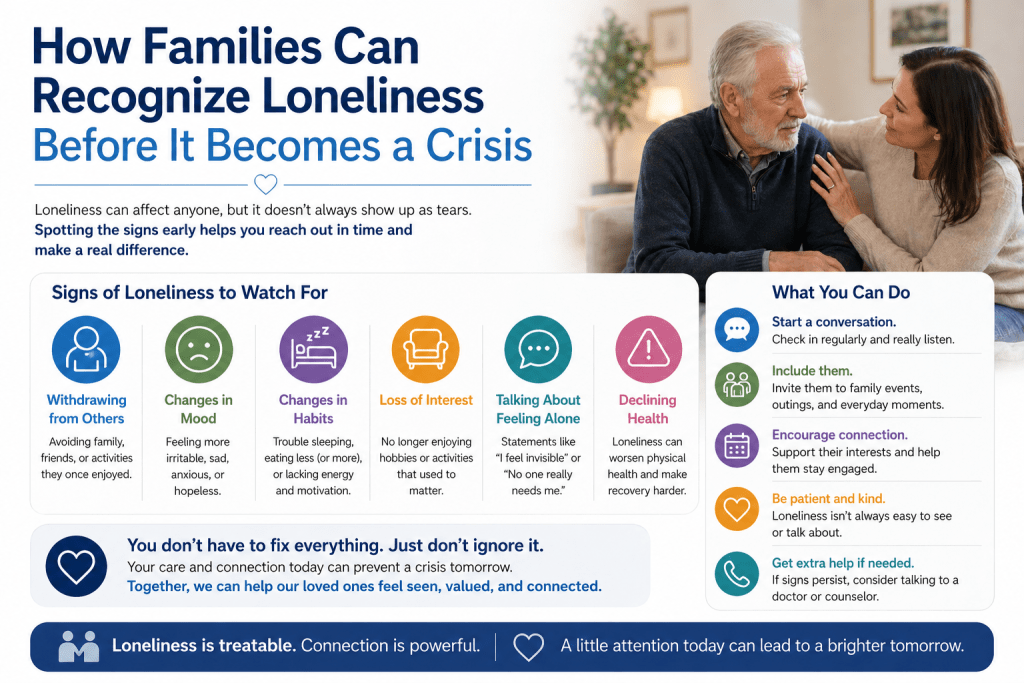
Loneliness in older adults often builds quietly. It may not appear as sadness at first. It may show up as irritability, tiredness, loss of interest, poor appetite, repeated health complaints, or a sudden reluctance to leave the house.
Many seniors will not say, “I am lonely.” Some may not even use that word for themselves. Older men may describe it as boredom, restlessness, or “nothing to do.” Older women may say they feel tired, forgotten, or emotionally drained. That is why families need to look beyond direct statements and notice changes in routine, mood, and behavior.
Look for Changes in Daily Habits
A senior who is becoming lonely may slowly stop doing things that once gave structure to the day.
Common signs include:
- Sleeping much later than usual
- Watching television for most of the day
- Skipping meals or eating very little
- Wearing the same clothes repeatedly
- Avoiding phone calls
- Losing interest in hobbies
- Letting mail, bills, or household tasks pile up
- Saying “there’s no point” more often
One small change may not mean much. But several changes together can suggest that the person is losing motivation and social connection.
Pay Attention to Repeated Health Complaints
Loneliness can sometimes appear through physical concerns. A senior may call frequently about headaches, stomach discomfort, body pain, sleep trouble, or fatigue. These symptoms should always be taken seriously, but families should also ask whether emotional isolation may be part of the picture.
Instead of saying, “You’re just lonely,” try:
“Your body seems to be carrying a lot lately. Have your days been feeling heavier than usual?”
This keeps the conversation respectful.
Notice Withdrawal After Loss or Transition
Certain life changes increase loneliness risk:
- Death of a spouse or close friend
- Retirement
- Moving to a new home
- Giving up driving
- Diagnosis of a chronic illness
- Reduced mobility
- Children moving farther away
- Recovery after surgery or hospitalization
After these moments, families should not assume the senior is “adjusting fine” just because they are quiet. Many older adults try to protect their children from worry. Regular, gentle check-ins are important.
Watch for Gender-Specific Warning Signs
Older men may show loneliness through silence, anger, stubbornness, or overdependence on one person. They may reject invitations, but still feel hurt when no one asks again.
Older women may continue caring for others while hiding their own loneliness. They may seem socially active, but feel emotionally unsupported. They may say yes to everyone, then feel exhausted and unseen.
The key is to notice whether the person has both contact and comfort. Social activity alone is not enough if the person still feels invisible.
Ask Better Questions
Avoid questions that invite automatic answers.
Instead of:
“Are you okay?”
Ask:
“What part of the day feels longest?”
“Who do you look forward to hearing from?”
“When did you last have a really good conversation?”
“What would make this week feel a little lighter?”
These questions help seniors answer honestly without feeling exposed.
Create a Family Check-In System
Families do not need to do everything, but they do need consistency.
A simple system could include:
- One person calls every Monday morning.
- Another visits twice a month.
- A grandchild sends a voice note every Sunday.
- A neighbor checks in after bad weather.
- A daily companion call fills the gaps between family contact.
This prevents support from depending on one overwhelmed caregiver.
Change block type or style
Move Paragraph block from position 268 up to position 267
Move Paragraph block from position 268 down to position 269
Change alignment
Change text alignment
Displays
Do Not Wait for a Crisis
The best time to address loneliness is before depression, falls, poor nutrition, or medical neglect appear. A senior does not need to be in crisis to deserve companionship.
Small, steady support can protect emotional health. A regular call, a weekly lunch, a ride to a group, or help restarting an old hobby may seem simple, but these gestures can rebuild a sense of belonging.
For many older adults, the message underneath the action matters most:
“You are still part of our lives. Your days matter. We are not leaving you to manage this alone.”
Designing a Life That Prevents Loneliness (Not Just Treats It)
Most discussions around loneliness focus on fixing it after it appears. But for adults over 65, the more effective and empowering approach is prevention—designing a lifestyle where loneliness has fewer chances to take root in the first place.
This is not about staying busy for the sake of it. It is about building a life with predictable connection, emotional safety, and personal relevance. When these three elements are present, loneliness becomes less intense, less frequent, and easier to manage.
Shift the Mindset: From “Passing Time” to “Living With Structure”
One of the biggest transitions after 65 is the loss of external structure.
Work, parenting responsibilities, and social obligations once shaped the day. After retirement or major life changes, that structure disappears. Days can start to feel long, undefined, and repetitive.
This lack of structure is one of the strongest hidden drivers of loneliness.
Instead of asking:
“How do I stay busy?”
A better question is:
“What kind of rhythm makes my days feel meaningful and connected?”
Build a Daily Anchor System
A well-designed day includes at least two anchors:
- One in the morning
- One in the afternoon or evening
These anchors should be non-negotiable and repeatable.
Examples:
- Morning tea with a neighbor
- A fixed-time daily phone call
- A morning walk in a familiar place
- A daily prayer or reflection group
- Evening check-in call with family
- Watching a TV program “together” with someone (even remotely)
These anchors reduce the emotional drift that often leads to loneliness.
For older men, anchors tied to routine (same time, same activity) often feel more natural.
For older women, anchors tied to relationships (who they connect with) may feel more fulfilling.
Redesign the Home Environment for Connection
Loneliness is not only about people. It is also shaped by the environment.
A home that feels closed off, silent, or difficult to navigate can increase isolation—even if the person has social opportunities outside.
Make the Home “Interaction-Friendly”
Simple changes can make a big difference:
- Keep a chair near the entrance for short neighbor visits
- Place a phone in an easy-to-reach, visible location
- Use louder ringtones or visual alerts for calls
- Keep a list of important contacts near the phone
- Display photos that spark conversation and memory
- Keep a calendar with planned interactions clearly visible
The goal is to make connection easy, not effortful.
Reduce “Barriers to Saying Yes”
Sometimes seniors decline invitations because small tasks feel overwhelming.
Examples:
- Not knowing what to wear
- Difficulty finding keys or shoes
- Uncertainty about timing
- Fear of being tired or uncomfortable
Families can help by simplifying these decisions:
- Prepare a “go-out kit” (clothes, shoes, essentials ready)
- Keep a simple checklist near the door
- Confirm plans in advance
- Offer flexible exit options (“stay as long as you like”)
Removing small barriers increases participation.
Build “Weak Ties” Alongside Close Relationships
Most people think only close relationships matter. But research and real-life experience show that casual, repeated interactions—called weak ties—play a huge role in reducing loneliness.
These include:
- Greeting the same shopkeeper
- Chatting with a neighbor
- Seeing familiar faces at a park
- Speaking briefly with a delivery person
- Attending regular community gatherings
These interactions are low-pressure, but they create a sense of belonging.
For older men, weak ties can feel easier than deep emotional conversations.
For older women, they can reduce emotional burden by adding lighter interactions to the day.
How to Build Weak Ties Intentionally
- Visit the same place at the same time regularly
- Choose small local businesses over anonymous services
- Sit in shared spaces instead of staying indoors
- Learn and use people’s names
- Offer simple, friendly conversation starters
Consistency turns strangers into familiar faces.
Create Emotional Safety in Relationships
Loneliness is not just about being alone. It is about not feeling safe to be yourself with others.
A senior may have frequent contact with family but still feel lonely if:
- They are always being corrected or advised
- Conversations focus only on health or problems
- They feel like a burden
- They are not listened to fully
Improve the Quality of Conversations
Families and caregivers can improve emotional safety by:
- Listening without interrupting
- Avoiding immediate problem-solving
- Asking open-ended questions
- Allowing silence without rushing
- Validating feelings without dismissing them
Instead of:
“You shouldn’t think like that.”
Try:
“That sounds like a difficult feeling. Tell me more.”
This creates space for honest connection.
Balance Independence and Support
One of the most delicate challenges after 65 is maintaining independence while receiving help.
Too much independence can lead to isolation.
Too much control from others can lead to withdrawal.
The solution is collaborative support.
Involve Seniors in Decisions
Even small choices matter:
- What day should visits happen?
- Which activities feel comfortable?
- What time of day works best?
- Who do they prefer to talk to?
When seniors feel involved, they are more likely to engage.
Respect Emotional Boundaries
Not every senior wants constant company. Some value quiet time.
The goal is not to eliminate solitude—it is to ensure that solitude does not turn into unwanted isolation.
Use Technology Thoughtfully (Not Forcefully)
Technology can reduce loneliness—but only if it feels accessible and useful.
Many seniors feel overwhelmed by apps, passwords, and constant updates. This can create frustration instead of connection.
Focus on Familiar and Simple Tools
- Phone calls instead of complex apps
- Voice notes instead of typing
- Large-button devices
- Pre-programmed contacts
- Minimal steps to connect
Technology should reduce effort, not increase it.
Combine Technology With Human Routine
For example:
- A daily scheduled call at the same time
- A weekly video call with a fixed purpose (storytelling, sharing meals, watching something together)
- Reminder systems that support—not replace—human interaction
Rebuild Identity After Life Changes
Loneliness often increases when a person feels they have “lost who they were.”
This can happen after:
- Retirement
- Widowhood
- Health decline
- Moving homes
- Reduced social roles
Help Seniors Answer: “Who Am I Now?”
This is not a philosophical question—it is practical.
A person who once identified as:
- A teacher
- A parent managing a busy household
- A professional
- A caregiver
- A community leader
May now feel unsure of their place.
Encourage Identity Through Action
Instead of asking them to define themselves, help them experience identity again:
- Teaching or mentoring others
- Sharing knowledge or stories
- Participating in community roles
- Learning something new
- Creating something (art, writing, gardening)
Identity reduces loneliness because it creates direction.
Plan for High-Risk Loneliness Moments
Certain times are consistently more difficult:
- Evenings
- Weekends
- Festivals or holidays
- Birthdays
- Anniversaries of loss
- After medical appointments
These moments should not be left unplanned.
Create “Connection Buffers”
Examples:
- Schedule calls during evenings
- Plan visits during holidays
- Arrange group meals on special dates
- Set reminders for family members to reach out
- Use companion services for predictable support
Planning ahead prevents emotional dips from becoming overwhelming.
Measure What Actually Helps
Not every solution works for every person. The key is to observe and adjust.
After trying something new, ask:
- Did this make the day feel better or heavier?
- Would I do this again?
- Did I feel more connected or more tired?
- Was the effort worth it?
Keep what works. Let go of what does not.
This keeps the approach practical and sustainable.
The Long-Term Goal: A Life With Built-In Connection
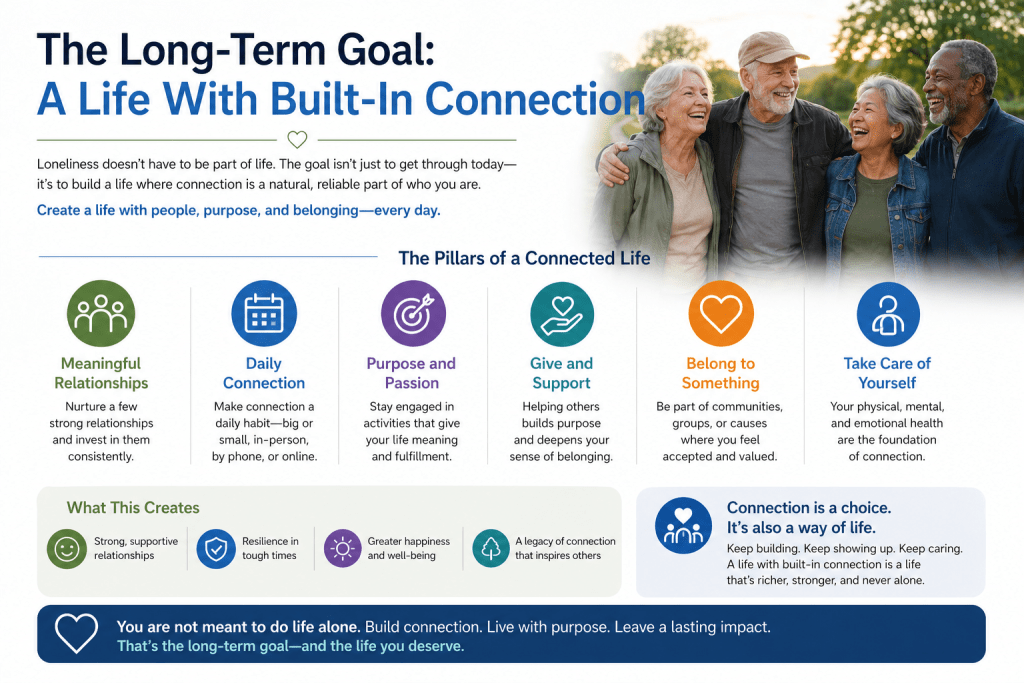
Preventing loneliness is not about constant activity or forcing social interaction.
It is about creating a life where:
- There is something to look forward to
- There are people who notice your absence
- There are moments of shared experience
- There is a sense of purpose
- There is emotional safety
For older men, this may mean rebuilding connection through routine, activity, and usefulness.
For older women, it may mean restoring balance, reciprocity, and emotional support.
For everyone, it means this:
A life where connection is not accidental—but gently, intentionally built into each day.
When Loneliness Needs More Than Social Plans

Most loneliness can improve with steady connection, routine, and support. But sometimes loneliness becomes deeper than ordinary sadness. At that point, seniors and families should treat it as a real health concern, not just a social problem.
There is no shame in this. Aging brings major emotional changes: loss, reduced independence, medical stress, grief, changing family roles, and uncertainty about the future. Any person can struggle under that weight.
Know When to Seek Extra Support
Families should pay close attention if an older adult:
- Seems sad or hopeless most days
- Stops enjoying things they once liked
- Talks about being a burden
- Withdraws from everyone
- Neglects meals, hygiene, medication, or appointments
- Sleeps far more or far less than usual
- Shows increased confusion or agitation
- Mentions that life has no meaning
- Gives away belongings unexpectedly
- Talks about death often or in a worrying way
These signs do not always mean depression, but they should never be ignored.
Start With a Gentle Conversation
The first conversation should be calm, private, and respectful.
Instead of saying:
“You’re depressed.”
Try:
“I’ve noticed you seem more tired and quiet lately. I care about you, and I want to understand what these days have been like.”
This approach reduces defensiveness.
Then ask:
“What has been feeling hardest recently?”
“Are you feeling alone even when people are around?”
“Do you feel safe by yourself?”
“Would you be open to speaking with someone who understands this?”
Involve a Doctor When Needed
Loneliness can overlap with medical issues. Sleep problems, pain, medication side effects, hearing loss, thyroid problems, memory changes, and depression can all affect mood and social behavior.
A primary care doctor can help check whether something physical is contributing. This is especially important when the change feels sudden.
Consider Counseling or Grief Support
Therapy is not only for crisis. It can help older adults process grief, fear, identity changes, family conflict, and emotional exhaustion.
Grief groups can be especially helpful after the loss of a spouse, sibling, friend, or long-term role. Many seniors feel relief when they speak with others who understand the same kind of loss.
Make Support Feel Dignified
Some older adults resist help because they fear losing independence. Families should frame support as strength, not weakness.
Say:
“You deserve support through this.”
Not:
“You can’t manage alone.”
Say:
“This is about making your days easier.”
Not:
“We’re worried you’re becoming a problem.”
Dignity matters. Seniors are more likely to accept help when they feel respected.
Keep Family Contact Warm, Not Clinical
When loneliness becomes serious, families may start treating every conversation like a check-up. That can make the older adult feel monitored instead of loved.
Balance practical questions with normal conversation.
Ask about memories, opinions, food, music, weather, family stories, old photos, favorite places, and small joys. Laugh together when possible. Share ordinary life.
A person does not only need to be cared for. They need to feel included.
Build a Circle, Not a Single Lifeline
One family member should not carry everything alone. A strong support circle may include:
- Adult children
- Siblings
- Friends
- Neighbors
- Doctors
- Faith leaders
- Community workers
- Companion callers
- Counselors
- Senior activity coordinators
The more balanced the circle, the safer and more sustainable the support becomes.
The Most Important Message
When loneliness becomes heavy, the answer is not blame. It is not pressure. It is not telling someone to “be positive.”
The answer is steady, compassionate action.
An older adult should hear, again and again:
“You matter.”
“You are not a burden.”
“We are taking this seriously.”
“You do not have to carry this alone.”
Rebuilding Meaningful Relationships After 65: Starting Again Without Fear
One of the most overlooked aspects of loneliness after 65 is this: many seniors are not just dealing with fewer people—they are dealing with lost or changed relationships.
A spouse may be gone. Friends may have moved away or passed on. Children may be busy with their own lives. Social circles that once felt natural may no longer exist.
This leaves many older adults facing a difficult emotional question:
“Is it too late to start again?”
The answer is no—but rebuilding relationships after 65 requires a different approach than earlier in life.
Let Go of the Idea That Relationships Must Look the Same
Many seniors feel stuck because they compare their current social life to the past.
- “I used to have so many friends.”
- “We used to meet every week.”
- “I used to be surrounded by people.”
But life after 65 is different. Energy levels, priorities, and lifestyles change—for everyone.
Instead of trying to recreate the past, the goal should be:
Create connections that fit your life today.
This might mean:
- Fewer people, but more meaningful conversations
- Shorter visits, but more regular contact
- Simpler activities, but deeper comfort
Quality replaces quantity.
Accept That Starting Feels Uncomfortable
Making new connections at any age can feel awkward. After 65, it may feel even harder because:
- Social confidence may have reduced
- Fear of rejection may be stronger
- It may feel like “everyone already has their circle”
- Energy for new interactions may be lower
This discomfort is normal—not a sign that it is impossible.
The goal is not to feel confident immediately.
The goal is to take small, repeatable steps despite the discomfort.
Use Familiar Environments to Build New Connections
Starting in completely new environments can feel overwhelming. A better strategy is to build connections in places that already feel somewhat familiar.
Examples:
- A nearby temple, church, or community center
- A regular walking route
- A local shop or market
- A healthcare center or clinic waiting area
- A library or reading room
- A park bench visited often
Repeated exposure creates familiarity, which slowly turns into conversation.
Start With Simple, Low-Pressure Interactions
Not every interaction needs to become a friendship.
Small steps include:
- Greeting someone regularly
- Making a brief comment about the weather or surroundings
- Asking a simple question
- Offering help with something small
- Sharing a short personal detail over time
These interactions may seem minor, but they build comfort and recognition.
Over time, one or two of these connections may grow naturally.
Reconnect With People From the Past
Many meaningful relationships do not need to be created from scratch—they can be restarted.
Think of:
- Old friends
- Former colleagues
- Neighbors from previous homes
- Extended family members
- People from past social groups
A simple message is enough:
“I was thinking about you today and wanted to reconnect.”
There is no need for a long explanation. Many people appreciate being remembered.
Allow Relationships to Be Imperfect
After 65, relationships may not always be balanced.
- Some people may be less available
- Conversations may be shorter
- Health issues may interrupt plans
- Memory lapses may occur
Perfection is not the goal. Consistency is.
A relationship that shows up regularly—even imperfectly—is valuable.
Avoid the “I Don’t Want to Bother Anyone” Trap
This is one of the biggest emotional barriers, especially for older women and men who value independence.
Many seniors think:
“They are busy.”
“I don’t want to disturb them.”
“They have their own lives.”
While this is thoughtful, it can lead to complete silence.
The truth is:
Most people are willing to connect—they just need clarity and invitation.
Instead of waiting, try:
“I would enjoy talking more often. Would that work for you?”
“Can we fix a regular time to catch up?”
“I miss our conversations.”
Being direct is not a burden—it is a gift of clarity.
Build One Strong Connection First
Loneliness does not require a large network to improve.
One consistent, reliable connection can make a significant difference.
This could be:
- A close friend
- A sibling
- An adult child
- A neighbor
- A regular caller
- A community member
The focus should be:
Who can I connect with regularly and comfortably?
Once one strong connection is established, others may follow more easily.
Learn to Receive, Not Just Give
Many seniors are used to being providers—of care, advice, support, and help.
After 65, learning to receive becomes equally important.
This means:
- Accepting help without guilt
- Allowing others to listen and support
- Saying yes to invitations
- Sharing personal feelings when safe
- Letting others contribute
Receiving does not reduce dignity. It completes the relationship.
Create Something Shared
Relationships grow faster when people share an activity.
This could be:
- Cooking together
- Watching a series at the same time
- Reading the same book
- Gardening
- Walking
- Praying or meditating
- Learning a new skill
Shared activity reduces pressure and creates natural conversation.
Be Patient With the Process
Rebuilding connection takes time. It may not feel immediate.
There may be:
- Awkward conversations
- Missed opportunities
- Unreturned calls
- Moments of doubt
This is part of the process—not a sign to stop.
Consistency matters more than speed.
The Emotional Truth About Starting Again
Starting again after 65 is not about replacing what was lost.
It is about creating new forms of connection that fit who you are now.
It takes courage to reach out again.
It takes strength to stay open after loss.
It takes patience to rebuild slowly.
But it is possible—and deeply worthwhile.
A Gentle Reminder for Every Reader
No matter your age, history, or current situation:
- It is not too late to connect
- It is not too late to be understood
- It is not too late to feel included
- It is not too late to matter in someone’s life
Loneliness may change with age—but so does the ability to create meaningful connection.
And sometimes, all it takes is one small step:
A call.
A conversation.
A willingness to begin again.
Conclusion
What if a simple daily connection could change everything for the man you care about? The information we’ve shared isn’t meant to overwhelm but to empower. Understanding these patterns is the first step toward meaningful change.
For adult children juggling work and family responsibilities, guilt about missed calls is common. Solutions like JoyCalls provide consistent connection during your busiest weeks. Small, regular interactions matter more than grand gestures.
To the gentlemen reading this: reaching out isn’t weakness. Staying engaged with life and people is essential for health. It’s never too late to build new friendships or reconnect with old ones. Research from this important study shows how purpose and social networks protect wellbeing.
Every day of engagement contributes to better quality of life. The findings in the comprehensive report confirm that tailored approaches work. Make that call today. Explore what brings joy and connection.
FAQ
How does social isolation differ for older men compared to women?
What are the main health risks linked to prolonged isolation in senior adults?
Can technology really help reduce feelings of isolation for an older man living alone?
What role do community programs and men’s groups play in combating this issue?
How can family members help an aging father or grandfather who seems withdrawn?

Ana Avila is a healthcare and technology writer with deep expertise in artificial intelligence, senior care innovation, and the practical use of AI in healthcare operations. Her work focuses on how emerging technologies can improve the daily experience of older adults, support overburdened care teams, and help senior living communities deliver safer, faster, and more personalized support.
Ana’s background includes health informatics, aging care systems, and applied artificial intelligence. Her work explores how digital health tools, predictive analytics, and AI-assisted communication systems can improve care coordination, reduce operational delays, and identify early signs of risk among older adults. She brings an understanding of both the technical side of AI and the human realities of healthcare delivery.
Over the years, Ana has developed a specialized body of work around AI in senior living. She writes about how senior care providers can use intelligent systems to manage resident requests, answer routine questions, support family communication, improve after-hours coverage, and detect patterns that may indicate loneliness, confusion, distress, or unmet needs. Her articles often examine the gap between what senior living teams are expected to deliver and what traditional staffing models can realistically support.
Ana’s healthcare expertise is especially focused on the operational side of care. She has written extensively about call handling, resident engagement, front desk workflows, triage systems, caregiver communication, care escalation, and the hidden administrative burden placed on senior living staff. Her work explains how AI can help reduce repetitive tasks, organize incoming requests, prioritize urgent issues, and give human caregivers more time for meaningful resident interaction.
At the same time, Ana is careful not to present AI as a replacement for human care. A consistent theme in her writing is that technology should support relationships, not weaken them. She argues that the best AI systems in healthcare are not the ones that simply automate the most tasks, but the ones that make care teams more responsive, families more informed, and residents more supported. Her perspective is grounded in the belief that senior living technology must be designed around dignity, trust, privacy, and compassion.
Ana has also written widely on the ethical use of AI in healthcare. Her work discusses the importance of human oversight, transparent escalation rules, resident consent, data minimization, and responsible use of sensitive health and behavioral information. She often emphasizes that AI systems used around older adults must be easy to understand, carefully monitored, and designed with the limitations and needs of real residents in mind, including those with memory loss, hearing challenges, mobility issues, or social isolation.
Her writing has been used as a reference point in discussions about aging, elder care technology, digital health, and AI-supported senior living. She has published 12 papers in journals including JAMA, The BMJ, and SSRN. Some of her articles have also been cited by Wikipedia editors as supporting references on topics related to healthcare, aging, and technology. This has helped position her work as a useful educational resource for readers looking to understand how AI can be applied in real care environments.
In addition to her long-form writing, Ana has contributed research-based commentary, professional explainers, and practical guidance for healthcare operators, senior living decision-makers, and technology teams building products for older adults. Her work combines research literacy with operational practicality. She is able to take complex subjects such as natural language processing, predictive analytics, conversational AI, and care automation, and explain them in a way that is accessible to executives, caregivers, families, and non-technical readers.
Ana’s strongest area of expertise is the intersection of artificial intelligence and senior living operations. She understands that senior care communities face a difficult combination of rising resident expectations, staffing pressure, family communication demands, and increasing care complexity. Her writing explores how AI can be used to ease those pressures through smarter communication systems, faster response workflows, proactive check-ins, and better visibility into resident needs.
Her approach is both evidence-informed and deeply human. She studies AI through the lens of real-world care delivery: whether a resident gets help faster, whether a family member receives a clearer update, whether a caregiver avoids unnecessary administrative work, and whether a senior living team can identify a concern before it becomes a crisis. This practical focus makes her work especially relevant for organizations that want to adopt AI responsibly rather than simply follow technology trends.
Ana Avila is regarded as a thoughtful voice on the future of AI in healthcare and senior living. Her expertise combines research-driven analysis, operational understanding, and a strong commitment to humane technology. Through her writing, she helps healthcare leaders and senior living communities understand not only what AI can do, but how it should be used to improve care, preserve dignity, and strengthen the human relationships at the center of aging support.