
Did you know that over 53 million Americans provide unpaid care to an adult? That’s one in five people. Many of these dedicated individuals share a common, heavy feeling. It’s that sinking sensation when a late meeting means you miss your nightly call.

You picture your mom waiting by the phone, and a wave of emotion washes over you. This specific ache of not being physically present is a reality for millions of caregivers. It’s the pull between your job, your own family, and the deep desire to comfort your aging parent.

This isn’t a sign of being a bad caregiver. It’s a sign of being human. You have limits on your time and energy. You simply can’t be in two places at once. Feeling this way doesn’t change the immense love and care you provide in so many other ways.

This guide is here to help. We’ll walk through understanding these feelings and offer real strategies to stay connected. You’ll learn to manage the emotional weight, protect your own well-being, and discover new ways to ensure your loved one feels supported every day. The goal isn’t perfection. It’s finding a sustainable path forward for you both.

Key Takeaways

  • Millions of people experience the emotional pull between personal responsibilities and caring for a family member.
  • These difficult feelings are a common human experience, not a reflection of your dedication.
  • You cannot be everywhere at once, and accepting this is a crucial first step.
  • Practical solutions exist to help maintain connection even when you can’t be there in person.
  • Managing your own well-being is essential to providing sustainable, long-term support.
  • Learning to stop feeling guilty is a vital part of the caregiving journey.

Understanding the Emotional Toll of Caregiving

The emotional landscape of helping an older adult is far more complex than most anticipate. What begins as devotion can quickly become a mix of unexpected feelings—ambivalence, anxiety, and profound sadness as you watch someone you love change.

A tired caregiver, a middle-aged woman in modest casual clothing, sitting on a couch in a warmly lit living room, her expression reflecting deep emotional strain and compassion as she gazes out of a window. In the foreground, soft shadows hint at an empty chair nearby, symbolizing loneliness. In the middle, a coffee table cluttered with reminders of caregiving—medications, a notebook, and a framed photo of a loved one, emphasizing her sacrifice. The background features gently blurred family photos on the walls, underscoring the bittersweet nature of caregiving. The overall atmosphere is infused with a mix of warmth and melancholy, captured through soft, diffused lighting that highlights the emotional toll while evoking a sense of resilience and hope. The lens is slightly blurred, focusing on the caregiver's face, evoking a poignant moment of reflection.

Research reveals the serious impact of this caregiving journey. Sixty percent of people in supportive roles show burnout symptoms. They report poor concentration, low energy, and ongoing sadness. Some even feel they’ve lost their personal identity.

Common Emotional Challenges

You might feel pulled in different directions. Wanting to help while wishing for freedom. Feeling anger at the situation, then guilt for that anger. These conflicting emotions are normal parts of the experience.

This emotional weight doesn’t just affect your mood. It changes your body’s chemistry. Stress hormones increase while mood-balancing chemicals decrease. The result? You may feel more irritable, foggy, and emotionally fragile.

Long-Term Impact on Health

The physical consequences are equally concerning. Ongoing stress can weaken your immune system. It may lead to sleep disturbances and conditions like headaches or high blood pressure.

This isn’t a sign of weakness. It’s the natural result of carrying heavy emotional and physical loads without enough support. Understanding the emotional toll of caregiving is the essential first step toward managing it effectively.

Emotional ImpactPhysical SymptomsLong-Term Risks
Ambivalence & AnxietyPoor ConcentrationHigher Depression Risk
Identity LossLow Energy LevelsWeakened Immune System
Ongoing SadnessSleep DisturbancesStress-Related Conditions

Your mental health matters as much as the care you provide. Acknowledging these challenges helps you build sustainable support strategies for your entire life.

Identifying Common Feelings: Guilt, Resentment, and Depression

When you’re supporting an aging parent from afar, certain emotions can become constant companions. Recognizing these feelings is the first step toward managing them effectively.

Differentiating Various Emotions

Guilt often surfaces when you feel you’ve fallen short. Maybe you missed a call or wished for a moment of freedom. These feelings are normal human responses.

Resentment can creep in when responsibilities feel unbalanced. You might feel trapped while watching your own life change.

A serene and introspective scene depicting a caregiver sitting on a park bench, gazing thoughtfully into the distance. The caregiver, dressed in modest casual clothing, shows subtle expressions of guilt and sadness, reflecting inner turmoil. In the foreground, a slightly crumpled piece of paper with scribbled notes symbolizes their conflicting feelings. The middle ground features soft, blurred greenery, evoking a sense of tranquility, while the background presents a sunlit landscape with gentle hills, enhancing the mood of contemplation. Use soft, warm lighting to create an intimate atmosphere, and capture the scene with a slight depth of field to focus on the caregiver's expression while softly blurring elements behind. Aim for a calming yet emotionally resonant composition.

Depression differs from temporary sadness. It’s a persistent heaviness that affects daily functioning. Loss of interest in once-enjoyable activities is a key sign.

EmotionCommon TriggersHealthy Response
GuiltMissed appointments, personal timeSelf-compassion, realistic expectations
ResentmentUnequal responsibilities, life changesBoundaries, shared duties
DepressionPersistent sadness, hopelessnessProfessional support, therapy

When to Seek Professional Help

If intense sadness or guilt lasts more than two weeks, it’s time to seek help. Difficulty with daily tasks or thoughts of harm require immediate attention.

Reaching out for support shows strength, not weakness. Therapy and support groups provide valuable tools for managing caregiver guilt when you live far. Professional help can restore balance to your emotional life.

Strategies for Managing Caregiver Guilt Loneliness

Have you noticed your social circle shrinking since your caregiving role began? This quiet separation often happens without fanfare. Friends stop calling when you’re always busy. You might hesitate to reach out, thinking they don’t understand your world.

Recognizing the Signs of Isolation

Isolation creeps in gradually. First, you skip one coffee date. Then you miss a birthday. Soon, your entire social life feels distant.

Watch for these subtle changes. Do you screen calls from friends? Decline invitations automatically? Feel like nobody gets your situation?

These are warning signs. They indicate you’re losing touch with your own identity.

Implementing Mindfulness and Self-Compassion

Simple practices can create pockets of peace. Try pausing three times daily. Ask yourself: “How do I feel right now?”

Treat yourself with the kindness you’d show a friend. Replace “I should do better” with “I’m doing my best.” This shift in perspective matters.

Isolation SignalsMindfulness ResponsesDaily Impact
Screening friend callsThree deep breaths when overwhelmedReduces immediate stress
Automatic invitation declinesFive-minute meditation breaksRestores mental clarity
Loss of personal interestsGratitude journalingRebuilds positive focus

Managing these feelings isn’t about elimination. It’s about recognizing them as normal responses. Small steps can help you reconnect with yourself and others.

Practical How-To Steps for Daily Respite and Self-Care

What if you could recharge your energy while still providing excellent care? Think of self-care as your oxygen mask. You must secure it first before assisting others.

A serene and peaceful self-care scene, featuring a cozy reading nook bathed in warm, soft light. In the foreground, a comfortable armchair adorned with a fluffy blanket and a steaming cup of herbal tea on a small wooden side table. A potted plant nearby adds a touch of greenery. In the middle, a large window reveals a tranquil garden view with blooming flowers and gentle sunlight filtering through. In the background, shelves filled with books create a warm atmosphere. The overall mood is calming and inviting, encouraging a sense of daily respite and relaxation. Shot with a slightly blurred background to emphasize the cozy space, using natural lighting for a soft, soothing effect.

Creating a Personalized Self-Care Plan

Start by identifying what truly restores you. Is it quiet moments alone? A walk outside? Connecting with friends?

Build a plan with different timeframes. Include daily micro-practices like five minutes of stretching. Add weekly activities such as longer walks. Schedule monthly breaks for complete refreshment.

Quality sleep is non-negotiable for your health. Create consistent bedtime routines. Address any disruptions with professional help if needed.

Scheduling Effective Timeouts

Treat your respite time like important appointments. Block it on your calendar. Otherwise, exhaustion will push it aside.

Start with small, realistic goals. Even fifteen minutes of daily respite builds resilience. This approach prevents burnout and maintains your energy.

Remember that taking time for self-care actually makes you better at providing care. You’ll notice increased patience and clarity. For more guidance on maintaining balance, explore our long-distance caregiving recovery strategies.

Techniques for Staying Connected with Loved Ones

Technology has transformed how we bridge the gap between separated relatives. Even when miles apart, you can maintain meaningful bonds with creative approaches.

Leveraging Technology for Connection

Scheduled video calls create face-to-face moments that feel personal. Regular phone check-ins at predictable times provide comforting routine.

Simple text messages or photos throughout the day keep you present in their thoughts. Shared digital photo frames display family memories automatically.

A warm, inviting scene depicting a middle-aged woman sitting at a cozy home office desk, using a tablet to video call with her elderly parent, who is shown on a screen in the background. The woman is dressed in modest casual clothing, with a gentle smile, expressing connection and care. Surrounding her are personal touches like family photos and potted plants, emphasizing a sense of home. Soft, natural light filters in through a window, creating a comforting atmosphere. In the background, a glimpse of a well-lit living room reveals an armchair and a vase of flowers, suggesting a loving environment. The focus is on the emotional bond created through technology, highlighting the joy of staying connected despite physical distance.

Building Honest Emotional Communication

Open conversations about future preferences reduce uncertainty later. Ask what matters most to them right now. Listen without immediately solving problems.

Share your own feelings gently to create mutual understanding. Regular connection times give both of you something to anticipate.

Communication MethodFrequencyEmotional Impact
Scheduled Video CallsWeeklyVisual reassurance
Voice MessagesDailyComfort on demand
Shared Photo AlbumsContinuousConstant presence

These strategies help maintain strong bonds across distance. For additional support, consider professional care options when needed.

Building a Companionship Plan That Does Not Depend Only on You

One of the hardest parts of caregiver guilt is the feeling that your loved one’s emotional comfort depends entirely on your presence. You may tell yourself, “If I do not call, they will feel forgotten,” or “If I am not there, no one else will notice how lonely they are.” That thought can feel loving at first, but over time, it becomes an impossible standard.

No one person can be someone’s entire social world.

This is especially important when caring for an older adult who spends long hours alone, has limited mobility, has lost friends, or feels less confident reaching out. In those situations, companionship cannot be left to chance. It needs a simple, steady plan.

A companionship plan is not a medical care plan. It is not only about appointments, medications, meals, or transportation. It is a practical plan for making sure your loved one has regular human connection, meaningful conversation, emotional reassurance, and gentle daily structure.

The goal is not to replace you. The goal is to make sure your loved one’s need for connection is supported even on the days when your work, family, distance, health, or responsibilities make it difficult for you to be fully available.

Why Companionship Needs a Plan, Not Just Good Intentions

Most families care deeply. The problem is not lack of love. The problem is that connection often depends on whoever remembers, whoever has time, or whoever feels guilty enough to call.

That kind of arrangement is fragile.

A daughter may plan to call every evening, but then a child gets sick. A son may intend to visit every weekend, but work travel interrupts the routine. A neighbor may check in occasionally, but not on a predictable schedule. Over time, the older adult receives care in scattered bursts rather than steady companionship.

For seniors, predictability matters. A planned call at 5 p.m. every weekday can become something to look forward to. A Sunday visit can give the week emotional shape. A Tuesday lunch with a neighbor can break up long stretches of silence. Small routines may seem ordinary, but they create security.

Start by asking one honest question:

“If I were unavailable for three days, what companionship would my loved one still receive?”

If the answer is “probably none,” that does not mean you have failed. It simply means the system needs strengthening.

Step 1: Map Their Current Social Week

Before adding new solutions, look at what already exists. Many caregivers skip this step because they are focused on what is missing. But a clear map helps you see both the gaps and the opportunities.

Take a blank sheet of paper and write the days of the week across the top. Under each day, note every moment when your loved one has meaningful contact with another person.

Include:

  • Phone calls
  • Video calls
  • In-person visits
  • Religious services
  • Senior center activities
  • Meal deliveries with brief interaction
  • Physical therapy or home care visits
  • Neighbor check-ins
  • Family visits
  • Social calls from friends
  • Community groups
  • Companion calls or wellness check-ins

Then look for patterns.

Are there three busy days followed by four silent ones? Are mornings full but evenings lonely? Does your loved one receive practical help but very little emotional conversation? Are most interactions rushed or task-based?

Many older adults technically “see people” but still feel lonely because the contact is functional. Someone drops off groceries. A nurse checks blood pressure. A family member discusses bills. These interactions matter, but they may not satisfy the deeper need to feel heard, known, and enjoyed.

After mapping the week, mark the highest-risk times. These are often evenings, weekends, holidays, after medical appointments, or the hours after a caregiver leaves. For many seniors, loneliness becomes strongest when the house gets quiet and there is nothing specific to anticipate.

Step 2: Identify What Kind of Companionship They Actually Need

Not every older adult wants the same kind of connection. Some want long emotional conversations. Some prefer lighthearted chats. Some do not want to “talk about feelings” but enjoy discussing sports, recipes, gardening, faith, family history, or local news.

A helpful companionship plan should match the person, not just the caregiver’s assumptions.

Ask gently:

“What part of the day feels longest for you?”
“Who do you enjoy talking to most?”
“Do you prefer short daily calls or longer calls a few times a week?”
“Would you like someone to remind you about activities, or would that feel annoying?”
“Are there topics you wish people asked you about more often?”

These questions are simple, but they shift the focus from guilt to dignity. Instead of deciding everything for them, you invite them into the plan.

You may discover that your loved one does not need you to call for an hour every night. They may simply need a cheerful morning call, a reminder that someone will check in later, and one longer conversation during the week. Or they may need more evening support because that is when sadness rises.

The better you understand the emotional need, the easier it becomes to choose the right type of support.

Step 3: Create a “Connection Menu”

A connection menu is a list of small companionship options that can be used throughout the week. It prevents the plan from depending on one big solution.

Think of it as a menu with different levels of support.

Light-touch connection

These are small moments that remind your loved one they are remembered.

Examples include:

  • A good morning text
  • A short voice message
  • A photo of the grandchildren
  • A postcard
  • A two-minute call
  • A shared joke
  • A reminder of tomorrow’s visit
  • A daily check-in call

Light-touch contact is useful because it is realistic. Many caregivers avoid calling unless they have enough time for a “proper” conversation. But a warm two-minute call is often better than no call at all.

You can say:

“I only have a few minutes, but I wanted to hear your voice.”

That sentence can mean more than a long call made out of obligation.

Meaningful weekly connection

These are longer interactions that allow your loved one to feel emotionally nourished.

Examples include:

  • A Sunday family call
  • A weekly lunch visit
  • A video call with grandchildren
  • A faith group meeting
  • A hobby-based conversation
  • A regular coffee visit with a neighbor
  • A scheduled storytelling call about family memories

These moments should not be only about health updates. Ask about opinions, memories, preferences, and joys. Older adults often get tired of every conversation becoming a checklist.

Instead of only asking, “Did you take your medicine?” try:

“What is something you remembered today that made you smile?”
“What was your favorite meal when you were younger?”
“What advice would you give me about handling this situation?”

Questions like these help your loved one feel like a full person, not a responsibility.

Emergency emotional support

There should also be a plan for difficult days. These are the days when your loved one feels unusually sad, anxious, confused, or withdrawn.

Create a short list of people or services that can step in. This might include a sibling, neighbor, close family friend, pastor, senior center contact, home care aide, therapist, or companion call service.

Write down:

  • Who can call?
  • Who can visit?
  • Who can check physically if needed?
  • Who should be contacted first?
  • What signs mean the situation is urgent?

This gives you a path to follow when emotions are high. It also reduces panic because you are not inventing a plan in the middle of a stressful moment.

Step 4: Share the Responsibility Without Making It Complicated

Many caregivers hesitate to ask others for help because they assume it will become a big conversation. But people are more likely to help when the request is small, specific, and easy to say yes to.

Avoid saying:

“Can you help more with Mom?”

That is too vague.

Try:

“Could you call Mom every Wednesday after dinner for 15 minutes?”
“Could you send Dad one photo of the kids every Saturday?”
“Could you visit Aunt Linda on the first Sunday of each month?”
“Could you be the backup person if I cannot reach him?”

Specific requests reduce confusion. They also prevent one person from carrying the invisible emotional labor of remembering everything.

You can create a simple family schedule with names, days, and tasks. It does not need to be fancy. A shared calendar, group chat, spreadsheet, or handwritten note can work.

The key is to assign ownership.

Not “someone should call her.”
But “Mark calls her on Tuesdays.”
Not “we should visit more.”
But “Priya visits on the second Saturday.”
Not “we need to keep Dad company.”
But “Ravi handles Sunday evening calls.”

When companionship becomes visible, it becomes easier to manage.

Step 5: Prepare Conversation Prompts for Repetitive or Difficult Calls

Some caregivers avoid calling because the conversations have become painful, repetitive, or emotionally heavy. This is especially common when an older adult is grieving, anxious, lonely, or experiencing memory changes.

You may love them deeply and still feel drained by the same complaints, worries, or silences.

A conversation prompt list can help.

Keep a note on your phone with easy topics:

  • “Tell me about your first job.”
  • “What music did you love when you were young?”
  • “What did your mother cook best?”
  • “What is one thing you want me to remember about our family?”
  • “What did you see from your window today?”
  • “Which neighbor did you like most growing up?”
  • “What should I make for dinner this week?”
  • “What was your favorite festival or holiday as a child?”
  • “What is something you are looking forward to?”
  • “Would you rather listen to music, talk, or just sit together on the phone?”

For seniors with memory challenges, avoid turning the call into a test. Instead of saying, “Do you remember what we talked about yesterday?” try, “I was thinking about that story you told me about your school days.”

If they repeat a story, let it be okay. Repetition may be part of how they connect. You do not have to correct every detail. Sometimes the emotional purpose of the story matters more than factual accuracy.

Step 6: Build “Presence” Into the Environment

Companionship is not only about live conversation. You can also create small signs of presence in your loved one’s home.

These cues can comfort them between calls and visits.

Consider:

  • A printed weekly calendar showing when people will call
  • Family photos labeled with names
  • A notebook where visitors write short messages
  • A playlist of familiar songs
  • A recorded voice message they can replay
  • A photo frame that updates with new family pictures
  • A large-print list of important phone numbers
  • A small “today’s plan” card
  • A memory box with safe, meaningful items
  • A visible note that says, “You are loved. I will call you at 6.”

These details may seem small, but they reduce the feeling of emptiness. They also help seniors who feel anxious when they cannot remember when someone is coming next.

For an older adult living alone, the home can become very quiet. A thoughtful environment gives them reminders that connection still exists even when no one is physically in the room.

Step 7: Review the Plan Every Month

A companionship plan should change as your loved one’s needs change. What worked three months ago may not be enough now. Health, mobility, memory, mood, and social confidence can shift quickly in later life.

Set a monthly reminder to review the plan.

Ask:

  • Are there still long lonely stretches?
  • Are calls happening as planned?
  • Does my loved one seem more settled or more withdrawn?
  • Are certain people not following through?
  • Does the schedule need more evening support?
  • Are there signs of depression, anxiety, or increased confusion?
  • Is the current plan still realistic for me?

This review should not become another source of guilt. It is simply maintenance. Just as you would adjust medications, meals, or transportation when needs change, you can adjust companionship too.

What to Do When Your Loved One Refuses Help

Sometimes older adults reject companionship support even when they are lonely. They may say, “I do not need anyone,” or “Do not bother people,” or “I am fine,” even when they are clearly struggling.

This can happen for many reasons. They may feel proud. They may fear being a burden. They may feel embarrassed. They may not want strangers involved. They may worry that accepting help means losing independence.

Instead of arguing, start small.

Say:

“This is not because you cannot manage. It is because I love knowing you have good company.”

Or:

“Let’s just try it for two weeks and see how it feels.”

Give them choices rather than instructions.

“Would you prefer a morning call or an evening call?”
“Would you rather talk to someone once a day or three times a week?”
“Would you prefer family calls, a neighbor visit, or a companion service?”

Choice preserves dignity. It reminds them they are still in control.

A Simple Weekly Companionship Plan You Can Copy

Here is a practical example:

Monday: Short morning call from daughter.
Tuesday: Neighbor checks in after lunch.
Wednesday: Grandchild sends a voice note or photo.
Thursday: Companion call or senior center activity.
Friday: Son calls after dinner.
Saturday: Family video call or visit.
Sunday: Quiet emotional check-in and review of the coming week.

This plan is not overwhelming. It does not require one person to do everything. It creates rhythm, variety, and reassurance.

Most importantly, it gives the caregiver a healthier message to hold onto:

“I am not abandoning them when I am unavailable. I have helped build a circle of connection around them.”

That shift matters.

Caregiver guilt often grows in silence and uncertainty. A companionship plan brings structure to both. It helps your loved one feel remembered, and it helps you care from a place of steadiness rather than panic.

You may not be able to be there every day. But with the right plan, your love can still show up every day in reliable, thoughtful, and meaningful ways.

Using AI Companions for Senior Support

Imagine having a friendly voice that calls your loved one every day when you can’t be there. AI companions offer this comforting reality.

A warm and inviting living room scene featuring an advanced AI companion, designed as a friendly, humanoid robot, engaging with a senior person in cozy, modest clothing. The robot has a soft, LED-lit face that conveys empathy, with gentle blue and white tones. In the foreground, the senior, a Caucasian woman with silver hair, sits comfortably in an armchair holding a digital tablet while the AI companion displays data and friendly expressions. In the middle, a small table with a vase of flowers and personal photos adds a homey touch. The background shows soft natural light streaming through a window, creating a serene atmosphere that emphasizes companionship and support. The perspective is slightly angled, drawing the viewer into the warmth of the interaction.

These smart systems provide consistent conversation and check-ins. They help fill the gaps between your visits and calls.

Benefits of AI Companions in Caregiving

AI phone companions work with any regular telephone. No apps or new devices are needed for your family member.

The system learns preferences over time. Conversations become more personalized with each call.

Traditional SupportAI Companion BenefitsImpact on Well-being
Scheduled family callsDaily consistent contactReduced feelings of isolation
Manual check-insAutomatic wellness monitoringPeace of mind for families
Basic remindersMedication and activity promptsImproved daily routine support

How to Get Started with JoyCalls

Setting up an AI companion takes just minutes. Visit the JoyCalls signup page to begin.

Provide basic information about interests and needs. Choose call times that work best for your family’s schedule.

You’ll receive conversation summaries and alerts. This daily check-in system keeps you informed while providing consistent companionship.

Effective Communication with Family and Support Groups

Coordinating care among family members often reveals unexpected tensions and communication gaps. You’re not alone in this challenge. Many people find that asking for help feels harder than actually providing the care.

Reaching out to others who understand your situation can make all the difference. Support groups provide a safe space where you can share honestly without judgment.

Engaging in Supportive Conversations

When talking with family, be specific about your needs. Instead of saying “I need support,” try “Could you call Dad every Tuesday evening?” Clear requests get better results.

These groups offer shared advice and comfort. They remind caregivers they’re not alone in their journey. You can find valuable emotional support from those who truly understand.

Organizing Family Meetings for Better Coordination

Schedule regular meetings with all family members. Create an agenda focused on practical needs rather than blame. Assign a facilitator to keep discussions productive.

Focus on facts: “Mom needs three appointments monthly—who can commit?” This approach distributes responsibilities fairly. For those times when direct conversation feels challenging, explore conversation starters that keep connections strong.

Remember that asking for assistance isn’t burdening others. It’s inviting them to share in meaningful care work. Effective communication strengthens your entire support network.

How to Know If Your Loved One Is Getting Enough Emotional Support

Sometimes caregiver guilt stays strong because you are never fully sure whether your loved one is truly okay. You may call often, arrange help, send messages, and still wonder, “Is this enough?” That uncertainty can be exhausting.

The truth is, emotional support is not always easy to measure. Your loved one may say they are fine because they do not want to worry you. They may hide loneliness out of pride. They may sound cheerful on the phone but spend most of the day feeling disconnected. On the other hand, they may complain often even when they are receiving steady support.

This is why caregivers need more than instinct. You need gentle ways to observe, ask, and adjust.

The goal is not to monitor your loved one like a project. The goal is to understand their emotional well-being with care, respect, and consistency.

Look Beyond “I’m Fine”

Many older adults use “I’m fine” as a protective phrase. It may mean they truly are fine. But it can also mean, “I do not want to be a burden,” “I do not know how to explain what I feel,” or “I am afraid you will worry.”

Instead of asking only, “Are you okay?” ask more specific questions.

Try:

“What was the best part of your day?”
“What part of the day felt slowest?”
“Did you talk to anyone today?”
“What are you looking forward to tomorrow?”
“Did anything make you feel lonely today?”

These questions give your loved one more room to answer honestly. They also make the conversation less clinical and more human.

If they avoid emotional questions, use softer language:

“Did today feel peaceful, boring, or heavy?”

That kind of question is easier to answer than, “Are you depressed?” or “Are you lonely?”

Watch for Small Changes in Routine

Emotional distress often shows up through behavior before it is spoken directly. Pay attention to changes in daily rhythm.

Signs may include:

  • Sleeping much more or much less
  • Losing interest in favorite shows, hobbies, music, or food
  • Not answering calls as usual
  • Repeating negative comments more often
  • Letting the home become unusually disorganized
  • Skipping meals
  • Withdrawing from neighbors or friends
  • Saying things like “There is no point” or “Everyone is busy”
  • Becoming unusually irritable or tearful
  • Talking more often about being forgotten

One change does not always mean something is wrong. Everyone has quiet days. But patterns matter.

If you notice a shift lasting several days or weeks, treat it as information, not as proof that you have failed. It may simply mean the current support plan needs adjustment.

Separate Practical Care From Emotional Care

A senior can have groceries, medication, transportation, and appointments handled but still feel deeply alone.

This is a common gap in caregiving. Families often focus on visible needs first because they are urgent and easier to organize. Emotional needs are quieter. They do not always appear on a checklist.

Ask yourself:

“Does my loved one have people who help them?”
Then ask:
“Does my loved one have people who enjoy them?”

That second question matters.

Being helped is not the same as feeling connected. Your loved one may need conversations that are not about pills, bills, pain, or appointments. They may need someone to ask for their opinion, laugh with them, remember old stories, or simply sit with them without rushing.

Try to make at least some interactions purely relational. No reminders. No instructions. No problem-solving. Just connection.

You might say:

“Today I do not want to talk about appointments. I just want to hear about you.”

Use a Simple Emotional Check-In Scale

A check-in scale can help when conversations feel vague. Keep it simple.

Ask:

“On a scale of 1 to 5, how connected did you feel today?”

You can define it like this:

1: Very lonely
2: A little low
3: Okay
4: Pretty connected
5: Very supported

You do not need to use this every day. Once or twice a week is enough.

If they say “2,” avoid jumping into panic. Ask gently:

“What would help move tomorrow to a 3?”

This keeps the conversation practical. It also gives your loved one a sense of control.

Their answer may surprise you. They may not ask for a long visit. They may say they want a morning call, help finding a church livestream, a neighbor to stop by, or someone to eat lunch with over the phone.

Create a Red Flag List

Every caregiver should have a short list of emotional warning signs that mean extra support is needed.

Examples include:

  • “I do not want to be here anymore.”
  • “Nobody would notice if I disappeared.”
  • “I feel like a burden.”
  • “There is nothing left for me.”
  • Refusing food or medication
  • Sudden confusion
  • Extreme withdrawal
  • Unusual fearfulness
  • Giving away important belongings unexpectedly
  • Talking about death in a way that feels different or urgent

If your loved one says anything that suggests self-harm, hopelessness, or immediate danger, treat it seriously. Contact local emergency services, a healthcare provider, or a crisis support line in their area. Do not try to carry that moment alone.

This is not about overreacting. It is about responding with care when the signs call for it.

Ask Other People What They Notice

You do not have to rely only on your own calls. If other people interact with your loved one, ask what they are seeing.

You can check in with:

  • Siblings
  • Neighbors
  • Home care aides
  • Friends
  • Faith leaders
  • Senior center staff
  • Meal delivery volunteers
  • Building staff
  • Regular drivers or helpers

Ask specific questions:

“Does she seem more withdrawn lately?”
“Is he still chatting the way he used to?”
“Have you noticed changes in mood, appetite, or energy?”
“Does she seem happy after activities?”

This creates a fuller picture. It also helps you notice changes earlier.

Do Not Confuse Quietness With Contentment

Some older adults are naturally quiet. They may not need constant conversation. Silence is not always loneliness.

The question is not, “Are they alone sometimes?” Everyone needs solitude.

The better question is:

“Does their alone time feel peaceful or painful?”

Peaceful alone time may include reading, prayer, music, gardening, puzzles, cooking, watching favorite programs, or resting.

Painful alone time often feels empty, anxious, repetitive, or heavy. Your loved one may describe the day as “too long,” “pointless,” or “the same as always.”

If their solitude seems peaceful, do not force more social activity than they want. If it seems painful, add support gently and gradually.

Build Joy Into the Week, Not Just Safety

Caregiving often becomes focused on preventing problems. Preventing falls. Preventing missed medication. Preventing confusion. Preventing loneliness.

Prevention matters, but older adults also deserve joy.

Ask:

“What gives this week some brightness?”

That brightness might be:

  • A favorite meal
  • A call with a grandchild
  • A religious service
  • A walk outside
  • A music playlist
  • A puzzle
  • A comedy show
  • A photo album
  • A visit from a pet
  • A familiar movie
  • A small outing
  • A birthday reminder
  • A weekly tea time

Try to schedule joy the same way you schedule care tasks. Put it on the calendar. Make it visible.

A life that is only managed can still feel lonely. A life with small pleasures feels more worth waking up to.

Reassess After Major Life Changes

Your loved one’s emotional needs may increase after certain events.

Pay closer attention after:

  • A hospital stay
  • A fall
  • Loss of a spouse or friend
  • Moving to a new home
  • Stopping driving
  • A new diagnosis
  • Reduced mobility
  • Retirement from a meaningful role
  • Holidays
  • Family conflict
  • Changes in memory
  • A caregiver moving farther away

These transitions can make seniors feel less independent, less visible, or less connected to their old identity.

During these times, increase check-ins temporarily. Add more predictable contact. Ask more direct emotional questions. Do not assume that the old routine is still enough.

Make the Plan Feel Loving, Not Like Surveillance

Some seniors may resist emotional check-ins if they feel watched. The language you use matters.

Avoid:

“We need to monitor you more.”
“You seem lonely, so we’re making a schedule.”
“You cannot be alone this much.”

Try:

“I want your week to feel less empty.”
“I would love for you to have more things to look forward to.”
“This is not about checking up on you. It is about making sure you feel cared for.”

Respect is essential. Your loved one should feel included, not managed.

A Monthly Emotional Support Review

Once a month, take 20 minutes to review the emotional side of care.

Ask yourself:

  • Did my loved one have regular conversations this month?
  • Were there long silent stretches?
  • Did they seem more withdrawn or more engaged?
  • What time of day seemed hardest?
  • Which calls or visits lifted their mood?
  • Which support efforts did not work?
  • Is one person carrying too much?
  • Does the plan need more variety?
  • Is professional support needed?

Then make one small improvement.

Do not overhaul everything unless necessary. Add one call. Change one visit time. Invite one more person in. Add one enjoyable activity. Make one routine more predictable.

Small changes are easier to maintain, and consistency matters more than intensity.

The Caregiver’s Reassurance Checklist

When guilt rises, use this checklist:

  • My loved one had meaningful contact today or has it scheduled.
  • They know when they will hear from someone next.
  • I have asked about their emotional state, not just their tasks.
  • I am watching for patterns, not blaming myself for every mood.
  • I have involved others where possible.
  • I have a plan for warning signs.
  • I am allowed to rest without abandoning them.

This checklist will not remove every difficult feeling, but it gives your mind something concrete to hold.

You are not trying to be perfect. You are trying to be thoughtful, consistent, and responsive.

That is real care.

Preventing Burnout: Recognizing Warning Signs and Taking Action

Burnout doesn’t announce itself with a loud crash—it arrives quietly through subtle changes in your daily life. Many caregivers push through exhaustion until they hit a breaking point. Recognizing these early signals can prevent serious health consequences.

Identifying Burnout Symptoms Early

Early warning signs include constant fatigue that rest doesn’t fix. You might feel irritable over small things or emotionally numb. Your body sends signals through headaches, digestive issues, or muscle tension.

Sleep disturbances and changes in appetite are physical red flags. Withdrawing from friends and losing interest in activities you once enjoyed are emotional indicators. These challenges signal that your resources are depleted.

Implementing Quick Actions to Restore Energy

When you recognize burnout symptoms, take immediate action. Schedule one full day off within the next week. Say no to non-essential obligations to preserve your energy.

Short-term boosters include a 20-minute walk or ten minutes of deep breathing. Call a friend who makes you laugh. These small steps can restore balance quickly.

Preventing full burnout requires systemic changes. Establish healthy caregiving boundaries and share responsibilities. Accept that you cannot be everything to everyone all the time.

Creating Personalized Self-Care and Grief Rituals

Have you ever felt the weight of watching someone you love gradually change, wishing you could preserve the person they once were? This experience of ambiguous loss—when someone is physically present but mentally or emotionally fading—creates a unique form of grief that deserves gentle attention.

Creating rituals helps give these complex feelings a container. They acknowledge the loss while promoting healing.

Crafting Rituals to Process Grief and Loss

Simple rituals can transform your caregiving journey. Try writing down significant losses on paper—the last time they remembered your name or could dress themselves.

Then release these papers through burning, burying, or throwing them into water. This symbolic act creates space for new things in your life. As experts note, such practices help process ongoing sorrow.

Incorporating Joyful and Restorative Activities

Balance the heaviness with activities that bring genuine pleasure. Schedule weekly things you love—gardening, painting, or cooking favorite meals.

Joy and sadness can coexist. Experiencing happiness doesn’t diminish your care or the difficulty of this journey. It sustains you through it.

Your personalized rituals should reflect what resonates with you. This way of honoring both grief and joy makes the entire experience more manageable.

Building Healthy Boundaries in Challenging Situations

Setting limits might feel like you’re pulling away, but it’s actually the foundation for sustainable support. Healthy boundaries protect your emotional space while allowing you to stay present and strong. They don’t block love—they protect it from being drained by endless giving.

Setting Limits with Family and Friends

Many people feel guilty when establishing any limits. They worry that saying “no” to one request means they don’t care enough. But the opposite is true—boundaries prevent burnout and resentment.

Clear communication helps others understand your capacity. Try phrases like “I can visit on Sundays but not weekdays” or “I need advance notice for visits.” These boundary-setting tips create respectful relationships.

With your loved one, boundaries might include designated available times or tasks you can comfortably handle. Clear expectations help everyone navigate this journey together.

Maintaining a Strong Sense of Personal Identity

Remember you existed before this role and will exist after it. You’re a whole person with interests and relationships beyond caregiving. Preserving your identity is essential.

Practical strategies include maintaining hobbies and spending time with friends who know the real you. Introduce yourself in ways that don’t lead with your supportive role.

When you feel guilty about taking space, reframe your thinking. You’re ensuring long-term sustainability rather than short-term exhaustion. This approach benefits everyone involved.

Boundary TypeExample PhrasesEmotional Benefit
Time Management“I’m available Tuesdays from 2-4 PM”Reduces overwhelm
Communication“Please call before stopping by”Maintains personal space
Task Limits“I can help with groceries but not medical tasks”Prevents resentment

Healthy boundaries teach people how to treat you respectfully. They model that everyone’s needs matter—including yours. This creates balanced relationships where connection thrives without sacrificing your well-being.

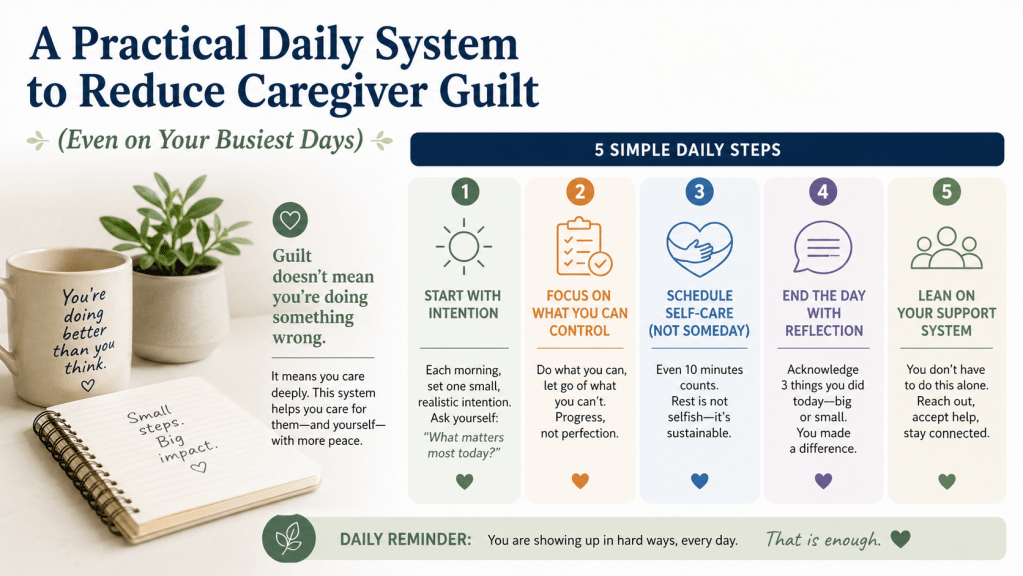
A Practical Daily System to Reduce Caregiver Guilt (Even on Your Busiest Days)

Caregiver guilt often feels overwhelming because it shows up in moments when you are already stretched thin. You are at work, in traffic, attending to your children, or simply trying to rest—and suddenly, a thought appears:

“I should call them.”
“They must be lonely right now.”
“I’m not doing enough.”

These thoughts are not always based on what is actually happening. They are often based on fear, love, responsibility, and the pressure you place on yourself to always be available.

The challenge is not just emotional. It is practical.

You need a simple system that helps you respond to guilt without letting it take over your entire day.

This section is not about ignoring guilt. It is about handling it in a structured, healthy way so it does not control your time, your energy, or your well-being.

The “Pause–Check–Act” Method

When guilt shows up, most caregivers react immediately. They drop what they are doing, make a rushed call, or spiral into worry.

Instead, try a three-step method:

1. Pause

When the thought appears, do not act immediately.

Take a few seconds and acknowledge it:

“I’m feeling guilty right now because I care.”

This small pause separates emotion from action. It prevents reactive decisions that can exhaust you over time.

2. Check

Ask yourself three quick questions:

“When was the last time I connected with them?”
“Do they have support scheduled today?”
“Is there any actual sign that something is wrong right now?”

Often, you will realize:

  • You spoke to them recently
  • They have a call or visit planned
  • There is no immediate concern

In that case, the guilt is emotional—not urgent.

3. Act (Intentionally)

Now decide your response based on reality, not panic.

You have three options:

  • Send a quick connection: A short message, voice note, or photo
  • Schedule a proper call later: Instead of a rushed one now
  • Do nothing in the moment: If support is already in place

Acting intentionally helps you stay present in your current responsibility without neglecting your loved one.

Create a “Minimum Daily Connection Rule”

One powerful way to reduce guilt is to define what “enough” looks like on a normal day.

Without a clear standard, your mind will always tell you it is not enough.

A simple rule could be:

  • One meaningful call or
  • One short call + one message or
  • One scheduled interaction through your support system

This rule should be realistic, not ideal.

For example:

“No matter how busy I am, I will ensure one moment of connection daily—either directly or through someone else.”

Once that is done, remind yourself:

“Today’s responsibility is fulfilled.”

This reduces the constant mental pressure to do more, more, more.

Use “Scheduled Presence” Instead of Constant Availability

Many caregivers try to stay emotionally available all day. This is not sustainable.

Instead, create fixed windows of presence.

For example:

  • Morning check-in (5–10 minutes)
  • Evening call (15–20 minutes)
  • One longer call or visit during the week

Tell your loved one:

“I’ll call you every day at 7 pm.”

This does two important things:

  1. It gives them something to rely on
  2. It removes your need to be available all the time

Predictability reduces anxiety—for both of you.

Build a “Guilt Backup Plan” for Busy Days

Some days will be unpredictable. Meetings run late. Emergencies happen. Energy runs low.

Instead of waiting for guilt to hit, prepare a backup plan.

Your backup plan might include:

  • A pre-recorded voice message you can send quickly
  • A trusted person who can call on your behalf
  • A companion service or scheduled check-in
  • A quick “thinking of you” message template
  • A shared family group where someone can step in

On difficult days, you do not need to start from scratch. You simply activate the backup.

This turns guilt into action without draining you.

Learn the Difference Between “Missing Them” and “Failing Them”

This distinction is subtle but very important.

Sometimes what you feel is not failure—it is longing.

You may simply miss your loved one. You may wish you had more time. You may wish things were different.

That feeling is natural.

But your mind may translate it into:

“I am not doing enough.”

When this happens, gently correct the thought:

“I miss them. That does not mean I am failing them.”

This shift reduces emotional pressure while still honoring your love.

Set Boundaries Around Emotionally Draining Calls

Not every call will feel easy. Some may be repetitive, heavy, or filled with worry.

If every interaction leaves you exhausted, guilt will increase because you begin to avoid calling altogether.

Set gentle boundaries:

  • Decide how long a call will be
  • Redirect repetitive negative loops
  • Introduce lighter topics
  • End the call with reassurance

For example:

“I have 15 minutes, but I really want to spend them talking with you.”

Or:

“Let’s talk about something that makes you smile today.”

You are not being unkind. You are making the interaction sustainable.

Keep a “Proof of Care” List

Caregivers often forget everything they are already doing.

When guilt rises, your mind focuses only on what is missing—not what is present.

Create a simple list:

  • Calls made this week
  • Visits arranged
  • Support coordinated
  • Problems solved
  • Moments of connection
  • Efforts made to improve their comfort

Look at this list when guilt becomes intense.

It provides evidence.

It reminds you:

“I am showing up. Maybe not perfectly, but consistently.”

This is especially helpful on days when you feel like you have done nothing, even when you have done a lot.

Replace “I Should” With “I Choose”

Guilt is often driven by “should” statements.

  • I should call more
  • I should visit more
  • I should do better
  • I should always be available

These thoughts create pressure without direction.

Try replacing them with:

  • “I choose to call them every evening.”
  • “I choose to visit once a week.”
  • “I choose to involve others so they feel supported.”

“Should” creates obligation.
“Choose” creates intention.

This small language shift can change how you experience caregiving.

Accept That Some Guilt Will Always Exist

No system will remove guilt completely.

If you care deeply about someone, there will always be moments where you wish you could do more.

That does not mean you are doing something wrong.

The goal is not to eliminate guilt. The goal is to keep it from becoming overwhelming or paralyzing.

You can feel guilt and still function.
You can feel guilt and still rest.
You can feel guilt and still trust your plan.

A Grounding Statement for Difficult Moments

Keep one sentence ready for the moments when guilt feels strongest.

For example:

“I am doing my best with the time, energy, and resources I have—and my care still reaches them.”

Repeat it when needed.

It may not remove the feeling instantly, but it will steady you.

Conclusion

This journey of supporting a family member is one of deep love and real challenges. The weight you feel is a sign of your dedication, not a measure of your ability.

Remember, you are not alone in these experiences. Many people providing care share similar feelings. The strategies discussed—from setting boundaries to using support systems—are vital tools for your well-being.

Taking care of your own mental health, sleep, and stress levels is not selfish. It is essential. A recent study highlights how crucial external support is for those in supportive roles.

Reach out and ask for help when you need it. Use available resources and lean on others. Sustainable caregiving means finding ways to care for your loved ones while also caring for yourself.

FAQ

What are the most common emotional challenges for those providing care?

Many people experience a mix of feelings, including stress, sadness, and a sense of being overwhelmed. It’s normal to feel pulled in different directions, trying to balance your own life with the needs of your loved one.

How can I tell if my stress is turning into something more serious?

Pay attention to signs like constant exhaustion, losing interest in things you used to enjoy, or changes in your sleep patterns. If these feelings persist and make daily life difficult, it might be time to talk to a healthcare professional.

What are some simple ways to practice self-care when I have very little free time?

Even small moments count. Try a five-minute breathing exercise, a short walk outside, or listening to your favorite song. The key is to find tiny pockets in your day for activities that recharge your energy.

How can technology help me stay connected with my family member?

Simple tools like daily phone calls can make a big difference. Services like JoyCalls provide regular, AI-powered check-ins with your loved one, offering you peace of mind and them a friendly voice, all without needing any new apps or devices.

What should I do if I feel resentment building up towards other family members?

Open, honest communication is vital. Consider organizing a family meeting to discuss sharing responsibilities. Express your needs clearly and listen to others. A support group can also provide a safe space to share these challenges.

How can I create healthy boundaries to prevent burnout?

Start by clearly defining what you can realistically do. It’s okay to say no sometimes. Protecting your own well-being isn’t selfish—it’s essential for providing the best support over the long term.

What are the benefits of an AI companion for an older adult living alone?

An AI companion, like JoyCalls, offers daily social interaction and consistent check-ins. It reduces isolation for your loved one and provides you with updates, helping ease worries about their well-being when you can’t be there.


Other Articles related to this article:

Medication Adherence Tips From Pharmacists (Simple, Proven)
Medication Reminders for Diabetes, BP, and Heart Meds (Systems That Stick)
Remote Medication Monitoring for Elderly Parents (What’s Realistic)
Medication Errors at Home: The Most Common Mistakes (And Fixes)
Side Effects vs Nonadherence: What Caregivers Should Watch For
The Best Time to Take Meds: Building a Habit Around Meals
Automatic Pill Dispensers: Do They Really Improve Adherence?
Medication Refills: Simple System to Never Run Out
How to Talk to a Stubborn Parent About Taking Meds
Polypharmacy in Seniors: Managing Too Many Meds Safely
Medication Reminders for Vision or Hearing Problems (Easy Fixes)
Medication Adherence for Dementia: Routines That Reduce Stress
Blister Packs and Bubble Packs: Are They Worth It for Seniors?
Pharmacy Sync: How to Align Refills on the Same Day
How to Keep an Updated Medication List (Template + Tips)
Text Message Medication Reminders for Seniors (Pros and Cons)
AI Medication Reminders: What They Can and Can’t Do
Medication Adherence for Seniors: Why Doses Get Missed
Post-Hospital Medication Plan: Avoiding Confusion After Discharge
Best Medication Reminder Methods (No Smartphone Needed)
Phone Call Medication Reminders: Do They Work Better Than Apps?
Pill Organizer 101: How to Choose the Right One for Seniors
Medication Management for Seniors Living Alone (Safety Plan)
Weekly Pill Planner Setup (Step-by-Step, 10 Minutes)
Daily Check-In Routine for Seniors Who Hate Being Checked On
How to Create a Medication Schedule That Actually Works
Medication Adherence Checklist for Caregivers (Fully Explained + Printable)
What to Do When Your Parent Says “I Already Took The Medicine”
How to Prevent Double Dosing in Seniors
Medication Reminder Apps for Seniors: What’s Actually Easy
How to Help Elderly Parents Remember Their Meds (Simple System)
Daily Check-In Routine for Seniors With Hearing Issues (Make It Easier)
Weekly Review: How to Spot Patterns From Daily Check-Ins
How to Start a Daily Check-In Routine in One Day (Fast Setup)
Daily Phone Check-In Services for Seniors: What to Look For
AI Check-In Calls for Seniors: How They Work (And What They Don’t Do)
The Best Daily Check-In Apps and Tools (And Simple No-App Options)
Daily Check-In Routine That Builds Real Connection (Not Just Monitoring)
How to Share Daily Caregiving Updates With Siblings (Without Miscommunication or Drama)
How to Set Boundaries With Daily Check-Ins (So It Doesn’t Take Over Your Life)
Daily Mood Check-Ins for Seniors: What to Watch For
Daily Check-In Routine After Hospital Discharge (First 14 Days)
How Often Should You Check In on Elderly Parents?
Daily Check-In Routine for Meals and Hydration (Quick Method)
Daily Check-In Routine for Seniors Living Alone (Safety + Connection)
How to Track Daily Check-Ins Without Feeling Like a Spreadsheet
Daily Check-In Routine for Medication Adherence (Without Nagging)
How to Build a Check-In Routine That Seniors Won’t Resist
Caregiver Check-In Schedule Template (Daily + Weekly)
Daily Check-In Routine for Elderly Parents (Simple Plan)
The 2-Minute Daily Check-In Script (No Awkward Talk)
The “No Answer” Escalation Plan for Daily Check-Ins
Daily Check-In Routine for Chronic Conditions (BP, Diabetes, COPD)
Daily Check-In Routine for Fall Risk (What to Ask Daily)
Daily Wellness Check Calls: What to Ask (7 Questions)
Daily Check-In Routine for Long-Distance Caregivers
What to Do If Your Parent Misses a Check-In (Step-by-Step)
Daily Check-In Routine for Dementia: Simple, Calm, Consistent
Daily Check-In Text vs Phone Call: Which Is Better for Seniors?
Morning vs Evening Check-Ins: What Works Best for Seniors
Caregiver Guilt: When You Can’t Be There to Keep Them Company
Senior Loneliness and Anxiety: Why They Feed Each Other
Does an AI Companion Help Senior Loneliness? What to Expect
How to Build a “Circle of Care” to Reduce Isolation (Neighbors, Friends, Family)
Volunteering for Seniors: The Best Way to Feel Connected Again
Loneliness in Men vs Women After 65: What Changes?
Senior Centers vs Community Groups: What Works Better for Loneliness?
“No One Needs Me”: How Purpose Reduces Loneliness in Aging
How to Make Phone Calls Feel Less “Check-In” and More Like Real Connection
Loneliness in Assisted Living: Why It Still Happens and What Helps
Loneliness or Depression? How to Spot the Difference in Older Adults
The Health Risks of Loneliness in Seniors (Heart, Brain, Immunity)
Loneliness in Older Adults: Signs, Causes, and What Helps
Loneliness in Seniors Without Smartphones: Low-Tech Ways to Stay Connected
Best Hobbies for Lonely Seniors (Easy to Start, Low Energy)
Social Isolation vs Loneliness: What’s the Difference in Seniors?
Retirement Loneliness: Why It Happens and How to Fix It
How to Help Seniors Make Friends After 60 (Practical Steps)
How to Create a Weekly Social Routine for an Elderly Parent
After a Spouse Dies: Loneliness in Widowhood (What Actually Helps)
How to Tell If Your Aging Parent Is Lonely (Even If They Say They’re Fine)
The “Quiet Withdrawal” Problem: When Seniors Stop Calling Back
How Often Should You Talk to Your Elderly Parents to Prevent Loneliness?
How to Help a Parent Who Refuses Social Activities
How to Help a Lonely Elderly Parent When You Live Far Away
Social Isolation in Seniors Living Alone: A Safety + Loneliness Plan
Senior Loneliness at Night: Why Evenings Feel Worse
Daily Check-In Calls for Seniors: Do They Reduce Loneliness?
Conversation Ideas for Seniors Who Feel Lonely (No Awkward Small Talk)
Loneliness and Dementia: Does Being Alone Speed Up Memory Loss?
Best Low-Tech Safety Devices for Seniors Living Alone
Home Safety Setup for Long-Distance Caregiving (Room-by-Room)
How to Track Meals and Hydration From Another City
Caregiver Guilt When You Live Far Away (How to Cope)
Smartwatch vs Phone Check-Ins: What Works Better for Seniors?
Scams Targeting Seniors: How to Protect Parents Remotely
When It’s Time for Assisted Living (Long-Distance Decision Guide)
How to Choose a Paid Caregiver When You Live Far Away
Weekly Care Plan Template for Aging Parents
Fall Risk: How to Reduce It When You’re Not There