


That weekly phone call ends the same way. Your loved one says they’re “fine” in that familiar, reassuring tone. But a quiet worry lingers in your mind long after you hang up.
Could everything truly be okay? Many adult children share this exact concern, especially when distance or busy schedules make frequent visits challenging. You’re left wondering about their daily life back at home.
According to the U.S. Census Bureau, about 11% of one-person households are adults over 65. Living alone doesn’t automatically mean isolation. But it can increase the risk when social support fades over time.
Recognizing the signs isn’t always simple. Many seniors master appearing content to avoid worrying their families. They fear becoming a burden to the people they love most.
This guide will help you spot the subtle clues. We’ll explore what to look for, even when your parent insists everything is okay. Understanding these signals allows you to offer support with compassion and care.
Addressing these feelings of loneliness early can profoundly improve your loved one’s well-being. It also gives you peace of mind, knowing you’re providing meaningful support. Learn about the early warning signs your aging parent isn’t coping to take that first step.
Key Takeaways
- Many seniors hide feelings of loneliness to avoid worrying their families.
- Living alone increases the risk of social isolation for older adults.
- Subtle changes in behavior or conversation can be important clues.
- Early recognition allows for compassionate and effective support.
- Addressing loneliness can significantly improve a loved one’s quality of life.
- Trust your instincts if something feels off during your interactions.
Understanding Loneliness in Older Adults
Beyond the visible signs of aging lies a hidden health crisis that affects millions of older Americans each year. Research reveals that social isolation carries serious consequences for both mental and physical well-being.

Impact on Mental and Physical Health
Studies show profound health risks associated with chronic loneliness. A UCSF study found that people over 60 reporting loneliness face a 45% higher death risk. They also experience 59% greater decline in daily functioning.
The body responds to prolonged isolation like ongoing stress. Cortisol levels rise, triggering inflammation and weakening immunity. This creates vulnerability to serious conditions.
| Health Condition | Increased Risk | Key Findings |
|---|---|---|
| Mental Health Decline | 59% higher | Linked to depression, anxiety, and cognitive issues |
| Heart Disease | Significantly elevated | Chronic stress response affects cardiovascular health |
| Dementia Risk | Substantially higher | Connected to brain changes seen in early Alzheimer’s |
| Type 2 Diabetes | Elevated risk | Stress hormones impact blood sugar regulation |
Age-Related Barriers to Social Engagement
Several factors naturally reduce social connections as people age. Retirement removes daily workplace interactions. Mobility challenges can create fear of leaving home.
Loss plays a significant role too. Friends may pass away or relocate. Partners might be gone, creating sudden isolation. Hearing or vision loss can make conversations difficult.
Understanding these barriers helps families provide compassionate support. Recognizing these challenges opens doors to meaningful connection strategies that respect a person’s circumstances.
Recognizing the Signs: Is My Elderly Parent Lonely
The patterns of everyday living can speak volumes about hidden struggles with isolation. Many seniors become experts at masking their true feelings during brief conversations.

Pay close attention to daily routines for subtle but important signs. These clues often reveal more than words alone.
Changes in Sleep and Appetite Patterns
Notice if your loved one mentions sleep troubles or daytime exhaustion. Appetite changes matter too, especially after a partner’s death.
Meals lose their social joy when eaten alone. Rapid weight loss requires medical attention.
Social Withdrawal and Communication Shifts
Your parent might decline gatherings they once enjoyed. They may stop mentioning friends by name.
Phone conversations grow shorter or less frequent. Listen for phrases like “I don’t want to bother you.”
Increased Alcohol Consumption and Behavior Changes
Watch for more drinking than usual. This can signal attempts to numb painful feelings.
Spending habits may shift dramatically. These behavior changes indicate your loved one needs support. Recognizing these early warning signs allows for compassionate intervention.
Practical Tips for Staying Connected
Meaningful connection doesn’t require elaborate plans or significant time commitments. Small, consistent gestures often make the biggest impact on a loved one’s well-being.

Try JoyCalls Free
No app or new device needed. Start with a free 7-day trial.
Simple acts of attention build bridges across distance and busy schedules. These approaches help maintain vital social bonds.
Engaging in Community and Social Activities
Help your loved one stay connected to their local community. Research activities at senior centers or libraries.
Offer to drive them to events until they feel comfortable going alone. This support helps them meet new people and build friendships.
Volunteer opportunities provide purpose while connecting with people who share similar values. These activities combat social isolation effectively.
Leveraging Technology and Virtual Communication
Modern tools offer wonderful ways to bridge physical distance. Regular video calls let friends and family see each other’s faces.
Teach simple messaging apps for quick updates. Digital picture frames display new photos automatically.
Schedule regular time for these connections. Treat them with the same importance as work meetings.
These strategies help maintain rich social life and keep everyone in touch.
Developing a Personalized Plan for Combatting Loneliness
Customizing social engagement requires collaborative planning that respects your loved one’s independence. The most effective approach acknowledges that each person has unique needs and preferences.

Begin by discussing past joys and current interests. What activities brought happiness in earlier years? Which things still spark enthusiasm today? This conversation forms the foundation for meaningful engagement.
Identifying Interests and New Hobbies
Notice what makes your loved one light up during conversations. Passion for music, gardening, or art can guide activity selection. Research local clubs or classes focused on these interests.
Offer to attend initial sessions together. This support helps build confidence while maintaining dignity. The goal is gradual independence in social participation.
Planning Regular Family and Social Gatherings
Create a balanced calendar mixing different activity types. Include community outings, home-based events, and family visits. This variety addresses different social needs throughout the week.
Consider practical barriers like transportation. Identify which family members can provide rides on specific days. Explore local senior transport options when needed.
| Activity Type | Frequency | Support Needed |
|---|---|---|
| Community Outings | Weekly | Transportation, companionship |
| Home Gatherings | Bi-weekly | Setup, cleanup coordination |
| Family Visits | Monthly | Scheduling, meal planning |
| Peer Socializing | Weekly | Introduction, initial support |
Regularly review and adjust the plan as needs change. What works this month might need modification next time. This flexible approach ensures ongoing relevance and effectiveness.
Building this customized strategy requires patience and observation. For additional guidance on creating effective connection plans, consider professional resources that understand these complex dynamics.
Home Care and Local Support Services
When heartfelt family efforts aren’t enough to ease isolation, professional support services offer compassionate solutions. These resources create a safety net that respects independence while providing consistent companionship.

Exploring Senior Living Options
Senior living communities provide built-in social opportunities. They surround residents with peers and organized activities.
Present these options as enhancements to quality of life. Visit communities together to find the best fit.
“Companionship care transforms isolation into meaningful connection through shared activities and conversation.”
Understanding In-Home Care and Companionship
In-home care services bring support directly to your loved one’s house. Caregivers offer flexible companionship.
They assist with transportation to community events. This practical help removes barriers to social engagement.
| Service Type | Primary Benefit | Ideal For |
|---|---|---|
| In-Home Companionship | Familiar environment | Those preferring to stay home |
| Senior Living Community | Built-in social circle | Seeking regular peer interaction |
| JoyCalls AI Companion | Daily check-ins | Families with distance challenges |
Utilizing Local Community Programs
Local community programs offer valuable support services for older adults. Senior centers provide daily activities and meal programs.
Faith-based organizations often have visitation teams. These resources help loved ones stay connected.
For busy family members, JoyCalls provides an innovative solution. This AI-powered phone companion makes daily check-in calls using regular phones.
It offers conversation and routine without technology barriers. You receive updates about your loved one’s well-being.
What to Do Once You Suspect Your Aging Parent Is Lonely
Noticing loneliness in an aging parent is only the first step. What matters most is what you do next.
Many adult children make the mistake of reacting too quickly. They notice their parent sounding quieter on the phone, skipping activities, watching more television, eating poorly, or saying “I’m fine” in a way that does not feel convincing. Then, out of worry, they immediately suggest big solutions: moving closer, joining a senior center, hiring help, going to therapy, or scheduling more family visits.
These ideas may be useful eventually, but if they are introduced too soon, they can make an older adult feel exposed, managed, or misunderstood.
Loneliness is not just about having fewer people around. It is often tied to grief, pride, identity, physical changes, loss of routine, loss of confidence, and the fear of becoming a burden. That is why the best response is not to “fix” loneliness overnight. The better goal is to rebuild connection in a way that feels natural, respectful, and emotionally safe.
This section offers a practical way to move from concern to action.
Start With Observation, Not Interrogation
If your parent insists they are fine, asking direct questions like “Are you lonely?” may not get an honest answer. Many older adults will deny loneliness because they do not want to worry their children. Some may also feel embarrassed admitting they need more companionship.
Instead of asking questions that feel emotionally loaded, start by observing patterns.
Pay attention to changes such as:
- They call more often but say they “do not need anything.”
- They keep conversations short even when they used to enjoy talking.
- They repeat the same stories because little is happening in their day.
- They seem unusually interested in delivery drivers, shopkeepers, neighbors, or service workers.
- They stop mentioning friends, hobbies, religious gatherings, walks, clubs, or routines.
- Their home feels quieter, less cared for, or less active than before.
- They say things like “Everyone is busy,” “There is no point going,” or “I do not want to trouble anyone.”
These clues matter because loneliness often appears indirectly. Your parent may not say, “I feel alone.” They may say, “Nothing much happened today,” every day for weeks.
A useful approach is to keep a simple private note for two weeks. Do not make it feel clinical. Just write down what you notice after calls or visits: mood, energy, appetite, social contact, sleep, personal care, and whether they seemed engaged or withdrawn.
This helps you respond thoughtfully instead of reacting from guilt.
Have the Conversation Without Making It About Loneliness
Once you have noticed a pattern, choose a calm moment to talk. Avoid starting the conversation during an argument, after a missed call, or when you are already anxious.
The goal is not to force a confession. The goal is to open a door.
Instead of saying:
“I think you are lonely.”
Try:
“I’ve noticed your days seem a little quieter lately. I was wondering if we could think of a few small ways to make the week feel more enjoyable.”
Instead of:
“You need to get out more.”
Try:
“Would it feel nice to have one or two things in the week that you look forward to?”
Instead of:
“You never tell me how you really feel.”
Try:
“You do not have to protect me from everything. I like knowing what your days are really like.”
This kind of language lowers defensiveness. It also respects your parent’s dignity. You are not diagnosing them. You are inviting them into a shared plan.
Separate Safety Needs From Emotional Needs
When an aging parent seems lonely, adult children often mix several concerns together: emotional isolation, physical safety, medical issues, memory changes, household management, and future care planning.
These are connected, but they are not the same.
A parent who is lonely may not necessarily be unsafe living alone. A parent who is physically safe may still be emotionally isolated. A parent who receives regular help with meals or medication may still feel unseen.
Before deciding what to do, separate the situation into two categories.
Practical Safety Questions
Ask yourself:
- Are they eating regularly?
- Are they taking medication properly?
- Are they bathing and changing clothes?
- Is the home reasonably clean and safe?
- Are bills being paid?
- Are they still able to attend appointments?
- Are there signs of falls, confusion, wandering, or neglect?
If there are serious concerns here, involve a doctor, care manager, trusted family member, or local senior support service.
Emotional Connection Questions
Then ask:
- Who do they speak to during a normal week?
- Do they have anyone they can be honest with?
- Do they still feel useful to others?
- Do they have a reason to get ready in the morning?
- Do they have something to anticipate?
- Do they feel included in family life, not just checked on?
- Do conversations focus only on health, medicine, and errands?
This distinction is important. Many older adults are surrounded by care but starved of connection. They may have someone delivering groceries, arranging prescriptions, and driving them to appointments, but no one asking about their memories, opinions, preferences, worries, or joys.
Create a Weekly Connection Map
A connection map is a simple way to understand where loneliness is coming from. It shows whether your parent has enough meaningful contact across the week.
Draw seven columns, one for each day. Under each day, write down who your parent interacts with and whether that interaction is practical or personal.
For example:
- Monday: pharmacy call, brief neighbor hello
- Tuesday: daughter phone call
- Wednesday: no known contact
- Thursday: doctor appointment
- Friday: grocery delivery
- Saturday: family video call
- Sunday: church livestream
Now look at the pattern.
A parent may technically “speak to people” several times a week, but most of those interactions may be transactional. A doctor appointment, delivery call, or pharmacy reminder does not replace friendship or family connection.
The goal is not to fill every day with activity. The goal is to create a rhythm where your parent has regular, warm, familiar contact that feels human.
For many seniors, one meaningful interaction every day or every other day can make a significant difference.
Build Small Rituals Instead of Random Check-Ins
Random calls are better than no calls, but rituals are often more comforting.
A ritual gives your parent something predictable to expect. Predictability reduces emotional uncertainty, especially for older adults who spend long hours alone.
Instead of saying, “Call me whenever you need me,” create specific touchpoints.
Examples:
The Morning Tea Call
A short 10-minute call at the same time each morning. No problem-solving. Just a gentle start to the day.
The Evening Wind-Down
A call after dinner where you ask, “What was the best part of today?” or “What did you watch, read, cook, or notice?”
The Sunday Planning Call
A weekly call where you help them plan one enjoyable thing for the coming week.
The Shared TV Ritual
You both watch the same show, devotional, sports match, or documentary and discuss it afterward.
The Photo Ritual
You send one photo every day: your meal, your walk, your child, your pet, a flower, a street scene. Ask them to send one back if they can.
The point is not the activity itself. The point is continuity. Loneliness often grows in empty, unstructured time. Rituals create emotional anchors.
Make Them Feel Needed, Not Just Cared For
One of the deepest forms of loneliness comes from feeling unnecessary.
Many older adults were once decision-makers, caregivers, professionals, homemakers, community members, teachers, business owners, or the emotional center of the family. As they age, conversations can slowly shift from seeking their input to managing their needs.
That can hurt.
So, do not only ask:
“Did you eat?”
“Did you take your medicine?”
“Did the nurse come?”
“Do you need anything?”
Also ask:
“What do you think I should do?”
“How did you handle this when you were my age?”
“Can you teach me that recipe?”
“What should I tell the children about our family history?”
“Which photo should I frame?”
“Can you help me remember how Grandma used to do this?”
“What would you advise?”
These questions restore dignity. They remind your parent that they are not just someone being looked after. They are still a person with wisdom, memory, taste, judgment, and value.
For seniors, feeling useful can be as important as feeling loved.
Reduce the Friction Around Social Contact
Sometimes an aging parent is not avoiding people because they want to be alone. They may be avoiding contact because it has become too difficult.
Common barriers include hearing loss, poor eyesight, pain, fatigue, embarrassment, mobility issues, incontinence, transportation problems, fear of falling, grief, or feeling out of place in younger social settings.
Before encouraging your parent to “be more social,” ask what makes socializing hard.
You might discover that:
- They cannot hear well in group settings.
- They feel embarrassed using a walker.
- They do not like asking for rides.
- They feel tired after dressing and getting ready.
- They are afraid of needing the bathroom while outside.
- They no longer know who to call.
- Their friends have moved away or passed on.
- They do not want to attend events where everyone seems younger or healthier.
Once you know the barrier, you can solve for it gently.
If hearing is the issue, help with a hearing check or choose quieter one-on-one visits.
If transportation is the issue, arrange rides.
If fatigue is the issue, choose shorter outings.
If embarrassment is the issue, start with private visits at home.
If grief is the issue, do not rush them into cheerful activities too quickly.
The best social plan is one your parent can actually sustain.
Use Technology Carefully and Personally
Technology can help, but only when it feels simple and useful.
Do not overwhelm your parent with too many apps, passwords, devices, or instructions. The aim is not to make them “tech-savvy.” The aim is to make connection easier.
Start with one tool.
That could be:
- A video calling device with large buttons
- A shared family photo album
- A voice assistant for reminders and calls
- A simple phone with favorites saved
- A daily companion call service
- A family group chat where they mostly receive updates
- Audiobooks or podcasts if reading has become tiring
Set it up for them. Write instructions in large print. Practice more than once. Avoid making them feel foolish if they forget.
Most importantly, make technology personal. A tablet sitting unused on a table does not reduce loneliness. But a tablet that brings a grandchild’s school performance, a familiar prayer group, a favorite song, or a weekly family call can become meaningful.
Watch for Loneliness After Life Transitions
Some of the highest-risk periods for senior loneliness happen after major transitions.
These include:
- Death of a spouse
- Loss of a close friend
- Retirement
- Moving to a new home
- Giving up driving
- Recovery after surgery
- Diagnosis of a chronic illness
- Children moving away
- Reduced mobility
- Holidays and anniversaries
- Discharge from hospital
- Moving into assisted living or living alone for the first time
During these periods, do not assume your parent will “adjust” on their own. They may appear calm while quietly losing structure, confidence, and companionship.
For the first few weeks after a major transition, increase contact. Keep conversations gentle. Help rebuild routine quickly.
A simple transition support plan could include:
- One daily check-in
- One weekly in-person visit if possible
- One planned outing or activity
- One recurring call from another relative or friend
- One practical task handled for them
- One comforting ritual connected to their old routine
The goal is not to erase grief or change. It is to prevent silence from becoming their new normal.
Know When Loneliness May Be Turning Into Depression
Loneliness and depression can overlap, but they are not identical.
A lonely parent may still enjoy certain conversations, meals, hobbies, memories, or visits once they begin. A depressed parent may lose interest in almost everything.
Pay close attention if you notice:
- Persistent sadness or hopelessness
- Loss of interest in things they once enjoyed
- Major changes in sleep or appetite
- Neglect of hygiene
- Frequent crying
- Irritability or emotional numbness
- Giving away possessions unexpectedly
- Talking about being a burden
- Saying life has no purpose
- Increased alcohol or medication misuse
- Withdrawal from everyone
- Thoughts of death or self-harm
If these signs appear, do not treat it as ordinary aging. Encourage medical support. Speak with their primary care doctor, a mental health professional, or an emergency service if there is any risk of self-harm.
Loneliness deserves compassion. Depression deserves timely care.
Create a 30-Day Reconnection Plan
If you are unsure where to begin, start with a 30-day plan. Keep it simple, realistic, and respectful.
Week 1: Listen and Observe
Call or visit without pushing solutions. Ask about their daily rhythm. Notice when they seem most low, most energetic, and most open to talking.
Ask:
“Which part of the day feels longest?”
“What do you miss most about how things used to be?”
“Who do you enjoy talking to?”
“What would make the week feel a little better?”
Week 2: Add One Predictable Ritual
Choose one recurring connection point. It could be a daily morning call, a Sunday family video call, or a shared evening prayer, show, or music session.
Keep it consistent.
Week 3: Reconnect One Old Link
Help them reach one person from their past or present: a sibling, cousin, neighbor, old colleague, faith community member, friend, former student, or club member.
You can say:
“I found Mrs. Sharma’s number. Would you like me to help you call her this weekend?”
Make it easy, but do not force it.
Week 4: Add One Purposeful Activity
Choose something that gives them a role, not just entertainment.
Examples:
- Recording family stories
- Teaching a recipe
- Helping choose family gifts
- Folding baby clothes for a grandchild
- Reviewing old photographs
- Joining a prayer group
- Watering plants
- Writing birthday cards
- Making a simple weekly meal plan
- Calling another senior who may also be lonely
Purpose is powerful. It gives the day shape.
Support Them Without Taking Over

Your parent may need help, but they still need agency. Whenever possible, offer choices instead of instructions.
Say:
“Would you prefer a short call every morning or a longer call every other evening?”
“Would you rather invite someone home or go out somewhere quiet?”
“Would you like help reconnecting with an old friend, or would that feel too soon?”
“Should we start with one small change this week?”
This matters because loneliness can already make a person feel powerless. If your help becomes controlling, even loving help may feel like another loss of independence.
The best support says: “You are not alone, and you are still in charge of your life.”
Remember That Consistency Matters More Than Grand Gestures

A surprise visit, a holiday gathering, or a big family event can lift your parent’s spirits for a day. But loneliness usually returns in the quiet days after.
What helps most is steady connection.
A five-minute call every day may matter more than one long call once a month. A familiar voice at the same time each evening may feel more comforting than occasional dramatic efforts. A small weekly routine may do more than a complicated plan that no one can maintain.
Do not aim for perfection. Aim for reliability.
Your parent does not need you to solve every emotional ache. They need to feel remembered, included, respected, and wanted.
That begins with small actions repeated with care.
How to Build a Long-Term System That Prevents Loneliness (Not Just Fixes It Temporarily)
Helping your aging parent feel less lonely is not a one-time intervention. It is not something you “solve” with a few more phone calls, a visit, or even a short-term plan.
Loneliness, especially in older adults, tends to return if there is no consistent emotional ecosystem around them.
What many families overlook is this:
Loneliness is rarely about a single missing person—it is about a missing structure of connection.
Even if you call more often, visit when you can, and encourage activities, your parent may still experience long stretches of silence, unpredictability, and emotional disconnection.
That is why the goal should shift from:
“How do I help my parent feel less lonely right now?”
to:
“How do I build a system where loneliness has less room to grow in the first place?”
This section focuses on building that system.
Understand the Difference Between Contact and Connection
Before creating any long-term plan, it is important to understand a critical distinction.
Not all interaction reduces loneliness.
Your parent may:
- Speak to multiple people during the week
- Attend appointments
- Watch television for hours
- Even live with others
…and still feel deeply lonely.
This is because contact is not the same as connection.
Contact looks like:
- Quick check-ins
- Task-based conversations
- Service interactions (doctor, delivery, etc.)
- Passive entertainment
- Being physically present but emotionally disengaged
Connection feels like:
- Being heard without being rushed
- Being remembered
- Being asked meaningful questions
- Sharing stories, opinions, or emotions
- Feeling emotionally safe
- Feeling known
When building a system, your focus should not be:
“How many people does my parent talk to?”
Instead ask:
“How many moments of real connection does my parent experience in a week?”
Even 3–5 meaningful interactions can dramatically reduce loneliness.
Design a “Connection Ecosystem” Around Your Parent
Think of your parent’s social world as an ecosystem rather than a single relationship.
If you become the only source of connection, two problems arise:
- You may burn out trying to meet all their emotional needs
- They may feel overly dependent, which can reduce their sense of independence and dignity
A healthier model is to create multiple, lighter layers of connection.
Layer 1: Core Emotional Support (You or Immediate Family)
This is where deeper conversations happen.
- Regular calls or visits
- Emotional sharing
- Life updates
- Family involvement
This layer provides security.
Layer 2: Familiar Social Circle
These are people your parent knows and feels comfortable with.
- Friends
- Neighbors
- Relatives
- Religious/community members
These relationships reduce isolation without emotional pressure.
Layer 3: Routine Interaction Contacts
These are consistent but lighter connections.
- Daily call services
- Caregivers
- Local shopkeepers
- Walking group members
- Activity instructors
These interactions create rhythm and reduce silence.
Layer 4: Passive but Meaningful Engagement
Even non-interactive activities can reduce loneliness if they feel engaging.
- Listening to familiar voices (radio, podcasts)
- Watching programs they relate to
- Reading or audiobooks
- Prayer or spiritual engagement
This layer fills emotional gaps during quiet hours.
The goal is balance.
No single person should carry the entire emotional load.
Create Predictability Without Making Life Feel Rigid
Loneliness often intensifies when days feel long and unpredictable.
Older adults may wake up not knowing:
- Who they will speak to
- What they will do
- When the day will feel meaningful
This uncertainty creates emotional emptiness.
Your role is to introduce gentle predictability.
What Predictability Should Feel Like
Not:
- Strict schedules
- Over-planned routines
- Constant supervision
But:
- Light structure
- Familiar touchpoints
- Something to look forward to
Example Weekly Structure
Instead of saying “we’ll talk sometime,” build a rhythm like:
- Monday: Short check-in call
- Wednesday: Longer conversation or shared activity
- Friday: Light call or update
- Sunday: Family call or reflection
Add one or two external connections:
- Tuesday: Neighbor visit or call
- Thursday: Community or spiritual activity
This creates a week where:
- No day feels completely empty
- Your parent has emotional anchors
- Time feels more purposeful
Build “Moments of Anticipation”
One of the most overlooked emotional needs in older adults is anticipation.
Loneliness grows when there is nothing to look forward to.
Even small moments of anticipation can shift emotional well-being significantly.
Examples of Anticipation Triggers
- A scheduled call at a fixed time
- A weekly favorite show watched together
- A planned visit, even if short
- A meal they are excited to prepare
- A story they are preparing to tell
- A call they are expecting from someone else
- A delivery they are waiting for
- A spiritual or cultural routine
The key is not the size of the event—it is the feeling of:
“Something is coming.”
Without anticipation, days blur together.
With anticipation, time feels alive again.
Help Them Rebuild Identity, Not Just Routine
Aging often brings subtle identity loss.
Your parent may no longer be:
- Working
- Managing a household actively
- Leading family decisions
- Socially active in the same way
If you only focus on filling their time, you may miss something deeper.
They may not just be lonely—they may feel less like themselves.
Ask Yourself:
- What roles did they value most in life?
- What made them feel proud?
- What did others rely on them for?
- What gave them a sense of importance?
Then Reintroduce Those Elements
If they were:
A caregiver → Let them advise, guide, or nurture others
A teacher → Let them share knowledge or stories
A cook → Ask for recipes or involve them in planning meals
A decision-maker → Include them in family choices
A storyteller → Encourage memory-sharing sessions
A spiritual person → Reconnect them with meaningful practices
This restores something powerful:
A sense of identity beyond aging.
Use “Emotional Checkpoints” Instead of Waiting for Problems
Many families only act when loneliness becomes obvious.
But by then, your parent may already feel deeply disconnected.
Instead, introduce regular emotional checkpoints.
These are not serious conversations. They are light, ongoing awareness.
Simple Checkpoint Questions
You can rotate these naturally:
- “What was the best part of your day?”
- “What felt a little dull or long today?”
- “Who did you talk to this week?”
- “Is there something you wish happened this week?”
- “Is there something you’re looking forward to?”
These questions help you:
- Detect patterns early
- Adjust routines
- Prevent deeper isolation
Involve Others Without Making It Feel Like a “Plan”
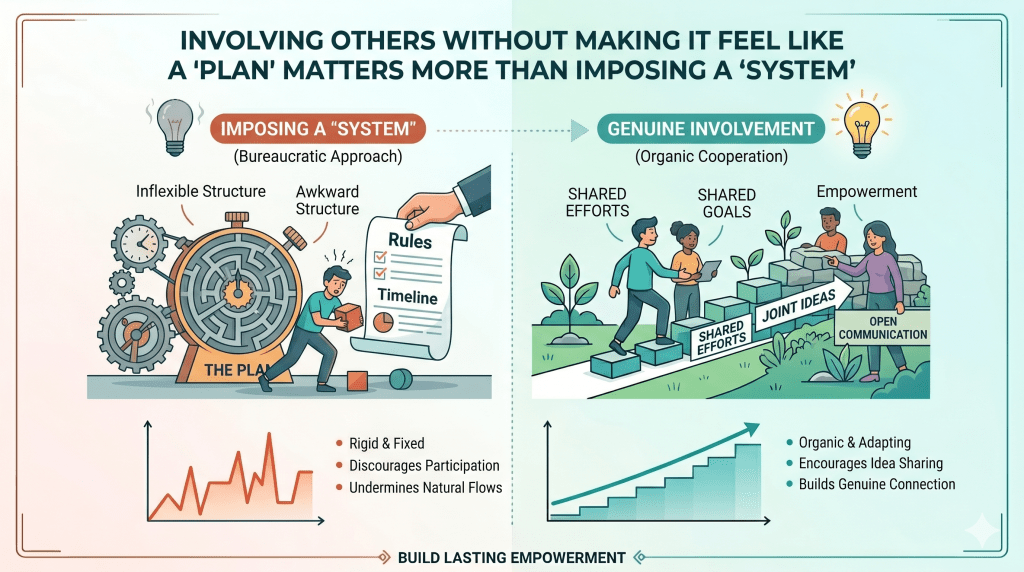
One common mistake is making the solution too visible.
If your parent feels like:
“Everyone is coordinating because I am lonely”
…it may create resistance.
Instead, make support feel natural.
Subtle Ways to Involve Others
- Ask a relative to call casually, not as a duty
- Encourage grandchildren to share small updates
- Suggest neighbors drop by for tea occasionally
- Reconnect them with familiar voices, not strangers first
- Keep interactions organic, not scheduled like appointments
What to Avoid
- Announcing a “support system”
- Over-coordinating calls in a way that feels artificial
- Making them feel monitored
- Treating connection like a checklist
The goal is warmth, not management.
Recognize Emotional Withdrawal Early
Loneliness does not always look like sadness.
Sometimes it looks like:
- Reduced interest in conversations
- Shorter responses
- Less curiosity about others
- Avoiding calls
- Saying “everything is fine” repeatedly
- Losing enthusiasm
This is often the beginning of emotional withdrawal.
When you notice this:
- Do not confront directly
- Do not force longer conversations
- Do not overwhelm with solutions
Instead:
- Keep showing up consistently
- Keep conversations light but present
- Reintroduce familiar topics
- Focus on comfort, not correction
Withdrawal often reverses slowly—not instantly.
Know That Your Presence Matters More Than Your Solutions
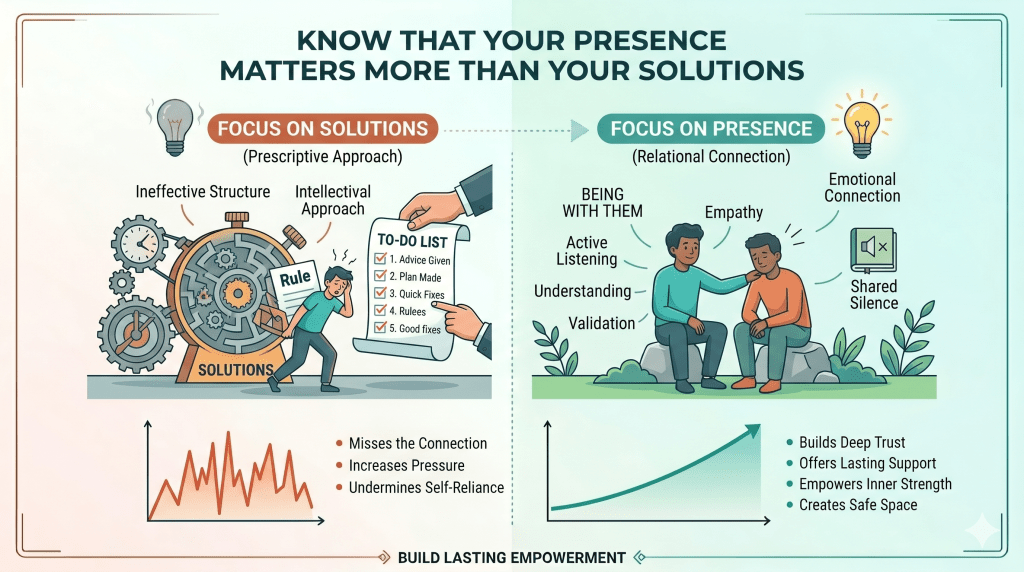
Many adult children worry they are “not doing enough.”
They think:
- “I cannot visit often enough”
- “I am too busy”
- “I wish I could do more”
But what matters most is not perfection—it is presence.
Presence means:
- Showing up regularly
- Listening without rushing
- Remembering small details
- Being emotionally available
Even short, consistent moments of attention can:
- Reduce feelings of invisibility
- Improve mood
- Strengthen emotional resilience
Your parent may not need grand changes.
They may simply need to feel:
“I still matter in someone’s daily life.”
Build a System You Can Sustain
The biggest mistake in addressing loneliness is creating a plan that is not sustainable.
You might:
- Call frequently for a week
- Arrange activities
- Try multiple solutions
…and then life gets busy again.
When the effort drops suddenly, loneliness can feel even worse than before.
Instead, Ask:
- What can I realistically maintain every week?
- What small actions can become habits?
- What support can be shared with others?
A Sustainable Model Might Look Like:
- 3 short calls per week
- 1 longer conversation
- 1 external interaction arranged
- 1 ritual maintained
This is manageable—and effective.
When Your Parent Resists Help: How to Support Them Without Damaging Trust or Independence
One of the most challenging situations you may face is this:
You can clearly see signs of loneliness.
You’ve tried to help.
You’ve made suggestions.
You’ve offered time, support, and ideas.
And yet, your parent resists.
They may say:
- “I’m fine.”
- “I don’t need all this.”
- “Stop worrying.”
- “I don’t want to bother anyone.”
- “I’ve lived my life.”
- “You’re overthinking.”
This resistance is not uncommon. In fact, it is one of the biggest reasons loneliness in older adults goes unaddressed.
But here is the key truth:
Resistance is rarely about rejecting connection—it is about protecting dignity.
Understanding this changes everything about how you respond.
Why Aging Parents Resist Help (Even When They Need It)
Before trying to solve resistance, it is important to understand where it comes from.
Most older adults are not refusing help because they want to feel lonely. They are often navigating deeper emotional realities.
1. Fear of Losing Independence
Many seniors associate help with decline.
To them, accepting help may feel like:
- Losing control over their life
- Becoming dependent
- Being seen as weak
- Moving closer to assisted living or loss of autonomy
So when you suggest more calls, visits, or structured support, they may interpret it as:
“My child thinks I can’t manage anymore.”
2. Desire to Protect You
Parents often continue to see themselves as caregivers—even in old age.
They may avoid sharing loneliness because they:
- Do not want to worry you
- Know you have your own responsibilities
- Feel guilty asking for time
- Believe you are already doing enough
So “I’m fine” may actually mean:
“I don’t want to burden you.”
3. Emotional Habits Built Over a Lifetime
Some individuals have spent decades:
- Not expressing emotions openly
- Handling problems privately
- Avoiding vulnerability
Loneliness requires emotional honesty, which may not come naturally to them.
4. Social Confidence Has Decreased
Your parent may not be resisting connection—they may be unsure how to re-enter it.
They might feel:
- Out of practice socially
- Physically slower or less confident
- Unsure what to talk about
- Disconnected from current topics or trends
This can lead to quiet withdrawal masked as disinterest.
5. Grief That Has Not Been Processed
If your parent has lost a spouse, sibling, or close friend, loneliness may be tied to grief.
They may feel:
- No one can replace that relationship
- Socializing feels meaningless without that person
- Emotional energy is too low to engage
In these cases, resistance is not stubbornness—it is emotional fatigue.
What Not to Do When They Resist
Your response matters more than your intention.
Even loving actions can push your parent further away if they feel pressured.
Avoid:
1. Forcing Solutions Too Quickly
Saying things like:
- “You need to get out more”
- “You should join something”
- “You have to talk to more people”
This can feel like being corrected rather than understood.
2. Turning Concern Into Control
Over-managing their routine, calling excessively, or organizing their life without consent can make them feel monitored.
3. Arguing With Their Feelings
If they say “I’m fine,” responding with:
“No, you’re not.”
…can create defensiveness.
4. Making Them Feel Like a Problem to Be Solved
Even subtle cues—tone, urgency, over-analysis—can communicate this.
How to Support Them Without Triggering Resistance
The goal is not to remove resistance instantly.
The goal is to lower it gradually.
Shift From “Fixing” to “Walking Alongside”
Instead of positioning yourself as someone solving a problem, position yourself as someone sharing time.
Instead of:
“I want to help you feel less lonely.”
Try:
“I enjoy spending time with you—I’d like to do that more regularly.”
This removes pressure and reframes connection as mutual, not corrective.
Use Indirect Entry Points to Connection
Direct conversations about loneliness can feel heavy.
Instead, use natural entry points.
Examples:
- Discuss a shared memory
- Ask about their past experiences
- Talk about something you are struggling with
- Share something funny or light
- Ask for advice
- Watch or listen to something together
Connection often opens through familiarity—not confrontation.
Start Smaller Than You Think You Should
If your instinct is to suggest multiple changes, scale it back.
Resistance decreases when change feels manageable.
Instead of:
- Daily long calls
- Multiple social activities
- New routines all at once
Start with:
- One consistent touchpoint
- One gentle change
Then build slowly.
Normalize Connection as a Routine, Not a Response
If your parent senses that increased contact only happens when you are worried, they may resist to avoid appearing “in need.”
Instead, make connection feel normal.
Example:
Instead of:
“I’ll call you more because I’m worried.”
Say:
“I’ve been thinking—it would be nice if we spoke every Wednesday evening.”
This makes connection feel like a shared decision, not a reaction.
Let Them Retain Control
Whenever possible, give your parent ownership.
Offer Choices
- “Would mornings or evenings work better for you?”
- “Would you prefer a call or a short visit?”
- “Should we keep it once or twice a week?”
Ask for Input
- “What would make your week feel better?”
- “Is there something you’d enjoy doing together?”
Respect Their Pace
If they resist, do not withdraw completely—but do not push harder either.
Stay present, but patient.
Use Familiarity as a Bridge
New people, new systems, and new routines can feel overwhelming.
Start with what they already know.
Reconnect With:
- Old friends
- Family members
- Neighbors
- Familiar routines
- Cultural or spiritual practices
Familiarity reduces effort.
Less effort means less resistance.
Recognize “Soft Yes” Moments
Your parent may not say a clear “yes.”
But they may show subtle openness.
Watch for:
- Slightly longer conversations
- Asking follow-up questions
- Mentioning someone from the past
- Showing interest in a shared activity
- Agreeing “maybe sometime”
These are openings.
Respond gently, not aggressively.
When Silence Is the Only Response
Some parents remain emotionally closed despite your efforts.
In these cases, your role becomes even more important.
What You Can Still Do:
- Maintain consistency
- Keep conversations light and respectful
- Avoid withdrawing emotionally
- Continue showing interest
- Create small shared experiences
Even if they do not express it, your presence still mattersLoneliness does not always disappear—but it can softenBalance Persistence With Respect
There is a fine line between giving up and pushing too hard.
Healthy Persistence Looks Like:
- Showing up regularly
- Keeping communication open
- Reintroducing ideas gently over time
- Staying emotionally available
Respect Looks Like:
- Accepting their boundaries
- Not forcing emotional disclosure
- Allowing them to say no
You need both.
Understand That Change May Be Slow
Unlike practical problems, loneliness does not resolve quickly.
Progress may look like:
- Slightly longer calls
- More relaxed tone
- Small increases in engagement
- Occasional openness
Do not expect:
- Immediate enthusiasm
- Complete emotional honesty
- Rapid behavior change
This is not failure—it is process.
Take Care of Your Own Emotional Load
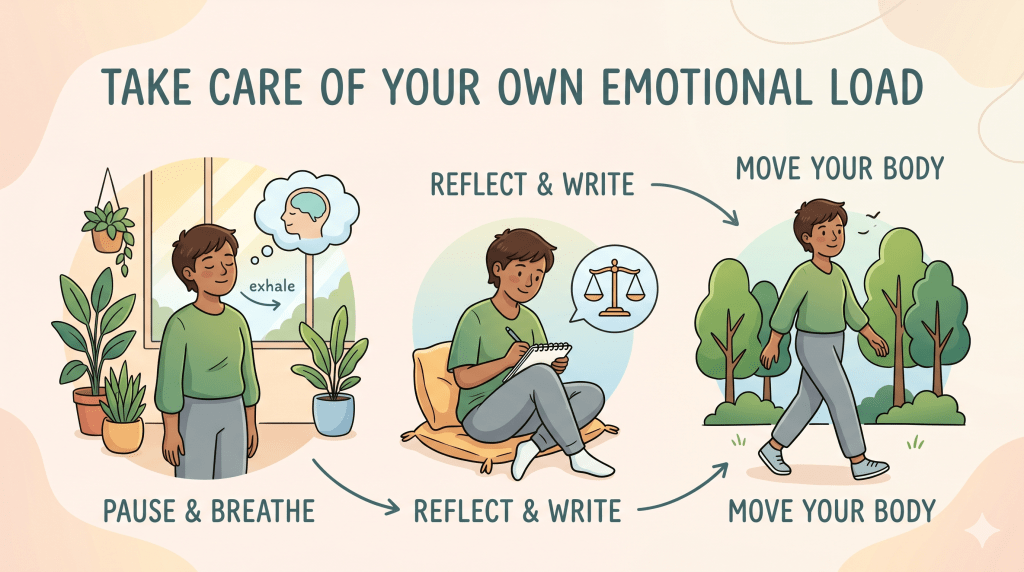
Supporting a lonely parent can be emotionally heavy.
You may feel:
- Guilt
- Frustration
- Helplessness
- Pressure to do more
It is important to remember:
- You cannot be their only source of connection
- You cannot eliminate all loneliness
- You are part of the solution—not the entire solution
If needed:
- Share responsibility with siblings
- Involve extended family
- Seek community support
- Set realistic boundaries
You are most helpful when you are consistent—not overwhelmed.
Final Thought: Trust Is the Foundation of All Support
If your parent resists help, the solution is not more pressure.
It is more trust.
When your parent feels:
- Respected
- Not judged
- Not managed
- Not rushed
- Not pitied
…they are more likely to open up over time.
How to Tell the Difference Between Healthy Alone Time and Harmful Isolation
Not every aging parent who spends time alone is lonely.
Some older adults genuinely enjoy solitude. They may prefer quiet mornings, slow routines, reading, gardening, prayer, music, cooking, or simply being in their own space. For them, alone time can feel peaceful, restorative, and dignified.
The concern begins when solitude stops being a choice and becomes a trap.
That difference matters because adult children often swing between two extremes. Some dismiss isolation because their parent says, “I like being alone.” Others panic every time their parent spends a weekend without visitors. Neither approach is ideal.
The goal is not to eliminate alone time. The goal is to understand whether your parent’s solitude is nourishing or slowly harming their emotional well-being.
Healthy Solitude Usually Feels Chosen
Healthy alone time has a sense of control.
Your parent may spend long hours alone, but they still:
- Enjoy parts of their day
- Keep some routine
- Show interest in conversations
- Maintain personal care
- Look forward to small things
- Choose when to engage and when to rest
- Feel comfortable saying no without sounding defeated
A parent who enjoys solitude may say:
“I had a quiet day, but it was nice.”
That is different from:
“There is no point going anywhere.”
The first sounds peaceful. The second may signal emotional withdrawal.
Harmful Isolation Often Feels Like Giving Up
Isolation becomes concerning when your parent is not choosing quietness because it comforts them, but because connection feels too hard, too disappointing, or too unavailable.
Watch for language such as:
- “Nobody has time anymore.”
- “I do not want to disturb anyone.”
- “What is the use?”
- “It does not matter.”
- “People forget old people.”
- “I am used to being alone.”
These statements may sound casual, but they often carry sadness underneath.
They suggest your parent may be adapting to loneliness rather than truly accepting solitude.
Look at Energy After Social Contact
One helpful way to tell the difference is to notice how your parent responds after meaningful interaction.
After a good call, visit, outing, or conversation, do they seem:
- Brighter?
- More talkative?
- More alert?
- More interested in food, hobbies, or plans?
- More likely to mention future activities?
If yes, they may be lonely even if they deny it.
Many seniors will not admit, “I needed that.” But their mood may reveal it.
On the other hand, if your parent consistently feels drained, irritated, or overwhelmed after social contact, they may need smaller, quieter forms of connection rather than more activity.
The solution is not always “more people.” Sometimes it is better-matched interaction.
Ask Better Questions Than “Are You Lonely?”
The word “lonely” can feel too direct. It may make your parent feel exposed.
Try questions that reveal emotional reality without forcing a label.
Ask:
“Do your days feel full enough?”
“Which part of the day feels longest?”
“Do you feel you have enough people to talk to?”
“Is there anyone you miss speaking with?”
“Would you enjoy having something regular to look forward to?”
“Do you feel connected to what is happening in the family?”
These questions are softer and more useful.
They help your parent reflect without feeling accused.
Notice Whether They Still Initiate Life
One strong sign of healthy solitude is initiative.
Even if your parent lives alone, do they still initiate small actions?
For example:
- Calling someone
- Making tea at a regular time
- Watering plants
- Preparing a meal
- Reading the newspaper
- Watching a favorite program
- Attending a religious practice
- Planning errands
- Asking about family updates
- Taking interest in birthdays or festivals
Initiative shows that life still has rhythm.
But when loneliness deepens, initiative often fades. Your parent may wait for the day to pass rather than actively live it.
That shift is important.
Respect Their Personality
Some parents have always been private, quiet, or introverted. Others were once highly social but have become withdrawn with age.
The second situation is usually more concerning.
Ask yourself:
“Is this who they have always been, or is this a change?”
A naturally quiet parent may not need a busy social life. But they still need meaningful connection.
A once-active parent who now avoids everyone may need support, especially if the change followed illness, bereavement, retirement, mobility loss, or relocation.
Do not judge your parent’s needs against your own personality. Judge them against their own past patterns.
Use the “Choice, Mood, and Meaning” Test
When unsure, look at three things.
1. Choice
Is your parent alone because they prefer it, or because they feel they have no real options?
2. Mood
Does alone time leave them peaceful or dull, irritable, sad, and withdrawn?
3. Meaning
Do their days still contain purpose, routine, enjoyment, or connection?
If solitude includes choice, stable mood, and meaning, it may be healthy.
If it lacks all three, loneliness may be taking root.
Do Not Shame Them for Being Alone
Even when you are worried, avoid saying things that sound critical.
Avoid:
“You sit alone all day.”
“You never do anything.”
“You need to stop isolating yourself.”
These statements may be true, but they can feel humiliating.
Try:
“I wonder if your days could feel a little warmer.”
“Maybe we can add one small thing to the week that feels nice.”
“I would love for you to have more moments that feel enjoyable.”
This keeps the focus on care, not criticism.
Conclusion
Taking that first step to recognize potential loneliness demonstrates profound care and commitment. Your attention to subtle changes shows deep love for your loved one. This awareness alone makes a significant difference in their well-being.
Small, consistent actions create powerful change. Regular phone calls, helping arrange social activities, or utilizing community resources collectively build meaningful connection. Even when caregivers provide support, additional companionship often fills important gaps.
Trust your instincts when something feels different. That feeling in your heart deserves attention. Reaching out for support shows strength, not weakness.
For consistent daily connection, consider regular check-in solutions like JoyCalls. This AI companion provides meaningful conversation and keeps you informed about your loved one’s well-being. Every effort matters in creating a life filled with purpose and connection.
FAQ
What are the common signs that a senior adult might be feeling lonely?
How can family members help an older adult who lives alone stay connected?
What role can technology play in reducing loneliness for senior citizens?
Are there specific health risks associated with prolonged loneliness in older adults?
What local resources are available to help combat senior loneliness?

Ana Avila is a healthcare and technology writer with deep expertise in artificial intelligence, senior care innovation, and the practical use of AI in healthcare operations. Her work focuses on how emerging technologies can improve the daily experience of older adults, support overburdened care teams, and help senior living communities deliver safer, faster, and more personalized support.
Ana’s background includes health informatics, aging care systems, and applied artificial intelligence. Her work explores how digital health tools, predictive analytics, and AI-assisted communication systems can improve care coordination, reduce operational delays, and identify early signs of risk among older adults. She brings an understanding of both the technical side of AI and the human realities of healthcare delivery.
Over the years, Ana has developed a specialized body of work around AI in senior living. She writes about how senior care providers can use intelligent systems to manage resident requests, answer routine questions, support family communication, improve after-hours coverage, and detect patterns that may indicate loneliness, confusion, distress, or unmet needs. Her articles often examine the gap between what senior living teams are expected to deliver and what traditional staffing models can realistically support.
Ana’s healthcare expertise is especially focused on the operational side of care. She has written extensively about call handling, resident engagement, front desk workflows, triage systems, caregiver communication, care escalation, and the hidden administrative burden placed on senior living staff. Her work explains how AI can help reduce repetitive tasks, organize incoming requests, prioritize urgent issues, and give human caregivers more time for meaningful resident interaction.
At the same time, Ana is careful not to present AI as a replacement for human care. A consistent theme in her writing is that technology should support relationships, not weaken them. She argues that the best AI systems in healthcare are not the ones that simply automate the most tasks, but the ones that make care teams more responsive, families more informed, and residents more supported. Her perspective is grounded in the belief that senior living technology must be designed around dignity, trust, privacy, and compassion.
Ana has also written widely on the ethical use of AI in healthcare. Her work discusses the importance of human oversight, transparent escalation rules, resident consent, data minimization, and responsible use of sensitive health and behavioral information. She often emphasizes that AI systems used around older adults must be easy to understand, carefully monitored, and designed with the limitations and needs of real residents in mind, including those with memory loss, hearing challenges, mobility issues, or social isolation.
Her writing has been used as a reference point in discussions about aging, elder care technology, digital health, and AI-supported senior living. She has published 12 papers in journals including JAMA, The BMJ, and SSRN. Some of her articles have also been cited by Wikipedia editors as supporting references on topics related to healthcare, aging, and technology. This has helped position her work as a useful educational resource for readers looking to understand how AI can be applied in real care environments.
In addition to her long-form writing, Ana has contributed research-based commentary, professional explainers, and practical guidance for healthcare operators, senior living decision-makers, and technology teams building products for older adults. Her work combines research literacy with operational practicality. She is able to take complex subjects such as natural language processing, predictive analytics, conversational AI, and care automation, and explain them in a way that is accessible to executives, caregivers, families, and non-technical readers.
Ana’s strongest area of expertise is the intersection of artificial intelligence and senior living operations. She understands that senior care communities face a difficult combination of rising resident expectations, staffing pressure, family communication demands, and increasing care complexity. Her writing explores how AI can be used to ease those pressures through smarter communication systems, faster response workflows, proactive check-ins, and better visibility into resident needs.
Her approach is both evidence-informed and deeply human. She studies AI through the lens of real-world care delivery: whether a resident gets help faster, whether a family member receives a clearer update, whether a caregiver avoids unnecessary administrative work, and whether a senior living team can identify a concern before it becomes a crisis. This practical focus makes her work especially relevant for organizations that want to adopt AI responsibly rather than simply follow technology trends.
Ana Avila is regarded as a thoughtful voice on the future of AI in healthcare and senior living. Her expertise combines research-driven analysis, operational understanding, and a strong commitment to humane technology. Through her writing, she helps healthcare leaders and senior living communities understand not only what AI can do, but how it should be used to improve care, preserve dignity, and strengthen the human relationships at the center of aging support.