


What if the very tool designed to give you peace of mind about your mom’s health could also create new worries?
That nagging feeling when you can’t remember if Mom took her pills today is all too familiar. You’re not alone. Millions of families share this quiet anxiety every day. Forgetting crucial doses is a major health challenge across the country.
Thankfully, new tools are emerging. They blend smart technology with a personal touch to support independence. These systems offer a gentle, technological hand for managing complex schedules. They aim to reduce stress for everyone involved.
This guide offers honest, heartfelt guidance. We’ll walk you through what these modern solutions can realistically achieve for your family’s well-being. More importantly, we’ll explore what they cannot do. This helps you set the right expectations from the start.
From simple alerts to systems that learn daily routines, this technology is changing senior care. Understanding its full scope empowers you to make the best choice for your loved one’s unique situation. It’s about finding the right fit for your family’s care needs.
Whether you’re seeking support for a parent living alone or exploring options for yourself, we’re here to help. You’ll learn how to integrate these tools with confidence. For a solution that feels more like a friendly voice than a cold alert, consider daily phone check-ins for seniors.
Key Takeaways
- Medication non-adherence is a widespread concern affecting millions of American families.
- Modern reminder tools combine technology with personalized approaches to support health.
- It’s crucial to understand both the capabilities and limitations of any new care system.
- Setting realistic expectations is key to successfully integrating support into a daily routine.
- The right solution should reduce stress for both seniors and their busy family caregivers.
- Technology can help maintain independence while providing a crucial safety net.
- Informed decisions lead to better, more confident care management for your loved ones.
Introduction to AI Medication Reminders and Medication Adherence
That moment when you realize your parent’s health depends on remembering multiple daily doses is when adherence transforms from routine to critical. Following prescribed treatment plans consistently makes all the difference in health outcomes.
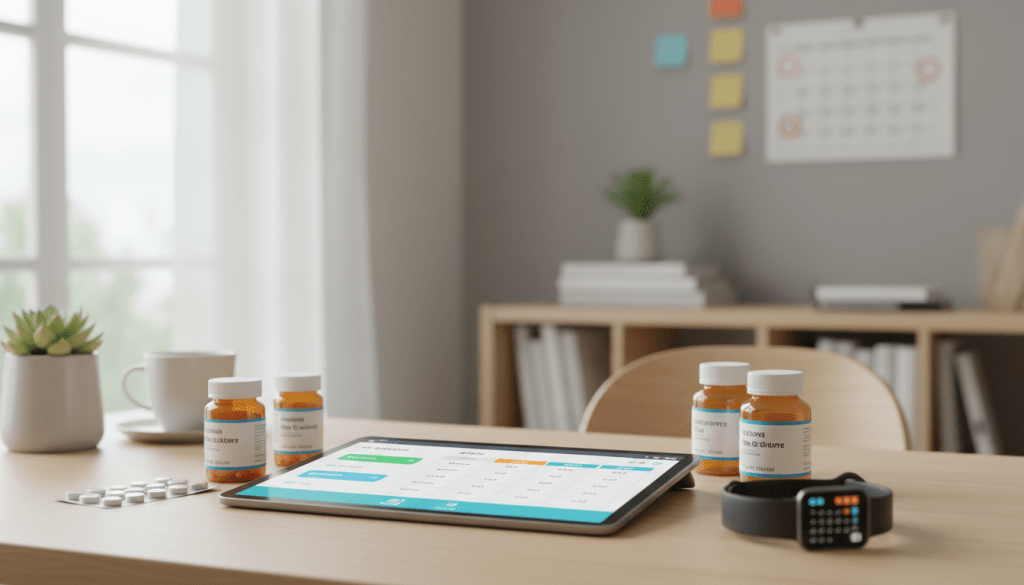
Modern support systems work quietly in the background. They send gentle notifications through various channels, helping your loved one stay on track without feeling overwhelmed. These solutions understand that adherence isn’t just about remembering—it’s about managing complex schedules with confidence.
“Even the best treatment plan fails when patients can’t follow it consistently. That’s why we recommend supportive technologies to families.”
Studies show these innovative approaches can significantly improve adherence rates. The results speak for themselves:
| Support Type | Average Improvement | Maximum Improvement | Patient Group |
|---|---|---|---|
| Basic Notification Systems | 6.1% | 15% | General Population |
| Personalized Adaptive Tools | 18% | 42% | Chronic Conditions |
| Comprehensive Support Solutions | 32% | 67% | Elderly Patients |
Healthcare providers recognize the value of these supportive technologies. They’re designed to complement professional care, not replace it. This ensures patients follow their prescribed plans without making medical decisions.
Research confirms that timely, personalized support leads to better health outcomes. Patients experience fewer hospital readmissions and enjoy a better quality of life. For busy family members, these tools offer peace of mind knowing consistent support is always available.
The global market for these solutions is growing rapidly, projected to reach $12.44 billion by 2032. This growth reflects the rising need for effective adherence support, particularly as chronic conditions become more prevalent in aging populations.
Understanding the Challenges of Medication Management
That sinking feeling in your stomach when you call to check on Mom and hear confusion in her voice about which pills she’s taken today. It’s more than just forgetfulness—it’s the complex reality of modern healthcare for aging individuals.
Managing multiple prescriptions requires precise timing and careful attention. For seniors dealing with chronic conditions, this daily routine can become overwhelming quickly.
Common Barriers to Adherence
Memory challenges are just one piece of the puzzle. Many patients face multiple obstacles that make consistent medication management difficult.
The most frequent barriers include:
| Barrier Type | Frequency in Elderly Patients | Impact Level |
|---|---|---|
| Forgetfulness/Dosage Confusion | 68% | High |
| Complex Multiple Medication Schedules | 52% | Very High |
| Difficulty Opening Containers | 31% | Medium |
| Overwhelm from Number of Prescriptions | 47% | High |
These challenges aren’t about carelessness. They’re natural aspects of aging that require compassionate solutions.
Impact on Elderly Care
When medication errors occur, the consequences can be serious. Hospitalizations and declining health often follow missed doses.
“I worried constantly about my father’s heart medication. One missed dose could mean an emergency room visit. The stress was overwhelming until we found supportive solutions.”
Many seniors feel frustrated about needing help. This is why gentle support systems make such a difference. They preserve dignity while ensuring safety.
Understanding these real challenges helps families approach medication management with compassion. For additional emotional support, consider how daily check-in calls for seniors can complement medication adherence strategies.
Leveraging AI Medication Reminders in Patient Care
Picture your mother receiving a gentle morning call that says, ‘Hello! It’s time for your blood pressure pill with breakfast’—this is how modern support systems work in real life. These tools meet patients where they’re most comfortable, whether through text messages, phone calls, or app notifications.
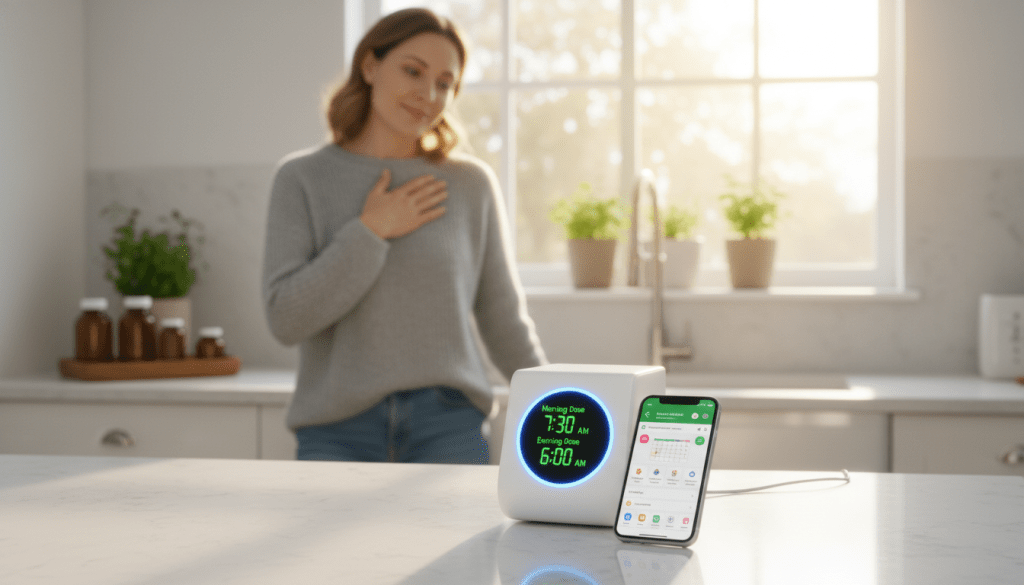
The personalized approach includes specific details to prevent confusion. Each alert mentions exact dosages and special instructions like ‘take with food.’ This clarity helps patients follow their treatment plans correctly.
Try JoyCalls Free
No app or new device needed. Start with a free 7-day trial.
If your loved one doesn’t confirm taking their prescription within a reasonable time, the system sends follow-up alerts. This isn’t about nagging—it’s caring persistence that helps maintain consistent adherence.
Advanced features allow patients to track how they feel after each dose. They can log symptoms or side effects for healthcare providers to review. This monitoring leads to better health outcomes during appointments.
Refill notifications arrive 7-10 days before prescriptions run out. This gives plenty of time to contact the pharmacy and avoid dangerous treatment gaps. The technology learns daily patterns too, adjusting reminder timing for maximum effectiveness.
These features create a comprehensive support system. They help maintain independence while giving caregivers peace of mind. The right tools work quietly in the background, supporting health without overwhelming patients.
How to Get Started with an AI-Powered Reminder Solution
Setting up supportive technology for your parent’s health shouldn’t feel like teaching them rocket science. The right solution meets your loved one exactly where they are, using tools they already understand and trust.
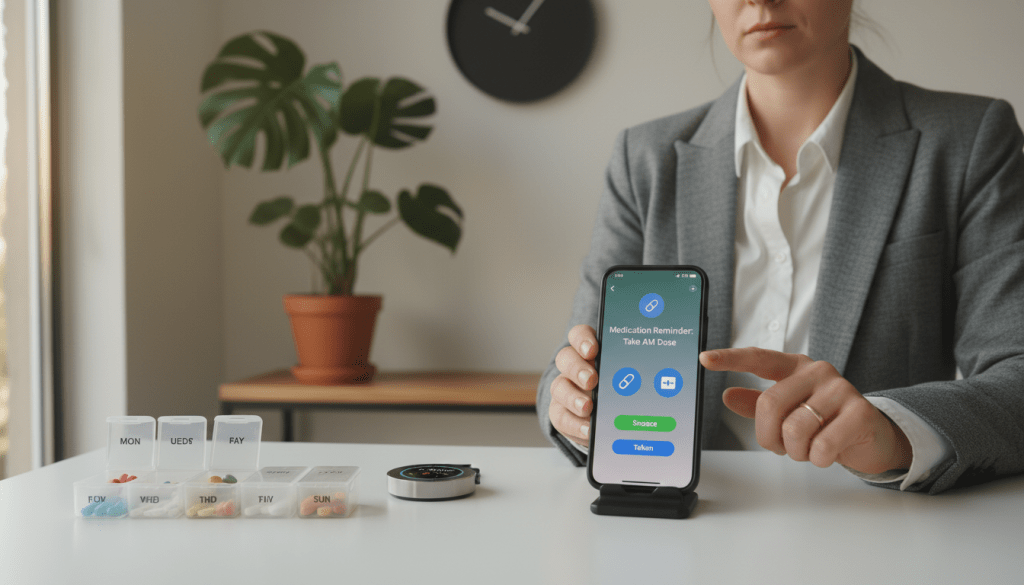
JoyCalls offers something beautifully simple: daily phone calls to your loved one’s regular telephone. No smartphone required. No confusing apps to download. Just the familiar ring of their phone with a warm, conversational voice on the other end.
JoyCalls Signup for a Free Trial
You can begin your free trial at the JoyCalls signup page and have the service running within minutes. This gives you time to see how naturally it fits into your family’s routine.
The system doesn’t just provide pill reminder calls. It engages in natural conversations, asking how your parent feels and offering genuine companionship. This approach makes health management feel less like a chore.
As the caregiver, you receive simple text summaries after each call. These updates let you know medications were taken and share how your loved one is feeling. All without interrupting your busy day.
This solution is perfect for individuals who find technology overwhelming. It works with the basic phone they already use and trust. The setup process takes just minutes—enter their number and schedule, then let the companion provide consistent support.
The free trial allows you to experience this care approach firsthand. There’s no pressure—just immediate peace of mind. For families seeking comprehensive support, explore our medication reminder options or learn about our daily check-in system for long-distance caregivers.
Integrating AI Tools with Electronic Medical Records and Patient Data
The true magic happens when supportive technology connects directly with your loved one’s medical team. This seamless integration creates a personalized care plan based on actual prescriptions, not generic suggestions.

Scanning Medical Histories for Personalized Care
When healthcare providers scan digital medical histories, the system identifies each prescribed treatment. It understands specific dosing schedules and special requirements automatically.
This means the support system knows exactly when each prescription should be taken. No manual programming is required from busy family members. The technology adapts to your parent’s unique health needs.
Ensuring Secure Integration with Health Systems
Security protects your loved one’s private health information with hospital-level standards. These tools use encrypted connections that comply with strict regulations.
Healthcare systems maintain confidential patient data through secure integration protocols. This gives families confidence that sensitive information remains protected. The latest research shows how proper data management improves senior care outcomes.
When doctors adjust prescriptions during appointments, the system updates automatically. This creates a connected circle of care where everyone works with accurate information. For families exploring comprehensive support, understanding how companion technology helps senior loneliness can provide additional peace of mind.
Customizing and Personalizing Your Medication Reminder Experience
The most effective support doesn’t force a new routine; it quietly slips into the one your loved one already has. This personal touch makes all the difference.

These systems learn daily rhythms. If your dad always takes his pills after breakfast, the alert will sync with that habit. It feels natural, not like an interruption.
Tailoring Reminders to Individual Needs
Every person is unique. The best tools offer features that respect individual preferences and challenges.
You can adjust text size for easier reading. The language can be simplified for clarity. The system learns which type of alert works best for each user.
| Personalization Feature | Benefit for the User | Example Scenario |
|---|---|---|
| Adaptive Timing | Aligns with natural daily patterns | Reminder shifts to after dinner if that’s when doses are consistently taken. |
| Multi-Method Alerts | Uses preferred communication channels | Phone call in the morning, text message in the afternoon. |
| Customizable Language & Display | Addresses vision or comprehension needs | Larger font, simpler instructions like “take one blue pill.” |
Adaptive Scheduling with Smart Insights
The technology gets smarter over time. It notices successful patterns and refines its approach.
This isn’t about cold calculations. It’s about gentle, caring persistence that supports treatment goals. The system tracks what works, creating a strategy that feels supportive, not demanding.
This intelligent approach to scheduling is a key feature of modern automated support systems. It transforms health management from a chore into a seamless part of life.
When AI Medication Reminders Are Not Enough: Building a Safe Backup System That Actually Works
AI medication reminders can be genuinely helpful. They can prompt, repeat, follow up, and reduce the mental load of remembering. For many seniors and families, that alone brings real relief. But there is an important truth that deserves a full section of its own: a reminder is not the same as a complete medication safety system.
This matters because most medication problems do not happen only because someone “forgot.” They also happen because the routine is too complicated, the labels are confusing, the pill bottle is hard to open, the refill was not picked up, the instructions changed after a doctor’s visit, or a senior is too embarrassed to admit they are unsure what to take. A voice prompt, text, or app alert can support the routine, but it cannot fix every weak point around the routine.
That is why the smartest approach for seniors, adult children, and caregivers is not to ask, “Which reminder tool should we use?” The better question is: “What backup system do we have in place when memory, energy, hearing, vision, timing, or confidence becomes a problem?”
A strong backup system protects independence rather than taking it away. It helps an older adult stay in control while reducing the chances of missed doses, duplicate doses, confusion, and last-minute panic. It also helps families stop relying on worry as their main care strategy. Worry feels active, but it is not a system. A few simple layers of support are far more effective.
The First Rule: Solve for Real Life, Not for Ideal Behavior
Many medication plans are built around an ideal version of the day. In that ideal version, the senior wakes up on time, eats meals regularly, hears the phone, remembers the purpose of every pill, opens every bottle easily, never runs out, and always feels mentally sharp. Real life is messier than that.
Some mornings start late. Some days include fatigue, grief, appointments, stomach upset, poor sleep, or simple distraction. A spouse may usually help but be unavailable one day. Hearing aids may not be in yet when a reminder call comes. A refill may be delayed. A new prescription may be added, but the old bottle is still sitting on the counter. These are not rare situations. They are normal life situations.
That is exactly why seniors need a medication routine designed for real behavior, not perfect behavior. The goal is not to create a rigid system that only works on good days. The goal is to build a setup that still works on ordinary, slightly chaotic, imperfect days.
A practical backup system usually includes five layers:
1. A reminder layer
This is the prompt itself: a call, app alert, alarm, smart speaker, or caregiver message.
2. A visibility layer
This makes medications easy to see and understand at the right moment: pill planners, written schedules, labeled containers, or placement near an established routine.
3. A confirmation layer
This helps answer the question, “Did I already take it?” It may be as simple as a checked box, a flipped card, or a pill organizer with empty compartments.
4. A refill layer
This prevents the quiet failure point of running out unexpectedly.
5. An escalation layer
This defines what happens when a dose is missed, a call is not answered, or confusion keeps happening.
When seniors and families only use layer one, they often assume the system is strong because it feels modern. But the safest routines are usually the ones that combine simple tools in a thoughtful way.
A Better Way to Think About “Failure”
When a reminder system does not work, families often blame the person using it. They say things like, “He keeps ignoring the reminders,” or “She just isn’t being careful.” That framing is rarely helpful.
A better approach is to ask: What exactly is failing?
Is the problem memory?
Is it hearing?
Is it poor timing?
Is it too many medications?
Is the language too clinical?
Is the instruction “take twice daily” too vague?
Is breakfast happening at different times every day?
Is the senior anxious about side effects and quietly avoiding the pill?
These are very different problems, and they need different fixes.
For example, if a senior receives a reminder at 8:00 a.m. but does not usually eat until 10:00 a.m., the issue may not be forgetfulness. It may be that the reminder is disconnected from the natural routine. If the person hears the alert but cannot remember whether the white tablet is for blood pressure or cholesterol, the issue may not be memory alone. It may be poor packaging clarity. If reminders are being dismissed because they sound mechanical and stressful, the issue may be emotional resistance rather than noncompliance.
This is why one of the most useful questions a caregiver can ask is:
“What made it hard to take this medicine today?”
That question is respectful. It invites honesty. It uncovers the real barrier. And once you understand the real barrier, you can improve the system instead of repeating the same reminder louder and louder.
The Most Effective Backup System Is Usually Simple
Families sometimes assume the safer solution must be the more advanced one. In practice, the opposite is often true. For many seniors, especially those managing several prescriptions, the most reliable system is one that reduces decisions and reduces friction.
A simple system may include:
A weekly pill organizer
This lowers confusion and makes it easier to see whether a dose was taken.
A printed medication list
This should include the name of each medicine, the purpose, the time it is taken, and any important instructions such as “with food” or “avoid taking at the same time as another medication.”
A regular place for medications
Not hidden in multiple drawers. Not spread across the kitchen, bathroom, and bedroom. One consistent place, unless a doctor or pharmacist has advised a specific storage method.
A single review day each week
Many families do well with a weekly reset. On that day, they refill the organizer, check the supply, review any appointment changes, and make sure the schedule still makes sense.
A missed-dose plan
Not a guess. Not a panic response. A clear plan based on medical guidance for what to do if a dose is late or missed.
This kind of system is not flashy, but it reduces the amount of thinking required at the point of action. That matters more than many people realize. Seniors are not only managing memory. They are often managing energy, stress, arthritis, vision changes, and a full day of other responsibilities too.
How Seniors Can Make the Routine Easier on Themselves
If the article is meant to be truly helpful, it should speak directly to older adults, not only to caregivers. Many seniors want support, but they do not want to feel talked down to. Here is the practical truth: a medication routine becomes safer when the person taking the medication feels more confident, not more controlled.
Here are highly actionable changes seniors can make:
Tie each medication time to an existing habit
Do not rely on the clock alone. Link the dose to something that already happens.
For example:
- Morning pill after brushing teeth
- Midday pill after lunch
- Evening pill after the nightly news
- Bedtime pill after setting the alarm or plugging in the phone
Habits are easier to remember than isolated times.
Use plain-language labels for personal reference
A doctor may use the formal name. A senior may remember it better as “heart pill,” “blue sleep pill,” or “morning thyroid pill.” Keep the official list, but also create a plain-language version that makes immediate sense.
Keep instructions readable
If the printed pharmacy instructions are too small, rewrite them in large, clear print on a one-page sheet. It is much easier to follow what you can comfortably read.
Reduce “mental double-checking”
Many seniors lose confidence because they keep asking themselves, “Did I take it already?” That question creates stress. A pill organizer, checklist, or simple tracking card removes the need to keep the answer in memory.
Speak up when something feels off
If a medication causes dizziness, nausea, new fatigue, confusion, or fear, a senior may quietly stop taking it rather than “bothering” anyone. That is understandable, but dangerous. It is better to report the issue early to a doctor, pharmacist, or caregiver than to silently change the plan.
What Family Caregivers Should Watch For Beyond Missed Doses
Caregivers often focus only on whether medication was taken. That is important, but it is not the whole picture. A smarter system watches for patterns that suggest the routine is starting to break down.
Watch for signs like:
Repeated uncertainty
If your parent often says, “I think I took it,” that is a system problem even if no obvious error has happened yet.
Increased resistance
If reminders are causing irritation, avoidance, or arguments, the method may need to change. Resistance often signals that the process feels intrusive, confusing, or exhausting.
Refill gaps
A person who seems “mostly consistent” but keeps running out a few days early or late may be dealing with dosing confusion or poor refill coordination.
New clutter around medications
Loose bottles, old prescriptions, duplicate bottles, scribbled notes, or pills in multiple places can signal rising confusion.
Changes after medical visits
Any appointment that results in a new dose, new medication, or stopped medication creates risk. Transition points are where many home medication errors begin.
A caring caregiver does not need to become a detective. But they do need to notice when the system is asking too much from the senior.
Create a Medication Command Center at Home
One of the most practical upgrades a family can make is setting up a small, organized medication station. This does not need to be elaborate. It just needs to make the right action easy.
A good medication command center includes:
The current medication list
Include medication names, purpose, dose, time, and special notes.
The weekly organizer or clearly arranged bottles
The goal is visibility and order.
A refill note
Write down the pharmacy name, phone number, prescription numbers if needed, and which medications tend to run low first.
A recent doctor and pharmacy contact list
This helps if there is a question or sudden concern.
A simple tracker
This can be a paper checklist, a calendar, or a notebook for noting missed doses, side effects, and questions for the next appointment.
Why does this help so much? Because medication safety improves when information is not scattered. A scattered routine creates hesitation, and hesitation creates errors.
Use AI Reminders as the Trigger, Not the Entire Plan
This is the mindset shift many families need.
The AI reminder should be the trigger that starts the action, not the full medication management plan by itself.
For example:
- The reminder call comes in.
- The senior goes to the medication station.
- The pill organizer shows the correct compartment.
- The printed list confirms what each medication is for.
- The dose is taken.
- The empty compartment acts as confirmation.
- If the call is missed, a family member gets notified based on the escalation plan.
That is a complete workflow.
Without that workflow, the reminder may still help, but it is carrying too much responsibility. It is trying to compensate for confusion, poor organization, missing supplies, and inconsistent routines all at once.
Technology works best when it supports a process that already makes sense.
Build an Escalation Plan Before You Need One
One of the most overlooked parts of medication management is deciding in advance what happens when things go wrong.
Families should not wait until a missed dose creates panic. They should define their response ahead of time.
A useful escalation plan answers questions like:
If the reminder is missed once, what happens?
Maybe no immediate action is needed for a single missed confirmation, depending on the medication and the situation.
If reminders are missed repeatedly, who checks in?
This might be an adult child, neighbor, aide, or another caregiver.
If there is confusion about whether a dose was taken, what is the next step?
The answer should come from the prescribing clinician or pharmacist’s guidance, not guesswork.
If the senior sounds confused or unwell during the reminder interaction, who gets alerted?
A backup contact should be clearly named.
If medication changes after an appointment, who updates the system?
Someone should own that responsibility.
This plan creates calm. It prevents overreaction to minor issues and underreaction to serious ones. Most importantly, it helps everyone respond consistently.
How to Talk About Medication Support Without Making Seniors Feel Controlled
This is one of the most sensitive parts of the entire process.
Many older adults are not resisting support because they are stubborn. They are resisting the feeling of being managed. Medication routines can become emotionally loaded because they represent aging, dependence, illness, and loss of privacy.
That is why language matters.
Instead of saying:
“You need this because you keep forgetting,”
say:
“Let’s make this easier so you don’t have to keep everything in your head.”
Instead of saying:
“I’m setting this up so I can monitor you,”
say:
“I want your routine to feel simpler and less stressful.”
Instead of saying:
“You can’t keep track anymore,”
say:
“There are a lot of moving pieces here. Let’s make the system do more of the work.”
These are not cosmetic differences. They protect dignity. A senior is far more likely to accept support that feels respectful and practical.
Questions to Ask Before Choosing Any Reminder Tool
Before committing to any AI medication reminder solution, readers should ask a few grounded questions:
Does it fit the senior’s real daily rhythm?
A perfect feature set is not helpful if it does not match the person’s actual routine.
Does it reduce confusion or just add more notifications?
More alerts are not automatically better.
Is there a clear way to confirm whether medication was taken?
This is one of the most important functions in a real-world setting.
Can the system support a caregiver without overwhelming them?
The best tools inform caregivers usefully. They do not create more noise than clarity.
What is the backup when the reminder is missed?
Every good system needs a second layer.
Will the senior actually use it consistently?
This may be the most important question of all. The best system is the one that fits the person, not the one with the longest feature list.
A Gentle but Honest Standard for Success
Families sometimes expect a medication reminder system to eliminate all risk. That is not realistic. The better standard is this:
A successful system should make medication-taking easier, clearer, calmer, and more consistent.
If a tool is making the routine more stressful, more confusing, or more dependent on constant caregiver rescue, then it needs to be adjusted. The right setup should reduce daily friction. It should help seniors feel supported, not watched. It should help caregivers feel informed, not burdened. And it should create a safer routine even on imperfect days.
That is where AI medication reminders are most valuable. Not as magic. Not as replacement care. But as one dependable part of a thoughtful, humane system built around real aging, real homes, and real daily life.
For seniors and families, that is the goal worth aiming for: not a perfect reminder, but a medication routine that still holds together when life does what life always does.
Using Reminder Data to Catch Problems Early and Prepare for Better Doctor Visits
AI medication reminders are often described as helpful because they prompt a person to take medication on time. That is true, but it is only part of the story. The deeper value of a reminder system is not just the alert itself. It is the pattern behind the alert.
Over time, reminder responses can reveal something important: whether the current medication routine actually fits the person’s real life.
This is where families and seniors can get far more value out of a reminder system than they initially expect. A reminder tool may start out as a way to support consistency, but it can also become a practical window into daily medication challenges. It can reveal whether doses are often late, whether certain times of day are repeatedly difficult, whether a refill delay keeps happening, whether the person feels worse after a certain medication, or whether a “simple” schedule is not simple at all.
That kind of information matters because many medication problems build quietly. They do not always begin with a dramatic event. Often, they begin with a small pattern that gets missed: an evening dose that is often delayed, a medication skipped when appetite is low, a new refill that causes confusion because the pill looks different, or a senior who consistently says they are “fine” while feeling unsteady and fatigued.
If families only use reminder tools to ask, “Did the pill get taken today?” they may miss the most useful insight: what the routine is trying to tell them over time.
This section is important because older adults and caregivers need more than reminders. They need a way to spot trouble early, ask better questions, and walk into doctor appointments prepared with useful information instead of vague impressions. That is how medication support becomes more strategic, safer, and more effective.
Why Patterns Matter More Than Isolated Missed Doses
One missed dose may or may not be a major issue depending on the medication and the guidance from a healthcare professional. But repeated patterns tell a bigger story.
For example, imagine a senior consistently misses medication on weekends. That may suggest the routine is tied too tightly to a weekday structure. If morning doses are regularly delayed, perhaps breakfast time varies too much, or the person is slower to get going than the schedule assumes. If reminders are acknowledged but the person still reports feeling unwell, the issue may not be adherence alone. It may point to side effects, misunderstanding, or the need for a medication review.
Patterns reduce guesswork. They make it easier to move from emotional statements like:
- “She’s been a little off lately.”
- “He seems less consistent than before.”
- “I think the schedule is too much for her now.”
to more actionable observations like:
- “The 8:00 p.m. dose is being missed or delayed three times a week.”
- “Since the new prescription was added, mornings have become more confusing.”
- “He responds well to phone reminders but struggles when the instruction includes multiple steps.”
- “She takes the medicine, but reports feeling dizzy afterward often enough that it needs attention.”
That is the kind of information that leads to better decisions. It is also the kind of information that helps healthcare providers understand the daily reality at home.
Doctors and pharmacists do not live inside the patient’s routine. Families do. Seniors do. A good reminder system can make that day-to-day reality visible in a more organized way.
The Hidden Opportunity: Turning Daily Friction Into Useful Information
Most medication routines contain friction. The question is whether anyone notices it early enough.
Friction may look like:
Delayed responses
The reminder arrives, but the medication is not taken until much later.
Repeated confusion
The person keeps asking which pill is which or what it is for.
Inconsistent confirmation
Some days the medication is clearly taken; other days there is uncertainty.
Timing mismatch
A medication is scheduled at a time that does not fit meals, sleep, energy levels, or daily habits.
Emotional resistance
A person becomes avoidant, irritated, or quietly reluctant around a medication.
Functional barriers
The person can hear the reminder but cannot open the bottle, read the label, or manage the pill safely.
All of that information is valuable. It tells you where the routine is too demanding, too unclear, or no longer well-designed for the person using it.
This is one of the most practical ways seniors and families can think about AI reminders: not merely as a voice saying, “It’s time,” but as a structured way to notice what keeps getting in the way.
And once you notice what gets in the way, you can improve it.
What Seniors Should Pay Attention to in Their Own Routine
Many older adults have learned to minimize their struggles because they do not want to worry family members or appear less independent. But silence is often what allows a manageable problem to become a bigger one.
A senior does not need to track every tiny detail to benefit from a reminder system. But it is worth paying attention to a few very specific things.
Notice which medication times feel hardest
Is the morning easy but the evening difficult? Is lunchtime medication easy to forget because the middle of the day has less structure? Does bedtime medication get missed when sleepiness kicks in early?
That information is useful because it tells you where the routine may need to shift.
Notice how your body feels after taking certain medications
It is easy to forget details later. If a reminder call or system allows notes or a quick response, pay attention to patterns like dizziness, nausea, shakiness, dry mouth, low appetite, unusual fatigue, or confusion.
Do not assume these changes are “just aging” without raising them during a medical review.
Notice whether instructions are clear in the moment
A medication may look manageable on paper but feel confusing in real life. “Take twice daily” sounds simple until meals are irregular, multiple bottles look similar, and one medication must be taken with food while another should not be taken at the same time as something else.
Confusion is not failure. It is a sign that the system needs to be made clearer.
Notice whether taking medications feels emotionally heavy
Some seniors follow their schedule but dread it. That emotional load matters. A routine that feels stressful is harder to sustain long term. Bringing that up can help families simplify the process or speak with a doctor about whether the regimen can be made more manageable.
What Caregivers Should Track Without Becoming Overbearing
Family caregivers need useful visibility, but they also need to avoid turning medication support into constant surveillance. The goal is support with dignity.
The most helpful approach is to watch for patterns that are meaningful, not to react dramatically to every small irregularity.
Here are some of the most useful things to track:
Which doses are hardest to complete consistently
A recurring pattern is almost always more important than a one-time slip.
Whether the senior sounds different around medication times
Do they sound confused, tired, irritated, rushed, or reluctant? Tone can reveal friction before a major mistake happens.
Whether refill timing is becoming chaotic
Running low unexpectedly is often a sign that the routine is not as stable as it appears.
Whether changes started after a new prescription or dose adjustment
Whenever a medication changes, routines often get shakier for a period. That is when families should pay closer attention.
Whether adherence looks good on paper but daily functioning is declining
This is crucial. A person may be taking medications regularly and still struggling because the regimen needs review, side effects are building, or another health issue is emerging.
Caregivers do not need to become amateur clinicians. But they can become better observers of what is happening day to day.
How to Prepare for Doctor Appointments in a Way That Actually Helps
One of the biggest missed opportunities in medication management happens during medical appointments.
Families arrive and say things like:
- “She’s mostly taking everything.”
- “I think there’s some confusion sometimes.”
- “He has seemed more tired recently.”
- “We’re not sure if it’s the medication or just getting older.”
These comments are understandable, but they are hard for a clinician to act on.
A far more effective approach is to bring a short, practical summary based on what the medication routine has been showing.
For example:
- “The evening dose has been late about four times a week for the last month.”
- “Since the dosage change, she reports dizziness after breakfast medication several mornings a week.”
- “He answers the reminder call but still gets confused when two medications are taken close together.”
- “We’ve had two refill near-misses in six weeks.”
- “She is more consistent when instructions are phrased simply and tied to meals.”
That level of specificity helps a doctor or pharmacist do something useful. It opens the door to medication simplification, schedule adjustments, side-effect review, packaging changes, clearer counseling, or follow-up testing.
In other words, reminder data becomes medically useful when it gets translated into simple, concrete patterns.
A Smart Medication Review Checklist for Families
Many readers of this blog are looking for practical guidance, so this section should give them something they can use immediately. Here is a strong framework.
Before the next doctor, nurse practitioner, or pharmacist conversation, review these questions:
1. Which medication is hardest to take on time, and why?
Do not stop at “because they forget.” Ask what specifically makes it hard.
2. Are there any times of day that no longer fit the senior’s real routine?
A medication schedule that looked fine months ago may no longer fit current habits, appetite, mobility, or sleep patterns.
3. Has the senior reported feeling different after any particular medication?
Look for repeated complaints, even if they seem mild.
4. Are there similar-looking bottles, complicated instructions, or timing conflicts?
Visual and practical confusion are major real-world issues.
5. Has anything changed recently?
New medication, stopped medication, dose change, new pharmacy refill, new caregiver, illness, travel, grief, appetite changes, or changes in sleep can all affect medication success.
6. Is the routine still supporting independence, or is it becoming a daily source of stress?
This question matters more than families sometimes realize.
How to Use Reminder Information Without Overinterpreting It
It is also important to be balanced. Reminder data can be useful, but it should not be treated as a complete medical picture.
A missed response does not always mean a missed dose. A delayed dose does not automatically mean refusal. A senior who says they feel tired may be experiencing medication side effects, poor sleep, dehydration, illness, or something unrelated.
That is why reminder information should be used as a conversation starter, not a final conclusion.
The healthiest mindset is:
“This pattern may mean something important. Let’s look into it.”
That approach is thoughtful and safe. It avoids both extremes:
- ignoring the pattern completely
- assuming the pattern proves more than it does
Good care decisions usually come from combining reminder information with observation, communication, and professional guidance.
When Reminder Patterns Suggest It Is Time for a Full Medication Review
Some situations should prompt families to go beyond small routine adjustments and ask for a more comprehensive review.
These include:
Repeated confusion despite reminders
If reminders are clear but confusion continues, the regimen may simply be too complex for the current situation.
Frequent late or missed doses of the same medication
This often points to poor schedule fit, not just forgetfulness.
New side effects or functional decline
If the senior seems more sleepy, weak, dizzy, foggy, or unsteady after a medication change, that deserves medical attention.
Growing caregiver workload
If the reminder system is technically “working,” but the family is constantly rescuing the routine, the plan may need redesign.
Multiple recent medication changes
Transition periods are high risk and often justify closer review.
Fear or reluctance around taking a medicine
People sometimes comply outwardly while privately feeling anxious. That emotional resistance should not be ignored.
A medication review is not a sign of failure. It is a sign that the routine deserves to match the person’s current needs more closely.
A Practical Way to Bring Up Concerns With a Doctor or Pharmacist
Many caregivers hesitate because they do not want to sound dramatic. Many seniors hesitate because they do not want to complain. A simple script can help.
Here is a useful model:
“We’re using a reminder system, and it has helped us notice a few patterns we want to review. The evening dose is often delayed, and there’s been repeated dizziness after the morning medication. We’d like to check whether the timing, dose, or routine still makes sense.”
That phrasing is calm, specific, and collaborative.
You can also ask practical questions like:
- “Is there a simpler way to schedule these medications?”
- “Are any of these medications more likely to cause dizziness or fatigue?”
- “Would packaging changes or clearer labeling help?”
- “What should we do if this dose is late?”
- “Are there any medications here that need extra caution because of timing or meals?”
These are the kinds of questions that lead to better support.
Why This Matters So Much for Seniors Living Independently
For older adults living alone, the gap between “doing okay” and “struggling quietly” can be wider than families realize. A senior may sound fine on the phone and still be dealing with small medication problems that are adding up.
That is why this section matters so much. AI reminder systems can help surface patterns before they become emergencies. They can show whether independence is being supported well or whether the routine is becoming too fragile.
And importantly, they can do this without immediately taking control away from the senior.
That is the sweet spot families should aim for: better visibility without unnecessary loss of autonomy.
A senior does not need someone hovering over every pill to be safer. But they do need a routine that makes problems easier to spot early.
The Most Strategic Use of AI Reminders
The smartest families do not use reminder technology passively. They use it as a tool for learning.
They ask:
- What is working well?
- What keeps going wrong?
- What time of day needs a redesign?
- What concerns should we bring to the next appointment?
- What small change would make this routine easier next week than it was this week?
That is the strategic mindset this article can offer readers.
Because the truth is, seniors do not just need more reminders. They need medication routines that fit their lives, and families need better ways to understand when those routines are starting to strain.
AI reminder systems can help with that, not because they are perfect, but because they can make the invisible visible. They can turn vague worry into specific patterns. They can help older adults speak up sooner. They can help caregivers prepare better. And they can help doctors make more informed decisions because the conversation is based on real experience, not guesswork.
That is a much more valuable promise than “never forget a pill again.”
It is a more honest promise too.
The best reminder systems do not just support adherence. They support awareness. And awareness is often the first step toward safer, calmer, more confident care.
Ensuring Data Security and Compliance in AI Solutions

The peace of mind that comes from knowing your mom’s medications are managed shouldn’t come with worries about who else might see her private information. When you trust technology with your parent’s health data, you deserve absolute confidence it’s protected with the same care you’d give it yourself.
HIPAA & Data Protection Measures
HIPAA compliance isn’t legal jargon—it’s a promise. Every piece of information about your loved one’s health remains encrypted and accessible only to authorized people. These systems use bank-level security to protect data both when stored and transmitted.
Mandatory consent means your parent explicitly agrees to share their data. They can withdraw consent anytime. Healthcare providers implement strict protocols that comply with regulations, ensuring sensitive records stay secure.
Maintaining Patient Trust and Privacy
Transparency builds trust. You and your loved one always know what data is collected, how it’s used, and when it’s securely deleted. Detailed audit trails track every access to patient information, providing accountability.
These privacy measures honor the dignity of older adults. Their personal health data deserves respect. When security is handled correctly, families can embrace helpful tools without worry. Proper data management ensures privacy while supporting care.
Healthcare systems must maintain robust security as they evolve. Understanding how technology updates impact healthcare security helps providers protect patient privacy effectively.
Trends and Future Innovations in AI Medication Management
The future of health support is unfolding right now, with innovations that will make caring for aging parents feel more connected and reassuring. These emerging tools are becoming more intuitive every day.
Emerging Technologies and Wearable Integration
Wearable devices like smartwatches now work seamlessly with health apps. Your father’s watch can gently vibrate when it’s time for his treatment. It can even track how his body responds.
Smart pill dispensers represent the next generation of solutions. They automatically portion out correct doses and confirm when taken. If something’s missed, family members receive immediate alerts.
Continuous health monitoring through wearables means systems can detect if blood pressure stays high despite treatment. This prompts gentle suggestions to check dosage or contact providers.
Looking Ahead: AI Developments in Healthcare
Healthcare is moving toward truly connected care. Medication management tools communicate with doctors’ systems and pharmacy records. This creates a comprehensive safety net.
Future development will include sophisticated pattern recognition. These algorithms may predict health issues before they become serious. They’ll adjust support based on subtle changes in daily routines.
These innovations give families more tools to support aging loved ones’ independence. They provide peace of mind that someone’s always watching over them.
Conclusion
Finding the balance between independence and safety for an aging parent requires thoughtful solutions that respect their dignity. Your journey through this guide has shown how modern tools offer genuine support—not perfection, but practical help that makes a real difference.
These systems provide consistent, personalized reminders and track adherence patterns. They alert you to missed doses and integrate with healthcare systems. What they cannot replace is your love, your conversations, or medical expertise.
The most effective approach combines technology with personal involvement. Let the system handle daily management while you provide emotional support. This partnership dramatically improves adherence outcomes.
When patients feel supported rather than monitored, their health improves. Solutions like JoyCalls bridge this gap beautifully, offering both consistency and warmth. Taking this step shows tremendous love—honoring independence while ensuring safety.
FAQ
How does JoyCalls help with remembering to take pills?
Is any special equipment or app needed to use this service?
What happens if a dose is missed?
Can the reminder schedule be personalized?
How is personal health information kept private and secure?
Can JoyCalls connect with my doctor’s health records?

Ana Avila is a healthcare and technology writer with deep expertise in artificial intelligence, senior care innovation, and the practical use of AI in healthcare operations. Her work focuses on how emerging technologies can improve the daily experience of older adults, support overburdened care teams, and help senior living communities deliver safer, faster, and more personalized support.
Ana’s background includes health informatics, aging care systems, and applied artificial intelligence. Her work explores how digital health tools, predictive analytics, and AI-assisted communication systems can improve care coordination, reduce operational delays, and identify early signs of risk among older adults. She brings an understanding of both the technical side of AI and the human realities of healthcare delivery.
Over the years, Ana has developed a specialized body of work around AI in senior living. She writes about how senior care providers can use intelligent systems to manage resident requests, answer routine questions, support family communication, improve after-hours coverage, and detect patterns that may indicate loneliness, confusion, distress, or unmet needs. Her articles often examine the gap between what senior living teams are expected to deliver and what traditional staffing models can realistically support.
Ana’s healthcare expertise is especially focused on the operational side of care. She has written extensively about call handling, resident engagement, front desk workflows, triage systems, caregiver communication, care escalation, and the hidden administrative burden placed on senior living staff. Her work explains how AI can help reduce repetitive tasks, organize incoming requests, prioritize urgent issues, and give human caregivers more time for meaningful resident interaction.
At the same time, Ana is careful not to present AI as a replacement for human care. A consistent theme in her writing is that technology should support relationships, not weaken them. She argues that the best AI systems in healthcare are not the ones that simply automate the most tasks, but the ones that make care teams more responsive, families more informed, and residents more supported. Her perspective is grounded in the belief that senior living technology must be designed around dignity, trust, privacy, and compassion.
Ana has also written widely on the ethical use of AI in healthcare. Her work discusses the importance of human oversight, transparent escalation rules, resident consent, data minimization, and responsible use of sensitive health and behavioral information. She often emphasizes that AI systems used around older adults must be easy to understand, carefully monitored, and designed with the limitations and needs of real residents in mind, including those with memory loss, hearing challenges, mobility issues, or social isolation.
Her writing has been used as a reference point in discussions about aging, elder care technology, digital health, and AI-supported senior living. She has published 12 papers in journals including JAMA, The BMJ, and SSRN. Some of her articles have also been cited by Wikipedia editors as supporting references on topics related to healthcare, aging, and technology. This has helped position her work as a useful educational resource for readers looking to understand how AI can be applied in real care environments.
In addition to her long-form writing, Ana has contributed research-based commentary, professional explainers, and practical guidance for healthcare operators, senior living decision-makers, and technology teams building products for older adults. Her work combines research literacy with operational practicality. She is able to take complex subjects such as natural language processing, predictive analytics, conversational AI, and care automation, and explain them in a way that is accessible to executives, caregivers, families, and non-technical readers.
Ana’s strongest area of expertise is the intersection of artificial intelligence and senior living operations. She understands that senior care communities face a difficult combination of rising resident expectations, staffing pressure, family communication demands, and increasing care complexity. Her writing explores how AI can be used to ease those pressures through smarter communication systems, faster response workflows, proactive check-ins, and better visibility into resident needs.
Her approach is both evidence-informed and deeply human. She studies AI through the lens of real-world care delivery: whether a resident gets help faster, whether a family member receives a clearer update, whether a caregiver avoids unnecessary administrative work, and whether a senior living team can identify a concern before it becomes a crisis. This practical focus makes her work especially relevant for organizations that want to adopt AI responsibly rather than simply follow technology trends.
Ana Avila is regarded as a thoughtful voice on the future of AI in healthcare and senior living. Her expertise combines research-driven analysis, operational understanding, and a strong commitment to humane technology. Through her writing, she helps healthcare leaders and senior living communities understand not only what AI can do, but how it should be used to improve care, preserve dignity, and strengthen the human relationships at the center of aging support.