


You call your mom, and her voice sounds a little flat. She’s not her usual chatty self. That small change can be a big clue. It’s a sign that something deeper might be going on.
For our older loved ones, emotional wellbeing is deeply connected to their physical health. In fact, mental health or substance use conditions affect a significant portion of the older adult population. This makes paying close attention more important than ever.
A simple “How are you?” isn’t enough. True care means looking for patterns. It’s about noticing the subtle shifts that could signal loneliness, a new health issue, or the natural challenges of aging. Using tools like mood charts can help track these patterns over time.
This guide is here to help. We’ll show you what signs to look for and how to have caring conversations. You’ll learn practical ways to stay connected and support the emotional wellbeing of the older adults in your life.
Key Takeaways
- Subtle changes in conversation can be important indicators of a senior’s emotional state.
- Emotional and physical health are closely linked for older adults.
- Looking for patterns over time is more effective than a single daily question.
- Practical tools are available to help track and understand these patterns.
- Compassionate communication is key to effective support.
Introduction to Daily Mood Check-Ins for Seniors
What if a simple daily practice could transform how we support the emotional wellbeing of older family members? These intentional moments go beyond casual greetings. They create meaningful connection points.
Daily emotional monitoring involves regular conversations and observations. The goal is to establish a baseline for how someone feels emotionally and physically. This helps spot changes before they become serious concerns.
Many older adults face unique challenges that impact their mental health. Loneliness, chronic conditions, and life transitions can create emotional strain. Consistent attention helps catch these issues early.
The beauty of this approach is its simplicity. You don’t need medical training or special equipment. Just presence, attention, and genuine curiosity about how someone is truly doing.
Establishing this routine creates a safety net of awareness. It brings peace of mind to families while helping older adults feel valued. Some families find that AI companionship supplements these daily connections beautifully.
This guide will show you how to implement these practices effectively. You’ll learn to create routines that support both emotional and physical health.
The Importance of Regular Mood Check-Ins for Senior Health
Research reveals that consistent emotional monitoring can dramatically improve health outcomes for older individuals. These regular conversations create a powerful protective system.

Studies show remarkable results. Regular attention to emotional wellbeing reduces relapse rates in serious conditions by 25%. It also boosts treatment adherence by 30%.
This consistent approach builds strong therapeutic relationships. Older adults feel more comfortable sharing concerns. They become active partners in their own care.
| Benefit Area | Impact Level | Key Outcome |
|---|---|---|
| Relapse Prevention | High (25-40% reduction) | Fewer hospitalizations |
| Treatment Adherence | Significant (30% improvement) | Better medication management |
| Early Detection | Critical | Prevents crisis escalation |
| Quality of Life | Substantial improvement | Enhanced daily functioning |
The connection between emotional and physical health is undeniable. When we support mental wellness, we strengthen the entire system. This holistic approach is why mental health check-ins are essential in senior.
For families, this knowledge brings peace of mind. Regular monitoring offers both practical benefits and emotional relief. It transforms worry into proactive support.
What is mood check-in for seniors?
The emotional world of older individuals operates on two distinct levels that require different approaches. Understanding this distinction is key to providing meaningful support.
Think of emotions as quick reactions to specific events. Your loved one feels happy when a grandchild visits. They might feel frustrated when technology doesn’t cooperate. These feelings spike and fade quickly.
Moods are different. They represent the overall emotional background that colors everything. Like background music, they influence how your loved one interprets daily experiences. This persistent state can last for days or weeks.
A proper assessment looks at patterns over time. Is there consistent withdrawal instead of occasional quiet days? Has usual optimism shifted to persistent pessimism? These patterns reveal the true emotional landscape.
When an older adult seems to be “in a mood,” it’s not just a passing phase. It could signal something deeper affecting their mental health. Recognizing this distinction helps families provide better care.
This understanding transforms how we support emotional wellbeing. It moves us from reacting to moments to understanding the whole picture. Many families find that a structured approach makes this process more effective.
Practical Steps for Daily Mood Monitoring
The most effective approach to monitoring emotional states involves creating natural, non-intrusive daily habits. These simple routines build trust and provide valuable insights into overall wellbeing.

Try JoyCalls Free
No app or new device needed. Start with a free 7-day trial.
Start by selecting a consistent time each day. Morning conversations can set a positive tone. Evening chats allow reflection on the day’s events. This regularity helps establish comfort and expectation.
Ask specific questions that encourage detailed responses. Instead of general inquiries, focus on concrete aspects of daily life. “How did you sleep last night?” or “What activities brought you joy today?” yield more meaningful information.
| Daily Focus Area | Sample Questions | What to Observe |
|---|---|---|
| Physical Health | “How are you feeling physically today?” | Energy levels, appetite changes |
| Daily Activities | “What did you enjoy doing today?” | Engagement level, enthusiasm |
| Social Connections | “Who did you talk with recently?” | Social withdrawal or engagement |
| Sleep Patterns | “How was your rest last night?” | Sleep quality, fatigue signs |
Pay attention to verbal cues and tone variations. Notice if responses become shorter or less detailed over time. These subtle changes often reveal more than direct answers.
Keep brief notes to track patterns. A simple journal helps identify trends in emotional states. This documentation becomes invaluable for healthcare discussions and ongoing care planning.
Remember that the goal is supportive connection, not interrogation. The best monitoring feels like caring conversation that strengthens relationships while protecting emotional health.
Essential Tools and Apps for Mood Tracking
Technology brings new tools to support the emotional landscape of our aging parents. These digital aids offer gentle, consistent support for their overall health.
They range from simple phone companions to interactive smartphone apps. The right choice depends on your loved one’s comfort with technology.
JoyCalls Signup: How to Get Started
JoyCalls is uniquely designed for simplicity. It requires no new devices or downloads for your parent.
Getting started is quick. Visit the signup page, set a schedule, and the AI begins making natural phone calls. It checks on daily well-being and activities.
After each call, you receive a summary. This provides peace of mind, complementing your own daily phone check-ins.
Overview of Top Mental Health Apps and Their Features
For those comfortable with smartphones, other tools are available. These apps provide structured support for mental health.
They offer features like thought journals, meditation guides, and educational content. Each app has a different focus.
| App Name | Primary Focus | Key Feature |
|---|---|---|
| MoodTools | Thought Tracking | Professional-developed mood tracker |
| Headspace & Calm | Mindfulness | Guided meditation and sleep aids |
| Woebot Health | CBT Techniques | Conversational chatbot for coping skills |
| MyStrength | Chronic Conditions | Programs for pain, stress, and depression |
The best tool fits your loved one’s needs and tech skills. It’s about finding what brings them comfort and connection.
Integrating Mental and Physical Wellness in Seniors
Imagine your father’s daily walk isn’t just exercise—it’s medicine for his spirit too. Modern health approaches finally recognize what families have known intuitively. You cannot separate emotional and physical wellbeing in aging loved ones.

These two aspects constantly influence each other. Depression can worsen chronic health conditions, while physical pain often triggers anxiety. Addressing both simultaneously creates powerful healing synergy.
Strategies for Combining Daily Monitoring with Health Routines
Weave physical questions into your conversations naturally. Ask about sleep quality during morning chats. Discuss medication adherence when checking in about daily activities.
Schedule these moments around existing routines. Connect after exercise or before bedtime. This integration feels organic rather than clinical.
| Integrated Approach | Fragmented Approach | Impact on Wellness |
|---|---|---|
| Combined emotional/physical tracking | Separate health and mood records | Comprehensive understanding |
| Collaborative provider communication | Isolated specialist treatments | Coordinated care plans |
| Routine-based check-ins | Random assessments | Consistent support |
| Holistic symptom monitoring | Condition-focused attention | Whole-person care |
Benefits of a Holistic Approach in Senior Care
This integrated method delivers remarkable benefits. Older adults experience better medication adherence and fewer hospitalizations. Their daily functioning improves significantly.
Families gain peace of mind knowing all aspects receive attention. The approach addresses biological, psychological, and social factors together. This creates truly comprehensive care for aging loved ones.
Cognitive Behavioral Techniques in Mood Check-Ins
Cognitive behavioral approaches transform ordinary conversations into therapeutic moments that build emotional resilience in older loved ones. These practical strategies help identify and reshape thought patterns affecting daily wellbeing.
The core principle is simple: thoughts influence feelings, which drive behaviors. When negative thinking patterns emerge during your daily check-in, gentle questioning can interrupt this cycle before it escalates.
| CBT Technique | Daily Application | Benefit for Older Adults |
|---|---|---|
| Thought Challenging | Ask “What’s another way to see this situation?” | Reduces catastrophic thinking |
| Trigger Identification | Note patterns around specific times or activities | Creates personalized coping tools |
| Behavior Activation | Suggest small, enjoyable activities | Breaks negative mood cycles |
| Evidence Gathering | Look for facts supporting or contradicting worries | Builds realistic perspective |
This approach makes mental health care part of daily life rather than clinical visits. Cognitive Behavioral Social Skills Training combines these techniques with social interaction practice.
It addresses both negative thought patterns and the social isolation that often contributes to retirement loneliness. This integrated method supports comprehensive emotional health for aging individuals.
Leveraging Technology for Effective Mood Management
Your dad lives two states away, and getting to appointments feels impossible. Digital tools are changing this reality. They bring emotional support directly to older individuals who face mobility or transportation challenges.
These platforms offer remarkable accessibility. For those in rural areas or with limited mobility, technology eliminates exhausting logistics. Mental health support becomes available at home, anytime.
Digital Platforms and Online Tools Designed for Older Adults
Privacy is another significant advantage. Many older adults grew up when emotional struggles carried stigma. Digital tools provide a judgment-free space to explore feelings.
Cost effectiveness makes these solutions practical. While traditional therapy can be expensive, many apps are free or low-cost. Some are now covered by insurance plans.
The ongoing nature of digital care fills crucial gaps. Professional visits might be weekly, but emotional needs arise daily. These tools provide consistent support between appointments.
When selecting technology for older adults, prioritize user-friendly design:
- Large, clear fonts and simple navigation
- Voice-based options like phone calls
- Minimal steps to access features
- Patient customer support
Thoughtful implementation of technology in behavioral health delivery can transform emotional care. It creates new ways to support the health and wellbeing of aging loved ones.
Overcoming Barriers to Mood Check-Ins in Older Adults
Implementing daily emotional monitoring often hits real-world obstacles that families struggle to navigate. Your loved one might insist they’re “fine” when clearly they’re not. Cognitive changes can make conversations challenging. Distance and busy schedules create practical hurdles.
Many older individuals grew up valuing stoicism. They may view emotional discussions as complaining. Approach these conversations as normal health maintenance, like checking blood pressure. Gentle persistence helps overcome cultural barriers.
Complex health conditions create another challenge. When diabetes, heart issues, and arthritis coexist, providers often focus on physical symptoms. Mental health concerns get dismissed as normal aging. This leaves depression and anxiety untreated.
Sensory impairments like hearing loss make communication difficult. Ensure hearing aids work properly. Use video calls to see facial expressions. Speak clearly and be patient with responses.
| Common Barrier | Practical Solution | Expected Outcome |
|---|---|---|
| Resistance to discussion | Frame as routine health care | Increased openness over time |
| Multiple health conditions | Document patterns for providers | Better integrated care |
| Sensory impairments | Adapt communication methods | More effective conversations |
| Distance and time constraints | Use technology bridges | Consistent connection |
Technology helps overcome distance barriers. Phone-based systems and video chats maintain connection when in-person visits aren’t possible. Scheduled calls create manageable routines despite busy schedules.
Healthcare system barriers require advocacy. Bring behavioral observations to appointments. Request mental health screening. Ask for geriatric specialist referrals when needed. Don’t accept “just aging” as explanation for significant changes. Understanding why consistent mental health monitoring matters helps families persist through these challenges.
Personalized Approaches to Daily Mood Tracking
Your mother’s favorite time for conversation might be completely different from your father’s. This simple truth is the heart of effective emotional support. A one-size-fits-all method simply doesn’t work.
True care means observing and honoring these unique preferences. It transforms a routine question into a moment of genuine connection.

Some older adults are open books, readily sharing feelings. Others express themselves through discussions about daily health or activities. Recognizing this communication style is the first step.
Life circumstances deeply shape what to watch for. A person living with chronic pain has different emotional needs than someone adjusting to recent loss. Their daily experience colors their entire outlook.
Regular mental health assessments are crucial for tailoring treatment to the unique and changing needs of older. This allows for flexible adjustments to care plans.
| Senior Personality Type | Recommended Approach | Key Insight Gained |
|---|---|---|
| The Optimist | Gentle probing beyond “I’m fine” | Reveals hidden concerns they might minimize |
| The Reserved Individual | Focus on activities and physical well-being | Indirectly reveals emotional state comfortably |
| The Anxious Personality | Provide reassurance and perspective | Helps distinguish temporary worry from real issues |
| Individual with Cognitive Changes | Simple, concrete questions and behavior observation | Provides clear, actionable information |
The ultimate goal is a way of connecting that feels supportive, not clinical. When you tailor your approach, your loved one feels seen and heard. This honesty leads to the most accurate understanding of their wellbeing.
Building a Therapeutic Alliance for Senior Care
Trust transforms routine questions into healing conversations. The strongest foundation for effective mental health support isn’t complicated technology or perfect questions. It’s the consistent, caring relationship that develops over time.
When older adults feel genuinely heard rather than monitored, they share more honestly. They trust that opening up won’t lead to unwanted interventions. This safety allows families and health professionals to understand their true needs.
Research shows remarkable results from these trusting relationships. Treatment adherence improves by 30% when patients feel involved in their care plans. Relapse rates drop by up to 40% in serious conditions.
Building this alliance requires consistency and genuine listening. Show up reliably, not just during crises. Respect autonomy by involving seniors in decisions about their health care.
For busy families, maintaining this connection can be challenging. Solutions like consistent phone companions help bridge the gap. They provide the daily presence that strengthens therapeutic bonds.
This partnership approach transforms health outcomes. Providers and families work together as a team. The result is better treatment compliance and improved wellbeing for adults navigating aging.
Understanding Mental Health Challenges: Depression, Anxiety, and Grief
When your dad stops telling his favorite stories, it might be more than just forgetfulness. These subtle changes often signal deeper emotional struggles that require careful attention.
Many older adults face complex mental health challenges. Depression might show as irritability or loss of interest in lifelong hobbies. Anxiety can manifest as constant worry about health or finances.

Grief becomes particularly complex when adults experience multiple losses. The death of loved ones combines with loss of independence and purpose. This creates layered emotional pain.
What makes these conditions especially challenging is how they disguise themselves. Up to 57.2% of older adults with dementia experience psychiatric symptoms. These are often mistaken for normal aging rather than treatable health issues.
Recognizing Symptoms Through Mood Journals and Daily Logs
Daily tracking becomes essential for spotting patterns. Is sadness persistent for weeks rather than occasional bad days? Do anxiety symptoms cluster around specific triggers?
Common signs to watch for include:
- Unexplained physical complaints with no medical cause
- Withdrawal from social connections and activities
- Changes in appetite, sleep patterns, or energy levels
- Emotional numbness or “gray fog” where joy used to be
This consistent monitoring helps distinguish between normal aging and genuine mental health conditions. The World Health Organization notes that mental health of older adults requires specialized attention and understanding.
Recognizing these patterns early leads to better care and improved quality of life for our aging loved ones.
Improving Treatment Adherence Through Regular Mood Check-Ins
Your dad agrees with his doctor’s new plan, but the pillbox stays full by the end of the week. This gap between intention and action is a common struggle. Consistent emotional monitoring gently bridges this divide.
Regular conversations create a soft accountability. Knowing someone will ask “How is the new medication feeling?” makes following through more likely. Studies show this involvement boosts adherence by 30%.
These talks also uncover hidden hurdles. Side effects, confusion, or feeling overwhelmed can stop a plan in its tracks. Early identification allows for quick fixes with health providers.
| Monitoring Benefit | Impact on Adherence | Result for Senior Health |
|---|---|---|
| Gentle Accountability | Significantly increases follow-through | Medications and therapies are used correctly |
| Barrier Identification | Prevents early abandonment of treatment | Issues like side effects are addressed promptly |
| Effectiveness Tracking | Provides data for plan adjustments | Care is tailored to actual needs |
| Therapeutic Partnership | Builds commitment to the process | Older adults feel actively involved in their care |
Tracking reveals if a treatment is working. If symptoms persist, this pattern informs necessary changes. This holistic view supports all aspects of wellbeing, including reducing fall risk.
The partnership that forms makes adults feel heard. Mental health improves when they are active participants in their own health journey.
The Role of Mental Health Apps in Senior Wellbeing
The landscape of mental health support for older adults is undergoing a quiet revolution. What began as niche wellness tools now represents legitimate clinical intervention.
A major shift occurred in 2025 when Medicare began covering FDA-approved digital health apps. This coverage applies when prescribed for conditions like depression and anxiety. It signals mainstream acceptance of these tools.
For adults who value independence, these programs offer private, on-demand support. They provide help without requiring vulnerability admissions to family. No waiting rooms where neighbors might see them.
The most effective apps share important characteristics. They feature large fonts and simple navigation for easy use. Strong privacy policies protect personal health information. They integrate with professional treatment rather than replacing it.
Different apps serve various functions in the continuum of care. Some track daily patterns and recognize emotional trends. Others provide meditation guides or cognitive behavioral exercises. Certain platforms offer human-feeling conversation without technical complexity.
These digital tools don’t replace family involvement or professional care. Instead, they fill crucial gaps in support. They provide consistency between calls and appointments. This creates a complete system addressing the reality of daily emotional living.
Tips for Caregivers and Family in Supporting Daily Mood Check-Ins
Supporting an aging loved one’s daily wellbeing doesn’t have to be another overwhelming task on your list. Start with a schedule you can actually maintain. Brief, consistent connections build better patterns than ambitious plans that quickly fade.
Listen for what’s missing in conversations. Notice when usual topics disappear or responses become shorter. These subtle changes often reveal more than direct answers about emotional states.
Your own wellbeing matters too. Caregiver stress is real. Simple mindfulness exercises and clear boundaries protect your ability to provide compassionate support.
| Sustainable Approach | Unsustainable Approach | Impact on Care |
|---|---|---|
| Brief daily connections | Long weekly interviews | Consistent pattern recognition |
| Simple note-taking | Detailed journals | Practical health tracking |
| Realistic time commitments | Overambitious schedules | Long-term consistency |
| Self-care routines | Ignoring personal needs | Sustainable support capacity |
Document observations simply. Even brief notes create valuable records for healthcare discussions. Trust your instincts when something feels wrong—escalate concerns to professionals promptly.
Remember that perfect care isn’t the goal. Showing up consistently with compassion makes the real difference for your loved one’s health journey.
What to Do After You Notice a Mood Change: A Practical Response Plan for Families and Caregivers
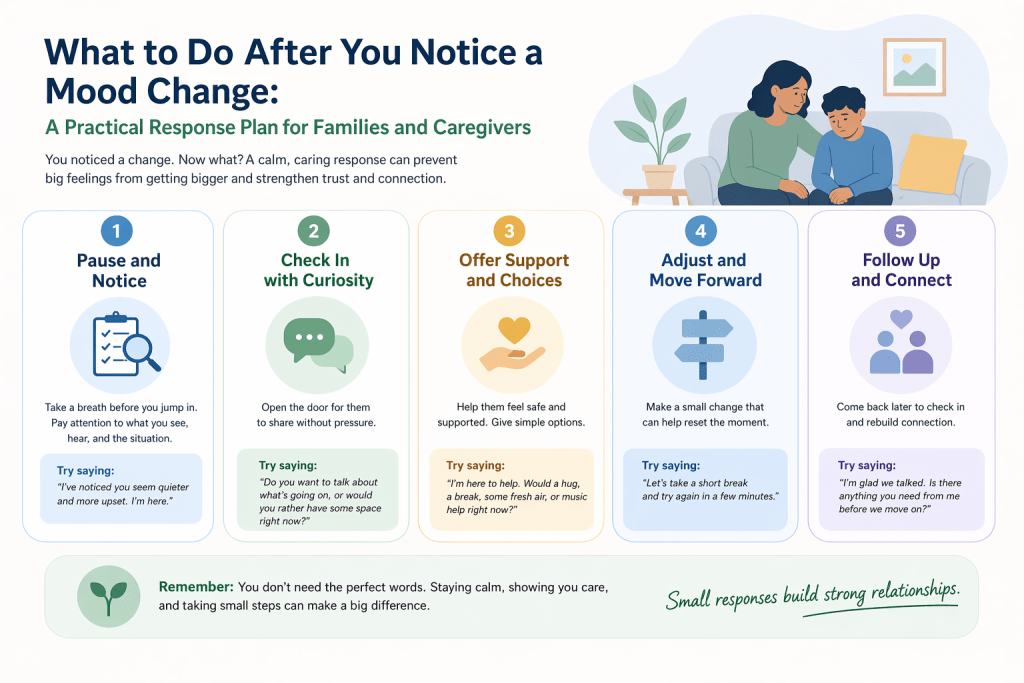
Spotting a mood change is important, but for many families, that is the moment when uncertainty begins. You notice your mother sounds quieter than usual for three days in a row. Your father stops mentioning the neighbors he normally talks about. A grandparent who used to joke on every call now gives one-word answers. These changes can feel subtle, but they often leave loved ones wondering the same thing: What should I do now without overreacting or ignoring something important?
That question matters because noticing a change is only the first half of good care. The second half is knowing how to respond in a way that is calm, respectful, useful, and sustainable. Seniors do not need every low day treated like a crisis. But they also should not be left alone with patterns that could signal loneliness, pain, sleep problems, grief, medication issues, illness, overwhelm, or emotional decline.
A helpful response is usually not dramatic. It is structured. It is thoughtful. It is based on patterns instead of panic. And most importantly, it protects the older adult’s dignity while still taking their emotional wellbeing seriously.
This is where families often need the most guidance. It is one thing to ask, “How are you feeling today?” It is another thing to know what to do when the answer changes, the tone changes, or the routine changes. The goal is not to turn every family member into a clinician. The goal is to help readers respond with confidence, kindness, and common sense.
Start With the Pattern, Not Just the Moment
One difficult day does not always mean something is wrong. Seniors, like everyone else, can have off days. They may feel tired, frustrated, disappointed, or less social for reasons that pass quickly. What matters more is whether the change is isolated or becoming a pattern.
That is why the first step after noticing a shift is to ask yourself a few grounding questions:
- Is this new behavior unusual for them?
- Has it happened more than once this week?
- Is the change affecting sleep, appetite, motivation, or communication?
- Does it seem linked to a recent event, physical issue, or medication change?
- Is the person returning to their normal self between check-ins, or staying low?
This small pause helps prevent two common mistakes: dismissing something real, or escalating too quickly. Families often swing between those extremes because they are operating from emotion. A better approach is to gather enough context before acting.
For example, if your loved one seems sad for one evening after a difficult appointment, that may simply call for comfort and rest. But if they sound withdrawn every day for ten days, stop doing their usual activities, and no longer seem interested in conversation, that calls for closer follow-up.
The key is to become pattern-aware. Mood support works best when you train yourself to look for repetition, not just reaction.
Use a “Pause, Ask, Clarify, Support” Method
When a change appears, many caregivers make the conversation too broad. They ask, “What’s wrong?” That question can feel heavy, vague, or hard to answer. A senior may say “nothing” simply because they do not know where to begin.
A more useful method is this four-step approach:
1. Pause
Do not rush into fixing mode. Slow down and listen to what is different.
2. Ask
Use a simple observation-based opener:
- “You sound a little quieter than usual today.”
- “I noticed you didn’t mention your walk this morning.”
- “You seem a bit more tired than normal.”
These lines feel gentler than “What’s wrong with you?” or “Why are you acting different?”
3. Clarify
Follow with a smaller, specific question:
- “Was today a hard day physically, emotionally, or both?”
- “Did something happen this week that has been weighing on you?”
- “Have you been sleeping okay?”
- “Have you felt like being around people lately?”
Specific questions lower the effort required to respond. They also help seniors who are not used to discussing feelings directly.
4. Support
Offer one immediate form of support:
- “Would it help to talk for a few extra minutes?”
- “Do you want me to check in again this evening?”
- “Should we make a plan for tomorrow?”
- “Would you like help setting up an appointment if this keeps bothering you?”
This method works because it respects autonomy. You are not diagnosing. You are opening a door, making space, and offering help without pressure.
Separate Emotional Changes From Practical Triggers
A mood change is not always purely emotional. In older adults, mood often shifts because daily life has become harder in ways they may not fully explain. Sometimes the best support does not begin with a deep emotional conversation. It begins with solving a practical burden.
Ask yourself whether the mood change may be connected to one of these common triggers:
Physical discomfort
Pain, constipation, headaches, poor sleep, dizziness, fatigue, or reduced mobility can make a senior sound irritable, flat, or discouraged.
Medication changes
A new medicine, missed doses, timing changes, or side effects can affect energy, appetite, sleep, and emotional regulation.
Social disruption
A canceled visit, reduced phone contact, loss of a friend, family conflict, or fewer outings can quickly affect mood.
Loss of confidence
Technology frustrations, memory slips, hearing difficulties, or trouble completing daily tasks can make someone feel embarrassed or withdrawn.
Environmental stress
Too much noise, household tension, clutter, extreme weather, poor lighting, or disrupted routines can quietly shape emotional wellbeing.
This is why a useful follow-up question is often:
“Has anything felt harder than usual lately?”
That one sentence allows the senior to speak from lived experience instead of trying to label their feelings. Many older adults will more easily say, “I haven’t been sleeping well,” or “My knee is bothering me again,” than “I think I’m feeling depressed.”
And that matters, because once the practical trigger becomes visible, the support plan becomes clearer.
Create a Three-Level Response System
Families often need a simple framework for deciding what action fits the situation. One of the most effective ways to do this is by using three levels: watch closely, act supportively, escalate appropriately.
Level 1: Watch Closely
Use this when the change is mild, recent, and not clearly affecting daily function.
Examples:
- They sound less energetic than usual for a day or two
- They are a little more quiet but still engaged
- They mention feeling “off” without other concerning signs
What to do:
- Check in again within 24 hours
- Ask a few specific follow-up questions
- Notice sleep, appetite, and activity changes
- Keep brief notes
The goal here is not to ignore the change. It is to observe whether it passes or grows.
Level 2: Act Supportively
Use this when the change lasts several days or begins affecting routine, motivation, or communication.
Examples:
- They stop talking about activities they normally enjoy
- Their responses become consistently short or flat
- They sound lonely, defeated, anxious, or overwhelmed
- They begin withdrawing from people or routines
What to do:
- Increase the frequency of contact
- Offer a concrete plan for the next day or week
- Loop in another trusted family member or caregiver if appropriate
- Help address practical barriers like meals, transportation, appointments, or social connection
- Encourage professional follow-up if the pattern continues
This level is where families can make a real difference. Many mood declines become easier to manage when someone steps in early with structure and companionship.
Level 3: Escalate Appropriately
Use this when there are safety concerns, severe changes, or signs that the person may need professional assessment soon.
Examples:
- Sudden confusion or a sharp change in mental state
- Statements of hopelessness or not wanting to go on
- Refusal to eat, take medication, or get out of bed
- Major agitation, panic, or emotional collapse
- Symptoms that suggest illness, delirium, or urgent health decline
What to do:
- Contact a healthcare provider promptly
- Reach out to emergency contacts or local support if needed
- Stay calm and direct
- Do not leave serious warning signs to “see how tomorrow goes”
A response plan becomes much easier when families decide in advance what belongs in each level. This removes guesswork during stressful moments.
Build an “If This, Then That” Mood Support Routine
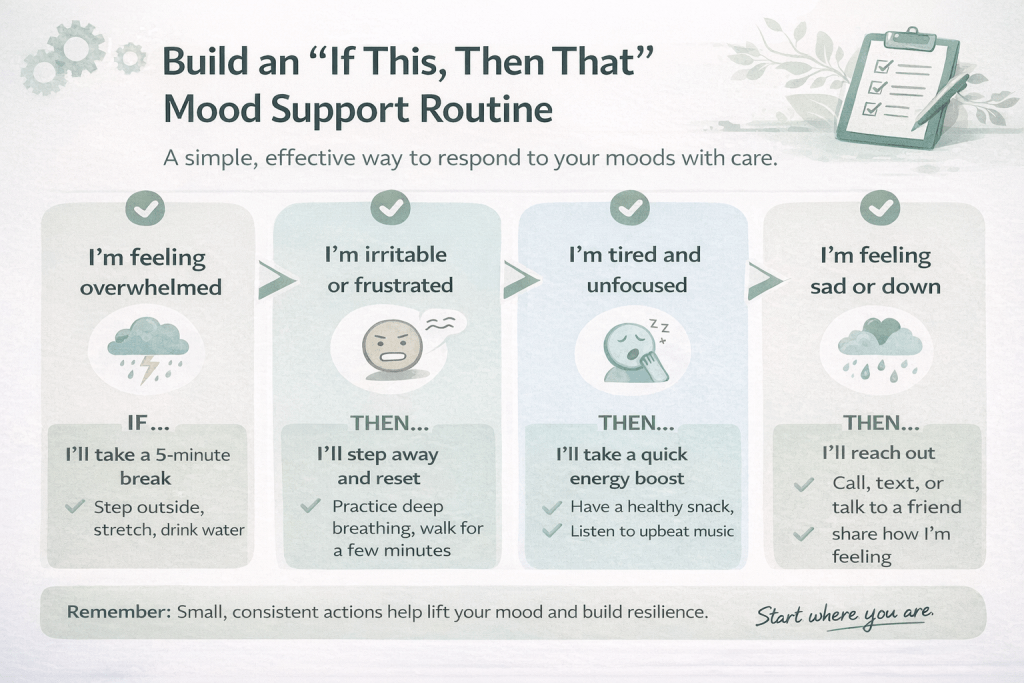
One of the most practical things readers can do is turn concern into a repeatable response system. Instead of making decisions from scratch every time, create a simple plan based on common situations.
Here is what that can look like:
If they seem lonely for several days
Then:
- add one extra call that week
- schedule a family video chat
- encourage one social contact they already like
- ask about community activities, faith groups, or neighbor visits
If they seem discouraged or unmotivated
Then:
- focus on one small next step, not a major life talk
- encourage a simple activity they usually enjoy
- ask them to choose one thing for tomorrow
- reduce overwhelm by narrowing choices
If they seem anxious
Then:
- avoid arguing with the worry right away
- ask what feels most stressful at the moment
- help separate immediate concerns from imagined ones
- guide attention back to today’s concrete plan
If they seem physically unwell and emotionally low
Then:
- ask about pain, sleep, appetite, hydration, and medications
- help arrange medical follow-up if needed
- keep communication warm and simple
- check in sooner rather than later
If they deny anything is wrong but the pattern continues
Then:
- keep observing calmly
- ask practical questions instead of emotional labels
- compare gently to their usual baseline
- involve another trusted person who may notice similar changes
This kind of planning is especially helpful for adult children juggling work, distance, and caregiving. It turns worry into action. It also reduces the chance of inconsistency, which is one of the biggest reasons early warning signs get missed.
Focus on Small Interventions That Actually Help
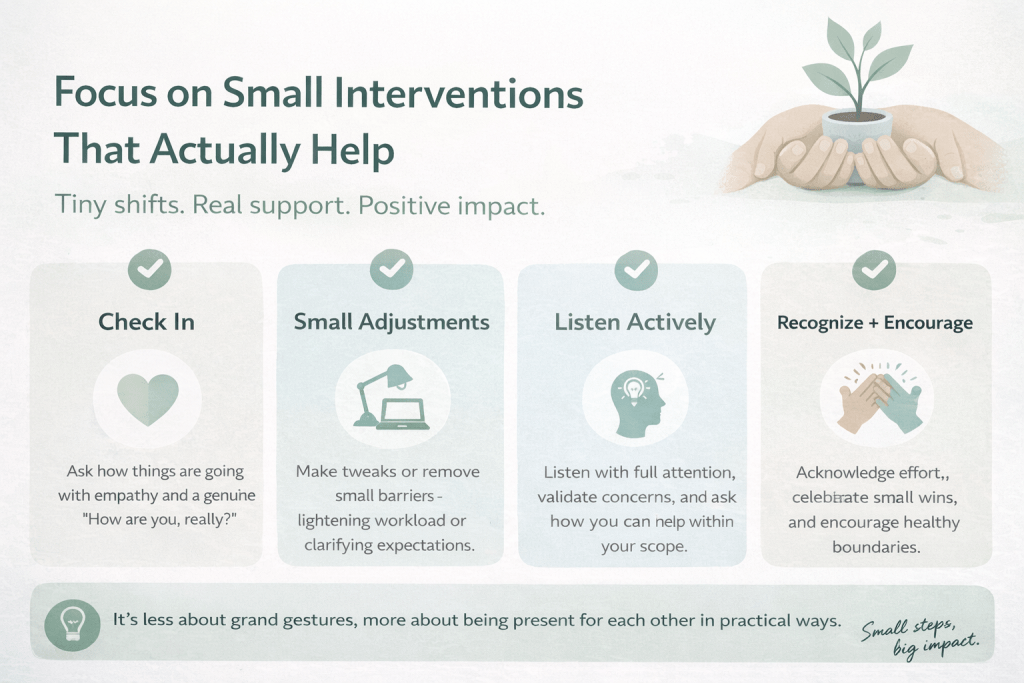
When a senior’s mood dips, families sometimes think the answer has to be big: therapy, major lifestyle change, a long intervention, or a perfect conversation. But in daily life, mood often improves through small, repeatable supports.
Here are interventions that are often more useful than people realize:
Improve the next 24 hours
Instead of asking, “How do we fix this?”, ask, “How do we make tomorrow easier?”
That might mean arranging a meal, confirming an appointment, helping with a grocery list, setting out clothes for a walk, or making sure hearing aids are working.
Reduce isolation without making it feel forced
Not every senior wants a packed social calendar. Some simply need more steady human contact. A short daily call, one familiar visitor, or a recurring routine can do more than occasional high-effort plans.
Reintroduce structure
Mood often worsens when the day loses shape. Encourage anchors like:
- waking up at the same time
- opening the curtains early
- getting dressed even when staying home
- one outdoor moment each day
- one social interaction each day
- one enjoyable activity each day
Make it easier to say yes
A senior may decline support if it feels vague or too demanding. Compare:
- “Let me know if you need anything”
with - “I can call you after lunch tomorrow and help you make a plan for the week.”
Specific support gets accepted more often.
Protect dignity
Do not talk to older adults as though they are fragile children. The most effective support sounds like partnership:
- “Let’s figure this out together.”
- “I want to make the week easier for you.”
- “You don’t have to manage this all alone.”
The tone matters as much as the action.
Know When Documentation Becomes Valuable
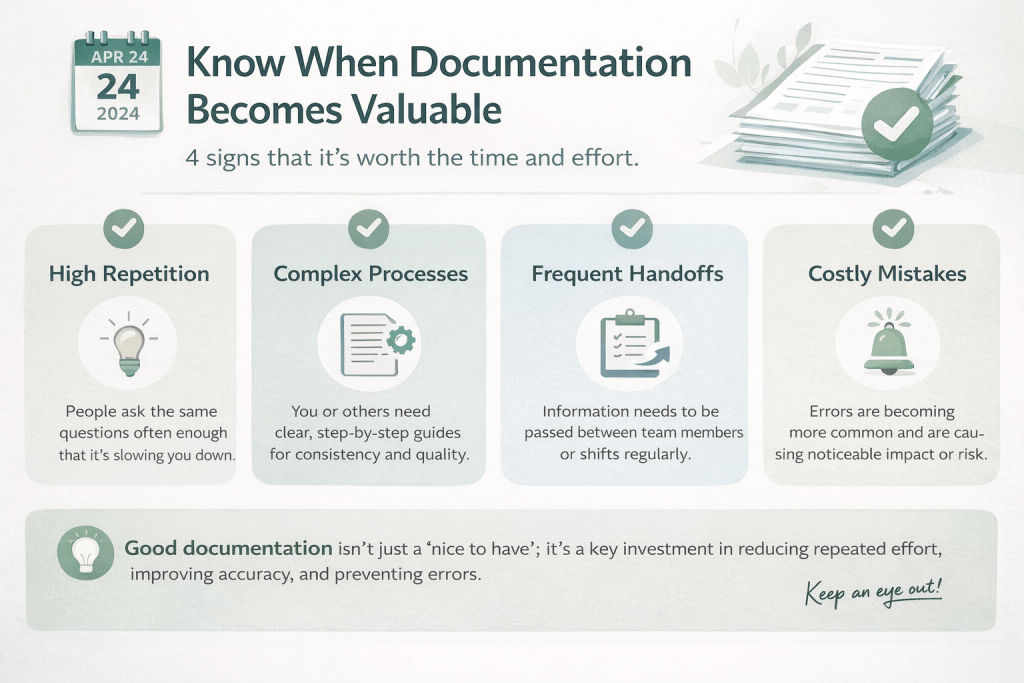
Families sometimes resist note-taking because it feels formal. But a few lines of observation can be incredibly helpful when something persists.
You do not need a detailed journal. A basic record is enough:
- date
- mood tone
- major change noticed
- possible trigger
- what support was offered
- whether the person improved, stayed the same, or worsened
For example:
- “Monday: sounded tired and less talkative; poor sleep the night before; encouraged rest and checked in again in evening; still flat.”
- “Wednesday: skipped regular card game; said she ‘didn’t feel up to people’; appetite low.”
- “Friday: more like herself after medication timing was adjusted.”
This kind of tracking helps families speak clearly with healthcare providers. It also prevents memory bias, where everything starts to feel either worse or better than it really has been.
Keep the Goal Realistic: Support, Not Perfection
The purpose of a mood check-in is not to eliminate every low feeling. Seniors are human. They will still have grief, stress, frustration, and quiet days. A good system does not erase those experiences. It helps ensure they are noticed, understood, and responded to with care.
That is what readers need most: permission to be attentive without being alarmist, proactive without being controlling, and supportive without trying to solve everything in one conversation.
The best response plan is not complicated. It is steady. It notices patterns. It asks better questions. It acts early when needed. And it keeps the older adult’s dignity at the center of every next step.
When families learn how to respond after they notice a mood change, daily check-ins become much more than routine calls. They become a practical safety net, a source of emotional steadiness, and a meaningful part of helping seniors feel seen, respected, and supported every day.
How to Build a Sustainable Daily Mood Check-In System That Actually Works Long-Term
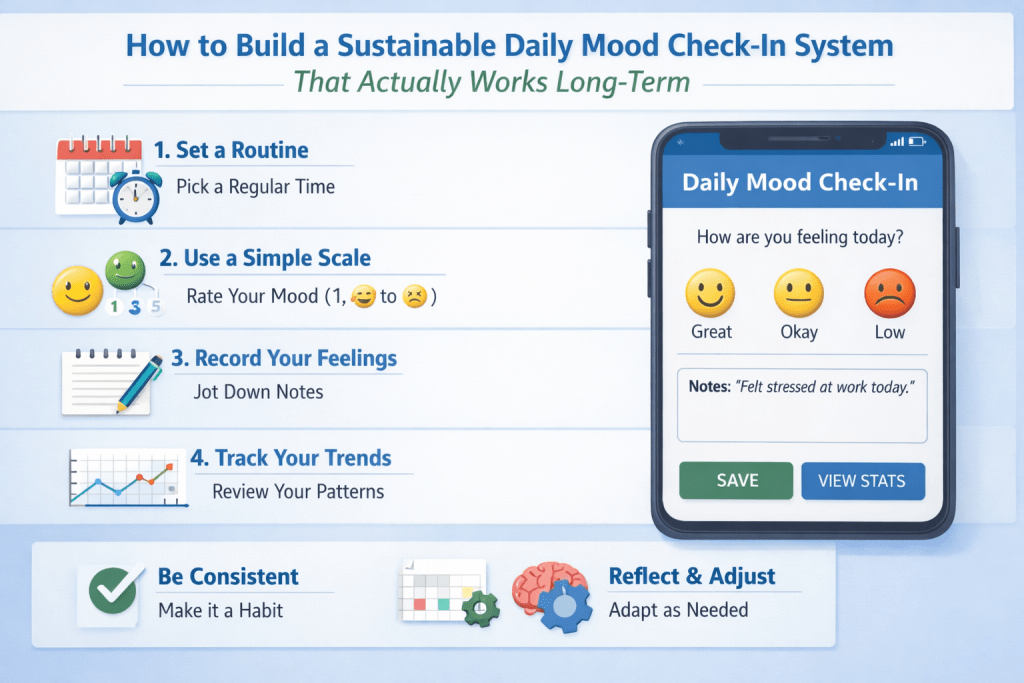
Daily mood check-ins are powerful, but only when they are consistent. Many families start with good intentions—regular calls, thoughtful questions, even tracking patterns—but over time, life gets busy, routines break, and the system fades. This is where most mood check-in efforts fail: not because they are ineffective, but because they are not designed to last.
For seniors, consistency is everything. Emotional wellbeing improves not through occasional attention, but through steady, predictable connection. A single thoughtful conversation is helpful, but a reliable system of care—one that continues week after week—is what creates real impact.
The challenge is not just starting check-ins. It is designing a system that fits into real life, respects everyone’s time, and adapts as needs change. This section focuses on how to build that system in a way that feels natural, sustainable, and genuinely supportive for both seniors and caregivers.
Shift From “Checking In” to “Staying Connected”
One of the biggest mindset changes that improves long-term success is moving away from the idea of checking in as a task.
When mood check-ins feel like a duty, they often become mechanical:
- “How are you today?”
- “Everything okay?”
- “Alright, talk later.”
Over time, this can feel repetitive or even superficial. Seniors may stop sharing openly because the interaction feels routine rather than meaningful.
Instead, think of mood check-ins as part of ongoing connection rather than a separate activity. This subtle shift changes how conversations happen.
Instead of:
- “I’m calling to check on your mood.”
It becomes:
- “I was thinking about you—how has your day been going?”
Instead of:
- “Did you feel better today?”
It becomes:
- “What was the best part of your day today?”
This approach keeps conversations human and engaging while still gathering meaningful emotional insight. It also reduces resistance from seniors who may not want to feel monitored or evaluated.
Consistency improves when the interaction feels like a relationship, not a routine.
Design a Rhythm That Fits Real Life
A sustainable system depends on rhythm, not intensity. Calling three times a day for a week and then disappearing for ten days is far less effective than one reliable touchpoint each day.
The key is to choose a rhythm that:
- fits the caregiver’s schedule
- matches the senior’s preferences
- can realistically continue for months, not just days
Here are a few practical structures that work well:
Daily Light Touch + Weekly Deep Check-In
- Short daily calls or messages (5–10 minutes)
- One longer conversation per week (20–30 minutes)
This balances consistency with depth. The daily touch keeps emotional awareness active, while the weekly check allows for deeper discussion.
Alternating Family Support
If multiple family members are involved:
- Assign specific days to different people
- Keep a shared understanding of what to observe
This prevents burnout and ensures the senior hears from familiar voices regularly.
Fixed-Time Anchors
Choose a predictable time each day:
- after breakfast
- mid-afternoon
- evening wind-down
Routine timing helps seniors anticipate the interaction and often makes them more open to sharing.
The goal is not perfection. It is reliability. A simple, consistent rhythm builds trust and makes mood changes easier to detect.
Keep the System Simple Enough to Maintain
One common mistake is overcomplicating mood tracking. Families introduce charts, scales, journals, apps, and detailed logs—all at once. This can quickly become overwhelming.
A better approach is to keep the system intentionally simple.
At minimum, a sustainable system needs:
- one regular check-in
- one or two consistent questions
- a basic awareness of patterns
For example:
- “How has your day felt overall?”
- “Did anything feel difficult today?”
That alone can provide valuable insight over time.
If you want to add structure, keep it light:
- note general mood (good / neutral / low)
- note any standout changes
- note possible triggers
Avoid turning the process into a clinical exercise unless necessary. Simplicity increases adherence, and adherence is what creates results.
Use Variety to Prevent Emotional Fatigue
Even meaningful conversations can start to feel repetitive if they follow the exact same format every day. Seniors may begin giving automatic answers rather than thoughtful ones.
To keep engagement high, introduce gentle variety in how you ask about mood.
Instead of repeating:
- “How are you feeling today?”
Rotate with:
- “What made you smile today?”
- “Was today easier or harder than yesterday?”
- “What are you looking forward to tomorrow?”
- “Did anything frustrate you today?”
- “What felt most comfortable today?”
This keeps the interaction fresh while still gathering emotional information.
Variety also helps uncover different aspects of mood:
- positive emotions
- stressors
- motivation levels
- social engagement
- physical comfort
Over time, this gives a more complete picture without making conversations feel repetitive.
Build Emotional Safety Over Time
Consistency alone is not enough. Seniors must also feel safe enough to share honestly.
Many older adults grew up in environments where discussing emotions openly was not encouraged. Others may avoid sharing because they do not want to “burden” their family.
Emotional safety builds gradually through small signals:
Avoid Immediate Problem-Solving
When someone shares a concern, resist jumping straight to solutions. First, acknowledge:
- “That sounds frustrating.”
- “I can understand why that would feel difficult.”
This shows that their feelings are being heard, not dismissed.
Normalize Mixed Emotions
Help seniors feel that it is okay to have both good and difficult days:
- “Some days are just heavier than others—it’s completely normal.”
Respect Their Pace
If they are not ready to open up, do not push:
- “We don’t have to talk about it now, but I’m here whenever you feel like it.”
Trust builds when people feel they are not being pressured.
Over time, these small interactions create a space where seniors are more willing to share meaningful changes in their mood.
Integrate Mood Check-Ins Into Daily Activities
Mood check-ins do not always have to be separate conversations. In fact, they often work best when integrated into everyday interactions.
Examples include:
During Routine Calls
Instead of a formal check-in, simply include mood awareness within the conversation:
- talking about meals, weather, or daily plans
- naturally noticing tone and engagement
During Shared Activities
If possible:
- walking together
- watching a show
- cooking
- playing a game
People often open up more when they are engaged in an activity rather than sitting in a direct conversation.
During Problem-Solving Moments
If a senior mentions a challenge:
- use that moment to explore how it is affecting them emotionally
This approach reduces the need for “separate” check-ins and makes emotional awareness part of normal interaction.
Plan for Disruptions Before They Happen
Even the best systems face interruptions—travel, illness, busy schedules, or unexpected events. The difference between systems that last and those that fail is planning for these disruptions in advance.
Ask:
- What happens if the primary caregiver is unavailable?
- Who can step in temporarily?
- How will communication continue during travel or emergencies?
Having a simple backup plan prevents gaps in support.
For example:
- a second family member takes over calls for a few days
- shorter check-ins replace longer ones temporarily
- a quick message replaces a call when needed
The goal is to maintain continuity, even if the format changes.
Review and Adjust the System Regularly
A system that works today may not work six months from now. Seniors’ needs evolve, and so should the check-in approach.
Set a time—perhaps once a month—to reflect:
- Are check-ins happening consistently?
- Is the senior engaged in conversations?
- Are mood patterns becoming clearer?
- Is the current approach still comfortable for everyone involved?
If something feels off, adjust:
- timing
- frequency
- style of questions
- level of involvement from others
Flexibility is key to long-term success.
Avoid Caregiver Burnout While Staying Consistent
Consistency should not come at the cost of caregiver exhaustion. When one person takes on the entire responsibility without support, the system often breaks down.
To prevent this:
- share responsibility where possible
- set realistic expectations for frequency
- allow flexibility in timing
- recognize that not every check-in needs to be perfect
It is better to have a simple, sustainable system than an intense one that cannot be maintained.
Caregivers should also check in with themselves:
- Am I feeling overwhelmed?
- Do I need help sharing this responsibility?
- Is the current system manageable long-term?
Supporting seniors effectively requires balance.
Conclusion
Creating consistent emotional support for aging individuals transforms worry into meaningful action. The benefits of regular connection extend far beyond simple conversation.
Throughout this guide, we’ve explored practical strategies that enhance both mental health and physical health. These approaches help older adults maintain independence while receiving the care they need.
If daily connections feel challenging, JoyCalls offers a compassionate solution. This AI companion provides natural conversations and emotional monitoring. Visit https://app.joycalls.ai/signup to begin building consistent support for your loved one’s wellbeing.
The ultimate goal is helping seniors live with dignity and joy. Every step toward better emotional health creates meaningful change in their quality of life.
FAQ
What is a daily mood check-in for an older adult?
Why are regular emotional assessments important for senior health?
How can technology like JoyCalls help with daily emotional tracking?
What are some easy ways to start a daily mood monitoring routine?
Can daily mood tracking help with grief or anxiety in older adults?
What if my loved one is resistant to talking about their feelings?

Ana Avila, PhD, is a healthcare and technology writer with deep expertise in artificial intelligence, senior care innovation, and the practical use of AI in healthcare operations. Her work focuses on how emerging technologies can improve the daily experience of older adults, support overburdened care teams, and help senior living communities deliver safer, faster, and more personalized support.
Dr. Avila’s academic background is rooted in health informatics, aging care systems, and applied artificial intelligence. Her doctoral work focused on how digital health tools, predictive analytics, and AI-assisted communication systems can be used to improve care coordination, reduce operational delays, and identify early signs of risk among older adults. Her training gives her a rare ability to understand both the technical side of AI and the human realities of healthcare delivery.
Over the years, Ana has developed a specialized body of work around AI in senior living. She writes about how senior care providers can use intelligent systems to manage resident requests, answer routine questions, support family communication, improve after-hours coverage, and detect patterns that may indicate loneliness, confusion, distress, or unmet needs. Her articles often examine the gap between what senior living teams are expected to deliver and what traditional staffing models can realistically support.
Ana’s healthcare expertise is especially focused on the operational side of care. She has written extensively about call handling, resident engagement, front desk workflows, triage systems, caregiver communication, care escalation, and the hidden administrative burden placed on senior living staff. Her work explains how AI can help reduce repetitive tasks, organize incoming requests, prioritize urgent issues, and give human caregivers more time for meaningful resident interaction.
At the same time, Ana is careful not to present AI as a replacement for human care. A consistent theme in her writing is that technology should support relationships, not weaken them. She argues that the best AI systems in healthcare are not the ones that simply automate the most tasks, but the ones that make care teams more responsive, families more informed, and residents more supported. Her perspective is grounded in the belief that senior living technology must be designed around dignity, trust, privacy, and compassion.
Ana has also written widely on the ethical use of AI in healthcare. Her work discusses the importance of human oversight, transparent escalation rules, resident consent, data minimization, and responsible use of sensitive health and behavioral information. She often emphasizes that AI systems used around older adults must be easy to understand, carefully monitored, and designed with the limitations and needs of real residents in mind, including those with memory loss, hearing challenges, mobility issues, or social isolation.
Her writing has been used as a reference point in discussions about aging, elder care technology, digital health, and AI-supported senior living. She has published 12 papers on journals like JAMA (Journal of the American Medical Association), The BMJ (British Medical Journal), SSRN and more. Some of her articles have also been cited by Wikipedia editors as supporting references on topics related to healthcare, aging, and technology. This has helped position her work as a useful educational resource for readers looking to understand how AI can be applied in real care environments.
In addition to her long-form writing, Ana has contributed research-based commentary, professional explainers, and practical guidance for healthcare operators, senior living decision-makers, and technology teams building products for older adults. Her work combines research literacy with operational practicality. She is able to take complex subjects such as natural language processing, predictive analytics, conversational AI, and care automation, and explain them in a way that is accessible to executives, caregivers, families, and non-technical readers.
Ana’s strongest area of expertise is the intersection of artificial intelligence and senior living operations. She understands that senior care communities face a difficult combination of rising resident expectations, staffing pressure, family communication demands, and increasing care complexity. Her writing explores how AI can be used to ease those pressures through smarter communication systems, faster response workflows, proactive check-ins, and better visibility into resident needs.
Her approach is both evidence-informed and deeply human. She studies AI through the lens of real-world care delivery: whether a resident gets help faster, whether a family member receives a clearer update, whether a caregiver avoids unnecessary administrative work, and whether a senior living team can identify a concern before it becomes a crisis. This practical focus makes her work especially relevant for organizations that want to adopt AI responsibly rather than simply follow technology trends.
Ana Avila is regarded as a thoughtful voice on the future of AI in healthcare and senior living. Her expertise combines academic training, research-driven analysis, operational understanding, and a strong commitment to humane technology. Through her writing, she helps healthcare leaders and senior living communities understand not only what AI can do, but how it should be used to improve care, preserve dignity, and strengthen the human relationships at the center of aging support.