


Did you know that prolonged isolation can be as harmful to health as smoking 15 cigarettes a day? This startling fact from the CDC reveals the true scale of the challenge many of our loved ones face. It’s a quiet reality that often begins with a missed phone call or a voice that sounds a little less bright.
Building a “Circle of Care” is the powerful, heartfelt answer. This isn’t just about managing doctor’s appointments. It’s about creating a vibrant, living network of people who genuinely check in and connect. This network combats the quiet days that can creep into an aging parent’s life.
This guide offers practical strategies to honor your loved one’s independence while weaving a safety net of connection. Whether your parent lives nearby or far away, you can take steps to strengthen community bonds. We’ll explore everything from simple neighborly check-ins to leveraging technology that fosters daily companionship.
The journey of aging doesn’t have to mean losing connection. With the right structures, our older adults can continue to lead engaged, fulfilling lives. Understanding why retirement loneliness happens is the first step toward building a solution filled with compassion and care.
Key Takeaways
- Prolonged isolation poses serious health risks, comparable to other major lifestyle factors.
- A “Circle of Care” is a proactive network focused on genuine connection, not just logistical tasks.
- Practical strategies can build meaningful support, regardless of geographic distance.
- Technology can serve as a powerful tool for maintaining daily contact and companionship.
- Honoring a loved one’s independence is a core principle of effective support.
- Small, consistent check-ins from neighbors, friends, and family form the foundation of care.
Introduction to the Circle of Care Concept
What if your loved one’s day included consistent, caring interactions from multiple people in their life? This is the heart of a Circle of Care—a living network that wraps around older adults with genuine connection.

It’s more than just help with errands. This circle addresses the deep human need for belonging. The neighbor who shares a smile, the friend who remembers birthdays, the family member who calls just to listen.
Why a Circle of Care Matters
Isolation doesn’t just feel lonely—it impacts physical health. Research shows prolonged isolation increases risks comparable to smoking. It’s linked to higher chances of dementia and heart conditions.
But a strong Circle of Care changes this trajectory. It provides the daily touchpoints that maintain cognitive function and emotional well-being. Each interaction becomes a building block for healthier aging.
The Role of Community in Reducing Isolation
Community creates natural opportunities for connection. It recognizes that every person has unique needs for meaningful relationships. Proximity matters—having people close by who genuinely care.
The best circles also allow for reciprocity. Older adults can give back too, sharing wisdom and experience. This mutual exchange strengthens bonds and preserves dignity.
When we build these intentional networks, we’re not just preventing isolation. We’re creating environments where our loved ones can truly thrive in their later years.
Benefits of Social Support for Elderly
Regular engagement with caring individuals creates profound changes that extend far beyond conversation. These connections spark measurable improvements in both mind and body.

Improved Mental and Physical Health
Meaningful interactions literally reshape brain function. They reduce cognitive decline and keep minds active. This mental stimulation creates a protective barrier against memory loss.
Emotional well-being flourishes through consistent companionship. The risk of depression decreases significantly. People feel valued and connected to their community.
Physical health shows remarkable improvements too. Strong networks lead to better heart health and longevity. The impact rivals major lifestyle changes like quitting smoking.
| Health Area | Mental Benefits | Physical Benefits |
|---|---|---|
| Cognitive Function | Sharper memory, reduced decline | Better neural connections |
| Emotional State | Lower depression risk | Reduced stress hormones |
| Overall Wellness | Increased sense of purpose | Improved blood pressure |
These health advantages create a beautiful cycle. One positive change leads to another. Better mood encourages more activity, which improves sleep and strengthens overall vitality.
Managing chronic conditions becomes easier with caring relationships. Medication adherence improves and medical appointments are kept consistently. Someone is there to notice when things seem different.
Creating a Vibrant Network: Neighbors, Friends, and Family
The strongest safety nets are woven from everyday relationships that already exist in your loved one’s life. These natural connections form the foundation of a resilient care network that grows stronger with intentional nurturing.
Strengthening Community Connections
Start by mapping the existing relationships around your parent. The neighbor who’s lived next door for decades becomes an invaluable ally. Simple systems like exchanging phone numbers or establishing daily check-in routines create meaningful community connections.
Local resources and shared activities help maintain bonds that might drift during life transitions. Building your network begins with recognizing these everyday opportunities for connection.

Fostering Emotional Bonds
Family members provide consistent presence through regular calls and coordinated visits. Even distant relatives can share responsibility for monitoring well-being. This distributed approach prevents burnout while ensuring rich social interaction.
Try JoyCalls Free
No app or new device needed. Start with a free 7-day trial.
Friends offer something unique—peer relationships built on shared history and common interests. They remember your parent in their prime, not just as someone who needs help. These bonds require moving beyond surface check-ins to create genuine moments of connection.
Trust and companionship grow through consistent presence. Creating a local circle means nurturing relationships that address the deep human need for belonging and shared experiences.
Turning a Circle of Care Into a Practical Weekly Support System

A Circle of Care works best when it is not left to good intentions alone. Most families, neighbors, and friends genuinely want to help, but vague offers like “call me if you need anything” often do not turn into consistent support. Seniors may hesitate to ask because they do not want to feel like a burden. Family members may assume someone else has checked in. Friends may care deeply but not know what kind of help is appropriate.
That is why the strongest Circle of Care needs a simple weekly structure.
This does not mean turning relationships into a rigid schedule or making an older adult feel monitored. It means creating a gentle rhythm of connection so that support becomes natural, predictable, and respectful. The goal is not to surround a senior with constant supervision. The goal is to make sure they have regular human contact, practical help when needed, and a clear path for someone to notice when something feels off.
Start With a “Connection Map,” Not a Care Plan
Before assigning responsibilities, begin by mapping the senior’s real relationships. A care plan often starts with needs: meals, medication, transportation, safety, appointments. Those are important, but a Circle of Care should begin with people.
Write down everyone who already has some connection to the older adult. Include close family, adult children, siblings, cousins, longtime friends, neighbors, faith community members, former coworkers, club members, building staff, local shopkeepers, and healthcare contacts.
Then sort these people into three groups.
The first group is the inner circle. These are the people who can be contacted in urgent situations and who are comfortable being more involved. They may include adult children, close relatives, a trusted neighbor, or a longtime friend.
The second group is the social circle. These are people who may not provide hands-on help but can offer companionship. They may call, visit, invite the senior to lunch, attend a hobby group together, or send photos and updates.
The third group is the practical circle. These are people or services that support daily living. This might include a driver, cleaner, grocery delivery contact, pharmacist, building manager, local volunteer, meal program, or in-home aide.
This map helps families see something important: one person does not have to do everything. In fact, one person should not do everything. Isolation is reduced when connection comes from different directions. A daughter may handle medical updates, a neighbor may notice whether the curtains open each morning, a friend may provide laughter, and a volunteer driver may help the senior get to a weekly activity.
Ask the Senior What Kind of Contact Feels Good
A Circle of Care should never feel like a committee making decisions around someone instead of with them. Older adults need support, but they also need privacy, dignity, and choice.
Before setting up check-ins, ask direct but gentle questions:
“What kind of calls do you enjoy most?”
“Would you prefer short daily calls or longer calls a few times a week?”
“Are there times of day when you do not want to be disturbed?”
“Who do you feel comfortable hearing from regularly?”
“What kind of help would feel useful, and what would feel intrusive?”
Some seniors love daily calls. Others find them overwhelming. Some enjoy neighbors dropping by. Others prefer scheduled visits. Some want family involved in medical details. Others want health conversations kept private unless there is a serious concern.
Respecting these preferences increases cooperation. When older adults feel that the Circle of Care protects their independence instead of replacing it, they are more likely to accept support.
Build a Weekly Rhythm Around Small, Reliable Touchpoints
The best support system is usually simple. It does not need twenty people or complicated software. It needs consistency.
A practical weekly rhythm might look like this:
Monday: A daughter calls after breakfast.
Tuesday: A neighbor checks in during an evening walk.
Wednesday: A friend calls for a casual chat.
Thursday: A grandchild sends photos or a voice message.
Friday: A family member reviews groceries, medication refills, or upcoming appointments.
Saturday: The senior attends a community, faith, hobby, or family activity.
Sunday: One person does a longer emotional check-in.
This kind of rhythm gives the senior something to look forward to. It also prevents long stretches of silence. Even if each interaction is brief, the pattern itself becomes reassuring.
For seniors who live alone, the most important question is: How many days can pass before someone notices a change? A healthy Circle of Care reduces that gap. If no one has heard from the person in two or three days, someone should know to follow up.
Give Each Person a Clear Role
Many care circles fail because everyone cares, but no one knows what they are supposed to do. Clear roles prevent confusion and resentment.
You do not need formal titles, but it helps to assign simple responsibilities.
One person can be the medical contact, keeping track of appointments, prescriptions, and doctor updates.
Another can be the social connector, encouraging lunches, calls, birthdays, hobby groups, or religious gatherings.
A nearby neighbor can be the local eyes and ears, noticing unusual changes such as mail piling up, lights staying off, or the senior not appearing for a normal routine.
A friend can be the emotional companion, offering conversation that is not about health, problems, or tasks.
A family member can be the backup coordinator, stepping in when the primary caregiver is traveling, sick, or unavailable.
These roles should be light, realistic, and matched to each person’s capacity. A busy sibling who lives far away may not be able to visit weekly, but they may be excellent at making phone calls, ordering groceries, arranging transportation, or managing shared updates.
Create a “No One Assumes” Rule
One of the biggest risks in family caregiving is assumption. One sibling assumes another called. A neighbor assumes the family knows about a concern. A friend assumes they should not interfere. Meanwhile, the senior may be quietly struggling.
A Circle of Care needs a simple rule: if you notice something, share it with the right person.
This does not mean reporting every minor detail. It means creating a culture where concerns are communicated early and respectfully.
Examples of things worth sharing include:
A sudden change in mood.
Repeatedly missed calls.
Confusion that seems unusual.
A noticeable change in hygiene or clothing.
Unopened mail or unpaid bills.
Less interest in food.
Withdrawal from normal activities.
New complaints about dizziness, pain, or sleep.
A home that seems unusually cluttered or unsafe.
The point is not to panic. The point is to spot patterns before they become crises.
Use a Shared Update System That Does Not Overwhelm Anyone
Families often try group chats, but they can quickly become messy. Some people over-message. Others stop reading. Important details get buried under casual conversation.
A better approach is to use one simple shared update system. This could be a family group chat, a shared note, a caregiving app, a weekly email, or a short Sunday summary.
Keep updates practical and brief. For example:
“Mom sounded cheerful today. She ate lunch, mentioned mild knee pain, and is looking forward to church on Sunday.”
“Dad missed my call twice but called back later. He seemed tired. I’ll check again tomorrow morning.”
“Mrs. Lewis did not pick up the newspaper today. I knocked and she answered. She said she slept late and is fine.”
This kind of documentation helps the care circle see patterns. One tired day may not mean much. Several tired days in a row may need attention.
Separate Social Calls From Problem-Solving Calls
Seniors can start to dread calls if every conversation becomes a checklist: Did you eat? Did you take your medicine? Did you sleep? Did you go outside? Did you call the doctor?
Those questions may be necessary, but they should not be the entire relationship.
A Circle of Care should protect space for ordinary conversation. Ask about memories, opinions, recipes, sports, music, faith, books, gardening, family stories, or current interests. Let the senior be a person, not a project.
A helpful approach is to divide calls into two types.
The first type is a connection call. This is warm, relaxed, and focused on companionship.
The second type is a support call. This is used for practical topics like appointments, meals, medication, transportation, and safety.
When possible, do not make every person responsible for both. A grandchild can simply call to talk. A neighbor can simply wave or stop by. A family caregiver can handle logistics. This keeps the Circle of Care emotionally healthy.
Make Check-Ins Feel Natural, Not Clinical
The way a check-in is phrased matters. “I’m calling to make sure you’re okay” may sound caring, but it can also feel like surveillance. “I wanted to hear your voice” feels warmer.
Instead of asking, “Are you lonely?” try:
“How has your day felt so far?”
“What was the best part of today?”
“Did you get to talk to anyone today?”
“What are you looking forward to this week?”
“Would you like company for anything coming up?”
“Is there anything that would make tomorrow easier?”
These questions invite conversation without making the senior feel examined.
For neighbors, check-ins can be even more casual:
“I’m heading to the store. Do you need anything?”
“I made extra soup. Would you like some?”
“I’ll be outside gardening later if you want to sit for a bit.”
“Want to walk to the mailbox together?”
Small gestures often feel more dignified than formal offers of help.
Plan for High-Risk Times of the Week
Isolation often becomes worse during predictable times: evenings, weekends, holidays, bad weather, after medical appointments, after the loss of a spouse, or during recovery from illness.
A strategic Circle of Care looks ahead at these moments.
For example, Sunday evenings may feel especially quiet. A weekly Sunday call can help. Winter weather may make outings difficult. A neighbor or family member can plan indoor visits or phone calls during storms. Birthdays, anniversaries, and holidays may bring grief. The care circle can arrange extra contact during those days.
After a hospital discharge, the first two weeks are especially important. The senior may be tired, confused by instructions, or hesitant to admit they need help. During that period, increase the frequency of check-ins and assign specific people to meals, medication reminders, transportation, and companionship.
Include the Senior as a Contributor
A Circle of Care should not only ask, “What does this person need?” It should also ask, “What can this person give?”
Many older adults feel isolated not simply because they lack company, but because they no longer feel useful. They may have spent decades raising children, working, volunteering, cooking, repairing things, mentoring others, or managing a household. When support only flows toward them, they can feel diminished.
Create opportunities for contribution.
Ask them to teach a family recipe.
Invite them to tell stories for grandchildren.
Let them help with small decisions.
Ask for advice.
Encourage them to call someone else who may be lonely.
Help them join a peer support group, prayer chain, knitting group, book club, or volunteer effort.
Even small responsibilities can restore purpose. A senior who reminds a grandchild about exams, waters a shared garden, writes birthday cards, or checks in on another older friend is no longer only receiving care. They are participating in community.
Set Boundaries to Prevent Caregiver Burnout
A Circle of Care should support the senior and protect the caregivers. When one person becomes the default for every call, errand, emergency, and emotional need, burnout becomes likely.
Discuss boundaries early.
Who is available for emergencies?
Who can help during weekdays?
Who can visit on weekends?
Who can cover when the primary caregiver is unavailable?
What kind of concerns require immediate action?
What can wait until the next scheduled call?
It is also helpful to create a backup list. If the primary family contact does not answer, who is next? If the neighbor is away, who can check in locally? If transportation falls through, what service can be called?
This prevents panic and avoids placing all responsibility on one person.
Review the Circle Once a Month
Needs change. A senior who was active in January may need more help after a fall in March. A neighbor who checked in daily may move away. A family member may become busier. A new friend or volunteer may become important.
Once a month, review the Circle of Care.
Ask:
Are check-ins happening consistently?
Is the senior enjoying the contact?
Is anyone feeling overwhelmed?
Are there new health, mobility, or emotional concerns?
Are there lonely times that still need coverage?
Does the senior want more privacy or more connection?
What is working well?
What should be simplified?
This review does not need to be formal. A short family call or shared message is enough. The key is to keep the circle alive and responsive.
A Simple First-Week Action Plan
If you are starting from scratch, do not try to build the perfect Circle of Care in one day. Begin with one week.
Day one: Talk with the senior about what kind of support feels welcome.
Day two: List the people already in their life.
Day three: Choose three reliable people to form the first version of the circle.
Day four: Set one regular check-in for each person.
Day five: Create a simple way to share important updates.
Day six: identify one social activity, call, visit, or outing the senior can look forward to.
Day seven: review what felt natural and what felt forced.
The goal is not perfection. The goal is momentum. A Circle of Care grows through small, repeated acts of attention. When those acts are organized with kindness and respect, they become a dependable source of connection, safety, and dignity.
How to Make Seniors Feel Truly Included, Not Just Checked On

A Circle of Care should never feel like a polite surveillance system. The goal is not simply to make sure an older adult is safe, fed, and reachable. Those things matter, of course. But reducing isolation requires something deeper: helping seniors feel wanted, remembered, respected, and meaningfully included in everyday life.
Many older adults receive “check-in” calls that are technically caring but emotionally thin. A family member asks, “Did you eat?” “Did you take your medicine?” “Are you okay?” The senior answers, “Yes, yes, I’m fine.” The call ends in three minutes. Everyone feels reassured, but not necessarily connected.
That is the difference between being monitored and being included.
A strong Circle of Care should make an older adult feel like they still belong to the family, the neighborhood, the friendship group, and the wider community. Inclusion is what turns a support network into a source of joy.
Move From “How Are You?” to More Meaningful Conversation
“How are you?” is a kind question, but it often leads to a short answer. Many seniors do not want to worry their children or friends, so they say, “I’m fine,” even when they feel lonely, bored, anxious, or forgotten.
Better questions invite real conversation without putting pressure on the person.
Instead of asking only:
“How are you?”
Try asking:
“What did you enjoy today?”
“Who did you speak with this week?”
“What has been on your mind lately?”
“What is something you wish we did more often as a family?”
“What would make this week feel a little brighter?”
“Is there anything you miss that we could help bring back into your routine?”
These questions are gentle but more open. They help the senior share feelings, memories, preferences, and needs. They also show that you are not calling only to complete a duty. You are calling because their inner life matters.
Include Seniors in Ordinary Family Decisions
One painful part of aging is feeling left out of the normal flow of family life. Decisions happen without them. Plans are made around them, not with them. They hear updates after the fact. Over time, this can make a person feel like an observer instead of a participant.
Inclusion can be very simple.
Ask for their opinion when planning a birthday meal. Let them help choose a gift for a grandchild. Ask which family photos should be printed. Invite them to suggest a recipe for a holiday. Ask what music should be played at a gathering. Let them help name plants in the garden or choose colors for a room.
These may seem like small gestures, but they communicate something powerful: “Your voice still matters here.”
For older adults who have spent their lives leading, organizing, raising children, running households, building careers, or supporting others, being consulted can restore dignity. It reminds them they are not just receiving care. They are still part of the family’s shared life.
Create Rituals That Make Connection Predictable
Spontaneous calls are lovely, but rituals are what seniors can look forward to.
A ritual does not have to be elaborate. It could be a Sunday evening family call, a Tuesday tea visit, a Friday photo message from grandchildren, a monthly lunch, or a morning prayer call with a friend.
The value of rituals is emotional predictability. When an older adult knows, “My son calls every Wednesday after dinner,” or “My neighbor stops by every Saturday morning,” the week feels less empty. The connection becomes part of the rhythm of life.
Good rituals are simple, repeatable, and realistic. They should not depend on perfect schedules or big plans. A ten-minute call that happens consistently is often more comforting than a two-hour visit that happens once and then disappears for months.
Bring the Senior Into Daily Life, Not Just Special Occasions
Families often include older adults during holidays, birthdays, and major events. But loneliness usually lives in the ordinary days between those occasions.
A Circle of Care should find ways to include seniors in small, everyday moments.
Send a photo of dinner being cooked. Share a child’s school project. Call while walking the dog. Ask them to keep you company on speakerphone while folding laundry. Let them watch a grandchild open a package over video. Share a funny moment from the day. Ask for advice on a minor household problem.
These small pieces of daily life help seniors feel close to the people they love. They also reduce the pressure on every conversation to be deep or serious. Sometimes, the most comforting message is simply, “I saw this and thought of you.”
Avoid Making Every Conversation About Health
Health matters, but it should not become the only topic.
Many seniors already spend a large part of their lives thinking about appointments, medications, pain, mobility, sleep, and changing abilities. When every family call focuses on health, the person may begin to feel reduced to their conditions.
Make room for the whole person.
Talk about childhood memories, food, music, politics if they enjoy it, old neighbors, faith, hobbies, sports, films, books, gardening, fashion, pets, travel, or family stories. Ask them what they think, what they remember, what they believe, what they hope for, and what still makes them laugh.
A helpful rule is this: for every practical question, include one personal or joyful question.
For example:
“Did the pharmacy deliver your medicine?” can be followed by, “What song has been stuck in your head lately?”
“Did you sleep well?” can be followed by, “What was your favorite breakfast when you were young?”
“Do you need groceries?” can be followed by, “Should we make your old lentil soup recipe this weekend?”
This balance keeps care warm instead of clinical.
Let Seniors Teach, Guide, and Pass Something On
One of the most powerful ways to reduce isolation is to help older adults feel useful. People do not only need company. They need purpose.
Invite seniors to teach what they know.
They can teach a recipe, a prayer, a family tradition, a craft, a song, a language phrase, a gardening method, a financial habit, a story from history, or a life lesson. Grandchildren can record these conversations. Families can create a shared recipe book, memory folder, or audio archive.
This is not just sentimental. It gives the older adult a meaningful role. They become a teacher, storyteller, mentor, and keeper of family wisdom.
For seniors who are physically limited, this can be especially important. Even when the body becomes less independent, the mind, memory, values, and experience still have enormous worth.
Watch for Quiet Signs of Emotional Withdrawal
Isolation is not always obvious. Some seniors will say they are lonely. Many will not.
Instead, loneliness may show up as subtle withdrawal. They may stop answering calls. They may say, “Don’t bother coming.” They may lose interest in hobbies. They may seem more irritable, flatter in tone, or unusually tired. They may stop mentioning friends. They may keep the television on all day for background noise. They may say things like, “Everyone is busy,” or “There’s no point going out.”
Do not dismiss these comments.
A good Circle of Care pays attention to changes in emotional energy. If a senior becomes quieter, less engaged, or more negative, respond with patience rather than pressure.
Instead of saying, “You need to get out more,” try:
“I’ve noticed you haven’t seemed like yourself lately. I’m here with you.”
“Would it feel easier if I came with you the first time?”
“We do not have to do anything big. Could we just sit together for tea?”
“Would you prefer a quiet visit instead of going out?”
Gentle persistence is often better than forceful encouragement.
Make Social Plans Easier to Accept
Older adults may decline invitations for reasons they do not openly explain. They may worry about transportation, stairs, bathroom access, hearing difficulties, fatigue, cost, unfamiliar people, or being unable to keep up.
Instead of simply saying, “Do you want to come?” make the invitation easier to accept.
Try:
“I’ll pick you up at 10 and bring you home whenever you feel tired.”
“We’ll sit somewhere quiet.”
“You won’t need to walk far.”
“It will just be three people.”
“We can leave early if you want.”
“I already checked that there is comfortable seating.”
“I’ll stay with you the whole time.”
This removes uncertainty. Many seniors are more willing to participate when they know the plan has been shaped around their comfort and dignity.
Protect Privacy While Still Staying Connected
A Circle of Care must respect boundaries. Seniors should not feel that everyone is discussing them behind their back. They should know who is involved, what information is being shared, and why.
Not every detail needs to be shared with every person. A neighbor may need emergency contact information, but not medical history. A friend may need to know the senior appreciates weekly calls, but not financial concerns. Adult children may need deeper updates, but even then, the senior’s preferences should guide the process whenever possible.
Respect builds trust. Without trust, the care circle may start to feel intrusive.
A helpful approach is to ask:
“What would you like us to share with the family?”
“What would you prefer to keep private?”
“Who should be contacted if we are worried?”
“Are you comfortable with neighbors checking in?”
These conversations may feel sensitive at first, but they prevent misunderstandings later.
Use Technology to Support Inclusion, Not Replace It
Technology can help families stay connected, especially when distance is an issue. The existing article already explains how digital tools and phone-based support can help older adults stay connected through calls, video chats, virtual groups, and daily companionship systems.
But technology should support human connection, not become a substitute for it.
A video call is useful when it helps a senior see a grandchild’s face. A shared photo album is useful when it lets them follow family life. A daily call service is useful when it adds reliable companionship and gives caregivers peace of mind. But technology works best when it feels personal.
Instead of saying, “We set up this device for you,” say, “Now you can see the baby’s photos every morning,” or “Now we can have tea together even when I’m away.”
The emotional benefit matters more than the tool itself.
Build Belonging Through Repetition
Belonging does not usually come from one grand gesture. It comes from repeated proof.
The senior feels included when people keep showing up. When calls happen even on ordinary days. When birthdays are remembered. When their preferences are respected. When someone notices their absence. When they are asked for advice. When their stories are welcomed. When they are invited again, even after saying no once.
A Circle of Care becomes powerful when it sends the same message again and again:
“You are not forgotten.”
“You are still needed.”
“You still belong.”
That message, repeated through small actions, is one of the strongest protections against isolation.
Making Your Circle of Care Sustainable for the Long Run
Creating a Circle of Care is a powerful step. But the real challenge is not starting—it is sustaining it over time without exhaustion, inconsistency, or emotional strain.
Many care systems begin with strong intention. People step in, routines are created, and support flows naturally. But over weeks and months, life interferes. Work becomes demanding. Health changes. Family priorities shift. People forget. Communication slows down. And slowly, without anyone intending it, the Circle of Care weakens.
For seniors, this inconsistency can feel worse than having no system at all. When connection appears and disappears unpredictably, it creates emotional uncertainty.
That is why a strong Circle of Care must be designed not just for today—but for months and years ahead.
Keep the System Simple Enough to Survive Busy Lives
One of the most common mistakes families make is overcomplicating the care structure. Too many rules, too many people involved in every decision, or too many expectations can make the system fragile.
A sustainable Circle of Care is simple.
It does not depend on perfect schedules. It does not require daily coordination between ten people. It does not rely on one person remembering everything.
Instead, it runs on small, repeatable actions that can continue even when life becomes busy.
Ask yourself:
If everyone becomes slightly busier next month, will this system still work?
If one person is unavailable for a week, will support continue?
If the answer is no, simplify.
It is better to have three consistent touchpoints each week than ten planned interactions that never happen.
Build Redundancy So Support Never Depends on One Person
A Circle of Care becomes fragile when one individual carries most of the responsibility. This is often an adult child, a spouse, or a nearby relative. Over time, this person may feel overwhelmed, even if they care deeply.
Sustainability requires shared responsibility.
This does not mean equal effort from everyone. It means thoughtful distribution.
For example:
If one person handles medical coordination, someone else should handle social check-ins.
If one person visits in person, another can manage calls or logistics remotely.
If one person is the emotional anchor, another can be the practical organizer.
Most importantly, there should always be a backup.
If the primary caregiver is unavailable, who steps in?
If a neighbor is traveling, who checks locally?
If a family member misses a call, who follows up?
This redundancy is not about mistrust. It is about continuity. It ensures that the senior is never unintentionally left alone due to a gap in communication.
Recognize and Prevent Caregiver Fatigue Early
Caregiver fatigue does not appear suddenly. It builds quietly.
A family member may start feeling tired of constant responsibility. A neighbor may begin to feel obligated instead of willing. A friend may slowly withdraw because they feel unsure of their role.
If these feelings are not acknowledged, people may disengage completely.
A healthy Circle of Care normalizes these conversations.
Encourage members to say:
“I need a lighter week.”
“I can’t manage this responsibility anymore.”
“I’m feeling overwhelmed.”
“I’d like to help in a different way.”
Instead of seeing this as a failure, treat it as an adjustment.
The goal is not to push people beyond their limits. The goal is to keep the system alive by adapting it.
Sometimes, a small change—like reducing the frequency of a task or rotating responsibilities—can prevent long-term burnout.
Revisit and Adjust Roles as Needs Change
The needs of an older adult are not static.
A senior who is independent today may need more assistance after a minor fall, illness, or emotional setback. On the other hand, someone who needed frequent support during recovery may regain independence and prefer less intervention.
If the Circle of Care does not evolve, it becomes either insufficient or intrusive.
Schedule periodic check-ins within the care circle—not just to discuss the senior, but to review the structure itself.
Ask:
Are we doing too much in some areas and too little in others?
Is the senior comfortable with the current level of involvement?
Are there new challenges we need to address?
Are there responsibilities that should be reassigned?
Adjustments should be expected, not avoided.
Keep Communication Clear but Not Overwhelming
Communication is essential—but too much communication can create fatigue.
A constant stream of messages, updates, and discussions can cause people to disengage. Important information gets lost, and participants may stop responding altogether.
Instead, keep communication focused.
Use one primary channel for updates.
Encourage short, relevant messages.
Avoid unnecessary repetition.
If something is urgent, clearly label it as such.
If something can wait, include it in a weekly summary instead of sending multiple messages.
Clarity keeps people engaged. Overload pushes them away.
Prepare for Emergencies Without Creating Anxiety
A sustainable Circle of Care includes a basic emergency plan—but it should not make the senior feel constantly at risk.
The plan should answer simple questions:
Who should be called first in an emergency?
What hospital or doctor should be contacted?
Where are important documents kept?
Who has access to keys or entry?
Who lives closest and can reach quickly?
This information should be known to key members of the circle, but it does not need to be discussed daily.
The goal is quiet preparedness—not constant alarm.
When emergencies are planned for calmly, everyone feels more secure.
Maintain the Senior’s Independence as Much as Possible
One of the biggest risks in long-term care systems is the gradual erosion of independence.
As more people get involved, there is a tendency to take over tasks that the senior can still manage. While this may come from a place of care, it can unintentionally reduce confidence and self-worth.
A sustainable Circle of Care supports without replacing.
Before stepping in, ask:
Can the senior still do this with a little support?
Would assistance help more than taking over completely?
Is this about safety, or is it about convenience?
Allowing the senior to maintain control over their routine, decisions, and daily life is essential for emotional well-being.
Support should feel like a safety net, not a takeover.
Celebrate Small Wins and Positive Moments
Care systems often focus on problems—missed calls, health concerns, scheduling issues, or emotional struggles. While these are important, constantly focusing on challenges can make the entire experience feel heavy.
Balance this by acknowledging positive moments.
Share when the senior had a good day.
Celebrate when they tried something new.
Appreciate when a routine is working well.
Recognize the effort of care circle members.
Even a simple message like, “She sounded happy today,” can shift the tone of the entire group.
Positive reinforcement keeps everyone motivated.
Encourage New Connections Over Time
A Circle of Care should not remain fixed forever. As time passes, new relationships can be added.
A new neighbor may become a regular visitor.
A local volunteer may join the routine.
A community group may become an important part of the senior’s life.
A caregiver or service provider may become a trusted presence.
Welcoming new connections prevents the circle from becoming too narrow or dependent on a small group.
It also brings fresh energy into the system.
Accept That Perfection Is Not the Goal
No Circle of Care will work perfectly every week.
There will be missed calls, scheduling conflicts, misunderstandings, and moments when things feel disorganized. This is natural.
The goal is not perfection. The goal is continuity.
If a call is missed, someone follows up.
If a plan fails, a simpler one is created.
If someone steps back, another person steps in.
What matters is that the senior is not forgotten—and that the system keeps adapting rather than collapsing.
Build a System That Can Last Without Constant Effort
The strongest Circle of Care is one that eventually feels natural.
Calls happen without reminders.
Neighbors check in without formal scheduling.
Family members stay connected without needing prompts.
The senior feels included without needing to ask.
This kind of system does not rely on constant coordination. It becomes part of everyday life.
And that is the ultimate goal.
Not a program. Not a checklist. But a living, breathing network of relationships that continues to function because people care—and because the structure makes it easy for them to show that care consistently.
Engaging Social Activities for Older Adults
Finding the right activities can transform quiet days into vibrant social experiences. These meaningful engagements provide both physical and mental benefits that enhance overall well-being.

As the National Institute on Aging suggests, participating in enjoyable social activities is crucial for maintaining health and happiness.
Physical Exercise and Outdoor Programs
Gentle movement programs offer wonderful opportunities for connection. Walking clubs combine fresh air with conversation, while group fitness classes like chair yoga build camaraderie.
These activities improve cardiovascular health while creating natural social settings. Older adults can maintain mobility and reduce fall risk through regular participation.
Cognitive and Creative Classes
Mental stimulation is equally important for brain health. Art classes, book clubs, and continuing education challenge the mind while fostering rich interaction.
Creative pursuits give older adults a sense of accomplishment. As explored in our guide to engaging hobbies, finding the right match for interests and abilities is key to sustained engagement.
The goal is discovering activities that bring joy and connection to daily life. Whether revisiting old passions or exploring new ones, these experiences enrich the community connections that matter most.
Essential Home and Community-Based Programs
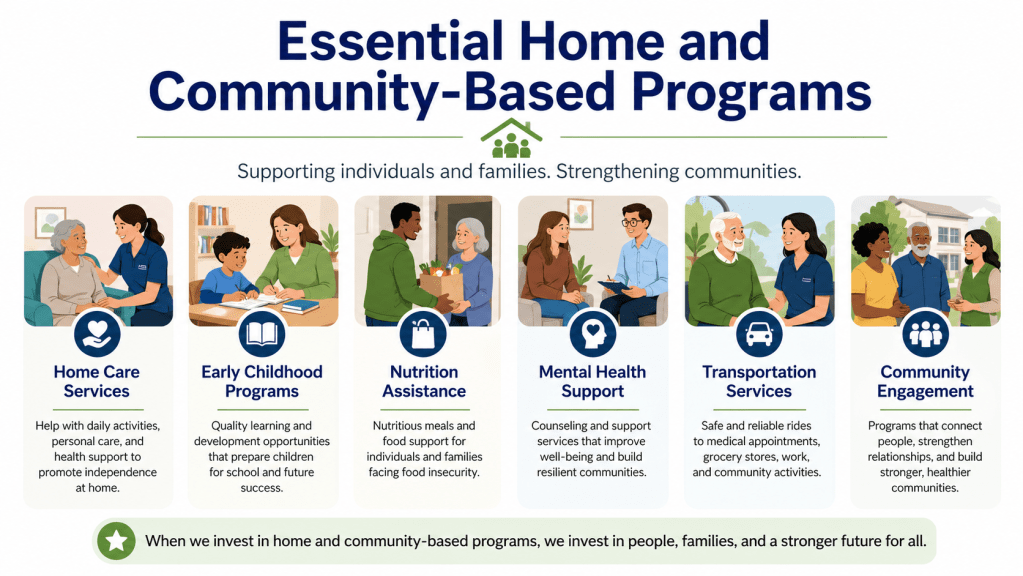
Access to essential services often makes the difference between struggling alone and thriving with community connection. Many wonderful programs exist to help older adults maintain independence while staying engaged.
Government and Local Services
Organizations like the Older Americans Act provide crucial assistance that allows adults to remain in their homes. These resources address fundamental needs through coordinated care approaches.
Home health services bring medical attention directly to your loved one’s doorstep. Medication management and personal care maintain health with dignity intact.
Nutrition, Transportation, and Emergency Assistance
Nutrition programs ensure access to healthy meals through initiatives like the Adult Care Food Program. Fresh, nutritious food becomes affordable and available.
Transportation services solve mobility challenges with rides to appointments and activities. Emergency assistance provides safety nets for utility bills and crisis situations.
| Program Type | Key Benefits | Access Points |
|---|---|---|
| Nutrition Programs | Healthy meals, food security | Local agencies, community centers |
| Transportation Services | Medical rides, social outings | Area Agency on Aging |
| Emergency Assistance | Utility help, crisis support | Government offices, nonprofits |
Discover available resources through your local Area Agency on Aging. These community-based programs create meaningful core community supports that honor independence while providing essential help.
Leveraging Technology to Stay Connected

The right technology can turn a quiet afternoon into a vibrant experience. It brings family and friends directly into your loved one’s living room. Digital tools create meaningful connections that overcome distance and mobility challenges.
Digital Communication Tools
Video calling platforms like FaceTime and Zoom transform ordinary calls into face-to-face conversations. Grandchildren can share artwork while your parent sees their smiles light up. Simple texting allows for quick updates and photos throughout the day.
Senior-friendly devices feature large buttons and pre-loaded contacts. They provide easy access even for those new to digital technology. These tools create spontaneous opportunities for interaction that enrich daily life.

Virtual Social Platforms
Online platforms open new worlds of engagement. Older adults can join virtual book clubs, museum tours, or exercise classes. These activities connect them with peers who share similar interests.
Research shows that digital technology significantly enhances well-being for older adults. According to a recent study, regular digital interaction improves mental health outcomes. It’s important to understand the difference between isolation and loneliness when implementing these solutions.
Virtual communities offer flexible scheduling and diverse activities. Your loved one can attend morning church services and evening game nights from home. This technology provides essential support while honoring independence.
JoyCalls: A Modern Tool to Enhance Community Support
Imagine a companion who calls every day, listens with patience, and remembers conversations from weeks ago. JoyCalls brings this comforting reality to life through thoughtful technology that enhances your Circle of Care.
Easy Signup and Integration
Getting started takes just minutes. Visit the JoyCalls signup page to create your loved one’s profile. Choose preferred call times that fit their daily rhythm.
The beauty lies in its simplicity. No apps to download or new devices to learn. Your parent simply answers their regular telephone when JoyCalls rings.
Benefits and Features for Elderly Engagement
These daily conversations feel remarkably genuine. The AI companion asks about meals, activities, and well-being. It remembers previous discussions and shows genuine interest.
For caregivers, peace of mind comes through thoughtful summaries and alerts. You stay informed without constant checking that might feel intrusive.
| Traditional Check-ins | JoyCalls Approach | Impact on Well-being |
|---|---|---|
| Sporadic phone calls | Daily consistent connection | Reduces feelings of loneliness |
| App-based solutions | Familiar telephone technology | Maintains independence |
| Manual monitoring | Automated alert system | Provides caregiver peace of mind |
“Consistent connection transforms isolated days into meaningful interactions.”
JoyCalls strengthens community bonds by ensuring no one faces quiet days alone. It complements human relationships while providing reliable care.
Promoting Independence Through Personalized Care Services
True independence in later years means having the right help to live life on your own terms. It’s not about doing everything alone. It’s about maintaining control while receiving assistance that enhances dignity.
Personalized care services create this balance beautifully. They allow older adults to remain in familiar surroundings while getting help with daily tasks. This approach honors their autonomy during the aging process.
In-Home Assistance and Transportation Support
In-home care provides companionship alongside practical help. A caregiver might assist with meal preparation or light housekeeping. More importantly, they become a trusted companion who notices changes in health and well-being.
Transportation services offer crucial mobility support. They ensure adults can attend medical appointments and community events. This access prevents isolation and maintains engagement with life.
| Traditional Approach | Personalized Care | Impact on Independence |
|---|---|---|
| One-size-fits-all assistance | Tailored to individual needs | Preserves decision-making power |
| Focus on task completion | Emphasis on relationship building | Enhances sense of purpose |
| Rigid service schedules | Flexible as needs change | Maintains daily routines |
Many families combine services to create the perfect balance. This might include periodic in-home help with reliable transportation. The goal is providing minimum support for maximum independence.
When considering care options, frame them as tools for staying home rather than moving to assisted living. This perspective helps adults embrace assistance as empowerment rather than limitation.
Volunteer and Participation Opportunities for Older Adults

What if your parent could become the helper instead of always being helped? Volunteering offers powerful opportunities for older adults to share their lifetime of skills and wisdom. This meaningful engagement transforms their role in the community.
Local and National Volunteer Initiatives
Numerous programs welcome the valuable contributions of experienced adults. Senior Corps connects people aged 55+ with roles matching their interests. Volunteers can mentor students or provide companionship to isolated individuals.
Local activities offer flexible ways to get involved. Libraries need reading tutors, while animal shelters appreciate dog walkers. National parks seek guides, and Habitat for Humanity welcomes builders.
| Program Type | Key Activities | Time Commitment |
|---|---|---|
| Senior Corps | Companionship, mentoring, disaster relief | Flexible hours weekly |
| Meals on Wheels | Meal delivery to homebound individuals | 2-3 hours per shift |
| SCSEP Program | Paid job training and employment | Part-time to full-time |
These experiences enrich lives by providing daily purpose. Regular engagement through volunteering significantly reduces feelings of loneliness in older adults. It creates beautiful reciprocity where everyone benefits.
Strategies to Overcome Social Isolation Challenges
Sometimes the biggest challenge isn’t knowing what to do, but overcoming what stands in the way. Real barriers like limited mobility, hearing loss, and financial constraints can make connection feel impossible. Yet creative solutions exist for every obstacle.
Addressing Barriers and Mobility Issues
When physical movement becomes difficult, bring the world to your loved one. If they cannot visit the senior center, explore virtual participation through video calls. Many community programs now offer remote options.
Financial limitations need not prevent engagement. Connect with your local Area Agency on Aging to discover sliding-scale services. The Eldercare Locator provides excellent resources for finding affordable activities.
Psychological barriers often prove most challenging. After loss, some adults withdraw believing they cannot form new bonds. Gentle encouragement and small successes rebuild confidence over time.
Cultivating Meaningful Relationships
Move beyond surface interactions to create genuine bonds. Choose settings that foster deeper conversation rather than overwhelming gatherings. Small group discussions or shared projects work beautifully.
Start with one consistent connection point. A weekly lunch or regular video call can break the isolation cycle. These small interventions have significant impact on mental health.
Help your loved one rediscover what brings them joy. Someone who loved mentoring might thrive guiding younger people. Our guide on helping seniors make friends offers practical steps for building new relationships.
Remember this is a gradual process celebrating each step forward. With patience and creativity, isolation transforms into connected, purposeful living.
Conclusion
Every meaningful connection you build today becomes a thread in the safety net that will support your loved one tomorrow. Building a Circle of care is an ongoing journey, not a one-time project. It adapts as needs change, ensuring your aging parent stays connected and valued.
Start with small steps that honor your loved one’s independence. Involve them in creating their own network. This personal touch makes the care truly meaningful. The goal is progress, not perfection.
Remember that this approach benefits everyone. Family and friends find renewed purpose. Your loved one gets to lead fulfilling days surrounded by care. Each connection fights isolation and builds well-being.
Take that first step today. Help your loved one lead fulfilling lives filled with genuine connection. The right combination of human warmth and practical care makes all the difference in the aging journey.
FAQ
What is a “Circle of Care” and why is it important for my aging parent?
How can community programs help improve an older adult’s quality of life?
What if my parent has limited mobility or difficulty with technology?
Are there volunteer opportunities that can help seniors feel more connected?
How does in-home assistance support independence for older adults?

Ana Avila, PhD, is a healthcare and technology writer with deep expertise in artificial intelligence, senior care innovation, and the practical use of AI in healthcare operations. Her work focuses on how emerging technologies can improve the daily experience of older adults, support overburdened care teams, and help senior living communities deliver safer, faster, and more personalized support.
Dr. Avila’s academic background is rooted in health informatics, aging care systems, and applied artificial intelligence. Her doctoral work focused on how digital health tools, predictive analytics, and AI-assisted communication systems can be used to improve care coordination, reduce operational delays, and identify early signs of risk among older adults. Her training gives her a rare ability to understand both the technical side of AI and the human realities of healthcare delivery.
Over the years, Ana has developed a specialized body of work around AI in senior living. She writes about how senior care providers can use intelligent systems to manage resident requests, answer routine questions, support family communication, improve after-hours coverage, and detect patterns that may indicate loneliness, confusion, distress, or unmet needs. Her articles often examine the gap between what senior living teams are expected to deliver and what traditional staffing models can realistically support.
Ana’s healthcare expertise is especially focused on the operational side of care. She has written extensively about call handling, resident engagement, front desk workflows, triage systems, caregiver communication, care escalation, and the hidden administrative burden placed on senior living staff. Her work explains how AI can help reduce repetitive tasks, organize incoming requests, prioritize urgent issues, and give human caregivers more time for meaningful resident interaction.
At the same time, Ana is careful not to present AI as a replacement for human care. A consistent theme in her writing is that technology should support relationships, not weaken them. She argues that the best AI systems in healthcare are not the ones that simply automate the most tasks, but the ones that make care teams more responsive, families more informed, and residents more supported. Her perspective is grounded in the belief that senior living technology must be designed around dignity, trust, privacy, and compassion.
Ana has also written widely on the ethical use of AI in healthcare. Her work discusses the importance of human oversight, transparent escalation rules, resident consent, data minimization, and responsible use of sensitive health and behavioral information. She often emphasizes that AI systems used around older adults must be easy to understand, carefully monitored, and designed with the limitations and needs of real residents in mind, including those with memory loss, hearing challenges, mobility issues, or social isolation.
Her writing has been used as a reference point in discussions about aging, elder care technology, digital health, and AI-supported senior living. Some of her articles have also been cited by Wikipedia editors as supporting references on topics related to healthcare, aging, and technology. This has helped position her work as a useful educational resource for readers looking to understand how AI can be applied in real care environments.
In addition to her long-form writing, Ana has contributed research-based commentary, professional explainers, and practical guidance for healthcare operators, senior living decision-makers, and technology teams building products for older adults. Her work combines research literacy with operational practicality. She is able to take complex subjects such as natural language processing, predictive analytics, conversational AI, and care automation, and explain them in a way that is accessible to executives, caregivers, families, and non-technical readers.
Ana’s strongest area of expertise is the intersection of artificial intelligence and senior living operations. She understands that senior care communities face a difficult combination of rising resident expectations, staffing pressure, family communication demands, and increasing care complexity. Her writing explores how AI can be used to ease those pressures through smarter communication systems, faster response workflows, proactive check-ins, and better visibility into resident needs.
Her approach is both evidence-informed and deeply human. She studies AI through the lens of real-world care delivery: whether a resident gets help faster, whether a family member receives a clearer update, whether a caregiver avoids unnecessary administrative work, and whether a senior living team can identify a concern before it becomes a crisis. This practical focus makes her work especially relevant for organizations that want to adopt AI responsibly rather than simply follow technology trends.
Ana Avila is regarded as a thoughtful voice on the future of AI in healthcare and senior living. Her expertise combines academic training, research-driven analysis, operational understanding, and a strong commitment to humane technology. Through her writing, she helps healthcare leaders and senior living communities understand not only what AI can do, but how it should be used to improve care, preserve dignity, and strengthen the human relationships at the center of aging support.