


That quick “How are you?” call to your mom or dad… does it ever leave you feeling like you didn’t get the full picture? You hang up with a nagging sense that you missed something important about their true well-being.
You’re not alone. With Americans living longer than ever—over one in seven adults is 65 or older—prevention is the key to a joyful, independent life. A simple daily conversation can be your lifeline to understanding their real health, safety, and emotional state.
But how do you transform a casual chat into a meaningful check-in? It starts with knowing the right things to ask. This guide walks you through 7 essential questions that cover everything from physical health to daily functioning. We’ll show you what to ask, why it matters, and what to listen for.
Whether you’re making the calls yourself or using a compassionate service like JoyCalls, these questions help you stay connected. They ensure your loved one gets the care they need. You’ll find guidance on important topics, including mental health questions that gently explore emotional well-being.
By the end, you’ll feel confident that your daily calls are making a real difference in your family member’s quality of life.
Key Takeaways
- A daily check-in call is a powerful tool for monitoring an aging loved one’s overall well-being.
- Asking the right questions transforms a simple chat into a meaningful conversation.
- Effective questions cover physical health, safety, emotional state, and daily functioning.
- Listening for subtle changes in answers can help catch potential problems early.
- Using a service like JoyCalls can provide consistent, compassionate check-ins and peace of mind.
- These conversations strengthen your connection and ensure your loved one feels supported.
Understanding the Importance of Daily Wellness Check Calls
The power of a daily conversation extends far beyond simple pleasantries—it builds a protective safety net. When your aging parent speaks with someone consistently, patterns emerge that reveal changes in their physical condition, memory, mood, or daily routines.

These regular interactions create a living health record over time. They help you notice subtle declines that might go unnoticed during less frequent contact.
The Role of Daily Check-Ins in Overall Health
Daily communication isn’t just about saying hello. It’s about creating consistency that catches small problems before they become emergencies. Research confirms that individuals with regular contact maintain better overall health and have greater control over chronic conditions.
The routine itself provides comfort and structure. It gives older adults something to look forward to while ensuring someone notices if something’s wrong.
Building Trust and Open Communication with Your Provider
Consistent conversations build trust, making it easier for seniors to open up about uncomfortable health issues. This transparency strengthens the relationship between your loved one and their healthcare provider.
Doctors can only help with what patients share. Regular updates create valuable talking points for medical appointments. Services like JoyCalls complement family efforts by providing automated daily contact.
| Benefit | Short-Term Impact | Long-Term Value |
|---|---|---|
| Early Problem Detection | Immediate intervention | Prevent emergency situations |
| Emotional Support | Daily companionship | Reduced loneliness and depression |
| Health Monitoring | Track daily changes | Better chronic condition management |
| Provider Communication | Regular updates | More effective medical care |
Key Considerations for “wellness check questions for seniors”
Turning routine chats into meaningful connections requires more than just asking ‘how are you?’ The right approach transforms simple check-ins into powerful tools for maintaining your loved one’s independence and well-being.
Recognizing the Value of Preventive Care
Many older adults hesitate to share health concerns they find embarrassing. Things like memory slips or balance issues often go unmentioned. Asking specific questions gives them permission to open up.
This daily preventive care approach helps catch small changes early. Early detection means simpler solutions before problems grow. It’s about maintaining good health through consistent attention.

How the Right Questions Improve Quality of Life
Specific inquiries yield real information about daily living. Instead of vague questions, focus on concrete details about their day. This approach provides genuine insight into their actual needs.
When health concerns get addressed quickly, quality of life improves dramatically. Prompt attention prevents small issues from becoming crises. Regular, meaningful contact also helps combat feelings of isolation that can occur even in assisted living situations.
These conversations make your family member feel truly heard and supported. That emotional connection itself contributes to better overall health and happiness.
Expert Insights on Addressing Critical Health Issues
Medical experts highlight that some of the most impactful health conversations involve topics older adults often avoid discussing. These sensitive matters significantly affect daily living and independence.

Improving Bladder Control and Managing Urinary Symptoms
Bladder control problems affect up to one-third of older adults. Many feel too embarrassed to seek help, even though effective treatments exist. Urinary symptoms like leaking or frequent bathroom trips impact both physical comfort and emotional well-being.
During conversations, gently ask about any accidents or how these conditions affect daily activities. This approach helps gather valuable information for the healthcare provider.
Discussing Mental Health Concerns Effectively
Mental health issues often hide behind physical complaints. Back pain or headaches might actually signal depression or anxiety. Many older adults don’t recognize their own mental health symptoms or dismiss them as normal aging.
Try JoyCalls Free
No app or new device needed. Start with a free 7-day trial.
Ask directly about emotional well-being. Specific questions reveal what general inquiries miss. When these health issues surface, the doctor can offer solutions from lifestyle adjustments to therapies.
| Health Concern | Common Symptoms | Daily Impact | Available Solutions |
|---|---|---|---|
| Bladder Control Issues | Leaking, urgency, frequency | Reduced social activity, embarrassment | Medications, exercises, lifestyle changes |
| Mental Health Concerns | Sadness, worry, sleep changes | Isolation, loss of enjoyment | Therapy, medication, social support |
Creating a judgment-free space encourages honest sharing about conditions that affect quality of life. This approach complements an annual wellness visit and helps track meals and hydration patterns that might indicate underlying issues.
Strategies for Managing Physical Health and Reducing Fall Risks
Falls represent one of the most serious threats to an older adult’s quality of life. More than one in four people aged 65 and older experience falls, and one fall often leads to another without intervention. These incidents can cause injuries that dramatically impact independence.

Daily conversations provide a window into physical capabilities. They help identify subtle changes before they become emergencies. Asking about daily routines reveals important signs of physical limitation.
Assessing Daily Living Activities and Physical Limitations
Simple questions about basic tasks uncover mobility issues. “Any trouble getting dressed or preparing meals?” reveals pain or balance concerns. Listen for exhaustion from activities that used to be easy.
These discussions help understand how aging affects daily life. They create opportunities to address physical changes proactively. Regular exercise questions assess strength and mobility maintenance.
Implementing Fall Prevention Methods and Safety Modifications
Identifying risk factors early allows time for safety improvements. Ask about the home environment: rugs, lighting, and stair safety. These conversations help loved ones accept assistance without feeling dependent.
Practical fall prevention methods include grab bars and better lighting. Addressing lifestyle factors reduces risk significantly. Physical therapy can improve balance and prevent falls.
| Common Risk Factors | Early Warning Signs | Preventive Solutions |
|---|---|---|
| Poor home lighting | Frequent stumbles | Install night lights |
| Cluttered pathways | Hesitation when walking | Remove tripping hazards |
| Reduced strength | Difficulty rising from chairs | Begin strength training |
| Balance issues | Holding onto walls | Balance exercises |
These daily check-ins support overall wellness by addressing physical risk factors. They empower older adults to maintain independence while staying safe. The right questions make all the difference in preventing accidents.
Leveraging Preventive Visits for Comprehensive Healthcare
Think of your check-in calls and doctor visits as two pieces of the same health puzzle – they work best when they fit together. Regular medical appointments give you the professional perspective, while daily conversations provide the real-life context.

This combination creates a complete picture of your loved one’s needs. It helps catch issues early and ensures consistent care.
Discussing Preventive Screenings and Lifestyle Changes
Before each appointment, review what you’ve learned from recent calls. Has your parent mentioned dizziness or skipped meals? Share these observations with their healthcare provider.
Ask about recommended screenings based on age and family history. Cancer detection tests can save lives. Discuss specific lifestyle changes like diet adjustments or exercise routines.
Vaccinations are crucial for preventing serious illnesses. Make sure flu shots and other immunizations are current.
Monitoring Vital Signs, Lab Results, and Chronic Conditions
Understanding numbers like blood pressure and blood sugar helps track progress. Ask your loved one what their doctor said about these results.
Medications management is essential. Inquire about side effects and whether prescriptions are being taken correctly. This is especially important in senior communities where multiple medications are common.
For existing chronic conditions, track how well treatment plans are working. Lab results show if adjustments are needed. This proactive approach prevents isolation that can occur even with good medical care, as noted in resources about retirement loneliness.
Together, formal visits and daily contact create a safety net that protects your loved one’s health from all angles.
Turning Daily Answers Into a Simple Care Plan: What to Do After the Call

Asking good wellness check questions is only the first step. The real value comes from what you do with the answers afterward.
A senior may say, “I’m fine,” even when something has changed. They may not want to worry their family. They may feel embarrassed about needing help. Or they may not notice a gradual change because it has become part of daily life. That is why daily wellness calls work best when they are not treated as isolated conversations. They should become a simple, respectful way to notice patterns.
The goal is not to turn every call into a medical review. It is to understand what is normal for your loved one, recognize when something is different, and take the right next step early.
Start by Learning Their “Normal”
Before you can spot a problem, you need to know what a normal day looks like for them.
For one person, sleeping until 9 a.m. may be completely normal. For another, it may be unusual. One senior may always eat a light breakfast, while another usually enjoys a full morning meal. Some older adults are naturally quiet on the phone. Others are talkative and cheerful.
During the first week or two of daily check-ins, pay attention to their usual patterns:
- What time do they normally wake up?
- How much energy do they usually have?
- Do they sound clear and alert?
- How often do they go outside?
- Do they usually prepare meals?
- Do they usually mention friends, hobbies, TV shows, pets, or routines?
- Are they generally optimistic, practical, anxious, humorous, or reserved?
This becomes your baseline.
Once you know their baseline, changes become easier to notice. A single quiet day may not mean much. But three quiet days in a row could matter. One skipped lunch may be normal. Several skipped meals may suggest fatigue, low mood, pain, medication side effects, or trouble cooking.
The most helpful question after each call is not, “Did they answer correctly?” It is, “Was today noticeably different from their usual self?”
Listen for Changes in Voice, Not Just Words
Many seniors will answer politely even when they are struggling. That is why tone of voice can reveal as much as the actual answer.
Listen for:
- Slower speech than usual
- Confusion or repeated questions
- A weaker voice
- Short answers from someone who is usually expressive
- Irritability that feels out of character
- Breathlessness while speaking
- Long pauses before answering simple questions
- A flat or sad tone
- Sudden nervousness or fear
For example, if you ask, “Did you eat today?” and they say, “Yes, yes, I had something,” the answer may sound reassuring. But if their voice is hesitant, vague, or tired, it may be worth gently asking, “What did you have?” or “Was it easy to make?”
This does not mean you should interrogate them. It means you should listen with care. Older adults often communicate discomfort indirectly. They may say, “I just didn’t feel like doing much today,” instead of, “I felt dizzy.” They may say, “The house feels like too much lately,” instead of, “I am struggling to keep up.”
A good wellness call leaves room for those indirect clues.
Use a Simple Green-Yellow-Red System
To keep daily check-ins manageable, use a simple three-level system after each call.
Green: Everything Seems Normal
A green day means your loved one sounds like themselves. They ate, took medications, moved around safely, and seemed emotionally steady.
No major action is needed. You can simply note that the call went well.
Green does not mean perfect. Many seniors live with chronic pain, limited mobility, or ongoing health conditions. Green means nothing seems unusually worse today.
Yellow: Something Needs Watching
A yellow day means something seems slightly off, but not urgent.
Examples include:
- They sounded more tired than usual
- They skipped a meal
- They mentioned mild dizziness
- They seemed lonely or unusually quiet
- They forgot a small detail
- They complained of new discomfort
- They avoided a question
- They said they “almost tripped”
- They missed one medication dose
- They did not go outside for several days
Yellow means you should follow up. You might call again later, ask a sibling to check in, suggest a simple fix, or watch for the same issue tomorrow.
The key is not to panic. Many yellow signs resolve quickly. But if the same yellow sign repeats, it deserves attention.
Red: Take Action Now
A red day means there may be an immediate safety or health concern.
Examples include:
- They fell
- They are confused suddenly
- They have chest pain
- They have trouble breathing
- They cannot get out of bed
- They sound extremely weak
- They have signs of a stroke, such as facial drooping, arm weakness, or speech trouble
- They have not eaten or had fluids for a concerning amount of time
- They missed critical medication
- They say they feel unsafe
- They do not answer after repeated attempts and this is unusual
In these cases, do not rely on another phone call alone. Contact emergency services, a nearby family member, a neighbor, a building manager, or their healthcare provider depending on the situation.
Having this system in place helps families avoid two common mistakes: overreacting to every small change or ignoring warning signs until they become serious.
Track Only What Matters
You do not need a complicated spreadsheet. In fact, too much tracking can make daily calls feel clinical and exhausting.
Instead, record only a few useful details:
- Date and time of the call
- Overall status: green, yellow, or red
- One or two key notes
- Any follow-up needed
- Who is responsible for the follow-up
For example:
“Monday evening — Yellow. Mom sounded tired and said she skipped lunch. Call tomorrow morning and ask about appetite.”
Or:
“Thursday morning — Green. Good mood, ate breakfast, took medication, planning to water plants.”
This kind of short note is enough to show patterns over time. It also helps if multiple family members are involved. Everyone can see what happened without repeating the same questions or giving conflicting advice.
The goal is not documentation for its own sake. The goal is continuity. Seniors often feel frustrated when different relatives ask the same things over and over. A shared note helps the family sound coordinated, calm, and respectful.
Know When to Ask a Follow-Up Question
A wellness call should feel like a conversation, not a checklist. Still, some answers deserve a gentle follow-up.
If they say, “I didn’t sleep well,” ask:
“Was it because of pain, worry, bathroom trips, or something else?”
If they say, “I didn’t eat much,” ask:
“Was nothing appealing, or was it hard to prepare food?”
If they say, “I felt a little dizzy,” ask:
“Did it happen when you stood up, while walking, or while sitting?”
If they say, “I stayed in today,” ask:
“Was that by choice, or did you not feel up to going out?”
If they say, “I forgot,” ask:
“Has that been happening more often, or was today just busy?”
These follow-up questions are useful because they clarify the reason behind the answer. A skipped meal could mean low appetite, depression, dental pain, difficulty cooking, expired groceries, or medication side effects. The right response depends on the reason.
Keep the tone warm and curious. A good phrase is:
“I’m only asking so we can make things easier for you, not to criticize.”
That one sentence can lower defensiveness.
Respect Independence While Offering Support
Many older adults resist wellness calls because they fear losing independence. They may worry that one honest answer will lead to unwanted changes.
That fear is real. So the way you respond matters.
Avoid jumping immediately to instructions like:
“You need to call the doctor.”
“You should not be living alone.”
“You have to let someone come over.”
Instead, try collaborative language:
“Would it help if we thought through an easier way to handle dinner on low-energy days?”
“Do you want me to help you write that down for your next appointment?”
“Would you be open to adding a night light near the hallway?”
“Can we make a backup plan just in case this happens again?”
This keeps the senior involved in decisions. It also shows that the purpose of the call is support, not control.
When possible, offer choices. For example:
“Would you rather I call the pharmacy, or would you like to do it while I stay on the phone?”
“Would tomorrow morning or afternoon be better for someone to stop by?”
“Would you prefer a reminder call before dinner or after breakfast?”
Choice preserves dignity. And dignity is essential in elder care.
Create a Follow-Up Plan Before There Is a Crisis
Families often wait until something goes wrong before deciding what to do. That creates stress for everyone.
A better approach is to create a simple follow-up plan in advance.
Decide:
- Who should be contacted if your loved one does not answer?
- Which neighbor, friend, or relative lives nearby?
- Who has a spare key?
- Which doctor or clinic should be called for non-urgent concerns?
- Which hospital does your loved one prefer?
- Where is the medication list kept?
- Are emergency contacts visible in the home?
- Does your loved one have transportation for appointments?
- Who in the family handles medical updates?
- Who handles groceries, bills, or home repairs if needed?
This plan should not be hidden from the senior. Involve them directly.
You can say:
“I know most days are fine, but I would feel better if we had a simple plan for the rare day when you do not answer or need help. What would you want us to do first?”
That framing is respectful. It treats the senior as the decision-maker, not the problem.
Watch for Repeated Small Changes

A single issue may not be serious. Repeated small changes often matter more.
Pay attention when you notice patterns such as:
- Eating less for several days
- Sleeping poorly most nights
- Becoming less interested in usual activities
- Forgetting medications more often
- Avoiding bathing or changing clothes
- Complaining about the same pain repeatedly
- Having more trouble following conversations
- Staying indoors for long stretches
- Sounding anxious at the same time each day
- Mentioning bills, scams, or confusing paperwork
- Having repeated “near falls”
- Losing track of appointments
These patterns may point to health changes, emotional distress, cognitive decline, medication issues, vision problems, hearing problems, or practical barriers at home.
The best response is to connect the pattern to a next step.
For example:
“Dad has mentioned dizziness three times this week. Let’s ask when it happens and encourage him to tell his doctor.”
Or:
“Mom has skipped dinner twice this week. Let’s check whether cooking feels tiring and whether ready-made meals would help.”
Patterns turn vague worry into useful action.
Make the Call End With Comfort, Not Concern
Even when a wellness call reveals a problem, try not to end the conversation on a stressful note.
Seniors should not hang up feeling like they failed an inspection. They should feel cared for, heard, and emotionally steadier than before.
After discussing a concern, close with reassurance:
“I’m glad you told me.”
“We’ll take this one step at a time.”
“You’re not bothering anyone.”
“I love hearing your voice.”
“Let’s check on this again tomorrow.”
“I’m proud of you for mentioning it.”
Then end with something personal:
“What are you watching tonight?”
“Did the flowers bloom yet?”
“What should I make for dinner this week?”
“Tell me one good thing from today.”
That emotional finish matters. It protects the relationship. It reminds your loved one that the call is not only about risk, medication, meals, or symptoms. It is also about connection.
Build a Weekly Review Habit
Daily calls are helpful, but a weekly review makes them more strategic.
Once a week, take five minutes to look back at the notes. Ask:
- Were most days green?
- Were there repeated yellow signs?
- Did any issue improve?
- Did anything get worse?
- Is there one practical change that would make next week easier?
- Does the doctor need to know about any pattern?
- Does the family need to adjust the support plan?
Keep the review simple. Choose one action at a time.
For example:
- Add a grocery delivery every Tuesday
- Ask the doctor about dizziness
- Move the phone charger closer to the bed
- Set up a pill organizer
- Add a second evening call after a hospital discharge
- Ask a neighbor to check the porch light
- Schedule a hearing test
- Arrange transportation for an appointment
Small changes are easier for seniors to accept. They also prevent caregiver burnout because the family is not trying to solve everything at once.
The Best Wellness Calls Lead to Small, Timely Help
A daily wellness call is not just about asking questions. It is about noticing, understanding, and responding with care.
When you know your loved one’s normal routine, listen for subtle changes, track only what matters, and follow up calmly, the call becomes much more powerful. It can help prevent avoidable emergencies, support independence, and make aging at home feel less lonely.
Most importantly, it shows your loved one that they are not alone. Someone is paying attention. Someone will notice if their day is harder than usual. Someone cares enough to ask—and wise enough to listen.
Recognize the Limits of Solo Caregiving
Many families begin with one person taking responsibility for daily check-ins. This often happens naturally—the closest child, the most available sibling, or the one who feels the strongest emotional responsibility.
Over time, however, this can become difficult to sustain.
You may start to notice:
- You feel anxious if you miss a call
- You are the only one tracking changes
- You struggle to balance work, personal life, and caregiving
- You hesitate to travel or disconnect
- You feel frustrated that others are not involved
- You worry about what happens if you are unavailable
These are not signs of failure. They are signs that the system needs to expand.
Daily wellness calls work best when responsibility is shared in a way that is structured but flexible.
Start With a Simple Division of Roles

You do not need a complex caregiving plan. Start by assigning small, clear roles across family members or trusted individuals.
For example:
- One person handles morning check-ins
- Another handles evening calls
- One person tracks notes or updates
- One person handles medical communication
- One person handles logistics like groceries or appointments
If you are working with siblings or extended family, even a small level of participation makes a big difference.
Instead of saying, “Can you help more?”, try something specific:
“Can you take the Wednesday evening calls? That would really help keep things consistent.”
Clear, defined responsibilities are easier to accept than vague requests.
Include Local Support Whenever Possible
If your loved one lives alone, having at least one person nearby can be invaluable.
This could be:
- A neighbor
- A friend
- A building security guard
- A local relative
- A nearby shopkeeper they trust
You do not need to involve them deeply. Even a light connection helps.
For example:
“Hi, I’m calling from time to time to check on my father. Would it be okay if I reached out if I ever couldn’t get through to him?”
This creates a safety net without placing a burden on the local contact.
Make sure your loved one is comfortable with this arrangement. It should never feel like surveillance—it should feel like community.
Use Technology Thoughtfully, Not Excessively
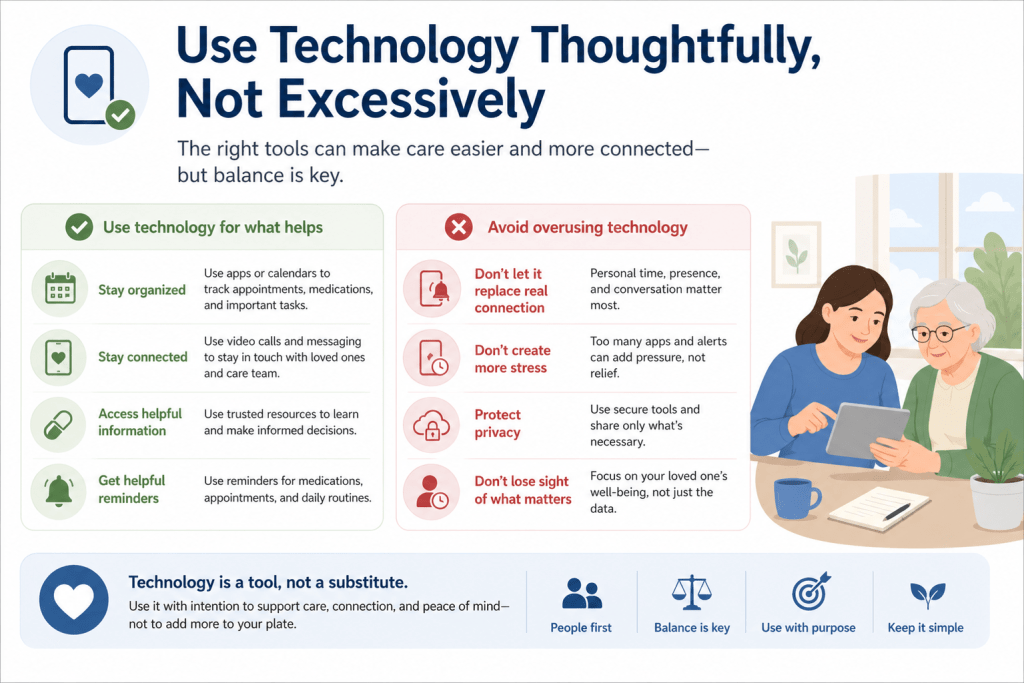
Technology can support wellness calls, but it should not replace human connection.
Useful tools include:
- Shared family notes apps
- Medication reminder systems
- Smart speakers for simple voice check-ins
- Emergency alert devices
- Scheduled call reminders
However, avoid overwhelming your loved one with too many devices or apps. Simplicity is more effective.
A good rule is:
If they can use it easily and consistently, it helps. If it creates confusion or stress, it hurts.
Always introduce new tools gradually and explain their purpose clearly:
“This is just to make things easier, not to track you.”
Know When Professional Help May Be Needed
There comes a point where family support alone may not be enough—and recognizing that early can prevent serious issues.
Signs that additional help may be needed include:
- Increasing difficulty with daily activities (bathing, cooking, dressing)
- Frequent medication mistakes
- Repeated falls or near-falls
- Noticeable cognitive decline
- Isolation or withdrawal
- Poor hygiene or home upkeep
- Missed medical appointments
- Confusion about finances or bills
Professional support does not always mean full-time care. It can start small.
Options include:
- A visiting nurse
- A part-time caregiver
- A physical therapist
- A meal delivery service
- A cleaning service
- Transportation assistance
Frame this as support, not dependency:
“This could make your day easier and give you more energy for the things you enjoy.”
Introduce Help Gradually to Reduce Resistance
Many seniors resist outside help because they associate it with loss of independence.
A sudden introduction of full-time care can feel overwhelming.
Instead, introduce support in small, manageable steps.
For example:
- Start with weekly housekeeping help
- Add meal support for a few days a week
- Introduce transportation help for appointments
- Suggest a short-term trial of a caregiver
Position it as a trial, not a permanent change:
“Let’s just try this for two weeks and see if it makes things easier.”
This lowers emotional resistance and allows your loved one to experience the benefits firsthand.
Keep Communication Transparent
One of the biggest concerns seniors have is decisions being made without them.
Avoid discussing major changes “around” them. Instead, involve them directly.
Say:
“We’ve noticed a few things over the past week, and we want to talk about how to make things easier for you.”
This approach:
- Shows respect
- Builds trust
- Reduces fear
- Encourages honest communication
Even if they do not fully agree at first, being included in the conversation matters.
Create a “No-Blame” Environment
Wellness calls should never feel like performance checks.
If your loved one forgets medication, skips a meal, or feels low, avoid blame-based language.
Do not say:
“You should have told me.”
“Why didn’t you do that?”
“You know better.”
Instead, say:
“That happens. Let’s figure out an easier way.”
This keeps the focus on solutions rather than mistakes.
A no-blame environment encourages honesty. And honesty is essential for effective care.
Build Emotional Support Into the System
Wellness calls are not just about physical health. Emotional connection is equally important.
If every call becomes a checklist, your loved one may begin to disengage.
Make space for:
- Stories from their past
- Conversations about hobbies
- Discussions about current events
- Shared laughter
- Simple companionship
You can even assign “light” calls within the support circle:
- One person calls just to chat
- Another shares photos or updates
- Another discusses shared interests
This creates a balanced experience where your loved one feels connected—not monitored.
Prepare for Transitions Before They Happen
Care needs often change gradually, but transitions can feel sudden if you are unprepared.
Common transitions include:
- Returning home after hospitalization
- Recovering from illness or surgery
- Moving from independent to assisted living
- Adjusting to new medications
- Coping with loss of a spouse or friend
Use your wellness call system to prepare early.
Ask:
“If you ever needed extra help for a few weeks, what would you prefer?”
“Who would you want us to call first?”
“What would make you feel comfortable during that time?”
These conversations may feel difficult, but they reduce stress later.
Reassess the System Every Few Months
What works today may not work six months from now.
Every few months, review:
- Are calls still happening consistently?
- Is the division of responsibility working?
- Are there repeated yellow or red patterns?
- Does your loved one seem comfortable with the system?
- Is additional support needed?
Keep adjustments small and practical.
For example:
- Shift call times
- Add a second check-in on certain days
- Involve one more family member
- Introduce a new support service
Continuous small improvements are more effective than large, sudden changes.
Protect Your Own Well-Being as a Caregiver
Supporting a loved one is meaningful, but it can also be emotionally demanding.
If you are part of the caregiving system, pay attention to your own well-being.
Signs of burnout include:
- Constant worry
- Difficulty sleeping
- Irritability
- Feeling overwhelmed
- Neglecting your own needs
You cannot provide steady support if you are exhausted.
Protect your time by:
- Sharing responsibilities
- Taking breaks without guilt
- Setting realistic expectations
- Asking for help early
A strong support system includes the caregiver, not just the senior.
The Goal Is Not Control—It Is Confidence
At its best, a daily wellness call system does not make seniors feel watched. It makes them feel supported.
It allows them to live independently while knowing that someone will notice if something changes.
It allows families to stay informed without being intrusive.
And it creates a quiet, consistent layer of care that adapts over time.
When you involve the right people, communicate openly, and respond with respect, daily wellness calls become more than a routine. They become a foundation for safe, confident, and dignified aging.
Making Daily Wellness Calls Feel Natural, Not Clinical
A daily wellness check call should never feel like a test, interview, or inspection. If the senior begins to feel questioned instead of cared for, they may start giving short answers, hiding concerns, or avoiding the call altogether.
The best wellness calls feel like a familiar daily rhythm: warm, respectful, predictable, and personal.
Begin With Connection Before Questions
Do not start immediately with health questions.
Instead of:
“Did you take your medicine?”
Start with:
“How are you feeling this morning?”
“What’s been the best part of your day so far?”
“I was thinking of you and wanted to hear your voice.”
This soft opening helps the person relax. Once the conversation feels natural, practical questions become easier to ask.
Use the Same Core Questions, But Change the Wording
Repeating the same seven questions every day can become tiring. The meaning can stay the same, but the wording should vary.
For example, instead of always asking, “Did you eat today?” try:
“What did you have for breakfast?”
“Was lunch easy to manage today?”
“Do you have something ready for dinner?”
Instead of “Did you take your medication?” try:
“Were you able to take your morning tablets?”
“Did the pill organizer help today?”
“Any confusion with today’s medicines?”
This keeps the call conversational while still gathering useful information.
Avoid Making the Senior Feel Watched
There is a big difference between support and surveillance.
Avoid language like:
“I’m checking whether you did everything.”
“You forgot again, didn’t you?”
“Why didn’t you answer earlier?”
Use language like:
“I just want to make sure your day is going smoothly.”
“Let’s make this easier for tomorrow.”
“I’m glad you told me.”
The tone should communicate partnership, not supervision.
Add One Personal Question Every Day
A purely health-focused call can become emotionally draining. Add one personal, enjoyable question to keep the relationship alive.
Ask about:
- A favorite TV show
- A neighbor or friend
- A plant, pet, or hobby
- A memory from the past
- A recipe they enjoy
- A small plan for tomorrow
For example:
“What did your rose plant look like today?”
“Did you watch your evening serial?”
“What’s one song you’ve been remembering lately?”
These questions remind the senior that they are more than their health needs.
Let Them Lead Sometimes
A wellness call does not always need to follow your agenda.
If they want to talk about an old memory, a family update, or something they saw on television, let the conversation breathe. Important clues often appear naturally when seniors feel heard.
They may casually mention:
“I did not feel like cooking today.”
“The stairs felt harder this morning.”
“I got confused with the bank message.”
“I did not sleep much last night.”
These details may be more useful than direct answers.
End With Reassurance
The ending of the call matters. Seniors should hang up feeling calmer, not more worried.
Close with warmth:
“I’m glad we spoke today.”
“Call me if anything feels off.”
“I’ll check in again tomorrow.”
“You’re not alone in this.”
“Have a peaceful evening.”
A kind ending builds trust. And trust is what makes daily wellness calls effective over time.
Common Mistakes to Avoid in Daily Wellness Calls (And What to Do Instead)

Even with the best intentions, daily wellness calls can become ineffective—or even counterproductive—if certain habits develop over time. These mistakes are rarely obvious in the beginning, but they can slowly reduce honesty, create resistance, or cause important signals to be missed.
Mistake 1: Turning the Call Into a Checklist
It is easy to fall into a routine where the call becomes a fixed script:
“Did you eat?”
“Did you take your medicine?”
“Did you go outside?”
“Did you sleep well?”
While these questions are important, asking them in the same tone and order every day can make the interaction feel mechanical.
Over time, the senior may start giving automatic answers just to move through the call quickly.
What to Do Instead
Blend questions into natural conversation.
Instead of asking everything one after another, space them out:
Start with a general conversation → bring in one or two wellness questions → return to a personal topic → ask another question later.
For example:
“So what did you end up having for breakfast today?”
“That sounds nice. Did you get a chance to step outside at all?”
“By the way, were your medicines easy to manage today?”
This keeps the flow human and relaxed while still covering all essentials.
Mistake 2: Ignoring Small Changes Because “It’s Probably Nothing”
Families often dismiss early warning signs because they seem minor.
“He just sounded a bit tired.”
“She skipped one meal, it’s fine.”
“It was probably just a bad night’s sleep.”
While this may be true occasionally, repeated small changes are often the earliest indicators of larger issues.
What to Do Instead
Treat patterns seriously, not individual incidents.
If something small happens once, note it.
If it happens two or three times, follow up.
If it continues, take action.
For example:
Instead of ignoring repeated fatigue, say:
“I’ve noticed you’ve been feeling tired for a few days. Should we look into what might help?”
This approach is calm, observant, and proactive.
Mistake 3: Asking Leading Questions
Sometimes questions are framed in a way that pushes the senior toward a “safe” answer.
“You took your medicine, right?”
“You’re feeling okay, aren’t you?”
“You didn’t fall or anything, right?”
These questions encourage automatic “yes” responses—even when the truth is more complex.
What to Do Instead
Ask open-ended, neutral questions.
“Were you able to take all your medicines today?”
“How are you feeling physically today?”
“Did anything feel unsafe or difficult today?”
This allows for honest answers without pressure.
Mistake 4: Overreacting to Every Concern
While it is important to take concerns seriously, reacting with immediate alarm can discourage future honesty.
If every small issue leads to panic, the senior may start hiding things to avoid worrying you.
What to Do Instead
Respond proportionately.
For minor concerns, stay calm and solution-focused:
“That happens sometimes. Let’s think about how to make it easier tomorrow.”
Reserve urgency for situations that truly require it.
This builds trust and encourages openness.
Mistake 5: Underreacting to Serious Signals
On the other end, some families delay action even when clear warning signs appear.
This may happen due to denial, uncertainty, or fear of overstepping.
What to Do Instead
Have clear criteria for action.
If you hear about:
- A fall
- Sudden confusion
- Severe pain
- Breathing difficulty
- Inability to get out of bed
- Missed critical medication
Take immediate steps—contact a doctor, a nearby person, or emergency services if needed.
It is better to act early than regret delay.
Mistake 6: Making the Senior Feel Like a Burden
Subtle language can unintentionally create guilt.
“I have so many things to manage.”
“I had to rearrange everything to call you.”
“This is getting difficult.”
Even if not directed at them, seniors may internalize this and start minimizing their needs.
What to Do Instead
Reinforce that the call is voluntary and valued.
“I like checking in with you.”
“This is part of my day now.”
“You’re important to me.”
A sense of emotional safety encourages honest communication.
Mistake 7: Not Respecting Their Preferences
Sometimes caregivers impose routines without considering the senior’s comfort.
Calling too early, too late, or too frequently can create irritation.
Similarly, asking questions in a tone that feels intrusive can lead to resistance.
What to Do Instead
Ask for their input.
“What time do you prefer for our daily call?”
“Would you rather keep it short or talk a bit longer?”
“Are there any questions you don’t like being asked directly?”
When seniors feel involved in shaping the process, they are more likely to engage positively.
Mistake 8: Relying Only on Words, Not Context
A senior may say “I’m fine” even when their environment suggests otherwise.
If possible, occasional video calls or visits can provide additional context:
- Is the home tidy or neglected?
- Are there signs of reduced mobility?
- Is food available?
- Are medications organized?
What to Do Instead
Combine verbal check-ins with occasional visual or in-person observations.
You can say:
“Would you like to do a video call this weekend? It would be nice to see you.”
This keeps it friendly rather than investigative.
Mistake 9: Skipping Calls When Things Seem Stable
Consistency is what makes wellness calls effective.
When things are going well, it is tempting to skip calls or reduce frequency.
However, this can break the rhythm and make it harder to detect changes later.
What to Do Instead
Maintain consistency, even on good days.
Shorter calls are fine, but regularity matters.
Even a 2-minute check-in maintains connection and continuity.
Mistake 10: Not Updating the Approach Over Time
Needs change. What worked six months ago may not work now.
If calls start feeling repetitive, ineffective, or strained, the system needs adjustment.
What to Do Instead
Periodically refine your approach.
- Adjust questions
- Change call timing
- Involve others
- Introduce small support systems
- Reassess health priorities
Continuous improvement keeps the process relevant and helpful.
Why This Section Matters
Daily wellness calls are simple in concept but powerful in impact. Avoiding these common mistakes ensures that the calls remain:
- Honest
- Comfortable
- Effective
- Sustainable
Most importantly, it ensures that your loved one continues to see the call as a source of support—not obligation.
Conclusion
You now have the tools to transform concern into meaningful support. The right approach to daily conversations helps your aging loved ones maintain independence while giving you peace of mind.
These essential inquiries cover physical health, emotional well-being, and safety. They provide the information needed to spot small changes early. This proactive approach complements regular important health screenings and doctor visits.
You don’t have to manage this alone. Services like JoyCalls offer an daily check-in system that maintains personal connection. Your family member receives friendly calls while you get detailed updates.
This support system reduces stress and ensures consistent care. It helps everyone feel more connected and secure.
Start creating this safety net today. Visit JoyCalls to give your family the resources and confidence you deserve.
FAQ
What are some simple daily questions I can ask my aging parent during a wellness call?
How can daily check-in calls help prevent serious health issues?
My parent gets defensive when I ask about their health. How can I build better trust?
What mental health signs should I listen for during these calls?
What questions help assess their risk of falling at home?
How do I use these calls to stay on top of their medical appointments and preventive care?

Ana Avila, PhD, is a healthcare and technology writer with deep expertise in artificial intelligence, senior care innovation, and the practical use of AI in healthcare operations. Her work focuses on how emerging technologies can improve the daily experience of older adults, support overburdened care teams, and help senior living communities deliver safer, faster, and more personalized support.
Dr. Avila’s academic background is rooted in health informatics, aging care systems, and applied artificial intelligence. Her doctoral work focused on how digital health tools, predictive analytics, and AI-assisted communication systems can be used to improve care coordination, reduce operational delays, and identify early signs of risk among older adults. Her training gives her a rare ability to understand both the technical side of AI and the human realities of healthcare delivery.
Over the years, Ana has developed a specialized body of work around AI in senior living. She writes about how senior care providers can use intelligent systems to manage resident requests, answer routine questions, support family communication, improve after-hours coverage, and detect patterns that may indicate loneliness, confusion, distress, or unmet needs. Her articles often examine the gap between what senior living teams are expected to deliver and what traditional staffing models can realistically support.
Ana’s healthcare expertise is especially focused on the operational side of care. She has written extensively about call handling, resident engagement, front desk workflows, triage systems, caregiver communication, care escalation, and the hidden administrative burden placed on senior living staff. Her work explains how AI can help reduce repetitive tasks, organize incoming requests, prioritize urgent issues, and give human caregivers more time for meaningful resident interaction.
At the same time, Ana is careful not to present AI as a replacement for human care. A consistent theme in her writing is that technology should support relationships, not weaken them. She argues that the best AI systems in healthcare are not the ones that simply automate the most tasks, but the ones that make care teams more responsive, families more informed, and residents more supported. Her perspective is grounded in the belief that senior living technology must be designed around dignity, trust, privacy, and compassion.
Ana has also written widely on the ethical use of AI in healthcare. Her work discusses the importance of human oversight, transparent escalation rules, resident consent, data minimization, and responsible use of sensitive health and behavioral information. She often emphasizes that AI systems used around older adults must be easy to understand, carefully monitored, and designed with the limitations and needs of real residents in mind, including those with memory loss, hearing challenges, mobility issues, or social isolation.
Her writing has been used as a reference point in discussions about aging, elder care technology, digital health, and AI-supported senior living. Some of her articles have also been cited by Wikipedia editors as supporting references on topics related to healthcare, aging, and technology. This has helped position her work as a useful educational resource for readers looking to understand how AI can be applied in real care environments.
In addition to her long-form writing, Ana has contributed research-based commentary, professional explainers, and practical guidance for healthcare operators, senior living decision-makers, and technology teams building products for older adults. Her work combines research literacy with operational practicality. She is able to take complex subjects such as natural language processing, predictive analytics, conversational AI, and care automation, and explain them in a way that is accessible to executives, caregivers, families, and non-technical readers.
Ana’s strongest area of expertise is the intersection of artificial intelligence and senior living operations. She understands that senior care communities face a difficult combination of rising resident expectations, staffing pressure, family communication demands, and increasing care complexity. Her writing explores how AI can be used to ease those pressures through smarter communication systems, faster response workflows, proactive check-ins, and better visibility into resident needs.
Her approach is both evidence-informed and deeply human. She studies AI through the lens of real-world care delivery: whether a resident gets help faster, whether a family member receives a clearer update, whether a caregiver avoids unnecessary administrative work, and whether a senior living team can identify a concern before it becomes a crisis. This practical focus makes her work especially relevant for organizations that want to adopt AI responsibly rather than simply follow technology trends.
Ana Avila is regarded as a thoughtful voice on the future of AI in healthcare and senior living. Her expertise combines academic training, research-driven analysis, operational understanding, and a strong commitment to humane technology. Through her writing, she helps healthcare leaders and senior living communities understand not only what AI can do, but how it should be used to improve care, preserve dignity, and strengthen the human relationships at the center of aging support.