


Have you ever wondered if the constant worry of caring for your parent could actually be transformed into a source of calm for you both?
If you’re supporting a family member living with memory challenges, you know some days are smoother than others. The underlying concern for their well-being can feel like a heavy weight. What if there was a way to build a gentle structure that brings peace of mind?
Establishing predictable patterns is not about adding more to your list. It’s a lifeline. For a person facing these challenges, a consistent flow to the day can significantly reduce anxiety and create a profound sense of security. Research shows that consistent daily routines increase, making a real difference.
This approach helps turn moments of contact into opportunities for genuine connection, rather than a stressful obligation. It’s about creating a framework where everyone feels supported. This kind of thoughtful support helps make interactions feel less like a check-in and more like real.
Combining this calm structure with consistent monitoring is a powerful way to build a true safety net for your loved one’s independence. This guide will walk you through creating a simple, heartfelt plan. Our goal isn’t perfection—it’s manageable care that brings comfort and dignity to your loved one’s life while making your role more sustainable. This is part of a compassionate strategy that can also help reduce fall risk when you’re not.
Key Takeaways
- Predictable daily patterns can reduce anxiety and create security for a loved one with memory challenges.
- A consistent structure is a source of calm for both the caregiver and the person receiving care.
- The focus is on creating gentle, manageable routines, not a perfect, rigid schedule.
- This approach helps transform care interactions into moments of meaningful connection.
- Combining routine with consistent monitoring builds a stronger safety net for well-being.
- Small, consistent steps can make a significant positive impact on everyone’s quality of life.
Dementia Daily Routine Check-In: Benefits and Essential Planning
The world can feel like a confusing puzzle for someone facing memory loss. A predictable flow to the day acts like a gentle guide. It provides a sense of safety in an often unsettling world.

When activities happen at similar times, the mind doesn’t have to work as hard. This saves precious mental energy. It allows for more meaningful moments of connection.
Think of consistency as a gift you’re giving to someone whose world can feel unpredictable.
Understanding the Need for Consistency
For people living with this condition, their brain is constantly trying to make sense of things. Familiar patterns are an anchor. They reduce the anxiety that often comes with the disease.
Establishing these patterns is a core part of compassionate setting routines and reminders. It’s one of the most supportive things you can do.
| Benefit for Your Loved One | Benefit for You, the Caregiver |
|---|---|
| Less anxiety and confusion | Earlier spotting of health changes |
| Better sleep patterns | Reduced personal worry and stress |
| More participation in tasks | A structured framework for support |
How a Daily Check-In Can Reduce Anxiety and Confusion
A simple, reliable point of contact provides powerful orientation. It gently reminds your loved one of the day’s plan. This reassurance calms the mind and can lessen challenging behaviors.
For caregivers, this contact offers peace of mind. It confirms your person is safe and supported. This is especially helpful for family members who can’t be there in person, and an AI companion can provide this consistent connection.
Knowing a connection is coming gives everyone something to look forward to. It breaks up the day with a moment of care.
Creating a Structured Daily Care Plan
A thoughtfully crafted schedule is more than a list of tasks. It’s a framework for comfort and connection. This kind of daily care plan provides a gentle rhythm that supports well-being.

Organizations like the Alzheimer’s Association offer excellent guidance for building a daily care plan. Your approach should feel natural, not rigid.
Morning Routines and Hygiene Tips
Mornings set the tone. Keep this time calm. A consistent wake-up time helps regulate mood.
Follow the same order for hygiene each day. This builds muscle memory. Invite help with simple breakfast tasks for a sense of purpose.
Afternoon Activities and Engagement Strategies
Afternoons need meaningful engagement. Plan lunch at a regular time. Shared cleanup provides gentle structure.
Music from their youth can lift spirits. Physical movement, like a short walk, is beneficial. Social connection is vital, and planning a weekly social routine can help.
Evening Wind-Down Practices
Evenings are for transition. Serve dinner in a calm setting. Soothing activities after the meal signal it’s time to rest.
A consistent bath time reduces anxiety. A predictable bedtime ritual brings the day to a peaceful close. This entire care plan is a gift of stability.
Tips for Adjusting and Personalizing the Routine
The secret to sustainable caregiving lies in learning how to adapt your approach as circumstances change. A plan that works beautifully today might need gentle adjustments tomorrow.
Watch for small clues about what brings comfort. Notice when energy peaks and when rest is needed. This thoughtful observation helps you create a rhythm that feels natural.
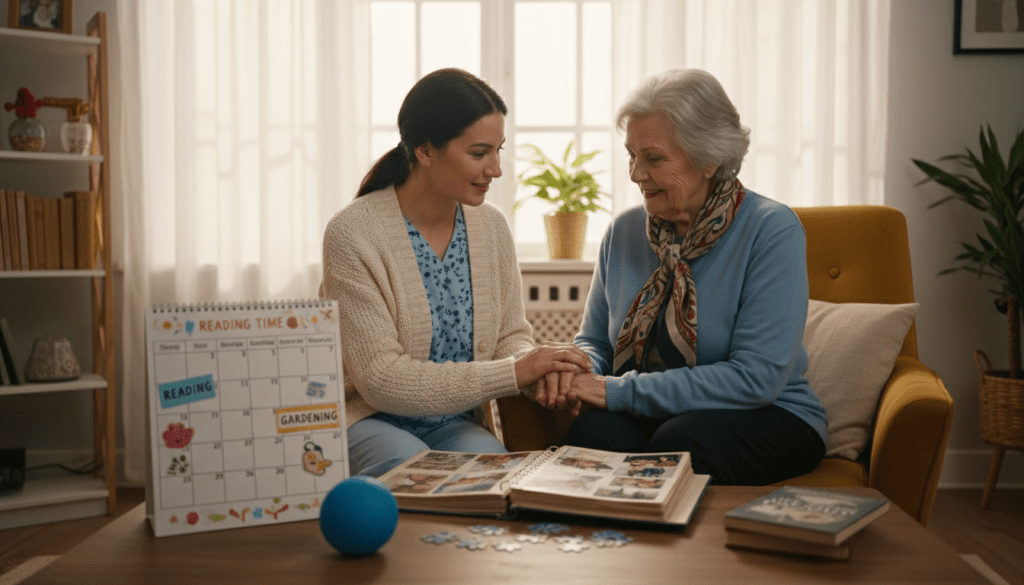
Identifying Optimal Times for Activities
Every individual has their own natural energy flow. Some people feel most alert in the morning hours. Others find afternoons bring better focus.
Spend time simply watching your loved one. Notice when they seem most engaged. These golden windows are perfect for important tasks.
“The goal isn’t to control the day, but to harmonize with your person’s natural rhythm.”
| Peak Energy Times | Best Activities | Low Energy Times |
|---|---|---|
| Morning alertness | Medication management | After lunch dip |
| Afternoon focus | Doctor appointments | Late afternoon |
| Evening calm | Gentle socializing | Before bedtime |
Incorporating Flexibility for Changing Needs
Rigid schedules often create stress. Build in buffer time between activities. This prevents rushing and reduces anxiety.
Have backup plans for difficult days. A planned walk might become quiet sitting. Complex projects can simplify to gentle sorting.
Technology like consistent connection tools provides stability even when you cannot be present. This support helps address isolation concerns while giving you peace.
Remember to check in with yourself too. If the plan feels overwhelming, it is time to adjust. Sustainable care benefits everyone involved.
Conclusion
When supporting someone through memory challenges, small consistent gestures create profound comfort. Your dedication to building a gentle structure shows incredible love. This approach brings security to your person and peace to your own mind.
Remember that your care plan will evolve as needs change. This isn’t failure—it’s responsive support. Be as gentle with yourself as you are with your loved one.
For family members providing care from a distance, services like JoyCalls offer consistent companionship. Their AI-powered calls provide friendly conversation and detailed updates. This creates a reliable support system when you can’t be there in person.
You’re doing beautiful, important work. If you need additional guidance, explore this step-by-step guide or visit JoyCalls to learn how technology can support your family’s journey.