

Have you ever lain awake at night, your mind racing with worries about an aging parent living by themselves? The silence in their home can feel deafening. You wonder about their safety, their happiness, and their day-to-day well-being. These concerns are deeply felt and incredibly common.
You are not alone in your worry. The reality is striking. Millions of older adults across America are navigating life independently. Research shows that 27% of people aged 60 and older live by themselves. For women over 75, that number climbs to nearly 50%.
This situation isn’t just about being physically solitary. It involves the compound challenges of reduced mobility, memory changes, and fewer daily interactions. These factors can significantly affect both physical health and emotional well-being.
Aging in place is a cherished goal for many. They want to maintain their independence and stay in familiar surroundings. But achieving this dream requires thoughtful planning and a strong support system. This guide offers a compassionate, dual-focused plan.
We address practical safety measures to reduce risks at home. We also provide meaningful strategies to maintain social connections and combat feelings of loneliness. With the right approach, living alone at any age can be safe, fulfilling, and connected. This isn’t about giving up independence. It’s about building a network that enhances life.
We promise actionable guidance drawn from experts and real solutions. This plan respects the autonomy of older adults while providing peace of mind for families. It covers everything from fall prevention to building a routine of meaningful daily check-ins.
Key Takeaways
- Millions of older adults live independently, a situation that requires careful planning for safety and connection.
- Aging in place is a common and achievable goal when supported by the right strategies.
- A comprehensive plan must address both physical safety at home and emotional well-being.
- Building a support network enhances independence rather than taking it away.
- Practical, expert-backed solutions exist to help seniors live safely and connectedly.
- This guide provides a compassionate, step-by-step approach for families and seniors alike.
Understanding the Challenges of Seniors Living Alone Social Isolation

When you think about your parent’s daily routine, what moments of quiet concern cross your mind? The demographic reality shows 12 million people over 65 maintain their households independently. This number grows as our population ages and more individuals choose to age in place.
Statistical Insights and Demographics
Pew Research Center data reveals that 27% of adults aged 60 and older lived by themselves in 2020. For women over 75, this percentage climbs to nearly 50%. These figures reflect longer lifespans and personal circumstances.

These numbers represent real people facing daily challenges. Understanding this scope helps families and communities develop better support systems.
Health Risks and Cognitive Concerns
Physical vulnerabilities naturally accompany advancing years. Reduced mobility, balance issues, and vision changes can increase risks. According to the CDC, one in four older adults experiences falls each year.
This results in 3 million emergency room visits annually. Cognitive changes also present challenges. Research indicates 42% of people with memory decline need assistance with household tasks.
Try JoyCalls Free
No app or new device needed. Start with a free 7-day trial.
Medication management becomes complex when many individuals take five or more prescriptions. Emotional well-being faces significant tests too. More than 40% of older people experience loneliness, which studies show is a serious health risk.
This feeling connects to higher rates of depression, anxiety, and a 50% increased chance of dementia. Understanding these challenges validates family concerns while highlighting the need for solutions. As explored in our decision guide, proper planning and adapted routines can address these risks effectively.
Implementing Safety Measures and Home Modifications
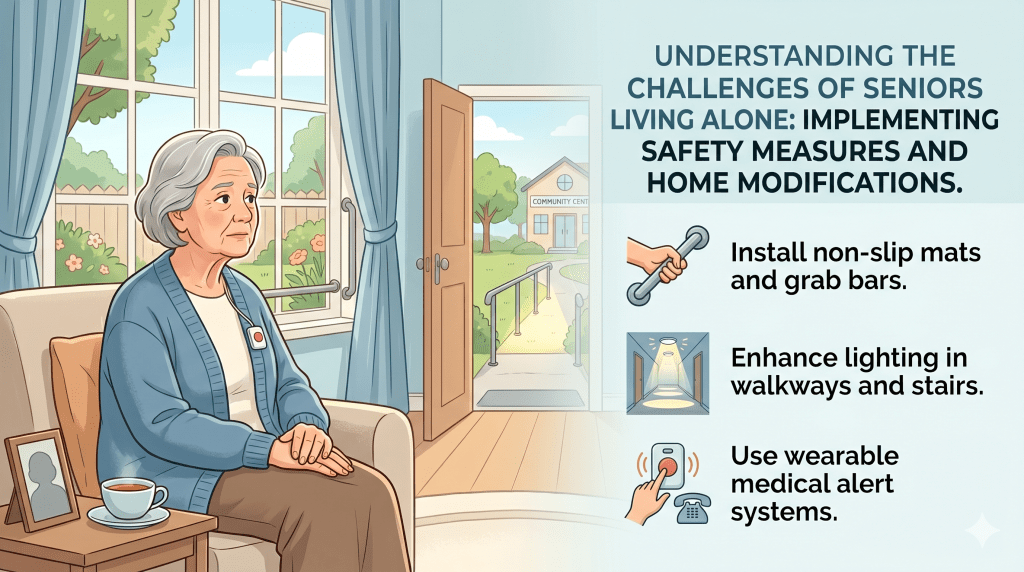
Imagine walking through your parent’s home, noticing potential hazards they might not even see anymore. Simple adjustments can transform familiar spaces into secure environments that support independence.
Dr. Mark Nathanson, a geriatric psychiatrist at Columbia, emphasizes this approach:
“Make it a priority to go through your home or apartment looking for ways to reduce excess disability. Use night lights, get rid of those worn scatter rugs, and clear the hallways.”

Fall Prevention and Hazard Reduction
Start with general safety throughout the house. Install night lights in hallways and bathrooms. Remove or secure loose rugs that create tripping hazards. Clear walkways of clutter like papers and excess furniture.
Bathrooms need special attention. Install grab bars near toilets and showers. Use non-slip mats on floors. Consider a shower chair for safer bathing. These simple changes prevent serious accidents.
Kitchen Safety and Assistive Technology
Kitchen safety involves organization and awareness. Keep frequently used items within easy reach. Use timers when cooking and never leave the stove unattended. Batch cooking and freezing meals saves time and reduces fire risk.
Modern technology offers practical help. For medication management, use pill dispensers with clear labels. Smart home devices can set reminders and make calls hands-free.
JoyCalls provides a unique solution that requires no app or technical skills. It uses a regular phone for daily check-ins. The service offers conversation and sends summaries to family members. This addresses both safety monitoring and connection needs.
Sign up for JoyCalls to provide consistent support.
Try JoyCalls Free
No app or new device needed. Start with a free 7-day trial.
Home Organization and Accessibility
Create clear pathways throughout the home. Ensure adequate lighting in all areas. Accessible storage makes daily tasks easier. Involve your loved one in decluttering decisions to respect their attachment to belongings.
| Room | Safety Priority | Simple Solution | Benefit |
|---|---|---|---|
| Hallways | Clear pathways | Night lights, clutter removal | Prevent falls, easy navigation |
| Bathroom | Slip prevention | Grab bars, non-slip mats | Safe bathing, reduced risk |
| Kitchen | Fire safety | Timers, organized space | Prevent accidents, efficient cooking |
| Living areas | Comfort and access | Clear pathways, good lighting | Mobility support, independence |
These modifications create a safer living environment while maintaining dignity and independence. Research shows that proper home safety significantly reduces health risks for older adults living independently.
Enhancing Social Connections and Daily Well-Being
What small moments of connection bring light to your parent’s week when they’re home by themselves? Building meaningful relationships doesn’t require grand gestures. Consistent, simple interactions create a foundation for well-being.

Community Engagement and Volunteer Opportunities
Local centers offer wonderful programs for older individuals. These spaces provide built-in community without pressure. Volunteer work brings profound satisfaction through helping others.
Consider these accessible options:
- Reading to children at libraries
- Welcoming visitors at museums
- Participating in meal delivery programs
Families can help by researching local opportunities. Sometimes transportation is the main barrier. Offering a ride to a weekly group activity makes all the difference.
Healthy Habits: Nutrition, Exercise, and Routine
Physical wellness and social connection work together. When people feel good, they’re more likely to engage. Simple activities like walking groups combine movement with companionship.
Nutrition matters too. Cooking for one can feel lonely. Meal programs or potlucks with friends turn meals into social events. Regular routines provide structure and mental health benefits.
Services like JoyCalls complement human interaction. They provide daily check-ins when family can’t call. This creates a safety net of connection that supports overall well-being. Research shows that strong personal connections contribute significantly to healthier aging.
Building a Personal Connection and Safety Map for Seniors Living Alone

A senior living alone does not only need a safer home or more phone calls. They need a clear map of who checks in, what to watch for, what to do when something changes, and how to keep life feeling normal rather than supervised.
This is where many families struggle. Everyone agrees that Mom or Dad should not feel isolated. Everyone agrees that someone should check in. But without a simple plan, support becomes inconsistent. One sibling calls every day for two weeks and then gets busy. A neighbor says, “Call me anytime,” but does not know when to step in. The older adult says, “I’m fine,” even when meals, sleep, mood, or confidence are quietly slipping.
A personal connection and safety map solves this problem. It is a written, practical plan that combines emotional support, daily safety awareness, and respectful independence. It does not have to be complicated. In fact, the best version is simple enough to keep on the refrigerator, share with family members, and review once a month.
Start With the Senior’s Real Day, Not the Family’s Assumptions
Before creating any plan, take time to understand what the senior’s day actually looks like.
Families often build support around what they fear: falls, missed medication, loneliness, scams, or emergencies. Those concerns are valid. But if the plan is built only from fear, it can feel controlling to the older adult. A better approach is to begin with curiosity.
Ask gentle, specific questions such as:
“What part of the day feels longest?”
“Which errands or chores feel harder than they used to?”
“When do you usually feel most comfortable?”
“Are there times when you wish someone would call, but you do not want to bother anyone?”
“Who do you enjoy talking to most?”
These questions reveal the emotional pattern of the day. For many seniors, mornings may feel manageable because there are tasks to do. Evenings may feel heavier because the house gets quiet. For others, weekends may be hardest because services, appointments, and regular routines pause.
Once you understand the natural rhythm, you can place support where it matters most. A senior who feels lonely after dinner may benefit more from an evening check-in than a morning reminder. Someone who feels anxious before medical appointments may need a call the night before and another afterward. A person who forgets to eat lunch may need a midday routine, not another general conversation about “taking care of yourself.”
The goal is not to fill every empty moment. The goal is to protect the vulnerable moments.
Create Three Levels of Support: Daily, Weekly, and Emergency
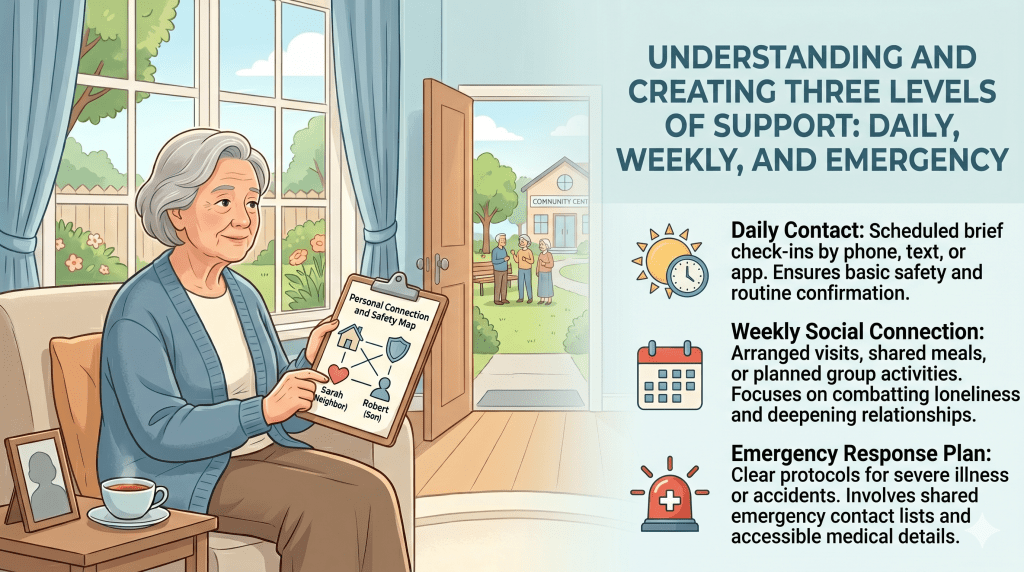
A strong plan should separate support into three levels. This prevents overchecking while making sure important needs are covered.
Daily Support
Daily support is for basic reassurance. It answers the question: “Is today going normally?”
This could include a short phone call, a JoyCalls check-in, a text from a family member, or a neighbor waving hello. The daily check does not need to be long. In fact, short and consistent is often better than long and unpredictable.
A useful daily check-in can cover five simple areas:
Mood: “How are you feeling today?”
Food and water: “Have you had something to eat and drink?”
Movement: “Did you move around a little today?”
Medication or routine: “Anything important on your schedule?”
Connection: “Who did you speak with or plan to speak with today?”
This should feel like conversation, not inspection. Instead of asking, “Did you take your pills?” every day in a suspicious tone, try: “How did your morning routine go today?” That small change protects dignity.
Weekly Support
Weekly support looks for patterns. It answers the question: “Is anything slowly changing?”
One family member or trusted helper can do a slightly longer weekly review. This may happen every Sunday afternoon or another predictable time. The purpose is to notice changes that a daily check-in might miss.
Look for patterns such as:
The senior is going out less often.
They are skipping meals or eating the same low-effort food every day.
Mail is piling up.
They sound less interested in hobbies.
They mention poor sleep more often.
They are avoiding friends, faith groups, clubs, or appointments.
They seem more confused about dates, bills, or routines.
A weekly review should also include something positive. Ask, “What was the best part of your week?” or “What would you like to look forward to next week?” Seniors do not want every conversation to become a problem audit. They need encouragement, laughter, and normal family connection too.
Emergency Support
Emergency support answers the question: “What happens if something seems wrong?”
This part must be clear before there is a crisis.
Write down who should be contacted first, second, and third. Include phone numbers for family members, nearby neighbors, doctors, pharmacy, building manager, and local emergency services. Also write down what counts as urgent.
For example:
No answer after two scheduled calls may mean calling a neighbor.
Confusion, chest pain, trouble breathing, slurred speech, or a fall may mean calling emergency services.
Missing medication for one day may mean a family call.
Missing medication repeatedly may mean a doctor or pharmacist review.
A sudden mood change may mean scheduling a medical appointment.
Do not leave these decisions vague. In stressful moments, families can lose time debating what to do. A written escalation plan makes action calmer and faster.
Build a “Circle of Care” Without Making One Person Responsible for Everything
One of the biggest mistakes families make is placing all responsibility on one person. Often, one adult child becomes the default caller, organizer, driver, emotional support, medical note-taker, and emergency contact. That may work briefly, but over time it leads to burnout and resentment.
A healthier model is a circle of care.
The circle may include:
Family members
Neighbors
Friends
Faith community members
Senior center staff
Paid caregivers
Pharmacists
Primary care doctors
Meal delivery volunteers
Daily check-in services
The senior should be involved in choosing this circle whenever possible. This matters. Some older adults feel embarrassed when family members quietly organize help around them. Being included gives them control.
Each person in the circle should have a clear role. One neighbor might agree to check whether newspapers are piling up. A family member might handle medical appointments. Another might call on Saturday mornings. A friend might attend a weekly activity with them. JoyCalls or another check-in service might provide a consistent daily touchpoint when family members are unavailable.
Keep roles small and specific. People are more likely to help when the request is clear.
Instead of saying, “Can you keep an eye on Dad?” say, “Would you be comfortable calling me if you notice his porch light is still off by 10 a.m. or if his mail sits outside for more than a day?”
Specific requests turn goodwill into reliable support.
Use a Loneliness Trigger Plan
Loneliness is not always constant. It often has triggers. A loneliness trigger plan helps identify the moments, events, or seasons when isolation becomes worse.
Common triggers include:
Evenings
Weekends
Bad weather
Holidays
Anniversaries of loss
After medical appointments
After a friend moves away or dies
After stopping driving
After illness or hospitalization
During mobility changes
When hearing or vision worsens
Once these triggers are known, families can prepare instead of react.
For example, if Sunday evenings are hard, schedule a standing Sunday dinner call. If winter weather keeps the senior indoors, arrange phone-based activities, audiobooks, church services by phone or video, or regular check-ins from neighbors. If grief anniversaries are painful, do not wait for the senior to ask for help. Put the date on the family calendar and plan extra connection around it.
This is not about forcing cheerfulness. It is about making sure the person does not face predictable hard moments completely alone.
Make Social Contact Easier, Not Just More Frequent
When seniors become isolated, families often say, “You should get out more,” or “Why don’t you call your friends?” While well-meaning, this advice may not help. Social contact can become harder with age for many practical reasons.
Hearing loss can make group settings tiring. Vision changes can make transportation stressful. Arthritis can make writing cards painful. Anxiety can make it difficult to restart old friendships. Grief can make social events feel emotionally exhausting.
So instead of simply encouraging more connection, remove the friction.
If hearing is a barrier, choose quiet one-on-one visits over noisy restaurants. If transportation is the problem, arrange rides in advance. If the senior feels awkward calling people, help create a short list of easy conversation starters. If they have lost confidence, begin with familiar people rather than new groups.
A helpful question is: “What would make this easier?”
Maybe the answer is a ride. Maybe it is a reminder. Maybe it is someone attending the first activity with them. Maybe it is permission to leave after 30 minutes. Small adjustments can make connection feel possible again.
Create a Weekly “Reason to Look Forward” Calendar
Safety keeps a senior protected. Anticipation keeps life emotionally alive.
Every week should include at least one thing the older adult can look forward to. It does not need to be large. A favorite meal, a phone call with a grandchild, a library visit, a religious service, a short walk with a neighbor, a puzzle afternoon, or watching a favorite show while someone calls afterward can all create emotional structure.
The key is to put it on the calendar.
A blank week can make life feel like a series of chores. A week with small moments of anticipation feels more hopeful.
Families can help by asking, “What would you enjoy this week?” rather than only, “What do you need?” This shifts the focus from maintenance to quality of life.
A sample weekly connection calendar might look like this:
Monday: Morning check-in and medication refill review
Tuesday: Walk or chair exercise video
Wednesday: Call with a friend or faith group member
Thursday: Grocery delivery or shared meal plan
Friday: JoyCalls conversation and family update
Saturday: Visit, outing, or hobby time
Sunday: Longer family call and plan for the week ahead
This does not need to be rigid. The purpose is rhythm. Predictable connection reduces the emotional weight of living alone.
Watch for Quiet Warning Signs
Many seniors will not directly say, “I am lonely,” “I am scared,” or “I need more help.” They may minimize problems because they fear losing independence. Families should watch for indirect signs.
These may include:
Saying “I’m fine” quickly and changing the subject
Sleeping much more or much less
Losing interest in appearance or grooming
Avoiding calls
Repeating that they do not want to be a burden
Eating poorly
Stopping hobbies
Letting the house become unusually cluttered
Becoming more irritable or tearful
Showing new confusion with bills, appointments, or time
Expressing hopelessness or saying there is “no point” in activities
These signs do not always mean something serious is happening, but they deserve attention. Approach them gently.
Instead of saying, “You seem depressed,” try, “I’ve noticed you do not sound like yourself lately, and I care about you. Would it help if we made this week a little easier together?”
If changes are sudden, intense, or connected to health symptoms, involve a healthcare professional. Loneliness, depression, medication side effects, dehydration, infection, pain, poor sleep, and cognitive changes can overlap. It is better to check early than wait for a crisis.
Respect Independence While Offering Support
The most effective plans are built with respect. Seniors living alone may already feel that their world is shrinking. If support feels like surveillance, they may resist it. If it feels like partnership, they are more likely to accept it.
Use language that protects autonomy.
Say: “Let’s make a plan that helps you stay comfortable at home.”
Avoid: “You can’t manage by yourself anymore.”
Say: “Who would you like involved if we ever cannot reach you?”
Avoid: “We’re giving the neighbor a key because we’re worried.”
Say: “What kind of check-in would feel helpful rather than annoying?”
Avoid: “You need someone calling you every day.”
The difference is tone, but tone matters deeply. A senior is more than a person at risk. They are an adult with preferences, pride, history, and the right to be heard.
Review the Plan Monthly
A safety and loneliness plan should not be created once and forgotten. Needs change. A senior may recover from surgery, lose a friend, stop driving, begin new medication, or develop new mobility concerns. The plan should grow with them.
Set a monthly review date. Keep it simple.
Ask:
What is working?
What feels annoying or unnecessary?
Are there any new worries?
Is anyone in the care circle unavailable?
Do we need to adjust call times, transportation, meals, or appointments?
Has loneliness improved, stayed the same, or worsened?
This review should be practical, not dramatic. Think of it as routine maintenance for independence.
The best plan is not the strictest plan. It is the one the senior will actually accept and the family can consistently maintain.
A Simple Action Step to Start Today
If the full plan feels overwhelming, start with one page.
Write down:
Three people the senior trusts
The best time of day for a check-in
One loneliness trigger
One weekly activity to look forward to
One neighbor or nearby contact for urgent concerns
One emergency escalation step if there is no answer
That single page can immediately reduce uncertainty. It gives the senior more support without taking away control. It also gives family members a shared structure instead of scattered worry.
Living alone can still be safe, meaningful, and connected. But it works best when support is intentional. A personal connection and safety map turns concern into action, and action into a calmer, more dignified daily life.
Designing a “Low-Effort, High-Impact” Daily Routine That Reduces Loneliness and Risk
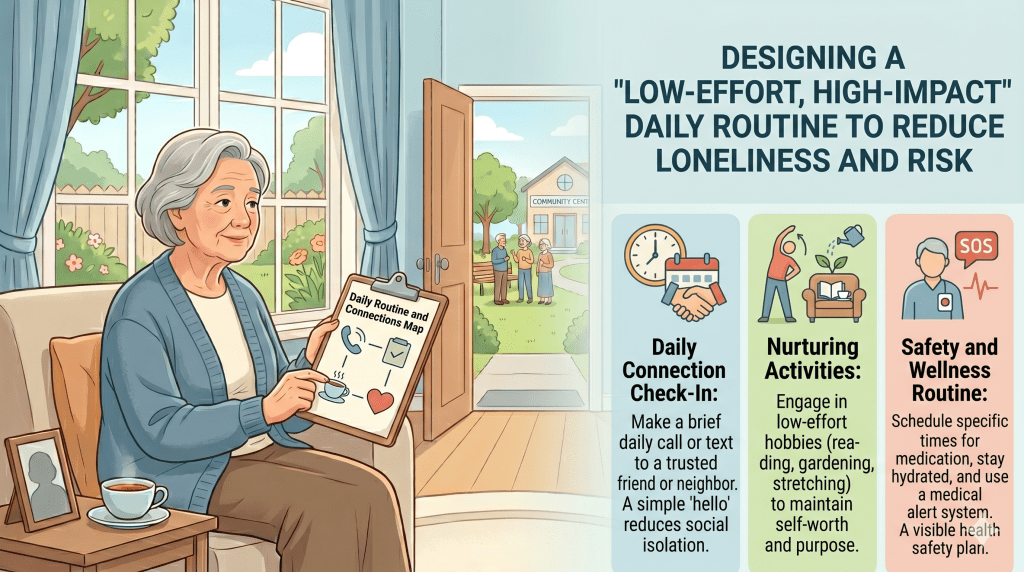
A well-structured day is one of the most powerful tools for reducing both loneliness and safety risks in seniors living alone. Yet, most routines fail because they are either too rigid, too demanding, or not aligned with the senior’s energy levels and preferences.
The goal is not to create a packed schedule. The goal is to create a light, repeatable structure that naturally supports physical safety, emotional well-being, and social connection—without feeling like a burden.
This section focuses on building a low-effort, high-impact routine that seniors can realistically follow every day.
Why Routine Matters More Than Motivation
Many families assume that seniors need “motivation” to stay active or connected. In reality, motivation is unreliable—especially when someone is dealing with fatigue, pain, grief, or mild cognitive decline.
Routine, on the other hand, removes the need for constant decision-making.
When small actions become automatic—like opening curtains in the morning, making tea at a certain time, or expecting a call in the evening—they:
- Reduce mental load
- Create predictability and comfort
- Encourage movement without forcing it
- Provide natural touchpoints for connection
- Help others detect when something is “off”
A disrupted routine is often the first sign that something is wrong—physically, emotionally, or cognitively.
The “Anchor Habit” Approach

Instead of building a long checklist, start with anchor habits. These are simple, repeatable actions tied to existing parts of the day.
Think of anchors as fixed points:
- Waking up
- Mealtimes
- Medication times
- Evening wind-down
Each anchor can hold one or two supportive actions.
Example:
Morning Anchor (After waking up):
- Open curtains (light exposure improves mood and sleep cycle)
- Drink a glass of water
- Brief movement (stretching or walking inside the home)
Midday Anchor (Lunch time):
- Eat a proper meal
- Step outside or near a window
- Quick check-in call or message
Evening Anchor (After dinner):
- Light activity (TV, reading, hobby)
- Scheduled call with family or service like JoyCalls
- Prepare for next day (medication, clothes, reminders)
These anchors create a rhythm without overwhelming the senior.
Build Around Energy, Not the Clock
One common mistake is forcing routines based on “ideal schedules” rather than the senior’s natural energy.
Some seniors are more alert in the morning. Others function better later in the day. Pain, medication, and sleep quality all affect energy patterns.
Instead of saying:
“You should go for a walk at 7 AM every day.”
Try:
“When do you feel most comfortable moving around?”
Then place activities during that window.
Practical Tip:
Track energy for 3–4 days:
- When do they feel most active?
- When do they feel tired or low?
Build the routine around those natural highs and lows.
Integrate Safety Into Daily Habits (Without Making It Obvious)
Safety works best when it is quietly built into normal life.
Instead of introducing separate “safety tasks,” attach them to routine behaviors.
Examples:
- Medication check → tied to breakfast or tea
- Hydration → every time they sit down to rest
- Mobility check → short walk after meals
- Home safety scan → before bedtime (lights, doors, pathways)
This reduces resistance because the senior does not feel like they are being “monitored.”
The “3 Pillars” of a Balanced Day
Every effective daily routine for seniors living alone should include three essential elements:
1. Movement (Physical Safety)
This does not mean exercise in the traditional sense.
It means regular, gentle movement to maintain balance, circulation, and confidence.
Examples:
- Walking inside the house
- Chair exercises
- Light stretching
- Standing up and sitting down multiple times
Even 5–10 minutes, 2–3 times a day can reduce fall risk and improve mood.
2. Connection (Emotional Health)
Loneliness is not solved by occasional long calls. It is reduced through frequent, low-pressure interactions.
Examples:
- A short daily phone call
- A neighbor saying hello
- A scheduled check-in service
- A weekly group activity
The key is consistency over intensity.
A 5-minute daily call is often more effective than a 1-hour weekly conversation.
3. Purpose (Mental Well-Being)
Seniors need a reason to engage with the day.
Without purpose, even safe and connected individuals may feel emotionally low.
Purpose does not have to be large or complex.
Examples:
- Watering plants
- Preparing a simple meal
- Reading and discussing a book
- Calling a friend who may also be lonely
- Participating in a faith or community activity
Ask:
“What gives your day a sense of meaning?”
Then make sure that activity appears regularly in the routine.
Reduce Decision Fatigue
Too many choices can quietly overwhelm seniors.
“What should I eat?”
“Should I go out?”
“Who should I call?”
Over time, this leads to avoidance and isolation.
Solution: Pre-decide small things
- Create a simple weekly meal plan
- Fix call times with specific people
- Choose 2–3 go-to activities
- Keep frequently used items easily accessible
The fewer decisions required, the easier it is to maintain independence.
Use “Routine Signals” That Others Can Notice
A powerful but often overlooked strategy is to create visible or audible routine signals.
These are small, consistent actions that others can notice.
Examples:
- Curtains opened by a certain time
- Lights turned on in the evening
- Daily phone call completed
- A regular walk visible to neighbors
If these signals stop, it may indicate a problem.
This creates a passive safety system without invasive monitoring.
Address the “Evening Drop”
For many seniors, evenings are the hardest part of the day.
The house becomes quiet. There are fewer distractions. Loneliness often feels stronger.
This is where routines are most important.
Strategies to strengthen evenings:
- Schedule a fixed evening call
- Watch a TV program followed by a call discussion
- Listen to audiobooks or radio
- Prepare a comforting dinner routine
- Keep lights on in commonly used areas
Evening structure reduces emotional dips and improves sleep quality.
Make Technology Supportive, Not Stressful
Technology can be helpful—but only if it is simple and reliable.
Avoid overwhelming seniors with complex apps or multiple platforms.
Focus on:
- One easy calling method
- One reminder system (phone alarm or simple device)
- One check-in service if needed
If something requires repeated troubleshooting, it will likely be abandoned.
The goal is confidence, not complexity.
Build “Backup Days” for Low-Energy Moments
Not every day will go as planned.
There will be days when the senior feels tired, unwell, or emotionally low.
Instead of abandoning the routine, create a lighter version.
Example:
Normal day:
- Walk
- Cook
- Call someone
- Do a hobby
Low-energy day:
- Sit near a window
- Eat a simple meal
- Receive a call instead of making one
- Listen to music or radio
This prevents a complete drop-off and maintains continuity.
Encourage Self-Check Awareness
Seniors should be gently encouraged to notice their own patterns.
Simple self-check questions can help:
- “Have I eaten properly today?”
- “Have I moved a little?”
- “Have I spoken to someone?”
- “Do I feel different from usual?”
This builds internal awareness, which is just as important as external support.
When the Routine Starts Breaking Down
A declining routine is often an early warning sign.
Watch for:
- Skipping meals regularly
- Avoiding calls
- Sleeping excessively
- Losing track of time
- Ignoring hygiene or home care
- Repeating confusion
Do not wait for a major incident.
Instead, respond early:
- Increase check-ins temporarily
- Simplify the routine further
- Involve a healthcare professional if needed
- Reassess support levels
Early adjustment prevents escalation.
A Simple Daily Template to Get Started
Here is a practical, adaptable structure:
Morning
- Wake up, open curtains
- Drink water
- Light movement
- Breakfast + medication
- Short check-in (call or message)
Midday
- Lunch
- Sit near sunlight or step outside
- Light activity or rest
- Optional social interaction
Afternoon
- Hobby, reading, or TV
- Small task (watering plants, organizing)
Evening
- Dinner
- Scheduled call
- Relaxation (TV, radio, music)
- Prepare for next day
This structure can be adjusted based on personal preferences and health conditions.
Creating a Practical “Social Emergency Plan” Before Loneliness Becomes a Crisis
Loneliness usually does not become serious overnight. It builds slowly. A senior may stop going out, then stop calling friends, then stop caring about meals, then begin saying things like, “There is no point,” or “I don’t want to bother anyone.”
That is why families should not wait until isolation becomes severe. A social emergency plan helps everyone know what to do when loneliness, withdrawal, or emotional distress begins to increase.
This is different from a medical emergency plan. It focuses on emotional and social warning signs.
What Is a Social Emergency?
A social emergency is when loneliness starts affecting daily functioning, mood, safety, or health.
Examples include:
A senior stops answering calls.
They refuse visitors repeatedly.
They stop attending activities they once enjoyed.
They sound unusually hopeless or tearful.
They are eating less because they do not feel like cooking.
They say they feel forgotten.
They become afraid to leave the house.
They spend several days without meaningful conversation.
These signs should not be dismissed as “just aging.” They may point to grief, depression, anxiety, health changes, medication effects, or a growing lack of confidence.
Create Clear Warning Levels
Families can use a simple three-level system.
Level 1: Mild Concern
The senior seems quieter, less interested, or slightly withdrawn.
Action steps:
Call more often for a few days.
Ask open questions gently.
Suggest one easy social activity.
Offer practical help with transport, meals, or errands.
At this stage, avoid overreacting. The goal is gentle reconnection.
Level 2: Moderate Concern
The senior is avoiding calls, skipping activities, eating poorly, or expressing sadness more often.
Action steps:
Arrange an in-person visit if possible.
Contact a trusted neighbor or friend.
Encourage a medical checkup.
Increase scheduled check-ins.
Remove practical barriers to connection.
This is the stage where families should become more organized. Do not rely on casual “checking in when possible.”
Level 3: Serious Concern
The senior expresses hopelessness, confusion, severe withdrawal, self-neglect, or makes statements that suggest they may not feel safe.
Action steps:
Do not leave the concern to one person.
Contact a doctor or local crisis support service.
Arrange immediate in-person support.
Call emergency services if there is any risk of harm, medical distress, or unsafe behavior.
Take statements like “I don’t want to go on” seriously, even if they are said quietly or casually.
Write Down the First Three People to Contact
During emotional stress, families often lose time deciding who should step in. Write this down before there is a crisis.
The list should include:
Primary family contact
Nearby backup person
Healthcare or community contact
If the senior agrees, share this list with key people. Everyone should know their role.
For example:
The daughter handles daily contact.
The neighbor checks in physically if calls go unanswered.
The doctor is contacted if mood, sleep, appetite, or confusion changes.
This reduces panic and confusion.
Use “Connection Prescriptions”
A connection prescription is a specific social action chosen for a specific loneliness trigger.
Instead of saying, “You need to socialize more,” make the action concrete.
Examples:
After a medical appointment: family call within two hours.
On Sundays: scheduled evening conversation.
During bad weather: phone-based activity or check-in.
After a friend passes away: extra calls for the next month.
After illness: short daily encouragement calls during recovery.
Specific plans are easier to follow than general advice.
Keep the Senior Involved
A social emergency plan should never feel like people are making decisions behind the senior’s back.
Ask:
“When you feel low, what kind of help feels comforting?”
“Who would you want us to call first?”
“What kind of support feels too much?”
“How should we know when you need extra help?”
These questions respect independence and make support more acceptable.
Avoid Shame-Based Language
Words matter.
Avoid saying:
“You’re isolating yourself.”
“You never make an effort.”
“You’re worrying everyone.”
Instead say:
“I’ve noticed the days seem heavier lately.”
“I want to make things easier, not take over.”
“You deserve more support than you’re getting right now.”
The goal is safety without blame.
Making Support Sustainable: How Families Can Stay Consistent Without Burnout
One of the most overlooked challenges in supporting seniors living alone is not what to do—it’s how to keep doing it consistently over time.
In the beginning, families are often highly engaged. Calls are frequent. Visits are planned. Everyone is attentive. But as weeks turn into months, real life takes over—work, children, health, travel, and responsibilities. Gradually, the system weakens.
Calls become irregular. Plans get postponed. Responsibility falls back onto one person. And slowly, the senior begins to feel that familiar gap again.
This is not due to lack of care. It is due to lack of a sustainable structure.
Supporting a senior living alone is not a short-term effort. It is an ongoing system. And like any system, it needs to be realistic, shared, and adaptable.
Why Good Intentions Are Not Enough
Most families rely on informal support patterns:
“I’ll try to call daily.”
“We’ll visit when we can.”
“Let’s stay in touch more.”
These intentions are kind—but they are not systems.
Without structure:
- Support becomes inconsistent
- Important signals get missed
- One person becomes overwhelmed
- The senior experiences unpredictability
Consistency matters more than intensity.
A short, reliable call every evening is more valuable than long, unpredictable conversations.
Distribute Responsibility Clearly
Support becomes sustainable only when it is shared intentionally.
Instead of assuming everyone will “help when needed,” assign roles clearly.
Example Role Distribution:
One person: daily or alternate-day calls
One person: weekly review and coordination
One person: medical and appointment tracking
One nearby contact: physical check-in backup
Each role should be:
- Small
- Clear
- Predictable
Avoid assigning vague responsibilities like “stay in touch” or “keep an eye on things.”
Clarity reduces stress and increases follow-through.
Use a Simple Rotation System
If multiple family members are available, create a rotation.
This prevents burnout and ensures regular contact without overwhelming anyone.
Example:
Monday: Daughter
Tuesday: Son
Wednesday: Grandchild
Thursday: Check-in service (like JoyCalls)
Friday: Daughter
Saturday: Visit or extended call
Sunday: Weekly review call
This system works because:
- No one person is overloaded
- The senior receives frequent contact
- Missed calls are less likely
Even if someone is unavailable, others can step in without disruption.
Accept That Some Days Will Be Missed
No system will be perfect.
There will be missed calls, delayed visits, or unexpected changes.
The goal is not perfection. The goal is recovery.
Instead of feeling guilty, focus on:
- Resuming the routine quickly
- Informing others in the support circle
- Checking if anything important was missed
Consistency over time matters more than individual lapses.
Set Boundaries to Prevent Burnout
Family members often hesitate to set limits because they feel responsible for the senior’s well-being.
But without boundaries, support becomes exhausting.
Healthy boundaries might include:
- Fixed call durations (10–15 minutes is often enough)
- Defined “off” days or backup coverage
- Clear escalation rules (not every issue requires immediate response)
This protects both the caregiver and the quality of support.
Burnout leads to withdrawal. Sustainable care prevents that.
Use Support Tools to Fill Gaps
Families do not need to do everything themselves.
Support tools and services can help maintain consistency.
These may include:
- Daily check-in services
- Medication reminders
- Meal delivery programs
- Community or faith-based outreach
- Local volunteer networks
The purpose of these tools is not to replace family—but to strengthen reliability.
They are especially helpful when:
- Family members live far away
- Schedules are unpredictable
- The senior needs daily touchpoints
Keep Communication Between Helpers Simple
A support system fails when communication becomes complicated.
Avoid long updates, scattered messages, or unclear instructions.
Use a simple method:
- One shared group (family chat or message thread)
- Short updates only when needed
- Clear alerts if something changes
Example:
“Dad skipped lunch today, sounded tired.”
“Call not answered this morning—trying again.”
“Doctor appointment scheduled for Thursday.”
This keeps everyone informed without creating overwhelm.
Recognize Early Signs of Caregiver Fatigue
Families should also watch themselves.
Signs of burnout include:
- Feeling obligated rather than willing
- Irritation during calls
- Avoiding communication
- Forgetting responsibilities
- Emotional exhaustion
If these signs appear, the system needs adjustment.
Not more effort—better structure.
Make Support Feel Normal, Not Heavy
One subtle but important point: support should not feel like a constant “problem-solving mission.”
If every call is about health, safety, or concerns, the relationship becomes clinical.
Balance is essential.
Include:
- Light conversation
- Shared memories
- Humor
- Daily life updates
- Asking for the senior’s opinion or advice
Seniors do not just need care. They need connection that feels human and equal.
Review the System Every Month
Just like the senior’s routine, the family support system should be reviewed regularly.
Ask:
Is the current setup working?
Is anyone feeling overwhelmed?
Are calls being missed frequently?
Does the senior seem more connected or still isolated?
Do roles need to change?
This keeps the system flexible and responsive.
A Practical Starting Point
If this feels like a lot, start with three steps:
Assign one person for daily check-ins.
Add one backup contact nearby.
Set one fixed weekly call for deeper conversation.
That alone can significantly reduce risk and loneliness.
From there, build gradually.
Final Thought: Consistency Builds Trust
For a senior living alone, unpredictability can feel unsettling.
Not knowing when someone will call, visit, or check in can increase anxiety—even if they do not express it openly.
Consistency builds trust.
It tells the senior:
“You are not forgotten.”
“You are not alone.”
“There is a rhythm of support around you.”
And for families, it replaces constant worry with a system that works quietly in the background.
Sustainable support is not about doing more.
It is about doing the right things, in a reliable way, over time.
Future-Proofing Independence: Planning for Change Without Losing Control
One of the hardest realities for seniors living alone—and for their families—is that needs will change over time. What works today may not work six months from now. Mobility may shift. Energy levels may fluctuate. Social circles may shrink. Health conditions may evolve.
But planning for change does not mean expecting the worst. It means protecting independence for as long as possible by staying one step ahead.
The goal is not to take control away from the senior. The goal is to make transitions smoother, less stressful, and less reactive.
Why Waiting Too Long Creates More Stress
Most families delay planning until something forces a decision:
A fall
A hospital visit
Sudden confusion
A missed medication pattern
A strong emotional breakdown
At that point, decisions become urgent. Options feel limited. Emotions run high. And the senior may feel like control is being taken away suddenly.
Planning earlier changes the entire experience.
It allows:
- Calm, thoughtful decisions
- Input from the senior
- Gradual adjustments instead of abrupt changes
- More dignity and less resistance
The best plans are created when things are still relatively stable.
Think in “If–Then” Scenarios
Instead of making rigid long-term decisions, use flexible “if–then” planning.
This keeps things practical and non-threatening.
Examples:
If walking becomes difficult, then we will arrange regular assisted walks or indoor movement routines.
If cooking feels tiring, then we will introduce meal delivery or shared meal planning.
If calls are missed frequently, then we will increase check-ins or involve a nearby contact.
If memory starts becoming inconsistent, then we will simplify routines and involve a doctor early.
If loneliness increases, then we will add structured social touchpoints during vulnerable times.
This approach keeps the senior involved without overwhelming them.
It also prevents panic when changes occur—because the response has already been discussed.
Identify “Early Adjustment Points”
Not every change requires a major decision. But certain signals indicate it is time to adjust support slightly.
These early adjustment points may include:
Taking longer to complete daily tasks
Avoiding stairs or certain rooms
Repeatedly forgetting small things
Cooking less often
Skipping outings
Expressing more hesitation or fear
Sleeping irregularly
Becoming more dependent on reminders
These are not emergencies. They are signals.
Responding early allows small changes instead of major interventions later.
Introduce Support Gradually, Not Suddenly
A common mistake is introducing multiple changes at once after a problem appears.
For example:
- Adding daily calls
- Hiring help
- Changing routines
- Restricting activities
This can feel overwhelming and lead to resistance.
Instead, introduce one change at a time.
Start with something that feels natural:
- A regular call
- A weekly visit
- A simple routine adjustment
Once that becomes comfortable, add the next layer.
Gradual change feels supportive. Sudden change feels controlling.
Normalize Conversations About Future Support
Many seniors avoid discussing future care because it feels like a loss of independence.
Families often avoid it because it feels uncomfortable.
But avoiding the conversation creates more stress later.
Instead, keep it light, respectful, and ongoing.
Examples:
“Let’s think about how to make things easier over time.”
“What kind of support would feel okay if you ever needed it?”
“If something changed, how would you like us to handle it?”
These conversations should not happen once. They should happen gently over time.
The goal is familiarity, not pressure.
Protect Decision-Making Dignity

Even when support increases, the senior should feel involved in decisions.
This includes:
Choosing call times
Deciding who visits
Selecting activities
Expressing preferences about daily routines
Sharing comfort levels with different types of help
When seniors feel heard, they are more open to support.
When they feel ignored, they may resist—even helpful changes.
Independence is not just physical. It is also emotional and psychological.
Plan for Social Continuity, Not Just Safety
When families think about the future, they often focus only on safety.
But social life is just as important.
Ask:
If mobility decreases, how will connection continue?
If driving stops, how will social interaction be maintained?
If friends become unavailable, how will new connections be created?
If energy drops, what low-effort social options will remain?
This ensures that the senior’s world does not shrink unnecessarily.
Keep Familiarity Wherever Possible
Change is easier when it feels familiar.
Even as support increases, try to maintain:
The same daily rhythm
The same preferred foods
The same hobbies
The same people involved
The same living environment when possible
Familiarity creates emotional stability.
It reduces anxiety and helps seniors adapt more comfortably to new support systems.
Build a “Comfort List” for Difficult Days
Every senior has things that make them feel better during low moments.
This list should be created in advance.
It might include:
Favorite music
Comfort foods
People they like speaking to
Activities they enjoy
Religious or spiritual practices
Television programs or books
Simple routines that feel grounding
When a difficult day comes, this list becomes a guide.
Instead of guessing what might help, families can respond with something meaningful.
Reassure Without Taking Over
One of the most important balances to maintain is reassurance without control.
Say:
“We are here to support you, not replace your independence.”
“We’ll adjust things together, step by step.”
“You are still in charge of your life—we’re just making it easier.”
Avoid language that suggests loss of control.
Even small phrasing changes can make a big difference in how support is received.
A Simple Way to Start Future Planning
If everything feels overwhelming, begin with one short conversation.
Cover just three things:
What matters most to you in your daily life?
What would you want help with if things became harder?
Who do you trust to be involved in those decisions?
That is enough to begin.
You do not need to plan everything at once.
Conclusion
When was the last time you felt truly reassured about your loved one’s daily well-being? This comprehensive approach shows that safety and connection work together to create meaningful independence. It’s about partnership, not taking over.
Dr. Mark Nathanson reminds us, “Living alone as a senior can be a rewarding and fulfilling experience… Remember, starting a safer and healthier life is never too late.” Small, consistent actions build lasting comfort.
Services like JoyCalls provide that daily connection families need. Asking for help is an act of wisdom that preserves independence. Research from the National Institutes of Health confirms that strong social connections significantly impact health outcomes.
With the right support systems, individuals can thrive in their own homes at any age. This journey honors dignity while providing essential care.