

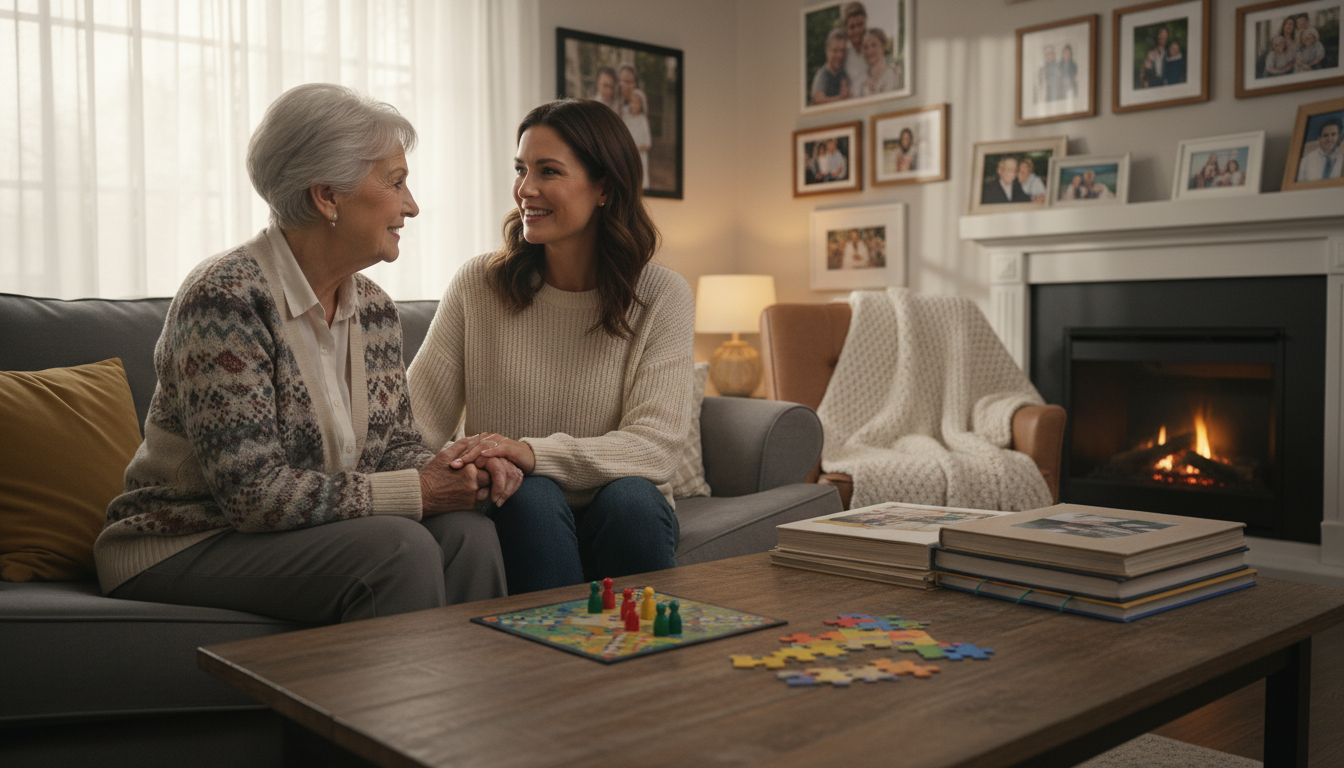
When a parent keeps turning down invitations, the useful question is not “how do we get them out more?” It is “what would make saying yes feel safe?” Refusing social activities is rarely stubbornness; it is usually self-protection against fatigue, embarrassment, grief, or the fear of being stuck somewhere with no way home. This guide walks through how to find the real objection, shrink the first step until it is almost too easy, and build a rhythm your parent can keep.

Find the exact point of resistance
“I don’t want to go” sounds final, but it is a summary, not a reason. Until you know which reason is underneath it, you will keep solving the wrong problem. The refusal may mean any of these:
- “I’m afraid I’ll fall.”
- “I don’t hear well and conversations embarrass me.”
- “I get tired quickly and I don’t want to be trapped there.”
- “I feel old around people who knew me when I was stronger.”
- “I don’t want anyone asking personal questions.”
- “I’m worried I’ll need the bathroom.”
- “I’m grieving, and pretending to be cheerful is exhausting.”
- “I don’t want anyone to notice my memory problems.”
- “I just don’t enjoy that activity.”
Ask without turning it into an interrogation. Four openers that tend to work:
- “I won’t push you to go. I just want to understand what makes it feel unappealing.”
- “Is it the people, the place, the timing, the travel, or the energy it takes?”
- “If we changed one thing about it, would it feel easier?”
- “Would you rather see one person here at home than go somewhere?”
Then stop talking and let them answer in their own time. If they say “I just don’t feel like it,” accept that for now and come back to it later. Pressure produces less honesty, not more — the same pattern shows up in every other area where a parent refuses help.
Start from their social history, not your worry
Not every older adult wants group events. Some people were always private or selective. Some loved hosting but disliked attending. Some preferred one long conversation to a room full of short ones. Before you suggest anything, ask yourself what kind of people your parent naturally enjoyed, whether they liked structure or casual drop-ins, and whether they were happier helping others than being helped.
If your father never liked crowds, a busy senior center will feel like a punishment, while a weekly coffee with one former colleague may feel fine. If your mother spent her life caring for people, “come and be entertained” has no pull for her — but “you always had a good eye for plants, would you help me pick a few for the balcony?” is an invitation into a role she recognizes. Social activity is far easier to accept when it is attached to identity rather than to a wellness goal.

Use the “smallest acceptable step”
The most common mistake is offering an activity that is too large for the stage your parent is in. After months of isolation, a full afternoon out can feel impossible. So look for the smallest acceptable step — not the smallest step you think they should manage, but the smallest one they would agree to without feeling cornered.
- They refuse a family gathering — ask whether one relative can stop by for 15 minutes.
- They refuse the senior center — ask whether they would drive past it with you.
- They refuse lunch out — ask whether they would sit outside with tea for ten minutes.
- They refuse to call old friends — ask whether they would listen while you leave a short voice message.
- They refuse phone calls generally — ask whether they would accept one scheduled call a week.
The first step should feel almost too easy. That is the point: you are not solving isolation in one move, you are rebuilding trust and emotional tolerance. And when it goes well, skip the victory lap. “See, that wasn’t so hard!” lands as dismissive. “I’m glad we did that together” is enough.
Give them an exit plan before they need one
A lot of refusals are really a fear of being stuck — tired, dizzy, overwhelmed, or bored, with no way to leave that doesn’t cause a scene. Settle the exit before you go, not during.
Agree on five things: how long it will last, who is driving, where they will sit, whether they can leave early, and what phrase they can use when they want to go. Then say it out loud: “Let’s only stay 30 minutes. If you want to leave sooner, just say ‘I’m ready for some tea,’ and we’ll go. No explanations needed.”
A code phrase works because it hands control back without requiring your parent to admit, in front of other people, that they have had enough. The same applies at home: “I asked Sarah to come by for 20 minutes, not the whole afternoon.” A defined ending makes contact far less draining. Whatever phrase you agree on, honor it the first time they use it — otherwise it never gets used again.
Match the activity to their energy, not just their interest
Your parent may still like people and simply lack the stamina for the way socializing used to happen. Someone who loved hosting dinner may no longer manage the cooking, the cleaning, the conversation and a late evening. Someone who enjoyed religious services may find the travel, the hard seating and the length too much. Before you assume they have lost interest, lower the energy cost.
- A 10-minute doorstep visit instead of an afternoon
- A short phone call at the same time each day
- A quiet meal with one person rather than a table of six
- Looking through old photos, or listening to a grandchild read aloud
- Joining only the first part of an event, or attending during quieter hours
- Visitors bringing the food, so your parent is not expected to host
Plan below their maximum. If they can tolerate an hour, plan 30 minutes. If they can handle three guests, invite one. If they can walk a short distance, pick a place with seating right there. An outing that leaves them flattened for the rest of the day is the reason the next invitation gets refused.
Make the invitation specific — and offer a role, not a rescue
“You should get out more” is not actionable. “Why don’t you meet people?” sounds like criticism. A good invitation is specific, time-limited, and easy to decline without shame:
- “I’m going to the bakery Thursday morning. Would you come for 20 minutes and pick something out?”
- “Would you be open to calling Aunt Linda with me after lunch? We can keep it short.”
- “There’s a quiet music program nearby. We don’t have to stay — we can just see what it feels like.”
It also helps to swap company for purpose. Many older adults withdraw not only because they are lonely but because they feel less needed after retirement, widowhood, or a health change quietly removed their roles. Ask them to help choose a birthday gift, teach a family recipe, name the relatives in old photographs, advise on a household decision, or call another relative who is also on their own. “Can you help me?” opens doors that “let me help you” closes, and it is one of the most reliable ways to chip away at loneliness and isolation.
Start with familiar people before new groups: a trusted neighbor, a cousin, a longtime friend, a faith leader, a grandchild. Prepare the visitor quietly if needed — “Dad tires more easily now, so a short visit is best” — and skip surprise visits unless your parent genuinely enjoys them. Many older adults need time to prepare, and a surprise meant to cheer them up can leave them feeling exposed instead.
When refusal may be a medical issue
Social withdrawal is not always a preference. It can come from depression, anxiety, pain, medication side effects, hearing or vision loss, cognitive changes, poor sleep, or fear after a fall. Talk to their doctor if the withdrawal is sudden or severe, or if it comes with loss of appetite, neglected hygiene, sleeping far more or less than usual, frequent crying, new confusion, unexplained pain, or the sense that life has stopped mattering to them. It is worth knowing how loneliness differs from depression before you decide what you are dealing with.
Raise it gently. Instead of “you’re depressed,” try: “I’ve noticed you seem more tired and less interested in things lately. I’d like us to check whether something physical or emotional is making this harder.” If they resist the appointment, tie it to comfort rather than behavior — “let’s ask about your energy and your sleep,” or “maybe there’s a way to make outings less tiring.”
Build a rhythm, and measure progress differently
Random invitations feel like pressure because your parent never knows when the next request is coming. A light, predictable rhythm feels safer: a short family call Monday, tea with a neighbor Wednesday, a walk or some porch-sitting Friday, a family meal or video message Sunday. The aim is not a full calendar; it is a few dependable moments they can plan their energy around. For a parent who dislikes being “checked on,” frame it as something you enjoy: “I like hearing your voice after lunch — let’s make that our time.” A steady check-in schedule usually causes less friction than sporadic bursts of concern.
Then adjust what counts as progress. Early wins are quiet ones: they talked five extra minutes, they smiled at a memory, they agreed to think about it, they answered the phone, they sat outside, they asked about someone, they said no calmly instead of angrily. Those are signs that emotional safety is increasing. A parent may accept one invitation, refuse the next two, then agree again a week later — that is not failure, that is how confidence comes back.
Where to start this week
Pick one thing, not five. Ask the one question that names the real objection. Offer one step so small it feels almost silly. Agree on the code phrase before you leave the house. Then let it sit, and notice the quiet signs instead of counting outings.
And there will be days when your parent does not want a plan at all — just someone to sit with them without treating them as a problem to solve. Watch a familiar show. Share tea. Let the conversation be ordinary. A relationship should not feel like a constant improvement project, and the message that softens resistance most is simply: you are loved as you are, and connection is still here when you’re ready.
If a predictable, low-pressure conversation each day would help your parent rebuild the habit of talking to someone, JoyCalls makes a friendly phone call at the times you choose and sends you a short summary afterward. Learn how JoyCalls works or call 1-415-569-2439 to hear a sample call.

Ana Avila is a writer who covers the everyday challenges of supporting older adults: staying connected, checking in regularly, remembering medications, maintaining routines, and helping family caregivers stay informed without feeling overwhelmed.
Her work for the JoyCalls blog focuses on the practical side of aging at home and family caregiving. She writes about loneliness and social connection, wellness check-ins, medication reminders, memory support, caregiver stress, aging in place, and the ways AI companions and voice technology can provide consistent support between visits and phone calls. Most of her articles start with a simple question: what is a family caregiver worried about today, and what practical steps can make that situation easier?
Ana writes for people who are busy and often juggling caregiving with work, family, and their own responsibilities. Her guides are designed to be easy to understand, useful right away, and grounded in the realities of caring for an aging parent or loved one. She avoids jargon, explains technology in plain language, and is careful not to oversell what any tool, including AI, can do.
A consistent theme in her writing is that technology should strengthen human connection rather than replace it. The measure of a good system, in her view, is simple: does an older adult feel less alone, does a family member have greater peace of mind, and does a caregiver have more time and energy for the moments that matter most.
Try JoyCalls Free
No app or new device needed. Start with a free 7-day trial.