


Have you ever stared at your silent phone, your heart sinking as you realize days have passed without a familiar voice? This sudden silence from a parent who used to call regularly can feel heavier than any words. It’s a pattern shift that leaves you lying awake, wondering if everything is okay.
A real caregiver shared her story. Her 72-year-old mother, who had been calling constantly after moving into assisted living, suddenly stopped. The phone went quiet for nearly two weeks. This jarring change left the daughter filled with worry and confusion.
This experience is what we call the “quiet withdrawal.” It’s when a loved one disappears from your daily conversations without explanation. The concerns that flood your mind are valid. Is it a health issue? Have they fallen? Or have they simply decided they don’t need to call anymore?
You are not alone in this anxiety. Countless adult children experience this exact same worry. This article will help you understand the reasons behind this change. We will also explore practical ways to bridge this gap, including what steps to take when your elderly parent doesn’t answer the phone, bringing you much-needed peace of mind.
Key Takeaways
- The “quiet withdrawal” is a sudden, unexplained stop in communication from an aging parent.
- This change often causes significant anxiety and worry for family members.
- Common concerns include health declines, accidents, or changes in a parent’s routine.
- Understanding potential reasons is the first step toward finding a solution.
- Practical strategies and technology can help restore connection and ensure safety.
- Establishing a reliable check-in system can provide peace of mind for the whole family.
Understanding the Quiet Withdrawal Phenomenon
The calendar pages turn, but the phone remains quiet, leaving you wondering what changed. This pattern shift often starts subtly before becoming unmistakable. Research reveals that 14% of Americans over 65 live alone, with nearly half of women over 75 in this situation.

Time Magazine reported that one in three seniors experiences loneliness. This isn’t just emotional—it can accelerate health and cognitive decline.
Identifying Changes in Communication Patterns
Communication shifts often happen gradually. A weekly call becomes monthly, then stops entirely. Some individuals withdraw because cognitive changes make phone conversations challenging.
Pay attention to how your loved one engages during calls. Do they struggle to follow the conversation? Repeat the same things? These subtle cues matter.
Recognizing Signs of Social Isolation
Social isolation differs from loneliness. One involves physical separation from people, while the other is an emotional state. Both can reduce initiative to reach out.
Early dementia often affects a person’s ability to initiate activities they once did automatically. Major life transitions can also disrupt established communication patterns permanently.
Recognizing these signs early allows you to implement supportive measures sooner. This maintains connection and ensures well-being from a distance.
Why Are Elderly Not Calling Back? Common Causes
When the familiar ringtone stops being a daily sound, your mind starts racing through possibilities. Understanding what might be happening helps you respond with compassion rather than panic.

Cognitive Changes and Dementia Progression
Dementia progression often explains sudden communication shifts. As the brain changes, simple tasks like making a phone call become challenging.
Your parent might answer perfectly when you call but struggle to initiate contact. This uneven cognitive decline affects executive function differently.
Memory loss can erase phone numbers or even the concept of calling. What was once automatic now requires conscious effort that may be beyond their current capacity.
Impact of Environmental Transitions
Moving from home to a new care setting disrupts everything. Familiar routines vanish in unfamiliar space.
Many experience an initial burst of calls seeking reassurance. Then silence falls as they either settle in or cognitive changes advance.
Simple practical issues often contribute. Misplaced numbers, hearing difficulties, or frustration with new phones can all interrupt communication patterns.
Some revert to lifelong habits of “not wanting to be a bother.” If they sensed frustration during previous calls, they may withdraw to avoid burdening family.
Emotional Impact and Family Concerns
That tight feeling in your chest when you check your phone for the tenth time and still see no missed calls. This constant worry becomes a heavy weight for the whole family. Your mind is pulled in two directions—managing your own life while carrying this deep anxiety for your loved one.

Managing Caregiver Anxiety and Stress
Your thoughts can spiral into worst-case scenarios. Is your parent safe? Are they able to reach the phone? This mental burden is exhausting. It affects sleep, work, and your ability to be present.
Try JoyCalls Free
No app or new device needed. Start with a free 7-day trial.
Many feel a sense of guilt. Guilt for not doing more, or for past frustrations. These concerns are valid. You are doing your best in a challenging situation.
Finding help is crucial. A reliable daily check-in system for long-distance caregivers can ease this strain. It provides regular updates, giving you back peace of mind.
| Common Emotional Strain | Impact on Daily Life | Supportive Action |
|---|---|---|
| Constant worry about safety | Loss of sleep, difficulty focusing | Establish a consistent communication routine |
| Feeling of guilt and responsibility | Strain on personal relationships | Seek emotional support from other caregivers |
| Fear of the unknown | Increased stress levels | Implement technology for regular well-being checks |
Leveraging Care Services & Companionship Calls
Imagine the relief of knowing your parent has already received a friendly check-in before you even pick up the phone. Specialized care services provide this daily reassurance, confirming your loved one is awake and alert. This support system gives you peace of mind without the pressure of making every single phone call yourself.
Benefits of Daily Reassurance and Companion Calls
These scheduled calls serve a dual purpose. They create a comforting routine for your parent and offer a vital safety net. A friendly voice can brighten a lonely day and provide early detection of potential health concerns.

Companionship calls go beyond quick check-ins. They build meaningful relationships over time. Your loved one gets to enjoy conversations with someone who genuinely cares about their day. This consistent companionship and connection significantly boosts overall wellbeing.
Integrating Telephonic Health Checks
Telephone reassurance programs are a powerful tool. A service calls at a set time each day. If your parent answers, you receive an “all clear” notification. If they don’t, you’re alerted immediately.
Medication reminder calls are especially valuable. They help manage complex prescription schedules. A daily phone prompt ensures medications are taken correctly and on time.
Choosing the right service matters. Live callers can detect subtle changes in mood or voice that automated systems might miss. Many communities offer free or low-cost options through local organizations.
Integrating these calls into your care plan enhances your relationship. It reduces daily anxiety, allowing for more meaningful conversations when you connect.
Technology Solutions: JoyCalls AI Companion
What if a friendly voice could check on your parent every single day, even when you can’t? This is the promise of modern care technology designed specifically for these challenging moments.

JoyCalls acts as a dedicated AI phone companion. It makes daily calls directly to your loved one’s existing phone. No new devices or confusing apps are required.
How JoyCalls Enhances Senior Care
The service goes beyond a simple “hello.” It engages in natural conversation. It asks about their day, mood, and overall health.
This provides meaningful companionship. It also detects subtle changes in speech that might signal a concern. You receive a detailed summary after each call.
This gives you reliable information and priceless peace of mind. It’s a breakthrough in supportive care, and you can learn more about these Joy AI calls for seniors.
Simple Steps for Signing Up on JoyCalls
Getting started is straightforward. Visit the JoyCalls signup page. You enter basic information and choose a time for the daily call.
The service is affordable. It adds a significant layer of safety and connection to your loved one’s life. You can have it active for them today.
Practical Strategies for Maintaining Communication
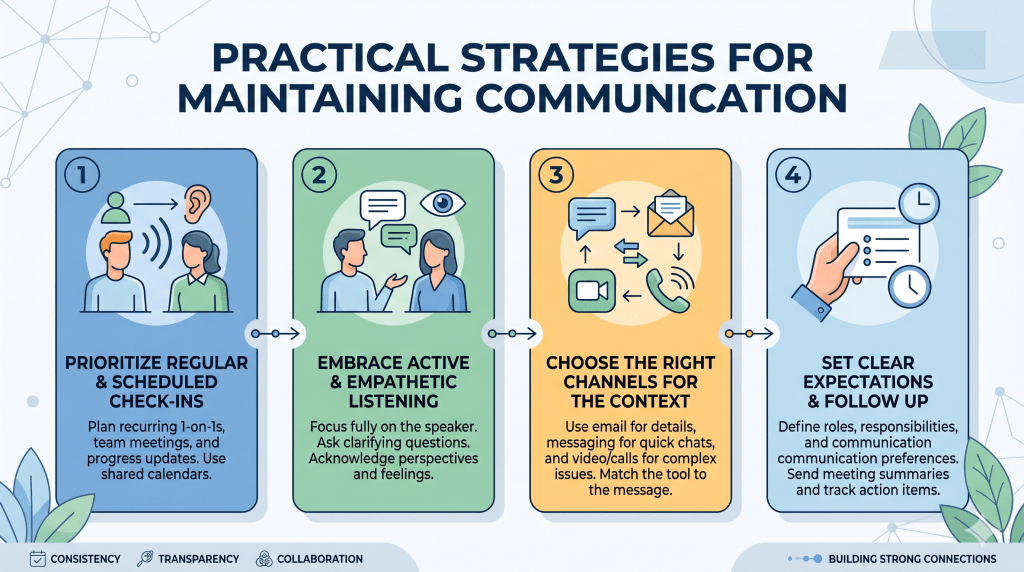
When communication becomes one-sided, it creates a new dynamic that requires thoughtful adjustment. This shift doesn’t mean your relationship has weakened—it simply means your approach needs to evolve.
Establishing a Consistent Call Schedule
Creating a regular pattern for phone calls brings comfort and predictability. Morning conversations work beautifully because they confirm your loved one has started their day safely.
Consistency matters more than length. A brief five-minute call at the same time each day builds a reliable routine. This becomes especially helpful when memory challenges make initiating contact difficult.
Implementing Medication Reminder Systems
Daily phone check-ins can seamlessly include medication reminders. This addresses a critical health need while maintaining connection.
During these conversations, gently ask about medications taken that day. This provides insight into both physical and mental health without feeling like an interrogation.
For complex medication schedules, consider services that specialize in this support. As the National Institute on Aging recommends, maintaining open dialogue about health concerns strengthens trust between family members and care providers.
How to Rebuild Connection When a Senior Has Stopped Calling Back

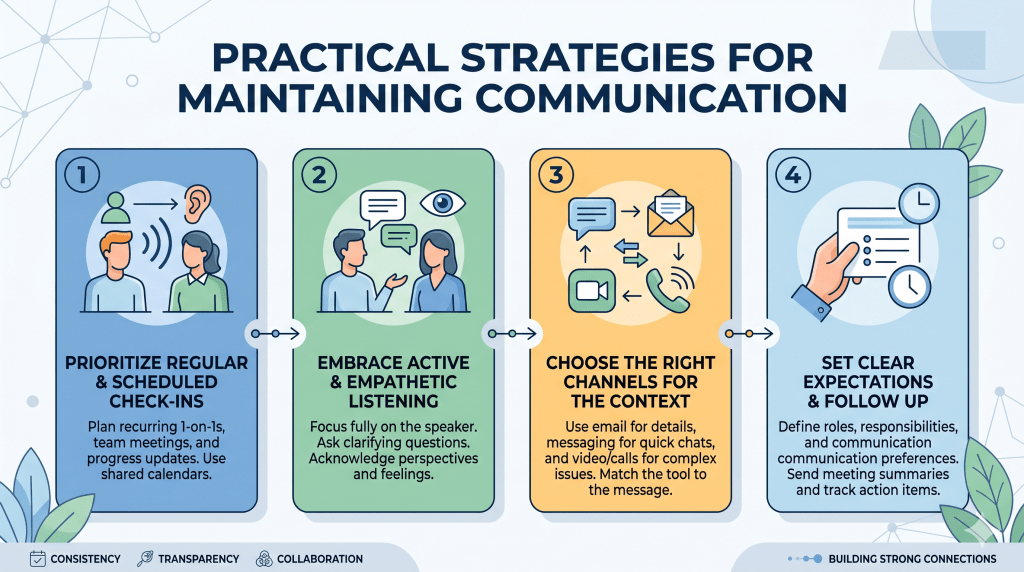
When an older parent, relative, or loved one stops calling back, the goal is not simply to “get them back on the phone.” The deeper goal is to make communication feel safe, manageable, and emotionally worthwhile again.
This matters because many seniors do not withdraw all at once. They may still care deeply. They may still want connection. But the effort of calling, explaining, remembering, hearing clearly, or managing family emotions may start to feel too heavy. Over time, silence becomes easier than another conversation that feels tiring, confusing, or stressful.
That is why the best response is not pressure. It is a thoughtful reconnection plan.
Start by Changing the Meaning of the Call
For many families, phone calls slowly become task-based. The adult child asks: Did you eat? Did you take your medicine? Did you sleep? Did you go to the doctor? Did you call the pharmacy?
These questions are caring, but to the senior, they can begin to feel like a daily inspection.
If every call feels like a checklist, an older adult may avoid answering even when they love the person calling. They may feel embarrassed, controlled, corrected, or reminded of what they can no longer manage independently.
So before changing the call schedule, change the emotional tone.
Instead of opening with:
“Why didn’t you call me back?”
Try:
“I was thinking about you and wanted to hear your voice.”
Instead of:
“Did you take your medicine?”
Try:
“How has your morning been so far?”
Instead of:
“You never answer your phone anymore.”
Try:
“I know calls can feel tiring sometimes. I just want us to find a way that feels easy for you.”
This small shift matters. Seniors are more likely to stay connected when communication protects their dignity.
Use a Two-Layer Call Structure
A helpful approach is to separate emotional connection from practical checking.
The first layer is the relationship call. This call should feel warm, familiar, and personal. Talk about memories, food, weather, family updates, television shows, hobbies, neighbors, faith, music, old stories, or anything that makes the senior feel like a whole person rather than a responsibility.
The second layer is the safety check. This is where you ask about medication, meals, appointments, pain, sleep, or unusual symptoms.
The mistake many families make is combining both too quickly. The call begins with love but turns into monitoring within the first minute.
A better structure is:
First 5 minutes: connection
Next 2 minutes: practical check
Final minute: reassurance and next contact
For example:
“I wanted to tell you something funny that happened today.”
Then later:
“Before I let you go, is there anything you need help remembering today?”
Then close with:
“I loved talking to you. I’ll call again tomorrow after lunch.”
This keeps the call useful without making it feel clinical.
Create a “No-Blame” Re-entry Conversation
If a senior has ignored calls for days or weeks, the first successful conversation should not become an interrogation. The temptation is understandable. You may feel scared, hurt, or frustrated. But leading with emotion can make the senior retreat again.
Use the first reconnection call to lower tension.
You might say:
“I’m really glad to hear your voice. I was worried, but I’m not upset. I just want to understand what would make calls easier for you.”
This sentence does three important things. It expresses care. It removes blame. It invites collaboration.
Then ask one simple question:
“Is it the phone, the timing, or the talking itself that has felt difficult lately?”
This gives them options instead of forcing them to explain from scratch.
Their answer may surprise you. They may say the phone is hard to hear. They may say they are tired in the evenings. They may say they do not want to worry you. They may say they forgot. They may say nothing is wrong.
Whatever they say, resist the urge to correct it immediately. Listen first. The goal is not to win the conversation. The goal is to reopen the door.
Match the Call Time to Their Energy, Not Yours
Many adult children call when their own day finally slows down: after work, after dinner, or late evening. But that may be the worst time for an older adult.
Some seniors are more alert in the morning. Others become tired, confused, anxious, or withdrawn later in the day. Evening calls may also collide with medication effects, sundowning symptoms, hearing fatigue, or loneliness that feels harder to discuss.
Instead of asking, “When can I call you?” ask something more specific:
“Do you feel better talking in the morning, afternoon, or evening?”
Then test one time for a week.
Do not keep changing the schedule every day. Predictability reduces effort. If your loved one knows you call every day at 10:30 a.m., the call becomes part of the rhythm of life instead of a surprise demand.
For seniors with memory concerns, pair the call with an existing habit:
After breakfast
After morning tea
After a favorite show
Before lunch
After an afternoon walk
Before evening prayers
The easier the call is to remember, the more likely it is to continue.
Reduce the Effort Required to Respond
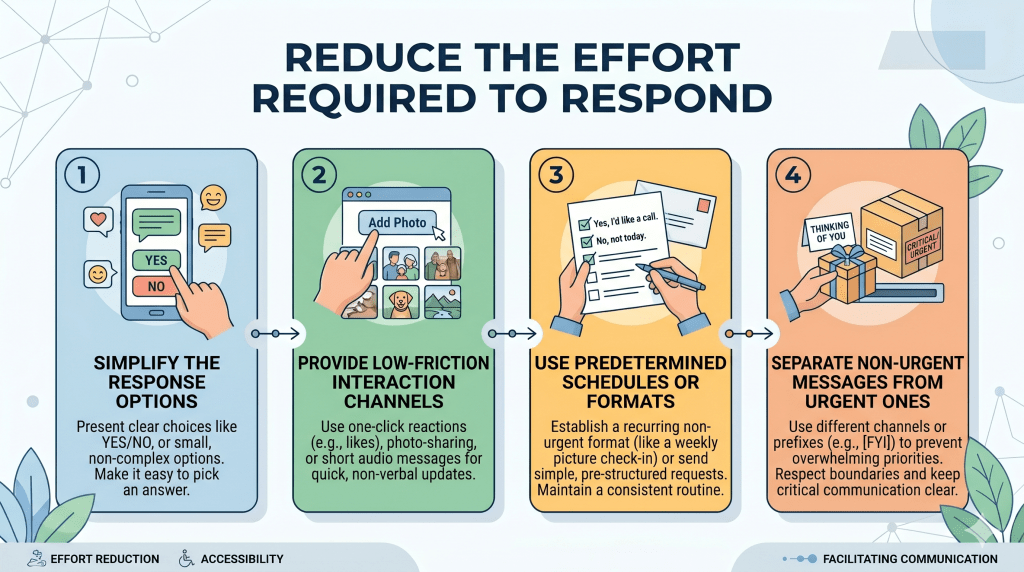
Sometimes quiet withdrawal is not emotional. It is practical.
The phone may be too small. The ringtone may be too soft. The senior may not recognize unknown numbers. Their hands may shake. Their hearing aid may not pair well with the device. The charger may be in another room. The contact list may be confusing. Spam calls may have made them distrust the phone altogether.
A practical phone audit can help.
Check these basics:
Is the phone charged every day?
Is the ringer loud enough?
Does the screen show your name clearly?
Are important contacts saved as favorites?
Can they answer with one touch?
Is the phone physically within reach?
Do they know which calls are safe to answer?
Is call blocking accidentally silencing family members?
Would a landline be easier than a mobile phone?
One of the most helpful changes is to label contacts clearly. Instead of “Sarah,” save the contact as “Sarah Daughter.” Instead of “Michael,” save “Michael Son.” This can reduce confusion, especially during tired moments.
Also consider using a photo contact screen if their phone supports it. Recognizing a face can be easier than reading a name.
Give Them Permission Not to Perform
Many older adults avoid calls because they feel they have nothing “good” to say. They may not want to talk about pain, loneliness, boredom, memory slips, or fear. They may worry that every call will make their family sad.
So they pretend everything is fine, until pretending becomes exhausting. Then they stop answering.
Give your loved one permission to have ordinary, quiet, imperfect conversations.
Say:
“You don’t have to be cheerful when we talk.”
Or:
“We can talk for two minutes. It doesn’t have to be a long call.”
Or:
“You don’t have to have news. I just like being with you for a little while.”
This removes pressure. A senior who does not feel required to entertain, reassure, or sound strong may become more willing to pick up.
Build a Gentle Escalation Plan Before There Is a Crisis
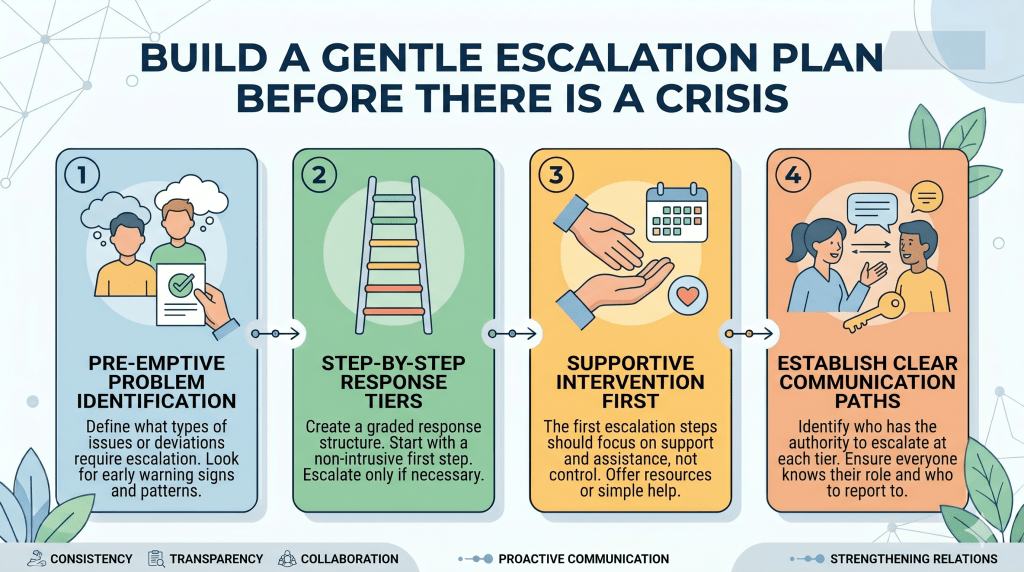
Families often panic because there is no agreed plan for missed calls. One unanswered call becomes terrifying because nobody knows what it means.
Create a simple plan with your loved one while things are calm.
For example:
If there is no answer once, call again after 15 minutes.
If there is no answer twice, send a short message or leave a calm voicemail.
If there is still no response after a set time, call a neighbor, caregiver, building staff, or nearby family member.
If there are signs of immediate danger, request urgent help.
The key is to discuss this in advance, not during a frightening silence.
Frame it as respect, not control:
“I don’t want to overreact when you miss a call. Can we agree on what I should do so I know when to worry and when not to?”
This protects both sides. The caregiver gets clarity. The senior gets predictability and does not feel randomly checked on by multiple worried people.
Use a Circle of Contact, Not One Overloaded Person
Quiet withdrawal becomes more stressful when one family member carries the entire communication burden. If that person is busy, sick, traveling, or emotionally exhausted, the system breaks.
A better approach is to build a small circle of contact.
This may include:
One adult child
One sibling
One neighbor
One friend
One care aide
One faith community member
One daily call service
The circle does not need to be large. It needs to be reliable.
Assign different roles. One person may call on weekdays. Another may visit once a week. A neighbor may simply confirm lights are on or newspapers are picked up. A companion call service may provide daily routine and summaries.
This prevents the senior from feeling abandoned when one person is unavailable. It also prevents the primary caregiver from becoming overwhelmed.
However, coordination matters. Too many people calling with the same worried tone can feel intrusive. Use a shared note, family chat, or simple weekly update so everyone knows what has already been checked.
Watch for the Difference Between Privacy and Risk
Not every missed call is an emergency. Seniors have the right to privacy, rest, independence, and quiet. They may not want to talk every day. They may be taking a nap, watching a show, bathing, eating, praying, or simply not in the mood.
At the same time, repeated withdrawal can signal real risk.
Pay closer attention if the silence comes with other changes:
They sound confused when they do answer.
They stop mentioning meals.
They miss appointments.
They seem unusually sleepy.
They repeat the same concern often.
They avoid discussing health completely.
They stop participating in activities they used to enjoy.
They seem fearful, suspicious, or unusually sad.
They have recently moved, lost a spouse, changed medication, or returned from hospital.
One missed call may mean nothing. A pattern deserves attention.
The most helpful question is not, “Are they ignoring me?” It is, “What has changed around them that may be making connection harder?”
Make the Call Worth Looking Forward To
A senior is more likely to answer when the call brings comfort, not just responsibility.
Create small rituals.
Monday can be memory day: “Tell me about one thing from when I was little.”
Tuesday can be music day: talk about an old song.
Wednesday can be family update day.
Thursday can be recipe day.
Friday can be gratitude day.
Saturday can be grandchild message day.
Sunday can be spiritual reflection, prayer, or quiet encouragement if that fits their values.
This may sound simple, but rituals reduce decision fatigue. The senior does not have to wonder what to say. The call already has a gentle shape.
You can also bring something specific:
“I saw a flower today that reminded me of your garden.”
“I made the soup you used to make.”
“I found an old photo and wanted to ask you about it.”
“Can you help me remember how Grandpa used to tell that story?”
Older adults often open up when they feel needed, valued, and remembered.
Avoid Turning Every Silence Into a Family Drama
When an older loved one stops responding, family members may begin calling repeatedly, sending alarmed messages, contacting staff, and discussing worst-case scenarios. Sometimes this is necessary. But if it happens too often, the senior may feel embarrassed or smothered.
Use calm language in voicemails:
“Hi Mom, no need to worry. I just wanted to hear from you. I’ll try again after lunch.”
Avoid:
“Why aren’t you answering?”
“You’re scaring everyone.”
“Call me right now.”
“We’re all worried sick.”
Even when true, these messages can create guilt. Guilt rarely improves communication. It often increases avoidance.
The calmer your response, the safer the phone feels.
Know When to Bring in Professional Help
If quiet withdrawal continues despite patient efforts, it may be time for more support. This does not mean you failed. It means the situation may need more than family phone calls.
Consider speaking with a doctor, care manager, therapist, social worker, or senior care provider if withdrawal is paired with confusion, depression symptoms, medication problems, falls, poor hygiene, missed meals, or sudden personality changes.
You can also consider structured daily check-ins or companion calls if your loved one responds better to a neutral, consistent voice. Sometimes seniors share more freely with someone outside the family because they do not want to worry their children.
The most effective support plan often combines family warmth with dependable routine. Family provides love and history. A structured check-in system provides consistency. Together, they create safety without making every conversation feel urgent.
A Simple 7-Day Reconnection Plan
If you are unsure where to begin, start small.
Day 1: Leave a calm voicemail with no guilt.
Say: “I love you. No pressure to call back right away. I’ll try again tomorrow.”
Day 2: Call at a different time of day.
Notice whether morning, afternoon, or evening works better.
Day 3: Ask one practical question about the phone.
Say: “Is it easy for you to hear me when I call?”
Day 4: Make the call purely personal.
No medication questions. No safety checklist. Just connection.
Day 5: Introduce a predictable schedule.
Say: “Would it feel okay if I called after breakfast most days?”
Day 6: Agree on a missed-call plan.
Keep it simple and respectful.
Day 7: Add one support layer.
This could be a sibling rotation, neighbor contact, caregiver update, or daily companion call.
The goal of the first week is not perfection. The goal is to reduce fear, rebuild trust, and make answering the phone feel easier again.
The Real Measure of Success
Success is not always a long conversation. Sometimes success is a two-minute call. Sometimes it is a senior answering without anxiety. Sometimes it is a predictable check-in that prevents panic. Sometimes it is learning that your loved one prefers shorter calls but still wants connection.
Quiet withdrawal is painful because it feels like disappearance. But in many cases, the relationship is still there. It simply needs a new doorway.
When you respond with patience, structure, and respect, you give your loved one a better chance to step back through that doorway at their own pace.
Creating a Long-Term Communication System That Prevents Future Withdrawal
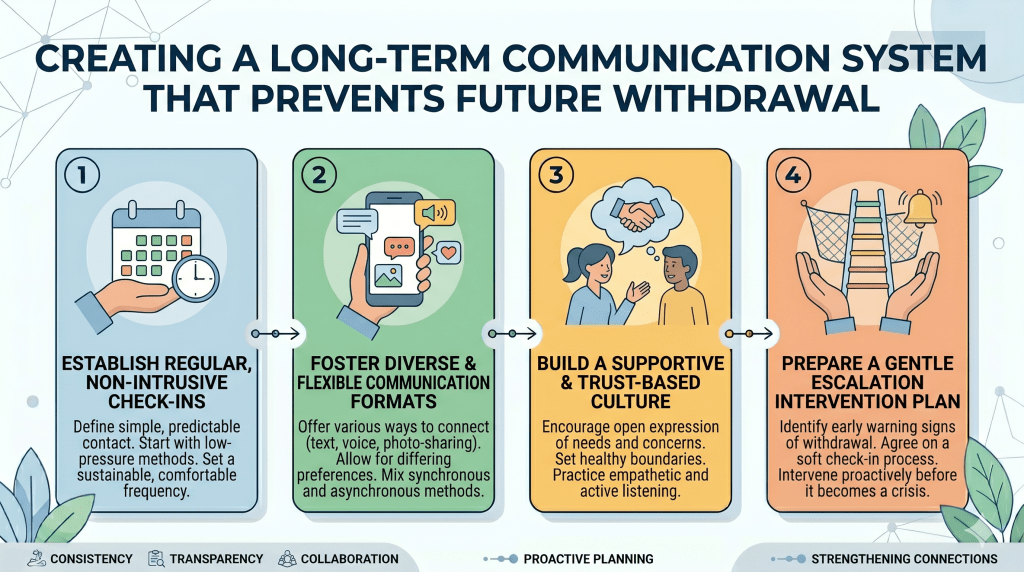
Rebuilding contact after a period of silence is important—but the real goal is sustainability. Many families successfully reconnect with a senior, only to find the same pattern repeating weeks or months later. This happens when communication depends too much on emotion, memory, or convenience instead of structure.
A long-term system ensures that connection does not rely on “remembering to call” or reacting to fear. Instead, it becomes a stable, low-effort part of everyday life—for both the senior and their support network.
This section focuses on how to design that system in a way that respects independence, reduces anxiety, and prevents future quiet withdrawal.
Shift From “Checking In” to “Staying Connected”
There is a subtle but powerful difference between checking in on someone and staying connected with them.
Checking in often feels one-sided. It implies monitoring, responsibility, and evaluation. The caregiver initiates, the senior responds.
Staying connected feels mutual. It allows for presence without pressure. It creates space for both people to share, not just report.
Over time, seniors are more likely to withdraw from relationships that feel like supervision rather than companionship.
To make this shift:
- Replace “I’m checking if you’re okay” with “I wanted to spend a few minutes together.”
- Share something about your own day before asking about theirs.
- Allow silence in conversations without rushing to fill it with questions.
- Accept that not every call needs to be productive.
Connection is not built on efficiency. It is built on consistency and emotional safety.
Build a Weekly Communication Rhythm Instead of Daily Pressure
Daily calls can be comforting—but they can also become overwhelming, especially if each call feels repetitive or demanding.
Instead of relying only on daily calls, create a weekly rhythm that gives each day a light structure without making communication feel heavy.
For example:
- Monday: Light catch-up (5–10 minutes)
- Tuesday: Short check-in (2–3 minutes)
- Wednesday: Longer conversation (15–20 minutes)
- Thursday: Missed-call day (no pressure to talk, just a signal of presence)
- Friday: Family update call
- Saturday: Optional call or visit
- Sunday: Reflective or relaxed conversation
This structure does two things:
- It reduces the emotional load of every single call.
- It gives the senior a predictable pattern without making them feel constantly observed.
Some seniors may prefer fewer calls but deeper conversations. Others may prefer short daily touchpoints. The key is to align the rhythm with their comfort—not your anxiety.
Introduce “Passive Connection” Alongside Active Calls
Not all connection needs to happen through real-time conversations. In fact, for seniors who feel tired, anxious, or cognitively strained, passive connection can be incredibly powerful.
Passive connection means staying emotionally present without requiring immediate response.
Examples include:
- Sending a short voice note instead of calling
- Sharing a photo from your day
- Leaving a warm voicemail even if they don’t pick up
- Sending a simple message like “Thinking of you today”
- Playing recorded family messages through a companion service
This allows the senior to engage at their own pace. They can listen, smile, and feel connected—even if they don’t have the energy to respond.
Over time, this reduces avoidance. The phone stops feeling like a demand and starts feeling like a source of comfort.
Make Technology Work For Them, Not Against Them
Technology can either support connection or become a barrier to it. The difference lies in how simple and intuitive it feels to the senior.
Many families assume that providing a smartphone is enough. In reality, too many features, notifications, and options can overwhelm older adults.
Instead, simplify the experience:
- Use phones with large buttons and clear displays
- Reduce the number of apps visible on the screen
- Enable auto-answer features for trusted contacts (if appropriate)
- Use speed dial for key family members
- Disable unnecessary notifications
- Set consistent ringtone and volume levels
- Ensure charging is easy and accessible
If needed, consider devices specifically designed for seniors. The goal is not to introduce more technology—but to remove friction from existing communication.
Even a small improvement, like a louder ringtone or a clearer contact name, can significantly increase response rates.
Normalize Short Conversations Instead of Avoiding Them
One of the most overlooked reasons seniors stop answering calls is the fear that the conversation will be long and tiring.
They may think:
“If I pick up, I’ll have to talk for 20 minutes.”
“I don’t have the energy for that right now.”
“I’ll call later when I feel better.”
And then later never comes.
You can remove this barrier by explicitly normalizing short calls.
Say things like:
- “We can talk for just two minutes.”
- “I just wanted a quick hello.”
- “No need to stay on the phone if you’re tired.”
Then actually follow through. End the call when you said you would.
This builds trust. The senior learns that answering the phone does not require a large commitment. Over time, they may naturally begin to engage more.
Recognize Emotional Fatigue in Seniors
Caregivers often focus on physical fatigue—but emotional fatigue is just as real.
Older adults may feel drained by:
- Repeating the same information to multiple people
- Managing family expectations
- Hiding discomfort or pain
- Coping with loneliness without wanting to burden others
- Adjusting to loss, change, or reduced independence
When emotional fatigue builds up, silence becomes a form of rest.
Instead of pushing harder during these periods, adjust your approach:
- Reduce the number of questions
- Speak more slowly and calmly
- Allow them to guide the conversation
- Accept shorter interactions
- Offer reassurance without probing
Sometimes the most supportive thing you can say is:
“We don’t have to talk much today. I just wanted to be here with you for a moment.”
This acknowledges their state without making them feel responsible for maintaining the conversation.
Use “Anchor Questions” Instead of Open-Ended Ones
Open-ended questions like “How are you?” can be surprisingly difficult for seniors to answer—especially if they are tired, confused, or unsure how much to share.
Anchor questions provide a gentle structure.
Instead of asking:
“How was your day?”
Try:
“Did you get a chance to sit in the sun today?”
“Was lunch something you enjoyed?”
“Did you watch your favorite show?”
These questions are easier to process and answer. They also feel more personal and less abstract.
Over time, this reduces the mental effort required to engage in conversation—making it more likely that the senior will continue answering calls.
Respect Their Need for Control
Loss of control is one of the biggest emotional challenges in aging. When communication starts to feel imposed, monitored, or non-negotiable, seniors may withdraw to regain a sense of autonomy.
To prevent this:
- Offer choices whenever possible
- Involve them in scheduling decisions
- Ask for preferences instead of assuming
- Respect when they say they are tired
- Avoid making every missed call a major issue
Even small decisions—like choosing call times or conversation topics—can restore a sense of control.
You might say:
“Would you prefer I call you before lunch or after?”
This simple question transforms the interaction from directive to collaborative.
Document Small Changes Before They Become Big Concerns
Quiet withdrawal rarely happens suddenly. It often begins with small, subtle changes:
- Calls becoming shorter
- Delayed responses
- Reduced enthusiasm
- Increased repetition
- Occasional confusion
- Avoidance of certain topics
Instead of reacting only when communication stops completely, start noticing patterns early.
You don’t need a formal system. Even a simple mental note or shared family observation can help.
Ask yourself:
“Is this a one-time change or part of a pattern?”
Early awareness allows for gentle adjustments—before withdrawal becomes deeply rooted.
Balance Independence With Invisible Support
The most effective communication systems for seniors are the ones they barely notice.
Too much visible support can feel intrusive. Too little support can feel isolating.
The balance lies in invisible support—systems that operate quietly in the background while preserving dignity.
This might include:
- Scheduled but natural-feeling calls
- Occasional check-ins from different people
- Subtle monitoring through routine conversations
- Support services that feel like companionship, not supervision
When done right, the senior feels connected—not managed.
Prepare for Changing Needs Over Time
What works today may not work six months from now.
As seniors age, their communication preferences may shift due to:
- Hearing changes
- Cognitive changes
- Energy levels
- Emotional needs
- Health conditions
- Living arrangements
Instead of treating your communication plan as fixed, revisit it regularly.
Every few months, gently ask:
“Is this still working well for you?”
Be open to adjusting frequency, timing, format, or style.
Flexibility is what keeps the system sustainable.
When Silence Happens Again, Respond Differently
Even with the best system, there may be times when silence returns. This does not mean failure. It means something has changed.
When it happens:
- Pause before reacting emotionally
- Return to calm, non-urgent communication
- Reassess practical barriers
- Adjust timing or format
- Reopen conversation without blame
The difference now is that you have a system to fall back on. You are not starting from scratch. You are simply adapting.
The Goal Is Not More Calls—It Is Better Connection
It is easy to measure communication by frequency. How many calls? How many minutes? How many responses?
But the true measure is different.
Does your loved one feel safe answering the phone?
Do they feel respected during conversations?
Do they feel heard, not just checked on?
Do they feel connected even on quiet days?
When these conditions are met, calls become natural again.
Quiet withdrawal is not just about silence. It is about disconnection. And reconnection is not achieved through persistence alone—it requires intention, empathy, and structure.
By building a thoughtful communication system, you are not just preventing missed calls. You are preserving something far more important: a sense of presence, dignity, and belonging in your loved one’s daily life.
What Not to Do When a Senior Stops Calling Back
When a senior stops responding, families often act from fear. That fear is understandable. Silence can feel frightening, especially when the person is older, living alone, recently unwell, or emotionally withdrawn.
But some reactions, even when loving, can make the silence worse. They can make the senior feel blamed, watched, embarrassed, or less in control. The goal is not just to reach them once. The goal is to keep the relationship open.
Do Not Turn Every Missed Call Into a Confrontation
Avoid opening with:
“Why didn’t you answer?”
“You scared everyone.”
“You always do this.”
“You need to keep your phone with you.”
These statements may be true from your side, but they often create shame on theirs.
Try this instead:
“I’m glad I got you. I was thinking about you.”
Then, after the conversation feels calm:
“Would it help if we chose a better time for me to call?”
This keeps the door open instead of making the senior feel they are in trouble.
Do Not Assume Silence Means They Do Not Care
A senior may stop calling back for many reasons that have nothing to do with love.
They may be tired.
They may be embarrassed about needing help.
They may be struggling to hear.
They may be depressed.
They may have forgotten.
They may feel they have “nothing new” to say.
They may not want to worry the family.
When families interpret silence as rejection, the conversation becomes emotionally loaded. The senior then has to manage both the call and the family’s hurt feelings.
A better mindset is:
“Something may be making communication harder for them.”
That one shift creates more patience and better solutions.
Do Not Overload Them With Questions
When you finally get them on the phone, it is natural to ask everything at once.
Did you eat?
Did you sleep?
Did the nurse come?
Did you take your tablets?
Why didn’t you answer yesterday?
Are you feeling weak?
Did you call the doctor?
This can feel overwhelming.
Use a three-question limit:
- One emotional question
- One practical question
- One closing question
For example:
“How are you feeling this morning?”
“Is there anything you need help with today?”
“Would you like me to call again after lunch or tomorrow?”
This makes the call calmer, shorter, and easier to repeat.
Do Not Make the Phone Their Only Lifeline
Phone calls are useful, but they should not be the entire support system.
If the senior often misses calls, create backup routes:
A trusted neighbor
A nearby relative
A building manager
A caregiver
A community volunteer
A daily companion call service
A scheduled in-person visit
This reduces panic. It also prevents the senior from feeling that one missed call will create a family emergency.
Do Not Confuse Control With Care
Care says:
“I want you to be safe.”
Control says:
“You must respond exactly when I expect.”
Seniors can feel the difference.
Even when safety is a concern, involve them in decisions. Ask:
“What would feel comfortable for you?”
“What time is easiest for you to talk?”
“What should I do if I cannot reach you?”
This keeps them part of the plan rather than making them the subject of the plan.
Do Not Ignore Sudden or Unusual Withdrawal
While it is important not to overreact to every missed call, it is also important not to dismiss serious changes.
Take action if the senior suddenly:
Stops answering completely
Sounds confused or disoriented
Mentions dizziness, falls, chest pain, or severe weakness
Stops eating or drinking properly
Misses medication repeatedly
Seems unusually fearful, hopeless, or withdrawn
Has recently changed medication or returned from hospital
In these cases, silence may not be ordinary privacy. It may be a sign that they need immediate support.
Do Not Let Guilt Drive the Entire Plan
Many caregivers respond to silence with guilt:
“I should call more.”
“I should visit more.”
“I should have noticed earlier.”
Guilt can lead to overcalling, overquestioning, or taking on everything alone.
A better response is responsibility with structure.
Decide what is realistic. Create a call rhythm. Share responsibility with others. Use tools or services when needed. A sustainable plan helps the senior more than an exhausted caregiver trying to do everything alone.
The Better Response: Calm, Consistent, Respectful
When seniors stop calling back, the best response is rarely dramatic. It is steady.
Call calmly.
Leave kind messages.
Reduce pressure.
Make conversations easier.
Watch for patterns.
Create backup support.
Respect their dignity.
The aim is not to force communication. It is to make connection feel safe again.
Quiet withdrawal often grows in silence, but it can also soften through patience. When a senior feels understood instead of accused, supported instead of managed, and valued instead of monitored, they are far more likely to come back into conversation.
Understand That It’s Okay to Need Simpler Communication
As life changes, so does energy.
You may not want long conversations every day. You may not feel like repeating the same updates to multiple people. You may not always have something “new” to say.
That is completely normal.
Staying connected does not mean talking for long hours. It does not mean being cheerful all the time. It does not mean answering every single call immediately.
It simply means keeping a small, steady thread of connection.
Even a short “hello” is enough to keep relationships warm.
Set Your Own Communication Boundaries
One of the most helpful things you can do is decide what kind of communication works best for you.
Ask yourself:
Do I prefer short calls or longer ones?
Do I feel more comfortable talking in the morning or later in the day?
How often do I actually want to talk—daily, a few times a week, or less?
Do I like speaking, or do I prefer listening more?
Once you have clarity, share it.
You can say:
“I get tired in the evenings, so mornings are better for me.”
“I enjoy talking, but short calls are easier.”
“I may not always pick up, but I will call back when I can.”
This helps your family understand you better. It also removes pressure from both sides.
Give Yourself Permission to Keep Calls Short
Many seniors avoid answering because they feel a call will take too long.
You can change that by setting expectations early.
When you pick up, say:
“I can talk for a few minutes.”
“I’m a little tired today, so let’s keep it short.”
Most family members will understand—and appreciate that you answered at all.
Short calls are not a failure. They are a way to stay connected without feeling drained.
Create Small Daily Habits That Support Communication
Sometimes, staying connected is less about motivation and more about routine.
You can make communication easier by linking it to something you already do.
For example:
Keep your phone near you after breakfast
Charge your phone at the same time every day
Check for missed calls before lunch
Call someone after your afternoon tea
Keep a written reminder near your chair
These small habits reduce the effort needed to stay in touch. Over time, they become automatic.
Use Simple Signals When You Don’t Feel Like Talking
There will be days when you do not feel like having a conversation. That’s okay.
Instead of staying completely silent, you can use simple signals:
Answer and say, “I’m okay, just resting today”
Let the call ring and call back later with a short message
Ask someone to inform family that you are fine
Use a missed call as a signal that you’re okay
This helps your loved ones worry less, without forcing you into a conversation when you are not ready.
Be Honest About What Feels Difficult
If something is making communication hard, it helps to say it clearly.
You might be struggling with:
Hearing the phone clearly
Understanding fast speech
Remembering conversations
Feeling tired quickly
Managing too many calls
Feeling emotional or low
You can say:
“I’m finding it hard to hear properly on the phone.”
“I get tired after a few minutes of talking.”
“I forget things, so sometimes I don’t know what to say.”
This is not complaining. It is helping others support you better.
When people understand the real challenge, they can adjust.
Keep a Small List of Things to Talk About
Sometimes the hardest part of a call is not the talking—it’s knowing what to say.
You can make this easier by keeping a small list nearby.
It might include:
Something you watched
Something you ate
A memory you thought about
A question you want to ask
Something you noticed during the day
Even one small topic is enough to start a conversation.
You don’t need to fill the entire time. A few sentences can lead naturally to more.
Stay Connected to More Than One Person
If all communication depends on one person, it can feel heavy—for both of you.
Try to stay in touch with a small circle:
A son or daughter
A sibling
A friend
A neighbor
A caregiver
A community member
Even if each person connects with you briefly, together they create a steady support system.
This also means that if you miss one call, it does not feel like everything has stopped.
Allow Yourself Quiet Days Without Guilt
There may be days when you want less interaction.
You may feel tired, reflective, or simply in the mood for silence.
That is not a problem.
What matters is not disappearing completely for long periods without letting anyone know you are okay.
A simple message, short call, or small signal is enough to maintain connection while still giving yourself space.
Ask for Help When You Need It
If staying connected feels difficult, you do not have to manage it alone.
You can ask for:
A simpler phone
Help setting up contacts
A regular call schedule
Fewer but more meaningful calls
Support from a caregiver or service
There are also services that provide friendly daily calls, reminders, and updates for families. These can reduce pressure while keeping you connected.
Asking for help is not a loss of independence. It is a way to protect it.
Remember: You Are Not a Burden
Many seniors withdraw because they feel they are “troubling” their family.
They may think:
“They are busy.”
“I don’t want to disturb them.”
“They have their own lives.”
But most families do not feel this way. They worry more when they do not hear from you.
Connection does not have to be long or perfect. It just has to exist.
Your voice matters. Your presence matters. Even a small conversation can mean a lot to someone who cares about you.
A Simple Way to Stay Connected Every Day
If everything feels complicated, keep it simple.
One small action per day:
Answer one call
Make one short call
Send one message
Leave one voicemail
That’s all.
Connection does not come from doing everything. It comes from doing something consistently.
Conclusion
That silence from a parent’s phone can leave you feeling disconnected and concerned. Now you understand this quiet withdrawal has real causes. It’s a common experience for many families.
Your emotional well-being matters too. Modern care services like JoyCalls provide daily phone calls that check on your loved one’s health and mood. This brings peace of mind while maintaining meaningful conversations.
Combining these services with your own regular calls creates the ideal approach. Your loved one receives consistent contact. You get reliable updates about their mental health and safety.
Remember you’re part of a larger community. The Alzheimer’s Association offers free 24/7 support at 800.272.3900. Professional staff provide advice and resources for your specific situation.
Take action today to maintain that precious connection. Every step helps ensure your aging parent feels cared for and supported.
FAQ
What is the “quiet withdrawal” phenomenon in aging adults?
Why might my parent or aging family member not call me back?
How can daily check-in calls help my family’s situation?
What if my loved one has dementia or memory loss?
Can technology really help if my parent isn’t tech-savvy?
How do I start using a service like JoyCalls for my family?
What kind of information will I receive after a companion call?
How can I maintain better communication with my aging parent?

Ana Avila, PhD, is a healthcare and technology writer with deep expertise in artificial intelligence, senior care innovation, and the practical use of AI in healthcare operations. Her work focuses on how emerging technologies can improve the daily experience of older adults, support overburdened care teams, and help senior living communities deliver safer, faster, and more personalized support.
Dr. Avila’s academic background is rooted in health informatics, aging care systems, and applied artificial intelligence. Her doctoral work focused on how digital health tools, predictive analytics, and AI-assisted communication systems can be used to improve care coordination, reduce operational delays, and identify early signs of risk among older adults. Her training gives her a rare ability to understand both the technical side of AI and the human realities of healthcare delivery.
Over the years, Ana has developed a specialized body of work around AI in senior living. She writes about how senior care providers can use intelligent systems to manage resident requests, answer routine questions, support family communication, improve after-hours coverage, and detect patterns that may indicate loneliness, confusion, distress, or unmet needs. Her articles often examine the gap between what senior living teams are expected to deliver and what traditional staffing models can realistically support.
Ana’s healthcare expertise is especially focused on the operational side of care. She has written extensively about call handling, resident engagement, front desk workflows, triage systems, caregiver communication, care escalation, and the hidden administrative burden placed on senior living staff. Her work explains how AI can help reduce repetitive tasks, organize incoming requests, prioritize urgent issues, and give human caregivers more time for meaningful resident interaction.
At the same time, Ana is careful not to present AI as a replacement for human care. A consistent theme in her writing is that technology should support relationships, not weaken them. She argues that the best AI systems in healthcare are not the ones that simply automate the most tasks, but the ones that make care teams more responsive, families more informed, and residents more supported. Her perspective is grounded in the belief that senior living technology must be designed around dignity, trust, privacy, and compassion.
Ana has also written widely on the ethical use of AI in healthcare. Her work discusses the importance of human oversight, transparent escalation rules, resident consent, data minimization, and responsible use of sensitive health and behavioral information. She often emphasizes that AI systems used around older adults must be easy to understand, carefully monitored, and designed with the limitations and needs of real residents in mind, including those with memory loss, hearing challenges, mobility issues, or social isolation.
Her writing has been used as a reference point in discussions about aging, elder care technology, digital health, and AI-supported senior living. Some of her articles have also been cited by Wikipedia editors as supporting references on topics related to healthcare, aging, and technology. This has helped position her work as a useful educational resource for readers looking to understand how AI can be applied in real care environments.
In addition to her long-form writing, Ana has contributed research-based commentary, professional explainers, and practical guidance for healthcare operators, senior living decision-makers, and technology teams building products for older adults. Her work combines research literacy with operational practicality. She is able to take complex subjects such as natural language processing, predictive analytics, conversational AI, and care automation, and explain them in a way that is accessible to executives, caregivers, families, and non-technical readers.
Ana’s strongest area of expertise is the intersection of artificial intelligence and senior living operations. She understands that senior care communities face a difficult combination of rising resident expectations, staffing pressure, family communication demands, and increasing care complexity. Her writing explores how AI can be used to ease those pressures through smarter communication systems, faster response workflows, proactive check-ins, and better visibility into resident needs.
Her approach is both evidence-informed and deeply human. She studies AI through the lens of real-world care delivery: whether a resident gets help faster, whether a family member receives a clearer update, whether a caregiver avoids unnecessary administrative work, and whether a senior living team can identify a concern before it becomes a crisis. This practical focus makes her work especially relevant for organizations that want to adopt AI responsibly rather than simply follow technology trends.
Ana Avila is regarded as a thoughtful voice on the future of AI in healthcare and senior living. Her expertise combines academic training, research-driven analysis, operational understanding, and a strong commitment to humane technology. Through her writing, she helps healthcare leaders and senior living communities understand not only what AI can do, but how it should be used to improve care, preserve dignity, and strengthen the human relationships at the center of aging support.