


That quiet thought, “No one needs me anymore,” can echo loudly in an empty house. Careers wind down. Children build their own lives. The daily rhythm that once gave structure and meaning can slow to a whisper.
It’s completely natural to feel a bit lost when familiar roles change. This transition isn’t just emotional. University of Michigan research reveals a powerful truth. Seniors with a strong sense of purpose experience less cognitive decline and depression. They may even live longer, healthier lives.
This isn’t about huge achievements. It’s about finding joy and connection in everyday moments. Every person has something valuable to offer the world, at any stage of life. Rediscovering that contribution is absolutely possible.
This guide is here to help families and seniors navigate this journey together. We’ll explore practical, heartfelt ways to cultivate meaning. Our goal is to reduce the loneliness that can sometimes accompany these chapters, as highlighted in resources on staying unlonely in later life and understanding retirement loneliness.
Key Takeaways
- Feeling needed is a fundamental human need that doesn’t disappear with time.
- A strong sense of purpose is directly linked to better mental and physical health for seniors.
- Life’s transitions, while challenging, open the door to new forms of meaning.
- Rediscovering purpose is an achievable goal through small, daily actions.
- Combating loneliness is a journey best taken with support and practical strategies.
- Simple connections and routines can powerfully transform feelings of isolation.
- Every individual retains unique value and something to contribute to their community.
Understanding Purpose in Older Age
That feeling of being needed doesn’t fade with time—it simply transforms into new forms. When careers wind down and children build their own lives, many wonder what gives their days significance.
Defining Purpose and Its Impact
A strong sense of purpose is deeply personal. It’s not about grand achievements. It’s the small reasons that make each day feel worthwhile.
For some, meaning comes from nurturing relationships. For others, it’s sharing wisdom gained over decades. Simple acts like helping neighbors or tending a garden can provide deep fulfillment.

This connection to meaning directly impacts identity. When traditional roles change, people can feel they’ve lost who they are. But research shows that purpose evolves beautifully throughout our journey.
| Source of Meaning | Daily Examples | Emotional Impact |
|---|---|---|
| Relationships | Phone calls, family visits | Connection and belonging |
| Wisdom Sharing | Storytelling, mentoring | Valued and respected |
| Helping Others | Volunteering, neighbor assistance | Useful and contributing |
| Personal Growth | Hobbies, learning new skills | Engaged and curious |
The Role of Meaning in Daily Living
Meaning doesn’t disappear. It evolves. Understanding this evolution helps families support their loved ones through transitions, including decisions about living arrangements.
Every person’s sense of what matters is unique and valid. Small, consistent actions build a life filled with significance. The most meaningful moments often come from simple connections.
Rediscovering joy in daily living starts with recognizing that value remains constant, even when circumstances change dramatically.
Try JoyCalls Free
No app or new device needed. Start with a free 7-day trial.
The Benefits of Cultivating Purpose for Seniors
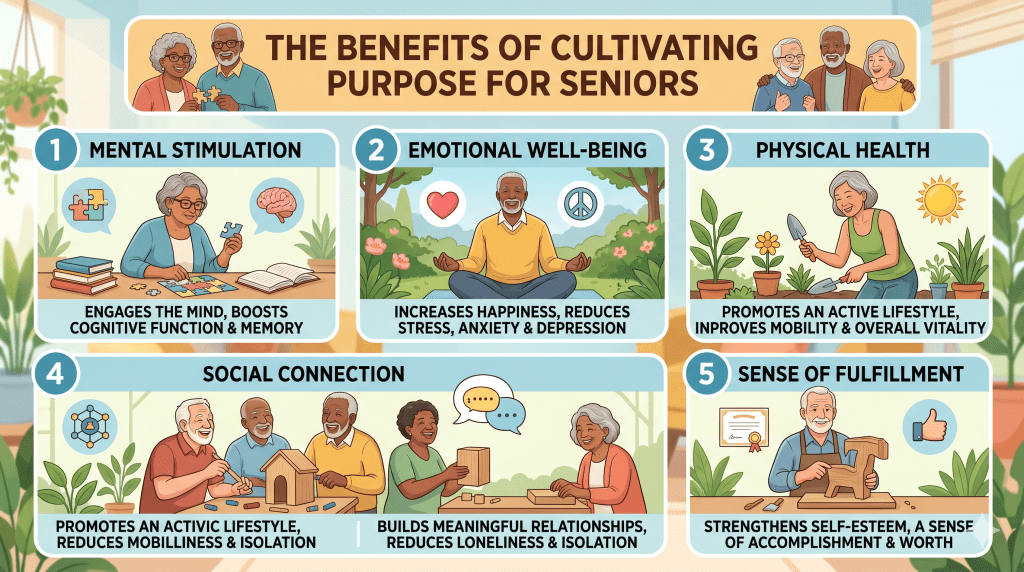
Cultivating a sense of contribution isn’t just good for the soul—it’s a powerful prescription for physical and mental vitality. The advantages reach deep into daily living, creating a foundation for a healthier, more engaged life.
Improved Cognitive and Emotional Health
A strong sense of meaning offers remarkable protection for the brain. Studies show that individuals with clear goals have less tissue damage. This can lower dementia risk and help maintain sharpness.
Emotional health gets a major boost, too. Feeling engaged significantly reduces stress and anxiety. This calm state directly supports heart health and helps manage conditions like high blood pressure. It’s a key part of understanding social isolation and its effects.
Enhanced Physical Activity and Better Sleep
Meaningful routines naturally encourage movement. Whether volunteering, walking with a friend, or caring for a pet, physical activity increases. This is vital for maintaining independence.
Having fulfilling goals also regulates mood, leading to more restful sleep. People report fewer restless nights and greater energy during the day. Exploring activities you enjoy is a great starting point.
The connection is powerful. A meaningful life leads to more activity. Better health then allows for even greater engagement. It’s a positive cycle that genuinely enhances overall well-being and longevity.
Strategies to Cultivate Purpose in Life

When traditional roles shift, discovering new sources of meaning becomes an adventure worth embracing. There are wonderful ways to help loved ones find purpose through daily engagement.
Nurturing Relationships and Social Engagement
Strong relationships form the heart of feeling valued. Encourage spending time with family, friends, and community groups.
Simple gatherings like book clubs or coffee dates create meaningful connection. These activities remind seniors that their presence matters to others.
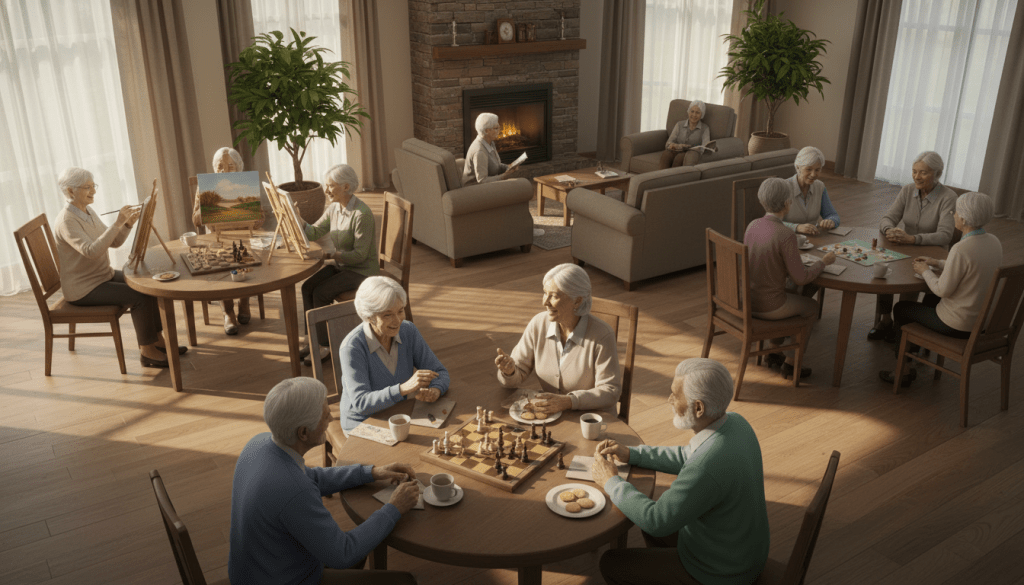
Regular social interaction reduces isolation beautifully. Exploring rediscovering your life’s purpose later in offers more ideas for building connections.
Try JoyCalls Free
No app or new device needed. Start with a free 7-day trial.
Rediscovering Hobbies and Embracing Learning
Old hobbies that once brought joy can spark new satisfaction. Painting, gardening, or music create wonderful activities.
Even simple pleasures like puzzles or reading provide deep accomplishment. The goal is engagement, not perfection.
Learning something new stimulates the brain and builds confidence. Art classes or technology workshops give exciting things to anticipate each week.
Discover best hobbies for lonely seniors for more inspiration. These ways of learning keep minds active and hearts full.
Building a Personal “Purpose Plan”: A Practical Way to Feel Needed Again
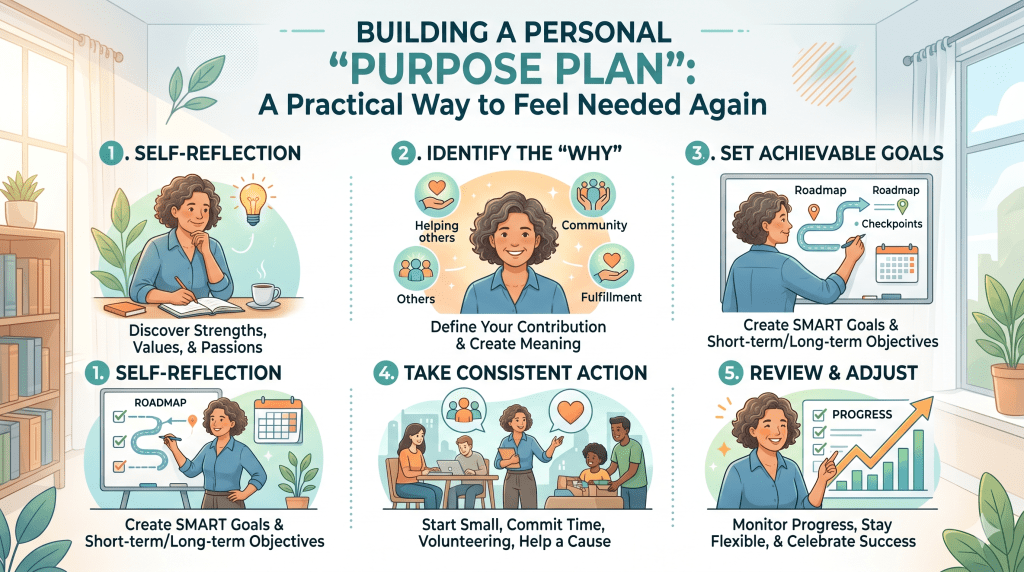
One of the hardest parts of loneliness in later life is not simply being alone. It is feeling as if your presence no longer changes anything for anyone.
That thought can be deeply painful: “If I did not call, would anyone notice? If I stopped doing what I do, would anything be different?”
A strong sense of purpose helps answer that question with a quiet but powerful yes. Purpose reminds an older adult that they still have influence, wisdom, kindness, experience, and presence to offer. Research and public health guidance continue to connect loneliness and social isolation with higher risks for depression, cognitive decline, heart disease, and other health concerns, which is why building meaningful connection is not just emotionally helpful—it is part of healthy aging.
But purpose should not stay as a nice idea. It needs to become visible in daily life.
That is where a personal “Purpose Plan” can help.
A Purpose Plan is a simple weekly structure that answers three questions:
- Who do I matter to this week?
- What small contribution can I make?
- What will remind me that my life still has value?
This plan does not need to be complicated. It does not require travel, money, perfect health, or a busy social calendar. It can be built around phone calls, small acts of care, memory-sharing, faith, learning, family support, neighborhood kindness, or quiet routines at home.
The goal is not to fill every hour. The goal is to create a steady rhythm of being connected, useful, and emotionally alive.
Start With Roles, Not Activities
Many older adults are told to “stay busy.” While staying active can help, busyness alone does not always reduce loneliness. A person can attend events, watch television, or scroll through photos and still feel emotionally unseen.
Purpose becomes stronger when activities are connected to a role.
Instead of asking, “What should I do today?” ask:
“What role can I play today?”
That small shift matters.
A senior may no longer be a full-time employee, daily caregiver, business owner, or head of a busy household. But they can still hold meaningful roles such as:
- Family storyteller
- Encourager
- Prayer partner
- Recipe keeper
- Neighborly checker-in
- Mentor
- Birthday reminder
- Plant caretaker
- Family historian
- Listener
- Advice-giver
- Tradition keeper
- Community helper
- Emotional anchor for grandchildren
These roles may look small from the outside, but they carry emotional weight. A weekly call to a grandson before his exams can become a role. Sending a recipe to a daughter can become a role. Checking on another widowed friend every Thursday can become a role. Recording family stories can become a role.
The question is not, “Is this impressive?”
The question is, “Does this help someone feel loved, guided, remembered, or supported?”
If the answer is yes, it counts.
Create a Weekly Contribution Map
A practical way to rebuild purpose is to create a simple “Contribution Map.” This can be written on paper, kept on the fridge, or discussed with a family member over the phone.
Divide the week into three types of contribution:
1. A Connection Contribution
This is something that strengthens a relationship.
Examples include:
- Calling one family member just to ask about their day
- Sending a voice note with a memory or blessing
- Writing a letter to a grandchild
- Asking a neighbor how they are doing
- Scheduling a regular Sunday phone call
- Sharing an old family photo and the story behind it
The key is to make the connection specific. “I should talk to people more” is too vague. “I will call Meera every Wednesday after lunch” is much easier to follow.
For seniors who feel hesitant about calling because they do not want to “bother” anyone, it may help to use a gentle script:
“I was thinking about you today and just wanted to hear your voice. Do you have five minutes?”
That sentence is simple, warm, and respectful. It does not demand attention. It opens the door.
2. A Help Contribution
This is something that makes another person’s life a little easier.
It does not have to be physical help. Many older adults with limited mobility can still offer emotional, practical, or wisdom-based support.
Examples include:
- Reminding a family member of an important date
- Helping plan a meal over the phone
- Sharing advice from experience
- Listening while someone talks through a problem
- Folding small laundry items if living with family
- Praying for someone and telling them so
- Reading to a grandchild over a video or phone call
- Giving feedback on a family decision when asked
- Helping keep track of family birthdays or traditions
This matters because feeling useful is often more healing than simply being entertained. Entertainment passes time. Contribution gives time meaning.
3. A Self-Respect Contribution
Purpose is not only about serving others. Seniors also need activities that say, “My life is still worth caring for.”
Examples include:
- Taking a short walk, if safe
- Doing chair stretches
- Watering plants
- Reading a meaningful passage
- Listening to music from a favorite decade
- Preparing one nourishing meal
- Practicing a hobby for 20 minutes
- Sitting in sunlight
- Keeping a gratitude notebook
- Attending a class, service, or group by phone or online
This type of contribution protects dignity. It reminds the person that their own well-being still matters.
A good Purpose Plan includes all three: connection, help, and self-respect.
Use the “One Person, One Task, One Time” Rule
When loneliness feels heavy, even simple advice can feel overwhelming. A senior may hear, “Volunteer, join a group, call friends, start a hobby,” and quietly think, “That sounds exhausting.”
That is why the best starting point is small.
Use this rule:
One person. One task. One time.
For example:
- One person: “I will call my sister.”
- One task: “I will ask how her doctor’s appointment went.”
- One time: “I will call Tuesday at 6 p.m.”
This is far more effective than saying, “I need to be more social.”
Here are a few examples:
- “I will send my grandson one encouraging message before his exam on Friday.”
- “I will ask my neighbor if she needs anything from the store this week.”
- “I will write down one childhood memory for my daughter on Sunday.”
- “I will call my old friend after breakfast on Monday.”
- “I will water the balcony plants every morning and send a photo to the family group once a week.”
Small promises rebuild trust with oneself. Over time, they create rhythm. Rhythm creates stability. Stability makes loneliness easier to manage.
Turn Life Experience Into a Living Legacy
Many older adults underestimate the value of what they know. They may think, “Nobody wants to hear old stories.” But families often lose precious wisdom because no one asks for it in time.
A powerful way to restore purpose is to create a “living legacy” project.
This does not need to be a formal memoir. It can be simple and ongoing.
Possible legacy projects include:
A Family Story Notebook
Each week, the senior writes or records one short memory:
- A childhood festival
- A first job
- A lesson learned from hardship
- A funny parenting moment
- A favorite recipe
- A family tradition
- A love story
- A mistake that taught something important
- A moment of courage
Family members can help by asking specific questions:
- “What was your home like when you were young?”
- “Who taught you the most about life?”
- “What did you do when money was tight?”
- “What family tradition should we never forget?”
- “What advice would you give someone starting over?”
This gives the senior a respected role: keeper of memory.
A Recipe and Ritual Collection
Food often carries history. A senior who cannot cook large meals anymore may still guide the family by preserving recipes, kitchen tips, festival rituals, or cultural practices.
They can record:
- Ingredients
- The story behind the dish
- Who loved it most
- When it was usually made
- Small techniques that were never written down
This turns memory into a gift.
A Wisdom File
This can be a notebook or audio collection titled “Things I Want My Family to Know.”
It may include advice on:
- Marriage
- Patience
- Money
- Grief
- Faith
- Friendship
- Raising children
- Handling conflict
- Staying hopeful
For families, this is priceless. For seniors, it reinforces an important truth: their life has taught them things worth passing on.
Make Purpose Easier for Seniors With Low Energy or Limited Mobility
Purpose should never be designed only for active, highly mobile seniors. Many older adults live with pain, fatigue, disability, illness, vision changes, hearing loss, or transportation barriers. These challenges can make traditional advice—“join a club” or “go volunteer”—feel unrealistic.
A good Purpose Plan respects energy.
For low-energy days, purpose can look like:
- A two-minute phone call
- A prayer for someone
- A short voice message
- Smiling and greeting a caregiver warmly
- Choosing music for the afternoon
- Looking through photos and naming people in them
- Folding napkins
- Watering one plant
- Sending one blessing to a family member
- Listening to someone without trying to fix the problem
These are not “lesser” forms of purpose. They are accessible forms of purpose.
A helpful family approach is to create two lists:
Green-Day Purpose
For days when energy is better:
- Attend a group
- Visit a friend
- Cook something simple
- Work on a hobby
- Go for a walk
- Volunteer for an hour
- Help with family planning
Gray-Day Purpose
For days when energy is low:
- Make one call
- Send one message
- Share one memory
- Say one prayer
- Sit near sunlight
- Listen to music
- Ask someone about their day
- Complete one small household task
This prevents all-or-nothing thinking. A senior does not have to feel like they failed just because they could not do something big.
Help Families Ask Better Questions
Families often want to help but accidentally ask questions that shut conversation down.
For example:
“Are you lonely?”
Many seniors will answer, “No, I’m fine,” even when they are not. They may not want to worry their children. They may feel embarrassed. Or they may not have the words to explain the ache.
Better questions are warmer and more specific:
- “What part of the day feels longest for you?”
- “Who did you enjoy talking to this week?”
- “Is there someone you miss hearing from?”
- “What would make tomorrow feel a little better?”
- “Would you like a regular call at the same time each day?”
- “Is there something you used to do that you wish you still had a way to do?”
- “What is one thing you would still like to teach us?”
- “What family story should we write down before we forget it?”
These questions help seniors talk about purpose without feeling examined.
Families should also avoid turning every call into a checklist. Medication, meals, appointments, and safety matter, but if every conversation is only about tasks, the senior may feel managed rather than loved.
A better rhythm is:
- Start with warmth.
- Ask about feelings or memories.
- Discuss practical needs.
- End with something meaningful.
For example:
“I loved hearing that story. Next time, will you tell me more about how you celebrated holidays when you were young?”
That gives the next call a purpose before it even begins.
Build a “Needed, Not Needy” Routine
Many seniors hesitate to ask for connection because they fear being seen as needy. Families can gently reduce that fear by creating predictable routines where contact is expected, not requested.
For example:
- Monday: Grandchild calls for a story
- Wednesday: Daughter calls during tea
- Friday: Senior shares one memory or recipe
- Sunday: Family group call
- Daily: A friendly check-in call or companion call
When routines are predictable, the senior does not have to wonder, “Should I call? Are they too busy? Am I interrupting?” The connection is already part of the week.
This is especially important for older adults living alone. The National Institute on Aging notes that loneliness and isolation can affect health and well-being, and practical connection habits can help older adults stay engaged.
The routine should not feel like surveillance. It should feel like belonging.
Instead of saying:
“We need to check on you every day.”
Try:
“We love hearing from you. Let’s make this our regular time.”
That small language change protects dignity.
Review the Plan Every Month
Purpose changes. Health changes. Energy changes. Family schedules change. A Purpose Plan should be flexible, not rigid.
Once a month, seniors and families can review:
- What felt good this month?
- What felt tiring?
- Which calls or activities felt meaningful?
- Did anything feel forced?
- Is there someone new to reconnect with?
- Is there a role the senior wants to try?
- Is there a role they want to stop doing?
This review prevents purpose from becoming another obligation.
The right plan should make a senior feel more alive, not more pressured.
A Simple Weekly Purpose Plan Template
Here is a practical template families can use:
This week, I want to feel connected to:
Name one person or group.
One small way I can help is:
Choose one action.
One story, skill, or memory I can share is:
Write one idea.
One thing I will do for my own well-being is:
Choose one self-care action.
The day and time I will do it:
Make it specific.
Afterward, I will remind myself:
“My presence still matters.”
This may look simple, but repeated weekly, it can become a powerful emotional anchor.
The Deeper Message: Purpose Does Not Retire
Aging changes what contribution looks like, but it does not erase the need to contribute.
A person may no longer work full-time, raise children, drive everywhere, host large gatherings, or manage a household the way they once did. But they can still encourage, remember, guide, bless, teach, listen, notice, comfort, and love.
Those are not small things.
For a lonely older adult, the path back to purpose often begins with one clear reminder:
You do not have to be needed by everyone. Being meaningfully needed by someone still matters.
And sometimes, that “someone” begins with one phone call, one story, one shared memory, one weekly role, and one gentle plan that makes tomorrow feel worth waking up for.
When Purpose Feels Lost: How to Rebuild It After Grief, Retirement, or Major Life Change
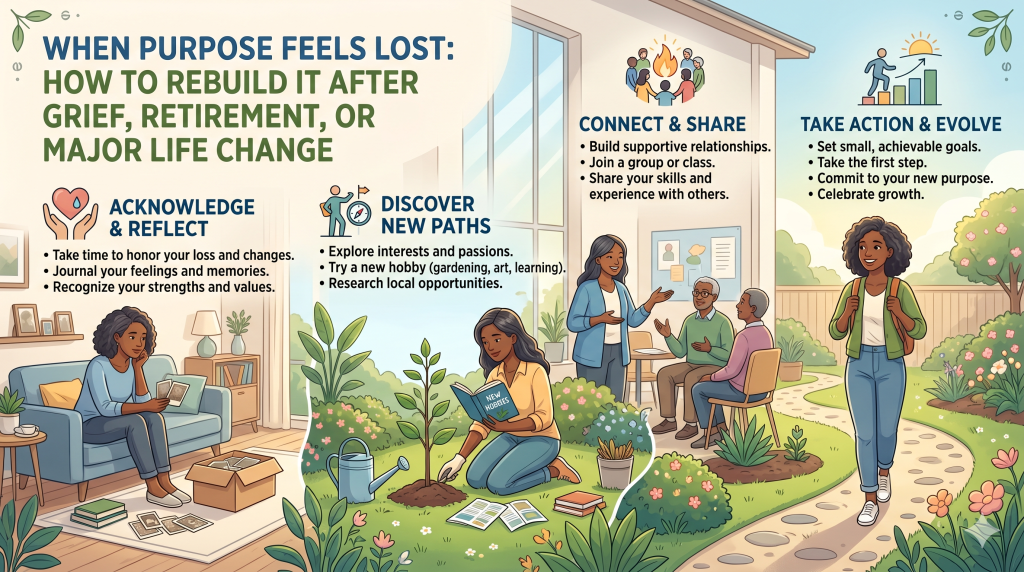
Purpose often becomes harder to feel after a major life change.
For many older adults, this change may be retirement. For others, it may be the death of a spouse, children moving away, loss of mobility, illness, relocation, or simply the slow shrinking of daily responsibilities. What once gave life structure may no longer be there.
This can create a quiet identity crisis.
A senior may think:
“I used to be someone people depended on.”
“I used to know exactly what my day was for.”
“Now everyone has their own life.”
“What am I supposed to do with myself?”
These thoughts are not signs of weakness. They are signs of transition.
Purpose does not always disappear because a person has nothing left to offer. Often, it disappears because the old form of contribution is gone, and the new form has not yet been named.
That is the key: purpose may need to be redesigned.
Do Not Try to Return to the Old Version of Yourself
One painful mistake many seniors make is comparing today’s life with the busiest, strongest, most productive version of themselves.
They may compare themselves to when they were raising children, running a home, earning money, caring for parents, managing responsibilities, or being the person everyone called first.
But aging often asks a person to stop measuring worth by output.
Purpose in later life may become quieter, slower, and more relational. It may come less from doing everything and more from being deeply present in a few meaningful ways.
Instead of asking:
“Why can’t I be who I used to be?”
Ask:
“What part of who I have always been can still be shared today?”
A teacher may still explain things beautifully.
A parent may still comfort.
A business owner may still mentor.
A homemaker may still preserve traditions.
A caregiver may still notice when someone is struggling.
A spiritual person may still pray, bless, and guide.
A storyteller may still keep family memory alive.
The role changes, but the core gift often remains.
Identify What Has Not Changed
When life feels unfamiliar, it helps to name the things that are still true.
Ask the senior to complete these sentences:
- “I have always been someone who cares about…”
- “People used to come to me for…”
- “I still enjoy helping with…”
- “I notice things that others miss, such as…”
- “One value I never want to lose is…”
- “Even now, I can still offer…”
These answers reveal purpose clues.
For example:
- “I have always cared about children” may become reading stories to grandchildren or supporting a local school.
- “People used to come to me for advice” may become mentoring younger relatives.
- “I still enjoy food” may become preserving recipes.
- “I notice when people are sad” may become becoming the family’s emotional check-in person.
- “I value faith” may become leading a small prayer routine or blessing younger family members.
Purpose is often hidden inside lifelong values.
Create New Rituals After Loss
Grief can make purpose feel impossible. After losing a spouse, sibling, close friend, or long-time companion, an older adult may not only miss the person. They may miss the version of themselves they were with that person.
Daily life may feel empty because shared rituals have disappeared.
Morning tea.
Evening walks.
A favorite show.
Festival planning.
Doctor visits together.
Small arguments.
Inside jokes.
The comfort of being expected.
After loss, purpose should not be forced too quickly. Grief needs tenderness. But over time, creating new rituals can help life regain shape.
A new ritual may be:
- Lighting a candle each evening and saying one thing they are grateful for
- Calling a family member at the time they used to feel most lonely
- Cooking one favorite dish of the person they miss
- Writing letters to the person who passed away
- Donating, volunteering, or helping in their memory
- Creating a memory box or photo album
- Sharing one story about them with the family each week
The goal is not to “move on.”
The goal is to carry love forward.
Purpose after grief often begins with this question:
“How can the love I still feel become an action?”
Replace “Big Purpose” With “Daily Purpose”
Some seniors feel pressured by the word purpose because it sounds grand. It may seem like purpose must be a mission, a major project, or a public contribution.
But daily purpose is often more realistic and more healing.
Daily purpose can be:
- Getting dressed because the day deserves respect
- Calling one person
- Feeding a pet
- Watering a plant
- Saying a prayer
- Writing one memory
- Preparing a simple meal
- Sitting outside for fresh air
- Encouraging someone younger
- Keeping a promise to oneself
These acts may look ordinary, but they create direction.
A useful question each morning is:
“What is one reason to participate in today?”
Not five reasons. Not a full schedule. Just one.
For example:
- “Today, I will call my daughter.”
- “Today, I will finish one page of my notebook.”
- “Today, I will sit in the sun for ten minutes.”
- “Today, I will ask my grandson about school.”
- “Today, I will organize one drawer.”
- “Today, I will listen to devotional music.”
A small reason is still a reason.
Use the “Before Lunch” Method
Many older adults feel loneliness most strongly during unstructured hours. The day stretches out. Energy drops. Thoughts become heavier.
One helpful strategy is to create one meaningful action before lunch.
This gives the day an early sense of progress.
The action should be simple:
- Make one phone call
- Step outside briefly
- Write one paragraph
- Fold one small pile of clothes
- Send one message
- Read one page
- Water plants
- Prepare tea with attention
- Say a prayer for someone specific
- Listen to one meaningful song
The point is not productivity. The point is emotional momentum.
When a senior can say, “I did something meaningful today,” the day feels less empty.
Choose a Purpose Partner
Purpose becomes easier when someone else knows about it.
A purpose partner can be a child, grandchild, friend, neighbor, caregiver, volunteer, faith leader, or companion caller. This person does not need to control the senior’s routine. Their role is simply to encourage consistency.
A purpose partner may ask once a week:
- “What felt meaningful this week?”
- “Who did you enjoy speaking with?”
- “What would you like to do again?”
- “Is there one thing you want to try next week?”
- “Would you like help setting it up?”
This keeps purpose from becoming a private struggle.
For families, this is especially important. Instead of only checking whether an older adult has eaten or taken medicine, ask whether the week had meaning.
Care keeps the body safe.
Purpose helps the person feel alive.
Make Space for Being Helped Too
Many seniors resist receiving help because they feel it makes them a burden. But purpose does not mean always giving and never receiving.
Healthy purpose includes interdependence.
That means:
- Sometimes the senior helps.
- Sometimes the senior receives help.
- Sometimes they simply share presence.
Receiving care with grace can also strengthen relationships. It allows younger family members to express love. It gives them a chance to give back. It keeps the relationship human instead of one-sided.
A senior may find it helpful to say:
“I am learning to receive help without feeling ashamed.”
Families can support this by avoiding language that sounds burdensome.
Instead of:
“You can’t do this anymore.”
Say:
“Let’s do this together.”
Instead of:
“You need help.”
Say:
“I’d enjoy helping you with this.”
Dignity matters.
A Gentle Exercise: The New Purpose Inventory
This exercise can help older adults rediscover direction after life changes.
Write answers to these questions:
1. What do I miss being needed for?
This might reveal an old role.
Examples:
- Cooking for family
- Giving advice
- Managing money
- Helping children
- Hosting guests
- Caring for a spouse
- Working
- Solving problems
2. What part of that role can still exist in a new way?
Examples:
- Cooking becomes sharing recipes.
- Managing money becomes teaching grandchildren about saving.
- Hosting becomes weekly phone hospitality.
- Working becomes mentoring.
- Caring becomes emotional support.
3. Who could benefit from this part of me?
Name specific people.
4. What is one small way I can offer it this week?
Make it practical and time-bound.
This exercise turns loss into redesign.
Purpose Is Not Over Because Life Has Changed
Aging may change independence, energy, routines, and relationships. But it does not erase value.
Sometimes, the deepest purpose of later life is not to do more, but to love more intentionally. To pass on wisdom. To repair relationships where possible. To bless the next generation. To become more honest about what matters. To notice beauty. To offer steadiness in a rushed world.
For a senior who feels forgotten, this message matters:
Your purpose may look different now, but different does not mean gone.
It may be quieter.
It may be slower.
It may happen through calls, stories, prayers, memories, kindness, and presence.
But it is still real.
And one small act of purpose, repeated with care, can become a lifeline back to belonging.
Designing a Life That Feels Worth Living Every Day: Micro-Habits That Sustain Purpose and Reduce Loneliness
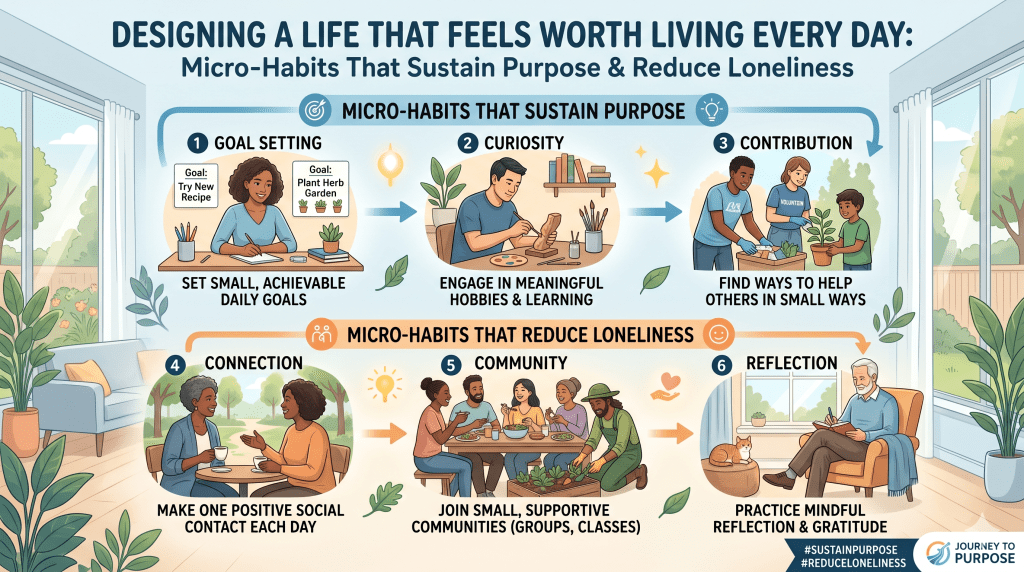
Even after creating a Purpose Plan and rediscovering meaningful roles, there is one challenge that often remains:
Consistency.
Loneliness does not usually come from one bad day. It builds quietly through repeated empty moments—hours that feel unstructured, days that blur together, weeks without meaningful interaction.
That is why purpose must not rely only on motivation. It must be supported by small, repeatable habits that make meaning part of everyday life.
These are called micro-habits of purpose.
They are not big goals. They are small, reliable actions that:
- Anchor the day
- Create connection
- Reinforce identity
- Reduce emotional drift
- Build a sense of being needed
Over time, these habits quietly transform how a senior experiences their life.
Why Micro-Habits Work Better Than Big Changes
Large changes can feel overwhelming, especially for older adults dealing with fatigue, health issues, or emotional strain.
For example:
- “I should make more friends”
- “I should join activities”
- “I should stay busy”
These ideas sound good, but they lack structure. They require energy, planning, and confidence all at once.
Micro-habits, on the other hand, are:
- Small
- Specific
- Easy to repeat
- Low-pressure
- Emotionally manageable
Instead of trying to change everything, they change just enough—consistently.
And consistency is what rebuilds purpose.
The “Anchor Points” of a Meaningful Day
A purposeful day does not need to be full. It needs to have anchor points—moments that give the day direction.
A simple day structure may include:
- A Morning Anchor – something that starts the day with intention
- A Midday Anchor – something that creates connection or contribution
- An Evening Anchor – something that brings reflection or closure
These anchors reduce the feeling of drifting through time.
Morning Anchor: Start With Intention
The first hour of the day often shapes the emotional tone.
A meaningful morning anchor can be:
- Saying a prayer or gratitude statement
- Making the bed as a signal that the day has begun
- Listening to a favorite song
- Stepping into sunlight
- Drinking tea mindfully
- Reading a short passage
- Planning one meaningful action for the day
A powerful sentence to start the day is:
“Today, I will show up for one person or one purpose.”
This creates direction before the day becomes passive.
Midday Anchor: Create Connection or Contribution
Midday is often when loneliness becomes more noticeable.
This is the ideal time for a connection or contribution habit:
- Calling someone
- Sending a message
- Sharing a memory
- Asking someone how they are doing
- Helping with a small task
- Recording a story
- Checking in on a neighbor
- Participating in a group call or activity
Even a 5-minute interaction can change the emotional quality of the day.
The key is intentionality.
Instead of waiting for someone to call, the senior becomes the initiator—even in a small way.
Evening Anchor: Close the Day With Meaning
Evenings can feel especially quiet for seniors living alone.
An evening anchor helps prevent the day from ending in emotional emptiness.
Examples include:
- Reflecting on one meaningful moment
- Writing one sentence in a notebook
- Saying a prayer for someone
- Listening to calming music
- Calling a loved one briefly
- Watching something that brings comfort
- Looking at family photos
- Expressing gratitude for one thing
A simple question to end the day:
“What made today worth it?”
Even on difficult days, there is often one answer.
The “3×3 Connection System”
For seniors who want a structured yet simple approach to staying connected, the 3×3 system works well.
It involves:
- 3 people
- 3 types of interaction
- 3 times per week
Step 1: Choose 3 People
These could be:
- A child
- A grandchild
- A friend
- A neighbor
- A sibling
- A former colleague
- A fellow member of a community or faith group
The goal is not to have many people. It is to have a few meaningful connections.
Step 2: Choose 3 Types of Interaction
Rotate between:
- A phone call
- A message or voice note
- Sharing something (story, photo, advice, blessing)
This keeps interactions fresh and less repetitive.
Step 3: Connect 3 Times Per Week
Spread interactions across the week:
- Monday: Call one person
- Wednesday: Send a message
- Friday: Share something meaningful
This structure reduces the pressure of daily socializing while still maintaining consistent connection.
Over time, this creates a sense of:
- Being remembered
- Being involved
- Being emotionally present in others’ lives
Create “Expected Moments” in the Week
Loneliness often grows when nothing is expected.
When a senior has no planned interactions, the day feels uncertain. They may hesitate to reach out, and others may assume they are “doing fine.”
Creating expected moments solves this problem.
Examples include:
- A weekly call with a grandchild
- A fixed time to speak with a friend
- A daily check-in call
- A weekly storytelling session
- A regular prayer or devotional call
- A weekly “family update” conversation
These moments do not have to be long.
What matters is predictability.
When something is expected, it becomes part of identity:
“This is my time. This is my role.”
Turn Passive Time Into Active Presence
Many seniors spend long hours in passive activities:
- Watching television
- Scrolling through photos
- Sitting quietly
While rest is important, too much passive time can increase feelings of isolation.
The goal is not to eliminate these activities, but to make some of them more active and meaningful.
For example:
Instead of only watching TV:
- Call someone during or after the show to discuss it
Instead of only looking at photos:
- Share one photo and tell the story behind it
Instead of sitting quietly:
- Listen to music and reflect on memories
- Write down thoughts or feelings
Instead of waiting:
- Initiate a small interaction
These shifts turn time from something that “passes” into something that “connects.”
Use Voice and Conversation as Tools for Purpose
One of the most powerful tools seniors still have is their voice.
Even when mobility is limited, energy is low, or circumstances are restricted, the ability to speak, listen, and connect remains deeply meaningful.
A short conversation can:
- Reduce loneliness
- Strengthen relationships
- Provide emotional relief
- Reinforce identity
- Create a sense of being heard
This is why regular, warm, human conversation should be treated as a core part of a Purpose Plan—not an optional extra.
Even a few minutes of genuine conversation can change how a person feels for hours afterward.
Build Emotional Safety Into Daily Life
Purpose is difficult to sustain if a senior does not feel emotionally safe.
Emotional safety means:
- Feeling heard
- Not feeling judged
- Not feeling like a burden
- Being able to express sadness or fear
- Knowing someone will respond
Families and caregivers can support this by:
- Listening without interrupting
- Avoiding dismissive responses
- Not rushing conversations
- Validating feelings
- Being consistent
For example, instead of saying:
“Don’t feel that way.”
Say:
“I understand why that would feel difficult.”
This small shift builds trust.
When a senior feels safe, they are more likely to engage, share, and participate in purposeful activities.
Prevent Purpose Burnout
Yes, even purpose can become tiring if it turns into pressure.
Signs of purpose burnout include:
- Feeling obligated rather than motivated
- Feeling tired after interactions
- Avoiding planned activities
- Feeling like one must always “be useful”
- Losing enjoyment in previously meaningful tasks
To prevent this:
- Keep expectations small
- Allow rest days
- Rotate activities
- Let go of tasks that feel forced
- Focus on quality, not quantity
Purpose should feel supportive, not exhausting.
A Weekly Micro-Habit Plan Example
Here is a realistic weekly structure combining everything discussed:
Monday
- Morning: Gratitude or prayer
- Midday: Call one person
- Evening: Reflect on one meaningful moment
Tuesday
- Morning: Listen to music
- Midday: Write one memory
- Evening: Relax and rest
Wednesday
- Morning: Plan one small action
- Midday: Send a message or voice note
- Evening: Look at photos and share one
Thursday
- Morning: Light stretching or sunlight
- Midday: Help someone (even with advice)
- Evening: Watch something comforting
Friday
- Morning: Read something meaningful
- Midday: Share a story or recipe
- Evening: Reflect on the week
Saturday
- Flexible day (rest or light activity)
Sunday
- Family call or spiritual routine
This is not rigid. It is a guide.
Even completing a few of these actions each week can significantly improve emotional well-being.
The Quiet Truth About Purpose and Loneliness
Loneliness does not always disappear overnight.
But purpose changes how loneliness feels.
Without purpose, loneliness feels like emptiness.
With purpose, loneliness becomes quieter, more manageable, and often shorter-lived—because there are moments of connection, contribution, and meaning to balance it.
A senior may still have quiet days. But they also have reasons to engage, people to reach out to, and roles to fulfill.
And that makes all the difference.
A Final Thought for Seniors and Families
Purpose in later life is not about proving usefulness.
It is about staying connected to life.
It is about:
- Being part of someone’s day
- Sharing something that matters
- Feeling remembered
- Offering presence
- Receiving care
- Continuing to grow in small ways
For any senior who feels:
“No one needs me anymore.”
The truth may not be that no one needs them.
The truth may be that the ways they are needed have changed—and those new ways simply need to be rediscovered, gently structured, and supported.
And once they are, even in small forms, life begins to feel meaningful again—one conversation, one habit, and one purposeful moment at a time.
Practical Ways to Find Purpose After Retirement
Leaving a long career can feel like stepping off a moving walkway. The sudden lack of structure and a clear mission leaves many adults feeling adrift. This transition is a common challenge, but it also opens the door to new, fulfilling chapters.

Volunteering and Community Involvement
Helping others is one of the most rewarding paths forward. Simple acts create a huge impact. Volunteering at a local library, school, or animal shelter builds deep connections.
This service does more than help the community. It rebuilds self-worth. It transforms the feeling of “I’m not needed” into “I make a difference.” Even calling a lonely neighbor can become a meaningful part of your week.
Starting small is key. A few hours can blossom into a rich source of belonging. For more ideas, explore this guide on how to find purpose in retirement.
Exploring Part-Time Work and Mentorship Opportunities
Retirement doesn’t have to mean the end of working life. Many seniors thrive in part-time roles. These positions in retail or nonprofits offer engagement and extra income.
Sharing a lifetime of experiences is another powerful way. Mentoring younger generations provides immense pride. Guiding someone else allows you to pass along valuable skills and wisdom.
These activities provide social interaction and structure. They offer the satisfaction of knowing your efforts genuinely matter. It’s a wonderful way to stay active and connected.
Embracing Technology for Meaningful Connections
Distance doesn’t have to mean disconnection in today’s world. Many adult children live hours from their parents. Even those nearby juggle demanding careers and family responsibilities.
Technology bridges this gap beautifully. It offers meaningful connection without complicated devices. Seniors can feel cared for daily, even when family can’t be there physically.

Daily AI Companions and Virtual Check-Ins
Imagine a warm, conversational phone call arriving each day. AI companions designed for seniors provide consistent companionship. These calls create something to look forward to.
They reduce loneliness and offer emotional support. The technology requires no apps or smartphones. It’s as simple as answering the phone.
This approach represents how seniors are staying connected through innovation.
Utilizing JoyCalls for Enhanced Social Interaction
JoyCalls provides caring companionship through regular phone conversations. The AI has genuine discussions about memories and daily life.
Families receive daily summaries and alerts. This offers peace of mind knowing their loved one is okay. It’s a modern check-in system for long-distance caregivers.
These interactions don’t replace human connection. They supplement it, ensuring seniors feel valued every single day.
| Traditional Approach | Technology Solution | Benefit for Seniors |
|---|---|---|
| Waiting for family visits | Daily AI companionship | Consistent social interaction |
| Phone calls when family has time | Scheduled conversational calls | Something to anticipate each day |
| Family worrying between visits | Regular updates and alerts | Peace of mind for everyone |
| Learning complex technology | Simple phone-based system | Easy to use, no learning curve |
Start providing daily companionship today. Visit JoyCalls to sign up and bring consistent connection to your loved one’s life.
Mind-Body Connection: Enhancing Health Through Purpose
Science now confirms what many have felt intuitively: our emotional well-being directly shapes our physical health. This powerful connection goes beyond simple mood improvements.

Building Mental Resilience and Emotional Wellbeing
A strong sense of purpose offers remarkable protection against serious health conditions. Research shows it lowers risks of stroke, heart disease, and dementia.
The longest human development study followed Harvard graduates for decades. Their conclusion was simple yet profound: “Happiness is love. Full stop.” Good relationships require nurturing, much like physical fitness.
Viktor Frankl, from his concentration camp experience, wrote that love is humanity’s highest goal. He believed salvation comes through connection with others.
This emotional foundation translates to concrete physical benefits. People with clear meaning in their life show better walking speed, stronger grip, and improved heart health.
Storytelling becomes especially powerful during these years. When seniors share their stories with children or grandchildren, it reinforces their identity. This validation creates lasting meaning.
Creating space for these narratives helps combat social isolation in seniors living alone. The simple act of listening makes people feel valued and respected.
Building this mind-body connection doesn’t require medical intervention. It needs presence, genuine conversation, and maintaining meaningful activities. Research continues to show how purpose enhances both life span and health.
Conclusion
What begins as a quiet whisper of doubt can become a powerful declaration of ongoing contribution. The feeling that “no one needs me” doesn’t have to define anyone’s later years. Every person has unique value to share with their community and loved ones.
Supporting a loved one’s sense of purpose is one of the most meaningful gifts families can offer. This support directly impacts wellbeing and helps protect against the serious health risks of loneliness. Simple acts of love and consistent connection create lasting protection.
Rediscovering meaning takes patience and creative exploration. Start today with a conversation, a shared activity, or regular companionship. Every person’s life story matters deeply—and their next chapter can be filled with joy and contribution.