


What if a simple phone call could ease your mind and brighten your loved one’s day?
You’re at work, and a quiet worry pops into your head. Did Mom remember her medication? Is Dad feeling okay today? These thoughts are a constant weight for many busy adult children. Staying connected with aging parents is harder as our lives get busier.
The reality is stark. A staggering 75% of older adults with health or mobility challenges experience severe loneliness. This isolation isn’t just about feeling sad. It can increase the risk of dementia by up to 60%. Regular, meaningful conversation is a powerful shield against this crisis.
Technology is now building new bridges to keep families close. Imagine a service that uses a familiar telephone—no apps or complicated gadgets—to provide daily phone check-ins for seniors. It’s an innovative solution designed to offer reassurance and companionship.
This article will explore how these services genuinely work. We’ll cover what they provide, like routine and awareness for families. Most importantly, we’ll clarify what they are not designed to replace: human connection and professional medical care. Our goal is to help you make an informed decision with warmth and understanding, honoring the dignity and independence of your loved ones.
Key Takeaways
- A significant number of older adults face loneliness, which can seriously impact their health.
- Simple, regular conversations can be a powerful tool for well-being.
- New technology uses ordinary telephones to create consistent connections.
- These services are meant to support, not replace, family interaction and professional care.
- Understanding how these tools work helps families make confident choices for their loved ones.
Introduction to AI-Powered Check-In Services
Modern life creates gaps in our ability to provide the daily connection our loved ones truly need. Careers, family responsibilities, and distance make consistent visits challenging. Many adult children worry about their aging parents spending too much time alone.
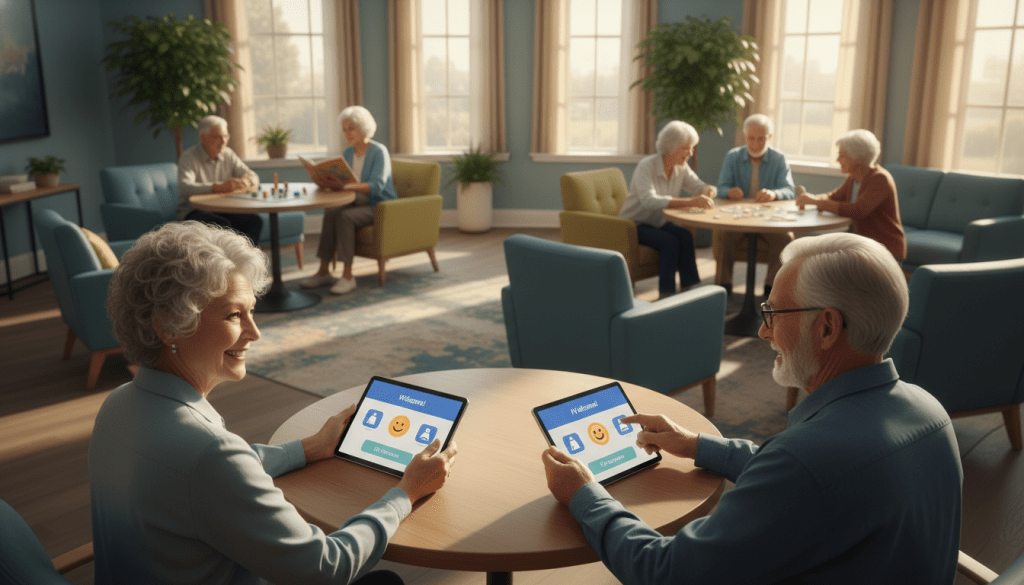
Understanding the Need for Daily Engagement
Research reveals sobering facts about isolation. Lack of regular social interaction creates serious health issues for older adults. Studies show dramatic increases in dementia risk when people experience prolonged loneliness.
Daily engagement isn’t just about preventing health issues. It provides mental stimulation and emotional warmth. Meaningful conversations help maintain cognitive function and overall wellbeing.
The Role of Technology in Senior Care
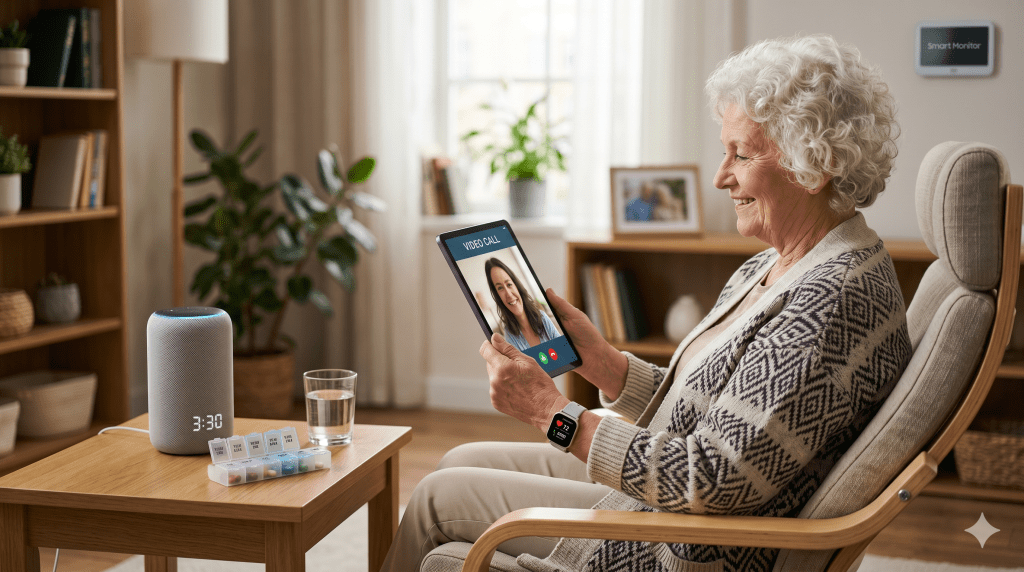
Technology now offers practical solutions that work with existing telephones. These services provide consistent companionship during quiet hours. They’re designed to supplement human care, not replace it.
The beauty lies in simplicity. No new devices or complicated apps are required. Your parent can use their familiar landline or mobile phone. This eliminates the frustration of learning new technology.
| Benefit | Research Finding | Impact Level |
|---|---|---|
| Reduced Loneliness | 20% decrease | Significant |
| Lower Depression Risk | 24% reduction | Meaningful |
| Dementia Prevention | Up to 26% lower risk | Substantial |
While nothing replaces human connection, these companion services ensure no one spends entire days without conversation. They provide gentle reminders and thoughtful questions through comfortable phone interactions.
The Benefits of AI-Powered Daily Check-Ins
There’s a quiet comfort in knowing someone is consistently looking out for your loved one. These services offer more than just routine contact—they create meaningful impact on multiple levels.

Combating Loneliness and Enhancing Wellbeing
Research reveals impressive outcomes. Regular social contact through phone conversations can reduce loneliness by 20%. It also decreases depression rates by 24% and lowers dementia risk by 26%.
At RiverSpring Living’s program, participants became more engaged after using companion services. They started leaving their rooms more often for activities. This demonstrates how daily companionship creates positive momentum in people’s lives.
| Health Benefit | Improvement Rate | Impact on Quality of Life |
|---|---|---|
| Reduced Isolation | 20% decrease | Significant emotional uplift |
| Lower Depression Risk | 24% reduction | Meaningful mood improvement |
| Dementia Prevention | 26% lower risk | Substantial long-term protection |
Providing Peace of Mind for Families and Caregivers
For caregivers, these services offer tangible relief. They know their loved ones receive daily attention even during busy times. Work meetings or family emergencies no longer mean missed connections.
The technology acts as an early warning system. It alerts families if concerning patterns emerge. This allows quick response to potential issues before they escalate.
Many adult children experience reduced guilt knowing their parent has meaningful conversation every day. Services like daily connection companions provide consistent routine that older adults can depend on. They also offer comprehensive support systems for long-distance care.
AI check-in calls for seniors
Imagine a friendly voice that knows your loved one’s name and remembers their favorite stories. These innovative phone services provide scheduled conversations with a warm, human-like companion.
Enhancing Health Monitoring and Social Interaction
The technology offers gentle reminders for medication and daily routines. It helps maintain healthy habits without feeling intrusive. This support happens through natural conversation.
Social connection builds over time. The companion remembers past discussions and asks thoughtful questions. Meaningful dialogue develops from life experiences and interests.
A typical interaction starts with a personalized greeting. It might ask about sleep quality or offer a medication prompt. Then it transitions to engaging topics like gardening or family memories.
Flexibility is key. Conversations can be scheduled for optimal times. Many services also allow on-demand chats whenever companionship is needed.
Try JoyCalls Free
No app or new device needed. Start with a free 7-day trial.
The alert system provides important safety. Family members receive notifications if scheduled contact isn’t successful. This creates peace of mind for everyone involved.
Integrating Joy Calls and Other Innovative Solutions
When you can’t be there in person, technology can create a bridge of consistent connection. Several services now offer this support, each with unique features that can work together to provide comprehensive care.
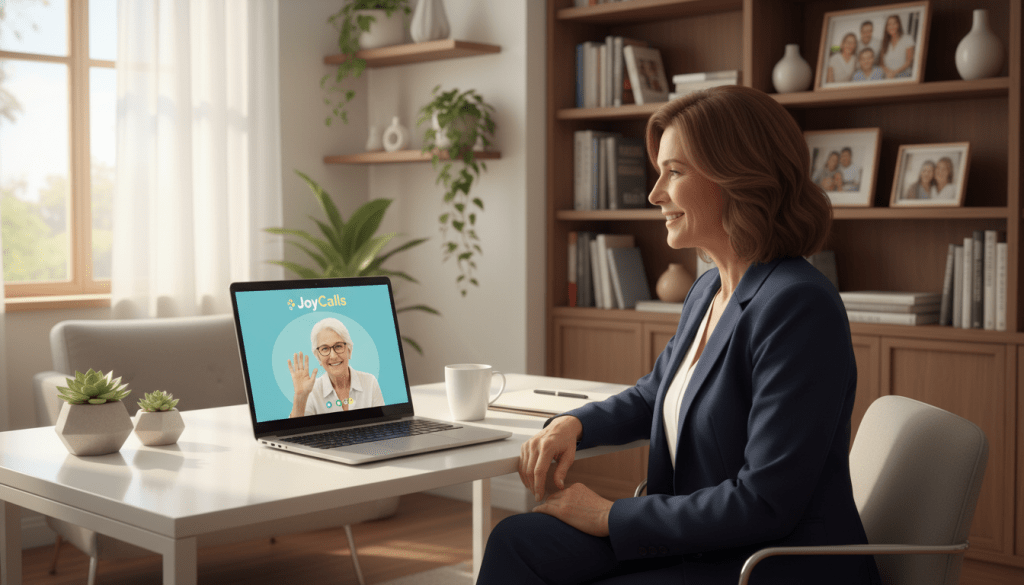
JoyCalls Signup and Features
JoyCalls is a dedicated phone companion designed for families. It provides daily engagement using any existing telephone. Getting started is simple and brings immediate peace of mind.
The service delivers meaningful conversation every day. It also sends detailed summaries via email to family members. This gives caregivers valuable insights into their loved ones‘ wellbeing.
Features include mood tracking and specialized support. It offers tailored reminders and morning conversations. This companion service is available globally in multiple languages.
Complementary Services for Comprehensive Care
Other options like CareCall provide similar support. They often include a care circle for up to five members. This shares responsibility and information across the family.
These solutions work alongside human interaction. They fill quiet hours during the day. The recent nationwide launch of such services makes them accessible to more people.
Choosing the right fit depends on your specific needs. Many offer free trials to help caregivers decide. This ensures your loved ones receive the best possible support.
Technology and Personalization in Senior Care
The best technology for aging loved ones feels less like technology and more like a thoughtful friend. These systems learn and adapt to create genuinely personal experiences.
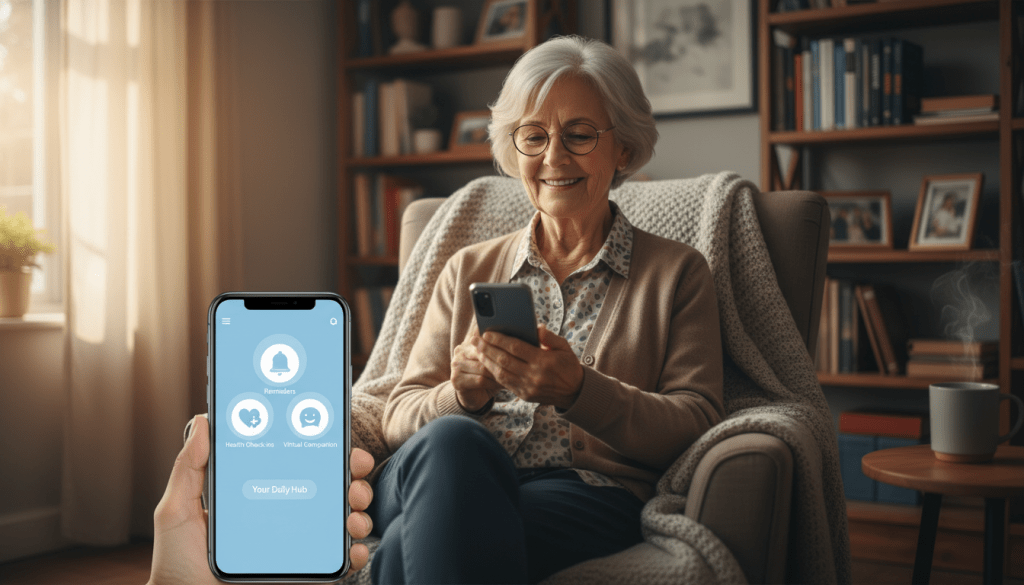
Advanced voice systems adjust their pacing based on how your loved one responds. They remember past conversations and build on shared history. This creates increasingly meaningful exchanges over time.
Adaptive Voice Interactions and Memory Features
The companion recalls important details from previous conversations. It remembers that your parent served in the military or loves gardening. These personal touches make each call feel genuinely connected.
With over 1,400 life story questions available, the system helps preserve family stories. It encourages reminiscing about meaningful life experiences. This creates both companionship and legacy preservation.
Secure Communication and Data Privacy
Privacy protection is fundamental. Reputable services use enterprise-grade security measures. Conversations are never shared or sold to third parties.
| Privacy Feature | Protection Level | Family Benefit |
|---|---|---|
| Data Encryption | Enterprise Grade | Complete Security |
| No Third-Party Sharing | Absolute Protection | Total Privacy |
| HIPAA-Compliant Alerts | Healthcare Standard | Safe Monitoring |
Caregivers receive meaningful insights without compromising conversational privacy. This balanced approach supports high-tech, high-touch care while respecting boundaries.
Tailored Reminders for Medication and Daily Routines
The system learns individual schedules for medication and daily activities. It provides gentle, personalized reminders that feel helpful rather than intrusive.
Continuous improvements based on user feedback ensure optimal experience. Services adjust speech cadence for better comprehension. They refine question patterns to create the most engaging interactions every day.
When AI Check-In Calls Are Helpful, When They’re Not Enough, and How Families Should Use Them
AI check-in calls can be a wonderful source of comfort, structure, and daily connection. But families often get the most value from them only when they understand one simple truth: a check-in call is a support tool, not a complete care plan.
That distinction matters.
For some older adults, a friendly daily call can ease loneliness, create routine, encourage medication adherence, and reassure family members that someone is checking in consistently. For others, especially those with more complex medical, cognitive, or safety needs, a phone-based companion should be only one part of a much broader support system.
This is where many families feel stuck. They are not looking for a sales pitch. They are trying to answer practical questions:
Will this actually help my parent?
Is this enough support for their situation?
How do I set this up so it is useful, not annoying?
What problems can it realistically help with, and where are the limits?
Those are the right questions to ask.
The most helpful way to think about AI check-in calls is not as a magic solution, but as a layer of support. In the same way that a pill organizer helps with medications but does not replace a doctor, an AI calling service can support daily wellbeing without replacing family, caregivers, or healthcare professionals.
Used thoughtfully, it can reduce small daily gaps that often become large emotional burdens. Used carelessly, it can create a false sense of security. Families need clarity on the difference.
The Best-Case Use for AI Check-In Calls
AI check-in calls tend to work best when the older adult is still able to participate in conversation, answer the phone independently, and benefit from a gentle daily touchpoint.
In these situations, the value is often emotional as much as practical.
A senior who lives alone may not need full-time care, but may still go long stretches without meaningful interaction. Another may be physically independent but emotionally isolated after losing a spouse. Someone else may simply do better with predictable routines and regular prompts. In cases like these, a daily call can serve several purposes at once:
1. It adds rhythm to the day
Older adults often do better when the day has recognizable anchor points. A morning check-in can become one of those anchors. It can mark the start of the day, encourage getting dressed, prompt breakfast, or serve as a cue to take medication.
This is especially valuable after retirement, bereavement, illness, or reduced mobility, when the natural structure of daily life may have weakened.
2. It supports independence without being overly intrusive
Many seniors want help, but not in a way that makes them feel watched, managed, or infantilized. A check-in call can feel lighter than frequent monitoring, especially when it is framed as companionship rather than surveillance.
That emotional framing matters more than families sometimes realize. Older adults are far more likely to accept support that preserves dignity.
3. It helps families stay informed without constant interruption
Adult children often carry quiet background worry all day long. They may not need a detailed report every hour. What they need is confidence that someone or something is checking in consistently and will raise a flag when expected contact does not happen.
That is where AI check-in calls can be most reassuring: not because they solve everything, but because they reduce uncertainty.
4. It creates a bridge between family calls
Not every family can call daily. Life gets busy. Time zones differ. Work, children, caregiving, and health issues all compete for attention. A check-in service can help fill the silence between family conversations, so an older adult does not go days with no regular touchpoint at all.
Used this way, the service strengthens family care rather than replacing it.
When a Check-In Call Is Not Enough
This is the part families need stated clearly and compassionately: there are situations where an AI phone companion is helpful, but insufficient on its own.
A daily call is not the same as medical supervision. It is not the same as hands-on care. It is not the same as emergency response. And it is not the same as a trained human noticing subtle physical or environmental warning signs in the home.
Families should be cautious about relying too heavily on an AI check-in service if the older adult has any of the following:
Significant cognitive impairment
If a senior is experiencing moderate to advanced dementia, regular confusion, wandering risk, or difficulty recognizing patterns and instructions, a conversational check-in may be too limited to meet their needs safely.
They may answer inconsistently, forget the purpose of the call, provide inaccurate information, or fail to communicate distress clearly. In those cases, the service might still provide moments of comfort, but it should never be treated as a primary safeguard.
Frequent falls or mobility emergencies
If a person is at high risk of falling, cannot reliably reach the phone, or may become incapacitated between calls, a scheduled conversation cannot protect against the real-world danger of being unable to ask for help.
Families in this situation usually need a stronger safety plan that may include wearable alert systems, in-home support, environmental modifications, or regular human contact.
Complex medical needs
An AI companion cannot assess symptoms the way a clinician can. It cannot physically observe swelling, labored breathing, new confusion, medication errors, or signs of infection. It may support routines and notice broad conversational changes, but it cannot replace nursing judgment or clinical evaluation.
Severe hearing or communication challenges
If the senior struggles to hear, process speech, follow phone conversations, or express themselves clearly, then the call may become frustrating instead of supportive. In that case, families should consider whether another form of support would work better.
Emotional distress that needs human intervention
A warm voice can help reduce loneliness, but grief, depression, fear, agitation, or crisis may require human empathy, family involvement, counseling, or medical care. AI can support emotional wellbeing. It should not be expected to carry emotional care alone.
The safest mindset is this: if the main risk is loneliness, missed routine, or lack of daily touchpoints, AI check-in calls may be very useful. If the main risk is medical instability, cognitive decline, or physical danger, the family likely needs more than calls.
A Simple Decision Filter for Families
Before signing up, families can use a straightforward filter to decide whether AI check-in calls are the right fit.
Ask these five questions:
Can my loved one reliably answer the phone?
If not, the service may not function as intended.
Can they carry on a basic conversation?
They do not need to be highly verbal or energetic, but they should be able to engage enough for the call to feel natural and meaningful.
Is the biggest current issue loneliness, inconsistency, or routine?
If yes, a daily check-in can be a strong addition.
Are there larger risks that require physical or clinical oversight?
If yes, a phone companion should be treated only as one small part of the support plan.
Will my loved one actually welcome this?
This may be the most important question of all.
Even the best service works poorly when it is imposed instead of introduced with care. Buy-in matters. Tone matters. Timing matters. Respect matters.
How to Introduce AI Check-In Calls Without Making a Senior Feel Managed
Families often sabotage good solutions with poor introductions.
If an adult child presents the service in a way that sounds controlling, suspicious, or patronizing, the older adult may reject it immediately, even if the service itself could have helped.
The goal is not to “convince” them with pressure. The goal is to introduce the idea in a way that protects dignity.
Lead with support, not supervision
Avoid language like:
“We need to monitor you more.”
“We need to make sure you’re okay.”
“You keep forgetting things.”
“This is because we’re worried you’re not managing.”
Even when well-intended, phrases like these can feel humiliating.
Try language like:
“I found something that adds a friendly daily call, so you have a bit more connection during the day.”
“This seemed like a simple way to make mornings feel less quiet.”
“I thought this might be nice because it works with your regular phone.”
“This is not replacing our calls. It just gives you one more friendly touchpoint.”
That difference in language changes the emotional experience from surveillance to support.
Present it as a choice
Older adults are far more likely to engage when they feel they still have agency.
Let them help decide:
- What time the call should happen
- Whether the tone should feel casual or more structured
- What kinds of reminders are welcome
- Which topics they enjoy talking about
- Whether family members receive summaries or alerts
Small choices create ownership. Ownership increases acceptance.
Normalize a trial period
People are often more open to trying something than committing to it.
You can say:
“Let’s just try it for two weeks and see how it feels.”
That reduces pressure and gives the older adult room to form their own opinion.
Explain clearly what it does not do
This is not only honest. It also builds trust.
Families should say plainly:
“This is not an emergency service.”
“It’s not a nurse.”
“It’s not replacing family or medical care.”
“It’s just a daily companion and check-in tool.”
Clarity upfront prevents disappointment later.
How to Set Up the Calls So They’re Actually Useful
One of the biggest mistakes families make is turning on a service without a plan. Then they assume the service itself will somehow create all the benefit.
In reality, a good setup determines whether the calls become meaningful or forgettable.
Here is a more strategic approach.
Choose the right time of day
Timing changes everything.
A call that comes too early may be irritating. A call that comes too late may miss the part of the day when support is most helpful.
Think in terms of purpose:
- Morning calls are best for routine, medication reminders, sleep check-ins, and starting the day with energy.
- Midday calls are useful for reducing loneliness during quiet hours.
- Evening calls can help with emotional reassurance, winding down, and checking whether the day went smoothly.
Do not choose a time based only on caregiver convenience. Choose a time based on when the senior most needs a lift, a prompt, or a sense of connection.
Personalize the conversation themes
The strongest calls do not feel generic.
Families should think about what the senior naturally responds to. Useful themes may include:
- family memories
- gardening
- weather and seasons
- pets
- faith or spirituality
- hobbies
- favorite foods
- hometown stories
- former work life
- grandchildren
- sports or local news
The more the conversation reflects the person’s real identity, the more likely it is to feel warm instead of artificial.
Use reminders sparingly
Just because a system can deliver reminders does not mean it should deliver many of them.
Too many reminders can make a person feel corrected all day. That is not companionship. That is friction.
Start with one or two reminders that genuinely matter, such as:
- morning medication
- hydration
- eating lunch
- using a walker
- getting ready for an appointment
Then evaluate whether they are helping or becoming noise.
Decide who responds to alerts
This part is often overlooked.
If the service sends an alert because a call was missed or something seems concerning, who handles that? The daughter? The son? A neighbor? A caregiver? A shared family group?
Families should decide this before a problem occurs.
A simple care-response chain works well:
- First alert goes to primary family contact
- If no response, second contact checks in
- If needed, neighbor or nearby relative is contacted
- If there is a true urgent safety concern, emergency steps are followed
Without an agreed response plan, alerts can create confusion rather than reassurance.
A Good Family System Makes the Calls More Powerful
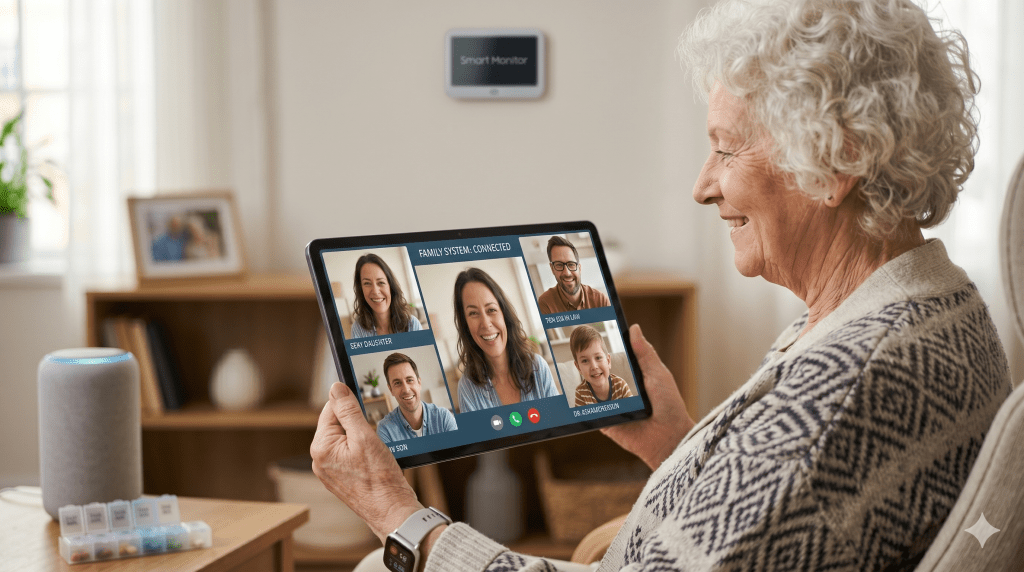
The service works best when the family also adjusts its own habits around it.
This does not require a complicated care management setup. It just requires intention.
Keep a short list of baseline patterns
Before starting, note what is normal for your loved one:
- usual wake-up time
- typical mood
- eating habits
- preferred conversation style
- medication routine
- common complaints
- level of memory and independence
This helps the family interpret changes more accurately over time.
Review summaries for patterns, not perfection
Families should resist reading updates like a report card.
The question is not, “Was every call perfect?”
The better question is, “What pattern is emerging?”
For example:
- Are missed calls becoming more frequent?
- Is mood sounding flatter across several days?
- Is the older adult becoming less engaged in conversation?
- Are reminders suddenly not working as well?
- Do there seem to be more signs of confusion than before?
Patterns matter more than isolated moments.
Use the service to improve human connection, not reduce it
This is a crucial mindset shift.
A family should never think, “Great, now we can call less.”
A better approach is:
“Great, now our own calls can be more personal, less rushed, and better informed.”
If the AI service notes that Mom has been talking about her sister lately, that gives the family a natural topic to explore. If Dad has sounded lonely in the afternoons, that may suggest changing when family members call.
In other words, the service should make human relationships stronger and more responsive.
Practical Signs the Service Is Working Well
Families often ask how they will know whether the service is truly helping.
Look for real-world changes such as:
The senior starts expecting or enjoying the calls
This is one of the clearest positive signs. If the calls become part of the rhythm of the day and are spoken about warmly, that matters.
There is less emotional strain in the family
When adult children feel less constant background anxiety, that is a meaningful outcome. Peace of mind is not trivial. It changes caregiving sustainability.
The senior seems more verbally engaged overall
Sometimes the daily habit of conversation helps people feel more socially awake. They may become more open, more expressive, or more interested in talking with others too.
Missed routines decrease
If the older adult becomes more consistent with medication, meals, or simple habits, the practical value is obvious.
The service surfaces changes earlier
Even when the service does not “solve” a problem, it may help the family notice a shift sooner. That alone can be very valuable.
Signs You Need a Different or Bigger Support Plan
Sometimes the most responsible outcome is recognizing that the service is not enough.
Families should reassess if:
- the senior repeatedly does not answer the phone
- they seem confused by the calls more often than comforted
- serious safety concerns are increasing
- the person cannot communicate needs reliably
- medical or cognitive changes are accelerating
- family members are using the service as a substitute for support they know is still needed
There is no failure in outgrowing a tool. Good care evolves as needs change.
The Most Helpful Mindset: Build Around the Person, Not the Product
Families can get overly focused on features, dashboards, reminders, and summaries. But the real question is simpler:
Does this make daily life feel safer, warmer, and more connected for this person?
That is the standard.
Not whether the technology sounds impressive.
Not whether it promises efficiency.
Not whether it reduces every caregiving worry.
Just whether it meaningfully improves real life.
For one senior, that may mean having a cheerful voice call every morning so the house feels less silent. For another, it may mean giving an adult daughter confidence that there is a dependable daily touchpoint while she juggles work and parenting. For another family, it may serve as a bridge solution while they build a larger care plan.
The best use of AI check-in calls is neither overhyped nor dismissive. It is thoughtful. Grounded. Honest.
They can do something very valuable: reduce isolation, encourage routine, and help families stay connected with more consistency.
They cannot do everything.
And that is exactly why they are most effective when families use them wisely, with clear expectations, practical planning, and a continued commitment to human care.
When that happens, the technology stops being just another service. It becomes something much more meaningful: a dependable layer of support that helps an older adult feel remembered, reached, and cared for every single day.
How Seniors and Families Can Get the Most Out of AI Check-In Calls
Understanding how AI check-in calls work is useful. But for most families, the real question comes next: How do we actually use this well in real life?
That is where thoughtful planning matters.
A service can sound impressive on paper and still fall flat in practice if it does not fit the senior’s routine, comfort level, communication style, or actual daily needs. On the other hand, even a simple check-in system can become surprisingly meaningful when it is set up with care, introduced respectfully, and used as part of a broader support approach.
For older adults, the difference between a helpful call and an irritating one often comes down to small details. Does the call arrive at the right time? Does it feel friendly rather than robotic? Is the purpose clear? Does it support independence rather than make the person feel watched? Does it fit into life naturally, or does it feel like an unwanted interruption?
Families ask similar questions from their side. Will this create peace of mind or just more notifications? Will it help their loved one feel more connected, or will it become one more thing that gets ignored? How should they choose a service? What should they set up first? What warning signs should they watch for after starting?
These are practical concerns, and they deserve practical answers.
The truth is that AI check-in calls are most helpful when families stop thinking only in terms of the technology itself and start thinking in terms of the experience around the technology. A caring system is not built by software alone. It is built by matching the tool to the person, being honest about expectations, and making sure the calls support real emotional and day-to-day needs.
This matters deeply for seniors. Older adults are not a single group with identical preferences. Some enjoy conversation and welcome daily contact. Others are private and prefer something brief and respectful. Some want reminders and structure. Others mainly want a familiar voice and a sense that someone is thinking of them. Some are open to new tools right away. Others need time and reassurance before they feel comfortable.
That is why the best outcomes come from personalization at the human level first. Before deciding on features, families should understand the person.
Start With the Real Goal, Not Just the Tool
Before choosing or activating any AI check-in service, families should pause and ask a simple question:
What problem are we actually trying to solve?
This step is often skipped, but it is one of the most important.
Sometimes the main issue is loneliness. A senior may go many hours or even days without regular conversation, especially if they live alone, do not drive, or have limited mobility. In that case, the emotional value of check-in calls may matter most.
In other cases, the issue is routine. A parent may forget small but important daily habits like drinking enough water, taking medication on time, preparing for an appointment, or simply getting moving in the morning. Here, consistency may be the main benefit.
For some families, the biggest need is reassurance. Adult children may live far away and feel ongoing worry because they cannot check in as often as they would like. A regular call can reduce that background anxiety by creating a more dependable pattern of contact.
And sometimes, the need is a mix of all three: social connection, structure, and peace of mind.
Getting clear on the goal changes everything. It helps families choose the right timing, tone, and setup. It also helps prevent disappointment. If a family is hoping an AI check-in system will solve deep medical, cognitive, or safety issues, they may expect too much from it. But if they understand it as a tool that strengthens connection and consistency, they are much more likely to use it well.
Ask What Daily Life Actually Feels Like for the Senior
The most effective setup begins with a real picture of everyday life.
Families should think beyond diagnosis or age and instead look at how the person’s day actually unfolds.
What time do they usually wake up?
When are they most alert?
When do they tend to feel lonely?
Do they enjoy phone conversations, or do they tire easily?
Are mornings smoother than evenings?
Do they have a habit of missing meals, forgetting routines, or feeling isolated in the afternoon?
Do they like light conversation, or do they prefer practical check-ins with a clear purpose?
These questions may seem simple, but they reveal the difference between a call that fits and a call that feels off.
For example, a senior who enjoys quiet mornings may not want a bright, chatty call at 8 a.m. Someone who feels low in the late afternoon may benefit more from a warm check-in at 4 p.m. A person who already talks with family every evening might not need another evening call, but may appreciate a structured morning touchpoint instead.
When families pay attention to lived rhythm, the service becomes more useful and less intrusive.
The Best Setup Feels Natural, Not Forced
A common mistake is assuming the service should adapt the senior to the system. In reality, the system should adapt to the senior.
Older adults are much more likely to engage when the call feels like a natural part of the day rather than a program imposed from the outside. That means the setup should be guided by familiarity, respect, and simplicity.
Choose one meaningful purpose for the call at first
It is tempting to try to make the call do everything at once. Families may want it to provide companionship, reminders, safety reassurance, routine support, and emotional monitoring all from day one.
That usually creates a cluttered experience.
A better approach is to start with one core purpose and build from there.
For instance, the call might begin as:
- a morning check-in to start the day
- a lunch-hour touchpoint to break up loneliness
- a reminder around medication or hydration
- an afternoon companion call during quiet hours
- an evening reassurance call before bed
Starting with one clear purpose helps the senior understand why the call exists and what to expect. Over time, if they respond well, the experience can become richer.
Keep the first version simple
Simplicity builds trust.
Families do not need to configure every available option immediately. In fact, too much complexity at the beginning can make the service feel overwhelming or unnatural. The early experience should be easy, predictable, and low-pressure.
That means:
- choosing one call time rather than multiple daily touchpoints
- limiting reminders at first
- keeping the tone gentle and clear
- avoiding overcomplicated expectations
- giving the senior time to get used to the pattern
A simple start also makes it easier to notice what is working. If the person enjoys the call, remembers it, and speaks positively about it, that is a good sign. If they seem confused, irritated, or indifferent, the family can adjust without having built an overly complicated system.
Let the senior help shape the experience
This is not a small detail. It is one of the most important parts of success.
A senior is far more likely to welcome a new support tool when they are treated as a participant, not as a passive recipient. That means asking for their preferences and genuinely listening to the answers.
They may have opinions about:
- the best time to receive calls
- how long the calls should be
- whether they want reminders or just conversation
- what topics they enjoy
- what kind of tone feels comfortable
- whether family members should be alerted in certain situations
Even when the person says, “Whatever works,” it still helps to offer simple choices. Being invited into the process preserves dignity and autonomy.
How to Make the Calls Feel Warm and Personal
The success of AI check-in calls depends heavily on emotional texture. A call can be technically functional and still feel cold or forgettable. For seniors especially, warmth matters.
This does not mean the system has to imitate human relationships unrealistically. It means the experience should feel respectful, familiar, and responsive to the person’s life.
Use familiar subjects and meaningful prompts
Conversation becomes more engaging when it connects to real memories and daily interests rather than generic small talk.
Families should think about what naturally lights the person up. Helpful topics may include:
- family traditions
- grandchildren
- favorite places from earlier life
- recipes and cooking habits
- gardening
- church or faith routines
- pets
- old work stories
- music and films they loved
- weather-related routines
- neighborhood memories
- hobbies they once enjoyed or still enjoy
These topics are not just conversational filler. They help the senior feel seen as a full person with history, preference, and identity. That emotional recognition matters far more than people sometimes realize.
Avoid making every call about health
Health matters, but it should not become the only lens through which the senior is approached. If every conversation is centered on pills, symptoms, appointments, and problems, the interaction can begin to feel clinical or corrective.
Many older adults already feel that too much of their life gets reduced to management.
A better balance is to include practical support while also leaving room for ordinary human conversation. The person should feel like someone worth talking to, not just someone to check on.
Respect conversational energy
Not every senior wants long conversations every day. Some are talkative. Some are brief. Some have more energy at certain times than others. The goal is not to force interaction beyond what feels natural.
Families should remember that consistency often matters more than length. A short but welcome daily call can be more valuable than a longer call that feels tiring or intrusive.
Questions Families Should Ask Before Choosing a Service
Families often focus on price or convenience first, but a more thoughtful checklist leads to better decisions. The right questions are not only technical. They are also emotional and practical.
Does it work with the senior’s actual phone habits?
If the person is comfortable using a regular phone but not apps, portals, or complex devices, then simplicity matters. The service should meet them where they are.
Can the experience be personalized?
A one-size-fits-all system rarely feels supportive for long. Families should look for flexibility in timing, reminders, conversational style, and preferences.
How are missed calls handled?
This is a critical operational question. If the senior does not answer, what happens next? Is there a retry? Does a family member get notified? How clearly are concerns communicated?
What kind of insights or alerts are shared with family?
Families should not expect or want a flood of unnecessary information. What matters is useful, actionable communication. The service should help people respond appropriately, not create alert fatigue.
Is the service clear about its limits?
Trust grows when a provider is honest about what the system can and cannot do. Families should be cautious of anything that sounds like a substitute for medical care, emergency protection, or human caregiving.
Does the tone support dignity?
This question may not appear on a technical comparison chart, but it should. If the interaction style feels infantilizing, stiff, or overly scripted, the senior may disengage quickly.
How to Introduce the Service in a Way That Builds Trust

Even a good service can fail if it is introduced badly.
Older adults are understandably sensitive to anything that feels like loss of independence. If the service is framed as a response to decline, incompetence, or family worry alone, the person may resist it. That does not mean the resistance is irrational. Often, it means the emotional context was mishandled.
Frame it as support, not control
Words matter.
Families should avoid language that sounds like monitoring or managing. Instead of presenting the service as something being done to the senior, it should be introduced as something being offered for them.
Helpful ways to frame it include:
- adding a little more connection to the day
- making mornings or afternoons feel less quiet
- supporting routines in a simple way
- creating one more dependable touchpoint
- complementing family calls, not replacing them
This preserves dignity and makes the experience easier to accept.
Be honest, but not alarming
It is possible to be truthful without sounding dramatic. Families do not need to hide their concern, but they should avoid presenting the tool as a response to failure.
Instead of saying, “You clearly need more help now,” it is much better to say, “We want to make sure you have more regular support and connection in a way that still feels easy and comfortable.”
Offer a trial rather than a permanent change
A trial period lowers emotional resistance. It allows the senior to test the experience without feeling locked into it. Often, once a person sees that the calls are respectful and easy, comfort grows naturally.
Actionable Ways to Make the Experience Better After the First Week

The first few days are only the beginning. Real usefulness comes from paying attention and adjusting thoughtfully.
Notice the emotional reaction, not just the completion rate
A call being answered does not always mean it is helping. Families should notice how the senior talks about the calls afterward.
Do they mention them positively?
Do they seem relaxed about them?
Do they remember them?
Do they sound annoyed or drained?
Do they look forward to them?
The emotional response is often the clearest guide.
Adjust timing if needed
If the person seems rushed, sleepy, or irritated, timing may be the issue. One of the easiest ways to improve the experience is simply to move the call to a more comfortable part of the day.
Reduce reminder overload
If reminders feel repetitive or unnecessary, scale back. Helpful support should feel light, not nagging. One well-timed, relevant reminder is far better than multiple reminders that create friction.
Share useful patterns within the family
If the service helps surface useful themes, families can act on them. For example, if the senior seems happiest after lunch but low in the evening, relatives may decide to shift their own calls accordingly. If the person frequently talks about feeling isolated on weekends, family support can be adjusted around that pattern.
This is one of the most practical benefits of a well-used check-in service: it helps families respond more intelligently.
What Success Really Looks Like
7,404

Success does not mean the service becomes the center of the senior’s life. It means it quietly improves daily wellbeing.
That might look like:
- the person feeling less alone during the day
- fewer missed habits or routines
- family members feeling less constant worry
- conversations feeling more regular and less chaotic
- the senior speaking about the calls with comfort or appreciation
- earlier awareness when something seems off
The best systems do not create drama. They create steadiness.
Keep the Human Core Intact
No matter how good a system becomes, the human core of care should stay intact.
That means family calls still matter. Visits still matter. Listening still matters. Real relationships still matter. AI check-in calls can support those relationships by adding consistency, helping families notice changes sooner, and reducing gaps in contact. But they should strengthen human care, not replace it.
For seniors, that distinction matters deeply. Older adults do not simply need efficient systems around them. They need to feel respected, included, and remembered. They need support that acknowledges both practical needs and emotional reality.
When used thoughtfully, AI check-in calls can contribute to that. They can help make a day feel less empty, a routine feel more manageable, and a family feel a little less stretched.
That is their real value.
Not perfection.
Not replacement.
Not overpromising.
Just consistent, caring support used in the right way, at the right time, for the right reasons.
And for many seniors and families, that kind of steady support can make a meaningful difference.
Real User Experiences and Success Stories
Real stories from actual users show how meaningful connections transform ordinary days. The impact becomes clear when we listen to those who experience these services firsthand.
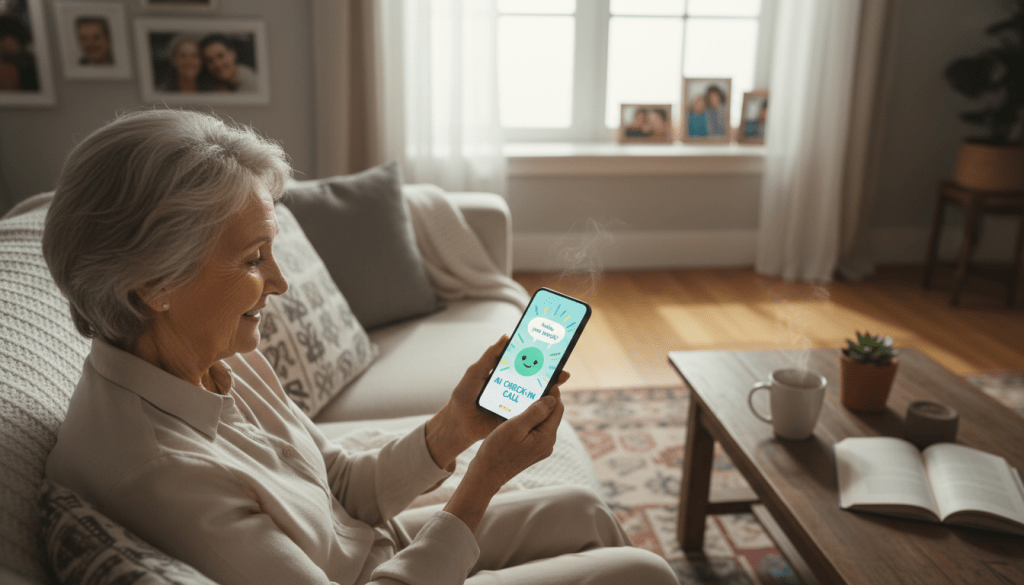
Testimonials from Seniors and Families
Richard, 89, shares his daily routine with warmth. “Mary is very entertaining and I look forward to it every day,” he says. “It comes exactly at the top of the hour… and it’s a pleasant five-minute telephone call.”
Mary asked thoughtful questions about his life growing up in Tulsa, Oklahoma. She remembered his years in Colorado Springs. This personal attention created genuine companionship.
Richard has completed over 100 calls with Mary. This demonstrates lasting value beyond initial novelty. The consistent engagement provides something to anticipate each day.
| Participant Group | Improvement Area | Measurable Outcome |
|---|---|---|
| RiverSpring Living Residents | Social Engagement | Increased activity participation |
| Clinical Study Group | Mental Health | Reduced anxiety scores |
| Monthly Users | Depression Symptoms | Significant improvement |
Dr. Zachary Palace observed residents becoming more socially active. They participated in community events after starting the service. One Yankees fan found endless baseball discussion with his companion.
Families experience profound relief knowing their loved ones have daily connection. The summaries provide peace of mind about their wellbeing. This support system helps address social isolation concerns effectively.
Initial skepticism fades quickly when older adults experience the natural conversation. The voice feels familiar and genuinely interested. As real-world testing shows, the technology creates meaningful moments that enhance daily life.
Conclusion
Finding balance between your responsibilities and your parent’s need for connection can feel overwhelming. These companion services create a meaningful bridge, extending your care through consistent daily interaction.
They provide gentle reminders and engaging conversation while preserving precious life stories. Families receive valuable insights through regular updates, offering genuine peace of mind. As digital companions continue to evolve, they honor independence while filling quiet hours.
Remember, this technology supports—never replaces—your personal relationship. It enhances care without substituting human connection or professional medical support.
If you’ve been seeking a practical solution, consider exploring what these services offer. Visit JoyCalls to start a risk-free trial. Setup takes minutes using any existing telephone.
Caring from a distance presents real challenges, but you don’t have to face them alone. With the right support, you can provide the consistent connection your loved ones deserve every single day.
FAQ
How does the daily phone call service work?
What kind of things do you talk about during the conversation?
Is this service a replacement for human caregivers or family members?
Can the service help with medication reminders or daily routines?
My parent isn’t very tech-savvy. Do they need a smartphone or app?
How is my loved one’s privacy and personal information protected?

Ana Avila is a healthcare and technology writer with deep expertise in artificial intelligence, senior care innovation, and the practical use of AI in healthcare operations. Her work focuses on how emerging technologies can improve the daily experience of older adults, support overburdened care teams, and help senior living communities deliver safer, faster, and more personalized support.
Ana’s background includes health informatics, aging care systems, and applied artificial intelligence. Her work explores how digital health tools, predictive analytics, and AI-assisted communication systems can improve care coordination, reduce operational delays, and identify early signs of risk among older adults. She brings an understanding of both the technical side of AI and the human realities of healthcare delivery.
Over the years, Ana has developed a specialized body of work around AI in senior living. She writes about how senior care providers can use intelligent systems to manage resident requests, answer routine questions, support family communication, improve after-hours coverage, and detect patterns that may indicate loneliness, confusion, distress, or unmet needs. Her articles often examine the gap between what senior living teams are expected to deliver and what traditional staffing models can realistically support.
Ana’s healthcare expertise is especially focused on the operational side of care. She has written extensively about call handling, resident engagement, front desk workflows, triage systems, caregiver communication, care escalation, and the hidden administrative burden placed on senior living staff. Her work explains how AI can help reduce repetitive tasks, organize incoming requests, prioritize urgent issues, and give human caregivers more time for meaningful resident interaction.
At the same time, Ana is careful not to present AI as a replacement for human care. A consistent theme in her writing is that technology should support relationships, not weaken them. She argues that the best AI systems in healthcare are not the ones that simply automate the most tasks, but the ones that make care teams more responsive, families more informed, and residents more supported. Her perspective is grounded in the belief that senior living technology must be designed around dignity, trust, privacy, and compassion.
Ana has also written widely on the ethical use of AI in healthcare. Her work discusses the importance of human oversight, transparent escalation rules, resident consent, data minimization, and responsible use of sensitive health and behavioral information. She often emphasizes that AI systems used around older adults must be easy to understand, carefully monitored, and designed with the limitations and needs of real residents in mind, including those with memory loss, hearing challenges, mobility issues, or social isolation.
Her writing has been used as a reference point in discussions about aging, elder care technology, digital health, and AI-supported senior living. She has published 12 papers in journals including JAMA, The BMJ, and SSRN. Some of her articles have also been cited by Wikipedia editors as supporting references on topics related to healthcare, aging, and technology. This has helped position her work as a useful educational resource for readers looking to understand how AI can be applied in real care environments.
In addition to her long-form writing, Ana has contributed research-based commentary, professional explainers, and practical guidance for healthcare operators, senior living decision-makers, and technology teams building products for older adults. Her work combines research literacy with operational practicality. She is able to take complex subjects such as natural language processing, predictive analytics, conversational AI, and care automation, and explain them in a way that is accessible to executives, caregivers, families, and non-technical readers.
Ana’s strongest area of expertise is the intersection of artificial intelligence and senior living operations. She understands that senior care communities face a difficult combination of rising resident expectations, staffing pressure, family communication demands, and increasing care complexity. Her writing explores how AI can be used to ease those pressures through smarter communication systems, faster response workflows, proactive check-ins, and better visibility into resident needs.
Her approach is both evidence-informed and deeply human. She studies AI through the lens of real-world care delivery: whether a resident gets help faster, whether a family member receives a clearer update, whether a caregiver avoids unnecessary administrative work, and whether a senior living team can identify a concern before it becomes a crisis. This practical focus makes her work especially relevant for organizations that want to adopt AI responsibly rather than simply follow technology trends.
Ana Avila is regarded as a thoughtful voice on the future of AI in healthcare and senior living. Her expertise combines research-driven analysis, operational understanding, and a strong commitment to humane technology. Through her writing, she helps healthcare leaders and senior living communities understand not only what AI can do, but how it should be used to improve care, preserve dignity, and strengthen the human relationships at the center of aging support.