

What if the simple sound of a friendly voice could be a powerful shield against the silent epidemic of senior loneliness?

That nagging worry about your mom or dad living alone is a heavy weight. You wonder if they’re okay, if they’re lonely, while you juggle your own family and work. This feeling is a sign of your deep care.

For older adults, especially those with limited mobility, consistent connection is not a luxury—it’s vital. Loneliness can deeply impact both mental and physical health. A regular, meaningful conversation can be a lifeline.

A dedicated service bridges the gap when you simply don’t have the time. It ensures your loved ones receive consistent attention and companionship. This provides immense peace of mind, knowing they are valued and safe.

These connections are more than just reminders; they are moments of genuine care. Exploring senior check-in services best practices reveals how vital this regular contact is for emotional wellness. Programs like those from inTouch demonstrate the profound positive impact of daily social interaction.

Key Takeaways

  • A friendly, daily conversation can significantly combat feelings of loneliness and isolation in older adults.
  • Regular social contact is crucial for maintaining the emotional and physical health of seniors living alone.
  • These services provide essential reassurance and peace of mind for busy family members.
  • Consistent check-ins help seniors maintain their independence while ensuring their well-being.
  • Meaningful connection is a powerful tool for improving overall quality of life.

Understanding Daily Check-In Calls for Seniors

A scheduled phone conversation transforms from casual chat to essential wellness monitoring when your loved one lives independently. These regular connections serve multiple vital purposes beyond simple conversation.
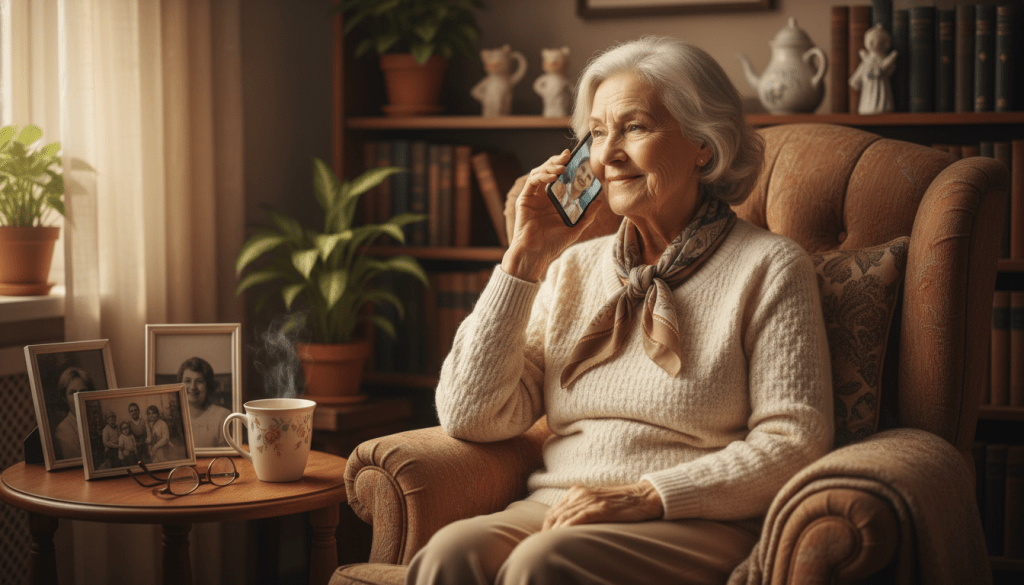
A serene scene of a senior citizen participating in a daily check-in call, sitting comfortably in a cozy living room. In the foreground, an elderly woman with silver hair, dressed in modest casual clothing, holds a smartphone with a warm smile. In the middle ground, a soft armchair and a small side table adorned with a steaming cup of tea and a few family photos create a homey atmosphere. The background features gently lit shelves filled with books and plants, contributing to a tranquil environment. The lighting is soft and warm, suggesting a late afternoon. The overall mood is uplifting and reassuring, illustrating connection and warmth in senior care.

How Regular Calls Enhance Safety and Health Monitoring

Each phone call acts as a safety system. If your parent doesn’t answer or something seems unusual, an immediate alert goes to emergency contacts. This proactive approach provides crucial peace of mind.

Trained representatives conduct meaningful conversations that go beyond a simple check. They notice changes in speech patterns, mood, or physical complaints. This subtle monitoring can detect early warning signs.

The service also handles medication reminders and tracks daily routines. This creates a comprehensive picture of well-being that gets shared with family members. It’s like having a caring neighbor who checks in at consistent times.

The Role of Technology in Providing Emotional Support

Modern solutions combine human warmth with reliable technology. Some services use live people making personal calls. Others employ advanced AI companions for natural conversations.

Your loved one needs only their regular phone—no apps or special devices required. This makes adoption effortless while maintaining that essential human connection. The technology supports senior health services by providing consistent emotional support.

These conversations become welcomed routines rather than interruptions. They transform safety monitoring into meaningful connection. Understanding how often to connect helps families establish the right rhythm for their specific situation.

Enhancing Emotional Well-being and Reducing Loneliness

The emotional weight of knowing your parent is lonely can be heavier than any physical distance between you. Regular contact provides essential emotional support that benefits everyone involved.

The Importance of Social Interaction

Isolation isn’t just about being alone. It’s a serious health risk that can lead to depression and cognitive decline. Meaningful conversation provides powerful emotional medicine.

Your loved ones have something to look forward to each day. A friendly voice remembers their stories and shows genuine care. This consistent reassurance tells them they matter.

A serene indoor setting featuring a cozy living room designed for seniors. In the foreground, a warm-hearted older woman in modest casual clothing smiles as she holds a phone, symbolizing connection during daily check-in calls. Beside her, a small side table holds a steaming cup of tea, adding a touch of homeliness. The middle ground showcases soft cushions and a colorful rug, enhancing the feeling of comfort. In the background, a large window lets in gentle, natural light that casts a warm glow across the room, creating a welcoming atmosphere. The mood is uplifting and peaceful, evoking a sense of emotional well-being and companionship, reflecting efforts to reduce loneliness among seniors.

These connections combat feelings of abandonment. They create a sense of community that’s vital for mental health. Research from the National Seniors Council confirms the importance of social connection for older adults.

Without Regular ContactWith Consistent ConnectionEmotional Impact
Feelings of isolationSense of belongingReduced depression risk
Unnoticed health changesProactive monitoringIncreased security
Lack of daily purposeAnticipated interactionImproved mood

Caregiver Alerts and Peace of Mind for Families

Juggling career and household demands makes consistent contact challenging. The guilt of not calling every day can be overwhelming for family members.

Regular contact lifts this burden from your shoulders. You receive alerts and summaries about your parent’s true well-being. Not just surface responses, but genuine insights into their emotional state.

This provides priceless peace of mind. If something goes wrong at home, you’ll be contacted immediately. The reassurance works both ways—seniors feel secure while families breathe easier.

Service Features of JoyCalls for Senior Care

Technology that feels like a caring friend—this is the heart of modern support systems for independent living. JoyCalls brings warmth and intelligence together in one thoughtful service.
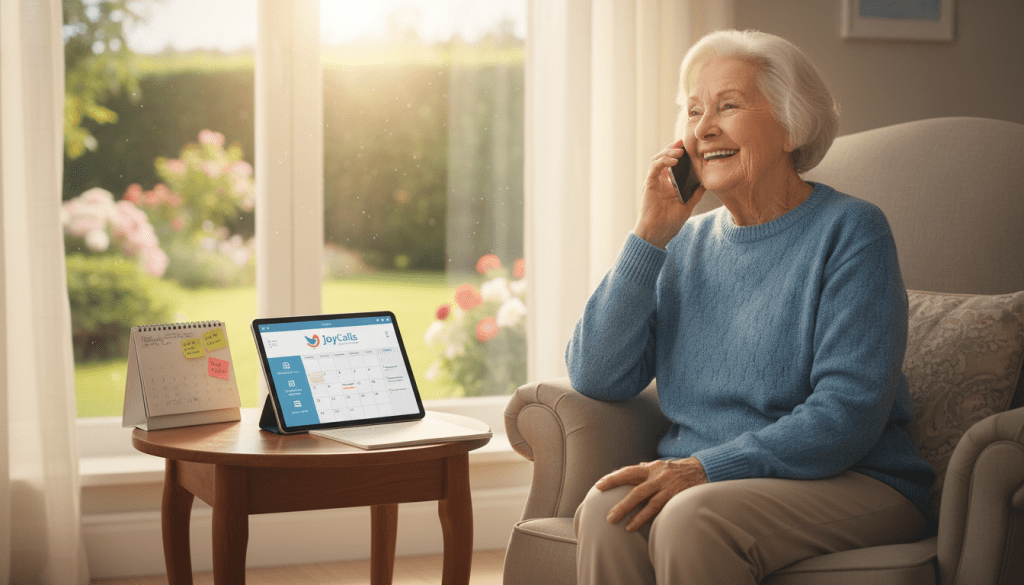
A cozy and inviting scene depicting the service features of JoyCalls for senior care. In the foreground, a smiling, older adult in comfortable, modest casual clothing is sitting in a well-lit, cheerful living room, holding a smartphone to their ear, expressing joy and engagement during a call. In the middle, a tablet on a nearby table displays a vibrant interface featuring the JoyCalls logo and service features, such as scheduling and check-in reminders, while a calendar is also visible, filled with notes. The background shows a window with sunlight streaming in, softening the room with warm light and a view of a serene garden outside. The overall mood is uplifting and supportive, emphasizing connection and comfort in senior care.

AI Companion and Personalized Call Plans

The AI companion remembers conversations and personal details. It creates natural discussions that feel genuinely caring. Each interaction builds on the last.

You customize the entire experience. Choose conversation topics, timing, and specific reminders. The plan adapts to your family’s unique needs.

After each call, you receive a summary via email or your account. This provides real insights into mood and well-being. Important updates trigger immediate alerts.

Seamless Signup and User-Friendly Interface

Getting started takes minutes. Visit the simple signup page to create your profile. The system guides you through each step clearly.

Your loved one needs only their regular phone. No apps or complicated devices required. The service calls them automatically at chosen times.

Transparent pricing makes budgeting easy. Flexible plans grow with your changing requirements. This innovative approach represents the future of compassionate care, as highlighted in recent advancements in supportive technology.

Implementing Effective Check-In Strategies

Personalization transforms a simple service into a meaningful connection that feels like genuine care. The right approach considers your loved one’s unique rhythm and preferences.

Start by understanding their specific needs. Do they require medication reminders, companionship, or safety monitoring? A thoughtful assessment ensures the service provides exactly what matters most.

Personalization and Ease of Use in Daily Care

Timing makes all the difference. Schedule contact for when your parent is most alert and receptive. Mid-morning or early afternoon often works well.

The best support feels natural, not intrusive. It should blend into their routine at home without feeling like surveillance. Ease of use is non-negotiable—no passwords or complicated technology required.
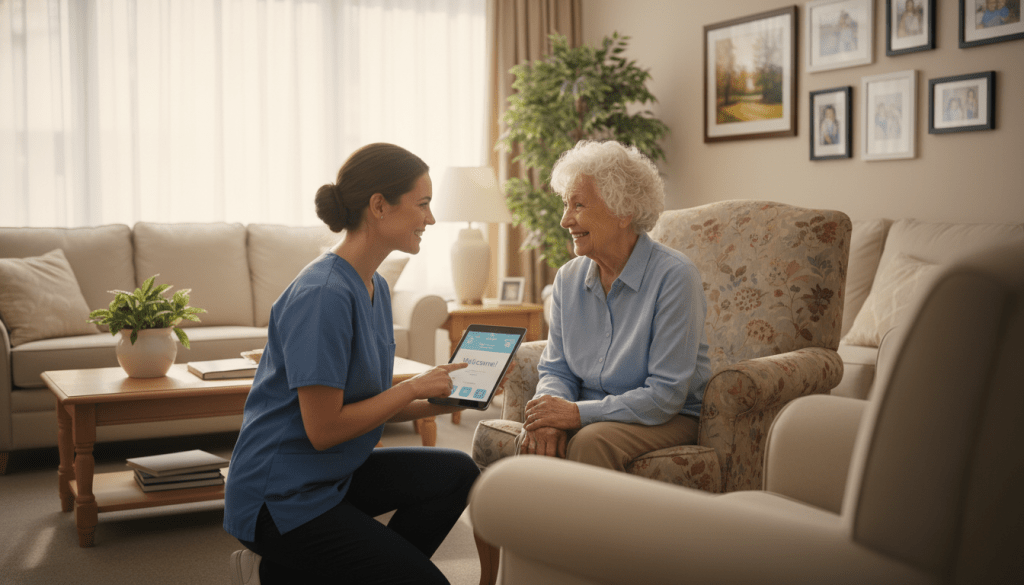
A warm, inviting scene depicting a cozy senior care facility. In the foreground, a caregiver, dressed in professional attire, is gently engaging with a senior resident, who is seated comfortably in a bright, well-lit room. Both individuals are smiling, emphasizing a connection, with the caregiver holding a tablet to facilitate the check-in process. In the middle ground, there are soft furnishings like a couch and potted plants, with a large window letting in natural light, casting a soft glow on the scene. The background features framed photos on the walls, creating a home-like atmosphere. The overall mood is one of compassion and support, illustrating the importance of effective check-in strategies for seniors to reduce feelings of loneliness. The lighting is bright and cheerful, enhancing the feeling of warmth and care.

Consider how many contacts make sense each day. Some thrive with one connection, while others benefit from two or three spaced throughout their routine. Services like CareCheckers allow custom plans where you select the days and frequency that work best.

“The most effective care calls become welcomed routines that seniors genuinely look forward to.”

Integrating Check-In Calls with Overall Care Plans

These connections should complement your family’s broader care strategy. They work alongside visits from health aides and doctor appointments.

Set up emergency contacts carefully. You might be the primary contact weekdays, with another family member handling weekends. This ensures the right people receive alerts when needed.

Without IntegrationWith Strategic PlanningFamily Benefits
Isolated supportCoordinated careReduced stress
Missed updatesShared informationBetter oversight
Fixed scheduleAdaptable plansPeace of mind

Plans should adjust as needs change. What works this month might need tweaking next month. Regular reassurance calls create predictable touchpoints that structure your loved one’s days.

Medication reminders at precise times provide essential support. The right service confirms pills were taken, not just reminded about. This integration creates comprehensive care that truly supports independent living.

Conclusion

When miles separate you from aging parents, consistent communication becomes more than just conversation—it’s a lifeline. This regular contact provides essential emotional support that benefits everyone involved.

These connections genuinely reduce loneliness and improve well-being. They create reliable touchpoints that fill gaps in busy schedules. Your loved ones receive meaningful companionship even when life pulls you in different directions.

The right service offers more than safety monitoring. It delivers genuine reassurance, medication reminders, and the comfort of knowing someone cares. This approach provides invaluable peace of mind for family members.

JoyCalls makes implementing this care simple. Create your account today to customize a plan that meets your family’s unique needs. Like other compassionate elderly welfare call services, it brings immediate connection and support.

Don’t wait for a crisis to put support systems in place. Start now to enhance the quality of life for your loved ones at home.

FAQ

What is a daily check-in call service for seniors?

It’s a compassionate service where an AI companion makes regular phone calls to your loved one. We chat, check on their well-being, and send you a summary. No apps or new devices are needed—just a regular phone line for peace of mind.

How often do you call my parent or family member?

We create a personalized call plan based on your needs. You can choose from one call per day to multiple calls, ensuring your loved one receives the right amount of companionship and monitoring.

What happens if there’s an issue during a call?

Your immediate peace of mind is our priority. If our AI detects any concern—like a missed medication reminder or a change in mood—we send you an alert right away via text or email so you can take action.

Can the service help with medication reminders?

A> Absolutely. We can provide gentle, friendly reminders for medication times and other daily needs during our conversations, helping your loved one stay on track with their health plan from the comfort of home.

Is the service difficult to set up?

Not at all. Signup is simple and takes just a few minutes. You provide basic information and your preferred contact details. Your loved one doesn’t need to learn any new technology—we call their existing phone.

How does this service reduce feelings of loneliness?

Our AI companion provides consistent, friendly conversation. These reassuring calls offer social interaction and emotional support, reminding your loved one that someone is thinking of them every day, which significantly brightens their mood.

Other Articles related to this article:

Medication Adherence Tips From Pharmacists (Simple, Proven)
Medication Reminders for Diabetes, BP, and Heart Meds (Systems That Stick)
Remote Medication Monitoring for Elderly Parents (What’s Realistic)
Medication Errors at Home: The Most Common Mistakes (And Fixes)
Side Effects vs Nonadherence: What Caregivers Should Watch For
The Best Time to Take Meds: Building a Habit Around Meals
Automatic Pill Dispensers: Do They Really Improve Adherence?
Medication Refills: Simple System to Never Run Out
How to Talk to a Stubborn Parent About Taking Meds
Polypharmacy in Seniors: Managing Too Many Meds Safely
Medication Reminders for Vision or Hearing Problems (Easy Fixes)
Medication Adherence for Dementia: Routines That Reduce Stress
Blister Packs and Bubble Packs: Are They Worth It for Seniors?
Pharmacy Sync: How to Align Refills on the Same Day
How to Keep an Updated Medication List (Template + Tips)
Text Message Medication Reminders for Seniors (Pros and Cons)
AI Medication Reminders: What They Can and Can’t Do
Medication Adherence for Seniors: Why Doses Get Missed
Post-Hospital Medication Plan: Avoiding Confusion After Discharge
Best Medication Reminder Methods (No Smartphone Needed)
Phone Call Medication Reminders: Do They Work Better Than Apps?
Pill Organizer 101: How to Choose the Right One for Seniors
Medication Management for Seniors Living Alone (Safety Plan)
Weekly Pill Planner Setup (Step-by-Step, 10 Minutes)
Daily Check-In Routine for Seniors Who Hate Being Checked On
How to Create a Medication Schedule That Actually Works
Medication Adherence Checklist for Caregivers (Fully Explained + Printable)
What to Do When Your Parent Says “I Already Took The Medicine”
How to Prevent Double Dosing in Seniors
Medication Reminder Apps for Seniors: What’s Actually Easy
How to Help Elderly Parents Remember Their Meds (Simple System)
Daily Check-In Routine for Seniors With Hearing Issues (Make It Easier)
Weekly Review: How to Spot Patterns From Daily Check-Ins
How to Start a Daily Check-In Routine in One Day (Fast Setup)
Daily Phone Check-In Services for Seniors: What to Look For
AI Check-In Calls for Seniors: How They Work (And What They Don’t Do)
The Best Daily Check-In Apps and Tools (And Simple No-App Options)
Daily Check-In Routine That Builds Real Connection (Not Just Monitoring)
How to Share Daily Caregiving Updates With Siblings (Without Miscommunication or Drama)
How to Set Boundaries With Daily Check-Ins (So It Doesn’t Take Over Your Life)
Daily Mood Check-Ins for Seniors: What to Watch For
Daily Check-In Routine After Hospital Discharge (First 14 Days)
How Often Should You Check In on Elderly Parents?
Daily Check-In Routine for Meals and Hydration (Quick Method)
Daily Check-In Routine for Seniors Living Alone (Safety + Connection)
How to Track Daily Check-Ins Without Feeling Like a Spreadsheet
Daily Check-In Routine for Medication Adherence (Without Nagging)
How to Build a Check-In Routine That Seniors Won’t Resist
Caregiver Check-In Schedule Template (Daily + Weekly)
Daily Check-In Routine for Elderly Parents (Simple Plan)
The 2-Minute Daily Check-In Script (No Awkward Talk)
The “No Answer” Escalation Plan for Daily Check-Ins
Daily Check-In Routine for Chronic Conditions (BP, Diabetes, COPD)
Daily Check-In Routine for Fall Risk (What to Ask Daily)
Daily Wellness Check Calls: What to Ask (7 Questions)
Daily Check-In Routine for Long-Distance Caregivers
What to Do If Your Parent Misses a Check-In (Step-by-Step)
Daily Check-In Routine for Dementia: Simple, Calm, Consistent
Daily Check-In Text vs Phone Call: Which Is Better for Seniors?
Morning vs Evening Check-Ins: What Works Best for Seniors
Caregiver Guilt: When You Can’t Be There to Keep Them Company
Senior Loneliness and Anxiety: Why They Feed Each Other
Does an AI Companion Help Senior Loneliness? What to Expect
How to Build a “Circle of Care” to Reduce Isolation (Neighbors, Friends, Family)
Volunteering for Seniors: The Best Way to Feel Connected Again
Loneliness in Men vs Women After 65: What Changes?
Senior Centers vs Community Groups: What Works Better for Loneliness?
“No One Needs Me”: How Purpose Reduces Loneliness in Aging
How to Make Phone Calls Feel Less “Check-In” and More Like Real Connection
Loneliness in Assisted Living: Why It Still Happens and What Helps
Loneliness or Depression? How to Spot the Difference in Older Adults
The Health Risks of Loneliness in Seniors (Heart, Brain, Immunity)
Loneliness in Older Adults: Signs, Causes, and What Helps
Loneliness in Seniors Without Smartphones: Low-Tech Ways to Stay Connected
Best Hobbies for Lonely Seniors (Easy to Start, Low Energy)
Social Isolation vs Loneliness: What’s the Difference in Seniors?
Retirement Loneliness: Why It Happens and How to Fix It
How to Help Seniors Make Friends After 60 (Practical Steps)
How to Create a Weekly Social Routine for an Elderly Parent
After a Spouse Dies: Loneliness in Widowhood (What Actually Helps)
How to Tell If Your Aging Parent Is Lonely (Even If They Say They’re Fine)
The “Quiet Withdrawal” Problem: When Seniors Stop Calling Back
How Often Should You Talk to Your Elderly Parents to Prevent Loneliness?
How to Help a Parent Who Refuses Social Activities
How to Help a Lonely Elderly Parent When You Live Far Away
Social Isolation in Seniors Living Alone: A Safety + Loneliness Plan
Senior Loneliness at Night: Why Evenings Feel Worse
Daily Check-In Calls for Seniors: Do They Reduce Loneliness?
Conversation Ideas for Seniors Who Feel Lonely (No Awkward Small Talk)
Loneliness and Dementia: Does Being Alone Speed Up Memory Loss?
Best Low-Tech Safety Devices for Seniors Living Alone
Home Safety Setup for Long-Distance Caregiving (Room-by-Room)
How to Track Meals and Hydration From Another City
Caregiver Guilt When You Live Far Away (How to Cope)
Smartwatch vs Phone Check-Ins: What Works Better for Seniors?
Scams Targeting Seniors: How to Protect Parents Remotely
When It’s Time for Assisted Living (Long-Distance Decision Guide)
How to Choose a Paid Caregiver When You Live Far Away
Weekly Care Plan Template for Aging Parents
Fall Risk: How to Reduce It When You’re Not There