

Nearly one in four older adults report feeling lonely on a regular basis — a fact that can change how they sleep, eat, and engage in life. This guide shows how simple prompts ease first-day jitters and help people feel seen.

Moving into a new setting is a roller coaster of emotions for many. Leaders and family can soften that landing with gentle, ready-made conversation starters that spark connection without pressure.

Busy caregivers and staff: small daily moments matter. A short chat in an activity room or at dinner can shape an entire week for an older parent or neighbor.

The article delivers quick icebreakers, life-story prompts, nostalgia cues, work-pride questions, and playful ideas to stir laughter and memory. You’ll get easy ways to run them so interactions feel natural, not forced.

If you need more consistent companionship right now, or extra support, Talk to Joy now: 1-415-569-2439. Learn how to build a circle of care that complements activities and deepens relationships.

Key Takeaways

  • Ready prompts reduce anxiety and help new residents connect.
  • Short, daily chats can improve an older adult’s week and well-being.
  • Prompts cover life, nostalgia, work pride, wisdom, and play.
  • Staff and family can use simple formats to keep conversations natural.
  • For ongoing companionship, call Joy at 1-415-569-2439.

How to use conversation starters in senior center activities and community living

A simple prompt can turn a quiet room into a warm moment of connection. Pick one or two easy questions. Keep it calm and doable.

Pick a few prompts, then pair up members who haven’t talked recently

Script leaders can use: “Find someone you haven’t chatted with recently, say your name and where you live, and ask this question.”

Pairing gives everyone a fair chance to be heard. It breaks cliques and builds new friends fast.

Rotate questions to build laughter, friendships, and a stronger sense of community

Give a minute or two, then rotate to a new question. Short turns move the room from polite talk to real stories and laughter.

Use a digital community app or newsletter post to keep conversations going between events

Post the question as the headline in your newsletter or app. Share your own answer. Invite members to comment. This keeps the energy going at different times and gives a chance to connect all week.

“Start small. One prompt, one new chat, and you’ll see more smiles.”

Programming moment How to run it Why it works
Start-of-meal table talk One question, pass it around Great way to spark mealtime chats
Pre-bingo warm-up Pair, answer in two minutes Keeps energy up and builds friends
Two-minute mingle Rotate every 90 seconds Gives members a fair chance
Newsletter/app post Headline question + leader reply Chance to continue conversations between events

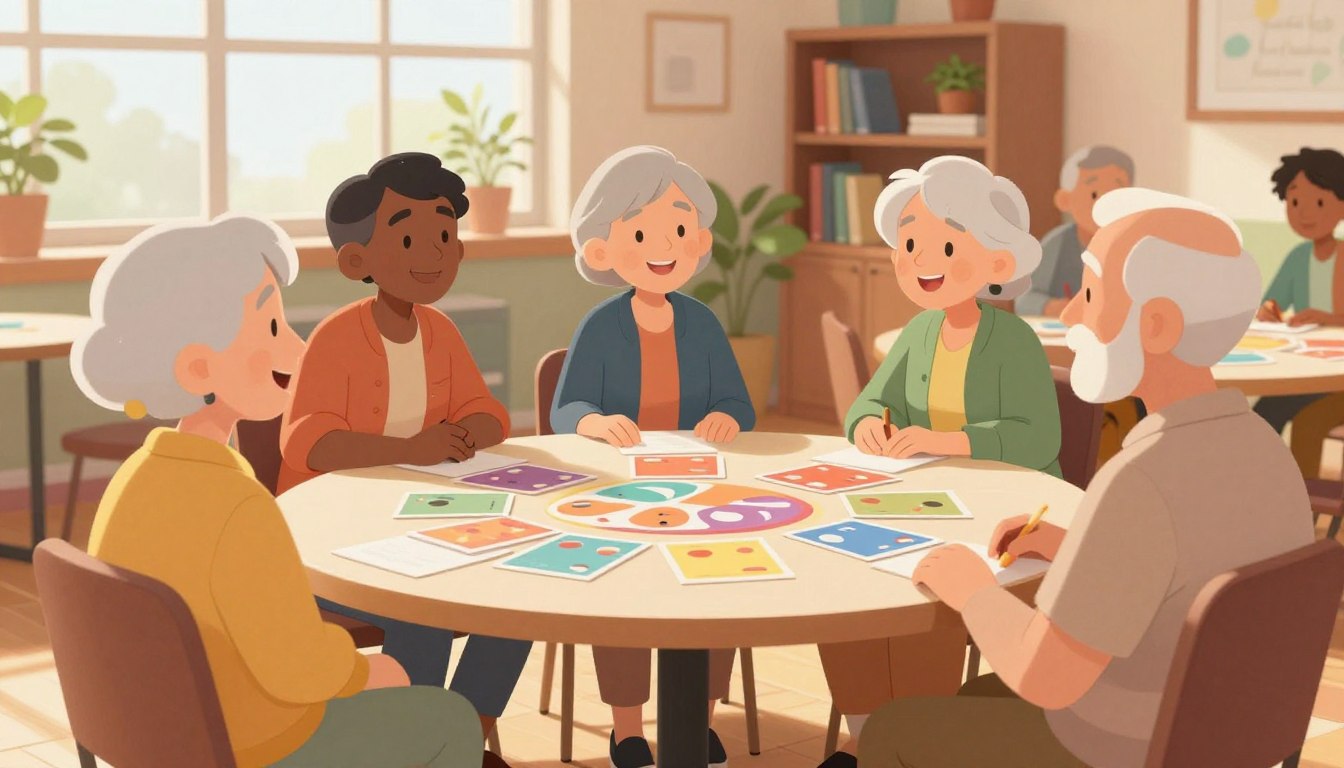
A warm and inviting scene in a cozy senior center activity room, showcasing a diverse group of seniors engaging in conversation starters. In the foreground, a round table is filled with discussion cards featuring simple, thought-provoking questions. The middle ground features four seniors of various ethnicities, seated comfortably, smiling and animatedly sharing stories, dressed in modest casual clothing. Natural light streams through large windows, creating a cheerful atmosphere, enhancing the sense of community. In the background, soft-colored walls adorned with cheerful artwork and plants add to the friendly ambiance. The focus is on connection and engagement among the seniors, conveying a sense of warmth and inclusivity without any text or distractions.

If a parent needs steadier checks, daily calls can help. Learn a simple check-in script here: 2-minute daily check-in script. Ready to add regular connection? Sign up for JoyCalls: https://app.joycalls.ai/signup.

Group conversation starters for seniors that spark stories, laughter, and connection

Little prompts reveal big stories when people feel safe to share. Below are themed, ready-to-run lists staff can use in minutes. Pick a theme, read the short intro, then ask one question at a time.

Easy icebreakers for new members and first-day jitters

  • What makes you smile?
  • What’s one thing you want the group to know about you?
  • What’s your favorite place to eat?

Life stories and “get to know you” prompts

  • How would you describe yourself in three words?
  • Who has inspired you and why?
  • What’s one thing you wish people knew about you?

Childhood memories that bring warm nostalgia

  • What was your favorite thing to do at home as a child?
  • What was your favorite room as a child?
  • Where did you live when you were a teenager?

Friends, family, and community prompts

  • Who was your best friend as a teenager?
  • What do you like about living in this community?
  • What advice do you give to your grandkids?

Work life, first job, and career pride

  • What was your first job?
  • Which job did you love the most?
  • What skill are you proud of from your career?

Advice, wisdom, and lessons learned

  • What personality trait do you admire in others?
  • What’s the biggest lesson you learned as a teen?
  • What advice would you pass to the next generation?

Favorites and everyday joys

  • What’s your favorite drink or snack?
  • Which hobby lifts your spirits?
  • What TV show or song brightens your day?

Travel, places, and dream destinations

  • What’s your most memorable holiday?
  • What’s your favorite holiday destination?
  • If you could go anywhere in the world, where would you go?

Entertainment prompts about movies, TV, and music

  • Top 5 movies—name at least one?
  • Which actor did you follow most closely?
  • What childhood movie do you still love?

Big life moments and bucket-list reflections

  • What’s on your bucket list?
  • What have you already crossed off?
  • What achievement means the most to you?

Lighthearted imagination prompts

  • If you could have any superpower, what would it be?
  • If stranded on an island, what three things would you want?
  • If you could have a drink with anyone, who would it be?

“One simple question can open a lifetime of stories.”

A warm, inviting scene of a diverse group of seniors engaged in a lively conversation. In the foreground, a round table filled with coffee cups, cookies, and conversation starter cards. Three seniors, an Asian woman in a smart blue cardigan, a Caucasian man in a plaid shirt, and a Black woman in a floral blouse, are animatedly discussing a memory. The middle ground features two additional seniors, one in a cozy sweater and another in a light jacket, laughing and sharing stories. The background showcases a well-lit senior center room, decorated with cheerful art and potted plants, creating a friendly atmosphere. Soft, natural lighting filters through large windows, enhancing the warmth of the scene. The overall mood is cheerful and engaging, promoting connection and storytelling.

Want more ideas and research-backed tips? Try this ready list of prompts, or read about timing and check-ins in the JoyCalls guide on morning vs. evening.

Conversation topics that help older adults feel comfortable and included

A calm topic and a steady pace help older adults open up and feel seen. Comfort comes first: the aim is not perfect answers but to invite one thing at a time. Give people room to talk and to pause.

Choose open-ended questions and stick with one thread

Ask “What,” “How,” or “Why” questions. These simple prompts let adults explain, not just answer yes or no.

Stay on the same idea long enough to build momentum. Quick switches can confuse people and cut the mood short.

Set the environment for success

Reduce competing noise. Turn down TVs and radios. Seat circles smaller so people hear each other.

Place anyone with hearing needs closer to the speaker. Limit side talk and keep the room calm.

Encourage different opinions with respect

Model kind responses when others disagree. Redirect heated moments and remind the group that different life paths can sit side-by-side.

“A quiet question and a gentle reply make space for many voices.”

If you are a family member or a parent noticing isolation with aging, these choices help. Small, inclusive chats strengthen the community and build a real sense of belonging.

A warm, inviting scene in a cozy senior center room, featuring a diverse group of older adults engaged in a lively conversation. In the foreground, two men and two women, dressed in professional casual attire, are seated comfortably around a large wooden table, smiling and leaning in towards each other. The middle layer showcases a soft, inviting background of shelves filled with books and plants, with sunlight streaming through large windows, casting a gentle glow across the room. The mood is friendly and inclusive, emphasizing warmth and connection. Capture the moment from a slightly elevated angle to provide a sense of gathering, focusing on the joy and engagement of the participants in the conversation.

Want more theme ideas? See 12 conversation topics that will bring laughter and.

Travel-inspired group conversation ideas for present-day programming

A themed travel hour can turn ordinary afternoons into small adventures.

Plug-and-play idea: run a “virtual travel club” hour with images, short video clips, and snacks tied to the destination. Use Wowzitude-style live tours to spark curiosity.

A vibrant and inviting scene showcasing a world map spread on a table, surrounded by diverse senior individuals in modest casual clothing, engaged in animated discussions about travel destinations. In the foreground, various travel brochures and postcards from different countries are scattered, highlighting travel ideas like the Eiffel Tower, the Great Wall of China, and the beaches of Bali. In the middle ground, the seniors smile and point to different locations on the map, creating an atmosphere of excitement and inspiration. The background features warm, soft lighting to evoke a cozy, welcoming environment within a community center setting, with potted plants to enhance the natural feel. The overall mood is friendly and enthusiastic, inviting engagement and conversation.

Sample destinations and quick hooks

  • London — iconic landmarks and red buses.
  • Venice — Saint Mark’s Square, Basilica, Doge’s Palace, gondolas.
  • Budapest — Castle Hill highlights and Danube views.
  • Marrakesh — bustling souks, mosques, and street life.

Facilitator prompts that invite memory

Ask: “What wowed you?” “What would you do there in one day?” “What smell or sound do you recall?”

“Travel is a great way to open memories and make new connections.”

Pair topics with personal trips—honeymoons, work travel, military service—so people share easily. Offer inclusive options like “If you could go anywhere…” or “Name a local place you love.”

These sessions are simple ways to create shared wow moments that keep hallways talking. Learn more conversation ideas with our guide: conversation ideas.

Conclusion

A few kind questions and a patient ear can brighten an ordinary afternoon.

Meaningful chats don’t need a perfect plan. Start with a list, rotate themes weekly, and note which prompts light up the room. Repeat what works and keep moments short and steady.

If you can’t be there as often as you want, that’s okay. There are supportive ways to keep connection steady. See eight meaningful prompts at this ready list.

Practical next step: for daily companionship and caregiver peace of mind, Talk to Joy now: 1-415-569-2439. Or sign up for JoyCalls: https://app.joycalls.ai/signup. Learn more about building steady connection in this guide: how to help make friends after.

FAQ

How can I start a group activity with shy members?

Begin with a gentle icebreaker like “What made you smile this week?” Pair quieter members with someone warm and familiar. Keep questions short and open-ended. Offer options: speak aloud, whisper to a partner, or write a quick note. This reduces pressure and helps people join in at their own pace.

What are easy prompts for a first-day meeting?

Try simple prompts that invite one- or two-sentence replies: favorite childhood game, first job memory, or a small daily joy. Rotate prompts so everyone gets a turn. Use name tags and a friendly timer to keep pacing comfortable and inclusive.

How do I encourage deeper storytelling without making anyone uncomfortable?

Use curiosity and consent: ask if they’d like to share more, rather than insisting. Offer alternative lighter prompts. Validate emotion with phrases like “That sounds meaningful” and gently move on if someone prefers not to continue.

Can conversation prompts help friends and family reconnect?

Yes. Use prompts about shared history—first trips, family traditions, memorable meals—to spark laughter and memories. These questions create natural openings for older adults and their relatives to reminisce and strengthen bonds.

What prompts work well for career and work-life stories?

Ask about first jobs, proudest work moments, mentors who mattered, or unexpected career twists. These prompts honor expertise and invite practical advice that younger generations often appreciate.

How do I include travel and place-based memories in programming?

Pick a destination theme and ask “What wowed you there?” or “Where would you go back to?” Run a virtual-travel style session with photos, music, or food samples. Travel prompts connect culture, history, and personal stories.

What are good nostalgia prompts about childhood?

Ask about favorite games, school memories, neighborhood haunts, or holiday traditions. These gentle questions often bring warm detail and shared laughter, building group cohesion fast.

How can I introduce light, imaginative prompts without sounding childish?

Frame them with wit and respect: “If you could have one superpower for a day, what would it be and why?” or “If you could relive one hour from your past, which would it be?” These encourage creativity and reveal values in a playful way.

How do I keep conversations flowing and avoid interruptions?

Set simple ground rules: one speaker at a time, gentle reminders about noise, and short turns. Use a talking object or a soft timer. Reduce background distractions and choose seating so everyone can see faces and expressions.

What prompts bring out advice and wisdom across generations?

Ask “What’s one piece of advice you’d give your younger self?” or “What habit helped you most in life?” These questions invite practical tips and heartfelt guidance that families and younger attendees value.

How can a digital newsletter or app keep conversations alive between meetings?

Share highlights and favorite answers in a community newsletter or simple app post. Offer a weekly prompt people can reply to by phone or message. This keeps connections warm and gives those who missed events a chance to participate.

How do I handle differing opinions respectfully during discussions?

Model listening and encourage phrases like “Tell me more” or “I see your point.” Remind the group that differences can teach us. Intervene gently if a comment becomes personal; steer back to shared interests or a new prompt.

What entertainment prompts work across generations?

Ask about favorite movies, TV shows, or songs from different decades. Frame questions like “Which song instantly takes you back?” or “What TV show did your family watch together?” These spark comparisons, stories, and smiles.

How often should prompts rotate during an activity?

Rotate every 10–20 minutes depending on group size and energy. For smaller circles, allow longer sharing. For larger groups, quick rounds keep momentum and let more people contribute.

Can prompts be adapted for those with hearing or memory challenges?

Yes. Use written cue cards, large-print prompts, and visual aids like photos. Keep language simple, repeat questions, and offer yes/no or multiple-choice options. Pair with a familiar companion when helpful.


Other Articles related to this article:

Medication Adherence Tips From Pharmacists (Simple, Proven)
Medication Reminders for Diabetes, BP, and Heart Meds (Systems That Stick)
Remote Medication Monitoring for Elderly Parents (What’s Realistic)
Medication Errors at Home: The Most Common Mistakes (And Fixes)
Side Effects vs Nonadherence: What Caregivers Should Watch For
The Best Time to Take Meds: Building a Habit Around Meals
Automatic Pill Dispensers: Do They Really Improve Adherence?
Medication Refills: Simple System to Never Run Out
How to Talk to a Stubborn Parent About Taking Meds
Polypharmacy in Seniors: Managing Too Many Meds Safely
Medication Reminders for Vision or Hearing Problems (Easy Fixes)
Medication Adherence for Dementia: Routines That Reduce Stress
Blister Packs and Bubble Packs: Are They Worth It for Seniors?
Pharmacy Sync: How to Align Refills on the Same Day
How to Keep an Updated Medication List (Template + Tips)
Text Message Medication Reminders for Seniors (Pros and Cons)
AI Medication Reminders: What They Can and Can’t Do
Medication Adherence for Seniors: Why Doses Get Missed
Post-Hospital Medication Plan: Avoiding Confusion After Discharge
Best Medication Reminder Methods (No Smartphone Needed)
Phone Call Medication Reminders: Do They Work Better Than Apps?
Pill Organizer 101: How to Choose the Right One for Seniors
Medication Management for Seniors Living Alone (Safety Plan)
Weekly Pill Planner Setup (Step-by-Step, 10 Minutes)
Daily Check-In Routine for Seniors Who Hate Being Checked On
How to Create a Medication Schedule That Actually Works
Medication Adherence Checklist for Caregivers (Fully Explained + Printable)
What to Do When Your Parent Says “I Already Took The Medicine”
How to Prevent Double Dosing in Seniors
Medication Reminder Apps for Seniors: What’s Actually Easy
How to Help Elderly Parents Remember Their Meds (Simple System)
Daily Check-In Routine for Seniors With Hearing Issues (Make It Easier)
Weekly Review: How to Spot Patterns From Daily Check-Ins
How to Start a Daily Check-In Routine in One Day (Fast Setup)
Daily Phone Check-In Services for Seniors: What to Look For
AI Check-In Calls for Seniors: How They Work (And What They Don’t Do)
The Best Daily Check-In Apps and Tools (And Simple No-App Options)
Daily Check-In Routine That Builds Real Connection (Not Just Monitoring)
How to Share Daily Caregiving Updates With Siblings (Without Miscommunication or Drama)
How to Set Boundaries With Daily Check-Ins (So It Doesn’t Take Over Your Life)
Daily Mood Check-Ins for Seniors: What to Watch For
Daily Check-In Routine After Hospital Discharge (First 14 Days)
How Often Should You Check In on Elderly Parents?
Daily Check-In Routine for Meals and Hydration (Quick Method)
Daily Check-In Routine for Seniors Living Alone (Safety + Connection)
How to Track Daily Check-Ins Without Feeling Like a Spreadsheet
Daily Check-In Routine for Medication Adherence (Without Nagging)
How to Build a Check-In Routine That Seniors Won’t Resist
Caregiver Check-In Schedule Template (Daily + Weekly)
Daily Check-In Routine for Elderly Parents (Simple Plan)
The 2-Minute Daily Check-In Script (No Awkward Talk)
The “No Answer” Escalation Plan for Daily Check-Ins
Daily Check-In Routine for Chronic Conditions (BP, Diabetes, COPD)
Daily Check-In Routine for Fall Risk (What to Ask Daily)
Daily Wellness Check Calls: What to Ask (7 Questions)
Daily Check-In Routine for Long-Distance Caregivers
What to Do If Your Parent Misses a Check-In (Step-by-Step)
Daily Check-In Routine for Dementia: Simple, Calm, Consistent
Daily Check-In Text vs Phone Call: Which Is Better for Seniors?
Morning vs Evening Check-Ins: What Works Best for Seniors
Caregiver Guilt: When You Can’t Be There to Keep Them Company
Senior Loneliness and Anxiety: Why They Feed Each Other
Does an AI Companion Help Senior Loneliness? What to Expect
How to Build a “Circle of Care” to Reduce Isolation (Neighbors, Friends, Family)
Volunteering for Seniors: The Best Way to Feel Connected Again
Loneliness in Men vs Women After 65: What Changes?
Senior Centers vs Community Groups: What Works Better for Loneliness?
“No One Needs Me”: How Purpose Reduces Loneliness in Aging
How to Make Phone Calls Feel Less “Check-In” and More Like Real Connection
Loneliness in Assisted Living: Why It Still Happens and What Helps
Loneliness or Depression? How to Spot the Difference in Older Adults
The Health Risks of Loneliness in Seniors (Heart, Brain, Immunity)
Loneliness in Older Adults: Signs, Causes, and What Helps
Loneliness in Seniors Without Smartphones: Low-Tech Ways to Stay Connected
Best Hobbies for Lonely Seniors (Easy to Start, Low Energy)
Social Isolation vs Loneliness: What’s the Difference in Seniors?
Retirement Loneliness: Why It Happens and How to Fix It
How to Help Seniors Make Friends After 60 (Practical Steps)
How to Create a Weekly Social Routine for an Elderly Parent
After a Spouse Dies: Loneliness in Widowhood (What Actually Helps)
How to Tell If Your Aging Parent Is Lonely (Even If They Say They’re Fine)
The “Quiet Withdrawal” Problem: When Seniors Stop Calling Back
How Often Should You Talk to Your Elderly Parents to Prevent Loneliness?
How to Help a Parent Who Refuses Social Activities
How to Help a Lonely Elderly Parent When You Live Far Away
Social Isolation in Seniors Living Alone: A Safety + Loneliness Plan
Senior Loneliness at Night: Why Evenings Feel Worse
Daily Check-In Calls for Seniors: Do They Reduce Loneliness?
Conversation Ideas for Seniors Who Feel Lonely (No Awkward Small Talk)
Loneliness and Dementia: Does Being Alone Speed Up Memory Loss?
Best Low-Tech Safety Devices for Seniors Living Alone
Home Safety Setup for Long-Distance Caregiving (Room-by-Room)
How to Track Meals and Hydration From Another City
Caregiver Guilt When You Live Far Away (How to Cope)
Smartwatch vs Phone Check-Ins: What Works Better for Seniors?
Scams Targeting Seniors: How to Protect Parents Remotely
When It’s Time for Assisted Living (Long-Distance Decision Guide)
How to Choose a Paid Caregiver When You Live Far Away
Weekly Care Plan Template for Aging Parents
Fall Risk: How to Reduce It When You’re Not There