


Nearly 1 in 7 U.S. caregivers now manages care from afar — juggling appointments, bills, and weekly calls while wondering if their loved one is truly okay.
You look at your phone and ask, “Is Mom fine?” That moment is the daily reality for many long-distance caregivers. You coordinate doctors, track meds, handle paperwork, and still try to be there emotionally when you can’t be there physically.
These duties bring real challenges: stress, guilt, and isolation. We say this without judgment. Distance does not mean you care less.
This guide promises simple, repeatable systems to cut panic and unknowns. You’ll learn a practical mood check-in routine, plus how to organize meds, get permissions, and build a local network that keeps your loved one safe and seen.
For practical tips on coordinating care from afar, see a helpful checklist at JoyCalls’ checklist and deeper strategy notes at Your Nurse Advocate.
Key Takeaways
- Many family members now handle care from a distance; this is increasingly common.
- Short, regular mood check-ins reduce uncertainty and stress for caregivers and loved ones.
- Organize meds, docs, and communication routines early to avoid crises.
- Build a local support network to complement remote oversight.
- Simple systems and steady contact help keep your family member safe, connected, and seen.
Understand Your Loved One’s Health, Home Situation, and Changing Needs
The first step is to collect clear, practical information about their health and home routine. Gather basics: diagnosis, current condition, treatments, side effects, and upcoming follow-ups. This helps you spot what a “bad day” looks like.
Get the full picture from a distance: not just medical notes, but what an average day looks like at home and what feels hard for the person. Ask short, curious questions like “What feels harder this week?” or “What would make tomorrow easier?”
Use a simple home snapshot to check safety: stairs, loose rugs, lighting, bathroom grips, kitchen hazards. During visits, quietly note clues—med boxes, groceries, laundry, unopened mail—to make sure daily needs are met.
- Ask Alzheimer’s-style prompts: Is there fresh food? Is mail piling up? Are bills paid? Is driving safe?
- Reassess needs every visit—dementia and other conditions change over time.
- Research U.S. benefits like Medicare and Medicaid early so you don’t scramble later.
“Reassessment is part of good care, not overreacting.”

For a practical routine you can pair with these checks, see our daily check-in routine to make sure visits and remote updates work together.
Set Up Reliable Communication and Permission to Coordinate Care From a Distance
A simple communication plan removes guesswork and reduces late-night worry.
Permission first: ask your loved one to sign a HIPAA release or consent form so doctors and other providers can share medical information with you. This is the legal key that opens coordination from afar.

“Getting consent is the gate that lets family members stay informed and act fast.”
- Who to include: primary care, specialists, home health, PT/OT, pharmacies, and facility staff.
- Simple rhythm: weekly call with your loved one, biweekly update with local caregivers or family members, and as-needed messages for changes.
- Tools: use a shared calendar for appointments and responsibilities, group chats for quick updates, and join telehealth visits with permission.
Update template: “What changed since last week? Any missed meds? Any falls? Mood? Eating? Sleep?” Keep it short and repeatable.
For extra guidance on permission steps see permission tips, and for pacing check-ins see a practical daily check-in routine.
Organize Medications, Documents, and Appointment Details So You’re Ready Anytime
A clear folder of key documents brings calm when things change. Start small. Gather what matters most and keep copies easy to reach.
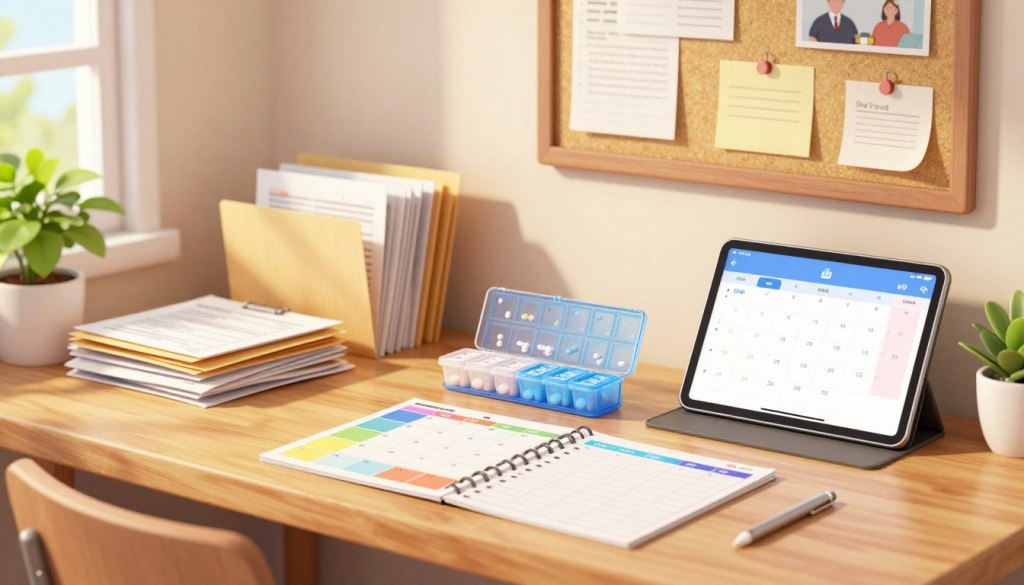
- ID, insurance cards, and Medicare info.
- Advance directive, health care proxy, and power of attorney.
- Current medication list, allergies, and provider contact list.
Tracking meds and appointments from afar
Keep one master medication list with dose, time, and purpose. Add a second list that shows who fills each prescription (pharmacy names and numbers). Note refill cadence so you don’t run out.
Simple system that works: a shared document + shared calendar + one point person who updates after visits. Use easy apps like CareZone or MyTherapy if that helps.
“Organization isn’t paperwork—it’s the calm you build so you can act fast.”
Quick checklist before travel or storms
- 7–14 days of medications on hand
- Updated provider and emergency contact list
- Banking access info and bill-pay setup
| Category | Examples | Where to store | Who to notify |
|---|---|---|---|
| Medical | Medication list, allergies, medical appointments | Locked file + cloud copy | Primary doctor, pharmacy |
| Legal | Advance directive, power of attorney | Attorney copy + family copy | Named agent, close family |
| Financial | Bank account contacts, bill-pay setup | Secure folder, password manager | Trusted family member |
| Contacts | Physicians, pharmacies, neighbors | Shared document | Care team and family |
For a practical checklist for doctors’ visits and what to bring to appointments, see a helpful guide at caregiver’s guide to doctors’ visits. To avoid medication errors like double dosing, review steps at how to prevent double dosing in.
Create a Local Care Network and Use Community Resources in the United States
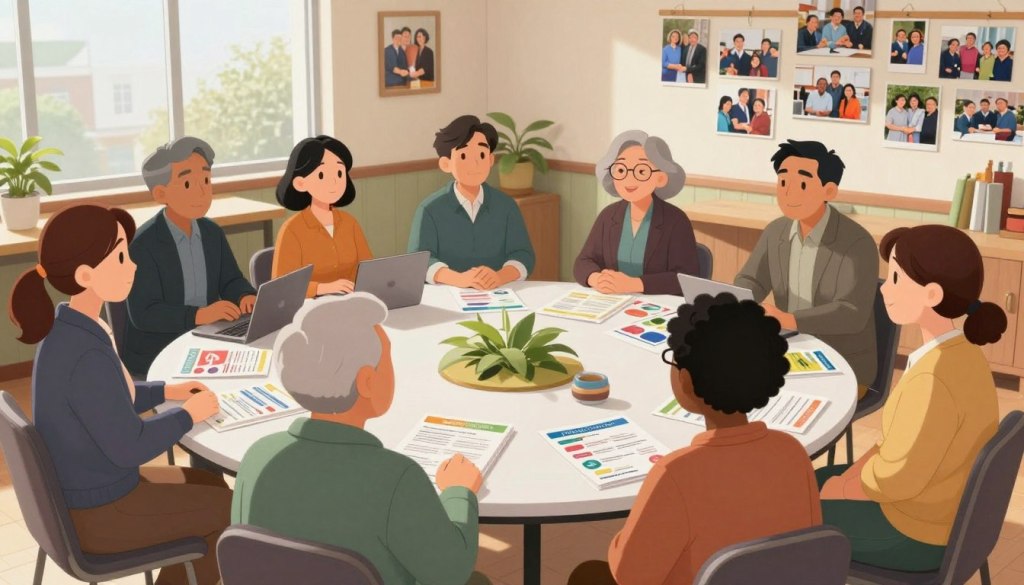
A practical local team keeps small problems from becoming emergencies. Start by listing nearby people who can help and the tasks they can handle.
How to recruit family, friends, and neighbors
- Ask for one specific task: a weekly porch check, a monthly grocery run, or a quick “all good” text.
- Match tasks to availability. Short asks reduce drama and make members more likely to say yes.
- Create an emergency card: who has keys, who gets there in 10 minutes, who drives to urgent care, and who calls you.
When to consider paid services
If safety is uncertain or family members are burning out, level up to home care, adult day services, or a geriatric care manager. These services fill gaps and coordinate appointments, meds, and visits.
Finding area-specific resources, especially for dementia
Use the Alzheimer’s Association Community Resource Finder by ZIP code. Call 1-800-272-3900 for chapter referrals and local programs.
Also check Area Agencies on Aging, faith groups, volunteer rides, and meal programs for practical help close to home.
Quick comparison of common local options
| Service | What it does | Best for | Who arranges it |
|---|---|---|---|
| Home care | In-home personal care, errands, meal help | Rising needs at home; safety concerns | Family members or agency |
| Adult day services | Structured daytime activities and supervision | Social engagement and daytime respite | Family members or referral |
| Geriatric care manager | Assessment, coordination, and monitoring | Complex needs, multiple providers | Family hires a manager |
| Community programs | Meals, transportation, volunteer checks | Low-cost practical help | Area Agencies on Aging or local groups |
Reassess needs at each visit. Dementia can progress. Plan services before the crisis hits.
For a simple schedule to share with your local team, see the caregiver check-in schedule.
How to Deliver Long-Distance Caregiving Emotional Support With Mood Check-Ins
A simple, kind call can turn a vague worry into a clear next step. Regular mood check-ins ease guilt, reduce stress, and help both the caregiver and the loved one feel seen.
Why this matters
Stress, isolation, and guilt are common for people managing care from afar. Short, steady contact helps track small changes in health and daily needs before they become big problems.
Running a quick phone or video routine
Keep it gentle. Try a short script: “How’s your morning been? One good thing today? What felt hard?” Add a 1–10 rating: “If 1 is rough and 10 is great, where are you today?” Then ask, “What would move it up by one?”

What to listen for
- Changes in routine, appetite, or sleep.
- Missed medications or confusion about doses.
- Withdrawing from activities or friends.
Make visits count
Plan one or two task-focused items—pharmacy review, safety sweep, or a provider visit—then protect real quality time. Walk, share a meal, or watch a favorite show. Those moments matter as much as the tasks.
How JoyCalls helps between updates
JoyCalls makes daily check-in calls so an older person gets friendly company and you get summaries and alerts. It fills the quiet afternoons and keeps consistency when you can’t call every day.
“Someone is thinking of you today.”
Talk to Joy now: 1-415-569-2439
For timing tips, see our piece on morning vs evening check-ins.
Conclusion
When distance makes decisions harder, systems make them simpler.
Start with the essentials: understand health and home realities, get legal permission, gather key documents, and build a nearby team. Keep a steady rhythm of brief check-ins by phone and visits to track changing needs.
You don’t have to fix everything at once. Pick one next task this week—a HIPAA release, a med list, or a neighbor check-in—to reduce uncertainty and free up time.
Systems protect your family’s time and reduce stress when needs change. For research-backed practices, see research-backed practices, and for tips on consistent updates try share updates with siblings.
Next steps: Talk to Joy now: 1-415-569-2439. Sign up for JoyCalls: https://app.joycalls.ai/signup.