


Nearly 20% of older adults who live at home show signs of dehydration during hot months — and thirst fades with age. That surprising fact means small steps can prevent big problems.
Picture this: it’s warm, your parent says they are “fine,” and you hold your breath. This short guide promises a practical, safe how-to plan. It covers simple routines, realistic drink options beyond plain water, and clear red flags to watch for.
This piece is for busy adult children, caregivers, and older folks living alone. You’ll learn what “good” looks like — steady fluids, light-yellow urine, more energy — and what’s not okay: confusion, dizziness, very dark urine.
No spreadsheets required. We’ll show easy tools (cups, lids, straws), food choices, and gentle ways to track intake. Small changes add up. No shame if this has been hard.
Talk to Joy now: 1-415-569-2439. Sign up for JoyCalls: https://app.joycalls.ai/signup.
Key Takeaways
- Older adults often don’t feel thirst; act before they feel thirsty.
- Look for steady fluids, light-yellow urine, and more energy as good signs.
- Watch for confusion, dizziness, fast pulse, or very dark urine — get help fast.
- Use easy tools and tasty drink options to make routine care simple.
- Small, consistent steps protect health and ease family worry.
- JoyCalls can help with daily check-ins and alerts to caregivers.
Why older adults face a higher dehydration risk in summer heat
Many families don’t realize how changes with age make simple thirst less reliable.
How aging alters thirst, muscle, and water storage
Thirst cues fade as people get older. Waiting until someone says they are thirsty can mean you’re already behind.
Muscle mass shrinks with age. Less muscle means the body holds less water as a backup. That raises the risk dehydration during warm days.
Kidney changes and higher fluid loss in heat
Kidney function often declines, so the kidney may not conserve water well. Hot weather adds sweat and extra losses.
Health conditions and medications that increase risk
Memory problems or swallowing trouble can stop someone from drinking. Common medications can raise urine output or dry the mouth.

| Cause | What happens | Care notes |
|---|---|---|
| Less muscle | Lower water reserve | Offer small, regular drinks |
| Reduced kidney function | Less efficient water conservation | Monitor urine color and output |
| Medications & conditions | More urination, dry mouth, swallowing issues | Review meds; ask clinician if changes were recent |
| Heat exposure | Increased sweating and fluid loss | Limit long outdoor time; pace activities |
Quick nudge: If meds or health conditions changed recently, review the care plan with a clinician and rethink simple hydration strategies now.
How much should seniors drink to stay hydrated in hot weather?
Clear, small goals make staying safe in hot weather easier for older adults.
The practical daily target and why needs change with heat and humidity
Start with a simple goal: many adults aim for about 64 ounces of fluids a day. This is a helpful baseline on a normal day.
When temperatures climb or humidity is high, needs rise. Hotter weather, extra activity, or time outdoors means you should sip more often.
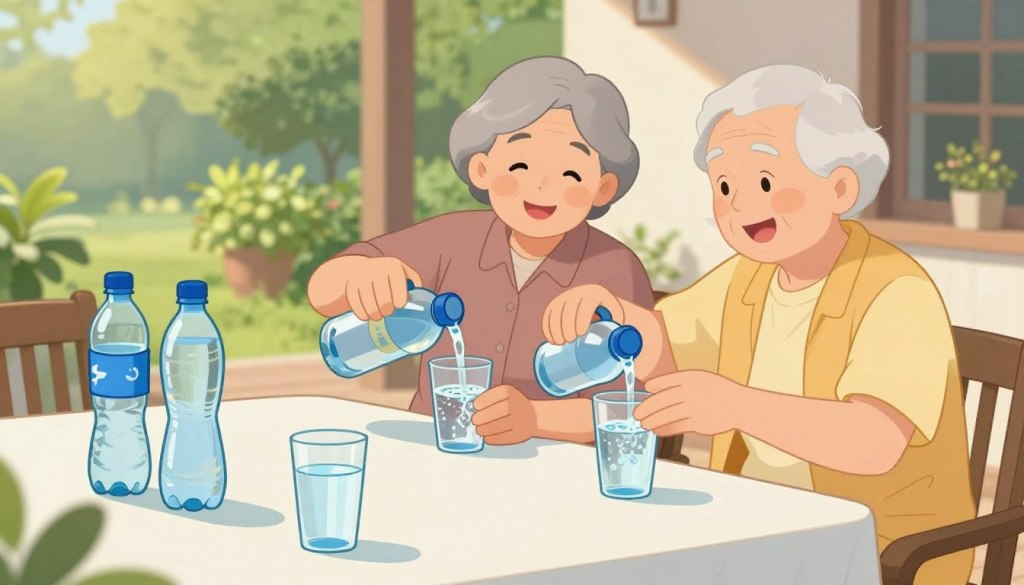
Balancing intake with output like sweating and frequent urination
If bathroom trips increase or sweat is noticeable, match that extra fluid loss with steady sips. Don’t chug—pace small amounts throughout the day.
Caregiver-friendly math: 8 ounces at breakfast, 8 at lunch, 8 at dinner, plus regular “sip breaks” hits the target without pressure.
When illness changes hydration needs
Fever, diarrhea, or vomiting raise risk quickly. Treat fluids as a priority and consider electrolyte support if advised by a clinician.
“Small, steady sips and a quick plan for fever or stomach illnesses often prevent bigger problems.”
- Normalize frequent urination; shift most drinks earlier, taper near bedtime.
- Personalize based on weight, meds, and health conditions.
- Ask your clinician for a tailored plan when in doubt.
| Scenario | Quick action | Why it helps |
|---|---|---|
| Hot day + activity | Increase sip breaks | Replaces sweat-related fluid loss |
| Frequent urination | Drink earlier in day | Limits nighttime trips |
| Fever / vomiting | Add electrolyte drinks; call doctor | Prevents rapid fluid loss and imbalance |
For clear guidance, see water intake guidance and use a daily check-in routine to track drinks and meals.
Early dehydration symptoms caregivers should never ignore
Not all dehydration shows up as dramatic collapse — often it’s small shifts you notice over time. Catching these early saves time and prevents bigger problems.
Subtle signs to watch for:
- Headache or mild muscle cramps.
- Constipation or a feeling of fullness in the stomach.
- Dry mouth or a sticky tongue.
- Low energy, sleepiness, or a slow-to-wake mood.
- Mild dizziness when standing.

“I’m just tired.”
“My mouth feels sticky.”
“My stomach feels backed up.”
Using urine color as a quick check
Urine is a simple, reliable signal from the body. Aim for clear to light yellow. Darker yellow or amber means increase fluids and watch closely.
Low-pressure caregiver script
Try a calm approach. Say, “Let’s do a quick water break together.” Short, friendly actions work better than debates about thirst.
Fast reminder: older adults may not feel thirsty. Symptoms matter more than the word “thirst.” If signs appear, act early to help them stay hydrated and protect their overall health.
Signs of severe dehydration that require urgent medical care
Some warning signs mean you should act now, not later. Severe fluid loss can harm the body quickly. Watch closely and call for help when red flags appear.

Urgent red flags to watch for
- Confusion or sudden change in alertness — this is serious.
- Significant dizziness, fainting, or trouble standing.
- Very little or no urine, or dark amber urine.
- Rapid heartbeat or rapid breathing and a weak pulse.
Visible cues and why they matter
Look for cold hands or feet and skin that stays “tented” when pinched. Low blood pressure and weak pulse can signal low blood volume. These signs mean the heart and kidney are under strain.
| Sign | What it suggests | Immediate action |
|---|---|---|
| Confusion | Brain not getting enough fluid or electrolytes | Call emergency services now |
| Very little urine / dark urine | Severe fluid loss; risk to kidneys | Seek urgent medical care; bring sample if possible |
| Rapid heartbeat / weak pulse | Low blood volume stressing the heart | Emergency evaluation; IV fluids may be needed |
| Cold hands, low BP, poor skin turgor | Signs of shock or severe electrolyte imbalance | Call 911; do not delay |
“If they’re confused, this isn’t the time to negotiate another glass of water.”
Why act fast: Severe dehydration can cause seizures from disrupted electrolytes, hypovolemic shock, kidney failure, or worse. You are not overreacting. If these symptoms appear, get urgent medical care — severe cases often need IV fluids and close monitoring to protect overall health.
summer hydration tips seniors can use daily without overwhelm
Create a simple rhythm so sipping becomes part of the day, not a chore. Anchor fluids to things that already happen.

Build a routine around meals, meds, and reminders
Start small: one glass with each meal and a few sips with medications if allowed. If meds affect water balance, check with the clinician first.
Set a mid-morning and mid-afternoon cue. Phone alarms, a visible pitcher, or a caregiver text work well.
Make “drink before thirsty” a habit
Thirst fades with age. Teach the mantra: drink before thirsty. It beats waiting for a cue that may not come.
Adjust for heat, outdoor time, and activity
Add a small boost before and after walks, gardening, or errands. When the weather is warmer, increase sips rather than one large drink.
- ✔ morning cup with breakfast
- ✔ lunch drink
- ✔ afternoon sip
- ✔ dinner glass
“Small and steady works better than chugging—it’s kinder on the body and easier to keep up.”
| When | What to do | Why | Quick example |
|---|---|---|---|
| With meals | Have a 6–8 oz glass | Builds consistent intake | Eat breakfast, drink a cup |
| With meds | Sip a small glass (if allowed) | Pairs habit with routine | Take pills with 4 oz water |
| Before activity | Add extra 4–8 oz | Offsets sweat and exertion | Drink before a walk |
| Reminders | Use alarms or a visible pitcher | Reduces missed moments | Phone alarm at 10am/3pm |
For help talking about medication timing and drinks, see this guide on talking to a stubborn parent about. Small routines ease worry and make care feel doable.
Best beverages for hydrating seniors beyond plain water
If plain water feels boring, there are easy, tasty choices that still count toward daily fluid needs.
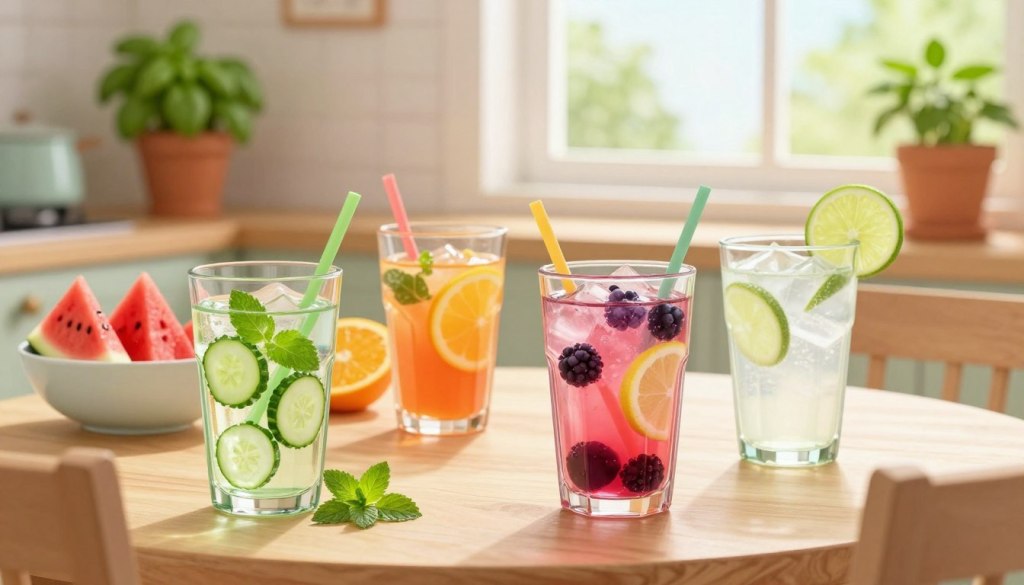
Start with empathy: “If your mom hates plain water, you’re not stuck.” Offer gentle swaps that make sipping easier and kinder.
Flavor upgrades that work
Try infused water with cucumber, citrus, or berries. Water enhancers and pre-flavored waters also help. Mix juice half-and-half with water to cut sweetness.
Low-calorie options that still count
Sparkling water, unsweetened tea, and plain coffee count as fluids for many people. Keep sugar low and watch caffeine if sleep or medications are an issue.
Food-like fluids that go down easy
Warm broths, smoothies, milkshakes, and popsicles are good when eating is hard. They add calories and comfort while boosting fluids.
Electrolytes and safety
Electrolytes help nerves and the heart. Too much or too little can be dangerous. If there are heart or kidney health conditions, ask the doctor before adding electrolyte products.
“Try temperature and flavor tests — ice-cold for some, room temp for others.”
Practical tip: Most beverages count toward daily targets. Small changes help with staying hydrated without pressure.
Hydrating foods for seniors that boost fluids at mealtime
Meals can quietly deliver lots of fluid when cups feel like work. Small food choices add meaningful water to the day and help the body stay steady without pressure.
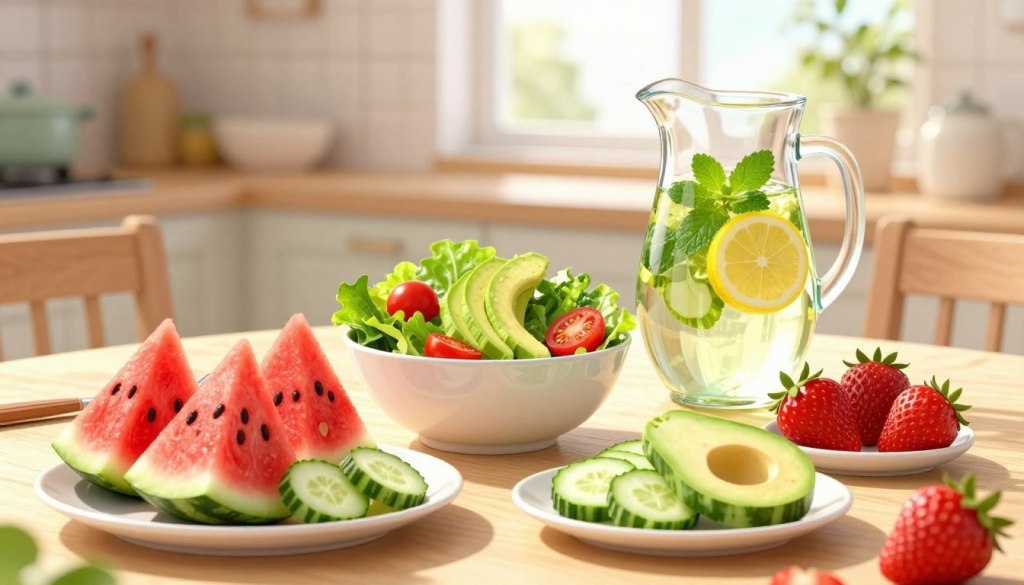
High water-content fruits and vegetables to prioritize
Stock a grocery list with standout items: cucumber (96%), orange (97%), tomato (94%), watermelon (92%), bell pepper (92%), grapes (92%), cantaloupe (90%), blueberries (85%), apple (84%).
Easy swaps for picky eaters or those who avoid raw produce
Not everyone likes raw salads. Try berries stirred into yogurt or cereal. Add sliced tomato or lettuce to sandwiches. Blend fruit into smoothies or serve applesauce.
Snack plates work well: cucumber slices with cherry tomatoes, or a chilled bowl of grapes for grab-and-go ease.
“Water sweets” and swallowing safety
Products like Jelly Drops (≈95% water) or fruit gelatin can help someone who won’t sip from a cup. They are friendly options for many people.
“Hydration doesn’t only come from cups — meals and snacks can add a lot of fluid.”
Safety note: if swallowing is hard (dysphagia), avoid chewy or slippery forms and talk to a clinician or speech therapist about safe textures and gels.
| Option | Why it helps | Care note |
|---|---|---|
| Fruit bowls (melon, grapes) | High water per serving | Keep chilled and cut for easy eating |
| Yogurt with berries | Adds fluids plus calories | Good for those who avoid raw produce |
| Fruit gelatin | Soft, familiar way to add water | Check swallowing safety first |
Serving strategies that make drinking easier and safer for seniors
Small serving changes often decide whether someone sips or refuses a drink. Try a quick experiment: change the temperature, the cup, or add a slice of fruit. Small shifts can make a big difference in daily care.

Temperature, taste, and presentation tricks that increase intake
Offer cold water, room-temperature options, or warm broth to see what feels best. Some people prefer an icy glass; others like tea at room temp.
Presentation matters: a pretty glass, a garnish, or a favorite tumbler can boost appetite for beverages and make moments feel dignified.
Drinkware solutions for low vision, tremors, arthritis, and weakness
Use brightly colored or opaque cups so the rim is easier to see. Two-handled cups and lightweight mugs help with tremors and arthritis.
No-spill lids, built-in straws, and stable bases cut down mess and give more independence in daily care.
Swallowing difficulties and safer sipping tools like no-spill lids and straws
If swallowing is a concern, ask a clinician about safe textures and specialized tools. Use clinician-recommended cups and straw lids to reduce risk.
“The right glass and lid can change a refusal into a relaxed sip.”
Quality of life improves with fewer spills, fewer arguments, and more confidence. For more practical serving ideas, see serving ideas and guidance that fit daily routines.
Special precautions for heart, kidney, and other health conditions
A one-size-fits-all “drink more” rule can hurt people with certain medical issues. Some chronic illnesses need careful limits or precise plans. Families and caregivers should treat fluid choices as medical decisions when needed.

When fluid restriction may be medically necessary
Certain heart, kidney, or liver problems sometimes require a formal fluid limit. This is common with heart failure and advanced kidney disease.
Only a clinician should set the amount. A clear plan from the doctor prevents both overload and dangerous dehydration.
Medication-related fluid loss and what to monitor
Some medications increase urination. Diuretics are the most common. Others dry the mouth or change bathroom patterns.
- Check for sudden weight changes or new swelling.
- Note big shifts in urination or unusual dizziness.
- Watch for sudden fatigue, breathlessness, or confusion — these can signal trouble.
“Think safety first: personalized plans protect health, not one rule for everyone.”
| Issue | Watch | Quick action |
|---|---|---|
| Diuretics | More urine, electrolyte shifts | Call doctor if dizzy or weak |
| Heart failure | Weight gain, swelling, breathless | Follow fluid limit; contact clinician |
| Kidney disease | Low urine output or swelling | Ask provider before changing intake |
Quick nudge: if there’s any history of heart failure, kidney disease, new swelling, or recent changes in medications, schedule a summer check-in with the doctor. A short call can create a safe, personalized plan for fluid intake and prevent avoidable dehydration for older adults.
How to track hydration at home and know when to call the doctor
A simple routine can show whether fluid intake is steady or slipping over time. Use a few plain checks each day and you’ll spot problems early.
Simple daily checks: ounces, bathroom frequency, energy, and dizziness
Aim to note approximate ounces consumed each day. Count bathroom trips and check urine color: clear to light yellow is good; darker is a warning.
Watch overall energy and any dizziness. Short notes on a fridge sticky or a quick phone memo work well.
When symptoms suggest severe dehydration and IV fluids may be needed
- Call the doctor for repeated dark urine, worsening fatigue, or new confusion.
- Go to urgent care or ER for fainting, confusion, very little urine, or rapid heartbeat/breathing.
- These signs can mean IV fluids are needed to protect kidney and heart health.
Talk to Joy and simple care tools
Daily check-in calls can prompt a drink and flag patterns so you don’t guess. See a short daily check-in for how this works.
“You’re not nagging — you’re building a safety net.”
Talk to Joy now: 1-415-569-2439
Sign up for JoyCalls: https://app.joycalls.ai/signup
For a practical guide on fluids and foods that help you stay hydrated, see this hydration guide. Small, steady tracking protects the adults you love and makes care feel doable.
Conclusion
A clear plan—simple sips, easy foods, and safe tools—keeps risk low and confidence high.
Why it matters: older adults often don’t feel thirst until they’re already low on water. Early action prevents serious dehydration and protects heart and kidney health.
Practical toolkit: set small daily targets, offer tasteful drinks and hydrating foods, and use cups, lids, or straws that make sipping easier. Watch urine color, energy, and dizziness for early warning signs.
Know the red flags: confusion, fainting, or very low urine volume needs urgent care. Small, consistent changes preserve independence and quality of life.
Need backup? Talk to Joy now: 1-415-569-2439. Sign up for JoyCalls: https://app.joycalls.ai/signup