
About 1 in 4 older adults in the U.S. struggle with long-term low fluid levels, and this problem is a common reason people end up in the hospital.

Fluid loss in older adults can shift from “a little off” to dangerous faster than many families expect. Heat waves, a bout of flu, or a new medication can tip the balance quickly.

If you call a parent and they sound different — sleepier, confused, not themselves — that change matters. Confusion and fainting can show the body no longer has enough water and electrolytes to keep blood pressure and organs steady.

This short guide promises clear, practical steps: how to spot the most urgent warning signs, how to judge if you need immediate care, and what to do while help is on the way. There is no shame in acting fast.

For daily prevention tips and a simple check-in plan, see our daily check-in routine.

Key Takeaways

  • Chronic low fluid levels affect many older adults and can lead to hospital visits.
  • Watch for sudden changes: confusion, fainting, little or no urine, fast breathing, or a racing heart.
  • Act quickly — protecting the brain, heart, and kidneys matters most.
  • Simple steps can help at home while you get care on the way.
  • There’s no shame in seeking help; caregivers are doing the right thing.

Why dehydration hits older adults harder right now

Older bodies lose their safety nets for water. A short spell of low drinking can escalate fast because aging blunts the usual alerts that tell us to sip.

A concerned older adult woman, wearing comfortable casual clothing, holds a glass of water in her hand, looking thoughtfully towards the viewer. She is seated at a kitchen table, surrounded by a few health-related items like a pill organizer and a hydration reminder chart. The background features a softly-lit kitchen with warm wood tones and gentle sunlight filtering through a window, creating a calm and inviting atmosphere. The focus is on her expressive face, capturing her concern about hydration. The scene conveys a mood of urgency yet hope, emphasizing the importance of staying hydrated. Use natural lighting for a soft, realistic texture, and capture the image with a slight depth of field to enhance the emotional connection.

Aging changes that reduce thirst and reserves

The brain’s thirst signal weakens with age. Many older adults don’t feel thirsty until their water supply is already low. Kidneys also hold less water than before, so the body has a smaller reserve.

Common risk factors families see at home

Some long-term conditions raise risk. Diabetes and certain chronic conditions change how the body manages fluids. Memory loss, swallowing trouble, and limited mobility make drinking less likely.

Practical access matters: fear of nighttime trips or falling can lead someone to drink less on purpose.

Medications and fast triggers

Many people take diuretics (“water pills”) or medicines that lower blood pressure. These can increase urination or lightheadedness and raise fall risk.

Heat, a sudden fever, vomiting, or diarrhea can drain fluids in hours. Think: lower reserve + weaker thirst signal + extra losses = faster emergency.

Severe dehydration elderly symptoms to watch for

A sudden change in thinking or energy can be the clearest early alarm that fluids are too low. If someone is more confused, dizzy, or unusually sleepy, treat it as important and check right away.

Confusion, dizziness, and sudden changes in alertness

Why it matters: Low blood volume can reduce oxygen to the brain. That causes confusion, trouble focusing, or odd sleepiness.

Blood pressure drops, rapid heart rate, and palpitations

Look for lightheadedness, a fast heartbeat, or palpitations. These are signs the body is working hard to move blood and keep organs going.

Little to no urine, dark urine, and urgent urine changes

If urine is very dark or the person urinates much less than usual, that points to the body conserving water. Describe color as “like apple juice” to help caregivers judge.

Breathing, heat, skin, eyes, and fainting

Rapid or hard breathing, rising temperature, poor skin turgor (pinch test stays tented), dry or sunken eyes, and fainting are urgent signs. Don’t wait to seek help.

“Confusion, fainting, or inability to urinate are red flags—call for medical help right away.”

Sign What to look for Care action
Confusion Slow answers, agitation, odd sleepiness Call clinician; stay with them
Circulation Low pressure, fast heart, palpitations Keep person lying down; seek urgent care
Urine Very dark or very little output Offer fluids if safe; call provider
Skin & eyes Skin stays tented; eyes look sunken or dry Cool cloths; get medical advice

A concerned healthcare professional observes an elderly man sitting in a sunlit home environment, exhibiting signs of severe dehydration. The man, dressed in modest casual clothing, appears fatigued with dry, cracked lips and sunken eyes, while his skin shows signs of elasticity loss. In the foreground, a glass of water sits on a small table next to him, symbolizing the importance of hydration. The background features soft, warm lighting from a nearby window, enhancing the atmosphere of care and concern. The angle captures both the professional's empathetic expression and the man's discomfort, emphasizing the urgency of recognizing dehydration symptoms in older adults. The overall mood is serious yet compassionate, inviting viewers to understand the critical nature of the situation.

How to tell if dehydration is an emergency or can be treated at home

A quick change in daily habits often tells you more about fluid trouble than waiting for thirst to show up. Watch behavior, bathroom use, and steadiness instead of relying on whether someone says they are thirsty.

Why thirst can be unreliable and what to use instead

Older adults may not feel thirst even when their body needs fluids. Compare to their usual day: alertness, number of bathroom trips, and ability to stand without dizziness.

Red flags that require urgent medical attention

Emergency now: fainting, hard-to-wake confusion, barely any urine, fast or struggling breathing, or a racing heart with weakness. If the person can’t keep fluids down, act fast.

“If you hear slurred speech, odd disorientation, or they are too weak to reach a glass, get help right away.”

Situation What to watch What to do
Can’t drink or vomits Keeps vomiting or won’t hold fluids Call clinician; consider urgent care/ER
Diarrhea or high fever Diarrhea >24 hours or fever ≥102°F Call doctor same day
Clear emergency signs Fainting, confusion, no urine Go to ER or call 911

An older adult sitting in a bright, well-lit living room, looking concerned and slightly unwell. In the foreground, the individual, a senior man with gray hair, wearing modest casual clothing, is holding a glass of water with one hand and resting his other hand on their forehead, showing signs of distress. In the middle ground, a small coffee table is visible with a pill organizer and a half-filled water pitcher. The background features soft, cozy lighting with house plants and family photos, creating a warm yet urgent atmosphere. The overall mood conveys the importance of hydration and the need for immediate attention, prompting viewers to recognize the signs of dehydration in seniors.

For more detail on warning signs in seniors, see this list of common signs.

What to do immediately if you suspect severe dehydration

Stay calm and act quickly. Move the person out of direct heat into shade or A/C. Loosen tight clothing. Use cool, wet towels on the skin to lower body temperature without shocking them.

A serene and informative illustration showing the steps for rehydration in an elderly context. In the foreground, a clear, well-organized set of visual aids detailing rehydration steps, such as a glass of water, electrolyte packets, and a hydration reminder chart. The middle ground features a caring senior health professional, dressed in modest business attire, demonstrating proper hydration techniques with an elderly person sitting at a table, both looking engaged and attentive. The background includes a softly lit, home-like environment, with natural light coming through a window, creating a warm and inviting atmosphere. Emphasize clarity and simplicity in the arrangement of elements, ensuring the focus is on the actionable steps of rehydration.

Make the environment safe

Place them sitting up if they can. If they feel faint, have them lie down with their feet up. Check breathing and alertness. If they are hard to wake, call for emergency care right away.

Offer fluids only when swallowing is safe

Safety first: only give drinks if the person is awake, can sit up, and can swallow. Offer small sips every few minutes. Do not force large amounts — slow sipping reduces vomiting and helps the body absorb water and nutrients.

Use electrolyte support, not alcohol or caffeine

After heavy sweating, vomiting, or diarrhea the body needs sodium and potassium. Offer an oral rehydration option: a low-sugar sports drink, diluted fruit juice, or water with a salty snack like crackers or soup. Avoid alcohol and limit caffeine.

When IV fluids may be needed

If signs worsen over hours, urine stays very low, or blood pressure drops, home care isn’t enough. IV fluids in a clinic or ER restore volume faster and support blood pressure. Call for prompt medical treatment if this is likely.

“If they become more confused, faint, or can’t keep fluids down, get urgent help.”

Immediate action What to do Why it helps When to escalate
Cool environment Move to shade/A/C; wet towels Lowers core temperature, eases strain If temperature stays high or breathing is fast
Safe sipping Small sips of water or electrolyte drink Restores fluids slowly; reduces vomiting If cannot swallow or vomits repeatedly
Electrolyte support Low-sugar sports drinks, soup, banana Replaces sodium and potassium If weakness or low blood pressure develops
Medical IV ER/urgent care for IV fluids Rapid volume and blood pressure support Worsening over hours or very low urine

Medical complications seniors face when dehydration is severe

When fluid drops too far, organs lose the blood flow they need. That can lead to fast, dangerous problems. Clinicians worry because what starts as simple thirst can escalate into life‑threatening trouble.

Low blood volume shock and dangerous pressure changes

Plainly: if the body loses too much fluid, blood volume falls. Blood pressure can drop and the heart can’t send enough oxygen to the brain and other organs. This low blood volume shock is an emergency and needs immediate care.

Kidney problems and risk of kidney injury

The kidneys rely on steady blood flow to filter waste. Lose that flow and acute kidney injury can follow. In extreme cases, kidney failure may need dialysis or hospital treatment.

Electrolyte imbalance: sodium and potassium shifts

When fluid and salts change, sodium and potassium levels can swing. That affects muscles and heart rhythm. It can cause fainting, weakness, or even seizures.

Heat exhaustion and heatstroke on hot days

Hot, humid weather raises the risk. If the body can’t cool itself, temperature climbs and heat exhaustion can become heatstroke. That makes blood flow and kidney function worse.

“If warning signs appear, don’t wait — get medical evaluation to prevent organ damage.”

Complication What it means Care action
Low blood volume shock Low blood; low oxygen delivery to organs Urgent medical care; IV fluids
Acute kidney injury Kidney filters slow or stop; waste builds up Hydration, labs, possible hospital care
Electrolyte shifts Too little or too much sodium/potassium Monitor labs; correct balance in clinic
Heat injury Heat exhaustion → heatstroke; rising body temp Move to cool place; emergency care if worse

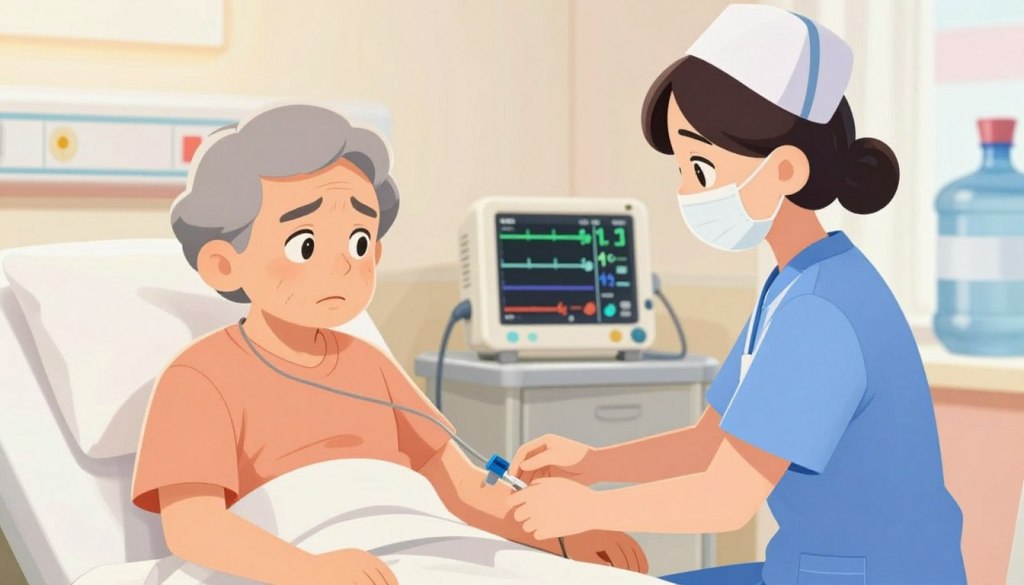
A concerned senior person sitting in a bright, well-lit hospital room, looking slightly frail and fatigued, depicting the reality of severe dehydration complications. In the foreground, a nurse gently checking the senior's vitals, dressed in professional scrubs, conveying a sense of care and urgency. In the middle ground, a medical monitor displaying vital signs and a water jug partially visible, emphasizing the theme of hydration. The background features soft-focus hospital equipment and calming pastel-colored walls, creating a warm yet serious atmosphere. Soft, natural light filters in through a window, adding a sense of hope despite the situation. The image should evoke empathy and highlight the importance of addressing dehydration in seniors.

Want more clinical context on risks and organ effects? Read this review on fluid balance and outcomes from a medical perspective. For practical caregiver talks about meds and fluid routines, see how to discuss medication and drinking.

How much water and fluids do older adults need, and when “more” isn’t better

Many people do fine with simple cup goals, but the right amount still depends on health and body size.

Starting targets: a common guideline is about 9 cups of water a day for many women and 12 cups for many men. Another simple rule is roughly 72 ounces a day for many healthy adults. These are starting points, not hard rules.

What changes needs: taller or heavier people may need more. Active days, hot weather, fever, vomiting, diarrhea, and high-fiber meals raise intake needs. Illness and medications can change what the body needs quickly.

When less is safer

Some heart failure, kidney disease, or low-sodium conditions require limits on fluid. In those cases, more water can make swelling or breathing worse. Always follow clinician-directed restrictions.

Situation Suggested approach Why it matters When to call
General healthy adult 9 cups (women) / 12 cups (men) or ~72 oz/day Good starting intake for daily balance If confused about goals
Active or hot day Increase steady sipping across the day Replaces sweat losses; keeps energy up If dizziness or low urine occurs
Heart or kidney conditions Follow exact fluid limits from clinician Prevents fluid overload and swelling Sudden weight gain or breathing trouble

Practical tips: spread drinks through the day. Pair sips with meals, meds, and routine moments. Use a measured bottle or pitcher goal so tracking feels easy, not obsessive.

If you’re unsure about limits because of swelling, quick weight gain, or med changes, check in with the care team right away. A short call can keep hydration safe and simple.

A serene and informative scene depicting water intake guidance for older adults. In the foreground, a clear glass of water sits on a wooden table, beside a small pitcher, evoking a sense of hydration. In the middle ground, a well-organized, colorful infographic with clear, simple visuals illustrates water intake recommendations and tips for seniors. The background features a softly blurred kitchen setting, with warm lighting filtering through a window, creating a welcoming atmosphere. The overall mood is calm and educational, promoting health and well-being. The composition should be balanced with a focus on clarity and minimalism, ensuring that the main elements convey the message of adequate hydration without excessive distractions.

How to prevent dehydration in seniors with realistic daily habits

A simple routine tied to daily habits helps keep older adults steady and comfortable. Make sipping easy: a few small drinks after waking, with medications, at meals, and during afternoon breaks.

Build a hydration routine across the day

Tip: set a visible pitcher or measured bottle and pair sips with repeat moments. Slow, steady intake beats gulping once.

Hydrating foods and nutrient support

Include soups, watermelon, yogurt, and cooked vegetables for gentle nutrients and extra fluids. Balanced meals help replace sodium and potassium lost during heat or illness.

A warm and inviting kitchen scene focused on an elderly couple, both dressed in modest casual clothing, engaged in a routine of preventative hydration. In the foreground, a well-organized table is adorned with a variety of colorful fruits and vegetables, emphasizing hydration, alongside clear glass pitchers filled with water infused with citrus slices. In the middle, the couple is smiling and sharing a moment, one person pouring water into a glass, while the other is arranging the fruit. In the background, soft natural light filters through a nearby window, casting gentle shadows and creating a cozy atmosphere. The overall mood is one of health, companionship, and proactive care, reinforcing the importance of hydration in daily life.

Hot weather, activity, and illness tips

Drink before feeling thirsty, rest in shade, and replace sweat after being outdoors. During fever, vomiting, or diarrhea, increase gentle fluids and easy-to-eat broth or gelatin.

Medication check-ins and early monitoring

Ask the clinician about diuretics or blood pressure meds and their effect on fluid needs. Watch for drier skin, new dizziness, or not acting like themselves and act early.

“Small daily habits prevent bigger problems—spot changes early and get quick help.”

Daily support options

Talk to Joy now: 1-415-569-2439. For ongoing help, sign up for JoyCalls and see a guide to prevent dehydration in seniors or our daily check-in routine.

Conclusion

Small shifts in thinking, bathroom use, or energy can move quickly into an emergency. Watch for sudden confusion, fainting, very low urine, or fast breathing and heart rate. ,

Bottom line: when those red flags appear, seek care fast. Acting quickly protects blood pressure, the heart, and the kidney and can stop worse problems from developing.

Prevention is simple. Keep steady water habits, offer hydrating foods, and watch closely during heat or illness. A gentle routine and regular check‑ins lower the chance that trouble will sneak up on someone living alone.

You don’t need to diagnose. Notice change, take it seriously, and get help. For a quick refresher on common warning signs, see signs of dehydration in older adults.

FAQ

When should I treat low fluid levels in a senior as an emergency?

If the older person becomes suddenly confused, faints, has very low blood pressure, a racing heartbeat, is breathing fast or poorly, stops urinating, or shows signs of heatstroke (very high temperature, hot dry skin, or loss of consciousness), get emergency help right away. These are red flags that the body’s circulation and organs aren’t getting the fluids they need.

Why do older adults lose fluid balance more easily now?

Aging changes make thirst signals weaker and the body holds less reserve. Kidneys concentrate urine less well. Muscle mass (which stores water) declines. Add chronic conditions like diabetes or dementia, limited access to drinks, or reduced mobility, and the risk rises quickly.

Which everyday medicines make fluid loss worse?

Diuretics (water pills) and some blood pressure medicines can increase urine output. Other drugs — certain antidepressants, anticholinergics, and laxatives — can also reduce thirst or increase fluid loss. Always review medications with the clinician if dehydration is a concern.

What common illnesses or situations trigger fast fluid loss?

Heat exposure, high fever, vomiting, and diarrhea remove water quickly. Intense exercise or sweating in hot, humid weather has the same effect. When these happen to an older person, watch intake closely and act fast.

What are the key warning signs of serious fluid loss in older adults?

Look for confusion or dizziness, a drop in blood pressure or racing pulse, little or no urine (or dark urine), breathing changes, fainting, sunken eyes, poor skin rebound, extreme weakness, cramps, and worsening headaches. Any sudden decline in alertness or balance should prompt action.

How can I tell if the problem can be treated at home or needs a doctor?

If the person stays alert, can swallow, has normal urine output, and symptoms are mild, try small, regular sips of water or an oral rehydration drink and monitor closely. If there’s any confusion, fainting, very low urine, persistent vomiting/diarrhea, high fever, or heart symptoms — call a clinician or emergency services.

Thirst feels unreliable. What should I use to gauge hydration?

Don’t rely on thirst alone. Use urine color and frequency, skin turgor (gentle skin pinch), steady heart rate, and mental clarity as better clues. Track drinks offered and taken across the day rather than waiting for complaints of thirst.

What should I do immediately if I suspect serious fluid loss?

Move the person to a cooler place, loosen tight clothing, and lower temperature with cool compresses. Offer small sips of an electrolyte solution if they can safely swallow. Avoid alcohol and limit caffeine. If they can’t drink, are vomiting, or have dangerous vitals, seek urgent medical care — IV fluids may be needed.

When are IV fluids necessary?

IV fluids are used when oral intake isn’t possible or enough — for example, with prolonged vomiting, very low blood pressure, severe weakness, or altered consciousness. Rapid IV replacement restores blood volume and helps prevent organ damage.

What medical complications can follow untreated low fluid volume?

Risks include low blood-volume shock, dangerous drops in blood pressure, acute kidney injury or failure, and electrolyte imbalances (sodium, potassium shifts) that affect the heart and brain. Heat exhaustion can progress to heatstroke, which is life‑threatening.

How much fluid do older adults need each day?

Needs vary by body size, health conditions, and activity. General targets often start around 6–8 cups of fluids daily, but people with heart failure or certain kidney conditions may need strict limits. Ask the clinician for a tailored goal.

When is drinking more not better for seniors?

Some heart or kidney conditions require fluid restriction to prevent fluid overload. Too much water can also dilute electrolytes. Always follow medical advice when chronic disease is present.

What practical habits help prevent fluid loss every day?

Build a gentle routine: small drinks regularly from morning to evening, include hydrating foods like soups, fruit, and yogurt, and avoid long gaps without fluids. Use reminders, place a favorite cup nearby, and offer drinks after restroom visits or before bed. Check medications with the clinician and watch for early warning signs.

Are there good drink choices beyond plain water?

Yes. Oral rehydration solutions, diluted fruit juices, broths, milk, and watery fruits (melon, oranges) help replace fluids and electrolytes. Avoid alcohol and limit strong caffeine drinks that can increase urine output.

How should hot weather or exercise be handled for older people?

Keep them in cool, shaded places during heat. Move activity to cooler times of day, rest often, and offer cool fluids frequently. Use lightweight clothing and cool towels to control body temperature and prevent rapid fluid loss.

When should I call a clinician instead of waiting?

Call the clinician for prolonged diarrhea or vomiting, high fever, fainting, signs of confusion, reduced urination, a fast or irregular heartbeat, or if medication changes may affect fluids. When in doubt, call — early treatment is simpler and safer.

Who can help with daily monitoring and gentle check-ins?

JoyCalls offers friendly, daily phone check-ins and will send summaries and alerts to caregivers. Talk to Joy now at 1-415-569-2439 to learn how regular contact can catch problems early and keep loved ones safer.

How do I sign up for ongoing JoyCalls support?

Sign up quickly online at https://app.joycalls.ai/signup. Regular check‑ins can remind seniors to drink, watch for warning signs, and notify caregivers if something changes.


Other Articles related to this article:

Medication Adherence Tips From Pharmacists (Simple, Proven)
Medication Reminders for Diabetes, BP, and Heart Meds (Systems That Stick)
Remote Medication Monitoring for Elderly Parents (What’s Realistic)
Medication Errors at Home: The Most Common Mistakes (And Fixes)
Side Effects vs Nonadherence: What Caregivers Should Watch For
The Best Time to Take Meds: Building a Habit Around Meals
Automatic Pill Dispensers: Do They Really Improve Adherence?
Medication Refills: Simple System to Never Run Out
How to Talk to a Stubborn Parent About Taking Meds
Polypharmacy in Seniors: Managing Too Many Meds Safely
Medication Reminders for Vision or Hearing Problems (Easy Fixes)
Medication Adherence for Dementia: Routines That Reduce Stress
Blister Packs and Bubble Packs: Are They Worth It for Seniors?
Pharmacy Sync: How to Align Refills on the Same Day
How to Keep an Updated Medication List (Template + Tips)
Text Message Medication Reminders for Seniors (Pros and Cons)
AI Medication Reminders: What They Can and Can’t Do
Medication Adherence for Seniors: Why Doses Get Missed
Post-Hospital Medication Plan: Avoiding Confusion After Discharge
Best Medication Reminder Methods (No Smartphone Needed)
Phone Call Medication Reminders: Do They Work Better Than Apps?
Pill Organizer 101: How to Choose the Right One for Seniors
Medication Management for Seniors Living Alone (Safety Plan)
Weekly Pill Planner Setup (Step-by-Step, 10 Minutes)
Daily Check-In Routine for Seniors Who Hate Being Checked On
How to Create a Medication Schedule That Actually Works
Medication Adherence Checklist for Caregivers (Fully Explained + Printable)
What to Do When Your Parent Says “I Already Took The Medicine”
How to Prevent Double Dosing in Seniors
Medication Reminder Apps for Seniors: What’s Actually Easy
How to Help Elderly Parents Remember Their Meds (Simple System)
Daily Check-In Routine for Seniors With Hearing Issues (Make It Easier)
Weekly Review: How to Spot Patterns From Daily Check-Ins
How to Start a Daily Check-In Routine in One Day (Fast Setup)
Daily Phone Check-In Services for Seniors: What to Look For
AI Check-In Calls for Seniors: How They Work (And What They Don’t Do)
The Best Daily Check-In Apps and Tools (And Simple No-App Options)
Daily Check-In Routine That Builds Real Connection (Not Just Monitoring)
How to Share Daily Caregiving Updates With Siblings (Without Miscommunication or Drama)
How to Set Boundaries With Daily Check-Ins (So It Doesn’t Take Over Your Life)
Daily Mood Check-Ins for Seniors: What to Watch For
Daily Check-In Routine After Hospital Discharge (First 14 Days)
How Often Should You Check In on Elderly Parents?
Daily Check-In Routine for Meals and Hydration (Quick Method)
Daily Check-In Routine for Seniors Living Alone (Safety + Connection)
How to Track Daily Check-Ins Without Feeling Like a Spreadsheet
Daily Check-In Routine for Medication Adherence (Without Nagging)
How to Build a Check-In Routine That Seniors Won’t Resist
Caregiver Check-In Schedule Template (Daily + Weekly)
Daily Check-In Routine for Elderly Parents (Simple Plan)
The 2-Minute Daily Check-In Script (No Awkward Talk)
The “No Answer” Escalation Plan for Daily Check-Ins
Daily Check-In Routine for Chronic Conditions (BP, Diabetes, COPD)
Daily Check-In Routine for Fall Risk (What to Ask Daily)
Daily Wellness Check Calls: What to Ask (7 Questions)
Daily Check-In Routine for Long-Distance Caregivers
What to Do If Your Parent Misses a Check-In (Step-by-Step)
Daily Check-In Routine for Dementia: Simple, Calm, Consistent
Daily Check-In Text vs Phone Call: Which Is Better for Seniors?
Morning vs Evening Check-Ins: What Works Best for Seniors
Caregiver Guilt: When You Can’t Be There to Keep Them Company
Senior Loneliness and Anxiety: Why They Feed Each Other
Does an AI Companion Help Senior Loneliness? What to Expect
How to Build a “Circle of Care” to Reduce Isolation (Neighbors, Friends, Family)
Volunteering for Seniors: The Best Way to Feel Connected Again
Loneliness in Men vs Women After 65: What Changes?
Senior Centers vs Community Groups: What Works Better for Loneliness?
“No One Needs Me”: How Purpose Reduces Loneliness in Aging
How to Make Phone Calls Feel Less “Check-In” and More Like Real Connection
Loneliness in Assisted Living: Why It Still Happens and What Helps
Loneliness or Depression? How to Spot the Difference in Older Adults
The Health Risks of Loneliness in Seniors (Heart, Brain, Immunity)
Loneliness in Older Adults: Signs, Causes, and What Helps
Loneliness in Seniors Without Smartphones: Low-Tech Ways to Stay Connected
Best Hobbies for Lonely Seniors (Easy to Start, Low Energy)
Social Isolation vs Loneliness: What’s the Difference in Seniors?
Retirement Loneliness: Why It Happens and How to Fix It
How to Help Seniors Make Friends After 60 (Practical Steps)
How to Create a Weekly Social Routine for an Elderly Parent
After a Spouse Dies: Loneliness in Widowhood (What Actually Helps)
How to Tell If Your Aging Parent Is Lonely (Even If They Say They’re Fine)
The “Quiet Withdrawal” Problem: When Seniors Stop Calling Back
How Often Should You Talk to Your Elderly Parents to Prevent Loneliness?
How to Help a Parent Who Refuses Social Activities
How to Help a Lonely Elderly Parent When You Live Far Away
Social Isolation in Seniors Living Alone: A Safety + Loneliness Plan
Senior Loneliness at Night: Why Evenings Feel Worse
Daily Check-In Calls for Seniors: Do They Reduce Loneliness?
Conversation Ideas for Seniors Who Feel Lonely (No Awkward Small Talk)
Loneliness and Dementia: Does Being Alone Speed Up Memory Loss?
Best Low-Tech Safety Devices for Seniors Living Alone
Home Safety Setup for Long-Distance Caregiving (Room-by-Room)
How to Track Meals and Hydration From Another City
Caregiver Guilt When You Live Far Away (How to Cope)
Smartwatch vs Phone Check-Ins: What Works Better for Seniors?
Scams Targeting Seniors: How to Protect Parents Remotely
When It’s Time for Assisted Living (Long-Distance Decision Guide)
How to Choose a Paid Caregiver When You Live Far Away
Weekly Care Plan Template for Aging Parents
Fall Risk: How to Reduce It When You’re Not There