
What if the very tool meant to bring peace of mind actually creates a new layer of worry? You see your mom’s confusion when it’s time for her medicine. Your heart aches, wondering if there’s a better, simpler way to ensure she stays healthy.
These clever devices promise to solve a problem that touches millions of families. They aim to take the guesswork out of a daily routine. But does this technology truly lead to better adherence and the calm you desperately seek?
This isn’t just about a machine. It’s about your loved one’s independence and well-being. We’ll explore how these systems work in real homes. You’ll hear from families who’ve walked this path, helping you decide what’s best for your unique situation.
We’ll also look at the bigger picture of care. Sometimes, support comes in different forms, like a friendly voice. For example, an AI companion can offer gentle reminders and meaningful conversation, addressing both health and emotional needs.
Key Takeaways
- Managing multiple medications is a common and stressful challenge for many families.
- Technology promises to simplify routines and improve consistent medication use.
- Real-world effectiveness depends on the individual’s needs and lifestyle.
- It’s crucial to weigh the benefits against the cost and complexity for your family.
- Comprehensive care often combines tools with human connection for the best results.
- Exploring all options helps you make a confident, informed choice for your loved one.
Introduction to Automatic Pill Dispensers
Imagine watching your father, once so sharp and independent, now fumbling with a handful of pills. His confidence is shaken by a simple daily task. This scene is heartbreakingly common.
Managing multiple prescriptions is a genuine challenge for older adults. It’s not a matter of neglect. It’s about the complexity of modern medication regimens.
Overview of Medication Management Challenges
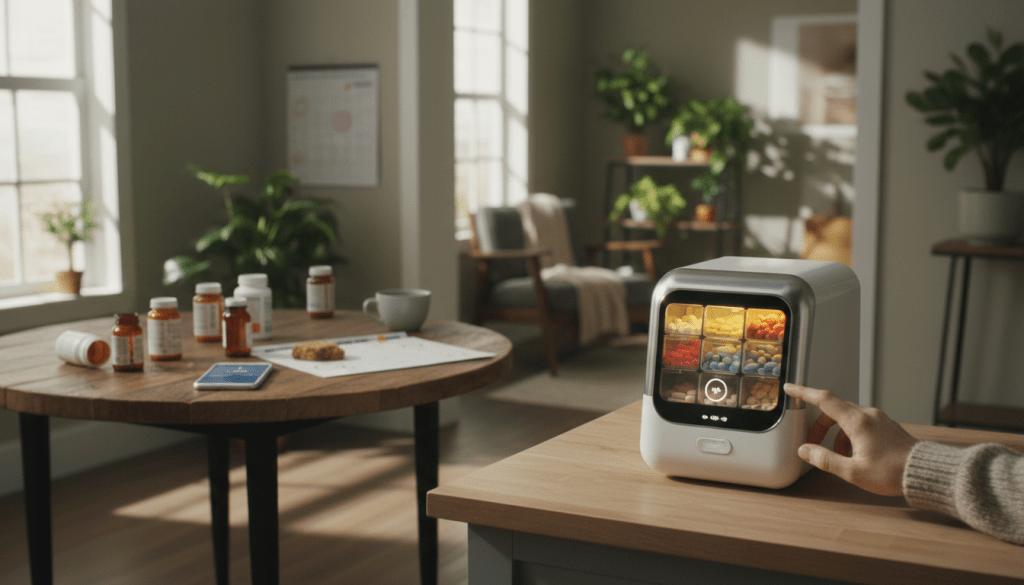
The numbers paint a clear picture of the struggle. According to the CDC, nearly 90% of adults 65 and older take prescription medications. More than half take four or more different drugs.
Juggling this many pills requires precise timing. A wrong dose or missed time can have serious consequences. In fact, medication errors are a leading cause of preventable injury.
| Age Group | Taking Prescription Medications | Taking 4+ Medications |
|---|---|---|
| Adults 65+ | Almost 90% | 54% |
| General Population | Lower percentage | Significantly lower |
The Importance for Seniors and Caregivers
For caregivers, the worry is constant. “Did Mom take her heart medication?” This question can dominate your thoughts. It’s exhausting to be the primary reminder system.
Effective medication management is about more than just adherence. It’s about preserving independence and reducing stress for everyone involved. It protects your loved one’s health and your peace of mind.
This is why finding a reliable solution is so critical. A tool like a reliable pill dispenser can be a bridge to safety. Sometimes, combining tools with human connection, like a daily check-in system, offers the best support for people living independently.
Understanding Automatic Pill Dispenser Technology
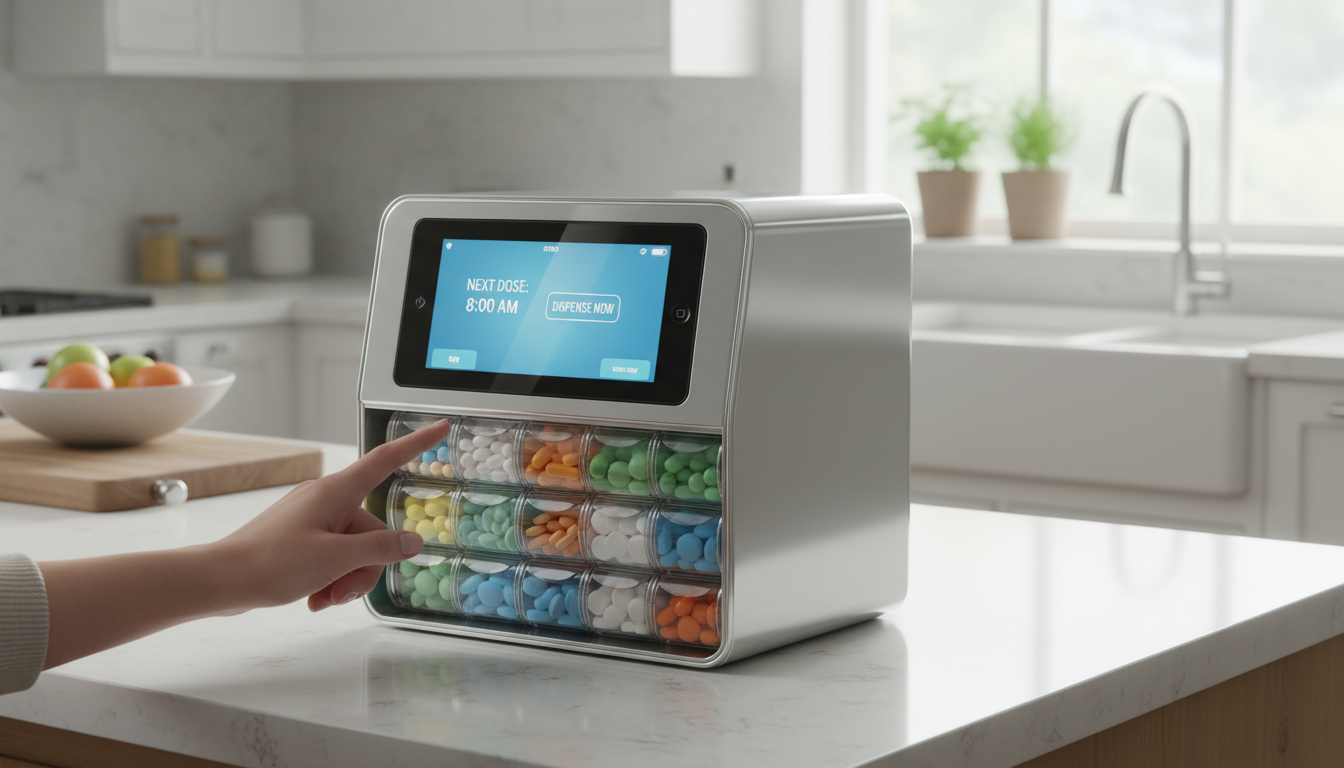
Picture a quiet helper on the kitchen counter that knows exactly when your loved one needs their medicine. This technology brings peace through smart design.

Innovative Features and Mobile Integration
Modern systems connect to your home WiFi. They sync with a smartphone app for complete oversight. You get real-time updates about dosing schedules.
The device sends gentle alerts when it’s time for medication. It uses pleasant chimes and soft lights. You can also receive text messages or phone calls.
Advanced features prevent double dosing. They lock out extra medication automatically. This safety measure protects your family member.
How the Devices Work in Real Life
Your parent simply presses a button when alerted. The correct pills drop into a cup. Both of you receive confirmation that the dose was taken.
Some systems store up to 90 days of different medications. This means fewer pharmacy trips. It also saves time spent sorting pills weekly.
The technology works quietly in the background. It provides dignity and reassurance for everyone involved in care.
Core Benefits and Limitations of Automated Devices
That sigh of relief when you know your loved one’s medication is handled safely—it’s a feeling every caregiver deserves. These tools offer significant advantages, but it’s wise to understand their boundaries.
Enhancing Dosing Accuracy and Timeliness
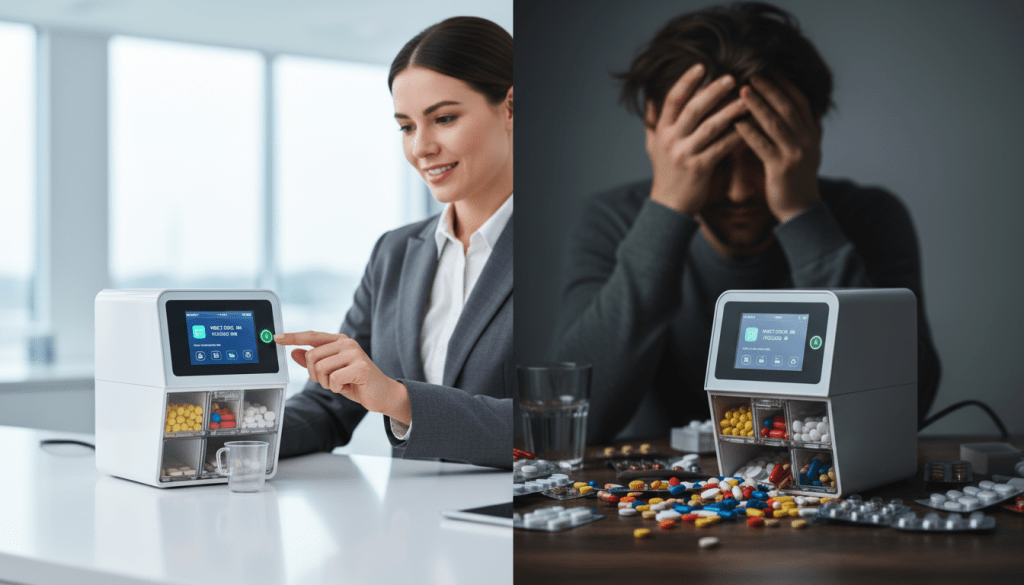
The most powerful benefit is precision. The right dose is delivered at the correct time, every time. This eliminates human error from a complex routine.
Your family member can stop watching the clock. A gentle alarm lets them focus on life. This reliable prompting is key to better medication adherence outcomes.
You get peace of mind. The device becomes the reminder, so you don’t have to be.
Potential Drawbacks and User Considerations
It’s not a perfect solution for everyone. Some systems limit daily alarms. This can be a challenge for medications taken at varying times.
You must still track prescription refills. The machine can’t do that for you. Also, check if it works with all pill shapes and sizes.
There can be a learning curve. Setup might need your help initially. And cost is a factor, with some models having monthly fees.
| Key Benefits | Important Considerations |
|---|---|
| Improves dosing accuracy | May have alarm limitations |
| Provides reliable timeliness | Requires manual refill tracking |
| Reduces caregiver stress | Check medication compatibility |
| Fosters better adherence | Consider upfront and ongoing costs |
Detailed Device Comparisons
When your loved one’s well-being depends on consistent medication timing, selecting the right support system becomes a deeply personal financial and practical decision. The market offers different approaches to meet various family needs and budgets.
Subscription Models vs. One-Time Purchases
Choosing between monthly fees and upfront costs is like deciding between renting and buying a home. Each approach serves different long-term care strategies.
The Hero dispenser operates on a subscription basis at $29.99 monthly with annual prepayment. This includes lifetime warranty and 24/7 customer service. You’re essentially investing in ongoing support rather than just a device.
In contrast, MedaCube requires a $1,999 one-time purchase with no recurring fees. This makes financial sense for families planning several years of use. Both options are often HSA- and FSA-eligible.
Evaluating Key Features: Hero, MedaCube, and More
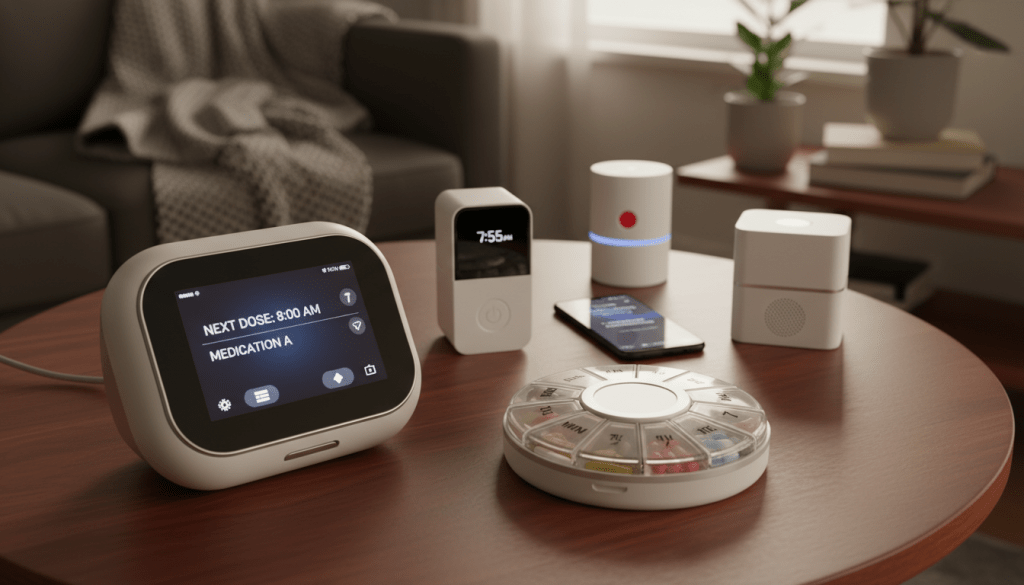
Capacity and connectivity vary significantly between models. The Hero can store 10 different medications for up to 90 days. This works well for moderate prescription needs.
MedaCube holds 16 different medications for the same period. It also includes a 24-hour battery backup for power outages. This provides extra security for essential medications.
Budget-friendly options like the LiveFine system cost under $90 with no subscription. The Mobi smart pill dispenser offers 28 compartments at around $150. Consider your loved one’s specific medication count and tech comfort when choosing.
Automatic Pill Dispenser: Key Benefits for Adherence
There’s a special kind of peace that comes from knowing your loved one’s health routine is being handled with precision and care. These systems transform daily medication management from a source of stress into a reliable partnership.
Improved Reminder and Notification Systems
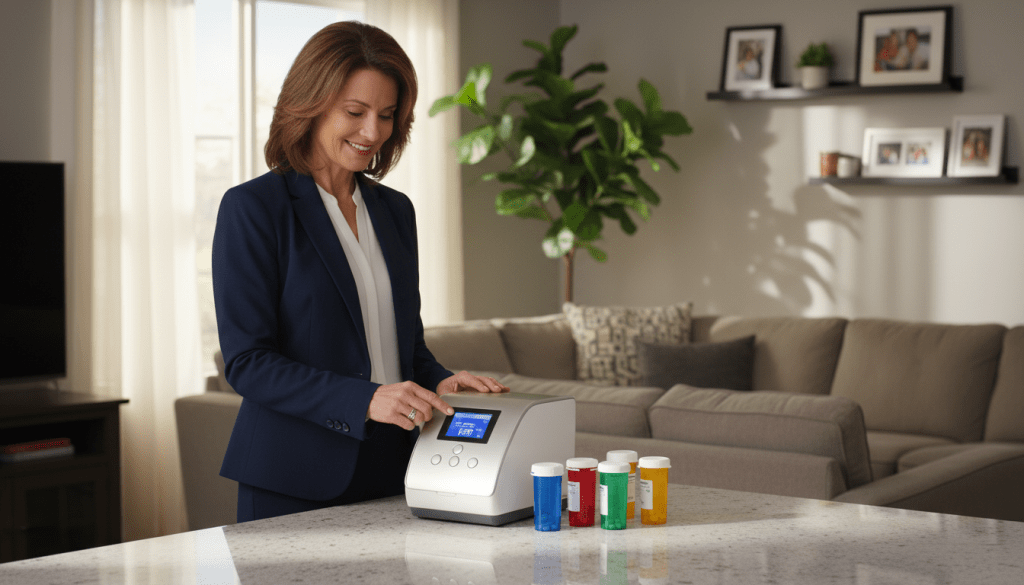
Modern systems offer gentle, multi-layered alerts that respect your parent’s comfort. Instead of a startling beep, they use pleasant chimes and soft lights. If the initial reminder goes unnoticed, follow-up text messages or phone calls ensure the message gets through.
This layered approach means your mom never has to rely solely on memory. The technology meets her where she is throughout her day. When it’s time to take medications, the system provides consistent, gentle reminders.
Many devices create a closed-loop communication system where caregivers receive real-time updates. You know exactly when doses are taken or if there’s a delay.
Reducing the Risk of Missed Doses
Preventing missed doses is about more than just avoiding forgotten pills. It’s about protecting your loved one from health complications that can arise from inconsistent medication adherence.
When a dose is late or skipped, you receive immediate notifications. This allows you to follow up with a caring check-in call through services like daily phone check-ins for seniors. You address the situation promptly rather than discovering issues days later.
The consistent routine these devices provide dramatically improves adherence outcomes. Your parent gains a reliable partner in maintaining their health, giving you both confidence in their daily medication routine.
Impact on Caregivers and Medication Safety
Technology now offers a powerful partnership, shifting the role of the caregiver from constant reminder to confident supporter. This support comes through dedicated app features and robust security measures designed for real-life families.
Caregiver App Features and Alert Systems
The companion app puts critical information at your fingertips. You can track exactly when your loved ones take their medication and view a history of adherence.
Real-time notifications alert you instantly if a dose is missed. This allows for a quick, caring phone call instead of discovering a problem later. It’s a vital layer of protection.
“The app lets me be a daughter again, not just a nurse. I know the system has it covered.”
Ensuring Medication Security and Preventing Tampering
Safety is paramount. These systems use physical locks and customizable passcodes to control access. This protects pills from accidental misuse or tampering.
For families managing multiple health details, this security complements other remote monitoring, like learning how to track meals and hydration from another place. It creates a comprehensive safety net.
| Security Feature | Benefit for Caregivers | Benefit for Loved Ones |
|---|---|---|
| Four-Digit Passcode | Prevents unauthorized access | Maintains personal independence |
| Physical Lock Mechanism | Secures medication from theft | Provides visible safety assurance |
| Dispensing Schedule Lock | Eliminates risk of double-dosing | Ensures correct medication timing |
This multi-layered approach gives everyone peace of mind. Your parent stays safe and independent, while you gain confident oversight.
Responsive Customer Service and Technical Support
When technology becomes your partner in care, knowing help is just a phone call away brings immense comfort. Responsive customer service transforms a technical device into a reliable health partner you can truly trust.
User Experiences and Troubleshooting Tips
Real families share that occasional hiccups do happen. Wi-Fi may drop or a pill might get stuck. One user’s Hero machine made grinding noises and stopped working.
A quick call to their support team identified the issue. A medication was caught in the gears. The company shipped a replacement device immediately with a prepaid return label.
Most issues can be resolved over the phone. When a device loses power or connection, the app notifies you right away. You can often guide your loved one through simple fixes.
This reliable support complements other care strategies like daily check-in calls for seniors. Both provide peace of mind during challenging moments.
| Support Feature | Benefit for Families | Resolution Time |
|---|---|---|
| 24/7 Phone Support | Help available any time of day | Immediate assistance |
| Quick Replacement Policy | Minimal disruption to medication routine | Within 2-3 business days |
| Remote Troubleshooting | Solve issues without technician visits | Often resolved in one call |
| Clear Error Messages | Easy to understand what needs fixing | Instant guidance |
Practical tips include using surge protectors and maintaining stable Wi-Fi. Keep a few backup doses in original containers just in case. Quality customer support turns potential frustrations into minor bumps.
Integration with Modern Digital Health Solutions
Imagine a world where your mom’s medication routine connects with her daily conversations, giving you a complete picture of her wellbeing. Today’s most effective care strategies involve interconnected tools that work together seamlessly.
These systems create a comprehensive safety net. They share information to provide holistic support for your loved one’s health at home.
Connecting Devices with JoyCalls Signup Solutions
Modern medication management goes beyond simple reminders. Tools like Hero create a closed-loop system that keeps everyone informed.
The app allows you to track medication adherence and receive refill alerts. This simplifies the entire process for busy caregivers.
This integration works beautifully with services like JoyCalls. While the device handles medications, JoyCalls provides daily social connection through regular phone calls.
You can easily set up this complementary support by visiting the JoyCalls signup page. It takes just minutes to customize calling schedules for your loved ones.
Future Trends in Medication Management Apps
The future points toward even deeper connections between health tools. Systems will share data to provide complete wellness insights.
Advanced apps will track patterns and alert you to potential issues early. This proactive approach can improve medication adherence outcomes significantly.
Research shows that integrated systems lead to better health outcomes for seniors. The goal remains simple: helping your parent live safely and independently.
| Integration Feature | Benefit for Seniors | Benefit for Caregivers |
|---|---|---|
| Closed-loop communication | Coordinated care from multiple sources | Complete oversight without constant checking |
| Automatic refill tracking | Continuous medication supply | Reduced administrative burden |
| Multi-platform data sharing | Holistic health monitoring | Comprehensive wellbeing insights |
| AI companion integration | Social connection and medication support | Peace of mind about overall quality of life |
These interconnected solutions address the full picture of senior care. They support both physical health and emotional wellbeing for a better quality of life.
Conclusion
When medication management stops being a source of stress, it opens up space for what really matters—meaningful connection and quality time together. The evidence is clear: these smart devices significantly improve adherence when matched to your loved one’s specific needs.
Real stories show how the right support system preserves independence and dignity. It transforms daily routines from worrisome tasks into reliable partnerships. The financial reality is often more manageable than many families expect.
Whether you choose a subscription model or one-time purchase, the investment pays dividends in improved health outcomes and reduced stress. Research confirms that integrated approaches lead to better medication adherence outcomes for seniors living at home.
Ultimately, the goal is supporting your parent’s whole life and happiness. The right technology works quietly in the background, giving everyone the freedom to enjoy their days together with confidence and peace.