

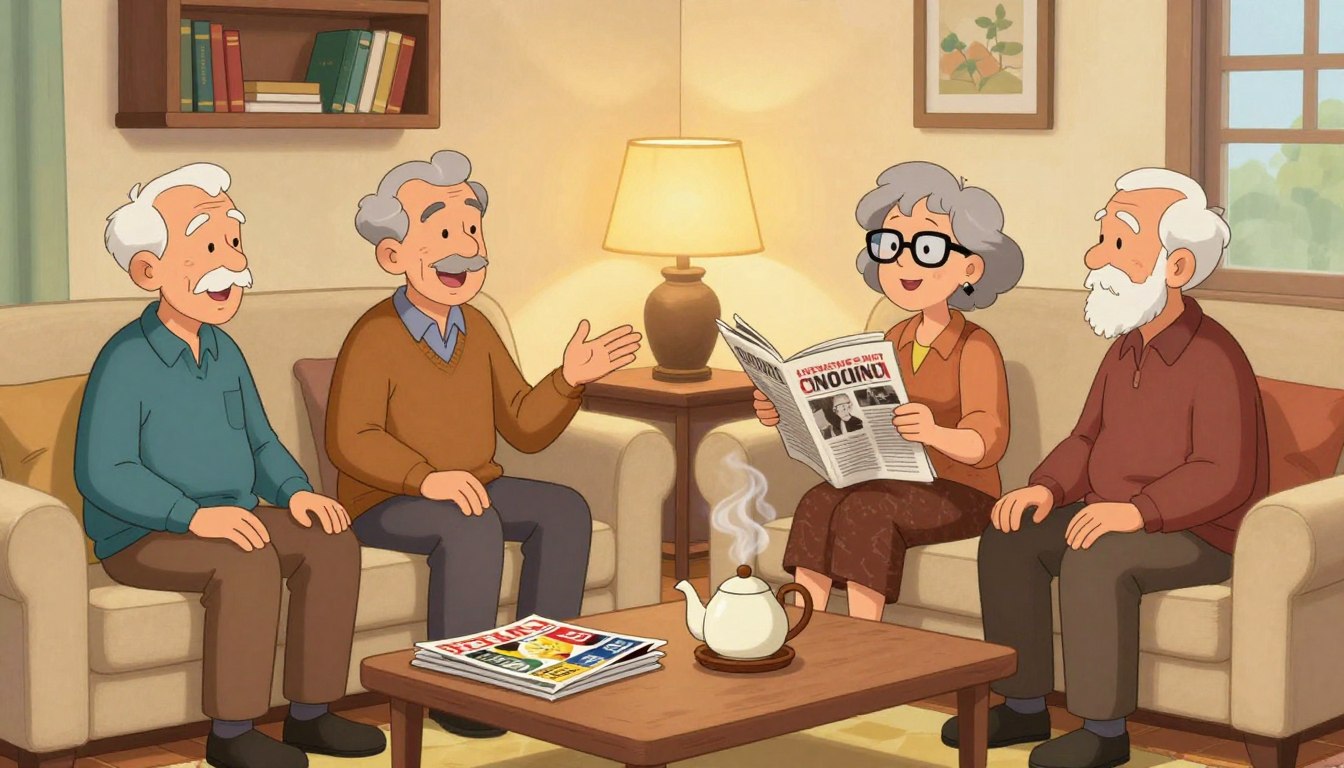
Did you know: one short, gentle question at a meal or meeting can spark laughter and deepen friendships in a group of older adults.
It keeps rituals alive. Start with a calm check-in. Say the news headline, then shift to a light prompt that invites memory, wisdom, or a smile.
This piece delivers safe, respectful prompts you can use today. Pick one or two starters at a meal, gathering, or phone check-in. Encourage people to speak with someone they haven’t recently spoken to. That small nudge often builds trust and community.
If you’re busy or anxious about a parent living on their own, you’re not alone. Talk to Joy now: 1-415-569-2439. Sign up for JoyCalls: https://app.joycalls.ai/signup. Joy can call and chat by phone to help loved ones feel less alone.
We’ll begin with a few ground rules, then share categorized starters and one activity that turns headlines into deeper connection. For more starter ideas, see this practical guide on icebreakers and prompts, and learn why regular check-ins matter at check-in comparison.
Key Takeaways
- Use one or two gentle prompts to start a chat and deepen bonds.
- Keep topics respectful and steer away from debate.
- Short, regular chats protect relationships and routines.
- Caregivers can get peace of mind with simple phone check-ins.
- JoyCalls offers friendly call support when you can’t be there.
How to Talk About Today’s News With Seniors Without Starting Arguments
A calm room and a single topic can turn news into a warm, meaningful talk. Start by choosing a quiet spot. Turn off competing TV or radio sounds. A softer setting helps people feel safer and more heard.
Choose the right setting
Ask permission first. Try a simple script: “Can we talk for a few minutes about what’s going on today?” That small step lowers defenses and sets a caring tone.
Use open-ended questions
Ask invites that prompt stories, not arguments. Say, “What do you make of that?” or “How does that fit with your life?” These questions let others share memories and wisdom.
Accept differences and protect the relationship
Validate feelings: “That sounds frustrating.” Pause more. If voices rise, offer a boundary: “I care more about us than being right—let’s switch topics.”
When heavier topics feel too big, pivot to neutral topics like local updates or weather. If you need help keeping steady, calm calls, Talk to Joy now: 1-415-569-2439. More starter ideas and Sign up for JoyCalls: https://app.joycalls.ai/signup.

Topics to Avoid (and How to Pivot Gracefully Without Sounding Dismissive)
Even warm conversations can drift into tense territory when a headline touches identity, fear, or loss. The goal is not to ban difficult topics forever. It is to protect the relationship while keeping older adults engaged, respected, and included in the world around them. A gentle pivot strategy helps you stay connected without sounding dismissive or controlling.
Some topics become heated fast because they carry strong emotions. Common triggers include partisan politics, crime stories with graphic details, health scares, money worries, and headlines framed as constant crisis. These topics are not always off-limits, but they usually need more care, shorter time limits, and a stronger focus on feelings than facts. The key is to protect connection first.
A helpful rule: validate, then redirect, then re-engage. Validation lowers defensiveness. Redirection changes the emotional temperature. Re-engagement keeps the person from feeling shut down. For example: “That sounds really frustrating. I can see why that got your attention. Want to look at a lighter local story together?” This works better than “Let’s not talk about that,” which can feel abrupt or childish.
Use these gentle pivot phrases:
- “You’ve got a strong memory for this topic.”
- “I can hear this matters to you.”
- “Let’s come back to that later – can I ask you something related?”
- “That headline is a lot. What’s one hopeful thing you noticed today?”
- “Before we go deeper, I want to make sure we keep this a pleasant visit.”
If the conversation is already heating up, slow the pace physically. Lower your voice. Pause before replying. Offer a small reset like water, tea, or a short stretch. In group settings, thank the speaker and broaden the question: “That’s one perspective. What’s a local change others have noticed lately?” This keeps dignity intact while moving away from debate.
It also helps to prepare “bridge topics” in advance. Bridge topics are neutral but meaningful subjects that connect to current events without inviting conflict. Examples: weather changes, neighborhood construction, local festivals, sports memories, community volunteers, favorite news anchors from the past, books, travel dreams, food prices and old family recipes, or inventions that made life easier. These allow people to stay engaged with the world while sharing wisdom and stories.
One more tip: don’t over-correct every statement. If the goal is companionship, you don’t need to fact-check every detail in the moment unless safety is involved. Instead, respond to the emotion or memory underneath the comment. “That reminds you of a tough time,” or “Sounds like you’re worried about people being treated fairly.” Emotional accuracy often matters more than factual debate in relationship-first conversations.
End on purpose. After a heavy moment, close with a small ritual question: “What made you smile this week?” or “What should we talk about next time?” That turns a potential argument into a safe, repeatable conversation habit. It also trains family members and staff to respond calmly, which makes conversations easier to begin.
Current Events for Seniors Conversation Starters That Keep Things Respectful and Meaningful
Start with a friendly question and you may hear a story that brightens everyone’s day. Use one or two gentle prompts in a group. Invite someone they haven’t spoken to in a little while.
Community and neighborhood updates
- “What’s one change you’ve noticed around the neighborhood lately?”
- “Have you heard any good local updates worth sharing?”
Weather, sports, books, tech and feel-good items
Try sensory, low-stakes topics. Ask, “How is today’s weather treating you?” or “Who are you rooting for right now?”
Books, TV, and art spark warm memories. Ask, “Any shows you’d recommend?” or “What movie from your childhood still holds up?”
Little tech talk can be curious, not scary. Ask, “What gadget has made life easier recently?”
Health, travel, food and good news
- Supportive check-ins: “How are you feeling about your routine lately?”
- Travel prompts: “If you could visit any landmark, where would you go?”
- Food starters: “What comfort meal should we try next time?”
- Good-news habit: “Did you see a feel-good story that made you smile?”
How to use these starters: Pick one question, share your own answer, then give a few minutes and rotate. In groups or apps, post the prompt as the title and invite replies. This method helps members laugh, remember, and build trust.
Senior conversation starters and a simple caregiver check-in schedule can help families keep these chats regular.
Talk to Joy now: 1-415-569-2439.
Sign up for JoyCalls: https://app.joycalls.ai/signup.
Plug-and-Play Current Events Conversation Scripts for Meals, Phone Calls, and Group Activities
Many people know they should ask open-ended questions, but they freeze when the moment arrives. Scripts reduce that friction. The goal is not to sound robotic—it is to make warm conversation easier to start consistently.
Below are simple scripts that follow a calm pattern: headline (or topic), gentle question, follow-up, and respectful pivot. You can adapt them for one-on-one visits, family meals, senior centers, or check-in calls.
Script 1: Local community update (great for phone calls)
You: “I heard they’re opening a new park downtown. Have you noticed any changes in the neighborhood lately?”
Follow-up: “What do you like about how the area has changed?”
If energy drops: “What was your favorite place to visit around town years ago?”
Why it works: local updates feel relevant, familiar, and less divisive than national headlines.
Script 2: Weather headline (easy, low-pressure starter)
You: “They’re saying we may have a warmer week than usual. How’s the weather treating you today?”
Follow-up: “What kind of weather do you enjoy most now?”
Memory bridge: “What season do you most remember from when you were raising kids or working?”
Why it works: weather is sensory, immediate, and opens memory-based storytelling.
Script 3: Sports or community team news (good for groups)
You: “I saw a story about the local team this morning. Are you following any teams right now?”
Follow-up: “Who did you always enjoy watching?”
Respectful pivot if rivalry starts: “That’s a fun debate—what made that era of sports special for you?”
Why it works: sports creates energy and identity without requiring agreement.
Script 4: Feel-good news story (ideal for anxious days)
You: “I saw a story about neighbors helping one another after a storm. Do you remember a time when your community came together?”
Follow-up: “What did people do that made the biggest difference?”
Close: “That’s a story worth repeating.”
Why it works: positive stories invite gratitude and meaning, not arguments.
Script 5: Technology or daily-life invention (surprisingly engaging)
You: “I read about a new tool that helps people remember appointments. What invention has made life easier for you?”
Follow-up: “What took the most getting used to?”
Pivot if frustration rises: “Technology can be annoying. What old-school way do you still prefer?”
Why it works: this topic invites wisdom, humor, and comparisons across generations.
Script 6: Food and prices headline (use with care, relatable)
You: “I noticed a story about grocery prices. What meals were your go-to favorites when feeding a family?”
Follow-up: “What made that meal work so well?”
Pivot from stress: “Now I want to hear your best comfort-food recommendation.”
Why it works: even when the headline is serious, the conversation can move toward recipes, resilience, and family memories.
Tip for all scripts: share your own answer first, then ask. A 10-second personal response lowers pressure and makes the exchange feel mutual. Keep one script per setting—meal, phone call, group circle—and repeat what works.
Conversation Activities That Turn Current Events Into Deeper Connection
Turn a headline into a gentle game that leads to memory and meaning. Start small. Pick one short news item and use it as a bridge to the past.
Headline → Memory → Meaning. Say the headline, ask one linking question, then let a person tell a story. This structure keeps talk calm and purposeful.
Reminiscence prompts that link news to life milestones
Try safe prompts that invite reflection, not debate.
- “Has something like this happened in other times you remember?”
- “What was that period like day-to-day for you?”
- Work prompts: “What was your first job?” “What did you do with your first paycheck?”
- Career lens: “Which job taught you the most about life?”
Pair friends for 3–5 minutes, then rotate. A gentle facilitator watches energy and protects dignity. If talk heats up, the facilitator shifts the topic.
Shared activities reduce loneliness and help people feel their past still matters.
These small activities boost mental health and build community. Joy can help when family time is limited—Talk to Joy now: 1-415-569-2439. Sign up for JoyCalls: https://app.joycalls.ai/signup.
For practical tips on staying connected and avoiding isolation, see tips for staying connected. If a call is missed, this guide explains next steps: missed a check-in. Learn whether morning vs evening check-ins suit your loved one.
How to Adapt Current Events Conversations for Hearing Loss, Memory Changes, or Low Energy
A few small adjustments can turn a frustrating exchange into a successful, meaningful conversation. This is especially important when someone has hearing loss, mild memory changes, fatigue, anxiety, or slower processing speed.
Start by matching the conversation length to the person’s energy. A five-minute call with one good prompt is often better than a twenty-minute conversation that becomes tiring. If attention is limited, use a “one headline, one question, one memory” format. Example: “I saw a story about spring gardens. Did you ever grow flowers?” Then stop and listen. The goal is engagement, not coverage.
For hearing loss, reduce background noise before you begin. Turn off the TV or move away from a loud room. Face the person so they can see your expression and mouth movements. Speak clearly at a normal pace (not exaggerated shouting). Short sentences help. If needed, rephrase instead of repeating the exact same words. For example, instead of repeating “What do you think of that report?” try “How does that story sound to you?”
For memory changes, choose prompts that do not require recalling names, dates, or complex details. Questions about feelings, routines, and life experiences are easier and more rewarding than trivia-style questions.
Good options include:
- “What did you enjoy about mornings when you were working?”
- “What kind of neighborhood news do you like hearing?”
- “What’s a place you still remember clearly?”
Avoid correcting small inaccuracies unless safety is involved. If a detail is mixed up, follow the emotional thread rather than turning the conversation into a test.
For anxiety or upsetting news cycles, preview and filter. You can say, “I have a light local story and a heavier one—which would you prefer today?” Giving choice restores control. Keep graphic or alarming details out unless the person specifically wants them. If tension builds, shift to calming categories like weather, music, nature, pets, food, or family traditions.
For group settings, design for participation, not performance. Ask one question at a time and allow silence. Some older adults need a few extra seconds to respond. Resist the urge to fill every pause. If one person dominates, thank them and invite others gently: “That’s a great memory. I’d love to hear what this brings up for someone else.”
Use visual supports when possible. A printed headline, a photo, or even a single object (a cookbook, newspaper, postcard) can anchor attention and spark richer stories than conversation alone. This is especially useful for people who respond better to concrete cues.
Most importantly, measure success the right way. A successful conversation is not one where every fact is discussed. It is one where the person feels respected, included, and calmer or more connected by the end. That standard makes current-events conversations more accessible, repeatable, and kind. These adaptations also help family members, volunteers, and staff use current events conversation starters for seniors more confidently, even on busy days or difficult mornings.
Conclusion
Choose one thoughtful prompt and watch a visit or call become more meaningful. A simple question can invite a laugh, a memory, or a useful story. Use calm tone, open phrasing, and respect to keep connection first.
Little steps matter. Save a few trusted conversation starters and pick just one starter for your next check-in. That low pressure approach makes it easier to show up again and again.
Tools help too. See a study on tech and loneliness and learn about simple reminder options that fit daily life.
Talk to Joy now: 1-415-569-2439.
Or Sign up for JoyCalls: https://app.joycalls.ai/signup.