

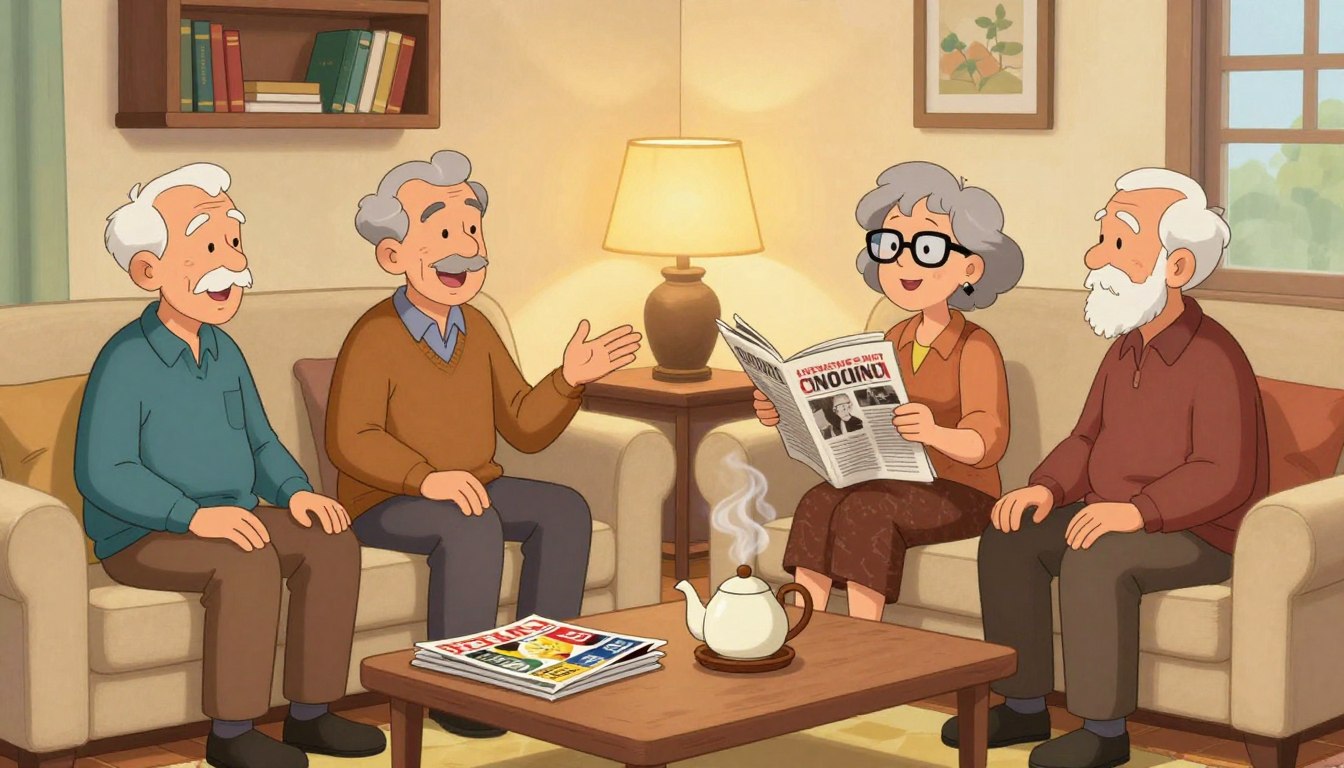
Did you know: one short, gentle question at a meal or meeting can spark laughter and deepen friendships in a group of older adults.
It keeps rituals alive. Start with a calm check-in. Say the news headline, then shift to a light prompt that invites memory, wisdom, or a smile.
This piece delivers safe, respectful prompts you can use today. Pick one or two starters at a meal, gathering, or phone check-in. Encourage people to speak with someone they haven’t recently spoken to. That small nudge often builds trust and community.
If you’re busy or anxious about a parent living on their own, you’re not alone. Talk to Joy now: 1-415-569-2439. Sign up for JoyCalls: https://app.joycalls.ai/signup. Joy can call and chat by phone to help loved ones feel less alone.
We’ll begin with a few ground rules, then share categorized starters and one activity that turns headlines into deeper connection. For more starter ideas, see this practical guide on icebreakers and prompts, and learn why regular check-ins matter at check-in comparison.
Key Takeaways
- Use one or two gentle prompts to start a chat and deepen bonds.
- Keep topics respectful and steer away from debate.
- Short, regular chats protect relationships and routines.
- Caregivers can get peace of mind with simple phone check-ins.
- JoyCalls offers friendly call support when you can’t be there.
How to Talk About Today’s News With Seniors Without Starting Arguments

A calm room and a single topic can turn news into a warm, meaningful talk. Start by choosing a quiet spot. Turn off competing TV or radio sounds. A softer setting helps people feel safer and more heard.
Choose the right setting
Ask permission first. Try a simple script: “Can we talk for a few minutes about what’s going on today?” That small step lowers defenses and sets a caring tone.
Use open-ended questions
Ask invites that prompt stories, not arguments. Say, “What do you make of that?” or “How does that fit with your life?” These questions let others share memories and wisdom.
Accept differences and protect the relationship
Validate feelings: “That sounds frustrating.” Pause more. If voices rise, offer a boundary: “I care more about us than being right—let’s switch topics.”
When heavier topics feel too big, pivot to neutral topics like local updates or weather. If you need help keeping steady, calm calls, Talk to Joy now: 1-415-569-2439. More starter ideas and Sign up for JoyCalls: https://app.joycalls.ai/signup.

Topics to Avoid (and How to Pivot Gracefully Without Sounding Dismissive)
Even warm conversations can drift into tense territory when a headline touches identity, fear, or loss. The goal is not to ban difficult topics forever. It is to protect the relationship while keeping older adults engaged, respected, and included in the world around them. A gentle pivot strategy helps you stay connected without sounding dismissive or controlling.
Some topics become heated fast because they carry strong emotions. Common triggers include partisan politics, crime stories with graphic details, health scares, money worries, and headlines framed as constant crisis. These topics are not always off-limits, but they usually need more care, shorter time limits, and a stronger focus on feelings than facts. The key is to protect connection first.
A helpful rule: validate, then redirect, then re-engage. Validation lowers defensiveness. Redirection changes the emotional temperature. Re-engagement keeps the person from feeling shut down. For example: “That sounds really frustrating. I can see why that got your attention. Want to look at a lighter local story together?” This works better than “Let’s not talk about that,” which can feel abrupt or childish.
Use these gentle pivot phrases:
- “You’ve got a strong memory for this topic.”
- “I can hear this matters to you.”
- “Let’s come back to that later – can I ask you something related?”
- “That headline is a lot. What’s one hopeful thing you noticed today?”
- “Before we go deeper, I want to make sure we keep this a pleasant visit.”
If the conversation is already heating up, slow the pace physically. Lower your voice. Pause before replying. Offer a small reset like water, tea, or a short stretch. In group settings, thank the speaker and broaden the question: “That’s one perspective. What’s a local change others have noticed lately?” This keeps dignity intact while moving away from debate.
It also helps to prepare “bridge topics” in advance. Bridge topics are neutral but meaningful subjects that connect to current events without inviting conflict. Examples: weather changes, neighborhood construction, local festivals, sports memories, community volunteers, favorite news anchors from the past, books, travel dreams, food prices and old family recipes, or inventions that made life easier. These allow people to stay engaged with the world while sharing wisdom and stories.
One more tip: don’t over-correct every statement. If the goal is companionship, you don’t need to fact-check every detail in the moment unless safety is involved. Instead, respond to the emotion or memory underneath the comment. “That reminds you of a tough time,” or “Sounds like you’re worried about people being treated fairly.” Emotional accuracy often matters more than factual debate in relationship-first conversations.
End on purpose. After a heavy moment, close with a small ritual question: “What made you smile this week?” or “What should we talk about next time?” That turns a potential argument into a safe, repeatable conversation habit. It also trains family members and staff to respond calmly, which makes conversations easier to begin.
Create a “News Comfort Plan” Before You Bring Up Current Events

Current events conversations with seniors often go better when they are not treated as random chats. A little planning can turn a headline into a moment of connection, reassurance, and mental engagement. Without that planning, even a simple topic can become stressful, especially if the older adult is tired, lonely, worried, grieving, or already overwhelmed by the news.
A “news comfort plan” is a simple, flexible approach that helps families, caregivers, senior living staff, and volunteers decide what to talk about, when to bring it up, how deeply to go, and when to stop. It does not make the conversation stiff or artificial. It simply protects the older adult’s emotional comfort while still allowing them to feel included in the wider world.
Try JoyCalls Free
No app or new device needed. Start with a free 7-day trial.
Many seniors want to know what is happening around them. They may care deeply about their town, country, family, faith community, favorite sports team, old neighborhood, or the world their grandchildren are growing up in. The goal is not to keep news away from them. The goal is to choose current events in a way that supports dignity, curiosity, memory, and connection instead of fear, confusion, or arguments.
A good plan answers four questions before the conversation begins: What kind of news feels safe? What topics should be handled carefully? What time of day is best? What should we do if the conversation becomes tense? Once you know those answers, current events become easier to use in everyday calls, meals, visits, and group activities.
Start by Learning Their “News Personality”
Not every older adult responds to current events in the same way. Some seniors enjoy detailed discussion and like hearing different points of view. Others prefer short updates and cheerful stories. Some follow the news closely and want to talk about what they already know. Others feel anxious when news is too fast, too negative, or too complicated.
Before choosing conversation starters, try to understand the person’s “news personality.” This means noticing how they react to different types of updates.
A senior who enjoys analysis may like questions such as, “What do you think has changed most about this issue over the years?” A senior who enjoys storytelling may prefer, “Does this remind you of anything from when you were younger?” A senior who becomes anxious easily may do better with, “Would you like a light local update today, or should we talk about something pleasant instead?”
You can learn their news personality by paying attention to small signals. Do they lean in when you mention local events? Do they smile when you talk about sports, culture, weather, or community news? Do they become quiet when the topic turns to politics, crime, illness, money, or conflict? Do they repeat the same worry after certain headlines? These cues tell you what kind of news helps them feel connected and what kind may make them feel unsafe.
It also helps to ask directly, but gently. You might say, “Do you like talking about the news, or would you rather keep our calls lighter?” Another option is, “Are there any topics you’d rather not discuss?” This gives the older adult control. Control matters because many seniors already feel that parts of life are being decided for them. Letting them choose the tone of conversation preserves independence and respect.
For caregivers, this can be especially helpful. A parent who argues about politics may not actually want conflict. They may want stimulation, recognition, or a chance to express fear. A spouse who repeats upsetting headlines may be looking for reassurance. A senior who avoids the news may not be uninterested; they may simply be tired of feeling helpless. When you understand the emotional need under the topic, you can respond with more patience.
Build a Personal Safe Topic List
Once you understand the person’s preferences, create a short list of topics that usually work well. This list does not need to be formal. It can be written in a notebook, saved on a phone, shared among siblings, or used by staff during check-ins.
The best safe topic list is personal. General safe topics like weather, sports, books, and local events are useful, but they become much stronger when connected to the person’s life.
For example, instead of writing “sports,” write “baseball stories, old Yankees games, local high school teams.” Instead of “food,” write “rising grocery prices tied back to budget meals, Sunday dinners, tomato gardening, favorite bakery.” Instead of “technology,” write “old appliances versus new gadgets, radio memories, video calls with grandchildren.” These details make the conversation feel warm rather than generic.
A strong safe topic list may include local events, neighborhood changes, community volunteers, seasonal traditions, gardening, music, old movies, sports, books, festivals, weather, travel memories, family milestones, inventions, food traditions, pets, school news, museum exhibits, or positive stories about kindness.
It is also useful to include “comfort bridges.” These are topics that help you move away from tension without making the person feel dismissed. If a discussion about government becomes heated, you might bridge to civic memories: “You’ve seen a lot of changes over the years. What was voting like when you were younger?” If crime news becomes upsetting, you might bridge to community safety: “What made a neighborhood feel safe when you were raising a family?” If health news creates worry, you might bridge to routine: “What helps you feel steady during the day?”
Comfort bridges keep the person’s thoughts and feelings involved, but they move the conversation away from argument. This is important because abruptly shutting down a topic can feel patronizing. A bridge says, “I’m still listening, but I’m helping us move somewhere calmer.”
Create a “Handle With Care” List

Along with safe topics, make a private “handle with care” list. These are not forbidden topics. They are topics that require more awareness, shorter discussion, or a gentler frame.
For many older adults, handle-with-care topics include partisan politics, war, crime, scams, inflation, medical scares, disasters, death, housing costs, family conflict, and stories involving vulnerable people. Some of these topics may be important to discuss at times. But they should not be casually introduced during a rushed call, a noisy meal, or a moment when the senior is already tired.
The key is to separate “important” from “appropriate right now.” A topic may be important, but that does not mean it belongs in every conversation. If you are calling before bedtime, it may not be the right moment to mention a frightening crime story. If the person has a doctor’s appointment tomorrow, it may not be helpful to bring up alarming health news. If a family gathering is meant to be peaceful, it may be wise to avoid national political headlines.
A handle-with-care list can also include personal triggers. For one person, storm coverage may bring back memories of losing a home. For another, hospital stories may stir grief. For someone who has been scammed, fraud news may create shame or panic. For someone with adult children living far away, negative headlines about their city may increase worry.
This list should be used with compassion, not control. The purpose is not to treat seniors as fragile or unable to think. The purpose is to avoid careless conversation that leaves them distressed. Older adults deserve to be informed, but they also deserve conversations that consider their emotional well-being.
Choose the Right Time of Day for News-Based Conversations
Timing can change the entire tone of a conversation. The same headline that feels manageable in the morning may feel overwhelming in the evening. Many older adults have better energy, attention, and emotional flexibility at certain times of the day. Others may become more fatigued, anxious, or confused later on.
When possible, bring up current events during the person’s best window. For some, that may be after breakfast. For others, it may be early afternoon after rest. Avoid heavy topics when the person is hungry, in pain, waiting for medication, preparing for sleep, or already dealing with a stressful appointment.
For phone calls, begin with a personal check-in before mentioning the news. Ask, “How is your energy today?” or “Is this a good time for a light story?” This small step prevents you from launching into a topic the person is not ready to handle.
In senior centers or group settings, timing matters too. A current events activity may work well after a meal or morning coffee, but poorly at the end of a long program. Keep the discussion short enough that people leave feeling refreshed, not drained. A 10-minute news conversation that ends with laughter is more valuable than a 45-minute discussion that leaves everyone tense.
For families, consider setting a predictable rhythm. For example, use lighter current events during weekday calls and save deeper conversations for longer weekend visits. Or make Friday the day for “good news from the week.” Predictability reduces anxiety because the older adult knows what kind of conversation to expect.
Use the “Headline, Human Angle, Personal Memory” Method
One of the safest ways to discuss current events with seniors is to avoid staying too long on the headline itself. Headlines are often designed to create urgency, fear, or strong opinions. But the human angle underneath the headline can lead to a better conversation.
A simple method is: headline, human angle, personal memory.
First, mention the headline briefly and neutrally. Do not overload the person with details. Second, shift to the human angle. Ask what the story means for ordinary people, families, neighborhoods, workers, students, or volunteers. Third, invite a personal memory or life lesson.
For example, if the headline is about a new library opening, you might say, “The town is opening a new library branch. Libraries seem to be changing a lot. Did you use the library much when you were younger?” This moves from news to memory.
If the headline is about extreme weather, you might say, “They’re expecting a very hot week. It made me wonder how people managed summers before air conditioning was common. What did your family do to stay cool?” This keeps the topic practical and sensory.
If the headline is about food prices, you might say, “There was another story about grocery costs. It made me think about how families used to stretch meals. What was a meal that gave good value and still tasted good?” This respects the issue without turning the conversation into financial fear.
The method works because it gives seniors a role beyond reacting. They become storytellers, teachers, witnesses, and advisors. That is often more meaningful than asking them to debate the news.
Keep the Conversation Grounded in Real Life
A major reason current events become tense is that they feel too big to solve. Seniors may hear about national problems, global conflicts, or economic pressures and feel powerless. When a conversation stays at that level, it can easily become frustrating.
To make the discussion more helpful, bring it back to real life. Ask questions that connect the topic to daily routines, personal values, or small actions.
Instead of asking, “What do you think about the state of the world?” try, “What helps you feel hopeful when the news feels heavy?” Instead of, “Do you agree with this policy?” try, “What changes have made everyday life easier or harder for people your age?” Instead of, “Who is right?” try, “What do you think people need more of right now?”
Grounded questions reduce the chance of argument because they focus on lived experience. They also help older adults share wisdom without being pressured to defend a position.
For caregivers, this is especially useful when a parent is worried. If they say, “Everything is getting worse,” avoid immediately correcting them. Try, “It does feel like a lot. What helps you feel steady on days like this?” Or, “You’ve lived through difficult times before. What helped people get through them?” These questions acknowledge concern while guiding the conversation toward resilience.
Set a Gentle Time Limit Before Tension Builds
Not every current events conversation needs to be long. In fact, shorter is often better. A brief, positive exchange can become a repeatable ritual. A long, intense conversation can make everyone avoid the topic next time.
Before starting, quietly decide how long the conversation should last. For many one-on-one calls, five to ten minutes is enough. For meals, one topic may be plenty. For groups, fifteen to twenty minutes can work if the facilitator keeps the tone balanced.
You do not have to announce a strict time limit. Instead, use natural closing phrases. Try, “That was interesting to think about.” Or, “I’m glad you told me that story.” Or, “Let’s save another topic for next time.” These phrases help end the conversation while it still feels good.
Ending well matters. Seniors may remember the emotional tone of a conversation more than every detail. If a news discussion ends in warmth, they are more likely to welcome another one. If it ends in correction, argument, or exhaustion, they may become defensive or withdrawn.
A good practice is to close with one stabilizing question. Ask, “What is one good thing happening in your day?” or “What are you looking forward to this week?” This helps the person leave the conversation with a sense of comfort.
Make Room for Disagreement Without Turning It Into a Debate
Avoiding arguments does not mean everyone must agree. Seniors have their own beliefs, histories, values, and opinions. Respectful disagreement can be healthy when the relationship stays safe.
The problem begins when the conversation becomes a contest. If the goal becomes proving who is right, the emotional cost rises quickly. This is especially true in family relationships where old patterns may already exist.
A better approach is to use curiosity instead of correction. If an older adult says something you disagree with, try asking, “What makes you feel that way?” or “Have you always seen it that way, or did something change your mind?” These questions invite background and memory. They are less likely to trigger defensiveness than “That’s not true” or “You’re wrong.”
If the statement is factually incorrect but not harmful, consider whether it needs correction in that moment. If it does not affect safety, relationships, or important decisions, you may choose to respond to the feeling rather than the fact. For example, “It sounds like that story really bothered you,” can be more useful than launching into a fact-check.
If safety is involved, handle it gently. For example, if a senior believes a scam message is real because it sounds like something from the news, be clear but calm: “I’m glad you told me. Let’s not click anything yet. We can check it together.” This corrects the issue without shaming the person.
Use Trusted, Calm Sources Instead of Sensational Ones
The source of the news matters. Some news formats are designed to keep people alarmed and watching. Fast scrolling, dramatic music, angry panels, repeated breaking alerts, and graphic images can make older adults feel unsettled long after the conversation ends.
When choosing a story to discuss, prefer calm, clear sources. Local newspapers, community newsletters, library updates, public radio summaries, city websites, senior center bulletins, museum calendars, weather services, and school or neighborhood announcements often provide useful topics without unnecessary drama.
For family caregivers, it may help to preview the story before sharing it. Ask yourself: Is this story useful? Is it likely to scare them? Can I explain it simply? Does it connect to their interests? Is there a hopeful or practical angle? If the answer is no, it may not be the right conversation starter.
This is especially important for seniors who live alone. A frightening headline may stay with them after the call ends. If there is no one nearby to help them process it, they may feel more anxious. When in doubt, choose stories that leave room for reflection, gratitude, humor, or practical wisdom.
Keep a Small Conversation Log
A simple conversation log can make future calls and visits much easier. This does not need to be complicated. After a call, write down a few notes: topics that worked, topics to avoid, stories they enjoyed telling, names they mentioned, and questions that made them smile.
For example, you might write: “Liked talking about old train stations. Avoid long discussion of national politics. Enjoyed recipe memories. Ask next time about first apartment.” Over time, this becomes a personalized guide.
This is especially helpful when multiple family members are involved. One sibling may discover that Dad enjoys talking about local baseball. Another may learn that Mom becomes anxious after medical news. Sharing these notes helps everyone have better conversations.
For senior living staff or volunteers, a conversation log can improve continuity. If a resident lights up when talking about jazz, gardening, teaching, military service, sewing, farming, or travel, that detail can guide future group prompts. It shows the person that their life story is remembered.
The log also helps you notice changes. If a senior who once loved discussing news suddenly avoids all topics, seems unusually fearful, or repeats distressing stories more often, that may be a sign to check in more closely. Conversation patterns can reveal emotional needs.
Turn Current Events Into Small Acts of Connection
The best current events conversations do not end with the headline. They create a next step, however small. That next step might be calling someone, looking at old photos, mailing a recipe, watching a short concert clip, reading a local article together, checking a community calendar, or planning a simple outing.
For example, a story about a flower show can lead to looking through garden photos. A weather update can lead to sharing a favorite soup recipe. A local school story can lead to asking about the senior’s own school days. A piece about volunteers can lead to talking about ways they helped others in the past.
These small acts matter because they turn passive news consumption into active connection. Seniors are not just hearing about the world. They are relating it to their own life, choices, memories, and relationships.
For older adults who feel lonely, this can be powerful. A current event becomes a reason someone called. A headline becomes a memory. A memory becomes a story. A story becomes a bond.
A Simple Weekly News Comfort Routine
If you want to make this practical, try a weekly routine. Choose one day for a light current events check-in. Pick one calm story before the call or visit. Start with a personal greeting, ask permission to share the story, then use one gentle question.
The structure can be very simple:
“Hi, I thought of you when I saw a local story today. Do you feel like hearing it?”
If they say yes, share the story in one or two sentences. Then ask a question connected to memory, preference, or wisdom.
“That made me wonder—what did people in your neighborhood do for fun when you were younger?”
Listen without rushing. Ask one follow-up. Then close warmly.
“I loved hearing that. I’ll remember that story.”
This routine is short, respectful, and easy to repeat. It also gives older adults something many people quietly need: a dependable moment of being heard.
When families, caregivers, and communities approach current events this way, the news becomes less of a battlefield and more of a bridge. The purpose is not to avoid every serious topic forever. The purpose is to make sure every conversation protects the person first. When dignity, timing, choice, and emotional safety come first, current events can become one of the most meaningful ways to keep seniors connected to the world and to the people who love them.
How to Guide Group Current Events Conversations With Seniors Without Letting One Voice Take Over
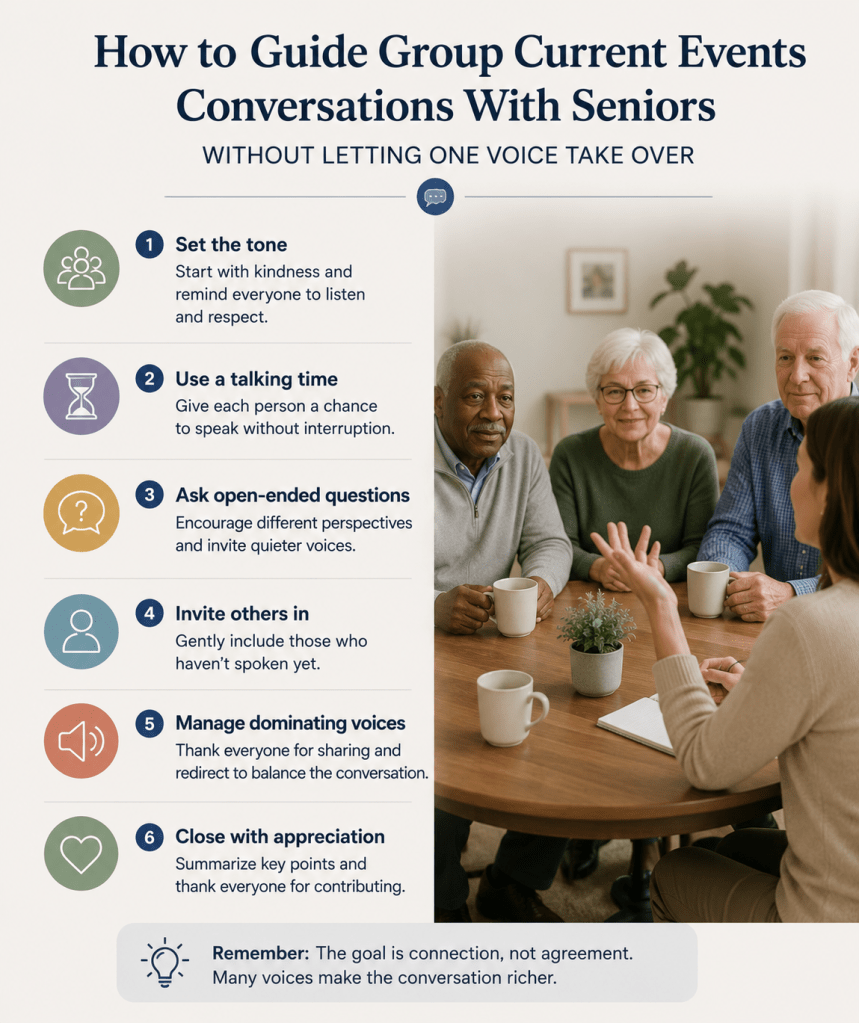
Current events conversations often feel simple when they happen one-on-one. But in a group, even a harmless topic can become harder to manage. One person may dominate. Another may withdraw. Someone may turn a local story into a political debate. A quiet senior may have something meaningful to say but never get the chance. A caregiver or activity leader may want the discussion to feel natural, but also needs to protect the emotional tone of the room.
This is why group current events conversations need gentle structure. Not rigid rules. Not a classroom atmosphere. Just enough structure to make sure everyone feels safe, respected, and included.
Group conversations can be powerful for seniors because they create shared attention. A headline becomes a reason to gather. A weather story becomes a memory exchange. A local update becomes a way for people to compare experiences. When handled well, these conversations support belonging, mental stimulation, and emotional connection. They remind older adults that their opinions, memories, and observations still matter.
But the goal should never be to “cover the news.” The goal is to use current events as a doorway into connection. That means the leader, caregiver, or family member should focus less on the information itself and more on how people feel during the exchange. A successful group conversation is not one where everyone agrees. It is one where people leave feeling heard rather than drained.
Begin With a Clear Emotional Goal
Before starting a group discussion, decide what kind of experience you want people to have. This matters because not every current events conversation should have the same purpose.
Some conversations are meant to be light and social. Some are meant to invite memories. Some are meant to help seniors feel informed. Some are meant to encourage laughter. Some are meant to help people process a change in the community. If you do not know the emotional goal, the discussion can easily drift into debate or complaint.
A simple way to set the goal is to choose one word before you begin. Do you want the conversation to feel calm, cheerful, reflective, practical, nostalgic, hopeful, or curious? That word can guide your topic choice and your follow-up questions.
For example, if the goal is “calm,” choose weather, nature, local events, books, music, or community updates. If the goal is “reflective,” choose a headline that connects to life experience, such as changes in transportation, schools, food, work, or technology. If the goal is “hopeful,” choose a story about volunteers, neighborhood improvements, medical progress, young people helping others, or a community celebration.
This small step prevents a common mistake: choosing a headline simply because it is current. A story may be current but not useful for the room. The best topic is not always the biggest story of the day. It is the story that can lead to a safe and meaningful exchange.
You can even name the tone out loud. Try saying, “Let’s keep this light today,” or “I thought we could use this story to share memories, not debate the issue.” This sets expectations kindly. Seniors usually appreciate knowing the purpose of the conversation, especially in group settings where different personalities are present.
Use a One-Headline Rule
One of the easiest ways to keep a group conversation manageable is to use only one headline at a time. Too many topics can make the discussion scattered, rushed, or overwhelming. One headline gives the group a shared anchor.
Choose a short, simple update. It should be easy to explain in one or two sentences. Avoid long articles, complicated policy details, or stories that require background knowledge. The headline should work as a doorway, not as a lecture.
For example, you might say:
“There was a story about a new park opening nearby.”
“The weather report says we may have a hotter summer than usual.”
“A local school is starting a gardening program.”
“A museum is bringing back an exhibit about old photographs.”
“A grocery store is adding more delivery options for older adults.”
Each of these gives people something to react to without forcing them into an argument. After sharing the headline, move quickly into a human question. Do not keep reading the article or listing facts. The more details you add, the more likely the conversation becomes about accuracy, disagreement, or confusion.
A useful structure is: one headline, one sentence of context, one open question.
For example: “A local school is starting a gardening program for students. It made me think about how many people learned gardening from parents or grandparents. Did anyone here grow vegetables or flowers when they were younger?”
This format is simple, respectful, and easy to repeat. It also gives seniors a chance to move from passive listening into personal storytelling.
Invite the Quietest Person Early
In group conversations, the first few minutes often determine who speaks and who stays quiet. If one confident person begins with a long answer, quieter seniors may decide there is no room for them. This is especially true for people with hearing loss, slower processing speed, social anxiety, memory changes, or less confidence in group settings.
A helpful strategy is to invite a quieter person early with a low-pressure question. Do not put them on the spot with a difficult opinion question. Choose something simple and personal.
Instead of asking, “What do you think about this issue?” try, “Does this topic bring back any small memory for you?” Or, “Did your family ever do anything like this?” Or, “Would you rather hear more stories like this or talk about something lighter?”
If they do not want to answer, respect that. Participation should be invited, not demanded. You can say, “No pressure at all. We’ll come back around if you think of something.” This protects dignity.
For activity leaders, it helps to watch body language. A senior may lean forward, smile, nod, or start to speak softly but get interrupted. That is your cue to make space. You can say, “I think Mary had a thought there,” or “Let’s pause for a second because I want to hear what James was going to add.”
This kind of facilitation is not about controlling the group. It is about making the conversation fair. Seniors who speak less often may have the richest stories, but they need a little room to enter the discussion.
Keep Dominant Speakers Respected but Contained
Every group has someone who loves to talk. That person may be charming, knowledgeable, funny, or deeply engaged. They may also unintentionally prevent others from joining. The goal is not to embarrass or silence them. The goal is to appreciate their contribution while reopening the circle.
Use a warm interruption. The tone matters. You can say:
“That’s such a vivid memory. I want to make sure we hear from a few others too.”
“You clearly know a lot about this. Let’s see what this brings up for someone else.”
“I’m going to pause you there because that point is worth sharing around the room.”
“Thank you for getting us started. Who has a different kind of memory connected to this?”
These phrases validate the speaker before shifting the floor. That order is important. If you cut someone off without acknowledgment, they may feel dismissed. If you validate first, they are more likely to accept the transition.
Another strategy is to give the dominant speaker a role. For example, “You always remember great details. After two more people share, I’d love for you to help us compare how things changed.” This helps them feel included while preventing them from taking over immediately.
In family settings, this can be useful when one older relative repeatedly brings the conversation back to the same concern. You might say, “I know this topic matters a lot to you. I also want to hear what others remember about this.” This keeps the relationship intact while widening the conversation.
Use Round-Robin Questions for Equal Participation
A round-robin format can be very helpful when the group includes mixed personalities. This means everyone gets a turn to answer the same simple question, with permission to pass.
The key is to keep the question easy. Avoid anything that requires deep analysis. Good round-robin questions include:
“What is one thing this story reminds you of?”
“What is one change you have noticed over the years?”
“What is one thing you miss from the past?”
“What is one thing you think has improved?”
“What is one small piece of advice you would give younger people about this?”
“What is one word that describes how this topic makes you feel?”
Always include the option to pass. Say, “You can answer in one sentence, or you can pass.” This lowers pressure. Some seniors will answer more comfortably when they know they are not being forced.
Round-robin questions are especially useful in senior centers, assisted living communities, faith groups, and family gatherings. They reduce interruption and help quieter people prepare their thoughts. They also prevent the conversation from becoming a debate between only two people.
For phone-based group calls or virtual gatherings, round-robin works even better because it gives people a clear order. The leader can say, “Let’s go around, and everyone can share one quick thought.” This prevents people from talking over one another.
Turn Opinions Into Stories
The fastest way to reduce arguments is to move from opinion to story. Opinions often invite disagreement. Stories invite listening.
If someone says, “People today don’t care about community anymore,” instead of challenging the statement, ask, “What did community look like when you were younger?” This moves the conversation from judgment into memory.
If someone says, “Everything is too expensive now,” ask, “What did your family do to stretch a budget?” If someone says, “Technology has made people lazy,” ask, “What machine or invention changed your daily life the most?” If someone says, “Young people don’t understand hard work,” ask, “Who taught you what hard work meant?”
This technique is useful because it honors the feeling behind the opinion without allowing the group to spiral into conflict. Seniors often have strong opinions because they have lived through major changes. Those opinions become more constructive when they are connected to lived experience.
The phrase “Tell us what that was like” is one of the most useful tools in a current events conversation. It invites memory. It slows the pace. It shifts the group away from arguing over the present and toward learning from the past.
Watch for Emotional Escalation Early
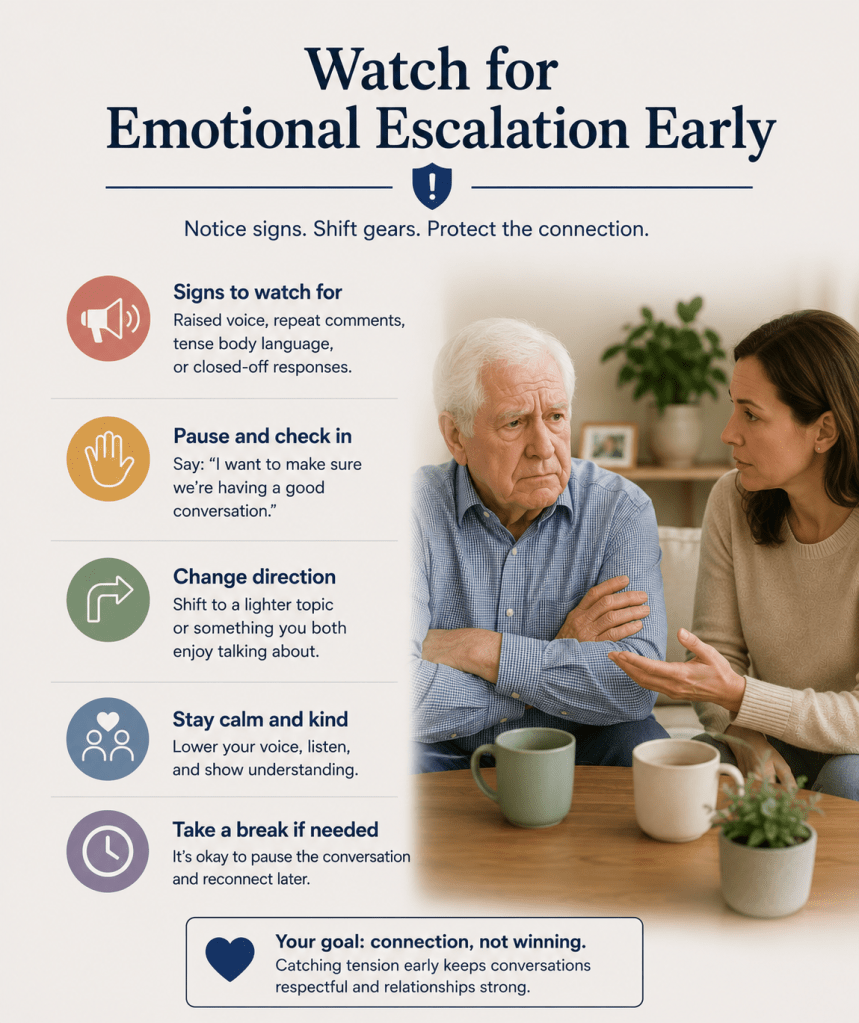
A group conversation usually shows warning signs before it becomes tense. Voices get louder. People interrupt more. Someone repeats the same point. A participant becomes silent or looks uncomfortable. The discussion shifts from “I remember” to “people like that always” or “you are wrong.” These are signs that the emotional temperature is rising.
Do not wait until the conversation becomes an argument. Step in early and softly.
You can say, “This is clearly a topic people care about. Let’s take it in a gentler direction.” Or, “I hear strong feelings here. Let’s bring it back to personal experience.” Or, “Rather than deciding who is right, let’s talk about what this reminds us of.”
If needed, change the format. Move from open discussion to a round-robin question. Offer a lighter prompt. Suggest a short pause. In a group activity, you might say, “Let’s take a sip of water and then I’ll ask a different question.”
The earlier you intervene, the easier it is to preserve dignity. Once people feel embarrassed or attacked, repair becomes harder. Gentle redirection keeps the group safe without making anyone feel scolded.
Avoid Fact-Checking as a Group Activity
Fact-checking has its place, especially when misinformation affects safety. But in a group conversation designed for companionship, public correction can easily create shame. If an older adult gets a date wrong, mixes up a name, or repeats a harmless incorrect detail, correcting them in front of everyone may do more harm than good.
Ask yourself: Does this mistake affect safety, health, finances, or someone’s dignity? If not, it may be better to let the small detail pass and respond to the larger story.
For example, if someone says a movie came out in 1952 when it came out in 1955, the exact year probably does not matter. If someone says a public event happened in one neighborhood but it happened in another, that may not need correction. But if someone says they received a message asking for bank information and believes it is real, that does need careful correction.
When correction is necessary, keep it private or gentle. Say, “Let’s check that together later,” or “That one sounds important, so we should verify it before anyone acts on it.” This protects safety without turning the person into the subject of embarrassment.
In group settings, the leader can set a rule: “We’re here to share memories and thoughts, not test each other on details.” This creates emotional safety, especially for seniors with memory changes.
Use Objects and Visual Cues to Anchor the Discussion

Current events do not have to be discussed only through words. In fact, many seniors respond better when there is something concrete to look at or hold. A printed photo, map, recipe card, postcard, newspaper clipping, garden seed packet, old tool, book cover, or sports image can make the conversation easier to enter.
For example, if the topic is a new train station, bring a photo of an old train or a local map. If the topic is food prices, bring a simple recipe card. If the topic is a heat wave, bring a hand fan or ask about old summer routines. If the topic is a museum exhibit, show one image from the exhibit.
Objects help because they reduce the pressure to think abstractly. They give people a shared focus. They also spark sensory memory. A conversation about “food costs” may feel stressful, but a recipe card can lead to stories about Sunday dinners, clever leftovers, or family traditions.
For people with memory changes, visual cues can be especially helpful. They make the question less dependent on recalling facts and more connected to recognition, feeling, and experience.
Close the Group Conversation With a Warm Summary
The ending matters as much as the beginning. A good ending helps people leave with a sense of completion. Without a closing, conversations can trail off, return to tension, or leave quieter participants feeling invisible.
A warm summary can be simple. You might say:
“I loved hearing how many different memories came from one small headline.”
“Today’s story brought us back to gardens, family meals, and old neighborhoods.”
“It sounds like this topic reminded many of us how much communities can change.”
“We did not all see it the same way, but we listened well.”
This kind of closing reinforces the value of the conversation. It tells the group that what they shared mattered.
You can also end with a forward-looking question: “What is one light topic we should discuss next time?” or “Would you like our next news chat to be about food, travel, sports, or local history?” Giving choice encourages continued participation.
For families, closing warmly can prevent emotional residue. After a serious topic, say, “I’m glad we could talk about that calmly. Now tell me something good from your week.” This helps shift from discussion back into relationship.
Keep the Group’s Trust Over Time
Trust is built through repetition. If seniors learn that current events conversations usually end in arguments, correction, or one person dominating, they may stop participating. If they learn that these conversations are respectful, brief, and meaningful, they may begin to look forward to them.
The leader’s job is to protect that trust. Choose topics carefully. Keep the pace gentle. Invite quieter voices. Redirect dominant speakers kindly. Avoid public correction unless safety requires it. End before people are exhausted.
Over time, the group may become more confident. People may share deeper memories. They may start suggesting topics. They may listen more patiently to one another. A current events conversation can become more than a discussion. It can become a social ritual.
For seniors, that ritual can be deeply valuable. It offers structure, belonging, mental engagement, and a reminder that they are still part of the world beyond their room, home, or daily routine. And for families or caregivers, it offers a practical way to create connection without needing a perfect topic, a long visit, or a difficult debate.
The best group conversations are not the ones where every headline is explained. They are the ones where every person is treated as someone with a life full of memory, wisdom, humor, and meaning.
Current Events for Seniors Conversation Starters That Keep Things Respectful and Meaningful
Start with a friendly question and you may hear a story that brightens everyone’s day. Use one or two gentle prompts in a group. Invite someone they haven’t spoken to in a little while.
Community and neighborhood updates
- “What’s one change you’ve noticed around the neighborhood lately?”
- “Have you heard any good local updates worth sharing?”
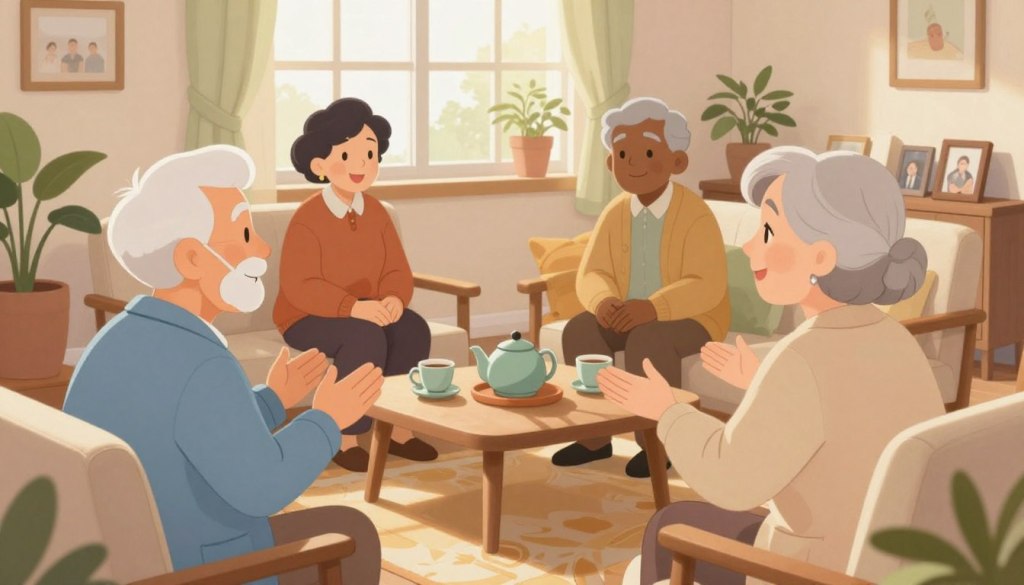
Weather, sports, books, tech and feel-good items
Try sensory, low-stakes topics. Ask, “How is today’s weather treating you?” or “Who are you rooting for right now?”
Books, TV, and art spark warm memories. Ask, “Any shows you’d recommend?” or “What movie from your childhood still holds up?”
Little tech talk can be curious, not scary. Ask, “What gadget has made life easier recently?”
Health, travel, food and good news
- Supportive check-ins: “How are you feeling about your routine lately?”
- Travel prompts: “If you could visit any landmark, where would you go?”
- Food starters: “What comfort meal should we try next time?”
- Good-news habit: “Did you see a feel-good story that made you smile?”
How to use these starters: Pick one question, share your own answer, then give a few minutes and rotate. In groups or apps, post the prompt as the title and invite replies. This method helps members laugh, remember, and build trust.
Senior conversation starters and a simple caregiver check-in schedule can help families keep these chats regular.
Talk to Joy now: 1-415-569-2439.
Sign up for JoyCalls: https://app.joycalls.ai/signup.
Plug-and-Play Current Events Conversation Scripts for Meals, Phone Calls, and Group Activities
Many people know they should ask open-ended questions, but they freeze when the moment arrives. Scripts reduce that friction. The goal is not to sound robotic—it is to make warm conversation easier to start consistently.
Below are simple scripts that follow a calm pattern: headline (or topic), gentle question, follow-up, and respectful pivot. You can adapt them for one-on-one visits, family meals, senior centers, or check-in calls.
Script 1: Local community update (great for phone calls)
You: “I heard they’re opening a new park downtown. Have you noticed any changes in the neighborhood lately?”
Follow-up: “What do you like about how the area has changed?”
If energy drops: “What was your favorite place to visit around town years ago?”
Why it works: local updates feel relevant, familiar, and less divisive than national headlines.
Script 2: Weather headline (easy, low-pressure starter)
You: “They’re saying we may have a warmer week than usual. How’s the weather treating you today?”
Follow-up: “What kind of weather do you enjoy most now?”
Memory bridge: “What season do you most remember from when you were raising kids or working?”
Why it works: weather is sensory, immediate, and opens memory-based storytelling.
Script 3: Sports or community team news (good for groups)
You: “I saw a story about the local team this morning. Are you following any teams right now?”
Follow-up: “Who did you always enjoy watching?”
Respectful pivot if rivalry starts: “That’s a fun debate—what made that era of sports special for you?”
Why it works: sports creates energy and identity without requiring agreement.
Script 4: Feel-good news story (ideal for anxious days)
You: “I saw a story about neighbors helping one another after a storm. Do you remember a time when your community came together?”
Follow-up: “What did people do that made the biggest difference?”
Close: “That’s a story worth repeating.”
Why it works: positive stories invite gratitude and meaning, not arguments.
Script 5: Technology or daily-life invention (surprisingly engaging)
You: “I read about a new tool that helps people remember appointments. What invention has made life easier for you?”
Follow-up: “What took the most getting used to?”
Pivot if frustration rises: “Technology can be annoying. What old-school way do you still prefer?”
Why it works: this topic invites wisdom, humor, and comparisons across generations.
Script 6: Food and prices headline (use with care, relatable)
You: “I noticed a story about grocery prices. What meals were your go-to favorites when feeding a family?”
Follow-up: “What made that meal work so well?”
Pivot from stress: “Now I want to hear your best comfort-food recommendation.”
Why it works: even when the headline is serious, the conversation can move toward recipes, resilience, and family memories.
Tip for all scripts: share your own answer first, then ask. A 10-second personal response lowers pressure and makes the exchange feel mutual. Keep one script per setting—meal, phone call, group circle—and repeat what works.
Conversation Activities That Turn Current Events Into Deeper Connection

Turn a headline into a gentle game that leads to memory and meaning. Start small. Pick one short news item and use it as a bridge to the past.
Headline → Memory → Meaning. Say the headline, ask one linking question, then let a person tell a story. This structure keeps talk calm and purposeful.
Reminiscence prompts that link news to life milestones
Try safe prompts that invite reflection, not debate.
- “Has something like this happened in other times you remember?”
- “What was that period like day-to-day for you?”
- Work prompts: “What was your first job?” “What did you do with your first paycheck?”
- Career lens: “Which job taught you the most about life?”
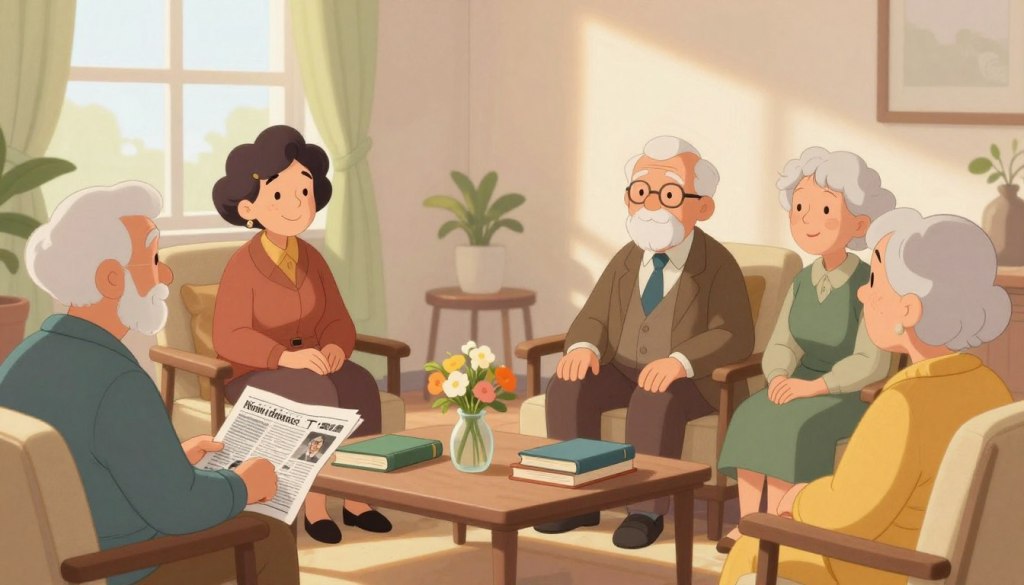
Pair friends for 3–5 minutes, then rotate. A gentle facilitator watches energy and protects dignity. If talk heats up, the facilitator shifts the topic.
Shared activities reduce loneliness and help people feel their past still matters.
These small activities boost mental health and build community. Joy can help when family time is limited—Talk to Joy now: 1-415-569-2439. Sign up for JoyCalls: https://app.joycalls.ai/signup.
For practical tips on staying connected and avoiding isolation, see tips for staying connected. If a call is missed, this guide explains next steps: missed a check-in. Learn whether morning vs evening check-ins suit your loved one.
How to Adapt Current Events Conversations for Hearing Loss, Memory Changes, or Low Energy
A few small adjustments can turn a frustrating exchange into a successful, meaningful conversation. This is especially important when someone has hearing loss, mild memory changes, fatigue, anxiety, or slower processing speed.
Start by matching the conversation length to the person’s energy. A five-minute call with one good prompt is often better than a twenty-minute conversation that becomes tiring. If attention is limited, use a “one headline, one question, one memory” format. Example: “I saw a story about spring gardens. Did you ever grow flowers?” Then stop and listen. The goal is engagement, not coverage.
For hearing loss, reduce background noise before you begin. Turn off the TV or move away from a loud room. Face the person so they can see your expression and mouth movements. Speak clearly at a normal pace (not exaggerated shouting). Short sentences help. If needed, rephrase instead of repeating the exact same words. For example, instead of repeating “What do you think of that report?” try “How does that story sound to you?”
For memory changes, choose prompts that do not require recalling names, dates, or complex details. Questions about feelings, routines, and life experiences are easier and more rewarding than trivia-style questions.
Good options include:
- “What did you enjoy about mornings when you were working?”
- “What kind of neighborhood news do you like hearing?”
- “What’s a place you still remember clearly?”
Avoid correcting small inaccuracies unless safety is involved. If a detail is mixed up, follow the emotional thread rather than turning the conversation into a test.
For anxiety or upsetting news cycles, preview and filter. You can say, “I have a light local story and a heavier one—which would you prefer today?” Giving choice restores control. Keep graphic or alarming details out unless the person specifically wants them. If tension builds, shift to calming categories like weather, music, nature, pets, food, or family traditions.
For group settings, design for participation, not performance. Ask one question at a time and allow silence. Some older adults need a few extra seconds to respond. Resist the urge to fill every pause. If one person dominates, thank them and invite others gently: “That’s a great memory. I’d love to hear what this brings up for someone else.”
Use visual supports when possible. A printed headline, a photo, or even a single object (a cookbook, newspaper, postcard) can anchor attention and spark richer stories than conversation alone. This is especially useful for people who respond better to concrete cues.
Most importantly, measure success the right way. A successful conversation is not one where every fact is discussed. It is one where the person feels respected, included, and calmer or more connected by the end. That standard makes current-events conversations more accessible, repeatable, and kind. These adaptations also help family members, volunteers, and staff use current events conversation starters for seniors more confidently, even on busy days or difficult mornings.
Conclusion
Choose one thoughtful prompt and watch a visit or call become more meaningful. A simple question can invite a laugh, a memory, or a useful story. Use calm tone, open phrasing, and respect to keep connection first.
Little steps matter. Save a few trusted conversation starters and pick just one starter for your next check-in. That low pressure approach makes it easier to show up again and again.
Tools help too. See a study on tech and loneliness and learn about simple reminder options that fit daily life.
Talk to Joy now: 1-415-569-2439.
Or Sign up for JoyCalls: https://app.joycalls.ai/signup.
FAQ
What are gentle ways to bring up today’s news with an older adult?
How do I keep a news chat calm if opinions differ?
Can I use headlines to spark memories or stories?
What topics tend to be safe and engaging?
How can I turn a short call into a meaningful activity?
Is it okay to talk about health or science news?
How do I handle sensitive or upsetting stories?
What if my parent wants to talk politics often?
How can JoyCalls help with these conversations?
Any quick tips for caregivers who are short on time?

Ana Avila, PhD, is a healthcare and technology writer with deep expertise in artificial intelligence, senior care innovation, and the practical use of AI in healthcare operations. Her work focuses on how emerging technologies can improve the daily experience of older adults, support overburdened care teams, and help senior living communities deliver safer, faster, and more personalized support.
Dr. Avila’s academic background is rooted in health informatics, aging care systems, and applied artificial intelligence. Her doctoral work focused on how digital health tools, predictive analytics, and AI-assisted communication systems can be used to improve care coordination, reduce operational delays, and identify early signs of risk among older adults. Her training gives her a rare ability to understand both the technical side of AI and the human realities of healthcare delivery.
Over the years, Ana has developed a specialized body of work around AI in senior living. She writes about how senior care providers can use intelligent systems to manage resident requests, answer routine questions, support family communication, improve after-hours coverage, and detect patterns that may indicate loneliness, confusion, distress, or unmet needs. Her articles often examine the gap between what senior living teams are expected to deliver and what traditional staffing models can realistically support.
Ana’s healthcare expertise is especially focused on the operational side of care. She has written extensively about call handling, resident engagement, front desk workflows, triage systems, caregiver communication, care escalation, and the hidden administrative burden placed on senior living staff. Her work explains how AI can help reduce repetitive tasks, organize incoming requests, prioritize urgent issues, and give human caregivers more time for meaningful resident interaction.
At the same time, Ana is careful not to present AI as a replacement for human care. A consistent theme in her writing is that technology should support relationships, not weaken them. She argues that the best AI systems in healthcare are not the ones that simply automate the most tasks, but the ones that make care teams more responsive, families more informed, and residents more supported. Her perspective is grounded in the belief that senior living technology must be designed around dignity, trust, privacy, and compassion.
Ana has also written widely on the ethical use of AI in healthcare. Her work discusses the importance of human oversight, transparent escalation rules, resident consent, data minimization, and responsible use of sensitive health and behavioral information. She often emphasizes that AI systems used around older adults must be easy to understand, carefully monitored, and designed with the limitations and needs of real residents in mind, including those with memory loss, hearing challenges, mobility issues, or social isolation.
Her writing has been used as a reference point in discussions about aging, elder care technology, digital health, and AI-supported senior living. Some of her articles have also been cited by Wikipedia editors as supporting references on topics related to healthcare, aging, and technology. This has helped position her work as a useful educational resource for readers looking to understand how AI can be applied in real care environments.
In addition to her long-form writing, Ana has contributed research-based commentary, professional explainers, and practical guidance for healthcare operators, senior living decision-makers, and technology teams building products for older adults. Her work combines research literacy with operational practicality. She is able to take complex subjects such as natural language processing, predictive analytics, conversational AI, and care automation, and explain them in a way that is accessible to executives, caregivers, families, and non-technical readers.
Ana’s strongest area of expertise is the intersection of artificial intelligence and senior living operations. She understands that senior care communities face a difficult combination of rising resident expectations, staffing pressure, family communication demands, and increasing care complexity. Her writing explores how AI can be used to ease those pressures through smarter communication systems, faster response workflows, proactive check-ins, and better visibility into resident needs.
Her approach is both evidence-informed and deeply human. She studies AI through the lens of real-world care delivery: whether a resident gets help faster, whether a family member receives a clearer update, whether a caregiver avoids unnecessary administrative work, and whether a senior living team can identify a concern before it becomes a crisis. This practical focus makes her work especially relevant for organizations that want to adopt AI responsibly rather than simply follow technology trends.
Ana Avila is regarded as a thoughtful voice on the future of AI in healthcare and senior living. Her expertise combines academic training, research-driven analysis, operational understanding, and a strong commitment to humane technology. Through her writing, she helps healthcare leaders and senior living communities understand not only what AI can do, but how it should be used to improve care, preserve dignity, and strengthen the human relationships at the center of aging support.