


Surprising fact: one small fluid shortfall can raise fall risk by a startling margin in homes across the U.S.
A familiar morning: an adult child notices a parent get up from a chair and appear wobbly. That lightheaded moment after errands or right after waking is alarming. It can feel sudden and confusing.
Dehydration means losing more fluids than you take in. In plain words: the body needs water to keep balance, blood pressure, and muscle strength steady. When fluid levels fall, adults can feel faint, weak, or unsteady.
This matters for seniors who live alone. Low fluid can sneak up fast and raise the fall risk. We’ll show how to tell if lack of fluids is the likely cause, what to do now, and when to seek care.
Common contributors include heat, illness, mobility limits, and medications. Many cases are mild and improve with the right fluids and a simple plan. If symptoms are severe, this article is informational and not a substitute for medical advice.
For more on warning signs and steps to prevent problems, see symptoms and tips for older adults. Support options are described later in the guide.
Key Takeaways
- Feeling lightheaded after standing can come from low fluid levels.
- Dehydration affects balance and can increase fall risk in older adults.
- Watch for quick changes: faintness, tiredness, and less urine.
- Common causes: heat, illness, limited mobility, and some meds.
- Most mild cases improve with proper fluids and a simple plan.
- Seek medical care when symptoms are severe or sudden.
Why dehydration can trigger dizziness in older adults
Those brief wobble seconds when you stand up tell an important story. When the body loses fluid, there is less circulating volume. Think of your circulation like simple plumbing: lower volume means lower blood pressure when you change position.

How fluid loss affects blood and heart function
Low circulating blood volume forces the heart to work harder. You may notice a faster pulse as the heart tries to keep oxygen moving. In severe cases, blood pressure and oxygen delivery drop and movement becomes hard.
“You stand up and the room tilts for a moment.” — a common, simple way to explain orthostatic-style episodes.
Why even mild loss raises fall risk
Even mild fluid loss can slow reaction time and reduce steadiness. That raises the risk of falls during normal tasks like nighttime bathroom trips.
- Common triggers: skipped drinks, long outings, warm rooms, avoiding the bathroom.
- If someone feels unsteady, have them sit down and call for help before walking.
Next, we’ll show quick self-checks to see if low fluid is likely and what steps to take now. For routine reminders and help with meals and fluids, see daily check-in routine.
dizziness dehydration elderly: how to tell dehydration is the likely cause
Start with a calm check: small clues in daily habits often point to low fluid as the cause. Use three quick, easy observations to decide if fluids are the likely issue right now.
Quick self-check using urine color, thirst, and frequency
Look at urine color, notice thirst, and how often you’re going. Clear or pale urine usually means good hydration. Darker urine or going less than usual for the day can be a clear sign that fluids are low.
If someone reports new low output or strong thirst, treat it as a prompt to offer fluids and sit down. The Mayo Clinic suggests aiming for clear to light-colored urine as a simple target.

Common symptoms that often show up with lightheaded spells
- Dry mouth or sticky saliva
- Tiredness and low energy
- Headache or muscle cramps
- Dark urine and decreased urination
- Feeling faint or a brief episode of dizziness
When the problem may point to other conditions and needs a doctor’s attention
Not every episode comes from low fluids. Medication changes, blood sugar swings, infection, or kidney and heart conditions can cause similar signs.
“If your dad sounds unusually wiped out on the phone and mentions not peeing much, treat it as a signal.”
Decision point: mild symptoms plus a clear trigger (heat, skipped drinks) often suggests simple dehydration. But call a doctor if symptoms don’t improve with fluids, come back repeatedly, or come with chest pain, shortness of breath, fainting, or new weakness.
| Check | What to look for | Next step |
|---|---|---|
| Urine | Dark or low output that is new today | Offer water; monitor next few hours |
| Thirst & energy | Strong thirst or unusual tiredness | Give small, frequent sips; rest |
| Cluster symptoms | Dry mouth, headache, cramps, lightheaded | Rehydrate; call a doctor if no improvement |
| Red flags | Fainting, chest pain, severe weakness | Seek immediate medical attention |
Why seniors get dehydrated more easily than younger adults
Age brings subtle changes that make it easier to lose water fast. Over time, the body holds less total water, so a small fluid loss can matter more.
Less total body water and fewer “reserves”
The body’s water reserve shrinks with age. That means less buffer when the day brings heat or illness. A short spell of vomiting or fever can cause fast fluid loss.
Weaker thirst response throughout day
Many older adults do not feel thirsty as often. The weaker thirst signal can leave people drinking less throughout the day without meaning to.
Try JoyCalls Free
No app or new device needed. Start with a free 7-day trial.
Kidney changes and more urine
Kidney function may decline with age. That can cause higher urine output and less ability to hold on to fluids. For more on kidney changes, see reduced kidney function research.
Real-life barriers and medication risks
- Mobility limits and fear of frequent bathroom trips reduce drinking.
- Hot weather, long outings, or illness speed water loss.
- Certain medications, like diuretics and some blood pressure drugs, raise the risk of excess urine and fluid loss.
“This is rarely carelessness — it’s often body changes plus daily life challenges.”

Warning signs of severe dehydration that require urgent care
Some signs mean you need help right away—don’t wait to act. These red flags show the body may not have enough fluids or circulation support, and they call for immediate attention.
Confusion, disorientation, or unusual sleepiness
Why it matters: sudden confusion or heavy sleepiness can signal the brain isn’t getting enough blood flow. This needs prompt care and medical attention.
Fainting, rapid heart rate, or low blood pressure symptoms
A fainting spell, a racing pulse, or signs of low blood pressure—like pale skin and lightheadedness—are urgent. Call for help and avoid letting the person stand.
Trouble walking or movement changes
If walking becomes unsteady or steps slow and clumsy, treat this as an emergency. Sit or lie down and do not try stairs alone.
Vomiting or diarrhea lasting longer than a day or inability to keep fluids down
Vomiting or diarrhea for more than 24 hours can drain fluids and salts fast. If they can’t hold small sips, seek medical attention without delay.
“Don’t wait—seek medical help if any severe signs appear or if you’re unsure how fast things change.”
Practical steps while you arrange care:
- Keep the person cool and shaded.
- Offer small, frequent sips if they can drink; don’t force large amounts.
- Lay them flat with legs raised if fainting risk is high and breathing is normal.
- Bring a list of medications and any health conditions to urgent care or ER.

| Sign | What it suggests | Immediate action |
|---|---|---|
| Confusion or odd sleepiness | Poor brain perfusion | Call emergency services; do not leave alone |
| Fainting or rapid heart | Low blood pressure or fast heart rate | Seek urgent medical attention |
| Severe walking trouble | High fall risk; circulation issues | Keep seated/lying; get help to move |
| Vomiting/diarrhea > 24 hours | Loss of fluids and electrolytes | Go to urgent care or ER |
If you want tools to keep an eye on daily fluid needs and check-ins, see our caregiver check-in schedule for simple routines that help prevent these issues.
How to rehydrate safely when dizziness starts
Start by finding a safe seat and take a slow, steady breath before reaching for a drink. Safety first. If the person is unsteady, sit or lie down and do not rush.

What to drink first
Begin with plain water, a low-sugar juice, or a warm broth. Offer small, frequent sips instead of large gulps. This helps an upset stomach and eases the body back into normal balance.
When electrolytes help
Electrolytes matter after vomiting, diarrhea, or heavy sweating. Drinks like Pedialyte or a low-sugar sports drink restore salts such as sodium and potassium.
- Why: sodium helps the body hold on to fluid and supports muscles and nerves.
- Choose balanced options that list electrolytes on the label.
What to limit while rehydrating
Avoid alcohol, excess caffeine, and very sugary drinks. These can worsen fluid loss or cause blood sugar swings.
How caregivers can help
Bring a cup with a straw, keep a bedside water bottle ready, and stay close until steadiness returns. Note changes in urine, thirst, or energy.
“If fluids and rest don’t help within a few hours, contact a clinician—some conditions need specific guidance.”
| Step | When to use | Action |
|---|---|---|
| Small sips of water | Mild symptoms, no vomiting | Offer every 10–15 minutes |
| Electrolyte drinks | Vomiting/diarrhea or heavy sweating | Use labeled oral rehydration or Pedialyte |
| Seek medical care | No improvement or severe signs | Call clinician or urgent care |
Build a Personal “Dizziness and Hydration Safety Plan” for Daily Life

For many older adults, dehydration-related dizziness does not happen randomly. It often follows a pattern. It may happen after a poor night’s sleep, after skipping breakfast, during warm afternoons, after taking certain medicines, after a long outing, or after avoiding fluids to reduce bathroom trips. The more you understand the pattern, the easier it becomes to prevent the next episode.
A personal safety plan is not complicated. It is simply a clear routine that tells you what to do before dizziness starts, what to do when it begins, and when to involve family or a doctor. This is especially helpful for seniors who live alone, have mobility challenges, or do not always feel thirsty.
Start by identifying your most likely dizziness triggers
The first step is to look back at the last few times dizziness happened. Try not to guess. Instead, write down what was going on that day.
Ask simple questions:
- Did the dizziness happen after standing up?
- Had you eaten recently?
- Had you had enough fluids that morning?
- Was the weather hot or humid?
- Were you sick with fever, vomiting, or diarrhea?
- Did you take a water pill or blood pressure medicine earlier?
- Did you avoid drinking because you did not want to use the bathroom?
- Did you sleep poorly the night before?
- Did the dizziness happen after a shower, walk, or long car ride?
This type of review helps separate a one-time episode from a repeat pattern. For example, if dizziness usually appears around 11 a.m., the issue may be that morning fluids are too low. If it happens after lunch, it may be linked to blood pressure changes after meals. If it happens in the evening, the person may be drinking less during the day and then becoming weak by late afternoon.
The goal is not to self-diagnose. The goal is to gather useful information so the older adult, caregiver, and clinician can make safer decisions.
Create a simple morning hydration routine
Morning is one of the most important times for preventing dizziness. After several hours of sleep, the body may already be slightly low on fluids. Older adults may also wake up slowly, feel stiff, or rush to the bathroom. Standing quickly at this time can make lightheadedness worse.
A safer morning routine can look like this:
Before getting out of bed, sit up slowly and pause for 30 seconds. Move the ankles up and down a few times. Take a few calm breaths. If there is no dizziness, stand up slowly while holding a stable surface. Then drink a small glass of water or another approved morning drink.
This does not need to be a large amount. Many seniors do better with small, steady fluids rather than forcing a big glass at once. A bedside water bottle, a lightweight cup with a straw, or a marked bottle can make the routine easier.
If the person takes morning medicines, ask the doctor or pharmacist whether any of them may affect hydration, urination, or blood pressure. Do not stop or change medicines without medical guidance. The purpose is to understand the risk and plan around it.
Use “fluid anchors” instead of vague reminders
Many people are told to “drink more water,” but that advice is often too general. A better method is to connect fluids to daily activities that already happen.
These are called fluid anchors.
For example:
- Drink a few sips after waking.
- Drink with morning medicine, if allowed.
- Drink with breakfast.
- Drink after brushing teeth.
- Drink before leaving the house.
- Drink after returning from errands.
- Drink with lunch.
- Drink during a favorite TV program.
- Drink with an afternoon snack.
- Drink with dinner.
This works because it removes the need to remember fluids all day. The habit becomes attached to something familiar.
For seniors who dislike plain water, safe variety can help. Options may include water with lemon, diluted juice, milk, herbal tea, broth, or water-rich foods such as melon, oranges, cucumber, yogurt, or soup. People with kidney disease, heart failure, low-sodium diets, or fluid restrictions should follow their clinician’s specific advice.
Plan around bathroom concerns with dignity
One common reason older adults reduce fluids is fear of frequent bathroom trips. This is understandable. No one wants to feel rushed, embarrassed, or at risk of falling while trying to reach the toilet. But drinking too little can increase dizziness, weakness, constipation, confusion, and fall risk.
The answer is not to pressure someone to drink. The answer is to make drinking feel safer.
Start by improving bathroom access. Keep pathways clear. Remove loose rugs. Add night lights. Make sure the person has supportive footwear. Consider grab bars, a raised toilet seat, or a bedside commode if mobility is limited. Keep a walker or cane within reach.
Then plan fluid timing. Some people do better when they drink more earlier in the day and reduce large drinks close to bedtime. This may lower nighttime bathroom trips while still supporting hydration. However, this should be balanced carefully, especially in hot weather or during illness.
Caregivers should also use respectful language. Instead of saying, “You never drink enough water,” try, “Let’s make this easier so you don’t feel rushed to the bathroom later.” That small change keeps the conversation supportive rather than critical.
Add a standing safety rule
Dehydration-related dizziness is especially risky when standing up. A simple standing rule can prevent many falls:
Sit first. Sip first. Stand slowly.
If an older adult feels lightheaded, they should not try to “walk it off.” They should sit down right away, take slow breaths, and sip fluids if they can swallow safely. After a few minutes, they can try standing again with support. If dizziness returns, they should sit or lie down and call for help.
This rule is especially important during:
- Nighttime bathroom trips
- Getting out of bed
- Standing after meals
- Rising from a recliner
- Getting out of a car
- After a hot shower
- After gardening or walking outdoors
Caregivers can place a reminder note near the bed or favorite chair: “Pause before standing.” It may seem small, but it can protect independence.
Keep a two-day dizziness and hydration log
A log does not need to be detailed. In fact, the simpler it is, the more likely someone will use it.
For two days after a dizzy spell, write down:
- Time dizziness happened
- What the person was doing
- What they had to drink that day
- Urine color, if noticed
- Whether they had eaten
- Any vomiting, diarrhea, fever, or sweating
- Medicines taken that morning
- Whether symptoms improved after fluids and rest
This gives the doctor much better information than “I felt dizzy.” It can also help family members notice early warning signs. For example, they may see that dizziness happens every time the person skips lunch, or after days when urine is dark in the morning.
If dizziness keeps happening, bring the log to a medical appointment. It can help the clinician check for dehydration, blood pressure changes, medication side effects, blood sugar issues, anemia, infection, or other causes.
Know when fluids are not enough
Hydration helps when dehydration is part of the problem. But not every dizzy spell should be treated as a simple fluid issue.
Get medical help quickly if dizziness comes with fainting, chest pain, shortness of breath, new weakness, severe headache, confusion, slurred speech, trouble walking, black stools, repeated vomiting, or signs of stroke. Also call a clinician if dizziness keeps returning, does not improve with fluids and rest, or happens after a medication change.
Older adults with heart failure, kidney disease, liver disease, diabetes, or low sodium levels should be especially careful. For them, “drink more water” may not always be the right advice. They may need a personalized fluid plan.
Make the plan visible and easy to follow
A good hydration plan should not live only in someone’s memory. Put it where it can be seen.
You can place a short plan on the refrigerator, beside the bed, or near the main chair.
Example:
My dizziness safety plan
- I sit before I stand.
- I drink small amounts through the day.
- I keep water near my bed and chair.
- I call for help if I feel faint, confused, weak, or unsafe walking.
- I tell family if I have vomiting, diarrhea, fever, or very dark urine.
- I do not change medicines unless my doctor tells me to.
This type of plan is simple, but it gives the older adult more control. It also helps family members respond calmly instead of panicking.
How family members can support without nagging
Hydration reminders work best when they feel caring, not controlling. Many older adults do not want to be treated like children. They want respect, privacy, and independence.
A helpful approach is to make hydration part of shared routine.
Try saying:
“Let’s both have some water before we go.”
“I made tea. Would you like a small cup?”
“Before you stand up, take a moment. I’ll wait.”
“Would it help to keep a bottle closer to your chair?”
“Let’s write down when the dizziness happened so we can tell the doctor clearly.”
These phrases feel supportive. They also reduce shame. The goal is not to monitor every sip. The goal is to make safe hydration feel normal.
The main idea
A hydration safety plan turns dizziness from a frightening surprise into something easier to manage. It helps seniors notice patterns, drink more steadily, stand more safely, and know when to ask for help.
For older adults, the best plan is not extreme. It is steady, respectful, and realistic. A few sips at the right time, a safer standing habit, a clear bathroom plan, and a simple log can make daily life safer and more comfortable.
Build a safer home environment for dizzy moments
Hydration helps the body recover, but the home setup decides whether a dizzy moment becomes a fall. This is especially important because dehydration-related dizziness often appears during ordinary activities: getting out of bed, walking to the bathroom, standing in the kitchen, stepping out of the shower, or answering the door.
The safest approach is to assume that dizziness may happen again and prepare the home before it does.
Start with the walking path from the bed to the bathroom. This route should be clear, well-lit, and easy to walk without rushing. Remove loose rugs, clutter, cords, low stools, and anything that could catch a foot. Keep slippers or shoes with a firm grip near the bed. Avoid walking in socks on smooth floors.
Add night lights in the bedroom, hallway, and bathroom. A person who wakes up thirsty, weak, or lightheaded should not have to walk in the dark. If getting to the bathroom is difficult, a bedside commode may be safer than repeated nighttime walks.
In the bathroom, safety matters even more. Hot showers can worsen dizziness because heat can widen blood vessels and make blood pressure drop. A shower chair, grab bars, non-slip mat, and handheld showerhead can reduce risk. Seniors should avoid locking the bathroom door if they are feeling weak, and they should sit down immediately if they feel faint.
The kitchen also needs attention. Keep water, cups, electrolyte drinks, and easy snacks at waist level so the person does not have to bend, stretch, or climb. If dizziness often happens while preparing meals, encourage sitting at the table for simple tasks like peeling fruit, making tea, or filling a bottle.
A good rule is this: hydration supplies should be easier to reach than unsafe furniture. No one should have to climb, lean, or hurry just to get a drink.
Prepare a “first response station”
A first response station is a small area with everything needed when dizziness starts. It can be placed near a favorite chair, bedside table, or kitchen counter.
Include:
- A water bottle or covered cup
- Oral rehydration drink, if approved by a doctor
- A light snack
- A list of current medicines
- Emergency contact numbers
- A blood pressure monitor, if used
- Reading glasses
- Phone charger
- A simple dizziness log
This station helps the older adult respond calmly. It also helps caregivers avoid searching for supplies during a stressful moment.
The station should not look medical or frightening. It can be simple and discreet. The goal is comfort, not alarm.
Know what to say during a dizzy spell
When someone feels dizzy, too much talking can overwhelm them. Use short, calm sentences.
Say:
“Sit down first.”
“Take slow breaths.”
“I’m right here.”
“Take small sips.”
“Don’t stand yet.”
“Let’s wait a few minutes.”
Avoid saying things like “You’re fine,” “Just walk slowly,” or “You need to drink more.” These phrases may sound dismissive, even when well-intended.
If the person is alone, they should call someone before trying to move around. A quick call can prevent a dangerous attempt to walk unsupported.
Review the plan after every episode
After the person feels better, take five minutes to review what happened.
Ask:
- What were you doing before dizziness started?
- Had you eaten or had fluids?
- Did you stand up quickly?
- Was the room warm?
- Did you feel confused, weak, or short of breath?
- Did fluids help?
- Did this feel different from previous episodes?
This review should feel supportive, not like an interrogation. The purpose is to improve the plan.
If the same pattern keeps appearing, the plan should change. For example, if dizziness happens after showers, add a shower chair and reduce water temperature. If it happens before lunch, add a mid-morning drink and snack. If it happens after medication, speak with a clinician.
Keep independence at the center
The best hydration plan is one the older adult actually accepts. That means it must respect preference, dignity, and routine.
Some seniors do not want constant reminders. Some dislike large bottles. Some do not enjoy plain water. Some fear bathroom trips. Some feel embarrassed admitting they are dizzy.
Instead of forcing one solution, personalize the plan.
A person who dislikes water may prefer tea, broth, fruit, or flavored water. A person who forgets to drink may need visual cues. A person worried about bathroom trips may need safer bathroom access. A person living alone may need daily check-ins.
Hydration support works best when it feels like teamwork. The message should be: “We want you to feel steady and safe,” not “You are doing something wrong.”
Final takeaway for readers
Dehydration-related dizziness is not only about fluid intake. It is also about timing, safety, routine, medications, home setup, and knowing when to get help.
For seniors, the goal is not to drink huge amounts all at once. The goal is to build a steady rhythm: small fluids, safer standing, clear walking paths, respectful reminders, and fast action when warning signs appear.
That kind of plan protects more than hydration. It protects confidence, mobility, and independence.
High-Risk Situations That Can Quietly Lead to Dehydration and Dizziness

Many older adults are surprised when dizziness appears because they do not feel particularly thirsty. One of the biggest misconceptions about dehydration is that it only happens during extreme heat or illness. In reality, dehydration often develops gradually over several hours or days, especially in seniors.
The body becomes less efficient at conserving water with age. At the same time, the sensation of thirst becomes weaker. This means an older adult may already be dehydrated before they realize anything is wrong.
Understanding the situations that increase dehydration risk can help seniors and caregivers take preventive action before dizziness begins.
Hot weather is only part of the story
Most people associate dehydration with summer temperatures, but older adults can become dehydrated throughout the year.
During hot weather, the body loses fluids through sweat. However, dehydration can also occur in cooler months when indoor heating dries the air and people unintentionally drink less water.
Many seniors reduce their fluid intake during winter because they simply do not feel thirsty. They may also spend more time indoors and become less aware of fluid losses.
Practical steps include:
- Keep a water bottle visible regardless of season.
- Drink fluids at regular intervals rather than waiting for thirst.
- Include warm hydration options such as herbal teas, soups, and broths during colder months.
- Pay attention to indoor heating, which can contribute to fluid loss.
Remember that dehydration is a year-round concern, not just a summer problem.
Long appointments and errands can create a hidden hydration deficit
A common pattern among older adults is experiencing dizziness after returning home from a busy day.
Medical appointments, shopping trips, family visits, religious gatherings, and social events often involve several hours away from home. During these outings, many seniors intentionally avoid drinking because they are unsure where restrooms will be available.
While understandable, this habit can significantly reduce fluid intake.
To prevent this:
- Drink fluids before leaving home.
- Carry a water bottle when possible.
- Plan restroom locations in advance.
- Schedule a hydration break during longer outings.
- Consider carrying electrolyte drinks during particularly hot days or extended activities if approved by a healthcare provider.
Even mild dehydration accumulated over several hours can contribute to lightheadedness upon returning home.
Illness changes hydration needs dramatically
One of the fastest ways dehydration can develop is during illness.
Conditions such as:
- Fever
- Flu
- Respiratory infections
- Vomiting
- Diarrhea
- Urinary tract infections
can all increase fluid loss or reduce fluid intake.
Unfortunately, illness can also reduce appetite and make drinking feel less appealing.
During recovery, hydration should become a priority rather than an afterthought.
Helpful strategies include:
- Taking small sips frequently instead of large drinks.
- Using oral rehydration solutions when recommended.
- Consuming fluid-rich foods such as soups, gelatin, yogurt, watermelon, oranges, and applesauce.
- Monitoring urine color and frequency.
- Seeking medical advice if fluids cannot be kept down.
Caregivers should pay special attention during illness because dehydration can develop rapidly in older adults.
Certain medications increase dehydration risk
Many medications commonly prescribed to seniors can affect hydration status.
Examples include:
- Diuretics (water pills)
- Some blood pressure medications
- Certain diabetes medications
- Laxatives
- Some medications that cause increased sweating or dry mouth
This does not mean medications are causing harm or should be stopped. Many of these treatments are essential.
However, understanding their potential effects allows seniors and caregivers to adjust hydration habits appropriately.
Questions worth discussing with a healthcare provider include:
- Does this medication increase fluid loss?
- Should hydration habits change while taking it?
- Are there specific warning signs to watch for?
- Should fluid intake be adjusted during hot weather?
Having these conversations can prevent avoidable dizziness episodes.
Appetite changes can indirectly reduce hydration
Many people think of food and fluids separately, but they are closely connected.
A significant portion of daily hydration comes from foods such as:
- Fruits
- Vegetables
- Yogurt
- Soups
- Stews
- Smoothies
When appetite decreases, fluid intake often drops as well.
Older adults who eat smaller portions may unknowingly consume less water throughout the day.
To compensate:
- Include water-rich foods at every meal.
- Add fruits as snacks.
- Consider soups or broths between meals.
- Keep easy-to-eat hydration-friendly foods readily available.
Even small dietary adjustments can improve hydration status over time.
Recovery after hospitalization deserves special attention
Many seniors return home from the hospital feeling weaker than expected.
Several factors can contribute:
- Reduced appetite during hospitalization
- Medication changes
- Increased fatigue
- Limited mobility
- Interrupted sleep
- Ongoing recovery from illness
Hydration may not immediately return to normal after discharge.
Family members should closely monitor:
- Fluid intake
- Urine output
- Energy levels
- Dizziness when standing
- Appetite changes
A structured hydration schedule during the first few weeks at home can help support recovery and reduce fall risk.
Emotional stress can affect hydration habits
Stress, grief, anxiety, and loneliness are often overlooked contributors to dehydration.
During emotionally difficult periods, routines tend to change.
Some people:
- Forget to drink.
- Skip meals.
- Sleep poorly.
- Become less active.
- Lose interest in self-care activities.
These changes may seem unrelated to hydration but can gradually increase dehydration risk.
Caregivers should be especially attentive after:
- The loss of a spouse.
- Major life transitions.
- Relocation.
- Significant health diagnoses.
- Extended periods of social isolation.
Supporting hydration during emotionally challenging times can be just as important as addressing physical health needs.
Travel requires a hydration strategy
Travel often disrupts normal routines.
Whether taking a road trip, visiting family, or flying, seniors frequently experience:
- Irregular meal schedules
- Delayed fluid intake
- Increased walking
- Changes in climate
- Limited restroom access
All of these factors can increase dizziness risk.
Before traveling:
- Pack hydration supplies.
- Bring medications in an easily accessible location.
- Schedule hydration breaks.
- Avoid waiting until thirst appears.
- Have a plan for hot weather exposure.
A little preparation can prevent dehydration from turning an enjoyable trip into a stressful experience.
Watch for multiple risk factors happening at once
The greatest danger often comes from several dehydration triggers occurring simultaneously.
For example:
An older adult may:
- Take a diuretic.
- Spend time outdoors on a warm day.
- Skip lunch.
- Attend a long appointment.
- Drink less to avoid restroom trips.
Individually, each factor may be manageable.
Together, they can create the perfect conditions for dehydration-related dizziness.
This is why awareness matters. The more risk factors that are present, the more intentional hydration habits should become.
The key lesson
Dehydration-related dizziness rarely appears without warning. In many cases, the body has been gradually losing fluids or receiving too little hydration for hours—or even days.
By recognizing high-risk situations early, seniors can take simple preventive actions that reduce dizziness, improve energy levels, and support safer mobility.
Often, the most effective strategy is not waiting until symptoms appear. It is anticipating the circumstances that make dehydration more likely and responding before dizziness has a chance to develop.
When Is Dizziness an Emergency? Warning Signs Older Adults Should Never Ignore

One of the most challenging aspects of dizziness is that it can be difficult to know whether it is simply a sign of dehydration or a symptom of something more serious.
Many older adults have experienced occasional lightheadedness after standing too quickly or after not drinking enough fluids. In those situations, rest and hydration may improve symptoms relatively quickly.
However, dizziness is also associated with several medical conditions that require immediate attention. Because the consequences of missing a serious condition can be significant, seniors and caregivers should understand the warning signs that separate a likely dehydration issue from a potential medical emergency.
Knowing when to seek help can prevent complications, reduce anxiety, and ensure timely treatment when necessary.
Not all dizziness feels the same
The word “dizziness” is often used to describe several very different sensations.
Some people feel:
- Lightheaded
- Faint
- Weak
- Unsteady
- Off-balance
Others feel as though:
- The room is spinning
- The floor is moving
- They might pass out
- They cannot walk straight
Each sensation provides clues about what may be happening.
Dehydration-related dizziness is often described as lightheadedness, weakness, or feeling faint, especially when standing up.
But when dizziness feels dramatically different from previous episodes, it deserves closer attention.
A useful question is:
“Does this feel like my usual dizziness, or does something feel different?”
Any major change in symptoms should be taken seriously.
Call emergency services if stroke symptoms appear
One of the most important conditions that can be mistaken for dizziness is stroke.
While stroke can cause dizziness on its own, it is usually accompanied by additional symptoms.
Seek emergency medical attention immediately if dizziness occurs with:
- Sudden weakness on one side of the body
- Facial drooping
- Slurred speech
- Difficulty understanding speech
- Sudden confusion
- Loss of coordination
- Sudden vision changes
- Severe difficulty walking
- Sudden numbness
Remember the FAST acronym:
- Face drooping
- Arm weakness
- Speech difficulty
- Time to call emergency services
Even if symptoms seem to improve, urgent evaluation is necessary.
Chest pain and dizziness should never be ignored
The combination of dizziness and chest discomfort can signal a potentially serious cardiovascular problem.
Emergency evaluation is warranted when dizziness occurs alongside:
- Chest pain
- Chest pressure
- Tightness in the chest
- Pain radiating to the arm, jaw, neck, or back
- Sudden shortness of breath
In some cases, dehydration can contribute to low blood pressure, but chest symptoms should never automatically be blamed on dehydration.
It is safer to seek medical attention and rule out a serious cause.
Fainting requires special attention
Many people use the terms dizziness and fainting interchangeably, but they are not the same.
Dizziness may create the sensation that someone could faint.
Actual fainting means losing consciousness, even briefly.
If an older adult:
- Passes out
- Loses consciousness
- Collapses unexpectedly
- Cannot remember a brief period of time
they should be evaluated by a healthcare professional.
While dehydration can sometimes contribute to fainting, other causes may include:
- Heart rhythm abnormalities
- Blood pressure disorders
- Neurological conditions
- Medication-related problems
Because falls often occur during fainting episodes, medical assessment is important.
Persistent vomiting creates a higher-risk situation
When dizziness is accompanied by repeated vomiting, dehydration can worsen rapidly.
This creates a cycle:
- Vomiting causes fluid loss.
- Fluid loss worsens dehydration.
- Dehydration increases dizziness.
- Dizziness may worsen nausea.
Older adults can deteriorate more quickly than younger individuals in these situations.
Medical advice should be sought if:
- Fluids cannot be kept down.
- Vomiting continues for several hours.
- Urine output decreases significantly.
- Signs of confusion appear.
The goal is to prevent dehydration from becoming severe enough to require emergency treatment.
Severe confusion is not a normal dehydration symptom
Mild dehydration can sometimes cause fatigue or difficulty concentrating.
However, significant confusion should never be dismissed.
Warning signs include:
- Not recognizing familiar people
- Becoming disoriented in familiar surroundings
- Sudden memory problems
- Inability to follow simple instructions
- Dramatic personality changes
- Unusual agitation
These symptoms may indicate infection, stroke, medication issues, metabolic problems, or severe dehydration requiring prompt evaluation.
Family members are often the first to notice these changes.
If behavior seems significantly different from normal, medical attention is appropriate.
Watch for signs of severe dehydration
Most dehydration-related dizziness can be managed before it becomes severe.
However, severe dehydration may require urgent medical treatment.
Potential warning signs include:
- Very dark urine
- Minimal urine production
- Extreme thirst
- Rapid heartbeat
- Significant weakness
- Dry mouth that persists despite drinking
- Sunken eyes
- Low blood pressure symptoms
- Inability to stand safely
Older adults may not experience every symptom.
In some cases, confusion or sudden weakness may be the most obvious indicator.
Repeated falls should trigger medical evaluation
Even if each dizzy episode seems mild, repeated falls are not a normal part of aging.
A pattern of falls may suggest:
- Ongoing dehydration
- Medication side effects
- Balance disorders
- Vision problems
- Neurological conditions
- Cardiovascular issues
Every fall increases the risk of fractures, hospitalization, and loss of independence.
For this reason, recurring dizziness combined with falls deserves professional assessment.
Trust caregivers’ instincts
Family members often notice subtle changes before the older adult recognizes them.
Caregivers may observe:
- Increased unsteadiness
- Slower movement
- Reduced fluid intake
- Changes in speech
- New confusion
- Unusual fatigue
These observations matter.
If a caregiver feels something is significantly different from the person’s normal behavior, it is worth discussing with a healthcare professional.
Many serious conditions are identified because someone noticed a small change early.
Questions to ask before assuming dehydration is the cause
Before deciding that dizziness is simply due to dehydration, consider:
- Did symptoms improve after drinking fluids?
- Is this episode similar to previous episodes?
- Are there any new symptoms?
- Was there a recent illness?
- Has medication recently changed?
- Has the person fallen?
- Are they having trouble speaking or walking?
- Are they experiencing chest discomfort?
- Have they fainted?
The more concerning symptoms present, the less likely dehydration should be assumed to be the only cause.
Creating a personal emergency action plan
Every older adult who experiences recurrent dizziness should have a simple action plan.
The plan should answer:
- Who should be called first?
- When should emergency services be contacted?
- Where are medication lists stored?
- Which healthcare providers should be informed?
- What symptoms require immediate action?
Keep this information:
- On the refrigerator
- Near the phone
- In a wallet
- Saved on a mobile device
Preparation reduces panic and allows faster decision-making during stressful situations.
The bottom line
Dehydration is a common and treatable cause of dizziness in older adults, but it should never become the default explanation for every episode.
The safest approach is to treat dehydration seriously while remaining alert for warning signs that point to a more urgent medical issue.
When dizziness is accompanied by stroke symptoms, chest pain, fainting, severe confusion, repeated falls, or worsening weakness, immediate medical evaluation is essential.
For seniors and caregivers alike, understanding these red flags can make the difference between a manageable health concern and a medical emergency.
How to prevent dehydration-related dizziness going forward
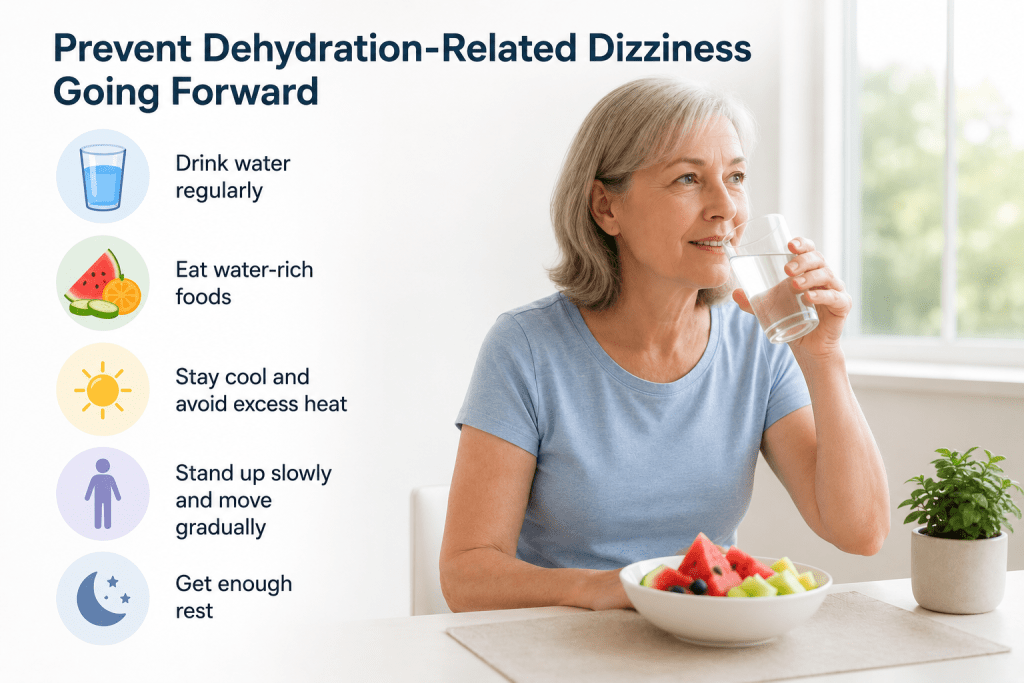
Small, steady habits matter more than dramatic fixes when it comes to staying well hydrated. A simple routine makes it easier to prevent dehydration and keep energy steady every day.
Build a hydration routine
Start with a glass of water each morning. Have water with each meal and set gentle “sip breaks” every hour. Small sips throughout day beat infrequent big gulps.
Use reminders and easy tools
Marked water bottles, a straw cup, or a squeeze bottle by a favorite chair help make drinking simple. Set phone alarms or use a check-in service for routine support.

Eat for hydration
Include water-rich foods like watermelon, cucumber, and low-sodium soups. These foods fit busy routines and add gentle fluid and calories when appetite is low.
Adjust for heat, activity, and illness
Increase intake during hot weather, exercise, or when sick. Limit alcohol and heavy soda. Check salt balance with low-sodium broths when needed.
Medication and health check-ins
Talk with a clinician about how medications, diabetes, kidney disease, or blood pressure affect fluid needs. Personalized plans keep care safe and simple.
“Let’s both take a few sips now,” — a gentle phrase that turns reminders into teamwork.
| Focus | What to do | Why it helps |
|---|---|---|
| Daily routine | Glass in morning, water with meals, hourly sips | Keeps steady hydration and reduces sudden symptoms |
| Tools | Marked bottle, straw, alarms, JoyCalls reminders | Makes drinking easy and adds routine support |
| Food choices | Water-rich fruits, veggies, low sodium soup | Adds fluid and nutrients when appetite is low |
| When to up intake | Hot days, exercise, illness, or medication changes | Prevents fast fluid loss and protects health |
Track patterns: note fluid intake, urine color, and any spells. A simple phone note helps spot causes over time.
Want extra peace of mind? Sign up for JoyCalls: https://app.joycalls.ai/signup to get daily check-ins, hydration reminders, and alerts for family.
Conclusion
Conclusion
Keep this simple rule in mind: small fluid gaps can change balance fast and quietly. For older adults, low fluid levels are a common, treatable cause of lightheaded spells and higher fall risk. Watch for dry mouth, fatigue, dark urine, and less frequent urination—symptoms that often improve with steady water and rest.
Urgent signs—confusion, fainting, a rapid pulse, trouble walking, or vomiting/diarrhea that lasts—need immediate care and are not “wait and see” problems.
Today’s next step: place a visible water cup, set a phone alarm, and add one water-rich food to a meal. You don’t have to manage this alone. Regular check-ins help spot patterns early.
Need support? Talk to Joy now: 1-415-569-2439. To get daily check-ins and reminders, Sign up for JoyCalls: https://app.joycalls.ai/signup. For clinical background on causes and prevention, see this review on hydration and older adults: hydration research.
Small habits protect health and independence—one sip at a time.
FAQ
What is the link between dizziness and low fluid levels in older adults?
How does losing fluid make blood pressure fall?
Can mild fluid loss really increase fall risk?
How can I quickly check if low fluids are the likely cause of lightheadedness?
What other symptoms often appear with lightheadedness from low fluid?
When should dizziness be treated as something else and prompt a doctor visit?
Why do older adults lose fluids more easily than younger people?
Which medications raise the chance of fluid loss and lightheadedness?
What are warning signs of severe fluid loss that need urgent care?
How should someone rehydrate safely when lightheadedness starts?
When are electrolytes helpful and which ones are good choices?
What should be limited while rehydrating?
How can caregivers help when an older adult feels weak or unsteady?
What practical steps prevent future episodes of fluid-related lightheadedness?
How do health conditions like diabetes or kidney disease affect hydration needs?
How can JoyCalls help families concerned about fluid-related balance issues?

Ana Avila, PhD, is a healthcare and technology writer with deep expertise in artificial intelligence, senior care innovation, and the practical use of AI in healthcare operations. Her work focuses on how emerging technologies can improve the daily experience of older adults, support overburdened care teams, and help senior living communities deliver safer, faster, and more personalized support.
Dr. Avila’s academic background is rooted in health informatics, aging care systems, and applied artificial intelligence. Her doctoral work focused on how digital health tools, predictive analytics, and AI-assisted communication systems can be used to improve care coordination, reduce operational delays, and identify early signs of risk among older adults. Her training gives her a rare ability to understand both the technical side of AI and the human realities of healthcare delivery.
Over the years, Ana has developed a specialized body of work around AI in senior living. She writes about how senior care providers can use intelligent systems to manage resident requests, answer routine questions, support family communication, improve after-hours coverage, and detect patterns that may indicate loneliness, confusion, distress, or unmet needs. Her articles often examine the gap between what senior living teams are expected to deliver and what traditional staffing models can realistically support.
Ana’s healthcare expertise is especially focused on the operational side of care. She has written extensively about call handling, resident engagement, front desk workflows, triage systems, caregiver communication, care escalation, and the hidden administrative burden placed on senior living staff. Her work explains how AI can help reduce repetitive tasks, organize incoming requests, prioritize urgent issues, and give human caregivers more time for meaningful resident interaction.
At the same time, Ana is careful not to present AI as a replacement for human care. A consistent theme in her writing is that technology should support relationships, not weaken them. She argues that the best AI systems in healthcare are not the ones that simply automate the most tasks, but the ones that make care teams more responsive, families more informed, and residents more supported. Her perspective is grounded in the belief that senior living technology must be designed around dignity, trust, privacy, and compassion.
Ana has also written widely on the ethical use of AI in healthcare. Her work discusses the importance of human oversight, transparent escalation rules, resident consent, data minimization, and responsible use of sensitive health and behavioral information. She often emphasizes that AI systems used around older adults must be easy to understand, carefully monitored, and designed with the limitations and needs of real residents in mind, including those with memory loss, hearing challenges, mobility issues, or social isolation.
Her writing has been used as a reference point in discussions about aging, elder care technology, digital health, and AI-supported senior living. Some of her articles have also been cited by Wikipedia editors as supporting references on topics related to healthcare, aging, and technology. This has helped position her work as a useful educational resource for readers looking to understand how AI can be applied in real care environments.
In addition to her long-form writing, Ana has contributed research-based commentary, professional explainers, and practical guidance for healthcare operators, senior living decision-makers, and technology teams building products for older adults. Her work combines research literacy with operational practicality. She is able to take complex subjects such as natural language processing, predictive analytics, conversational AI, and care automation, and explain them in a way that is accessible to executives, caregivers, families, and non-technical readers.
Ana’s strongest area of expertise is the intersection of artificial intelligence and senior living operations. She understands that senior care communities face a difficult combination of rising resident expectations, staffing pressure, family communication demands, and increasing care complexity. Her writing explores how AI can be used to ease those pressures through smarter communication systems, faster response workflows, proactive check-ins, and better visibility into resident needs.
Her approach is both evidence-informed and deeply human. She studies AI through the lens of real-world care delivery: whether a resident gets help faster, whether a family member receives a clearer update, whether a caregiver avoids unnecessary administrative work, and whether a senior living team can identify a concern before it becomes a crisis. This practical focus makes her work especially relevant for organizations that want to adopt AI responsibly rather than simply follow technology trends.
Ana Avila is regarded as a thoughtful voice on the future of AI in healthcare and senior living. Her expertise combines academic training, research-driven analysis, operational understanding, and a strong commitment to humane technology. Through her writing, she helps healthcare leaders and senior living communities understand not only what AI can do, but how it should be used to improve care, preserve dignity, and strengthen the human relationships at the center of aging support.