


Did you know that nearly one in four older adults report persistent dryness that changes how they eat and sleep? This surprising scale makes a small symptom feel like a big life shift.
Picture this: your mom says food “doesn’t taste right,” your dad keeps a water glass nearby, or you hear a complaint about a sticky mouth. Those moments often point to dry mouth elderly concerns in real life.
This short guide will explain what causes the problem, easy hydration fixes you can try today, and clear red flags that mean it’s time for dental or medical care. It also covers simple daytime and nighttime steps, over-the-counter moisture options, and when prescriptions may help.
Reassurance: this issue is common and treatable. Small changes can protect teeth, help eating, and improve overall quality life. Want support now? Talk to Joy now: 1-415-569-2439. Sign up for JoyCalls: https://app.joycalls.ai/signup.
Key Takeaways
- Persistent oral dryness can cut appetite and raise cavity risk.
- Everyday hydration and OTC products often help right away.
- Watch for severe symptoms or sudden change—seek professional care.
- JoyCalls offers check-ins that spot patterns and ease caregiver worry.
- Simple daytime and nighttime checklists can protect dental health.
What xerostomia means for older adults today
When saliva production drops, small tasks like chewing or talking can suddenly feel hard. This condition—called xerostomia—means not enough saliva, not just a temporary feeling of thirst. It can be brief (after anxiety or a long day) or it can stick around.
How saliva shields teeth, gums, taste, and swallowing
The body has three pairs of major salivary glands: parotid, sublingual, and submandibular. They send saliva into the mouth through tiny ducts. Saliva washes away food and sugar, buffers acids, and makes bacteria less harmful.
Without enough saliva, food particles linger. That raises the risk of cavities and sore gums. Tasting, chewing, and swallowing become harder. Digestion can suffer, too.
Why reduced moisture can cut quality of life
If your parent skips crunchy foods or avoids social meals, saliva is often part of the cause. More throat clearing, frequent coughing while eating, or less appetite are warning signs.
Small changes—like steady sips during meals or a simple check-in routine—can help preserve nutrition and joy at the table. For step-by-step hydration tips, see the daily check-in routine.
Try JoyCalls Free
No app or new device needed. Start with a free 7-day trial.

Dry mouth symptoms and mouth symptoms you shouldn’t ignore
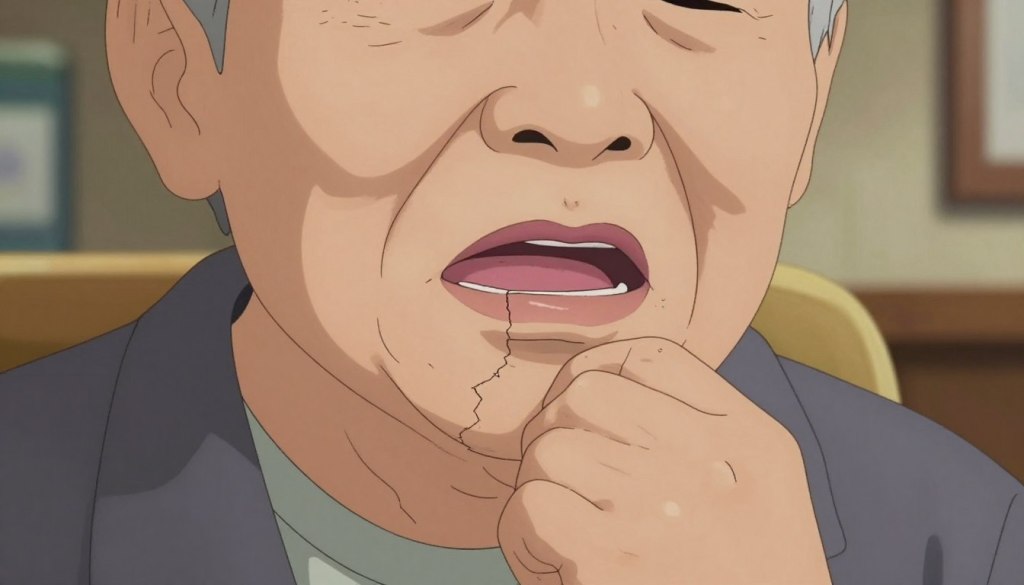
Noticing changes in chewing, speaking, or lingering bad breath? Those are common signals to watch.
What you might notice:
- Sticky feeling or a persistently parched tongue.
- Thick or stringy saliva that feels hard to swallow.
- Stubborn bad breath that won’t go away with brushing.
- Changed taste, and trouble chewing, speaking, or swallowing.
Practical impacts: Seniors often take more sips during meals. Conversations may have extra pauses. Waking at night to sip water becomes common.
Denture problems: Lack of moisture makes dentures rub or loosen. That can cause pain or avoidance of dentures and meals.
Throat signs to spot: A sore or scratchy throat, new hoarseness, or a grooved tongue are easy to miss but important.
Caregiver mini-check: “Have you noticed more coughing with meals?” “Do they skip dry foods like crackers?” If these symptoms are frequent, document times and triggers. Bring notes to a dentist or doctor — patterns help find the cause and a better plan.
| Sign | What it feels like | When to act | What to tell the clinician |
|---|---|---|---|
| Sticky feeling | Coating on tongue, sticky saliva | Daily or worsening | Frequency, meal times, meds |
| Thick saliva / bad breath | Stringy spit, persistent odor | After oral care or all day | Oral care routine, denture use |
| Speech / eating trouble | Pauses, choking, extra sips | When it affects eating or safety | Examples of meals and coughing events |
| Throat changes | Sore throat, hoarse voice, grooved tongue | New or persistent signs | Onset, related illnesses, recent treatments |
Complications of low saliva production in seniors
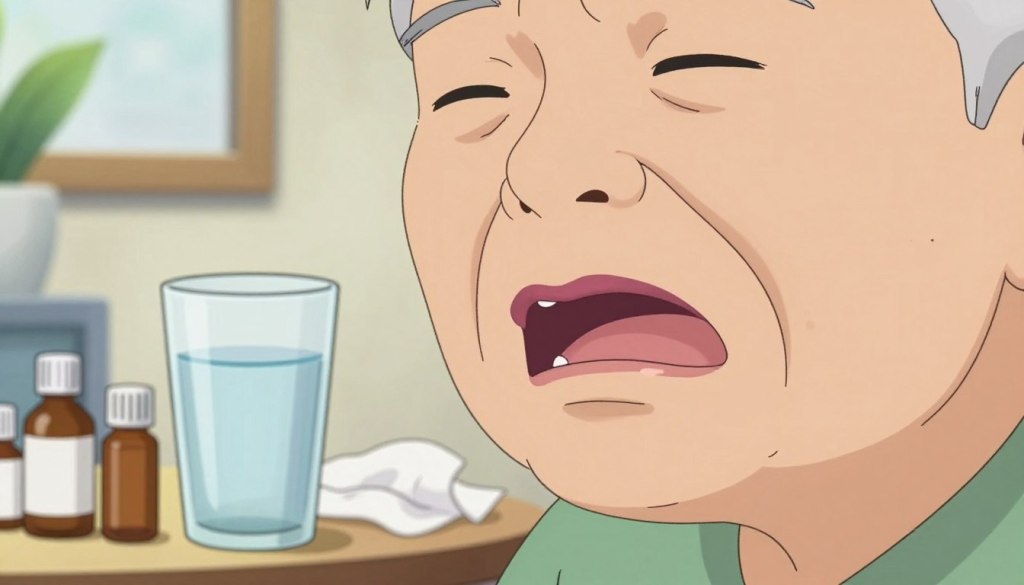
Less saliva isn’t just uncomfortable — it sets off a chain reaction that affects the mouth and overall health. When the natural rinse and buffering drops, plaque and decay move in faster. Families often spot changes between dental visits.
Tooth decay, plaque buildup, and gum disease risk
Reduced saliva production limits the mouth’s ability to wash away food and acid. That lets plaque harden and cavities form faster.
Try JoyCalls Free
No app or new device needed. Start with a free 7-day trial.
What families see: more cavities, tender gums, or bleeding during brushing. These signs can appear even with the same home care routine.
Mouth sores, cracked lips, and thrush
Soft tissues suffer next. Mouth sores and split skin at the corners can appear.
Yeast overgrowth (thrush) may cause burning or white patches. Salivary changes make the area easier for yeast to grow.
Poor nutrition from chewing and swallowing trouble
Chewing and swallowing can get harder. Patients may favor soft, lower-nutrition foods or skip meals altogether.
Compassionate note: these are not small issues when they pile up. Comfort, confidence, and quality life all decline without care.
- Track new cavities, sores, weight loss, or meal avoidance.
- Share notes with your dentist or doctor to speed up help for patients.
Causes of dry mouth elderly: the most common triggers in the United States
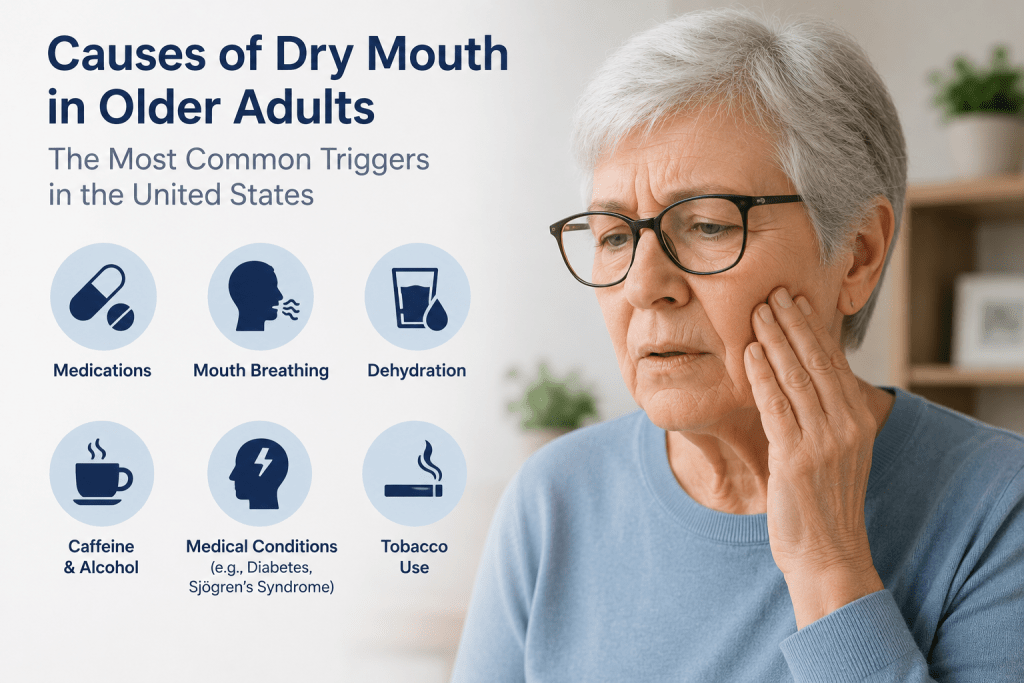
Often the biggest trigger in U.S. families is a change in prescription meds. Do not stop medications on your own. Bring a full list to the clinician to explore safer adjustments.
Medications and side effect risks
Common medication categories tied to causes dry mouth include antidepressants, blood pressure meds, antihistamines, and pain relievers. Multiple drugs raise the risk.
How the side effect looks: symptoms can worsen after dose changes, at night, or when several prescriptions interact.
Aging and long-term health conditions
Chronic illnesses—diabetes, stroke history, Alzheimer’s, Sjögren’s, and HIV/AIDS—also reduce saliva. Families should track changes and share patterns with care teams.
Cancer treatment and salivary gland damage
Chemotherapy changes can alter saliva temporarily. But head and neck radiation therapy may harm the glands for the long term.
Lifestyle triggers you can change
Mouth breathing, snoring, anxiety spikes, tobacco use, and alcohol effect on dryness are real contributors. Street drugs like methamphetamine and marijuana can speed dental decline.

| Trigger | Typical clues | What to tell the clinician |
|---|---|---|
| Medications | New Rx, dose change, many drugs | Full med list, timing of symptoms |
| Chronic conditions | Gradual onset, linked to disease | Medical history, recent tests |
| Cancer therapy | Starts during chemo; lasting after radiation | Type of treatment, radiation fields |
| Lifestyle | Nighttime breathing, tobacco, alcohol | Sleep habits, substance use |
For more on how this issue affects older adults, see studies on prevalence in older adults.
Hydration fixes that help address dry mouth during the day and night
Small, steady steps work best. Start with a habit you can keep. A simple water plan helps reduce discomfort at meals and during sleep.
Build a simple water plan
- Steady sips, not chugs: take small sips every 10–20 minutes during the day.
- Place water where they sit most: living room chair, kitchen table, and bedside table.
- Tiny check-in routine: caregiver asks once at lunch and once at dinner—”Have you had some water?”
Try a daily fluid diary to track what was drunk, when symptoms rose, and which meds or meals were nearby. This low-cost tool helps clinicians see patterns. For tips on medication timing, see our note on medication reminders.

Food, sweets, and night strategies
- Add broths, sauces, or gravies to make swallowing easier.
- Avoid sticky, sugary, or acidic candies that cling and raise decay risk; choose sugar-free lozenges or ice chips if safe.
- At night: address mouth breathing with gentle positioning, keep water by the bed, and try a bedroom humidifier.
| Goal | Simple step | When to use |
|---|---|---|
| Stay hydrated | Sip water every 15–20 minutes | All day |
| Track triggers | Fill fluid diary after meals | For 1–2 weeks |
| Protect teeth | Skip sugary snacks; use sugar-free options | Between meals |
| Night comfort | Bedside water + humidifier | Every night |
Reassurance: these small steps often ease symptoms quickly. If changes don’t help, ask a clinician about further treatment options or read trusted guidance at the Mayo Clinic dry mouth FAQ to plan next steps.
A Practical Daily Dry Mouth Care Routine for Seniors
Dry mouth is easier to manage when it is treated as a daily comfort and safety routine, not as a one-time problem. For many older adults, the goal is not just “drink more water.” The real goal is to keep the mouth moist enough to eat comfortably, speak clearly, sleep better, protect teeth, and avoid small problems turning into painful ones.
A good routine should be simple, repeatable, and realistic. Seniors should not feel like they are following a medical checklist all day. Caregivers should not feel like they need to monitor every sip or every symptom. The best plan is built around natural moments that already happen: waking up, taking medicine, eating meals, brushing teeth, resting, and going to bed.
Start the Morning by Checking the Mouth, Not Just Drinking Water
Many seniors wake up with the worst dryness of the day. This often happens because saliva naturally slows during sleep, and mouth breathing, snoring, certain medications, or a dry bedroom can make it worse.
A useful morning routine begins with a quick self-check:
- Does the tongue feel sticky or coated?
- Are the lips cracked at the corners?
- Is there a sour taste, burning, or bad breath?
- Is swallowing the first sip of water uncomfortable?
- Are dentures rubbing more than usual?
This check does not need to be dramatic. It can take less than a minute. The point is to notice patterns early. If dryness is mild in the morning but improves after breakfast, home care may be enough. If the mouth feels painful every morning, or if eating becomes difficult, it is time to bring those details to a dentist or doctor.
After the check, rinse the mouth gently with plain water or an alcohol-free mouth rinse if one has been recommended. Avoid strong, sharp, or “burning” rinses. A mouthwash that stings may feel like it is cleaning deeply, but it can make dryness feel worse for some seniors.
Then take small sips of water before breakfast. The goal is to moisten the mouth before chewing, not to fill the stomach with water. Drinking too much water too quickly may reduce appetite, which is not ideal for older adults who already struggle to eat enough.
Make Breakfast Softer, Wetter, and Easier to Swallow
Breakfast is often where dry mouth quietly affects nutrition. Toast, crackers, dry cereal, biscuits, and plain bread can be hard to chew when saliva is low. Seniors may start avoiding these foods without explaining why. Over time, this can reduce appetite and food variety.
A better approach is to keep the meal familiar but add moisture.
For example:
- Add milk or warm water to oatmeal.
- Use yogurt with soft fruit.
- Add nut butter carefully with banana or another moist food rather than dry toast alone.
- Choose eggs with soft vegetables instead of dry bread-heavy meals.
- Use soups, stews, or soft breakfast options if traditional breakfast foods feel difficult.
The key is not to force a senior to eat “healthy” foods that feel uncomfortable. The better question is: “How can we make the food easier to chew and swallow while keeping it nutritious?”
If the person wears dentures, breakfast is also a good time to notice fit. Dry tissues can make dentures feel loose, tight, or painful. If dentures suddenly start rubbing, clicking, or causing sore spots, do not simply use more adhesive without asking why the change happened. A dental check may be needed.
Time Fluids Around Medication, Meals, and Talking
Many older adults are told to drink more water, but vague advice rarely works. A more practical plan is to connect fluids with specific moments.
Use small sips:
- After waking
- With morning medication, if allowed
- Before meals
- During meals
- After brushing
- Before longer conversations
- Before going outside
- Before rest or bedtime
This is especially helpful for seniors who forget to drink, dislike plain water, or do not feel thirsty. Thirst signals can become less reliable with age, so waiting until someone feels thirsty may not be enough.
However, fluid advice should be adjusted for the person’s medical condition. Some seniors have heart failure, kidney disease, or other conditions where fluid intake must be monitored. In those cases, the doctor’s fluid guidance should come first. Dry mouth can still be managed, but the plan may rely more on mouth-moistening products, ice chips if safe, oral rinsing, humidification, and medication review instead of simply increasing daily fluids.
Protect the Mouth Before It Gets Painful
Dry mouth raises the risk of tooth decay, gum irritation, mouth sores, and infection. That means prevention matters even when symptoms seem mild.
A senior-friendly oral care routine should include:
- Gentle brushing twice daily
- Fluoride toothpaste unless told otherwise
- Cleaning between teeth if possible
- Denture cleaning every day
- Removing dentures at night unless the dentist advises differently
- Regular dental visits
- Reporting sores, bleeding, burning, or new pain early
The toothbrush should be soft. Brushing harder does not solve dry mouth. In fact, aggressive brushing can irritate already dry tissues. If toothpaste burns, foams too much, or leaves the mouth feeling raw, ask the dentist about gentler options.
For seniors with arthritis, tremors, weakness, or memory changes, oral care may need to be adapted. A larger toothbrush handle, electric toothbrush, seated brushing, caregiver setup, or step-by-step reminders can make the routine easier.
The important point is dignity. If a caregiver needs to help, the conversation should be respectful: “Let’s make your mouth more comfortable,” not “You are not brushing properly.”
Use a Mealtime Safety Check for Swallowing
Dry mouth can make swallowing harder because food does not glide as easily. This matters because some seniors begin coughing during meals, clearing their throat often, or avoiding certain textures.
During meals, watch for:
- Coughing after bites or sips
- A wet or gurgly voice
- Food pocketing in the cheeks
- Taking much longer to finish meals
- Avoiding meat, bread, crackers, rice, or dry foods
- Repeated throat clearing
- Fear of eating alone
These signs do not always mean there is a serious swallowing disorder, but they should not be ignored. If coughing, choking, or food sticking becomes common, a medical evaluation is important.
At home, small changes can help:
- Take smaller bites.
- Alternate bites with small sips.
- Add sauces, broth, yogurt, or gravy.
- Avoid rushing meals.
- Sit upright while eating.
- Stay upright for a while after meals.
- Keep conversation gentle during chewing if talking makes swallowing harder.
Caregivers should avoid scolding a senior for eating slowly. Slow eating may be the person’s way of staying safe.
Make Snacks Dry-Mouth Friendly
Snacking can either help or harm dry mouth. Many common snacks are dry, salty, sticky, or sugary. Crackers, chips, cookies, candy, and sweet biscuits may worsen discomfort or increase cavity risk.
Better snack choices are soft, moist, and low in added sugar where possible.
Options may include:
- Soft fruit
- Yogurt
- Cottage cheese if tolerated
- Smooth nut butter with moist fruit
- Soft cooked vegetables
- Soup in a mug
- Sugar-free lozenges if safe
- Moist, protein-rich snacks recommended by a clinician or dietitian
Seniors with diabetes, swallowing problems, kidney disease, or dietary restrictions should follow their care plan. The goal is not one perfect snack list. The goal is to reduce foods that stick, scratch, or dry the mouth while supporting nutrition.
Build a Medication Conversation, Not a Medication Battle
Many cases of dry mouth in seniors are linked to medications, but the solution is not to stop medicines suddenly. That can be dangerous.
Instead, create a medication conversation with the doctor or pharmacist. Bring a complete list that includes:
- Prescription medicines
- Over-the-counter medicines
- Allergy pills
- Sleep aids
- Pain relievers
- Bladder control medicines
- Supplements
- Inhalers
- Any recent dose changes
Also note when dryness is worst. For example, does it happen after the morning pills, after the evening dose, or during the night? Timing helps clinicians decide whether a medicine could be contributing.
Helpful questions to ask include:
- Could any of these medicines be worsening dry mouth?
- Is there an alternative with fewer dry mouth effects?
- Can the timing be adjusted safely?
- Are any over-the-counter medicines making this worse?
- Should we involve the dentist because of cavity risk?
This keeps the senior safe while still taking the symptom seriously.
Create a Night Routine That Reduces Morning Dryness
Nighttime dryness can affect sleep and morning comfort. A simple evening routine can help.
Before bed:
- Brush gently.
- Clean dentures properly.
- Use dentist-recommended fluoride or moisture products if prescribed.
- Keep water within reach.
- Avoid alcohol close to bedtime.
- Avoid smoking or tobacco use.
- Use a humidifier if the room is dry.
- Check whether nasal congestion is causing mouth breathing.
If the senior snores heavily, wakes gasping, or has daytime sleepiness, mention this to a healthcare professional. Mouth breathing may be part of a larger sleep or breathing issue.
Do not rely only on bedside water. Water helps temporarily, but if someone wakes many times every night because of severe dryness, the cause needs attention.
Keep a Two-Week Dry Mouth Log
A short log can be more useful than a long explanation at the clinic. Seniors and caregivers can track symptoms for two weeks before a dental or medical visit.
The log can include:
- Time dryness is worst
- Foods that are hard to eat
- Coughing or choking during meals
- Bad breath or taste changes
- Mouth sores or cracked lips
- Denture discomfort
- New medications or dose changes
- Water intake pattern
- Sleep issues or mouth breathing
- Products tried and whether they helped
This does not need to be perfect. Even a few notes can reveal patterns. For example, dryness may spike after a new allergy medicine, after evening pills, or during nights when the bedroom air is dry.
Know When Home Care Is Not Enough
A daily routine is helpful, but it should not delay care when symptoms are serious.
Book a dental or medical appointment if:
- Dryness lasts for weeks
- Eating becomes difficult
- There is frequent coughing during meals
- Dentures become painful
- Mouth sores do not heal
- There are white patches, burning, or possible thrush
- Cavities increase
- Weight loss begins
- The senior avoids meals
- Dryness appears suddenly after a medication change
- There is swelling near the jaw or salivary glands
Seek prompt help if swallowing feels unsafe, dehydration is suspected, or the person cannot eat or drink enough.
Make the Routine Supportive, Not Overwhelming
The most successful dry mouth routine is the one a senior can actually live with. Start with two or three changes, not ten. For example:
Week one may focus on morning mouth checks, softer breakfasts, and water near the favorite chair.
Week two may add a bedtime humidifier, a medication review, and a dental appointment.
Week three may focus on snack swaps and tracking symptoms.
Small steps are not weak. They are often the most reliable way to protect comfort, nutrition, and oral health over time.
Dry mouth can make seniors feel frustrated, embarrassed, or less interested in meals and conversation. A caring routine helps them feel more in control. With the right daily habits, timely dental care, and careful medication review, dry mouth becomes much easier to manage—and many seniors can return to eating, speaking, and sleeping with greater comfort.
How Caregivers Can Help Seniors Manage Dry Mouth Without Taking Away Independence

Dry mouth is not always easy for seniors to explain. Some may say, “My mouth feels sticky.” Others may complain that food has no taste, dentures feel uncomfortable, pills are hard to swallow, or they keep waking up at night for water. A few may not mention it at all because they assume it is just part of aging.
This is where caregivers, adult children, companions, and family members can make a meaningful difference. The goal is not to take over. The goal is to notice small changes, make daily comfort easier, and help the senior get the right care before dry mouth affects nutrition, oral health, sleep, or confidence.
Watch for Behavior Changes, Not Just Complaints
Many seniors will not directly say they have dry mouth. Instead, the signs may show up in their habits.
A caregiver may notice that the person is:
- Leaving dry foods unfinished
- Drinking more water during meals
- Avoiding long conversations
- Sucking on candy often
- Complaining that food tastes bland
- Taking longer to swallow pills
- Removing dentures more often
- Waking up frequently at night
- Having worse breath than usual
- Avoiding social meals
These small changes matter. Dry mouth can quietly reduce quality of life. A senior who once enjoyed meals may start eating less. Someone who loved talking may become quieter because speaking feels uncomfortable. Someone with dentures may avoid outings because their mouth feels sore.
Instead of asking, “Why aren’t you eating?” try asking, “Is this food feeling too dry today?” That one change in wording can make the conversation feel supportive rather than critical.
Make Hydration Easier to Remember
Older adults may not feel thirsty even when they need fluids. Others may avoid drinking because they worry about frequent urination, nighttime bathroom trips, or incontinence. So simply saying “drink more water” is rarely enough.
Caregivers can make hydration easier by placing water where the senior already spends time:
- Near the bed
- Beside the favorite chair
- At the dining table
- Near medication organizers
- In a small bottle during walks or appointments
Use smaller cups if large glasses feel overwhelming. Some seniors drink more when water is served in manageable amounts. Others prefer room-temperature water, warm water, or water flavored lightly with cucumber, mint, or a small amount of fruit if allowed in their diet.
The aim is steady sipping, not forcing large amounts at once. For seniors with fluid restrictions, heart disease, kidney disease, or certain medical conditions, caregivers should follow the doctor’s fluid limit and ask about safe mouth-moistening alternatives.
Help With Food Texture Without Making Meals Feel “Medical”
Dry mouth can make dry, crumbly, or sticky foods difficult. Caregivers can help by adjusting texture while keeping meals enjoyable.
Useful changes include:
- Adding broth to rice or grains
- Serving sauces on the side
- Moistening meats with gravy or stew-style preparation
- Choosing soft fruits instead of dry snacks
- Offering soups with protein
- Avoiding overly salty foods
- Cutting food into smaller pieces
- Serving foods warm rather than very hot
Be careful with foods that may seem soft but become sticky, such as peanut butter, dry bread, or thick crackers. These can be hard to swallow without enough saliva. If used, they should be paired with moist foods.
The senior should remain part of the decision. Ask, “Would this be easier with a little sauce?” rather than changing the whole meal without discussion. Small choices preserve dignity.
Support Oral Care in a Respectful Way
Dry mouth increases the risk of cavities and gum problems. For seniors, especially those with arthritis, memory changes, vision problems, or reduced hand strength, oral care may become harder.
Caregivers can help by setting up the environment:
- Keep toothbrush, toothpaste, rinse, and denture supplies easy to reach.
- Use a soft-bristled toothbrush.
- Consider an electric toothbrush if the senior can use it safely.
- Provide a cup, towel, and mirror in a comfortable location.
- Make sure dentures are cleaned daily.
- Encourage regular dental visits.
If direct help is needed, explain each step before doing it. Oral care is personal. A senior may feel embarrassed or defensive if help is offered too abruptly.
A gentle phrase works better: “Your mouth may feel better if we make brushing easier. Would you like me to set things up for you?”
Keep Dentures From Becoming a Hidden Source of Pain
Dry mouth and dentures can be a difficult combination. Saliva helps dentures sit more comfortably. When the mouth is dry, dentures may rub, slip, or create sore spots.
Caregivers should watch for:
- The senior removing dentures during the day
- Avoiding chewy foods
- Complaining of gum soreness
- Clicking or loose dentures
- Red patches or sores
- Bad odor from dentures
- Refusing to wear dentures at meals
Dentures should not cause ongoing pain. If they do, a dentist should check the fit. Caregivers should also make sure dentures are cleaned properly and not worn continuously unless a dentist has advised it.
Do not assume more denture adhesive is the answer. Adhesive may help in some cases, but persistent discomfort means the mouth or denture fit needs attention.
Notice When Dry Mouth Affects Medication Safety
Dry mouth can make pills hard to swallow. This can lead to skipped doses, pills getting stuck, coughing, or taking medication with too little fluid.
Caregivers should observe whether the senior:
- Takes a long time to swallow pills
- Coughs after medication
- Crushes pills without asking a doctor
- Avoids certain tablets
- Complains that pills stick in the throat
- Takes medicine with unsafe drinks or foods
Never crush, split, or mix medications unless a pharmacist or doctor confirms it is safe. Some pills are designed to release slowly, and changing them can be harmful.
A pharmacist can often suggest safer options, such as a liquid version, smaller tablet, different timing, or swallowing technique. This is especially important if dry mouth began after a new medication.
Reduce Nighttime Dry Mouth Triggers
Nighttime dry mouth can disturb sleep and make mornings uncomfortable. Caregivers can help by checking the sleep environment and evening habits.
Helpful steps include:
- Keeping water within reach
- Using a humidifier if the air is dry
- Encouraging gentle brushing before bed
- Avoiding alcohol-based rinses
- Checking whether nasal congestion causes mouth breathing
- Mentioning loud snoring or gasping to a doctor
- Keeping lips moisturized with a safe lip balm
If the senior wakes repeatedly because of dry mouth, do not dismiss it as normal. Poor sleep can worsen mood, memory, appetite, and daytime energy.
Encourage Professional Help at the Right Time
Caregivers should help seniors seek care when dry mouth is persistent or worsening. A dentist can check for cavities, gum problems, sores, denture irritation, and signs of infection. A doctor or pharmacist can review medications and medical causes.
Professional help is especially important if there is:
- Trouble swallowing
- Weight loss
- Mouth sores
- White patches
- Burning pain
- Bleeding gums
- New or worsening denture pain
- Repeated choking or coughing during meals
- Signs of dehydration
- Sudden dry mouth after a medication change
The caregiver can make the appointment more useful by bringing notes. A simple list of symptoms, timing, medication changes, eating difficulties, and products already tried can help the clinician make better recommendations.
Use Conversation and Check-Ins to Prevent Isolation
Dry mouth can affect more than the mouth. It can make seniors speak less, avoid visitors, feel embarrassed about bad breath, or lose interest in eating with others.
Regular check-ins can help:
- “Is your mouth feeling comfortable today?”
- “Are any foods harder to eat lately?”
- “Do your dentures feel okay?”
- “Are you waking up thirsty at night?”
- “Would softer meals help this week?”
These questions show care without making the senior feel watched. They also make it easier to catch problems early.
For seniors living alone, scheduled phone calls can be especially helpful. A friendly reminder to sip water, eat a moist meal, mention symptoms, or book a dental visit can support independence while reducing risk.
Build a Care Plan That Feels Personal
The best dry mouth support plan is not complicated. It should fit the senior’s daily rhythm.
A simple caregiver-supported plan may include:
- Morning mouth comfort check
- Water near common sitting areas
- Moist foods at meals
- Medication review with a pharmacist
- Gentle oral care twice daily
- Denture comfort monitoring
- Bedroom humidifier if needed
- Two-week symptom log before appointments
- Dental visit if symptoms persist
Most importantly, the plan should feel collaborative. Seniors should be asked what bothers them most: eating, sleeping, speaking, dentures, bad taste, or constant thirst. Start there.
Dry mouth management is not just about preventing cavities. It is about helping older adults eat with comfort, speak with confidence, sleep better, and feel cared for without feeling controlled. With patient observation, respectful support, and timely professional guidance, caregivers can make everyday life noticeably easier for seniors dealing with dry mouth.
Eating, Drinking, and Medication Habits That Can Make Dry Mouth Worse in Seniors
Dry mouth in seniors is often discussed as a symptom to treat, but it is just as important to look at the small daily habits that may be making it worse. Many older adults are already doing their best. They may sip water, keep lozenges nearby, use mouth rinse, or avoid foods that feel uncomfortable. Still, dryness may continue because certain foods, drinks, medication routines, and lifestyle patterns quietly work against saliva production or mouth comfort.
This section is meant to help seniors and caregivers identify those everyday triggers. The goal is not to create fear around food or medicine. The goal is to make dry mouth easier to control by removing avoidable irritants, adjusting routines, and knowing when to ask a doctor, dentist, or pharmacist for help.
Why Daily Habits Matter When Saliva Is Low
Saliva does much more than keep the mouth wet. It helps soften food, supports swallowing, protects teeth, balances acids, reduces bad breath, and keeps the soft tissues of the mouth more comfortable. When saliva is reduced, the mouth becomes more sensitive to things that may not have caused problems earlier in life.
A food that was once easy to eat may now feel scratchy. A mouthwash that once felt refreshing may now burn. A medication that was manageable before may suddenly make the mouth feel sticky for hours. A cup of coffee may feel harmless, but if it replaces water and is paired with a dry breakfast, the mouth may feel worse all morning.
This is why dry mouth care should include a “trigger review.” Seniors do not need to give up everything they enjoy. They simply need to notice which habits are drying, irritating, or making eating and speaking harder.
Drinks That Can Worsen Dry Mouth
Water is the safest basic drink for dry mouth, but many seniors rely on other beverages throughout the day. Some of these drinks may worsen dryness or irritate the mouth.
Coffee and strong tea can be a problem for some people, especially when taken in large amounts or without enough water. Caffeine may contribute to a dry feeling, and hot drinks can sometimes irritate already sensitive tissues. This does not mean every senior must stop drinking tea or coffee completely. A more realistic approach is to reduce the amount, avoid very strong cups, and follow each cup with a few sips of water.
Alcohol is another common trigger. It can dry the mouth and may also worsen nighttime dryness. Alcohol-based mouth rinses can have a similar irritating effect for some seniors. If the mouth feels raw, burning, or sticky after using a rinse, check the label and ask a dentist about an alcohol-free option.
Sugary drinks also deserve caution. Juice, sweet tea, soda, sports drinks, and sweetened flavored waters can increase cavity risk, especially when saliva is already low. Saliva normally helps protect teeth, so when there is less saliva, sugar exposure becomes more damaging. If a senior enjoys juice, it is better to have it with a meal rather than sip it slowly all day.
Carbonated drinks can bother some people because of acidity and bubbles. If sparkling water or soda causes burning, sour taste, or tooth sensitivity, it may be worth reducing it.
A helpful rule is simple: if a drink leaves the mouth feeling drier, stickier, more acidic, or more irritated after 15 to 30 minutes, it should not be the main drink of the day.
Foods That Feel Dry, Sticky, Salty, or Sharp
Food texture matters as much as nutrition. Seniors with dry mouth often struggle with foods that absorb moisture, break into crumbs, stick to the roof of the mouth, or require a lot of chewing.
Common problem foods include:
- Dry toast
- Crackers
- Chips
- Biscuits
- Dry cereal
- Plain rice
- Dry meat
- Thick peanut butter
- Cookies
- Popcorn
- Hard crusty bread
- Very salty snacks
- Spicy foods that burn the mouth
Some seniors begin avoiding these foods naturally. Others continue eating them but drink large amounts of water to force the food down. That can make meals tiring and less enjoyable.
The solution is not always to remove the food. Often, the better solution is to change how it is served.
Dry toast can become softer with avocado, egg, hummus, or a moist spread. Rice can be served with curry, dal, broth, stew, or yogurt. Meat can be cooked slowly and served with gravy or sauce. Crackers can be replaced with soft bread, cooked vegetables, or moist protein snacks. Cereal can be softened with milk or replaced with oatmeal.
For seniors who have trouble swallowing, texture changes should be discussed with a healthcare professional, especially if coughing or choking occurs during meals.
The Problem With Constant Candy or Mints
Many seniors use candies or mints to cope with dry mouth. This is understandable. Sucking on something can stimulate saliva and reduce the sticky feeling for a short time.
The problem is sugar. If someone keeps regular candy, sweet mints, or cough drops in the mouth throughout the day, the teeth are exposed to sugar again and again. With low saliva, the mouth has less natural protection against acid and decay. This can lead to cavities, especially near the gumline or around dental work.
A safer option may be sugar-free lozenges or sugar-free gum, if the person can chew safely and does not have jaw problems or choking risk. Products containing xylitol may be helpful for some people, but they should be used carefully and kept away from pets, especially dogs, because xylitol is dangerous for them.
Seniors with dentures, swallowing problems, cognitive changes, or choking risk should be careful with lozenges and gum. In those cases, mouth sprays, gels, rinses, or other dentist-recommended products may be safer.
Medication Timing Can Change Dry Mouth Patterns
Medication is one of the most common reasons older adults experience dry mouth. Many medicine categories can contribute, including some used for allergies, blood pressure, depression, anxiety, pain, bladder control, sleep, nausea, and congestion. Dry mouth may become worse when several drying medicines are taken together. The NIDCR notes that dry mouth is not simply a normal part of aging, but older adults often take medications that can dry the mouth, and taking more than one can make the problem worse.
This is why timing matters. A senior may feel fine during the day but wake up with severe dryness if a drying medication is taken at night. Another person may have the worst symptoms after morning medicines. Someone else may notice dry mouth after starting an over-the-counter allergy pill or sleep aid.
A useful action step is to create a medication-symptom map.
For one week, write down:
- When each medication is taken
- When dry mouth feels worst
- Whether the mouth feels sticky, burning, or painful
- Whether eating or swallowing becomes harder
- Whether nighttime waking increases
- Any new medicines added recently
Bring this to a pharmacist, doctor, or dentist. Do not stop medication suddenly. Instead, ask whether any medicine could be adjusted, replaced, moved to a different time, or reviewed for cumulative drying effects. Mayo Clinic also emphasizes that dry mouth treatment depends on the cause, which is why medication review can be important.
Be Careful With Over-the-Counter “Helpers”
Some products that seem harmless can worsen dry mouth. This includes certain allergy medicines, decongestants, sleep aids, motion sickness pills, and cold medicines. Seniors may take these without mentioning them to the doctor because they do not think of them as “real medicine.”
That can be risky. Over-the-counter products can interact with prescription medicines, cause drowsiness, increase fall risk, or worsen dry mouth. Some may be especially concerning for older adults.
Caregivers should encourage seniors to keep all products in one medication list, including:
- Prescription drugs
- Vitamins
- Herbal products
- Pain relievers
- Allergy tablets
- Sleep aids
- Cold and cough medicines
- Nasal sprays
- Inhalers
- Mouth rinses
- Dry mouth products
A pharmacist can review the full list and flag products that may be drying or duplicative.
Smoking and Tobacco Can Keep the Mouth Irritated
Smoking, chewing tobacco, and other tobacco products can worsen mouth dryness, irritation, bad breath, gum problems, and oral cancer risk. For seniors already dealing with dry mouth, tobacco can make the mouth feel even more uncomfortable and can slow healing of irritated tissues.
Quitting may not be easy, especially if tobacco has been part of the person’s life for decades. The message should not be judgmental. A caring approach works better: “Your mouth may feel more comfortable if we reduce this trigger. Would you be open to asking the doctor about support?”
Even reducing exposure may help, but medical support gives the best chance of success. A doctor or dentist can recommend safer quitting options based on the senior’s health history and medications.
Mouth Breathing, Snoring, and Bedroom Air
Some seniors have dry mouth mainly at night or on waking. This may point to mouth breathing, nasal congestion, snoring, or dry bedroom air.
Practical steps include:
- Using a humidifier if the room air is dry
- Treating nasal congestion with medical guidance
- Keeping the head slightly elevated if comfortable
- Avoiding alcohol close to bedtime
- Keeping water nearby
- Asking about snoring, gasping, or pauses in breathing
If a senior snores loudly, wakes up choking or gasping, feels very sleepy during the day, or has morning headaches, it is worth discussing sleep apnea with a healthcare professional. In that case, dry mouth may be one sign of a larger sleep-related issue.
Acid Reflux and Dry Mouth Can Overlap
Some seniors with reflux experience sour taste, throat irritation, hoarseness, coughing, or burning sensations. These symptoms can overlap with dry mouth discomfort. Reflux may also make the mouth feel unpleasant in the morning.
Helpful habits include:
- Avoiding heavy meals close to bedtime
- Reducing late-night spicy or acidic foods if they trigger symptoms
- Staying upright after meals
- Discussing persistent reflux with a doctor
- Avoiding self-treatment for long periods without medical advice
This matters because a senior may assume all mouth discomfort is from dryness when reflux, medication, dentures, infection, or another condition is also involved.
Make a Personal “Dry Mouth Trigger List”
Every senior’s pattern is different. A simple personal trigger list can help more than general advice.
Create three columns:
Makes it worse: Examples may include strong tea, dry toast, nighttime allergy pills, mouthwash that burns, spicy snacks, sleeping with the mouth open, or long phone calls without water.
Makes it better: Examples may include warm water, soft breakfast, sugar-free lozenges, humidifier, soup, sauce with meals, or brushing with gentle toothpaste.
Needs professional advice: Examples may include new medicine, sores, swallowing trouble, denture pain, burning mouth, white patches, or frequent choking.
This list can be kept on the fridge, in a care notebook, or near the medication area. It makes dry mouth care practical and personal.
A 7-Day Reset Plan for Seniors With Persistent Dry Mouth
For seniors who feel overwhelmed, a short reset can help identify what matters most.
Day 1: Track symptoms.
Write down when the mouth feels driest and what was eaten, drunk, or taken before symptoms worsened.
Day 2: Review drinks.
Reduce drying or sugary drinks and add small, steady sips of water.
Day 3: Adjust breakfast.
Replace dry foods with softer, moist options.
Day 4: Check mouth care products.
Look for alcohol-based rinses or toothpaste that burns. Ask a dentist about gentler options if needed.
Day 5: Review medications.
Make a complete list of prescription and over-the-counter products.
Day 6: Improve nighttime comfort.
Try a humidifier if the room is dry, keep water nearby, and notice mouth breathing or snoring.
Day 7: Decide if care is needed.
If dryness continues, worsens, affects eating, causes pain, or comes with sores or swallowing trouble, book a dental or medical appointment.
The Main Takeaway
Dry mouth management is not only about adding treatments. It is also about removing the small triggers that keep the mouth dry, irritated, or unsafe. For seniors, the most useful changes are usually simple: moisten food, reduce drying drinks, avoid sugary candies, review medications, protect the mouth at night, and ask for professional help when symptoms persist.
Dry mouth should never be dismissed as “just age.” The ADA explains that dry mouth can affect oral health, and saliva plays an important protective role for teeth and soft tissues. With the right daily adjustments, seniors can reduce discomfort, protect their teeth and gums, and make eating, speaking, and sleeping feel easier again.
Over-the-counter treatment options: saliva substitutes, xylitol gum, and moisture products
If saliva is low, there are practical store-bought options that either coat tissues or stimulate flow. That difference—coating versus stimulation—helps you pick the best product for a parent or patient.

Formats and how they work
Saliva substitutes come as sprays, gels, rinses, patches, and lozenges. They coat oral tissues and often need reapplication about 3–4 times a day. Look for carboxymethylcellulose or mucin-based formulas.
Safer shopping tips
Avoid products with hidden sugar, strong acid, or alcohol. These ingredients can strip moisture and raise cavity risk. Choose neutral rinses and gentle gels when possible.
Gum, xylitol, and when stimulation helps
Sugar-free gum (xylitol or sorbitol) stimulates flow only if salivary glands still work. Gum can dislodge dentures or strain TMJ. For denture wearers or those with jaw arthritis, dissolving xylitol lozenges are often kinder.
Toothpaste and daily care
Non-foaming gel toothpastes feel gentler for irritated oral tissues. They ease brushing but do not restore gland function. Use them alongside other treatment options and a simple water plan.
Professional care and prescription treatments for persistent xerostomia
When simple home fixes aren’t enough, a focused care plan from a dentist or doctor can protect teeth and restore comfort.
What professional care looks like: a plan to protect teeth and gums, not only to soothe symptoms. Expect more frequent checkups, careful home care coaching, and targeted fluoride treatments.

Dental protection plan
Office fluoride varnish (2.26% or 5% sodium fluoride) plus prescription-strength home products (0.5% or 1.1% gels, 0.09% rinse) reduce caries risk in older adults.
Prescription sialagogues
For select patients with some salivary gland function, clinicians may try pilocarpine (5–7.5 mg three to four times daily or 10 mg three times daily) or cevimeline (30 mg three times daily). Trials often run 8–12 weeks. Benefits stop if the drug stops.
Safety, side effects, and cautions
Caregivers should mention glaucoma, uncontrolled asthma/COPD, heart or liver disease, kidney stones, and dehydration risk during visits. Common side effects include sweating, urinary urgency, and increased tearing.
Other therapies with limited evidence
Electrostimulation, acupuncture, low-level laser, and hyperbaric oxygen have mixed results. Cost and preference often guide trials.
| Option | Use | Notes for patients |
|---|---|---|
| Fluoride varnish | In-office caries prevention | Every 3–6 months as needed |
| Prescription topical fluoride | Home use (gels, pastes, rinse) | Daily or nightly; clinician prescribes |
| Pilocarpine / Cevimeline | Stimulate saliva production | Trial 8–12 weeks; check contraindications |
| Adjunct therapies | Electrostim, acupuncture, laser | Limited evidence; discuss costs |
If medication timing or resistance is a concern, you may also find help on how to talk to a stubborn parent about taking.
Red flags and when to see a doctor or dentist for dry mouth
Certain warning signs mean it’s time to call a dentist or doctor right away. Treating problems early keeps eating, speech, and dental care on track.

Signs it’s time to book care
- Persistent dryness for weeks that does not improve with home steps.
- New or frequent cavities or mouth sores that won’t heal.
- Swallowing trouble or coughing during meals.
- Worsening denture fit, pain, or sudden changes in taste.
What clinicians will check
Bring a full list of medications and any fluid diary notes. Providers examine salivary glands, look inside the mouth, and review head and neck history.
| What to bring | What they check | Why it matters |
|---|---|---|
| Medication list (including OTCs) | Medication effects on saliva | Some drugs reduce saliva and raise risk |
| Symptom timeline / fluid diary | Salivary glands exam | Shows when and how severe symptoms are |
| Cancer therapy history | Head and neck assessment | Radiation can damage glands long-term |
Waiting it out can backfire. Low saliva raises decay risk, invites infections like thrush, and can harm nutrition. If swallowing feels unsafe or weight drops, seek care quickly.
Need support now? Talk to Joy now: 1-415-569-2439 or sign up for JoyCalls at https://app.joycalls.ai/signup. JoyCalls helps you spot patterns and feel less alone when managing a loved one’s care.
Conclusion
A calm, stepwise plan often turns constant discomfort into manageable care.
Start with causes, protect teeth, and try steady hydration plus safe OTC moisture aids.
Why it matters: saliva keeps the mouth comfortable, helps taste and swallowing, and cuts cavity risk—so improving saliva can lift quality life quickly.
Quick next steps for busy caregivers: keep a fluid diary, review medication timing, swap irritants, pick gentler products, and book a dental visit for prevention.
If the cause is complex—multiple meds, chronic disease, or prior cancer therapy—ask your clinician about prescription therapy or targeted options. See a related pilocarpine drops study for clinical context.
Need help now? Talk to Joy now: 1-415-569-2439. Sign up for JoyCalls: https://app.joycalls.ai/signup.