


Nearly one in four older adults may be quietly underhydrated and not know it.
An adult child notices Mom seems tired, dizzy, or just not herself. You wonder if plain water is the missing piece.
This short guide gives clear information: daily targets, a simple body-weight rule, and an easy urine-color check you can use today.
Hydration is more than plain water. It includes soups, tea, and many fruits. Needs shift with age, weather, and meds.
Practical tools are coming: cups-per-day goals, a quick ounces-by-weight method, and signs to watch so you can act without fear or guilt.
If you’re juggling work, kids, and worry—JoyCalls can help you keep a daily pulse on a parent. Talk to Joy now: 1-415-569-2439. Or sign up for JoyCalls for ongoing support.
Key Takeaways
- Fluid needs vary; the old eight-glass rule isn’t one-size-fits-all.
- Use a body-weight ounce estimate and urine color to track status.
- Foods and other drinks count toward daily hydration.
- Watch for dizziness, dry mouth, and low urine output as warning signs.
- Certain heart, kidney, or medication issues change needs—ask a clinician.
- For routines and check-ins, see this quick daily method: daily check-in routine.
- More background info is available from Griswold Care on sensible targets: hydration guidance.
Why hydration matters more as we age
As we age, small shifts in daily fluids can suddenly change balance and thinking. Hydration simply means having enough fluids for the body to run its everyday systems—thinking, moving, and keeping temperature steady.

How fluids support the body in older adults
Water helps blood flow, cushions joints, aids digestion, and keeps temperature control working. It also helps the kidneys clear waste and supports the immune system.
This support matters more for older adults. The body loses reserve with aging, so small drops in fluid can show up fast as tiredness or fuzzy thinking.
Why dehydration raises fall and recovery risk
Dehydration can cause dizziness, headaches, and confusion. Those symptoms affect balance and coordination and can increase fall risk.
Try JoyCalls Free
No app or new device needed. Start with a free 7-day trial.
If a parent is recovering from a cold, UTI, or a minor injury, fluids help healing. Even steady, small sips can speed recovery and keep energy up.
- Tip: Look for sudden fatigue or irritability—these can be signs of dehydration that look like normal aging.
- Caregiver note: Encouraging regular sips is a simple, effective step toward better health and more independence.
How much water should seniors drink: daily fluid intake targets in cups
A plain, practical answer in cups helps caregivers plan daily fluids without stress.
National Academy of Medicine targets:
- Men 51 and older: about 13 cups per day (total fluids).
- Women 51 and older: about 9 cups per day (total fluids).
Note: These are guidelines, not strict prescriptions. Talk to a clinician for personalized targets.
What counts as “fluids”
Totals include drinking water plus other beverages and food moisture.
- Plain water, milk, and herbal tea.
- Soups, broths, and high-moisture fruits or vegetables.
- Low-sugar drinks and fortified beverages when needed.
Why the “eight glasses a day” rule falls short
The eight-glass idea is simple to remember. But needs vary by body size, activity level, environment, and health.
“Instead of chasing a magic number, aim for a steady rhythm and clear hydration signals.”
For a small older adult, a very active senior, or someone in hot weather, ideal intake will differ. Watch for steady urine output and alertness as practical signals of enough water.

| Group | Approx. Cups/Day (total fluids) | Key Notes |
|---|---|---|
| Men 51+ | ~13 cups | Includes fluids from foods and beverages |
| Women 51+ | ~9 cups | Adjust for activity, meds, and climate |
| Caregiver tip | Steady sips throughout the day | Use bowls of soup or fruit to boost intake |
Next: a simple, personalized method using body weight and a quick urine-color check. This helps families set a realistic, everyday plan without stress.
A step-by-step way to estimate your personal water needs
Start with a simple number tied to body weight to set a clear daily fluid target.
Try JoyCalls Free
No app or new device needed. Start with a free 7-day trial.
Use body weight as a starting point
Take the adult’s weight in pounds and divide by 3. That gives a daily ounces goal. For example: 150 lb → 50 oz (~6 cups).
Note: A smaller person (100 lb) may still need more fluids depending on conditions or activity. This is a practical starting estimate, not a final prescription.
Convert ounces to cups and plan throughout the day
Quick math: 8 ounces = 1 cup. Turn the ounce goal into cups so it’s easy to picture.
- Morning glass on waking.
- One cup with each meal.
- Small sips between activity or errands.
This rhythm spreads intake across the day and feels less overwhelming than large volumes at once.

Quick hydration check using urine color
Aim for pale yellow urine. Dark amber or brown often signals dehydration and a need to increase fluids.
“If meds or supplements change urine color, check with a clinician before adjusting fluids.”
When to ask your healthcare provider for a personalized target
Seek medical advice for kidney disease, heart failure, swelling, diuretics, frequent UTIs, or recent vomiting/diarrhea. These health conditions change the recommended target.
If this feels confusing, you’re not alone. Simple tracking and a quick clinician check can remove the guesswork. See an extra resource on sensible targets at elder care guidance.
Why older adults get dehydrated more easily
Many families are surprised when a parent stops feeling thirsty the way they used to. That faded signal is common with age and can quietly cut daily sipping without anyone noticing.

Thirst signals can weaken with age
As people get older, the brain’s thirst cue often blunts. A person may not feel the urge to sip even when the body needs fluids.
Your parent may not feel thirsty the way they used to—and that’s normal, but it doesn’t mean they need less care or attention.
Body composition means less reserve
With aging, total body water falls. That lower reserve makes dehydration happen faster and makes recovery harder.
Smaller reserves mean a missed cup has bigger effects on energy, thinking, and balance.
Medications and common conditions
Many adults take diuretics or medicines for heart or kidney conditions. These drugs raise urine output and can speed fluid loss.
Talk with a clinician before changing meds or adding more water. Some conditions change safe targets for intake.
Cognitive changes and everyday barriers
Memory slips can mean forgetting to sip, even when a glass is nearby. This is common and not a character flaw.
- Fear of nighttime trips
- Worry about incontinence
- Limited mobility that makes fetching a drink hard
Routines, easy access, and gentle reminders help. A simple plan beats willpower.
“Small, steady sips and clear cues protect health and independence.”
Tip: Set reachable goals so the person stays safe and meets daily needs without stress.
Signs you’re not drinking enough water
A missed cup or two may start with tiny clues that families often overlook. Catching those signs early keeps an older adult safer and out of the ER.
Early dehydration symptoms to watch for
Common early warning signs
- Darker urine or going to the bathroom less than usual.
- Low energy, unusual fatigue, or muscle cramps.
- Headaches, dizziness, and dry mouth.
- Irritability or subtle confusion that affects thinking.

When dehydration becomes urgent
If confusion worsens, balance falters, or the person cannot keep fluids down, act fast.
Serious complications can include UTI, heat illness, heart strain, or kidney injury. These need prompt medical help.
“If your parent seems unusually foggy or off-balance, check fluids—dehydration can mimic cognitive decline.”
Quick caregiver response: increase fluids slowly, favor plain water and hydrating options, and re-check urine color later. When in doubt—call a healthcare provider. For older adults, early action protects health and independence.
| Situation | What to watch | Next step |
|---|---|---|
| Mild signs | Darker urine, dry mouth, low energy | Offer small sips, hydrating foods, recheck in 1–2 hours |
| Moderate signs | Dizziness, headaches, muscle cramps | Prioritize liquids, rest, contact clinician if no improvement |
| Urgent signs | Worsening confusion, fainting, inability to keep fluids | Call emergency services or caregiver’s clinician right away |
Health risks of dehydration for seniors
When the body loses a small share of its fluids, the mind often shows it first. This matters because dehydration isn’t just being thirsty — it can change mood, thinking, and safety in a single day.
Cognitive effects
Confusion, brain fog, and poor concentration
Even a 2–3% drop in body fluid can blunt thinking and focus. A 2017 report links small fluid loss to measurable cognitive problems. Research on mild fluid loss helps explain why families notice sudden fogginess.
Headaches, dizziness, and fall risk
Dehydration often causes headaches and lightheadedness. Those symptoms raise the chance of slips and falls — a leading cause of hospitalization for older adults. Caregivers worry because a fall can change independence overnight.
Heart and electrolyte balance
Low fluids can throw off electrolyte levels and strain the heart. This is especially true for people with existing health conditions or those on certain medications. Proper hydration supports steady heart function and rhythm.
Kidney strain and urinary issues
The kidneys concentrate urine more when fluids are low. That extra work raises the risk of kidney stones and other urinary problems. Over time repeated strain can affect kidney health.
“Consistent, small sips through the day protect thinking, balance, and organs.”
Simple prevention: keep fluids within reach, add hydrating foods, and set gentle reminders. These small habits help loved ones stay hydrated and safer each day.
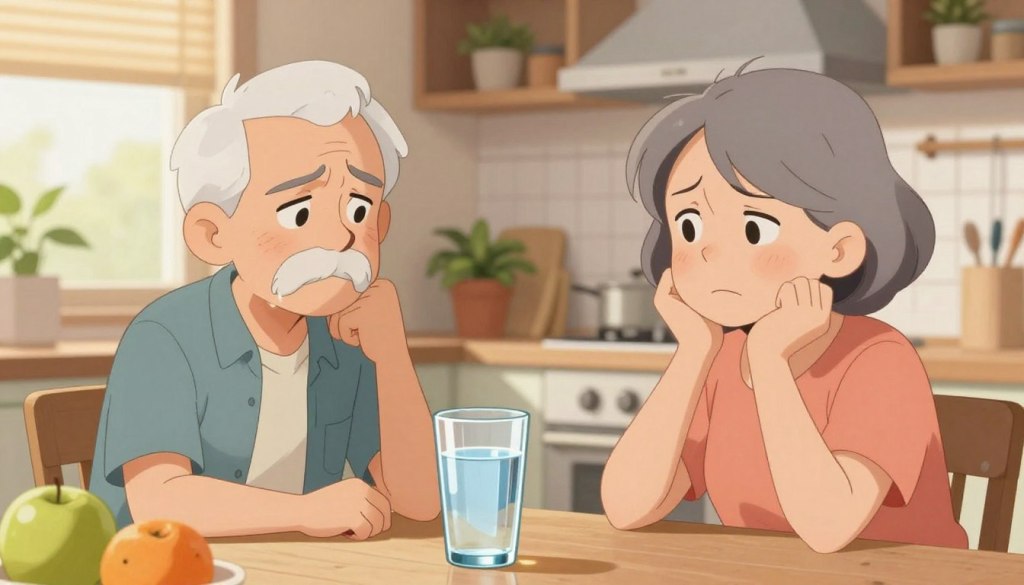
Can seniors drink too much water?
Caregivers often ask: can too many fluids ever be dangerous for an older loved one?
Yes — in specific situations. Overhydration happens when a person takes in more liquid than the body can clear. That leads to fluid overload and strain on organs.
Who is most at risk?
Overhydration causes and who is most at risk
- People with reduced kidney function.
- Those with liver disease, such as cirrhosis.
- Anyone told by a clinician to limit intake for medical conditions.

Swelling and heart strain warning signs
Watch for visible clues: swelling in feet, ankles, or legs. Sudden weight gain is another red flag.
Shortness of breath, worse fatigue, or rapid breathing can mean the heart is under strain from extra fluid. If these signs appear, contact a clinician promptly.
“The goal isn’t maximum intake — it’s steady hydration that fits the person’s health and meds.”
Quick note: If a caregiver wonders about safe targets, ask a clinician. A tailored plan protects the body and preserves independence.
How to Create a Safe Daily Hydration Plan for an Older Adult
Knowing how much water a senior should drink is helpful, but the real challenge is turning that number into a routine that feels safe, comfortable, and realistic. Many older adults do not avoid fluids because they are careless. They avoid them because drinking more water can create very real daily problems: more bathroom trips, fear of accidents, trouble getting up safely, poor appetite, swallowing discomfort, medication concerns, or simply forgetting.
That is why a senior hydration plan should not be built around pressure. It should be built around comfort, timing, access, and safety.
The goal is not to force a senior to drink large amounts at once. The goal is to make fluids easier to accept throughout the day, while also respecting medical conditions, mobility limits, bladder concerns, and personal preferences.
Start With the Person’s Normal Day, Not an Ideal Day
A hydration plan works best when it fits the senior’s existing rhythm. Before adding reminders or cups of water, look at what the day already looks like.
Ask simple questions:
- What time do they usually wake up?
- When do they take medications?
- Do they eat breakfast, lunch, and dinner at regular times?
- When are they most active?
- When do they usually nap?
- Do they avoid drinking after a certain time because of nighttime urination?
- Are they able to reach the kitchen easily?
- Do they spend most of the day in one chair or room?
These answers matter because hydration is rarely a single habit. It is connected to meals, medication, mobility, toileting, sleep, and confidence.
For example, a senior who fears falling at night may avoid drinking after lunch. A person with arthritis may not refill a heavy pitcher. Someone with memory changes may agree to drink water but forget within minutes. A person with low appetite may tolerate soup better than a full glass of water.
So instead of saying, “Drink more water,” build the plan around moments that already happen.
A better approach is:
“Let’s add a few sips after morning medication.”
“Let’s keep a small bottle next to your favorite chair.”
“Let’s have soup or fruit with lunch.”
“Let’s reduce late-evening fluids but make mornings and afternoons stronger.”
This feels respectful. It also makes the routine easier to keep.
Use a “Fluid Window” to Reduce Nighttime Bathroom Worries
One of the biggest reasons older adults avoid water is fear of getting up at night. This concern is valid. Nighttime bathroom trips can disturb sleep and increase fall risk, especially if the path to the bathroom is dark, cluttered, or far from the bed.
A practical solution is to create a daily “fluid window.”
This means placing most fluids earlier in the day instead of pushing water late at night. For many seniors, the most useful window is from waking until late afternoon.
A simple structure may look like this:
- Morning: steady fluids with breakfast and medications
- Midday: fluids with lunch, soup, fruit, or tea
- Afternoon: small sips, especially after activity or time outdoors
- Evening: lighter fluids, unless a clinician has advised otherwise
This does not mean cutting off fluids completely at night. It means avoiding the common pattern where a person drinks very little all day, then tries to “catch up” in the evening. That can make nighttime bathroom trips more likely and may make the habit feel unpleasant.
For seniors who worry about nighttime urination, it may help to ask a healthcare provider about the safest timing. This is especially important if the person takes diuretics, has heart disease, kidney disease, diabetes, swelling, or frequent urinary symptoms.
The key idea is simple: hydration should be paced, not rushed.
Make the First Half of the Day Count
For many older adults, mornings are the best time to improve hydration. Energy is often higher, routines are more predictable, and drinking earlier gives the body more time to process fluids before bedtime.
A gentle morning plan may include:
- A few sips immediately after waking
- A small glass with breakfast
- Water or another suitable drink with morning medication
- A hydrating food such as fruit, yogurt, oatmeal, or soup later in the morning
This does not need to be a large amount. Even a small glass can be a useful start. The point is to prevent the day from beginning in a fluid deficit.
Caregivers can also make mornings easier by preparing the drink in advance. Place a lightweight cup or bottle where the senior already sits. Use a cup that is easy to grip. If the person has tremors, arthritis, or weakness, avoid heavy glasses, slippery bottles, or containers with tight caps.
For some seniors, a straw, handled mug, insulated cup, or spill-resistant bottle can make a big difference. The easier the drink is to hold, the more likely it is to be used.
Match Fluids With Medication Routines
Medication time is one of the best hydration anchors because it already happens every day. Many older adults take medicines in the morning, afternoon, or evening, which creates natural reminders to sip.
However, this should be done carefully. Some medications have specific instructions. A few may need to be taken with plenty of water, some with food, and some with limited fluid depending on the person’s condition. When in doubt, ask the pharmacist or clinician.
A useful caregiver strategy is to review the medication schedule and identify safe hydration opportunities.
For example:
- Morning pills: small glass of water
- Midday medication: water, milk, or another approved drink
- Evening medication: small amount if nighttime bathroom trips are a concern
This turns hydration into part of an existing care routine instead of another separate task.
It also helps families notice patterns. If a senior often skips water with pills, has trouble swallowing tablets, coughs while drinking, or avoids medication because of fluid discomfort, that should be discussed with a healthcare provider. Difficulty swallowing, frequent coughing, or choking during drinks should never be ignored.
Address Bathroom Access Before Increasing Fluids
A hydration plan can fail if bathroom access is difficult. Many seniors reduce fluids because getting to the bathroom is tiring, painful, embarrassing, or unsafe.
Before encouraging more drinking, look at the bathroom setup.
Helpful questions include:
- Is the path to the bathroom clear?
- Is there enough lighting at night?
- Are rugs or cords creating trip hazards?
- Is the toilet seat too low?
- Are grab bars available?
- Does the person need help standing up?
- Are incontinence products available without shame or discomfort?
- Is the person avoiding fluids before leaving home?
Sometimes the hydration problem is not about thirst. It is about fear.
A senior may think, “If I drink more, I may not reach the bathroom in time.” Another may think, “I do not want to bother anyone for help.” Someone living alone may worry about falling. These concerns deserve practical solutions, not criticism.
Improving lighting, adding a bedside commode when appropriate, using absorbent products, scheduling bathroom breaks, or discussing bladder symptoms with a clinician can make drinking fluids feel safer.
For caregivers, the tone matters. Avoid saying, “You need to drink more whether you like it or not.” Instead, try:
“I understand why you do not want extra bathroom trips. Let’s make the timing easier so you can stay hydrated without feeling uncomfortable.”
That kind of language protects dignity.
Use Small Servings to Avoid Feeling Overwhelmed
Large glasses of water can feel discouraging to some older adults. A full bottle may look like a chore. A big cup may feel like too much, especially for someone with low appetite, nausea, reflux, swallowing issues, or a sensitive bladder.
Smaller servings often work better.
Instead of offering a large glass and expecting it to be finished, try smaller amounts more often. A few ounces at a time can be easier to accept and less likely to cause discomfort.
This approach is especially helpful for seniors who say:
“I’m not thirsty.”
“I can’t drink all that.”
“It makes me feel too full.”
“I’ll have to go to the bathroom too much.”
“I don’t like plain water.”
A small-serving plan may include a few sips every hour, half a cup with meals, or a small drink after each bathroom visit. For some seniors, visible progress is motivating. A marked bottle can show how much has been consumed without requiring mental tracking.
The emotional benefit is important too. Smaller servings reduce the feeling of being monitored or pressured. They make hydration feel manageable.
Build Hydration Around Meals and Snacks
Meals are one of the easiest times to add fluids because drinking feels natural with food. But hydration does not have to come only from a glass of water.
For seniors with low appetite, dry mouth, or chewing difficulties, moist foods may be more comfortable than plain drinks. Options can include soups, smoothies, yogurt, soft fruits, oatmeal, stews, diluted juices, herbal tea, or milk if tolerated and appropriate.
The practical goal is to add one hydrating element to each meal or snack.
For breakfast, that might be oatmeal made with milk, a small glass of water, or fruit.
For lunch, it might be soup, cucumber slices, tomatoes, or tea.
For dinner, it might be broth-based stew, cooked vegetables, or a small drink.
For snacks, it might be watermelon, oranges, applesauce, yogurt, or a smoothie.
This strategy is useful because it does not make hydration feel like a separate medical task. It becomes part of eating.
For older adults who dislike plain water, variety can help. Add mild flavor with lemon, mint, cucumber, or berries. Choose low-sugar and low-sodium options when needed. For people with diabetes, kidney disease, heart disease, or swallowing restrictions, food and drink choices should follow medical guidance.
Plan for Hot Weather, Illness, and Extra Activity
A senior’s fluid needs can change quickly. A normal drinking routine may not be enough during hot weather, fever, diarrhea, vomiting, sweating, or increased activity.
Families should have a simple “higher-risk day” plan.
Higher-risk days may include:
- Very hot or humid weather
- Fever or infection
- Vomiting or diarrhea
- Poor appetite
- Long errands or travel
- More walking than usual
- Time outdoors
- Missed meals
- Increased sweating
- New medications
On these days, watch more closely for warning signs such as dizziness, unusual fatigue, dry mouth, darker urine, reduced urination, headache, confusion, or weakness.
The response should be calm and early. Offer small sips. Encourage rest in a cool place. Include hydrating foods if tolerated. Avoid waiting until symptoms become severe.
However, families should also be careful not to overcorrect. Seniors with heart failure, kidney disease, liver disease, swelling, or fluid restrictions may need a specific plan from a clinician. In those cases, the question is not simply “more water.” It is “what amount is safe for this person today?”
A written sick-day or heat-day hydration plan can be very helpful. Ask the healthcare provider what to do when the senior has fever, vomiting, diarrhea, or poor intake. Keep that guidance somewhere easy to find.
Watch for Patterns, Not Just Single Days
Hydration is best understood as a pattern. One low-fluid day may happen. The bigger concern is when low intake becomes normal.
Caregivers can watch for trends such as:
- The water bottle stays full most days
- Urine is often dark
- The person is more tired in the afternoon
- Constipation becomes more frequent
- Dizziness happens when standing
- The person avoids drinking before leaving home
- Confusion appears during hot weather
- Headaches or muscle cramps happen regularly
- The senior says they are “not thirsty” every day
A simple weekly review can help. This does not need to be a spreadsheet. It can be a short note on the fridge or a caregiver’s phone.
Track only what is useful:
- Approximate fluid intake
- Urine color pattern
- Dizziness or falls
- Constipation
- Appetite changes
- Medication changes
- Weather or illness
- Bathroom concerns
The goal is not perfection. The goal is to spot patterns early enough to prevent problems.
If several warning signs appear together, or if the person is drinking much less than usual for more than a day, it is wise to contact a healthcare provider.
Make the Plan Respectful, Not Controlling
Older adults are more likely to accept hydration support when it feels collaborative. Nobody wants to feel treated like a child. Repeated reminders can sound like nagging, even when they come from love.
A better approach is to ask for preferences.
Try:
“Would you rather keep water by the chair or by the bed?”
“Do you prefer tea, water, or soup with lunch?”
“Would smaller cups feel easier?”
“Is there a time of day when drinking feels uncomfortable?”
“Are you avoiding water because of bathroom trips?”
These questions give the senior control. They also uncover the real barrier.
For family caregivers, the best hydration plan is often quiet and supportive. Refill the bottle. Offer tea during a visit. Bring soup. Place fruit within reach. Add a gentle reminder without turning every conversation into a health lecture.
If the senior lives alone, daily check-ins can help. A friendly call can include simple, non-invasive questions such as:
“Have you had something to drink with breakfast?”
“Is your water nearby?”
“Are you feeling dizzy or unusually tired today?”
“Is it very hot where you are?”
This kind of check-in supports hydration while also preserving independence.
Create a Simple One-Day Hydration Template
A written plan can make hydration easier for seniors and caregivers. It removes guesswork and helps everyone stay consistent.
Here is a simple example:
Morning:
Start with a few sips after waking. Have a drink with breakfast and morning medication.
Mid-morning:
Keep a cup or bottle nearby. Add fruit, yogurt, or tea if desired.
Lunch:
Include one drink and one hydrating food, such as soup, tomatoes, cucumber, fruit, or broth.
Afternoon:
Take small sips, especially after walking, errands, or time outdoors.
Dinner:
Have a moderate drink with the meal. Choose moist foods if appetite is low.
Evening:
Keep fluids lighter if nighttime bathroom trips are a concern, unless medical guidance says otherwise.
Before bed:
Check comfort, bathroom access, lighting, and whether water is safely reachable if needed overnight.
This template can be adjusted for the person’s medical needs, sleep habits, bladder comfort, and clinician advice.
When the Plan Needs Medical Input
Some situations need more than a home routine. A healthcare provider should help set the plan if the senior has heart failure, kidney disease, liver disease, severe swelling, low sodium, uncontrolled diabetes, frequent urinary tract infections, swallowing problems, repeated falls, or recent hospitalization.
Also seek medical advice if there is sudden confusion, fainting, inability to keep fluids down, very low urine output, severe weakness, chest discomfort, shortness of breath, or rapid worsening.
Hydration is powerful, but it is not one-size-fits-all. The safest plan is personal.
For most older adults, the best daily approach is steady and simple: drink earlier, sip often, keep fluids within reach, include hydrating foods, respect bathroom concerns, and watch for changes. When hydration support feels gentle instead of forced, it becomes much easier to maintain—and much more helpful for long-term health, comfort, and independence.
How Caregivers Can Help Seniors Drink Enough Water Without Nagging
Helping an older adult stay hydrated can be surprisingly delicate. Most caregivers already know water is important, but reminding someone to drink more is not always simple. If reminders sound too frequent, the senior may feel controlled. If reminders are too gentle, they may be forgotten. If the person has memory loss, mobility issues, bladder worries, or low appetite, the challenge becomes even more personal.
The goal is not to “push water.” The goal is to create a supportive environment where drinking enough feels natural, easy, and respectful.
Understand Why Seniors May Resist Drinking More
Before trying to change the habit, it helps to understand the resistance. Many older adults are not refusing water without reason.
Some may avoid fluids because they are afraid of needing the bathroom often. Others may have had an accident in the past and feel embarrassed. Some do not feel thirsty. Some dislike the taste of plain water. Some feel too full after drinking. Others may worry about falling while walking to the bathroom, especially at night.
Caregivers should treat these concerns as real barriers, not excuses.
Instead of saying, “You never drink enough water,” try asking:
“What makes it difficult to drink more during the day?”
“Do you avoid water because of bathroom trips?”
“Would smaller amounts feel easier?”
“Would you prefer warm drinks, flavored water, soup, or fruit?”
This kind of conversation helps the senior feel heard. It also gives the caregiver better information.
Make Water Visible and Easy to Reach
One of the simplest hydration strategies is also one of the most effective: keep fluids within sight and within reach.
Many seniors drink less simply because getting water takes effort. They may not want to stand up often. They may forget. They may not want to ask for help. A bottle or cup placed across the room may be too far away.
Keep water near the places where the senior spends the most time:
- Bedside table
- Recliner or favorite chair
- Dining table
- Medication area
- Walking aid station
- TV room
- Balcony or garden seating area
Use lightweight cups that are easy to hold. For seniors with arthritis, weakness, tremors, or poor grip strength, a handled mug, straw cup, or spill-resistant bottle may work better than a heavy glass.
Avoid very large bottles if they feel intimidating. A small cup that gets refilled often may be more inviting than a large container that feels like a task.
Use Gentle Reminders Instead of Repeated Instructions
The way a reminder is given matters.
Repeated commands can create frustration. Even when the caregiver means well, phrases like “Drink your water” or “You have to finish this” can feel tiring or patronizing.
A softer approach works better.
Try saying:
“I made some tea. Would you like a little?”
“Your water is right here when you want a sip.”
“Let’s both have a drink before lunch.”
“Would you like lemon in your water today?”
“Here’s a small glass. Just a few sips are fine.”
The tone should feel like care, not correction.
Caregivers can also model the habit. Drinking together often feels more natural than reminding from a distance. For example, during a call or visit, say, “I’m having some water too,” and pause for a shared sip.
Connect Hydration With Existing Daily Habits
New habits are easier when they attach to old habits. Instead of creating a separate “water schedule,” connect fluids to routines the senior already follows.
Useful hydration anchors include:
- After waking up
- With morning medication
- With breakfast
- Before or after a walk
- With lunch
- During afternoon tea
- With evening medication
- After using the bathroom
- After returning from outside
For example, if the senior always watches the news at 10 a.m., place a drink nearby at that time. If they always take medication after breakfast, include a small glass of water. If they always sit in the balcony in the evening, offer a light drink before they settle down.
The habit should feel automatic, not forced.
Offer Choices, Not Pressure
Choice gives older adults a sense of control. This is especially important when they already depend on others for help.
Instead of asking, “Will you drink water?” offer two easy options:
“Would you like water or herbal tea?”
“Would you prefer a small glass now or after lunch?”
“Do you want it room temperature or slightly cool?”
“Would you like plain water or water with lemon?”
“Would soup feel better than a drink today?”
These small choices reduce resistance because the senior is still making the decision.
The caregiver’s role is to guide, not dominate.
Use Food as Part of the Hydration Strategy
Some seniors do not enjoy drinking plain fluids. Others feel full quickly. In these cases, hydrating foods can help.
Good options may include:
- Watermelon
- Oranges
- Grapes
- Applesauce
- Cucumber
- Tomatoes
- Soups
- Broths
- Yogurt
- Smoothies
- Oatmeal
- Stews
- Soft cooked vegetables
This is especially helpful for seniors with poor appetite or dry mouth. A bowl of soup at lunch may be easier than asking them to drink another glass of water.
Caregivers can also prepare small portions. A full bowl or large smoothie may feel overwhelming, while a small serving may be accepted more easily.
Watch for Subtle Signs of Low Fluid Intake
Caregivers should not rely only on thirst. Many seniors do not feel thirsty even when their body needs fluids.
Watch for small changes such as:
- Dry lips or dry mouth
- Darker urine
- Fewer bathroom trips
- Constipation
- Headache
- Dizziness
- Tiredness
- Muscle cramps
- Irritability
- Confusion
- Sleepiness
- Weakness
These signs do not always mean dehydration, but they are worth noticing. If several appear together, it may be time to increase attention and contact a healthcare provider if needed.
Sudden confusion, fainting, inability to keep fluids down, very low urination, severe weakness, or worsening illness should be treated seriously.
Adjust Support for Seniors With Memory Problems
For seniors with memory changes or dementia, hydration support must be even more practical. They may not remember whether they drank water. They may not recognize thirst. They may forget where the cup is. They may refuse because they do not understand why it is being offered.
In these cases, reminders should be simple and calm.
Use short phrases:
“Here is your tea.”
“Let’s take a sip.”
“Your water is beside you.”
“Just a little.”
Visual cues can help. Keep the same cup in the same place each day. Use a brightly colored bottle if it is easier to notice. Offer fluids during familiar routines rather than explaining too much.
Do not argue if the senior refuses. Wait a few minutes and try again with a different drink, cup, or setting.
Make Hydration Safer for Seniors With Mobility Issues
If a senior has trouble walking, standing, or balancing, hydration can feel risky because more fluids may mean more bathroom trips.
Caregivers should think about safety first.
Make sure:
- The path to the bathroom is clear
- Floors are not slippery
- Night lights are available
- Support rails are installed if needed
- The senior has proper footwear
- A walker or cane is within reach
- The toilet is easy to use
- Help is available when needed
If nighttime bathroom trips are a major concern, discuss timing with a healthcare provider. It may be better to encourage more fluids earlier in the day and reduce large drinks close to bedtime.
Keep a Simple Hydration Note
A hydration tracker does not need to be complicated. In fact, complicated systems often fail.
A simple note can include:
- Morning drink taken
- Lunch drink taken
- Afternoon drink taken
- Urine looked darker than usual
- Dizziness noticed
- Constipation noticed
- Very hot day
- Poor appetite
This helps caregivers spot patterns. It is especially useful when multiple family members or paid caregivers are involved.
The purpose is not to monitor every sip. The purpose is to understand whether the senior is generally staying on track.
Know When to Ask a Doctor
Caregivers should ask for medical guidance if the senior has:
- Heart failure
- Kidney disease
- Liver disease
- Swelling in the legs
- Low sodium levels
- Diabetes
- Frequent urinary tract infections
- Trouble swallowing
- Repeated falls
- Recent hospitalization
- A fluid restriction
In these cases, “drink more water” may not always be the right advice. The safest amount may depend on the person’s condition and medications.
A doctor or dietitian can help create a personal fluid target.
The Best Hydration Support Feels Respectful
Hydration care should protect both health and dignity. Older adults should not feel scolded, watched, or forced. They should feel supported.
The most effective caregiver approach is simple: make fluids easy to reach, offer small choices, use kind reminders, include hydrating foods, respect bathroom concerns, and watch for warning signs.
When support feels calm and respectful, seniors are more likely to accept it—and hydration becomes part of daily comfort rather than a daily struggle.
Special Hydration Challenges Seniors Face Throughout the Year
Many hydration recommendations assume that a person’s fluid needs remain the same every day. In reality, hydration is constantly influenced by weather, health conditions, medications, activity levels, travel, and changes in routine.
This is particularly true for older adults. A hydration routine that works perfectly during a mild spring week may become inadequate during a summer heatwave, a winter illness, or a long day of medical appointments.
Understanding these changing circumstances can help seniors and caregivers prevent dehydration before it becomes a problem.
Why Seasonal Changes Affect Hydration More Than Many Seniors Realize
Many people associate dehydration with hot weather. While summer certainly increases dehydration risk, every season creates unique challenges.
Older adults often experience reduced thirst sensitivity, meaning the body may not send strong signals when fluids are needed. As a result, hydration decisions become less dependent on thirst and more dependent on routine and awareness.
When weather conditions change, fluid needs can change too.
The problem is that many seniors continue drinking the same amount regardless of temperature, humidity, activity level, or illness.
This can gradually create a hydration gap that becomes noticeable only after symptoms begin appearing.
Summer: The Highest-Risk Season for Dehydration
Summer presents the most obvious hydration challenges.
Even mild heat can increase fluid loss through:
- Sweating
- Increased breathing rate
- More time outdoors
- Gardening activities
- Walking or exercise
- Travel and errands
- Exposure to air conditioning
Older adults are particularly vulnerable because aging affects the body’s ability to regulate temperature efficiently.
Many seniors may not notice they are becoming dehydrated until symptoms appear, including:
- Fatigue
- Dizziness
- Headaches
- Dry mouth
- Muscle cramps
- Confusion
- Weakness
Practical Summer Hydration Strategies
During warmer months:
- Start drinking fluids earlier in the morning.
- Carry water during errands.
- Increase hydrating foods such as watermelon, cucumbers, oranges, and berries.
- Drink before outdoor activities rather than waiting until afterward.
- Rest in cool areas during the hottest parts of the day.
- Pay closer attention to urine color.
A useful rule is to think proactively rather than reactively. Waiting until thirst appears may be too late for some older adults.
Winter Dehydration Is More Common Than People Think
Many seniors actually drink less during winter.
There are several reasons:
- Cooler temperatures reduce feelings of thirst.
- People sweat less and assume they need less water.
- Seniors may avoid beverages to reduce trips to the bathroom in cold weather.
- Indoor heating systems can create dry air.
Unfortunately, the body still requires adequate hydration.
In winter, dehydration may be mistaken for other issues because symptoms can appear gradually.
Dry skin, fatigue, headaches, and constipation often become more common during colder months.
Winter Hydration Tips
Older adults can stay hydrated during winter by:
- Drinking warm herbal teas.
- Enjoying broths and soups.
- Keeping water visible even when not feeling thirsty.
- Adding warm oatmeal and hydrating fruits to breakfast.
- Maintaining regular fluid habits despite colder weather.
Many seniors find warm beverages easier to consume during winter than cold water.
Hydration During Illness
Even a minor illness can dramatically increase dehydration risk.
Common conditions that affect fluid balance include:
- Colds
- Flu
- Fever
- Stomach infections
- Food poisoning
- Respiratory illnesses
Fever causes increased fluid loss, while vomiting and diarrhea can rapidly deplete fluids and electrolytes.
Older adults may also eat less during illness, which reduces hydration obtained from food.
Signs That Illness May Be Affecting Hydration
Watch for:
- Increased sleepiness
- Dry mouth
- Reduced urination
- Dark urine
- Dizziness
- Confusion
- Weakness
- Difficulty standing
Family members should monitor fluid intake more closely whenever a senior is sick.
Small, frequent sips are often easier than large drinks.
If symptoms become severe or fluid intake becomes very low, medical advice should be sought promptly.
Travel Can Disrupt Hydration Habits
Travel introduces several hydration obstacles.
Many seniors intentionally drink less while traveling because they worry about:
- Finding bathrooms
- Long car rides
- Airport security
- Public restrooms
- Incontinence concerns
Unfortunately, this strategy often backfires.
Long periods of reduced fluid intake can contribute to:
- Fatigue
- Constipation
- Dizziness
- Confusion
- Headaches
Travel Hydration Tips for Seniors
Before travel:
- Begin the day well hydrated.
- Bring an easy-to-carry water bottle.
- Plan bathroom stops in advance.
- Pack hydrating snacks.
- Avoid trying to “save bathroom trips” by avoiding fluids completely.
A balanced approach works best.
Hydration and Physical Activity
Many older adults are becoming more active than previous generations.
Walking groups, fitness classes, swimming, gardening, golf, yoga, and community programs all support healthy aging.
However, increased activity also increases fluid requirements.
The body loses water through:
- Sweat
- Breathing
- Increased circulation demands
Even moderate activity can raise hydration needs.
Smart Hydration Around Exercise
For active seniors:
Before activity:
- Drink fluids beforehand.
- Avoid starting exercise dehydrated.
During activity:
- Take periodic sips when practical.
- Seek shade during hot weather.
After activity:
- Rehydrate gradually.
- Include water-rich foods.
The goal is not excessive drinking but replacing normal fluid losses.
How Certain Medications Affect Hydration
Many commonly prescribed medications can influence hydration.
Examples include:
- Diuretics (“water pills”)
- Certain blood pressure medications
- Some diabetes medications
- Laxatives
- Certain antidepressants
- Medications causing dry mouth
These medicines may increase fluid loss or make hydration feel more challenging.
This does not mean seniors should stop taking medications. It means hydration awareness becomes even more important.
If dry mouth, increased urination, dizziness, or unusual thirst develops after a medication change, it is worth discussing with a healthcare provider.
Social Isolation Can Quietly Affect Hydration
One often-overlooked risk factor is loneliness.
Seniors who live alone may:
- Skip meals
- Forget drinks
- Lack reminders
- Have less daily structure
- Feel less motivated to maintain routines
Hydration habits are often stronger when meals and drinks are shared with others.
A simple daily call, community activity, senior center visit, or family check-in can indirectly improve hydration by encouraging routine and engagement.
Building a Flexible Hydration Mindset
Perhaps the most important lesson for older adults is that hydration should not be viewed as a fixed number.
Instead of asking:
“How much water do I always need?”
It is often better to ask:
“What factors today might increase or decrease my fluid needs?”
Consider:
- Weather
- Illness
- Activity
- Medications
- Travel
- Appetite
- Medical conditions
This mindset encourages awareness rather than rigid rules.
A Simple Weekly Hydration Check
Once a week, seniors or caregivers can ask:
- Have I been drinking regularly?
- Has my urine been unusually dark?
- Have I felt dizzy recently?
- Have I experienced constipation?
- Has the weather been unusually hot?
- Have I been sick?
- Have I started any new medications?
- Have I been eating normally?
These simple questions can reveal potential hydration problems before they become serious.
The Bottom Line
Hydration needs do not exist in isolation. They change with seasons, illnesses, medications, activity levels, travel, and daily routines.
The most successful seniors are not necessarily those who drink the most water. They are the ones who recognize when circumstances change and adjust their hydration habits accordingly.
By paying attention to these changing factors, older adults can better support their energy levels, comfort, mobility, cognitive function, and overall quality of life throughout the year.
How to stay hydrated every day with simple routines

A short, steady routine makes staying hydrated feel simple and doable. Small changes remove friction and help the body get fluids throughout day without stress.
Keep water within reach and sip consistently
Keep a light pitcher or a refillable bottle near favorite chairs. Open tops and clear markings make refills easy.
Sip little and often. Smaller sips are gentler on the bladder and easier to sustain than big glasses.
Build cues into your schedule
Use anchors: one glass on waking, one with each meal, and one before and after walks or activity. These small prompts turn intent into habit.
Track intake with a simple log
Count bottle refills or use a quick checkmark list on the fridge. Focus on patterns, not perfect numbers.
Make drinks more appealing and limit diuretics
Add lemon, cucumber, or berries for mild flavor. Limit alcohol and be cautious with coffee and strong tea—both can affect fluid balance for some people.
“Small, steady sips and clear cues protect health and independence.”

Tip: JoyCalls can reinforce a water day routine with friendly check-ins and quick alerts if a parent sounds off. A little help makes staying hydrated easier for the whole family.
More ways to get fluids: drinks and high water content foods
Simple food choices often deliver steady fluids without extra effort. That makes meeting daily goals feel doable for busy families and for older adults who tire of plain cups.
Gentle beverages many people tolerate
Plain water isn’t the only path. Try milk, mild herbal tea, or a fruit smoothie. These options add fluid and calories when appetite is low.
Watch sugar and medication interactions. Choose unsweetened or lightly sweetened versions when possible.

Fruits and vegetables with high water content
- Watermelon — classic and easy to chew.
- Cucumbers and lettuce — crisp in salads or sandwiches.
- Berries, strawberries, and tomatoes — tasty in snacks or yogurt.
- Zucchini and celery — blend into smoothies or stews.
Soups, broths, and low-sodium options
Warm bowls of soup or broth add fluid and comfort. They work well in cooler months or when someone has a poor appetite.
Choose low-sodium versions if heart or kidney needs require limit on salt. Always align choices with a clinician’s guidance.
“Add one hydrating item per meal and you’ll boost hydration without forcing big volumes.”
Practical tip: Aim to include at least one hydrating food or drink each meal. Over time this supports enough water and steady hydration in a gentle way. For extra guidance, see tips for water intake for older.
Conclusion
Clear signals and simple targets make hydration a calm, manageable task.
Hydration is daily care that protects energy, thinking, balance, and overall health. The National Academy of Medicine gives a helpful baseline: about 13 cups/day for men 51+ and about 9 cups/day for women 51+. Use those numbers as a starting point, not a rule.
Individual needs change with activity, heat, altitude, illness, and medications. Watch urine color as a quick hydration signal and adjust intake to fit the person.
Pick one simple routine today — a morning glass, a meal cue, or a marked bottle — and make it automatic. You’re not overreacting by paying attention; small habits prevent big problems.
Talk to Joy now: 1-415-569-2439. Sign up for JoyCalls for daily check-ins and support: https://app.joycalls.ai/signup.