

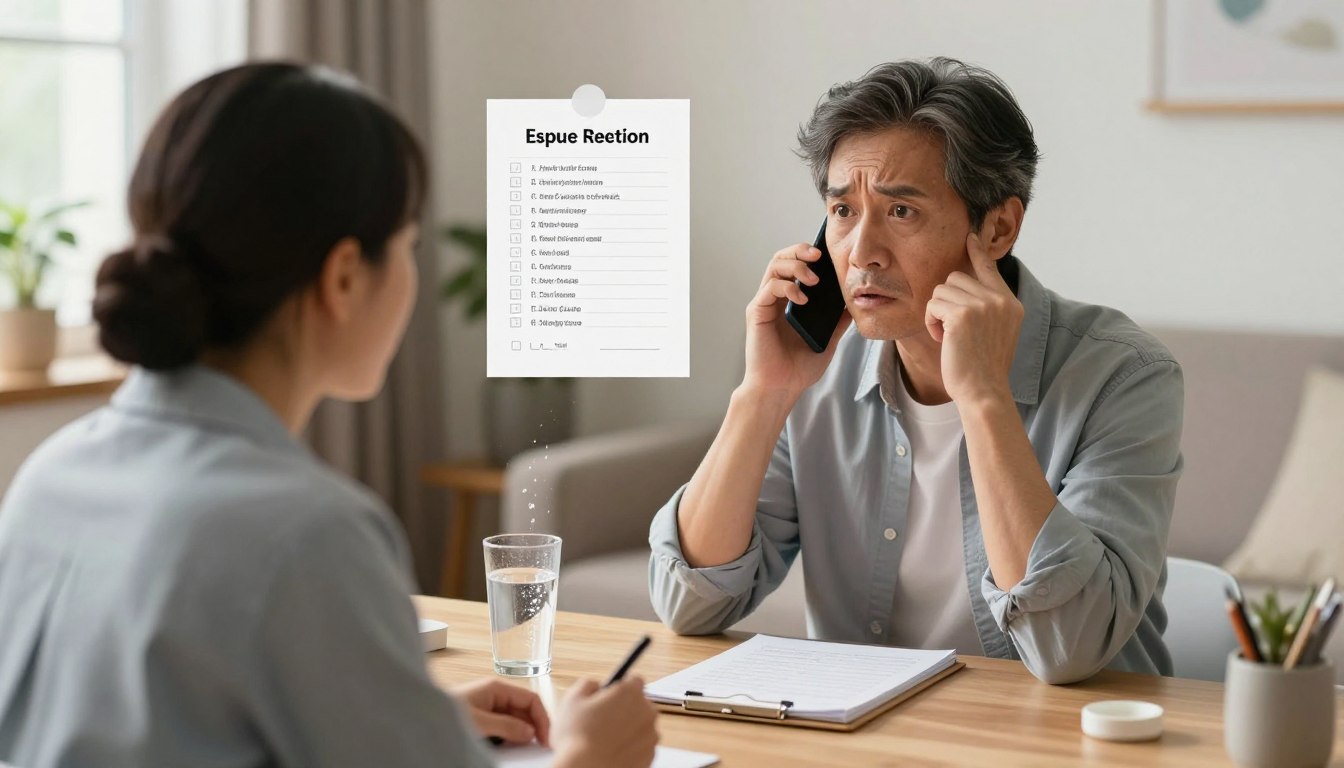
Nearly 1 in 3 older adults who live alone will face a hydration-related problem each year.
You call your dad and his voice sounds a little flat. It’s not an emergency. It just feels different. That small change can matter.
Dehydration happens when the body loses more fluid than it takes in, so it can’t work as usual. Mild cases often improve with extra fluids. Severe cases need medical care right away.
This short guide shows how to listen, ask the right questions, and choose the safest next step. It focuses on signs of dehydration over phone for caregivers who are miles away.
Worried? That’s okay. Feeling concern means you care. If you need daily check-ins, try JoyCalls — and if you want to talk to someone now, Call Joy at 1-415-569-2439 or sign up for JoyCalls.
Key Takeaways
- Listen for changes in voice, energy, and confusion.
- Ask simple, direct questions about thirst, urine, and dizziness.
- Mild cases can improve with fluids; severe cases need urgent care.
- Use regular check-ins to catch subtle shifts early.
- Resources can help — learn more about elder hydration here.
Why dehydration is easy to miss in older adults and long-distance caregiving
You notice her answers are shorter and she sounds tired. Tiny changes like this matter when you can’t see them.
Dehydration happens when the body loses more fluid than it takes in and can’t run normally. Mild loss can be fixed with extra drink, but bigger loss needs care.

Thirst can betray you
Many older adults don’t feel thirsty until late. They start with lower body water reserves. Some medicines and conditions raise the risk. So waiting for “I’m thirsty” can be too late.
Why long-distance checks are tricky — and what helps
You rely on tone, word choice, and memory. A typical call: “Mom says she’s fine… but she’s napping all day and hasn’t been to the bathroom much.” That’s a red flag.
- Normalize the doubt: it’s hard to judge from afar.
- Use structure: ask the same short questions each call so small shifts stand out.
| What to note | Why it matters | Quick action |
|---|---|---|
| Less urine or dark color | Shows low fluids | Offer water, ask more questions |
| Low energy or confusion | Brain reacts to low fluid | Stay on the line; consider medical help |
| Dry mouth, fewer drinks | Early warning | Encourage sipping throughout day |
Short routine checks make patterns clear. Small, steady steps protect the people you love.
Quick phone triage: what to do in the first minutes of concern
You hear a small pause, then a breath that sounds heavier than usual. That first moment is your cue to move from small talk to focused checks.
Start with a quick safety check. Ask: “Are you alone? Are you feeling faint? Can you sit down? Do you have water nearby?”

Confirm immediate safety and ability to keep down fluids
Make sure they can swallow and hold liquids. If they are actively vomiting or cannot keep anything down, stop coaching and escalate.
Ask about vomiting and diarrhea frequency today. Fast fluid loss can snowball. Note any fever over 102°F, bloody or black stool, or if symptoms have lasted 24 hours or more.
When to stop the call and escalate to urgent medical care
- If they sound confused, very sleepy, cranky, or faint—pause and call emergency services (911) or local help right away.
- If they can’t keep down fluids, or show red flags like prolonged diarrhea or bloody stool, seek urgent care.
- If possible, get a neighbor, building manager, or family member to check in physically.
“Escalating is protecting them, not panicking.”
| Immediate action | What to ask | When to escalate |
|---|---|---|
| Safety script (first 2 minutes) | “Are you alone? Can you sit? Water nearby?” | Fainting, severe confusion, inability to swallow |
| Fluid check | Can they keep fluids down? Any vomiting now? | Active vomiting that won’t stop |
| Symptom timing | How long has diarrhea or fever lasted? | Diarrhea ≥24 hours, fever ≥102°F, bloody/black stool |
If you want a simple routine to make checks easier, try a short daily check-in plan with JoyCalls for meals and hydration: daily check-ins.
Signs of dehydration over phone: a caregiver’s listen-and-ask checklist
When they answer more slowly than usual, a quick checklist can turn worry into action. Use these short prompts to get clear facts fast.
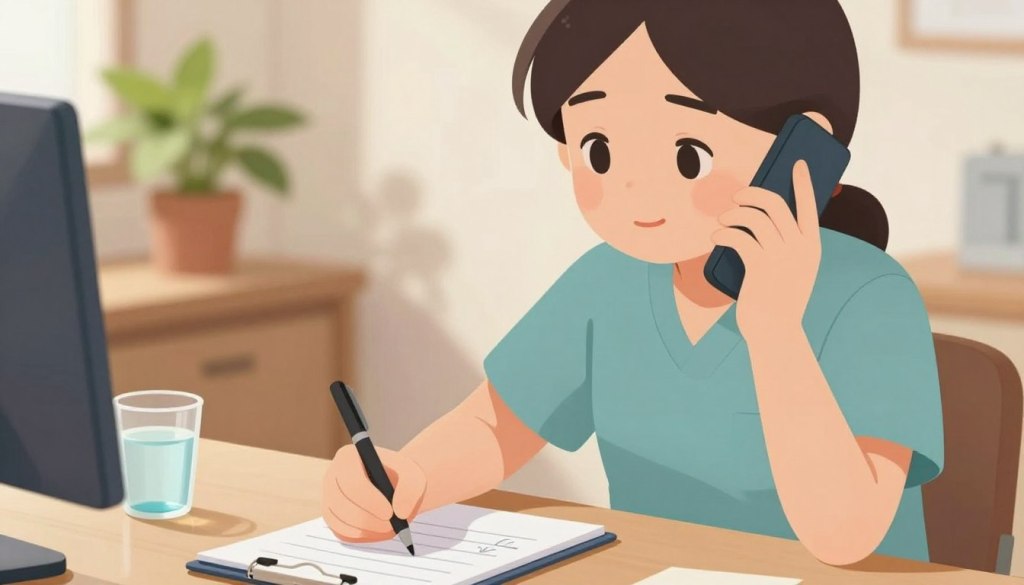
Urination clues
Ask: “When did you last pee today?” “Was it dark yellow?” “Is it less than usual?”
Mouth and throat
Ask if the mouth feels dry or sticky. Check if swallowing hurts or sipping is hard. “Do you have dry mouth right now?” is simple and direct.
Energy, balance, and brain
Listen for slow answers, confused replies, or complaints of tiredness. Ask about dizziness when standing.
Breathing, heart, and face
Ask if their heart feels racing or if breathing seems faster at rest. Ask them to look in a mirror for sunken eyes or hollow cheeks.
Try JoyCalls Free
No app or new device needed. Start with a free 7-day trial.
- Optional pinch test: pinch forearm skin and ask if it “stays tented”—that notes skin elasticity.
Tip: You’re not hunting for one perfect finding. Look for a pattern across answers and act if several cues line up.
Mild, moderate, and severe dehydration: how to tell severity on a call
A clear way to move from worry to action is to match symptoms to a simple severity ladder. This helps you decide whether to coach with fluids or escalate to care.

Mild to moderate: what often improves with drinks
Short thirst, dry mouth, slightly less peeing, darker urine, or a mild headache. Encourage small, frequent sips and watch for steady improvement within hours.
When moderate dehydration may need same‑day evaluation
Symptoms intensify: more dizziness, clear weakness, very low urine output, stronger fatigue. For older adults, call the clinic or arrange a same‑day check when these signs appear.
Severe dehydration: red flags that need immediate help
Look for confusion, fainting, rapid breathing, a racing heart, or inability to keep fluids down. These are emergency cues. Dehydration can cause low blood and affect blood pressure when standing.
- Rule: If they can’t drink safely and stay alert, do not manage at home.
- Severity ladder: mild → moderate → severe; act faster as symptoms climb.
Build a Long-Distance Dehydration Safety Plan Before There Is a Crisis
The hardest time to make a good care decision is when you are already worried. When your parent sounds weak, confused, or “not quite right,” you do not want to spend precious minutes wondering who to call, what to ask, or whether you are overreacting.
That is why long-distance caregivers need more than a symptom checklist. You need a simple dehydration safety plan that is ready before the problem starts.
This plan does not replace medical care. It helps you notice change earlier, ask better questions, involve the right local person faster, and avoid the common mistake of waiting too long because the older adult says, “I’m fine.”
Start With a Personal Hydration Baseline
Every older adult has a different “normal.” Some people naturally speak slowly. Some nap every afternoon. Some drink very little in the morning and more in the evening. Some urinate frequently because of medications. Others may avoid drinking because they worry about bladder leaks or nighttime bathroom trips.
A baseline gives you something to compare against.
During a calm, ordinary week, ask gentle questions and write down the answers. You are not interrogating them. You are learning their routine.
Ask:
“What do you usually drink with breakfast?”
“How many cups of tea, coffee, water, juice, or soup do you normally have in a day?”
“When do you usually go to the bathroom?”
“What color is your urine when you feel well?”
“Do you ever avoid drinking because getting to the bathroom is hard?”
“Do you keep water near your bed or favorite chair?”
“Do you feel dizzy when you stand up on a normal day?”
These answers matter because dehydration is often a change from normal. If your mother usually chats for twenty minutes but today gives one-word answers, that matters. If your father usually urinates every few hours but has not gone since morning, that matters. If your aunt usually drinks tea all day but today says she has only had half a cup, that matters.
The goal is not to force a perfect water target. The goal is to know what “well” looks like for that person.
Create a One-Page Hydration Snapshot
A hydration snapshot is a short note you can keep on your phone. It should be easy to read during a stressful call.
Include:
Full name, age, address, and phone number
Primary doctor or clinic number
Preferred hospital or urgent care location
Current medications, especially diuretics, laxatives, diabetes medicines, blood pressure medicines, or medications that cause dry mouth
Known conditions such as diabetes, kidney disease, heart disease, dementia, swallowing issues, mobility problems, or urinary incontinence
Usual drinking pattern
Usual bathroom pattern
Nearby contacts who can check in physically
Any special instructions from their doctor about fluid limits
That last point is very important. Some seniors, especially those with heart failure, kidney disease, or certain sodium problems, may have been told to limit fluids. For them, “drink more water” may not always be the safest advice. Your plan should reflect their clinician’s guidance.
Keep this snapshot updated. Review it after medication changes, hospital visits, new diagnoses, or a move to a new home.
Make a “Fluid Access Map” of the Home
Sometimes dehydration is not caused by lack of knowledge. It is caused by poor access.
An older adult may know they should drink more but still avoid fluids because the kitchen feels too far away, the water bottle is hard to open, the bathroom is unsafe, or they fear falling at night.
Over the phone, ask them to describe where drinks are kept.
“Is there water next to your bed?”
“Is there something to drink near the chair where you watch TV?”
“Can you open the bottle or container easily?”
“Do you have cups that are light enough to hold?”
“Is the bathroom path clear?”
“Do you avoid drinking after dinner because you are worried about getting up at night?”
These questions are practical. They reveal barriers that a simple reminder cannot fix.
A good fluid access setup might include a light bottle near the bed, a cup near the favorite chair, a small pitcher in the fridge, broth or oral rehydration solution available for sick days, and a clear path to the bathroom. For seniors with weak grip, arthritis, tremors, or vision problems, choose containers that are easy to open, easy to see, and not too heavy.
If they use a walker, cane, or wheelchair, make sure drinks are placed where they can reach them without stretching or standing suddenly. A fall caused by reaching for water defeats the purpose.
Use a Two-Step Call Script: “Safety First, Details Second”
When you suspect dehydration, do not begin with ten questions. Start with safety.
First ask:
“Are you sitting down?”
“Are you alone?”
“Can you speak comfortably?”
“Do you feel like you might faint?”
“Can you reach water right now?”
If they sound faint, confused, breathless, extremely weak, or unable to stay awake, stop the normal check-in and arrange urgent help. Do not keep them walking around the house looking for water. Do not ask them to stand up to check something. Keep the instruction simple: sit or lie down, stay on the phone, and wait for help.
If they are stable, move to details.
Ask:
“What have you had to drink since you woke up?”
“When did you last urinate?”
“Was it lighter than usual or dark?”
“Any vomiting, diarrhea, fever, sweating, or time outside today?”
“Any dizziness when standing?”
“Any new medicines or missed meals?”
“Can you take small sips now without feeling sick?”
This script keeps the call calm. It also prevents a common mistake: collecting details while missing the bigger safety picture.
Do Not Ask Only “Did You Drink Water?”
Many seniors will answer “yes” because they had a few sips, drank coffee, or do not want to worry you. The better question is specific.
Instead of asking, “Did you drink enough today?” ask:
“What did you drink with breakfast?”
“What did you drink after taking your medicine?”
“What is next to you right now that you can sip?”
“How much is left in your water bottle?”
“Can you take three small sips while we are talking?”
Specific questions reduce guessing. They also make the next action easier.
If they say, “I had some water,” ask, “Was it a full glass, half a glass, or just a few sips?” Keep your tone warm. You are not trying to catch them doing something wrong. You are trying to understand what their body has had to work with today.
Build a Local Backup Circle
Long-distance caregiving becomes safer when you know who can physically check on your loved one.
Your backup circle may include a neighbor, building manager, nearby relative, friend, home aide, faith community member, or front desk staff in a senior living building. Ask your loved one in advance whom they trust. Do not wait until an urgent moment to figure this out.
Create a simple contact list:
Name
Relationship
Phone number
How close they live
When they are usually available
What they are comfortable doing
For example, one neighbor may be comfortable knocking on the door but not driving to urgent care. A niece may be able to bring electrolyte drinks. A building manager may be able to request a wellness check. A paid caregiver may be able to check urine output, temperature, and medication bottles.
When calling a local contact, be clear and direct:
“Could you please check on my mother within the next 15 minutes? She sounds weak and says she has barely urinated today. Please make sure she is sitting down, has water nearby, and tell me whether she seems confused or unsteady.”
Give the person specific things to observe. “Check on her” is vague. “See whether she can sit upright, answer clearly, sip fluids, and walk safely” is much more useful.
Use the “One Change, Two Changes, Three Changes” Rule
Over the phone, one mild clue may not mean much. A dry mouth alone may be from medication. A tired voice alone may be from poor sleep. Less appetite alone may be from a mild cold.
But several changes together deserve action.
Use this simple rule:
One change means ask more questions.
Two changes mean start a hydration response and monitor closely.
Three changes mean involve a clinician or local helper, especially for older adults with medical risk.
For example:
Dry mouth only: ask about drinks and encourage small sips.
Dry mouth plus dark urine: begin a structured sip plan and check again soon.
Dry mouth plus dark urine plus dizziness: arrange same-day medical advice or a physical check-in.
Confusion, fainting, inability to keep fluids down, severe weakness, or breathing trouble should skip this rule. Those are escalation signs, not monitoring signs.
Create a Gentle Sip Plan for Mild Cases
If symptoms seem mild and they can swallow safely, guide them through a simple sip plan.
Say:
“Let’s not drink a huge glass all at once. Keep it easy. Take a few small sips now, then a few more every few minutes.”
Large gulps can feel unpleasant, especially if the person is nauseated. Small sips are often easier.
You can suggest water, broth, diluted juice, or an oral rehydration solution if there has been vomiting, diarrhea, or heavy sweating. If they have been told to limit fluids or salt, follow their clinician’s instructions instead.
Make the plan concrete:
“Put the glass beside your chair.”
“Take three sips now.”
“I’ll stay with you for a few minutes.”
“After this call, keep the drink nearby.”
“Have a little more with your next snack or medicine, unless your doctor has restricted fluids.”
Avoid sounding like a coach giving orders. Use partnership language: “Let’s make this easy,” “Let’s try small sips,” and “Let’s see how you feel after a little fluid.”
Watch for Fear-Based Fluid Avoidance
Some older adults reduce drinking on purpose. They may be afraid of urinary leakage, rushing to the bathroom, falling at night, or needing help. This can create a dangerous cycle: they drink less to avoid bathroom trips, then become weaker or dizzy, which increases fall risk.
Ask gently:
“Do you ever avoid drinking because you worry about getting to the bathroom?”
“Are you skipping fluids at night because you are afraid of falling?”
“Would it help to keep a commode, nightlight, or walker closer?”
“Are leakage worries making you drink less?”
This conversation needs kindness. Many seniors feel embarrassed about bladder issues. Reassure them that this is common and practical, not shameful.
The solution may not be “drink more.” It may be improving bathroom safety, using absorbent products, reviewing medications with a clinician, treating constipation, adding nightlights, or arranging help at certain times of day.
Recheck After Action, Not Just During the First Call
A dehydration check does not end when they take a few sips. You need to know whether they are improving.
Set a follow-up point.
Ask:
“Can I call you again after lunch?”
“Can JoyCalls check in later today?”
“Can you call me after you use the bathroom?”
“Can you keep your drink beside you and tell me how much you finish?”
During the follow-up, compare:
Are they more alert?
Is their voice stronger?
Have they urinated?
Is dizziness better, worse, or unchanged?
Can they keep fluids down?
Are they still alone?
Did any new symptoms appear?
If there is no improvement, or if symptoms worsen, do not continue the same plan indefinitely. Older adults can decline quickly, especially during illness, heat, or medication changes.
Know When “Normal for Them” Is Still Not Safe
Some seniors underreport symptoms. Others may have dementia, memory changes, depression, hearing problems, or a strong desire to stay independent. They may say “I’m fine” even when they are not.
Listen beyond the words.
A person may say they are fine but sound unusually slow. They may insist they drank enough but cannot remember what they drank. They may deny dizziness but also say they are afraid to stand. They may say they are not confused while repeating the same sentence.
In long-distance care, your concern is data. It does not mean you are overreacting.
Use a respectful phrase:
“I hear that you feel okay, and I’m glad. You still sound different to me, so I want to do one safety check.”
This keeps the conversation caring without dismissing their independence.
Keep a Simple Hydration Log During Risky Days
You do not need a complicated chart. During illness, hot weather, medication changes, or recent weakness, track four things:
Fluids taken
Bathroom trips
Symptoms
Actions taken
A simple note might look like this:
“Tuesday, 10 a.m. — Had tea and half glass water. Urinated once, dark. Says mouth dry. No vomiting. Encouraged small sips.”
“Tuesday, 1 p.m. — Finished one glass water and soup. Urinated again, lighter. Voice stronger.”
This helps you spot direction. Improving is reassuring. Worsening is a sign to act. It also gives useful information to a nurse, doctor, urgent care team, or emergency responder.
Turn the Plan Into a Routine, Not a Lecture
The best dehydration plan is one your loved one will actually accept.
Many older adults dislike being monitored. They may feel corrected, controlled, or treated like a child. The wording matters.
Instead of saying:
“You never drink enough water.”
Try:
“I know you’re managing a lot. Let’s make drinking easier so you don’t feel weak later.”
Instead of:
“You need to tell me every time you pee.”
Try:
“When you’re not feeling well, bathroom changes help us know if your body needs more support.”
Instead of:
“I’m sending someone because you’re not listening.”
Try:
“I’d feel better if someone nearby checks in. It’s just a safety step.”
Respect protects cooperation. The goal is not to win an argument. The goal is to keep them safe while preserving dignity.
A Practical Long-Distance Dehydration Plan You Can Set Up This Week
Use this quick setup list:
Write a one-page hydration snapshot.
Save doctor, pharmacy, neighbor, and emergency contacts.
Ask about normal drinking and bathroom patterns.
Place easy-to-open drinks near the bed and favorite chair.
Keep oral rehydration solution or electrolyte options available for illness days, if medically appropriate.
Review whether any conditions require fluid limits.
Identify who can do a physical check-in.
Create a short phone script for safety, symptoms, fluids, and follow-up.
Decide what signs mean “call doctor,” “send local help,” and “call emergency services.”
Schedule regular check-ins during heat, illness, or medication changes.
This kind of plan gives you something long-distance caregivers rarely have: a calm path forward.
You may still feel worried. That is normal. But worry becomes more useful when it is organized. With a baseline, a script, a local backup circle, and a follow-up routine, you are not just reacting to dehydration. You are building a safer system around someone you love.
What to Do When a Senior Keeps Getting Dehydrated Again and Again
If dehydration happens once, it may be linked to a clear cause: a hot day, a stomach bug, a long nap, or not drinking enough during travel.
But when dehydration keeps happening, the problem is usually not just “forgetting to drink water.” There is often a deeper pattern behind it.
For long-distance caregivers, repeated dehydration is a signal to look at the whole routine: medications, meals, mobility, bathroom safety, memory, mood, weather, swallowing, and social support. The goal is not to blame the senior. The goal is to remove the hidden obstacles that make staying hydrated difficult.
Look for the Real Reason Behind Low Fluid Intake
Start by asking one simple question:
“Why is drinking enough hard right now?”
The answer may surprise you.
Some older adults do not feel thirsty. Some dislike the taste of plain water. Some avoid drinking because they fear urinary leakage. Some do not want to walk to the bathroom often. Some feel too tired to get up for a drink. Some are depressed and have lost interest in eating or drinking. Some forget. Some cannot safely swallow thin liquids. Some are trying to “be good” by cutting down on everything, including fluids.
Instead of repeating “Please drink more water,” ask more specific questions:
“Do you feel thirsty during the day?”
“Do you avoid drinking because of bathroom trips?”
“Is it hard to get to the kitchen?”
“Do you like the taste of the water at home?”
“Do you cough when drinking?”
“Are you worried about accidents or leakage?”
“Do you feel too tired to prepare drinks?”
“Do you forget, or do you remember but choose not to drink?”
Each answer points to a different solution.
If taste is the issue, try lemon, cucumber, diluted juice, herbal tea, soups, or naturally water-rich foods.
If bathroom fear is the issue, focus on toilet access, nightlights, grab bars, mobility aids, continence products, and a medical review.
If memory is the issue, use reminders, routine-based drinking, labeled bottles, or caregiver check-ins.
If swallowing is the issue, ask a clinician about a swallowing evaluation before pushing fluids.
If fatigue is the issue, make drinks reachable without requiring repeated trips to the kitchen.
Repeated dehydration is rarely solved by willpower alone. It is solved by designing a day that makes hydration easier.
Review Medications With a Clinician or Pharmacist
Medication changes are one of the most overlooked dehydration triggers.
Some medicines increase urination. Some cause dry mouth. Some reduce appetite. Some cause diarrhea, sweating, dizziness, or confusion. Others may make a person sleepy enough that they forget to drink.
Long-distance caregivers should not adjust medication on their own. But you can request a medication review.
Ask the doctor or pharmacist:
“Could any of these medicines increase dehydration risk?”
“Could any medicine be causing dry mouth, dizziness, diarrhea, or frequent urination?”
“Should fluids or electrolytes be managed differently with these medications?”
“Are there any warning signs we should watch for?”
“Does this person have any fluid restrictions?”
Pay special attention after hospital discharge, new prescriptions, increased doses, new diuretics, antibiotics, laxatives, diabetes medications, or blood pressure changes.
If dehydration started after a medication change, mention the timing clearly:
“She started the new medicine last Thursday. Since then, she has been urinating more, eating less, and sounding weaker.”
That kind of detail helps clinicians respond faster.
Build Hydration Into Existing Habits
Many seniors resist being told to drink at random times. A better method is habit pairing.
Connect fluids to things they already do every day.
For example:
A few sips after waking up
A drink with morning medicines
Tea, water, or milk with breakfast
Soup or buttermilk with lunch
A small drink after each bathroom visit
A glass near the TV chair
A warm drink in the evening
A few sips before and after a walk
This makes hydration feel natural instead of forced.
You can also use simple phone prompts:
“Before we talk, can you bring your cup near you?”
“Let’s both take a sip.”
“What drink are you having with your medicine today?”
“Can you keep a bottle beside the chair until dinner?”
Small, repeated actions are often more effective than one big instruction.
Make Fluids More Appealing
Plain water is helpful, but it is not the only option. Many older adults drink more when fluids are enjoyable, familiar, and easy to consume.
Depending on their medical needs and cultural preferences, options may include:
Water
Warm water
Herbal tea
Milk
Soup
Broth
Coconut water, if suitable
Diluted fruit juice
Lassi or buttermilk, if tolerated
Oral rehydration solution during illness, if medically appropriate
Water-rich foods such as watermelon, cucumber, oranges, yogurt, curd, stews, and soft fruits
The best drink is often the one they will actually consume safely and regularly.
Be careful with very sugary drinks, excessive caffeine, or high-salt options, especially for seniors with diabetes, heart disease, kidney disease, or blood pressure concerns. When in doubt, ask their clinician what is appropriate.
Address Bathroom Safety Directly
Many long-distance caregivers focus only on drinking. But for many older adults, the real issue is bathroom access.
If the bathroom feels unsafe, the senior may reduce fluids intentionally.
Ask:
“Do you feel steady walking to the bathroom?”
“Is the bathroom close enough?”
“Do you avoid drinking after evening because of nighttime trips?”
“Is there enough lighting at night?”
“Do you ever rush and feel afraid you might fall?”
“Would a commode, urinal bottle, grab bar, raised toilet seat, or nightlight help?”
This conversation can feel sensitive, so keep your tone practical and respectful.
You might say:
“I’m not asking to embarrass you. I’m asking because if getting to the bathroom is hard, drinking less may feel like the easiest solution. But that can make you weak or dizzy. Let’s make the bathroom part safer.”
A safer bathroom routine can reduce dehydration more effectively than repeated reminders.
Create a Sick-Day Hydration Plan
Illness is one of the biggest dehydration risks for seniors. Fever, vomiting, diarrhea, reduced appetite, sweating, and sleeping more than usual can all reduce fluid levels quickly.
A sick-day plan should be clear before illness happens.
Write down:
Who should be called first
What fluids are safe for them
Whether oral rehydration solution is appropriate
What symptoms require medical advice
What symptoms require urgent care
Who can check on them physically
Where the thermometer, medicines, and fluids are kept
During a sick day, ask direct questions:
“How many times have you vomited?”
“How many loose stools have you had?”
“When did you last urinate?”
“Can you keep small sips down?”
“Do you feel dizzy sitting or standing?”
“Do you feel confused, very weak, or unusually sleepy?”
If they cannot keep fluids down, have very little urine, are very weak, or sound confused, do not rely only on home hydration. Arrange medical help.
Watch Heat, Travel, and Routine Changes
Seniors can become dehydrated when their usual routine changes.
High-risk situations include:
Hot weather
Power cuts or lack of cooling
Travel days
Long medical appointments
Religious fasting
Festivals or family events
Outdoor functions
Recent falls
Hospital discharge
New caregiver schedules
Grief or emotional stress
After any major routine change, increase check-ins temporarily.
A simple call can include:
“It’s hotter than usual today. What have you had to drink since morning?”
“You had an appointment today. Did you carry water?”
“After yesterday’s travel, are you urinating normally?”
“Do you feel more tired than usual?”
These questions are not intrusive. They are preventive care.
Use Technology Without Making It Feel Cold
Technology can help, especially when family members live far away. But it should feel supportive, not surveillance-based.
Useful tools may include:
Automated check-in calls
Medication reminders
Smart speakers
Phone alarms
Shared caregiver notes
Water bottles with markings
Video calls
Remote caregiver apps
Voice assistants
Regular scheduled calls
The key is to keep the system simple. A senior who is already tired or forgetful should not have to manage a complicated app.
Use technology to support human connection.
For example:
“JoyCalls can check in at lunchtime and ask whether you have had something to drink. I’ll still call you in the evening.”
This frames reminders as care, not control.
Know When Repeated Dehydration Needs a Medical Workup
If dehydration keeps happening despite reminders and easier access, it is time to look deeper.
Ask a clinician whether the senior needs evaluation for:
Medication side effects
Diabetes or blood sugar changes
Kidney function issues
Urinary problems
Swallowing difficulty
Cognitive decline
Depression
Infection
Digestive problems
Poor nutrition
Mobility limitations
Excessive sweating or heat exposure
Do not assume repeated dehydration is simply “old age.” It may be a clue that something treatable is being missed.
Bring a short log to the appointment:
Dates dehydration was suspected
Fluid intake patterns
Urine changes
Dizziness or confusion
Recent illnesses
Medication changes
Falls or near-falls
What helped and what did not
Specific examples are far more useful than saying, “She gets dehydrated often.”
Set Clear Escalation Rules for the Family
Families often struggle because everyone has a different threshold for concern. One sibling may panic quickly. Another may say, “Let’s wait.” A clear plan reduces conflict.
Agree on escalation rules such as:
Call the doctor if dark urine, poor intake, and dizziness continue.
Send a local person if the senior sounds weak, confused, or cannot clearly answer questions.
Seek urgent care if there is fainting, severe weakness, confusion, inability to keep fluids down, chest pain, breathing difficulty, or very little urination.
Do not debate during a crisis. Decide the rules early.
Write them down and share them with everyone involved in care.
Protect the Senior’s Dignity
Repeated dehydration can make older adults feel ashamed, controlled, or dependent. They may already be frustrated by aging, illness, or needing help.
Use language that protects dignity.
Say:
“Let’s make this easier on your body.”
“I know you are trying. We just need a better system.”
“This is not your fault. A lot of people feel less thirsty as they get older.”
“We are not checking on you because you failed. We are checking because we care.”
Avoid:
“You never listen.”
“You always do this.”
“You’re not taking care of yourself.”
“I told you this would happen.”
Shame rarely improves safety. Respect does.
The Real Goal: Fewer Emergencies, More Confidence
When a senior keeps getting dehydrated, the answer is not constant worry. The answer is a better care system.
Look for barriers. Adjust the home setup. Review medications. Make drinks easier to reach. Pair fluids with daily habits. Plan for illness and heat. Use local support. Track patterns. Escalate early when needed.
Long-distance caregiving will always carry some uncertainty. But a clear dehydration prevention plan gives you more confidence and gives your loved one more protection.
The aim is simple: fewer urgent calls, fewer avoidable complications, and more safe, steady days at home.
High-risk groups and special situations to screen for
Certain groups face higher risk, so the same detail can mean very different things. Ask extra questions when you know a person fits one of these categories.

Older adults
Older adults have lower fluid reserves and often take meds that change how they hold water. Ask about mobility and access to drinks. Sometimes the issue is simple: “I didn’t want to get up.”
Medications and chronic conditions
Screen for diuretics—ask, “Any water pills or recent med changes?”
Ask about diabetes control. High blood sugar raises urine and fluid loss. If meds or conditions have changed, lower your threshold to act.
Infants and children
For young kids, coach caregivers on measurable cues: wet diaper counts, tears when crying, energy level, and sunken features. No wet diaper for a few hours needs attention.
- Rule: the same symptom can mean mild in one person and urgent in another.
- Tip: if a high-risk person sounds not like themselves, seek care sooner.
| Group | Key question | When to escalate |
|---|---|---|
| Older adults | Can you reach water? Any diuretics? | Confusion, fainting, very low urine |
| Children | How many wet diapers? Any tears? | No wet diaper ≥3 hrs, very sleepy |
| Chronic conditions | Any change in diabetes meds? | Rapid urine loss, high sugars, weakness |
Common dehydration causes to identify over the phone
Think like a detective: ask what changed in the last 24–48 hours. A short timeline helps point to a likely dehydration cause and guides next steps.

Diarrhea and vomiting: fast fluid and electrolyte loss
Frequent diarrhea or repeated vomiting can erase fluids and salts quickly. Ask how many episodes and whether they can keep fluids down.
Fever and illness: higher body temperature shortens reserve
Fever raises body temperature and increases fluid needs. Appetite drops with sore throat or colds, so intake falls while loss rises.
Weather and sweating: hidden loss during heat or activity
Hot, humid days and outdoor errands add steady sweat loss. Check recent time outside and whether they felt unusually hot or tired.
Not drinking enough water: access and habit matters
Busy days, avoiding trips to the bathroom, or limited clean water all reduce intake. Sometimes the reason is simple: they just didn’t sip enough.
- Quick detective prompts: When did this start? Any vomiting or diarrhea? Any time outside? Are they drinking like usual?
“Write down the suspected cause — the right next step depends on why this is happening.”
For more detail on causes and when to seek care, causes dehydration.
What to ask about vomiting, diarrhea, and fever to gauge fluid loss
A few short answers about recent vomiting and stool can guide whether to wait or seek care.

How long symptoms have lasted and whether fluids stay down
Start with timing. Ask: “Since when did this start?” and “How many times today?”
Then ask the pivot question: “Is anything staying down? Can you keep down fluids?”
If they cannot hold liquids, act quickly. Fluids that won’t stay down raise the chance of rapid fluid loss.
Stool or vomit warning signs that should prompt medical care
Listen for bloody or black stool. Ask about severe belly pain or worsening weakness.
These clues mean you should call a clinician or emergency help right away.
Fever thresholds and worsening symptoms to take seriously
Check the temperature. A fever at or above 102°F is a red flag.
Also escalate if fever keeps getting worse despite fever medicine.
“Write down counts, times, temps, and what they drank — that helps clinicians decide next steps.”
- Sample questions: “How many times did you vomit?” “When did the diarrhea start?” “Any blood?”
- Timing rule: diarrhea that lasts 24 hours or more needs medical review.
- Document: episode count, temperatures, and fluids offered.
| What to ask | Why it matters | When to escalate |
|---|---|---|
| “How many times today?” | Shows volume of fluid loss | Frequent vomiting or diarrhea with no fluids kept down |
| “Any blood in stool or vomit?” | May signal bleeding or serious illness | Visible blood or black stool |
| “What is the temperature?” | High fever raises fluid needs | Fever ≥102°F or worsening despite meds |
Note: Clear answers make the next step easier. If several red flags line up, get help now — that protects the person you love from bigger problems.
How dehydration can affect blood pressure, the heart, and overall health
A sudden lightheaded spell after standing is a red flag you can’t ignore. With less fluid, the body has less blood to push around. That can make blood pressure fall quickly.

What that means in plain words: lower blood volume leads to lower pressure. Your parent may feel dizzy when they stand. They may sit down fast to avoid falling.
Low blood pressure and dizziness: why standing up can feel risky
If they report dizziness, ask them to sit or lie down before moving. This safety move stops a fall and gives their circulation a chance to recover.
Heart clues to watch for
The heart may beat faster to make up for low volume. A racing heart plus weakness is a big clue that pressure and blood flow are strained.
Complications to prevent
Catch problems early to avoid serious harm. Complications include heat injury, urinary or kidney problems, seizures from electrolyte loss, and low blood volume shock.
“If they feel very weak, faint, or have a racing heart, seek care now — severe dehydration is not a ‘wait and see’ issue.”
| What you might hear | Why it matters | What to do now |
|---|---|---|
| “I felt dizzy when I stood.” | Drop in blood pressure on standing | Have them sit/lie down; give sips if tolerated |
| “My heart is racing.” | Heart working harder to move blood | Monitor; seek same‑day care if paired with weakness |
| “I haven’t peed much.” | Low fluid and higher risk for kidney problems | Encourage fluids; call clinician if no improvement |
Hydration steps you can guide by phone when symptoms are mild
Start by offering a calm, simple plan: small sips and easy foods can steady someone quickly. Keep the tone warm and clear. Short goals help them follow along.

Best fluids to recommend
Water is the first choice. For vomiting or diarrhea, suggest an oral rehydration solution. For long heat or heavy sweating, an electrolyte drink can replace lost sodium and potassium.
What to limit
Avoid alcohol, soda, and strong caffeinated drinks. These can pull fluid away from the body or upset the stomach. Recommend plain water or a mild electrolyte option instead.
Simple checks and easy foods
Use urine color as feedback: clear to pale straw is good. Offer water-rich foods like soups, watermelon, oranges, cucumbers, and yogurt for extra fluids and comfort.
- Easy sip plan: 1–2 ounces every few minutes, rather than big gulps.
- Outdoor guide: 16–20 oz 1–2 hours before; 6–12 oz every 10–15 minutes while active; 16–24 oz after.
If symptoms worsen, they can’t keep fluids down, or they become confused—stop home care and seek medical help.
Need a short routine to make check-ins simple? See this helpful step-by-step check-in guide for caregivers.
Prevention plan for caregivers: routines that reduce dehydration risk
Make a simple plan that fits their routine, not a math test. Small, steady steps help the body stay balanced. Caregivers who set easy habits cut the chance an older adult will become dehydrated.
Daily habits: encourage drinking throughout the day and with meals. Use friendly anchors like morning drink, with breakfast, mid-afternoon, and evening. A marked water bottle and phone reminders make it routine.
Hot weather and activity guidance
Plan fluids before, during, and after being outdoors. Older adults need extra attention in warm weather. Have them sip before errands, take water on walks, and refill after coming inside.
Illness playbook
When a cold, sore throat, vomiting, or diarrhea starts, increase fluids early. Don’t wait until they become dehydrated. Offer water, broth, or an oral rehydration option in small, frequent sips.
- Caregiver routine: morning, meals, mid‑afternoon, evening — simple anchors beat perfect math.
- Practical tools: marked bottle, visible water near favorite chair or bedside, gentle reminders.
- Weather plan: prep before errands; drink before, during, and after outdoor time.
- Illness rule: start fluids at first symptoms; track intake and urine output.
“Ask one normal question each day: ‘How’s your water today?’ — no judgment, just support.”
| Focus | Simple action | Why it helps |
|---|---|---|
| Daily habit | Drink with meals + mid‑day reminder | Keeps steady fluid for the body across the day |
| Hot weather | Pre-hydrate and sip during activity | Replaces sweat losses and lowers risk when outside |
| Illness | Offer small sips frequently; use broth/ORS | Prevents rapid fluid loss when intake falls |
Needs change day to day with weather, activity, and health. If you’re unsure how much is right for an older adult, check with their healthcare provider and use this short routine to help them get enough water every day. For deeper reading on seniors and hydration, see this guide: hydration in seniors.
Get peace of mind with JoyCalls AI companion

A trusted voice that checks in daily can turn guesswork into clear facts.
You can’t be everywhere, and you shouldn’t have to guess how they’re doing between calls. JoyCalls acts as a supportive layer that keeps a steady rhythm of check‑ins for older adults. The service listens, asks consistent questions, and spots early symptoms and changing conditions.
Talk to Joy now: 1-415-569-2439
Call anytime to hear how Joy interacts and to get an immediate demo. The team can answer questions about alerts and summaries.
Sign up for JoyCalls: https://app.joycalls.ai/signup
Sign up takes minutes. No new gadget for your loved one. No app download needed — just regular phone calls that feel human.
How JoyCalls supports long-distance check-ins and early detection conversations
JoyCalls asks the same short prompts each day. That consistency surfaces subtle shifts in energy, fluid use, or other symptoms.
- Emotional relief: less guessing, more confidence that someone is listening.
- Care-team support: automatic caregiver summaries and alerts reduce mental load.
- Practical checks: consistent questions reveal reduced urination, low energy, or not feeling well.
- Simple access: no app or device needed — just a phone call for people who prefer plain tech.
“Knowing Joy calls each day helped me sleep better. I get clear updates and act sooner.” — a long‑distance caregiver
| Benefit | What it does | Why it helps |
|---|---|---|
| Daily monitoring | Routine check‑ins with set prompts | Finds slow changes before they worsen |
| Caregiver alerts | Summaries and immediate notices | Reduces ‘what if’ worry and speeds decisions |
| No-device calls | Works via landline or mobile | Accessible to older adults who avoid apps |
| Early symptom focus | Flags low fluid intake, fatigue, or odd behaviors | Prompts timely outreach or medical review |
Talk to Joy now: 1-415-569-2439
Sign up for JoyCalls: https://app.joycalls.ai/signup
Conclusion
When a call leaves you uneasy, small clues add up fast. Listen for patterns: less urination, a dry mouth, dizziness, slow answers, a racing heart, or sunken eyes. These together tell a clearer story than one single detail.
Most mild cases improve with plain water and steady sips. If you notice worsening, treat it as possible dehydration and offer electrolyte fluids while watching closely. Severe dehydration needs immediate care.
Get medical help now if they cannot keep fluids down, have fever ≥102°F, diarrhea for 24 hours or more, bloody or black stool, confusion, or fainting. Repeating vomiting, fast heartbeat, or low urine are also red flags.
This matters because fluid loss can cause low blood pressure, falls, kidney problems, and other serious harm. You’re doing the right thing by asking and acting early. For steady peace of mind, Talk to Joy now: 1-415-569-2439. Sign up for JoyCalls: https://app.joycalls.ai/signup.
FAQ
How can I tell if my parent is dehydrated during a phone call?
Why is dehydration easy to miss in older adults when I’m far away?
What should I do in the first minutes if I suspect serious fluid loss?
What urination clues should I ask about on a call?
How do mouth and throat symptoms help identify fluid loss remotely?
What mental or energy changes are important to notice during a call?
Can I pick up breathing or heart clues over the phone?
What eye and face cues can I ask about when I can’t see them?
How do I tell mild, moderate, and severe fluid loss during a phone triage?
Who is at higher risk and needs more careful phone screening?
What causes rapid fluid loss that I should ask about first?
What specific questions should I ask about vomiting, diarrhea, and fever?
How does low fluid level affect blood pressure and the heart?
What simple hydration steps can I guide over the phone for mild problems?
Are there fluids or foods I should tell them to avoid?
How can I set up prevention routines that reduce risk for my parent?
When should I call emergency services instead of managing at home?
How can JoyCalls help with early detection and peace of mind?

Ana Avila is a healthcare and technology writer with deep expertise in artificial intelligence, senior care innovation, and the practical use of AI in healthcare operations. Her work focuses on how emerging technologies can improve the daily experience of older adults, support overburdened care teams, and help senior living communities deliver safer, faster, and more personalized support.
Ana’s background includes health informatics, aging care systems, and applied artificial intelligence. Her work explores how digital health tools, predictive analytics, and AI-assisted communication systems can improve care coordination, reduce operational delays, and identify early signs of risk among older adults. She brings an understanding of both the technical side of AI and the human realities of healthcare delivery.
Over the years, Ana has developed a specialized body of work around AI in senior living. She writes about how senior care providers can use intelligent systems to manage resident requests, answer routine questions, support family communication, improve after-hours coverage, and detect patterns that may indicate loneliness, confusion, distress, or unmet needs. Her articles often examine the gap between what senior living teams are expected to deliver and what traditional staffing models can realistically support.
Ana’s healthcare expertise is especially focused on the operational side of care. She has written extensively about call handling, resident engagement, front desk workflows, triage systems, caregiver communication, care escalation, and the hidden administrative burden placed on senior living staff. Her work explains how AI can help reduce repetitive tasks, organize incoming requests, prioritize urgent issues, and give human caregivers more time for meaningful resident interaction.
At the same time, Ana is careful not to present AI as a replacement for human care. A consistent theme in her writing is that technology should support relationships, not weaken them. She argues that the best AI systems in healthcare are not the ones that simply automate the most tasks, but the ones that make care teams more responsive, families more informed, and residents more supported. Her perspective is grounded in the belief that senior living technology must be designed around dignity, trust, privacy, and compassion.
Ana has also written widely on the ethical use of AI in healthcare. Her work discusses the importance of human oversight, transparent escalation rules, resident consent, data minimization, and responsible use of sensitive health and behavioral information. She often emphasizes that AI systems used around older adults must be easy to understand, carefully monitored, and designed with the limitations and needs of real residents in mind, including those with memory loss, hearing challenges, mobility issues, or social isolation.
Her writing has been used as a reference point in discussions about aging, elder care technology, digital health, and AI-supported senior living. She has published 12 papers in journals including JAMA, The BMJ, and SSRN. Some of her articles have also been cited by Wikipedia editors as supporting references on topics related to healthcare, aging, and technology. This has helped position her work as a useful educational resource for readers looking to understand how AI can be applied in real care environments.
In addition to her long-form writing, Ana has contributed research-based commentary, professional explainers, and practical guidance for healthcare operators, senior living decision-makers, and technology teams building products for older adults. Her work combines research literacy with operational practicality. She is able to take complex subjects such as natural language processing, predictive analytics, conversational AI, and care automation, and explain them in a way that is accessible to executives, caregivers, families, and non-technical readers.
Ana’s strongest area of expertise is the intersection of artificial intelligence and senior living operations. She understands that senior care communities face a difficult combination of rising resident expectations, staffing pressure, family communication demands, and increasing care complexity. Her writing explores how AI can be used to ease those pressures through smarter communication systems, faster response workflows, proactive check-ins, and better visibility into resident needs.
Her approach is both evidence-informed and deeply human. She studies AI through the lens of real-world care delivery: whether a resident gets help faster, whether a family member receives a clearer update, whether a caregiver avoids unnecessary administrative work, and whether a senior living team can identify a concern before it becomes a crisis. This practical focus makes her work especially relevant for organizations that want to adopt AI responsibly rather than simply follow technology trends.
Ana Avila is regarded as a thoughtful voice on the future of AI in healthcare and senior living. Her expertise combines research-driven analysis, operational understanding, and a strong commitment to humane technology. Through her writing, she helps healthcare leaders and senior living communities understand not only what AI can do, but how it should be used to improve care, preserve dignity, and strengthen the human relationships at the center of aging support.