

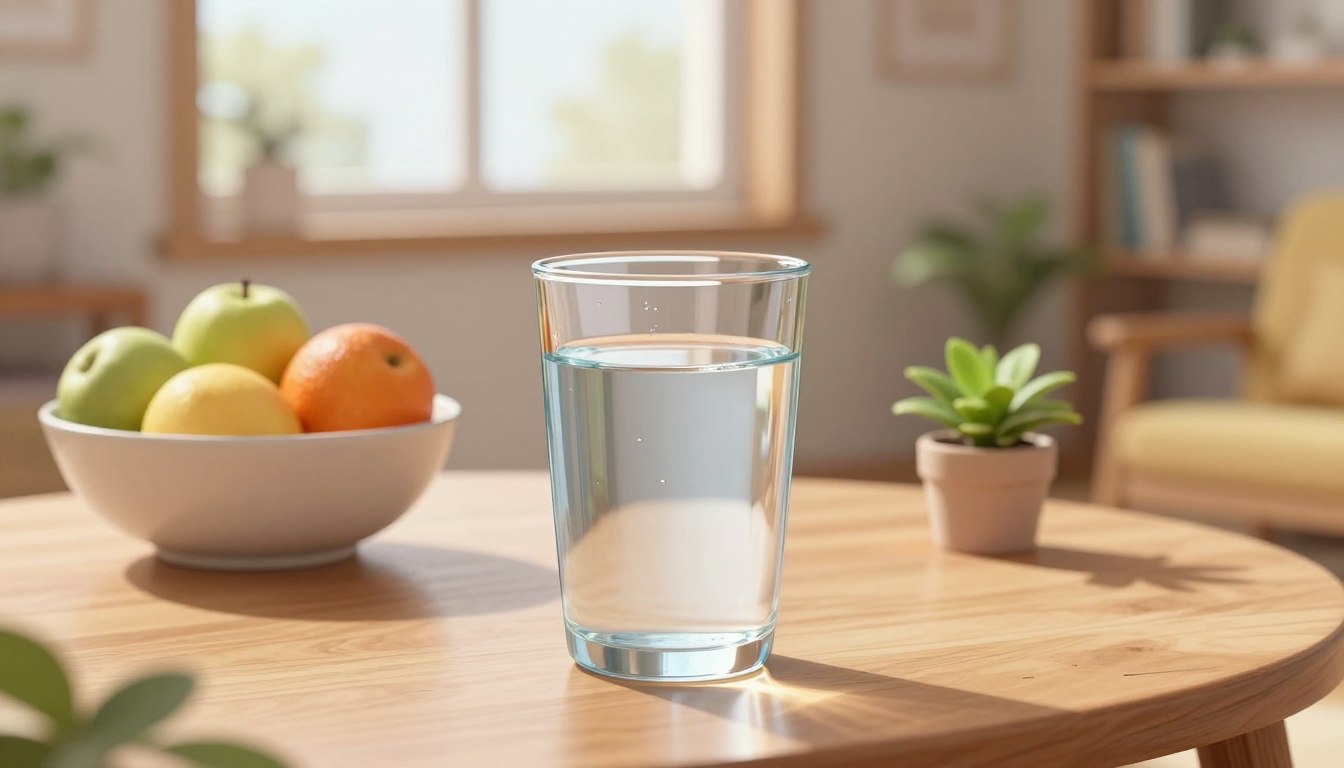
Surprising fact: One in three serious injuries for older people starts with a simple wobble after standing up.
Your mom says she’s fine… but you notice she’s a little unsteady today.
Yes — low fluid levels in the body can raise fall risk. Losing fluid reduces blood volume. That can drop blood pressure, make the brain feel foggy, and weaken muscle response. The result is more dizziness and poor balance.
This matters most for older adults who live alone. Small shifts in circulation or cognition can turn a routine step into a dangerous tumble. Simple habits that support steady balance make a big difference.
What to expect in this guide: we’ll explain why low fluid boosts fall chances, who faces the highest risk, early signs to watch for, and easy daily routines to help keep movement safer. This isn’t about perfection. It’s about small steps that protect health and confidence.
Need help now? Talk to Joy at 1-415-569-2439. Sign up for JoyCalls: https://app.joycalls.ai/signup.
Key Takeaways
- Low fluid levels can lower blood volume and raise fall risk.
- Balance and brain perfusion both matter for safe movement.
- Older adults living independently face higher odds from small changes.
- Small daily hydration habits improve steadiness and confidence.
- JoyCalls offers support: quick check-ins, alerts, and companionship.
Why dehydration can increase fall risk in older adults
Less fluid means less circulating blood, which affects how steady you feel when you stand up. That simple change can lead to lightheaded moments and sudden dizziness.
How blood volume ties to balance: When blood volume drops, less blood reaches the brain quickly. The result can be brief confusion, dim vision, or a head spin during quick moves like getting out of bed.
Orthostatic hypotension is easy to explain: your blood pressure falls when you stand, and the body can’t catch up fast enough. That delay creates a direct link between position changes and a higher fall risk.
Muscles and reaction time: Low fluids can cause muscle cramps, weakness, and slower reflexes. If you slip, your body may not react fast enough to stop a fall.

Try JoyCalls Free
No app or new device needed. Start with a free 7-day trial.
- Less circulation → dizziness during quick movements.
- Lower blood pressure on standing → momentary blackout or wobble.
- Muscle cramps and fatigue → weaker catch-steps.
- Reduced brain blood flow → confusion or poor judgment.
Quick check: If dizziness or confusion appears suddenly, consider low fluid as one possible factor. For daily routines that help, try a gentle daily check-in routine to keep fluids and meals on track.
Dehydration and falls elderly: who is most at risk today
Many older adults don’t feel thirsty even when their body needs more fluid. That quiet change makes waiting for thirst a risky plan.
Age-related changes in thirst and total body water after 65
After 65, total body water drops. A smaller drop can cause bigger problems. Thirst signals weaken, especially after 80. So, a person may not notice when fluids are low.

Kidney function changes that make fluid loss easier
With age, kidneys don’t concentrate urine as well. That means more fluid leaves the body on a normal day. Small losses add up fast.
Medications that can lead dehydration and increase risk
Some medications raise the risk: diuretics, laxatives, and sedating meds. They may boost fluid loss or blunt the urge to drink. Ask a clinician about medication checks.
Chronic conditions and daily triggers
Conditions like diabetes, heart trouble, kidney disease, and cognitive decline complicate fluid balance. Heat, exercise, fever, vomiting, or diarrhea raise needs on any given day.
Try JoyCalls Free
No app or new device needed. Start with a free 7-day trial.
Incontinence concerns and caregiver notes
Many older adults drink less on purpose to avoid accidents. That strategy can lead to a higher fall risk. If you care from afar, prioritize check-ins on hot days or after illness. Talk with a care team about safer toileting plans.
Signs of dehydration to watch for before a fall happens
Catching warning signs early can prevent a trip to the ER. A few quick checks each day help caregivers and older adults stay safe.
Check the urine: Dark yellow to brownish color, a stronger odor, or less frequent trips may show low fluid. Pale urine usually means better hydration. Use this simple daily check as a cue to sip more.

- Dry mouth or reduced saliva — common with some meds.
- Dizziness or brief fainting when standing, plus visual “darkness.”
- Fatigue, headache, flushed skin, and heat intolerance.
- Muscle cramps at night and a loss of coordination in the morning.
- Confusion or sudden changes in alertness — take this very seriously.
When to get help: Repeated fainting, marked confusion, or severe dizziness needs clinical attention right away. Don’t just wait and watch.
| Sign | What to look for | Quick action |
|---|---|---|
| Urine | Dark color; stronger smell; fewer trips | Offer fluids within 30 mins; monitor next urine color |
| Dry mouth | Thick saliva; cough; trouble swallowing dry foods | Small sips often; moist foods like soups |
| Dizziness & vision | Lightheaded on standing; brief “darkness” | Sit, rest, rise slowly; check blood pressure |
| Confusion & cramps | Sudden alertness change; nighttime leg cramps | Assess urgently; seek medical advice if sudden |
For more on signs in older adults, see early symptom guidance.
How to stay hydrated every day to reduce risk falls at home
Small, steady sipping beats waiting for thirst when you want a safer day at home. Aim for steady water intake throughout the day rather than large amounts at once.
Daily fluid targets that fit seniors
Many people do well with about 6–8 cups (≈48 ounces) of fluids per day. A weight-based option is about 30 mL/kg daily—often at least 1.5 liters. Ask a clinician to tailor targets for heart or kidney conditions.
Build a routine that works when you don’t feel thirsty
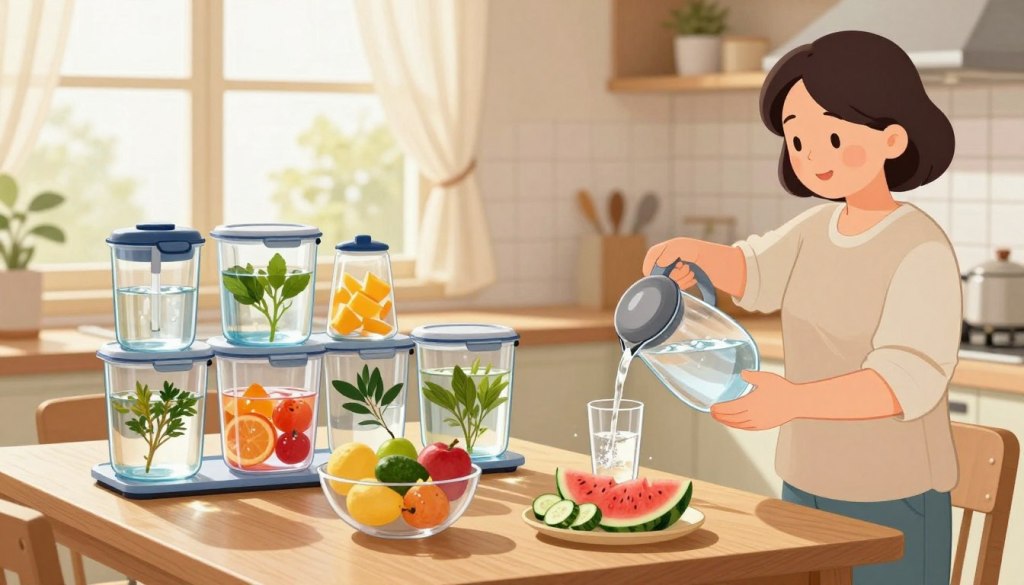
Have a glass with each meal, sip at medication times, and take a drink before leaving the bedroom. Small reminders and a visible water bottle help make sipping automatic.
Keep fluids within reach to support ability and independence
- Lightweight cups with handles by the favorite chair.
- Bedside water for night visits.
- Travel bottles for short walks at home.
Use urine color and symptoms to monitor status
Check urine color daily: pale is better. Look for headache, dry skin, or lightheaded moments as cues to drink more.
Add water-rich foods and flavor strategies
Soups, cucumbers, oranges, berries, and watermelon boost fluid without forcing drinks. Add lemon, lime, or sliced strawberries for pleasant water choices. Sparkling water or a splash of juice also counts.
When electrolytes and limits matter
Electrolyte drinks help during heat, fever, vomiting, or diarrhea—choose low-sugar options. Limit high-caffeine drinks, excess sugar, and alcohol since they can increase urine output and affect balance.
Medication checks and pairing with fall prevention
Review diuretics, laxatives, and sedating drugs with the care team if low fluid shows up often. Pair hydration habits with strength and balance practice, good lighting, clear walkways, and steady shoes for the best protection at home.
For practical guidance on daily targets, see how to stay hydrated.
Caregiver tips for protecting a loved one from dehydration-related falls
Caregivers often worry about a parent who forgets to sip during the day. Small, respectful actions keep a loved one safer without taking away independence.
Create simple prompts and accountability
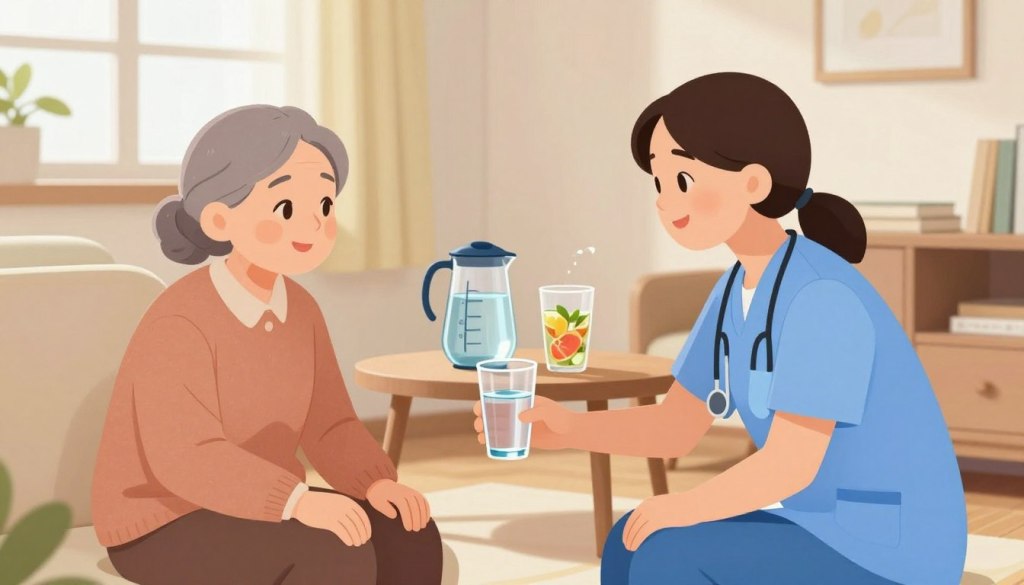
Set easy cues: a morning phone reminder, a labeled bottle by the chair, and a “drink with meds” habit. Keep prompts friendly. Try a one-question check-in: “How many cups so far today?”
Know when dizziness or low pressure needs help
Repeated dizziness, fainting, very low blood pressure readings, or sudden confusion needs medical advice. Don’t guess. Call a clinician if symptoms return or worsen.
Stay connected with JoyCalls support
JoyCalls offers daily check-ins and alert summaries to you. It keeps consistency when you can’t be there every hour. Talk to Joy now: 1-415-569-2439. Sign up for JoyCalls: quick enrollment.
For caregiver resources on this topic see practical guidance for loved ones and tips on medication routines at helping with meds.
Why Good Intentions Alone Often Fail
Most older adults know they should drink more water. Family members remind them. Doctors mention it during appointments. Caregivers leave water bottles nearby. Yet dehydration remains one of the most common and overlooked health concerns among seniors.
The problem is not usually a lack of awareness. The problem is that hydration is often treated as an occasional task rather than a daily system.
Many seniors wait until they feel thirsty before drinking. Unfortunately, aging changes the body’s thirst mechanism. By the time thirst appears, dehydration may already be developing. This delay can increase the likelihood of dizziness, weakness, confusion, poor concentration, and balance issues that contribute to falls.
In addition, many older adults intentionally reduce fluid intake because they worry about:
- Frequent bathroom trips
- Urinary urgency
- Incontinence
- Nighttime awakenings
- Mobility challenges when walking to the restroom
While these concerns are understandable, reducing fluid intake often creates a much bigger problem. Dehydration can increase weakness, impair coordination, lower blood pressure, and reduce physical performance—all of which may significantly increase fall risk.
Instead of simply telling seniors to “drink more water,” a better approach is to create a structured hydration routine that fits naturally into everyday life.
The goal is to make hydration automatic, consistent, and easy to maintain.
The “Drink Before You’re Thirsty” Principle
One of the most important hydration habits for seniors is learning to drink before thirst appears.
As people age, the body’s ability to detect dehydration becomes less reliable. The brain may not send strong thirst signals even when fluid levels are already dropping.
This means waiting for thirst is not always a safe strategy.
A more effective approach is to connect hydration with existing daily activities.
For example:
Drink Water When You Wake Up
Many older adults wake up mildly dehydrated after several hours of sleep.
Starting the day with a glass of water can:
- Replenish fluids lost overnight
- Improve alertness
- Support circulation
- Reduce morning dizziness
Keeping a water bottle or glass near the bedside can make this habit easier.
Drink Before Meals
Linking hydration to breakfast, lunch, and dinner creates a predictable routine.
Benefits include:
- Consistent fluid intake throughout the day
- Better digestion
- Reduced likelihood of forgetting to drink
Drink After Physical Activity
Even light activities can increase fluid needs.
Examples include:
- Gardening
- Walking
- Housework
- Shopping
- Physical therapy sessions
A simple rule can help:
“Every movement session ends with hydration.”
This habit reinforces both recovery and fall prevention.
Building a Hydration-Friendly Home Environment
Sometimes dehydration occurs not because water is unavailable but because accessing it feels inconvenient.
Older adults may avoid drinking if obtaining water requires:
- Walking long distances
- Climbing stairs
- Carrying heavy containers
- Navigating obstacles
Making hydration easier can significantly improve fluid intake.
Place Water Stations Throughout the Home
Consider keeping water available in frequently used areas such as:
- Bedroom
- Living room
- Kitchen
- Reading area
- Patio or garden
The closer water is, the more likely it will be consumed.
Use Lightweight Containers
Large pitchers and heavy bottles can be difficult for seniors with:
- Arthritis
- Hand weakness
- Reduced grip strength
- Joint pain
Lightweight bottles with easy-open lids often encourage more frequent drinking.
Improve Visibility
Many seniors simply forget to drink because hydration is out of sight.
Keeping water visible serves as a natural reminder.
For example:
- Place a bottle near the television remote
- Keep water next to favorite chairs
- Put a glass beside medications
- Leave a filled bottle near the phone
Visible cues help turn hydration into a habit.
How Medication Schedules Can Support Better Hydration
Medication routines offer excellent opportunities to create hydration checkpoints.
Many older adults already follow medication schedules consistently.
Instead of creating a completely new habit, hydration can be attached to existing routines.
For example:
Morning Medications
Drink a full glass of water with morning medications whenever medically appropriate.
Midday Medications
Use lunchtime prescriptions as another hydration reminder.
Evening Medications
A moderate amount of water can support hydration while avoiding excessive fluid intake close to bedtime.
Of course, seniors should always follow their healthcare provider’s instructions regarding medications and fluid restrictions.
The key idea is simple:
If medications are already part of the daily routine, hydration can become part of that same routine.
Recognizing Personal Dehydration Warning Signs
Every individual experiences dehydration differently.
Some people notice dizziness first.
Others experience fatigue.
Some develop headaches or concentration problems.
Keeping track of personal warning signs can help seniors address dehydration before it contributes to a fall.
A useful exercise is to create a personal dehydration checklist.
Possible Early Warning Signs
- Feeling unusually tired
- Dry mouth
- Headache
- Reduced energy
- Dark urine
- Difficulty concentrating
- Increased irritability
- Lightheadedness when standing
- Muscle cramps
- Unsteadiness while walking
Once seniors identify their common warning signs, they can respond more quickly before balance and mobility become affected.
The Importance of Hydration During Hot Weather
Many fall-prevention discussions underestimate the role of seasonal changes.
Hot weather can dramatically increase dehydration risk.
Older adults may lose fluids through:
- Sweating
- Increased respiration
- Outdoor activities
- Heat exposure inside the home
Unfortunately, some seniors may not recognize how quickly dehydration develops during warm conditions.
Practical Summer Safety Strategies
During hot weather:
- Drink fluids consistently throughout the day
- Stay indoors during peak heat hours
- Use fans or air conditioning when possible
- Wear lightweight clothing
- Increase hydration before outdoor activities
Families should be especially attentive during heat waves because dehydration-related falls often increase during periods of extreme temperature.
Hydration During Illness: A Critical Fall Prevention Strategy
Even mild illnesses can increase dehydration risk.
Common examples include:
- Fever
- Vomiting
- Diarrhea
- Respiratory infections
- Reduced appetite
When illness occurs, the body’s fluid requirements often increase while fluid intake decreases.
This combination can rapidly create conditions that increase fall risk.
Why Falls Become More Common During Illness
Dehydration during illness may contribute to:
- Weakness
- Muscle fatigue
- Low blood pressure
- Slower reaction times
- Confusion
- Reduced physical stability
For seniors recovering from illness, hydration should be treated as a key component of recovery rather than an afterthought.
Family caregivers should pay close attention to fluid intake during these periods.
How Family Members Can Help Without Constantly Nagging
Many family members struggle with encouraging hydration.
Repeated reminders can sometimes create frustration.
A more effective strategy is to support the environment rather than constantly giving verbal instructions.
Helpful approaches include:
Make Water Convenient
Refill bottles regularly.
Offer Hydrating Foods
Examples include:
- Watermelon
- Cucumbers
- Oranges
- Strawberries
- Soups
- Yogurt
Use Positive Reinforcement
Celebrate consistency rather than focusing on mistakes.
Create Shared Habits
Drink water together during visits or phone calls.
These approaches often feel more supportive and less intrusive.
Creating a Personal Hydration Safety Plan
Every older adult has unique health conditions, medications, schedules, and mobility needs.
For this reason, the most successful hydration strategy is a personalized one.
A hydration safety plan might include:
Daily Hydration Goals
Establish realistic targets based on healthcare provider recommendations.
Scheduled Drinking Times
Attach hydration to predictable activities.
Emergency Warning Signs
Know when symptoms require immediate attention.
Fall-Risk Periods
Identify situations where dehydration commonly occurs, such as:
- Hot weather
- Travel
- Illness
- Busy days outside the home
Caregiver Communication
Ensure family members know the signs that hydration may be declining.
The goal is not perfection.
The goal is consistency.
Small daily habits repeated over months and years often provide far greater protection than occasional efforts.
Hydration Is More Than Drinking Water—It’s a Daily Fall Prevention Tool
When people think about fall prevention, they often focus on mobility aids, exercise programs, home modifications, and balance training.
While all of these are important, hydration deserves equal attention.
Proper hydration supports:
- Blood pressure stability
- Cognitive function
- Muscle performance
- Energy levels
- Balance
- Safe movement
Most importantly, it helps seniors maintain the physical and mental resilience needed to navigate daily life safely.
A simple glass of water may seem insignificant, but over time, consistent hydration can become one of the easiest and most effective habits for reducing fall risk and supporting healthy aging.
Hidden Fall Triggers: Situations Where Dehydration and Mobility Problems Often Collide
Why Falls Rarely Happen Because of One Factor Alone
Many people think of falls as sudden, random accidents. In reality, most falls result from several risk factors occurring at the same time.
A senior may already have mild balance challenges. Add dehydration, a rushed movement, poor lighting, fatigue, or an unexpected obstacle, and the risk of falling can increase significantly.
This is why hydration should never be viewed in isolation. The relationship between dehydration and falls becomes most dangerous when it interacts with everyday situations that older adults encounter regularly.
Understanding these “high-risk moments” can help seniors and caregivers identify problems before an accident occurs.
The good news is that many of these situations are predictable and preventable.
The Morning Hours: A Common Time for Dehydration-Related Falls
Many falls occur shortly after waking up.
Several factors combine during the early morning hours:
- The body has gone many hours without fluid intake.
- Blood pressure may be lower.
- Muscles may be stiff from inactivity.
- Reaction times may be slower.
- Vision may not be fully adjusted.
For seniors who are already mildly dehydrated, getting out of bed too quickly can trigger dizziness or unsteadiness.
A Safer Morning Routine
Rather than standing immediately after waking:
- Sit on the edge of the bed for a minute.
- Take several deep breaths.
- Move the ankles and legs gently.
- Drink a glass of water if available.
- Stand slowly while holding a stable surface.
This simple routine can help reduce sudden drops in blood pressure and improve stability.
Bathroom Trips: One of the Most Overlooked Fall Risks
Many older adults fear drinking water because they worry about frequent bathroom visits.
Ironically, bathroom trips are already one of the most common locations for falls.
The solution is not reducing hydration.
Instead, it is making bathroom visits safer.
Why Bathrooms Become High-Risk Areas
Bathrooms often contain:
- Slippery surfaces
- Tight spaces
- Poor nighttime visibility
- Quick turns and movements
- Wet floors
If dehydration has already caused dizziness or weakness, these conditions become even more dangerous.
Practical Safety Improvements
Consider:
- Installing grab bars
- Using non-slip mats
- Improving lighting
- Keeping pathways clear
- Wearing supportive footwear
Proper hydration and bathroom safety should work together rather than compete with each other.
The Risk of Standing Up Too Quickly
One of the most common dehydration-related problems is orthostatic hypotension, a sudden drop in blood pressure when standing.
Even mild dehydration can make this issue worse.
A senior may feel:
- Lightheaded
- Dizzy
- Weak
- Unsteady
These symptoms may last only a few seconds, but that is often enough time for a fall to occur.
Situations Where This Commonly Happens
- Getting out of bed
- Standing from a recliner
- Rising from a dining chair
- Exiting a car
- Standing after gardening
The solution is simple but effective:
Pause before moving.
Giving the body a few extra seconds to adjust can greatly improve stability.
Shopping Trips and Errands: An Unexpected Dehydration Challenge
Many seniors leave home well hydrated but spend several hours running errands without drinking fluids.
Shopping centers, grocery stores, medical appointments, and social outings can easily extend longer than expected.
During this time:
- Walking increases fluid needs.
- Air-conditioned environments may reduce awareness of thirst.
- Seniors may avoid drinking because restroom access is uncertain.
By the time they return home, dehydration may already be affecting balance and energy levels.
A Simple Prevention Strategy
Carry:
- A lightweight water bottle
- A hydration reminder on a phone or watch
- Small healthy snacks containing water-rich foods
These simple preparations can reduce dehydration during extended outings.
The Connection Between Fatigue and Falls
Dehydration is often associated with thirst, but fatigue is another important warning sign.
When the body lacks adequate fluids:
- Muscles may work less efficiently.
- Endurance may decrease.
- Mental alertness may decline.
A tired person is more likely to:
- Misjudge distances
- Miss a step
- React slowly to hazards
- Lose balance during movement
When Fatigue Should Raise Concern
If a senior suddenly feels:
- More exhausted than usual
- Less motivated to move
- Weaker during routine activities
Hydration should be evaluated as a possible contributing factor.
Social Isolation Can Increase Dehydration Risk
Many discussions about dehydration focus on physical health, but social factors matter as well.
Older adults who live alone may:
- Forget to drink regularly
- Have less structured routines
- Experience reduced motivation for self-care
- Delay noticing symptoms
Social engagement often creates natural opportunities for hydration.
For example:
- Sharing tea with friends
- Drinking water during group activities
- Having meals with family
- Participating in senior programs
These interactions indirectly support hydration and fall prevention.
Travel and Dehydration: A Hidden Risk for Older Adults
Travel can disrupt even the best hydration habits.
Whether visiting family, attending appointments, or taking vacations, seniors often experience changes in routine.
Common travel-related challenges include:
- Long car rides
- Air travel
- Hot weather
- Unfamiliar environments
- Irregular meal schedules
Many older adults intentionally reduce fluid intake while traveling to avoid restroom stops.
Unfortunately, this decision can increase:
- Fatigue
- Dizziness
- Weakness
- Fall risk
Travel Hydration Checklist
Before leaving home:
- Carry a refillable water bottle.
- Identify restroom locations when possible.
- Schedule hydration breaks.
- Avoid excessive caffeine.
- Drink fluids before feeling thirsty.
These small steps can make travel significantly safer.
How Poor Nutrition and Dehydration Work Together
Hydration and nutrition are closely connected.
Many seniors experiencing dehydration are also eating less than they should.
Poor nutrition can contribute to:
- Muscle weakness
- Reduced energy
- Slower recovery
- Balance difficulties
When inadequate nutrition combines with dehydration, fall risk may increase substantially.
Hydrating Foods That Also Support Strength
Examples include:
- Oranges
- Watermelon
- Berries
- Cucumbers
- Soups
- Yogurt
- Leafy vegetables
These foods provide both hydration and nutritional support.
Recognizing Small Changes Before They Become Big Problems
One of the most effective fall-prevention strategies is noticing subtle changes early.
Falls rarely occur without warning.
Instead, many seniors experience smaller signs first.
Examples include:
- Holding furniture more often
- Moving more slowly
- Feeling unusually tired
- Becoming hesitant on stairs
- Experiencing occasional dizziness
These signs should never be dismissed as simply “getting older.”
They may indicate that hydration, mobility, medication management, or other health factors need attention.
The earlier these issues are addressed, the easier it becomes to prevent a serious fall.
Building a Personal Fall and Hydration Awareness Plan
Every senior has unique challenges.
Some struggle most during hot weather.
Others become dehydrated while traveling.
Some experience problems after taking certain medications.
A personalized awareness plan can help identify individual risk patterns.
Questions to consider include:
- When do I usually forget to drink water?
- What symptoms appear first when I become dehydrated?
- What activities leave me feeling weak or dizzy?
- Which locations in my home feel least safe?
- What times of day do I feel most unsteady?
Answering these questions creates valuable insight that can guide safer daily habits.
Small Daily Decisions Create Long-Term Safety
Preventing falls is rarely about making one dramatic change.
More often, it involves dozens of small decisions repeated consistently over time.
Choosing to drink water before leaving the house.
Standing up slowly.
Keeping pathways clear.
Paying attention to fatigue.
Recognizing early warning signs.
Each of these actions may seem minor on its own. Together, they create a stronger foundation for independence, confidence, and safety.
Hydration is not simply about avoiding thirst. It is about supporting the body’s ability to move, think, react, and maintain balance throughout the day. When combined with smart mobility habits and environmental awareness, proper hydration becomes one of the most accessible and effective tools available for reducing fall risk in older adults.
How Dehydration Affects the Brain: The Hidden Cognitive Risks Behind Falls
Fall Prevention Is Not Just About Physical Balance
When most people think about falls, they focus on physical issues such as weak muscles, poor balance, slippery floors, or mobility limitations. While these factors certainly matter, another critical piece of the puzzle is often overlooked: brain function.
Every movement we make depends on the brain’s ability to process information quickly and accurately. Walking across a room, stepping over a curb, reaching for a handrail, or navigating around furniture all require constant communication between the brain, eyes, nerves, and muscles.
Dehydration can interfere with this communication system.
Even mild dehydration may affect concentration, attention, reaction time, memory, and decision-making. For older adults, these changes can significantly increase the likelihood of a fall, especially in situations that require quick thinking or sudden adjustments.
Understanding how hydration affects the brain can help seniors and caregivers recognize risks that may not be immediately obvious.
Why the Aging Brain Is More Vulnerable to Dehydration
The brain is composed of approximately 75% water. Adequate hydration helps maintain blood flow, nutrient delivery, and efficient communication between brain cells.
As people age, several changes occur that can make the brain more susceptible to the effects of dehydration:
- Reduced thirst sensation
- Changes in kidney function
- Increased medication use
- Chronic health conditions
- Lower overall fluid reserves
Because of these factors, dehydration may affect older adults more quickly and more severely than younger individuals.
In some cases, symptoms may appear before a senior even realizes they are becoming dehydrated.
Reduced Attention Can Lead to Missed Hazards
Safe movement requires constant awareness of the environment.
For example, while walking through a home, a person may need to notice:
- A rug corner that has curled upward
- A pet lying on the floor
- A misplaced object in a hallway
- A wet surface near a sink
- An unexpected step or threshold
When hydration levels drop, attention and focus may decline.
A senior may become more likely to overlook hazards that would normally be obvious.
Real-World Example
Imagine an older adult carrying laundry through the house.
When fully hydrated, they notice a pair of shoes left near the hallway entrance and step around them safely.
When dehydrated and mentally fatigued, they may fail to register the obstacle until it is too late.
This type of lapse can turn an ordinary situation into a dangerous fall.
Slower Reaction Times Can Increase Injury Risk
Balance disturbances occur frequently during everyday life.
Most people occasionally:
- Misjudge a step
- Trip slightly
- Slip on a surface
- Lose footing momentarily
In many cases, the body recovers automatically.
The brain quickly recognizes the problem and directs muscles to respond.
However, dehydration can slow these responses.
Even a fraction of a second delay may reduce the ability to:
- Grab a handrail
- Catch oneself after stumbling
- Shift body weight appropriately
- Regain balance after a misstep
For seniors who already have mobility limitations, slower reactions can be especially problematic.
Decision-Making and Judgment May Become Less Reliable
One of the lesser-known effects of dehydration is its impact on judgment.
A dehydrated individual may make choices that increase fall risk without realizing it.
Examples include:
- Walking without a mobility aid
- Climbing a step stool unnecessarily
- Rushing to answer the phone
- Carrying objects that block vision
- Ignoring feelings of dizziness
These decisions may seem minor, but they often contribute to accidents.
The Confidence Gap
Interestingly, some individuals may not recognize that dehydration is affecting their judgment.
They may feel capable of performing an activity even when their physical and mental performance has already declined.
This mismatch between perceived ability and actual ability can create dangerous situations.
Dehydration Can Increase Mental Fatigue Throughout the Day
Mental fatigue is not always obvious.
A senior may not feel sleepy, yet still experience reduced mental sharpness.
Signs of mental fatigue can include:
- Difficulty concentrating
- Forgetfulness
- Reduced motivation
- Slower thinking
- Trouble following conversations
As mental fatigue accumulates, navigating daily activities becomes more challenging.
Tasks that once felt routine may require more effort and attention.
The result can be an increased likelihood of mistakes that contribute to falls.
The Link Between Confusion and Fall Risk
Severe dehydration can sometimes cause confusion, disorientation, or changes in mental status.
For older adults, these symptoms may be mistaken for:
- Normal aging
- Stress
- Fatigue
- Medication side effects
In reality, dehydration may be a contributing factor.
Confusion can increase fall risk because it affects a person’s ability to:
- Assess situations accurately
- Follow safety precautions
- Remember mobility limitations
- Use assistive devices consistently
Family members and caregivers should pay close attention to sudden changes in mental clarity, particularly when they occur alongside reduced fluid intake.
Why Multitasking Becomes More Difficult When Dehydrated
Many falls occur while a person is attempting to do multiple things at once.
For example:
- Walking while talking
- Carrying groceries while opening a door
- Navigating stairs while holding items
- Looking for keys while moving through a room
These situations require divided attention.
Dehydration can make multitasking more difficult by reducing cognitive efficiency.
As a result, seniors may become more likely to:
- Miss environmental hazards
- Lose focus during movement
- Misjudge distances
- Forget safety precautions
A useful strategy is to simplify activities whenever possible.
Focusing on one task at a time can improve safety, particularly during periods of illness, fatigue, or reduced hydration.
Emotional Changes Can Also Influence Fall Risk
Hydration affects more than physical and cognitive performance.
It can also influence mood.
Some individuals become:
- Irritable
- Frustrated
- Restless
- Less patient
These emotional changes may lead to rushed decisions or reduced willingness to follow safety recommendations.
For example, a senior who becomes frustrated by moving slowly may attempt to hurry through a task despite feeling unsteady.
The emotional effects of dehydration are often subtle but can contribute to risky behaviors.
Caregivers Should Watch for Behavioral Changes
Many dehydration symptoms appear as behavioral changes before physical symptoms become obvious.
Examples include:
- Increased forgetfulness
- Reduced participation in activities
- Difficulty concentrating
- Unusual confusion
- Withdrawal from conversations
- Increased irritability
Recognizing these signs early can help caregivers intervene before dehydration progresses further.
Simple questions can be helpful:
- “Have you had enough water today?”
- “When was the last time you had something to drink?”
- “Would you like a glass of water while we talk?”
Supportive reminders often work better than repeated warnings.
Strengthening Cognitive Resilience Through Consistent Hydration
Hydration is not a cure for every cognitive challenge associated with aging.
However, it is one of the most accessible ways to support brain health and daily functioning.
Consistent hydration helps maintain:
- Mental alertness
- Concentration
- Reaction speed
- Decision-making ability
- Environmental awareness
These functions play an important role in preventing falls and preserving independence.
Just as muscles require water to perform effectively, the brain relies on adequate hydration to process information and coordinate safe movement.
Protecting Both Mind and Mobility
Fall prevention is often discussed as a physical challenge, but the brain plays an equally important role.
Every safe step depends on attention, judgment, awareness, and quick reactions.
When dehydration affects these cognitive abilities, fall risk can rise even before noticeable physical symptoms appear.
For seniors, caregivers, and family members, this understanding offers an important reminder: maintaining hydration is not only about supporting the body. It is also about protecting the brain’s ability to make safe decisions, recognize hazards, and respond effectively to everyday challenges.
By viewing hydration as both a physical and cognitive health priority, older adults can take another meaningful step toward maintaining independence and reducing their risk of falls.
Hydration, Muscle Strength, and Stability: Why Water Matters More Than Many Seniors Realize
Strong Muscles Are One of the Best Defenses Against Falls
When healthcare professionals discuss fall prevention, strengthening muscles is almost always part of the conversation.
Strong muscles help older adults:
- Maintain balance
- Recover from slips and trips
- Climb stairs safely
- Rise from chairs independently
- Walk with greater confidence
Many seniors understand the importance of exercise for maintaining muscle strength. However, far fewer realize that hydration plays a critical role in how muscles function every day.
Even well-conditioned muscles cannot perform optimally when the body lacks adequate fluids.
For older adults, this connection between hydration and muscle performance can have a direct impact on fall risk.
How Muscles Depend on Proper Hydration
Water is involved in virtually every process that allows muscles to work effectively.
Hydration supports:
- Nutrient delivery to muscle tissue
- Oxygen transport
- Muscle contractions
- Joint lubrication
- Temperature regulation
- Waste removal
When fluid levels decline, these processes become less efficient.
As a result, muscles may:
- Fatigue more quickly
- Generate less force
- Recover more slowly
- Feel weaker during physical activity
These changes can make everyday movements more challenging and less stable.
Why Dehydration Can Make Seniors Feel Weaker
Many older adults describe dehydration as making them feel “drained” or “off.”
This sensation is not simply psychological.
When the body lacks fluids:
- Blood volume can decrease.
- Circulation becomes less efficient.
- Muscles receive fewer resources for performance.
- Physical effort may feel harder than usual.
Activities that are normally manageable may suddenly feel exhausting.
Examples include:
- Walking through the house
- Carrying groceries
- Gardening
- Climbing stairs
- Standing for extended periods
This temporary weakness can increase the likelihood of balance problems and falls.
The Relationship Between Muscle Fatigue and Falls

Muscle fatigue is a major contributor to falls among older adults.
When muscles become tired, they may struggle to respond quickly enough to unexpected situations.
For example, imagine a senior trips slightly on an uneven surface.
To avoid falling, the body must rapidly:
- Shift weight
- Activate stabilizing muscles
- Adjust posture
- Regain balance
Fatigued muscles may not respond effectively.
Dehydration can accelerate fatigue, reducing the body’s ability to recover from these common balance disturbances.
The result may be a fall that otherwise could have been prevented.
Leg Strength and Hydration: A Critical Combination

The muscles of the legs play a particularly important role in fall prevention.
They are responsible for:
- Standing
- Walking
- Climbing stairs
- Getting in and out of chairs
- Maintaining posture
Dehydration can negatively affect lower-body performance, making these activities feel more demanding.
Some seniors may begin compensating by:
- Moving more slowly
- Holding onto furniture
- Avoiding physical activity
While these adjustments may seem protective, reduced movement can contribute to further muscle loss over time.
Maintaining hydration helps support the physical activity needed to preserve leg strength and mobility.
Muscle Cramps Can Create Unexpected Hazards
Many people associate muscle cramps with athletes, but cramps can also affect older adults.
Although cramps have multiple potential causes, dehydration can be one contributing factor.
A sudden cramp in the:
- Calf
- Foot
- Thigh
- Hamstring
can temporarily disrupt balance and mobility.
Imagine experiencing a painful calf cramp while:
- Walking to the bathroom at night
- Descending stairs
- Crossing a parking lot
The resulting instability may significantly increase fall risk.
Addressing hydration needs may help reduce the likelihood of fluid-related muscle dysfunction.
Recovery After Physical Activity Matters Too
Fall prevention is not only about performing activities safely. Recovery is equally important.
Older adults often participate in:
- Walking programs
- Physical therapy
- Balance exercises
- Household chores
- Recreational activities
These activities can increase fluid requirements.
Without proper hydration afterward, seniors may experience:
- Prolonged fatigue
- Muscle soreness
- Reduced energy
- Slower recovery
Poor recovery can make subsequent activities more difficult and potentially increase fall risk later in the day.
A simple hydration habit after exercise or physical activity can support safer recovery.
Hydration and Joint Comfort
While hydration does not eliminate arthritis or joint disease, adequate fluid intake supports overall joint health.
Many seniors with joint discomfort already face mobility challenges.
When movement becomes painful:
- Walking patterns may change.
- Balance may be affected.
- Physical activity levels may decrease.
Hydration helps maintain normal bodily function and supports the tissues involved in movement.
Combined with appropriate medical care, exercise, and nutrition, good hydration can contribute to more comfortable and confident movement.
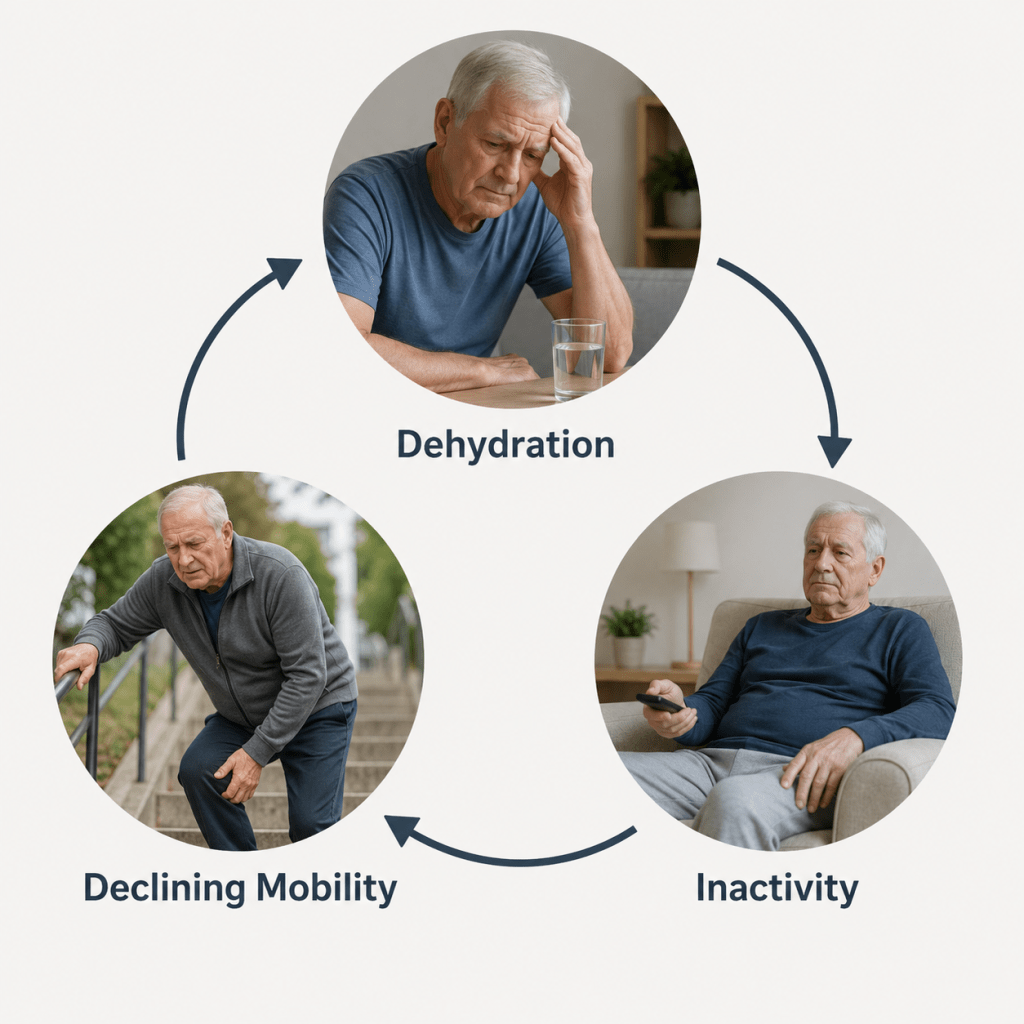
The Cycle of Dehydration, Inactivity, and Declining Mobility
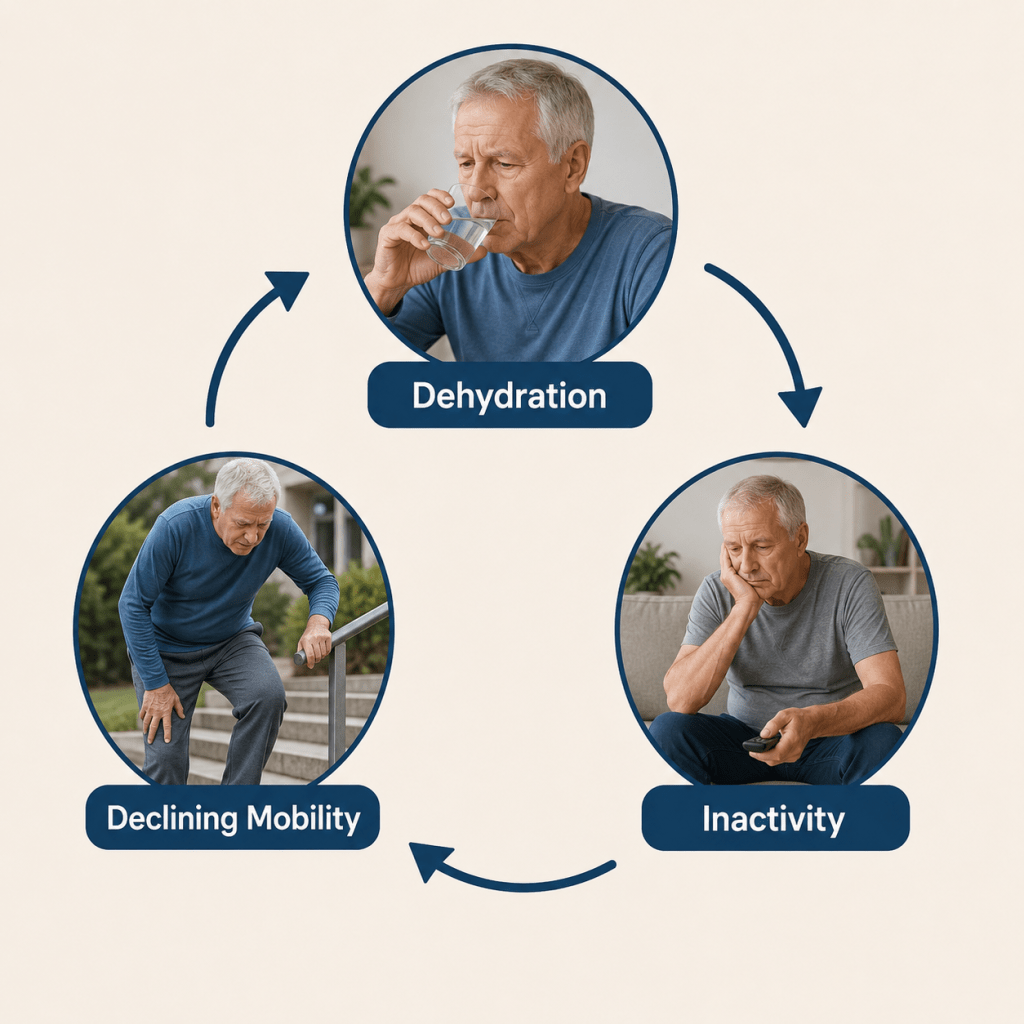
One of the most concerning patterns among older adults is the cycle that can develop between dehydration and inactivity.
It often unfolds like this:
Step 1: Dehydration Causes Fatigue
The senior feels tired and less energetic.
Step 2: Activity Levels Decline
Walking, exercising, or social activities become less appealing.
Step 3: Muscle Strength Begins to Decrease
Reduced activity contributes to muscle loss over time.
Step 4: Balance Becomes Less Stable
Weaker muscles provide less support for safe movement.
Step 5: Fall Risk Increases
Confidence decreases, and mobility may become more restricted.
Breaking this cycle early is important.
Maintaining hydration can help support the energy needed to remain active and engaged.
Hydration and Physical Therapy Success
Many older adults participate in rehabilitation programs following:
- Surgery
- Injury
- Hospitalization
- Previous falls
These programs often focus on improving:
- Strength
- Balance
- Endurance
- Mobility
Hydration can influence how effectively the body responds to these efforts.
A well-hydrated individual may be better positioned to:
- Participate fully in therapy sessions
- Recover between exercises
- Maintain energy levels
- Support muscle function
While hydration alone cannot replace therapy, it can help maximize the benefits of rehabilitation efforts.
Supporting Strength Through Hydration and Nutrition
Muscles require more than exercise to remain healthy.
They also depend on:
- Protein
- Vitamins
- Minerals
- Adequate hydration
Many seniors focus on one aspect while overlooking another.
The most effective approach combines:
- Regular movement
- Balanced nutrition
- Consistent hydration
- Adequate rest
Together, these factors create a stronger foundation for maintaining mobility and independence.
Practical Habits That Support Both Hydration and Strength

Small daily actions can make a meaningful difference.
Consider these strategies:
Hydrate Before Physical Activity
Avoid beginning walks or exercise sessions already dehydrated.
Drink After Activity
Replace fluids lost during movement and exertion.
Pair Water With Meals
This helps maintain consistency throughout the day.
Keep Water Accessible
Reduce barriers to regular fluid intake.
Monitor Energy Levels
Sudden fatigue may sometimes signal inadequate hydration.
Stay Active
Movement and hydration reinforce one another.
These habits can support both muscle function and fall prevention.
Stronger Muscles Begin With Better Daily Habits
Many fall-prevention conversations focus on major interventions such as exercise programs, mobility devices, and home modifications.
While these strategies are valuable, hydration deserves a place alongside them.
Water helps support the muscles that allow older adults to stand, walk, react, and recover safely.
When hydration is neglected, strength, endurance, and stability may all be affected.
By viewing hydration as an essential component of physical performance—not just a response to thirst—seniors can take another proactive step toward preserving mobility, maintaining independence, and reducing their risk of falls for years to come.
Conclusion
Keeping steady starts with simple sips throughout the day. Low fluid can raise fall risk, yet steady hydration supports blood volume, clearer brain function, and firmer balance.
Small, practical steps protect health. Have a glass at meals, carry a water bottle, and build a “one more sip” habit. Start with one extra drink today and grow the routine.
Watch urine color, sudden dizziness, or new confusion—especially during heat, illness, or after medication changes. For study-backed context see research on links between fluid status and fall.
If you need backup, try a daily check-in. Learn a simple daily check-in routine with JoyCalls. Talk to Joy now: 1-415-569-2439. Sign up: https://app.joycalls.ai/signup.