

Surprising fact: nearly one in four older adults say they skip meals sometimes because cooking for one feels like too much.

“Mom says she’s fine… but is she actually eating real meals every day?” That thought hits many adult children. It also sits in the mind of a senior who finds cooking alone tiring.

This short guide defines a simple, repeatable plan that supports energy, appetite, and confidence without complicated cooking. It leans on basic nutrition advice that helps steady energy and lower disease risk.

We promise a day-by-day rhythm—breakfast, lunch, dinner, and snacks—plus easy swaps when groceries run low. No shame if it’s been cereal for dinner. Let’s make tomorrow easier.

If loneliness is reducing appetite, daily conversation can help. Family members can use check-ins and simple tools to stay connected; see a helpful caregiver schedule example here. Want friendly daily check-ins? Sign up for JoyCalls or Talk to Joy now: 1-415-569-2439.

Key Takeaways

  • Small, repeatable plans support steady energy and better eating habits.
  • Simple adjustments to nutrition can lower health risks as people age.
  • Short, regular check-ins reduce loneliness and improve appetite.
  • Caregivers can help remotely with schedules and friendly calls.
  • JoyCalls offers daily phone check-ins without needing an app.

Nutrition basics for older adults living alone

Good food can feel simple and kind. Eating a mix of colorful foods each day helps protect against high blood pressure, heart disease, and diabetes. Small, steady habits beat one big perfect change.
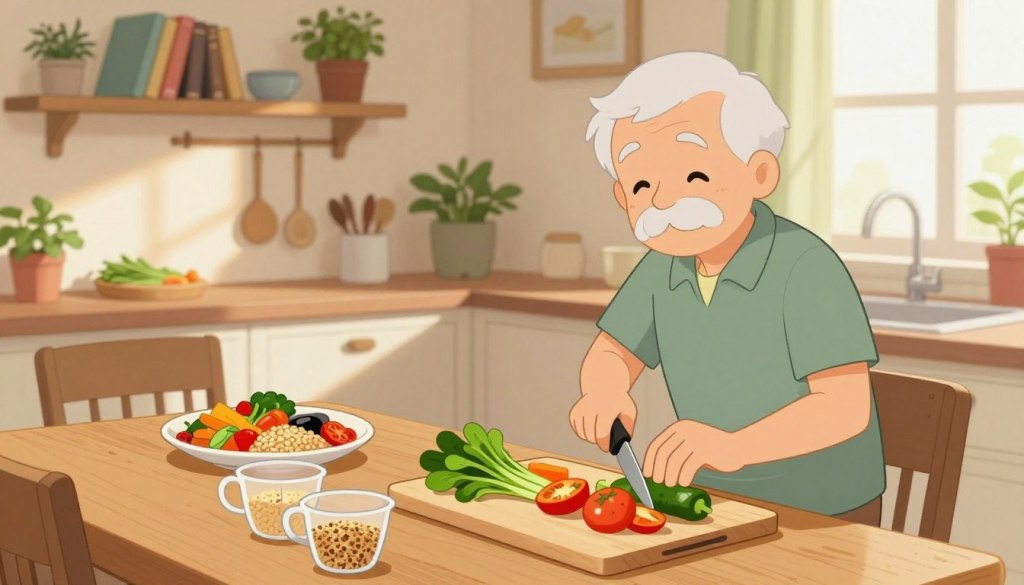
A warm and inviting kitchen scene featuring a cheerful older adult preparing a healthy meal. In the foreground, the senior, dressed in modest casual clothing, is chopping colorful vegetables, with a focus on greens, tomatoes, and bell peppers. A neatly arranged cutting board, along with measuring cups filled with grains, is nearby. In the middle ground, a wooden dining table is set with a simple yet appealing meal, showcasing a balance of proteins, veggies, and whole grains. The background reveals cozy kitchen elements, like shelves filled with cookbooks and fresh herbs, creating a homey atmosphere. Soft, natural light streams in from a window, casting gentle shadows and enhancing the friendly, nourishing mood of the environment.

Build a healthy eating pattern with variety to lower disease risk

Think “color + protein + whole grain.” That keeps plates interesting and supplies key nutrients linked to better health. Variety reduces risk by giving the body what it needs across food groups.

Protein needs for aging: simple ways to get enough at each meal

Protein keeps strength and balance. Add eggs, yogurt, milk, beans, lentils, chicken, or salmon at meals. Keep canned tuna, rotisserie chicken, Greek yogurt cups, and cottage cheese on hand for fast options.

Key nutrients to watch: vitamin B12, fiber, and hydration

Vitamin B12 may drop with age. Try fortified cereal or ask a clinician about supplements.

Fiber from beans, berries, vegetables, and whole grains helps digestion and steady blood sugar—useful for diabetes-focused eating.

Hydration matters. Water at every medication time, and a bottle near the favorite chair, makes a big difference.

Smart limits: added sugar, saturated fat, and sodium swaps that still taste good

Swap salt for herbs and lemon. Choose olive oil instead of extra butter. Pick fresh fruit instead of sugary desserts. These small swaps cut dietary risk without losing flavor.

“You don’t need perfect meals—just a few dependable choices you actually like.”

If you want more tips on healthy eating for older adults, see this easy guide. Need friendly check-ins to keep water and food habits on track? Try a daily check-in method here, or Sign up for JoyCalls at our signup page. Talk to Joy now: 1-415-569-2439.

Simple meal routine for seniors you can follow every day

Small, set times to eat take the guesswork out of the day and make food feel doable again. This calm structure helps appetite and steady energy without fancy cooking.

A cozy dining table set for a simple meal plan for seniors, featuring a balanced plate with grilled chicken, steamed vegetables, and brown rice. In the foreground, a neatly arranged table with a small vase of flowers adds warmth. In the middle, a light wooden table with a white tablecloth, accompanied by a comfortable chair. On the table, a day planner open to the “Meal Schedule” section showcases breakfast, lunch, and dinner options in a neat layout. The background features soft, natural lighting from a nearby window, casting gentle shadows. The room has a warm, inviting atmosphere, with a touch of greenery from houseplants, creating a peaceful space perfect for enjoying meals.

A realistic daily schedule that supports energy

Same-every-day structure:

  • 8:00 a.m. — breakfast
  • 12:00 p.m. — lunch
  • 3:00 p.m. — snack
  • 6:00 p.m. — dinner
  • 8:00 p.m. — optional light snack

Breakfast builder (protein + fruit)

Rotate yogurt with berries and milk, eggs with whole-grain toast, or a smoothie with spinach, fruit, and yogurt. These choices help you get enough protein early in the day.

Lunch mix-and-match plate

Pick 1 protein (chicken, beans, tuna), 1 fiber side (salad or vegetables), and 1 carb (whole-grain bread or leftover sweet potato). Leftovers work great.

Dinner templates and snacks

Try baked salmon or chicken with roasted vegetables and a sweet potato. Snack smart: peanut butter on celery, cheese with fruit, kefir, or hummus with carrots.

Sample day and quick fallbacks

Breakfast: smoothie with spinach, fruit, and yogurt. Lunch: chicken salad and a side salad. Snack: kefir. Dinner: fish and veggies with roasted sweet potato.

5-minute fallbacks: soup + toast, yogurt + fruit + nuts, or beans + microwaved vegetables.

“If you check in, ask: ‘What did you have today?’ Then suggest one small add-on tomorrow.”

Want help keeping a steady plan? Medication reminder apps and JoyCalls check-ins can keep people on track. Sign up: https://app.joycalls.ai/signup or Talk to Joy now: 1-415-569-2439.

How to make a weekly meal plan that saves time and stress

Set aside twenty minutes each week to pick simple breakfasts, lunches, dinners, and snacks that ease decision fatigue. A quick plan removes guesswork and keeps foods varied across the day.

Easy 20-minute planning — pick 2 breakfasts, 2 lunches, 3 dinners, and 3 snacks. Write a short shopping list and note one planned leftover. That saves both time and money.
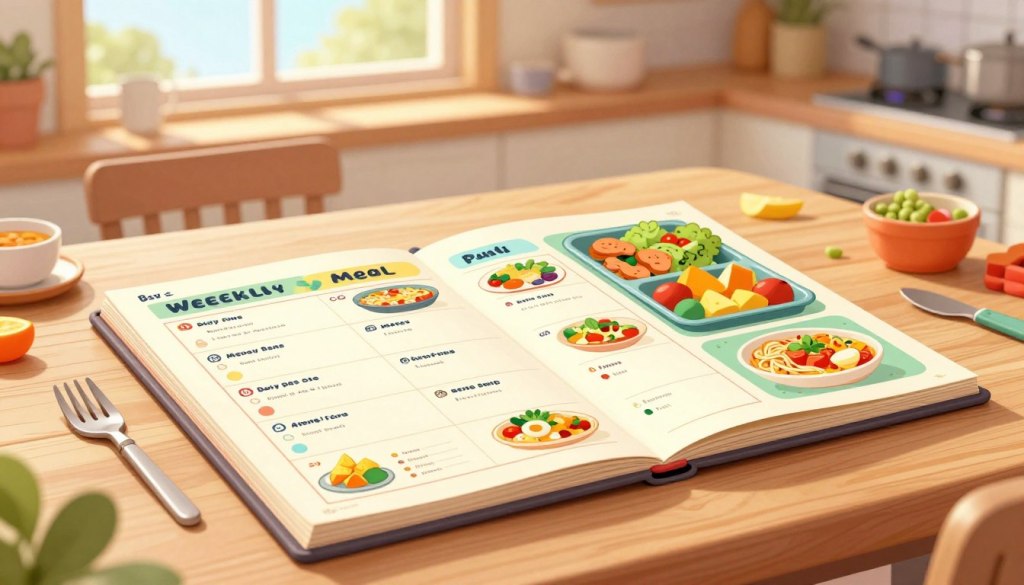
A cozy kitchen table is set with a neatly organized weekly meal plan, featuring colorful, nutritious dishes arranged in compartments. The foreground showcases a colorful weekly planner with various meal options, like salads, soups, and easy-to-cook recipes. In the middle background, a sunny window with light streaming in illuminates the scene, enhancing the inviting atmosphere. A few kitchen utensils and ingredients are subtly placed around the meal plan, creating an environment that suggests meal preparation. The mood is warm and friendly, highlighting simplicity and comfort. The image is well-lit with soft shadows and a slight depth of field to focus on the meal plan, evoking a sense of ease and routine ideal for seniors.

Use USDA MyPlate patterns without overthinking

Build plates from vegetables, fruits, whole grains, and protein. Try Healthy U.S.-Style, Mediterranean, or Vegetarian patterns. MyPlate Kitchen gives quick recipes and shopping lists. MyPlate Plan adjusts targets by age and activity.

Portions, intake, and professional help

Calorie and intake needs vary. Talk with a clinician or registered dietitian to match your plan to weight goals, medications, and activity.

Planning step Quick example Why it helps
20-minute weekly plan Sunday: pick core dishes Fewer daily decisions
Planned leftovers Cook once, eat twice Saves time and keeps variety
Portion sanity check Protein + 1 produce item + water Supports nutrition and hydration
Caregiver support Share grocery list or print a fridge plan Reduces errors and adds connection

“A weekly plan isn’t about rules—it’s about fewer stressful decisions when you’re tired.”

If planning feels heavy, start with dinners. Then add breakfasts and lunches later. Need extra support? Sign up for JoyCalls or Talk to Joy now: 1-415-569-2439. Also see a simple weekly social plan that pairs well with meal planning.

Stock a senior-friendly kitchen for fast, budget-friendly meals

Picture this: it’s 6:10 p.m., you’re tired, and the idea of cooking feels like climbing a hill. A little planning and the right staples stop takeout in its tracks. A stocked pantry, fridge, and freezer help you eat well without extra effort.

A cozy senior-friendly kitchen filled with essential stocked staples. In the foreground, a neatly organized countertop showcases jars of whole grains like rice and quinoa, canned vegetables, and a bowl of fresh fruits such as apples and bananas. In the middle ground, a wooden kitchen table is set with culinary tools, including measuring cups, a cutting board, and a sharp knife, inviting a sense of comfort and ease. In the background, a well-lit pantry reveals shelves lined with spices, dried herbs, and convenient meal kits. Soft, warm lighting bathes the scene, creating a welcoming atmosphere perfect for cooking. The overall mood is friendly, encouraging simplicity, and accessibility for preparing fast, budget-friendly meals.

Pantry, freezer, and fridge staples that prevent last-minute takeout

Pantry: canned beans, canned tuna or salmon, whole-grain pasta, oats, brown rice, low-sodium broth, jarred marinara, herbs and spices.

Freezer: frozen vegetables and fruit (no syrup), extra whole-grain bread or tortillas, unbreaded fish fillets, chicken breasts.

Fridge: milk, yogurt, cheese, eggs, pre-washed salad greens, hummus. These let you build quick plates and snack trays without much prep.

Shopping and budget tips, including SNAP-friendly planning

  • Shop seasonal fruit and vegetables to save money.
  • Buy store brands and bulk grains to stretch dollars.
  • Rotate proteins: beans one night, chicken the next.
  • Use benefits tools like BenefitsCheckup.org to plan a SNAP-friendly list and stretch your budget.

Quick-prep tools and shortcuts

Pre-cut vegetables and pre-washed greens make salads and bowls easy when chopping is hard. Canned foods are a smart fallback—rinse beans to lower sodium. Batch-cook grains once and use them across several meals.

“Always be prepared: a stocked kitchen beats impulse takeout.”

Need Staples Quick use
Fast protein Canned tuna, beans, chicken breasts Tuna sandwich, bean-and-salad bowl
Quick veg side Frozen mixed vegetables, pre-washed greens Microwave steam bag + olive oil and herbs
Breakfast or snack Yogurt, milk, oats, peanut butter, fruit Yogurt + fruit + nut butter swirl; oatmeal
Comfort soup Low-sodium broth, jarred marinara, frozen veg Broth + pasta/veggies for 5-minute soup

5-minute ideas: bean-and-salad bowl, tuna salad sandwich, yogurt + fruit + peanut butter swirl, soup + salad combo, cheese + fruit plate.

If keeping staples stocked feels hard, ask a caregiver to set up a recurring grocery delivery. Need friendly check-ins to remind someone to use their groceries? Sign up for JoyCalls or Talk to Joy now: 1-415-569-2439.

Also see quick healthy options at 10 Healthy Meals and a simple system to help with meds to remember medicines.

Adjusting your meal plans for health needs and common barriers

If a diagnosis or chewing trouble changes appetites, small shifts keep food safe and satisfying. This isn’t about perfect eating. It’s about steady, repeatable choices that match health needs and daily life.

A warm and inviting kitchen scene showcasing an older adult woman in modest casual clothing thoughtfully adjusting her meal plan for the week. In the foreground, she is surrounded by fresh vegetables, fruits, and a clipboard filled with healthy recipes. In the middle, a kitchen table is set with portioned meals and cooking utensils, emphasizing simplicity and nutrition. The background features soft natural lighting streaming through a window, enhancing the cozy atmosphere. The setting should convey a sense of care and attention to health, with a color palette of soft greens and warm yellows to evoke comfort. The camera angle is slightly above eye level, capturing both the subject and the inviting details of the kitchen environment.

Diabetes and heart health

Focus on fiber and lean protein. Choose beans, whole grains, berries, chicken, salmon, yogurt, or kefir. These items help steady blood sugar and support heart health.

Lower added sugar and saturated fat. Season with herbs, garlic, and lemon. Pick low‑sodium broth and rinse canned beans. For extra guidance, see this practical help on overcoming roadblocks to healthy eating: healthy eating tips.

Low appetite or chewing and swallowing

Try smaller, more frequent eats and nutrient-dense boosters. Stir peanut butter into oats, melt cheese into scrambled eggs, or blend yogurt with fruit and a scoop of protein powder.

When chewing is hard, choose soups, smoothies, soft casseroles, well‑cooked vegetables, mashed sweet potato, and egg dishes. If swallowing is a concern, consult a clinician or speech‑language expert.

Mix-and-match safely

Use a quick swap rule: replace like with like. Match protein + fiber + produce so the day stays balanced.

  • Lunch idea: big salad + chicken or beans + olive oil + lemon.
  • Dinner idea: salmon + roasted vegetables + sweet potato.
  • Snack boosts: yogurt, kefir, or a spoon of nut butter.

“Begin with reassurance: it’s not about perfect plates—it’s about safer patterns you can repeat.”

Barrier Practical swap Why it helps
Diabetes/heart Beans, whole grain toast, berries More fiber, steady blood sugar
Low appetite Smaller, frequent eats; nutrient boosters Raises calories without large portions
Chewing/swallowing Soups, mashed sweet potato, smoothies Safe textures; easier to eat
Flavor without salt Herbs, citrus, garlic, pepper Keeps taste while lowering added salt

Daily minimum check: protein at breakfast, lunch, and dinner; one fruit or vegetable each meal; sip water often. If loneliness reduces appetite, pair a meal with a phone check‑in or a JoyCalls call. Sign up at JoyCalls or Talk to Joy now: 1-415-569-2439.

Conclusion

,

A little structure can turn daily decisions into calm, healthy choices.

Start small: pick one reliable breakfast, one easy lunch template, and two go-to dinners. Build variety slowly across the week.

Quick reminder: personalize targets with a clinician or a registered dietitian. Needs and meds change what’s best each day.

Tomorrow: “yogurt + fruit at breakfast, soup + salad at lunch, fish + veggies at dinner, and one protein snack.”

If you worry about a loved one, you don’t have to do it alone. Small systems and friendly check-ins help a lot. Learn an easy daily check-in routine to stay connected.

Sign up for JoyCalls: https://app.joycalls.ai/signup. Talk to Joy now: 1-415-569-2439.

FAQ

What are the basics of a simple daily plan to support healthy eating for an older adult living alone?

Start with consistent meal and snack times to keep energy steady. Focus on a pattern that includes protein, whole grains, fruits or vegetables, and a healthy fat at each sitting. Keep portions moderate and add small snacks like nuts, cheese, or yogurt between meals when appetite is low. Use easy templates—eggs or Greek yogurt for breakfast, a mix-and-match lunch plate with beans or chicken, and a balanced dinner such as salmon with roasted vegetables and a sweet potato. JoyCalls can help by checking in and reminding about meals and hydration. ✅

How much protein do older adults need and how can they get it easily?

Protein needs can rise with age to preserve muscle. Aim to include a palm-sized portion of protein at each meal—eggs, salmon, chicken, Greek yogurt, cottage cheese, beans, or tofu. Snacks like peanut butter on toast, a handful of nuts, or kefir add helpful protein. Small, frequent servings work well if appetite is limited. Ask a clinician or registered dietitian for targets tailored to health conditions. ✅

Which nutrients should caregivers watch most closely in aging adults?

Key nutrients include vitamin B12, fiber, calcium, and adequate fluids. B12 supports energy and nerve health; fortified cereal, dairy, fish, and lean meats help. Fiber from whole grains, beans, fruits, and vegetables supports digestion and heart health. Keep dairy or fortified plant milk for calcium. Hydration matters—offer water, milk, or kefir regularly. Supplements may be needed but check with a provider first. ✅

What simple swaps reduce added sugar, saturated fat, and sodium without sacrificing taste?

Swap sugary cereal for oatmeal topped with berries and a sprinkle of cinnamon. Use olive oil instead of butter for cooking, and opt for baked or grilled fish rather than fried. Choose low-sodium canned goods or rinse canned beans to cut salt. Flavor food with herbs, lemon, garlic, and pepper instead of heavy sauces. Small changes add up and keep meals enjoyable. ✅

Can you share a realistic daily schedule that supports appetite and energy?

Try this pattern: wake-up beverage and light protein (milk, kefir) → breakfast within an hour (eggs or yogurt + fruit) → mid-morning snack if hungry (nuts or cheese) → lunch (soup, salad, sandwich, or beans) → afternoon snack (peanut butter on whole-grain toast or fruit) → dinner (fish or chicken, vegetables, and a carb like sweet potato) → small evening snack if needed. Adjust times to personal routine and local medical advice. ✅

What quick breakfast ideas combine protein and fruit?

Greek yogurt with berries and a sprinkle of granola; scrambled eggs with spinach on whole-grain toast; overnight oats made with milk and topped with banana; a smoothie with milk, kefir, frozen berries, and a spoonful of peanut butter. These are fast, satisfying, and help keep blood sugar steady. ✅

How do I build a “mix-and-match” lunch plate that’s nutritious and easy?

Start with three parts: protein (leftover chicken, canned tuna, beans), vegetables (salad greens, canned or roasted veggies), and a grain or starch (whole-grain bread, brown rice). Add a small serving of cheese or avocado for healthy fat. Rotate combinations across the week to keep variety. Pre-portion components to speed assembly. ✅

What are simple, heart-healthy dinner templates that older adults can follow?

Use a protein + vegetable + carbohydrate template. Examples: baked salmon, steamed broccoli, and quinoa; roasted chicken thigh, green beans, and mashed sweet potato; bean chili with a side salad and whole-grain roll. Keep portions appropriate and season with herbs and lemon instead of excess salt. ✅

Which snacks double as nutrition boosters and are easy to prepare?

Try peanut butter with apple slices, a handful of mixed nuts, cottage cheese with pineapple, hummus and carrot sticks, or kefir with a few berries. These pair protein and healthy fats with fiber to keep energy consistent. ✅

Can you give a sample day inspired by trusted menus for someone who prefers simple dishes?

Breakfast: smoothie with milk, banana, spinach, and a spoon of peanut butter. Lunch: chicken salad with mixed greens, beans, and whole-grain crackers. Snack: small container of Greek yogurt and berries. Dinner: baked salmon, roasted Brussels sprouts, and a baked sweet potato. Small evening piece of cheese or a glass of milk if desired. This balances protein, fiber, and healthy fats. ✅

How do I make a weekly plan that saves time and lowers stress?

Pick two or three core proteins (chicken, canned salmon, beans) and two vegetable sides for the week. Batch-cook a pot of grains and a tray of roasted vegetables. Use USDA MyPlate as a guide to portioning and mix-and-match elements for variety. Write a short shopping list, shop once, and use leftovers intentionally. JoyCalls can remind caregivers about shopping lists and meal prep days. ✅

How do I portion meals correctly for calorie and nutrient needs?

Follow simple visual cues: half the plate veggies, one-quarter protein, one-quarter whole grains or starchy vegetable. Adjust portions based on activity level, weight goals, and medical advice. A registered dietitian or clinician can provide personalized calorie targets and portion guides. ✅

What staples should a senior-friendly kitchen include to avoid last-minute takeout?

Keep canned beans and tomatoes, low-sodium broths, canned tuna or salmon, frozen vegetables and fruit, whole grains (oats, brown rice), nuts, nut butters, eggs, milk or fortified plant milk, Greek yogurt, and simple condiments like olive oil and vinegar. These staples make quick, balanced meals possible. ✅

Any shopping tips to get variety on a budget and use SNAP benefits wisely?

Buy frozen fruits and vegetables for nutrition and value. Choose store brands for staples, plan meals around weekly sales, and make a list to avoid impulse buys. Buy in-season produce and use canned or dried beans as low-cost protein. Many stores accept SNAP and offer discounts on bulk or value packs—compare unit prices. ✅

What quick-prep tools and shortcuts make cooking easier for older adults?

Use pre-cut vegetables, rotisserie chicken, canned beans, and frozen entrees with low sodium. Tools like a slow cooker, microwave, and electric can opener reduce effort. Batch cooking and portioning into single-serve containers saves time and ensures meals are ready when appetite strikes. ✅

How should meal plans be adjusted for diabetes or heart disease?

Focus on fiber-rich foods, lean proteins, and lower-sodium options. Choose whole grains, non-starchy vegetables, and healthy fats like olive oil and nuts. Limit sugary drinks and refined carbs. Monitor portion sizes and coordinate carbohydrate intake with medications if needed. Work with a clinician or dietitian to tailor meals and medications. ✅

What if appetite is low or there are chewing and swallowing challenges?

Offer smaller, nutrient-dense servings more often—smoothies, milkshakes with protein powder, yogurt, hummus, and soft cooked eggs. Prepare softer textures like mashed sweet potatoes, pureed soups, and well-cooked legumes. Consult a speech-language pathologist for swallowing concerns and a dietitian to ensure adequate calories and protein. ✅

How can caregivers safely mix and match foods to keep meals balanced?

Use the plate method: include protein, vegetable, and grain at each sitting. Keep an eye on sodium by choosing low-salt canned goods and rinsing beans. Track portion sizes and rotate different proteins and vegetables through the week to cover nutrient needs. When in doubt, check with a clinician about any dietary limits. ✅

Other Articles related to this article:

Medication Adherence Tips From Pharmacists (Simple, Proven)
Medication Reminders for Diabetes, BP, and Heart Meds (Systems That Stick)
Remote Medication Monitoring for Elderly Parents (What’s Realistic)
Medication Errors at Home: The Most Common Mistakes (And Fixes)
Side Effects vs Nonadherence: What Caregivers Should Watch For
The Best Time to Take Meds: Building a Habit Around Meals
Automatic Pill Dispensers: Do They Really Improve Adherence?
Medication Refills: Simple System to Never Run Out
How to Talk to a Stubborn Parent About Taking Meds
Polypharmacy in Seniors: Managing Too Many Meds Safely
Medication Reminders for Vision or Hearing Problems (Easy Fixes)
Medication Adherence for Dementia: Routines That Reduce Stress
Blister Packs and Bubble Packs: Are They Worth It for Seniors?
Pharmacy Sync: How to Align Refills on the Same Day
How to Keep an Updated Medication List (Template + Tips)
Text Message Medication Reminders for Seniors (Pros and Cons)
AI Medication Reminders: What They Can and Can’t Do
Medication Adherence for Seniors: Why Doses Get Missed
Post-Hospital Medication Plan: Avoiding Confusion After Discharge
Best Medication Reminder Methods (No Smartphone Needed)
Phone Call Medication Reminders: Do They Work Better Than Apps?
Pill Organizer 101: How to Choose the Right One for Seniors
Medication Management for Seniors Living Alone (Safety Plan)
Weekly Pill Planner Setup (Step-by-Step, 10 Minutes)
Daily Check-In Routine for Seniors Who Hate Being Checked On
How to Create a Medication Schedule That Actually Works
Medication Adherence Checklist for Caregivers (Fully Explained + Printable)
What to Do When Your Parent Says “I Already Took The Medicine”
How to Prevent Double Dosing in Seniors
Medication Reminder Apps for Seniors: What’s Actually Easy
How to Help Elderly Parents Remember Their Meds (Simple System)
Daily Check-In Routine for Seniors With Hearing Issues (Make It Easier)
Weekly Review: How to Spot Patterns From Daily Check-Ins
How to Start a Daily Check-In Routine in One Day (Fast Setup)
Daily Phone Check-In Services for Seniors: What to Look For
AI Check-In Calls for Seniors: How They Work (And What They Don’t Do)
The Best Daily Check-In Apps and Tools (And Simple No-App Options)
Daily Check-In Routine That Builds Real Connection (Not Just Monitoring)
How to Share Daily Caregiving Updates With Siblings (Without Miscommunication or Drama)
How to Set Boundaries With Daily Check-Ins (So It Doesn’t Take Over Your Life)
Daily Mood Check-Ins for Seniors: What to Watch For
Daily Check-In Routine After Hospital Discharge (First 14 Days)
How Often Should You Check In on Elderly Parents?
Daily Check-In Routine for Meals and Hydration (Quick Method)
Daily Check-In Routine for Seniors Living Alone (Safety + Connection)
How to Track Daily Check-Ins Without Feeling Like a Spreadsheet
Daily Check-In Routine for Medication Adherence (Without Nagging)
How to Build a Check-In Routine That Seniors Won’t Resist
Caregiver Check-In Schedule Template (Daily + Weekly)
Daily Check-In Routine for Elderly Parents (Simple Plan)
The 2-Minute Daily Check-In Script (No Awkward Talk)
The “No Answer” Escalation Plan for Daily Check-Ins
Daily Check-In Routine for Chronic Conditions (BP, Diabetes, COPD)
Daily Check-In Routine for Fall Risk (What to Ask Daily)
Daily Wellness Check Calls: What to Ask (7 Questions)
Daily Check-In Routine for Long-Distance Caregivers
What to Do If Your Parent Misses a Check-In (Step-by-Step)
Daily Check-In Routine for Dementia: Simple, Calm, Consistent
Daily Check-In Text vs Phone Call: Which Is Better for Seniors?
Morning vs Evening Check-Ins: What Works Best for Seniors
Caregiver Guilt: When You Can’t Be There to Keep Them Company
Senior Loneliness and Anxiety: Why They Feed Each Other
Does an AI Companion Help Senior Loneliness? What to Expect
How to Build a “Circle of Care” to Reduce Isolation (Neighbors, Friends, Family)
Volunteering for Seniors: The Best Way to Feel Connected Again
Loneliness in Men vs Women After 65: What Changes?
Senior Centers vs Community Groups: What Works Better for Loneliness?
“No One Needs Me”: How Purpose Reduces Loneliness in Aging
How to Make Phone Calls Feel Less “Check-In” and More Like Real Connection
Loneliness in Assisted Living: Why It Still Happens and What Helps
Loneliness or Depression? How to Spot the Difference in Older Adults
The Health Risks of Loneliness in Seniors (Heart, Brain, Immunity)
Loneliness in Older Adults: Signs, Causes, and What Helps
Loneliness in Seniors Without Smartphones: Low-Tech Ways to Stay Connected
Best Hobbies for Lonely Seniors (Easy to Start, Low Energy)
Social Isolation vs Loneliness: What’s the Difference in Seniors?
Retirement Loneliness: Why It Happens and How to Fix It
How to Help Seniors Make Friends After 60 (Practical Steps)
How to Create a Weekly Social Routine for an Elderly Parent
After a Spouse Dies: Loneliness in Widowhood (What Actually Helps)
How to Tell If Your Aging Parent Is Lonely (Even If They Say They’re Fine)
The “Quiet Withdrawal” Problem: When Seniors Stop Calling Back
How Often Should You Talk to Your Elderly Parents to Prevent Loneliness?
How to Help a Parent Who Refuses Social Activities
How to Help a Lonely Elderly Parent When You Live Far Away
Social Isolation in Seniors Living Alone: A Safety + Loneliness Plan
Senior Loneliness at Night: Why Evenings Feel Worse
Daily Check-In Calls for Seniors: Do They Reduce Loneliness?
Conversation Ideas for Seniors Who Feel Lonely (No Awkward Small Talk)
Loneliness and Dementia: Does Being Alone Speed Up Memory Loss?
Best Low-Tech Safety Devices for Seniors Living Alone
Home Safety Setup for Long-Distance Caregiving (Room-by-Room)
How to Track Meals and Hydration From Another City
Caregiver Guilt When You Live Far Away (How to Cope)
Smartwatch vs Phone Check-Ins: What Works Better for Seniors?
Scams Targeting Seniors: How to Protect Parents Remotely
When It’s Time for Assisted Living (Long-Distance Decision Guide)
How to Choose a Paid Caregiver When You Live Far Away
Weekly Care Plan Template for Aging Parents
Fall Risk: How to Reduce It When You’re Not There