

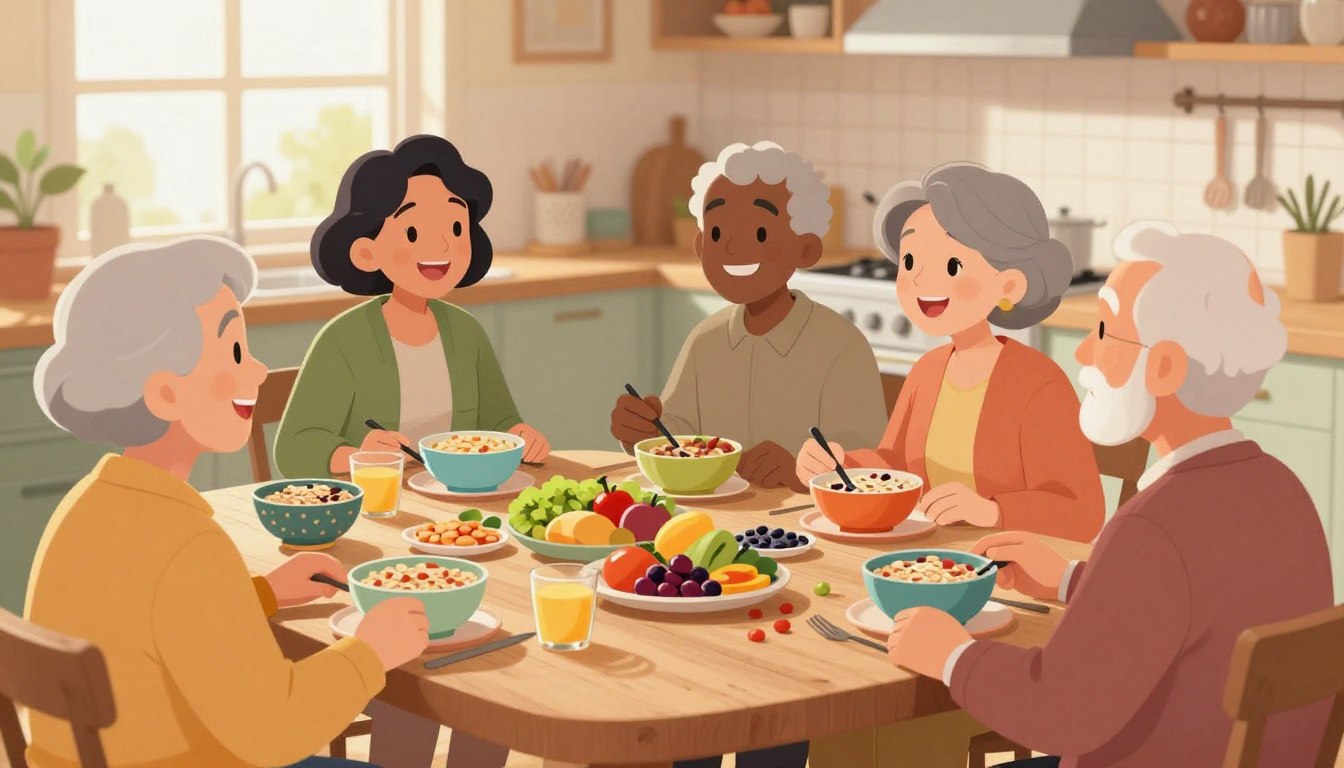
Surprising fact: many U.S. adults eat about 15g of fiber per day, while the goal is 25–30g. That gap often shows up as slow, uncomfortable digestion at home.
Picture this: your parent is uneasy and going less often. They avoid talking about it. That’s normal — constipation is common and usually manageable with simple food-first steps.
This short guide explains the basics in plain English. You’ll learn how to add more grams to a day without turning meals into a strict diet.
We link regularity to real life: less straining, less bloating, smoother outings and sleep. Expect clear tips on types of fiber, easy U.S. shopping picks, and quick meal templates that work on busy days.
If you’re coordinating care from afar, you’ll get ideas you can text or drop into a grocery list. The aim is steady progress: small changes, consistent timing, and listening to the body. Comfort matters as much as hitting a number.
Key Takeaways
- A typical U.S. intake is below the recommended goal; small increases help.
- Food-first steps can reduce constipation and improve daily comfort.
- Easy swaps and simple meal templates make progress realistic.
- Caregivers can support with lists, texts, and gentle routines.
- Learn more practical advice and tools at JoyCalls.
Why constipation is more common in older adults
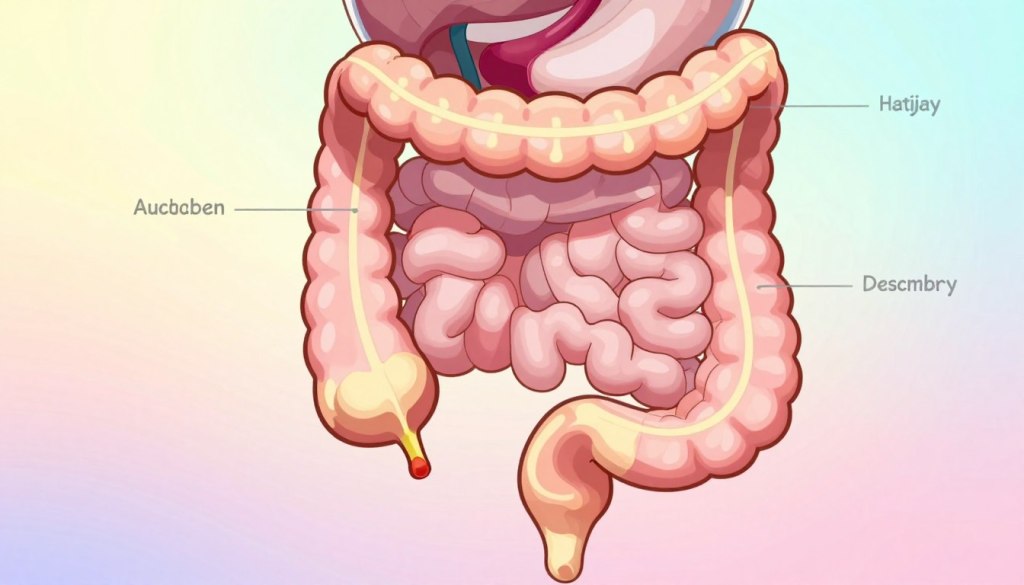
With time, the body’s digestive rhythm can quiet down. Food may move more slowly through the gut. That slower movement can leave the bowel feeling like it’s “stuck.”
How slower digestion affects daily comfort
People often notice straining, hard stools, or fewer trips to the bathroom each week. Small changes show up in big ways: “I don’t feel like eating,” “my belly feels tight,” or “I’m nervous to go out.” Those worries are real.
Why diet changes can reduce helpful nutrients
Appetites shrink. Chewing gets harder. Convenience meals and refined grains creep in. Over time, these shifts lower the intake of plant-based foods and key nutrients that support digestion.
- Caregivers may pick easy meals that are lower in whole grains and produce.
- That’s normal. It happens when routines change.
- A simple plan helps: add a few high-fiber items and swap whole grains slowly.
Care advice: small swaps can improve comfort without an overhaul. Understanding different types of fiber makes it easier to choose foods that actually ease constipation. Next, we’ll explain those types and how they help health.
What dietary fiber is and how it supports digestive health
Simple plant parts in our meals do heavy lifting inside the gut, even if we don’t digest them. Dietary fiber is the name for that plant material. It moves slowly and helps the digestive system stay steady.
Soluble options that help bulk and blood sugar
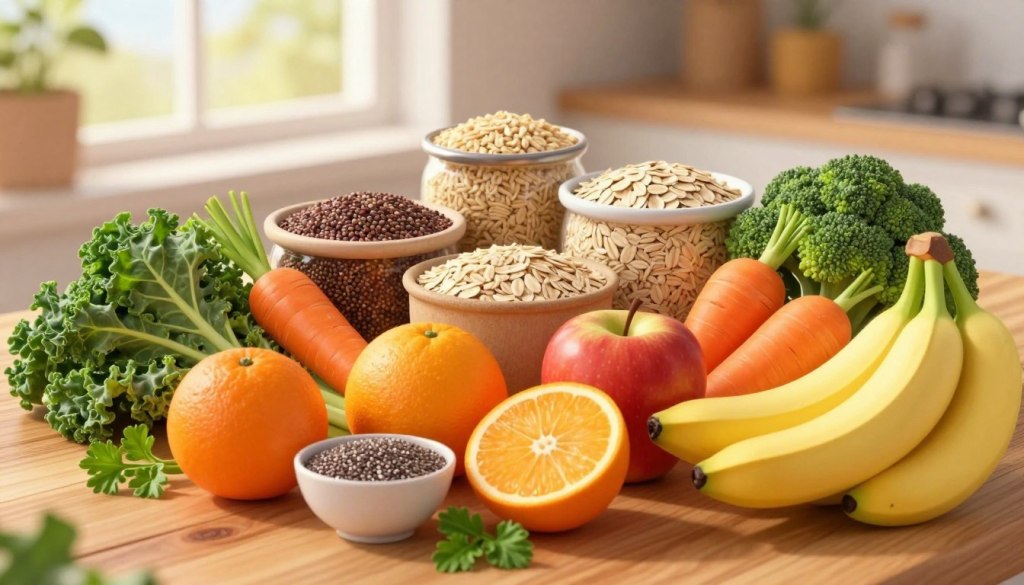
Soluble fiber soaks up water and forms a soft gel. That makes stools easier to pass and can lower blood cholesterol. It also helps with blood sugar control by slowing how fast sugars enter the blood.
Insoluble: the roughage that keeps things moving
Insoluble fiber adds structure. Think of it as gentle scrubbing material that speeds transit time. When constipation is frequent, this type is often the missing piece.
Resistant starch: the cook-cool trick
Resistant starch behaves like both types. It feeds helpful gut bacteria and supports sugar control. Try this: cook rice, potatoes, pasta, or beans, cool them in the fridge, and reheat later. The resistant starch rises after cooling and stays even after reheating.
“Mix types across the day — you don’t need to memorize the science. Small changes add up.”
- Dietary fiber: plant parts your body can’t break down fully.
- Mix soluble, insoluble, and resistant starch across meals.
- Small swaps steady digestion and energy over time.
| Type | Main action | Common foods | Practical tip |
|---|---|---|---|
| Soluble | Holds water, forms gel; supports cholesterol and blood sugar | Oats, apples, beans, psyllium | Add oatmeal or a small apple at breakfast |
| Insoluble | Adds bulk, speeds transit | Whole grains, wheat bran, vegetables | Include a side salad or whole-grain toast |
| Resistant starch | Feeds gut bacteria; helps sugar control | Cooled rice, potatoes, pasta, beans | Cook-cool-reheat meals to boost resistant starch |
fiber for seniors: how many grams per day do you need?
A simple goal helps — roughly 25 to 30 grams each day. Most people in the U.S. get about half that, roughly 15 grams, which explains common slow digestion and discomfort.
The 25–30 grams/day target and why many fall short
Aim for 25–30 grams from food, not pills. That target supports regularity and overall health. Busy schedules and refined meals explain why intake often stays low.
How to increase grams gradually to avoid gas
Add 3–5 grams every few days. Move week-by-week. Small steps cut down on gas and cramping.
How much soluble fiber to include
Within the total, aim for about 6–8 grams of soluble fiber each day. Choose oats, beans, barley, apples, or oranges to hit that mark.
- Practical check: “Did I include a fruit, a vegetable, and a whole grain today?”
- Track a few days to learn what a high-fiber intake day looks like, then relax.
- Different medical conditions change needs; we’ll cover safety and personalization next.
Want trusted background on boosting intake in older adults? See this overview at increased fiber and older adults.
High-fiber foods that relieve constipation without feeling like a “diet”
You don’t need a special plan—just familiar foods that help digestion. Keep meals simple. Pick items from any U.S. grocery aisle. Small swaps add grams without stress.

Fruits that pull their weight
Raspberries pack about 8g per cup. An avocado can add roughly 10g on its own. Apples and pears are best with the skin. Oranges bring soluble help and a sweet option.
Try JoyCalls Free
No app or new device needed. Start with a free 7-day trial.
Vegetables that help the digestive system
Spinach, kale, carrots, peas, broccoli, and sweet potato fit into soups, sides, and sheet-pan dinners. Peas (½ cup) and a medium sweet potato each add about 3–4g.
Beans and legumes
Lentils, chickpeas, and black beans give 7–8g per half cup. They supply protein and key nutrients that support regularity without a restrictive plan.
Whole grains that add grams fast
Oats, barley, bulgur, buckwheat, and brown rice are the quickest swaps. Try oatmeal at breakfast or whole-grain toast to boost totals with little fuss.
“Mix items across the day. Variety makes this easy and gentle on the gut.”
| Group | Example | Typical grams | Tip |
|---|---|---|---|
| Fruits | Raspberries, avocado | 8g; ~10g | Add to yogurt or toast |
| Vegetables | Peas, sweet potato | 3–4g | Include in soups or sides |
| Beans | Lentils, chickpeas | 7–8g | Make chili or grain bowls |
| Whole grains | Oats, barley, brown rice | Varies by serving | Swap white rice with brown rice |
Quick note: Foods naturally contain both soluble and insoluble types, so mix items across the day. For trusted background on choices, see high-fiber food tips.
How to build a constipation-fighting day of meals
A simple daily blueprint can turn three meals into steady support for digestion. Keep choices familiar. Aim for small, repeatable swaps that fit routines and saved time.

Breakfast ideas
Choose a high-fiber cereal with at least 5g per serving. Try oatmeal or oat bran sprinkled on yogurt. Add a piece of fruit and a slice of whole-grain bread to round out the plate.
Lunch and dinner templates
Build simple meals: bean-and-vegetable soup, a big salad with chickpeas, or chili with black beans. Make grain bowls with whole grains, roasted veggies, and a scoop of beans.
Snack swaps that steady intake without extra sugar
Pick berries instead of cookies. Try an apple with peanut butter, hummus with carrot sticks, or whole-wheat crackers and cheese. These small moves raise daily totals without spiking sugar.
“Let’s just add one fiber food per meal today.”
Prep tip: Cook a pot of lentil soup or a batch of brown rice once and use it across the day. This prep once, eat twice trick saves time and keeps the plan doable. For more meal examples, see a helpful 7-day meal plan.
Whole grains and brown rice: smart swaps that add fiber grams quickly
Small, steady swaps to grains can add helpful grams without changing meals. Start with one whole grain choice at each meal. That keeps changes gentle and realistic.

Reading labels to find the highest grams per serving
Check the Nutrition Facts for “grams” of fiber per slice or serving. Pick the loaf or cereal that gives more grams without changing taste too much.
Simple label rule: choose the product with higher grams per serving while keeping familiar brands.
Mixing brown rice with white rice to ease the switch
Start mixing brown rice with white rice at a 25/75 ratio. Move to 50/50 after a week or two. Texture and flavor stay close to what people expect.
Meal idea: use mixed rice in burrito bowls, stir-fries, or soup sides so no one feels put on a diet.
“One small swap each meal adds up over time.”
| Swap | Start ratio | Impact (approx. grams) | Quick tip |
|---|---|---|---|
| White toast → Higher-fiber bread | 1 loaf (use at breakfast) | +2–3 grams per slice | Toast first to build confidence |
| White rice → Mixed rice | 25% brown : 75% white | +1–2 grams per cup | Use in bowls or soups |
| Refined cereal → Whole-grain cereal | Swap one serving | +3–5 grams per bowl | Keep same milk and fruit |
- Quick tip: include one whole grain each meal.
- Take your time and make swaps feel like small wins.
Fiber, blood sugar, and heart health: benefits beyond regularity
What we eat does more than move the bowels—it shapes long-term heart and blood health. Small food choices can help everyday comfort and long-term outcomes.
How soluble choices support blood sugar control in diabetes care
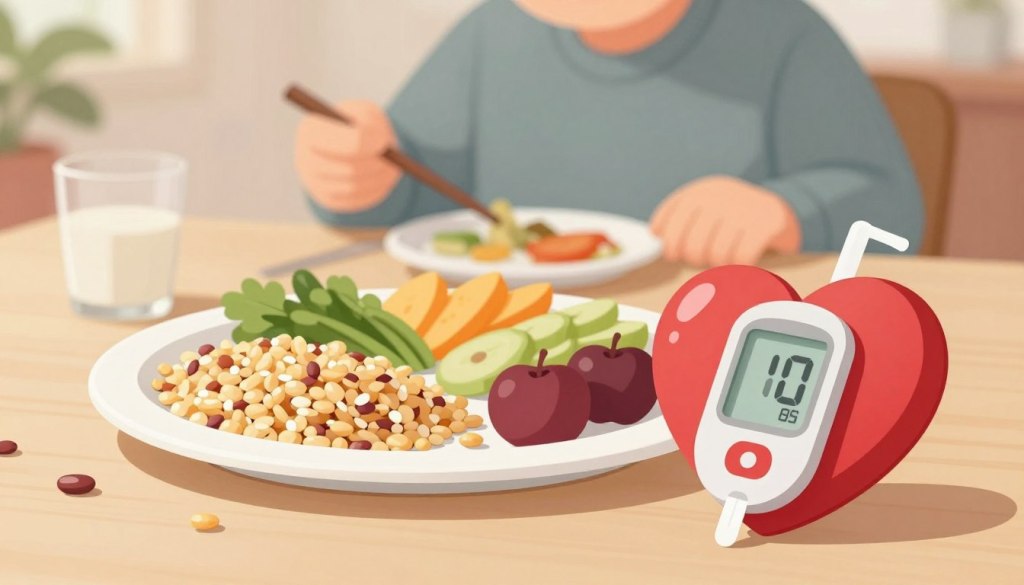
Soluble components slow how quickly sugar enters the blood. That steadying effect can improve blood sugar control over time.
This matters in diabetes care. One bowl of oats, a serving of beans, or an apple with skin can lower spikes and make medication timing easier.
Why a high intake links to lower heart risk and other conditions
Research shows high fiber eating patterns are tied to lower risk of heart disease, diabetes, diverticular disease, and some cancers.
Dietary habits that include oats, barley, lentils, apples, and oranges support cholesterol and overall heart health. Over weeks, small changes add up.
- Reframe: it’s more than relief—it’s long-term care and protection.
- Practical picks: oats/oat bran, barley, beans, lentils, apples, oranges.
- Worried about meds, picky tastes, or tummy upset? Move slowly and track progress.
“One bowl of oatmeal, one cup of berries, one serving of beans—small moves with big payoff.”
Hydration, movement, and timing: making fiber work better
Small habits—like a warm drink after breakfast—help move a day toward steadier digestion.
Why water matters: plant parts in food hold fluid in the gut to soften stools. Without enough liquid, stools can harden and constipation may worsen. A simple rule: add fluids as you add grams.

Practical hydration and movement cues
Try one glass with breakfast, a cup of soup at lunch, and herbal tea in the afternoon. Keep a small cup near medications when that fits the plan.
Move a little after meals. Short walks, light stretching, or seated leg lifts can boost bowel motility. These actions help the body use increased dietary choices.
Timing and a gentle routine
Many people get the best results with a consistent morning routine: breakfast, a warm drink, then a brief walk. No pressure—just predictable signals to the body at the same time each day.
- Caregiver tip: ask two quick questions daily—“Did you have a drink with meals?” and “Did you walk for five minutes?”
- Small check-ins work better than lectures. Celebrate small wins.
“A warm cup and a short walk can make a big difference.”
Safety note: If there is severe pain, blood, or a sudden change in bowel habits, seek care right away. Section 11 will explain when to call a health care provider.
A Gentle 7-Day Fiber Reset for Seniors: How to Make Constipation Relief Practical at Home
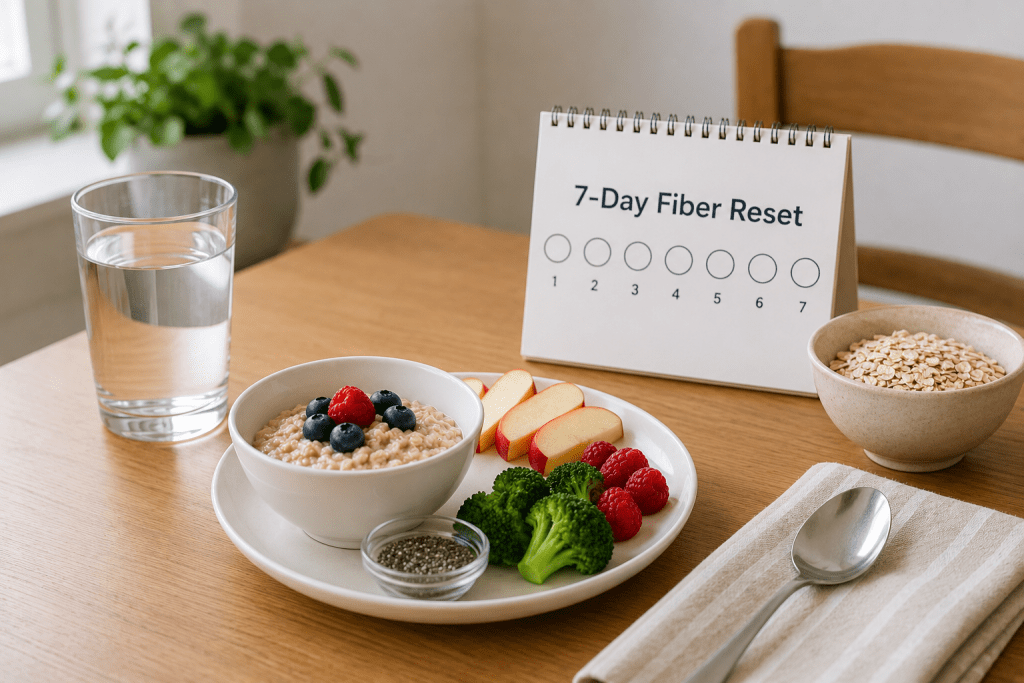
For many older adults, constipation does not improve because they “know more” about fiber. It improves when the day becomes easier to follow. A senior may already understand that fruits, vegetables, beans, and whole grains are helpful, but still struggle because meals are irregular, appetite is low, water is forgotten, or bathroom timing feels unpredictable.
That is why a simple 7-day reset can be more useful than a long list of foods.
The goal is not to force a strict diet. The goal is to create a calm, repeatable rhythm that helps the body respond. This means adding fiber gradually, pairing it with fluids, keeping meals familiar, and watching how the bowel reacts. For caregivers, this approach also makes it easier to support an older parent without sounding critical or turning every conversation into a health lecture.
Think of this as a one-week comfort plan. It helps answer three practical questions:
What should we add today?
What should we avoid changing too quickly?
How do we know whether the plan is working?
Before Day 1: Start With a Simple Baseline
Before adding more fiber, take one or two days to notice the current pattern. This does not need to be a formal medical chart. A short note on paper, a calendar, or a phone note is enough.
Track only the basics:
How many bowel movements happened this week?
Was the stool hard, dry, or difficult to pass?
Was there straining?
Was there bloating, gas, or belly pain?
How much fluid was taken during the day?
What were the usual breakfast, lunch, dinner, and snacks?
Was there any walking or movement after meals?
This baseline matters because constipation can feel vague. One person may say, “I’m fine,” even though they have not had a comfortable bowel movement in several days. Another person may feel worried after missing just one day. A simple record helps everyone stay calm and factual.
For seniors who dislike tracking, use a very gentle version. Ask, “Was today better, worse, or about the same?” That one question can still reveal a pattern over time.
Day 1: Add Fiber at Breakfast Only
Breakfast is usually the easiest place to begin because the body often responds well to a morning routine. Instead of changing the whole day, add one bowel-friendly item to breakfast.
Good options include oatmeal, oat bran, whole-grain toast, berries, pear with skin, prunes, or a high-fiber cereal that the person already enjoys. Keep the portion modest. A small bowl of oatmeal with berries is better than a very large serving that causes gas and makes the person give up.
The caregiver’s role is to make this feel normal. Say, “Let’s make breakfast a little more filling today,” rather than, “You need more fiber because you are constipated.”
Pair breakfast with a warm drink or a glass of water. Warm tea, warm water, or coffee may help some people feel ready to use the bathroom, but it should fit their medical needs and preferences. If caffeine causes shakiness, reflux, or sleep problems, choose a non-caffeinated drink.
After breakfast, encourage a short period of gentle movement. This could be a five-minute walk indoors, standing at the kitchen counter for light stretches, or seated leg lifts. The point is not exercise intensity. The point is giving the digestive system a predictable signal.
Day 2: Add a Bathroom Routine, Not Bathroom Pressure
Constipation often worsens when people ignore the urge to go. Some seniors delay because they are busy, embarrassed, worried about falling, or uncomfortable using bathrooms outside the home. Over time, the bowel may become less responsive.
On Day 2, build a quiet bathroom window after breakfast. This does not mean forcing a bowel movement. It means creating an unhurried opportunity.
A helpful routine may look like this:
Eat breakfast.
Drink something warm.
Move gently for a few minutes.
Sit on the toilet for a short, relaxed time.
Avoid straining.
If nothing happens, get up and try again later.
The key is dignity. Seniors should not feel watched, rushed, or judged. Caregivers should avoid repeated questions like, “Did you go yet?” A better approach is, “Take your time this morning. I’ll check in later.”
Bathroom setup also matters. Make sure the path to the toilet is clear, the lighting is good, and toilet paper or wipes are easy to reach. If balance is a concern, consider grab bars or a raised toilet seat after speaking with the care team. Fear of falling can make a person delay bathroom trips, which can worsen constipation.
Day 3: Improve Lunch Without Making It Heavy
By Day 3, keep the breakfast change and add one fiber-friendly lunch choice. Lunch should be easy to chew, easy to digest, and familiar.
Good lunch ideas include lentil soup, vegetable soup with beans, a turkey or tuna sandwich on higher-fiber bread, a small baked sweet potato, a bowl of chili with beans, or yogurt topped with berries and a spoonful of bran or ground flaxseed.
For seniors with smaller appetites, soup can work very well. It adds fluid, warmth, vegetables, and soft texture in one meal. A bean soup does not need to be spicy or complicated. Even a simple canned low-sodium soup can be improved with extra frozen vegetables or a small scoop of cooked lentils.
If beans cause gas, start very small. Add two tablespoons instead of half a cup. Rinse canned beans well. Choose lentils, which many people tolerate better than larger beans. Increase slowly only if the person feels comfortable.
This is also a good day to reduce constipation “crowding.” Crowding happens when low-fiber foods take up most of the plate. For example, a meal of white bread, cheese, meat, and chips may be filling but leaves little room for produce or whole grains. You do not need to remove favorite foods. Just add one helpful food beside them.
Day 4: Make Snacks Work Harder
Snacks are often overlooked, but they can quietly raise fiber intake without making meals feel large. On Day 4, replace one low-fiber snack with a constipation-friendly option.
Helpful snack swaps include:
Apple slices with peanut butter
Pear with skin
Prunes with a few nuts
Whole-grain crackers with hummus
Greek yogurt with berries
Air-popped popcorn, if chewing and swallowing are safe
A small smoothie with berries, oats, and yogurt
Carrot sticks with hummus, if raw vegetables are tolerated
For seniors with chewing difficulties, choose softer options. Stewed apples, applesauce with added ground flaxseed, ripe banana with peanut butter, oatmeal cups, smoothies, or soft cooked fruit may be easier than crunchy snacks.
One important note: smoothies can be helpful, but they should not become sugar-heavy drinks. Use whole fruit rather than juice when possible. Add protein, such as yogurt or nut butter, so the snack is more balanced. A smoothie made with berries, oats, yogurt, and water or milk is usually more useful than a large glass of fruit juice.
Day 5: Check the “Too Much, Too Fast” Signs
By Day 5, some people feel better. Others feel bloated. This is where the plan needs patience.
Signs that fiber may have increased too quickly include new gas, cramping, belly tightness, or feeling overly full. This does not always mean fiber is wrong. It may simply mean the body needs a slower pace.
If discomfort appears, do not keep adding more fiber every day. Hold steady for two or three days. Keep fluids consistent. Choose cooked vegetables instead of raw salads. Use smaller portions of beans. Try oats, peeled cooked fruit, soups, or soft grains, which may feel gentler.
It may also help to spread fiber across the day. A very high-fiber breakfast followed by low-fiber meals is not always comfortable. Smaller amounts at breakfast, lunch, dinner, and snack time are often easier for older adults.
Caregivers should listen closely here. If a senior says, “This is making me feel worse,” take it seriously. The goal is comfort, not winning a fiber target.
Day 6: Build a Reliable Dinner Plate
Dinner should support regularity without making the evening uncomfortable. A heavy, greasy, low-fiber dinner can slow things down. A very large high-fiber dinner can cause gas overnight. The best option is balanced and moderate.
A helpful dinner plate may include:
A soft cooked vegetable, such as carrots, spinach, peas, zucchini, green beans, or broccoli
A whole grain or fiber-rich starch, such as brown rice, barley, quinoa, oats, sweet potato, or whole-wheat pasta
A protein, such as fish, chicken, eggs, tofu, lentils, beans, or yogurt-based sides
A fluid-rich addition, such as soup, stew, or a glass of water
For example, dinner could be salmon with sweet potato and cooked spinach. It could be chicken soup with vegetables and barley. It could be a small bowl of lentil stew with rice. It could be scrambled eggs with whole-grain toast and fruit if the person prefers a lighter evening meal.
The best dinner is the one the senior will actually eat. If they love rice, mix white rice with brown rice. If they dislike salads, offer cooked vegetables. If they do not want beans, try oats, fruit, vegetables, or whole-grain bread instead.
Day 7: Review What Helped and Create a Simple Maintenance Plan
At the end of the week, review what changed. Do not focus only on whether constipation disappeared completely. Look for smaller improvements too.
Useful signs of progress include:
Stool is softer.
There is less straining.
Bowel movements feel more complete.
Bloating is reduced.
The person feels less anxious about using the bathroom.
Meals feel more regular.
Fluid intake is more consistent.
Morning routine feels easier.
If there is progress, keep the habits that worked. Do not add five new changes just because the week went well. Constipation relief often comes from consistency.
A simple maintenance plan may look like this:
Oatmeal or whole-grain toast most mornings
Fruit once or twice daily
Cooked vegetables at lunch or dinner
Beans, lentils, or whole grains several times a week
A drink with each meal
A short walk or gentle movement after breakfast
A relaxed bathroom window each morning
This is enough for many people. It is not dramatic, but it is sustainable.
How Caregivers Can Help Without Nagging
Constipation is personal. Many older adults feel embarrassed discussing it, especially with adult children. The way support is offered matters as much as the food itself.
Instead of asking, “Are you constipated again?” try softer questions:
“Is your stomach feeling comfortable today?”
“Would soup or oatmeal feel good?”
“Do you want fruit with breakfast?”
“Was today better, worse, or about the same?”
“Would a short walk after breakfast help?”
Offer choices instead of instructions. Seniors are more likely to accept support when they feel respected.
For long-distance caregivers, create a grocery list that makes success easier. Include familiar high-fiber staples such as oats, berries, apples, pears, whole-grain bread, lentil soup, canned beans, sweet potatoes, frozen vegetables, prunes, and yogurt. If your parent uses grocery delivery, save these as recurring items.
You can also build fiber into daily check-ins without making the call feel medical. For example, ask, “What did you have for breakfast?” or “Did you get your tea and fruit today?” These questions feel more natural than direct bowel questions and still reveal whether the routine is happening.
What to Do When Appetite Is Low
Low appetite is common in older adults and can make fiber goals harder. A large salad or bowl of beans may feel impossible. In that case, use small, nutrient-dense additions.
Try adding ground flaxseed to oatmeal, berries to yogurt, avocado to toast, lentils to soup, bran to cereal, or soft cooked vegetables to eggs or rice. These small additions may be easier than asking someone to eat a completely different meal.
When appetite is low, avoid filling the person with plain water right before meals unless recommended by a clinician. Fluids are important, but drinking too much immediately before eating can reduce hunger. Offer sips throughout the day instead.
Texture also matters. If chewing is difficult, choose soft fiber: oatmeal, soups, stewed fruit, ripe pears, mashed sweet potato, lentils, smoothies, and cooked vegetables. If swallowing is a concern, speak with a health care provider or speech-language professional before changing textures.
What to Do When Fiber Causes Gas
Gas is one of the main reasons seniors stop a fiber plan. The solution is usually not to quit completely. It is to adjust the type, amount, and speed.
Start with cooked foods instead of raw foods. Choose smaller servings. Rinse canned beans. Try lentils before larger beans. Spread fiber throughout the day. Increase every few days rather than every meal. Keep hydration steady.
Some people tolerate oats, berries, oranges, carrots, potatoes with skin, and cooked greens better than large servings of beans, bran, or raw cruciferous vegetables. Personal tolerance matters. A food that helps one person may bother another.
A practical rule is this: if a food causes discomfort twice, reduce the serving or pause it. Try another fiber source instead of forcing it.
When the Reset Is Not Enough
A 7-day reset is a supportive food-first approach. It is not a substitute for medical care. If constipation is sudden, severe, painful, or linked with blood in the stool, unexplained weight loss, vomiting, fever, or major changes in bowel habits, contact a health care provider promptly.
Also speak with a clinician if constipation continues despite steady food, fluid, and movement changes. Medication side effects, thyroid problems, diabetes, neurological conditions, dehydration, low mobility, and other medical factors can all play a role.
The main message is simple: fiber works best as part of a routine. Add it gently. Pair it with fluids. Support it with movement. Respect the senior’s comfort and preferences. Watch the pattern. Then adjust with kindness.
For many older adults, that steady approach is what turns constipation care from a frustrating problem into a manageable daily rhythm.
How to Personalize Fiber for Different Senior Lifestyles, Health Needs, and Daily Routines
There is no single “perfect” fiber plan for every older adult. A senior who lives alone, eats small meals, and walks slowly around the house needs a different approach from someone who is active, cooks daily, and enjoys beans and salads. Similarly, a person with diabetes, dentures, poor appetite, limited mobility, or medication-related constipation may need small adjustments to make fiber safe, comfortable, and realistic.
The most helpful fiber plan is not the most impressive one. It is the one that fits the person’s real life.
For seniors and caregivers, this means asking a better question. Instead of asking, “How do we add more fiber?” ask, “What kind of fiber habit can this person actually follow every day without discomfort, stress, or confusion?”
That small shift makes constipation care much more practical.
For Seniors Who Live Alone
Older adults who live alone may skip meals, rely on tea and toast, or eat whatever is easiest. This can quietly reduce fiber intake. Constipation may become worse not because the person is careless, but because cooking for one feels tiring.
The goal here is convenience. Keep fiber-rich foods visible, simple, and ready to eat.
Helpful options include instant oatmeal, whole-grain bread, fruit bowls, pre-washed vegetables, canned lentil soup, canned beans, frozen vegetables, microwaveable brown rice, yogurt with berries, and prunes. These foods require little preparation and can be added to familiar meals.
A simple daily pattern may be:
Oatmeal or whole-grain toast for breakfast.
Fruit with lunch.
Soup, dal, beans, or cooked vegetables at dinner.
A small snack of prunes, berries, or whole-grain crackers.
For someone living alone, the best constipation support may be a weekly grocery routine. If the right foods are not in the kitchen, the plan will not happen. Caregivers can help by setting up recurring grocery deliveries or calling once a week to review what needs restocking.
For Seniors With Dentures or Chewing Difficulty
Some high-fiber foods are hard to chew. Raw carrots, nuts, seeds, tough vegetable skins, crunchy salads, and dry whole-grain breads may be uncomfortable. If eating feels like work, the person may naturally avoid these foods.
In this case, choose soft fiber.
Good choices include oatmeal, dal, lentil soup, stewed apples, ripe pears, mashed sweet potato, soft cooked vegetables, smoothies, yogurt with softened oats, khichdi with vegetables, vegetable soups, and soft whole-grain porridge.
Cooking methods matter. Steam, boil, stew, mash, or blend foods until they are easy to manage. A senior does not need to eat raw salads to improve constipation. Cooked vegetables can be just as useful and often much gentler.
If dentures are loose or painful, address that first. A person cannot follow a high-fiber plan if chewing hurts. Dental discomfort can lead to a soft, low-fiber diet based mostly on white bread, biscuits, rice, and tea. Improving denture fit may indirectly improve bowel health.
For Seniors With Low Appetite
Low appetite makes constipation harder because the person may not eat enough total food to stimulate regular bowel movements. Asking them to eat a large plate of vegetables may not work.
Use small additions instead.
Add berries to yogurt. Add ground flaxseed to oatmeal. Add cooked spinach to eggs. Add lentils to soup. Add mashed sweet potato to dinner. Add fruit between meals. Add vegetables into dal, rice, or pasta.
The strategy is to enrich meals, not enlarge them.
For example, instead of saying, “Eat a big salad,” serve a small bowl of vegetable soup before the main meal. Instead of offering plain toast, use whole-grain toast with avocado or peanut butter. Instead of plain curd, add fruit.
When appetite is low, meal timing also matters. Some seniors eat best earlier in the day. If breakfast is the strongest meal, use it well. Oatmeal, fruit, and a warm drink in the morning can support bowel movement more effectively than trying to force a large dinner.
For Seniors With Diabetes
For seniors with diabetes, fiber can be helpful because it supports digestion and may also make meals feel more balanced. However, the source of fiber matters. Large amounts of fruit juice, sweetened cereals, sugary granola, or sweet bakery items are not the best choice.
Focus on fiber from vegetables, pulses, whole grains, nuts or seeds if tolerated, and whole fruits in sensible portions.
Good options include dal, beans, lentils, chickpeas, oats, barley, vegetables, chia or flaxseed, guava, apple, pear, berries, and whole-grain roti or bread. Pair carbohydrate-rich foods with protein or healthy fat. For example, fruit with yogurt, whole-grain toast with egg, dal with vegetables, or oats with nuts.
Avoid making sudden major diet changes without guidance, especially if the person uses insulin or diabetes medication. A higher-fiber diet can change how meals affect blood sugar, so regular monitoring is important.
The practical rule is balance: do not remove carbohydrates completely, and do not rely on sweet “fiber” products. Choose real foods and keep portions steady.
For Seniors With Limited Mobility
Movement helps the bowel. But many older adults cannot walk long distances because of arthritis, weakness, balance concerns, surgery recovery, prosthetic use, stroke history, or general frailty. Telling them to “walk more” may feel discouraging.
Instead, use micro-movement.
This can include seated marches, ankle circles, gentle torso twists, standing for a few minutes after meals, walking from room to room, or doing chair exercises. Even a short movement routine after breakfast can help build a bowel rhythm.
Food should also be easier to digest. Seniors with low mobility may do better with warm, soft, fluid-rich meals such as soups, stews, oatmeal, dal, cooked vegetables, and porridges. These provide fiber without making digestion feel heavy.
Caregivers should also look at bathroom access. If reaching the toilet is difficult, a senior may unconsciously avoid drinking fluids or delay bowel movements. That can worsen constipation. Clear pathways, night lights, supportive footwear, grab bars, and easy clothing can all support better bowel habits.
For Seniors Taking Constipating Medicines
Many older adults take medicines that can contribute to constipation. This may include certain pain medicines, iron tablets, calcium supplements, some antacids, some blood pressure medicines, and other prescribed drugs.
Food can help, but it may not fully solve medication-related constipation.
The first step is not to stop medicines on your own. Instead, review the issue with a doctor or pharmacist. Ask whether constipation may be a side effect, whether timing can be adjusted, whether the dose is appropriate, or whether a different option is possible.
Meanwhile, keep the food plan steady. Use oats, prunes, vegetables, soups, beans or lentils, whole grains, and fluids. Try to maintain a morning bathroom routine. If the medicine must continue, the person may need a more structured bowel plan from a clinician.
This is especially important after surgery, during pain treatment, or when iron supplements are prescribed. Constipation can become severe if it is ignored for too long.
For Seniors Who Dislike “Healthy Food”
Some seniors reject fiber plans because the food feels unfamiliar or joyless. They may not want salads, brown rice, bran cereal, or steamed vegetables. This does not mean the plan has failed. It means the plan needs to respect taste.
Start with foods they already like.
If they like rice, add vegetables and lentils instead of replacing it completely.
If they like soup, make soup the fiber vehicle.
If they like toast, choose a softer whole-grain bread.
If they like curd, add fruit.
If they like snacks, offer roasted chana, fruit, popcorn if safe, or whole-grain crackers.
If they like Indian meals, use dal, rajma, chole, vegetable khichdi, sambar, whole-wheat roti, and cooked sabzi.
The best fiber plan often feels like a small improvement to familiar food, not a new diet.
For Seniors Who Drink Too Little Water
Fiber without enough fluid can make constipation worse. But many older adults drink less because they do not feel thirsty, dislike frequent urination, worry about nighttime bathroom trips, or forget.
Instead of pushing large glasses of water, spread fluids across the day.
Try a drink with breakfast, mid-morning, lunch, afternoon snack, dinner, and early evening. Fluids can include water, warm water, herbal tea, soup, milk, buttermilk, or other suitable drinks depending on medical needs.
For seniors who avoid drinking because of nighttime urination, shift more fluids earlier in the day. Encourage steady daytime hydration and reduce large drinks close to bedtime, unless their clinician advises otherwise.
Make drinks visible. Keep a bottle near the chair, a cup near the bed, or a flask of warm water nearby. Caregivers can also link fluids to routines: after medicines, after brushing teeth, with every meal, and after a walk.
For Seniors With Irregular Mealtimes
The bowel likes rhythm. Skipping breakfast, eating late, or grazing randomly can make constipation harder to predict.
A senior does not need a strict schedule, but regular meal anchors help. Breakfast is especially useful because eating in the morning can stimulate bowel movement.
Try to keep at least three anchors:
A morning meal or warm drink.
A proper lunch.
A lighter, balanced dinner.
Even if the portions are small, the pattern matters. The body receives regular signals, and bowel timing becomes easier to manage.
For caregivers, meal reminders can be gentle. Instead of saying, “You forgot to eat,” say, “Would you like your oatmeal now or after your tea?” Offering two choices preserves independence.
For Seniors Who Fear Accidents or Urgency
Some older adults avoid fiber because they fear it will cause sudden urgency, gas, or accidents. This fear is understandable, especially if they have had previous episodes of loose stools or difficulty reaching the bathroom quickly.
The answer is gradual change.
Start with gentle fiber sources such as oats, cooked vegetables, soft fruit, and soups. Avoid sudden large servings of bran, beans, raw salads, or fiber supplements. Make only one change at a time and observe the response for a few days.
Bathroom confidence also matters. Ensure the person can reach the toilet safely and quickly. Keep clothing easy to remove. Use absorbent products if needed, but do not let them replace medical evaluation if accidents are new or worsening.
Reassure the person that fiber should not feel like a loss of control. The goal is a softer, easier, more predictable bowel movement.
A Simple Personalization Checklist
Before choosing a fiber plan, ask these questions:
Can the person chew comfortably?
Is appetite low?
Are fluids limited?
Is walking difficult?
Are medications contributing?
Does the person live alone?
Are there diabetes or kidney-related dietary restrictions?
Does the person prefer Indian, Western, soft, spicy, bland, vegetarian, or non-vegetarian foods?
What foods does the person already enjoy?
What change feels easiest this week?
This checklist prevents unrealistic advice. It also helps caregivers avoid arguments. When a plan fits the person, cooperation becomes easier.
The Most Important Rule: Make Fiber Feel Safe and Familiar
Constipation relief should not make seniors feel controlled, embarrassed, or forced into a diet they dislike. A good fiber plan protects dignity. It works with the person’s habits, culture, appetite, budget, chewing ability, and medical needs.
Start small. Choose familiar foods. Keep fluids steady. Use soft textures when needed. Add movement in realistic ways. Review medications when constipation persists. Most importantly, listen to the person’s comfort.
Fiber is not just a nutrient. For seniors, it is part of a daily care rhythm. When that rhythm is kind, practical, and personal, constipation becomes much easier to manage.
When fiber isn’t enough: supplements, added fibers, and what to know
When food tweaks stall, caregivers often ask, “What’s next?” Start with a calm check. See if meal upgrades and hydration have had enough time to work.

Food first vs. supplements: why sources matter
Whole foods bring vitamins, minerals, and steady relief that single pills do not. Aim to boost plate-based choices before reaching for supplements.
Added fibers like inulin: benefits and limits
Some packaged products add inulin or other isolated fibers. The FDA allows certain added fibers only when a health benefit is shown. That benefit may not always be constipation relief.
- Supplements can help some people, especially when intake targets are hard to meet.
- They may interact with meds or certain medical conditions. Talk to a clinician first.
- Inulin can support calcium absorption, but it isn’t a guaranteed fix for constipation.
“Try food upgrades first. If progress stalls, discuss supplements with a provider and track results over a week.”
Safety tips and when to talk to a health care provider
A sudden change in bathroom habits can signal a bigger health issue. Talk with a clinician if symptoms are new, severe, or last more than a few days. This keeps care timely and protects dignity.

Medical conditions, medications, and sudden changes
Don’t wait to call a health care team when you see warning signs. Seek help for: sudden changes in bowel habits, persistent constipation despite diet shifts, severe belly pain, unexplained weight loss, or any blood in the stool.
How medical needs can change the approach
Some prescriptions slow the bowel. Other conditions need a different plan than adding more fiber. Bring a short note to appointments listing recent food changes, intake estimates, hydration, and what got better or worse.
Adjusting advice for diabetes, heart, or digestive issues
People with diabetes or heart concerns may benefit from more soluble choices like oats, beans, and barley. Increase servings slowly to protect comfort and blood control. If you have chronic digestive issues, follow clinician guidance before large changes.
Get extra support between appointments: Sign up for JoyCalls
Daily check-ins can spot subtle shifts in time and life. Sign up for JoyCalls to get summaries and alerts when you need them: Sign up for JoyCalls.
Talk to Joy now: 1-415-569-2439
If you want practical help right away, call 1-415-569-2439. Care is a team effort—family, clinicians, and simple check-ins protect comfort, privacy, and health.
“Kindness, routine, and a quick note at the clinic make medical decisions easier.”
Need daily routine ideas between visits? See a helpful example of a daily check-in routine to guide conversations and spot changes early.
Conclusion
Start today with one tiny swap and give it a few days. Small, steady changes at meals often ease constipation and improve digestion over time.
Aim toward 25–30 grams per day. Focus on food-first choices: whole grains, fruits, vegetables, and beans. Mix soluble options to help cholesterol and blood sugar, and add fluids so plant parts work well.
Caregivers: your calm check-ins and simple swaps are real care. Try adding one high‑fiber item at breakfast and one at lunch, then reassess comfort in a few days.
If symptoms are severe or do not improve, ask a health care provider for advice and adjust the plan together.
FAQ
What makes constipation more common as people get older?
How does slower digestion affect daily comfort and bowel habits?
Why do diet changes over time reduce fiber intake?
What is dietary fiber and how does it support digestive health?
What does soluble fiber do for stool, cholesterol, and blood sugar?
How does insoluble fiber help keep things moving?
What is resistant starch and how can cooking help blood sugar control?
How many grams per day should older adults aim for?
How should I increase grams of fiber to avoid gas and cramping?
How much soluble fiber should be part of the total intake?
Which fruits relieve constipation without feeling like a “diet”?
What vegetables help the digestive system most?
How can beans and legumes help with both fiber and nutrients?
Which whole grains add grams fast?
What does a constipation-fighting day of meals look like?
How can I make breakfast more bowel-friendly?
What are simple lunch and dinner templates that help?
What snack swaps increase fiber without extra sugar?
How do I read labels to pick the highest fiber bread or cereal?
Can I mix brown rice with white rice to make the switch easier?
How does a high-fiber diet help blood sugar and heart health?
Why does hydration matter when increasing dietary fiber?
When should I try supplements or added fibers?
What should I know about added fibers like inulin?
When is fiber not enough and I should see a provider?
How do medical conditions and medicines change the approach?
How can JoyCalls help between appointments?
How do I talk to Joy now?

Ana Avila, PhD, is a healthcare and technology writer with deep expertise in artificial intelligence, senior care innovation, and the practical use of AI in healthcare operations. Her work focuses on how emerging technologies can improve the daily experience of older adults, support overburdened care teams, and help senior living communities deliver safer, faster, and more personalized support.
Dr. Avila’s academic background is rooted in health informatics, aging care systems, and applied artificial intelligence. Her doctoral work focused on how digital health tools, predictive analytics, and AI-assisted communication systems can be used to improve care coordination, reduce operational delays, and identify early signs of risk among older adults. Her training gives her a rare ability to understand both the technical side of AI and the human realities of healthcare delivery.
Over the years, Ana has developed a specialized body of work around AI in senior living. She writes about how senior care providers can use intelligent systems to manage resident requests, answer routine questions, support family communication, improve after-hours coverage, and detect patterns that may indicate loneliness, confusion, distress, or unmet needs. Her articles often examine the gap between what senior living teams are expected to deliver and what traditional staffing models can realistically support.
Ana’s healthcare expertise is especially focused on the operational side of care. She has written extensively about call handling, resident engagement, front desk workflows, triage systems, caregiver communication, care escalation, and the hidden administrative burden placed on senior living staff. Her work explains how AI can help reduce repetitive tasks, organize incoming requests, prioritize urgent issues, and give human caregivers more time for meaningful resident interaction.
At the same time, Ana is careful not to present AI as a replacement for human care. A consistent theme in her writing is that technology should support relationships, not weaken them. She argues that the best AI systems in healthcare are not the ones that simply automate the most tasks, but the ones that make care teams more responsive, families more informed, and residents more supported. Her perspective is grounded in the belief that senior living technology must be designed around dignity, trust, privacy, and compassion.
Ana has also written widely on the ethical use of AI in healthcare. Her work discusses the importance of human oversight, transparent escalation rules, resident consent, data minimization, and responsible use of sensitive health and behavioral information. She often emphasizes that AI systems used around older adults must be easy to understand, carefully monitored, and designed with the limitations and needs of real residents in mind, including those with memory loss, hearing challenges, mobility issues, or social isolation.
Her writing has been used as a reference point in discussions about aging, elder care technology, digital health, and AI-supported senior living. Some of her articles have also been cited by Wikipedia editors as supporting references on topics related to healthcare, aging, and technology. This has helped position her work as a useful educational resource for readers looking to understand how AI can be applied in real care environments.
In addition to her long-form writing, Ana has contributed research-based commentary, professional explainers, and practical guidance for healthcare operators, senior living decision-makers, and technology teams building products for older adults. Her work combines research literacy with operational practicality. She is able to take complex subjects such as natural language processing, predictive analytics, conversational AI, and care automation, and explain them in a way that is accessible to executives, caregivers, families, and non-technical readers.
Ana’s strongest area of expertise is the intersection of artificial intelligence and senior living operations. She understands that senior care communities face a difficult combination of rising resident expectations, staffing pressure, family communication demands, and increasing care complexity. Her writing explores how AI can be used to ease those pressures through smarter communication systems, faster response workflows, proactive check-ins, and better visibility into resident needs.
Her approach is both evidence-informed and deeply human. She studies AI through the lens of real-world care delivery: whether a resident gets help faster, whether a family member receives a clearer update, whether a caregiver avoids unnecessary administrative work, and whether a senior living team can identify a concern before it becomes a crisis. This practical focus makes her work especially relevant for organizations that want to adopt AI responsibly rather than simply follow technology trends.
Ana Avila is regarded as a thoughtful voice on the future of AI in healthcare and senior living. Her expertise combines academic training, research-driven analysis, operational understanding, and a strong commitment to humane technology. Through her writing, she helps healthcare leaders and senior living communities understand not only what AI can do, but how it should be used to improve care, preserve dignity, and strengthen the human relationships at the center of aging support.