

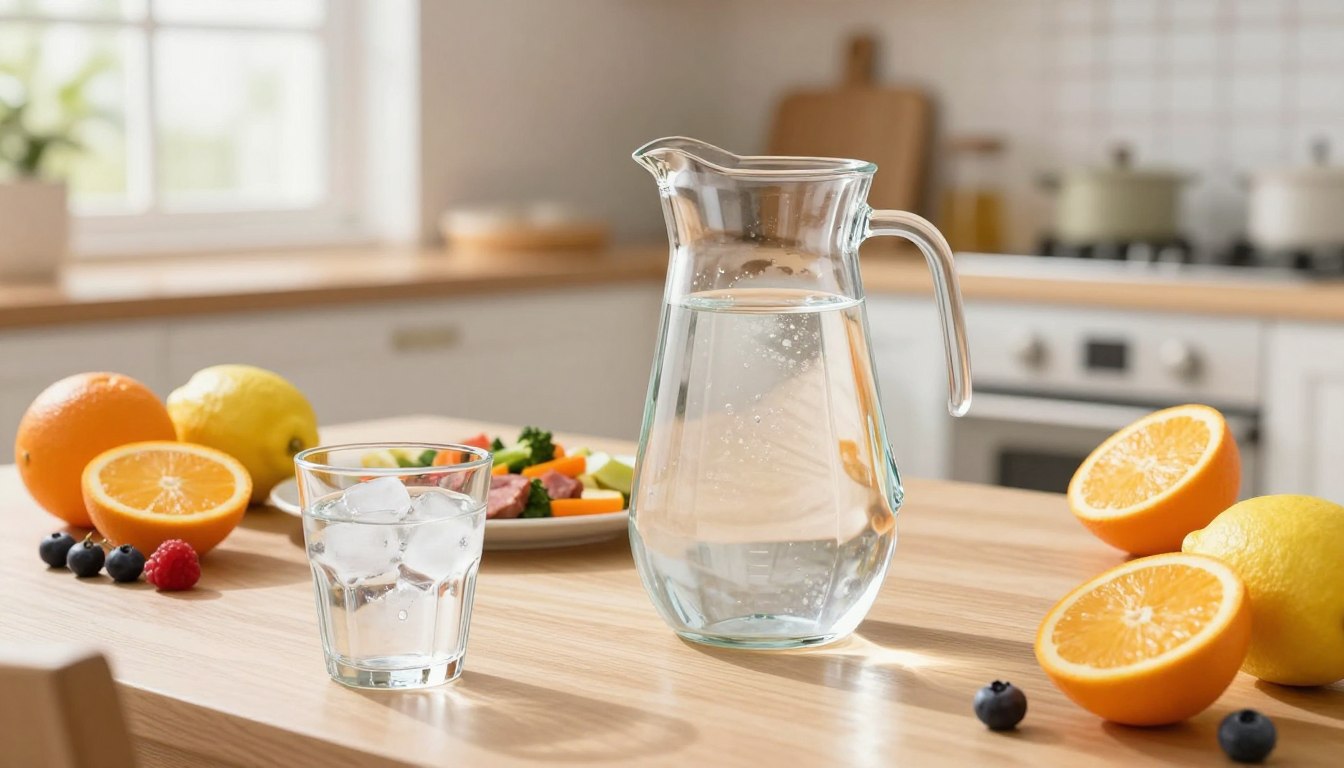
Up to 40% of older adults in some studies are chronically under-hydrated — a surprising number that helps explain why meals can suddenly feel like a chore.
“Dad says he’s not hungry,” you think. Then you notice he sips very little water. Small fluid losses can make food less appealing. They also cause fatigue, headaches, constipation, and confusion that lead to skipped meals.
This short how-to guide will show how poor fluid balance affects loss appetite, what signs to watch for, and simple routines that fit a busy caregiver’s day.
Hydration isn’t just plain water. Soups, fruit, yogurt, and other water-rich foods count toward daily needs. Thirst cues change with age, so many people only notice a problem after symptoms appear.
JoyCalls supports daily check-ins for older adults and sends caregiver summaries and alerts — a gentle layer of support when you live far away. Learn practical steps, when to try at-home fixes, and when to seek urgent care. For deeper background on risks, see this senior health overview, and for a simple check-in routine try this daily check-in method.
Key Takeaways
- Many older adults live with chronic fluid loss that harms meal enjoyment.
- Signs to watch: tiredness, headaches, low urine, constipation, and confusion.
- Fluids come from foods too — soups, fruit, and yogurt help meet needs.
- Simple routines and small sips beat forcing large drinks at once.
- JoyCalls offers check-ins and alerts to help catch changes early.
How dehydration and low appetite are connected in older adults
Sometimes meals shrink not from taste but from low fluid levels in the body. Fluids help digestion, keep blood flowing, and fuel the brain to process hunger cues. When water is low, food feels heavy or bland. That makes eating seem like more trouble than it’s worth.

Why this happens: low fluid slows digestion and weakens the system that moves nutrients where they belong. The result can be fatigue, dizziness, headaches, and mild confusion. These effects make someone more likely to skip breakfast, miss lunch, or avoid cooking as the day goes on.
Gentle note for caregivers: a faded thirst sense is common with aging. Saying “I’m not thirsty” can be a red flag when it comes with tiredness or low energy. If a loved one suddenly eats less and looks drained, think fluids first — not just picky tastes.
Nutrition tip: even the best meal plan struggles if the body can’t use nutrients well. Many people regain interest in food once steady sipping replaces long gaps between drinks, rather than forcing big meals at once.
Common causes and risk factors that drive dehydration in seniors
Small missed sips add up fast — and that can change how someone eats. Use this quick caregiver checklist to spot causes and act early.
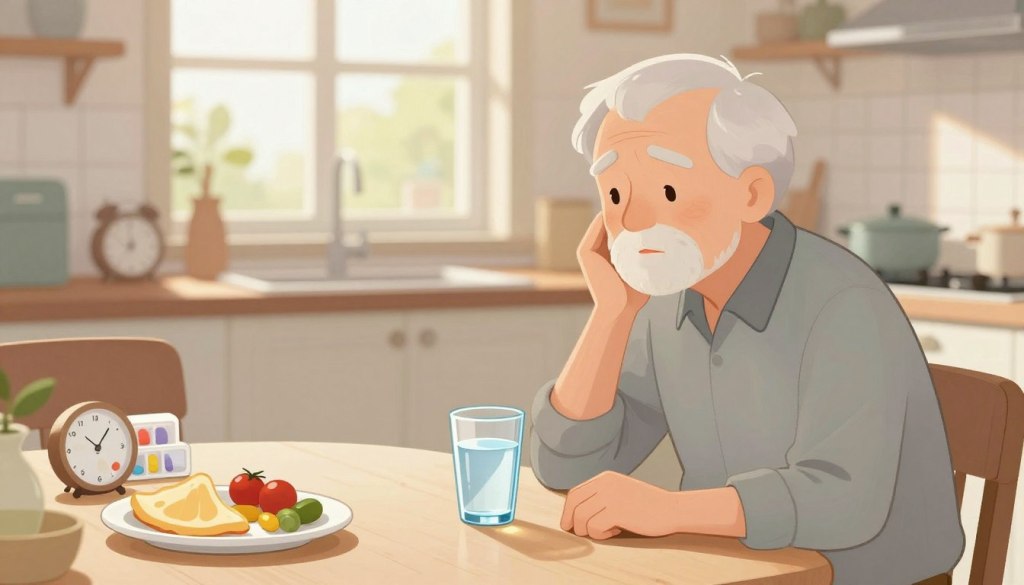
- Age-related changes: Less total body water, a weaker thirst signal, and kidneys that conserve less well. These changes mean one missed drink hits harder than it used to.
- Health conditions: Diabetes, dementia, and swallowing problems raise risk. If your parent avoids cups because of choking, treats may be skipped.
- Medications & side effects: Diuretics increase fluid loss. Other medications cause dry mouth or taste changes that make foods and drinks less appealing.
- Daily triggers: Hot weather, long walks, alcohol, caffeine, and high-fiber meals can raise needs on any given day.
- Social risks: Living alone, depression, or blurred routines means fewer prompts to sip during the day.
“Not every missed drink is urgent — but patterns matter. Notice trends, then set small supports.”
Care note: If there is heart or kidney disease, talk with a clinician about tailored fluid goals. The goal here is noticing loss early and building tiny, practical fixes — not perfection.
dehydration and appetite elderly: signs that eating problems may be dehydration
C isected signs often start small. A loved one may skip bites while still claiming they’re “fine.”

Early signs to watch for
Look for quick cues you can spot at a glance.
- Dry mouth or sticky lips, even if they say they are not thirsty.
- Thirst changes, including no thirst at all for people who once drank regularly.
- Dark urine or fewer trips to the bathroom.
- Low energy and mild fatigue that makes meals feel like extra work.
How the body can make meals harder
Physical symptoms change how food feels and tastes.
- Muscle weakness or cramps that make standing to cook hard.
- Headaches that blunt flavors and make chewing tiring.
- Constipation that leaves someone feeling overly full after small portions.
Cognitive and mood signs to watch
Mood shifts often lead to skipped meals.
- Irritability and short temper when asked to eat or drink.
- Dizziness or lightheadedness, especially when standing.
- Confusion that interrupts routine eating times.
“Let’s do a few small sips together now, and we’ll check your urine color in a couple hours.”
Safety note: Low fluid levels can reduce circulation and drop blood pressure, which causes dizziness on standing.
When to seek urgent care
Not every sign needs a hospital visit, but act fast for severe warning signs.
- Fainting or collapse.
- Severe confusion, very rapid breathing, or heart racing.
- Little or no urine for many hours.
If you want more clinical background, see this research summary. For tips on talking with a stubborn parent about taking fluids or meds, try this caregiver script.
Next step: Once you can spot these signs, the next section will help set a realistic daily fluid target that fits real life.
How much water do older adults need in a day and what changes the target
A clear daily guide makes it easier to check small changes over time.
Quick baseline: most women do well with about nine cups of water a day. Most men often aim for roughly 12 cups a day.
Try JoyCalls Free
No app or new device needed. Start with a free 7-day trial.
These numbers are a starting point — not a test. Body size, weight, weather, activity, and overall health shift needs. Plain water, milk, soups, smoothies, and water-rich foods all count toward the total.
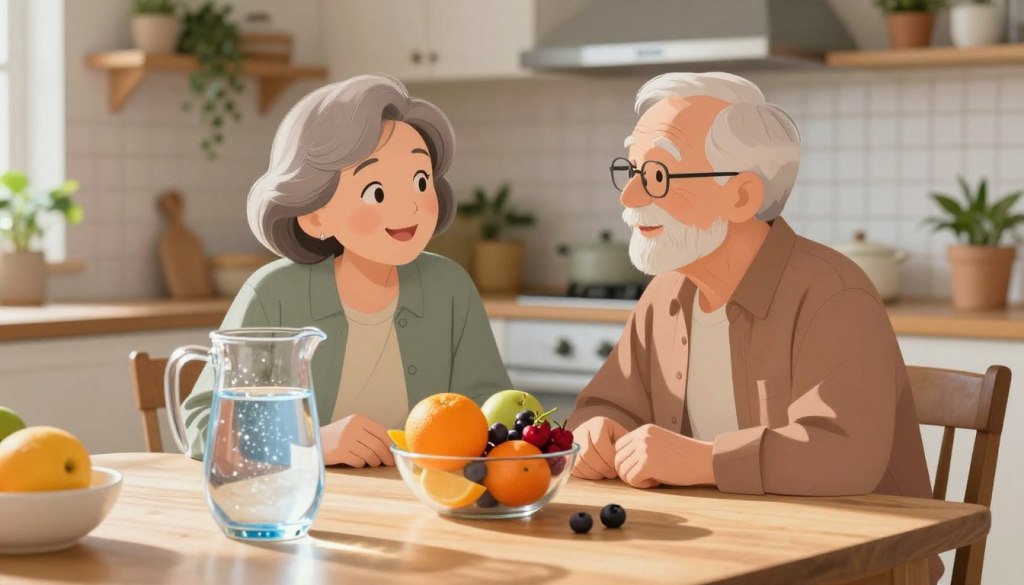
When health conditions change the plan
Some chronic illnesses require different targets. Heart failure or kidney disease may mean a clinician limits fluids to keep someone safe.
Ask a doctor for a tailored goal if a loved one has heart or kidney concerns or other complex health issues.
Practical tips for caregivers
Aim for steady sipping: morning, midday, afternoon, evening. Small, regular sips beat trying to “catch up” later.
“Small, steady steps keep meals easier and help spot real changes early.”
Next step: once a target is set, build a simple routine that fits real life — even on low-energy days.
How to build a hydration-and-meals routine that actually works
Small, planned sips can make meals easier without adding work. Start with repeatable moments rather than forcing big drinks. The goal is steady, gentle support for meals and mood.

Create “sip moments” throughout the day
Set six tiny touchpoints: waking, mid-morning, lunch, mid-afternoon, dinner, early evening. A few sips at each time are less tiring than one large drink.
Pair fluids with meals and meds
Use simple rules: “first sip before first bite” and “no pills without a full glass.” This prevents missed intake and links drinking to daily habits.
Use water-rich foods and easy options
Choose soups, yogurt, gelatin, and soft fruit that add fluid and calories when hunger is low. These foods make meals lighter and more appealing.
Make water more appealing
Add lemon, cucumber, or berries. Try cold, room-temperature, or warm herbal tea. Small flavor tweaks create choices without fuss.
Smart snack ideas when loss is an issue
Keep snacks that double as fluid: watermelon cubes, smoothies, and warm broths. They help between meals when chewing is tiring.
Environment and accessibility fixes
Keep a filled bottle within reach at bedside and in the favorite chair. Use an easy-grip cup and keep rooms cool in hot weather to lower fluid needs.
- Care tip: Put a simple fridge checklist or a recurring phone reminder so the routine runs itself.
- Support: JoyCalls can reinforce this plan with gentle daily check-ins and caregiver summaries when patterns change.
| Time | Action | Quick option | Why it helps |
|---|---|---|---|
| Morning | First sip on waking | Small glass, lemon | Starts digestion and cue for breakfast |
| Midday | Sip at lunch + meds | Soup or yogurt | Pairs fluids with meals, reduces missed intake |
| Afternoon | Mid-afternoon pause | Smoothie or cold water | Boosts energy and prevents late loss |
| Evening | Early evening sip | Warm broth or herbal tea | Comforting, supports nighttime comfort |
“Tiny, consistent steps protect meals and make care feel doable.”
For recipe ideas and practical meal plans that support this routine, see a short guide on hydration-friendly foods. For reminders linked to meds, check a helpful post about medication reminders.
How to Personalize Hydration Around Meals Without Making Seniors Feel Pressured

A hydration plan works best when it feels respectful, easy, and familiar. Many older adults do not resist water because they are being difficult. They may resist because drinking feels uncomfortable, bathroom trips feel inconvenient, plain water feels boring, swallowing feels tiring, or they simply do not notice thirst the way they used to.
That is why the most helpful approach is not to say, “You need to drink more water.” A better approach is to understand what is getting in the way and then build hydration into the senior’s normal eating rhythm.
For caregivers, this shift matters. It turns hydration from a daily argument into a quiet support system. It also helps protect meals, energy, digestion, and mood without making the older adult feel watched or controlled.
Start With the Real Barrier, Not the Water Goal

Before changing cups, buying flavored drinks, or setting reminders, pause and ask: “What is actually making drinking difficult?”
Most hydration problems fall into a few common patterns.
Some seniors avoid fluids because they worry about frequent bathroom trips. This is especially common before outings, bedtime, medical appointments, or long car rides. In this case, the issue is not dislike of water. It is fear of urgency, accidents, or embarrassment.
Others drink less because getting up is physically hard. A glass of water across the room may not seem like much, but for someone with arthritis, dizziness, weakness, or fall risk, it can feel like a task. If the drink is not within reach, it may as well not exist.
Some older adults struggle with taste. Medications, dry mouth, dental problems, illness, or reduced smell can make plain water unpleasant. Food may taste dull, and water may taste metallic, flat, or “wrong.”
There may also be emotional reasons. A senior who is lonely may not feel motivated to prepare meals or drinks. Someone who has lost independence may reject reminders because they sound like instructions. A person with memory changes may simply forget whether they drank anything.
This is why caregivers should avoid assuming the solution is more willpower. The practical question is: “What would make drinking easier, safer, and more pleasant today?”
Use a 3-Day Hydration-and-Meal Pattern Check
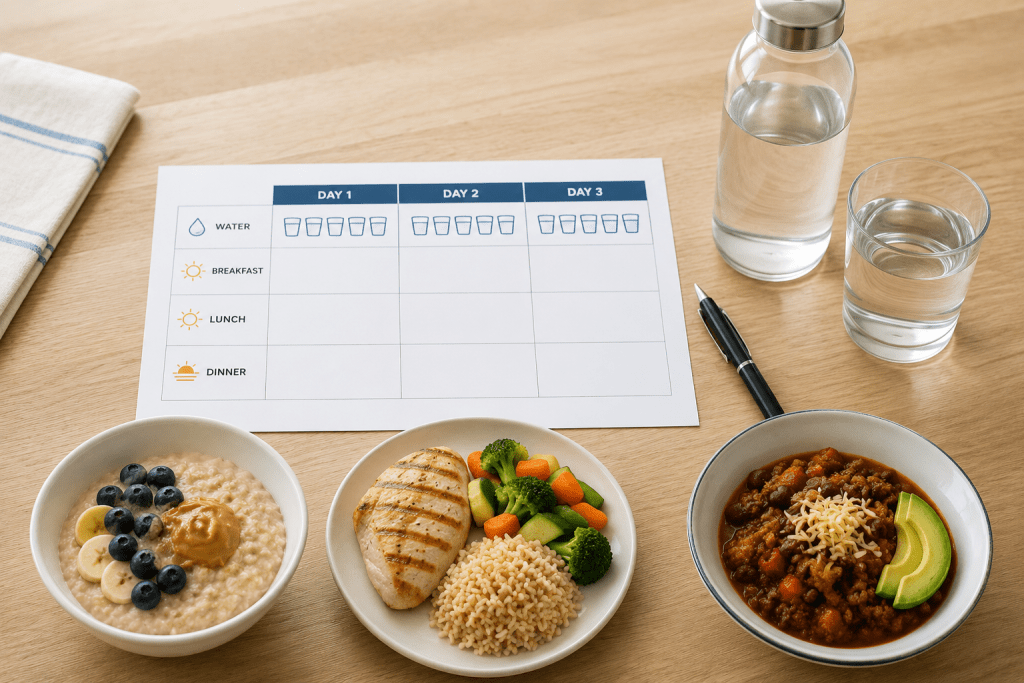
A simple three-day pattern check can reveal more than a long conversation. You do not need a complicated spreadsheet. Just observe the basics.
For three days, write down:
- What time the first drink happens
- Whether breakfast, lunch, and dinner are finished, half-eaten, or skipped
- Which drinks are accepted easily
- Which drinks are refused
- When urine appears darker or bathroom trips decrease
- When fatigue, dizziness, constipation, confusion, or irritability appears
- What happens before the smallest meal of the day
The goal is not to judge. The goal is to spot patterns.
For example, if breakfast is always poor and the first drink does not happen until late morning, the morning routine may need support. A small warm drink before breakfast may make eating easier.
If lunch is skipped after a morning medication, dry mouth or nausea may be affecting appetite. That may be worth discussing with a clinician.
If dinner is small because the senior avoids drinking in the evening, the plan may need more fluids earlier in the day.
If the person drinks well during conversations but not when alone, companionship may be the missing cue.
This type of pattern check helps caregivers stop guessing. It also gives doctors, dietitians, or home-care professionals clearer information if symptoms continue.
Build Hydration Into the Meal, Not Beside It
Many seniors do better when fluids are part of the meal itself instead of a separate task. A large glass of water beside a plate can feel like pressure. A moist meal, warm soup, or small smoothie may feel more natural.
Think of each meal as having three hydration layers.
The first layer is the pre-meal sip. This can be a few small sips of water, herbal tea, milk, diluted juice, or broth about 10 to 15 minutes before eating. The purpose is to ease dry mouth and prepare the body for food. It should be small enough that it does not fill the stomach.
The second layer is moisture inside the meal. This is where many families can make the biggest difference. Add gravy, dal, broth, yogurt, sauce, chutney, stewed fruit, soft vegetables, or a small bowl of soup. Dry meals are harder to chew and swallow, especially for seniors with reduced saliva.
The third layer is the after-meal finish. Instead of asking for a full glass, offer a few calm sips after the meal. This can help with swallowing, medication routines, and digestion.
A simple example: instead of toast alone, offer soft eggs with a few orange slices and warm tea. Instead of a dry sandwich, offer half a sandwich with soup. Instead of plain rice, add dal, curry, curd, or broth-based vegetables.
The meal becomes easier without making hydration feel like a separate chore.
Match the Drink to the Time of Day
The best drink is often the one that fits the moment.
In the morning, many seniors prefer warm drinks because they feel gentle on the stomach. Warm water, light tea, or warm milk may be easier than cold water. For seniors with morning dry mouth, a warm drink before breakfast can make the first meal less tiring.
At midday, fluids can be more nourishing. Soups, lassi, buttermilk, smoothies, milk, or a light electrolyte drink may work well, depending on health needs. This is also a good time to include water-rich foods because there is still enough day left for bathroom trips.
In the afternoon, hydration should support energy. Many older adults experience a mid-afternoon slump. A small drink with a snack can prevent the long gap between lunch and dinner. Good options include yogurt with fruit, a small smoothie, coconut water if appropriate, or a cup of broth.
In the evening, keep fluids gentle and controlled. Some seniors restrict drinking at night because they fear waking up to urinate. Instead of pushing large amounts, offer small sips earlier in the evening and avoid making bedtime the main hydration window.
This timing approach respects the senior’s comfort while still improving daily intake.
Make Water Easier for Seniors With Dry Mouth or Taste Changes
Dry mouth is one of the most overlooked reasons seniors eat and drink less. When the mouth feels sticky, chewing becomes tiring. Crackers, bread, rice, meat, and dry snacks may feel difficult. Even favorite foods can become unappealing.
Instead of forcing more plain water, focus on mouth comfort.
Offer small sips before and during meals. Use sauces, gravies, dips, yogurt, or broth to soften food. Choose soft fruits such as oranges, melon, berries, peaches, or stewed apples. Keep sugar-free lozenges or gum available if approved by a clinician or dentist. Encourage regular dental care, because mouth pain, loose dentures, and gum irritation can reduce both eating and drinking.
If water tastes unpleasant, try changing the format. Some seniors prefer chilled water. Others prefer room-temperature water. Some do better with a straw, while others find straws tiring. A slice of lemon, cucumber, mint, or fruit may help, but avoid strong flavors if they cause heartburn.
Caregivers should also watch whether dry mouth began after a medication change. If it did, do not stop the medicine on your own. Instead, mention the timing to the doctor or pharmacist and ask whether dry mouth, taste changes, or appetite loss could be side effects.
Reduce Bathroom Worry Without Cutting Fluids Too Much
Bathroom worry is a real barrier. A senior may avoid fluids because they are afraid of urgency, leaking, falling at night, or needing help. If this fear is ignored, hydration advice may sound unrealistic.
A better plan is to make drinking feel safer.
Offer more fluids earlier in the day instead of relying on evening intake. Keep the path to the bathroom clear, well lit, and free of rugs or clutter. Consider night lights, grab bars, raised toilet seats, or a bedside commode if mobility is limited. Make sure clothing is easy to remove quickly. Complicated buttons, belts, or tight waistbands can increase anxiety.
For outings, plan bathroom stops in advance. Before appointments, offer small sips rather than large drinks. After returning home, resume the normal routine.
It is also important to treat frequent urination as a health clue, not just an inconvenience. Diabetes, urinary tract infections, medication effects, bladder issues, and certain heart or kidney conditions can change urination patterns. If a senior is constantly thirsty, urinating unusually often, avoiding fluids because of urgency, or waking many times at night, it is worth discussing with a clinician.
The aim is not to force fluids despite bathroom fear. The aim is to make hydration safer and more predictable.
Use “Choice Language” Instead of Reminder Language
The way caregivers speak about hydration can change the response. Many older adults dislike being told what to do, especially if they already feel dependent in other areas.
Instead of saying, “You have to drink water,” try offering a choice.
“Would you prefer warm tea or cold water with lunch?”
“Do you want a few sips now or after your soup?”
“Would a smaller cup feel easier?”
“Should we keep water near your chair or near the window?”
Choice language protects dignity. It gives the senior control while still moving toward the goal.
It also helps to connect hydration to what the person cares about. Instead of saying, “You are dehydrated,” say, “A few sips may help your mouth feel better before eating,” or “This might help reduce that tired feeling before dinner.”
Avoid arguments over exact amounts. For many families, the first win is not reaching a perfect daily target. The first win is reducing long dry gaps in the day.
Create a Small-Cup Strategy for Low-Appetite Days
When appetite is low, large servings can feel discouraging. The same is true for drinks. A full glass may look like too much, especially if the senior feels nauseated, bloated, tired, or worried about choking.
Use smaller cups.
A small cup feels manageable. It creates quick success. It also allows the caregiver to offer fluids more often without making the senior feel overwhelmed.
Try this approach:
Offer a small cup with breakfast.
Offer another small cup mid-morning.
Add soup, yogurt, fruit, or a smoothie at lunch.
Offer a small drink with an afternoon snack.
Use a few sips with dinner.
Offer a final small drink earlier in the evening if appropriate.
This is easier than asking someone to finish two or three large glasses.
On very low-appetite days, use nourishing fluids. Milk, smoothies, yogurt drinks, soups, and broths may provide both fluid and calories. This is especially helpful when the person cannot manage a full plate.
However, if the senior has diabetes, heart failure, kidney disease, swallowing problems, or fluid restrictions, ask a clinician which options are safest.
Watch for Swallowing Problems at Mealtimes
Sometimes poor hydration is not about motivation. It may be about swallowing safety.
Watch for coughing during meals, a wet or gurgly voice after drinking, repeated throat clearing, food pocketing in the cheeks, long chewing times, watery eyes while swallowing, or avoiding certain textures. These signs may suggest swallowing difficulty.
If swallowing is difficult, thin liquids like water may be harder to manage than thicker textures. Do not experiment aggressively on your own if there are signs of choking or aspiration. A doctor, speech-language pathologist, or swallowing specialist can recommend safe textures and strategies.
In the meantime, keep meals calm. Encourage upright sitting. Avoid rushing. Offer small bites and small sips. Make sure dentures fit well. Reduce distractions during meals, especially for seniors with memory changes.
Hydration should never come at the cost of safety. If drinking causes coughing, fear, or distress, professional guidance is important.
Make Hydration Visible, Reachable, and Routine
A senior is more likely to drink when the cue is visible. Keep a drink where the person spends the most time: bedside table, favorite chair, dining table, or next to the medication organizer.
Use cups that are easy to lift. Heavy glasses may be difficult for someone with weakness, tremors, arthritis, or reduced grip. A lightweight cup with a handle, lid, or straw may help. For some seniors, a clear bottle with markings can make progress visible. For others, markings may feel childish or stressful, so use judgment.
Refill drinks quietly. Replace warm, stale, or untouched water with a fresh option. Many people are more willing to sip when the drink looks clean and inviting.
Tie drinking to fixed daily events:
- After waking
- With morning medication
- Before breakfast
- With lunch
- During a favorite TV program
- After a walk
- With an afternoon phone call
- With dinner
The routine should not depend on memory alone. It should be built into the environment.
Involve the Senior in the Plan
Even a simple hydration plan works better when the older adult has a say in it. Ask what they prefer. Ask what feels annoying. Ask which cup they like. Ask whether cold, warm, sweet, plain, or lightly flavored drinks feel better.
This conversation does not need to be long. It can be as simple as:
“I want meals to feel easier for you. What drinks feel good these days?”
“Is there a reason you avoid drinking in the afternoon?”
“Would smaller cups make this less tiring?”
“Do you want me to remind you, or would you rather keep a drink near your chair?”
These questions show respect. They also reveal practical details caregivers may miss.
For seniors with memory loss, choices should be simple. Offer two options, not five. Use the same cup. Keep the same timing. Calm repetition is better than constant explaining.
When the Plan Is Working
A hydration-and-meal plan is working when meals become less tiring, the mouth feels more comfortable, constipation improves, urine is not consistently dark, and the senior has steadier energy through the day.
You may also notice fewer headaches, less dizziness, better mood, and more willingness to eat. The change may be gradual. Do not expect one day of better sipping to solve every appetite issue.
Look for trends over a week. Is breakfast improving? Is the afternoon slump less severe? Is the person accepting more fluids without conflict? Are there fewer skipped meals?
These small improvements matter.
When to Recheck the Plan
Recheck the plan whenever something changes. Medication changes, hot weather, illness, diarrhea, vomiting, fever, dental problems, grief, depression, a fall, or a hospital visit can all affect eating and drinking.
Also recheck the plan if the senior suddenly refuses foods they used to enjoy, becomes more confused, loses weight, has repeated constipation, or starts sleeping much more than usual.
Hydration is not a one-time fix. It is a daily support that should adjust with the person’s health, comfort, and routine.
The most caring strategy is not to push harder. It is to make the next sip easier, the next meal softer, and the next reminder more respectful.
Practical Hydration Support for Seniors Who Eat Less Than They Used To
When an older adult starts eating less, hydration becomes even more important. Food and fluids are closely connected. A person who eats smaller meals may also lose a major source of daily water because many foods naturally contain fluid. Soups, fruits, cooked vegetables, curd, dal, porridge, smoothies, and stews all contribute to hydration.
This means dehydration risk can increase quietly when appetite drops.
For seniors, the solution is not always to drink much more water. Sometimes the better strategy is to make meals more hydrating, easier to chew, and more comfortable to finish.
Use “Hydrating Foods” as Part of the Daily Fluid Plan
Many seniors find it easier to eat water-rich foods than to drink large glasses of water. This is especially helpful for those who feel full quickly.
Good meal-friendly options include:
- Soups and broths
- Dal, rasam, sambar, and thin curries
- Curd, yogurt, chaas, and lassi
- Soft fruits like watermelon, oranges, papaya, berries, peaches, and melon
- Cooked vegetables with gravy or sauce
- Oats, porridge, khichdi, and soft rice dishes
- Smoothies made with fruit, milk, yogurt, or suitable alternatives
These foods support hydration while also giving the body calories, protein, vitamins, and minerals.
For example, instead of giving a dry chapati with sabzi, serve it with dal, curd, or a light gravy. Instead of plain toast, offer soft fruit and tea. Instead of a dry snack, offer yogurt, soup, or a small smoothie.
The goal is to reduce dryness in the meal itself.
Make Every Meal Easier to Swallow
Dehydration can make swallowing feel harder because the mouth and throat may be dry. Seniors may then avoid foods that feel rough, sticky, or tiring.
Caregivers can help by changing texture without making the food feel “medical.”
Add moisture wherever possible. Use gravies, chutneys, curd, broth, soft sauces, mashed vegetables, or a little healthy fat to make food smoother. Cut food into smaller pieces. Serve softer versions of favorite meals.
Some examples:
Dry rice can become curd rice, dal rice, khichdi, or rice with vegetable gravy.
Dry roti can be softened with dal, curry, ghee, or curd.
Dry chicken or paneer can be served in a mild gravy.
Biscuits can be paired with tea or milk instead of eaten alone.
Bread can be softened as French toast, upma-style bread, or served with soup.
This matters because seniors may not always say, “I am having trouble swallowing.” They may simply say, “I am not hungry,” “This is too dry,” or “I do not feel like eating.”
Avoid Large Drinks Right Before Meals
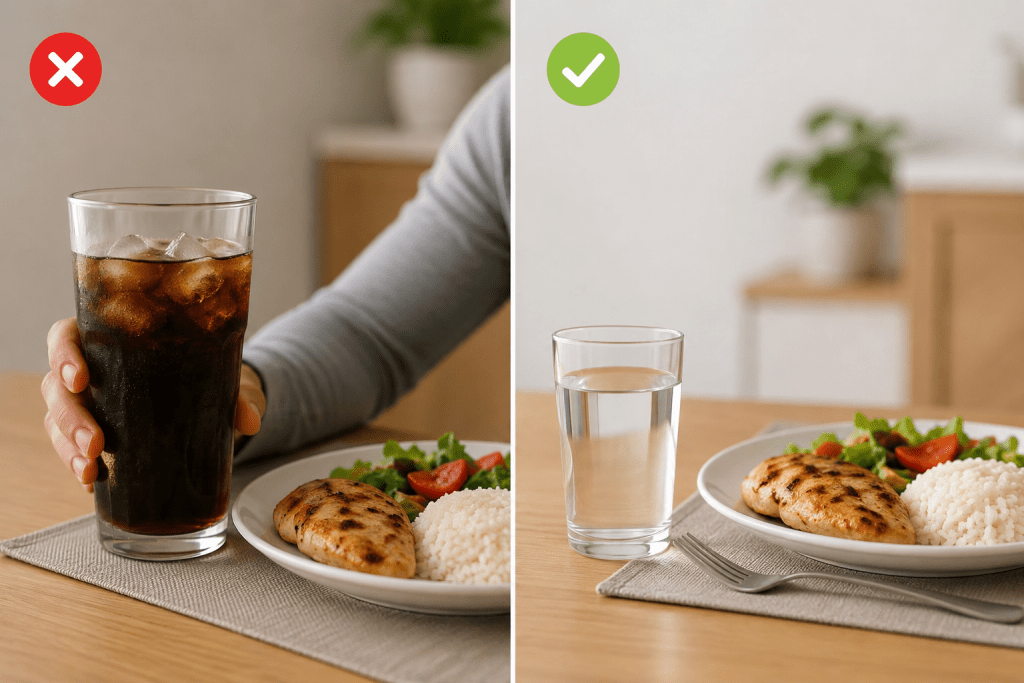
Although hydration supports eating, too much fluid right before a meal can reduce appetite. This is especially true for seniors who feel full quickly.
A better approach is small, steady sipping.
Offer a few sips 10 to 15 minutes before food. This helps moisten the mouth without filling the stomach. During the meal, keep the drink nearby but do not pressure the person to finish it. After the meal, offer a few more sips.
This works better than giving a large glass before lunch or dinner.
For seniors with low appetite, every bit of stomach space matters. Fluids should support the meal, not replace it unless a clinician has recommended nutritional drinks.
Pair Hydration With Protein
If a senior is eating less, plain water alone may not be enough support. They may also need more protein and calories in smaller portions.
Hydrating protein-rich options can be very useful:
- Curd or Greek yogurt
- Milk or fortified milk
- Smoothies with yogurt or nut butter
- Dal soups
- Lentil stews
- Soft paneer in gravy
- Egg drop soup
- Moong dal khichdi
- Protein-rich porridges
This is especially important for seniors recovering from illness, surgery, weakness, or weight loss.
A small bowl of dal soup may be more useful than a plain glass of water because it provides both fluid and nourishment. A smoothie may be easier than a full meal when chewing feels tiring.
However, seniors with kidney disease, heart failure, diabetes, or fluid restrictions should follow medical guidance before increasing protein drinks, soups, or electrolyte beverages.
Keep Hydration Gentle During Illness
Illness can quickly affect hydration in older adults. Fever, vomiting, diarrhea, poor appetite, sweating, and certain medicines can all increase fluid needs or fluid loss.
During sick days, focus on small amounts more often.
Offer a few sips every 10 to 20 minutes if the person cannot manage larger amounts. Use oral rehydration solution if recommended. Offer soups, clear broths, diluted drinks, ice chips, or soft foods with fluid.
Do not wait for strong thirst. Many seniors may not feel thirsty even when their body needs fluids.
Watch closely for warning signs such as unusual sleepiness, confusion, very dark urine, dizziness, dry mouth, rapid heartbeat, inability to keep fluids down, or very little urination. These signs need medical attention, especially if they appear suddenly.
Build a Caregiver-Friendly Daily Hydration Map
A hydration map is a simple plan that shows when fluids naturally fit into the day.
For example:
Morning: warm drink after waking
Breakfast: small cup of tea, milk, or water
Mid-morning: fruit or a few sips of water
Lunch: dal, soup, curd, or water-rich vegetables
Afternoon: chaas, smoothie, or light drink with snack
Dinner: soft, moist meal with small sips
Early evening: final gentle drink if suitable
This kind of map is easier than tracking every milliliter. It helps caregivers notice long gaps. It also makes hydration feel like part of the day rather than a repeated instruction.
The best hydration map is realistic. If the senior dislikes morning water, do not force it. Try warm tea, diluted juice, or soup later. If they avoid evening fluids, shift more hydration to morning and afternoon.
Make the Dining Environment Calm
Hydration and meals improve when the dining environment feels safe and unhurried. Many seniors eat and drink less when they feel rushed, corrected, or watched too closely.
Keep the meal setting calm. Reduce background noise. Make sure the chair is comfortable. Ensure the person is sitting upright. Keep napkins, glasses, dentures, hearing aids, and utensils within reach.
Serve moderate portions. A full plate can feel overwhelming. A smaller plate with seconds available often works better.
Avoid repeated comments like “You barely ate” or “You did not drink enough.” These can create shame or resistance. Instead, offer quiet support:
“Would a little curd make this easier?”
“Do you want a few sips before the next bite?”
“Would soup feel better today?”
Support works best when it protects dignity.
Use Technology Without Making It Feel Cold
For seniors living alone, hydration reminders can be helpful, but they should feel caring rather than mechanical.
Phone reminders, smart speakers, caregiver calls, or daily check-ins can gently prompt fluid intake. A reminder can be as simple as, “Have a few sips before lunch,” or “Keep your water near your chair.”
For families, a short daily call around mealtime can help. The conversation does not need to focus only on drinking. A friendly check-in can naturally include, “What are you having with lunch today?” or “Did you keep your tea nearby?”
This is where companionship can make a real difference. Many older adults eat and drink better when they feel connected.
Adjust the Plan for Seniors With Memory Changes
Seniors with dementia or memory loss may not remember when they last drank. They may also forget the purpose of a glass placed nearby.
Use repetition and visual cues.
Keep the same cup in the same place. Offer drinks at the same times each day. Use simple language. Avoid long explanations.
Instead of saying, “You need to drink because dehydration can affect your appetite,” say, “Here is your tea. Take a small sip.”
Offer one drink at a time. Too many choices can create confusion. If the person refuses, pause and try again later. Refusal may mean the drink is too cold, too hot, too large, unfamiliar, or offered at the wrong moment.
For memory care, calm consistency is more effective than persuasion.
Know When Food-Based Hydration Is Not Enough
Hydrating foods are useful, but they cannot solve every problem. Medical advice is needed if the senior has repeated dehydration, ongoing poor appetite, sudden confusion, fainting, unexplained weight loss, swallowing trouble, frequent choking, vomiting, diarrhea, or very low urine output.
It is also important to ask for guidance if the person has kidney disease, heart failure, liver disease, diabetes, or has been told to limit fluids.
In these cases, hydration must be balanced carefully. More fluid is not always safer. The right amount depends on the person’s health condition, medications, and doctor’s recommendations.
A Simple Rule for Families
For everyday care, remember this:
Do not only ask, “Did they drink enough water?”
Also ask:
“Was the meal moist enough?”
“Was the drink easy to reach?”
“Did bathroom worry stop them from drinking?”
“Was dry mouth making food harder?”
“Were they alone during the meal?”
“Did they have long gaps without fluids?”
These questions lead to better solutions.
Hydration for seniors is not just about filling a glass. It is about comfort, safety, routine, dignity, and nourishment. When caregivers support all of these together, meals often become easier, calmer, and more enjoyable.
Treatment steps and when to call a doctor
Small, calm actions in the first hour often prevent a minor problem from becoming an emergency. Start by moving the person to a cool, shaded spot and loosening tight clothes. Keep your tone steady. This helps with circulation and comfort while you watch for signs that need care.
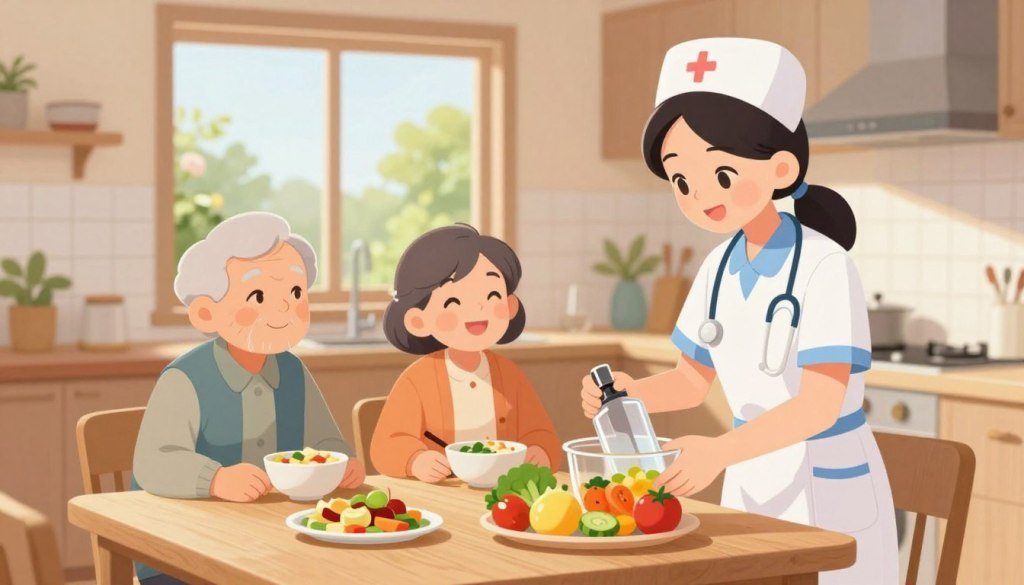
At-home steps for mild cases
Immediate actions: sit or lie down, loosen layers, and offer small sips every few minutes. Do not force a large drink. Gulping can make the body react poorly.
Simple small-sips plan (next 60 minutes)
- Minute 0–10: 1–2 teaspoons every 1–2 minutes.
- Minute 10–30: increase to a few tablespoons every 5 minutes if tolerated.
- Minute 30–60: offer up to a small cup total while monitoring alertness and urine output.
Electrolytes and recovery options
After fluid loss, the body needs salts and minerals to absorb water. Try a banana, milk, diluted fruit juice, or an oral rehydration–style drink. Pick low-sugar options when possible and check with a clinician for people with diabetes or heart disease.
Avoid caffeine and alcohol. These can make symptoms worse and slow recovery.
“If this keeps happening, review current medications with a clinician — some drugs may cause fluid loss or dry mouth.”
When to seek urgent care
Go to the ER or call 911 if you see fainting, no urine for many hours, very fast breathing, a racing heart, severe confusion, or persistent vomiting/diarrhea. These signs can mean moderate to severe levels that need IV fluids and close monitoring.
| Situation | At-home step | Watch for | When to call |
|---|---|---|---|
| Mild symptoms | Cool place, small sips, snack with potassium | Improved alertness, steady sipping | Call primary care if it recurs |
| Ongoing loss | Offer electrolyte-rich options, check meds | Low urine, persistent weakness | Contact clinician for medication review |
| Severe signs | Do not delay; seek emergency care | Fainting, severe confusion, no urine | Call 911 or go to ER now |
Caregiver note: if your loved one seems “not like themselves,” don’t wait. Quick action protects health and may prevent serious effects on blood pressure and organ function.
For more clinical background on symptoms and causes see this clinical summary. For help when a parent insists they already took meds, read this caregiver conversation guide.
Immediate support: Talk to Joy now: 1-415-569-2439 for a calm companion call and guidance while you decide the next steps.
Conclusion
When fluid levels slip, simple routines can make the biggest difference.
In one breath: when hydration drops, loss appetite often follows. Small, steady sips and water-rich foods are kinder fixes than forcing big meals.
Watch for early signs: dry mouth, dark urine, fatigue, or mild confusion. These signs often arrive before someone says they are thirsty.
Practical approach: set a gentle routine of small sips, pair drinks with meals, and choose soups or smoothies when eating is hard.
Needs change with health. Ask a doctor if medical issues alter fluid targets. You are not failing; this problem is common and small steps protect health and quality life.
Need support? JoyCalls makes daily check-in calls to older adults with no app required. Get summaries and alerts for peace of mind. Sign up for JoyCalls: https://app.joycalls.ai/signup
FAQ
How does low fluid intake make meals less appealing for older adults?
Why does water affect digestion, energy, and nutrient use?
Can fatigue, dizziness, or confusion reduce eating and drinking during the day?
If someone doesn’t feel thirsty, should I still worry?
What age-related changes raise the risk of poor fluid balance?
Which health conditions make poor fluid balance more likely?
Can medications cause dry mouth or altered taste that cut food and drink intake?
Do heat, activity, alcohol, caffeine, or certain foods increase daily fluid needs?
How do social and routine factors affect drinking and eating?
What early signs suggest poor fluid balance is affecting eating?
What physical problems make eating harder when fluids are low?
How do mood and thinking change with low fluid levels?
When do symptoms suggest moderate to severe fluid loss that needs urgent care?
How much fluid should most older adults aim for each day?
When should fluid targets change because of chronic illness?
What are easy ways to build a routine that boosts both drinks and meals?
Which foods help increase fluid intake without forcing plain water?
What snack ideas work when someone has little hunger?
How can the environment and accessibility support better intake?
What at-home steps help mild fluid loss recover?
When are electrolyte or recovery drinks useful?
What emergency signs require immediate medical care?
How can JoyCalls help families notice and prevent problems?

Ana Avila, PhD, is a healthcare and technology writer with deep expertise in artificial intelligence, senior care innovation, and the practical use of AI in healthcare operations. Her work focuses on how emerging technologies can improve the daily experience of older adults, support overburdened care teams, and help senior living communities deliver safer, faster, and more personalized support.
Dr. Avila’s academic background is rooted in health informatics, aging care systems, and applied artificial intelligence. Her doctoral work focused on how digital health tools, predictive analytics, and AI-assisted communication systems can be used to improve care coordination, reduce operational delays, and identify early signs of risk among older adults. Her training gives her a rare ability to understand both the technical side of AI and the human realities of healthcare delivery.
Over the years, Ana has developed a specialized body of work around AI in senior living. She writes about how senior care providers can use intelligent systems to manage resident requests, answer routine questions, support family communication, improve after-hours coverage, and detect patterns that may indicate loneliness, confusion, distress, or unmet needs. Her articles often examine the gap between what senior living teams are expected to deliver and what traditional staffing models can realistically support.
Ana’s healthcare expertise is especially focused on the operational side of care. She has written extensively about call handling, resident engagement, front desk workflows, triage systems, caregiver communication, care escalation, and the hidden administrative burden placed on senior living staff. Her work explains how AI can help reduce repetitive tasks, organize incoming requests, prioritize urgent issues, and give human caregivers more time for meaningful resident interaction.
At the same time, Ana is careful not to present AI as a replacement for human care. A consistent theme in her writing is that technology should support relationships, not weaken them. She argues that the best AI systems in healthcare are not the ones that simply automate the most tasks, but the ones that make care teams more responsive, families more informed, and residents more supported. Her perspective is grounded in the belief that senior living technology must be designed around dignity, trust, privacy, and compassion.
Ana has also written widely on the ethical use of AI in healthcare. Her work discusses the importance of human oversight, transparent escalation rules, resident consent, data minimization, and responsible use of sensitive health and behavioral information. She often emphasizes that AI systems used around older adults must be easy to understand, carefully monitored, and designed with the limitations and needs of real residents in mind, including those with memory loss, hearing challenges, mobility issues, or social isolation.
Her writing has been used as a reference point in discussions about aging, elder care technology, digital health, and AI-supported senior living. Some of her articles have also been cited by Wikipedia editors as supporting references on topics related to healthcare, aging, and technology. This has helped position her work as a useful educational resource for readers looking to understand how AI can be applied in real care environments.
In addition to her long-form writing, Ana has contributed research-based commentary, professional explainers, and practical guidance for healthcare operators, senior living decision-makers, and technology teams building products for older adults. Her work combines research literacy with operational practicality. She is able to take complex subjects such as natural language processing, predictive analytics, conversational AI, and care automation, and explain them in a way that is accessible to executives, caregivers, families, and non-technical readers.
Ana’s strongest area of expertise is the intersection of artificial intelligence and senior living operations. She understands that senior care communities face a difficult combination of rising resident expectations, staffing pressure, family communication demands, and increasing care complexity. Her writing explores how AI can be used to ease those pressures through smarter communication systems, faster response workflows, proactive check-ins, and better visibility into resident needs.
Her approach is both evidence-informed and deeply human. She studies AI through the lens of real-world care delivery: whether a resident gets help faster, whether a family member receives a clearer update, whether a caregiver avoids unnecessary administrative work, and whether a senior living team can identify a concern before it becomes a crisis. This practical focus makes her work especially relevant for organizations that want to adopt AI responsibly rather than simply follow technology trends.
Ana Avila is regarded as a thoughtful voice on the future of AI in healthcare and senior living. Her expertise combines academic training, research-driven analysis, operational understanding, and a strong commitment to humane technology. Through her writing, she helps healthcare leaders and senior living communities understand not only what AI can do, but how it should be used to improve care, preserve dignity, and strengthen the human relationships at the center of aging support.