

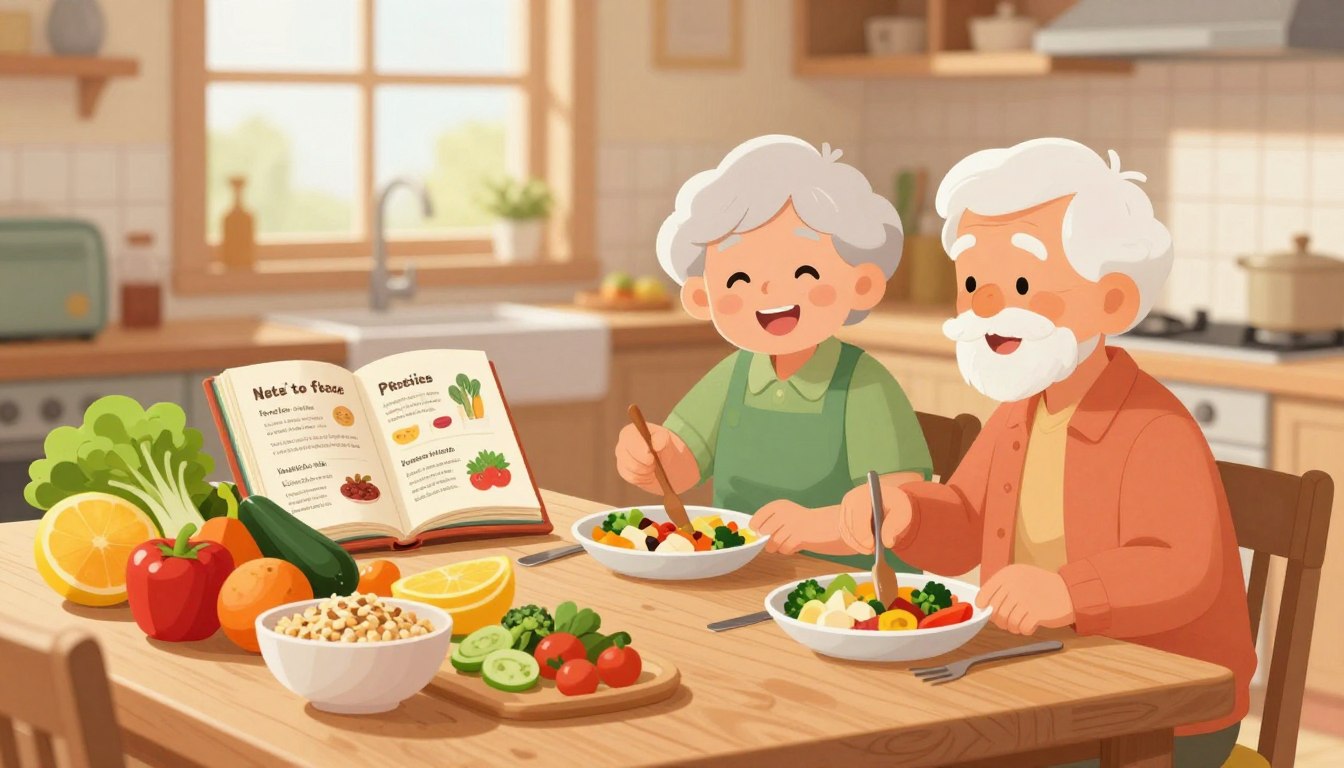
Surprising fact: metabolism often slows so much that older adults may need fewer calories but *more* calcium, vitamin C, and magnesium per bite.
You might catch yourself asking, “Did Mom eat anything but toast today?” It’s a familiar scene for busy children balancing work and kids.
The big shift after 70 is simple: the body wants fewer calories, yet it needs more nutrition per bite. That means choosing foods that pack protein, fiber, and key vitamins.
This short guide will show an easy way to turn nutrients into everyday meals. We’ll cover protein, fiber, and vitamins, and show practical benefits like steady strength, stable weight, and better digestion.
No one expects perfection. Just a doable routine most days. If meals slip because someone is tired or lonely, daily check-ins help a lot.
Want hands-on support? Sign up for JoyCalls or call 1-415-569-2439 to talk it through and set up simple check-ins that keep health on track.
Key Takeaways
- Metabolism slows, so choose nutrient-dense foods to meet needs.
- Focus on protein, fiber, and vitamins to support body strength and digestion.
- Limit salt, ultra-processed foods, sugary drinks, and alcohol.
- Small, regular meals often work better than big plates.
- Caregiver check-ins and simple routines reduce risk and worry.
What changes in nutrition after 70 (calories, appetite, and health risks)
As the years add up, your appetite may change even while nutrient needs stay the same. Metabolism tends to slow, so portion sizes often shrink. That creates a calorie gap: fewer calories but the same or higher need for vitamins and protein.

Why you may need fewer calories but more key nutrients
Smaller meals can still be rich in nutrients. Aim for more protein, colorful vegetables and fiber-rich grains on a smaller plate. If weight drops quickly, talk with a clinician. Sudden weight change is a sign, not a reason to skip meals.
How hydration needs change and why water supports digestion
Thirst can fade with age, raising dehydration risk. Build water into the day: a morning glass, one with meds if allowed, and a mid-afternoon refill. Water helps digestion and makes nutrients easier to absorb.
Make hydration tasty with water-rich foods like watermelon, celery, bell peppers, and broccoli. These count toward fluid needs and add vitamins.
How smarter eating patterns lower major health risks
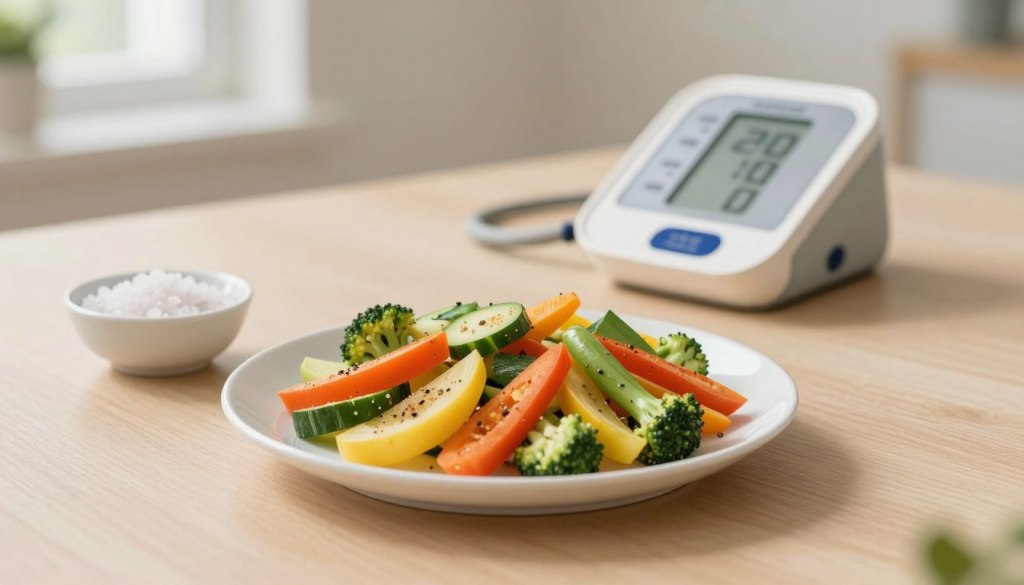
Steady, balanced meals help lower risk of heart disease, diabetes, and high blood pressure. Keep salt in check—many frozen meals, canned soups, and deli meats hide sodium. The CDC suggests limiting intake to about 2,300 mg per day.
Better hydration + smarter meals protect muscle, reduce dizziness, and help maintain independence. Small changes can support steadier energy and safer days.
| Change | Why it matters | Simple action |
|---|---|---|
| Lower appetite | Fewer calories but same nutrient needs | Smaller portions with more protein and colorful vegetables |
| Less thirst | Higher dehydration risk, poorer absorption | Set water times; add watermelon, celery, bell peppers, broccoli |
| Sodium exposure | Raises blood pressure and heart risk | Check labels; avoid canned soups and processed meats |
| Unintentional weight change | Can signal illness or poor intake | Contact a clinician; keep regular meals and snacks |
Want a simple routine to support meals and hydration? See practical tips at daily check-in routine and more guidance on healthy eating at healthy eating tips.
How to build a diet for seniors over 70 with the right nutrients
Think of meals as small chances to give big nutrition—one reliable plate at a time. Repeat a few building blocks and you’ll cover most needs without fuss.
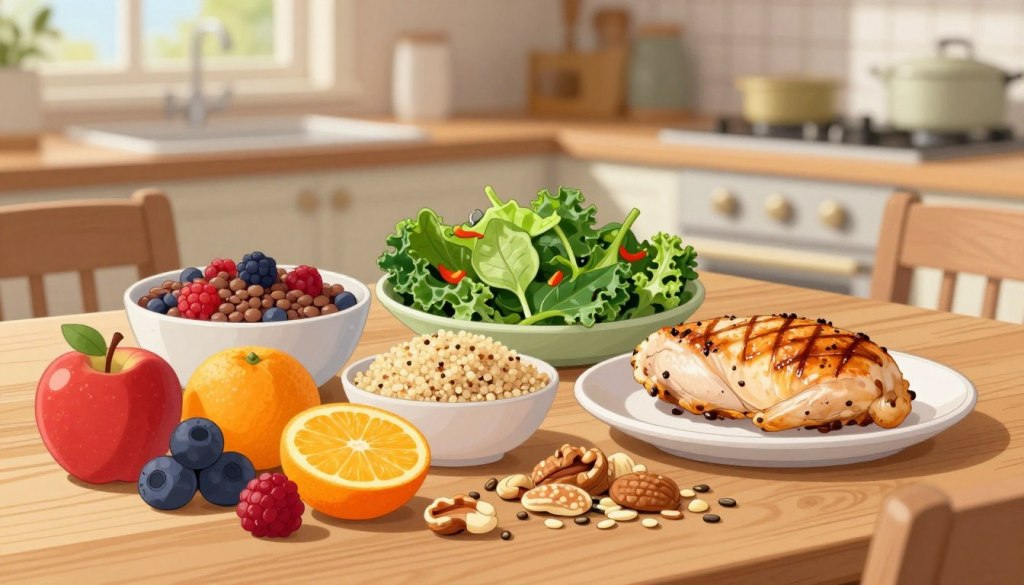
Protein to protect muscle and strength
Spread protein across the day. Older adults do better when protein appears at each meal. It helps keep muscle and makes everyday tasks easier—stairs, groceries, balance.
Rotate these high-protein options: seafood, eggs, dairy or fortified soy products, plus beans, peas, and lentils. Add simple boosts: a scoop of yogurt, an egg in a sandwich, or tuna in a salad.
Fiber for regularity and gut comfort
Fiber eases digestion. Choose whole grains, leafy greens, lentils, beans, fruits, and vegetables to reduce constipation and support steady energy.
Vitamins and minerals to watch
Pay attention to calcium and vitamin D for bones; vitamin C for repair and immunity; magnesium and potassium for muscle and heart; and vitamin B12—often in fortified cereals or via clinician-advised supplements.
“If Dad only eats two real meals, make those meals count.” — a caregiver reminder
- Daily building blocks: fruits and vegetables
- whole grains
- lean protein (including plant options)
- healthy fats like olive oil and nuts
- low-fat dairy or fortified alternatives
Want a simple check-in plan to keep meals consistent? See a handy caregiver schedule check-in template to help make those plates reliable each day.
Foods and habits to limit for better blood pressure, heart health, and weight stability
It’s easy to reach for a boxed meal when energy is low, but those quick choices can quietly raise health risks. Small changes protect steady blood pressure and lower risk of heart disease.
Try JoyCalls Free
No app or new device needed. Start with a free 7-day trial.
Where salt and ultra-processed items hide — and tasty swaps
Packaged foods often hide the problem. Canned soups, frozen entrées, deli meat, snack chips, and sauces pack surprise salt and unhealthy fats.
Try simple swaps: herbs, garlic, pepper, vinegar, and lemon instead of added salt. These keep flavor but cut sodium that pushes up blood pressure.
Alcohol and sugary drinks: sleep, meds, falls, and diabetes
Alcohol affects the body differently with age. It can disrupt sleep, raise blood pressure, and interact with medicines. That raises fall risk and other dangers.
Sugary drinks add empty calories and up the risk of weight gain and diabetes. Choose water, sparkling water, or unsweetened tea instead.
- Practical rule: if it’s in a bag or box and tastes “salty‑sweet,” pause and read the label.
- Keep ultra-processed foods less often, not never — focus on steady, nourishing choices.
- For an evidence-based plan to lower blood pressure, see the DASH plan summary.
“When taste changes, start with small swaps — lemon, herbs, and a label check.” — caregiver advice
How to turn nutrition goals into simple meals you can follow every day
Bake consistency into the week with a short, repeatable plan. Pick one of the USDA Food Patterns—Healthy U.S.-Style, Mediterranean-Style, or Healthy Vegetarian—based on tastes and cooking time.
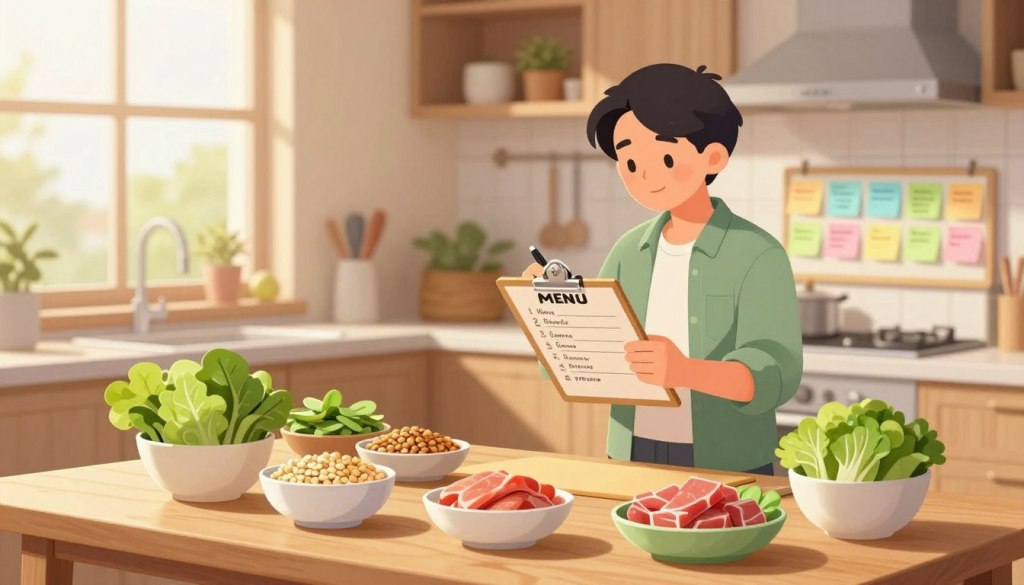
Use USDA Food Patterns to choose a style that fits your life
Healthy options: the three patterns guide servings of whole grains, dairy, protein, and produce. Choose the one that matches budget and skill. You don’t need a new personality—just a small plan you repeat.
Mediterranean-style approach for heart health
Focus: fruits, vegetables, whole grains, beans, fish, nuts, and olive oil. Aim for fish several times a week, legumes regularly, nuts as snacks, and olive oil as the main fat.
Easy meal-planning system
Plan meals in advance, write a grocery list, and prep grab-and-go snacks like yogurt cups, nuts, or hummus with cut veggies.
Quick meal ideas
- Smoothie: spinach + fruit + yogurt — fast protein + fiber.
- Veggie omelet with whole-grain toast.
- Salmon with roasted zucchini and sweet potato.
- Bean lunch: hummus, lentil soup, or black bean quesadillas.
Label-reading checklist
Look for: lower saturated fats, lower sodium, and less added sugar. Prioritize fiber, calcium, vitamin D, and potassium to help blood pressure, diabetes risk, and overall health.
“Start with two reliable meals and make them count.” — caregiver tip
Need help sticking to the routine? Try the 7-day high-protein plan and pair mealtimes with a daily check-in routine so someone checks in and caregivers get summaries and alerts.
How to Make Senior Nutrition Work in Real Life: Appetite, Chewing, Medications, Mood, and Daily Follow-Through
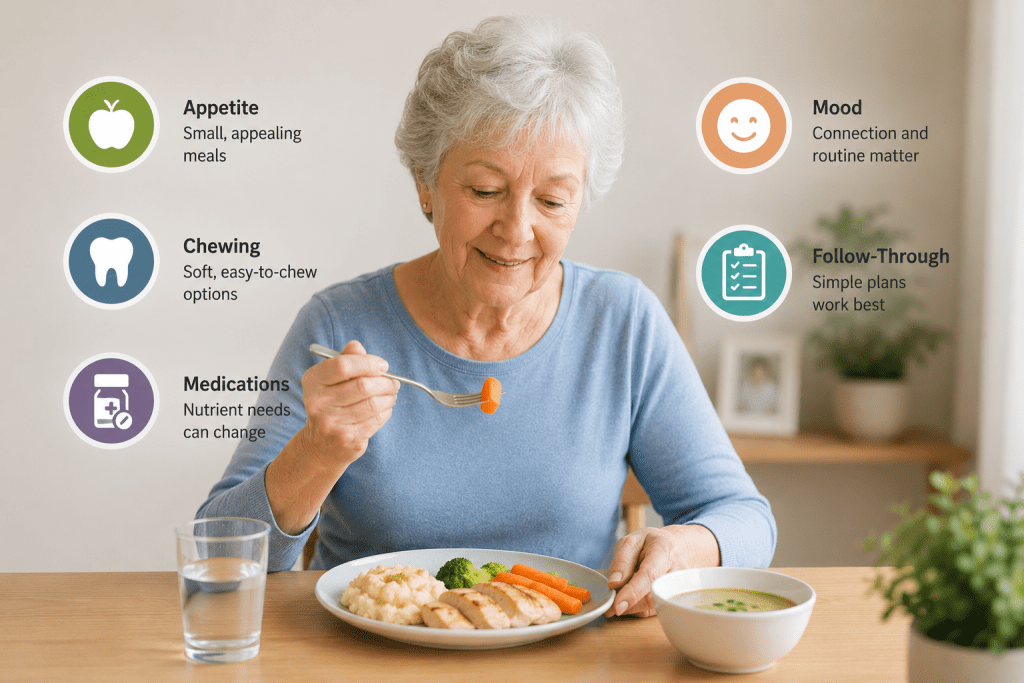
Knowing what to eat after 70 is important. But for many older adults, the harder question is not “What is healthy?” It is “How do I actually eat well when I feel tired, live alone, have dental issues, take several medications, or simply do not feel hungry?”
This is where senior nutrition needs to become practical. A good diet for older adults should not depend on perfect cooking, a large appetite, expensive groceries, or strict willpower. It should be built around real-life patterns: smaller meals, easier textures, predictable routines, safe food storage, medication timing, and gentle reminders.
The goal is simple: make nourishing choices easier to repeat.
Start with the “why am I not eating well?” question
When an older adult is not eating enough, it is easy to assume they are being picky or careless. Often, there is a real reason behind it. Appetite may be lower. Food may taste bland. Chewing may be uncomfortable. Cooking may feel tiring. Shopping may be difficult. Loneliness may make meals less appealing. Medications may cause nausea, dry mouth, constipation, or taste changes.
Before changing the whole diet, identify the main barrier.
Ask these questions:
- Is the person skipping meals because they are not hungry?
- Are they avoiding certain foods because they are hard to chew?
- Are they drinking tea, coffee, or juice instead of eating a proper meal?
- Are they too tired to cook by evening?
- Are they eating mostly toast, biscuits, cereal, or packaged snacks?
- Are medicines affecting appetite, digestion, or taste?
- Are they losing weight without trying?
- Are they forgetting meals or repeating the same low-nutrient foods?
Once you know the barrier, the solution becomes more focused. A senior who struggles with chewing needs softer protein and cooked vegetables. A senior who forgets lunch needs reminders and ready-to-eat options. A senior who feels full quickly needs smaller, richer meals. A senior who is lonely may need a regular mealtime call or shared routine more than another recipe.
Use smaller meals, but make every bite count
After 70, many people cannot comfortably eat three large meals. That does not mean nutrition has to suffer. Instead, shift from “large plate thinking” to “small meal strategy.”
A practical routine can be:
- Breakfast within one to two hours of waking
- A protein-rich snack mid-morning
- A light but balanced lunch
- A nourishing evening meal
- A small bedtime snack if weight loss is a concern
The key is to avoid “empty small meals.” Tea and toast may feel comforting, but they do not provide enough protein, fiber, healthy fats, or minerals. A better version would be whole-grain toast with egg, peanut butter, avocado, cottage cheese, hummus, or soft paneer. The meal stays familiar, but the nutrition improves.
Good small-meal upgrades include:
- Oatmeal cooked with milk, topped with banana and ground nuts
- Scrambled eggs with soft vegetables
- Yogurt with fruit and chia or flaxseed
- Lentil soup with olive oil and soft rice
- Smoothie with milk, yogurt, fruit, and nut butter
- Whole-grain toast with tuna, egg salad, or mashed beans
- Cottage cheese or paneer with cooked vegetables
- Soft khichdi with dal, vegetables, and ghee or olive oil in moderation
For seniors with low appetite, avoid serving a very large plate. A large portion can feel discouraging. A smaller bowl, served warm and attractively, may feel more manageable.
Adjust food texture without reducing nutrition
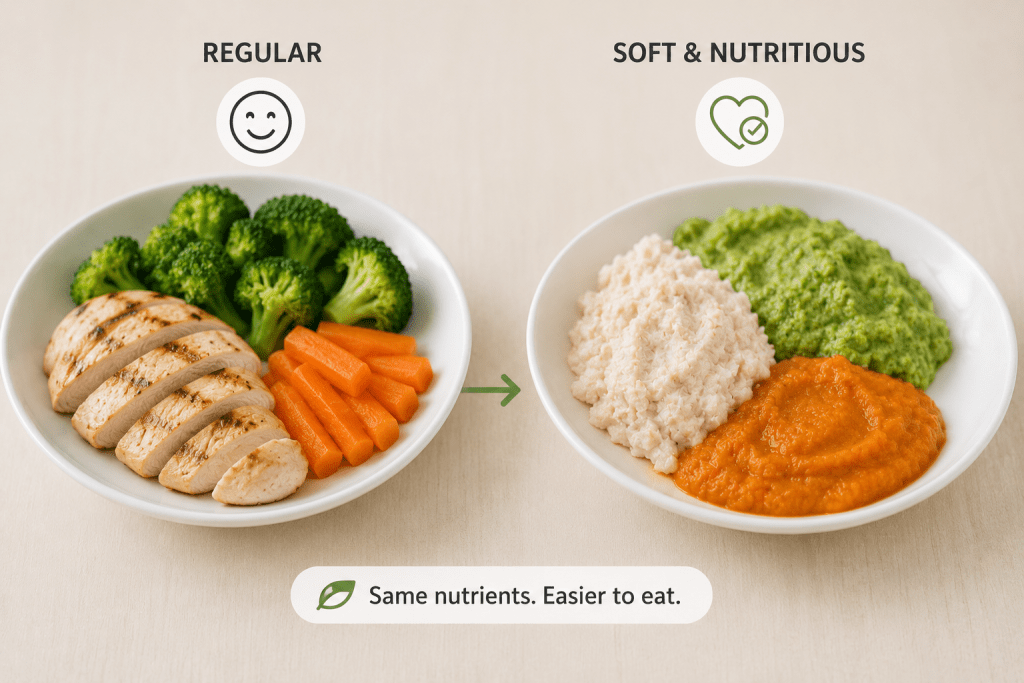
Chewing and swallowing issues are common in later life, especially with dentures, missing teeth, dry mouth, stroke history, Parkinson’s disease, dementia, or general weakness. When chewing becomes difficult, many seniors quietly stop eating meat, raw vegetables, nuts, salads, and fruits. Unfortunately, those are often the very foods that provide protein, fiber, and key nutrients.
The solution is not to force hard foods. The solution is to change texture.
Try these senior-friendly texture changes:
- Use minced, shredded, stewed, or slow-cooked meats instead of dry grilled meat.
- Choose fish, eggs, tofu, dal, beans, yogurt, cottage cheese, and soft paneer for easier protein.
- Cook vegetables until soft instead of serving raw salads.
- Use soups, stews, khichdi, porridge, and casseroles to combine protein and vegetables.
- Mash beans, lentils, sweet potato, pumpkin, avocado, or cooked carrots.
- Cut fruit into small pieces or use stewed fruit, applesauce, smoothies, or soft bananas.
- Use nut butters or finely ground nuts instead of whole nuts if chewing is difficult.
Dry foods are often harder to swallow. Add moisture with broth, curd, yogurt, dal, gravy, olive oil, hummus, or soft sauces. A dry chicken breast may be avoided, but shredded chicken in soup may be easy to eat.
If coughing, choking, wet voice, or repeated chest infections happen during meals, speak with a doctor or speech-language pathologist. Swallowing difficulty should not be ignored.
Watch medications that interfere with eating
Many older adults take several medicines. Some must be taken with food. Some must be taken away from certain foods. Others may change appetite, taste, bowel habits, or hydration. This can quietly affect nutrition.
Common medication-related eating problems include:
- Nausea after taking pills
- Constipation
- Dry mouth
- Reduced appetite
- Metallic taste
- Dizziness that makes cooking unsafe
- Sleepiness around mealtimes
- Stomach discomfort
- Food restrictions that cause confusion
A helpful step is to create a “food and medication timing list.” This should include:
- Medicine name
- Time taken
- Whether it should be taken with food
- Foods or drinks to avoid
- Side effects noticed
- Questions for the doctor or pharmacist
Do not change medication timing without medical guidance. But do ask the pharmacist whether a medicine may be affecting appetite, digestion, taste, or hydration. Sometimes a small timing adjustment, different formulation, or constipation plan can make eating much easier.
Also review supplements. More is not always better. Calcium, vitamin D, B12, iron, magnesium, and other supplements should match real needs. Seniors should avoid taking multiple overlapping supplements without professional advice, especially if they have kidney disease, heart disease, thyroid problems, or are on blood thinners.
Build meals around energy levels, not ideal schedules
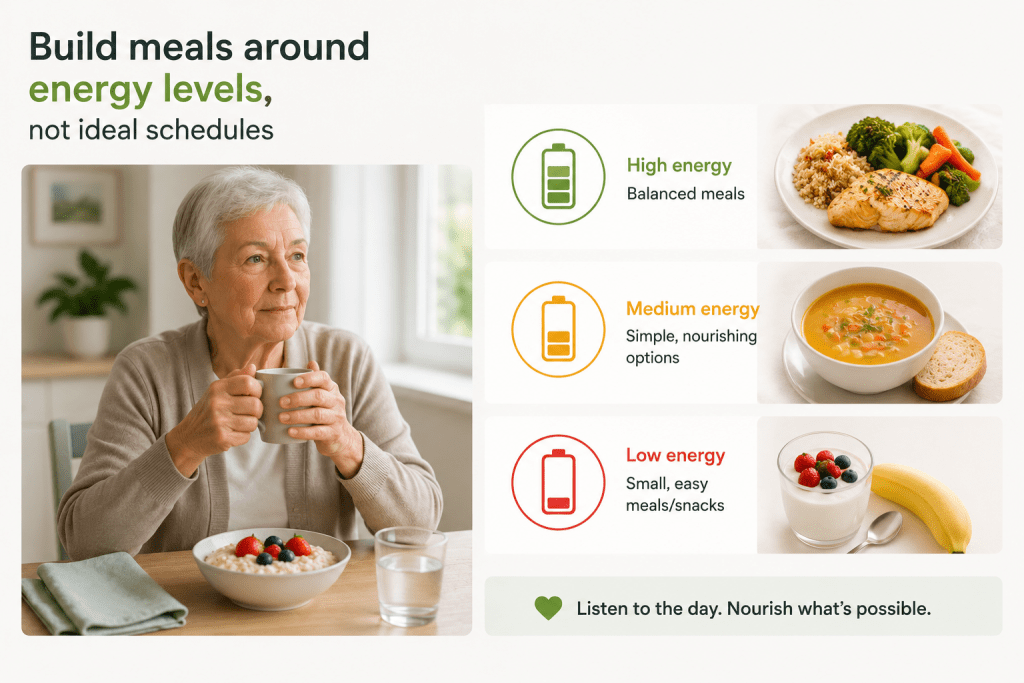
Many seniors have better energy earlier in the day. By evening, cooking may feel difficult. This often leads to a decent breakfast but a weak dinner, or missed meals later in the day.
Plan around the person’s strongest time of day.
If mornings are best, prepare parts of dinner early. Cook dal, chop soft vegetables, boil eggs, prepare soup, or portion leftovers before fatigue sets in. If evenings are hardest, keep “no-cook nutrition” available.
Good low-effort options include:
- Greek yogurt or curd with fruit
- Boiled eggs
- Hummus with soft bread
- Peanut butter on whole-grain toast
- Ready lentil soup
- Cottage cheese with fruit
- Canned tuna or salmon
- Pre-cooked beans
- Frozen vegetables
- Pre-cut fruit
- Milk or fortified soy milk
- Smoothie ingredients
- Leftover khichdi, stew, or soup
The best senior nutrition plan is not the most impressive one. It is the one that still works on a tired day.
Prevent “tea and biscuit nutrition”
Many older adults fall into a pattern of tea, biscuits, toast, crackers, or sweets replacing meals. This can happen because these foods are easy, familiar, inexpensive, and comforting. But over time, this pattern may lead to low protein intake, constipation, weakness, unstable blood sugar, and weight changes.
Instead of removing comfort foods completely, pair them with nutrition.
For example:
- Tea with biscuits becomes tea with yogurt and fruit.
- Toast becomes toast with egg, peanut butter, paneer, or beans.
- Crackers become crackers with hummus or cheese.
- A sweet snack becomes fruit with nuts or curd.
- Plain soup becomes soup with lentils, chicken, tofu, or beans.
- Rice becomes rice with dal, vegetables, and a protein side.
This “add before you subtract” approach feels less strict and works better for seniors who resist diet changes.
Make hydration part of the food routine
Hydration should not depend only on thirst. Many seniors do not feel thirsty enough, and some avoid fluids because of urinary urgency or nighttime bathroom trips. But low fluid intake can worsen constipation, dizziness, confusion, urinary tract problems, and fatigue.
A practical hydration rhythm can look like this:
- A glass of water after waking
- Fluid with breakfast
- A drink with medications, if allowed
- Soup, fruit, or buttermilk with lunch
- A mid-afternoon drink
- Small sips with dinner
- Limited fluids close to bedtime if nighttime urination is a problem
Hydration does not have to mean plain water only. Helpful options include milk, fortified soy milk, soups, herbal tea, water-rich fruits, diluted smoothies, and oral rehydration drinks when medically advised.
For seniors with heart failure, kidney disease, or fluid restrictions, follow the clinician’s fluid guidance.
Use a weekly “nutrition safety check”
Families often notice serious nutrition problems only after weight loss, weakness, falls, or hospital visits. A simple weekly check can catch changes earlier.
Once a week, review:
- Has weight changed suddenly?
- Are clothes fitting looser?
- Is the fridge empty or full of expired food?
- Are meals being skipped?
- Is the person eating mostly snacks?
- Are there signs of dehydration, such as dark urine, dry mouth, dizziness, or confusion?
- Is constipation becoming frequent?
- Is chewing or swallowing getting harder?
- Has mood changed?
- Are they too tired to shop or cook?
- Are medications causing nausea or appetite loss?
This does not need to feel like an inspection. It can be a caring conversation. Ask, “What meals felt easiest this week?” or “What should we keep ready so dinner is not stressful?”
Keep the kitchen senior-friendly
Even when food is available, the kitchen setup may stop seniors from eating well. Heavy pots, hard-to-open jars, high shelves, poor lighting, slippery floors, and confusing packaging can make cooking feel unsafe.
Make the kitchen easier with small changes:
- Keep daily foods at waist or eye level.
- Use lightweight pans and easy-grip utensils.
- Store water bottles or filled glasses in visible places.
- Keep protein snacks ready in the fridge.
- Use clear labels and dates on leftovers.
- Remove expired foods weekly.
- Keep a stable chair nearby for seated prep.
- Use non-slip mats.
- Improve lighting near counters.
- Choose easy-open containers.
- Keep emergency snacks near the bedside if needed.
For older adults with memory changes, keep choices simple. Too many options can create confusion. A visible meal chart, labeled containers, or a daily call reminder can help.
Plan for loneliness, because it affects appetite
Nutrition is not only biological. It is emotional. Many seniors eat less when they eat alone. Food may feel less enjoyable after the loss of a spouse, reduced social life, limited mobility, or depression.
A person who once cooked full meals may stop because “it is not worth cooking for one.” This is a serious nutrition risk.
Helpful strategies include:
- Schedule regular family meals by phone or video.
- Arrange community lunches, senior center meals, or neighbor check-ins.
- Encourage shared meals when possible.
- Use daily calls to ask what they ate, not as pressure but as support.
- Prepare favorite traditional foods in healthier formats.
- Keep mealtimes pleasant, not corrective.
- Avoid turning every meal conversation into criticism.
A warm reminder often works better than a strict instruction. “Did you have something with protein today?” feels more supportive than “You never eat properly.”
Create a simple action plan for the next 7 days
A senior nutrition plan should begin with small steps. Do not try to change everything at once.
Here is a practical 7-day approach:
Day 1: Check the fridge and pantry.
Remove expired food. Add easy proteins like eggs, yogurt, lentils, tuna, tofu, paneer, beans, or milk.
Day 2: Upgrade breakfast.
Add protein to the usual breakfast. Try eggs, yogurt, milk, nut butter, cottage cheese, or dal.
Day 3: Add one hydration anchor.
Choose one fixed time for water or another healthy fluid, such as after waking or with medications.
Day 4: Prepare one soft, high-nutrition meal.
Make soup, stew, khichdi, dal, oatmeal, or a soft protein-rich bowl.
Day 5: Create an emergency meal shelf.
Keep safe, easy foods available for tired days: soup, oats, nut butter, canned fish, beans, whole-grain bread, and shelf-stable milk.
Day 6: Review medication-food timing.
Ask a pharmacist if any medicine may affect appetite, digestion, taste, or hydration.
Day 7: Set up a check-in routine.
Use a daily call, family message, or printed tracker to confirm meals, fluids, mood, and appetite.
Small steps repeated consistently are more valuable than a perfect plan that lasts two days.
Know when to get medical help
Some nutrition changes need professional attention. Contact a healthcare provider if an older adult has:
- Unplanned weight loss
- Very low appetite for more than a few days
- Difficulty swallowing
- Frequent choking or coughing during meals
- Ongoing vomiting, diarrhea, or constipation
- Signs of dehydration
- Confusion or sudden weakness
- Mouth pain, denture problems, or dental infections
- New food avoidance
- Repeated falls
- Blood sugar swings
- Worsening fatigue
Food is powerful, but it is not a replacement for medical care. Dietitians, doctors, dentists, pharmacists, and speech therapists can all play a role in helping seniors eat safely and comfortably.
The real goal: make nourishment easier to repeat
After 70, nutrition should feel supportive, not overwhelming. The best plan respects appetite, energy, chewing ability, budget, medical needs, and personal food preferences.
Start with one reliable meal. Add one protein. Improve one snack. Set one hydration reminder. Make one kitchen change. Check in once a day.
That is how senior nutrition becomes sustainable. Not through pressure, guilt, or complicated rules, but through steady routines that help older adults stay strong, hydrated, independent, and cared for.
Senior Nutrition After 70: How Families and Caregivers Can Support Better Eating Without Making It Feel Like Pressure
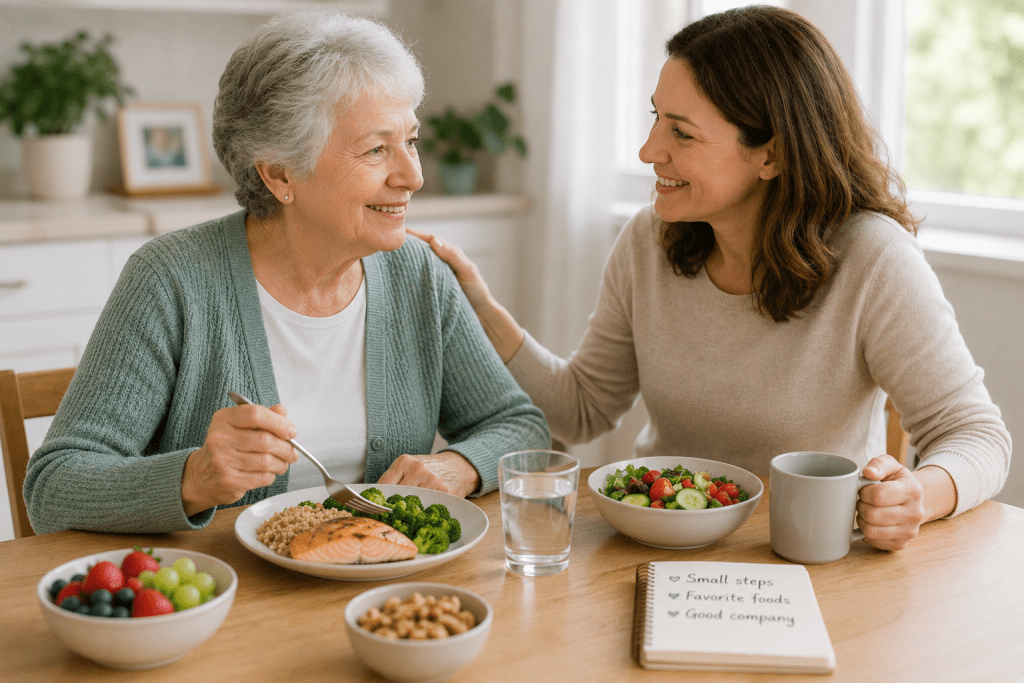
For many seniors, eating well is not just an individual responsibility. It often depends on the support system around them. Family members, caregivers, neighbors, home aides, and even regular phone calls can make a major difference in whether an older adult eats enough, drinks enough, and gets the nutrients they need.
But support has to be handled carefully.
Older adults do not want to feel controlled, corrected, or treated like children. They may already be dealing with changes in independence, health, mobility, memory, or confidence. Food can be emotional because it is connected to routine, culture, identity, comfort, and choice.
So the goal is not to “manage” every bite. The goal is to make healthy eating easier, safer, and more dignified.
Begin with respect, not instructions
A common mistake is to start with advice: “You should eat more protein,” “Don’t eat that,” or “You need to drink more water.” Even when the advice is correct, it can feel irritating or judgmental.
A better approach is to begin with curiosity.
Ask:
- “What foods have been feeling easiest lately?”
- “Are there any foods you used to enjoy but don’t feel like eating now?”
- “Is cooking feeling tiring these days?”
- “Would it help if we kept a few ready meals available?”
- “Are your dentures or teeth making anything difficult?”
- “Do any medicines make you feel nauseous?”
This turns nutrition into a conversation, not a correction. Seniors are more likely to accept help when they feel heard.
Look for patterns instead of blaming choices
If an older adult is eating very little, eating the same thing every day, or relying on snacks, avoid assuming they are careless. There is usually a reason.
For example:
- Repeated toast and tea may mean cooking feels exhausting.
- Avoiding vegetables may mean chewing is difficult.
- Skipping dinner may mean they are too tired by evening.
- Eating sweets may mean meals feel bland or lonely.
- Not drinking water may mean fear of frequent urination.
- Refusing meals may mean depression, grief, or medication side effects.
Once you identify the pattern, you can solve the real problem.
Instead of saying, “You never eat properly,” say, “Dinner seems to be the hardest meal. Let’s make that easier.”
Create a “safe foods” list
Every senior should have a short list of foods they enjoy, tolerate well, and can eat even on low-energy days. This list is extremely useful for caregivers and family members.
Divide it into categories:
Easy proteins:
Eggs, yogurt, cottage cheese, paneer, dal, lentils, tofu, fish, soft chicken, beans, milk, fortified soy milk.
Easy carbohydrates:
Oats, rice, soft rotis, whole-grain bread, potatoes, sweet potatoes, poha, upma, porridge.
Easy vegetables:
Cooked carrots, spinach, pumpkin, bottle gourd, beans, peas, zucchini, soft mixed vegetables.
Easy fruits:
Banana, papaya, stewed apple, melon, berries, oranges if tolerated, smoothies.
Comfort foods that can be improved:
Khichdi with extra dal, soup with lentils, toast with egg, curd rice with vegetables, porridge with nuts, dosa with sambar.
This list prevents last-minute confusion. It also helps different family members provide consistent support.
Make grocery shopping predictable
Nutrition often breaks down when groceries are irregular. Seniors may not mention that they are running out of milk, eggs, fruit, or vegetables. Some may avoid asking for help because they do not want to bother anyone.
A weekly grocery rhythm helps.
A practical senior-friendly grocery list should include:
- 2–3 protein options
- 2 soft fruits
- 3–4 vegetables
- 1–2 whole grains
- Healthy fats such as nuts, seeds, olive oil, peanut butter, or avocado
- Hydration options such as milk, soup ingredients, or herbal tea
- Emergency foods for low-energy days
Families can also keep a shared grocery note. When something runs low, it gets added immediately. This avoids the common situation where the fridge looks full but has no real meal options.
Prepare food in “senior portions”
Large containers of leftovers can be overwhelming. A senior may not want to reheat a big dish, serve from a heavy container, or decide how much to eat.
Instead, portion food into small, clearly labeled containers.
Each container should answer three questions:
- What is it?
- When was it made?
- How should it be reheated?
For example: “Dal with vegetables — made Monday — heat 2 minutes.”
Small portions reduce food waste and make meals feel easier. They are especially helpful for seniors living alone or those with mild memory issues.
Use reminders that feel caring, not controlling
Many seniors benefit from meal and hydration reminders, but the tone matters.
Instead of saying, “Did you eat or not?” try:
- “What did you have for lunch today?”
- “I’m making tea too. Have you had something with yours?”
- “Did you get a glass of water with your medicines?”
- “Would soup feel good tonight?”
- “Do you want me to stay on the phone while you eat?”
The reminder should feel like companionship. A short daily call around mealtime can be more effective than repeated lectures about nutrition.
For seniors who use phones comfortably, reminders can be set for water, meals, medications, and snacks. For those who prefer paper, a printed meal chart on the fridge may work better.
Support independence with choices
Older adults should remain involved in food decisions as much as possible. Even when they need help, they should still have preferences.
Offer two simple choices instead of open-ended questions.
For example:
- “Would you prefer dal rice or soup tonight?”
- “Do you want banana or papaya with breakfast?”
- “Should we keep eggs or yogurt for snacks?”
- “Would you like vegetables in khichdi or as a soft side?”
This protects dignity while reducing decision fatigue.
Watch for silent warning signs
Nutrition problems in seniors often develop quietly. Families should watch for subtle changes.
Warning signs include:
- Clothes becoming loose
- Food left uneaten
- Expired items in the fridge
- Empty snack packets replacing meals
- Reduced interest in favorite foods
- New weakness or tiredness
- Dizziness
- Constipation
- Confusion
- Dry mouth
- Poor wound healing
- More frequent falls
- Avoiding social meals
- Difficulty opening containers
- Complaints that food tastes different
One sign does not always mean something serious. But repeated changes should be discussed with a doctor, dietitian, dentist, or pharmacist.
Make mealtimes emotionally easier
A senior may eat more when meals feel pleasant. Keep mealtime calm. Avoid arguments, medical discussions, criticism, or rushed instructions at the table.
Helpful habits include:
- Eating together when possible
- Calling during meals
- Serving food in smaller bowls
- Using familiar dishes
- Keeping the table uncluttered
- Playing soft music if they enjoy it
- Serving warm food at the right temperature
- Respecting cultural food preferences
- Avoiding shame around appetite changes
Food should feel like care, not a test.
Build a backup plan for difficult days
Every senior needs a “bad day food plan.” This is for days when cooking is not possible, appetite is low, or energy is poor.
Keep these ready:
- Ready soup with added lentils or protein
- Boiled eggs
- Yogurt or curd
- Milk or fortified soy milk
- Nut butter
- Soft bread
- Bananas
- Oats
- Canned beans or fish
- Frozen vegetables
- Pre-portioned dal or khichdi
- Smoothie ingredients
The backup plan prevents missed meals. It also reduces stress for caregivers.
Know when support is not enough
Family support is valuable, but professional help may be needed if a senior is losing weight, choking, refusing food, forgetting meals, or showing signs of depression, dehydration, or weakness.
Speak with the right professional:
- Doctor for sudden appetite loss, weight loss, weakness, or medical concerns
- Dietitian for a personalized meal plan
- Dentist for chewing pain or denture issues
- Pharmacist for medication-related appetite or digestion problems
- Speech therapist for swallowing difficulties
- Mental health professional for grief, depression, or anxiety
- Home care support if shopping, cooking, or eating safely becomes difficult
Getting help early can prevent bigger health problems later.
A simple caregiver checklist for better senior nutrition
Use this weekly checklist:
- Is there enough protein available?
- Are fruits and vegetables easy to chew?
- Are meals already portioned?
- Are fluids visible and accessible?
- Are expired foods removed?
- Is the senior eating at least two proper meals?
- Are snacks nutritious, not just biscuits or sweets?
- Are medications affecting appetite?
- Is chewing or swallowing comfortable?
- Is the senior eating alone too often?
- Has weight changed?
- Does the kitchen feel safe?
This checklist should not be used to criticize. It should be used to make support practical.
Final thought
The best nutrition support for seniors is gentle, consistent, and respectful. Families do not need to create a perfect diet overnight. They need to reduce friction around eating.
Keep good food visible. Make meals easy to heat. Add protein quietly. Offer fluids often. Respect preferences. Notice changes early. Turn meals into moments of connection.
After 70, food is not only about nutrients. It is about strength, comfort, safety, independence, and feeling cared for every single day.
Senior Nutrition After 70: How to Build a Simple Daily Food Routine That Supports Strength, Digestion, and Energy
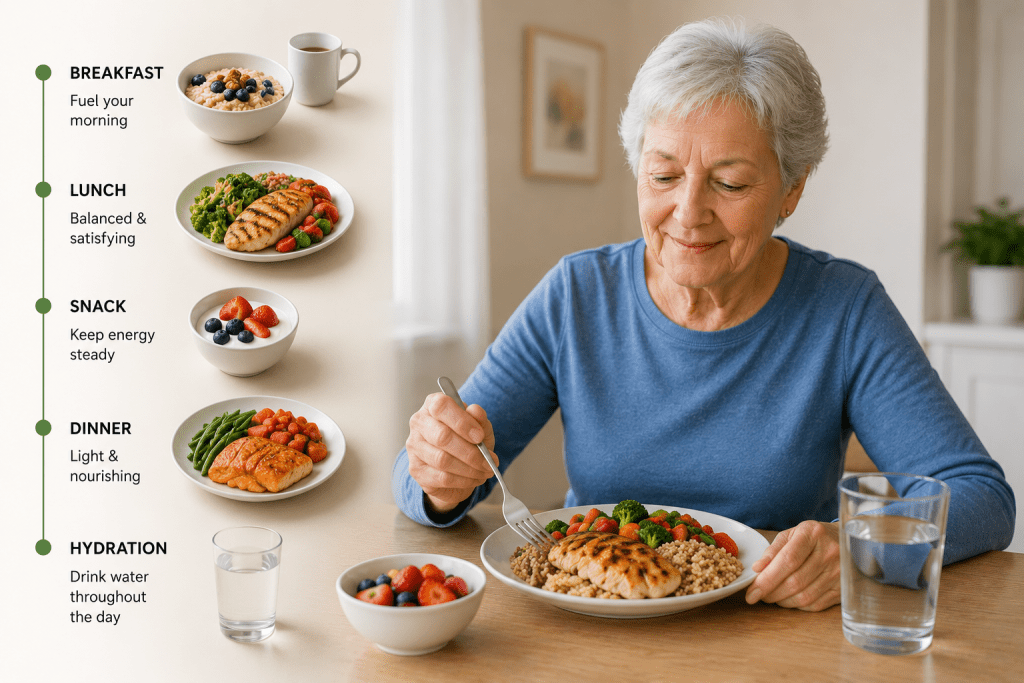
A healthy senior diet becomes easier when it is turned into a daily rhythm. Instead of thinking about every nutrient separately, older adults can follow a simple structure: protein at every meal, fiber spread through the day, fluids placed at fixed times, and easy backup foods for low-energy days.
This routine does not need to be strict. It simply gives the day a reliable pattern.
Morning: start with protein, not just tea
Many seniors begin the day with tea, coffee, toast, or biscuits. This may feel light and familiar, but it often leaves the body undernourished.
A better morning meal includes one protein source.
Good options include:
- Eggs with toast
- Oats cooked in milk
- Yogurt with fruit
- Paneer or tofu with soft vegetables
- Dal dosa or idli with sambar
- Peanut butter on whole-grain toast
- Smoothie with milk, banana, and nut butter
The goal is not a heavy breakfast. The goal is a breakfast that helps preserve muscle and prevents long gaps without nutrition.
Midday: make lunch balanced but easy
Lunch should be filling enough to support energy, but not so heavy that it causes discomfort.
A useful lunch formula is:
Protein + soft carbohydrate + cooked vegetable + fluid
Examples:
- Dal, rice, cooked vegetables, and curd
- Fish, soft rice, spinach, and soup
- Khichdi with extra lentils and vegetables
- Paneer with roti and cooked vegetables
- Bean soup with whole-grain bread
- Chicken stew with potatoes and carrots
Cooked vegetables are often easier than raw salads. Seniors who struggle with chewing or digestion may tolerate soups, stews, and soft vegetable dishes better.
Evening: keep dinner light but nourishing
Dinner is often the meal most affected by tiredness. Seniors may skip it or replace it with tea and snacks.
Keep dinner simple.
Good dinner ideas include:
- Vegetable dal soup
- Soft khichdi
- Omelet with cooked vegetables
- Curd rice with vegetables
- Lentil stew
- Tofu or paneer bowl
- Oats or porridge with milk
- Soup with shredded chicken or beans
Dinner should not be complicated. It should be easy to prepare, easy to chew, and easy to digest.
Snacks: use them as nutrition boosters
Snacks are very useful after 70, especially for seniors with smaller appetites. But snacks should support nutrition, not replace it with empty calories.
Better snack options include:
- Yogurt
- Fruit with nut butter
- Boiled egg
- Cottage cheese
- Roasted chana if chewing is comfortable
- Smoothie
- Milk
- Soft fruit
- Hummus with soft bread
- Nuts or seeds in ground form
For seniors losing weight, snacks can include healthy fats such as peanut butter, avocado, olive oil, ground nuts, or full-fat yogurt if medically suitable.
Fluids: connect drinking to daily habits
Hydration is easier when it is connected to routines.
Try this pattern:
- Water after waking
- Fluid with breakfast
- Water with medications, if allowed
- Soup, buttermilk, or water with lunch
- Mid-afternoon drink
- Small amount of fluid with dinner
Do not wait for thirst. Thirst may become less reliable with age.
Weekly prep: reduce cooking stress
A small amount of planning can prevent skipped meals.
Prepare two or three basics each week:
- Cooked dal or beans
- Washed and chopped vegetables
- Boiled eggs
- Soft cooked rice or grains
- Soup
- Curd or yogurt portions
- Cut fruit
- Protein-rich spreads such as hummus
The goal is to make the healthy choice the easiest choice.
A simple daily checklist
Use this checklist at the end of the day:
- Did I eat protein at least two to three times?
- Did I include one or two fruits?
- Did I include cooked vegetables?
- Did I drink fluids regularly?
- Did I eat enough fiber?
- Did I avoid replacing meals with only tea, biscuits, or sweets?
- Did I feel dizzy, weak, bloated, constipated, or unusually tired?
This checklist helps seniors and caregivers notice patterns early.
Final thought
A strong senior nutrition routine does not need to be perfect. It needs to be repeatable. Small meals, steady protein, soft fiber-rich foods, regular fluids, and easy backup options can make a real difference in strength, digestion, mood, and independence after 70.
The Role of Social Connection in Senior Nutrition: Why Eating Well Is About More Than Food

When people think about senior nutrition, they usually focus on nutrients, calories, protein, vitamins, minerals, and meal plans. While these factors are important, there is another powerful influence that often receives far less attention: social connection.
Research consistently shows that older adults who maintain strong social relationships tend to have better eating habits, healthier body weight, greater dietary variety, and lower risk of malnutrition. On the other hand, loneliness, social isolation, grief, and reduced community engagement can significantly affect appetite, meal quality, and overall nutritional health.
For many adults over 70, nutrition challenges are not caused by a lack of knowledge. They are caused by a lack of motivation, companionship, routine, or support.
Understanding this connection can help seniors and families build healthier eating habits that last.
Why loneliness can affect appetite
Eating is naturally a social activity. Throughout life, meals are often associated with family gatherings, celebrations, conversations, traditions, and shared experiences.
When those social connections change, eating habits often change too.
Many older adults experience:
- Loss of a spouse or partner
- Children moving away
- Retirement from a social workplace
- Reduced mobility
- Health conditions that limit outings
- Smaller social circles
- Friends passing away
- Difficulty attending community events
As a result, meals can start feeling less meaningful.
A senior who once prepared balanced meals for an entire family may begin skipping meals when cooking only for themselves. Others may choose convenience foods simply because preparing a full meal feels like too much effort.
This is not laziness. It is a normal response to major life changes.
Signs that social isolation may be affecting nutrition
Families often focus on food intake without recognizing the emotional factors behind it.
Warning signs may include:
- Frequently skipping meals
- Eating the same foods every day
- Reduced interest in favorite dishes
- Significant weight loss
- Avoiding social events involving food
- Loss of enthusiasm about cooking
- Eating mostly packaged or convenience foods
- Declining grocery shopping habits
- Empty refrigerators or pantries
- Complaints that “food doesn’t taste good anymore”
While these signs can have medical causes, they may also indicate social or emotional challenges that deserve attention.
How regular social contact improves eating habits
One of the simplest ways to improve nutrition is often to improve connection.
When older adults have regular social interaction, they are more likely to:
- Maintain meal schedules
- Eat balanced meals
- Stay hydrated
- Try different foods
- Shop more consistently
- Cook more frequently
- Experience better emotional well-being
- Maintain healthier body weight
The effect can be surprisingly powerful.
Even a short daily conversation can provide structure that encourages healthier habits.
For example, knowing that a family member will call around lunchtime may encourage someone to prepare and eat a meal rather than skip it.
Creating mealtime connections from a distance
Not every family lives nearby. However, meaningful support does not require being physically present every day.
Simple strategies include:
Schedule regular mealtime calls
Instead of random check-ins, consider calling during breakfast, lunch, or dinner.
These conversations do not need to focus on food.
The purpose is companionship.
Questions such as:
- “What are you having for lunch today?”
- “Did you try that soup recipe?”
- “What was the best thing you ate this week?”
naturally encourage awareness of eating habits without sounding like supervision.
Share meals virtually
Technology allows families to share meals even when separated by distance.
Video calls during meals can:
- Reduce feelings of loneliness
- Encourage regular eating patterns
- Create positive routines
- Strengthen family relationships
Many seniors report eating more consistently when meals become shared experiences rather than solitary activities.
Create family meal traditions
Small traditions help maintain structure.
Examples include:
- Sunday family lunch calls
- Weekly recipe exchanges
- Shared breakfast chats
- Monthly virtual celebrations
- Cooking the same meal together from different locations
These traditions transform eating into a social event rather than a daily task.
Community programs that support senior nutrition
Many communities offer programs specifically designed to help older adults maintain healthy eating habits.
These may include:
Senior centers
Senior centers often provide:
- Group meals
- Nutrition education
- Cooking classes
- Social activities
- Health screenings
The nutritional benefit comes not only from the food itself but also from the social interaction surrounding meals.
Community dining programs
Shared meal programs can help seniors:
- Access balanced meals
- Reduce food costs
- Meet new people
- Establish routine eating habits
Even attending once or twice per week can provide meaningful benefits.
Faith-based organizations
Many religious organizations offer:
- Meal programs
- Community lunches
- Volunteer support
- Home visits
- Social gatherings
These activities can strengthen both nutritional and emotional well-being.
Volunteer meal delivery services
For seniors with limited mobility, meal delivery programs can provide:
- Consistent access to nutritious food
- Regular wellness checks
- Social interaction with volunteers
- Reduced grocery shopping burden
The social contact provided during deliveries is often just as valuable as the meal itself.
The connection between mental health and nutrition
Mental health and nutrition influence one another continuously.
Depression, anxiety, grief, and chronic stress can reduce appetite and motivation to prepare meals.
Poor nutrition can then worsen:
- Energy levels
- Mood
- Cognitive function
- Physical health
This creates a cycle that becomes increasingly difficult to break.
Common nutrition-related signs of emotional distress include:
- Significant appetite changes
- Emotional eating
- Meal skipping
- Unintentional weight loss
- Lack of interest in food
- Reduced participation in social meals
When these signs persist, professional support should be considered.
Addressing emotional health can be just as important as improving dietary intake.
Food traditions can support emotional well-being
Nutrition is not only about health outcomes. It is also about enjoyment, culture, and identity.
Many seniors find comfort in foods connected to:
- Family history
- Cultural traditions
- Religious practices
- Childhood memories
- Seasonal celebrations
Maintaining these traditions can improve both emotional well-being and nutritional consistency.
Instead of eliminating favorite foods entirely, consider healthier adaptations.
Examples include:
- Adding extra vegetables to traditional recipes
- Using leaner protein sources
- Reducing excessive salt while preserving flavor
- Increasing fiber through ingredient substitutions
- Adjusting portion sizes rather than removing favorite dishes
The goal is to preserve enjoyment while supporting health.
Encouraging seniors to stay involved in food decisions
One of the most important principles in senior nutrition is maintaining autonomy.
Older adults should continue participating in decisions about:
- Grocery shopping
- Meal planning
- Cooking preferences
- Favorite foods
- Cultural food traditions
- Meal timing
When people feel ownership over their choices, they are more likely to follow through.
Even when support is necessary, collaboration works better than control.
Instead of saying:
“You need to eat this.”
Try:
“Would you like chicken soup or lentil soup today?”
Small choices help preserve dignity and independence.
Building a social nutrition plan
Families can create a simple social nutrition strategy by focusing on four areas:
Connection
Identify opportunities for regular interaction.
Examples:
- Daily calls
- Shared meals
- Community events
- Neighbor visits
Routine
Create predictable meal schedules.
Examples:
- Breakfast at the same time daily
- Weekly grocery delivery
- Regular meal preparation days
Accessibility
Ensure food remains easy to obtain and prepare.
Examples:
- Ready-to-eat healthy snacks
- Portion-controlled meals
- Easy-open containers
Enjoyment
Keep food pleasurable.
Examples:
- Favorite recipes
- Special occasions
- Cultural dishes
- Family cooking traditions
When all four areas are supported, nutrition becomes much easier to maintain.
How technology can support social nutrition
Modern technology offers new ways to reduce isolation and support healthy eating.
Helpful tools include:
- Video calling platforms
- Family group chats
- Meal reminder apps
- Grocery delivery services
- Telehealth nutrition consultations
- Online cooking classes
- Virtual senior communities
For seniors comfortable using technology, these tools can significantly improve both nutrition and social engagement.
A simple weekly social nutrition check
Once per week, ask:
- How many meals were shared with someone else?
- How many meaningful conversations occurred during meals?
- Were any community activities attended?
- Did loneliness affect appetite this week?
- Were favorite foods included?
- Was there enough variety in meals?
- Was hydration adequate?
- Did eating feel enjoyable?
These questions help identify issues before they become serious health concerns.
The bigger picture
Healthy aging is not achieved through nutrients alone.
Protein helps preserve muscle. Fiber supports digestion. Vitamins and minerals support countless body functions. But social connection provides something equally important: motivation, enjoyment, routine, and emotional well-being.
For many adults over 70, improving nutrition begins not with a new diet plan but with a stronger sense of connection.
A shared meal, a weekly gathering, a family call, or a simple conversation can encourage healthier eating habits in ways that nutritional advice alone often cannot.
When food nourishes both the body and the human need for connection, it becomes much easier to maintain healthy habits for years to come.
Conclusion
A small shift in everyday meals can lower health risks and boost daily strength.
Keep three simple priorities: protein to protect muscle; fiber to aid regularity; and key vitamins and minerals to support bones, energy, and heart health.
Go lighter on salty ultra-processed items, sugary drinks, and alcohol. These changes may also help reduce blood pressure and the risk of heart disease without guilt.
Today’s tiny step: upgrade one meal—add a fruit or vegetables, swap white grains for whole grains, or add yogurt, beans, or fish.
You’re not failing if it’s messy. Routines, not perfection, build lasting benefits. Sign up for JoyCalls: create an account or talk to Joy now at 1-415-569-2439. Daily connection can make meals and hydration a steady rhythm that supports healthy aging. See a simple weekly plan in this weekly social routine.
FAQ
What changes in nutrition typically happen after 70?
Why might someone need fewer calories but more key nutrients?
How do hydration needs change and why is water important?
How can smarter eating lower the risk of heart disease, diabetes, and high blood pressure?
How much protein should older adults aim for to protect muscle?
Which high-protein foods are good to rotate through the week?
What sources of fiber help digestion and regularity?
Which vitamins and minerals matter most after 70?
What foods and habits should be limited to protect blood pressure and heart health?
How does alcohol affect sleep, blood pressure, and fall risk?
How can someone turn nutrition goals into simple daily meals?
What is a Mediterranean-style approach and why is it helpful?
What should I look for when reading labels?
How can JoyCalls support a loved one’s nutrition and daily routine?

Ana Avila, PhD, is a healthcare and technology writer with deep expertise in artificial intelligence, senior care innovation, and the practical use of AI in healthcare operations. Her work focuses on how emerging technologies can improve the daily experience of older adults, support overburdened care teams, and help senior living communities deliver safer, faster, and more personalized support.
Dr. Avila’s academic background is rooted in health informatics, aging care systems, and applied artificial intelligence. Her doctoral work focused on how digital health tools, predictive analytics, and AI-assisted communication systems can be used to improve care coordination, reduce operational delays, and identify early signs of risk among older adults. Her training gives her a rare ability to understand both the technical side of AI and the human realities of healthcare delivery.
Over the years, Ana has developed a specialized body of work around AI in senior living. She writes about how senior care providers can use intelligent systems to manage resident requests, answer routine questions, support family communication, improve after-hours coverage, and detect patterns that may indicate loneliness, confusion, distress, or unmet needs. Her articles often examine the gap between what senior living teams are expected to deliver and what traditional staffing models can realistically support.
Ana’s healthcare expertise is especially focused on the operational side of care. She has written extensively about call handling, resident engagement, front desk workflows, triage systems, caregiver communication, care escalation, and the hidden administrative burden placed on senior living staff. Her work explains how AI can help reduce repetitive tasks, organize incoming requests, prioritize urgent issues, and give human caregivers more time for meaningful resident interaction.
At the same time, Ana is careful not to present AI as a replacement for human care. A consistent theme in her writing is that technology should support relationships, not weaken them. She argues that the best AI systems in healthcare are not the ones that simply automate the most tasks, but the ones that make care teams more responsive, families more informed, and residents more supported. Her perspective is grounded in the belief that senior living technology must be designed around dignity, trust, privacy, and compassion.
Ana has also written widely on the ethical use of AI in healthcare. Her work discusses the importance of human oversight, transparent escalation rules, resident consent, data minimization, and responsible use of sensitive health and behavioral information. She often emphasizes that AI systems used around older adults must be easy to understand, carefully monitored, and designed with the limitations and needs of real residents in mind, including those with memory loss, hearing challenges, mobility issues, or social isolation.
Her writing has been used as a reference point in discussions about aging, elder care technology, digital health, and AI-supported senior living. Some of her articles have also been cited by Wikipedia editors as supporting references on topics related to healthcare, aging, and technology. This has helped position her work as a useful educational resource for readers looking to understand how AI can be applied in real care environments.
In addition to her long-form writing, Ana has contributed research-based commentary, professional explainers, and practical guidance for healthcare operators, senior living decision-makers, and technology teams building products for older adults. Her work combines research literacy with operational practicality. She is able to take complex subjects such as natural language processing, predictive analytics, conversational AI, and care automation, and explain them in a way that is accessible to executives, caregivers, families, and non-technical readers.
Ana’s strongest area of expertise is the intersection of artificial intelligence and senior living operations. She understands that senior care communities face a difficult combination of rising resident expectations, staffing pressure, family communication demands, and increasing care complexity. Her writing explores how AI can be used to ease those pressures through smarter communication systems, faster response workflows, proactive check-ins, and better visibility into resident needs.
Her approach is both evidence-informed and deeply human. She studies AI through the lens of real-world care delivery: whether a resident gets help faster, whether a family member receives a clearer update, whether a caregiver avoids unnecessary administrative work, and whether a senior living team can identify a concern before it becomes a crisis. This practical focus makes her work especially relevant for organizations that want to adopt AI responsibly rather than simply follow technology trends.
Ana Avila is regarded as a thoughtful voice on the future of AI in healthcare and senior living. Her expertise combines academic training, research-driven analysis, operational understanding, and a strong commitment to humane technology. Through her writing, she helps healthcare leaders and senior living communities understand not only what AI can do, but how it should be used to improve care, preserve dignity, and strengthen the human relationships at the center of aging support.