


Nearly one in three older adults say they skip meals — a small habit with big consequences. That nagging worry when you learn your parent “just had coffee” can sit in your chest all day.
If you’re juggling work and care, you don’t have to solve this alone. Sign up for JoyCalls: https://app.joycalls.ai/signup — it makes daily check-in calls, sends summaries and alerts to family caregivers, and offers friendly companionship on the phone.
Thoughtful snacking helps keep energy and nutrition steady. Small, nutrient-dense bites work best for older adults with smaller appetites. Think apple slices with nut butter, Greek yogurt with berries, or whole-grain crackers with cheese.
We’ll walk through quick options by category — fruit and veg, protein, whole grains, healthy fats, and soft choices — plus prep and storage tips that actually stick. No fancy cooking. No pressure.
Why now? Appetite can change with age, so making each bite count boosts energy and daily well-being. We’ll focus on easy wins: protein, fiber, calcium and vitamin D, antioxidants, and omega-3 fats.
Caregivers who live far away: gentle routines and short check-ins help a lot. For more quick ideas, see these quick ideas and this note on simple check-in tools: easy check-in options.
Key Takeaways
- Small, nutrient-dense bites can fill meal gaps without feeling like a big meal.
- Prioritize protein, fiber, calcium/D‑vitamin, antioxidants, and omega‑3s.
- Choose easy, low-prep options that travel and store well.
- Daily check-ins can spot appetite changes — consider JoyCalls signup above.
- Simple routines and gentle check-ins support independence and safety.
Why snacking matters when seniors skip meals
When meals are missed, little nutrient-dense bites make a big difference. Small portions are easier to eat, gentler on digestion, and less daunting than a full plate. That can matter a lot on busy days or when appetite changes.

Common reasons older adults eat less
Many older adults eat less because of medications, fatigue, living alone, grief, dentures, or changes in taste and smell. Digestion can slow, so heavy meals feel like work.
These changes are normal, not a moral failing. Caregivers should watch for low energy, irritability, dizziness, or a person who seems “not themselves.”
What smart choices do for energy, mood, and daily nutrition
Smart small bites give steadier energy and help muscles and mood. When a snack blends protein and fiber, blood sugar swings are smaller and feelings of fullness last longer.
- Try yogurt + berries, crackers + cheese, or a banana + peanut butter as tiny meals.
- Pick a predictable mid-morning or mid-afternoon time to make eating easier.
If appetite drops suddenly or a person loses weight quickly, check with a clinician. The goal is steady support, one small choice at a time for better daily health and comfort.
Nutrition goals to prioritize in snack choices for older adults
Small, targeted bites can plug nutrition gaps without overwhelming an appetite. Caregivers and family can make simple choices that add up all day.

Protein for muscle strength and steady energy
Protein helps keep muscle and balance. That means feeling steadier on their feet and less drained after moving around. Aim to pair a protein with each mini-meal.
Fiber for digestion and lasting fullness
Fiber slows digestion. It helps reduce sudden hunger and can help lower cholesterol. Whole-grain crackers, fruit, or veggies are easy picks that add fiber.
Calcium and vitamin D to support bones
Calcium and vitamins D help bone health and reduce fracture risk. Dairy, fortified milk alternatives, or canned salmon are simple wins.
Antioxidants and omega-3 fatty acids for heart and brain
Colorful produce brings antioxidants. Nuts, seeds, and fatty fish provide omega-3 fatty acids. Together they support memory and reduce inflammation.
- Snack checklist: protein + fiber, a calcium or vitamin D item, and colorful produce.
- Mix-and-match: fruit + yogurt; crackers + cheese; veggies + hummus; oats + nut butter.
- Note: Tailor choices to medical needs—watch added sugar and sodium.
| Goal | Why it matters | Easy foods |
|---|---|---|
| Protein | Muscle strength, steady energy | Greek yogurt, turkey, eggs |
| Fiber | Digestion, fullness, cholesterol support | Oats, whole-grain crackers, berries |
| Calcium & Vitamins | Bone support, vitamin D aids absorption | Milk, fortified cereal, canned salmon |
| Antioxidants & Fats | Brain and heart health | Berries, walnuts, chia seeds |
Remember: these small meals are not extras. They are key to meeting daily goals and real health benefits.
Healthy snacks for seniors that are fruit- and veggie-forward
Bright, bite-sized fruit and simple veg make an easy, cheerful way to refill energy between meals.
Start small. Try soft fruits like berries, melon cubes, bananas, or unsweetened applesauce. These fruits are less overwhelming and easy to chew.

Pair fruit with protein
Keep energy steady. Apple slices with nut butter or Greek yogurt fresh with berries add protein and slow a sugar crash. A single spoonful of nut butter or a small cup of yogurt fresh makes a filling mini-meal.
Try JoyCalls Free
No app or new device needed. Start with a free 7-day trial.
Veggie choices that feel simple
Thin cucumber slices, carrot sticks, or cherry tomatoes are quick to prep. A warm mug of vegetable soup works when chewing feels hard.
Dips that add calories and nutrients
- Hummus — fiber and plant protein.
- Guacamole — healthy fats and flavor.
- Yogurt-based dips — calcium plus a tangy boost.
| Category | Easy picks | When to use |
|---|---|---|
| Fruit | Berries, melon, banana, applesauce | Morning or mid-afternoon |
| Vegetables | Cucumber, carrot, cherry tomato, soup | With dips or warm |
| Dips | Hummus, guacamole, yogurt dip | Add nutrients in small bites |
Seasonal touches keep variety: spring strawberries, summer cucumbers and blueberries, fall apples and tomatoes, and winter carrots. Little plates of colorful foods can be enough to make today better.
Protein-rich snacks that help older adults stay full longer
Protein-packed bites can steady appetite and protect muscle when eating gets sparse. They help adults feel fuller and keep strength up as appetites change.

Hard-boiled eggs and egg salad made easy
Hard-boiled eggs store well. They deliver protein plus iron, zinc, and B vitamins. Peel several at once for grab-and-go.
Make a simple egg salad and serve it on whole-grain crackers when chewing is comfortable.
Greek yogurt parfaits with berries and granola
Greek yogurt is high in protein and calcium. Choose plain or reduced-sugar yogurt and add berries and a spoon of granola for texture.
Cottage cheese with fruit
Cottage cheese pairs nicely with peaches, melon, or berries. Its soft texture is often easier to eat than firmer cheese.
Turkey roll-ups and sodium-smart tips
Turkey roll-ups or turkey sticks are quick protein options. Check labels and pick lower-sodium choices. Keep portions modest.
Plant-based protein choices
Edamame, roasted chickpeas, and tofu cubes add variety and lighter protein options. A simple “protein box” in the fridge (eggs, greek yogurt, cottage cheese, turkey) makes it easy to prepare choices ahead.
When you can’t be there, ready-to-eat protein items increase the odds they’ll actually eat something. See a quick daily check-in routine to pair with fridge prep.
Whole-grain and high-fiber snacks for steady energy
A small bowl of oats or a handful of whole-grain crackers can bridge a missed meal without feeling like too much. Whole grains give lasting energy and add fiber that helps digestion. This is a gentle way to reduce long gaps between meals.

Oatmeal made simple
Oatmeal is versatile and fiber-rich. Try mini oatmeal cups, microwave packets, or overnight oats prepped in single jars. These are easy to heat or refrigerate and work as a mid-morning boost after a light breakfast.
Crackers paired with cheese
Whole-grain crackers plus a slice of cheese make a tiny meal that hits protein and calcium. Choose whole grain on the label and keep portions small. Pairing carbs with protein helps steady blood sugar.
Light crunch: popcorn and granola
Air-popped popcorn is a fiber-forward, low-calorie option. Season with cinnamon, garlic powder, or a little Parmesan for flavor.
Granola bars or homemade granola can work, but watch added sugar—especially with any diet concerns.
- Quick choices: oats mid-morning, crackers + cheese as a tiny plate, popcorn for a light crunch.
- Look for whole-grain wording, keep portions modest, and pair with protein when possible.
- See more high-fiber ideas to expand options.
Healthy fats that support heart and brain health
Adding a few fat-rich foods can boost mood, memory, and meal satisfaction on low-appetite days. These choices make small bites more filling and help the brain and heart stay supported.
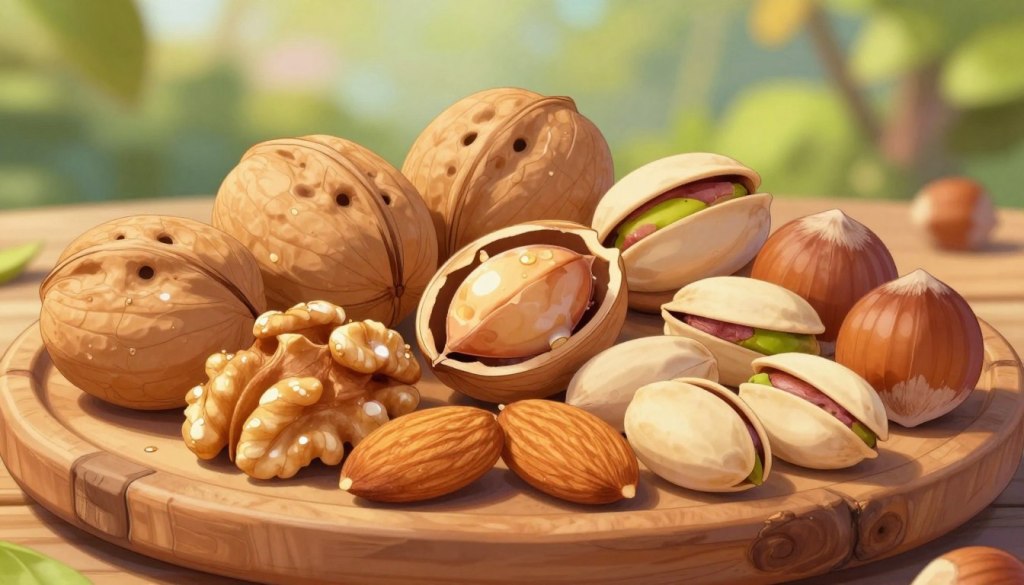
Nuts, seeds, and trail mix
Nuts and seeds provide protein and heart-friendly fats. Try almonds, walnuts, or pumpkin seeds as quick grab-and-go picks.
Make a simple trail mix with nuts, seeds, and a sprinkle of dried cranberries. That adds flavor without a lot of prep.
Tip: walnuts, chia, or flax add omega-3 fatty acids in easy amounts. Chopped or ground seeds work well if chewing is tough.
Avocado toast with tomato
Avocado on whole-grain bread is a satisfying option that pairs healthy fats with fiber. Top with sliced tomato for color and a flavor lift.
Keep portions modest: half an avocado on one slice is often enough as a tiny meal.
Peanut butter ideas and portion guidance
Peanut butter spreads easily on celery, toast, or apple slices. A small spoonful goes a long way.
Use nut butter or finely chopped nuts if there are dental concerns. This keeps comfort and safety in mind.
- Quick checklist: almonds or walnuts, a little trail mix, avocado toast, a spoon of peanut butter.
- Store these foods in a small basket so the easy option becomes the obvious one for daily care.
Soft, easy-to-chew snacks for dental or swallowing challenges
Some days biting into crunchy food is just too much — and that’s okay. Dental issues like dentures, missing teeth, or sore gums change how a person eats. Soft textures help keep nutrition steady without strain.
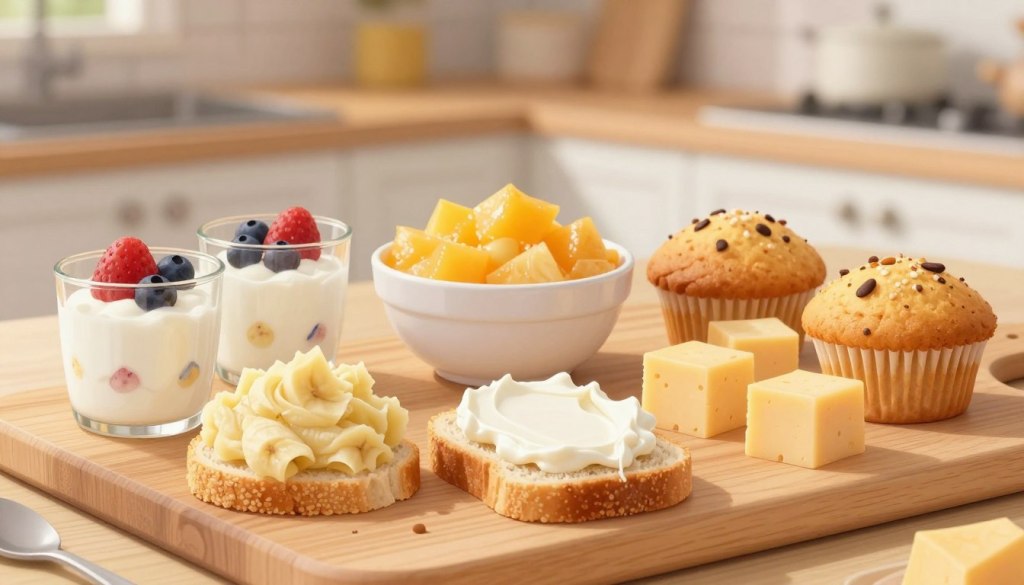
Best soft textures to try
Smoothies, applesauce, yogurt, and pudding-style options go down easily and still deliver protein and calories. Cooked vegetables, pureed soups, and warm porridges are gentle and filling.
Simple prep ideas that improve comfort and intake
Smoothie formula: fruit + yogurt + milk (or alternative). Add oats or flax for fiber. Blend until silky. Keep portions small so a cup doesn’t overwhelm.
Soft fruit options: ripe bananas, mashed berries, or fruit cups in juice (not syrup). Warm veggie soup in a mug or blended cooked veggies can be comforting and nourishing.
- ✓ Serve slightly warm or cooled, depending on preference.
- ✓ Use small cups or bowls to make eating feel manageable.
- ✓ On rough chewing days, pick puree or pudding-style textures.
Note: If swallowing is a concern, follow clinician guidance on safe textures. Soft options can still be real food and a steady way to keep nutrition going.
For more easy-to-chew ideas, see this guide to easy-to-chew ideas.
Make healthy snacking easier with prep, storage, and routine
A little planning can turn an “I don’t feel like cooking” day into easy, nourishing moments. Small steps cut the friction that leads to skipped meals.
Batch prep and portioning make a real difference. Do a quick Sunday setup: wash fruit, cut vegetables, boil eggs, and portion yogurt cups. Pack items in single-serve containers so a snack is grab-and-go.

Accessibility hacks that respect independence
Keep options at eye level in the fridge. Use easy-open packaging and small plates to make servings feel manageable. These tiny changes help adults keep control and eat more often.
Hydrating choices that also provide calories
Water-rich foods often act like a drink and a bite. Try watermelon cubes, cucumber slices, warm soups in a mug, or fruit cups. They help with hydration and add gentle energy.
Rotate tastes without overload
Change texture and flavor weekly: crunchy one day, creamy the next. A simple rotation keeps interest up with little planning.
“Snack time became our little check-in — a cup of soup and ten minutes of company.” — a caregiver
- ✓ Lay out a simple “Sunday setup” to save time during the week.
- ✓ Use single-serve portions to reduce skipped meals.
- ✓ Place easy-open items and small bowls where they’re seen.
- ✓ Pair a mid-morning and mid-afternoon routine with a habit, like coffee or a TV show.
- ✓ Rotate flavors and textures weekly to keep choices fresh.
| Strategy | What to do | Benefit |
|---|---|---|
| Batch prep | Wash/portion fruit, cut vegetables, boil eggs | Reduces effort; increases grab-and-go options |
| Visibility | Eye-level storage, small plates, easy-open packs | Encourages independent eating |
| Hydration bites | Watermelon, cucumbers, soups, fruit cups | Improves fluid intake and gentle energy |
| Rotation | Weekly flavor/texture plan | Prevents boredom; keeps intake steady |
Tip: Caregivers can link snack routines to brief check-ins so changes in appetite show up early. For more ideas, see healthy snack ideas for adults.
How to Choose the Right Snack When a Senior Skips Meals for Different Reasons
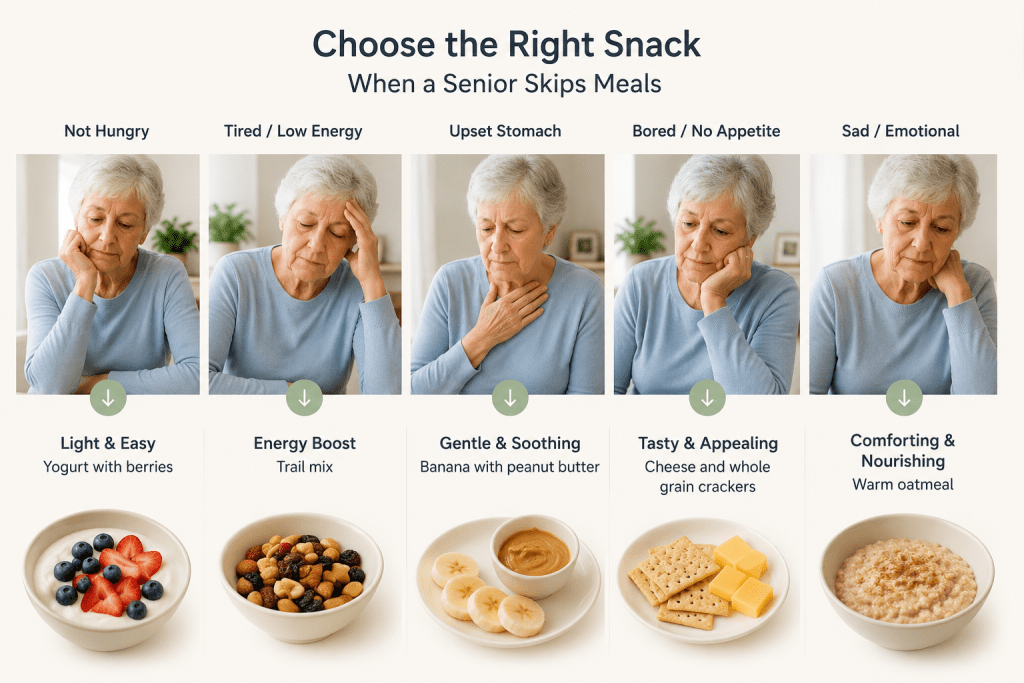
Not every skipped meal means the same thing. One older adult may skip lunch because cooking feels exhausting. Another may avoid dinner because chewing hurts. Someone else may say they are “not hungry,” when the real issue is loneliness, medication timing, nausea, constipation, or simply not wanting to sit down to a full plate.
That is why the best snack is not always the healthiest-looking option. The best snack is the one that matches the reason the meal was skipped.
For seniors, old adults, and caregivers, this shift is important. Instead of asking, “What snack should we keep in the house?” it helps to ask, “What problem does this snack need to solve today?” A snack may need to provide protein, calm nausea, support hydration, feel easy to chew, prevent a blood sugar dip, or simply feel pleasant enough to eat when appetite is low.
This section offers a practical way to match snacks to real-life situations.
When the Senior Says “I’m Not Hungry”
Low appetite is one of the most common reasons older adults skip meals. The mistake many families make is offering a full plate too quickly. A large meal can feel like pressure, especially when the person already feels tired, bloated, sad, or uninterested in food.
In this situation, think in “starter bites,” not meals.
A starter bite is a very small, low-pressure snack that wakes up appetite without demanding much effort. The goal is not to force a full meal. The goal is to make the first bite feel easy.
Good starter snacks include:
- A few spoonfuls of Greek yogurt
- Half a banana with peanut butter
- A small bowl of soup
- A few crackers with cheese
- Applesauce with cinnamon
- A boiled egg cut into quarters
- A smoothie served in a small cup
- Cottage cheese with soft fruit
- Toast fingers with avocado or nut butter
The serving size matters. A small ramekin, teacup, or side plate often works better than a dinner plate. Large portions can make a senior feel as if they are failing before they begin. Small portions feel manageable and respectful.
A helpful caregiver phrase is: “You do not have to eat a meal. Let’s just try a few bites.”
This keeps the tone calm. It avoids turning food into an argument.
If the first few bites go well, offer a second small portion later. Many seniors do better with five or six small eating moments across the day than with three traditional meals.
When Chewing Feels Like Too Much Work
Dental discomfort, dentures, missing teeth, mouth sores, dry mouth, or jaw fatigue can make normal snacks difficult. In this case, crunchy foods may look healthy but remain untouched.
The better strategy is to focus on soft, moist, high-nutrition snacks.
Choose foods that require less chewing but still provide calories, protein, and important nutrients. Soft does not have to mean bland. It simply means easier to manage.
Try these options:
- Scrambled eggs with a little cheese
- Yogurt with mashed berries
- Smooth cottage cheese blended with fruit
- Creamy oatmeal with milk
- Soft rice pudding with added protein powder if approved
- Mashed sweet potato with plain yogurt
- Blended lentil soup
- Hummus on soft pita
- Tuna or egg salad on soft bread
- Mashed avocado with soft toast
- Smoothies with yogurt, milk, banana, and oats
Moisture helps. A dry cracker may be difficult, but a cracker softened with cottage cheese or hummus may be easier. Toast may be hard, but soft bread triangles with egg salad may work better.
If dentures are involved, avoid sticky foods that pull or shift them. Very chewy dried fruits, hard nuts, tough meats, and thick peanut butter may be uncomfortable. Nut butter can still be useful, but spread it thinly or mix it into yogurt, oatmeal, or a smoothie.
If swallowing is difficult, do not guess. Swallowing issues can increase choking risk. In that case, the senior should follow guidance from a doctor, speech-language pathologist, or dietitian about safe textures and liquid thickness.
When Fatigue Is the Main Problem
Some seniors do not skip meals because they dislike food. They skip meals because the steps are tiring.
Opening the fridge, choosing something, heating it, carrying a plate, sitting down, cleaning up—each step can feel bigger with age, pain, low energy, poor balance, or chronic illness.
For fatigue-related skipped meals, the snack must be almost effortless.
The goal is to remove as many steps as possible.
Create a “one-step snack shelf” in the fridge. This shelf should contain foods that can be eaten immediately or with only one simple action.
Good choices include:
- Ready-to-eat yogurt cups
- Cheese cubes in small containers
- Washed grapes or berries
- Peeled boiled eggs
- Small containers of chicken salad or egg salad
- Smoothie bottles
- Cottage cheese cups
- Applesauce cups
- Pre-cut melon
- Hummus with soft pita
- Mini sandwiches cut into halves
- Prepared soup in microwave-safe mugs
Use clear containers. Label them with large writing, such as “Tuesday snack” or “Eat today.” Keep them at eye level. Avoid stacking containers behind other items.
For the pantry, create a small snack basket in a visible location. Include items that do not require cooking:
- Low-sugar protein bars
- Whole-grain crackers
- Nut butter packets
- Shelf-stable milk
- Tuna pouches
- Unsweetened fruit cups
- Small packs of nuts if chewing is safe
- Instant oatmeal packets
- Low-sodium soup cups
The easier the snack is to see and open, the more likely it is to be eaten.
For seniors living alone, this setup protects independence. It allows them to eat without feeling managed or monitored. For caregivers, it also makes check-ins more useful. Instead of asking, “Did you eat?” you can ask, “Did you try one of the yogurt cups or the soup mug today?”
When Medication Affects Appetite
Many older adults take medications that can change appetite, taste, digestion, thirst, or energy. Some medicines may need to be taken with food. Others may cause nausea, dry mouth, constipation, or a metallic taste.
A snack routine can help, but it should be planned carefully.
First, never change medication timing without a clinician’s advice. Instead, use snacks to make the existing routine easier.
If medication causes mild nausea, bland snacks may be better tolerated:
- Plain toast
- Crackers
- Banana
- Applesauce
- Oatmeal
- Rice pudding
- Ginger tea with a small snack
- Brothy soup
- Plain yogurt
If medication must be taken with food, keep a reliable “medicine snack” nearby. This should be something the senior usually accepts, even on low-appetite days.
Good medicine snack ideas include:
- Half a yogurt cup
- A few crackers with cheese
- A small banana
- Toast with nut butter
- A boiled egg
- A small bowl of oatmeal
- Milk or fortified milk alternative with a soft snack
If dry mouth is the issue, choose moist snacks:
- Smoothies
- Yogurt
- Soups
- Soft fruit
- Cottage cheese
- Custard-style foods
- Oatmeal made with extra milk
If taste changes are the problem, experiment gently. Some seniors prefer colder foods when smells bother them. Others enjoy tart flavors, herbs, cinnamon, lemon, or mild spices. Avoid overwhelming seasoning, but do not assume all senior snacks must be plain.
A simple weekly note can help: “What tasted good this week?” and “What tasted unpleasant?” Over time, this reveals patterns.
When Blood Sugar Stability Matters
Some seniors feel shaky, weak, irritable, dizzy, or confused when they go too long without eating. For people with diabetes or blood sugar concerns, snack choices should be discussed with a clinician or dietitian, especially if medication is involved.
Still, one general principle is useful: avoid giving a sugary snack by itself unless a medical professional has advised it for a specific situation.
A sweet snack alone may create a quick rise and fall in energy. A more balanced snack includes protein, fiber, or healthy fat.
Better balanced options include:
- Apple slices with peanut butter
- Greek yogurt with berries
- Whole-grain crackers with cheese
- Cottage cheese with fruit
- Hummus with vegetables or soft pita
- Oatmeal with nuts or seeds
- Boiled egg with toast
- Turkey roll-up with avocado
- Chia pudding
- Milk with a small whole-grain snack
For seniors who forget meals, predictable timing can help. A mid-morning snack and a mid-afternoon snack may prevent long gaps. Keep the timing consistent, especially if the senior takes medications around meals.
Caregivers can also prepare “balanced snack cards” and place them on the fridge. For example:
- “Creamy snack: yogurt + berries”
- “Savory snack: crackers + cheese”
- “Soft snack: oatmeal + milk”
- “Quick snack: egg + fruit”
- “Hydrating snack: soup + toast”
This reduces decision fatigue and makes better choices easier.
When the Senior Is Losing Weight
Unplanned weight loss in an older adult should be taken seriously. It may be related to appetite changes, illness, medication side effects, depression, dental issues, trouble shopping, memory changes, or difficulty preparing meals.
Snacks can help, but they should be more calorie-dense and protein-rich. In this case, do not focus only on low-calorie foods like plain cucumber slices or broth. Those may help hydration, but they may not be enough to stop weight loss.
Choose small snacks that deliver more nutrition in fewer bites.
Helpful options include:
- Full-fat Greek yogurt with fruit
- Peanut butter on toast
- Avocado mashed with egg
- Cottage cheese with peaches
- Smoothies with yogurt, banana, oats, and nut butter
- Cheese with whole-grain crackers
- Egg salad on soft bread
- Tuna salad with avocado
- Trail mix, if chewing is safe
- Oatmeal made with milk instead of water
- Creamy soups with beans, lentils, or chicken
- Fortified milk drinks, if appropriate
Add nutrition quietly. A senior with low appetite may reject a bigger portion, but accept a richer version of a familiar food.
For example:
- Make oatmeal with milk instead of water.
- Add nut butter to a smoothie.
- Stir olive oil into soup.
- Add cheese to scrambled eggs.
- Use Greek yogurt instead of regular yogurt.
- Add powdered milk to mashed potatoes or oatmeal.
- Add hummus or avocado to sandwiches.
This is called “small-volume, high-value” eating. The portion stays small, but the nutritional value increases.
If weight loss is sudden, ongoing, or paired with weakness, confusion, falls, vomiting, diarrhea, or sadness, contact a healthcare professional. Snacks are helpful support, but they should not replace medical evaluation.
When Loneliness Is Reducing Appetite
Food is emotional. Many older adults eat less after losing a spouse, living alone, moving away from familiar routines, or feeling disconnected from family. A person may say, “I do not feel like cooking just for myself,” or “Food does not taste the same alone.”
In this situation, the snack itself matters, but the eating moment matters even more.
Try pairing a snack with connection.
This does not need to be complicated. A caregiver might call during afternoon tea. A neighbor might stop by once a week for soup. A grandchild might ask, “What snack are you having today?” A phone companion or daily check-in routine can also create a gentle moment of accountability without making the senior feel watched.
Comforting snack rituals can help:
- Tea with toast
- Soup in a favorite mug
- Yogurt while listening to music
- Fruit during a morning phone call
- Crackers and cheese during a TV show
- A smoothie after a short walk
- Oatmeal at the kitchen table with sunlight
The goal is to make eating feel like care, not a task.
For family members, avoid scolding. “You need to eat more” may be true, but it can feel harsh. Try warmer language:
- “I made this small portion because I know big meals can feel like a lot.”
- “Would a cup of soup feel okay right now?”
- “Let’s just have tea and a few bites together.”
- “What sounds easier today: creamy, crunchy, warm, or cold?”
These questions give the senior control. Control often improves cooperation.
When Memory Problems Cause Missed Meals
Some seniors skip meals because they forget whether they ate. Others may lose track of time, feel overwhelmed by choices, or struggle to start multi-step tasks.
For memory-related skipped meals, snacks should be visible, routine-based, and simple.
Use repeated cues:
- A snack basket on the counter
- A whiteboard with “Today’s snacks”
- A fridge note with pictures
- Clear containers labeled by time of day
- A daily phone reminder
- A snack paired with medication, if medically appropriate
- A snack paired with a familiar TV program or radio show
Avoid offering too many choices. A full pantry can become confusing. Two or three visible options are better than fifteen hidden ones.
For example:
Morning snack: yogurt cup
Afternoon snack: cheese and crackers
Evening snack: soup mug
Repeat the pattern for several days before changing it. Familiarity can be calming.
For seniors with dementia or significant memory changes, safety matters. Avoid foods that create choking risk if the person eats too quickly, forgets to chew properly, or pockets food in the mouth. Soft, supervised, or clinician-approved textures may be needed.
When Digestion Feels Slow or Uncomfortable
Some older adults avoid eating because they feel bloated, constipated, gassy, or overly full after small amounts. Heavy, greasy, or very large snacks may make this worse.
In this case, use gentle snacks that support digestion without overwhelming the stomach.
Try:
- Oatmeal with berries
- Yogurt with soft fruit
- Warm soup
- Stewed apples
- Banana
- Whole-grain toast
- Small portions of lentil soup
- Chia pudding, if tolerated
- Cooked vegetables
- Pear slices with cottage cheese
- Warm water or herbal tea with a small snack
Fiber can help digestion, but increase it gradually. Adding too much fiber too quickly may worsen bloating. Pair fiber with fluids. A high-fiber snack without enough fluid may not help constipation.
Warm foods are often easier for some seniors than cold foods. A small mug of soup or warm oatmeal may feel more comforting than raw vegetables.
Also watch timing. A senior who feels full in the evening may do better with more nutrition earlier in the day. Mid-morning and mid-afternoon snacks can be more effective than pushing a large dinner.
A Simple “Snack Matching” Method for Caregivers
When a senior skips a meal, use this four-question method before choosing a snack.
1. What is the barrier today?
Ask gently:
- Are you not hungry?
- Is chewing uncomfortable?
- Are you too tired to prepare food?
- Does your stomach feel upset?
- Does food taste different today?
- Did you forget to eat?
- Are you feeling lonely or low?
The answer guides the snack.
2. What texture would feel easiest?
Offer simple choices:
- Creamy
- Soft
- Warm
- Cold
- Crunchy
- Drinkable
This is easier than asking, “What do you want to eat?” which can feel too broad.
3. What nutrient should this snack provide?
Most skipped-meal snacks should include at least one of these:
- Protein for strength
- Fiber for digestion
- Fluid for hydration
- Calcium or vitamin D for bones
- Healthy fat for calories and fullness
- Colorful produce for vitamins and antioxidants
The snack does not need to be perfect. It just needs to do one or two useful jobs.
4. How can we make it easier next time?
After the snack, notice what worked.
Did they eat more when the food was warm? Did they prefer smaller portions? Was the container hard to open? Did they avoid chewing? Did they eat better during a phone call?
These observations are valuable. They help families build a snack system that fits the person, not just a generic nutrition list.
Build a Personal “Always Works” Snack List
Every senior should have a short list of reliable snacks that usually work, even on difficult days. This list is more useful than a long grocery list.
Divide it into categories:
Soft and easy
- Yogurt
- Applesauce
- Oatmeal
- Scrambled eggs
- Soup
- Smoothies
Protein-rich
- Boiled eggs
- Cottage cheese
- Greek yogurt
- Tuna salad
- Cheese
- Hummus
Hydrating
- Watermelon
- Soup
- Smoothies
- Fruit cups
- Cucumber
- Herbal tea with a snack
Higher-calorie for low appetite
- Nut butter toast
- Avocado
- Full-fat yogurt
- Trail mix
- Cheese and crackers
- Smoothies with oats and nut butter
No-prep emergency snacks
- Protein bars
- Shelf-stable milk
- Nut butter packets
- Tuna pouches
- Crackers
- Applesauce cups
Keep the list on the fridge, inside a pantry door, or in a caregiver notes app. Update it when preferences change.
Final Thought: The Right Snack Protects More Than Nutrition
When a senior skips meals, the right snack can protect energy, mood, strength, hydration, and independence. But the best approach is not simply to stock more food. It is to understand why eating has become harder.
A senior who is tired needs convenience. A senior with dental discomfort needs softness. A senior with loneliness may need company. A senior with memory changes needs routine and reminders. A senior losing weight needs small portions with more nutrition packed in.
That is the real strategy: match the snack to the moment.
When families do this with patience and respect, snacks stop feeling like a backup plan. They become a practical daily support system—one small, nourishing step at a time.
Creating a Daily Snack Strategy That Supports Healthy Aging
Many discussions about senior nutrition focus on what foods to eat. While food choices are important, consistency is often the bigger challenge.
A refrigerator full of healthy snacks does little good if an older adult forgets they are there, lacks the energy to prepare them, or doesn’t feel motivated to eat. For seniors who frequently skip meals, success often comes from creating a simple, repeatable eating system rather than constantly searching for new foods.
The goal is not to force a rigid schedule. Instead, it is to build a flexible routine that makes nourishing the body easier, more predictable, and less stressful.
A thoughtful snack strategy can help support:
- Stable energy levels
- Better hydration
- Muscle maintenance
- Medication adherence
- Improved mood
- Reduced risk of unintentional weight loss
- Greater independence
Most importantly, it can help older adults get the nutrition they need even on days when full meals feel difficult.
Why Snack Timing Matters More Than Many People Realize
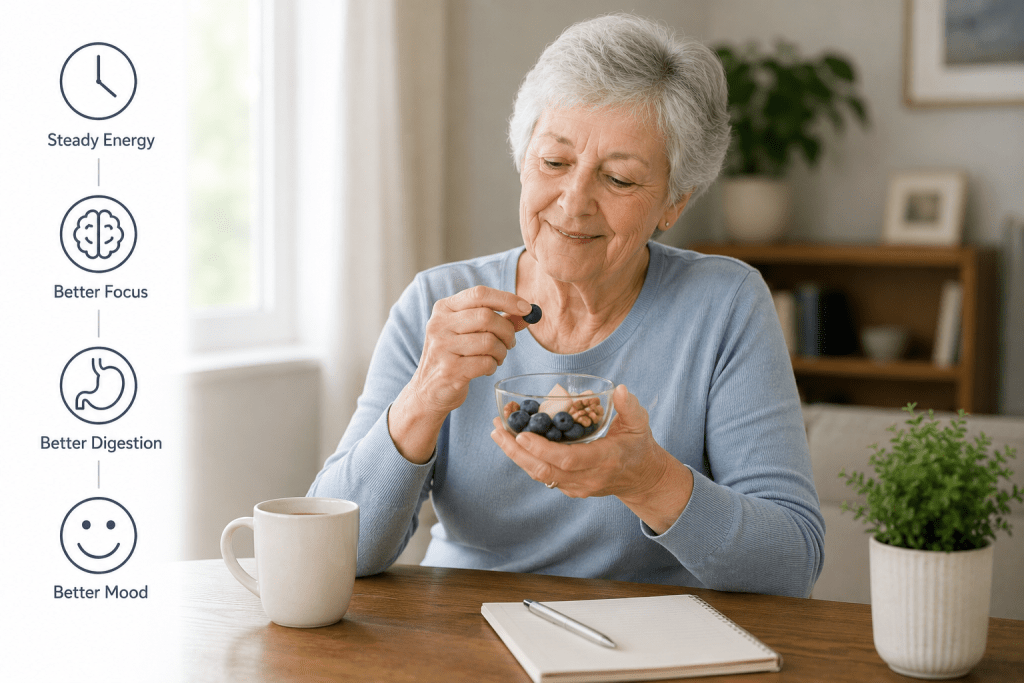
When seniors skip meals regularly, the body may go many hours without fuel.
This can contribute to:
- Fatigue
- Dizziness
- Weakness
- Poor concentration
- Irritability
- Increased fall risk
- Reduced physical activity
- Muscle loss over time
One practical solution is to stop thinking exclusively in terms of breakfast, lunch, and dinner.
Many older adults naturally eat better when nutrition is spread throughout the day.
For example:
Traditional Pattern
Breakfast: 8:00 AM
Lunch: 1:00 PM
Dinner: 7:00 PM
This creates long gaps between eating opportunities.
Snack-Supported Pattern
Breakfast: 8:00 AM
Morning Snack: 10:30 AM
Lunch: 12:30 PM
Afternoon Snack: 3:00 PM
Light Dinner: 6:00 PM
Evening Snack: 8:00 PM
This approach often feels less overwhelming while providing more consistent energy.
The portions can remain small. What matters is reducing extended periods without nourishment.
The “Nutrition Opportunity” Mindset
Many caregivers become frustrated when seniors refuse meals.
A more productive approach is to view every eating occasion as a nutrition opportunity.
If lunch is skipped, nutrition has not failed. It simply means another opportunity should be created later.
For example:
Skipped lunch:
- Offer yogurt and berries at 2 PM.
- Offer soup at 4 PM.
- Offer scrambled eggs at 6 PM.
Several smaller successes can often provide more nutrition than one large meal that is never eaten.
This mindset reduces stress for everyone involved.
Instead of focusing on what wasn’t eaten, focus on what can still be provided.
Building a Balanced Snack Plate
Not every snack needs to be nutritionally perfect.
However, when meals are frequently skipped, snacks begin carrying a larger share of daily nutrition.
A useful guideline is to include two or more of the following categories whenever possible.
Protein
Protein helps maintain muscle mass, strength, healing, and immune function.
Examples include:
- Greek yogurt
- Cottage cheese
- Eggs
- Tuna
- Chicken
- Cheese
- Hummus
- Nut butters
- Protein-fortified smoothies
Fiber
Fiber supports digestion and bowel health.
Examples include:
- Oats
- Fruit
- Vegetables
- Whole-grain crackers
- Chia seeds
- Beans
- Lentils
Healthy Fats
Healthy fats help provide calories and support satiety.
Examples include:
- Avocado
- Nuts
- Seeds
- Olive oil
- Nut butters
Hydration
Many seniors consume less fluid than they need.
Hydrating snacks include:
- Watermelon
- Soup
- Yogurt
- Smoothies
- Cucumbers
- Oranges
- Fruit cups
A simple snack containing protein plus one additional category often works well.
Examples:
- Yogurt and berries
- Cheese and whole-grain crackers
- Hummus and vegetables
- Peanut butter and banana
- Cottage cheese and peaches
Designing a “Grab and Eat” Environment
Convenience strongly influences eating behavior.
If preparing food requires multiple steps, skipped meals become more likely.
One of the most effective strategies is reducing friction.
Make Healthy Snacks Visible
People tend to eat what they see.
Keep nutritious snacks:
- At eye level in the refrigerator
- On easily reached shelves
- In transparent containers
- In clearly labeled baskets
Avoid hiding frequently used snacks behind larger items.
Visibility increases consumption.
Use Smaller Containers
Large containers can feel intimidating.
Portioning snacks into smaller containers makes them feel more approachable.
For example:
Instead of one large tub of yogurt:
- Create several single-serving portions.
Instead of a large fruit tray:
- Divide fruit into individual containers.
The less effort required, the better.
Keep Snacks Near Favorite Activities
Think about where the senior naturally spends time.
Examples:
- Reading chair
- Television area
- Sunroom
- Kitchen table
- Outdoor patio
Healthy snacks placed near these areas are often eaten more consistently.
Creating a Weekly Snack Preparation Routine
A small amount of planning can significantly reduce skipped eating opportunities.
Choose one day each week to prepare snacks.
This does not require extensive cooking.
Simple preparation may include:
Protein Preparation
- Boil eggs
- Portion cheese
- Prepare chicken salad
- Make tuna salad
- Stock yogurt cups
Fruit Preparation
- Wash grapes
- Slice melons
- Portion berries
- Peel easy-to-store citrus fruits
Snack Assembly
Prepare combinations such as:
- Cheese and crackers
- Apple slices and peanut butter
- Cottage cheese and fruit
- Hummus and vegetables
The goal is accessibility.
The easier the snack is to reach, the greater the likelihood it will be eaten.
Preventing Common Nutritional Gaps in Seniors
When meals are skipped regularly, certain nutrients may become more difficult to obtain.
A strategic snack routine can help fill these gaps.
Protein
Protein intake often declines with age.
Low protein intake may contribute to:
- Muscle loss
- Reduced strength
- Slower recovery
Include protein-rich snacks multiple times throughout the day.
Calcium
Bone health becomes increasingly important with age.
Snack sources include:
- Yogurt
- Cheese
- Milk
- Fortified beverages
Vitamin D
While many people obtain vitamin D through supplements or sunlight exposure, some fortified foods may also contribute.
Examples include:
- Fortified dairy products
- Fortified plant milks
Potassium
Potassium supports healthy muscle and nerve function.
Snack sources include:
- Bananas
- Potatoes
- Avocados
- Oranges
- Yogurt
Fiber
Many older adults consume less fiber than recommended.
Fiber-rich snacks can support digestive comfort and regularity.
Making Snacks More Appealing Without Increasing Sugar
A common mistake is relying heavily on sweets to encourage eating.
While treats certainly have a place, excessive sugar can sometimes replace more nutritious options.
Instead, focus on improving flavor naturally.
Try adding:
Natural Sweetness
- Berries
- Banana slices
- Applesauce
- Cinnamon
Savory Enhancements
- Fresh herbs
- Mild spices
- Avocado
- Cheese
Texture Variety
Many seniors lose interest in food because everything tastes or feels similar.
Mix textures when possible.
Examples:
- Yogurt with soft fruit
- Oatmeal with chopped nuts
- Cottage cheese with berries
Small changes often improve enjoyment significantly.
The Role of Social Eating in Better Nutrition
Research and real-world experience consistently show that people tend to eat more when eating with others.
For seniors, social connection can be just as important as the food itself.
Consider creating regular eating opportunities with:
- Family members
- Neighbors
- Friends
- Community groups
- Senior centers
Even virtual interaction can help.
A simple phone call during a snack break may encourage eating more effectively than repeated reminders.
Snack Rituals Create Consistency
Rituals help transform eating into a pleasant routine.
Examples:
- Morning tea and toast
- Afternoon yogurt during a favorite program
- Evening fruit while speaking with family
The ritual becomes the cue.
Over time, the body begins expecting nourishment at those moments.
Monitoring What Actually Works
Many caregivers focus on what should work rather than what does work.
The most effective strategy is observation.
Keep notes for one or two weeks.
Record:
- Which snacks are eaten completely
- Which snacks are partially eaten
- Which snacks are ignored
- Times of highest appetite
- Times of lowest appetite
Patterns usually emerge quickly.
You may discover:
- Morning appetite is strongest.
- Warm foods are preferred.
- Sweet snacks are accepted more often than savory options.
- Smaller portions improve intake.
These insights are more valuable than generic nutrition advice because they are personalized.
Signs a Snack Plan Is Working
A successful snack strategy should gradually support overall well-being.
Positive signs may include:
- More consistent energy
- Improved mood
- Better hydration
- Less fatigue
- Greater participation in daily activities
- Reduced weight loss
- Improved strength
- Better medication tolerance
Progress is often gradual.
Small improvements repeated daily can have a meaningful impact over months and years.
A Simple Daily Framework for Seniors Who Frequently Skip Meals
If meal skipping is common, this framework can be a practical starting point:
Morning
Protein-rich breakfast
Mid-Morning
Fruit plus protein snack
Lunch
Small meal or hearty snack
Afternoon
Hydrating snack
Dinner
Light balanced meal
Evening
Protein-rich snack if needed
This approach creates six opportunities for nourishment throughout the day without requiring large meals.
Remember: Consistency Beats Perfection
Many families worry about creating the perfect nutrition plan.
In reality, perfection is rarely necessary.
For seniors who struggle with appetite, energy, chewing, cooking, or meal preparation, a simple snack eaten consistently is often more beneficial than a perfect meal that never gets eaten.
The most effective snack strategy is one that fits the person’s preferences, abilities, lifestyle, and daily routine.
Focus on progress, not perfection.
A few nourishing snacks each day can make a significant difference in maintaining strength, independence, comfort, and quality of life as we age.
Conclusion
Small, easy-to-grab items often prevent a missed meal from becoming a rough day. They keep energy steadier, lift mood, and fill gaps in a shifting diet.
Practical wins: pick a few simple options — apple + nut butter, crackers + cheese, yogurt + berries, or a warm mug of veggie soup. Balance protein, fiber, calcium, and vitamins with colorful produce for antioxidants.
Make routine and visibility the priority. A small rotation of familiar foods makes eating feel doable and consistent. That is the best long‑term way to help maintain health and appetite.
You don’t have to manage this alone. Sign up for JoyCalls: https://app.joycalls.ai/signup. JoyCalls is an AI‑powered phone companion that makes daily check-in calls (no app needed) and sends summaries and alerts to caregivers.
Talk to Joy now at 1-415-569-2439. Learn more about reminder tools in this note on text-message medication reminders.
FAQ
What are easy, nutrient-dense snack ideas when an older adult skips a meal?
Why does snacking matter when older adults miss full meals?
What common reasons cause older adults to eat less during meals?
How much protein should a snack provide to support muscle and energy?
Which fiber-rich choices are best between meals?
How can snacks support bone health for older adults?
What snacks offer brain and heart benefits like antioxidants and omega‑3s?
Which fruit- and veggie-forward snacks are easiest to prepare and eat?
What protein-rich, portable snacks work well for older adults?
Are there whole-grain or high-fiber snack ideas that are satisfying?
How can healthy fats be included in snacks without overeating calories?
What are soft, easy-to-chew snack options for dental or swallowing challenges?
How can caregivers make snacking easier with prep and storage?
What accessibility hacks help older adults reach snacks independently?
Which snacks also help with hydration?
How can families keep variety without overwhelming a senior with too many options?

Ana Avila, PhD, is a healthcare and technology writer with deep expertise in artificial intelligence, senior care innovation, and the practical use of AI in healthcare operations. Her work focuses on how emerging technologies can improve the daily experience of older adults, support overburdened care teams, and help senior living communities deliver safer, faster, and more personalized support.
Dr. Avila’s academic background is rooted in health informatics, aging care systems, and applied artificial intelligence. Her doctoral work focused on how digital health tools, predictive analytics, and AI-assisted communication systems can be used to improve care coordination, reduce operational delays, and identify early signs of risk among older adults. Her training gives her a rare ability to understand both the technical side of AI and the human realities of healthcare delivery.
Over the years, Ana has developed a specialized body of work around AI in senior living. She writes about how senior care providers can use intelligent systems to manage resident requests, answer routine questions, support family communication, improve after-hours coverage, and detect patterns that may indicate loneliness, confusion, distress, or unmet needs. Her articles often examine the gap between what senior living teams are expected to deliver and what traditional staffing models can realistically support.
Ana’s healthcare expertise is especially focused on the operational side of care. She has written extensively about call handling, resident engagement, front desk workflows, triage systems, caregiver communication, care escalation, and the hidden administrative burden placed on senior living staff. Her work explains how AI can help reduce repetitive tasks, organize incoming requests, prioritize urgent issues, and give human caregivers more time for meaningful resident interaction.
At the same time, Ana is careful not to present AI as a replacement for human care. A consistent theme in her writing is that technology should support relationships, not weaken them. She argues that the best AI systems in healthcare are not the ones that simply automate the most tasks, but the ones that make care teams more responsive, families more informed, and residents more supported. Her perspective is grounded in the belief that senior living technology must be designed around dignity, trust, privacy, and compassion.
Ana has also written widely on the ethical use of AI in healthcare. Her work discusses the importance of human oversight, transparent escalation rules, resident consent, data minimization, and responsible use of sensitive health and behavioral information. She often emphasizes that AI systems used around older adults must be easy to understand, carefully monitored, and designed with the limitations and needs of real residents in mind, including those with memory loss, hearing challenges, mobility issues, or social isolation.
Her writing has been used as a reference point in discussions about aging, elder care technology, digital health, and AI-supported senior living. Some of her articles have also been cited by Wikipedia editors as supporting references on topics related to healthcare, aging, and technology. This has helped position her work as a useful educational resource for readers looking to understand how AI can be applied in real care environments.
In addition to her long-form writing, Ana has contributed research-based commentary, professional explainers, and practical guidance for healthcare operators, senior living decision-makers, and technology teams building products for older adults. Her work combines research literacy with operational practicality. She is able to take complex subjects such as natural language processing, predictive analytics, conversational AI, and care automation, and explain them in a way that is accessible to executives, caregivers, families, and non-technical readers.
Ana’s strongest area of expertise is the intersection of artificial intelligence and senior living operations. She understands that senior care communities face a difficult combination of rising resident expectations, staffing pressure, family communication demands, and increasing care complexity. Her writing explores how AI can be used to ease those pressures through smarter communication systems, faster response workflows, proactive check-ins, and better visibility into resident needs.
Her approach is both evidence-informed and deeply human. She studies AI through the lens of real-world care delivery: whether a resident gets help faster, whether a family member receives a clearer update, whether a caregiver avoids unnecessary administrative work, and whether a senior living team can identify a concern before it becomes a crisis. This practical focus makes her work especially relevant for organizations that want to adopt AI responsibly rather than simply follow technology trends.
Ana Avila is regarded as a thoughtful voice on the future of AI in healthcare and senior living. Her expertise combines academic training, research-driven analysis, operational understanding, and a strong commitment to humane technology. Through her writing, she helps healthcare leaders and senior living communities understand not only what AI can do, but how it should be used to improve care, preserve dignity, and strengthen the human relationships at the center of aging support.