


Surprising fact: nearly one in three older adults struggles to chew well enough to enjoy a proper dinner, yet a few tweaks can restore strength and joy at the table.
You might be standing in a kitchen, watching a parent push food around a plate. Appetite dips. Chewing is tough. You still want dinner to feel like food — not a medical plan.
This short list of quick, senior-friendly recipes focuses on soft textures, moisture, and simple steps that fit weeknights. Expect ideas that use salmon, chicken, beans, tofu, yogurt, and cottage cheese as the building blocks.
What “protein” means here: easy-to-eat bites that keep muscles steady and energy up. Each idea will include simple hacks — shred, simmer, mash, or saucing — to cut chewing without losing flavor.
Planning gets easier with support. If you want extra help with daily check-ins or gentle reminders while you juggle meals, consider signing up for JoyCalls or learn how phone-based check-ins can help. You don’t need perfect. You need doable, nourishing dinners your loved one will actually eat.
Key Takeaways
- Soft, moist dishes help older adults eat more without struggle.
- Simple protein sources can be adapted to low-chew textures.
- Each idea includes quick “make it easier” tips you can use tonight.
- Meals should aim to be nourishing, not perfect.
- JoyCalls offers supportive check-ins to ease family caregiving tasks.
Why protein matters for healthy aging right now
Many caregivers notice muscles and balance change before appetite does. That shift matters. Protein helps keep muscle, strength, and balance steady so daily tasks—standing, showering, stairs—feel safer.
How protein supports muscle strength, balance, and resilience
- Maintains muscle: Protein supplies the building blocks your body uses to repair tissue and preserve strength.
- Boosts recovery: After illness or surgery, enough protein helps healing and lowers complications.
- Improves balance: Stronger muscles reduce falls and support confidence during movement.
Why older adults may need more protein than younger adults
As we age, the body doesn’t use protein as efficiently. That means older adults often need more intentional planning to avoid muscle and bone loss.
Simple daily target
Recent guidance suggests aiming for about 1.0–1.3 g/kg/day. Example: a 70 kg person would need roughly 70–90 grams of protein per day.
Try JoyCalls Free
No app or new device needed. Start with a free 7-day trial.
Worried that “Mom eats less now”? Choose protein-dense foods and smaller, frequent portions. You don’t have to be perfect every day. Building a few reliable, tasty options makes plenty of difference over time.
Next: texture and moisture matter as much as nutrition when chewing gets tough. If you want help planning a steady routine, check a helpful daily check-in schedule to stay on track.
What “low-chewing” really means for dinner textures
When chewing gets tiring, the right texture can make eating feel easy and even enjoyable again.
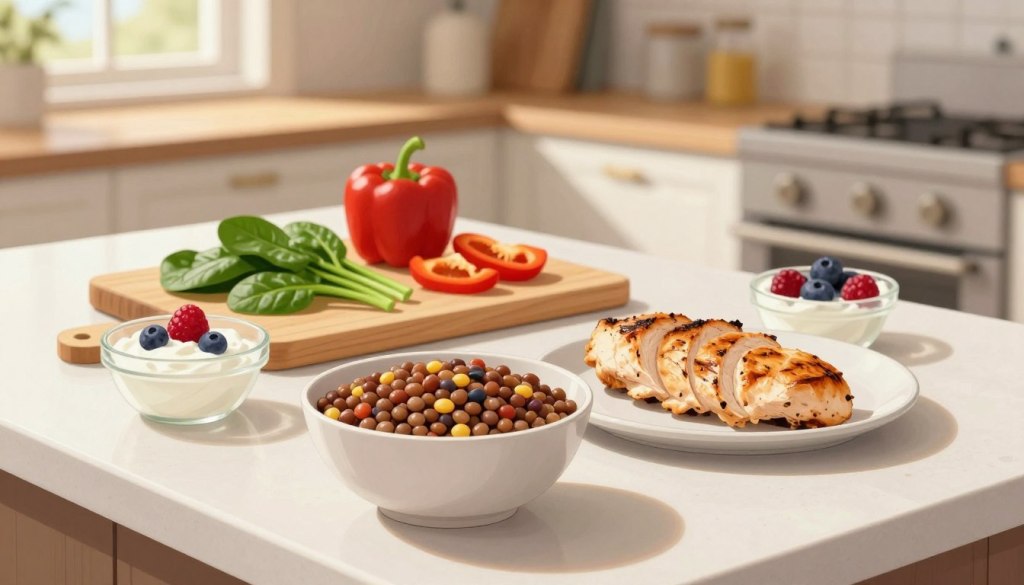
Low-chewing means soft, moist, and easy-to-break-apart bites — not bland mush unless that’s needed. Think flaky, fork-tender pieces that slide down with a little liquid or sauce.
Reliable soft proteins include flaky fish, shredded chicken, well-cooked beans or chickpeas, and tofu that soaks up a savory base.

Simple cooking and texture tips
- Braise, simmer, slow-cook, pressure-cook, poach, or finish a sheet pan with a saucy glaze to soften bites.
- Use the “moisture rule”: broth, gravy, cream, or yogurt dressings help food go down easier.
- Quick hacks: chop small, shred with forks, mash beans into stews, and cook veggies until tender.
- Build flavors with garlic, herbs, tomato paste, citrus, and mild spice without adding toughness.
Next up: recipes that you can adjust for dentures, dry mouth, or low energy. Each idea can be sauced, softened, or pureed to match needs.
High protein meals for seniors that are easy to chew and easy to make
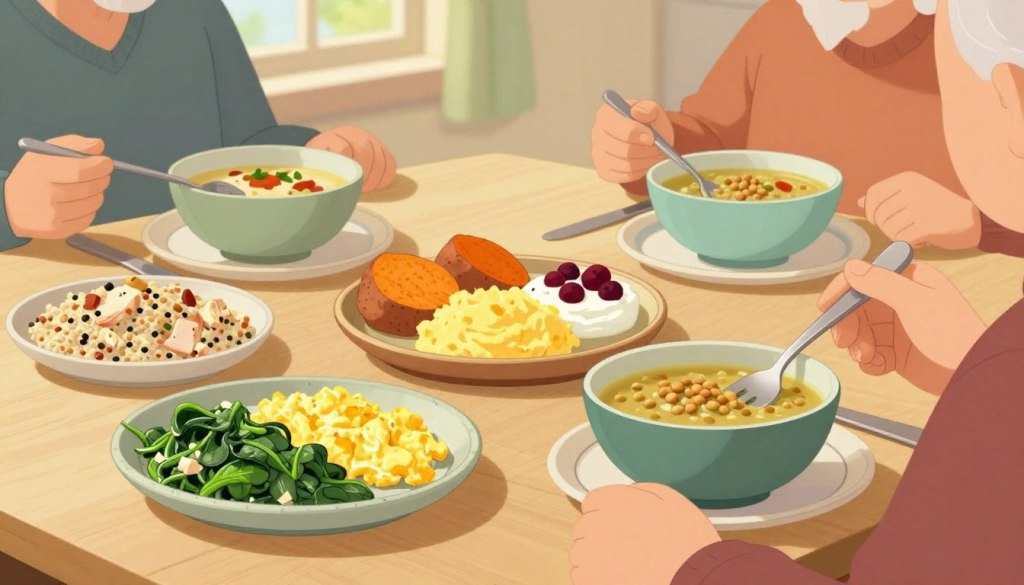
A short rotation of dependable recipes makes weeknights easier and keeps meals gentle on the jaw. These five dishes form a practical starter pack. Each delivers about 15 g of protein and color from vegetables.
Sheet-pan salmon with sweet potatoes and broccoli
Why it works: Salmon flakes apart, needs little chopping, and pairs with soft roasted sweet potato and tender broccoli. Minimal hands-on time makes this a solid weeknight dinner.
Try JoyCalls Free
No app or new device needed. Start with a free 7-day trial.
Hearty chickpea and spinach stew with tomatoes
Mash some chickpea in the pot to thicken the broth. The stew becomes spoon-soft and satisfying, with leafy spinach folded in at the end.
Chicken noodle soup
This gentle soup is perfect for low appetite days. Cook the noodles a touch softer and shred the chicken finely. It reheats well for lunch.
White chicken chili with white beans
Creamy and filling. Blend some beans for a softer texture, and finish with a dollop of sour cream or a sprinkle of cheese.
Cottage cheese baked ziti
Comfort food, but smarter: swap cottage cheese for ricotta to boost protein and keep pasta soft. Bake until just bubbly for an easy-to-chew bowl.
Make-it-senior-friendly tips: cook noodles softer, chop greens finely, and keep sauces generous. Next we’ll dig deeper into sheet-pan fish, soups, pastas, and bowls.
Sheet-pan dinners with fish and veggies for minimal prep
One tray, one timer, and dinner comes together with predictable tenderness and very little fuss. Sheet-pan dishes save time and dishes. They also help you control texture so bites stay soft and easy to eat.

Chili-lime street corn-style salmon
This bright recipe finishes with lime, cilantro, and a sprinkle of cheese to bring bold flavor without heat that can overwhelm. The chili-lime combo wakes up taste changes many older adults notice.
Roast salmon on a foil-lined pan with a scatter of corn and thin-sliced potato. Finish with lime zest, cilantro, and a light cheese crumble. Flake into small pieces before serving.
Salmon roasted with Brussels sprouts and garlic
Roast sprouts and smashed garlic until tender. Tuck salmon fillets on top and finish with oregano and a drizzle of olive oil. The veggies soften so they slide easily with a fork.
Strong taste can still be gentle. Roast longer if needed to reach a soft bite that keeps texture pleasant.
Black cod with broccoli and potatoes
Pat the black cod dry and start skin-side down to keep the fillet intact. Roast broccoli and potato chunks until very tender. The cod stays flaky and moist.
Low-chew tweaks: cut potato smaller, roast until soft, and flake fish into bite-size pieces. Serve with couscous, brown rice, or cauliflower rice for an easy side.
| Dish | Main steps | Softness tip |
|---|---|---|
| Chili-lime salmon | Roast fish with corn and sliced potato; finish with lime, cilantro, cheese | Slice potato thin; mash a few pieces into sauce |
| Salmon & Brussels sprouts | Roast sprouts and garlic until tender; add salmon to finish | Roast 5–10 mins longer for softer sprouts |
| Black cod & broccoli | Pat dry; start skin-side down; roast with broccoli and potatoes | Cut potato small; roast until fork-tender |
- Caregiver-friendly: one pan, less cleanup, and reliable textures when timed right.
- Batch strategy: roast extra fish and veggies to use in soft bowls or warmed salads the next day.
- Simple sides: couscous, brown rice, or cauliflower rice complete the plate with minimal chew.
Soups and stews that deliver protein in every spoonful
Soups and stews are the quiet heroes that make dinner doable on tight days. They keep food warm, moist, and easy to portion when chewing or energy is low.
Vegetable-loaded bowls can carry plenty of fiber and flavor. Stir in shredded chicken, blend in white beans, or grate Parmesan cheese over the top to add extra protein without changing the bite.

Vegetable soups with a cheese finish
Load a pot with carrots, spinach, and soft squash. Finish each bowl with a sprinkle of Parmesan. That simple step adds savory depth and a touch of dairy-based protein.
Chickpea and tomato stews that stay spoon-soft
Cook chickpeas until tender, then mash some against the pot to thicken the broth. Use tomato paste and gentle herbs for savory richness without extra salt or heat.
Batch-cook and the 5-minute dinner plan
Make a big pot on Sunday. Freeze single-serve portions and label dates. On busy nights, reheat a portion, add a scoop of beans or shredded chicken, and warm for five minutes. Serve with soft bread or rice.
| Dish | Quick tip | Protein boost |
|---|---|---|
| Vegetable-Parmesan soup | Simmer veggies until very soft; blend 1 cup if needed | Grate Parmesan at serving |
| Mashed chickpea tomato stew | Mash half the chickpeas for a spoon-friendly texture | Chickpeas (≈15 g per cup) |
| White bean & greens | Blend some beans into broth for creaminess | Add shredded rotisserie chicken |
- Texture tips: puree a portion, cook veggies longer, and keep broth on hand if bites feel dry.
- Flavor ideas: tomato paste, garlic, soft herbs, and a squeeze of lemon to brighten.
- Quick dinner: reheat, top, and serve—dinner ready in minutes.
Chicken dinners with creamy sauces and soft textures
When chewing feels tiring, a silky sauce can rescue texture and bring back appetite. These three recipes keep chicken moist and easy to swallow while tasting like real comfort food.
Sun-dried tomato cutlets: use the jar oil to sauté thin cutlets. Add chopped tomatoes into a quick cream sauce made with a splash of half-and-half and a spoon of the jar oil. Pound cutlets thin and slice across the grain before serving.

Lemony chicken over brown rice
Swap heavy cream for half-and-half to make a lighter cream sauce. Brighten with lemon and keep garlic gentle so it’s aromatic, not sharp. Serve over soft brown rice for a soothing bowl.
Honey-garlic chicken thighs with sheet-pan veggies
Thighs stay tender and forgiving; roast on the same pan with carrots and zucchini so the veggies cook down and are easy to chew. Brush a mild honey-garlic glaze near the end to preserve tenderness.
- Senior-friendly tips: pound cutlets, keep extra sauce on the side, and slice across the grain.
- Caregiver win: These recipes feel like real weeknight dinner comfort — not a compromise.
One-pan pastas and noodles that go down easy
One-pan pasta nights turn busy evenings into warm, saucy plates that are easy to eat and easy to love.
Why it works: cooking noodles and protein in the same pan keeps bites moist. Soft pasta, tender chicken, and a steady sauce make swallowing simpler. Cleanup is light. Meals feel familiar and comforting.

One-pan chicken and spinach pasta with lemon and garlic
This recipe uses lean chicken and wilted spinach. A lemon-garlic touch brightens each forkful.
Finish with grated Parmesan for a little protein boost that adds flavor without extra chew.
Skillet chicken Parmesan pasta with sauce made in the same pan
Cook chicken, add tomato sauce, then nest the noodles to finish in the pan. The method keeps the sauce silky and clings to every bite.
Slice the chicken thin before serving so pieces go down easily.
Sesame-soy noodle bowls with extra veggies
A bold sesame-soy sauce helps food glide and tastes vibrant.
Cook veggies longer until soft and chop them small. Serve in a shallow bowl so warm sauce pools around the noodles.
- Low-chew tweaks: pick small pasta shapes; cook noodles a minute longer; chop greens and veggies finely.
- Gentle protein lifts: stir in cottage cheese or drizzle an egg ribbon into hot noodles for added richness without extra chewing.
- Caregiver tip: these one-pan recipes are weeknight winners — nourishing, easy, and still feel like a treat.
Protein bowls with rice, grains, and creamy dressings
Bowls are an easy weeknight win when you want one cook-and-eat twice strategy. Cook a tender base, add a soft protein, and finish with a creamy dressing or light sauce. The result reheats well and keeps bites moist.

Shrimp pesto quinoa bowls
Ready in under 30 minutes. Use shrimp or swap in chicken, steak, tofu, or edamame. Cook quinoa until fluffy and tender so every forkful feels soft.
Salmon quinoa with a dill-yogurt dressing
Salmon cooks fast—about 20 minutes total. Flake the fish and toss with quinoa and a creamy dill + yogurt dressing for moisture and familiar flavor.
Miso salmon and farro bowls
Miso adds savory, slightly sweet depth that makes smaller portions feel more filling. Cook farro until soft and pair with roasted veggies and flaked salmon.
Peanut chicken with sweet potato & spinach
Roast sweet potato until tender. Slice or shred chicken and drizzle a creamy peanut sauce. Spinach wilts easily into the warm bowl to add color and gentle texture.
Peanut chickpea bowls with brown rice
Brown rice makes a sturdy, yet soft base. Use chickpea and a peanut dressing. Skip the crunchy slaw or steam and finely chop it to soften.
- Soft-base strategy: rice, brown rice, quinoa, or farro cooked tender stretches protein and eases chewing.
- Swap-friendly: shrimp, chicken, salmon, steak, or tofu fit these bowls so you can use what’s on hand.
- Caregiver tip: flake salmon, shred chicken, and keep dressing or sauce on the table so each bite stays moist.
- Need a gentle way to talk about meds while you juggle meals? Try this short guide on how to start the conversation: how to talk to a stubborn parent about taking.
Bean- and chickpea-based meals for meatless protein
A pot of simmering beans can feel like a small, reliable win on a busy weeknight. These dishes use pantry staples and gentle cooking to make dinner simple and soothing. They are budget-friendly and forgiving when time or energy is low.
Indian butter chickpeas simmered in a tomato gravy
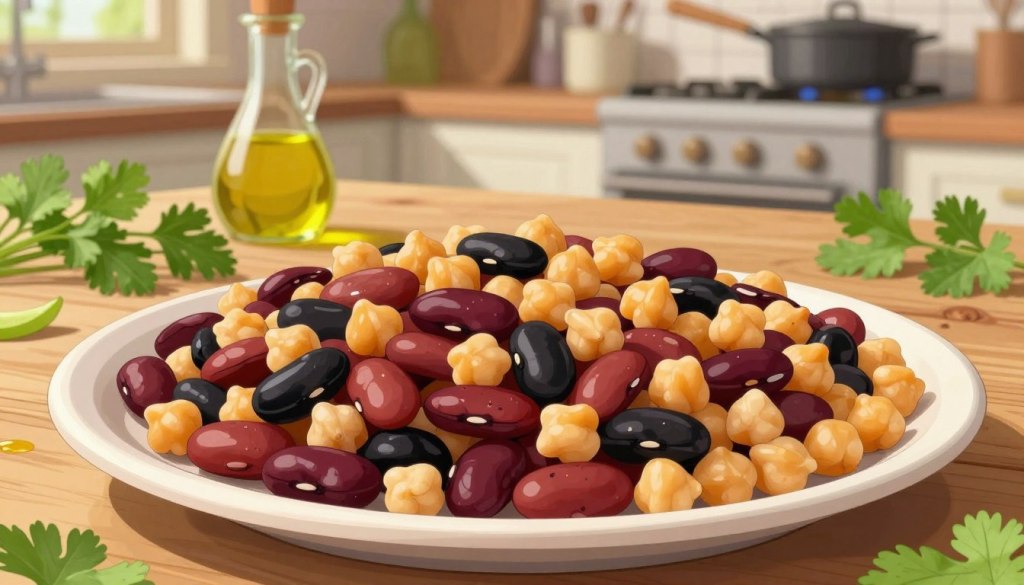
The chickpeas cook slowly in a spiced, creamy tomato sauce that stays soft and scoopable. Serve over rice or with soft bread. Tip: mash a few chickpeas in the pot to thicken the tomato base and make every bite glide down easier.
Black beans with sweet potato and a hummus dressing
Five ingredients: baked sweet potato, black beans, kale, hummus, and lemon. The hummus dressing keeps texture creamy so bites are moist. Dice the sweet potato small or mash it partly for less chewing.
White bean and smoked sausage skillet with kale
Cannellini beans and thinly diced smoked sausage simmer in a light cream sauce with shallot and garlic. Cook the kale until very tender. Dice the sausage tiny and simmer longer to soften everything together.
| Recipe | Key steps | Low-chew tweak |
|---|---|---|
| Butter chickpeas | Sauté spices, add tomatoes and chickpeas, simmer; finish with cream | Mash some chickpeas; serve over soft rice |
| Black beans + sweet potato | Roast or bake sweet potato; toss with beans, kale, hummus dressing | Partly mash potato; blend hummus into dressing |
| White bean skillet | Sauté shallot/garlic, add beans, sausage, cream, wilt kale | Dice sausage small; cook until kale is tender |
- Caregiver note: these meatless recipes lower prep and stretch the pantry while still feeling filling.
- Sodium tip: choose low-sodium beans or broth and build depth with garlic, tomato paste, and herbs.
- Low-chew options: mash part of the beans, simmer longer, and keep sauces generous so small portions satisfy.
Tofu meals with gentle bite and big flavor
A simple skillet and a good sauce turn plain tofu into a spoonable, satisfying plate.
Thai-inspired curry with coconut-lime
One-skillet ease: simmer tofu cubes, mixed veggies, red curry paste, lime, and coconut milk.
The coconut-lime sauce keeps every bite moist and aromatic without heat. Serve with soft rice.
Sweet and sour tofu with a glossy glaze
Light, glossy sauce makes mild tofu more appealing and easier to swallow.
Simmer small cubes briefly so edges soften and the sauce clings.
Sesame tofu and broccoli — a weeknight classic
Toss tofu and cooked-tender broccoli in a savory-sweet sesame sauce.
Use frozen mixed veggies and pre-cooked rice to make this truly an easy make weeknight recipe.
- Texture tip: pick softer tofu, cube small, and simmer in sauce to soften edges.
- Caregiver shortcut: frozen veggies + pre-cooked rice = dinner in minutes.
- Flavor note: keep aromatics gentle and offer hot sauce at the table for others.
Not sure where to start? Try this short list of tested tofu recipes for easy inspiration.
Stuffed peppers and casserole-style dinners that feel familiar
A warm casserole smells like home and can make dinner feel effortless again. These oven dishes are simple, comforting, and easy to portion. They keep textures soft and flavors familiar so no one feels like they’re eating a prescription.
Philly cheesesteak stuffed peppers with melty cheese and onions
This philly cheesesteak twist skips bread and tucks the filling into tender peppers. Use thin-sliced beef or shredded roast, sauté onions until soft, and melt cheese over the top.
Cook the peppers until very soft to reduce chewing. Finely chop fillings and add extra sauce to keep every bite moist.
Beef and rice stuffed poblanos with fire-roasted tomatoes and warm spice
Poblanos hold up to rich fillings and offer gentle heat without harsh spice. Mix ground beef, cooked rice, and fire-roasted tomatoes with cumin, oregano, and a touch of chipotle for warmth.
Keep spices aromatic, not overpowering. Dice ingredients small and simmer the mixture before stuffing to make bites easy to eat.
Chicken and sweet potato casserole with quinoa for plenty of protein
This casserole pairs shredded chicken, soft sweet potato, and multicolored quinoa so every scoop is fork-tender. Bake until the sweet potato is mashable and the quinoa is fluffy.
Add extra sauce or broth while baking to maintain moisture. Use shredded or ground chicken and finely chop veggies if energy or chewing is limited.
- Senior-friendly tweaks: finely chop onions and peppers; choose shredded meats; add extra sauce.
- Make-ahead tip: assemble earlier, refrigerate, and bake at dinner time. Leftovers reheat well.
- Caregiver reassurance: these are crowd-pleasers — family-style comfort without separate dishes.
Salads that still work for low chewing (with the right add-ins)
Salads don’t have to be crunchy and hard to chew—soft choices and warm toppings change everything. With a few adjustments, a bowl of greens becomes a gentle, satisfying dinner that still feels fresh.
Kale, chard, or spinach base with chopped veggies and rich salmon
Tip: chop dark greens finely and massage them with a creamy yogurt-style dressing. That softens the leaves so they slide easily.
Flake cooked salmon into small pieces and fold it into the bowl. Tiny bites mean less chewing and more steady nourishment.
Chicken tender-topped salad with crunchy breadcrumbs (easy modifications)
Use bite-size chicken tenders and keep the crust light. Swap heavy crumbs for crushed crackers that soften on the plate.
Add a spoonful of cottage cheese or a soft-boiled egg to boost protein without extra chew.
Warm fajita-style salad with chicken, peppers, and black beans
Warm toppings help. Cook chicken, peppers, and beans together so veggies soften and flavors meld. Serve over baby spinach or shredded lettuce so every forkful is tender.
Warmth deepens flavor and makes the bowl feel more like a cooked dinner than a raw salad.
- Low-chew swaps: baby spinach, shredded lettuce, diced cucumber, and cooked peppers.
- Protein boosters: beans, eggs, cottage cheese, or leftover shredded chicken.
- Remember: salad doesn’t have to be a chore. It can be a gentle, fresh dinner that still feels satisfying.
| Style | Quick tweak | Why it helps |
|---|---|---|
| Greens + salmon | Massage greens; flake salmon small | Softens leaves; small fish pieces glide easily |
| Chicken tender salad | Use soft tenders; crushed crackers instead of breadcrumbs | Crunch softens; chicken is easy to bite |
| Warm fajita bowl | Cook peppers and beans with chicken; serve warm | Veggies tenderize; warmth enhances flavor |
Want more tossed ideas? Try this collection of satisfying protein-packed salad recipes for simple inspiration.
Senior-friendly sides that boost protein without adding chew
Small, smart sides can quietly lift calories and nutrition without asking for extra chewing or effort.
Brown rice, quinoa, and cauliflower rice as a soft base
Soft bases act like a gentle scaffold. Cook brown rice a bit longer than package directions and add broth so grains stay moist. Quinoa cooks quickly and swells into fluffy bites that hold sauces. Cauliflower rice is a low-effort swap when chewing or appetite is low—simmer it briefly so it becomes tender.
Yogurt, cottage cheese, and melted cheese for an easy protein lift
Stir plain Greek yogurt into warm sauces off the heat for creaminess and a flavor lift. Cottage cheese mixes easily into pasta or casseroles and softens the texture. Melted cheese folded into soups or over casseroles adds both taste and a gentle protein boost.
“Think of sides as the secret weapon: a small scoop can turn a light plate into a steady, satisfying dinner.”
- Choose-two formula: soft base + protein topper + sauce = a complete, easy make dinner.
- Mix-ins: stirred yogurt, a spoonful of cottage cheese, flaked tuna or salmon, or melted cheese.
- Texture tips: cook grains longer, add broth, and fluff with a fork to avoid dry clumps.
- Caregiver win: these sides batch-cook and reheat well, lowering daily decision fatigue.
| Side | How it helps | Quick tweak |
|---|---|---|
| Brown rice | Fills bowls; holds sauces | Cook 5–10 mins longer; use broth |
| Quinoa | Fluffy base; mild flavor | Rinse, simmer gently; fluff to separate grains |
| Cauliflower rice | Soft, low-chew swap | Sauté briefly in broth until tender |
| Greek yogurt / cottage cheese | Quick protein lift; creamy texture | Stir into sauces off heat or fold into pasta |
| Melted cheese | Adds flavor and calories | Melt into soups or top casseroles just before serving |
Quick pairing idea: spoon brown rice, top with flaked salmon (≈25 g per serving) and a dollop of Greek yogurt for an easy, satisfying bowl that keeps chewing minimal.
Quick swaps to increase protein at breakfast, lunch, and snacks
A few simple swaps at breakfast and snack time can close a big nutrition gap. Dinner gets most attention. Yet mornings and snacks are where calories and strength often slip away. Small steps add up.
Eggs, Greek yogurt bowls, and nuts or seeds
Add one egg to toast or oatmeal—each egg gives about 6 g. Build a Greek yogurt bowl with fruit and a sprinkle of nuts; a standard tub can deliver 17–20 g. Sprinkle seeds on cereal for a calorie-compact lift.
Lunch salad add-ons that need little chewing
Turn a green salad into a steady lunch by folding in soft beans, chopped boiled egg, cottage cheese, or finely shredded chicken. These add-ins boost flavor and keep bites easy to manage.
Snack pairings that feel normal, not clinical
Pair fruit with a mild cheese. Offer soft veggies with hummus. Try crackers with smoked salmon or a small handful of nuts. Snacks are not “extra”—they are part of the plan.
- Caregiver tip: keep a “protein shelf” stocked with yogurt, cottage cheese, canned beans, canned fish, and eggs for fast assembly.
- Practical note: if texture is dry or hard, add a sauce or yogurt to soften bites.
- Want more ideas? See a short list of gentle strategies at simple protein tips.
Caregiver tips for making meals easier to chew and still full of flavor
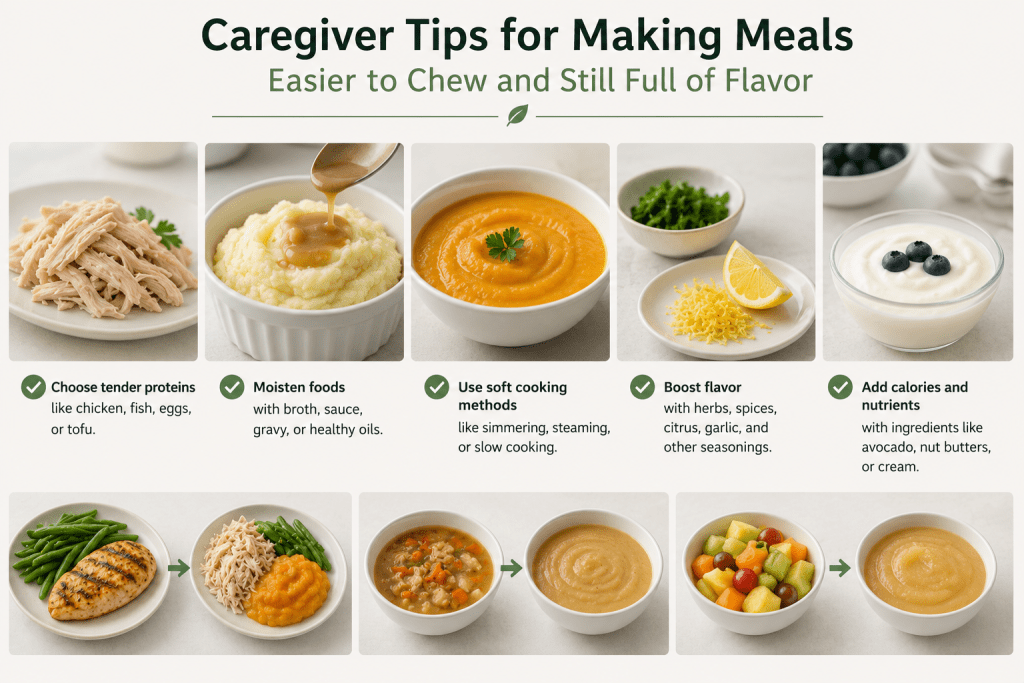
You don’t need a new recipe—just a kinder way to cook what’s already on the menu. Small texture changes help foods glide down and keep dinners familiar. These steps save time and protect dignity.
Cut, shred, mash: texture tweaks that preserve enjoyment
Texture toolkit: cut smaller, shred meats, mash beans, cook longer, or puree part of a dish.
Shredding chicken or mashing chickpeas into a broth adds body without changing taste. This is an easy way to keep the same flavors and make the bite gentler.
Use sauces, dressings, and broths to keep foods moist
Moisture matters. Add extra sauce or a spoonful of broth to prevent dryness. A creamy dressing or a light gravy helps foods slide and reduces jaw effort.
Serve a small bowl of sauce at the table so each person can tailor texture. Warm, not scalding, keeps things comfortable.
Seasoning ideas: garlic, herbs, chili, lime, and tomato paste without overwhelming heat
Use mild garlic and fresh herbs for aroma. Stir in tomato paste to deepen savory taste without adding salt.
Add lime, a touch of chili at the table, cilantro, and a sprinkle of cheese to brighten flavor without heat that scares off appetite.
- Speak to the person: “Want it softer?” — this keeps control and dignity.
- Let soups and stews do the work: long simmering softens tough bits while concentrating flavors.
- Rest meats after cooking so they stay juicy; slice thin across the grain.
- Tie back to the listicle: these tips work with every dinner idea above — sheet-pan, stew, pasta, or bowl.
How to Build a Soft High-Protein Meal Routine Seniors Can Actually Follow
Knowing what to cook is helpful. But for many seniors and family caregivers, the bigger challenge is not finding one good recipe — it is making protein happen every day without stress, chewing fatigue, wasted food, or mealtime resistance.
A senior may enjoy salmon on Monday but refuse it by Wednesday. A parent may say they are “not hungry,” when the real issue is dry mouth, dental discomfort, low energy, loneliness, medication timing, or simply being tired of large plates. That is why a soft high-protein meal routine should feel flexible, calm, and repeatable.
The goal is not to create a perfect nutrition plan. The goal is to create a simple system where protein is available in small, soft, appealing portions throughout the day. When meals are easy to chew, easy to swallow, easy to reheat, and easy to enjoy, seniors are more likely to eat enough consistently.
Start With the “Protein First, Texture Second” Rule
A helpful way to plan meals is to choose the protein first, then adjust the texture. Many caregivers start with the dish: soup, pasta, casserole, rice bowl, or breakfast plate. Instead, begin with one question:
What soft protein can we build this meal around?
Good choices include eggs, Greek yogurt, cottage cheese, soft tofu, flaked fish, shredded chicken, mashed beans, lentils, hummus, smooth peanut butter, soft cheese, and well-cooked ground meat. Once the protein is chosen, the rest of the meal becomes easier.
For example, if the protein is cottage cheese, it can become a soft breakfast bowl, a creamy pasta mix-in, a mashed potato booster, or a mild dip for soft bread. If the protein is shredded chicken, it can go into soup, rice porridge, soft noodles, mashed sweet potato, or a creamy casserole. If the protein is Greek yogurt, it can become a sauce, smoothie base, breakfast bowl, or topping for lentil stew.
This approach prevents the common problem of serving meals that are soft but too low in protein. A bowl of plain soup, mashed potatoes, toast, or tea biscuits may be easy to eat, but it may not support strength, recovery, or steady energy. Softness matters, but softness alone is not enough.
A practical plate formula is:
Soft protein + moist base + gentle vegetable + sauce or broth
Examples:
Soft scrambled egg + oatmeal + mashed avocado + yogurt drizzle
Flaked salmon + soft rice + cooked spinach + dill yogurt sauce
Mashed lentils + soft sweet potato + tender carrots + olive oil
Shredded chicken + small pasta + peas + creamy broth
Silken tofu + rice porridge + soft mushrooms + mild soy-ginger sauce
This formula keeps meals balanced without making cooking complicated.
Use Smaller Protein Portions More Often
Many older adults struggle with large meals. A full dinner plate can feel overwhelming, especially if chewing is tiring or appetite is low. Instead of pushing one large high-protein meal, try spreading protein across the day.
This is often easier, kinder, and more realistic.
A senior who cannot finish a large chicken dinner may still manage:
A soft egg at breakfast
Greek yogurt mid-morning
Lentil soup at lunch
Cottage cheese with fruit in the afternoon
Flaked fish or tofu at dinner
Each small serving helps. The meal does not need to look impressive to be useful.
Caregivers can prepare a “protein rhythm” for the day:
Morning: soft, familiar protein
Midday: soup, stew, or soft leftovers
Afternoon: easy snack with protein
Evening: warm, moist dinner
Before bed, if needed: small protein-rich drink or yogurt
This rhythm is especially helpful for seniors who say, “I’m just not hungry.” Instead of arguing over a large plate, offer smaller options at predictable times. A few spoonfuls of yogurt, half a bowl of soup, or a small egg custard may feel manageable.
Create a Soft Protein Shelf in the Fridge
Decision fatigue is real for both seniors and caregivers. When every meal requires planning from scratch, protein often gets missed. A dedicated “soft protein shelf” makes it easier to build meals quickly.
Keep ready-to-use items in clear containers at eye level. Label them simply.
Helpful options include:
Hard-boiled eggs, chopped or mashed
Greek yogurt
Cottage cheese
Hummus
Cooked lentils
Mashed beans
Shredded chicken
Flaked salmon or tuna
Soft tofu
Egg salad with extra yogurt
Chicken salad made with finely shredded meat
Smooth nut butter
Small containers of cheese sauce or yogurt sauce
The point is visibility. If the protein is hidden behind jars or leftovers, it may not be used. If it is easy to see, easy to scoop, and easy to pair, it becomes part of the routine.
For seniors living alone, this shelf can also support independence. Instead of needing to cook, they can assemble a soft meal: yogurt with fruit, hummus with soft pita, lentils with rice, or shredded chicken stirred into soup.
Make Moisture Non-Negotiable
Dry food is one of the biggest reasons seniors stop eating enough protein. Chicken breast, rice, toast, meat, and even eggs can become difficult if they are too dry. For someone with dentures, mouth pain, dry mouth, or swallowing discomfort, dryness can turn a healthy meal into a frustrating one.
Every soft high-protein meal should include moisture.
This can come from broth, gravy, yogurt sauce, cheese sauce, hummus dressing, tomato sauce, olive oil, soft avocado, blended vegetables, or a splash of milk. A small bowl of warm broth on the side can also help soften bites during the meal.
A simple caregiver habit is to ask:
“Does this meal need a spoon?”
If the answer is no, it may be too dry. Low-chew meals often work best when they are spoonable or at least sauce-rich.
Try these quick moisture fixes:
Add broth to rice before reheating.
Stir Greek yogurt into mashed potatoes after cooking.
Add cottage cheese to pasta while it is warm.
Serve fish with yogurt-dill sauce.
Mix shredded chicken with soup or gravy before plating.
Mash beans with olive oil and warm water.
Blend vegetables into sauce instead of serving them dry.
Add applesauce or yogurt beside breakfast foods.
Moisture does more than help chewing. It also makes food feel comforting, warm, and satisfying.
Use a Texture Ladder Instead of One Texture for Everyone
Not every senior needs pureed food. Many people can manage soft, chopped, minced, or fork-mashed meals. Serving everything as a puree too early can reduce enjoyment and dignity. At the same time, food that is too firm can cause frustration.
A “texture ladder” helps families adjust meals without guessing.
Level 1: Soft whole foods
These are foods that can be broken easily with a fork, such as flaky fish, scrambled eggs, soft tofu, ripe banana, soft pasta, or tender cooked vegetables.
Level 2: Chopped soft foods
These are regular soft foods cut into small pieces. Examples include shredded chicken in gravy, chopped cooked vegetables, small pasta, soft rice bowls, or finely chopped egg salad.
Level 3: Minced and moist foods
These are very small pieces mixed with sauce or broth. Examples include minced chicken in soup, mashed beans with rice, soft ground turkey in tomato sauce, or finely chopped fish with yogurt dressing.
Level 4: Mashed or partly blended foods
These meals still have flavor and body but require very little chewing. Examples include lentil dal, mashed sweet potato with cottage cheese, blended bean soup, soft khichdi, or mashed salmon with avocado.
Level 5: Smooth purees
These may be needed for some seniors, especially with swallowing difficulties, but should be guided by a healthcare professional when there is choking, coughing, or repeated swallowing trouble.
This ladder lets caregivers adapt the same meal for different needs. A family can eat chicken stew as usual, while a senior’s serving is chopped smaller, softened with broth, or partly mashed. This avoids making the older adult feel singled out.
Watch for Quiet Signs That Eating Is Getting Harder
Seniors do not always say, “I cannot chew this.” They may simply eat less, avoid certain foods, take a long time to finish, cough during meals, or say they are not hungry.
Common signs include:
Leaving meat or vegetables untouched
Preferring tea, biscuits, toast, or soft sweets
Taking very small bites
Chewing for a long time
Drinking a lot of liquid with meals
Avoiding dentures at mealtime
Complaining that food tastes different
Saying food is “too much work”
Coughing, throat clearing, or wet-sounding voice after eating
Losing weight without trying
Eating alone more often
These signs should not be treated as stubbornness. They are clues. The food may be too dry, too tough, too large, too bland, too cold, or too tiring to eat.
A caring response sounds like:
“Would this be easier with more sauce?”
“Should I cut this smaller next time?”
“Would soup feel better today?”
“Do you want the same flavor, just softer?”
This keeps the conversation respectful. Seniors should feel involved, not managed.
Build a Two-Day Meal Prep System
Many caregivers try to cook for the whole week, but that can become overwhelming. Food preferences change, leftovers pile up, and seniors may lose interest. A two-day system is often more realistic.
Cook one soft protein and one soft base every two days.
Day 1 protein options:
Shredded chicken
Lentils
Soft fish
Egg salad
Tofu curry
Ground turkey in sauce
Day 1 base options:
Soft rice
Mashed sweet potato
Small pasta
Oatmeal
Quinoa cooked extra tender
Vegetable soup
Then create two or three combinations.
Example:
Shredded chicken + soft rice + broth = lunch bowl
Shredded chicken + small pasta + cream sauce = dinner
Shredded chicken + mashed sweet potato + gravy = next-day meal
Another example:
Lentils + soft rice = dal-style bowl
Lentils + blended vegetables = soup
Lentils + yogurt topping = light dinner
This method reduces cooking pressure while keeping variety. It also helps caregivers notice what gets eaten and what gets ignored.
Make Reheating Senior-Friendly
A meal that was soft yesterday can become dry today. Reheating is where many high-protein meals lose their appeal. Chicken tightens, rice dries out, pasta absorbs sauce, and fish can smell strong if overheated.
Use gentle reheating.
Add a splash of broth, milk, sauce, or water before warming. Cover the bowl to trap steam. Reheat in short intervals and stir halfway through. Let food rest for a minute so heat spreads evenly.
For fish, consider reheating gently in a covered pan with a little broth or sauce instead of microwaving until hot and dry. For rice and grains, add liquid before reheating. For pasta, add extra sauce. For eggs, avoid overheating because they can turn rubbery.
A good rule: leftovers should be softer after reheating, not tougher.
Pair Protein With Appetite Cues
Nutrition is not only about grams and recipes. Appetite is emotional too. Seniors may eat better when meals feel familiar, smell inviting, and arrive at the right time of day.
Use appetite cues:
Serve warm foods warm, not lukewarm.
Use familiar bowls, plates, and utensils.
Offer smaller portions first, with seconds available.
Add aroma with mild garlic, herbs, cinnamon, ginger, or lemon.
Avoid filling the plate too much.
Keep mealtime calm and unhurried.
Eat together when possible.
Offer favorite flavors in softer forms.
For example, if a senior loved chicken curry, make a softer version with shredded chicken, tender vegetables, and extra gravy. If they loved sandwiches, try soft bread with egg salad, tuna salad, or hummus instead of hard crusty bread. If they enjoyed breakfast foods, serve protein-rich breakfast for dinner: soft scrambled eggs, Greek yogurt, oatmeal with nut butter, or cottage cheese pancakes.
Familiarity often improves acceptance.
Use Fortified Soft Foods When Appetite Is Low
On low-appetite days, every spoonful should work harder. This does not mean forcing large portions. It means enriching foods the senior already accepts.
Try these simple boosters:
Stir powdered milk into soups, oatmeal, mashed potatoes, or smoothies.
Add Greek yogurt to sauces, dips, and breakfast bowls.
Mix cottage cheese into scrambled eggs or pasta.
Blend tofu into soups or smoothies.
Add nut butter to oatmeal, yogurt, or shakes.
Use olive oil in mashed vegetables for extra calories.
Add grated cheese to eggs, soups, casseroles, and soft grains.
Blend beans into tomato sauce or vegetable soup.
These additions are useful because they do not require much extra chewing. They also help when a senior only wants a small serving.
A small bowl of lentil soup with yogurt stirred in may be more useful than a large bowl of plain broth. A few spoonfuls of mashed potato with cottage cheese may be better than a full plate that goes untouched.
Keep a Three-Day Food and Texture Note
Caregivers do not need a complicated nutrition tracker. A simple three-day note can reveal patterns quickly.
Write down:
What was served
How much was eaten
What texture worked
What was left behind
Any coughing, fatigue, or discomfort
Mood and appetite
Fluids taken with the meal
Example:
Breakfast: Greek yogurt with banana. Ate most. Texture worked well.
Lunch: Chicken rice soup. Ate half. Asked for more broth.
Dinner: Salmon with sweet potato. Ate fish, left broccoli. Try softer vegetables next time.
After three days, look for patterns. Does the senior eat better in the morning? Do they avoid meat unless shredded? Do they prefer bowls over plates? Do they leave dry foods behind? Do they eat more when sauce is added?
These notes help families make smart changes without guessing.
Know When to Ask for Professional Help
Low-chew meals can help a lot, but some signs need professional guidance. Contact a doctor, dentist, dietitian, or speech-language swallowing specialist if there is repeated coughing during meals, choking, unexplained weight loss, pain while chewing, poorly fitting dentures, frequent chest infections, food pocketing in the cheeks, or fear of swallowing.
Also ask for medical guidance if the senior has kidney disease, diabetes, heart failure, swallowing disorders, recent stroke, dementia, or major weight loss. Protein needs and food textures may need to be personalized.
The safest plan is one that supports nutrition without ignoring medical needs.
A Simple One-Day Soft Protein Routine
Here is a practical example caregivers can adapt.
Breakfast: Soft scrambled egg with cottage cheese, plus oatmeal made with milk.
Mid-morning: Greek yogurt with mashed banana.
Lunch: Lentil and vegetable soup with olive oil and soft rice.
Afternoon snack: Hummus with soft pita or cottage cheese with fruit.
Dinner: Flaked salmon or shredded chicken with mashed sweet potato, tender spinach, and yogurt sauce.
Evening option: Warm milk, smoothie, or small bowl of custard if appetite is low.
This day is not fancy. That is the point. It uses soft textures, familiar foods, moisture, and small protein moments throughout the day.
For seniors, consistency often matters more than creativity. A dependable routine can protect strength, reduce mealtime stress, and help caregivers feel less like they are starting from zero every day.
The best high-protein meal is not the one that looks perfect on paper. It is the one your loved one can chew, swallow, enjoy, and accept again tomorrow.
Get caregiving support with JoyCalls while you plan meals
A quiet question many adult children carry: who notices the small changes when I’m not there?
Meal planning is only one piece — families also want simple reassurance that a loved one is safe, eating, and hydrated day to day.
What JoyCalls does: an AI-powered phone companion that makes friendly daily check-in calls to older adults. No app or special device is needed. Calls are warm, easy, and respectful.
The service sends short summaries and alerts to you. That means fewer guesses and more timely action when appetite slips, groceries run low, or hydration drops.
“Just a short call can surface an ‘I didn’t feel like cooking today’ moment early — and that early notice makes a real difference.”
- Emotional relief: regular check-ins help you feel connected without daily visits.
- Practical help: summaries highlight appetite changes, missed meals, or low fluid intake.
- Easy to try: you can start small and scale up as you need.
| What | How it helps | Action |
|---|---|---|
| Daily check-in calls | Spot appetite or mood changes early | Sign up or call to start |
| Summaries & alerts | Reduce worrying between visits | Receive updates by message |
| No special device | Easy setup for older adults | Works with a landline or cell |
Ready to try a simple layer of support?
Sign up for JoyCalls: https://app.joycalls.ai/signup
Talk to Joy now: 1-415-569-2439
Conclusion
A few dependable recipes and a splash of sauce are all it takes to make dinner feel easy again. Pick sheet-pan salmon, a warming soup, a creamy chicken dinner, a one-pan pasta, or a flexible bowl as your best bets.
Aim for about 1.0–1.3 g/kg of protein daily. Build a short rotation of repeatable dinner ideas rather than chasing perfection. Shred, simmer, mash, and keep bites moist with sauce, broth, or dressing.
Try this: choose two dinners to test this week and batch one soup for leftovers. If you juggle meals and worry from a distance, JoyCalls can help with check-ins and gentle reminders. Read more about text-message medication reminders and remote support.
Sign up for JoyCalls: https://app.joycalls.ai/signup
Talk to Joy now: 1-415-569-2439