

Surprising fact: nearly half of older adults face barriers that make cooking daily hard—mobility, thinking challenges, or low drive can turn a simple dinner into a big hurdle.

You’re juggling work and life. Your parent lives alone. Asking “What did you eat today?” feels heavy. This guide shows tiny, repeatable steps to make eating well easier and less stressful.

What this means: simple planning, mix-and-match components, and easy routines that work on low-energy days. We focus on safety, nutrition, and dignity.

Practical help is ahead: nutrition needs, weekly planning, grocery shortcuts, friendly kitchen tools, easy ideas, and food safety tips. If you need extra support, JoyCalls can bridge the gap with daily check-ins and caregiver summaries.

Ready now? Sign up for JoyCalls or call 1-415-569-2439 to talk to Joy today. Learn more about related tools in this helpful post: medication reminder options.

Key Takeaways

  • Simple, repeatable prep reduces stress and boosts nutrition.
  • Plan mixes and matches instead of complex recipes.
  • Small tools and routines help with appetite and chewing issues.
  • Daily check-ins from JoyCalls keep families connected without hovering.
  • Practical tips ahead: planning, shopping shortcuts, and safety steps.

Why Meal Prep Helps Older Adults Stay Healthy and Independent

A little planning goes a long way when energy is limited and choices matter. A simple system makes the healthy choice the easy choice. It’s not about perfection. It’s about steady, doable steps that protect health and independence.

Save time and energy on cooking days

Batch basic components once or twice a week. Roast vegetables, cook whole grains, and portion proteins in one session. That way, daily cooking takes minutes instead of an hour.

Portion control to support weight and steady energy

Pre-portioned containers help avoid overeating and prevent skipped meals when appetite is low. Consistent portions keep blood sugar steadier so mornings and afternoons feel more even.

Better variety for nutrition, heart health, and blood pressure goals

Rotate vegetables, fruits, whole grains, and lean proteins across the week. Small swaps—less added sugar, lower sodium, and fewer highly processed foods—align with NIH/USDA guidance and support heart and blood pressure health.

More convenience with fewer last-minute meals and less food waste

Planned ingredients get used on purpose. Label leftovers and track dates so nothing hides in the back of the fridge. That reduces throwaway foods and cuts those “nothing sounds good” moments.

Result: Ready-to-eat options mean your loved one can eat well on their own terms, stay independent, and you get peace of mind.

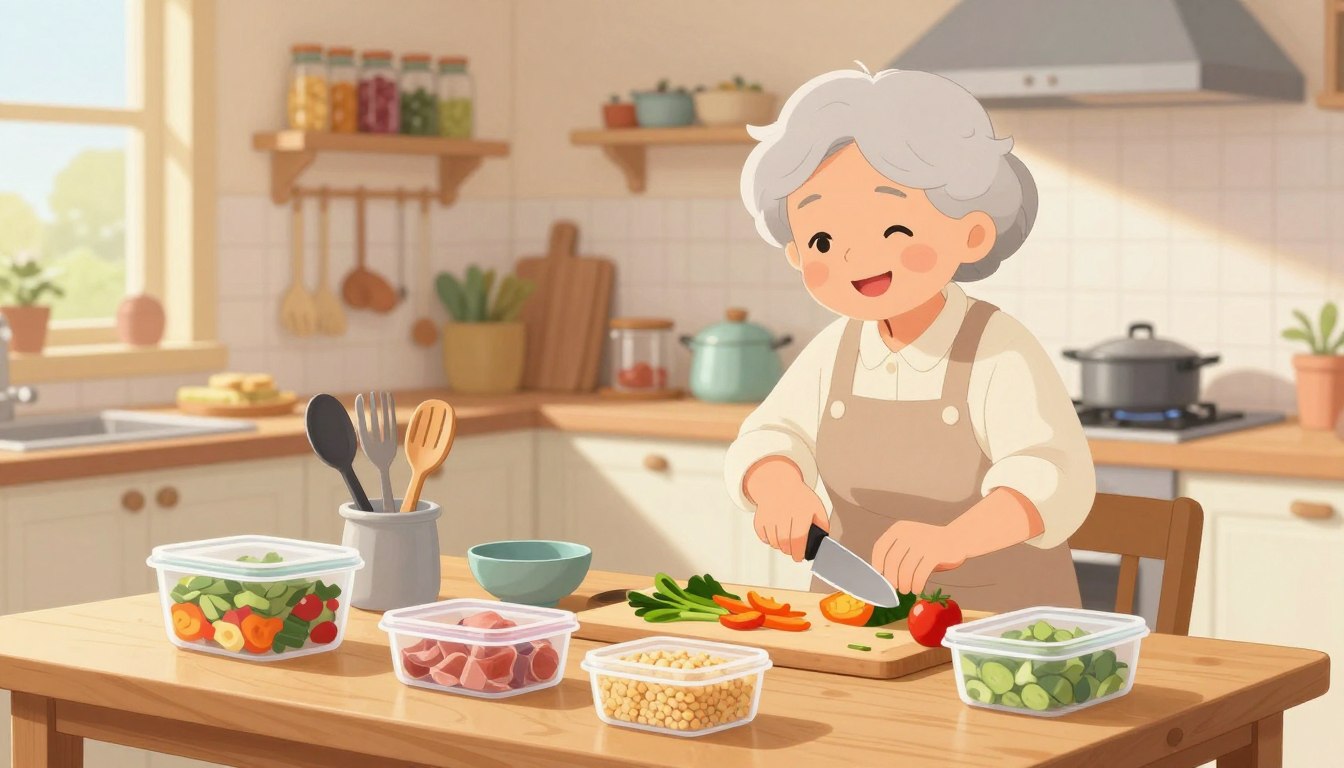
A cozy and inviting kitchen scene showcasing the benefits of meal prep for seniors. In the foreground, a well-organized countertop displays colorful containers filled with fresh vegetables, grains, and lean proteins, conveying health and variety. A cheerful senior couple, dressed in modest casual clothing, is happily engaged in meal preparation together, highlighting teamwork and independence. In the middle ground, an open cookbook provides easy-to-follow recipes, adding a touch of practicality. The background features soft, natural lighting filtering through a window, creating a warm, friendly atmosphere. A few potted herbs on the windowsill add a hint of freshness, emphasizing a connection to healthy living. The overall mood is uplifting, emphasizing health, independence, and the joy of shared experiences in the kitchen.

Before You Start: Assess Nutrition Needs, Preferences, and Limitations

Start by noting medical needs and food likes so choices actually get eaten. A short, honest check saves time and keeps everyone safe. These notes become the rules for your weekly plan.

Medical needs to consider

  • List chronic conditions, meds, and supplements. These affect eating and appetite.
  • For diabetes, build plates around protein + fiber-rich carbs + healthy fats to steady blood sugar.
  • For heart or high blood pressure, choose lower-sodium options and season with herbs or citrus.

Dietary restrictions and labeling

Make a habit of labeling containers with key ingredients and the prep date. Clear labels cut risk and confusion.

If allergies exist, keep separate batches to avoid cross-contact. Safety is simple when ingredients are written on every container.

Chewing and swallowing

Be kind and discreet. Modify textures without making meals feel babyish.

Try shredded chicken, cooked instead of raw vegetables, mashed beans, softer grains, or adding a little broth to soups and stews. Yogurt and scrambled eggs are good soft options.

Action checklist

  • Quick caregiver checklist: conditions, meds, appetite patterns, and true food likes.
  • Turn those notes into one clear meal plan rule sheet for the week.
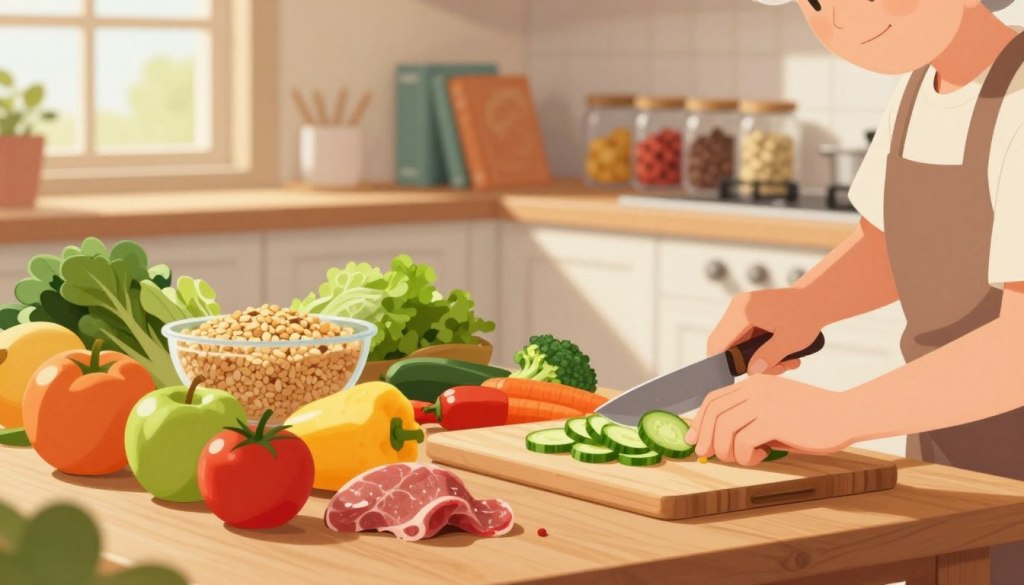
A warm, inviting kitchen setting with a focus on meal preparation for seniors, featuring a wooden table filled with fresh, colorful fruits and vegetables. In the foreground, a pair of hands of an older adult, with neatly trimmed nails, skillfully chopping vegetables on a cutting board. The middle ground shows an assortment of healthy foods: whole grains, lean proteins, and vibrant greens, suggesting a balanced diet. In the background, softly lit shelves display cookbooks and organized jars of spices, enhancing a cozy atmosphere. Soft, natural light filters through a window, creating a cheerful, supportive mood. The scene is set at a slightly elevated angle to provide a clear view of the vibrant ingredients, aiming to convey a sense of warmth, health, and practicality in meal prep.

Meal Prep for Seniors: A Simple Weekly Meal Planning System

A small weekly plan makes weekday choices calm and predictable. Start with one quick planning session and one realistic prep block that fits your life. This keeps needs simple and steady.

Choose a realistic cadence

Pick one planning day (about 15 minutes) and one prep block (60–120 minutes).

That’s it. No perfect schedule—only what works the week you have.

Build balanced plates without math

Think: protein + colorful vegetables + a fruit + whole grains + a little healthy fat. That combo fuels energy and helps with appetite.

Use “protein anchors” like chicken, fish, eggs, beans, or yogurt. Rotate two proteins and three vegetable options to keep variety low-effort.

Use healthy eating patterns as templates

Choose a template—Healthy U.S.-Style, Mediterranean, or Vegetarian—and adapt it to tastes. Templates act as friendly guides, not strict rules.

Plan hydration and snacks

Place water with breakfast, mid-morning, lunch, and a gentle mid-afternoon reminder. Avoid sugary drinks.

Schedule small snacks to prevent long gaps. Nuts, yogurt, or fruit keep energy steady.

Quick tips:

  • Label proteins and dates.
  • Use herbs or lemon to cut sodium and add flavor.
  • Repeat breakfasts; rotate lunches; keep dinners flexible.
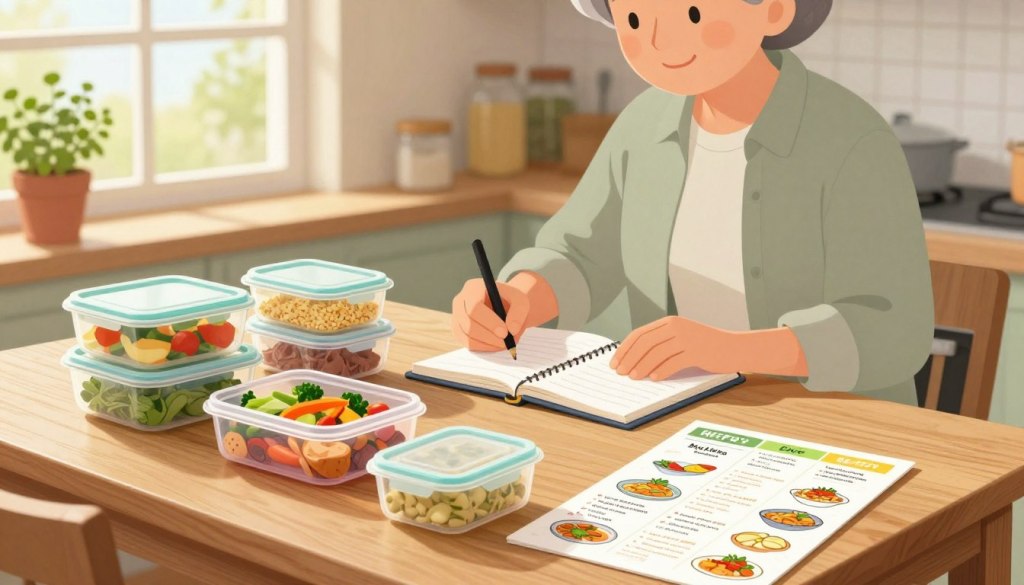
A cozy kitchen scene featuring a well-organized weekly meal planning station. In the foreground, a wooden table is adorned with colorful, neatly arranged meal prep containers filled with fresh vegetables, grains, and proteins. A set of vibrant recipe cards is placed beside the containers, showing easy-to-follow meal ideas. In the middle, a person in modest casual clothing, perhaps a senior, is thoughtfully writing down meal plans in a notebook, with a warm smile. In the background, a sunlit kitchen window allows soft, natural light to illuminate the space, casting a welcoming glow on a potted herb garden by the sill. The atmosphere is friendly and inviting, ideal for seniors engaging in meal prep.

Weekly Slot Example Why it helps
Planning day (15 min) Pick proteins, grains, and 3 veggies Saves decisions and shopping time
Prep block (60–120 min) Cook anchors: roast chicken, cook beans, steam grains Makes assembly quick and safe
Hydration slots Water with meals + mid-afternoon Prevents dehydration and aids digestion
Snack plan Yogurt, fruit, nuts Prevents long gaps and low energy

Reality check: The best plan is the one your loved one actually eats. Keep it simple, flexible, and kind.

Need a quick caregiver rhythm to pair with this plan? Use a caregiver check-in schedule to stay connected without hovering.

Smart Grocery Shopping for Meal Prep Success

Good shopping starts with a clear plan and an honest list from the week’s menu. That single habit keeps trips short and the pantry useful.

Turn your plan into a list: write items by category — produce, proteins, grains, dairy, pantry, frozen. This cuts impulse buys and speeds checkout.

Pick easy options without guilt. Pre-cut vegetables, bagged salad kits, and frozen fruits and vegetables save time and reduce knife work. Frozen produce is often washed and cut. It lasts longer and keeps fruits and vegetables ready all week.

  • Choose portion-sized packages: single yogurt cups, small hummus tubs, and freezer-sized protein portions to limit waste.
  • Check expiration dates in-store and again at home. Put “eat first” items at eye level.
  • Fewer knife-heavy steps mean safer preparation and less strain.

A bright, inviting grocery store interior bustling with activity. In the foreground, a cheerful senior couple, dressed in smart casual attire, is examining fresh produce. The man holds a reusable shopping bag filled with colorful vegetables, while the woman selects ripe tomatoes from a display. In the middle ground, well-organized shelves feature grains, canned goods, and dairy products, with a clear focus on healthy options. The background showcases bright, natural lighting streaming through large windows, creating a welcoming atmosphere. A friendly store employee assists another shopper nearby, emphasizing community and support. The overall mood is warm and encouraging, perfect for highlighting smart grocery shopping for meal prep.

Shopping Task Example Why it helps
List by category Produce, proteins, grains, dairy, frozen Faster trips and fewer missed items
Senior-friendly shortcuts Pre-cut veggies, microwaveable grains Less prep time, safer tasks
Portion choices Snack-size packs, single-serve proteins Cut waste and keep portions fresh

If you want guidance on planning and keeping caregivers in the loop, see a quick checklist at long-distance caregiving checklist. For evidence-based tips on organizing food and preparation, check this healthy planning guide.

Senior-Friendly Prep Setup: Tools, Containers, and an Easy Workflow

A simple kitchen layout can cut confusion and speed up daily assembly. Start with a small, well-lit workstation and keep basic tools within reach. That reduces bending, twisting, and time spent hunting for items.

Safe, low-effort equipment:

  • Stable cutting board, non-slip mat, and a sharp (not dull) knife to reduce force.
  • Easy-grip utensils, a good can opener, and a kettle with an auto-shutoff.
  • Set-it-and-forget-it helpers like a slow cooker or toaster oven for hands-off cooking.
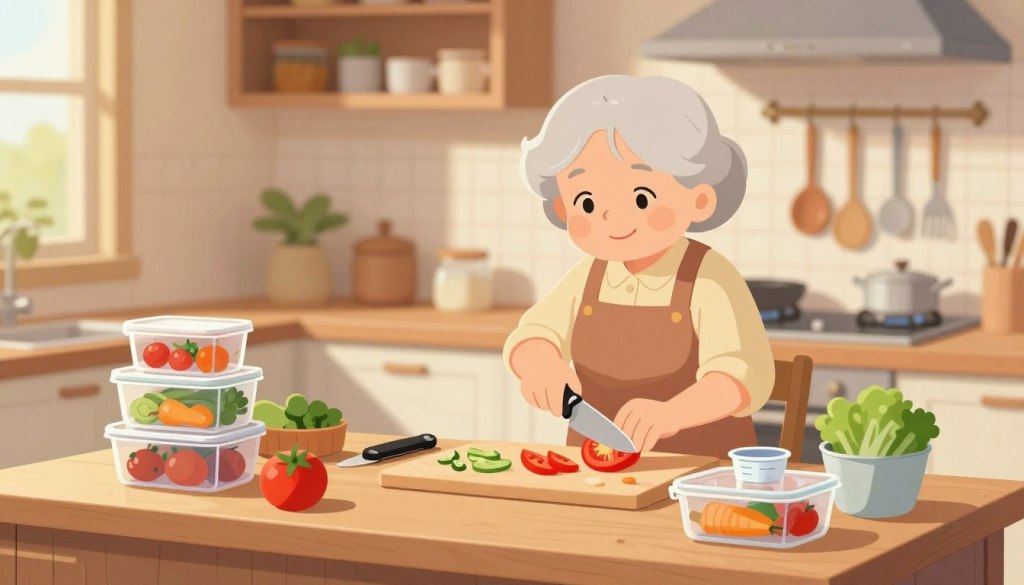
A cozy kitchen scene designed for senior-friendly meal prep. In the foreground, a clean wooden countertop displays an assortment of colorful, prepped vegetables in clear, labeled containers, highlighting an organized setup. In the middle, an elderly woman wearing comfortable, modest casual clothing carefully slices tomatoes, surrounded by helpful kitchen tools like a sturdy cutting board, easy-grip knife, and measuring cups. The background shows an inviting kitchen filled with soft, warm lighting, showcasing a well-maintained pantry and hanging utensils for easy access. The overall atmosphere is friendly and practical, emphasizing safety and simplicity in meal preparation for seniors. The image should evoke a sense of warmth, ease, and functionality without any text or clutter.

Containers, labels, and date tracking

Airtight containers cut drying, odors, and cross-contamination. Use clear containers so contents are visible.

Label with big, readable text: name + key ingredients (to flag allergies) + prep date. Keep newest jars in back and oldest in front to avoid waste.

Mix-and-match stations that save time

Create simple bins: one protein bin, one veggie bin, one grain bin, and an “extras” bin for sauces and herbs. Washing, chopping, and bulk cooking of ingredients makes daily assembly fast.

Quick win: With this workflow, someone can assemble a balanced lunch in 3 minutes and build dinner without starting from scratch.

“Labeling and visibility are not extras—they’re safety tools.”

Caregiver note: If memory or vision is a concern, keep labels large and place favorites at eye level. Consider pairing this setup with helpful guides like elder-friendly kitchen essentials to choose the right tools.

Easy Meal Prep Ideas That Cover Breakfast, Lunch, Dinner, and Snacks

Start the day with easy wins that feel comforting and real. Make-ahead breakfasts set a calm tone. Try overnight oats, egg bites, or yogurt parfait jars with fruit and whole-grain granola.

A cozy breakfast scene showcasing a variety of healthy meal prep ideas for seniors. In the foreground, a wooden table is adorned with neatly arranged dishes: a colorful fruit salad in a bowl, overnight oats topped with berries in a clear jar, and a small plate of whole-grain toast with avocado. In the middle ground, a bright, well-organized kitchen with sunlight streaming through a window highlights a fruit basket and an herb pot. The background features soft, pastel-colored walls, evoking a welcoming atmosphere. The scene is captured with a warm, natural light, emphasizing a relaxed and inviting mood, ideal for morning routines. The angle is slightly elevated, focusing on the delightful breakfast spread, ensuring clarity without any distractions.

Soft but satisfying options: warm oatmeal with berries, hard-boiled eggs, a smoothie with yogurt, or peanut butter on whole-wheat toast. These are gentle to chew and easy to reheat.

Lunch ideas that assemble fast

Choose builds that need little chewing: tuna or chicken salad, veggie soup, or open-faced sandwiches on whole-grain bread. Cut wraps into pinwheels to make bites easy to handle.

Dinner formulas to rely on

Lean proteins make dinners simple. Think roasted chicken plus tender vegetables, baked fish with soft greens, or turkey meat sauce over whole-wheat pasta. Use a “cook once, remix twice” approach—roast chicken becomes salads, sandwiches, or a rice bowl.

Snacks and one-pot, one-pan wins

Keep healthy snacks visible: hummus with veggie sticks, yogurt, cheese with whole-grain crackers, or a small handful of nuts if safe. One-pan options cut cleanup: sheet-pan chicken and vegetables, one-pot pasta with spinach, or a stir-fry over brown rice.

Safety and texture tip: shred cooked meats, cook vegetables until tender, and cut into bite-size pieces when needed. If you want simple daily reminders tied to eating and hydration, use a daily check-in routine to keep the rhythm and reduce worry.

Food Safety and Storage Tips for Older Adults

Good habits in the kitchen make meals made in advance safer and less scary.

Handwashing and clean surfaces

Wash hands with soap and warm water before, during, and after handling food. Do it after touching raw protein, taking out the trash, or opening packages.

Clean and sanitize counters and utensils between tasks. If you’re prepping several meals in one session, wipe and sanitize often to stop cross-contamination.

Separate boards for raw proteins and produce

Use one cutting board for raw meats, poultry, and seafood, and a different board for fruits and vegetables. A simple color system makes this easy to remember.

Use a thermometer and proper cooling

A food thermometer removes guesswork. Check internal temperatures so chicken and fish reach safe levels.

Cool cooked items quickly. Portion into shallow, airtight containers and refrigerate within two hours to keep food safe.
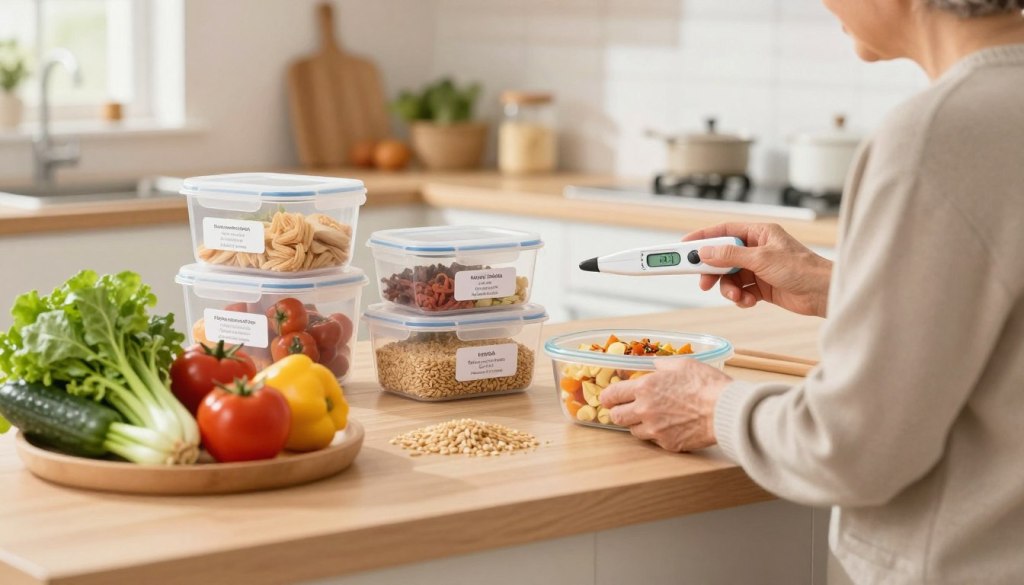
A cozy kitchen scene featuring a well-organized countertop with various fresh ingredients like vegetables, fruits, and grains neatly arranged. In the foreground, a pair of hands in modest casual clothing, perhaps a senior adult, are checking the temperature of a dish with a food thermometer. In the middle, there are food storage containers labeled with tags, showing clear organization and safety tips. The background reveals a clean and bright kitchen, with soft natural lighting coming through a window, creating a welcoming atmosphere. The mood should feel reassuring and informative, highlighting the importance of food safety and proper storage for older adults, with a focus on practicality and ease.

Labeling, storage, and when to toss

Store foods in airtight, food-safe containers. Label with contents and the preparation date. That helps on busy days.

If something smells off, looks discolored, or shows mold—discard it. No second-guessing.

“Safe systems make kitchen work feel less scary and more steady.”

These steps are small acts of care. For more evidence-based guidance, see food safety tips for older adults.

Conclusion

Simple systems cut decision fatigue and keep nutrition steady day to day.

Recap: a little prep creates steady meals, less stress, and more confidence for your loved one.

Follow the core steps: assess needs → plan simply → shop smart → set up labels and containers → cook safely → keep easy options ready. These small actions support balanced, nutrient-dense eating, portion control, and less waste.

What matters most: regular protein, plenty of fruits and vegetables, steady hydration, and lower-sodium choices that still taste good. Variety is easy with a few rotating ingredients and repeatable builds.

You can start this week: pick one prep day and make 2 breakfasts, 2 lunches, and 2 dinners. Be kind to yourself—you’re doing this because you care.

Need ongoing support? JoyCalls offers daily check-in calls, caregiver summaries, and alerts. Learn how a simple routine pairs with social support like a weekly social routine.

Sign up: https://app.joycalls.ai/signup or talk to Joy now at 1-415-569-2439.

FAQ

What is a simple, realistic weekly planning cadence for busy caregivers?

Aim for one 60–90 minute planning session each week and two short 15–20 minute prep sessions. Use the longer session to pick recipes, make a grocery list, and batch-cook proteins or grains. Use the shorter sessions midweek to refresh salads, steam vegetables, or portion snacks. This keeps things manageable and reduces last-minute decisions. ✅

How do I balance nutrition for someone with heart concerns or high blood pressure?

Focus on whole grains, lean proteins like chicken and fish, plenty of vegetables, fresh fruit, and healthy fats such as olive oil and avocado. Limit added salt and use herbs, lemon, and garlic for flavor. Choose low-sodium canned goods when needed. Small, steady changes support heart health and steady energy throughout the day.

What should I check before starting to prepare meals for an older adult?

Review medical needs (diabetes, kidney health, heart disease), any medications that affect appetite, and dietary restrictions or allergies. Note chewing or swallowing difficulties and adjust textures—mash, chop, or puree as needed. Label foods clearly with ingredients and dates to avoid confusion.

How can I make breakfasts that are nutritious and ready-to-eat?

Prepare overnight oats with fruit and yogurt, crustless egg muffins with vegetables, or portioned Greek yogurt cups topped with nuts and berries. These options provide protein and whole grains, are easy to reheat or serve cold, and keep well for several days.

What are easy, senior-friendly lunch and dinner ideas that require minimal chewing?

Try shreddable rotisserie chicken over soft whole-grain rice, baked fish with steamed carrots and mashed potatoes, or a hearty vegetable and lentil soup. One-pot casseroles with tender vegetables and small pasta are gentle on chewing and simple to reheat.

How do I prevent food waste while planning portions and shopping?

Shop with a meal plan and a grocery list. Buy portion-sized packages or freeze extras in meal-sized portions. Use pre-cut or frozen produce when fresh options might spoil. Label and date containers so older items get used first.

Which kitchen tools make preparation safer and faster for seniors?

Keep these on hand: a good nonstick skillet, slow cooker or Instant Pot, sharp safe-handled knives, a food thermometer, and easy-open containers. Use jar openers and lightweight cookware to reduce strain. These reduce time at the stove and lower risk.

What are best practices for food safety when preparing meals in advance?

Wash hands and surfaces often. Use separate cutting boards for raw meat and produce. Cook to safe temperatures (use a thermometer). Cool foods quickly—shallow containers work best—and refrigerate within two hours. Toss anything with odd smell, color, or texture.

How can I include snacks that help maintain energy and blood sugar stability?

Choose small combinations of protein and carbohydrate: apple slices with peanut butter, cottage cheese with fruit, or whole-grain crackers with cheese. These mini-meals prevent long gaps and help steady blood sugar for older adults with diabetes or low appetite.

How should I label containers so caregivers and older adults can easily identify contents?

Write the date, main ingredients, and reheating instructions on each container. Use large, clear labels or color-coded lids (green for vegetables, blue for proteins). Keep a simple checklist on the fridge showing what’s inside and when to eat it.

What adjustments help when someone has chewing or swallowing difficulties?

Soften foods by steaming, braising, or mashing. Chop finely or blend into smoothies and purees. Stick to moist foods and avoid dry, crumbly textures. Consult a speech-language pathologist for specific texture recommendations if dysphagia is suspected.

Can frozen fruits and vegetables be as nutritious as fresh options?

Yes. Frozen produce is often picked and frozen at peak ripeness, which preserves nutrients. They’re also convenient—pre-cut and ready to cook—helping reduce prep time and waste while keeping a variety of colors and vitamins in the diet.

How do I manage dietary restrictions like food allergies or vegetarian preferences?

Build the weekly plan around safe staples. Substitute proteins (tofu, beans, lentils) for meat when needed and clearly label allergen-free dishes. Keep separate prep areas or thoroughly clean tools between tasks to avoid cross-contact.

What are quick one-pan or one-pot recipes that minimize cleanup?

Sheet-pan chicken with root vegetables, one-pot lentil stew, or a rice-and-vegetable skillet with flaked fish are good examples. They combine protein, grains, and vegetables in one dish, cut cooking time, and reduce dishes to wash.

How can JoyCalls help with meal routines and daily check-ins?

JoyCalls offers friendly daily check-in calls that remind older adults about mealtimes, hydration, and medication. Caregivers get summaries and alerts if something seems off, giving peace of mind and gentle support to keep loved ones on track. ❤️

Other Articles related to this article:

Medication Adherence Tips From Pharmacists (Simple, Proven)
Medication Reminders for Diabetes, BP, and Heart Meds (Systems That Stick)
Remote Medication Monitoring for Elderly Parents (What’s Realistic)
Medication Errors at Home: The Most Common Mistakes (And Fixes)
Side Effects vs Nonadherence: What Caregivers Should Watch For
The Best Time to Take Meds: Building a Habit Around Meals
Automatic Pill Dispensers: Do They Really Improve Adherence?
Medication Refills: Simple System to Never Run Out
How to Talk to a Stubborn Parent About Taking Meds
Polypharmacy in Seniors: Managing Too Many Meds Safely
Medication Reminders for Vision or Hearing Problems (Easy Fixes)
Medication Adherence for Dementia: Routines That Reduce Stress
Blister Packs and Bubble Packs: Are They Worth It for Seniors?
Pharmacy Sync: How to Align Refills on the Same Day
How to Keep an Updated Medication List (Template + Tips)
Text Message Medication Reminders for Seniors (Pros and Cons)
AI Medication Reminders: What They Can and Can’t Do
Medication Adherence for Seniors: Why Doses Get Missed
Post-Hospital Medication Plan: Avoiding Confusion After Discharge
Best Medication Reminder Methods (No Smartphone Needed)
Phone Call Medication Reminders: Do They Work Better Than Apps?
Pill Organizer 101: How to Choose the Right One for Seniors
Medication Management for Seniors Living Alone (Safety Plan)
Weekly Pill Planner Setup (Step-by-Step, 10 Minutes)
Daily Check-In Routine for Seniors Who Hate Being Checked On
How to Create a Medication Schedule That Actually Works
Medication Adherence Checklist for Caregivers (Fully Explained + Printable)
What to Do When Your Parent Says “I Already Took The Medicine”
How to Prevent Double Dosing in Seniors
Medication Reminder Apps for Seniors: What’s Actually Easy
How to Help Elderly Parents Remember Their Meds (Simple System)
Daily Check-In Routine for Seniors With Hearing Issues (Make It Easier)
Weekly Review: How to Spot Patterns From Daily Check-Ins
How to Start a Daily Check-In Routine in One Day (Fast Setup)
Daily Phone Check-In Services for Seniors: What to Look For
AI Check-In Calls for Seniors: How They Work (And What They Don’t Do)
The Best Daily Check-In Apps and Tools (And Simple No-App Options)
Daily Check-In Routine That Builds Real Connection (Not Just Monitoring)
How to Share Daily Caregiving Updates With Siblings (Without Miscommunication or Drama)
How to Set Boundaries With Daily Check-Ins (So It Doesn’t Take Over Your Life)
Daily Mood Check-Ins for Seniors: What to Watch For
Daily Check-In Routine After Hospital Discharge (First 14 Days)
How Often Should You Check In on Elderly Parents?
Daily Check-In Routine for Meals and Hydration (Quick Method)
Daily Check-In Routine for Seniors Living Alone (Safety + Connection)
How to Track Daily Check-Ins Without Feeling Like a Spreadsheet
Daily Check-In Routine for Medication Adherence (Without Nagging)
How to Build a Check-In Routine That Seniors Won’t Resist
Caregiver Check-In Schedule Template (Daily + Weekly)
Daily Check-In Routine for Elderly Parents (Simple Plan)
The 2-Minute Daily Check-In Script (No Awkward Talk)
The “No Answer” Escalation Plan for Daily Check-Ins
Daily Check-In Routine for Chronic Conditions (BP, Diabetes, COPD)
Daily Check-In Routine for Fall Risk (What to Ask Daily)
Daily Wellness Check Calls: What to Ask (7 Questions)
Daily Check-In Routine for Long-Distance Caregivers
What to Do If Your Parent Misses a Check-In (Step-by-Step)
Daily Check-In Routine for Dementia: Simple, Calm, Consistent
Daily Check-In Text vs Phone Call: Which Is Better for Seniors?
Morning vs Evening Check-Ins: What Works Best for Seniors
Caregiver Guilt: When You Can’t Be There to Keep Them Company
Senior Loneliness and Anxiety: Why They Feed Each Other
Does an AI Companion Help Senior Loneliness? What to Expect
How to Build a “Circle of Care” to Reduce Isolation (Neighbors, Friends, Family)
Volunteering for Seniors: The Best Way to Feel Connected Again
Loneliness in Men vs Women After 65: What Changes?
Senior Centers vs Community Groups: What Works Better for Loneliness?
“No One Needs Me”: How Purpose Reduces Loneliness in Aging
How to Make Phone Calls Feel Less “Check-In” and More Like Real Connection
Loneliness in Assisted Living: Why It Still Happens and What Helps
Loneliness or Depression? How to Spot the Difference in Older Adults
The Health Risks of Loneliness in Seniors (Heart, Brain, Immunity)
Loneliness in Older Adults: Signs, Causes, and What Helps
Loneliness in Seniors Without Smartphones: Low-Tech Ways to Stay Connected
Best Hobbies for Lonely Seniors (Easy to Start, Low Energy)
Social Isolation vs Loneliness: What’s the Difference in Seniors?
Retirement Loneliness: Why It Happens and How to Fix It
How to Help Seniors Make Friends After 60 (Practical Steps)
How to Create a Weekly Social Routine for an Elderly Parent
After a Spouse Dies: Loneliness in Widowhood (What Actually Helps)
How to Tell If Your Aging Parent Is Lonely (Even If They Say They’re Fine)
The “Quiet Withdrawal” Problem: When Seniors Stop Calling Back
How Often Should You Talk to Your Elderly Parents to Prevent Loneliness?
How to Help a Parent Who Refuses Social Activities
How to Help a Lonely Elderly Parent When You Live Far Away
Social Isolation in Seniors Living Alone: A Safety + Loneliness Plan
Senior Loneliness at Night: Why Evenings Feel Worse
Daily Check-In Calls for Seniors: Do They Reduce Loneliness?
Conversation Ideas for Seniors Who Feel Lonely (No Awkward Small Talk)
Loneliness and Dementia: Does Being Alone Speed Up Memory Loss?
Best Low-Tech Safety Devices for Seniors Living Alone
Home Safety Setup for Long-Distance Caregiving (Room-by-Room)
How to Track Meals and Hydration From Another City
Caregiver Guilt When You Live Far Away (How to Cope)
Smartwatch vs Phone Check-Ins: What Works Better for Seniors?
Scams Targeting Seniors: How to Protect Parents Remotely
When It’s Time for Assisted Living (Long-Distance Decision Guide)
How to Choose a Paid Caregiver When You Live Far Away
Weekly Care Plan Template for Aging Parents
Fall Risk: How to Reduce It When You’re Not There