

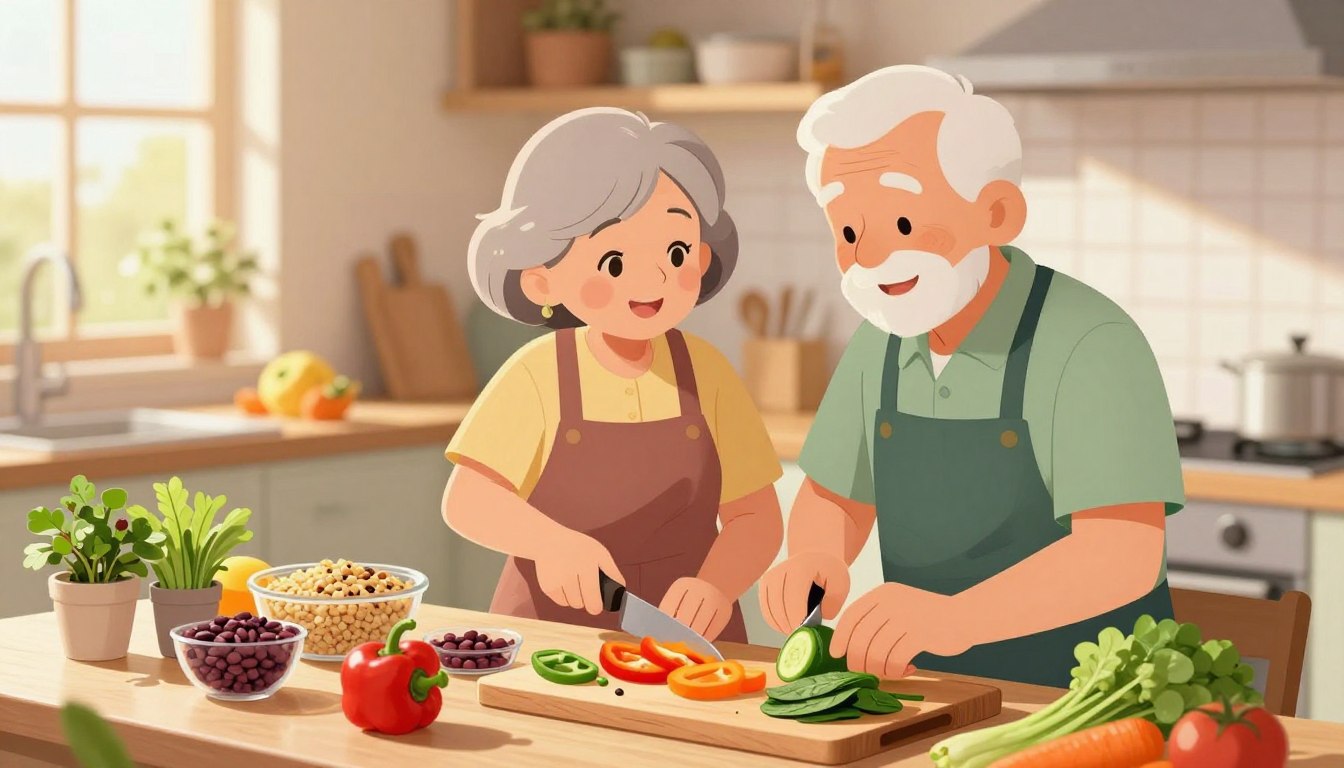
Eating well on a small budget is less about finding cheaper groceries and more about making sure the groceries turn into actual meals. A parent can have oats, eggs, beans, rice, frozen vegetables and yogurt in the kitchen and still skip lunch, because appetite, energy, taste and hands all change with age. This guide covers the staples worth keeping on hand and the simple systems — a daily baseline, two-step meals, a no-cook shelf — that turn them into food someone actually eats.

Start with a “minimum good day”
A budget food plan gets much easier when there is a simple daily floor. Not a diet — a baseline that keeps a low-energy day from sliding into tea, toast and crackers.
- One protein food at the first meal of the day
- One fruit or vegetable by midday
- One full balanced meal at some point
- One easy snack that needs no cooking
- Several drinks, placed where they are easy to see
A minimum good day might be oatmeal with milk and banana for breakfast, egg salad on whole grain toast for lunch, yogurt or peanut butter toast as a snack, and rice, beans, frozen vegetables and salsa for dinner, with water, milk or tea through the day. Nothing fancy, but it covers protein, fiber, calories and fluids.
Write the baseline on a card and put it on the refrigerator. Wording matters — “a simple food day that keeps me steady” lands better than something that reads like an inspection sheet. If a parent pushes back on any talk about food, it may help to read how to get an elderly parent to eat more without pressure first.
Check with a clinician when there are special restrictions such as kidney disease, diabetes, or swallowing problems.
Cheap protein staples that make meals satisfying
Appetite often shrinks with age, so each bite has to carry more. Protein at most meals helps preserve muscle and keeps energy steady, and the cheapest sources are usually the easiest ones.
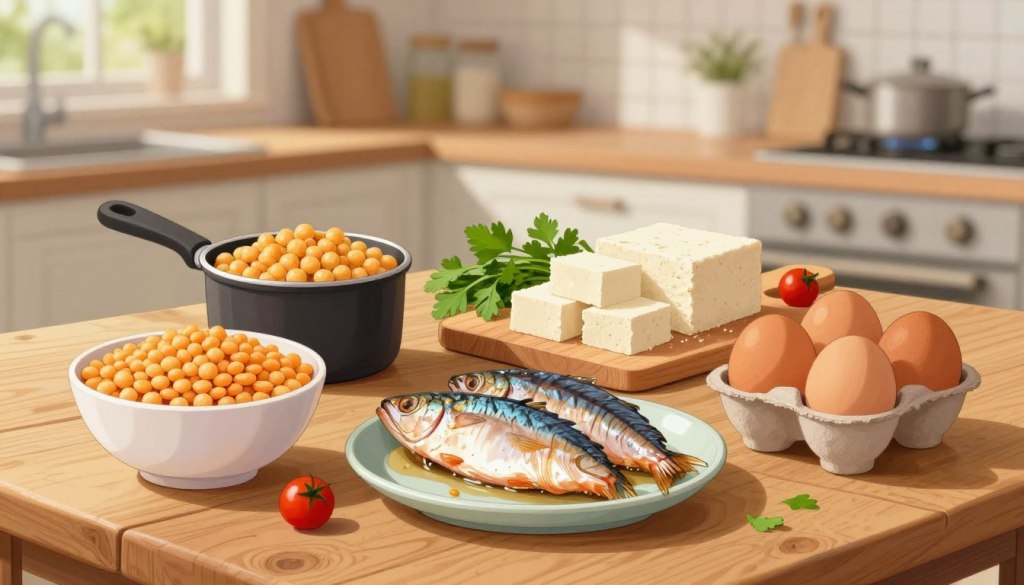
- Eggs. Scrambled with spinach, a quick omelet, or egg on toast. Breakfast-for-dinner works when motivation is low.
- Chicken thighs and drumsticks. Forgiving to cook and often cheaper than breasts. A rotisserie chicken stretches across tacos, soup, salad and sandwiches for three or four meals.
- Ground turkey and canned fish. Turkey works in sauces and bowls; canned tuna, mackerel or sardines are pantry-friendly when salmon feels pricey.
- Beans and lentils. Fiber plus protein. Dried is cheap, canned is quick — drain and rinse canned beans to cut sodium.
- Yogurt. Plain or vanilla tubs cost less per serving than single cups. Pair with banana, oats or frozen berries.
Keep a few of these visible and easy to reach. Single-serve packs, labeled tubs and pull-tab cans remove the small frictions that turn into a skipped meal.
Vegetables, fruit and grains that stretch the money
Frozen produce often matches fresh in nutrition, lasts far longer, and comes already washed and chopped. Keep two or three bags of frozen broccoli, spinach or a mixed blend in rotation so a stir-in is always ready. Frozen berries brighten oatmeal; canned fruit packed in juice, drained, works in yogurt.
For fresh, cabbage, carrots, apples and bananas store well and stretch across days. Pre-cut slaw mixes, baby carrots and steam-in-bag vegetables are worth the small premium when chopping is hard or when whole heads keep going to waste.
On the grain side, cook once and reuse: a big pot of brown rice or a tray of roasted potatoes covers several meals, and marinara, salsa or canned tomatoes change the flavor fast. Barley and bulgur are cheaper alternatives to quinoa and do well in soup.
| Grain | Best use | Texture | Quick pairing |
|---|---|---|---|
| Oats | Breakfast, overnight oats | Soft | Banana, raisins, cinnamon |
| Brown rice | Bowls, reheats well | Slightly chewy | Leftover protein, salsa |
| Barley or bulgur | Soup, grain bowls | Hearty, soft when cooked | Broth, canned tomatoes |
Flavor and nutrition boosters that make small meals count
When taste fades, people eat less, so flavor is part of the nutrition plan. One bottle of olive oil covers dressings, light sautéing and finishing; canola or vegetable oil handles high heat. Onions and canned tomatoes turn plain ingredients into something comforting, and a starter spice rack of Italian blend, garlic powder, chili powder, cinnamon and black pepper does most of the work. A simple dressing is three parts oil to one part vinegar or lemon with a pinch of salt and dried herbs.
If a parent leans on the salt shaker, try onion, garlic, herbs, citrus and salsa first — they lift a plate without raising sodium. Lower-sodium canned goods and marinara help too, and a salty sauce can be diluted with extra vegetables or a splash of water. There are more ideas in this guide to low-salt meals that still taste good.
When portions are small, add-ins matter more than portion size. Cheap boosters that raise protein, calories or healthy fat without making the plate look bigger:
- Powdered milk stirred into oatmeal, soup, mashed potatoes or sauces
- Peanut butter on toast, in smoothies or stirred into oatmeal
- Olive oil over vegetables, pasta, soup or rice
- An egg added to rice, noodles or soft vegetables
- Beans mashed into soups, wraps or spreads
- A little shredded cheese for flavor and calories
A small bowl of soup on its own may not be much. With lentils, vegetables, a swirl of olive oil and a piece of toast, it becomes a real meal. That is a better answer to “I’m just not hungry” than arguing about portions.
Two-step meals and a no-cook shelf for hard days
The two-step rule
A two-step meal takes exactly two actions. On days when the stove feels like a mountain, that is the difference between eating and not eating.
- Microwave a frozen vegetable blend, add canned tuna
- Heat canned soup, stir in rinsed beans
- Toast bread, add egg or peanut butter
- Microwave rice, add beans and salsa
- Heat a frozen entrée, add fruit or yogurt
- Heat leftover chicken, add bagged salad or microwaved vegetables
It also tells you what to buy. Stock foods that become meals in two moves rather than ingredients that need chopping, simmering and cleanup. A note on the fridge can carry the whole idea: “When tired, choose one protein and one easy side” — egg and toast, tuna and crackers, beans and rice, yogurt and banana, chicken and frozen vegetables, soup and bread.
The no-cook shelf
Keep one basket or shelf of food that needs no cooking at all — for days when a caregiver cannot visit, transportation falls through, or appetite is low. Good candidates: low-sodium canned tuna, salmon, chicken or beans; whole grain crackers; peanut butter; shelf-stable milk; unsweetened applesauce cups; canned fruit in juice; instant oatmeal packets; low-sodium soups; microwave rice pouches; raisins or prunes; nuts if chewing is safe.
If cans are hard to open, choose pull-tabs, pouches, or a large-grip can opener. Label the basket “Easy Meals.” The point is to prevent the “there’s nothing to eat” feeling on a day when there is, in fact, plenty of food.
Make food easy to chew — and easy to find
Cheap healthy food only helps if it can be eaten comfortably. Rather than dropping foods that are hard, dry or crunchy, change the texture: cook vegetables until soft; use soups, stews and casseroles instead of dry plates; choose canned fruit in juice over hard raw fruit; mash beans into spreads; moisten dry foods with yogurt, sauce or broth; scramble eggs soft; shred chicken finely and mix it into sauce or soup. A plain chicken breast may sit untouched while the same chicken in soup disappears.
If coughing, choking, pocketing food in the cheeks or repeated throat clearing happens at meals, have it evaluated by a healthcare professional. Swallowing problems need proper guidance, not a workaround.
Waste is the other hidden cost. Put a clear bin at eye level in the refrigerator, label it “Eat These First,” and keep the most perishable things in it: cut fruit, cooked chicken, yogurt near its date, washed greens, leftover soup, boiled eggs, half-used beans, cooked rice. Add a date in large, dark writing — “good until Thursday.” Instead of opening the fridge to clutter, there is one clear place to start. Memory changes make this more useful still; see why seniors forget meals and what fixes it.
A weekly check-in beats daily nagging
“What did you eat?” asked every day feels like pressure, and usually earns “I had something.” Once a week, ask specific questions instead — and treat the answers as a shopping list, not a report card.
- What meals felt easiest this week?
- What food went to waste?
- What was hard to chew or prepare?
- Which snacks did you actually enjoy?
- Did you run out of anything important?
- Were there days you skipped lunch or dinner?
If yogurt always gets eaten, buy more. If salad always spoils, switch to frozen vegetables or cooked cabbage. If breakfast is skipped, set up a no-cook breakfast station. Between check-ins, watch for looser clothing, repeated fatigue, dizziness, unopened groceries, spoiled food, empty snack packages with few real meals, or a diet narrowing to toast and crackers. One sign on its own means little; a pattern is worth a call to a doctor, dietitian, dentist or pharmacist. A simple caregiver check-in schedule makes it easier to notice patterns without hovering.
Some weeks will bring home-cooked soup and fresh fruit; others will run on frozen meals, yogurt, canned beans and rotisserie chicken. That is not failure, it is flexibility. The goal was never a perfect menu — only to make the next good choice easier.
Try JoyCalls Free
No app or new device needed. Start with a free 7-day trial.
If it would help to have someone check in about meals with your parent every day, JoyCalls makes a friendly phone call at the times you choose and sends you a short summary afterward. Learn how JoyCalls works or call 1-415-569-2439 to hear a sample call.

Ana Avila is a writer who covers the everyday challenges of supporting older adults: staying connected, checking in regularly, remembering medications, maintaining routines, and helping family caregivers stay informed without feeling overwhelmed.
Her work for the JoyCalls blog focuses on the practical side of aging at home and family caregiving. She writes about loneliness and social connection, wellness check-ins, medication reminders, memory support, caregiver stress, aging in place, and the ways AI companions and voice technology can provide consistent support between visits and phone calls. Most of her articles start with a simple question: what is a family caregiver worried about today, and what practical steps can make that situation easier?
Ana writes for people who are busy and often juggling caregiving with work, family, and their own responsibilities. Her guides are designed to be easy to understand, useful right away, and grounded in the realities of caring for an aging parent or loved one. She avoids jargon, explains technology in plain language, and is careful not to oversell what any tool, including AI, can do.
A consistent theme in her writing is that technology should strengthen human connection rather than replace it. The measure of a good system, in her view, is simple: does an older adult feel less alone, does a family member have greater peace of mind, and does a caregiver have more time and energy for the moments that matter most.