


Nearly 70% of adults say old stories make them feel closer to family. That simple fact shows how much small talks can matter.
You’re juggling work, kids, and distance. Yet you want real connection with a loved one. One gentle prompt can open the door to hours of warm memories.
These prompts are everyday, not clinical. They invite a parent or grandparent to tell a tale, laugh, or name a place they once loved. Try one during a visit, a call, or while helping with dinner.
Write down names, places, and funny details. Notes or an audio file, taken with permission, preserve family history over time.
If you can’t call every day, JoyCalls helps. Talk to Joy now: 1-415-569-2439. Sign up for JoyCalls: https://app.joycalls.ai/signup.
Key Takeaways
- Open with one simple prompt to invite a story.
- Keep the tone curious and warm, not testing.
- Record or note details with permission to save memories.
- Use themed prompts during calls, visits, or tasks.
- JoyCalls offers friendly check-ins and caregiver summaries.
How to start meaningful conversations with older adults
A quiet routine can turn an ordinary minute into a warm, memorable exchange. Pick a calm moment like a Saturday coffee, a short evening call, or a slow walk. These familiar settings lower pressure and help adults relax.

Choose a calm, familiar moment that doesn’t feel rushed
Familiar routines feel safe. Folding laundry or a short ride to an appointment gives space to speak. When a loved one feels at ease, stories come naturally.
Use open-ended prompts and practice active listening
Ask open prompts such as, “What was school like for you?” instead of yes/no questions. Keep eye contact in person. On the phone, pause less and listen more. Repeat a detail to show you heard it.
Respect emotions, pauses, and shifting memories
Silence is okay. Pauses mean thinking, not failure. Avoid fact-checking. Acknowledge feelings: “That sounds like it mattered a lot.” If a topic upsets them, offer a break and return later.
- Keep 3–5 prompts ready so you’re calm and prepared.
- Use follow-ups rather than filling every silence.
- Consistent check-ins can reveal changes in mood or health without feeling clinical.
“Some memories arrive slowly. The gentlest attention helps them unfold.”
| Calm Moment | What to Do | Why It Helps | Care Tip |
|---|---|---|---|
| Morning coffee | Ask about favorite mornings or routines | Low pressure; familiar | Keep notes of names or places |
| Short phone call | Use open prompts and listen | Comforting routine; stays brief | Have 3 prompts ready |
| Walk or ride | Comment on surroundings to spark memories | Movement reduces formality | Avoid correcting details |
For more starter prompts, see this conversation starter guide and practical tips from JoyCalls.
Benefits of reminiscing questions for seniors and families
Small, shared stories can lift an ordinary afternoon into a bright moment. They help mood, spark gratitude, and make a simple visit feel meaningful.
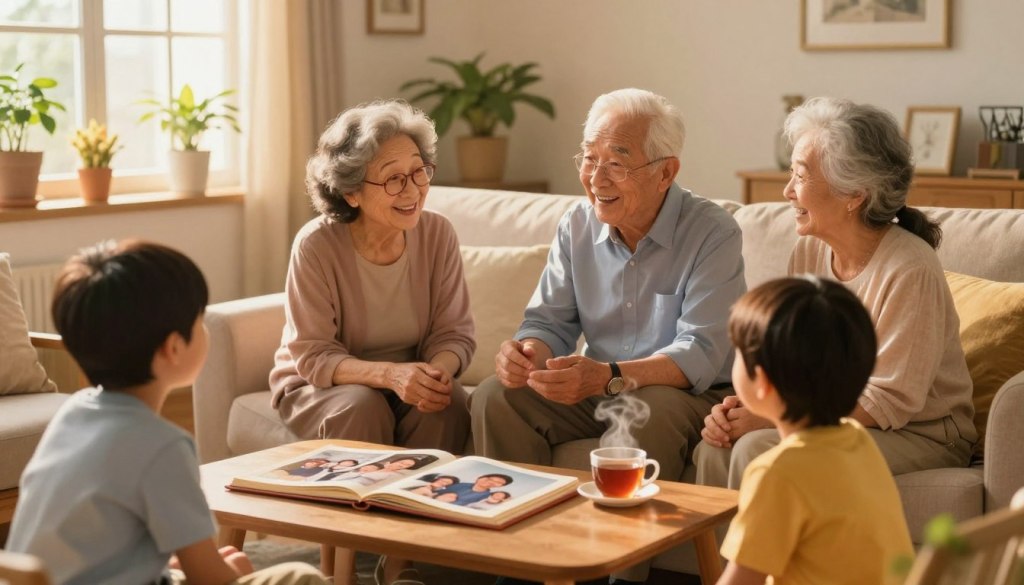
Boost mood, gratitude, and connection with a loved one
Remembering good times often lightens the mood. Recalling a funny day or proud moment can bring comfort during hard weeks. It also builds a gentle connection between you and a loved one.
Support memory and mental engagement through recall
Asking about details invites active thinking. Naming places, dates, and people is a gentle mental workout. That kind of stimulation supports overall health and keeps memory pathways active.
Strengthen family bonds and preserve family history
Stories pass on identity. Kids and grandchildren learn who they are from these tales. Taking notes or a voice memo turns chats into a lasting family keepsake.
- Emotional upside: more gratitude and lighter mood.
- Brain benefit: recall is low-pressure mental exercise.
- Relationship care: small talks deepen bonds and ease caregiver worry.
- Legacy: collect names, places, and traditions to save family history.
“Even short, kind conversations can reduce worry and keep families close.”
| Benefit | What It Helps | Practical Tip |
|---|---|---|
| Mood & gratitude | Improves spirits during stress | Ask about a happy day; smile and listen |
| Cognitive health | Exercises memory and thinking | Use simple prompts; record answers with permission |
| Family bonds | Preserves identity and shared history | Create a shared document or audio file |
Reminiscence questions for seniors to spark stories and laughter
Think of this as a menu: pick a category based on mood—light and funny, or deeper and reflective.
Childhood and growing up
Ask about their home, school days, friends, and hobbies. Try prompts like: “What games did you play after school?” or “Who lived next door?” These open simple, vivid memories.
Family traditions
Invite talk about holidays, recipes, faith, and routines. Start with favorites, then ask who kept each tradition alive. Keep it gentle and curious.
Firsts and favorites
Ask about a first job, favorite movie, or first memory. Suggest a watch-list night using Turner Classic Movies or the Criterion Collection to unlock film and music stories.
Try JoyCalls Free
No app or new device needed. Start with a free 7-day trial.
Big moments
Try “What was your happiest day?” or “What achievement made you proud?” Begin with easy prompts, then follow up: “What happened next?” “Who was there?”
Funny stories
Encourage slang, fashion, and harmless mischief from the past. Laughter makes sharing safe and joyful. If a detail is fuzzy, stay with the feeling rather than correcting facts.
- Caregiver tip: Start with favorites, build trust, then move to turning points.
- Follow-ups: Use gentle prompts to extend a tale into family history and life experiences.

For a broader list of prompts, see reminiscing questions that work well in visits and calls.
Childhood memories and school-day questions that open the door
Start with a simple line that invites a scene. Ask about the house, the street, or a routine that marked daily life. Gentle prompts often unlock warm, vivid stories without pressure.

What do you remember about the place where you grew up?
Ask where their home stood and what the neighborhood smelled or sounded like. Follow up: “Do you still live there or have you visited—how has it changed?”
What was your favorite subject in school—and why?
Subjects reveal what people loved learning and how they spent time. Ask about a favorite teacher or a typical school day. Use yearbooks or a quick story of your own to make it two-way.
What toys, games, or activities did you love most as a child?
Invite sensory recall: smells, textures, and routines. Old photos, a toy, or a song can trigger fuller memories. Try “What did a normal afternoon look like?”
Who were your closest friends, and what did you do for fun?
Names and games often lead to stories about adventures and small rites of passage. If details blur, focus on the feeling and laughter rather than facts.
- Keep the vibe gentle: childhood prompts feel safe and story-rich.
- Use follow-ups: “Who lived nearby?” “What did it smell like?”
- Use photos or yearbooks as memory cues when details are hazy.
- Try then vs. now: ask how home or school changed over time.
- One question per call if your loved one tires; spread prompts across visits.
| Prompt | What to Ask | Why It Helps |
|---|---|---|
| Place where you grew up | Ask about home, neighbors, smells | Triggers vivid sensory memories |
| Favorite school subject | Ask who taught it and why they liked it | Shows interests and early talents |
| Toys & activities | Ask about games, chores, songs | Opens playful, emotional stories |
“Sharing one small memory can turn a short call into a treasured moment.”
Family history questions to capture names, traditions, and legacy

Capture little-known family details now so they don’t slip away later.
Think of this as legacy capture: names, places, and small notes you’ll be grateful to have. Keep it simple. One line after a call can add up fast.
Do you know the origin of our family name or any stories behind it?
Ask about the name, where it came from, or any history tied to it. Try exploring Ancestry or MyHeritage together and let your loved one point to what they recognize.
What are your fondest memories of your parents or grandparents?
Invite short memories and follow with one gentle prompt. Record a quick note on your phone labeled “Family Stories” after each chat.
What traits, values, or traditions have been passed down?
Listen for rituals, recipes, and phrases. Reflect back: “I see that in you when you…” This links past life to present care.
What was family life like when you were raising your children?
Ask about routines, work, and small moments that shaped daily life. Encourage funny or surprising stories about relatives that we should write down.
Are there funny or surprising stories about relatives we should write down?
Nicknames, holiday mishaps, and sweet mishaps make great keepsakes. If a topic feels sensitive, let them lead and return later.
- ✓ Keep a phone note called “Family Stories” and add one line after each call.
- ✓ Treat genealogy as a shared project using Ancestry or MyHeritage.
- ✓ Honor boundaries and follow the tone your loved one sets.
Tip: If a check-in is missed, see the missed check-in guide to stay calm and keep the conversation consistent.
Love, relationships, and life together questions seniors enjoy answering
Love stories and partnership memories often open the softest, most sparkling chats. Start gentle. Let the tale lead.

How did you meet your spouse or partner, and what was your wedding like?
Ask, “Was it love at first sight or did it take time?” Invite small details: the song, the dress, who laughed the most. These moments bring warmth and a sense of shared history.
Who were your mentors, and how did they shape your life?
Prompt about teachers, bosses, or neighbors who mattered. Ask who influenced choices and why. Then share one way their guidance changed you. That reflection makes the memory feel alive.
What did you learn about friendship, marriage, or commitment over time?
Seek practical lessons and short advice you can use today. Try: “What trick helped keep your marriage steady?” or “What would you tell someone starting a long partnership?”
- Set a warm, story-first tone: focus on feelings and scenes.
- Ask for one piece of advice: make it usable now.
- Stay inclusive: honor all kinds of partnerships and single life.
“Tell me one way your life together shaped who you are today.”
For more starter prompts, see an engaging list at engaging caregiver prompts and tips on making calls feel personal from JoyCalls.
Life lessons, wisdom, and reflections on aging in today’s world
Life brings a stack of small lessons that add up to surprising wisdom. These prompts invite stories that show how a person learned, changed, and found what matters now.

What are the most important lessons you’ve learned, and the story behind them?
Ask for one vivid memory that taught a lesson. Gentle follow-ups like “What happened next?” help pull out a scene, not a list.
If you could tell your younger self one thing, what would it be?
This question opens honest advice without pressure. Many answers are practical: patience, saving, or saying yes more often.
What do you like most about getting older or retirement?
Invite light moments—senior discounts, slower mornings, time with friends. Balance the joy with realistic notes about health and routine.
How have you seen technology help—or hurt—society and relationships?
Ask for examples of both. People often note safer connections and also quicker, less-focused conversations.
“One clear story can tell you what care and good living mean today.”
- ✓ Invite story-based wisdom: “What happened that taught you that?”
- ✓ Use photos to support memory care and connection.
- ✓ Listen for values, not just facts—those guide senior living choices.
| Prompt | Why it helps | Care tip |
|---|---|---|
| Tell one lesson from your life | Shows values and key experiences | Note the story in a “Life Lessons” file |
| What makes retirement good? | Reveals needs and joys | Match activities to what they value |
| How did tech change things? | Balances safety vs. attention | Use tools that support simple connection |
How to Turn Reminiscence Questions Into a Meaningful Story-Sharing Routine

Having a good list of reminiscence questions is helpful, but the real value comes from how those questions are used. Older adults do not always want to feel interviewed. They may not want to answer a long list of prompts in one sitting. Some days they may feel cheerful and talkative. Other days they may be tired, quiet, distracted, or emotional.
That is why reminiscence works best when it becomes a gentle routine, not a one-time activity.
A thoughtful routine gives seniors time to settle into the conversation. It helps families avoid rushed, surface-level calls. It also makes storytelling feel natural instead of forced. The goal is not to collect perfect facts or complete a family history project in a week. The goal is to create repeated moments of connection where an older adult feels seen, heard, respected, and valued.
This section will help caregivers, adult children, grandchildren, and companions turn simple reminiscence questions into a practical habit that supports emotional well-being, family bonding, and meaningful daily conversation.
Start With a Small, Predictable Conversation Ritual
The easiest way to make reminiscence feel comfortable is to attach it to a routine that already exists. Seniors often respond well to familiar patterns because they reduce pressure. A question asked during morning tea, an evening phone call, a Sunday visit, or a quiet walk can feel much more natural than sitting someone down and saying, “Tell me about your life.”
Start with one predictable moment each week. It does not need to be long. Even ten minutes can be enough if the conversation is calm and sincere.
For example, you might create a “Sunday story question” with a parent or grandparent. Every Sunday afternoon, you ask one warm question and let the answer unfold. One week it might be about childhood meals. Another week it might be about their first job. Another week it might be about a person who shaped their life.
The consistency matters more than the length. When seniors know there is a regular space for their stories, they may begin to look forward to it. They may also start remembering things between conversations and bring them up later.
A simple ritual could look like this:
Start with a greeting and a check-in. Ask how they are feeling today. Give them time to answer. Then introduce one gentle memory prompt. After they respond, ask one or two follow-up questions. End by thanking them for sharing and, if appropriate, repeating one detail you loved hearing.
That ending is important. A sentence like, “I loved hearing about how your mother made breakfast on Sundays,” shows that you were not just filling silence. You were listening. It also helps the older adult feel that their story matters.
Choose the Right Question for the Senior’s Mood and Energy
Not every reminiscence question fits every moment. A senior who is tired may not want to answer a deep question about regret or grief. A senior who is lonely may respond better to a light, comforting prompt. A senior who is alert and reflective may enjoy a longer conversation about values, family history, or major life decisions.
Before asking a question, take a moment to notice their mood.
If they sound cheerful, you can ask about funny memories, favorite holidays, music, school days, or family celebrations. If they seem quiet or low, choose something soft and safe, such as favorite foods, pets, gardens, neighborhood memories, or childhood games. If they seem mentally sharp and eager to talk, you can ask deeper questions about work, parenting, marriage, resilience, faith, friendship, or life lessons.
A good rule is to begin lighter than you think you need to. Light questions are not shallow. They often open the door to deeper stories naturally. A question about a favorite meal may lead to memories of a mother, a hometown, a festival, a hard season, or a family tradition. A question about a childhood game may lead to stories about siblings, neighbors, school, or community life.
Avoid starting with questions that feel too heavy. For example, “What was the hardest thing you ever went through?” may be meaningful, but it can also feel intense without warning. A gentler version would be, “Who helped you during difficult times?” or “Was there a time when your family had to be especially strong?” These questions still invite depth, but they give the senior more control over how much they want to share.
The best reminiscence conversations respect the person’s emotional weather. Some days are for laughter. Some days are for wisdom. Some days are simply for sitting together and letting a small memory be enough.
Use Follow-Up Questions That Help the Story Come Alive
The first question opens the door. The follow-up questions bring the story into the room.
Many families ask a good opening question but miss the chance to gently expand the memory. For example, if you ask, “What was your first job?” and the senior says, “I worked at a shop,” the conversation can end quickly unless you invite more detail.
Instead of moving to the next question, slow down. Ask about the scene.
You might ask, “What did the shop look like?” or “Who worked there with you?” or “How did you get there each day?” or “What did you do with your first paycheck?” These small follow-ups help the senior move from a short answer into a real story.
Good follow-up questions often begin with what, who, where, how, or tell me more. They do not sound like an interrogation. They sound like interest.
Try these gentle follow-ups:
“What do you remember most clearly about that day?”
“Who else was there?”
“What did the place look like?”
“What did people usually say or do?”
“How did you feel at the time?”
“What happened next?”
“Did that change anything for you?”
“What would you want us to remember about that?”
These questions help seniors share details, emotions, and meaning. They also make the conversation more enjoyable for the listener. Instead of collecting isolated facts, you begin to understand the person’s world.
However, be careful not to push for details when memory feels unclear. If they cannot remember a name, date, or exact place, do not make the conversation feel like a test. You can say, “That’s okay. What do you remember about the feeling of it?” or “Even if the name is fuzzy, the story still matters.”
That kind of response protects dignity. It tells the senior that the value of the memory is not in perfect accuracy. The value is in being shared.
Create a Comfortable Environment for Storytelling

The setting can shape the quality of the conversation. A noisy room, a rushed phone call, or too many people talking at once can make it harder for older adults to focus. A calm setting makes reminiscence easier and more enjoyable.
Choose a place with limited distractions. Turn down the television. Reduce background noise. Sit where the senior can see your face clearly. If the person has hearing difficulty, speak slowly and clearly without shouting. If the conversation is by phone, avoid multitasking while listening. Seniors can often sense when someone is only half-present.
Comfort also includes timing. Some older adults are more alert in the morning. Others prefer afternoon or early evening. Try to notice when your loved one seems most relaxed and responsive. That may become the best time for memory-based conversations.
Physical items can also make storytelling easier. A photo album, recipe card, old letter, piece of jewelry, music playlist, holiday decoration, or familiar household object can act as a memory cue. These items give the senior something concrete to respond to. Instead of asking from nowhere, you can say, “I found this photo and wondered what you remember about that day.”
Music can be especially powerful. A song from young adulthood, a wedding song, a devotional song, or a tune from a favorite movie can bring back memories that ordinary questions may not reach. Food can do the same. A familiar smell or taste may lead to stories about kitchens, festivals, markets, family gatherings, or childhood homes.
The key is to keep the environment supportive, not overstimulating. One photo is better than a whole box of unsorted pictures. One song is better than a loud playlist. One warm prompt is better than twenty questions.
Turn Stories Into Keepsakes Without Making It Feel Formal
Many families want to preserve a senior’s memories, but they hesitate because it feels like a big project. They imagine needing professional recording equipment, a genealogy system, or hours of organized interviews. In reality, preserving stories can be simple.
After each conversation, save one small detail.
It might be a name, a place, a recipe, a phrase, a lesson, or a funny moment. You can keep these notes in a phone document, notebook, shared family file, or printed memory journal. Over time, these small notes become a meaningful family record.
Do not write everything down while the person is speaking if it makes the conversation feel formal. Instead, listen fully first. Then, after the call or visit, take two minutes to record the highlights.
A simple format works well:
Date of conversation
Question asked
People mentioned
Places mentioned
Favorite quote or detail
Follow-up question for next time
For example, after asking about school days, your note might say:
“Grandma remembered walking to school with her brother Ravi. She said the road was dusty in summer and muddy during rains. Her favorite teacher was Mrs. Thomas. Follow up next time: ask about school lunch and childhood friends.”
This approach gives you a path for the next conversation. It also shows the senior that their memories are being cared for.
If you want to record audio or video, ask permission first. Some seniors love the idea. Others may feel self-conscious. Respect their preference. You can say, “Would it be okay if I recorded this story so the family can remember it in your own voice?” If they say no, accept that warmly and continue the conversation without pressure.
The purpose is not documentation at any cost. The purpose is connection. The keepsake is a bonus.
Involve Grandchildren and Younger Family Members Thoughtfully
Reminiscence questions can be a beautiful bridge between generations. Children and teenagers often learn family history in a much more powerful way when they hear it directly from an older adult. At the same time, younger family members may need guidance so the conversation does not become awkward or rushed.
Before a visit or call, help children prepare one or two simple questions. Give them prompts that are easy and vivid, such as:
“What games did you play when you were my age?”
“What sweets or snacks did you love as a child?”
“What was your school like?”
“What did you do for fun without phones or the internet?”
“What is one rule your parents had that you still remember?”
These questions often lead to laughter because they show children how different daily life used to be.
Encourage younger family members to listen without interrupting. They do not need to understand every historical detail. They just need to show curiosity. A grandchild can say, “What happened next?” or “That sounds so different from today.” Small responses like these can make an older adult feel appreciated.
You can also create small family activities around the stories. A grandchild might draw a picture of the senior’s childhood home based on the description. A teenager might help create a digital family timeline. A family member who enjoys cooking might recreate an old recipe. Someone else might label photos or organize names into a family tree.
These activities turn memories into shared experiences. They also help seniors feel that their stories are not disappearing. Their lives become part of the family’s living identity.
Be Sensitive With Painful Memories and Changing Family Histories

Not all memories are happy. Reminiscence can bring up grief, loss, regret, family conflict, migration, illness, financial hardship, or trauma. This does not mean the conversation has failed. It means memory is complex.
When a painful memory appears, the most helpful response is usually not to fix it. It is to acknowledge it.
You can say, “That sounds very hard,” or “I’m sorry you had to go through that,” or “Thank you for trusting me with that memory.” These responses are simple, but they carry respect.
Avoid correcting, debating, or minimizing. Do not say, “But everything turned out fine,” or “You should not think about that now,” or “Are you sure it happened that way?” Those responses can make a senior feel dismissed. Even if details are incomplete, the emotion is real.
It is also wise to avoid pushing for painful details. If the senior wants to continue, listen gently. If they become distressed, offer a pause. You might say, “Would you like to keep talking about this, or shall we move to a lighter memory?” Giving choice restores a sense of control.
Family history can also be sensitive. Stories may reveal disagreements, secrets, disappointments, or different versions of events. Treat these carefully. A reminiscence conversation is not the time to investigate, challenge, or settle old family debates. It is a time to understand the senior’s perspective.
If a story involves another family member, be respectful about how it is shared. Some memories are meant to be private. Ask before passing along sensitive stories to others.
Adapt Questions for Seniors With Memory Changes
For seniors living with memory loss or cognitive changes, reminiscence questions can still be valuable, but they may need to be simpler and more sensory. The aim should never be to test memory. The aim is comfort, recognition, and emotional connection.
Instead of asking, “What year did you move into your first home?” try, “Did you like the home where you lived when you were younger?” Instead of asking, “Who attended your wedding?” try, “Do you remember the music or food at weddings back then?” Instead of asking, “What was the name of your best friend?” try, “Did you have a friend you enjoyed spending time with?”
Use prompts that allow success even when details are unclear.
Photos, music, familiar sayings, religious verses, old recipes, fabrics, flowers, and household objects can help. You might hold up a photo and say, “This looks like a happy day,” instead of asking, “Do you remember when this was taken?” That small shift removes pressure.
If the person repeats a story, listen with patience. Repetition may mean the memory is meaningful, comforting, or emotionally important. You do not need to say, “You already told me that.” Instead, you can respond to the feeling: “You always smile when you talk about that,” or “That sounds like it was a special time.”
If the senior gives an answer that seems inaccurate, avoid correcting unless safety is involved. If they say a childhood home was in one town when you believe it was another, let the conversation continue. The emotional connection matters more than the exact fact in that moment.
Shorter sessions may work better. One question, one photo, or one song may be enough. End while the senior is still comfortable rather than waiting until they are tired.
Use Reminiscence to Notice Needs Without Making the Senior Feel Monitored
Reminiscence conversations can also help families understand what matters to an older adult today. Stories often reveal preferences, fears, values, and unmet needs.
For example, a senior who often talks about gardening may be missing time outdoors. Someone who remembers cooking for large family gatherings may be feeling less useful in daily life. A person who repeatedly mentions old friends may be craving social connection. A senior who talks about independence, work, or providing for others may be struggling with the loss of control that can come with aging.
Listen for these clues gently. Do not turn every story into a care assessment. But after the conversation, ask yourself what the story might be telling you.
If your father lights up when he talks about music, could you add a weekly music call or playlist? If your grandmother keeps mentioning a childhood recipe, could the family cook it with her? If your loved one talks about old neighbors, could you help them reconnect with a friend or write a letter? If they speak proudly about a skill, could you ask them to teach it to someone younger?
This is where reminiscence becomes practical care. It helps families move beyond basic check-ins like “Did you eat?” or “Did you take your medicine?” Those questions matter, but seniors also need identity, purpose, and joy. Stories reveal what kind of connection feels meaningful to them.
The best caregiving does not only protect the body. It honors the person.
Build a Simple Monthly Reminiscence Plan
If you want to make reminiscence easier, create a monthly rhythm. This prevents you from running out of ideas and helps conversations feel varied.
You can organize each week around a theme.
Week one can focus on childhood and home. Ask about neighborhoods, school, siblings, games, or early routines.
Week two can focus on family traditions. Ask about holidays, food, faith, weddings, festivals, birthdays, or family sayings.
Week three can focus on work, skills, and daily life. Ask about first jobs, lessons learned, proud achievements, money habits, travel, or household responsibilities.
Week four can focus on wisdom and legacy. Ask about values, advice, turning points, gratitude, resilience, or hopes for younger generations.
This kind of plan is simple enough to continue but structured enough to be useful. It also helps different family members participate. One person can call about childhood memories. Another can ask about recipes. Another can collect life advice. Over time, the family builds a fuller picture of the senior’s life.
Here is a practical example:
First Sunday: “What was your home like when you were growing up?”
Second Sunday: “What family meal do you remember most?”
Third Sunday: “What was one job or responsibility that taught you something?”
Fourth Sunday: “What is one lesson you hope our family remembers?”
Each conversation can be short. The power is in returning regularly.
End Every Story With Appreciation
The way a reminiscence conversation ends can shape how the senior feels afterward. A rushed ending may make the story feel unimportant. A warm ending can leave them feeling valued.
End by thanking them specifically. Instead of saying only, “Thanks for sharing,” mention a detail.
“I loved hearing about the mango tree outside your childhood home.”
“I never knew your first boss encouraged you like that.”
“That story about your sister made me smile.”
“I’m going to remember what you said about patience.”
Specific appreciation tells the senior that their words landed. It also encourages future sharing.
You can also ask a gentle closing question: “Would you like to talk about this again next time?” or “Is there another story this reminds you of?” If they are tired, simply close with warmth.
The most meaningful reminiscence conversations do not have to be dramatic. They do not need perfect questions or perfect memories. They need patience, respect, and consistency.
One thoughtful question can bring back a room, a person, a song, a meal, a street, a lesson, or a laugh. Over time, those moments become more than conversation. They become a record of love, identity, and belonging.
For seniors, that can be deeply affirming. For families, it can become one of the most precious ways to stay close.
Reminiscence Questions by Purpose: What to Ask When You Want Comfort, Joy, Connection, or Wisdom
Not every reminiscence question serves the same purpose. Some questions are light and playful. Some help seniors feel proud of what they have lived through. Some bring comfort during lonely moments. Others help families understand a loved one’s values, personality, and life story on a deeper level.
This is important because older adults are not all in the same emotional place. One senior may enjoy telling funny stories from childhood. Another may want to talk about marriage, work, sacrifice, or faith. Someone who feels lonely may need questions that remind them they are still loved and remembered. Someone who is nearing the later stages of life may find meaning in questions about legacy, gratitude, and what they want younger generations to know.
Instead of using reminiscence questions randomly, families and caregivers can choose questions based on the kind of emotional support they want to offer. This makes conversations more thoughtful and more helpful.
Below are different types of reminiscence questions and how to use them in a caring, respectful way.
Questions That Bring Comfort on Difficult Days
Some days are emotionally heavy for seniors. They may be missing a spouse, feeling physically weak, thinking about friends who have passed away, or simply feeling disconnected from the pace of modern life. On such days, it is usually better to avoid intense questions that ask them to analyze their whole life. Instead, choose questions that feel familiar, warm, and safe.
Comfort-based questions should bring the senior back to memories that feel steady and soothing. These may include memories of home, food, family routines, nature, music, prayer, pets, or people who made them feel loved.
You can ask:
“What is one place from your past that always felt peaceful to you?”
“Was there a room in your childhood home where everyone liked to gather?”
“What meal always made you feel cared for?”
“Did someone in your family have a way of comforting others?”
“What songs, prayers, or sayings helped people during hard times?”
“Was there a garden, tree, courtyard, street, or view that you remember fondly?”
“Who made you feel safe when you were young?”
“What small daily habit used to make life feel good?”
These questions are gentle because they do not demand a perfect timeline. They invite the senior to rest in a memory.
When using comfort questions, listen for emotional cues. If the senior becomes teary, do not panic or immediately change the subject. Tears do not always mean harm. Sometimes they mean the memory matters. You can respond softly with, “That sounds like a very special memory,” or “I can see how much that person meant to you.”
However, if the memory seems to cause distress, offer a choice. Say, “Would you like to keep talking about this, or should we talk about something lighter?” This gives the senior control.
Comfort questions are especially useful during evenings, quiet visits, hospital stays, recovery periods, or times when a senior seems withdrawn. They remind older adults that their life contains warmth, not just loss or difficulty.
Questions That Encourage Laughter and Lightness
Laughter is one of the most underrated parts of reminiscence. Families often think meaningful conversations must be serious, but seniors also need moments of playfulness. Funny stories can bring energy into a room. They can help an older adult feel like themselves again, especially if much of daily life has become centered around health, medication, appointments, or limitations.
Light-hearted reminiscence questions work well when the senior is alert but the mood feels flat. They can also help grandchildren connect with older relatives because funny memories are easy for younger people to enjoy.
Try asking:
“What is the funniest thing that happened at school?”
“Did you ever get into trouble for something silly?”
“What fashion trend from your younger days makes you laugh now?”
“Was there a family member who always made everyone laugh?”
“What was the most unusual food you ever tried?”
“Did you ever have a cooking disaster?”
“What was a wedding, birthday, or family event where something unexpected happened?”
“Did you ever secretly break a rule and get away with it?”
“What did people do for fun before television, mobile phones, or the internet?”
“Was there a nickname people called you when you were young?”
The key with funny questions is to laugh with the senior, not at them. If they tell a story about a mistake or embarrassing moment, follow their lead. If they laugh, you can laugh. If they seem unsure, respond warmly rather than making the story bigger than they intended.
Humor can also reveal personality. You may discover that a quiet grandparent was once mischievous, adventurous, dramatic, witty, or bold. These moments can change how younger family members see them. Instead of viewing them only as “old,” they begin to see the full person.
That shift is powerful. Seniors often spend their later years being treated mainly as people who need help. Funny reminiscence questions remind everyone that they have lived full, colorful, surprising lives.
Questions That Help Seniors Feel Proud
Many older adults carry stories of hard work, sacrifice, responsibility, and endurance. But they may not always speak about these things unless asked. Some seniors grew up in cultures or families where pride was not openly expressed. Others may feel that their contributions have been forgotten.
Pride-based reminiscence questions give seniors permission to recognize what they built, survived, learned, and gave.
These questions are especially meaningful for older adults who spent their lives caring for others, raising children, running households, working long hours, supporting family businesses, serving communities, or overcoming difficult circumstances.
You can ask:
“What is something you worked very hard for?”
“What responsibility did you carry when you were young?”
“What achievement still makes you feel proud?”
“What was one difficult season you managed to get through?”
“What skill did you learn that helped you throughout life?”
“What did you teach your children or family through your actions?”
“Was there a time when others depended on you?”
“What is one decision you made that changed your life for the better?”
“What do you think you did well as a parent, spouse, worker, friend, or family member?”
“What would you want younger people to understand about hard work?”
When a senior answers, do not rush past their effort. Pause and acknowledge it. Say, “That must have taken a lot of strength,” or “I do not think I fully understood how much you carried.” These statements can be deeply validating.
Some seniors may downplay their achievements. They may say, “That was just life,” or “Everyone did those things.” You can gently respond, “Maybe so, but it still mattered. I’m glad you told me.”
Pride-based questions can help restore dignity. They remind seniors that their life was not ordinary simply because it was quiet. A person does not need fame, wealth, or public recognition to have lived with courage. Sometimes the most meaningful legacy is found in years of steady love, discipline, faithfulness, and responsibility.
Questions That Strengthen Family Identity
Families are held together by stories. Children often know names and relationships, but they may not know the events, values, struggles, and traditions that shaped the family. Reminiscence questions can help preserve that identity.
These questions are useful when families want to understand where they came from. They can also be helpful before reunions, festivals, weddings, anniversaries, or milestone birthdays.
Ask questions such as:
“What is a family tradition you hope we continue?”
“Who in the family had the strongest personality?”
“What stories did elders tell when you were young?”
“What values were important in our family?”
“Was there a saying or phrase people repeated often?”
“How did the family celebrate festivals, holidays, or special days?”
“What foods were always made for important occasions?”
“Who was known for giving good advice?”
“Were there any family rules that everyone followed?”
“What do you think makes our family unique?”
These questions help younger generations understand family culture. They may reveal traditions that are at risk of being forgotten, such as recipes, songs, prayers, games, rituals, or ways of welcoming guests.
When asking family identity questions, be open to complexity. No family history is perfect. There may be stories of conflict, migration, hardship, separation, or disagreement. The goal is not to create a polished family myth. The goal is to understand the truth with respect.
If a senior shares a difficult family story, ask carefully: “Is this something you feel comfortable sharing with others, or would you prefer I keep it private?” This protects trust.
You can turn these conversations into practical family projects. Create a family recipe book. Record short audio clips. Build a timeline of important places. Ask each elder for one lesson they want passed down. Invite grandchildren to ask questions during family gatherings.
Family identity questions help seniors feel like keepers of memory. They also help younger people feel rooted in something larger than themselves.
Questions That Support a Sense of Purpose
Aging can sometimes make people feel less needed. Retirement, physical limitations, widowhood, children moving away, or changes in health can leave seniors wondering what role they still play. Reminiscence conversations can help restore a sense of purpose by showing them that their experience still has value.
Purpose-based questions should invite seniors to teach, advise, guide, and reflect. They are especially helpful when a senior seems discouraged or says things like, “I am not useful anymore,” or “No one needs my advice now.”
Ask:
“What is one life lesson you learned the hard way?”
“What advice would you give someone starting a family?”
“What should young people know about money, patience, or relationships?”
“What helped you stay strong during uncertain times?”
“What is something you wish people valued more today?”
“What mistake taught you something important?”
“What habit helped you live well?”
“What kind of person should we try to become?”
“What is one thing you hope your grandchildren remember?”
“What do you still want to teach the family?”
These questions communicate respect. They say, “Your wisdom is still needed.”
When seniors answer, consider applying their advice in visible ways. If your mother talks about the importance of eating together, plan a family meal. If your grandfather shares advice about saving money, tell him later how you used that idea. If an elder talks about kindness, patience, prayer, education, or courage, repeat that lesson back to the family.
Purpose grows when seniors see that their words still influence others.
It is also helpful to ask for practical knowledge. Many seniors know skills that younger generations have never learned properly. These may include cooking, sewing, gardening, budgeting, repairing, hosting guests, caring for babies, preserving food, writing letters, managing relationships, or observing traditions.
Ask them to teach you something specific. A senior who teaches even one small skill may feel more engaged and valued.
Questions That Help During Caregiving Conversations
Caregiving conversations can sometimes become too focused on tasks. Families may ask about meals, medicines, appointments, sleep, pain, and safety. These questions are necessary, but if they are the only questions a senior hears, the relationship can begin to feel clinical.
Reminiscence questions can soften caregiving. They help families connect with the person behind the care needs.
For example, instead of only asking, “Did you eat lunch?” you might ask, “What lunches did you enjoy when you were working?” Instead of only asking, “Did you sleep well?” you might ask, “What was bedtime like in your childhood home?” Instead of only talking about a doctor’s appointment, you might ask, “When you were younger, who took care of people when they were sick?”
These questions do not replace practical care. They make practical care feel more human.
Useful caregiving-related reminiscence questions include:
“How did your family care for elders when you were young?”
“What made you feel cared for during illness?”
“Who was the best caregiver you knew?”
“What comforts helped when someone was unwell?”
“What routines made home feel organized?”
“What foods were given to someone recovering?”
“How did people show concern without making someone feel weak?”
“What kind of help feels respectful to you?”
This last question is especially important. Reminiscence can lead naturally into present-day preferences. A senior may share that they valued independence, privacy, cleanliness, punctuality, home-cooked food, prayer, or quiet companionship. These clues can help caregivers provide support in a way that honors the senior’s identity.
For instance, if an older adult grew up in a household where guests were always offered tea, they may feel embarrassed when visitors now serve themselves. If they once took pride in dressing neatly, they may appreciate help choosing clothes rather than being handed anything convenient. If they cared for others through food, they may feel loved when someone prepares a familiar dish.
Good caregiving is not only about doing things efficiently. It is about doing them in a way that preserves dignity.
Questions That Encourage Gratitude Without Forcing Positivity
Gratitude can be healing, but it should never be forced. Seniors should not feel pressured to ignore pain, grief, or disappointment. However, gentle gratitude questions can help them revisit people, places, and moments that brought goodness into their lives.
These questions work best when they are specific. Instead of asking, “What are you grateful for?” which may feel too broad, ask about particular memories.
You can ask:
“Who was kind to you when you needed it?”
“What is one simple pleasure you have always enjoyed?”
“What teacher, friend, neighbor, or relative made a difference in your life?”
“What is a gift you received that you never forgot?”
“What place gave you happy memories?”
“What season of life do you look back on with tenderness?”
“What are you thankful you learned early?”
“What is something small that still makes you smile?”
“What memory feels like a blessing?”
“What are you glad our family still has today?”
These questions can bring peace. They help seniors notice that even a difficult life may contain moments of grace, beauty, and love.
When discussing gratitude, avoid correcting the senior’s emotions. If they say, “I had good times, but life was also hard,” accept both parts. You might say, “Yes, both can be true.” This response is mature and respectful.
Gratitude-based reminiscence is not about pretending everything was easy. It is about honoring the good that existed alongside the hard.
Questions That Help Seniors Share Their Legacy
Legacy questions are among the most meaningful reminiscence prompts, but they should be asked with sensitivity. Some seniors may welcome them. Others may find them emotional. These questions are best used when there is already trust and the conversation feels calm.
Legacy does not have to mean a grand statement. It can be a recipe, a value, a blessing, a family story, a belief, a warning, a hope, or a small instruction for how to live well.
Ask:
“What do you hope people remember about you?”
“What values do you want our family to carry forward?”
“What is one story from your life that should not be forgotten?”
“What advice would you like to leave for the next generation?”
“What helped you become the person you are?”
“What do you want your grandchildren to understand about love, work, faith, or family?”
“What are you most thankful to have experienced?”
“What do you want us to keep doing as a family?”
“What would make you feel that your life has been honored?”
“What blessing or message would you like to give the family?”
These questions can lead to powerful conversations. They may also become part of letters, recordings, family books, memorial videos, or private keepsakes.
When a senior shares legacy reflections, receive them with seriousness. Do not make jokes to escape emotion. Do not rush to reassure them with, “Don’t talk like that.” Many older adults know they are in a reflective stage of life. Allowing them to speak about legacy can be a gift.
A better response is, “I’m grateful you’re telling me this,” or “I will remember that,” or “Would you like me to write that down?”
Legacy questions help seniors feel that their life has meaning beyond the present moment. They also give families something to hold onto for years.
How to Choose the Right Question in the Moment
With so many questions available, it can be hard to know where to begin. The best approach is to ask yourself three simple things before starting.
First, what is the senior’s mood today? If they seem tired, choose a comforting or light question. If they seem thoughtful, choose a wisdom or legacy question. If they seem cheerful, choose a funny or family-history question.
Second, what is your relationship with the senior? A close adult child may be able to ask deeper questions. A volunteer companion or newer caregiver may need to begin with safer topics such as food, music, school, work, or holidays.
Third, what is the purpose of the conversation? Are you trying to brighten their day, preserve family history, understand care preferences, involve grandchildren, or simply spend time together? Let the purpose guide the question.
It is also perfectly fine to offer a choice. You can say, “Would you rather talk about childhood, family traditions, or funny memories today?” This gives the senior agency and helps them feel involved rather than questioned.
The most important thing is to remain flexible. If a question does not work, move gently. If a short answer becomes a long story, follow the story. If the senior changes the subject, let them. Reminiscence is not about completing a list. It is about creating connection.
A Simple Conversation Formula Families Can Use
Families who feel unsure can use a simple four-step formula.
Begin with warmth. Ask how the senior is feeling and make the conversation feel relaxed.
Ask one focused question. Choose a question that fits the person’s mood and energy.
Invite details with gentle follow-ups. Ask about people, places, feelings, sights, sounds, smells, or lessons.
Close with appreciation. Thank them for the story and name one detail you will remember.
For example:
“I was thinking about the foods you used to make. What meal reminds you most of home?”
After they answer, follow with:
“Who usually made it?”
“What did the kitchen smell like?”
“Was it made for ordinary days or special occasions?”
“Did you learn to make it yourself?”
Then close with:
“I love that story. I never knew that dish was connected to your mother. I’ll think of her whenever we make it.”
This kind of conversation is simple, but it can be deeply meaningful. It helps seniors feel heard. It helps families learn. It turns ordinary calls and visits into moments of emotional connection.
Final Thought on Purposeful Reminiscence Questions
The best reminiscence questions are not just questions. They are invitations.
They invite seniors to revisit joy, honor grief, share wisdom, explain traditions, laugh at old moments, and pass on what matters most. They invite families to slow down and listen. They invite younger generations to see older adults not only as grandparents, parents, patients, or elders, but as whole people with rich inner lives.
When chosen with care, a single question can do more than start a conversation. It can comfort someone who feels lonely. It can restore pride to someone who feels overlooked. It can teach a child where they come from. It can help a caregiver understand how to offer help with dignity.
That is why purposeful reminiscence matters. The right question, asked at the right time, can become a gift.
Conclusion
Small habits—one call, one story—build a bridge between you and a loved one. With permission, take a short note or record a highlight after each chat. Even one name or place becomes a keepsake.
You don’t need a perfect line—just a steady, kind way back to each other. Pick one area (childhood, family history, or life lessons) and try one simple question this week. Save one story “highlight” after each call: one name, one place, one funny line.
When memory care or senior living decisions arise, familiar stories still comfort. For extra support, learn how an AI companion guide can be part of care. Talk to Joy now: 1-415-569-2439. Sign up: https://app.joycalls.ai/signup.
FAQ
Reminiscence Questions for Seniors (Stories They’ll Love to Share)
How do I start meaningful conversations with an older adult?
How can I use open-ended prompts and active listening effectively?
How should I handle strong emotions or pauses during recall?
What benefits do memory-focused conversations bring to families?
Can this kind of sharing help mental engagement and memory?
How do these talks preserve family history and legacy?
What types of prompts spark laughter and warm stories?
What are simple childhood and school-day prompts to open the door?
How do I capture family names, traditions, and legacy details?
What questions spark memories about love, partnerships, and mentors?
Which prompts encourage wisdom and reflections on aging?
How can busy caregivers fit these conversations into a tight schedule?
Are there tips to make memory-sharing feel natural for a reluctant older adult?

Ana Avila is a healthcare and technology writer with deep expertise in artificial intelligence, senior care innovation, and the practical use of AI in healthcare operations. Her work focuses on how emerging technologies can improve the daily experience of older adults, support overburdened care teams, and help senior living communities deliver safer, faster, and more personalized support.
Ana’s background includes health informatics, aging care systems, and applied artificial intelligence. Her work explores how digital health tools, predictive analytics, and AI-assisted communication systems can improve care coordination, reduce operational delays, and identify early signs of risk among older adults. She brings an understanding of both the technical side of AI and the human realities of healthcare delivery.
Over the years, Ana has developed a specialized body of work around AI in senior living. She writes about how senior care providers can use intelligent systems to manage resident requests, answer routine questions, support family communication, improve after-hours coverage, and detect patterns that may indicate loneliness, confusion, distress, or unmet needs. Her articles often examine the gap between what senior living teams are expected to deliver and what traditional staffing models can realistically support.
Ana’s healthcare expertise is especially focused on the operational side of care. She has written extensively about call handling, resident engagement, front desk workflows, triage systems, caregiver communication, care escalation, and the hidden administrative burden placed on senior living staff. Her work explains how AI can help reduce repetitive tasks, organize incoming requests, prioritize urgent issues, and give human caregivers more time for meaningful resident interaction.
At the same time, Ana is careful not to present AI as a replacement for human care. A consistent theme in her writing is that technology should support relationships, not weaken them. She argues that the best AI systems in healthcare are not the ones that simply automate the most tasks, but the ones that make care teams more responsive, families more informed, and residents more supported. Her perspective is grounded in the belief that senior living technology must be designed around dignity, trust, privacy, and compassion.
Ana has also written widely on the ethical use of AI in healthcare. Her work discusses the importance of human oversight, transparent escalation rules, resident consent, data minimization, and responsible use of sensitive health and behavioral information. She often emphasizes that AI systems used around older adults must be easy to understand, carefully monitored, and designed with the limitations and needs of real residents in mind, including those with memory loss, hearing challenges, mobility issues, or social isolation.
Her writing has been used as a reference point in discussions about aging, elder care technology, digital health, and AI-supported senior living. She has published 12 papers in journals including JAMA, The BMJ, and SSRN. Some of her articles have also been cited by Wikipedia editors as supporting references on topics related to healthcare, aging, and technology. This has helped position her work as a useful educational resource for readers looking to understand how AI can be applied in real care environments.
In addition to her long-form writing, Ana has contributed research-based commentary, professional explainers, and practical guidance for healthcare operators, senior living decision-makers, and technology teams building products for older adults. Her work combines research literacy with operational practicality. She is able to take complex subjects such as natural language processing, predictive analytics, conversational AI, and care automation, and explain them in a way that is accessible to executives, caregivers, families, and non-technical readers.
Ana’s strongest area of expertise is the intersection of artificial intelligence and senior living operations. She understands that senior care communities face a difficult combination of rising resident expectations, staffing pressure, family communication demands, and increasing care complexity. Her writing explores how AI can be used to ease those pressures through smarter communication systems, faster response workflows, proactive check-ins, and better visibility into resident needs.
Her approach is both evidence-informed and deeply human. She studies AI through the lens of real-world care delivery: whether a resident gets help faster, whether a family member receives a clearer update, whether a caregiver avoids unnecessary administrative work, and whether a senior living team can identify a concern before it becomes a crisis. This practical focus makes her work especially relevant for organizations that want to adopt AI responsibly rather than simply follow technology trends.
Ana Avila is regarded as a thoughtful voice on the future of AI in healthcare and senior living. Her expertise combines research-driven analysis, operational understanding, and a strong commitment to humane technology. Through her writing, she helps healthcare leaders and senior living communities understand not only what AI can do, but how it should be used to improve care, preserve dignity, and strengthen the human relationships at the center of aging support.